Angélica Pena Gonzalez: conocida como Angie
Una fotógrafa cuyo trabajo canaliza una fiereza y un poder que ella llama “energía de alta frecuencia”
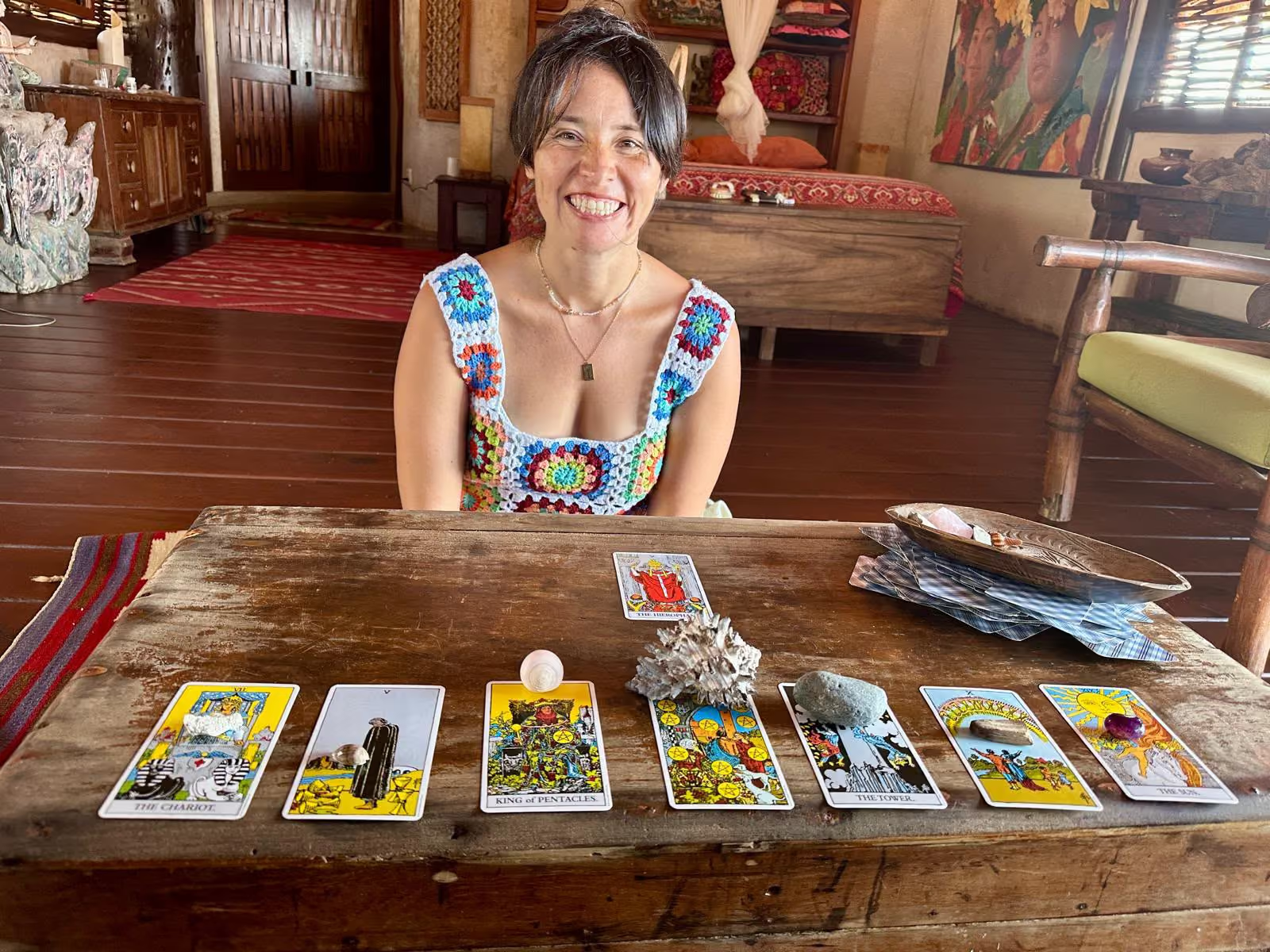
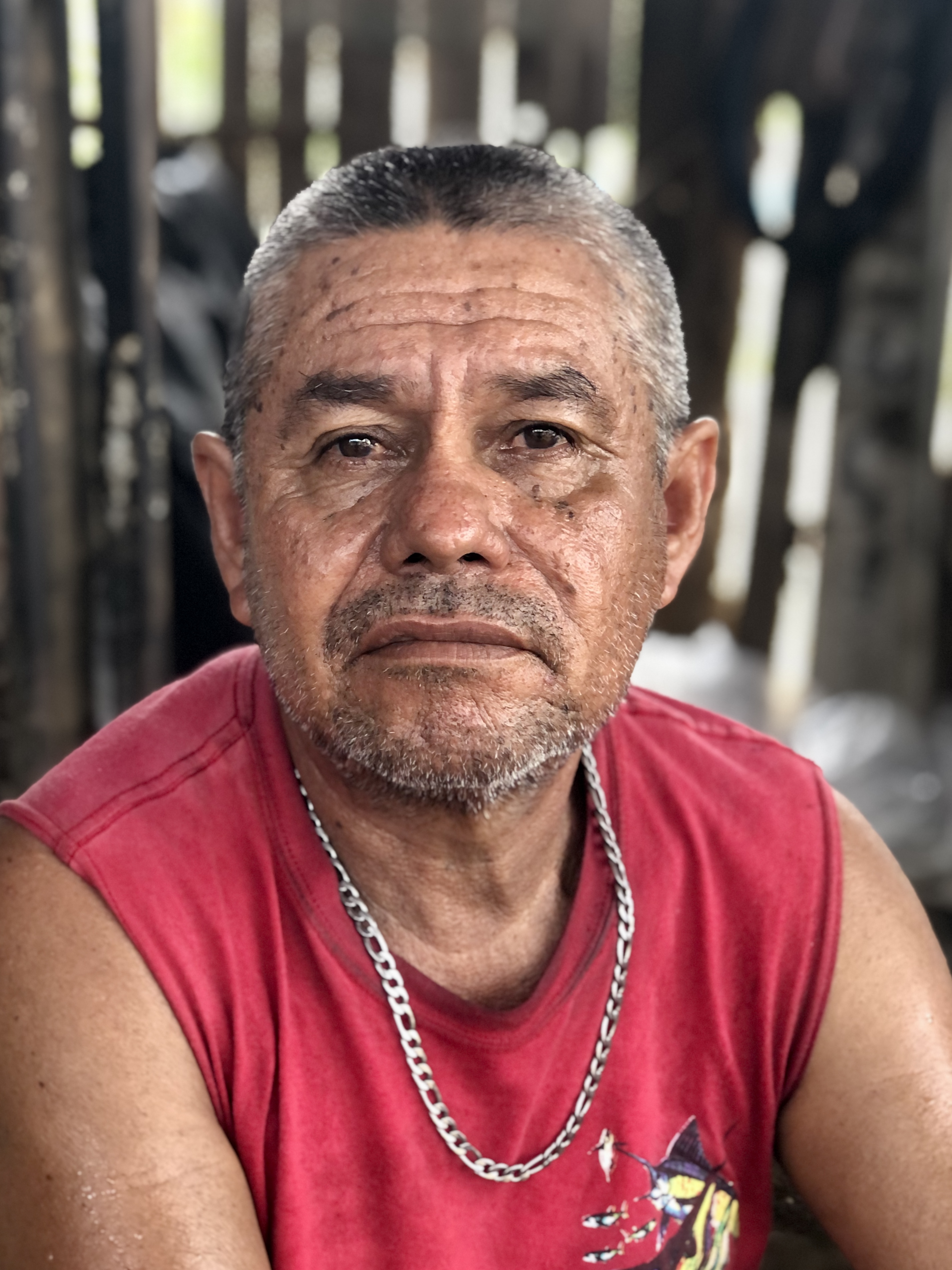
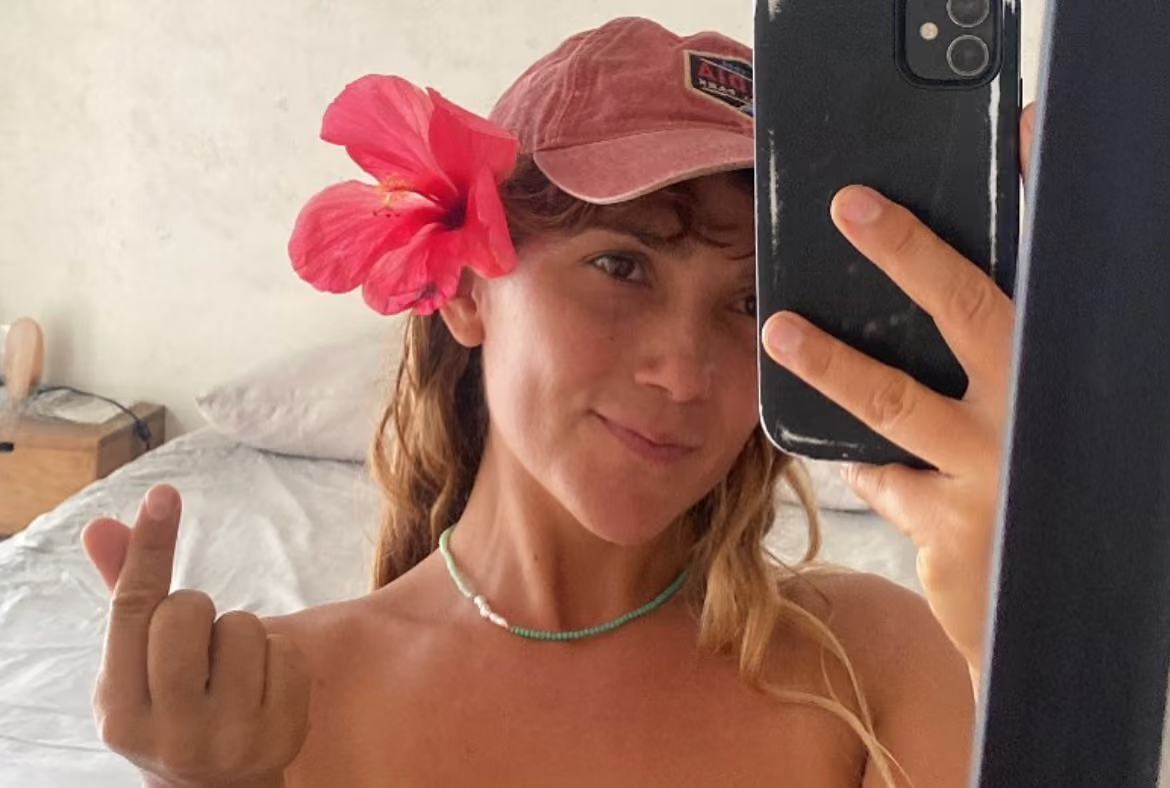
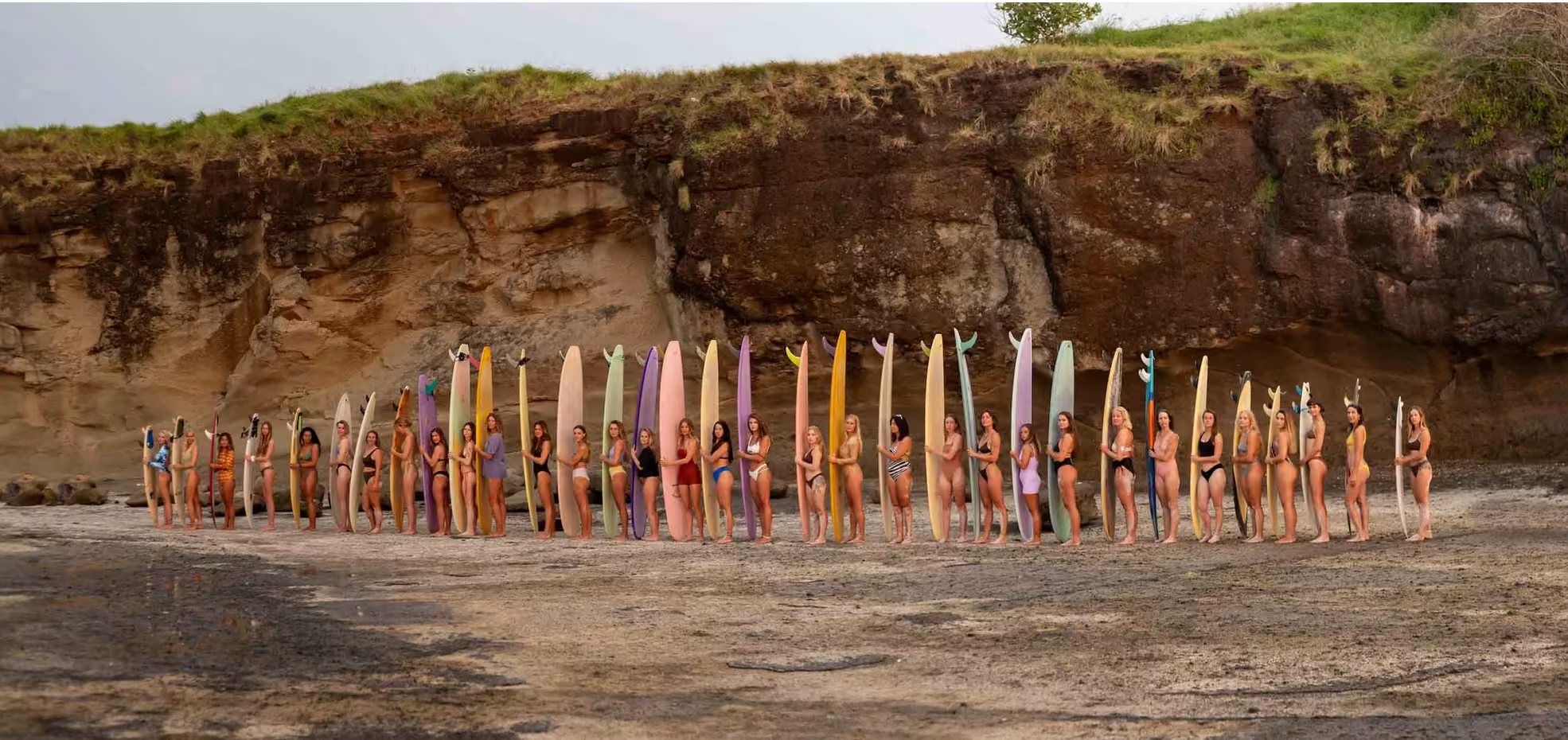
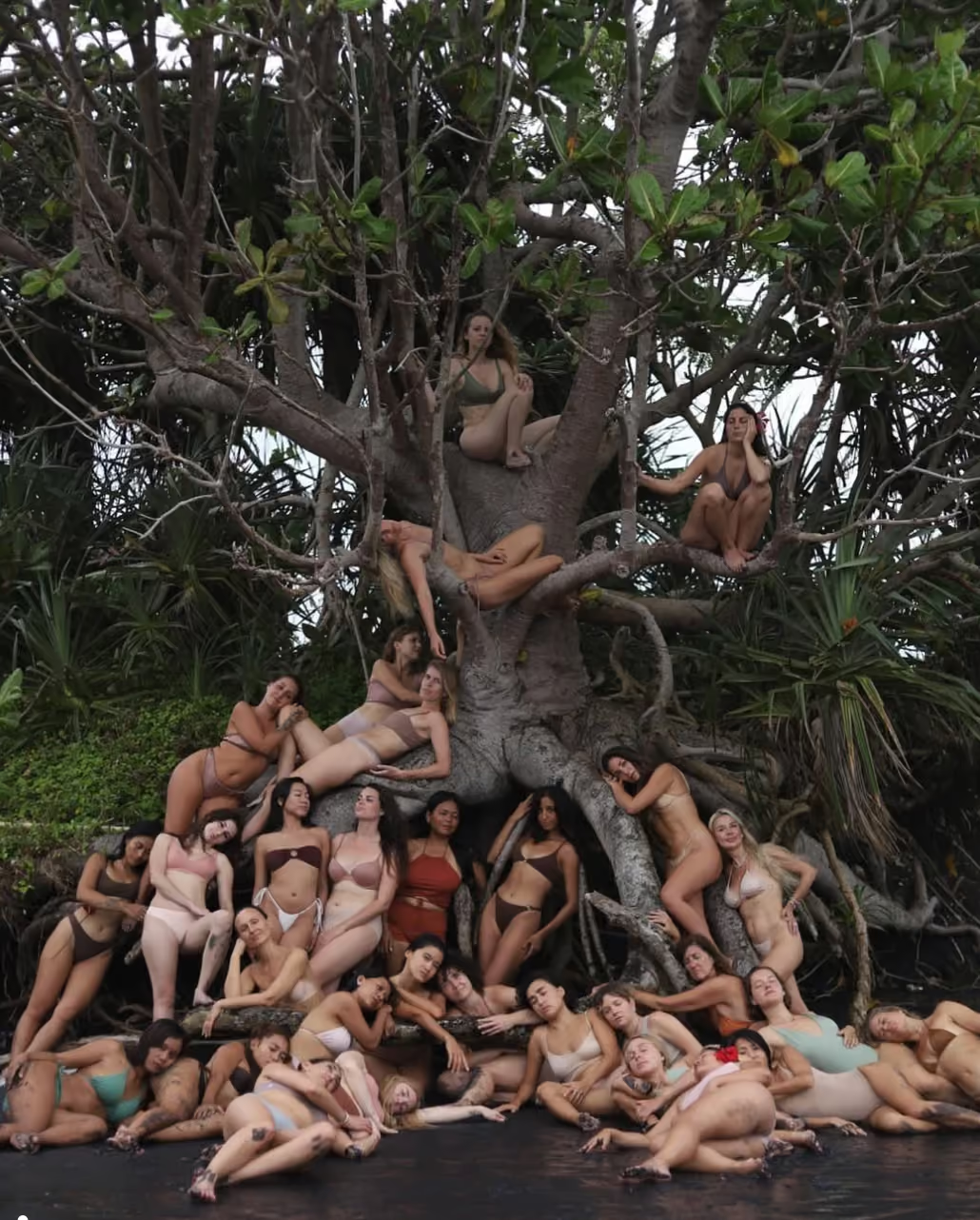
Vi por primera vez el trabajo de Angie en Hacienda Café en Saladita, sus retratos de surfistas transmitían un poder que tenía poco que ver con el surf, la belleza o la sensualidad; había una presencia en las participantes que las hacía parecer más guerreras, cualquier cosa menos “surfistas chill”. Después de notar su trabajo, supe que Angie se llamaba a sí misma “artivista”. También empecé a verla regularmente en Hacienda Café, dirigiendo talleres y trabajando en proyectos, sola y con otras personas. La semana pasada nos sentamos juntos y hablamos durante aproximadamente una hora sobre su pasado y su presente.
%2017.27.38.avif)
.avif)




.avif)
.avif)
%20(Spanish)-2.avif)
.avif)
Editado para mayor longitud y claridad
LOT: ¿Qué es un artivista?
Angie: Es literalmente la combinación de arte y activismo. El proyecto más grande que he canalizado, que acaba de surgir de mí, es el Movimento de Arte Real Women, que ha pasado de ser una sesión de fotos a convertirse en una ceremonia. Tiene el impacto de una campaña publicitaria, como cuando ves a marcas, grandes marcas, haciendo campaña para activar mentes, activar el cambio—eso es activismo. Mucha gente hace activismo mediante boicots o pintando cosas en las paredes, cosas así. Hay muchísimas formas de hacer activismo. Para mí, uní mis pasiones, que son las artes visuales y la sanación, ser facilitadora, ser alguien que crea espacios seguros para los demás. Lo monté todo hace unos años, cuando estaba en Portugal, cenando, y una mujer me dijo derepente: “¡Eres un artivista!” Y yo dige: “Bueno, sí, lo estoy.” Esa palabra es muy precisa para describir lo que hago con mis campañas artísticas: combino arte y activismo. Sabes, el activismo se puede hacer a través de la energía de la vergüenza y la culpa. Intento crear activismo a través de la inspiración—centrándome en lo que podemos hacer—en lugar de reforzar lo que está mal en la sociedad.
LOT: ¿Y dónde ves que eso puede marque la diferencia?
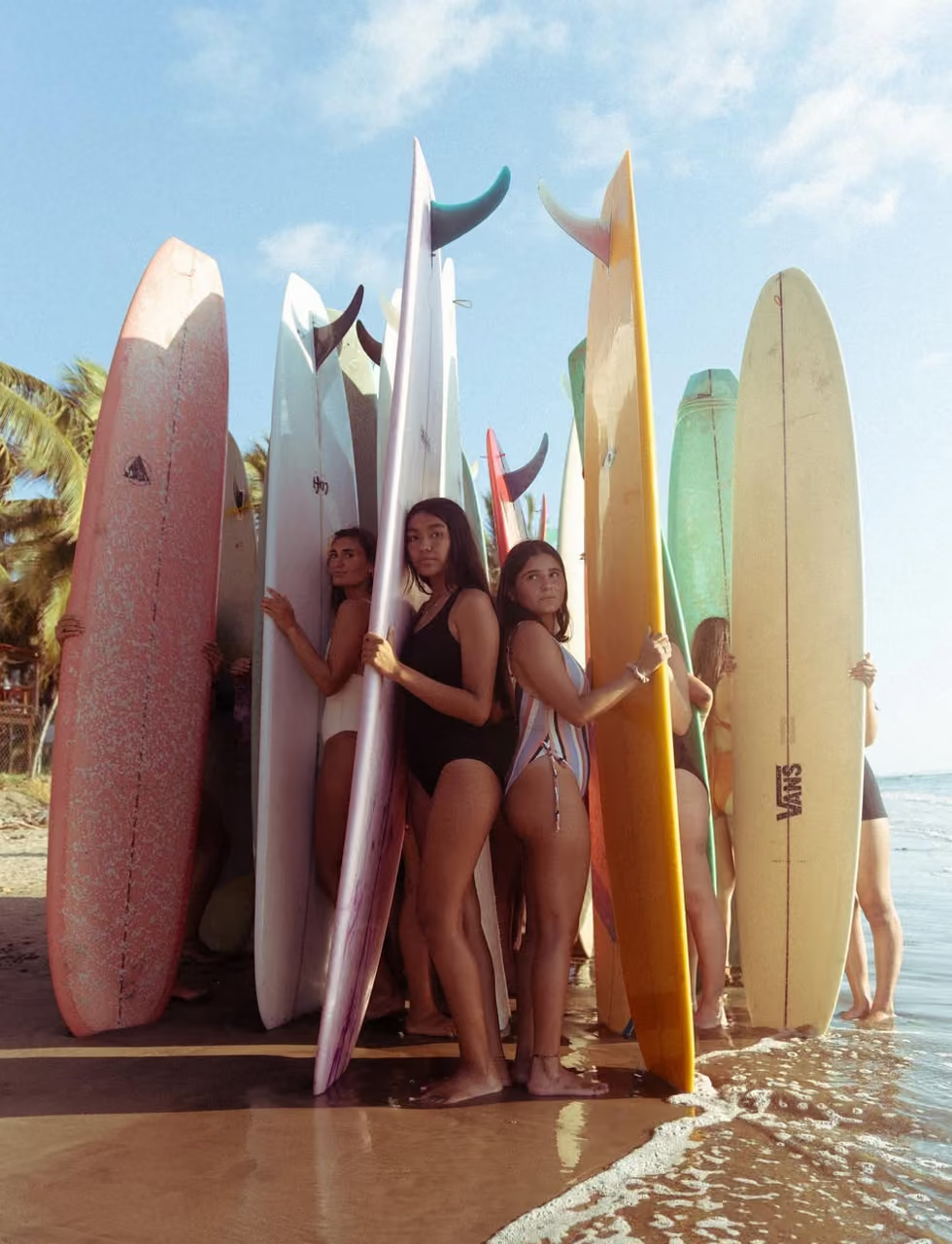
Angie: El Movimento de Arte Real Women ha sido un 99% femenino porque cuando empecé a hacer este tipo de arte más específico, mi misión era ser una semilla de cambio en el mundo de la dismorfia corporal y el odio corporal—el ego de si no miras así, eres fea o no eres digna—porque ese era mi propio dolor. Crecí con ese dolor durante décadas. Cuando empecé adedicarme a la fotografía, me di cuenta de que era parte del problema—como fotógrafa, como creadora de contenido, como responsable de marketing—también caía en el hábito inconsciente de seleccionar modelos, curar y editar un “estilo”de belleza. Pero entonces me di cuenta: “Oh, no, yo soy parte del problema. Formo parte de Hollywood, los medios, los centros comerciales que curan este aspecto concreto, haciendo que el resto se sienta avergonzado de sus cuerpos porque no se ven así.” El Movimento de Arte Real Women que he ido creciendo impacta a las personas que ven esa imagen, consciente o inconscientemente, porque pueden ver más ejemplos de mujeres que brillan—y son felices, empoderadas, radiantes y atractivas—en diferentes tipos de cuerpo y aceptan sus imperfecciones.
Cada vez que creo algo, intento, en su mayoría, establecer una intención, una intención amorosa. Y a veces, cuando alguien mira arte, no es consciente de lo que le está haciendo a su ego, a su alma, a su sistema nervioso. Cualquier cosa con frecuencia alta te cura, ¿verdad? Así que, si ves arte mostrando a personas que están en armonía, que están en unidad o en comunidad—en lugar de separación y ego—te ayuda a amar más eso, a aceptarlo más. Así que, para mí, el arte es una herramienta poderosa para el cambio.
.
LOT: ¿A dónde te lleva tu trabajo?
Angie: Hoy soy consciente de la vida abundante que llevo gracias a mi arte. Rezo por más sorpresas hermosas en el futuro. De hecho, lo llamo “heart”, corazón con mayúscula. Es un juego de palabras, arte y corazón, ya sabes, alma. Hace unos dos años, empecé a notar el nivel, la calidad, de los humanos que han llegado a mi vida gracias a mi arte: no tiene precio. Llegan a través de las redes sociales, de sentarme en cafés, como aquí, o donde sea que viaje. Si no fuera porque yo me mantenía fiel a mi arte, quizá esta tribu mía no me habría encontrado. Llamo a este fenómeno "tu tribu literalmente saldrá de los arbustos". Es un fenómeno que he estado presenciando, donde la gente sepone en contacto conmigo, contacta conmigo. Ese es uno de los lugares donde me está llevando. ¿A dónde más me lleva? Me está dando estabilidad financiera; me está dando libertad de movimiento; me ha permitido crecer como ser humano. También me mantiene responsable de mantener la integridad. El Movimiento de Arte Real Women tiene mucho que ver con la hermandad y la unidad, y con convertirse en una persona amorosa. Cada vez que el ego se cuela—miedo o envidia o cosas así—me reviso y pienso: “Oh, no, Angie, esto no es lo que tu compartes, has estado publicando arte y contenido en redes sociales sobre amor, unidad, respeto y todas esas cosas.” Como el ego siempre se colará una y otravez, mi trabajo me ayuda a mantenerme responsable.
LOT: ¿Cómo te iniciaste en el arte y la fotografía?
Angie: Siempre señalo este momento en el tiempo concuando leí el libro Ikigai: El secreto japonés para una vida larga y feliz [de Héctor García Puigcerver y Francesc Miralles Contijoch]. Ikigai—puedes llamarlo dharma, puedes llamarlo tu vocación, tu Estrella Polar, tus dones únicos, tu esencia, tu genio—es algo que pasa por ti con facilidad. En el libro, hay un diagrama de Venn que muestra una combinación entrelazada de lo que se te da bien, por lo que puedes cobrar, lo que amas y lo que el mundo necesita. En él, en medio de esos círculos, está tu ikigai, tu punto medio, el punto de equilibrio donde encontrarás tu camino, tu camino recto. Estoy muy agradecida a mi amiga Dani, que me hizo sentarme, con bolígrafo y papel, para hacer los temas de diario del libro. Al hacer eso, me di cuenta de lo enorme que era la fotografía para mí. En aquel entonces, hacía fotografía gastronómica y, por mi sensación de escasez, me metí en hacerlo por el dinero, lo que me llevó a fotografiar modelos en Tulum, bienes raíces y cosas así.
Un día, conducía con un amigo en Tulum y él estaba hablando, diciendo: “Tengo un proyecto artístico.” Y en mi cabeza pensaba: “¿Pero para qué es esto? ¿Quién es la marca? ¿Por qué haces esto? Parece mucho trabajo.” En voz alta dije: “¿Y quién te va a pagar por esto?” Y él dice: “No, es solo por el arte de hacer arte”. Por primera vez en mi vida, en mi mente, pensé: “¿Espera, qué? ¿Me estás diciendo que podría por el arte de hacer arte?” Ese momento me dio permiso para, por ejemplo, en mi caso, ir a Pinterest y empezar a inspirarme, como, “Oh, esto es mono o, oh, me gusta”. Fue la primera vez que empecé a crear mis propias cosas pro bono, sin ninguna influencia sobre lo que quiere un cliente. Empecé a probar cosas para mi propia expresión artística y, en plan, avanzando hasta la pandemia—vale, este es mi estilo, este tipo de arte disruptivo, muy Wes Anderson y muy raro, pero también suave y femenino, y salir de mi propio dolor, mi propia dismorfia corporal, mi propio odio hacia el cuerpo—y la necesidad de ganar dinero. Me pregunté: “¿Qué forma creativa de marketing puedo hacer?”
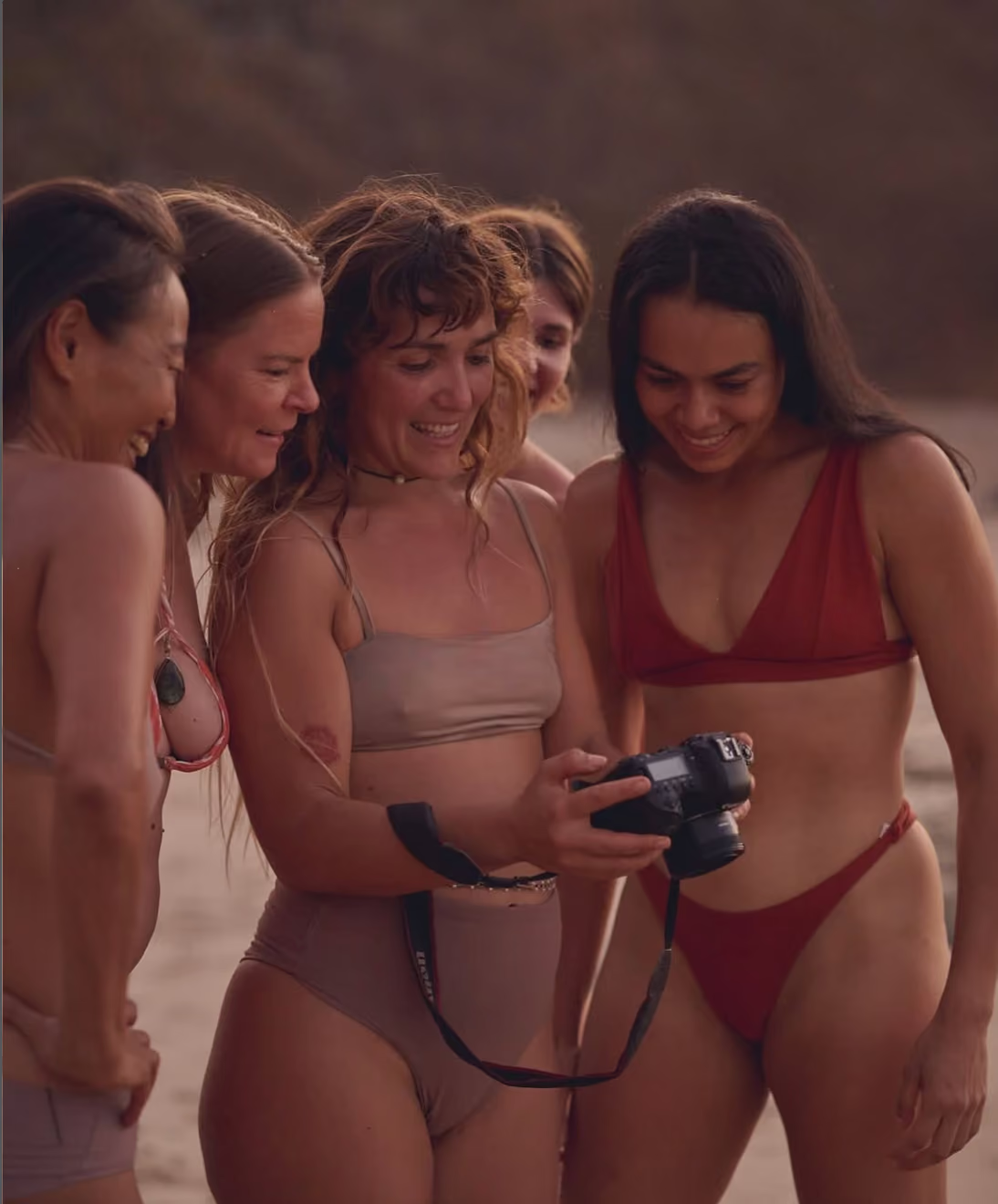
Ese mismo amigo en Tulum se dedicaba al marketing de influencers, donde intercambiaba sesiones de fotos gratis por otros influencers para que lo promocionaran en su Instagram, y de ahí con seguía clientes. Eso fue el nacimiento del Movimiento de Arte Real Women porque empecé a invitar a gente en grupos de WhatsApp a reunirse. Y yo dije: “Las invito a ser parte de una sesion de fotos colectiva. Esta es la intención y estos son los tableros de inspiración que he estado coleccionando”. Eso fue un hito enorme. Ahí fue donde empezó todo para mí. Y luego, durante la sesión y después de la sesión—esta es la parte que no esperaba, la parte más profunda—todas esas mujeres, y personas que ni siquiera formaban parte de la sesión, se acercaban amí y me decían algo como: “Muchas gracias por esto. Necesitaba esto.” Empecé atener curiosidad por preguntarme: “¿Por qué me dan las gracias? ¿Qué estoy haciendo?” Ahora, soy consciente de que gracias a mi arte, estoy sanando a otros. En realidad estoy transmitiendo inspiración y cambio, y desmontando estereotipos. A veces, incluso la simple presencia física de la sesión de fotos proporciona a la gente una liberación somática, una exposición radical. Es como una terapia de choque. Veo a personas que se empujan fuera de su zona de confort, permitiéndose ser vistas, crudas y reales.
.
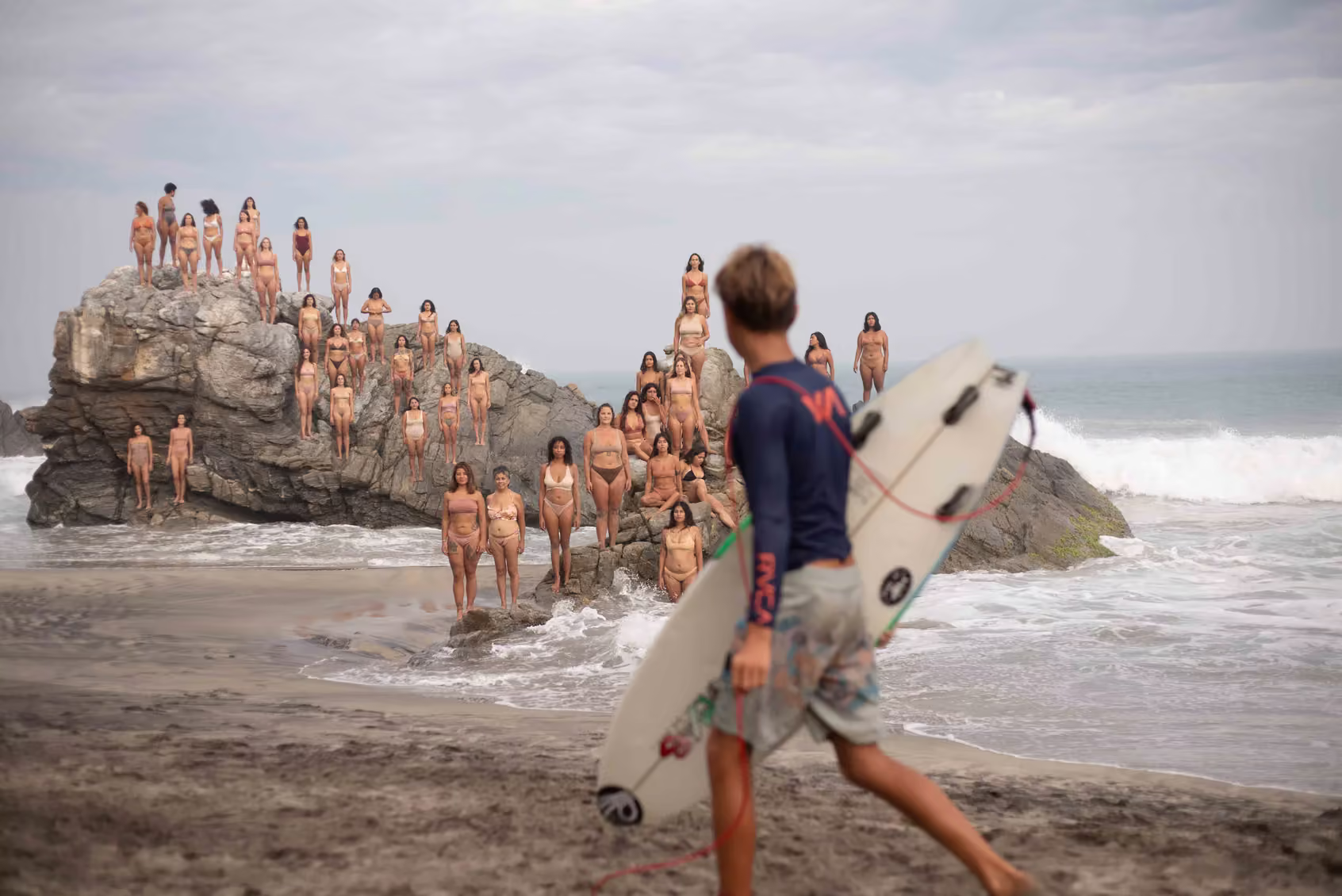
LOT: Una de las cosas que me atrajo de tu arte es que hacesque las personas sean poderosas, casi feroces. ¿Cómo se hace eso?
Angie: Vale. Vaya. Creo que literalmente va de la mano con lo que acabo de terminar. No lo sabía antes de que todo esto empezara. Simplemente era sensible a los humanos, bueno en cómo hacer que la gente se sintiera segura, cómoda y reconocida. Así que, cuando empecé como fotógrafo, eso era lo que hacía, simplemente ser sensible a las energías de la gente. Algunas personas están muy heridas y tienen mucho ego. Deben ser tratados de una manera determinada. Han pasado casi seis años, quizá más, y ahora soy bastante consciente de lo que realmente estoy facilitando y de lo que ocurre cuando estoy guiando. Lo que puedo resumir—es como una combinación de yoga, Tai-chi, respiración, terapia cognitivo—es que antes de la sesión de fotos, les pido que me den sus intenciones amorosas. Les estoy pidiendo que se acerquen amí desde su alma. Ahí pone en marcha la energía.
El día de la sesión de fotos, antes de empezar, nos sentamos y nos lanzamos a la sesión. Cerramos los ojos y nos conectamos con la fuente. Llámalo “dios”, llámalo “universe”, llámalo como quieras. Cosechamos energía, energía de alta frecuencia. Para el momento en que ese ser humano está de pie, posando, ya ha abierto su corazón, está canalizando, yo canalizando, palabras de amor basadas en nuestras intenciones. Hay tanto amor ocurriendo. Eso les hace sentir seguros. Por ejemplo, diré cosas que quizá otros fotógrafos no hagan o a las que no estén sensibilizados, cosas como: “No te preocupes, las primeras fotos van a ser incómodas”. Esa frase da permiso a este ego, a esta mente humana, para relajarse, para salir de la lucha o huida y entrar en la creatividad. Cuando hacen eso, aprovechan la frecuencia más alta, así que, en ese momento, se vuelven poderosos.
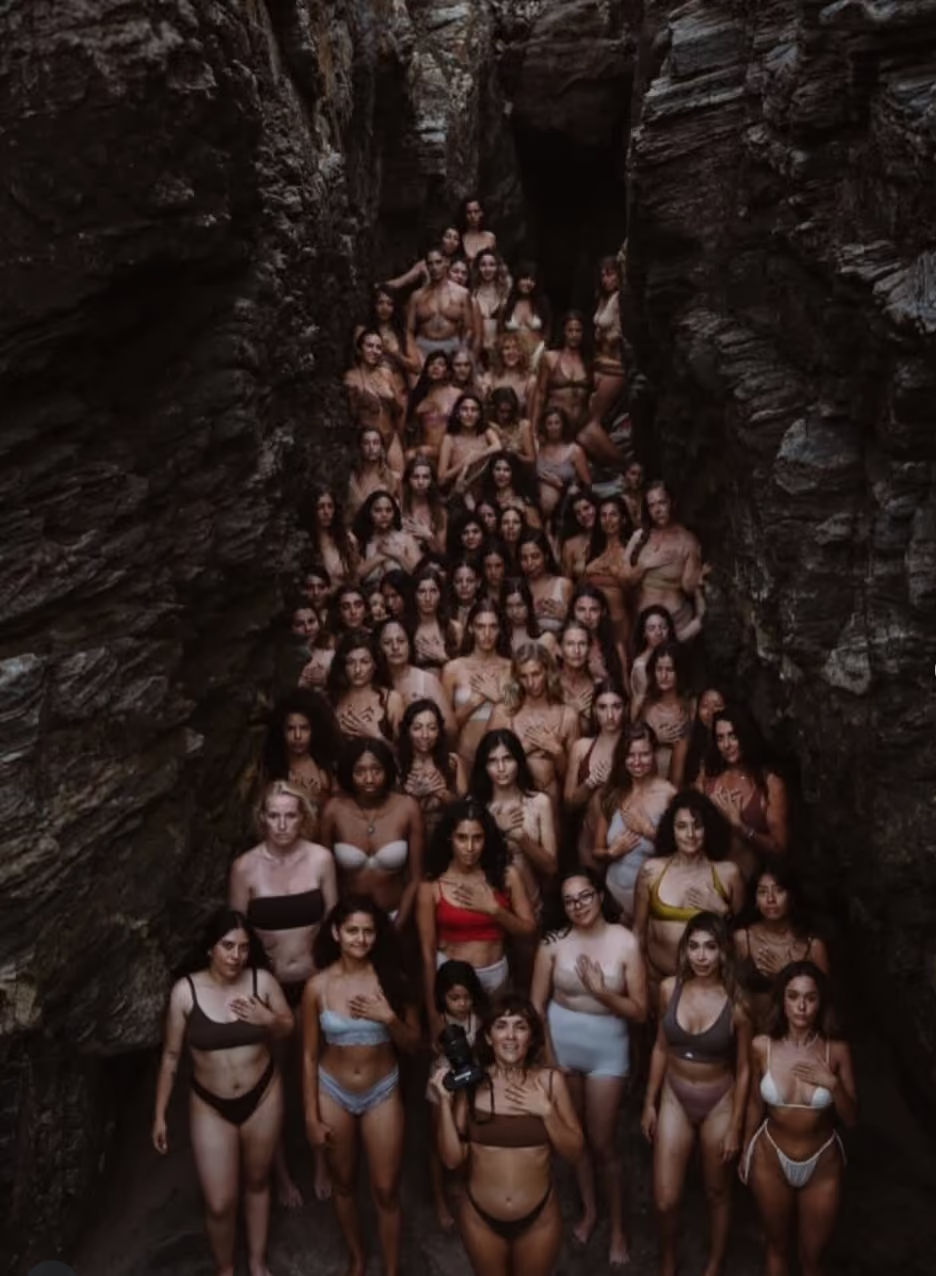
LOT: ¿Dónde creciste?
Angie: Nací a una hora al norte de Guadalajara, en Tepatitlán de Morelos, en Jalisco. Tiene una cultura vaquera, como el rodeo mariachi. Mi familia eran migrantes. Cuando estaba en primaria, vivía en California, y luego volví parala secundaria, el instituto y la universidad en la zona de Guadalajara. Obtuve una licenciatura en diseño integral en el ITESO en Guadalajara. Me gradué y luego empecé a viajar.
LOT: ¿Qué es diseño integral?
Angie: Es una vía de estudio que te prepara para una carrera en varios aspectos del diseño. Me centré en diseño gráfico y branding, especialmente hacia el final del programa. Durante ese tiempo probé un poco la fotografía, pero nunca creí que pudiera ser fotógrafo a tiempo completo. Cuando era más joven, solo tenías tipos específicos de carreras—las que generaban dinero—y la fotografía no existía. Un fotógrafo era como un artista; solo unos pocos llegan a ser fotógrafos.
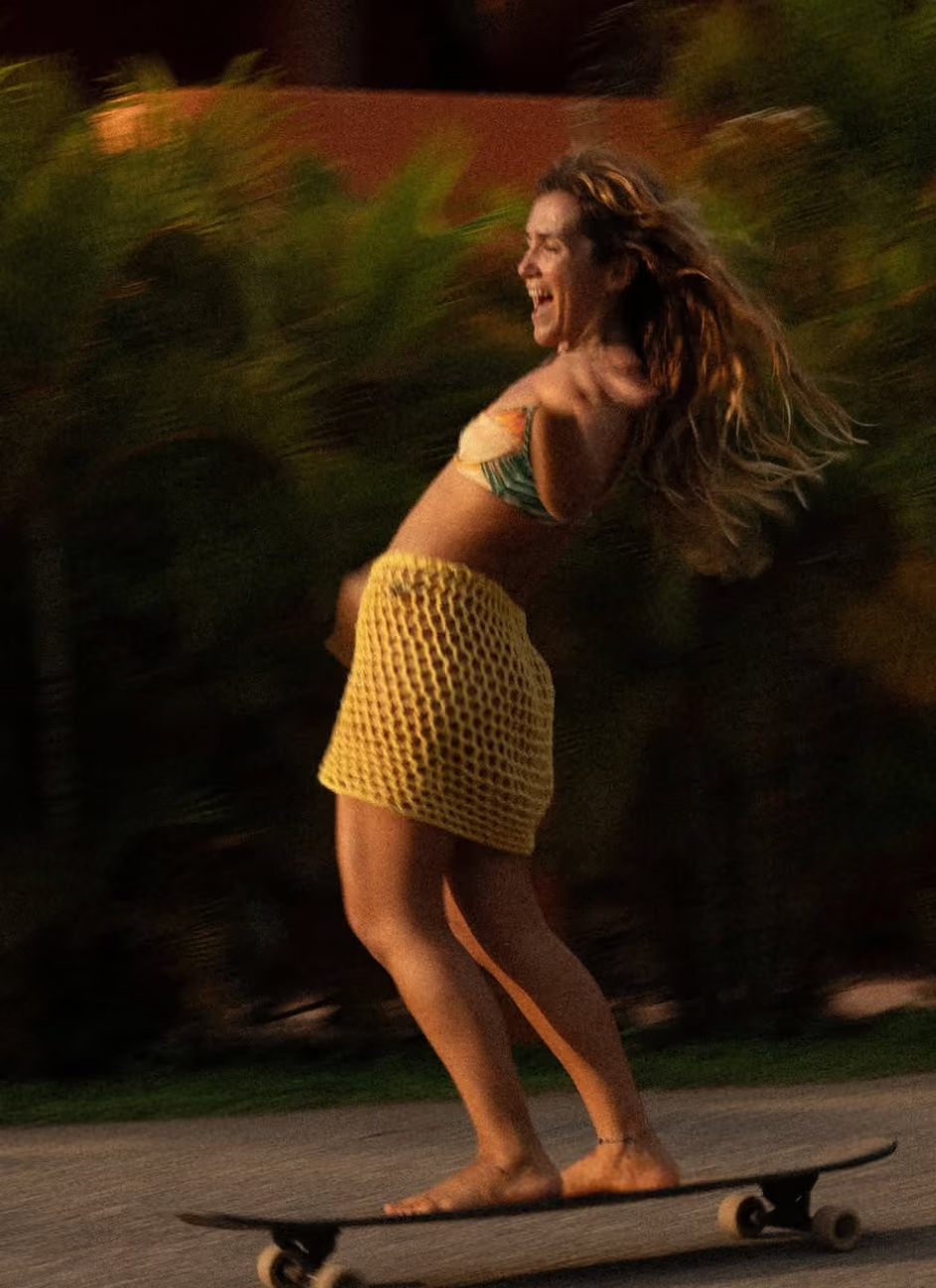
LOT: Dijiste que viajaste. ¿A dónde viajaste?
Angie: Viví un año en Canadá, tres meses en Australia, luego un año en Francia, en París, otro año en Portugal y unos meses en Marruecos.
LOT: ¿Qué te trajo a Saladita?
Angie: ¿Has leído el libro El alquimista de Paulo Coelho? Se siente unpoco ficticio, como un libro de fantasía. La gente lo llama una alegoría, pero para mí es cosa de la vida real. Me ha enseñado a notar señales del universo, de Dios, como quieras llamarlo. La historia de Santiago es el viaje de un héroe: se va, descubre y vuelve, diferente, con los pies en la tierra, sensible a los presagios, señales y lecciones de una manera que antes no era. Todo esto para decir que, ese año que viví en Portugal, mi objetivo era aprender a surfear. Aprendí a patinar durante la pandemia en Playa del Carmen, al lado de Tulum, mientras aprendía a ser fotógrafa. Mi familia de expatriados nómadas allí no paraba de decir que Portugal era lo mejor que hay, especialmente Lisboa. Yo hacía un estilo único de skate, llamado “longboard dancing”, donde cruzas la tabla, cruzas los pies y esas cosas, y te das la vuelta. Había una comunidad de influencers skaters a dos horas al norte de Lisboa. Así que pensé: “Vale, aquí es donde está la cosa.” De nuevo, pienso en presagios, señales—como lo que se alinea y se sienta bien, y todo el mundo medice que vaya—así que di un salto de fe, aunque mi tablero de visión no decía exactamente “Portugal”. Una vez allí, descubrí que no me gustan los trajes de neopreno; me he dado cuenta de que quiero surfear en bañador. Sabía que este lugar no era “el ideal”. Pero mientras estaba allí, yendo a festivales de longboard, aprendiendo a surfear, aprendiendo a expresarme, la gente decía: “Angie, deberías vivir en México. Deberías aprender a hacer longboard en una ola.” Al final de ese año, tuve que elegir entre quedarme y conseguir la residencia, o no. Para entonces, pensé: “Vale, esto no es lo que va a hacer.” Y me mudé aquícon mi monopatín y mi bolsa. No conocía a nadie. Llegué solo, siguiendo los presagios, gente que no se conocía diciéndome: “Deberías vivir en Saladita.” Y aquí llegué, sintiéndome tan alineada..
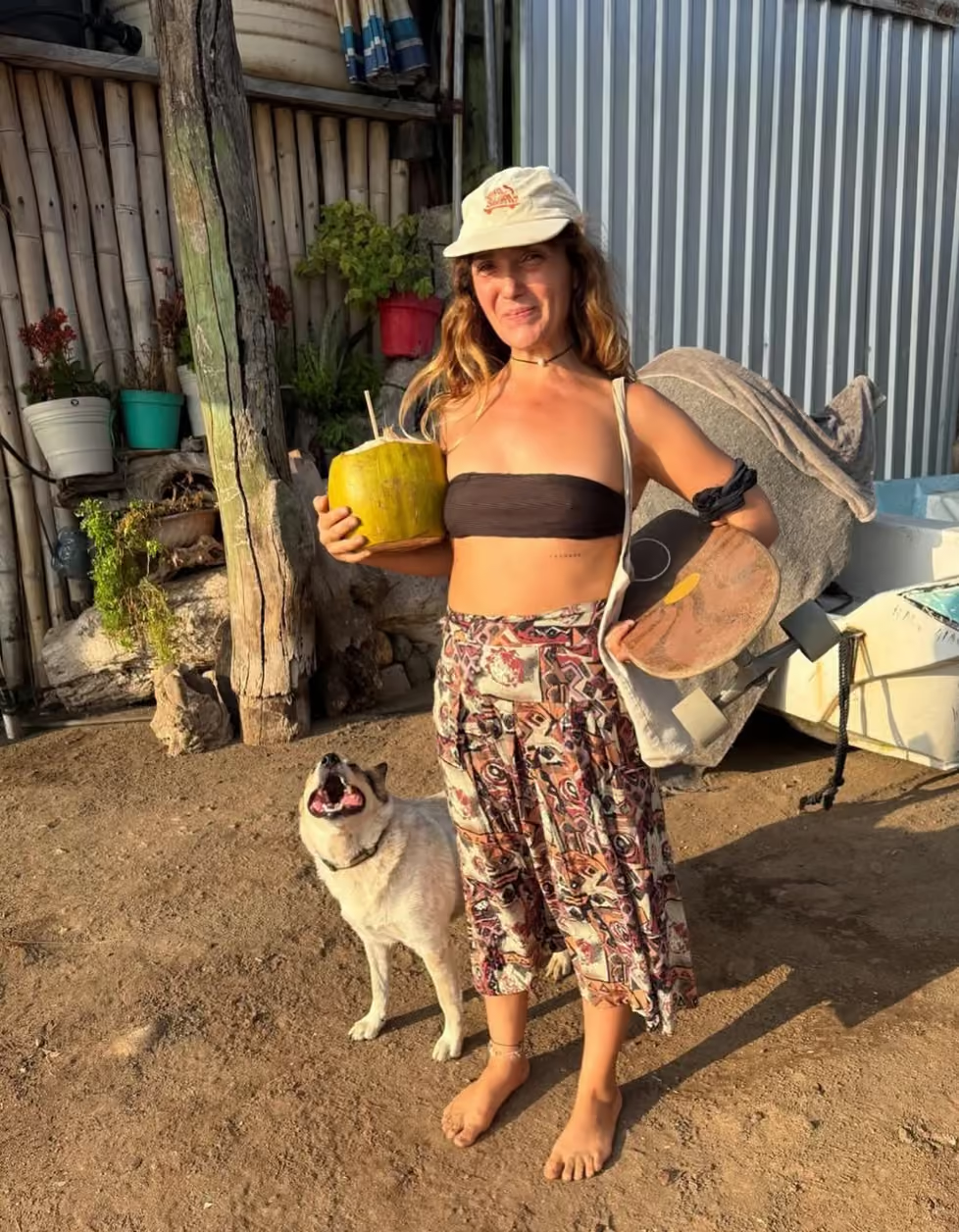

LOT: ¿Cuáles fueron tus primeras experiencias aquí?
Angie: Dios mío, me gustaría decir que todo fue tan fácil y épico, pero el universo tiene una forma pícara de humillarme, una y otra vez. He comprobado que si no he aprendido a dejar un patrón con creces, vuelve a aparecer. Lo que quiero decir con eso es que cuando llegué aquí, pensé: “Oh, la vida es épica. Estoy prosperando”. Puedo decir que tenía el ego muy alto. He venido aquí como una bola de demolición. Llegué aquí anuncianda: “Voy a hacer de esto mi hogar.” Y me sentí honrado. Cometí muchos errores. Estaba enviando una energía que no estaba en armonía con lo que ocurría a mi alrededor. Quiero decir, me mudé a un sitio que trata de la cultura del surf y no sabía cómo surfear ni cómo formar parte de esa cultura. Salí a la alineación y era una chiflada. No era consciente de lo importante que es respetar la etiqueta del surf de no entraren el surf, aprender a tomarse tu tiempo, no hacer “snaking” y cosas así. Era una ignorancia combinada con tantas cosas nuevas que aprender. Me sentía acosada, como cuando estaba en la secundaria, donde sí me acosaban. Esos primeros tres meses aquí fueron así. Estaba pasando por mucho. Me sentía muy decaída.
LOT: ¿Cuál fue tu primer proyecto aquí?
Angie: El primer proyecto que hice fue el Movimento de Arte Real Women, las impresiones de arte colectivo de mujeres de surf que hay abajo, en Hacienda Café.
LOT: ¿En qué estás trabajando ahora?
Angie: Estoy trabajando en el parque de skate aquí en Hacienda Plaza con Frank. Todavía no hemos hecho mucho. Empezamos la semana pasada. Ahora mismo, el parque de skate es una pequeña rampa de madera, lo cual es precioso, pero no es suficiente para crear comunidad. El objetivo es hacer un cuenco de hormigón y, con suerte, hacer más alrededor. También estoy trabajando en los retiros de arte fotográfico que hago aquí una vez al año—Flow2Glow—son talleres y rituales, cómo lograr la vida de tus sueños. También estoy trabajando en mi imperio de calcomanias, de “stickers”. Voy a crear “stickers” y venderlas por todo el mundo. Me va a hacer rico [gran sonrisa].
LOT: ¿Qué es lo próximo para ti?
Angie: Crecer aquí. Siento que el parque de skate es una plataforma muy importante para mí, y espero que también para la comunidad. En México, se llama el tejido social. Es lo que une a la gente. Me emociona ver cómo un parque de skate puede reunir una diversidad de demografías, trabajar con un lugar que tenga esa intención, que las familias quieran traer a sus hijos, que los patinadores profesionales traigan su ego y sus talentos. Eso puede ser un choque, pero tener la intención de reunir grupos así, de reunir diferentes tipos de personas, ya es una gran victoria.
LOTE: Ok. Una última pregunta. Algo más especulativo. ¿Qué te aporta la expresión “incitar a la alegría”?
Angie: Vaya. Creo que eso se correlaciona con lo que ya hemos hablado, sobre lo que he estado creando—el artivismo—cómo puedes elegir crear contenido, arte, edificios, negocios, aplicaciones, sitios web, blogs desde la energía de la inspiración frente al ego, la vergüenza y otras emociones de baja frecuencia. Para mí, “incitar a la alegría” se aplica a todo, por ejemplo, si creas algo, ya sea un plato, una comida compartida, una película, y lo haces con esa intención, entonces “incitar a la alegría” en otros que puedan probarlo, verlo, trabajar con ello.
Nunca he usado la expresion “incitar a la alegría” No es en mi idioma habitual. Para mí vuelve a la energía. Mi mayor intención es crear arte que inspire, sane y te dé energía de alta frecuencia. Cuando pienso en “la alegría”, pienso en el longboard, donde siento que estoy bailando, donde hago estos giros—es encantador. Se correlaciona con mi ritual con el surf, hablar con el Mana [el nombre polinesiode la fuerza vital], la energía que crea olas y todo lo demás. He aprendido en estos últimos años a dar gracias a todo. A veces, antes de remar hacia afuera, encuentro flores y se las ofrezco a la ola, y cuando salgo de ella, miro atrás y le envío un beso. Eso me ayuda a vivir y sentir la vida, en “alegría”, en la luz, en energía de alta frecuencia.
LINKS
Fotografía personal: https://www.instagram.com/angiegophoto
Movimiento de Arte Real Women: https://www.instagram.com/realwomen_movement