
looking for something?

Results
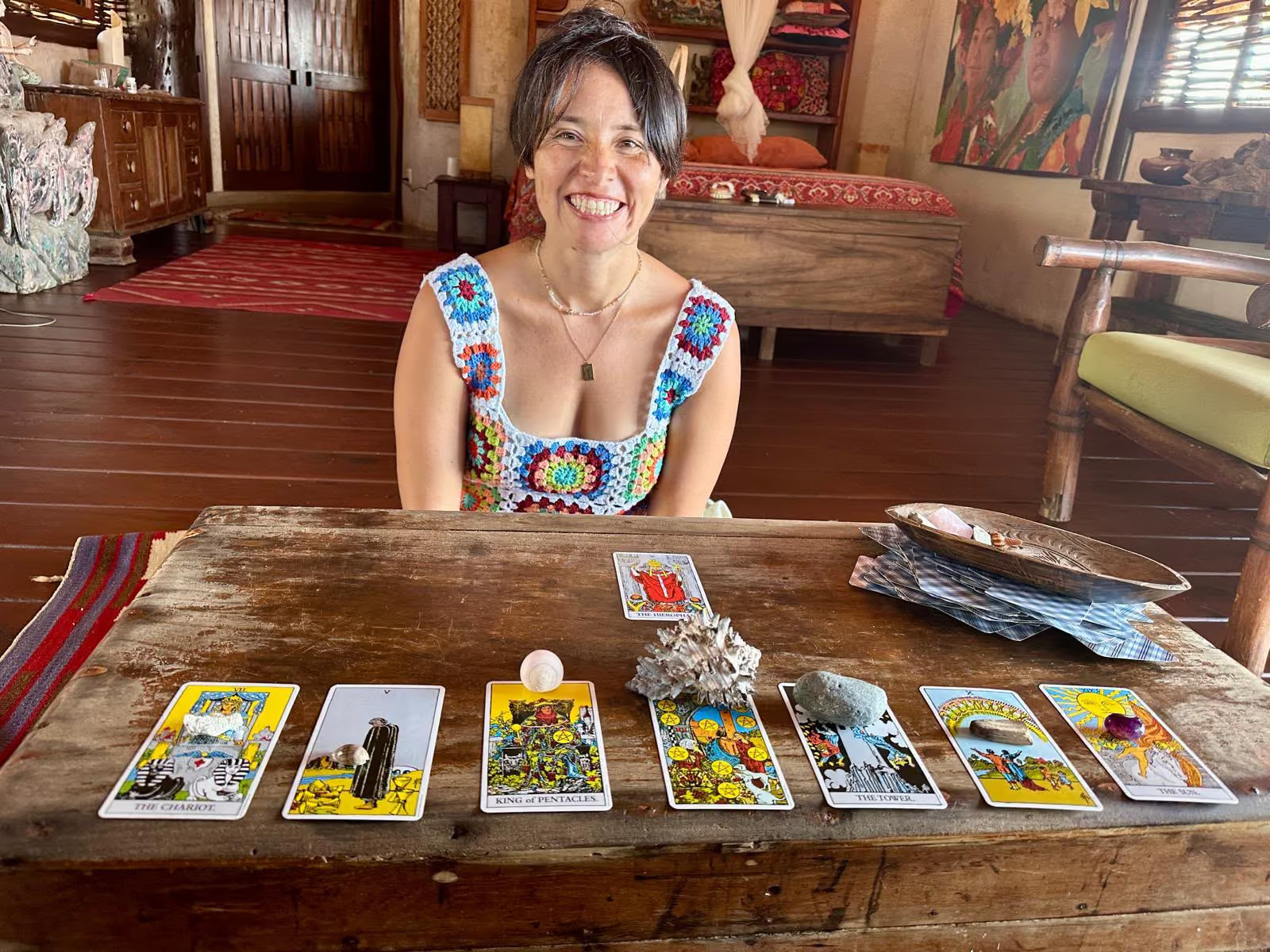
Maria Fernanda Nava Merino: Surf Witch
%2017.27.38.avif)
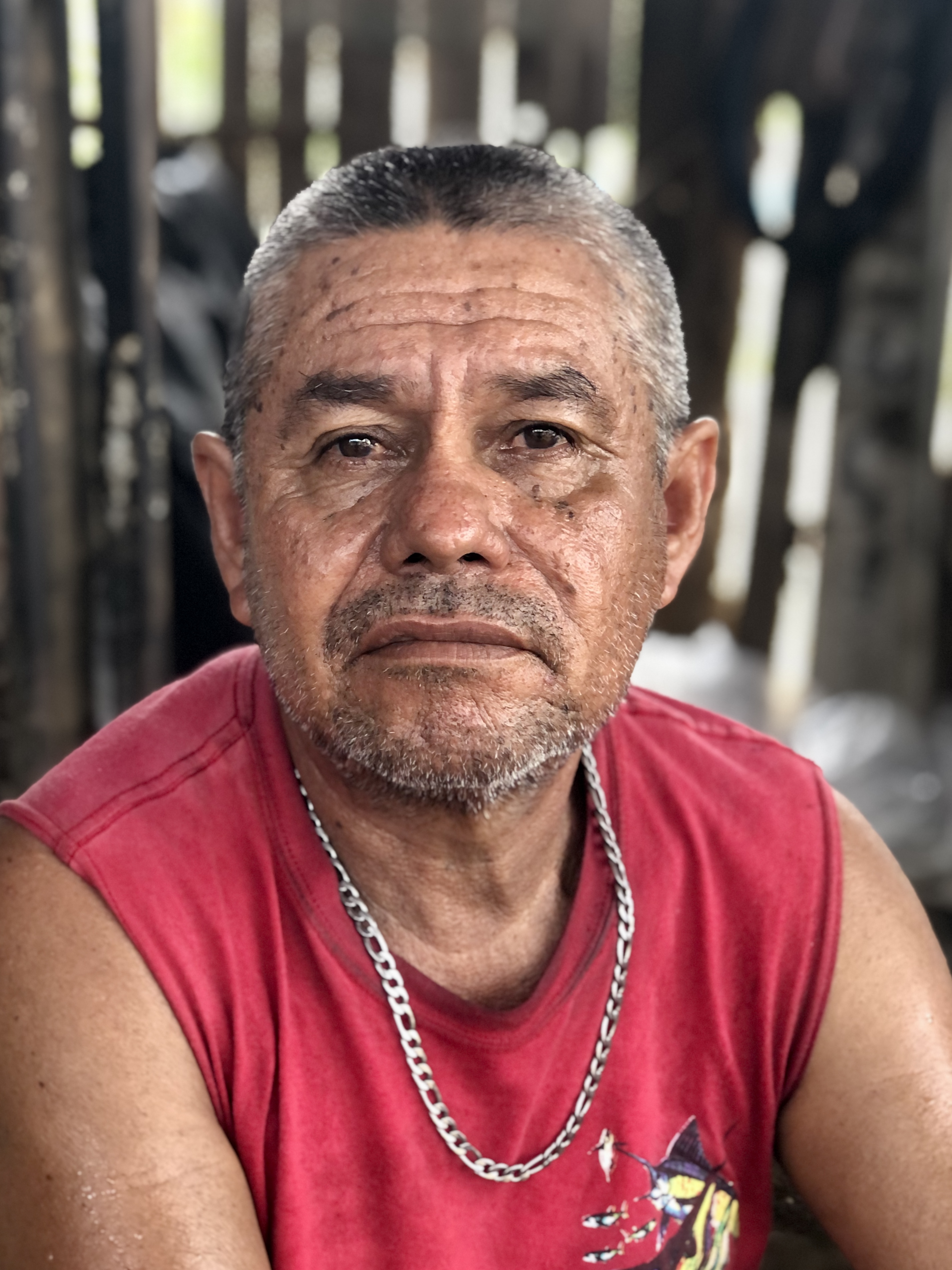
Don Fernando: Tire Repair in Lagunillas

Ramón Carranza Valdez: Come See Us
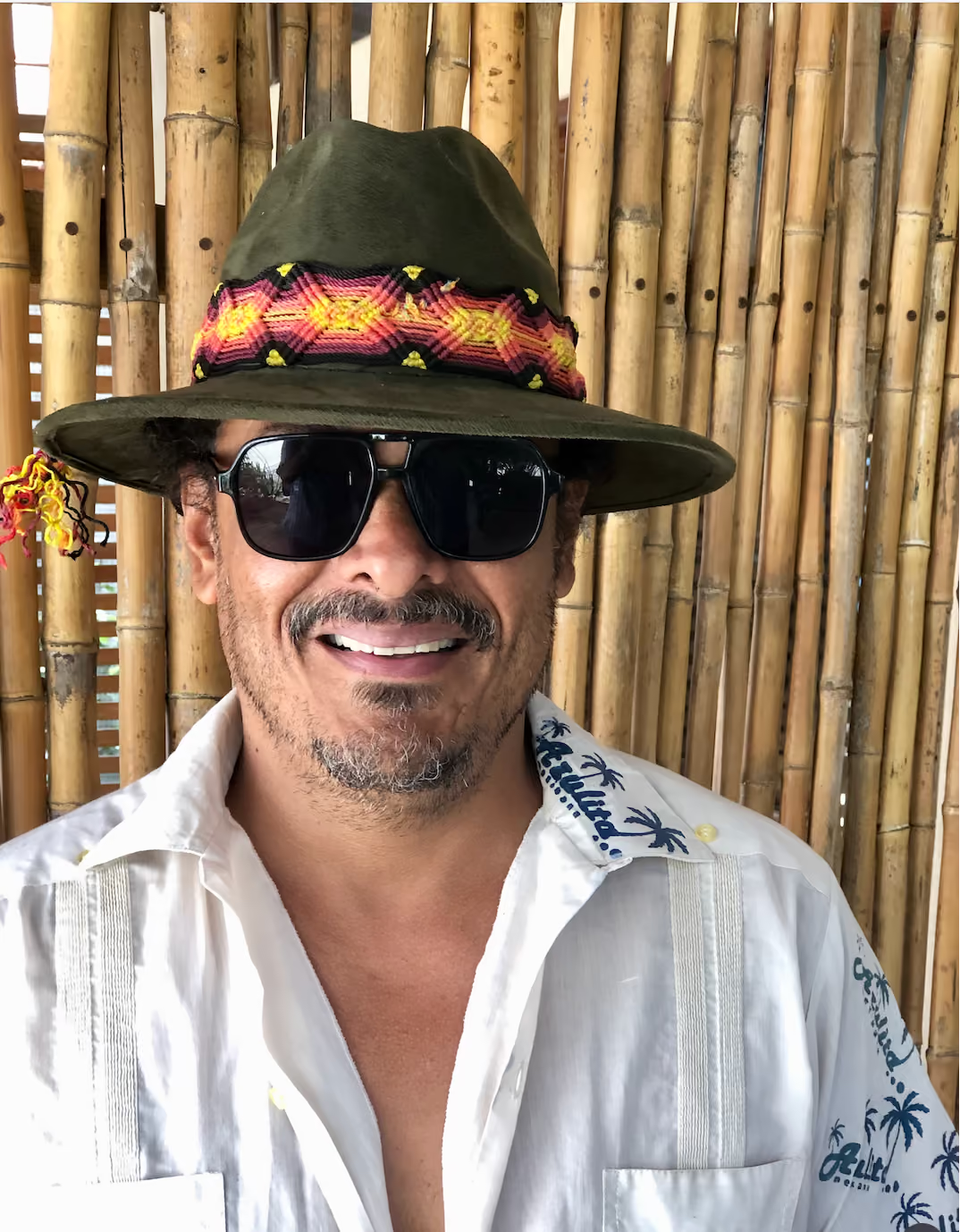
Pato Azulita: Ernesto Leon Sandoval
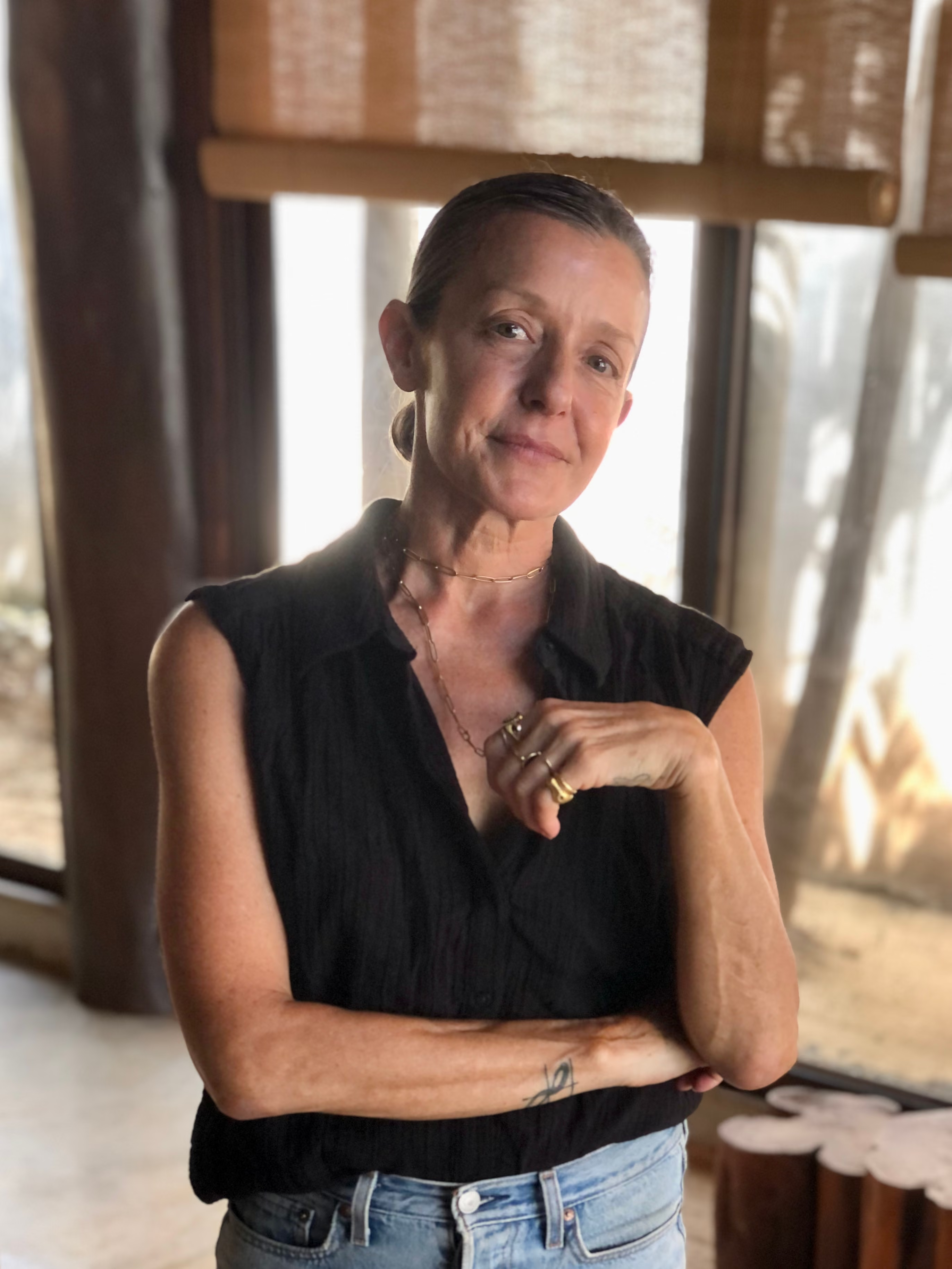
Kimberly Kovel: Always a Beginner

Peter Max-Müller: We’re More Social Here
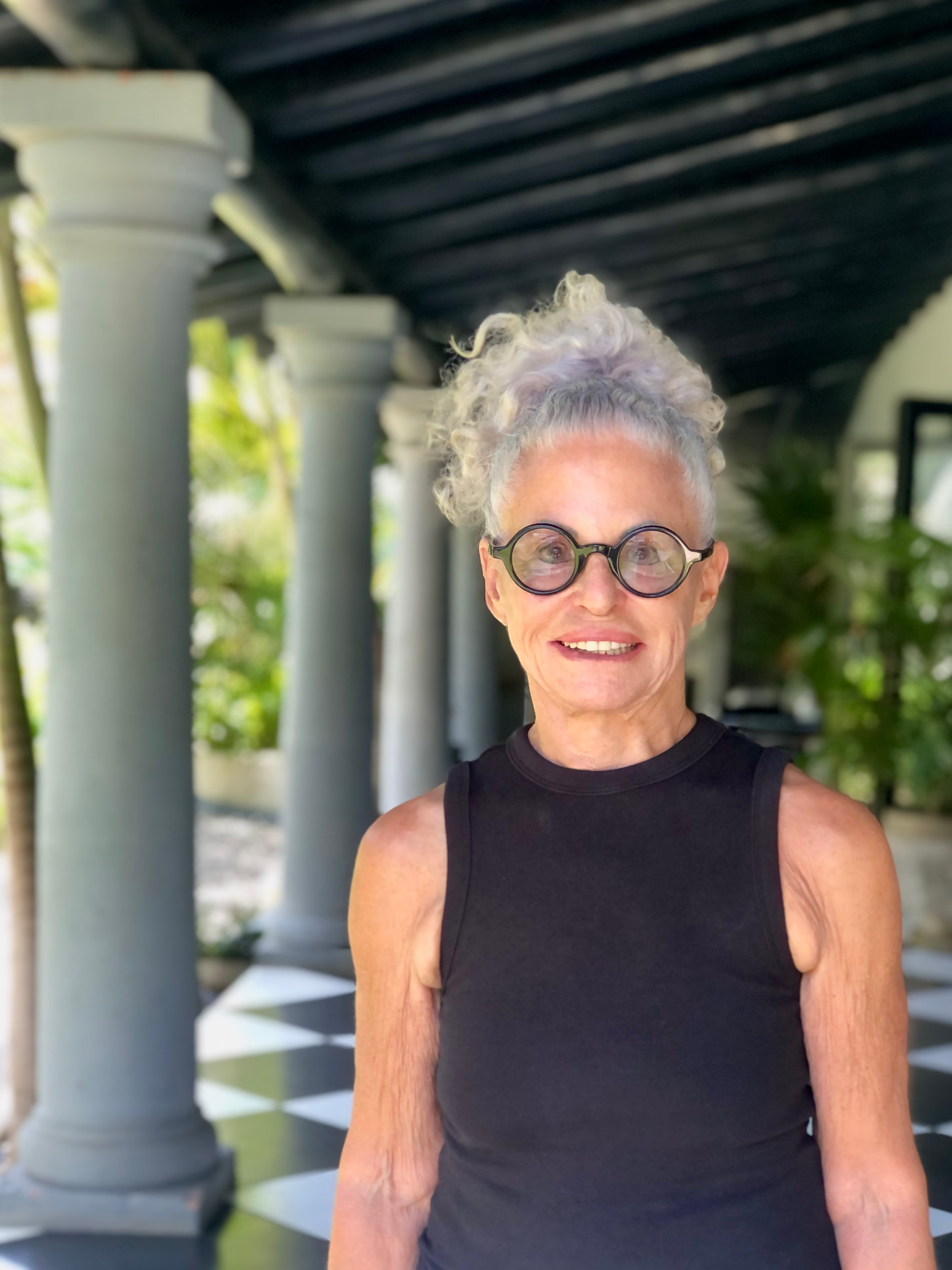
Peri Wolfman: Just Do It
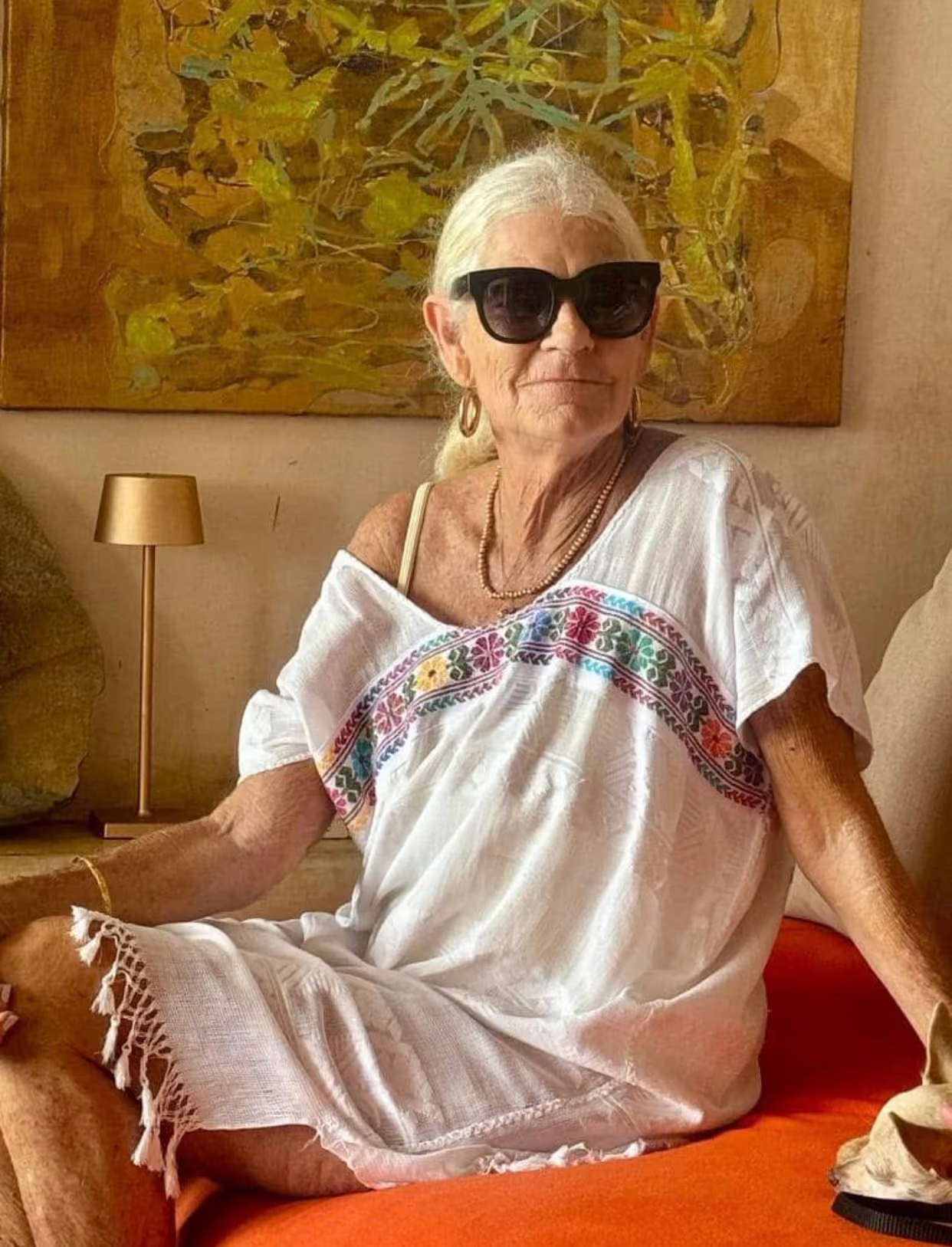
Wendy Worrell Page: Our Mermaid


Ángel Dosal Amandi: I Am Happier Here

Maggie Miles: Good Trouble

Jorge Valencia Guzman: A Young Man and the Sea

José García Callejas: Pelón
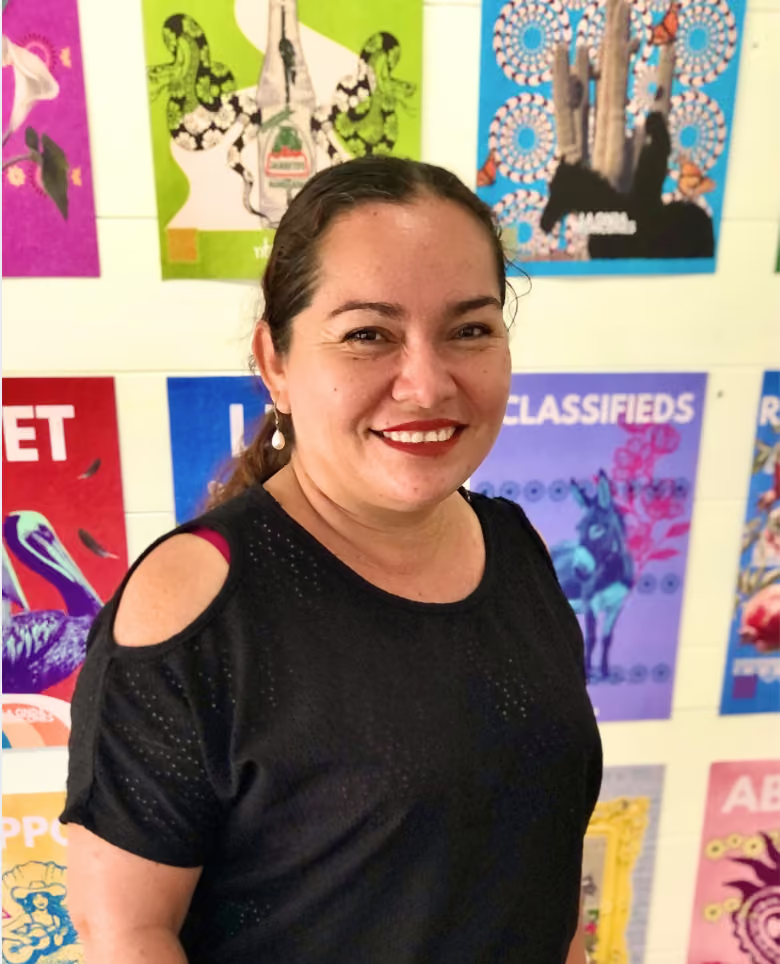
Sandy López Ayala: Proud Mama
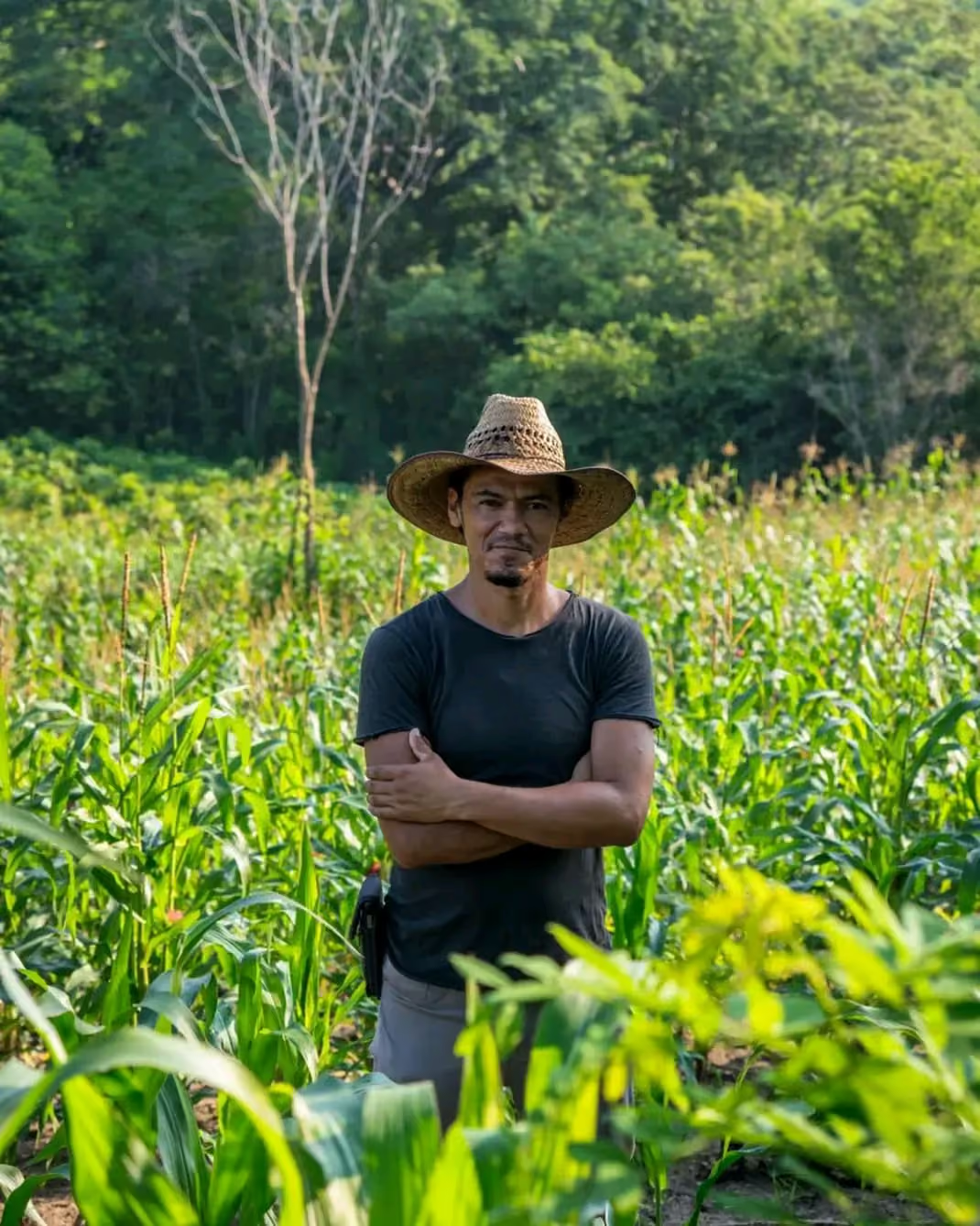
Arturo De La Barrera: A Farmer’s Philosophy
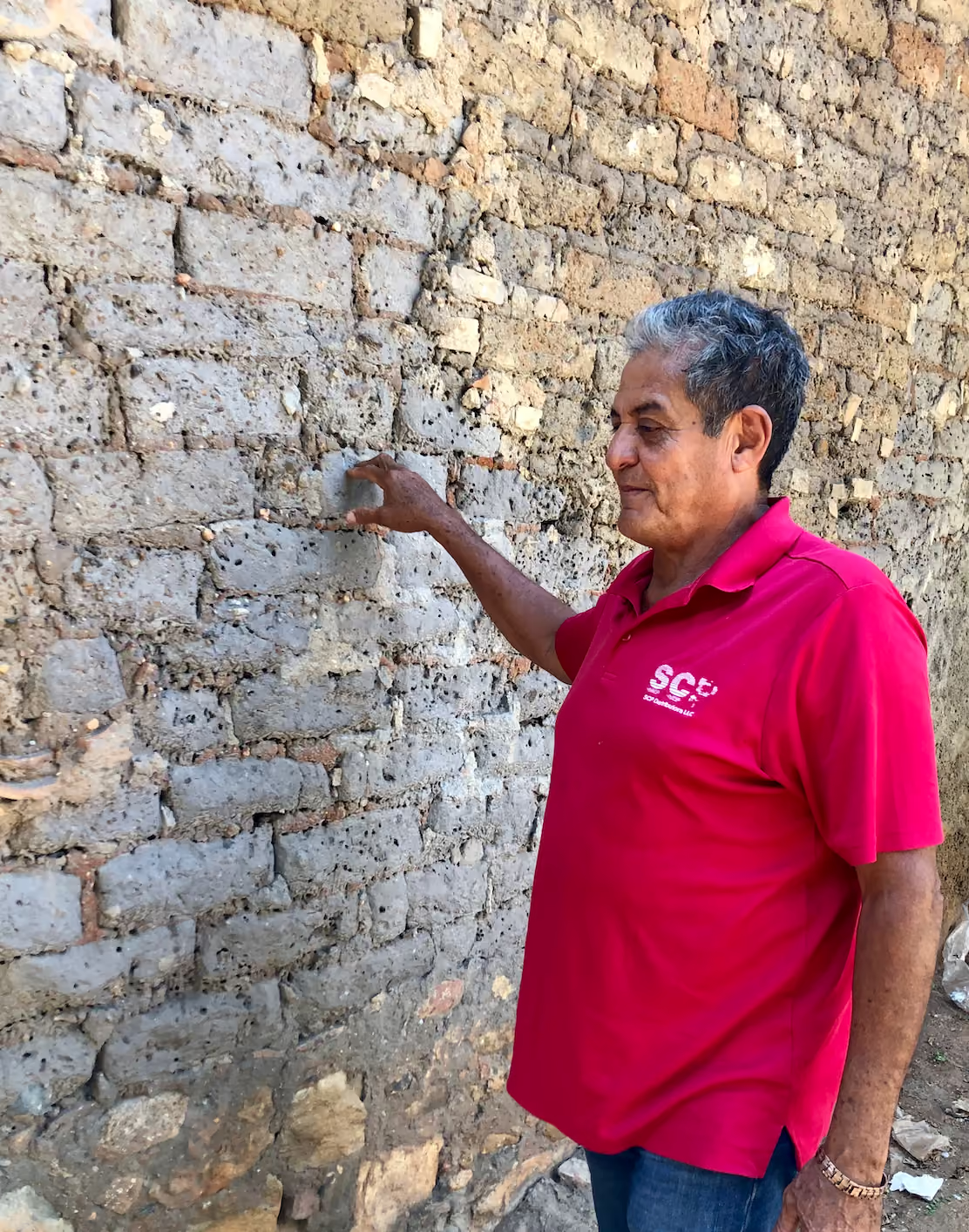
Victor Manuel Ramírez Rivera: The Man of La Boca

Angélica Pena Gonzalez: a.k.a. Angie

Santa María Rivera: Community, One Beat at a Time

Elvis “Aikeke” Rose: Music is Vibration
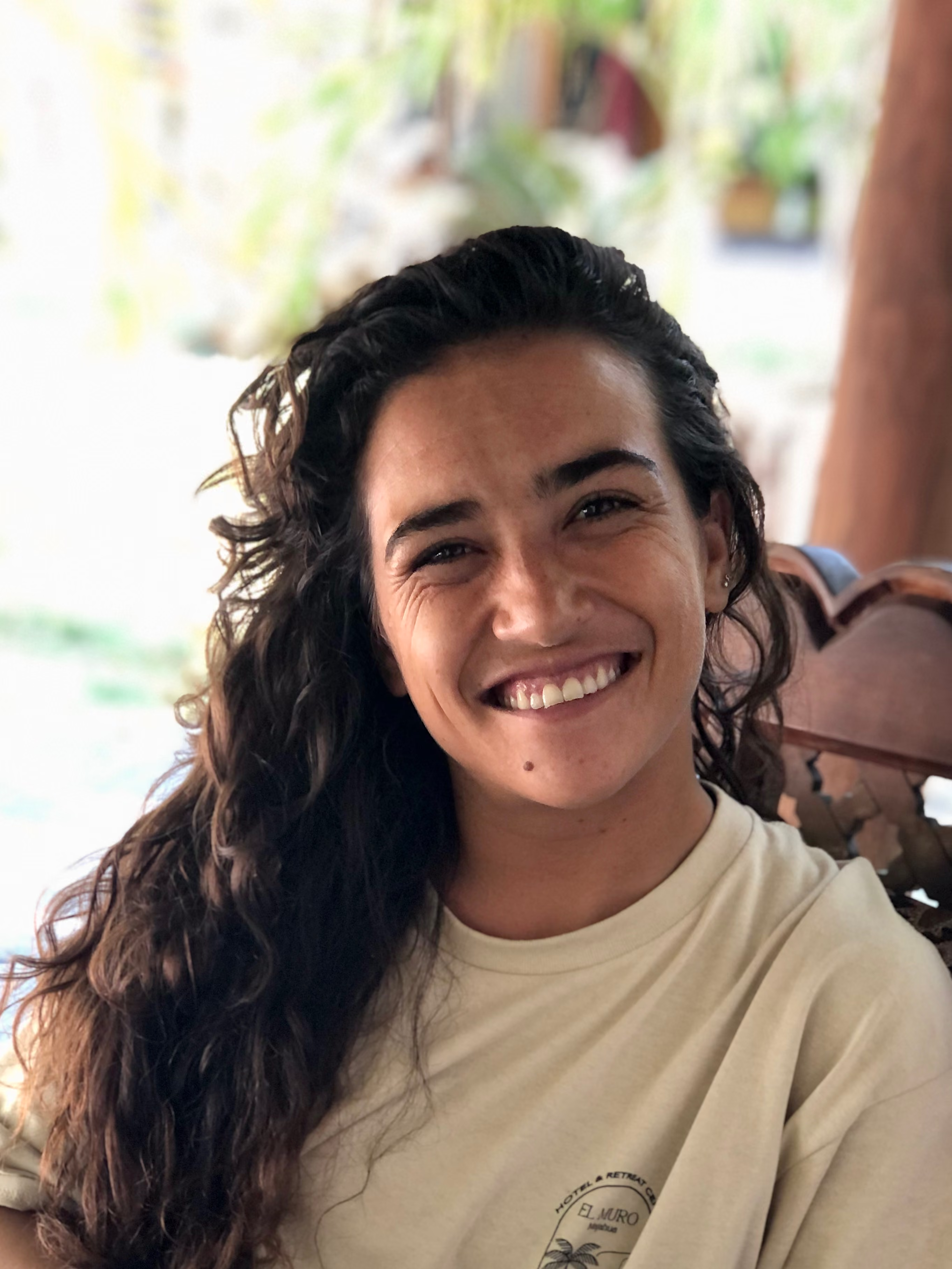
Xochil Alvarez Saunier: I Feel Safe Here
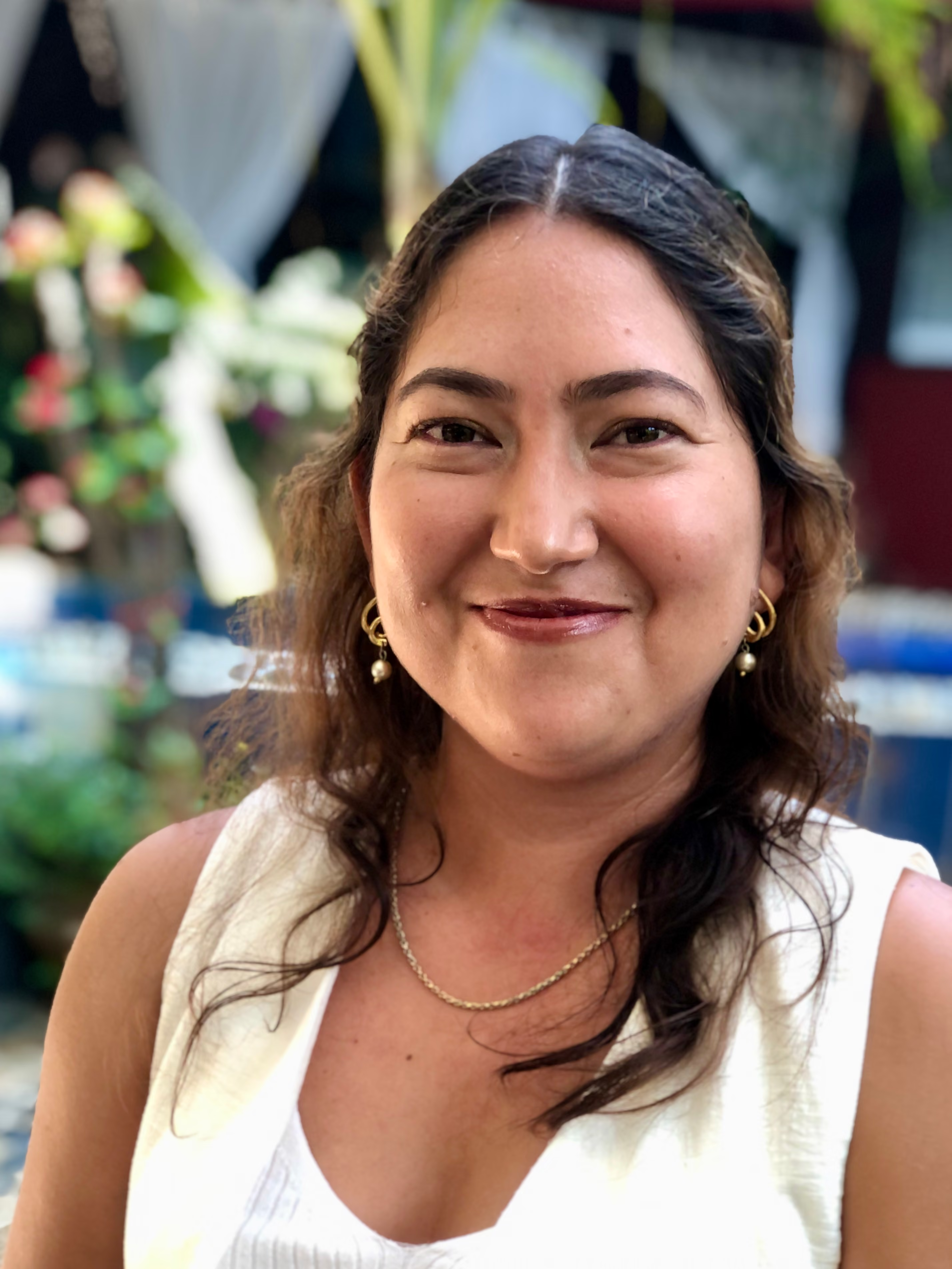
Caren Judith Díaz Rentería: La Comisaria

Patricia Fernández Suárez: Mexico Surf Film Festival Director
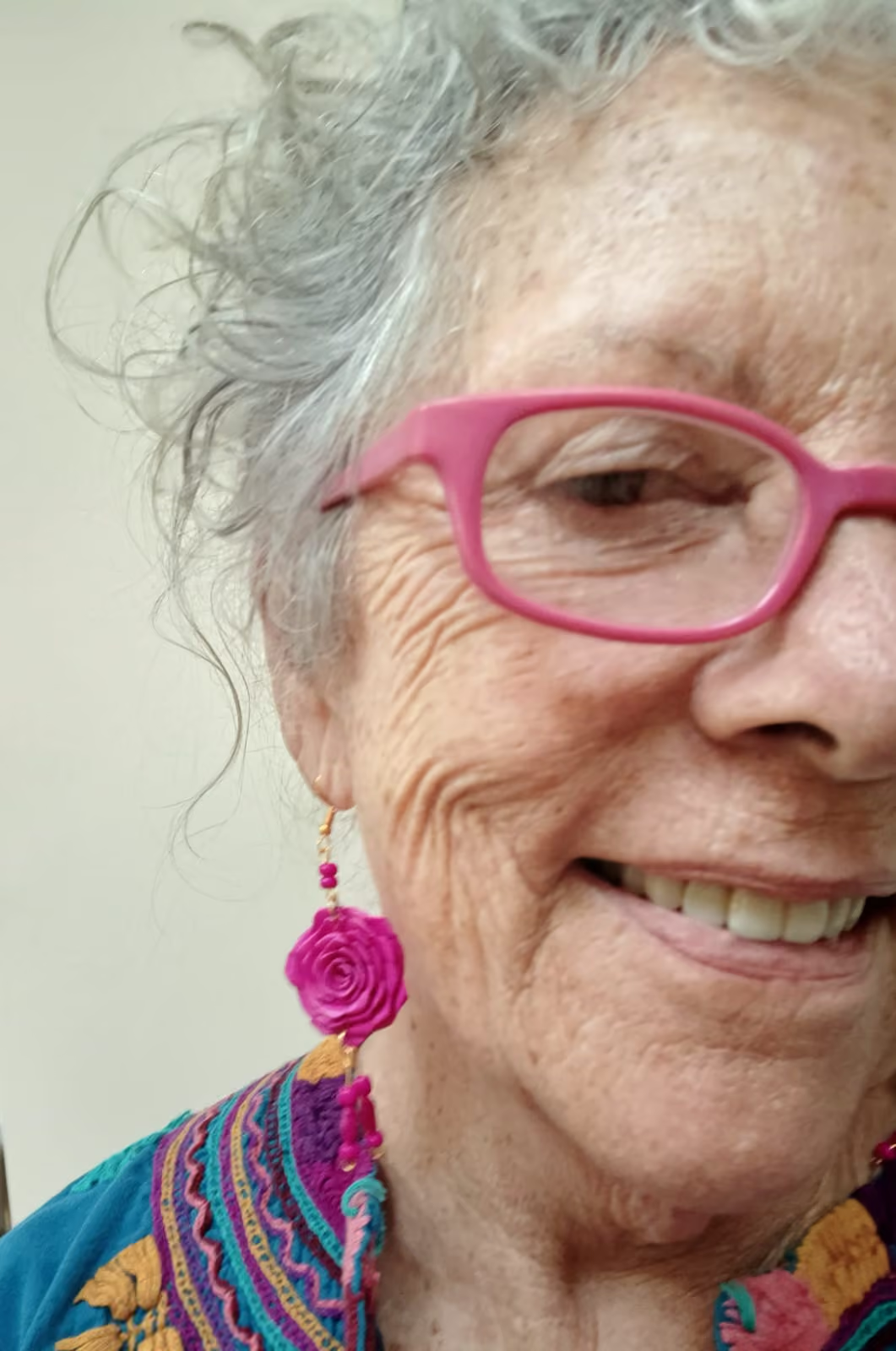
Victoria Ryan: Let Yourself Be Led

Arturo Ayala Maciel: Get Tranquilo
Barbara Lindlan: Always a Teacher
Ana Aguilar Aguirre: Anitya
Isael Vega: Doing It
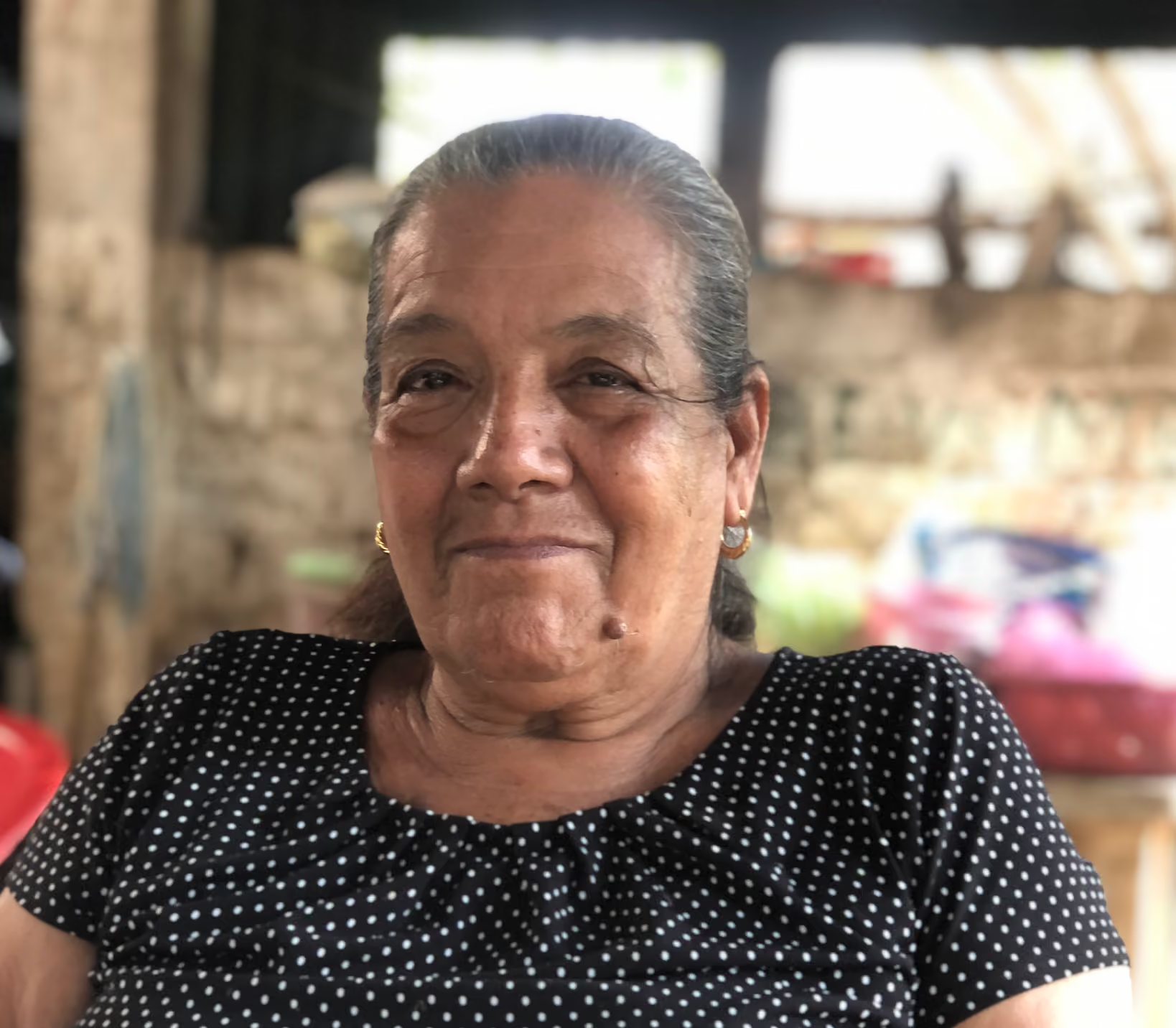
Doña Matilde: It Wasn’t Easy

Corky Carroll: Stoked
.avif)
Jesús Santana Morales: Coach Chucho

Bill Landrum: A Dancer’s Way

C.J. Ananda Page: The Present Moment
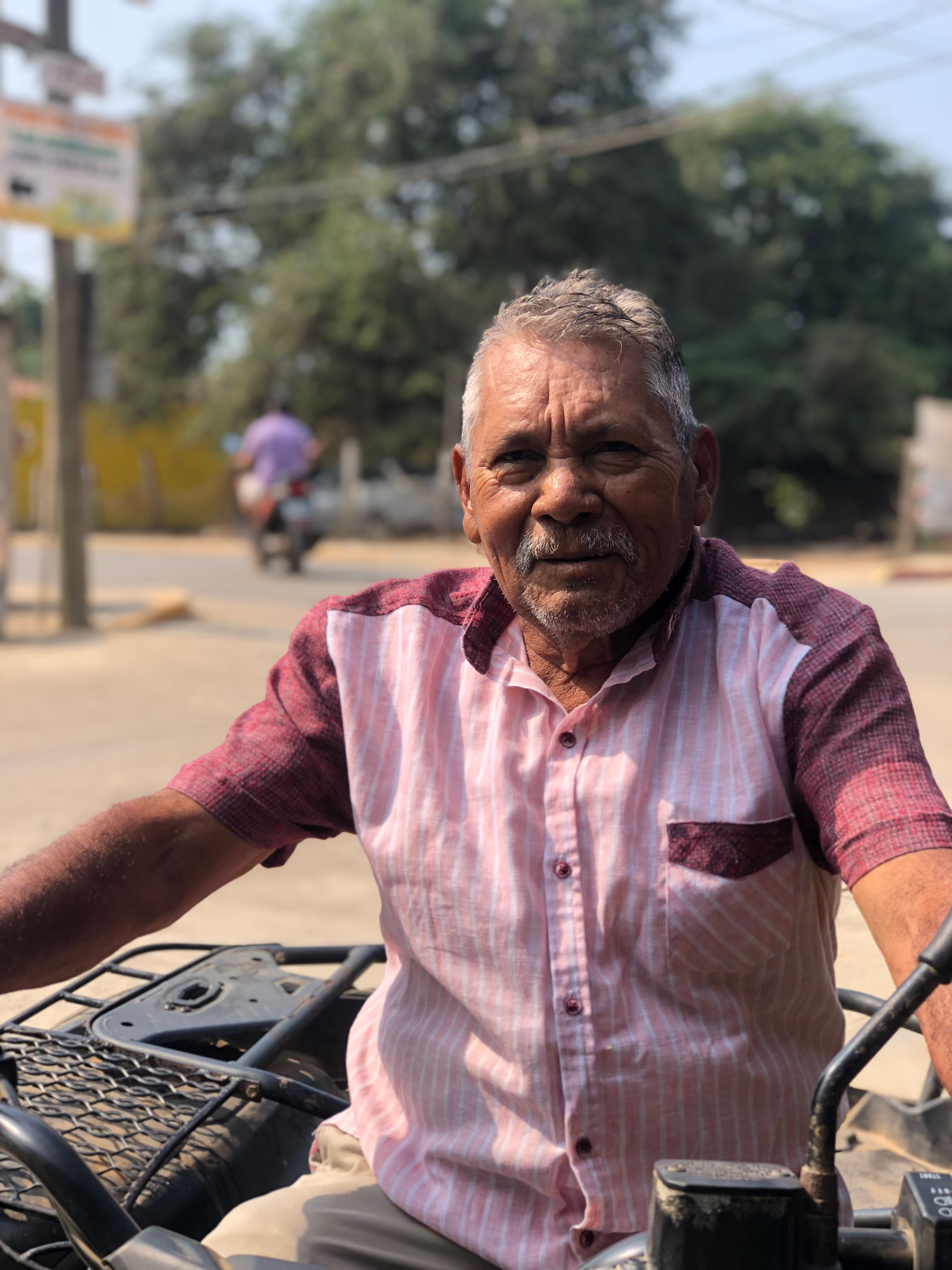
Ventura Manzanares Garcia: "They Call Me Ventura"

Meta: The Real Mari Carmen Hernandez
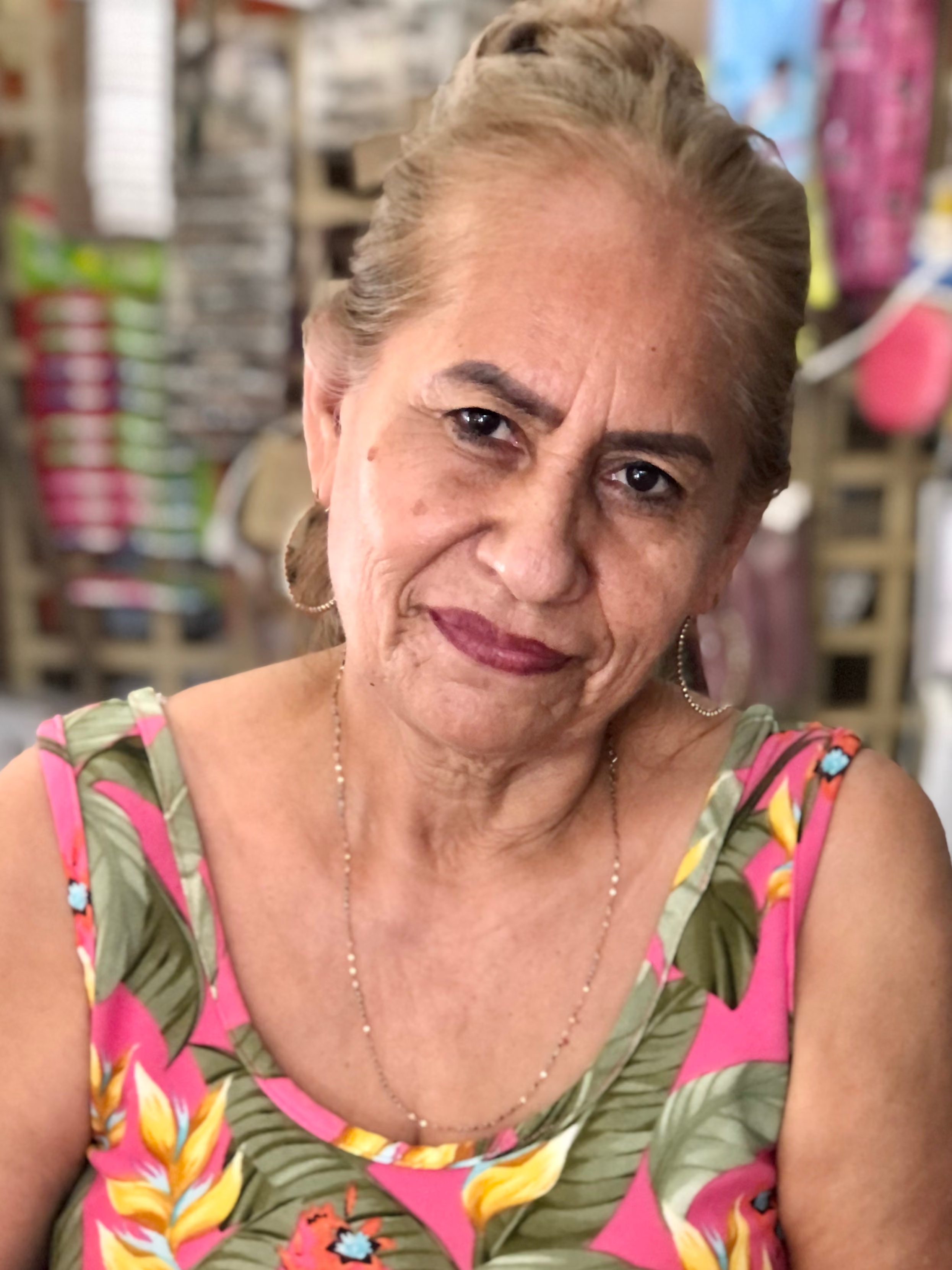
Super Maria Solis: A Toda Madre
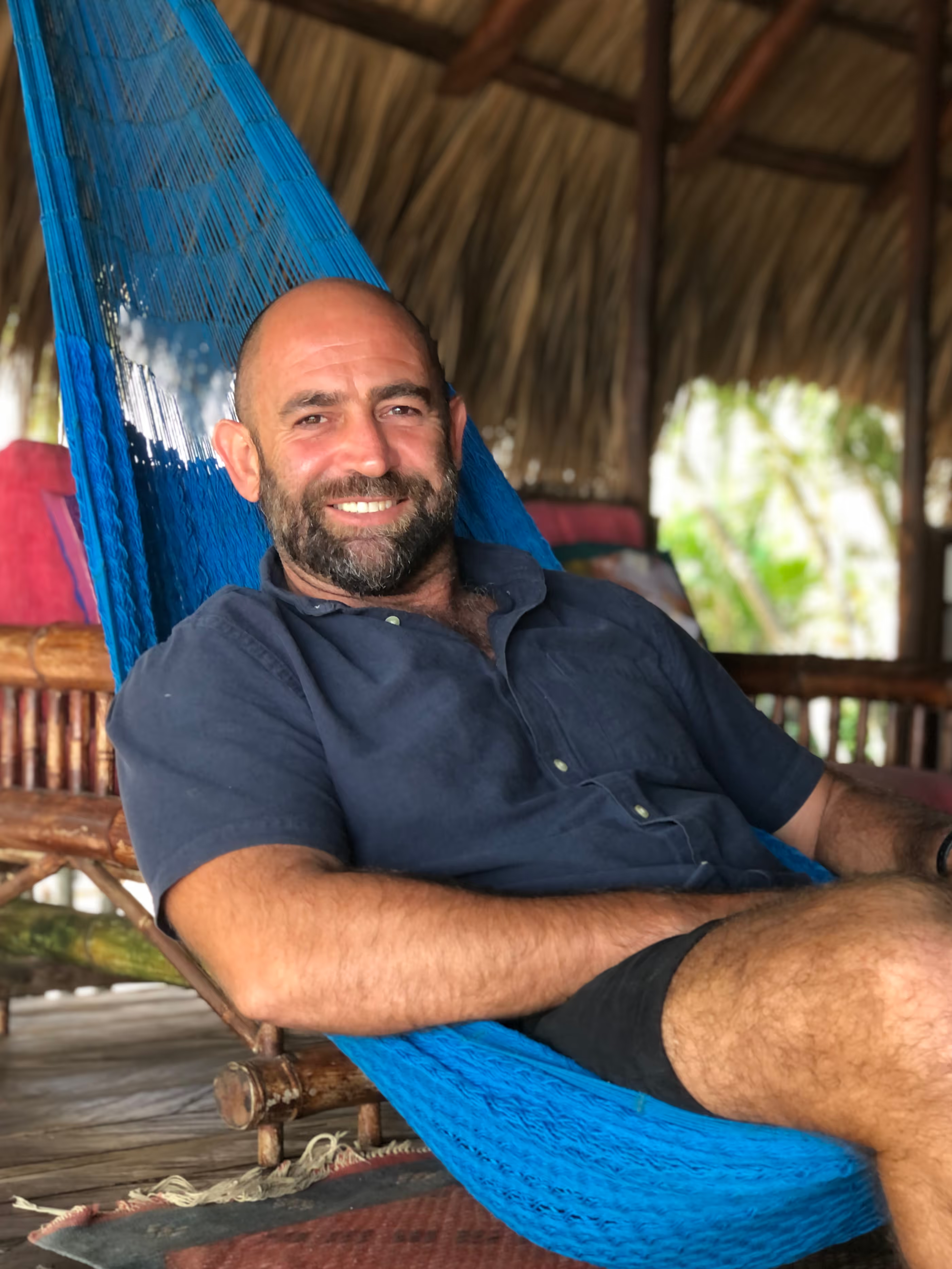
WINTER RAMOS: MAN ABOUT TOWN
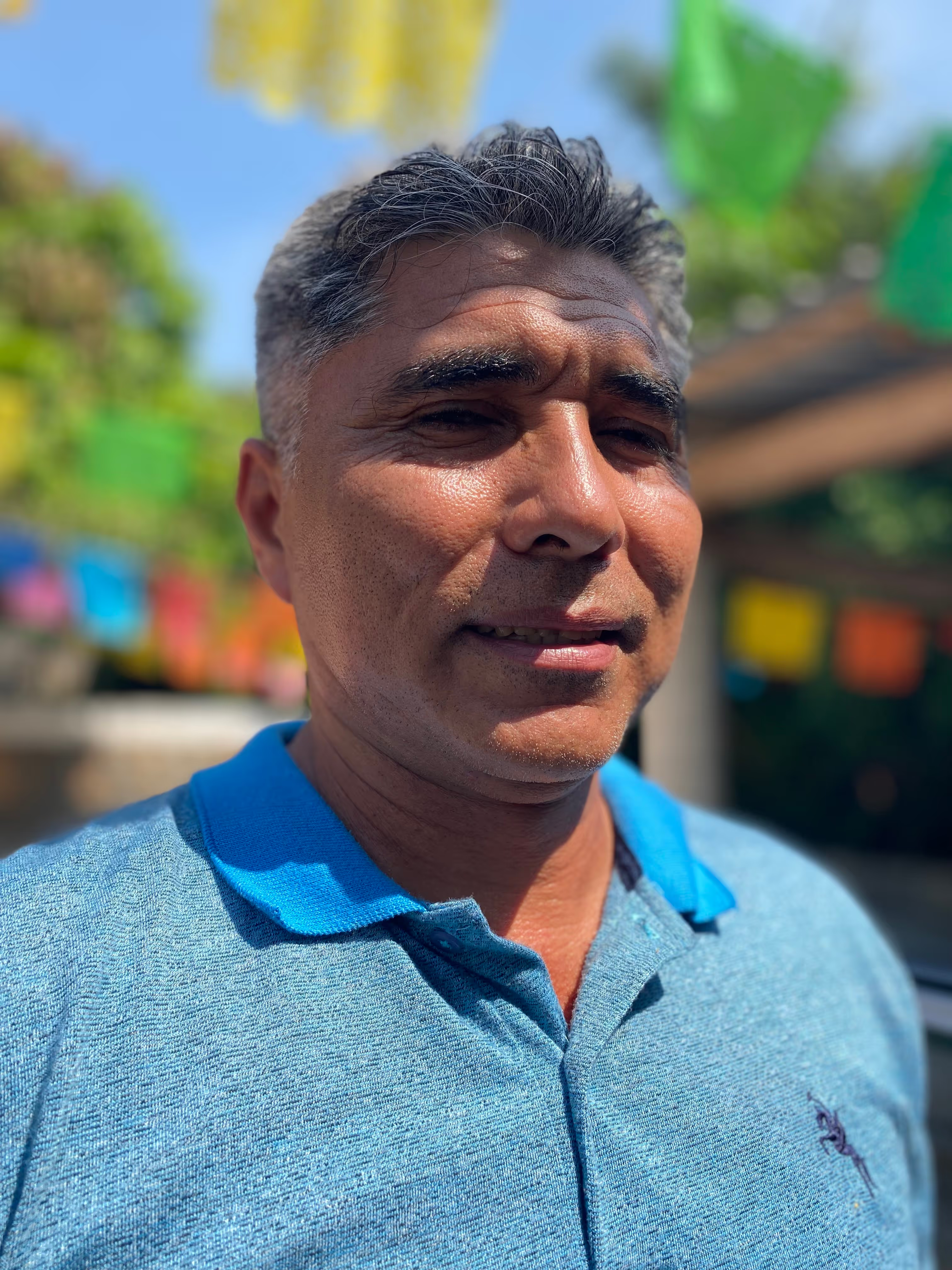
J. Santos Jaime Sánchez: More Lessons
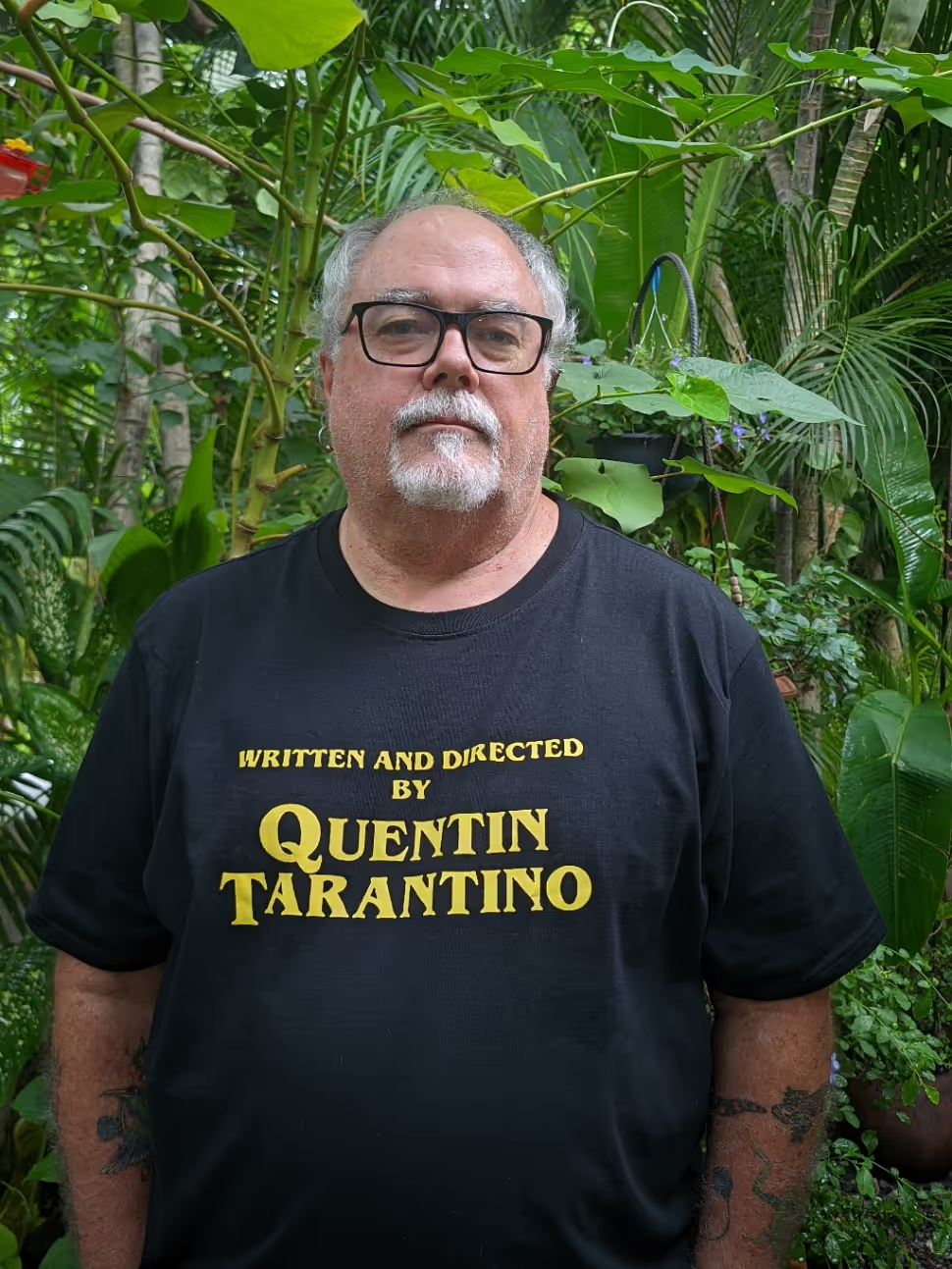
William Mertz: Artist & Naturalist

J. Santos Jaime Sánchez: Lessons Learned

Ilianet Nuñez Valdovinos: Surfing Queen

NICO SAUCEDO: GYM IS LIFE
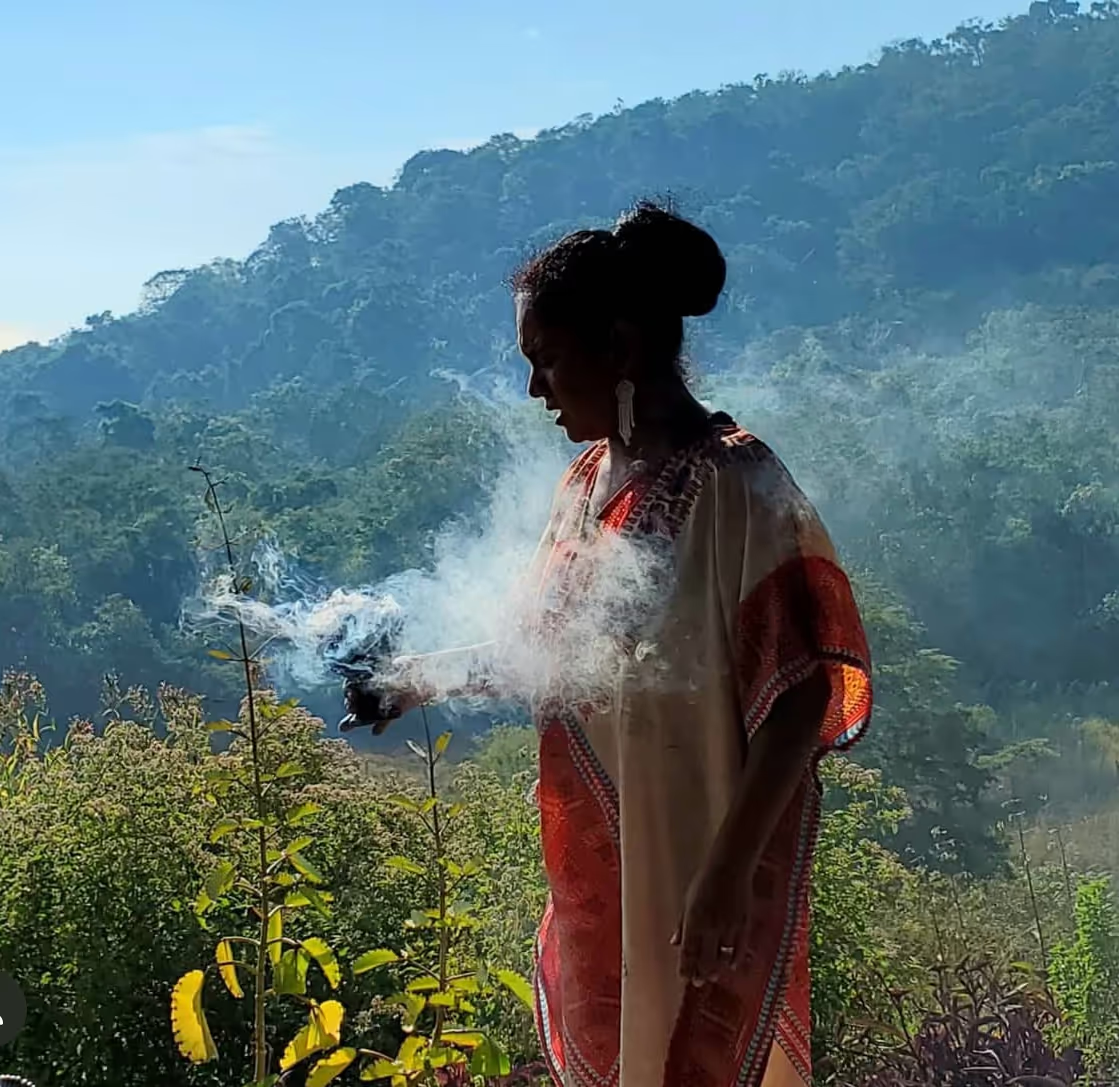
Fanny Rivera Plascencia: For Modern Healing
%201.17.25.avif)
Ligita Lapé: Following Cacao

%2023.16.54.avif)
AMANDA HARRIS: ORGANIC FARMER
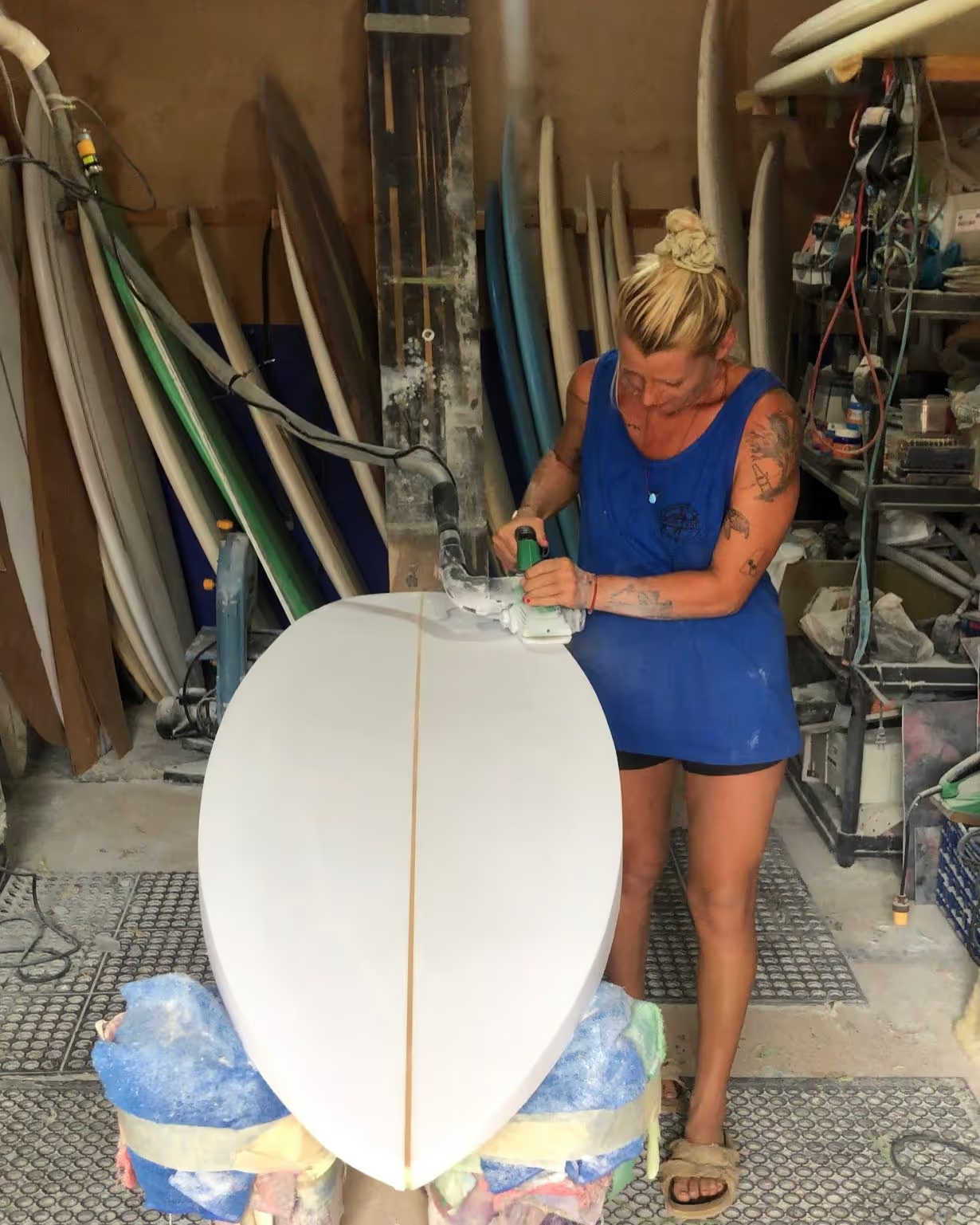
ELFI TEUTSCH: HAPPY ENTREPRENEUR
%2013.19.36.avif)
DEWEY McMILLIN: ESCAPE TO TRONCONES

Enedino Sánchez: Master Gardener, Quiet Hero, the spirit of troncones



















.avif)
.avif)




.avif)

.avif)
.avif)
.avif)
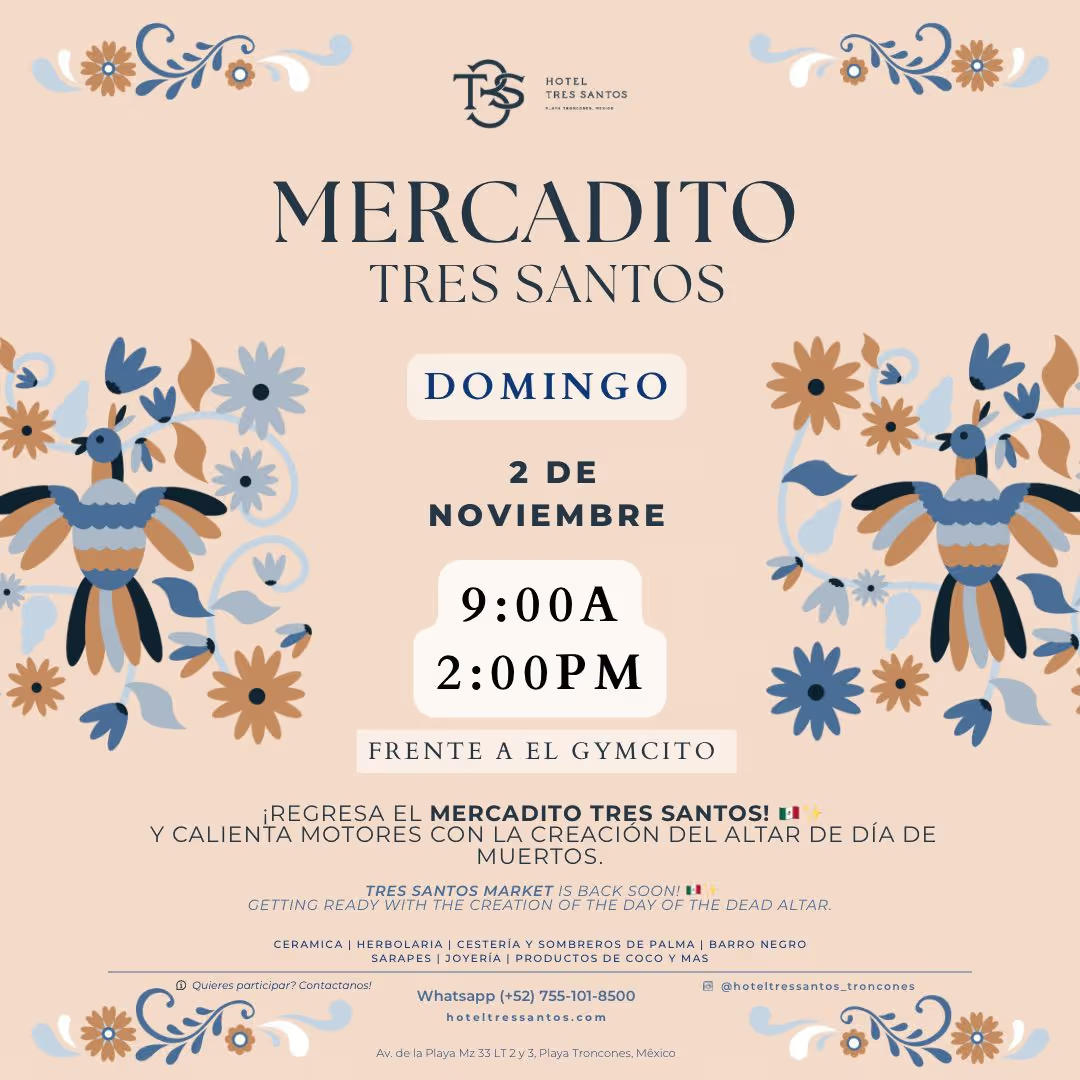



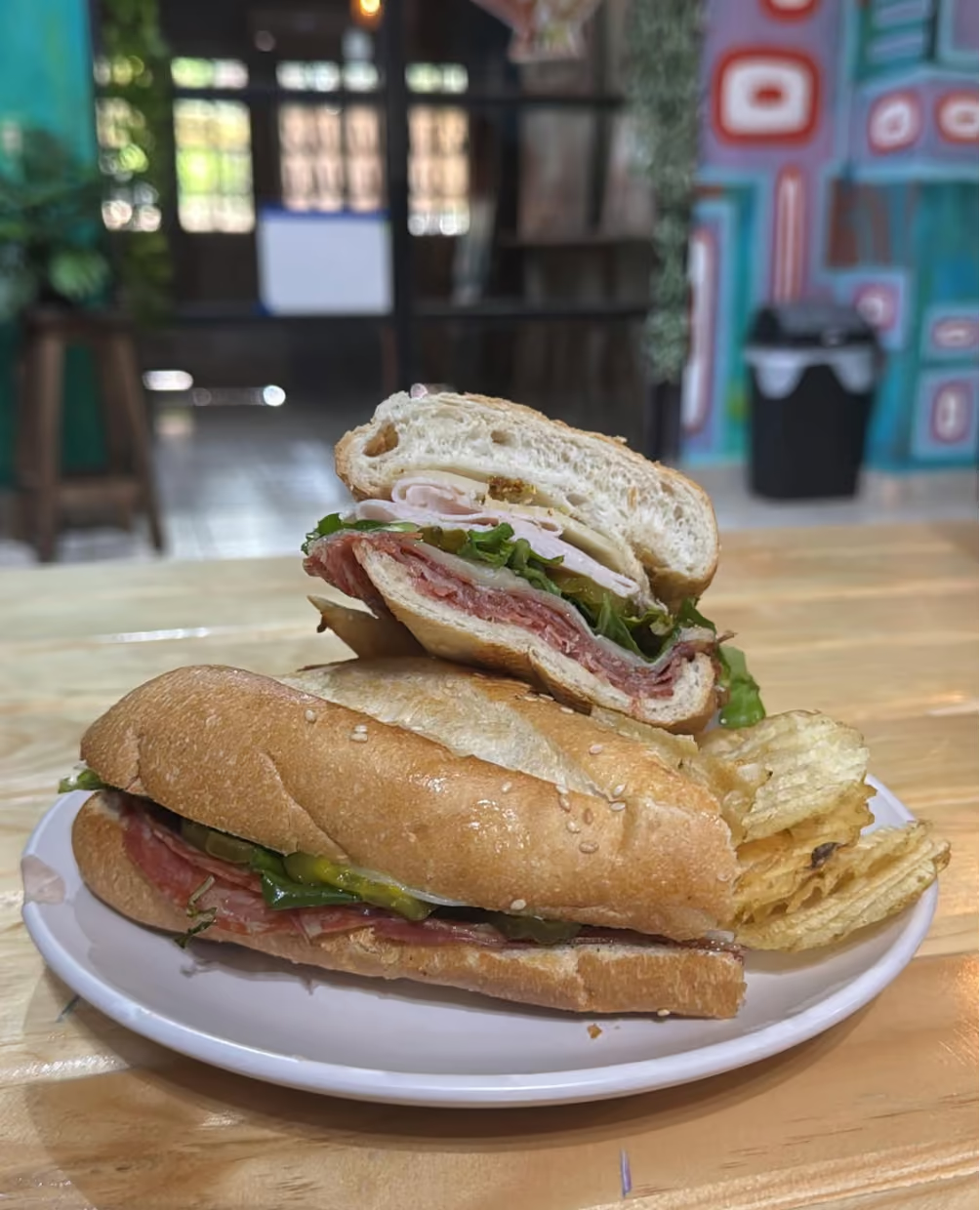
naufragio sandwiches
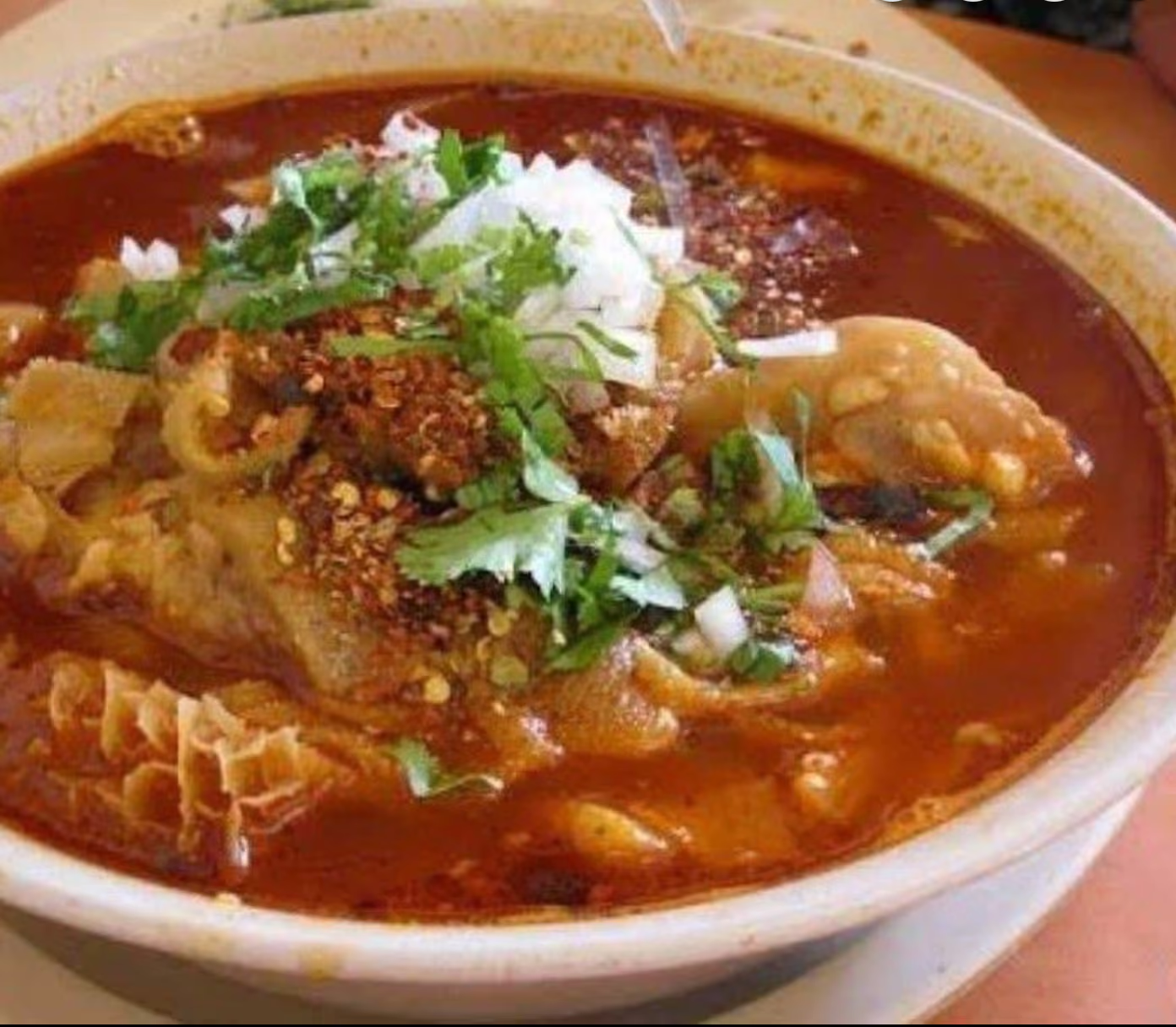
Fonda Vero
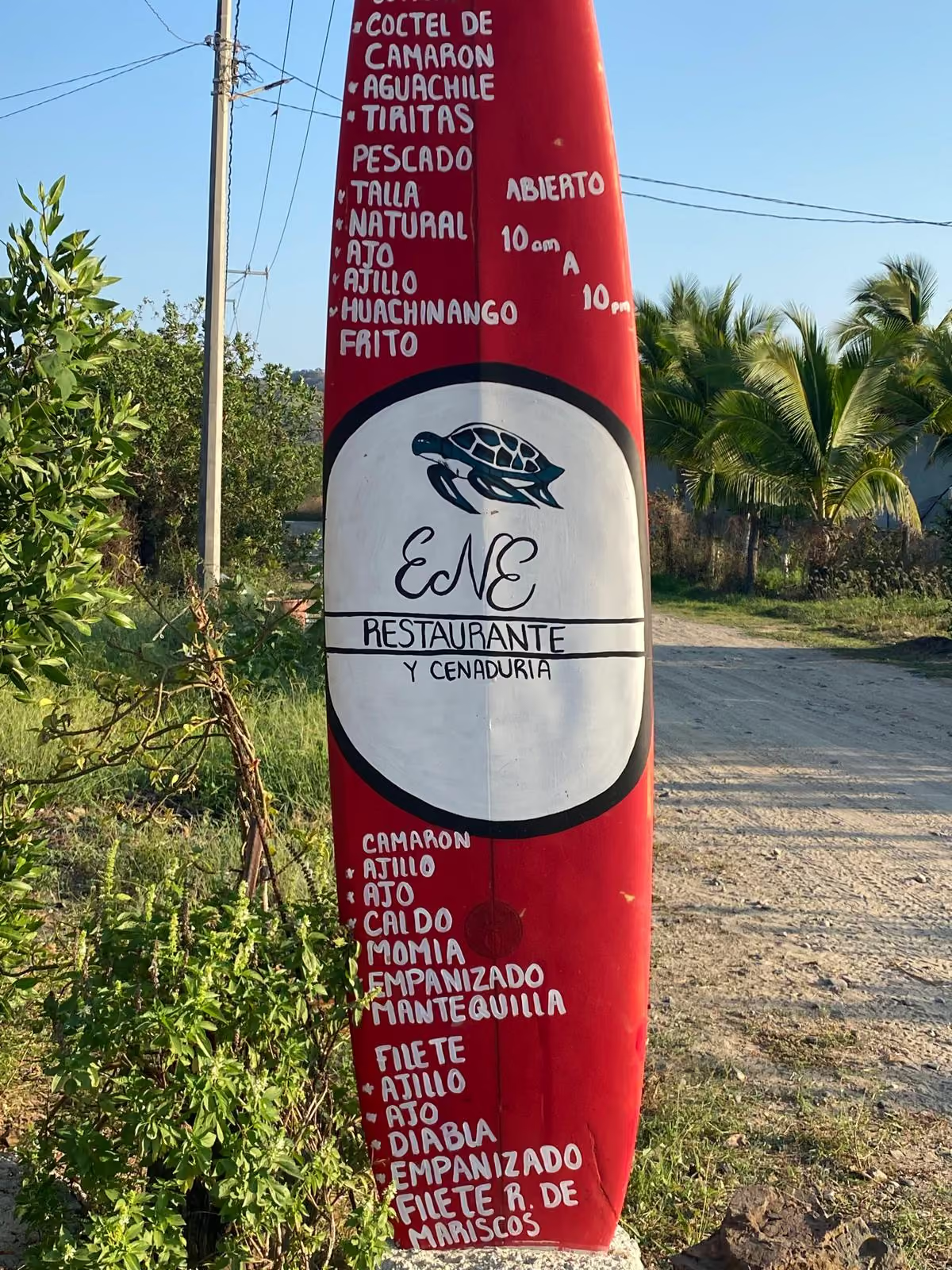
Ene Restaurant y ceneduría
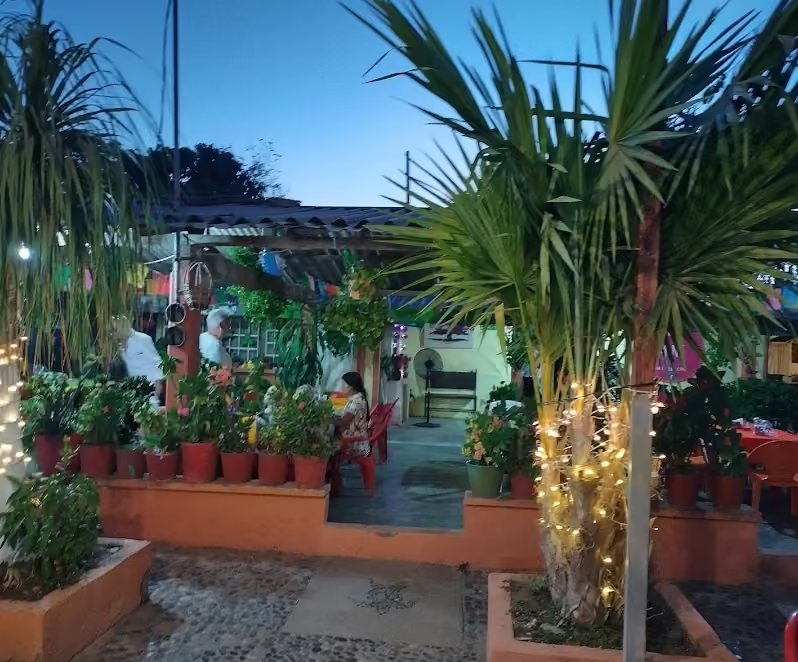
ceneduría mine
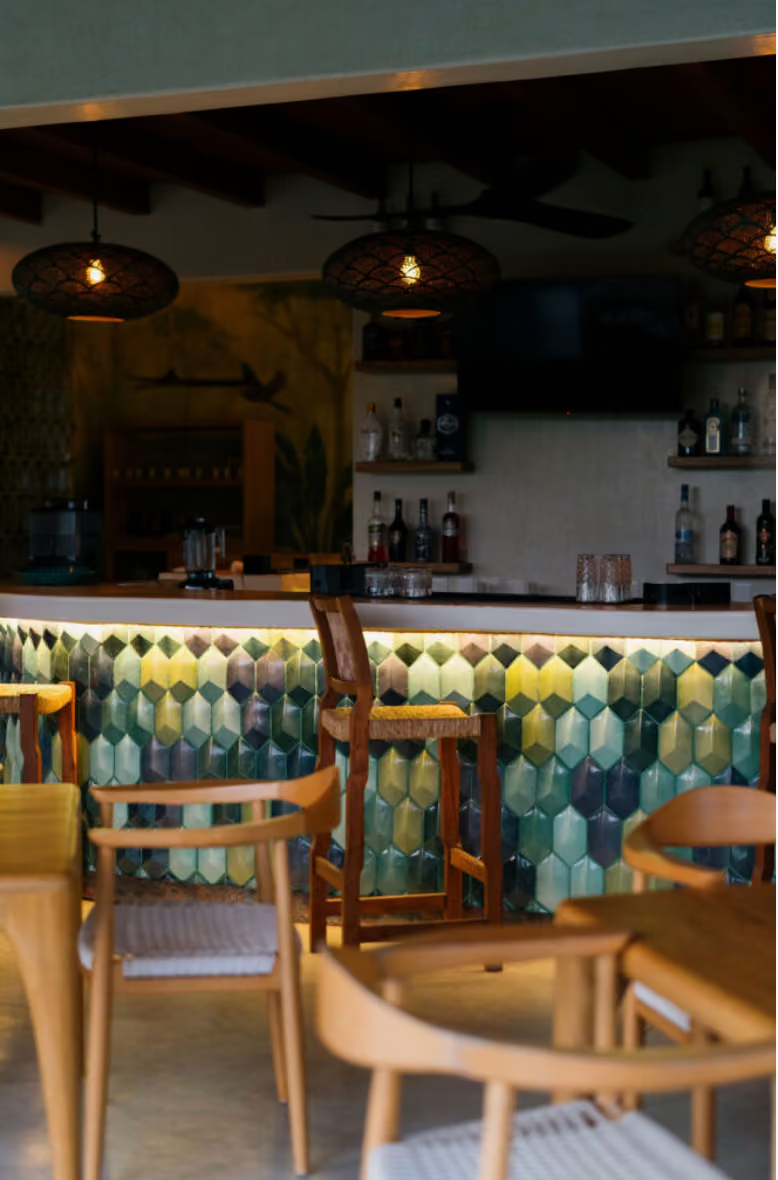
Samas Lasal
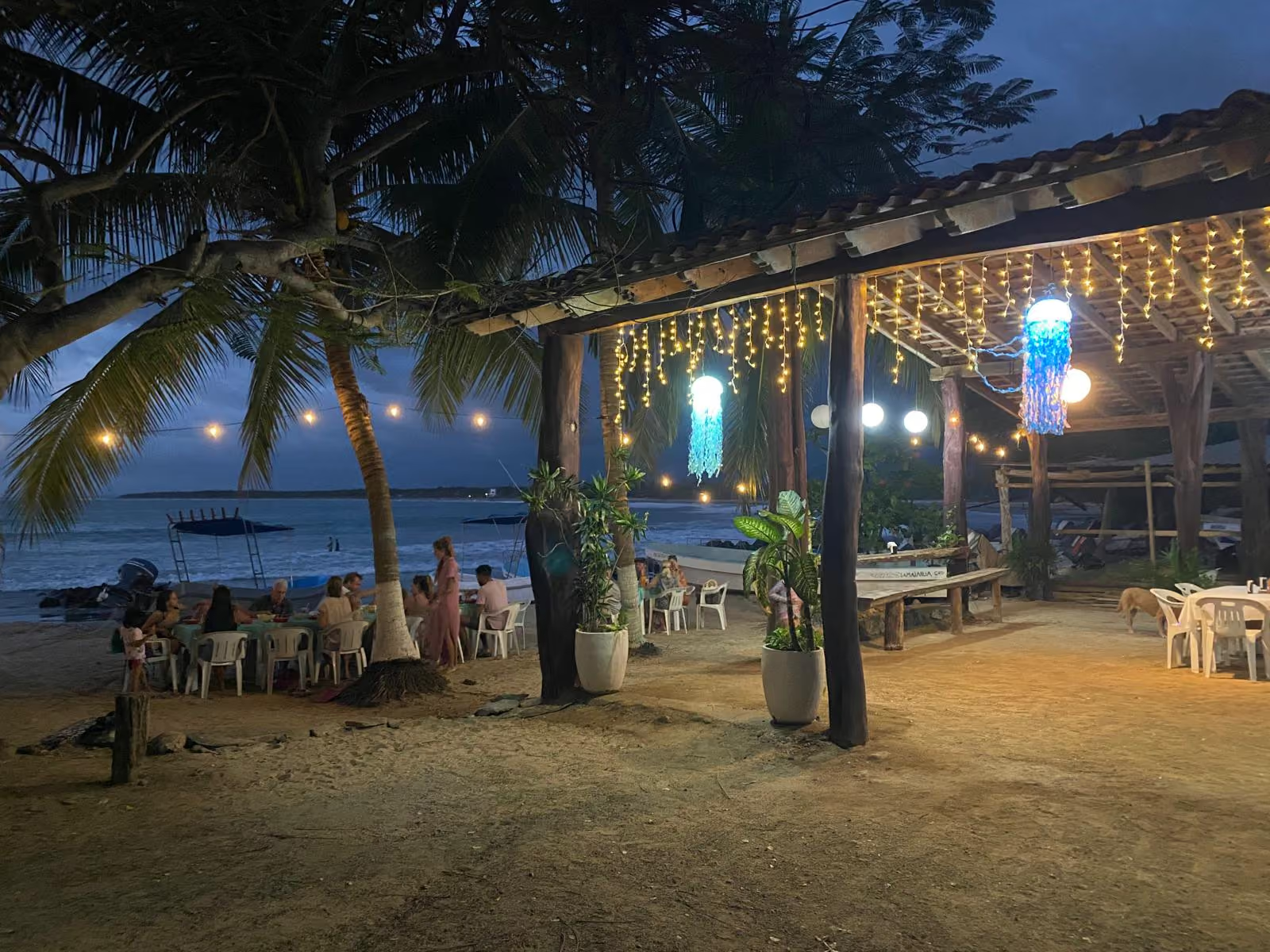
embarcadero restaurant
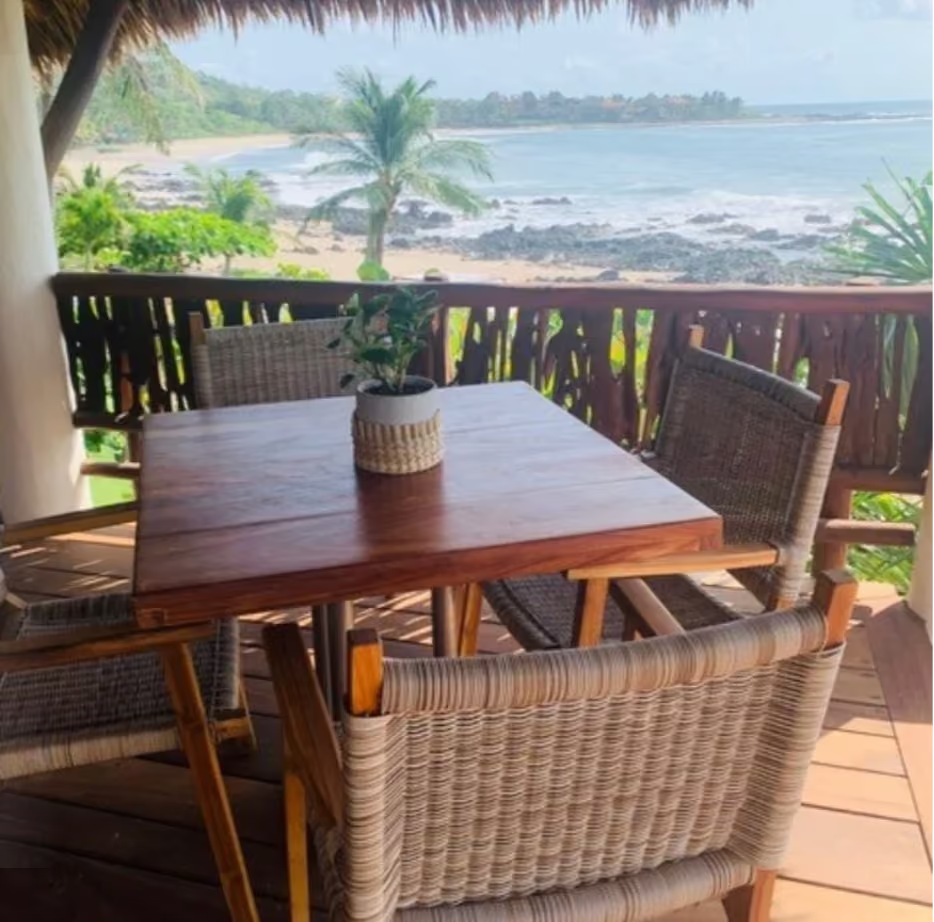
casa manzanillo
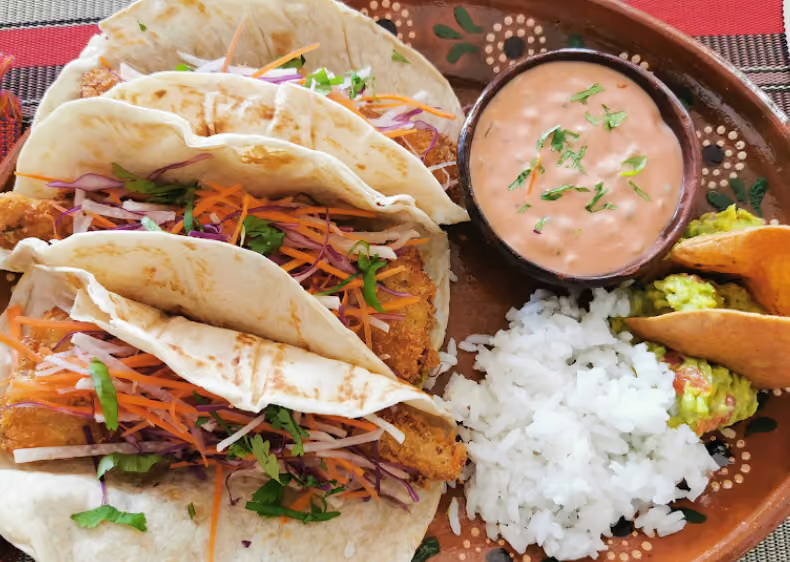
los raqueros
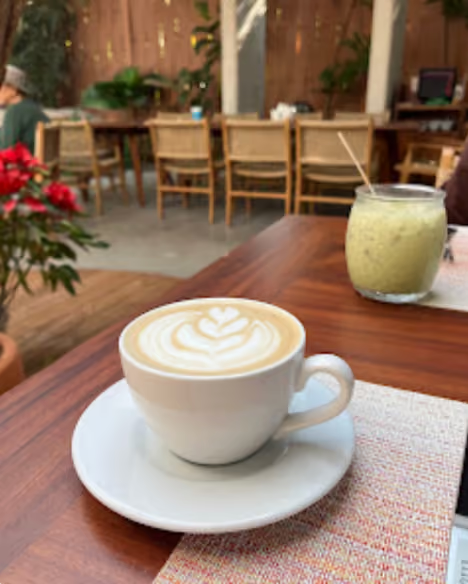
Cuattro
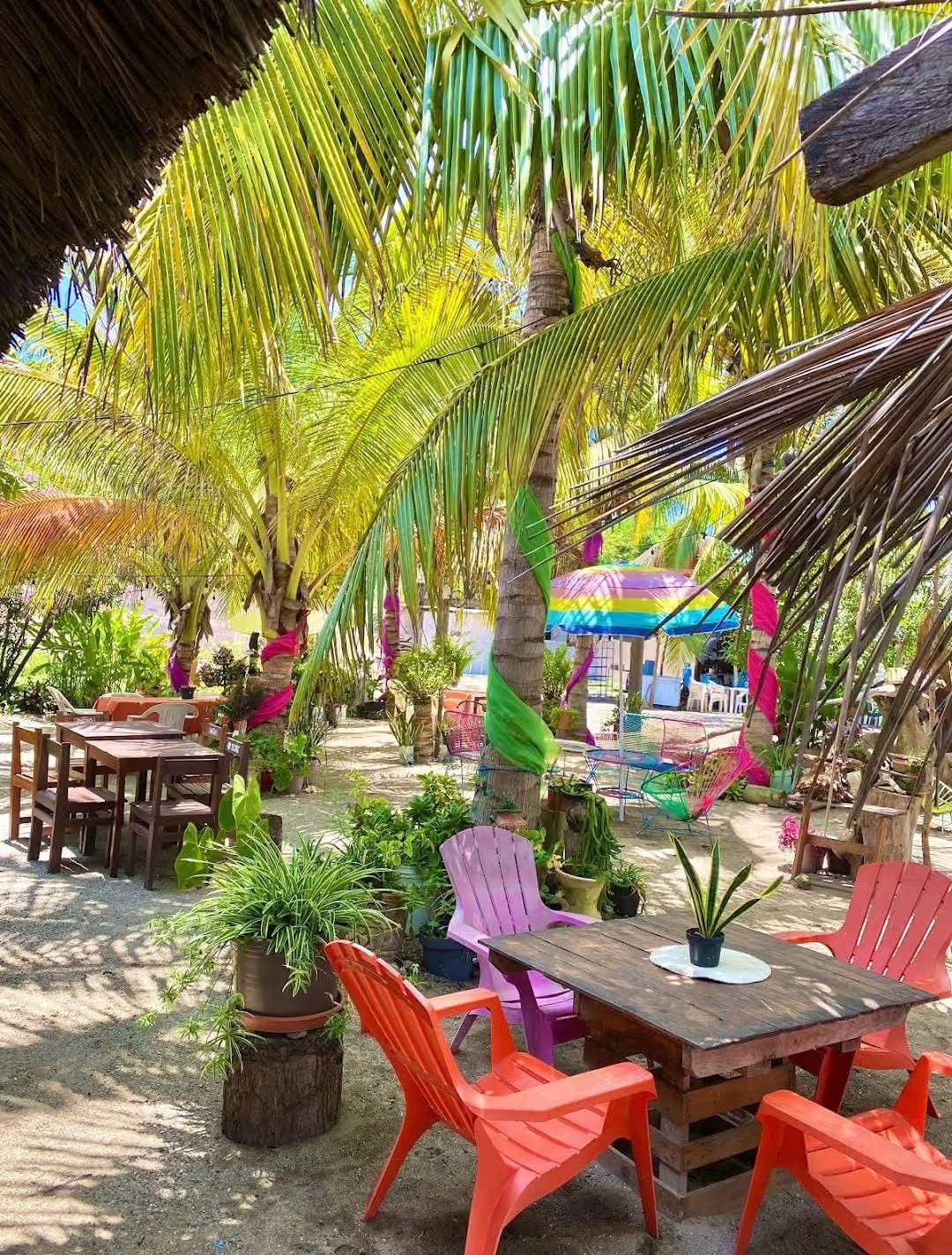
jovita y pancho
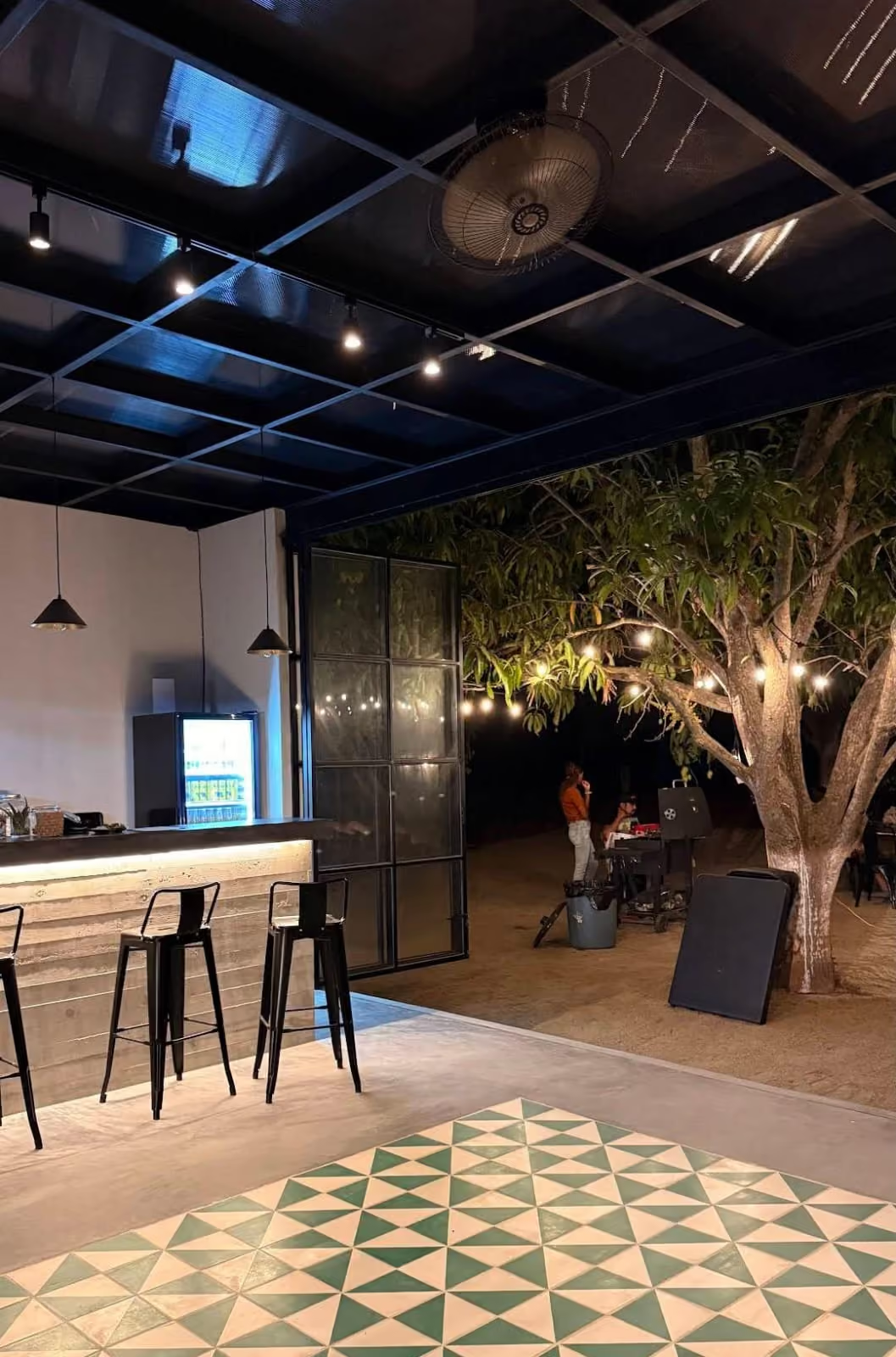
Acadia
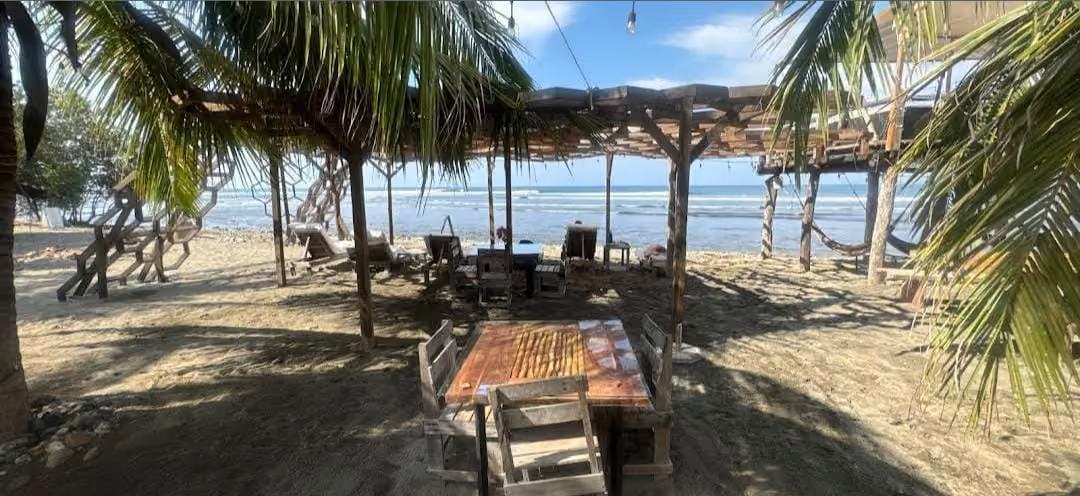
marea
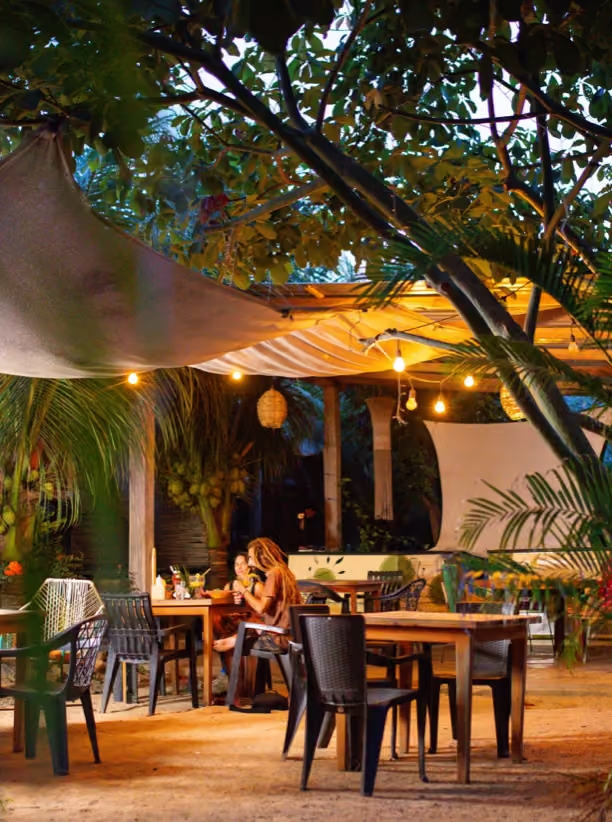
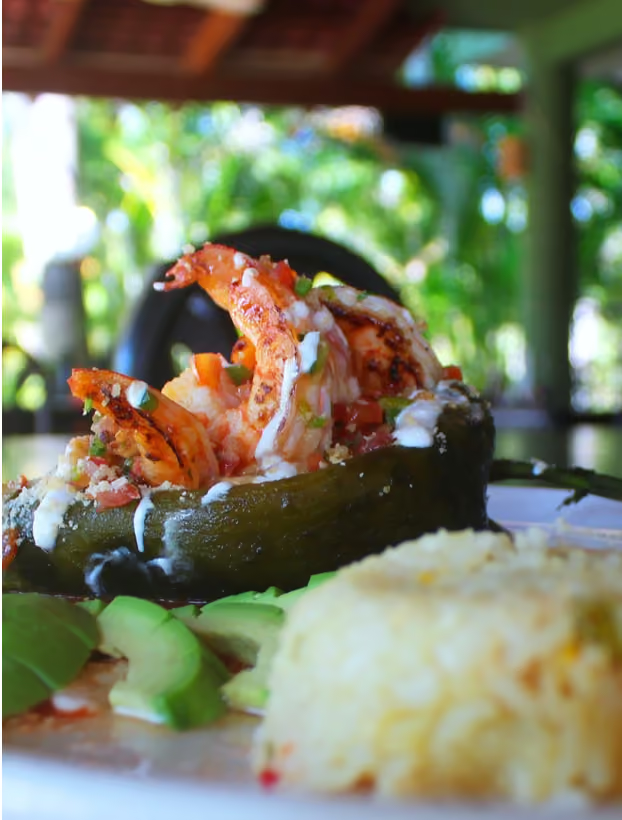
Majahua Palms hotel and restaurant

Aqua restaurant and bar
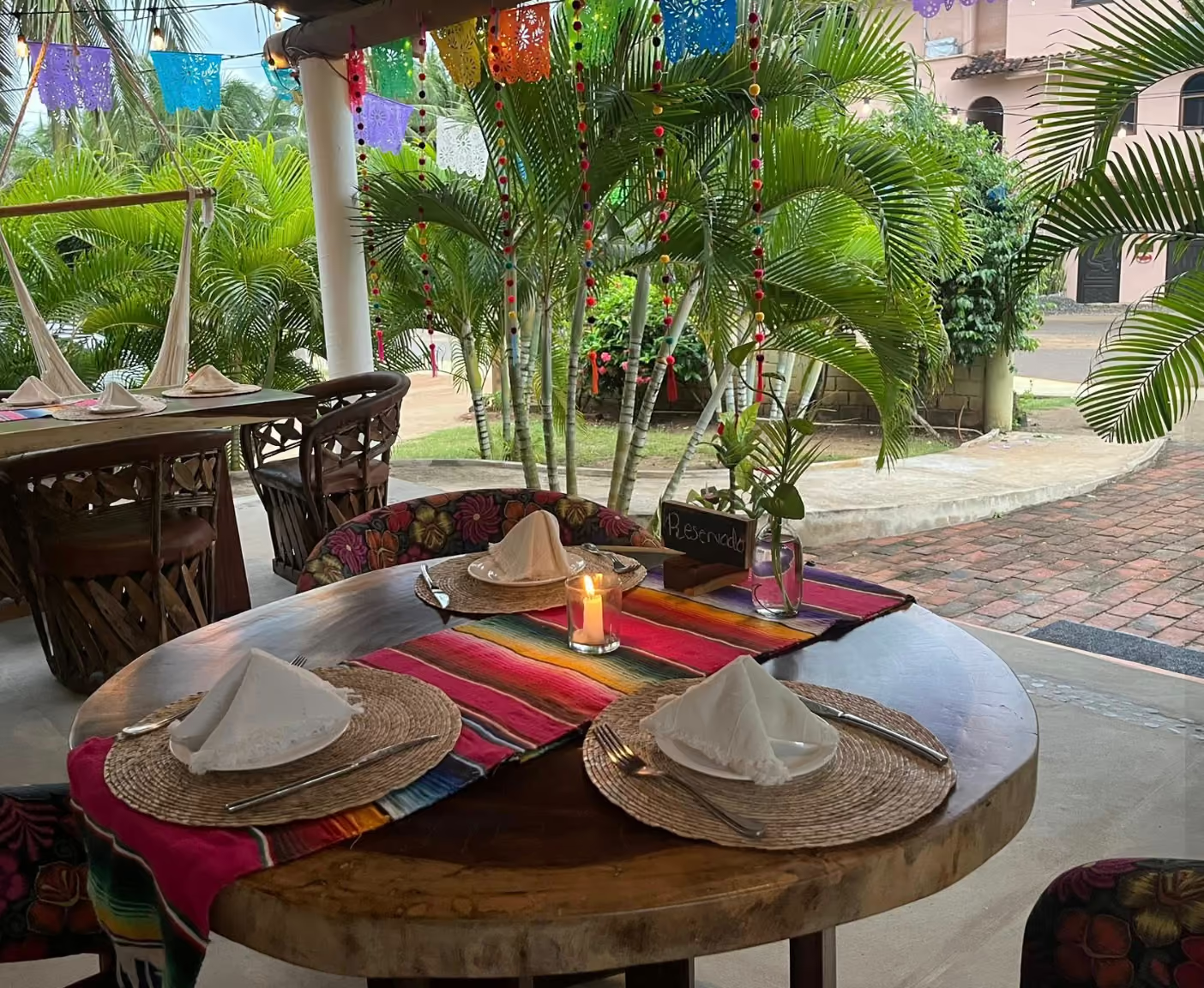
La Mexicana
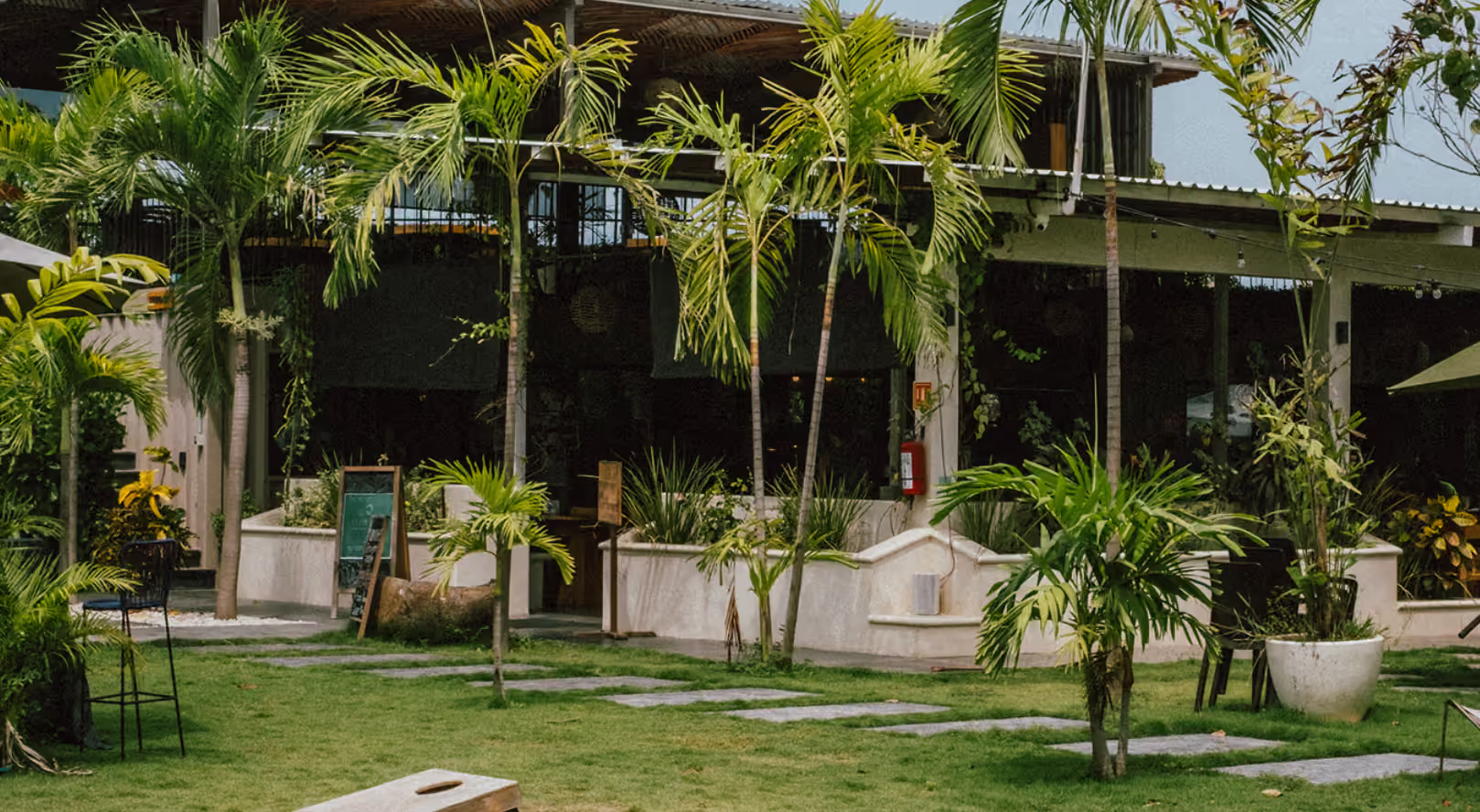
Hacienda coffee and tea
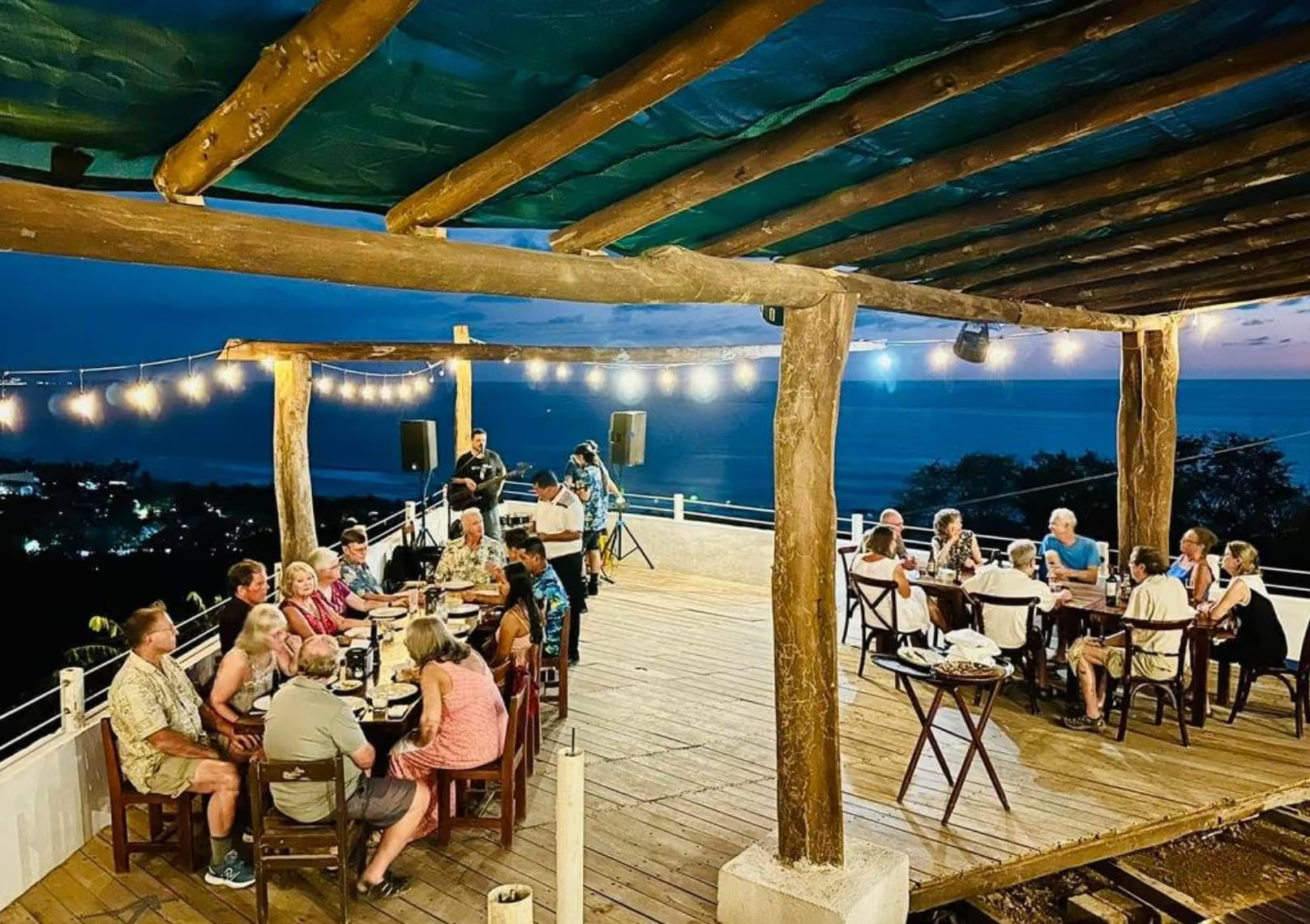
Robertos Bistro
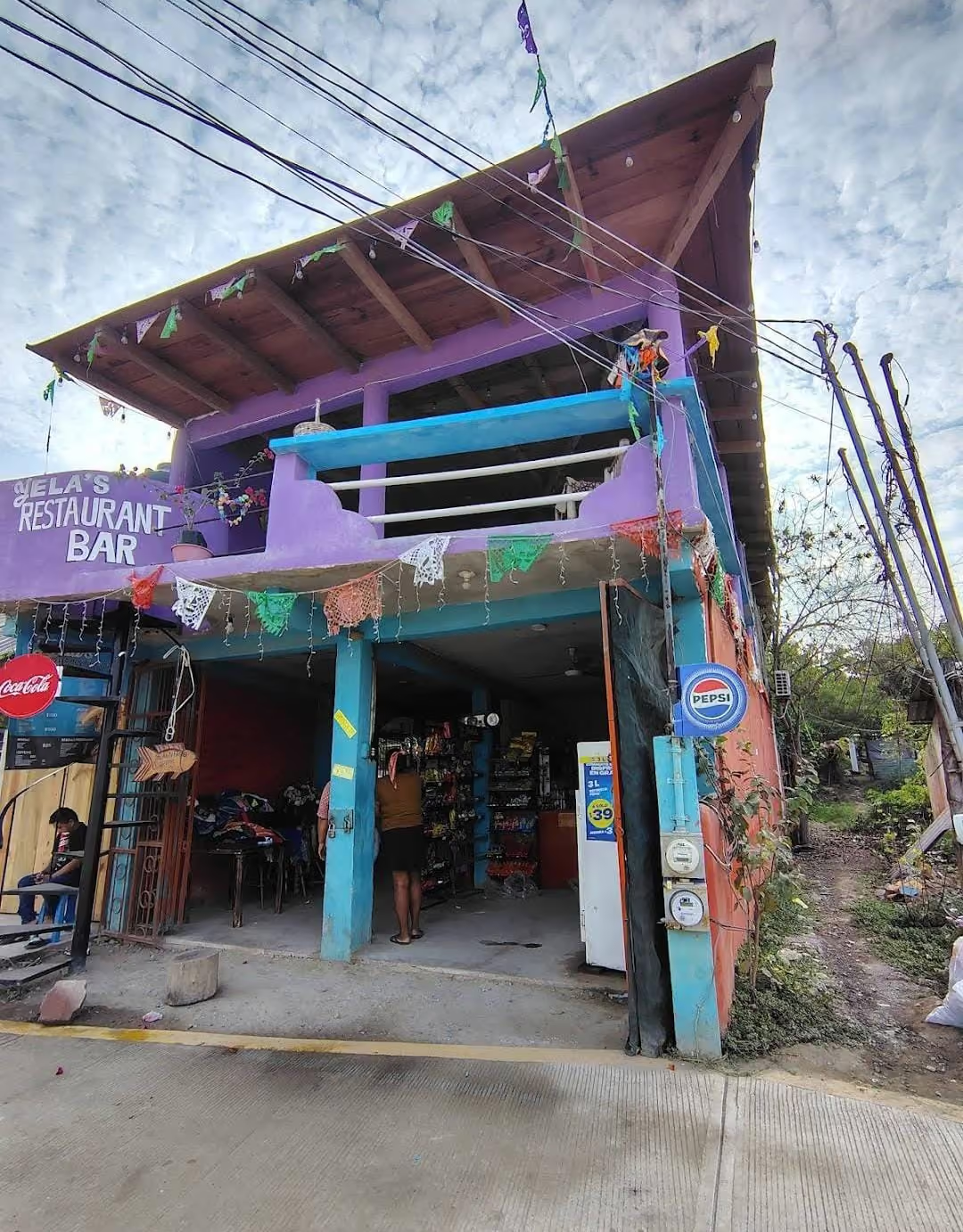
yelas
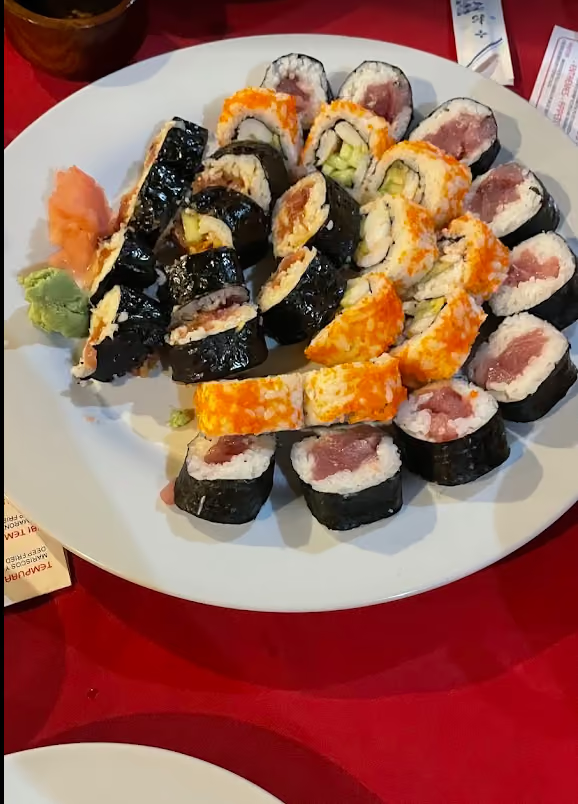
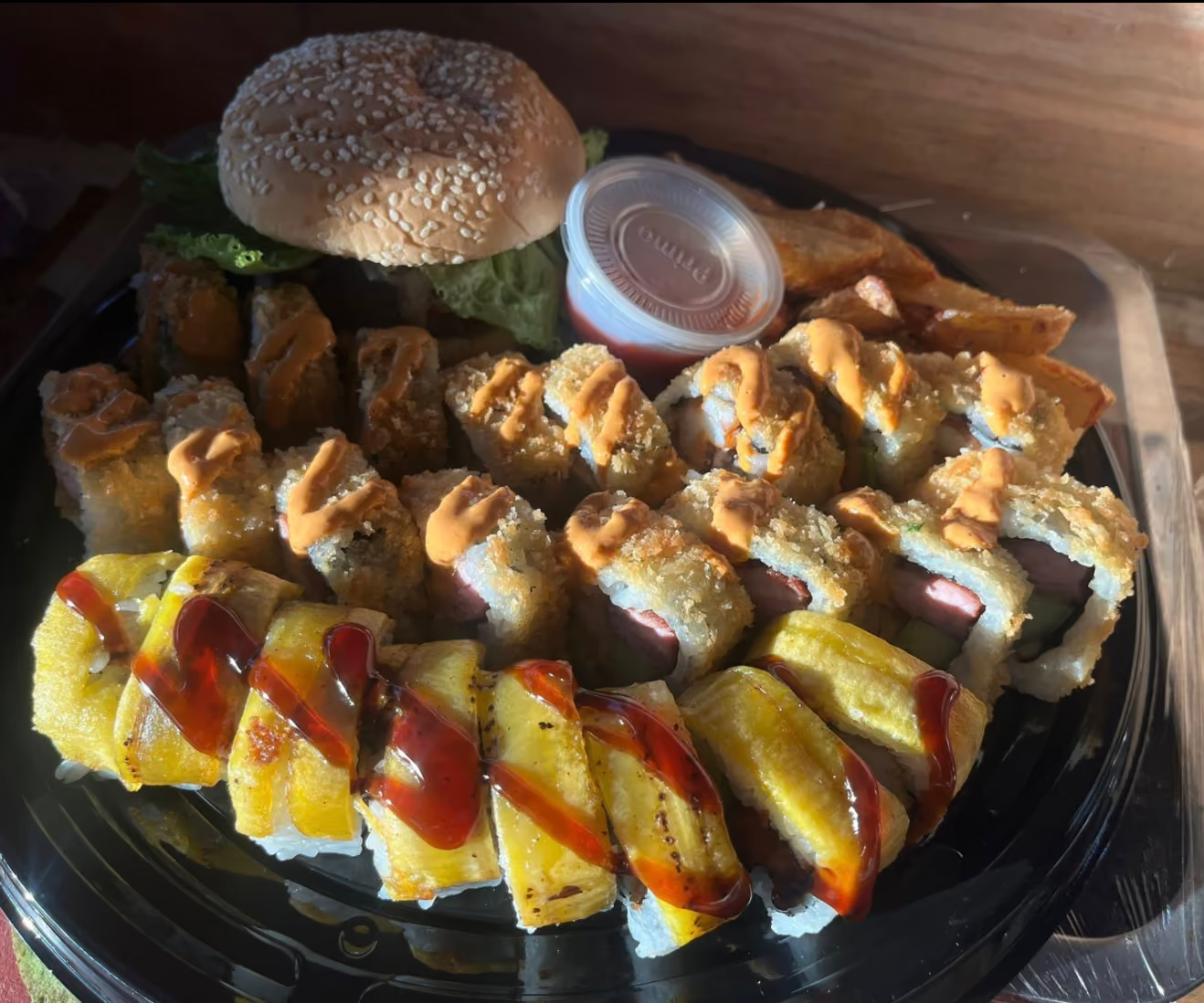
Tronko Sushi
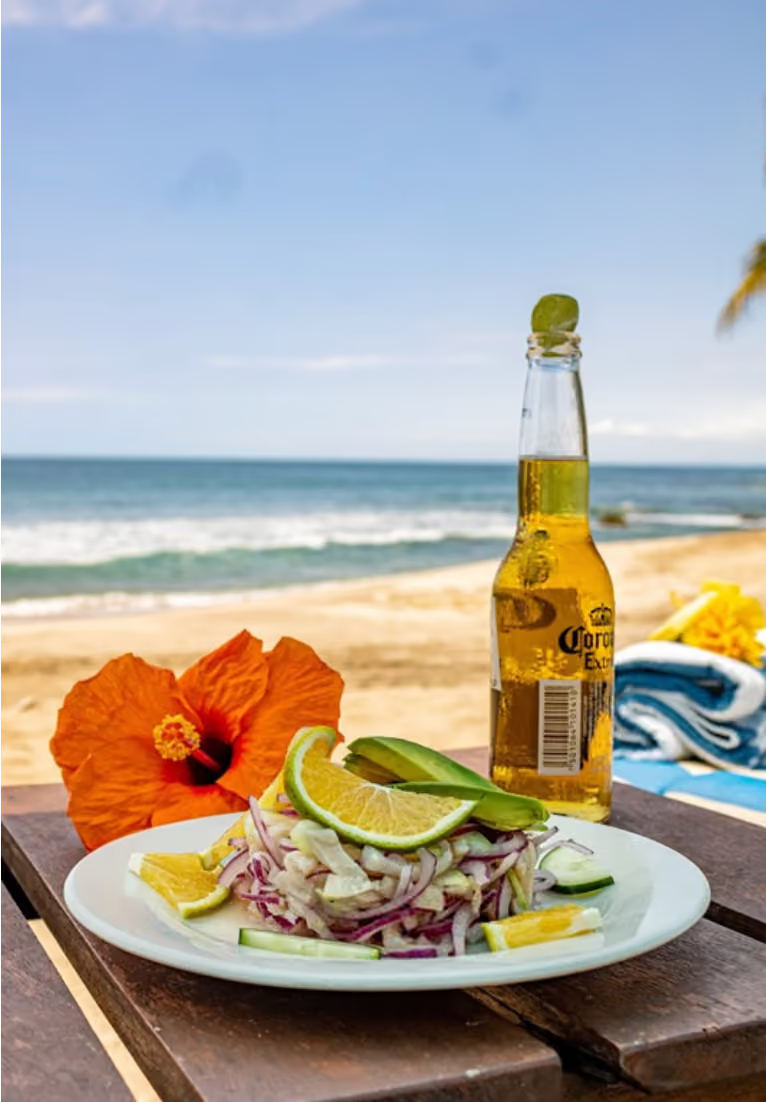
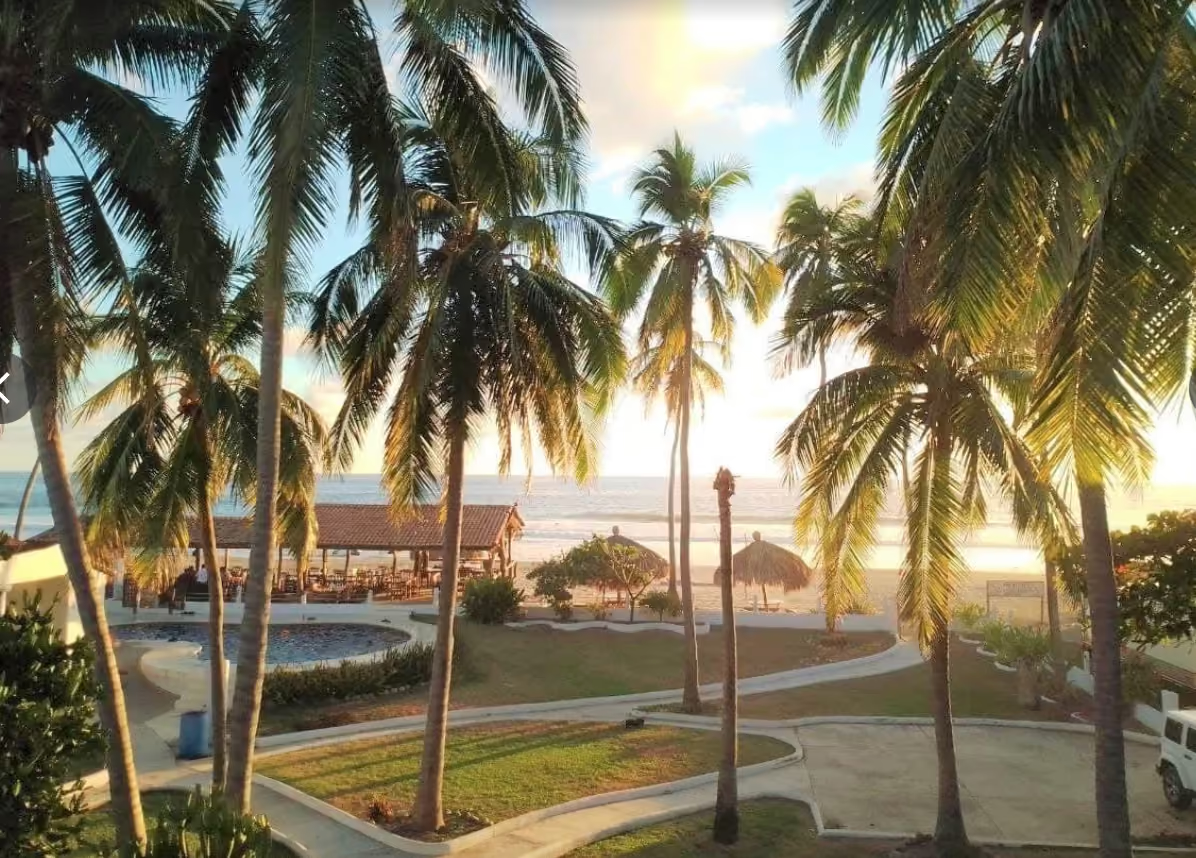
tres santos


the inn at manzanillo bay
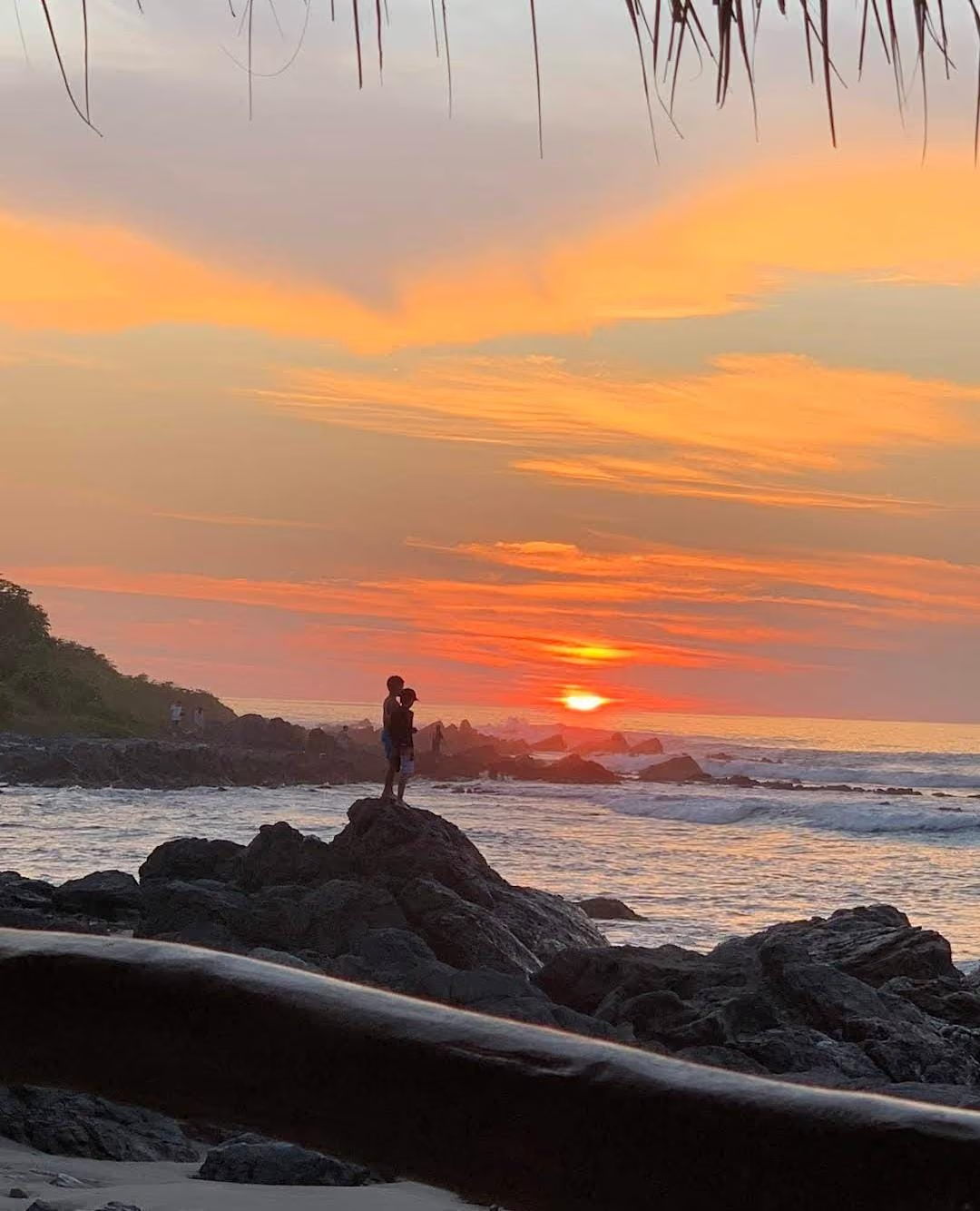
terrazza del mar
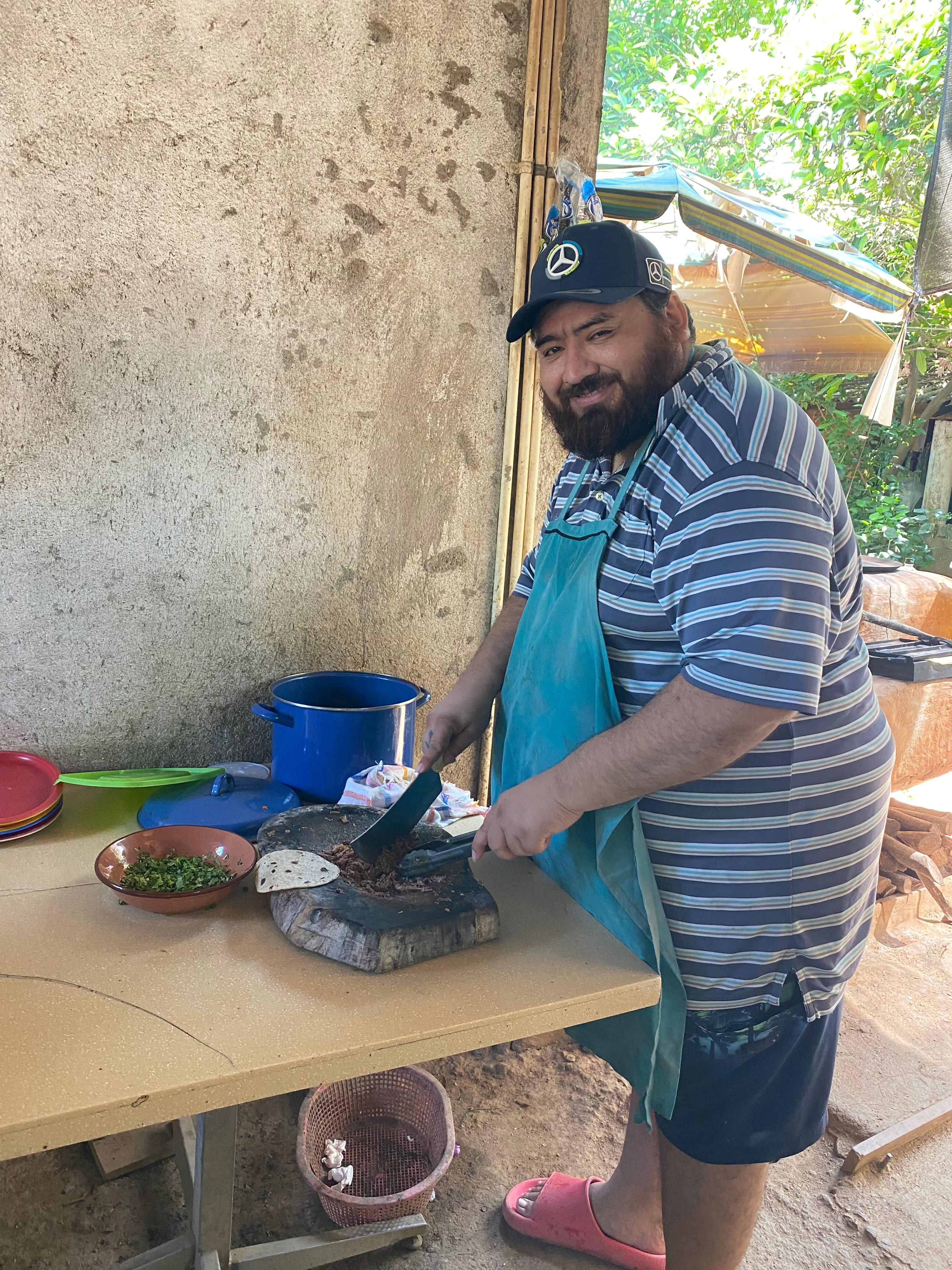
Tacos de Barbacoa "El Gordo"
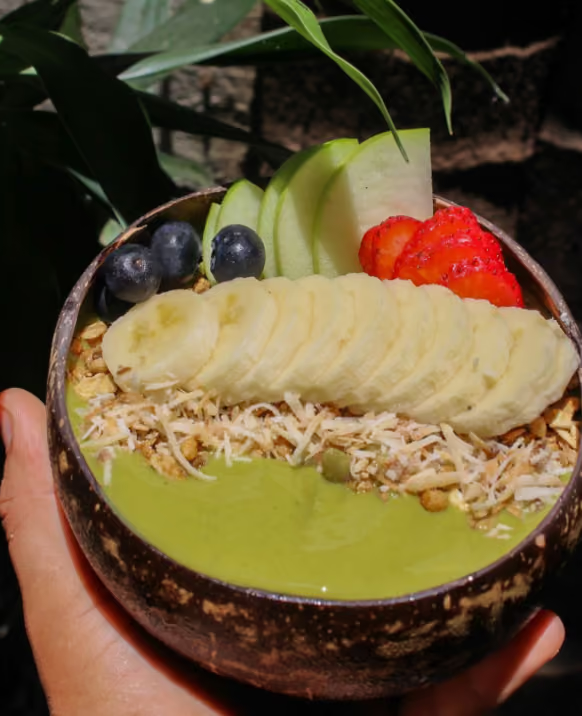
Quetzal
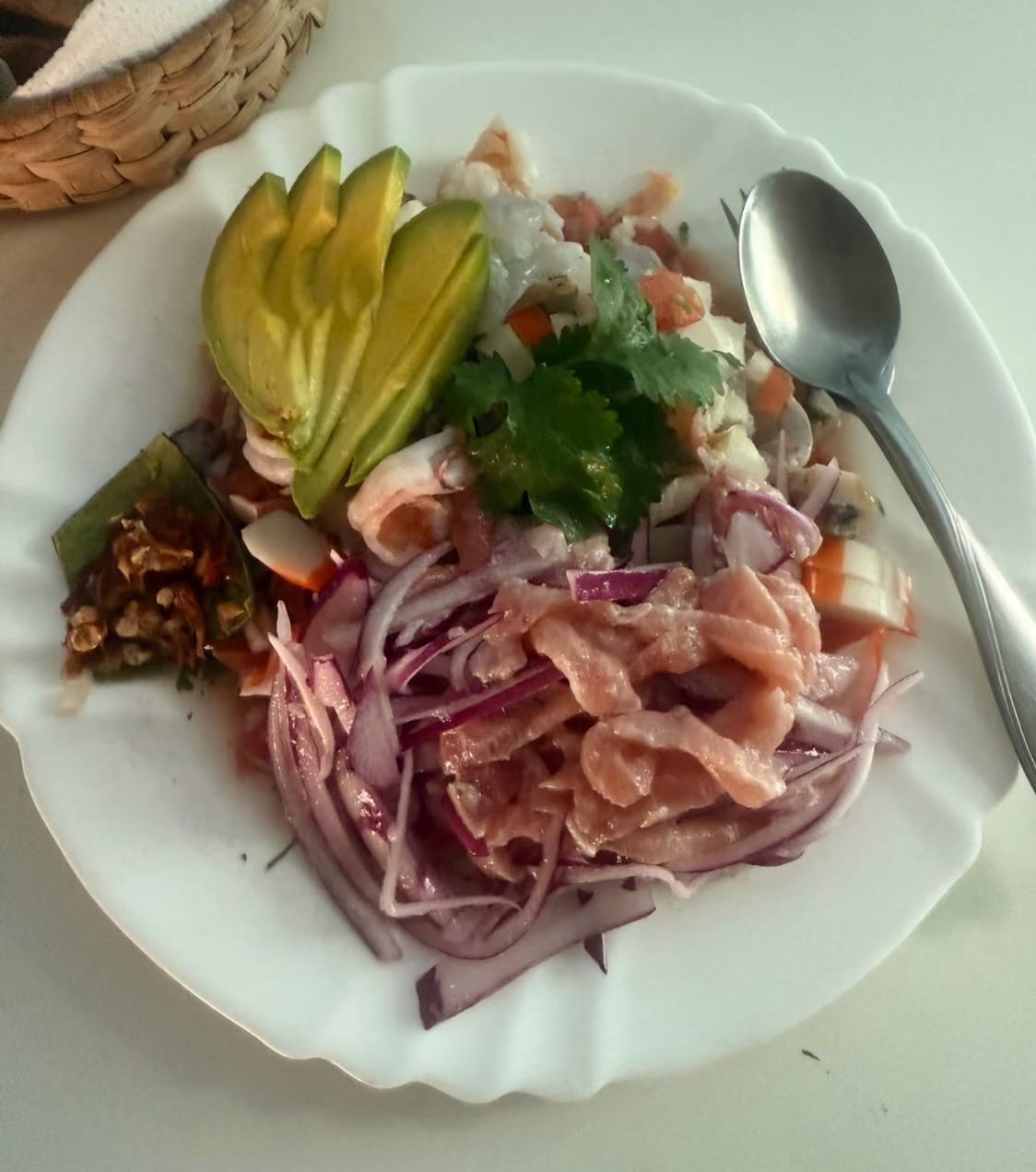
la presumida
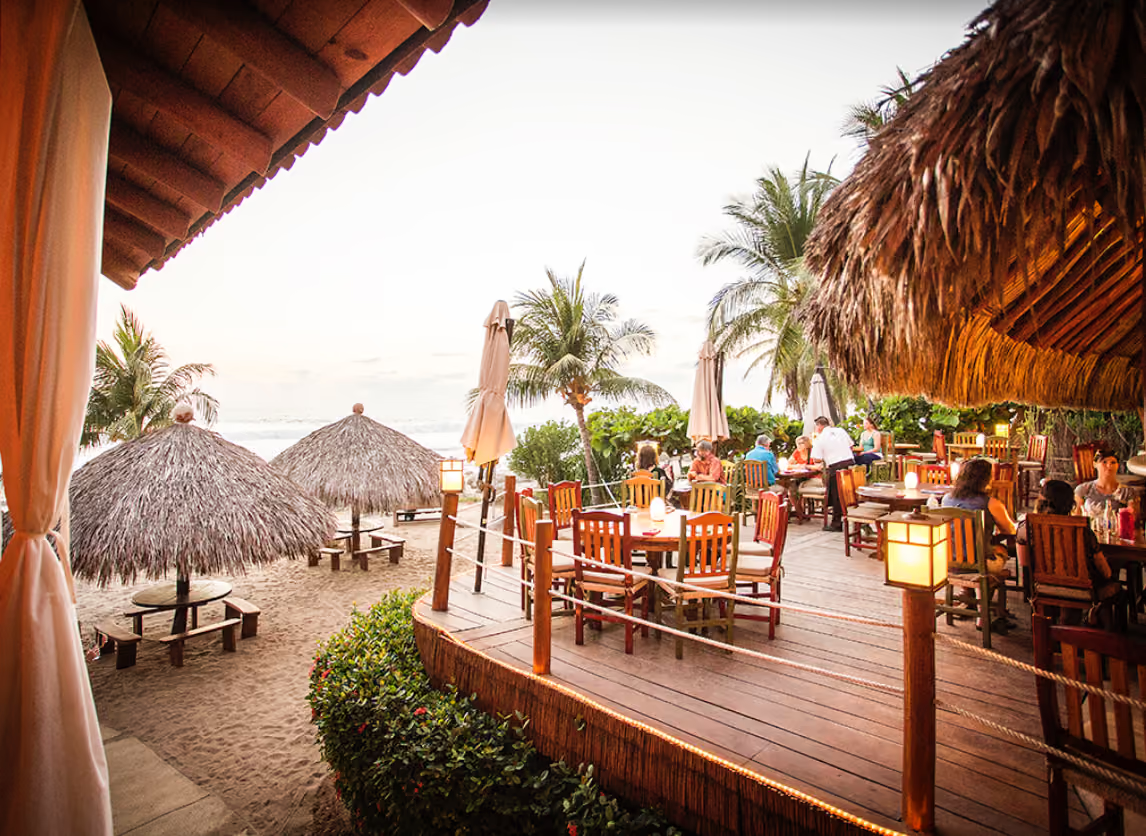
present moment

El pedecito de cielo
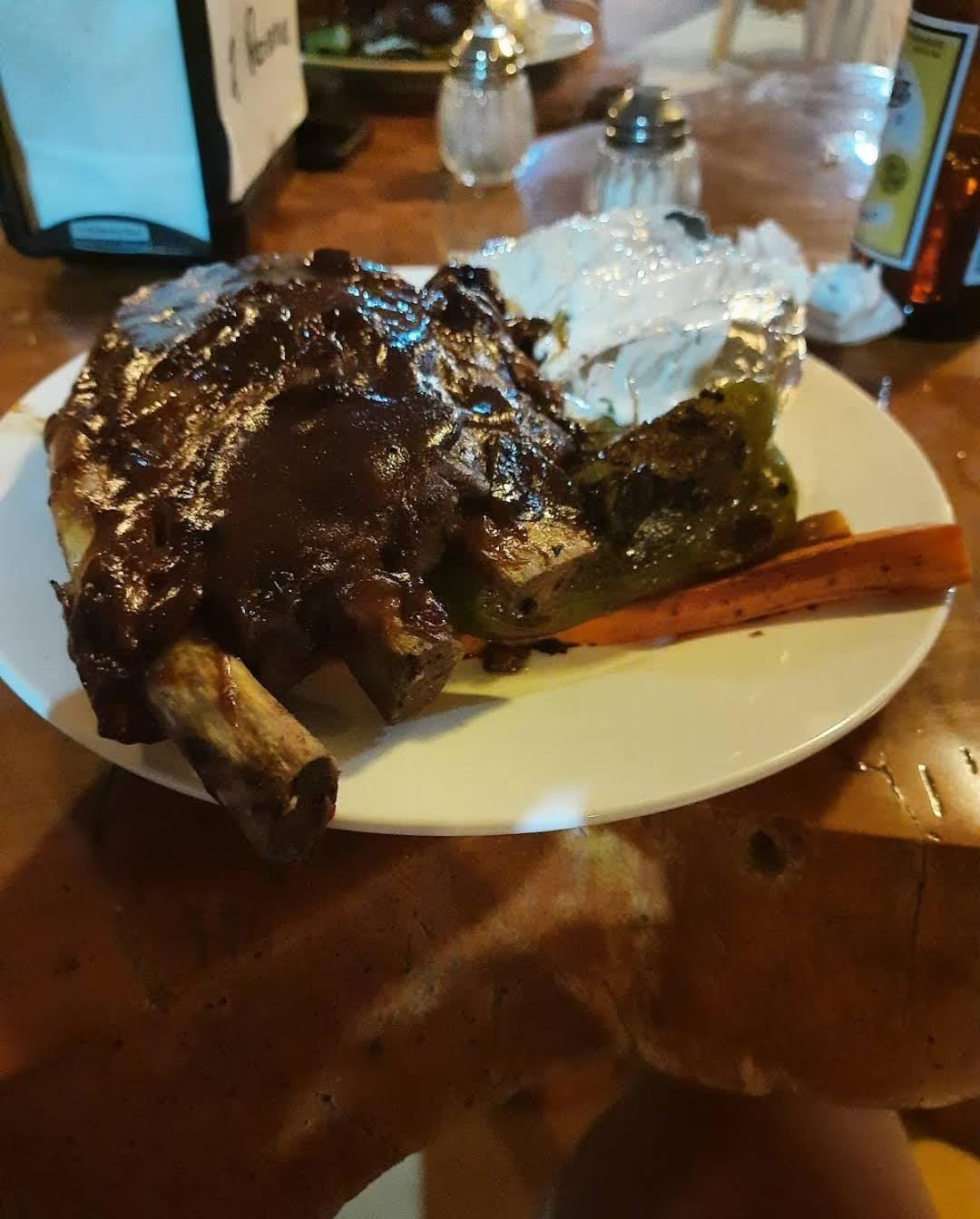
orbe's
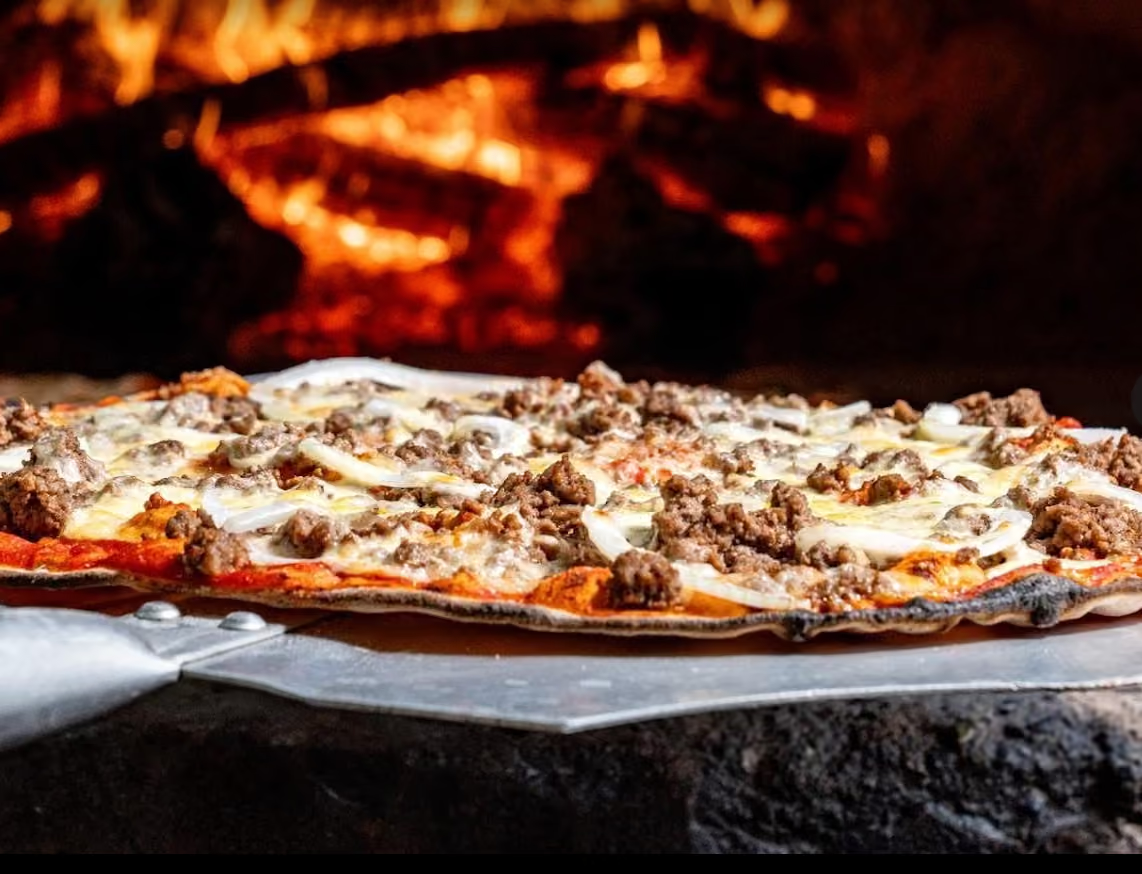
mi jardin

mingo mingo
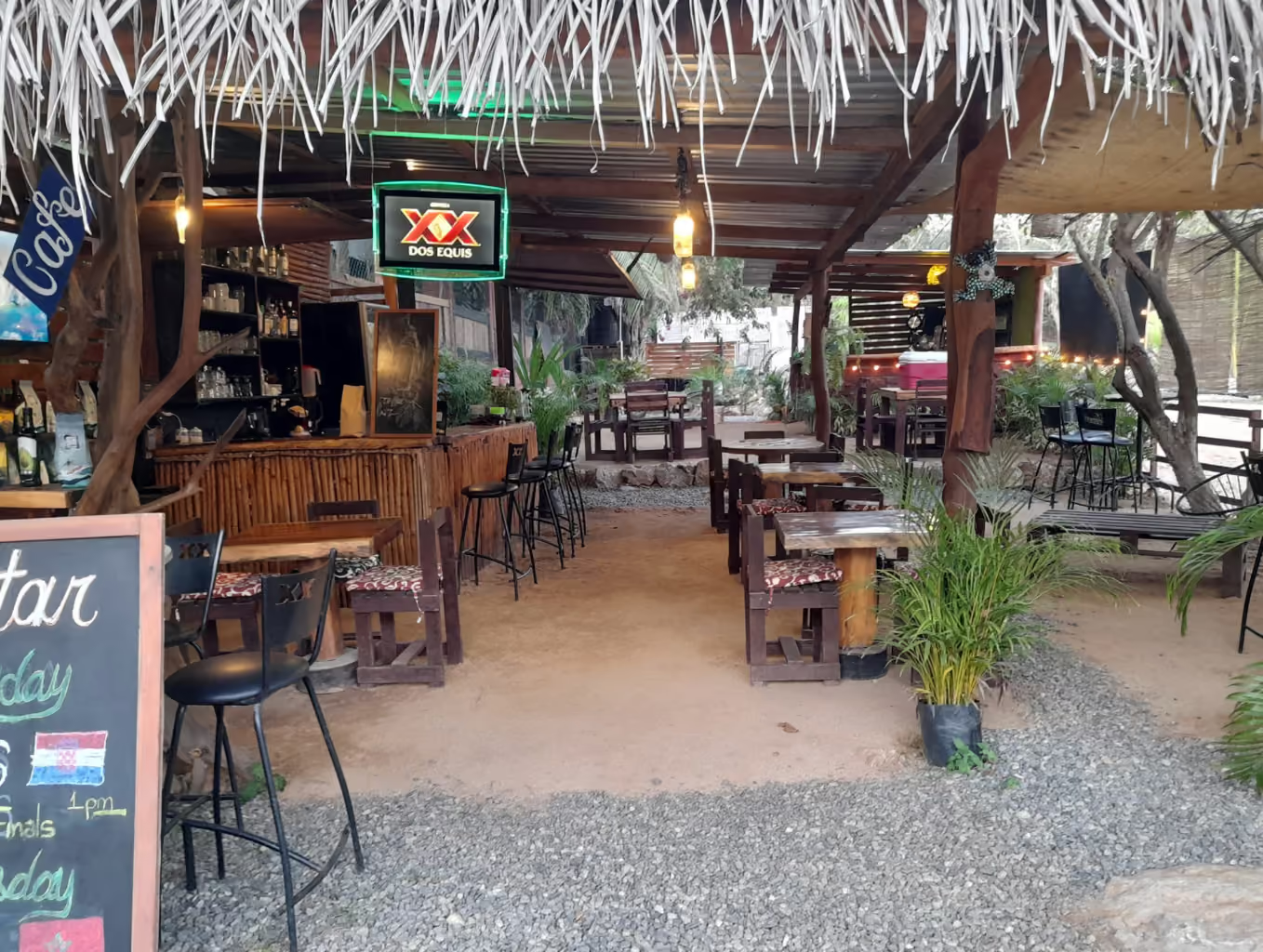
Marro's Café & Bar

Majahual
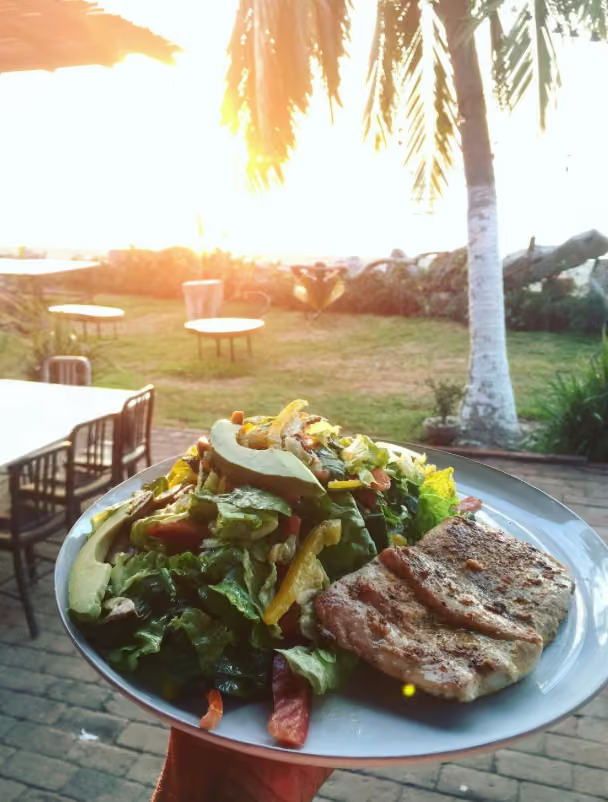
Lourdes BAr and Grill
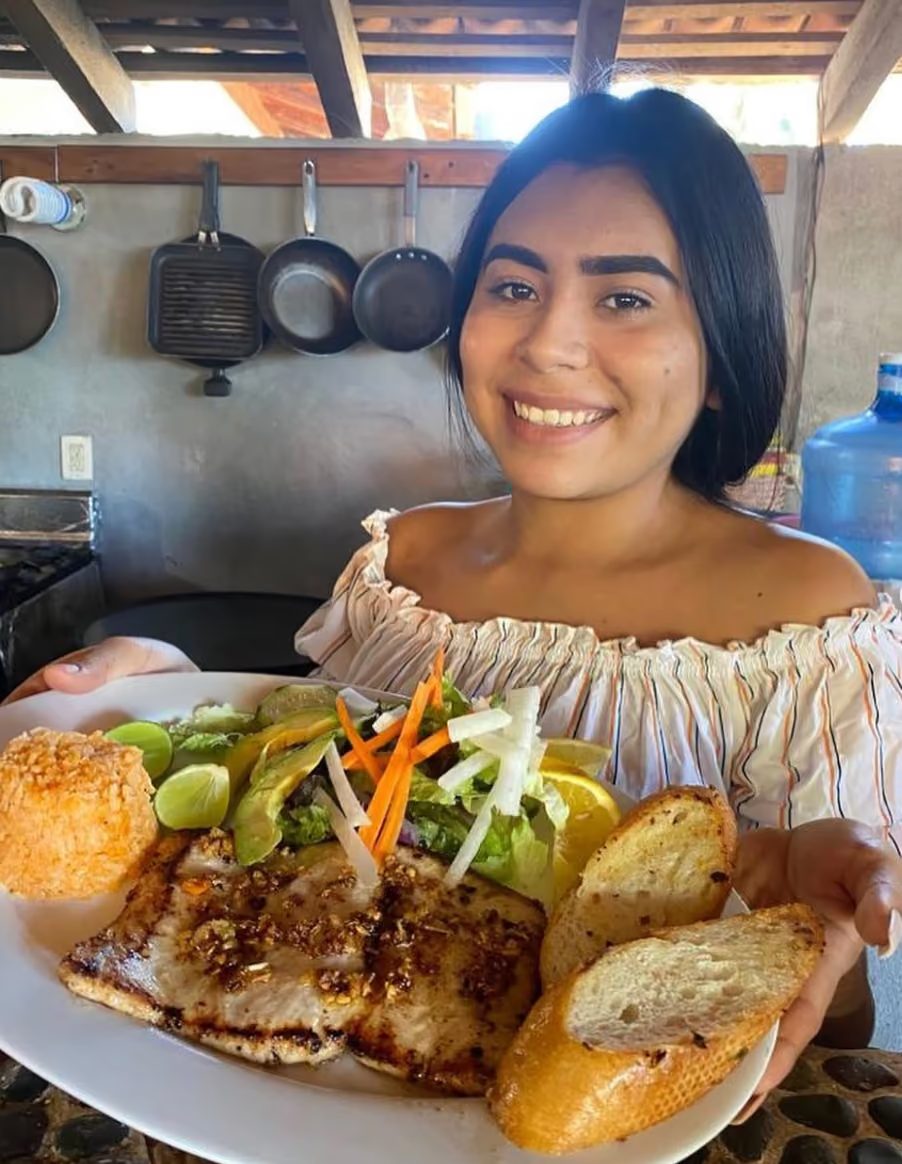
Los Benny's

los ángeles
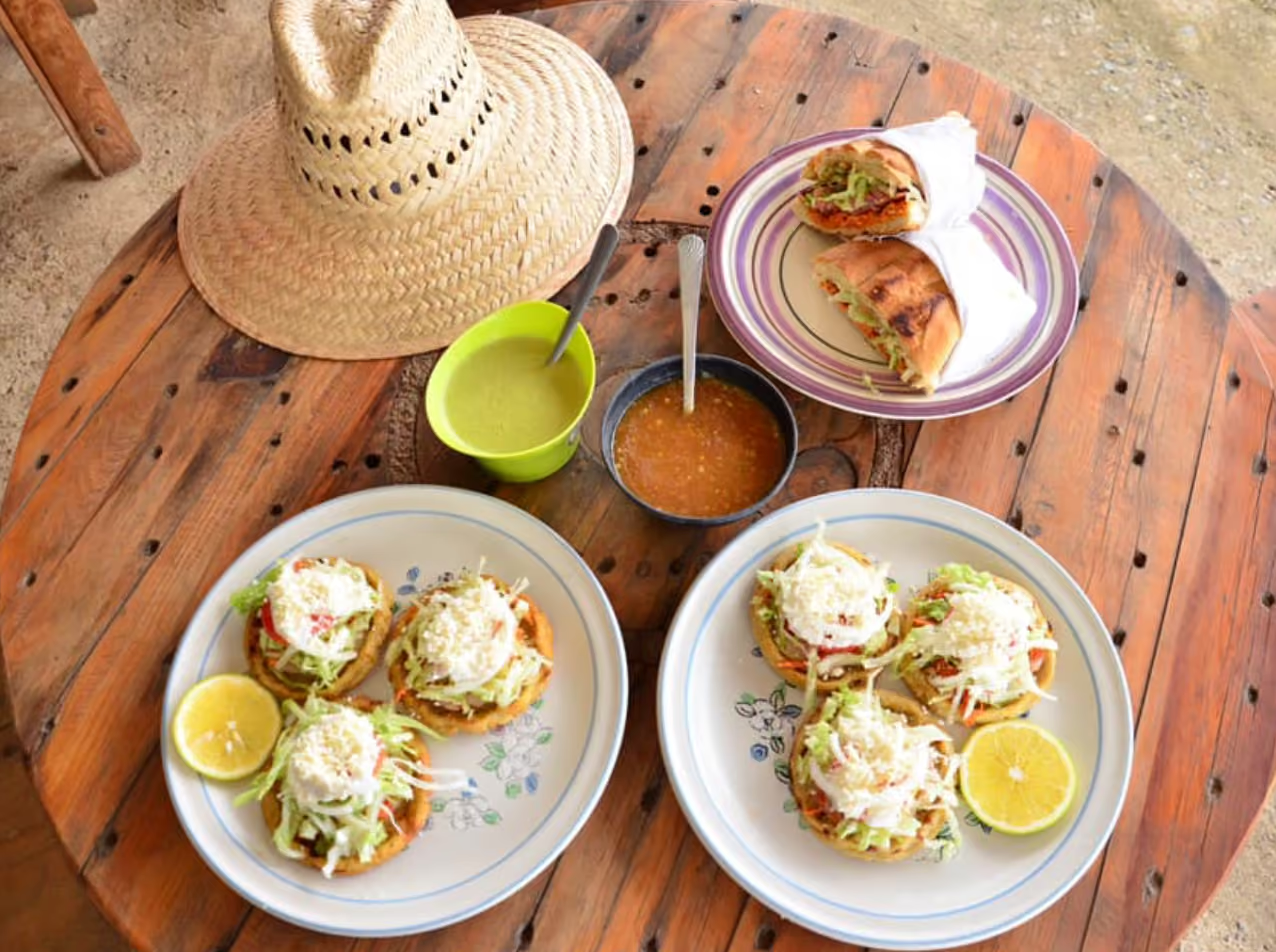
las cuatas
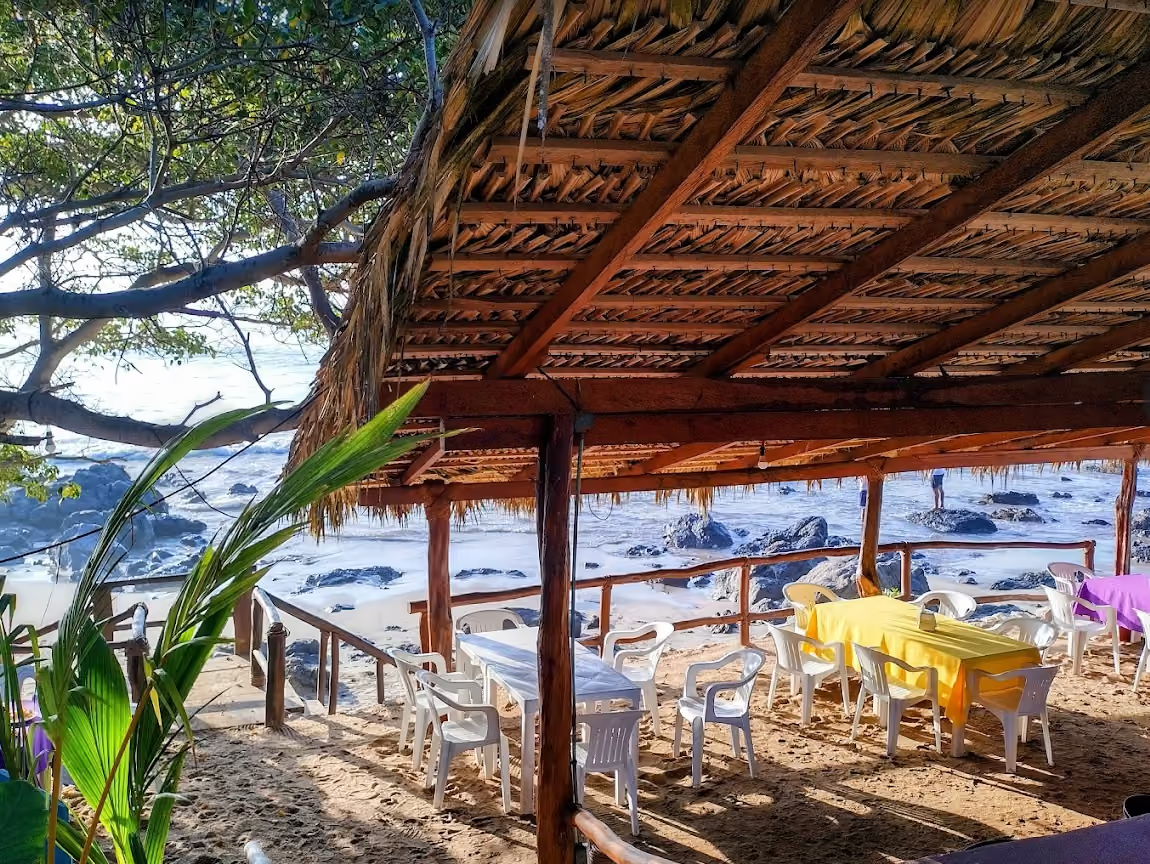
las brisas mexicanas

Kevin's tortas and mariscos
La estación del taco
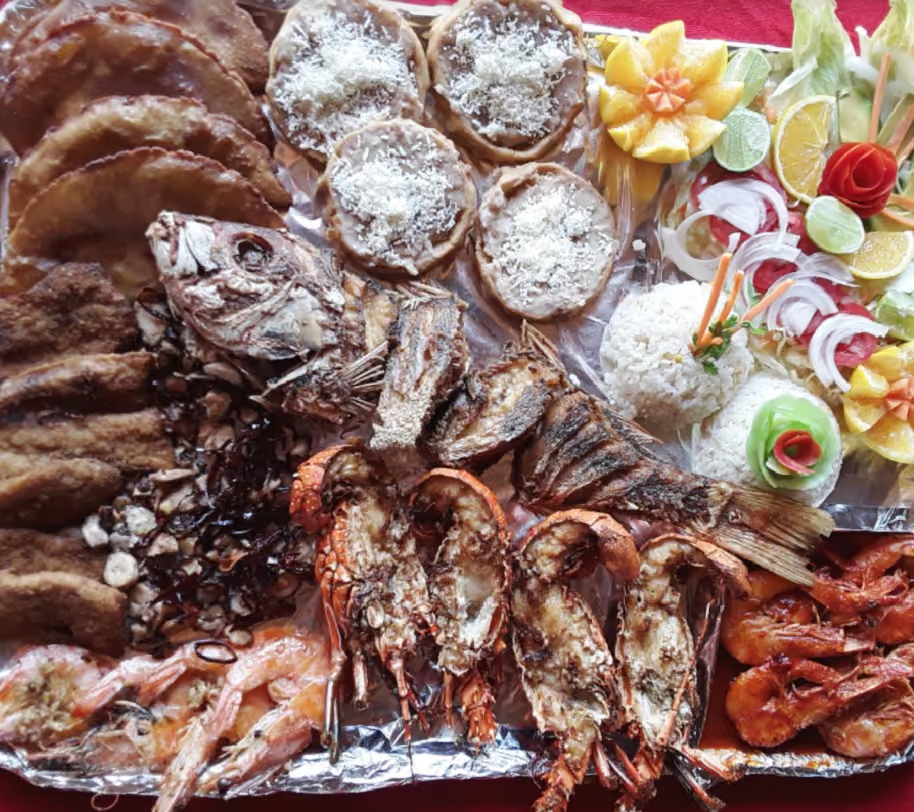
restaurant maria jetzabel
El Toro Del Mar Johny's
Jaqueline's
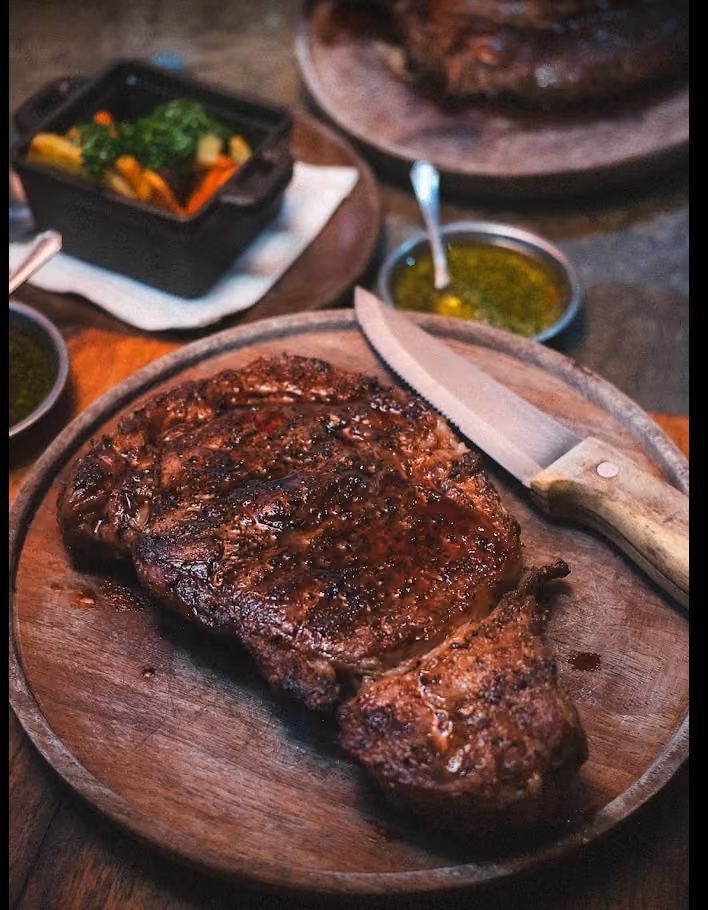
indigo
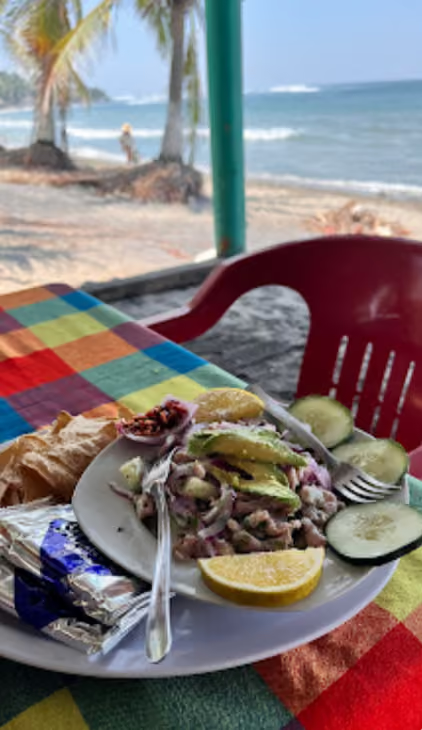
Ilianet
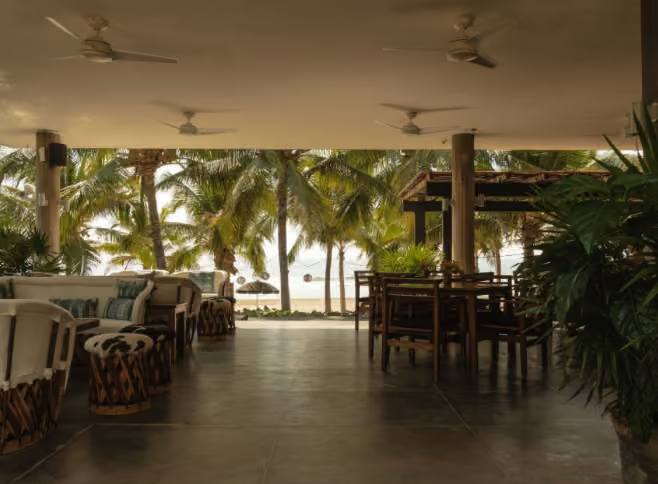
lo sereno casa de playa
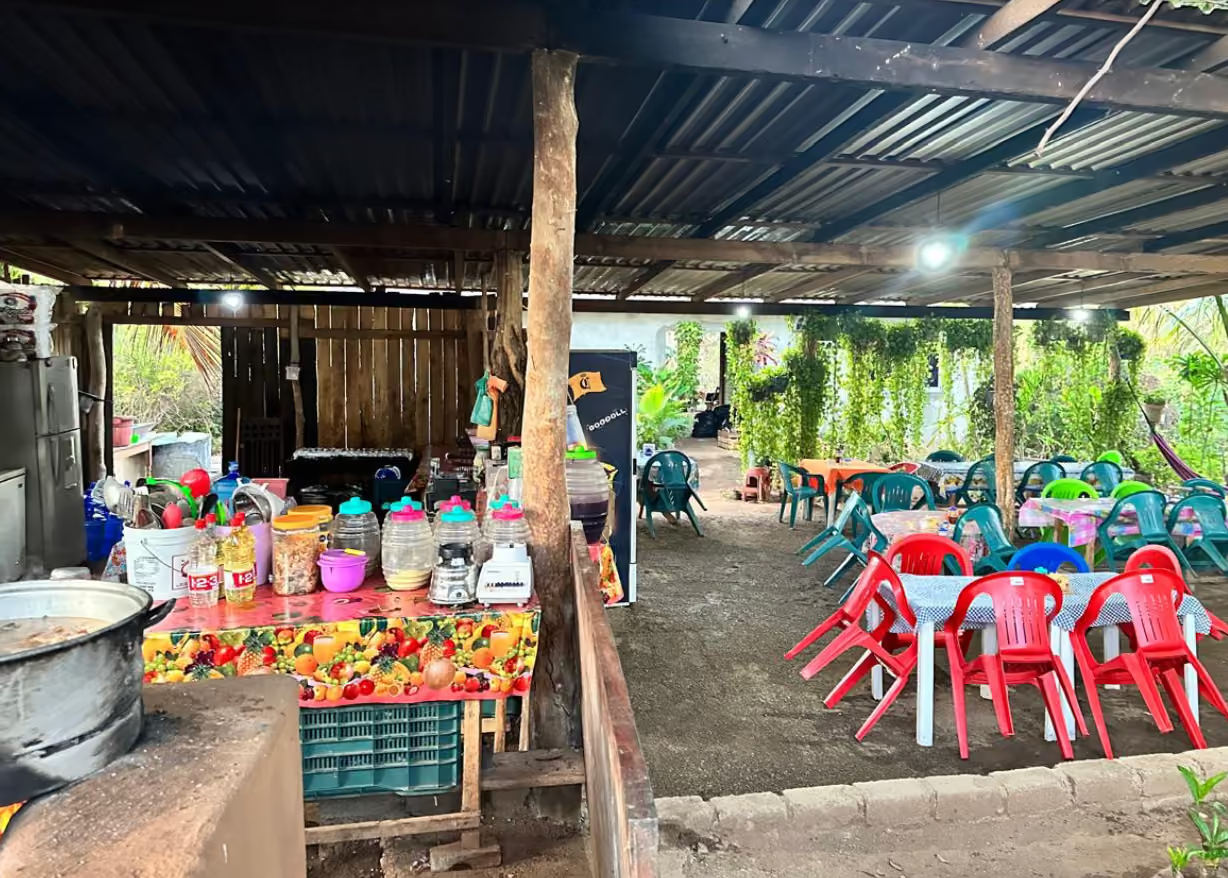
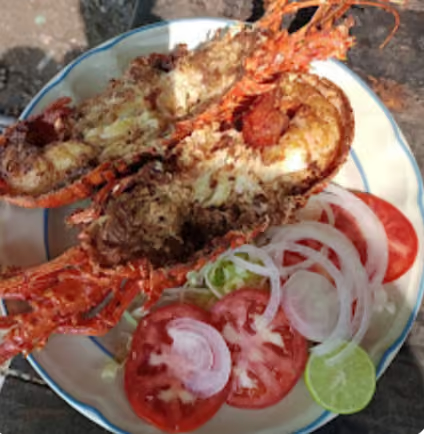
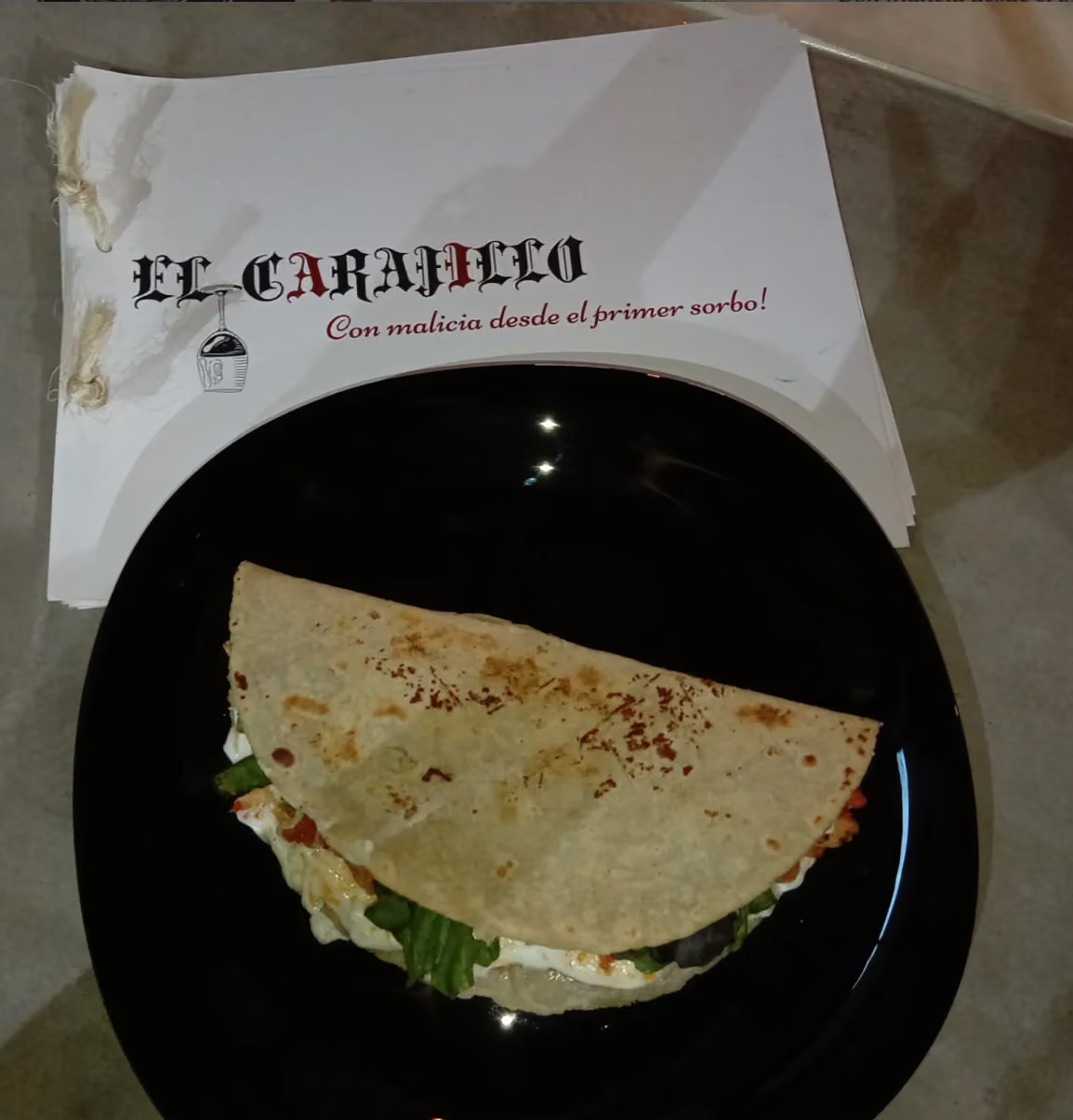
El Carajillo
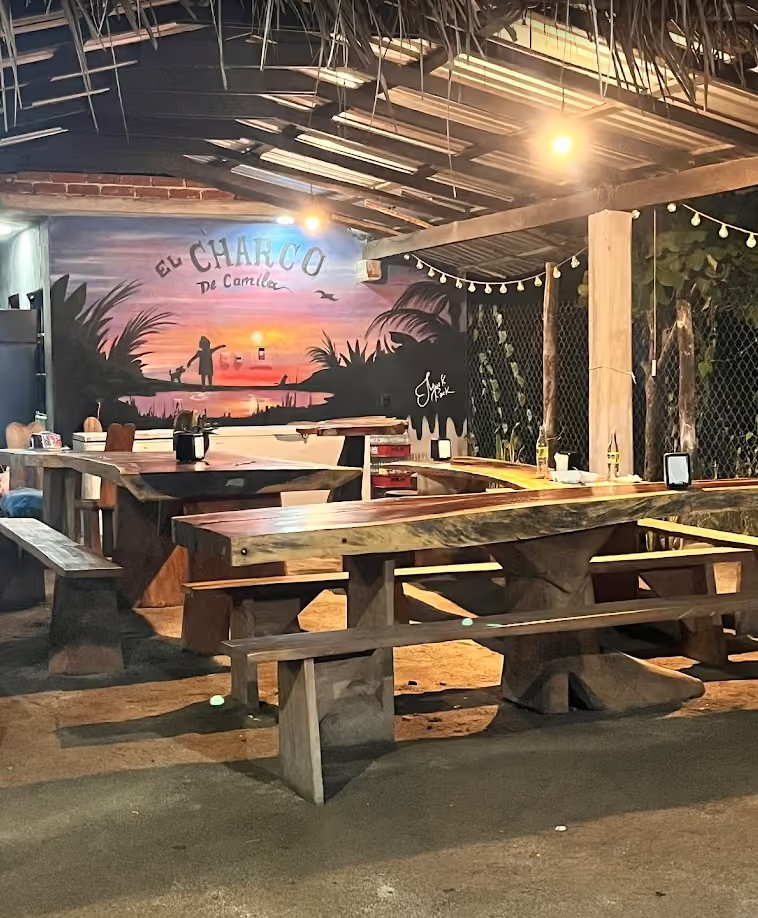
el charco de camila
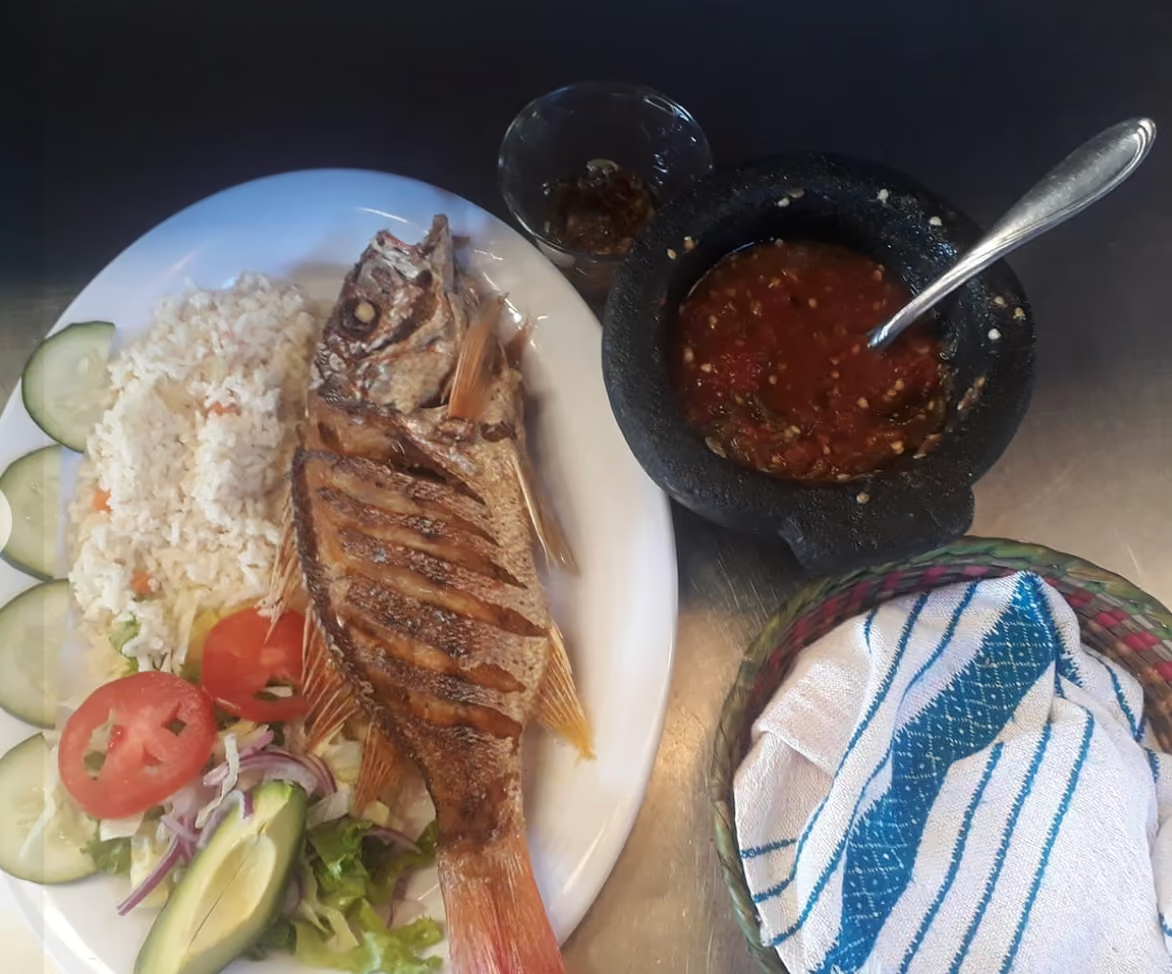
doña nica
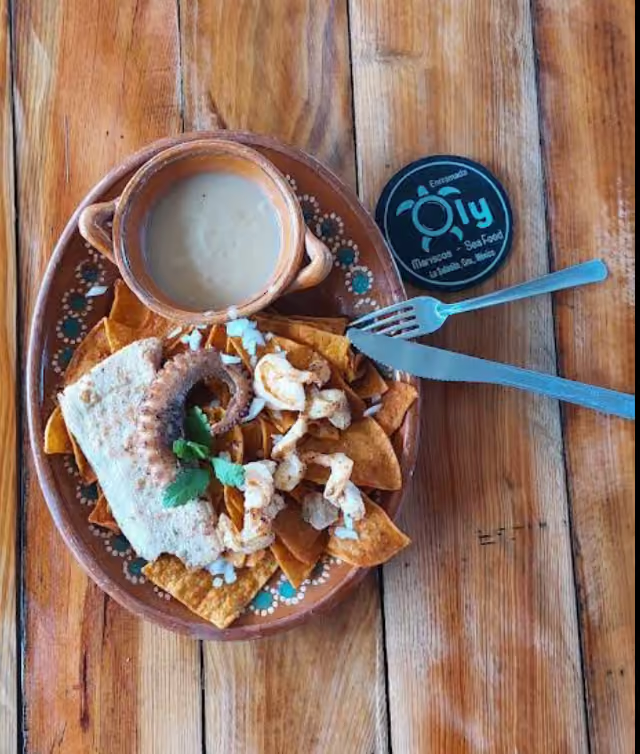
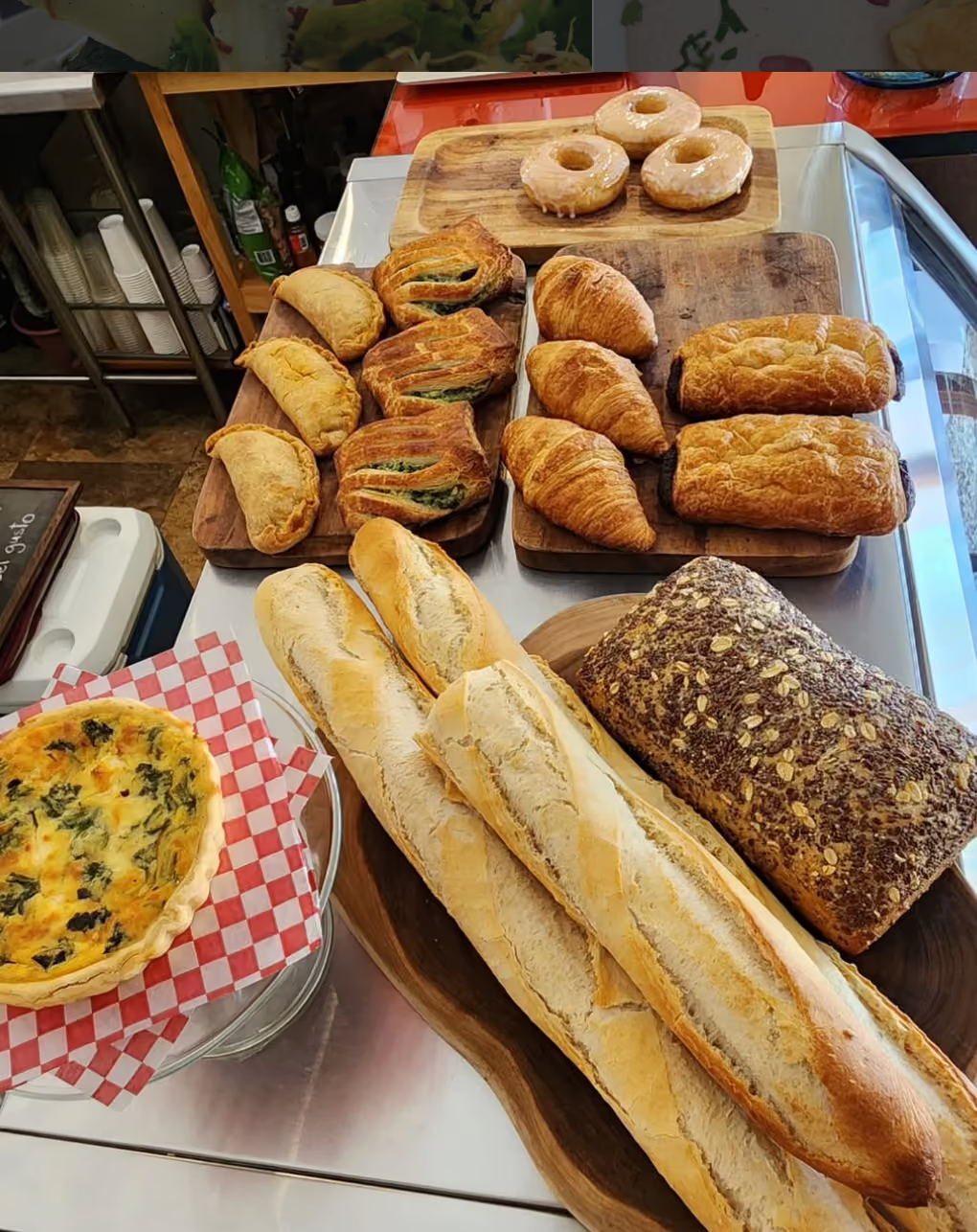
Delizia
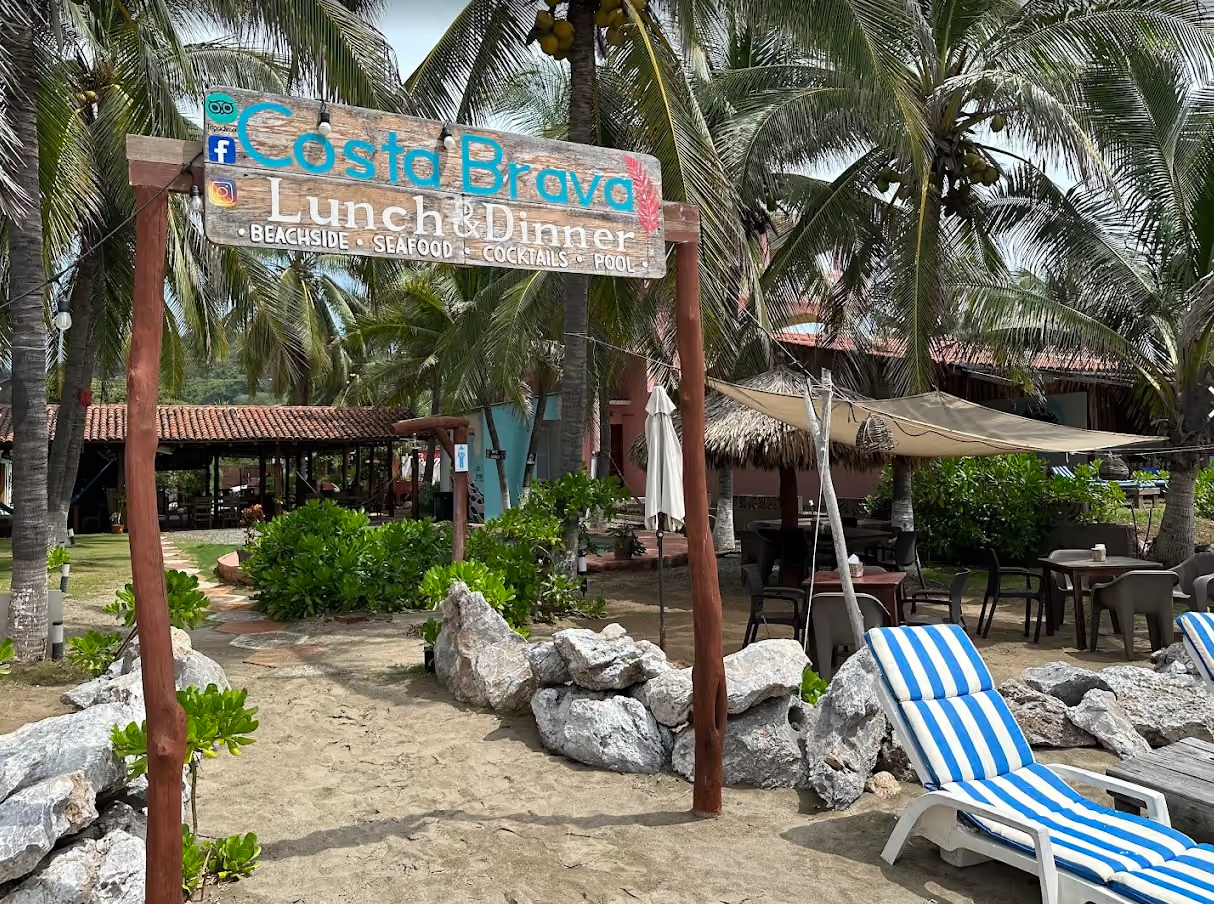
Costa Brava
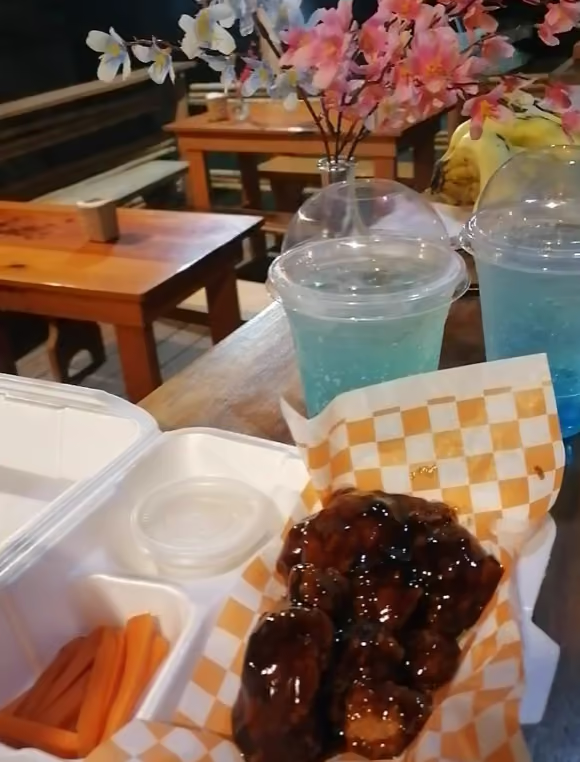
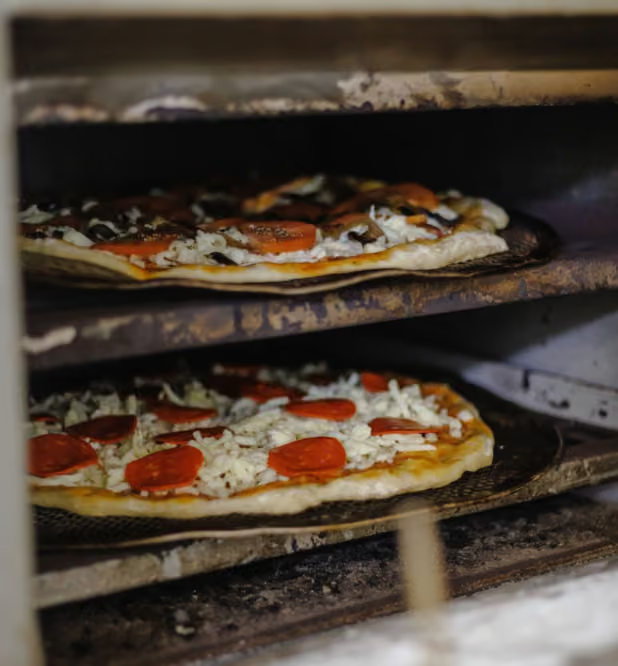
corazon del mar
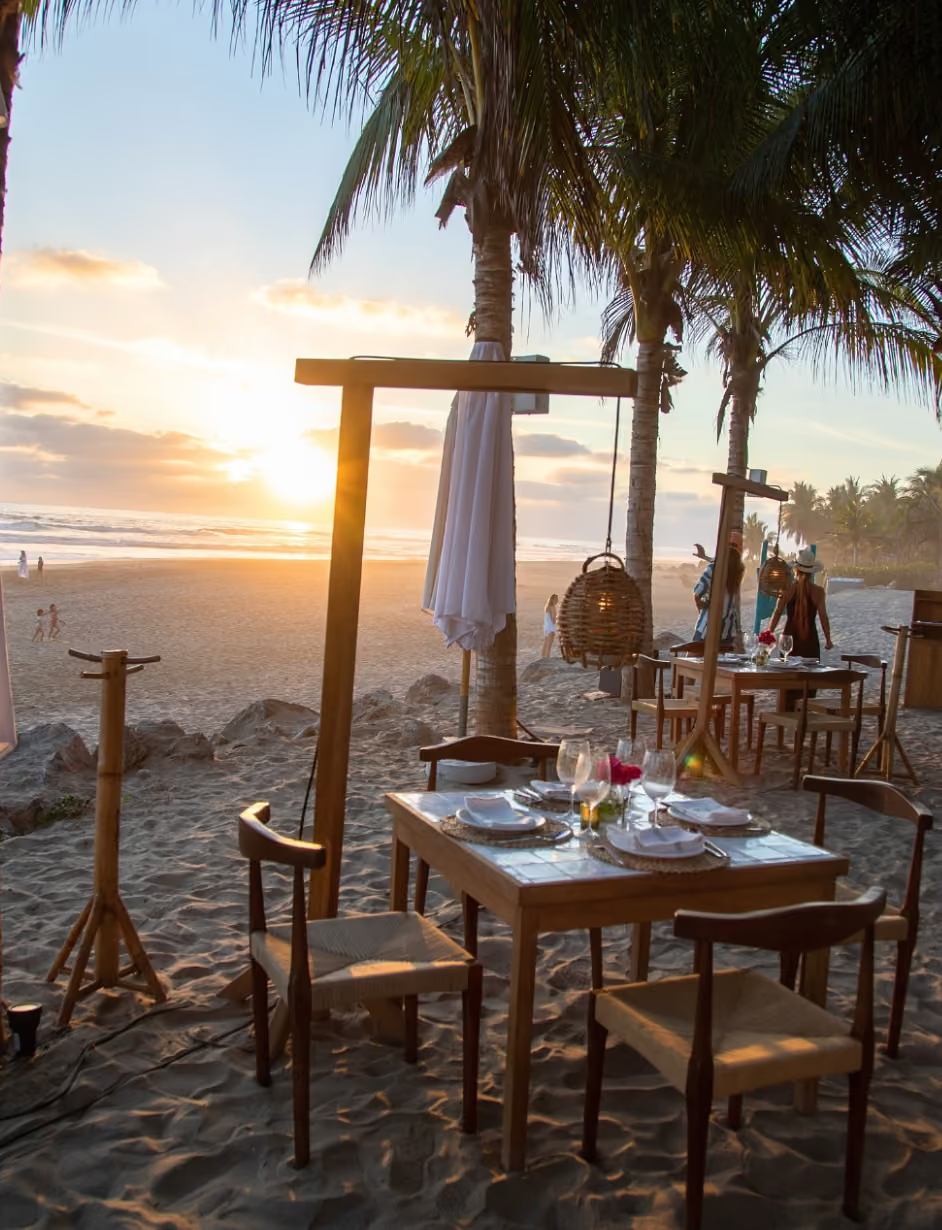
el chirunguita del Fran
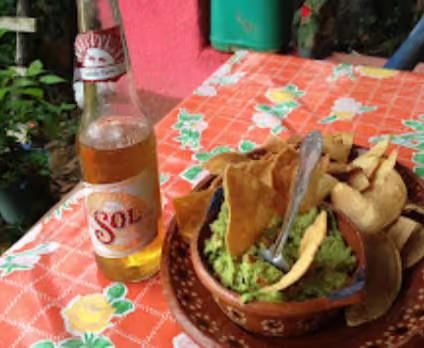
Chenchos
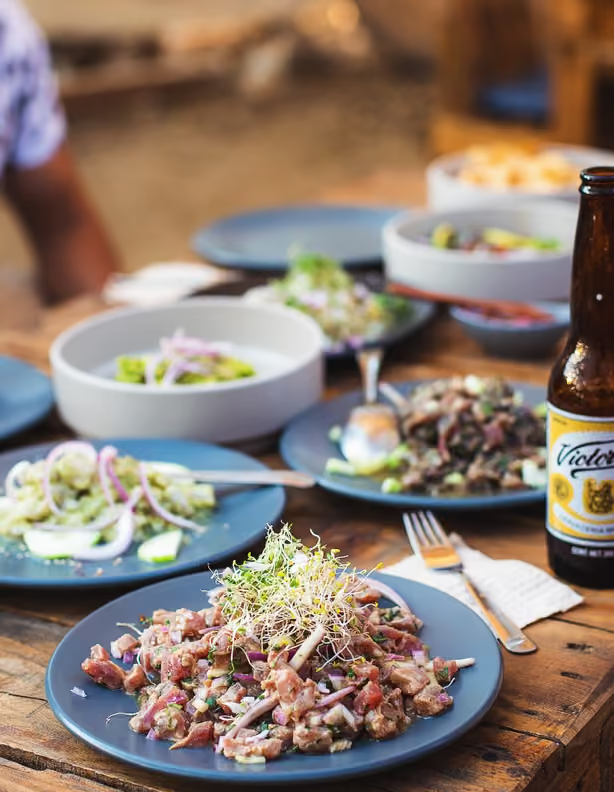
la cevicheria
Cenaduría Rufi´s
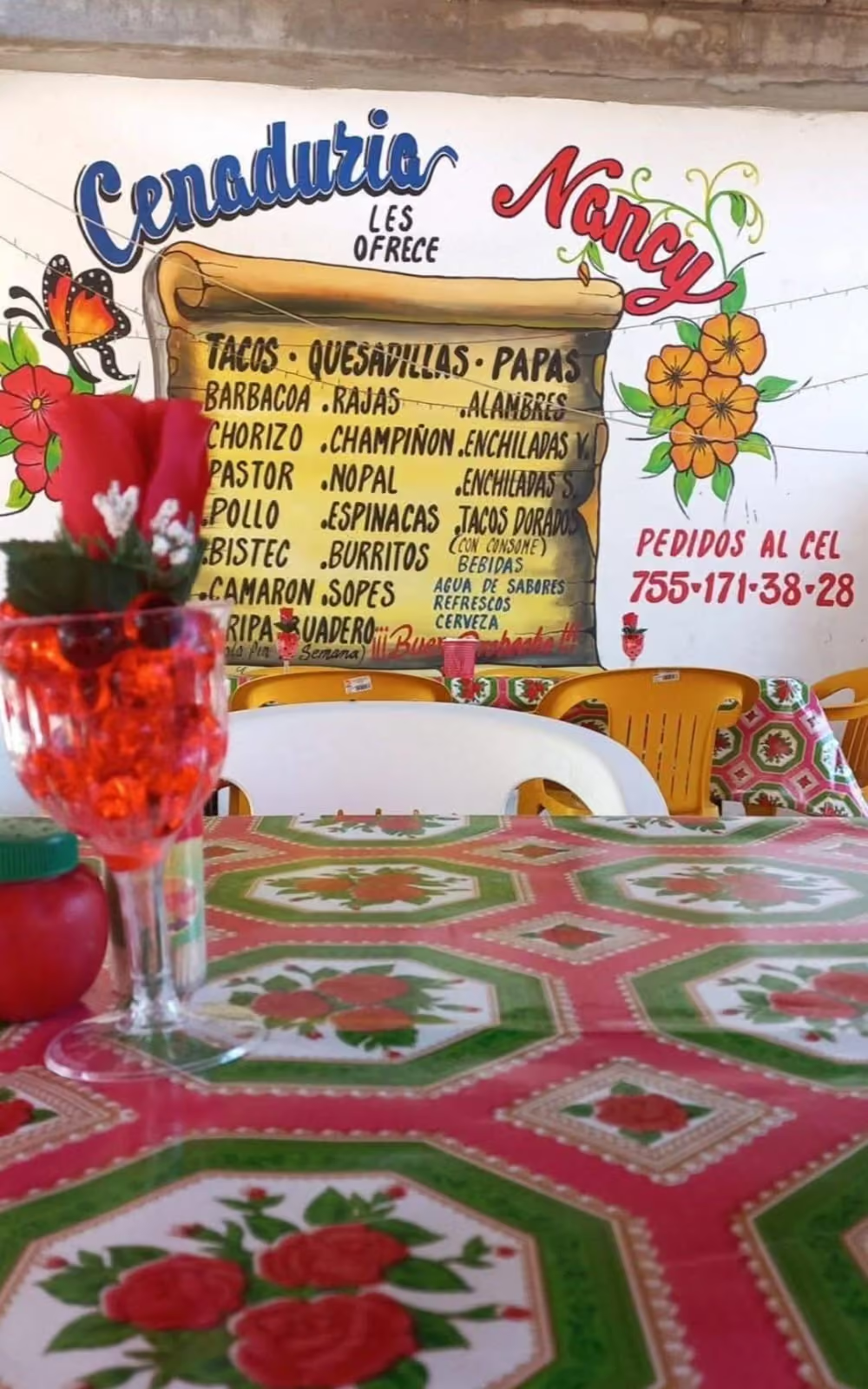
Cenaduría Nancy
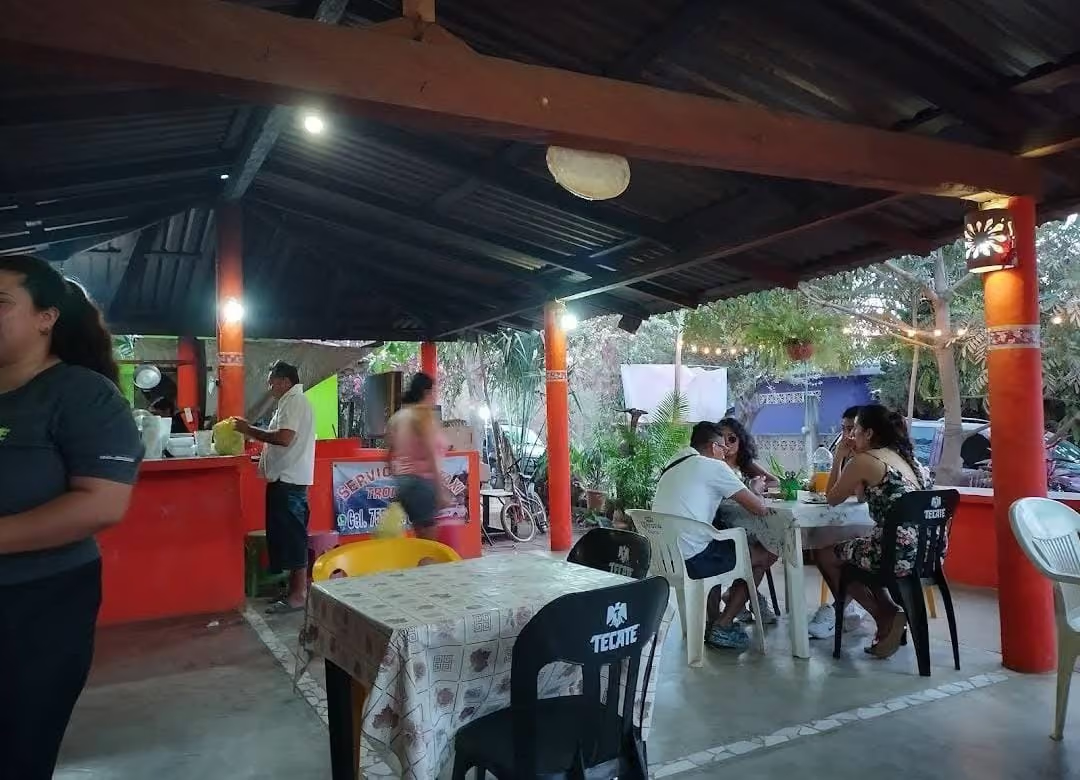
Cenaduría Cristina
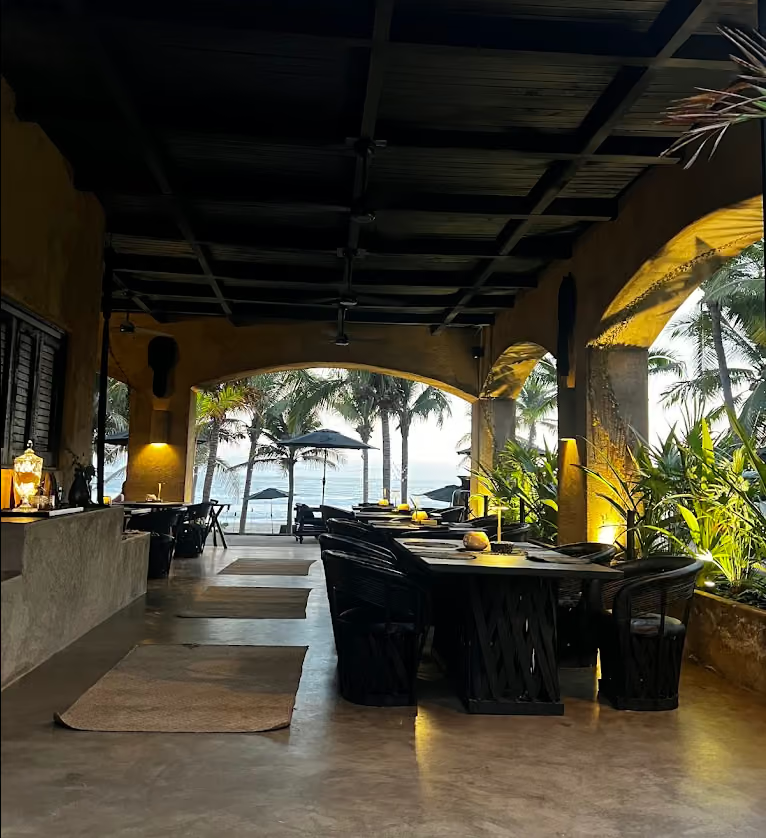
casa saint george
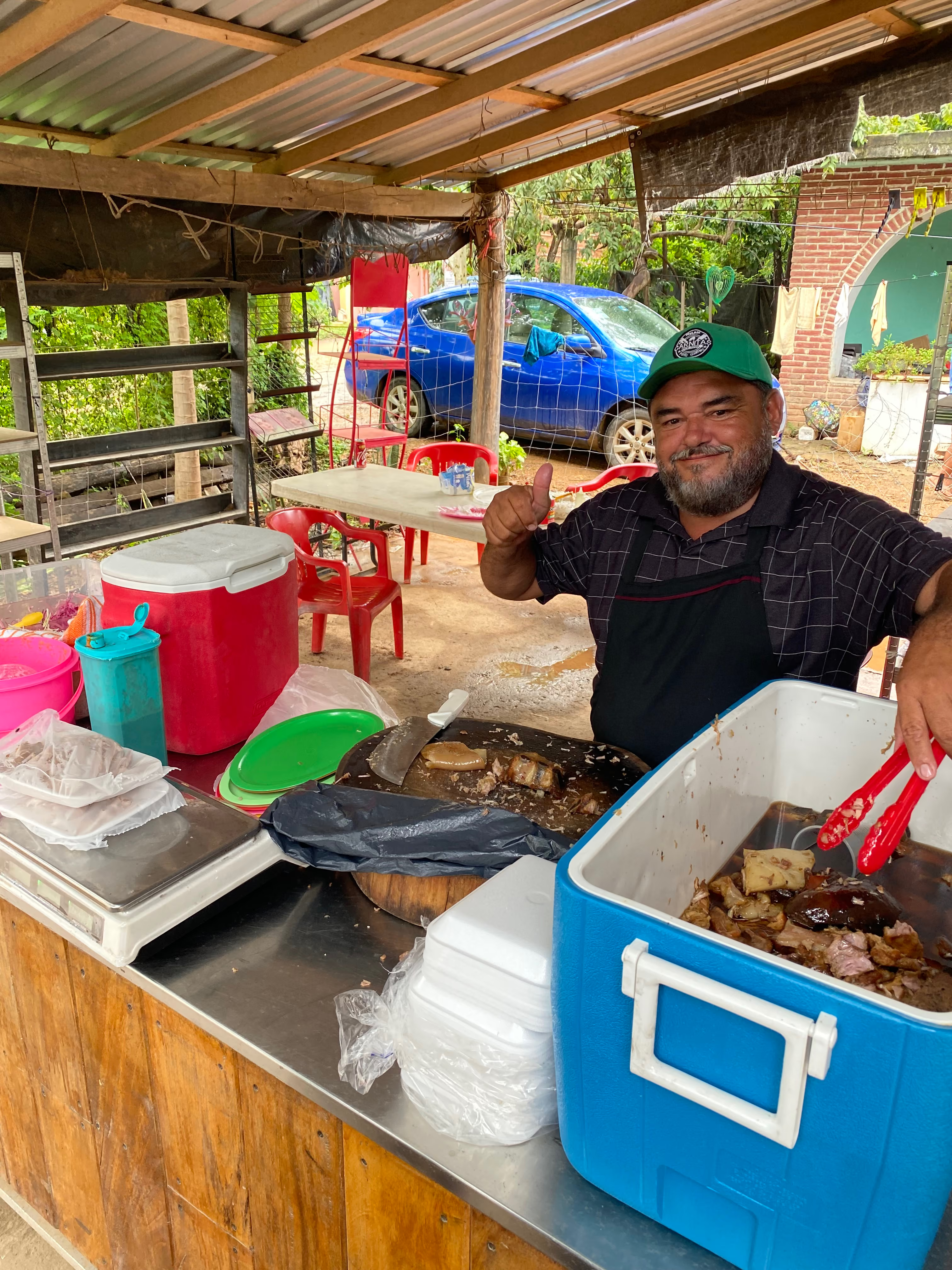
Carnitas de Margarito

cafe pacifico
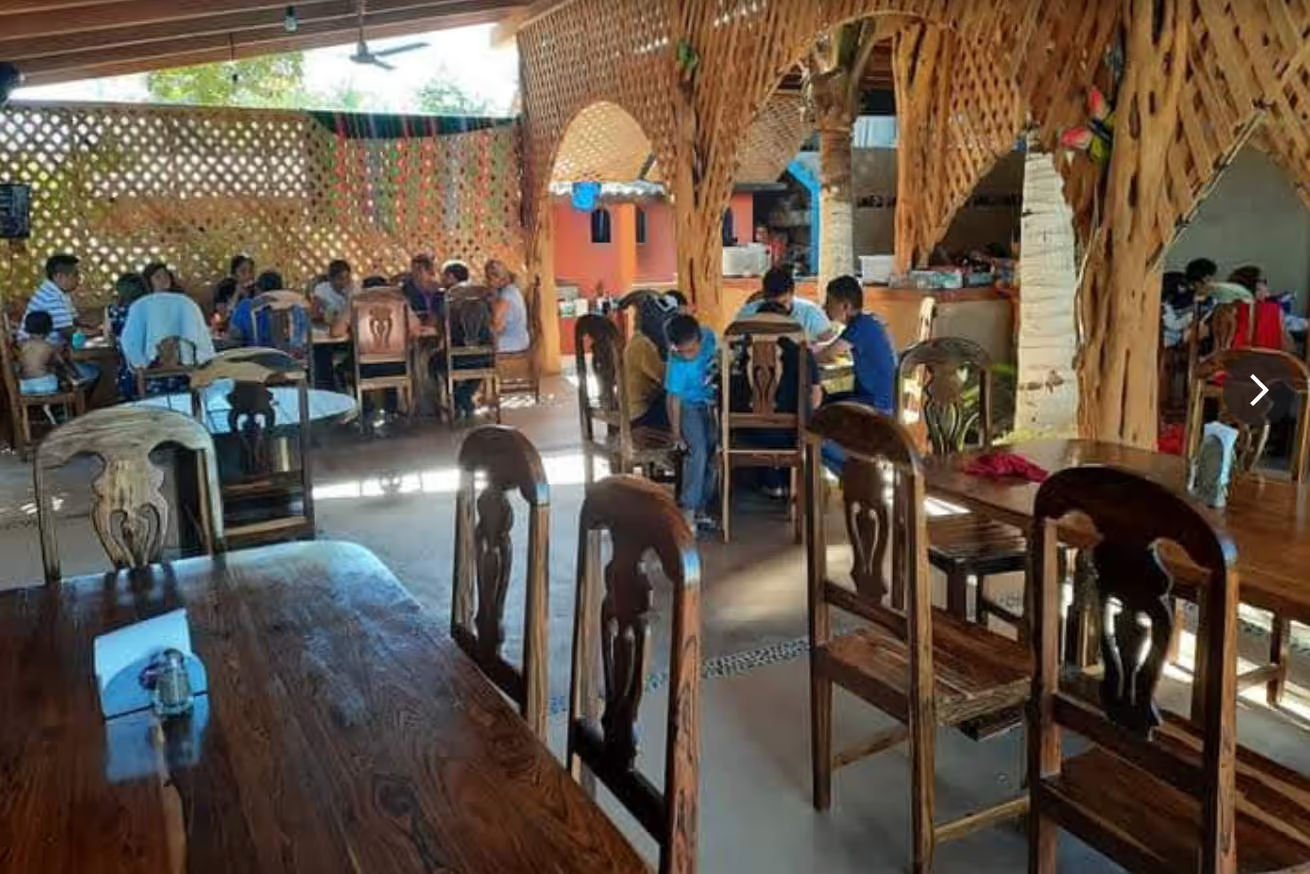
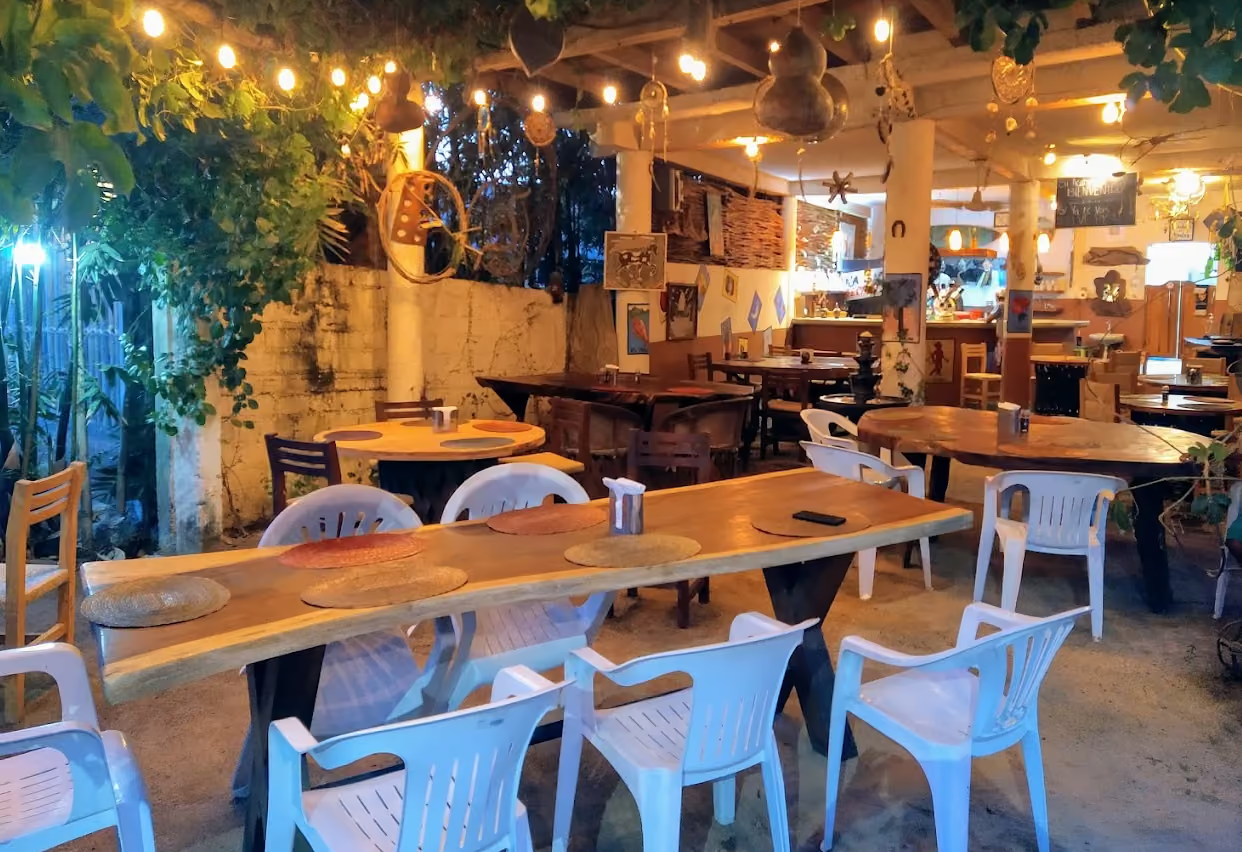
antonios bar and grill

7 mares
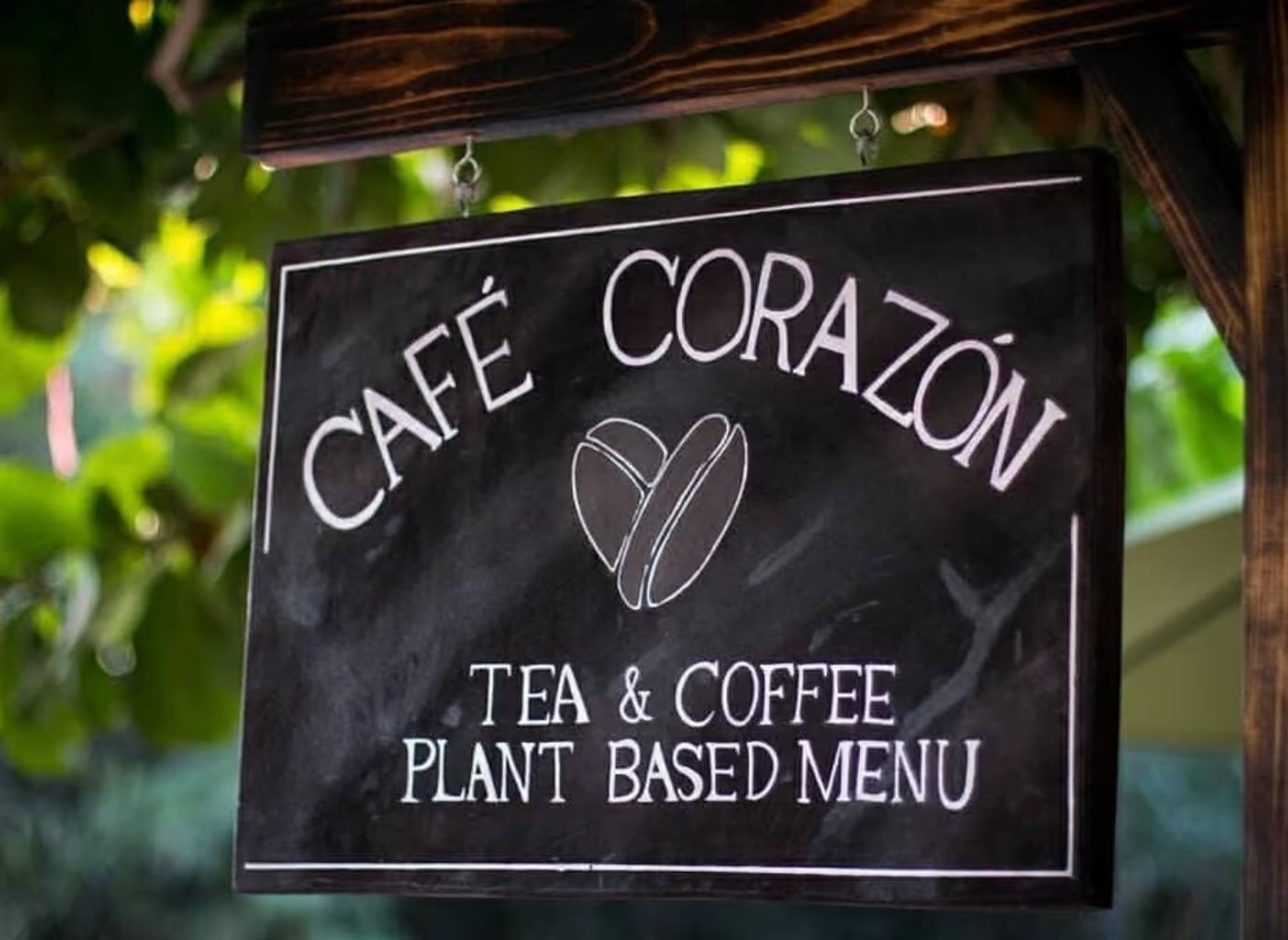
cafe corazón































La Fajina 2026

Paved Paradise

Troncones’ Water, Part Two
The Gardens at The Inn

The 2027 Mexico Surf Film Festival is coming

Troncones’ Water, Part One

La Casa Chida: Keeping it Cool
What’s in a Name?

Boogie Boarding Ain’t for Weenies

In Search of the Short-crested Coquette
.avif)
Rivers of Wings: It’s Butterfly Season
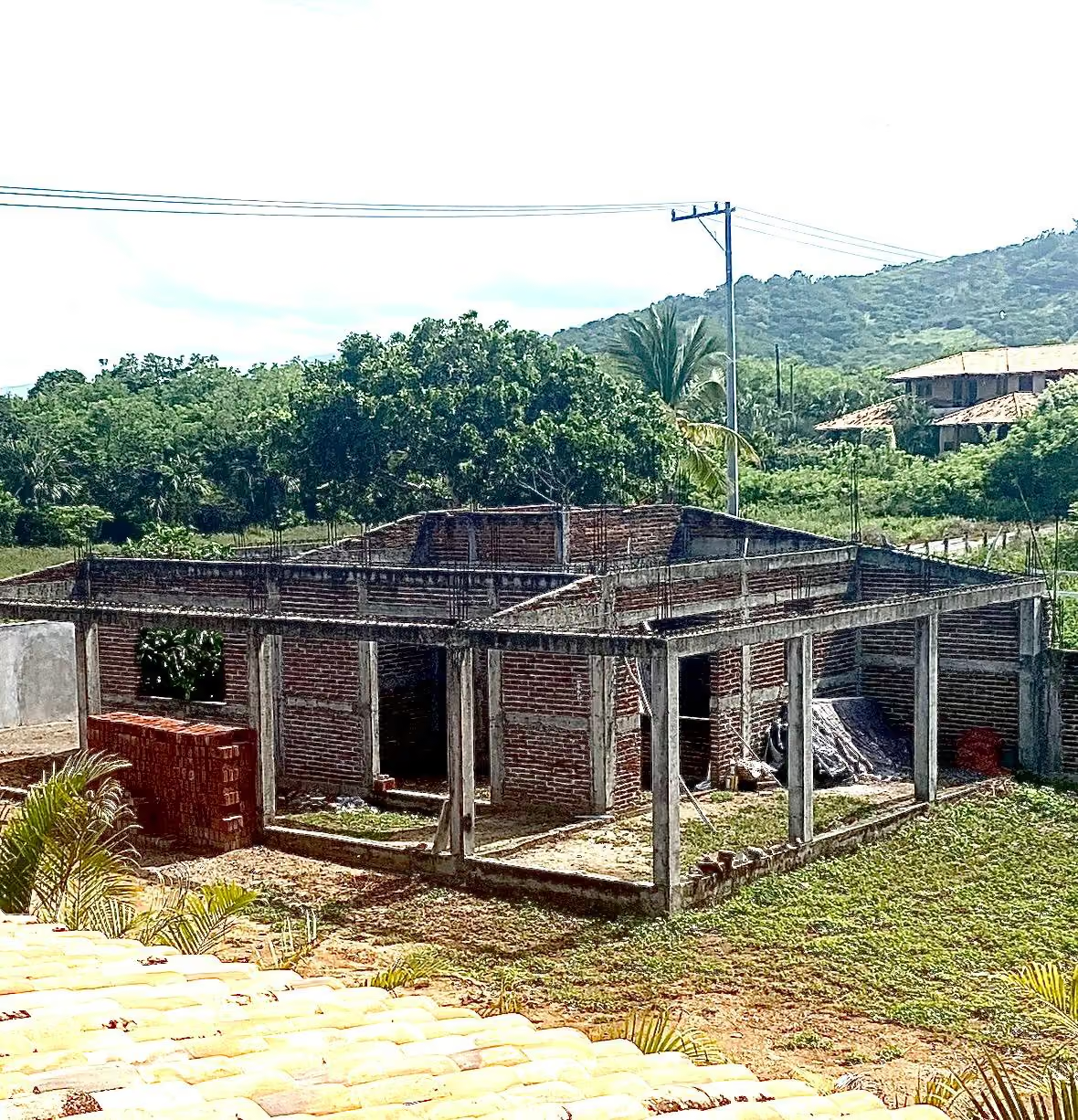
The Ruins Next Door
ARCHIVE #2: MORE HEROES
A Trip Down Memory Lane, 2004

The Yellow-crowned Night Heron
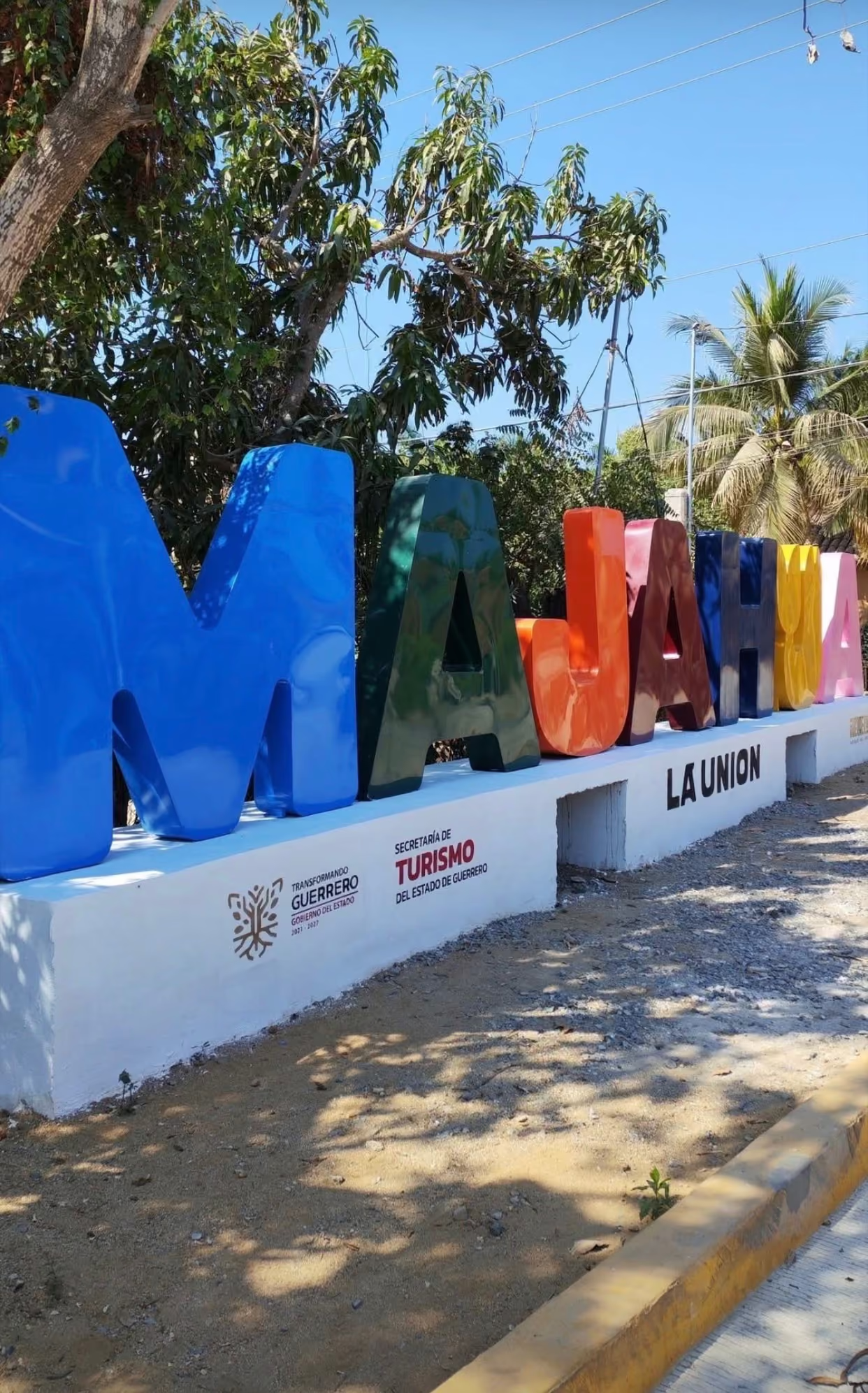
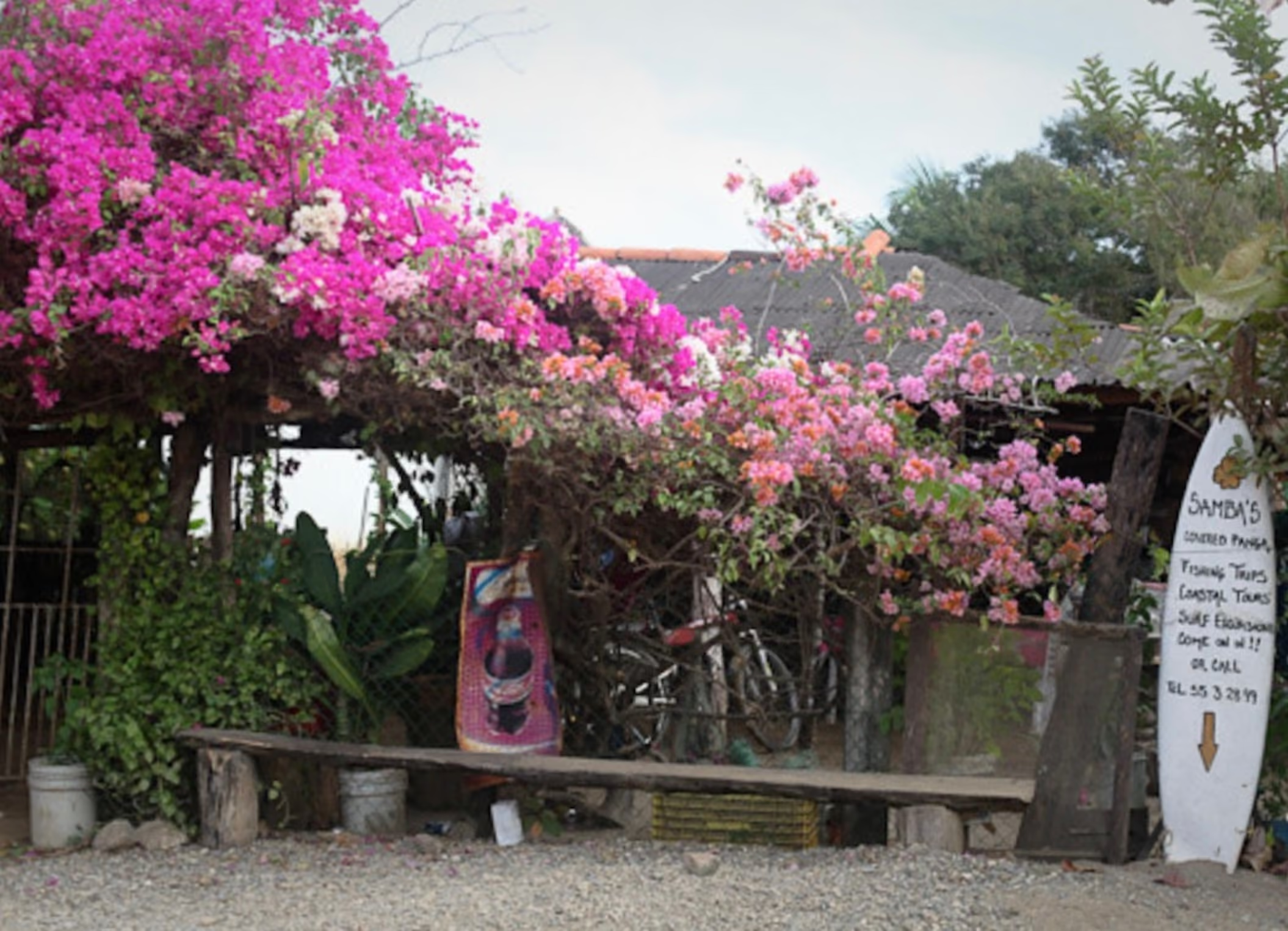
La Majahua: A Place Like No Other #2

MOMS ARE THE BEST
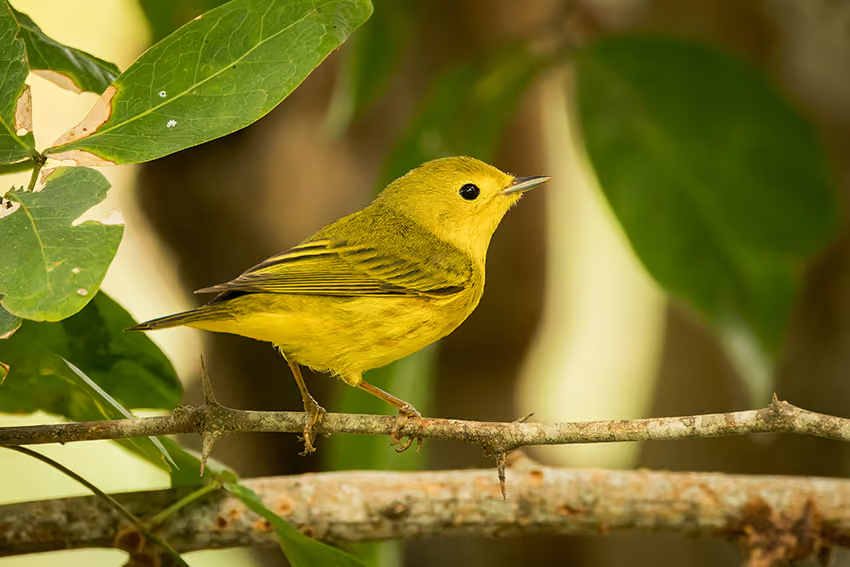
The Yellow Warbler: Look Again

LA HIGUERA
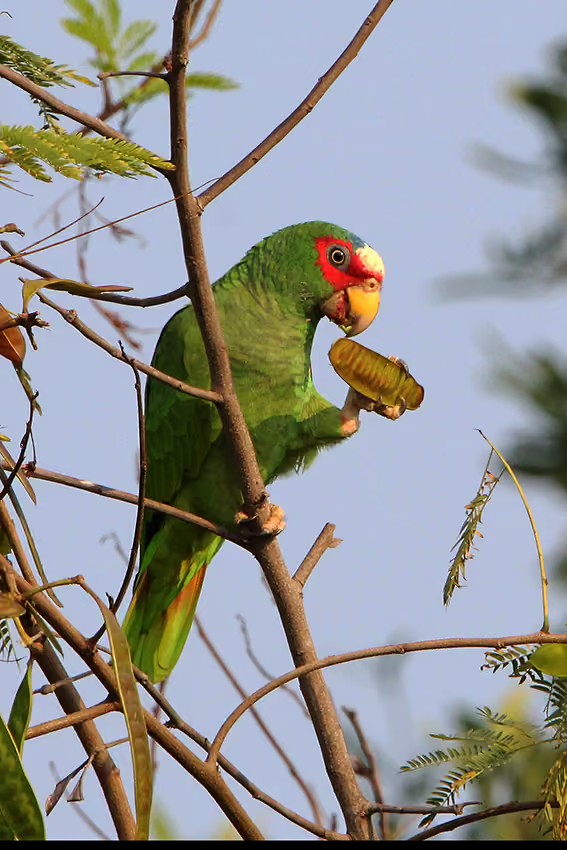
The Parrots of Troncones
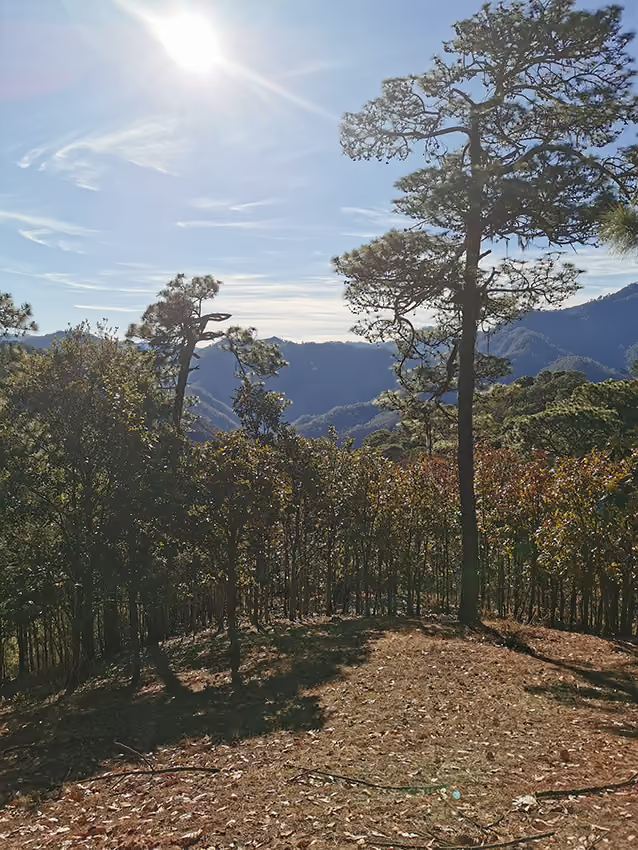
My Kind of Paradise
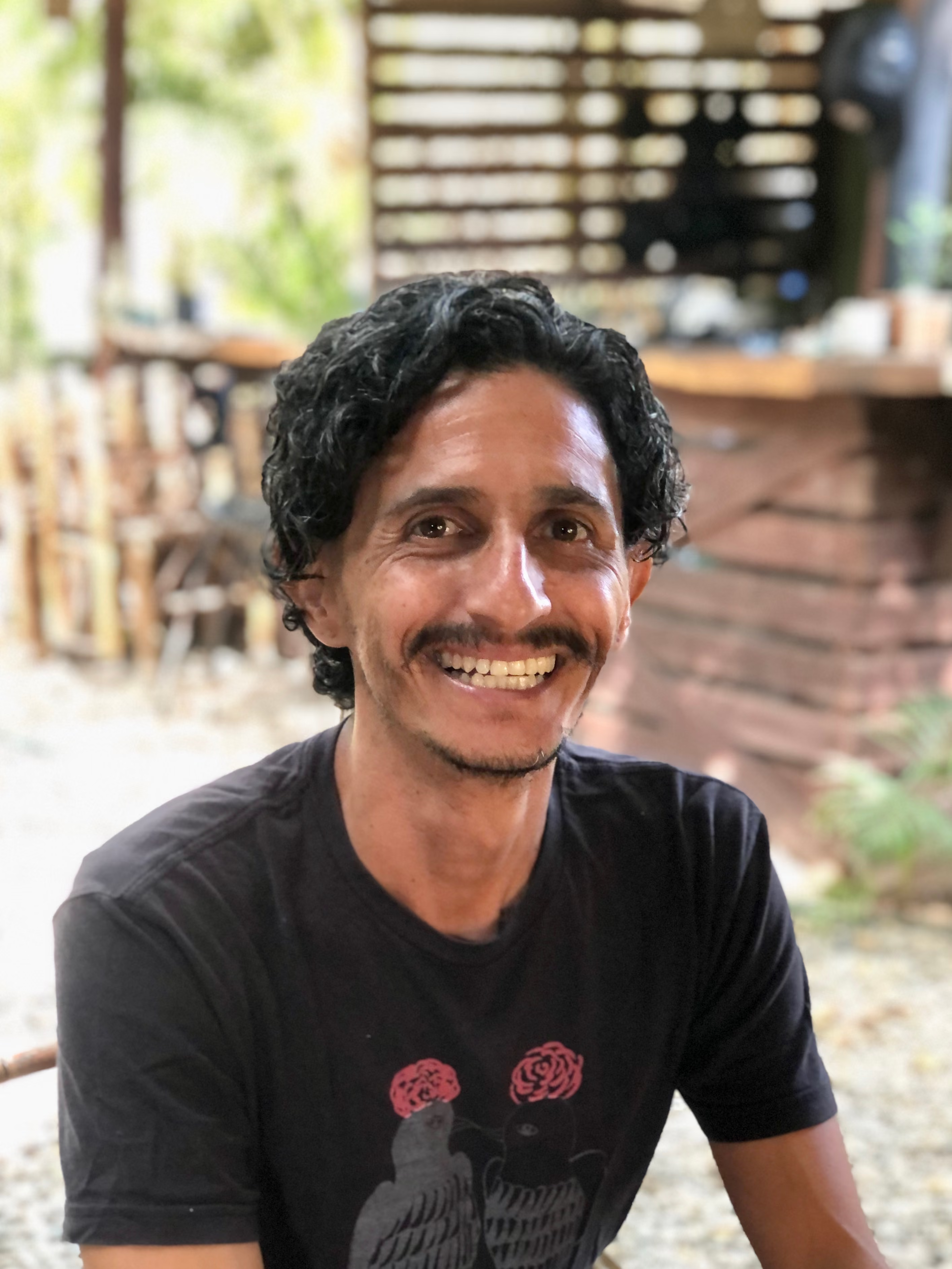
La Boca Through Omar’s Eyes

Santu Blooms

Streak-backed Orioles: The Brightest Thing in Your Banana Tree

La Majahua: A Place Like No Other

Go For It: Surf Films from Around the World

The Hummingbirds of Troncones
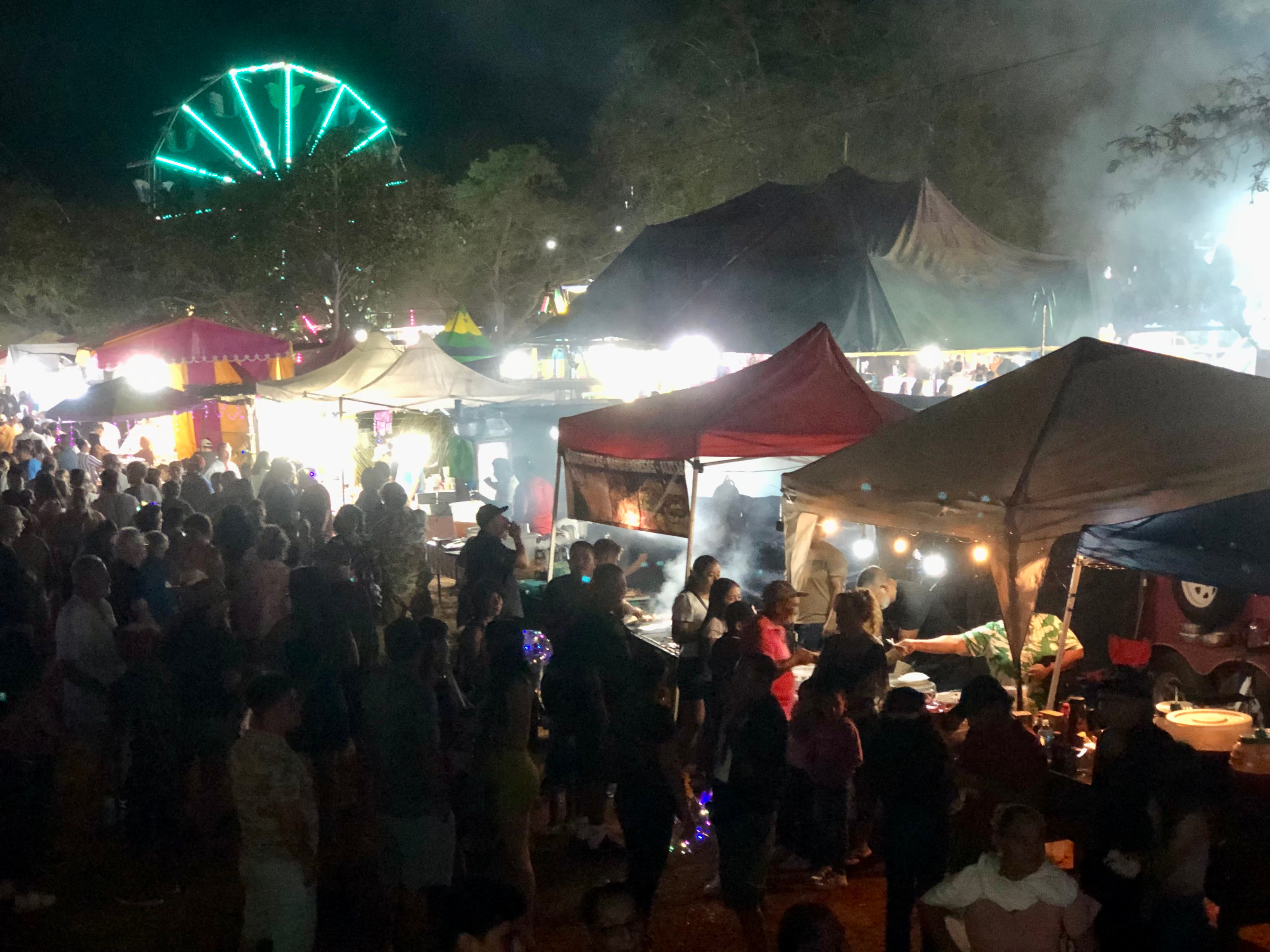
Troncones Fair 2026

The Crocodiles of Troncones

Here Come the Letters

Humanimal Fest Goes On the Road
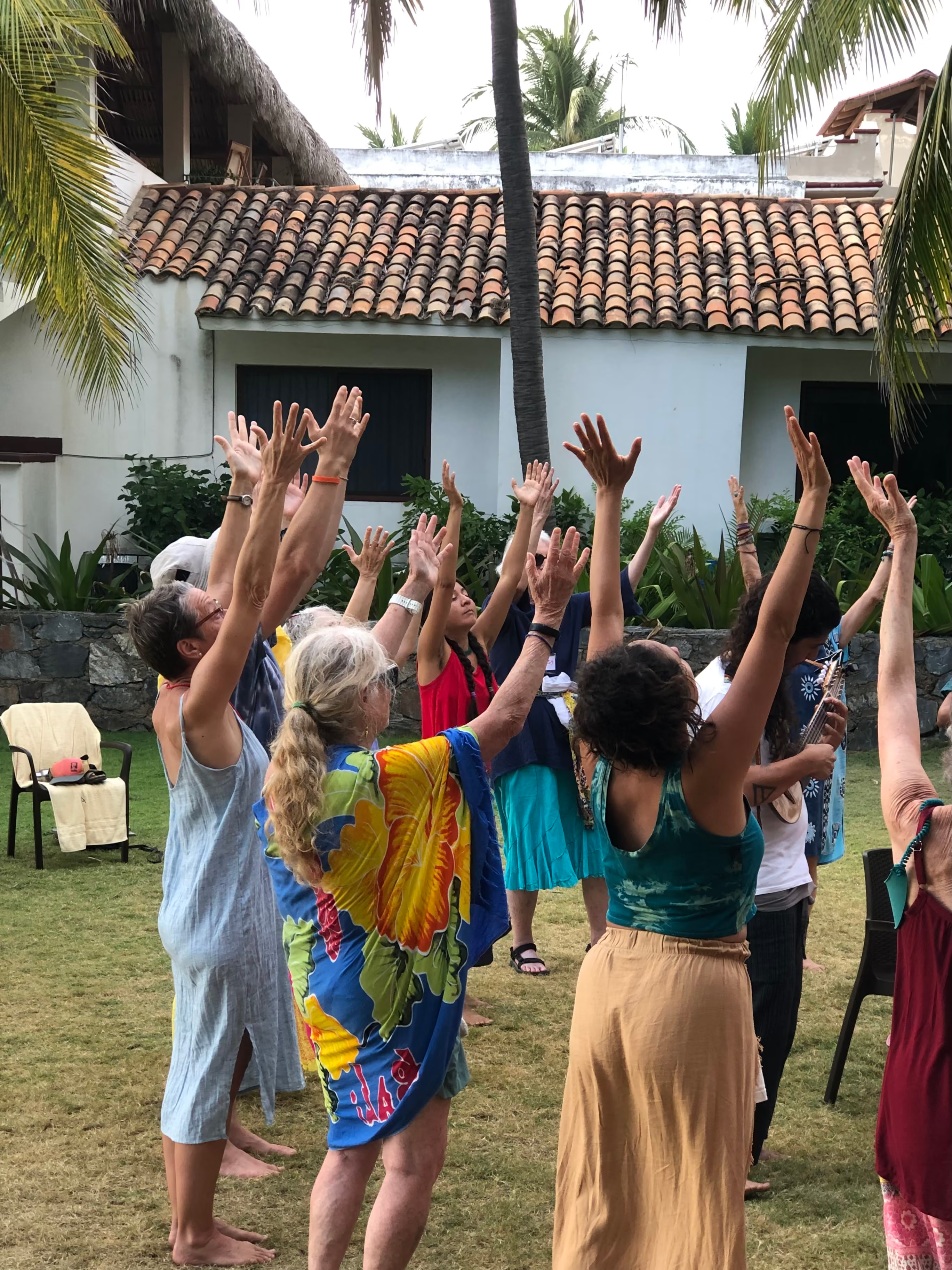
Mantras in Motion

Roseate Spoonbills: Don’t Call Me a Flamingo

ARCHIVE #1: HEROES & MORE

The Sisters of the Gala

What Bird Is That? A Guide to the Three Common Wrens of Our Region

A Rare Visitor to the Shore
.avif)
Breads, Kings, Baby Jesus and Tamales
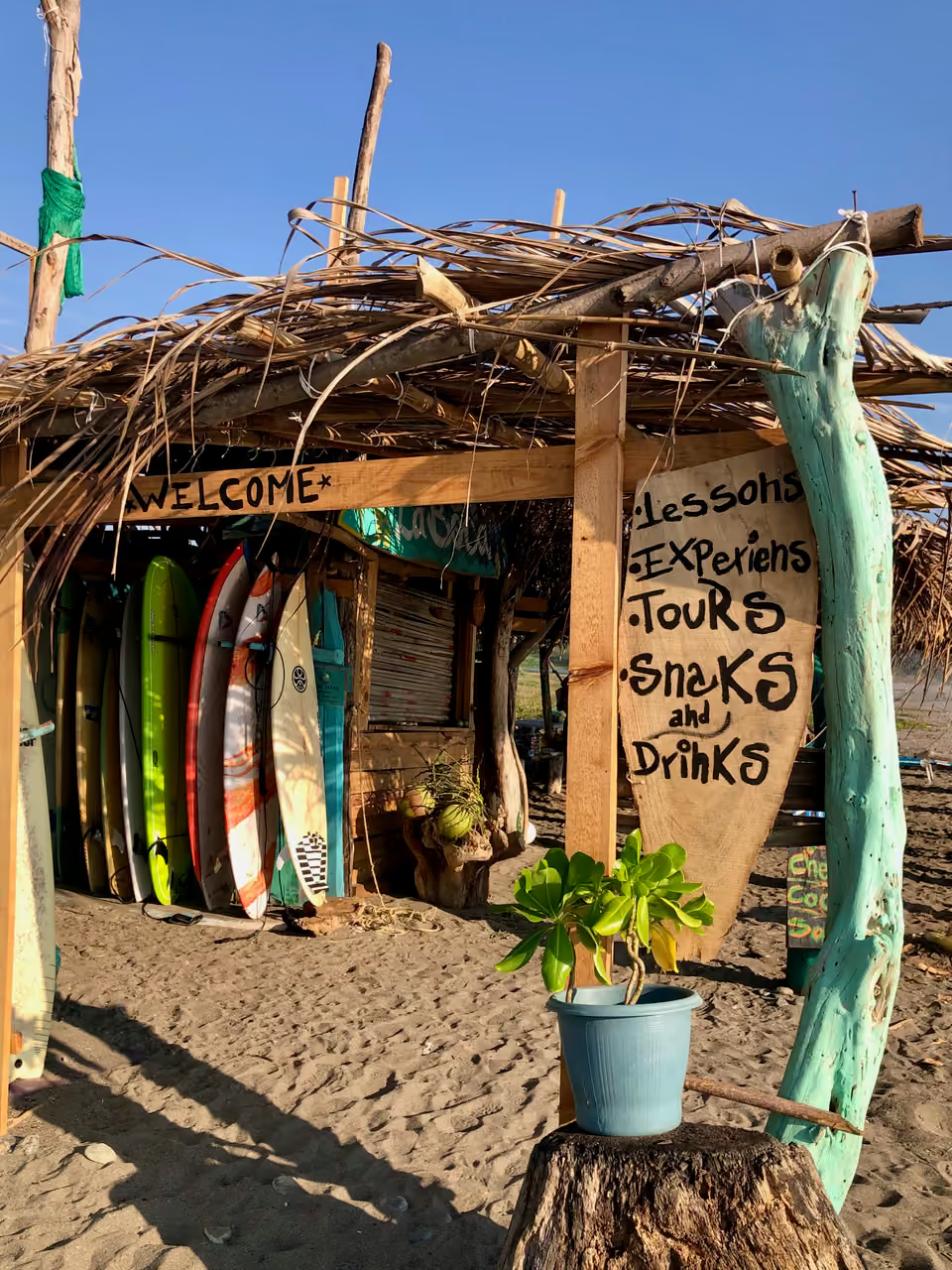
On the Beach at La Boca
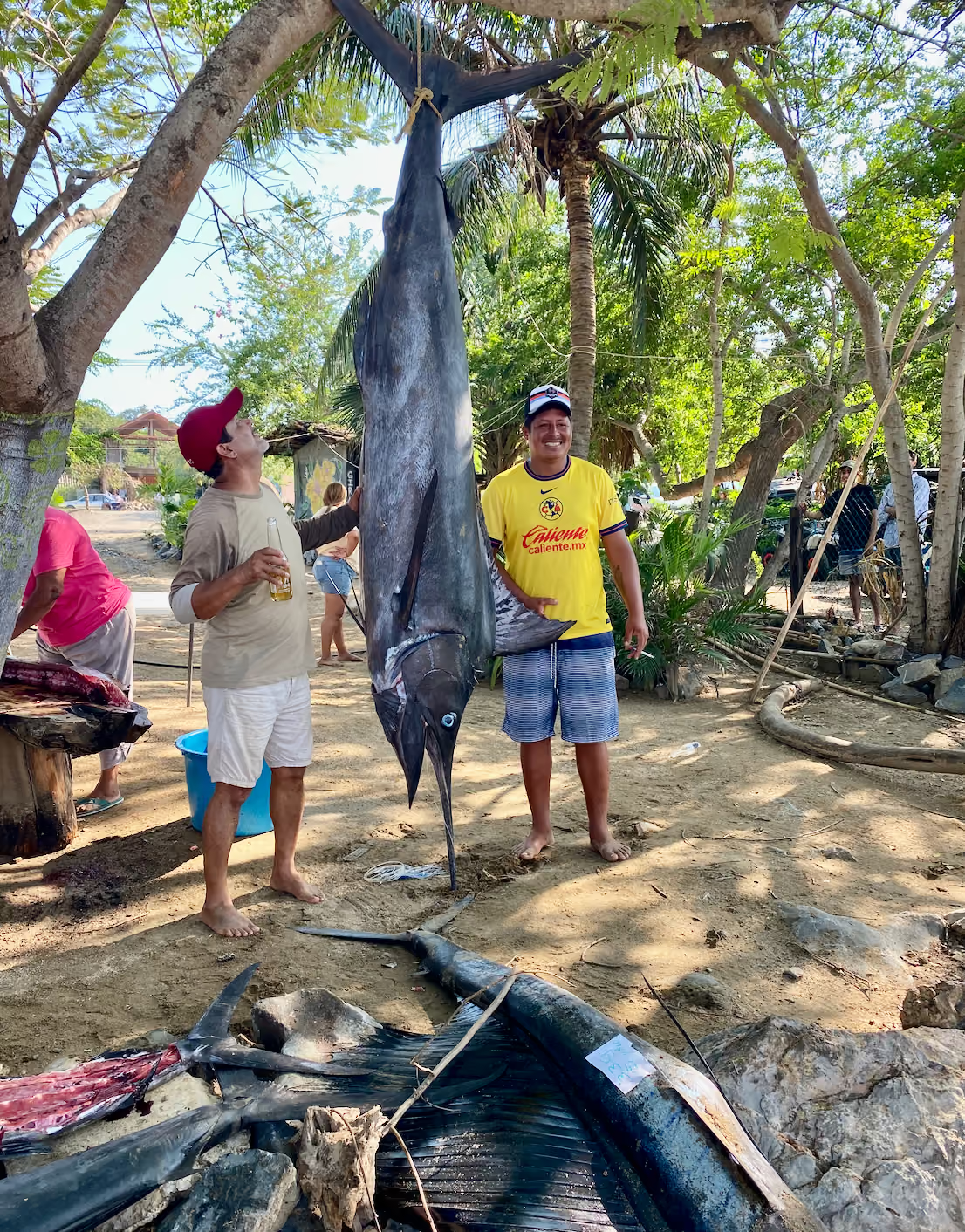
Reel Scenes from Majahua

Palm Trees Aren’t From Here Either
APCAT 2005

Boogie Church

TAMAKÚN; THE MAN WHO WALKED WITH CROCODILES

When the Black Fin Rises

Rooted in Love: Rooted in Troncones
GIFTS WE’D TOTALLY GIVE…OR KEEP FOR OURSELVES
.avif)
What Bird Is That? Golden-cheeked Woodpecker
Not from the Sea: The Story of the Loofah Vine

Dragons Among Us: The Iguanas of Mexico

INTRODUCING LA ONDA FREE CLASSIFIEDS

What Bird Is That?

SKATE PARK REFRESH

There’s No Place Like Troncones

When the Giants Return
The New Place, South

Shop 'Til You Drop
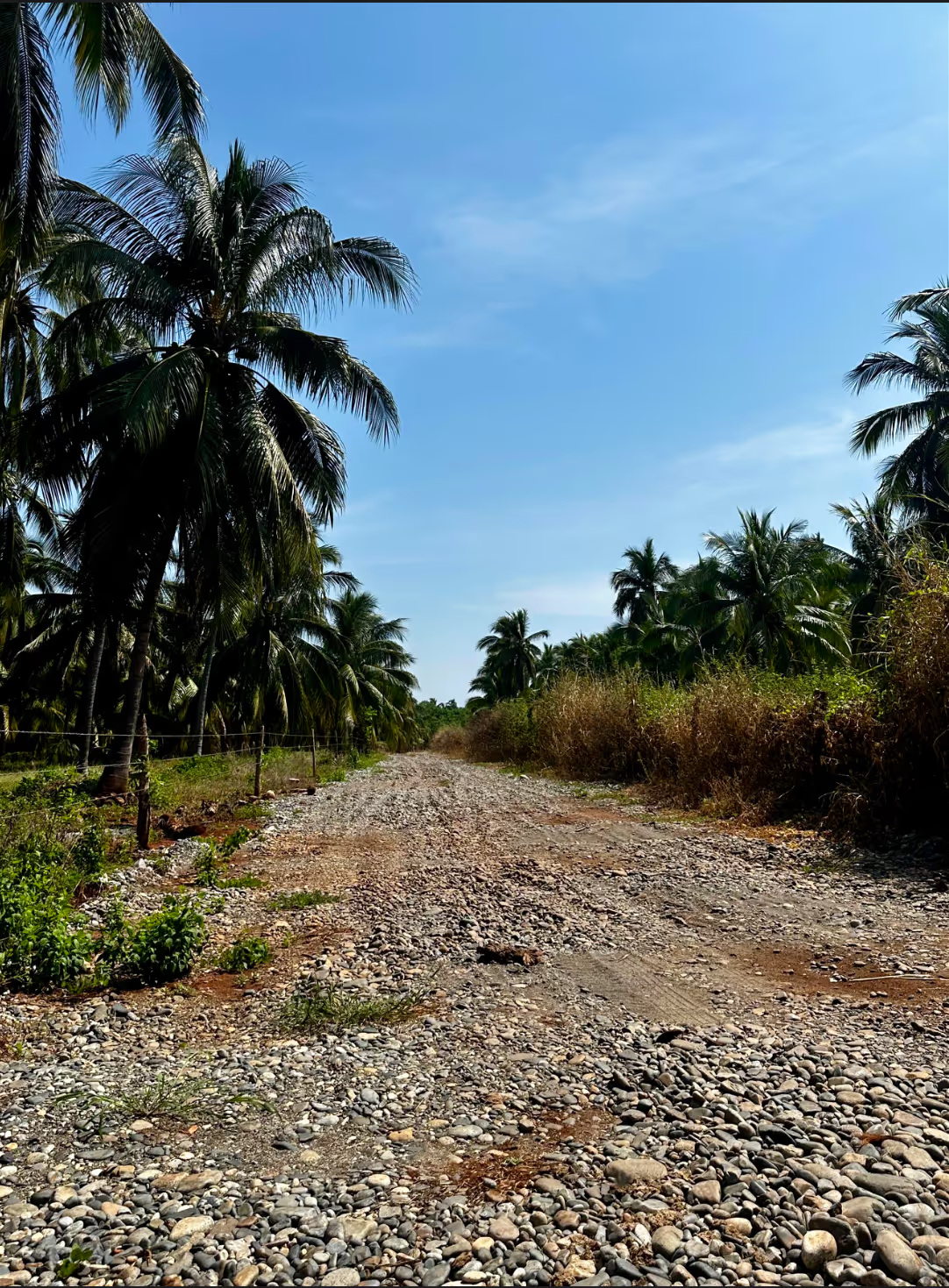
The Back Way to Saladita

Tarantulas: The Misunderstood Moms of the Night
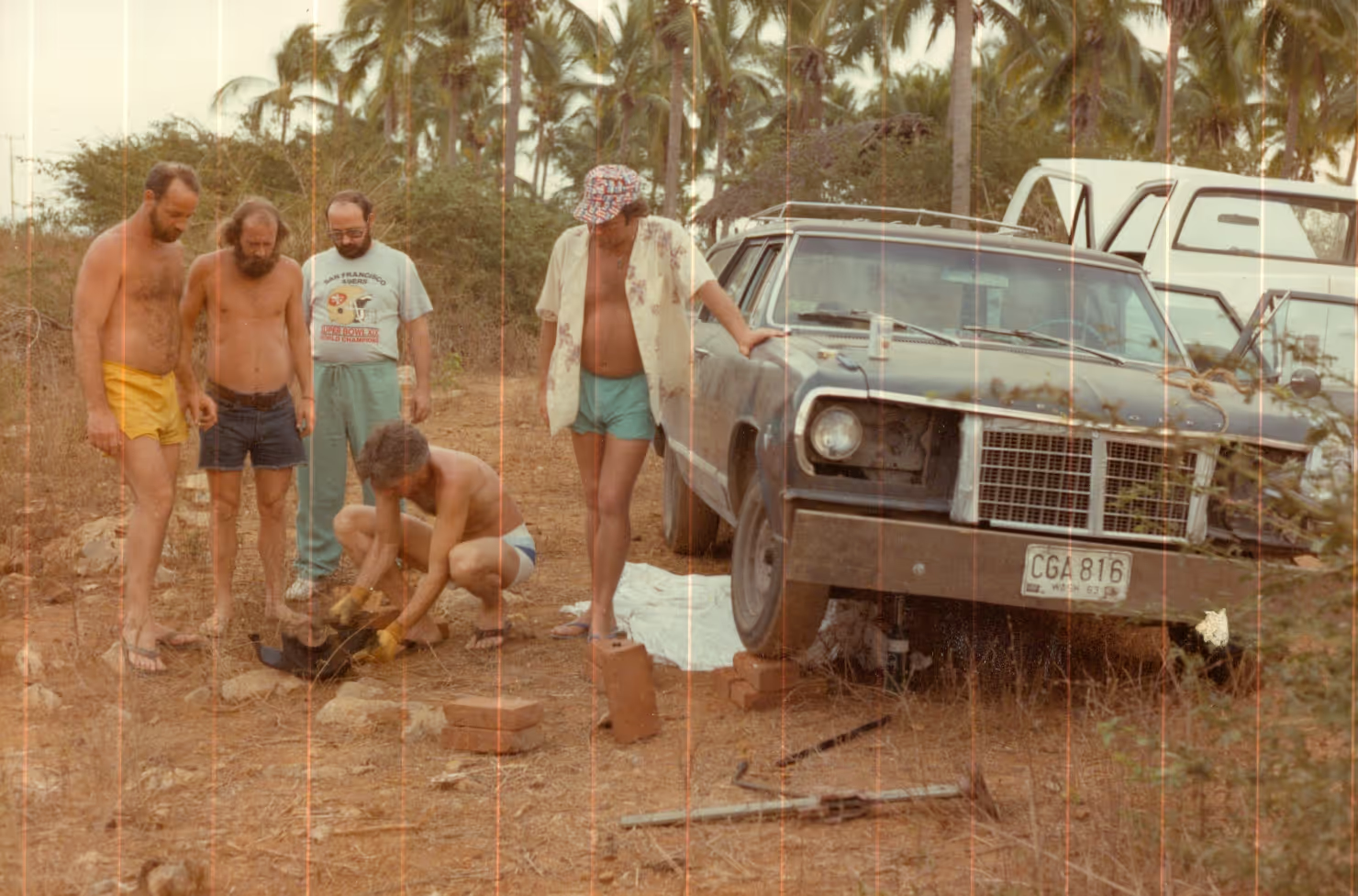
My First Time in Troncones

The Devils of Ocumicho: A Stolen Fire
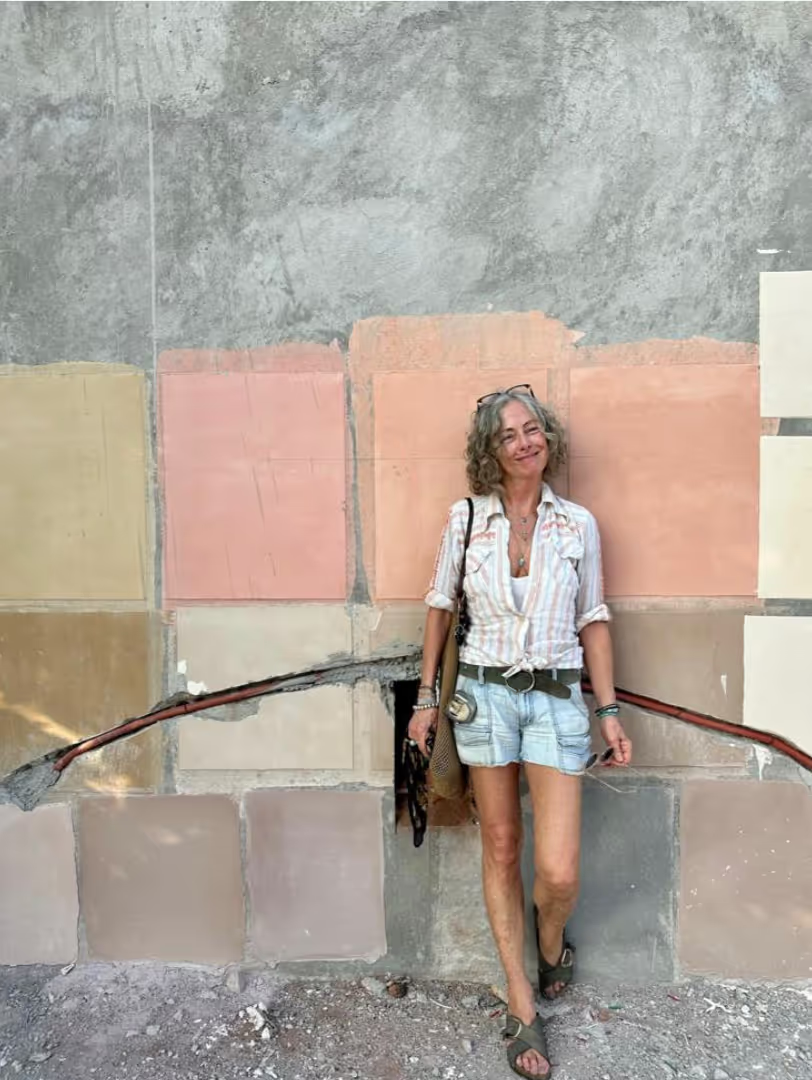
Riad San Cristóbal: A Happy Accident
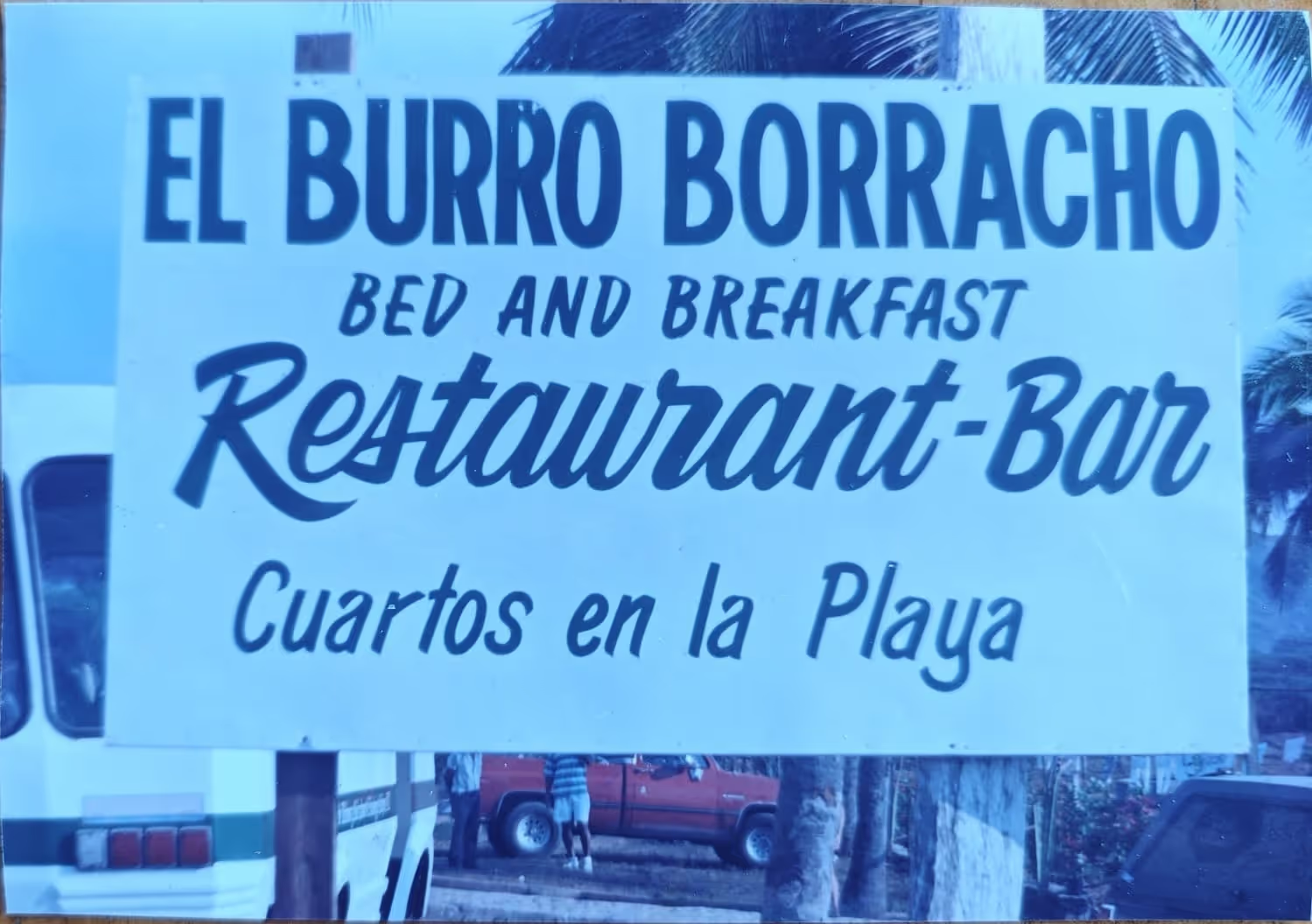
What We Remember: Two Landmarks

Surfonomics: It's more than a wave

Día de los Muertos: A Celebration of the Living Dead

Your Day of the Dead Altar
%201.23.41.avif)
Sentinels of the Morning: The White-throated Magpie-Jay of Troncones
%201.20.16.png)
PEACED OUT IN TRONCONES

%2013.13.24.avif)
Living With Nature: The Gentle Monsters Among Us
%201.44.22.avif)
PAVING THE WAY
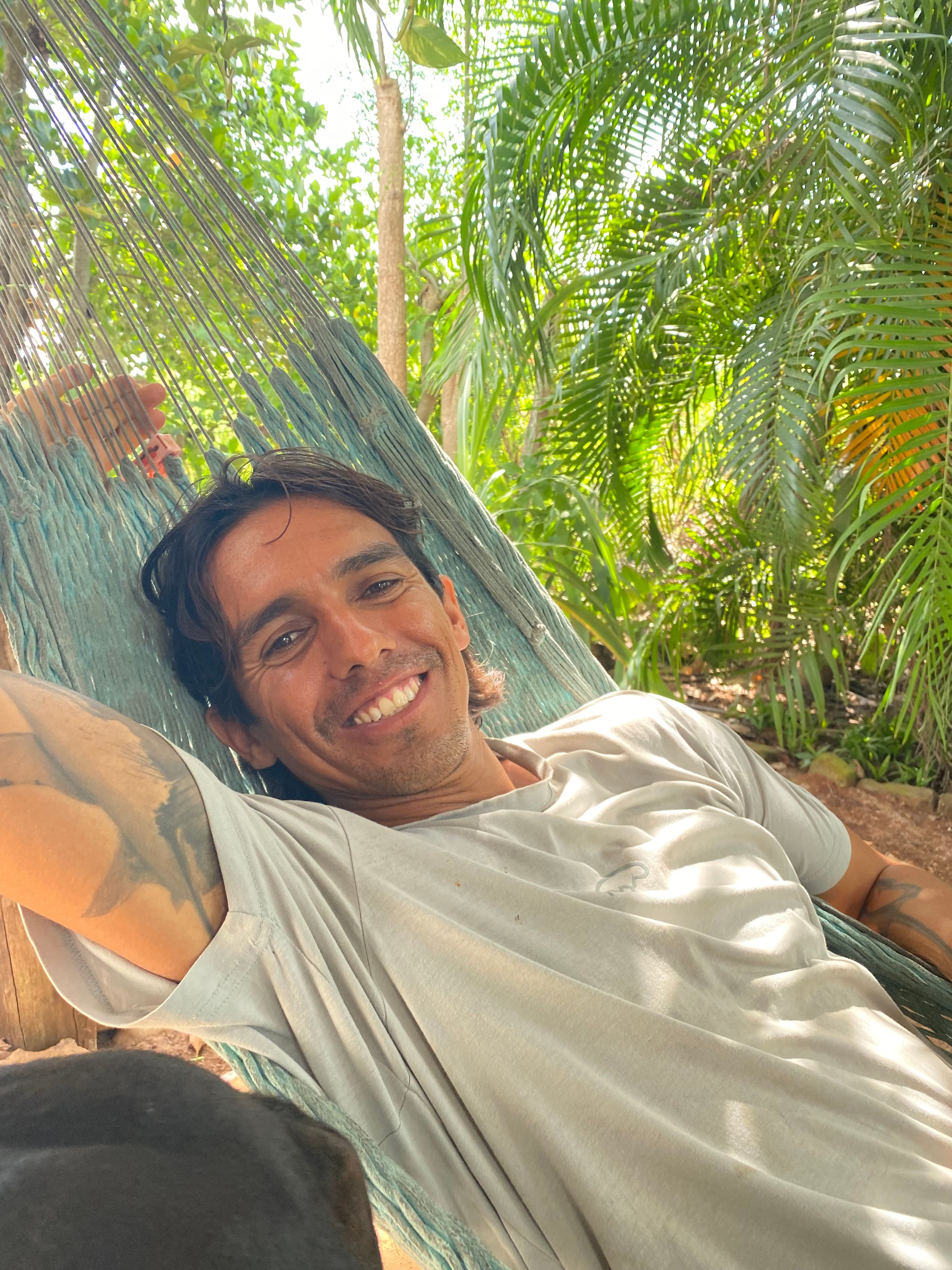
Cristo León: The Purist
Cristo—Christopher Damián Aburto León—is 35, born and raised in Zihuatanejo. He’s soft-spoken and thoughtful, with a beaming smile and an easy manner. We sat at a table on the veranda of his home in Saladita, dogs wandering around us.
He grew up close to his extended family and was “always in the water.” When he was six, his parents enrolled him in afternoon English classes in Zihuatanejo. His mother rode the combi route with him his first time, showing him where to get off, and after that he made the trip by himself.
“I would do it myself when I was six years old,” he says.
At 19, after studying culinary arts, Cristo left for Miami and began working aboard private yachts. He spent several years cooking and traveling with the boats until, by 2018, he was ready for something else.

“My life was the boat,” he says. “Wherever the boat went, I was there. I wanted to make another kind of life for myself.”
He came home, spent some time surfing and living off his savings, and began figuring out what he wanted to do “on land.”
The answer started with coconut oil.
Cristo’s mother grew up in nearby San Jerónimo [south of Zihuatanejo], where her great-aunt made coconut oil in small batches. “My mom grew up with this,” he says, remembering the stories of the smells and watching her great-aunt make it. “She would make small batches and she would sell shots of coconut oil.”
Years later, his mom wanted to make it herself, but her full-time career in education didn’t leave much time for cracking hundreds of coconuts. She asked if Cristo was interested in learning the process. He started small.
“I practiced at home with just five coconuts,” he remembers. “I practiced and I kept at it, until I came up with the recipe, and I was like, ‘I think I got it’.”
He began making coconut oil in 2019 and kept refining his process from there.
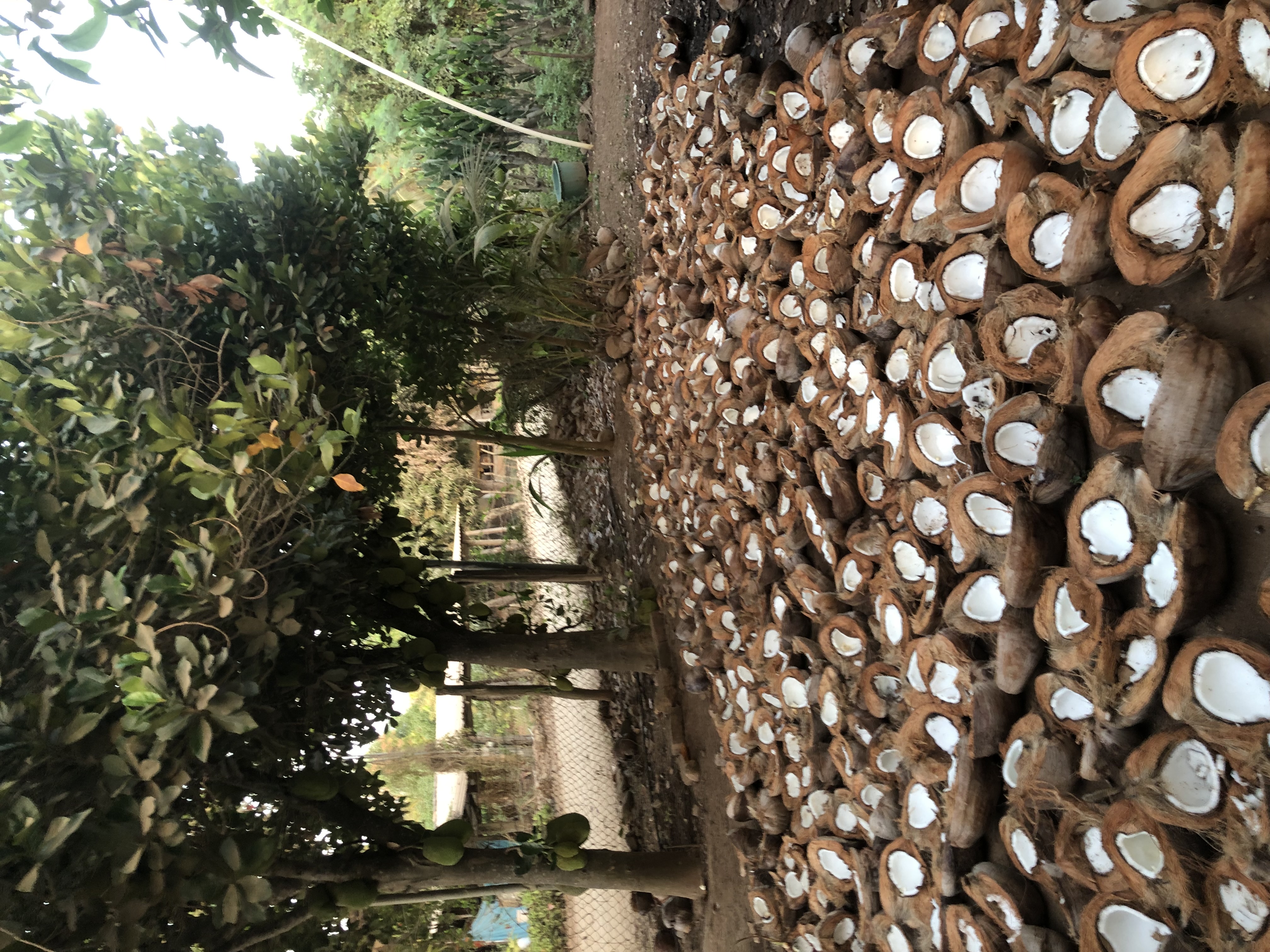
After we talked, Cristo took me behind his house to see where he makes his coconut oil now: an outdoor cooking station he has set up, where he uses propane and old clay cooking vessels. His coconut-oil days begin around three in the morning and continue for hours, in part so he can finish before the morning wind starts interfering with the flame.
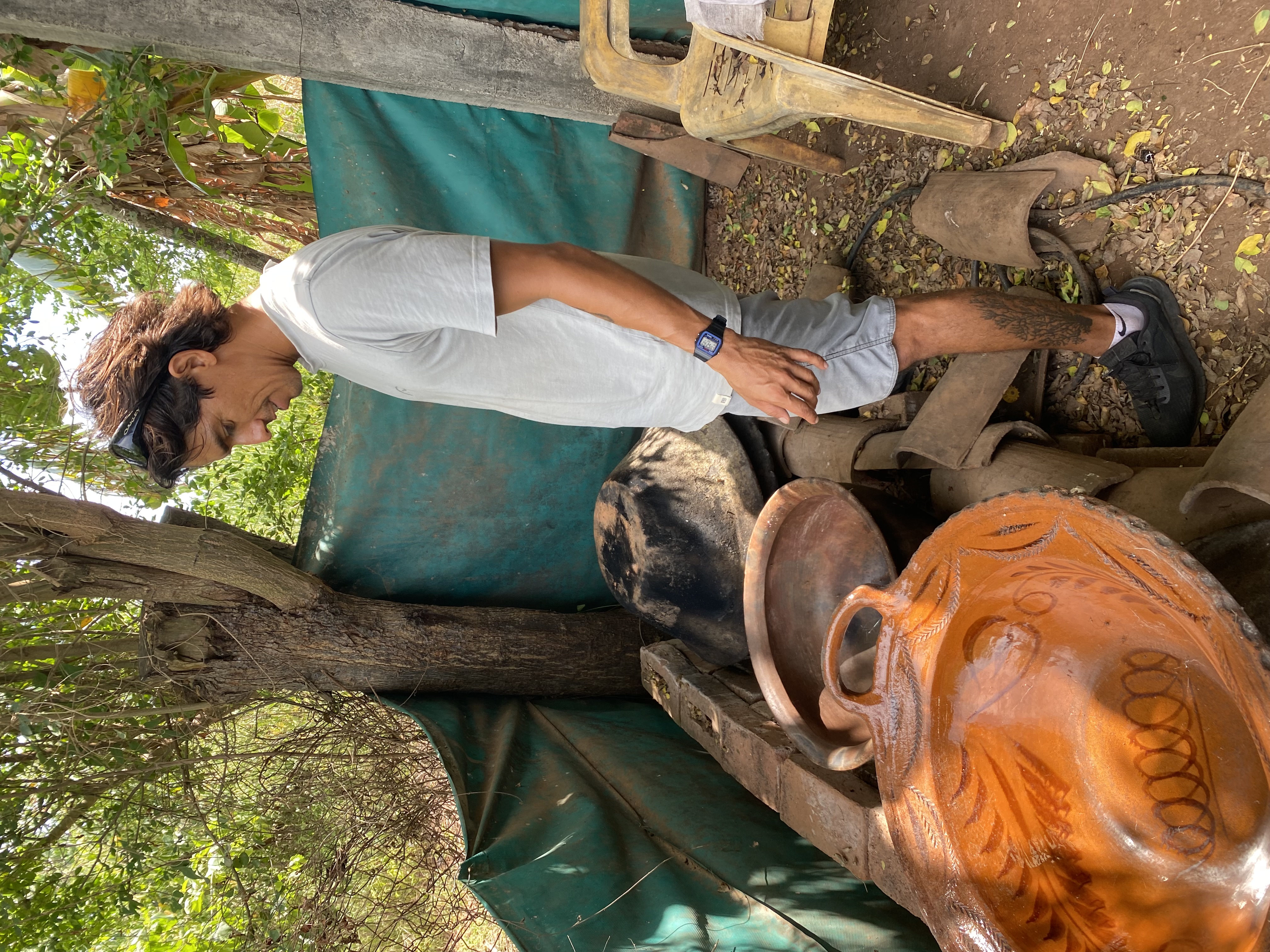
“It’s a ritual,” he says.
The peanut butter came next, with the help of his partner, Brigit, who is from Puerto Escondido, a place where peanuts are a major crop. Cristo has always paid close attention to what he eats. “That’s being a cook,” as he puts it, and started making peanut butter for himself.
At first, he roasted his peanuts in a pan on the stove and took them to the central market to be ground. He was also teaching surfing, and he’d bring some of his peanut butter along, mostly for himself.
“Everyone was curious about it,” he recalls. “‘So, what’s that?’”
Brigit began sending him peanuts from Puerto Escondido, and Cristo started processing more. He put his first jars out on consignment at La Esquina, the market at Hacienda Plaza.
“That’s how I started,” he says. “And little by little, word of mouth here and there, I started producing more and more.”
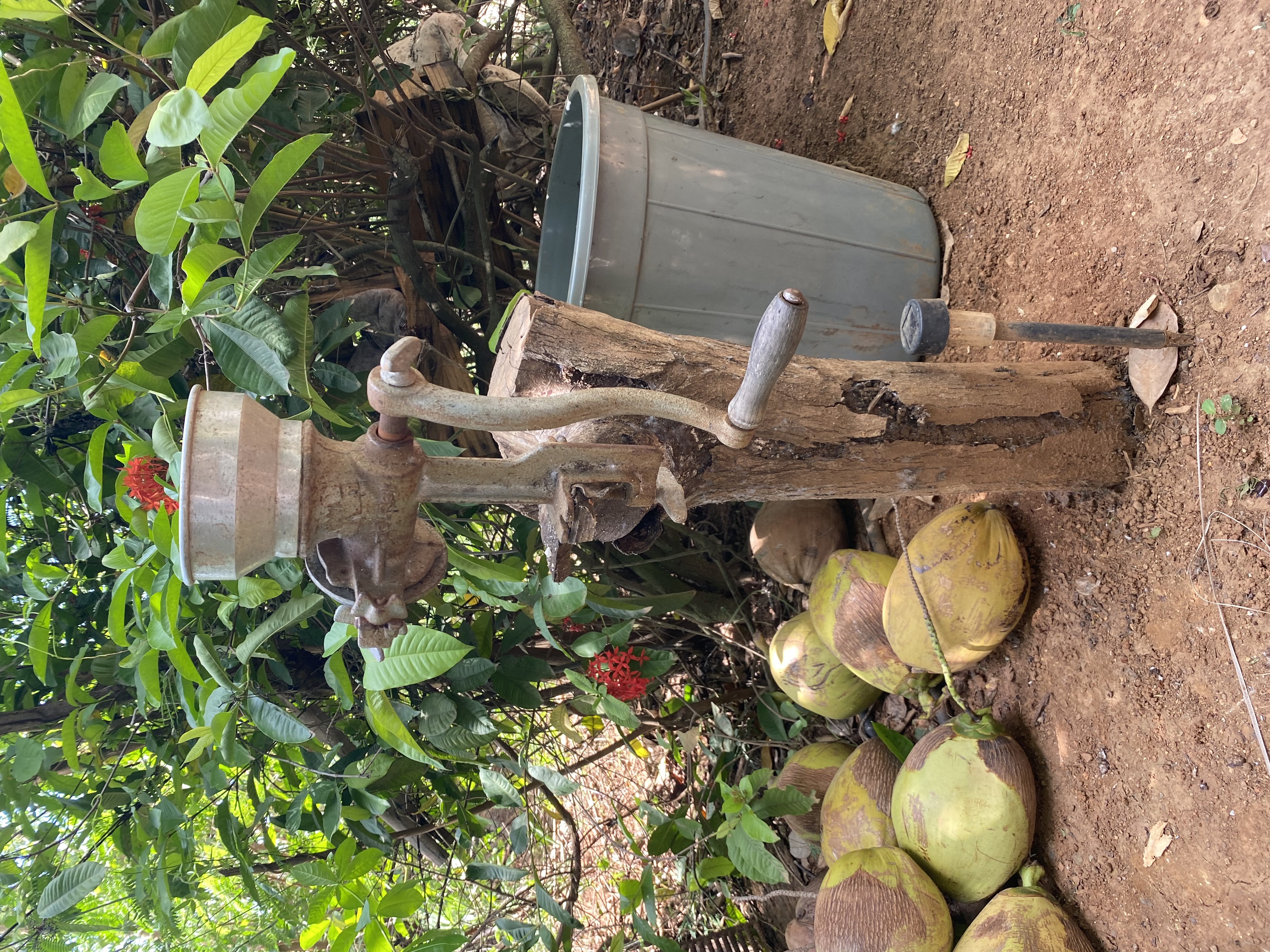
Cristo then pointed at an old hand-crank grinder mounted on a skinny tree stump outside, saying, “That’s where it all really started.” It’s hard to imagine a more modest beginning for a business that now produces hundreds of kilos of nut butter each year.
Around this time, Cristo moved into his current home and met his landlord, Don Lorenzo, who’s now 85. Cristo never knew his own grandfather, who died before he was born. His grandfather’s name was also Lorenzo.
One day, Don Lorenzo stood watching Cristo roasting a huge batch of peanuts by hand.
“That’s a lot of peanuts,” Don Lorenzo said, and asked Cristo, “Where do you get them?”
Cristo told him Puerto Escondido.
Then Don Lorenzo returned with a bag of peanuts.
“These are the ones I grow.”
Cristo laughs remembering his reaction: “I’m like, wait, what?”
Don Lorenzo took him out to his land, where coconut palms are planted in wide rows with enough space between them to grow other crops.
“He’s like, ‘These are peanuts.’ And I’m like, ‘Holy shit.’”
They started growing peanuts.
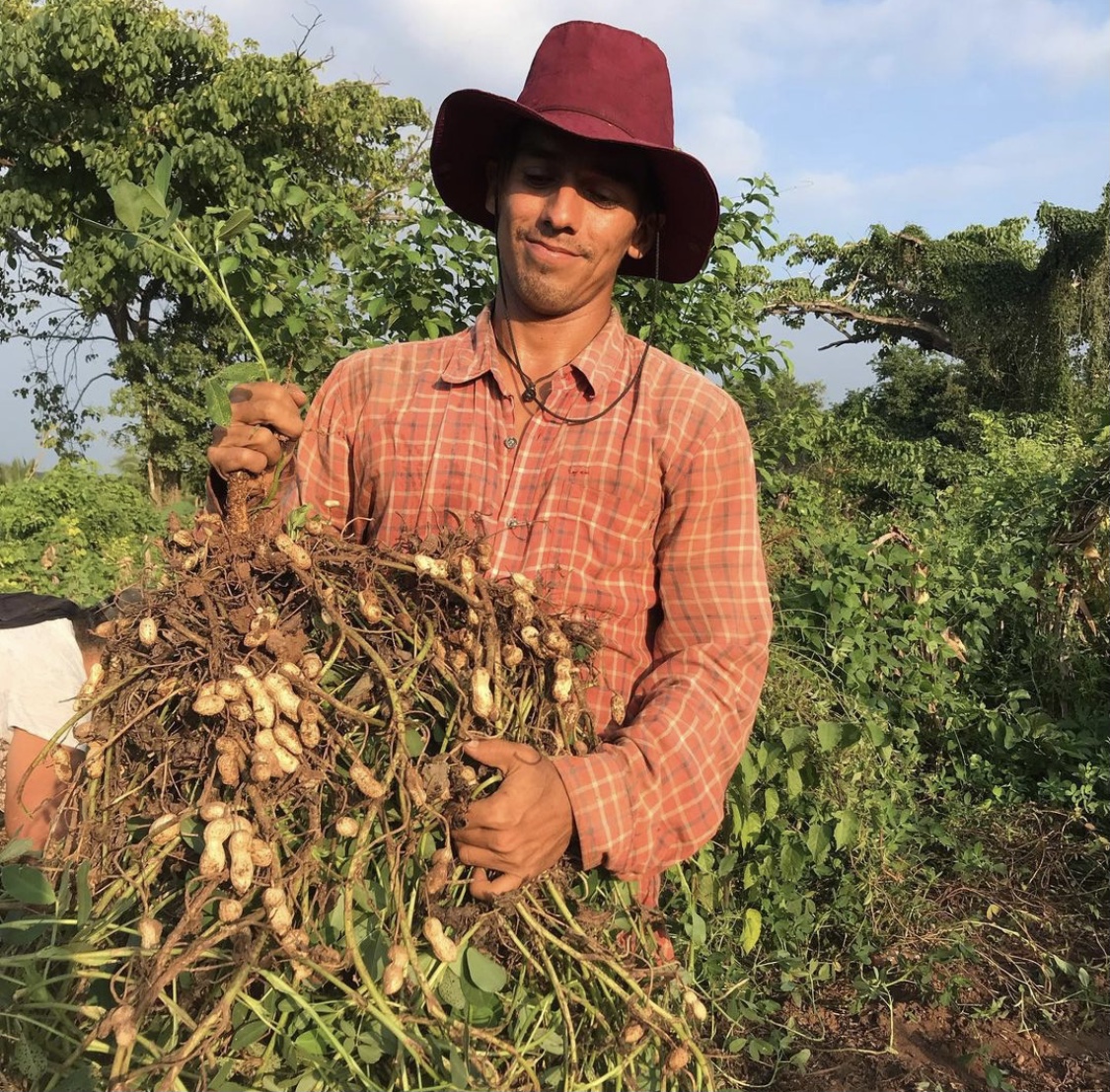
And Cristo learned about peanuts, when to plant and when to harvest, and for a while used those peanuts in his butter.
Eventually demand became more than he could grow himself.
He remembers, “There was a point that I had to decide: do I keep growing and limit myself, or do I buy a good peanut and expand?”
For now, Cristo buys, although he still inspects and tastes the peanuts himself, explaining, “If I like it, if I eat it. That’s the most important—to know it’s a good peanut.”
He hopes eventually to grow peanuts again, when he can support a crew to do it.
Almond butter followed. Cristo remembered the nut grinders he had seen at Whole Foods while living in Miami and started experimenting with almonds. Without adding oil, getting the consistency right comes down to roasting and temperature: too hot and the almonds can become sandy and crumbly; too cold and they don’t blend properly.
This attention to the ingredient runs through almost everything Cristo does.
“I think I’m a purist,” Cristo says. “I always want to be the closest I can to the source of things. I think that’s one of the reasons I started making all these things.”
A friend in marketing once asked him what made his products special. His first response was that they were great products, but she pushed him: other products are great, too. What makes yours different?
The question stayed with him.
Then one day the answer came to him:
“Because they’re part of my life. They’re in my diet because I consume them. That’s what makes them special. I really care what I eat and I’m very careful with what I eat.”
Crissol is no longer a few jars of peanut butter made for friends. Cristo now produces an average of about 80 liters of coconut oil a year, half a ton of peanut butter—roughly 1,000 jars—and around 600 jars of almond butter.
His days still begin with surfing. He teaches in the morning, comes home around noon, eats lunch, and then, as he describes it, “I have to make peanut butter. I have to harvest my honey. I have to plan my coconut oil production.”
Honey?
This gets my attention because I’ve been asking around, for what feels like a year, trying to find someone here who keeps bees.
Cristo, it turns out, has bees.
He shows me a huge hollow log with two small doors cut into the top and sealed with mud. Tiny Melipona [stingless] bees buzz in and out through small openings at either end. They produce small amounts of a special honey, which Cristo harvests on occasion. Known as miel de palo, it’s traditionally prized for medicinal uses rather than simply being a sweetener.
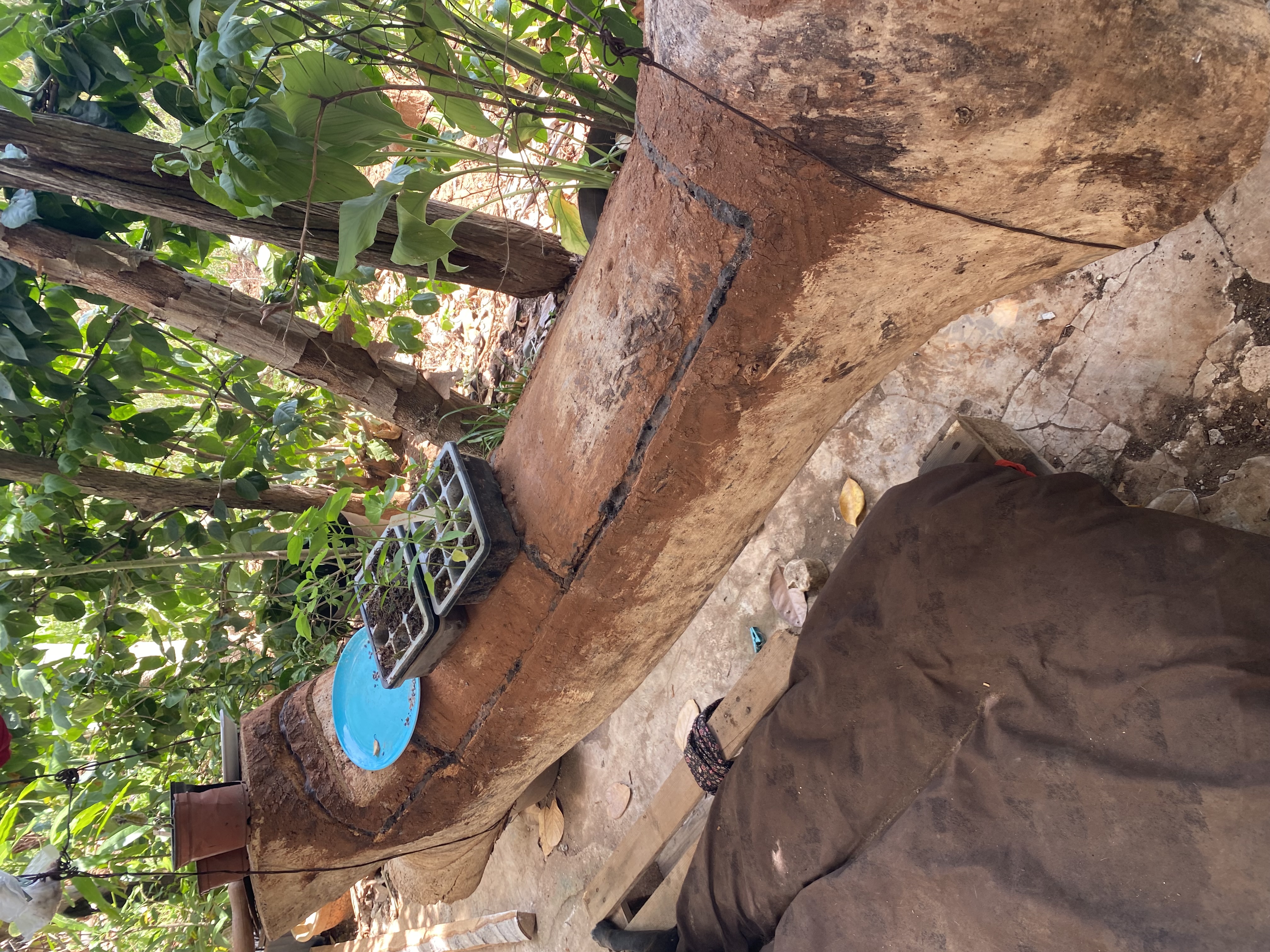
Again, Cristo connects it to wanting to get closer to the source of what he consumes.
From there we went inside, where the evolution from that little hand grinder on the tree stump became immediately apparent. Cristo shows me a rotating 20-kilo propane roaster that looks like a miniature coffee roaster, followed by the much larger grinder. Boxes of jars are neatly arranged on shelves, along with one of the surfboard display shelves he makes himself. Then he opens the refrigerator, where rows of finished jars are meticulously lined up.
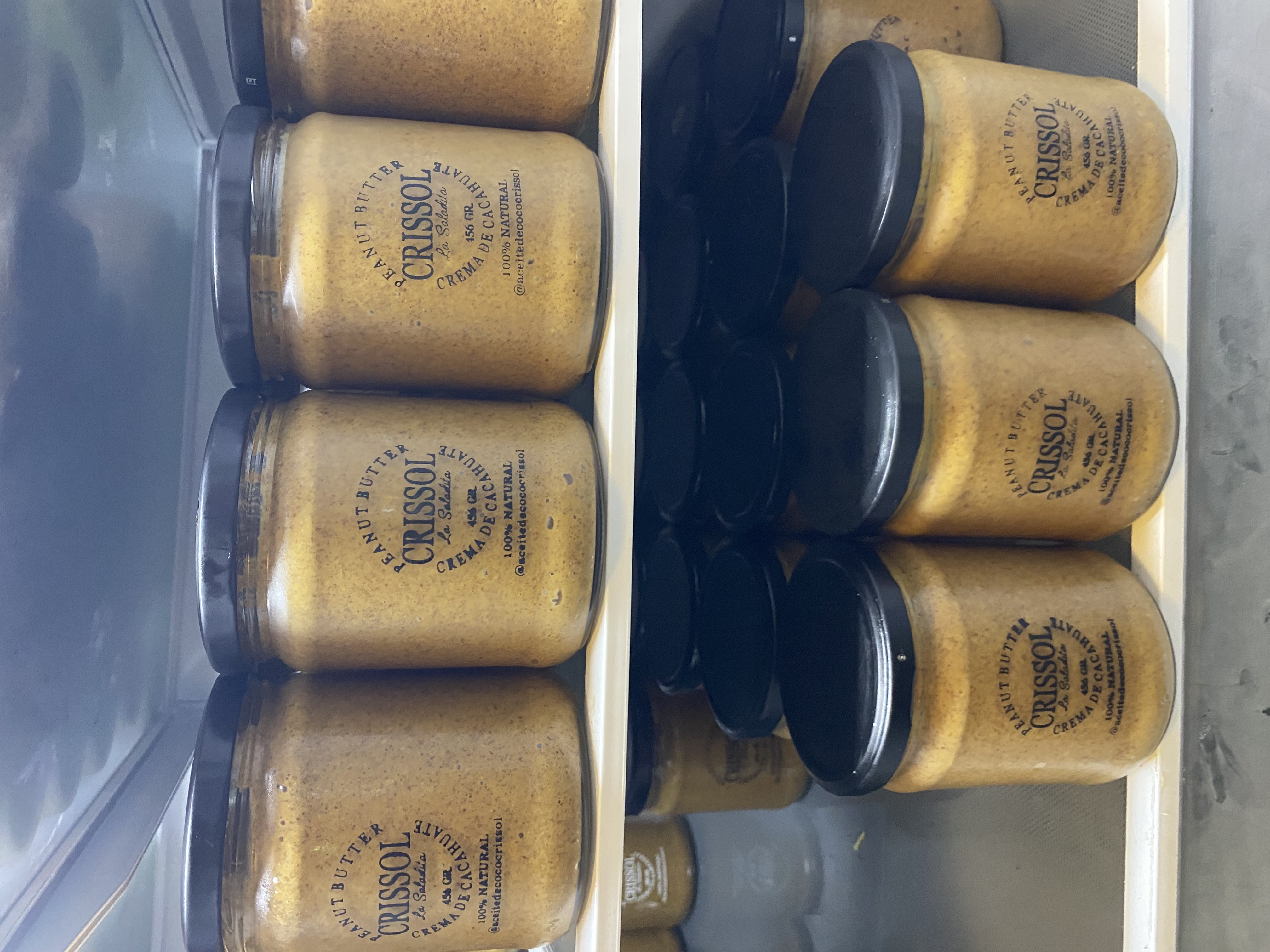
He’s as particular about freshness as he is about making the products. If a store isn't busy enough to move them, he doesn’t want his jars sitting there.
“I don’t want to have it sitting there for more than two months,” he says, “because I wouldn’t be proud of that product.”
Before he closes the refrigerator, Cristo hands me a jar and asks if I’ll accept it.
¡Con gusto!
He’s now building a house on a more remote piece of land beyond the mango plantations, where he will finally have room for a proper workshop. Until now, coconut-oil production has meant bringing out folding tables and moving his car out of the driveway to make enough room. The new workshop will also give people a chance to come and see how everything is made.
When we finished our interview and I was on my way out, Cristo pointed to one last thing.
A smoker. “I smoke fish,” he tells me. “I forgot to say.”
Brigit, apparently, has plans for smoked-fish tacos.
I can’t wait!

LINK

A Curious Cook Makes Bagels in Paradise
LOT: Tell us a little about what you do at Hacienda.
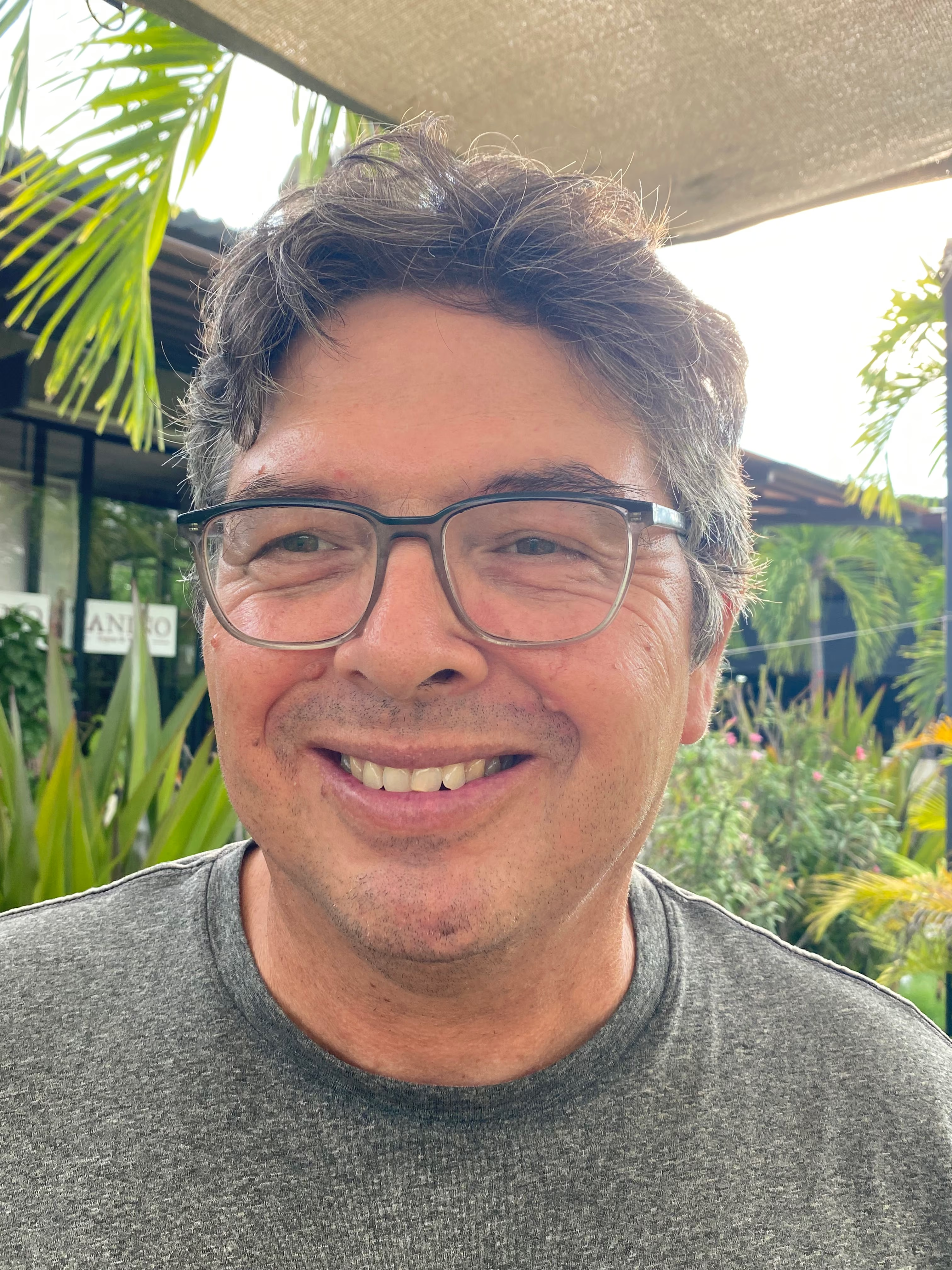
John: I’m one of the partners in the creation of Hacienda, the coffee project and the restaurant. It all started with the coffee growers in the El Faisanal area [in the mountains, to the north-northeast of Los Llanos]. We wanted to help them with distribution and we ended up with this café. I bake at home and I like to cook. I enjoy trying recipes and creating things that work in this climate.
LOT: How did you become interested in cooking?
John: Growing up, we were seven kids. My father worked for the federal government after he got out of the military, so there wasn’t much around. My mom is Japanese, so food was always important in our house. There was always this idea that food could be something special. As I got older, I became more interested in cooking. Our friends cooked, and one of the chefs we admired was Paul Prudhomme and his southern Cajun cooking.
One of the people who really influenced me was Frank’s father, George Cruz. He used to barbecue in the backyard. George always said, “The best part about being the person on the grill is you get to sample everything.” Frank and I have been friends since the seventh grade, so I spent a lot of time at his house. His parents treated us—and many of the other neighborhood kids—as if we were their own. George was like a second father to me.
LOT: Let’s get right to your latest—the bagels. You're about the farthest thing from a Jewish guy as I've seen around here.
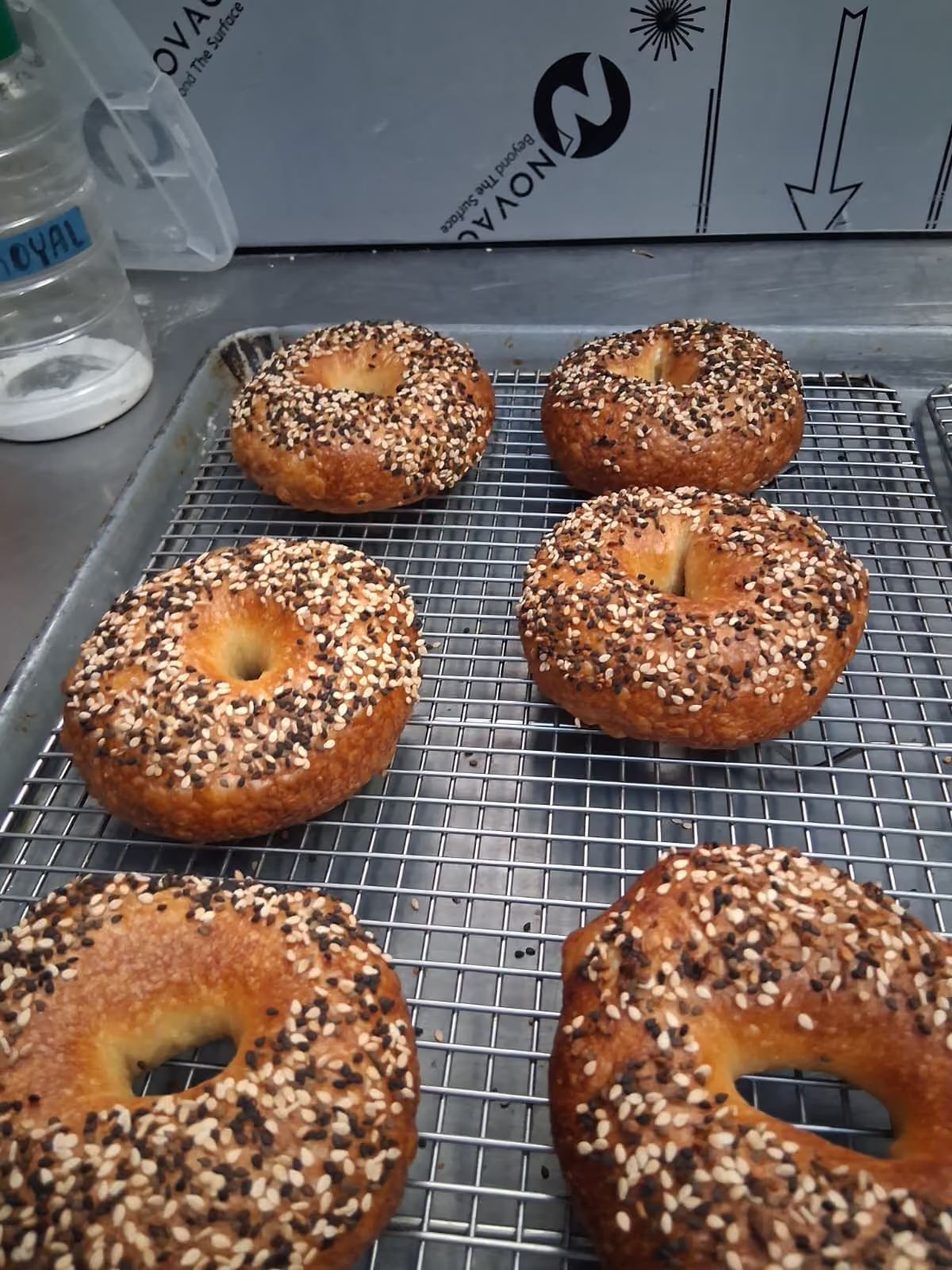
John: (laughing) Well, DNA-wise, I’m actually 30% Jewish. Growing up in the San Francisco Bay area, bagels were always around. There was always the debate about whether a West Coast bagel could ever compare to a traditional New York bagel. Once I started learning bread making, bagels just seemed like the logical next step. If you’re already making breads for lunch, then breakfast naturally follows—and that’s what sparked my interest in bagels.
LOT: Had you ever made bagels before?
John: No, I hadn’t ever made bagels until just this last year.
LOT: So where are you getting your information, your guidance?
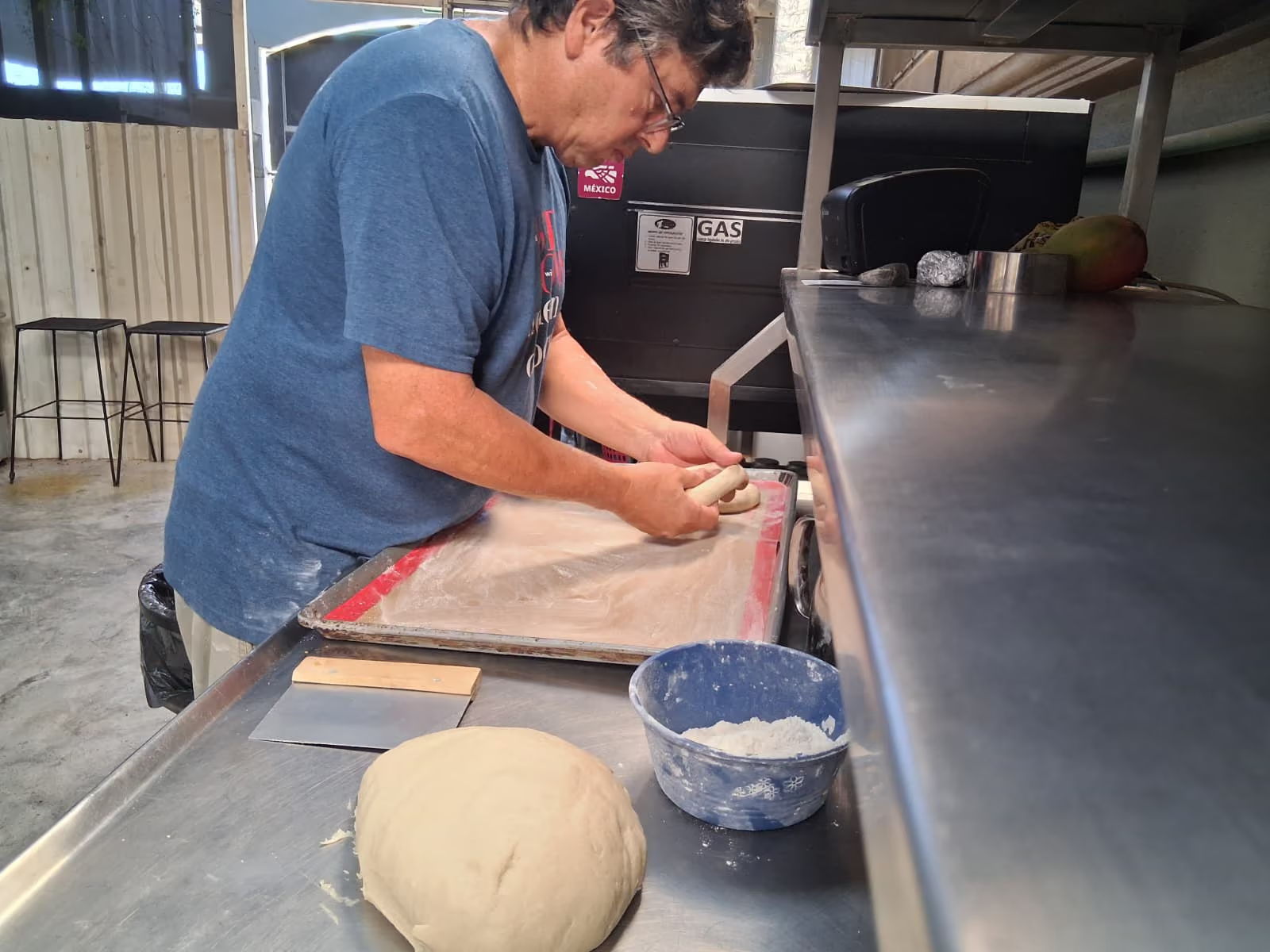
John: The only formal food training I’ve had has been bread-making and baking classes at the Central Milling Artisan Baking Center in the San Francisco Bay area [North of Novato, in Petaluma, CA]. I’ve watched videos from New York Times Cooking, that’s helped, and several of my sourdough books include bagel recipes, so I practice with those. Being in the Bay Area, there’s such a rich food culture there that there are always people, classes and resources to learn from.
LOT: Are you using a sourdough starter?
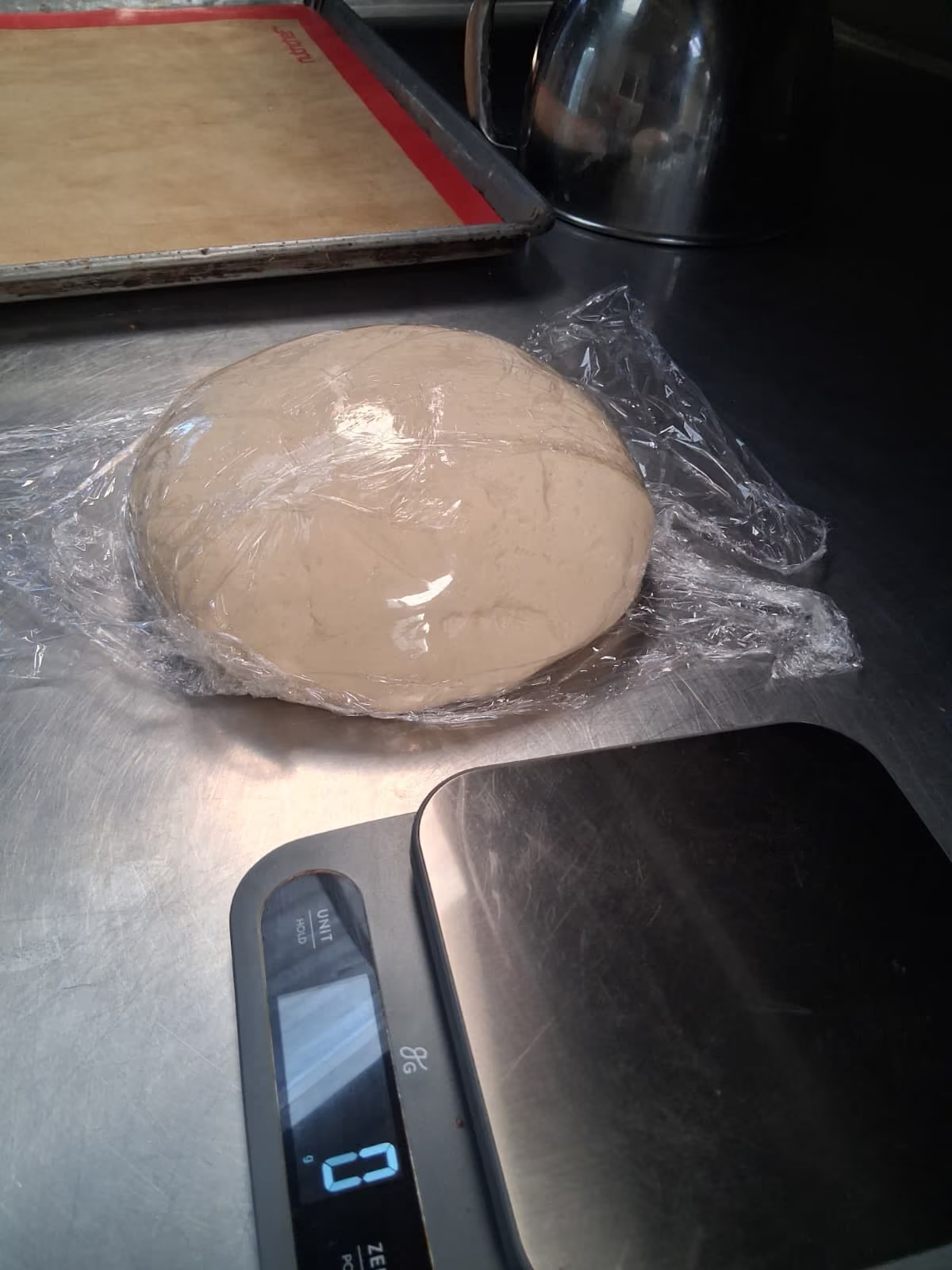
John: Yeah. At home, I have a sourdough starter. I use a little of that with a little yeast—that’s really where the flavor comes from. Here, I started a new mother starter about three weeks ago, and it seems to be developing really well. I’m excited about that.
LOT: What’s been the biggest challenge making bagels here?
John: The humidity. And the heat. Those two have been the biggest challenges. Back home in the Bay Area the humidity is around sixty percent. Here it’s eighty to ninety percent. I’ve probably done five different experiments just trying to get the hydration right. Change one ingredient and everything changes. Cinnamon raisin bagels are different because the raisins absorb moisture. Blueberries are different because of the moisture in the fruit. It’s always a balancing game. Just last week, the chefs from the oven company came and showed us how to really use the ovens—how to pre-heat them and use the steam function properly. That’s what gives the bagels those beautiful blisters on the crust. We’re finally getting them where we want them.
LOT: Are you trying to use local ingredients?
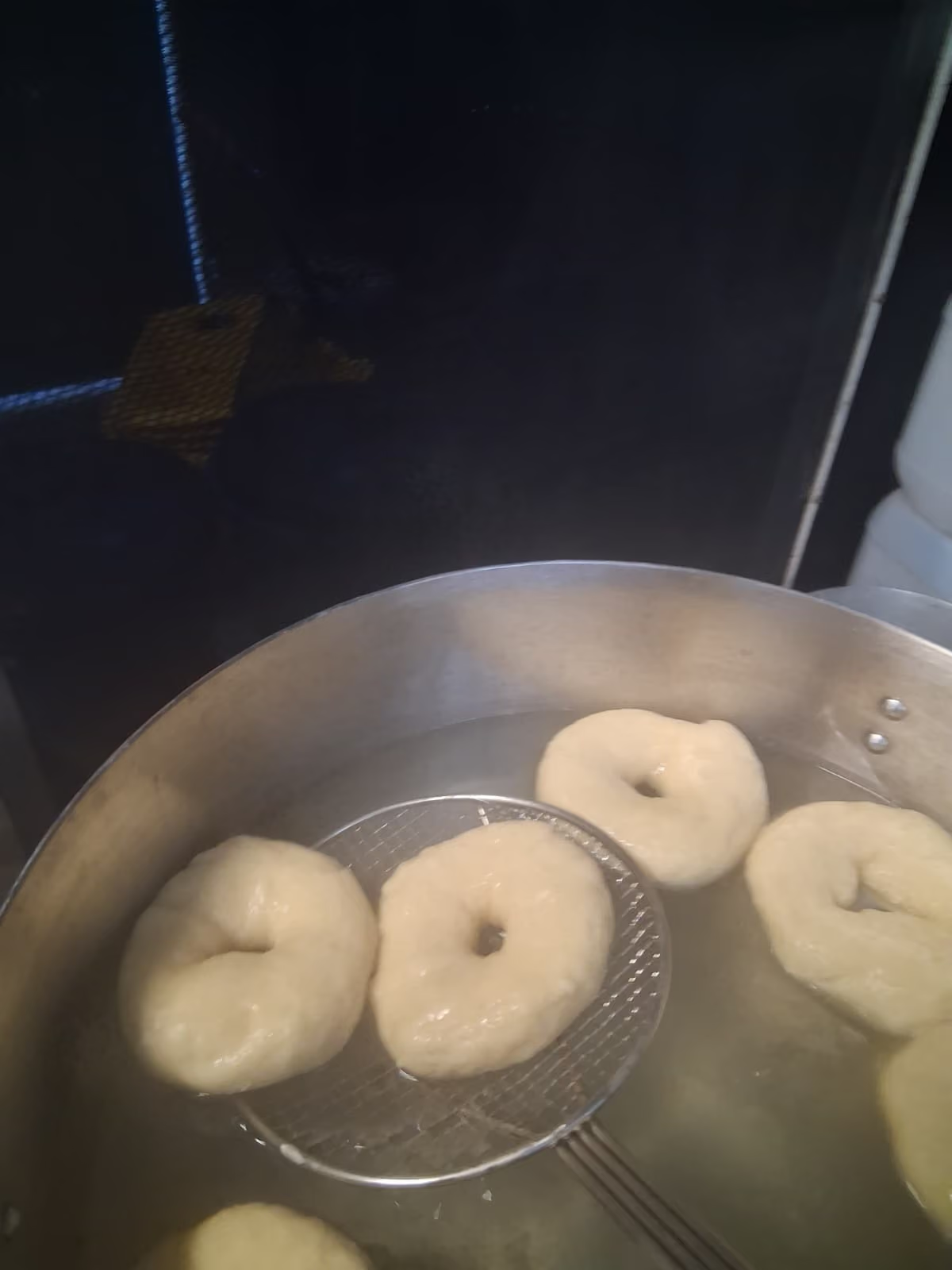
John: Yeah. I could bring supplies from California any time but, to me, it’s more interesting to ask, “What's available here?” I’ve been experimenting with local flour, local yeast and other ingredients. Traditionally you’d use barley malt in bagels, but honey works beautifully—and honey is abundant here. So, we use honey in the dough, and again when we boil the bagels before baking them.
LOT: I noticed donuts coming out of the kitchen the other day.
John: I’ve always wanted to learn how to make donuts. And croissants. I took a two-day class on lamination [a process of encasing butter in dough] , and some of the techniques carried over to the donuts, so I went full into donuts.
LOT: What's next?
John: Croissants. That’s another dough experiment. With croissants, the butter has to stay colder than the dough. It's all about temperature and consistency. Hopefully we'll get that process dialed in and then start making croissants, too.
LOT: It seems like you enjoy the challenge as much as the finished product.
John: Exactly. Everything becomes easy when you learn the process.
LOT: Once the bagels are dialed in, where do you see them going?
John: Right now, we’re only making a couple dozen bagels a few times a week. A lot of local people haven’t really experienced a fresh bagel. Maybe they’ve had packaged ones from the grocery store, but not a real one. We’ve also been talking about breakfast sandwiches—an egg sandwich on a bagel. It opens the door to different ways of thinking about breakfast. But a bagel is something almost everybody can enjoy. Even if it is unfamiliar around here, people understand it. It’s simple. Everybody can find a way to make it their own.
LOT: So, what kind of production are we talking about? People are going to be asking when the bagels are available.
John: Right now, we're still dialing everything in. We’re baking a few days a week, experimenting with the schedule, and training the staff, so everyone learns the process and can make them consistently. That’s really the goal right now. By high season, once we've perfected what we're doing and more people are back in town, we’d like to be making them more regularly and be able to handle a lot more volume.
Post-interview: Bagels may be John’s latest obsession but somehow, I don’t think they’ll be his last. If our conversation taught me anything, it’s that he’s as interested in the finished product as he is in understanding how it all works. And by the way, I’ve been on the tasting end of both the bagels and the donuts—and as Jewish girl from New York transplanted to Mexico—I can say that John is doing it right!
Summer Foraging

I have a nanche [hogberry] tree and a guaje [wild tamarind] tree in front of my house, but it wasn’t until I saw people eating from ( these wild trees) them that I became curious about what was growing around me. What’s edible? What have I been walking past for years without noticing? What’s appeared recently with the rains?
Right now, our early summer is teaming with life. You can hear it in the frogs, see it in the insect hatchings and in the green buds shooting up everywhere. You can even find it in the bubbles in the sand. Those bubbles come from jaibas [small crabs]. They’re a delicacy, and so are the nanches, guamúchiles, alga, langostinos and parota pods—local foods hiding in plain sight—all around Troncones, Majahua and Saladita. Here’s a look at a few treats I’ve come across, with some guidance from Alejandro Rodriguez Pruneda of Costa Nativa Ecotours.
FRUITS & NUTS
If there was an unofficial local fruit of early summer, it might be the nanche. Small, yellow, fragrant, and impossible to ignore once you know them, nanches seem to appear everywhere this time of year. Some people adore them. Others never quite come around. Either way, they inspire strong opinions. You’ll see them in clear plastic cups throughout the mercado in Zihua. To me, they taste like tiny bitter apples—and, of course—that makes them the perfect vehicle for lime, salt and hot sauce or chamoy.

Ciruelas [wild plums] arrive with the rains, too. Humble and colorful—green, yellow, orange, red, or deep purple depending on the variety and stage of ripeness—ciruelas may be one of the most versatile fruits in the region. Like many seasonal foods, they are abundant for a brief period in early June and then disappear almost as quickly as they arrived. They are typically eaten fresh, often with chile, lime and salt, but they also find their way into aguas frescas, preserves, tamales, atoles, salsas and moles.

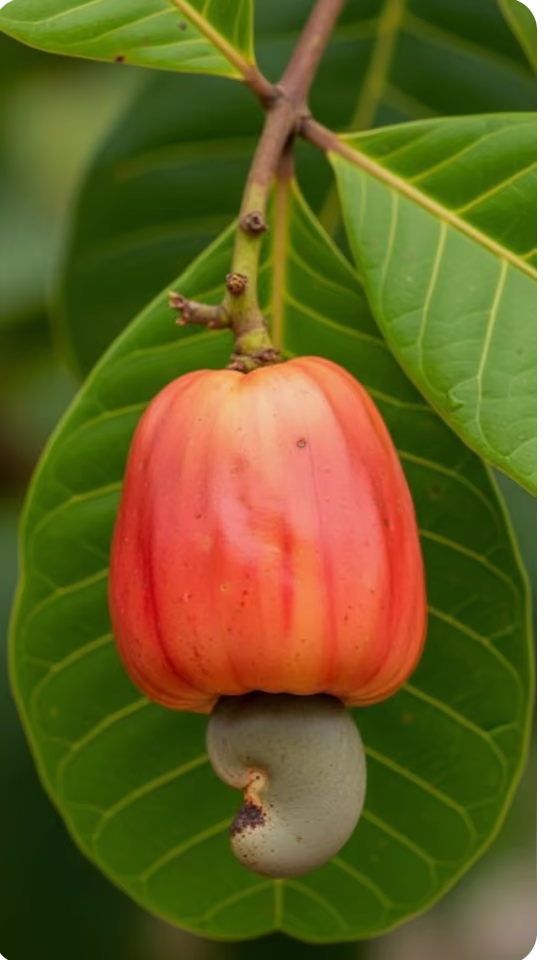
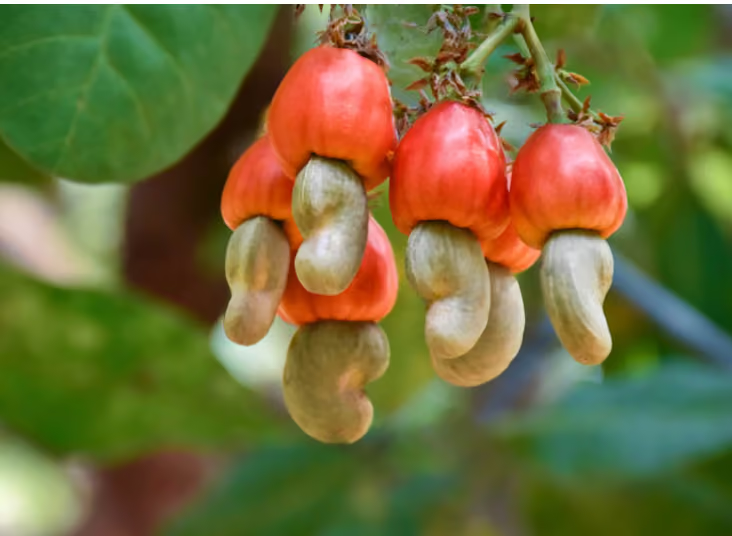
Then there is the marañón [cashew apple]. This typically red or golden yellow fruit hangs from its tree with the familiar kidney-shaped nut attached to the bottom. The fruit itself is edible with a unique, tropical flavor that many compare to a blend of mango, strawberry and citrus. It’s great for fresh juice, jams and syrups. The nut is another story. Please don’t try to eat the raw nut on the fruit. The shell contains toxic oils and must be carefully processed before the cashew can be eaten. This is why cashews are costly. (There’s a marañón tree in Troncones, on Main Street, growing next to Restaurante Orbe’s. The first time you see a cashew growing from the bottom of a fruit, it feels a little like discovering carrots that grow on trees. It’s questionable if this is an indigenous tree but it’s so odd-looking and popular that it’s worth adding here.)
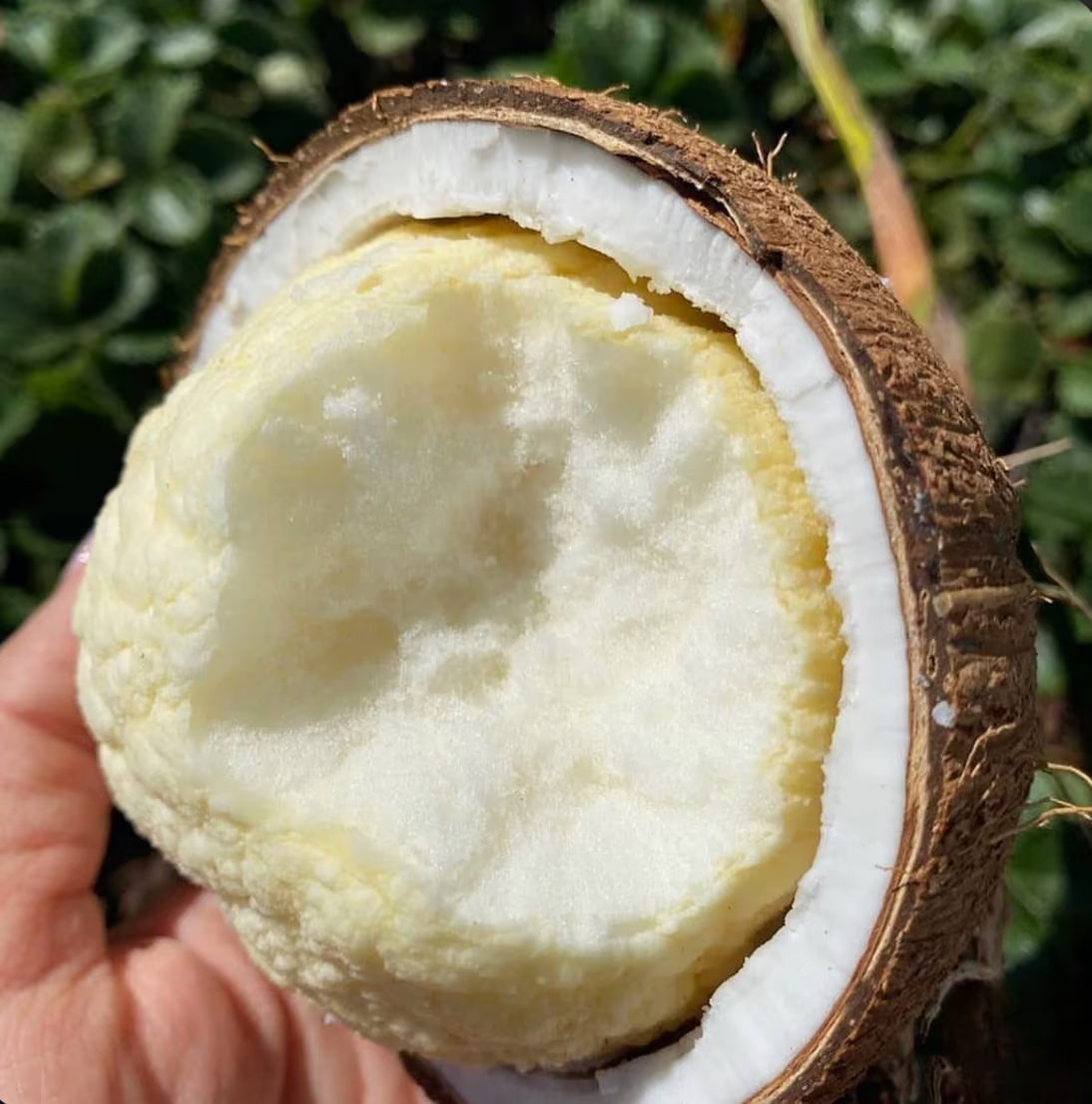
Manzanitas de coco [sprouted coconuts] are a year-round surprise—a treat from a fallen coconut—a soft, airy, sponge-like ball that grows inside a sprouting coconut. Slightly sweet and completely unexpected, it’s one of those foods hiding in plain sight that everyone who grows up here seems to know about. I was turned onto these by a neighbor.
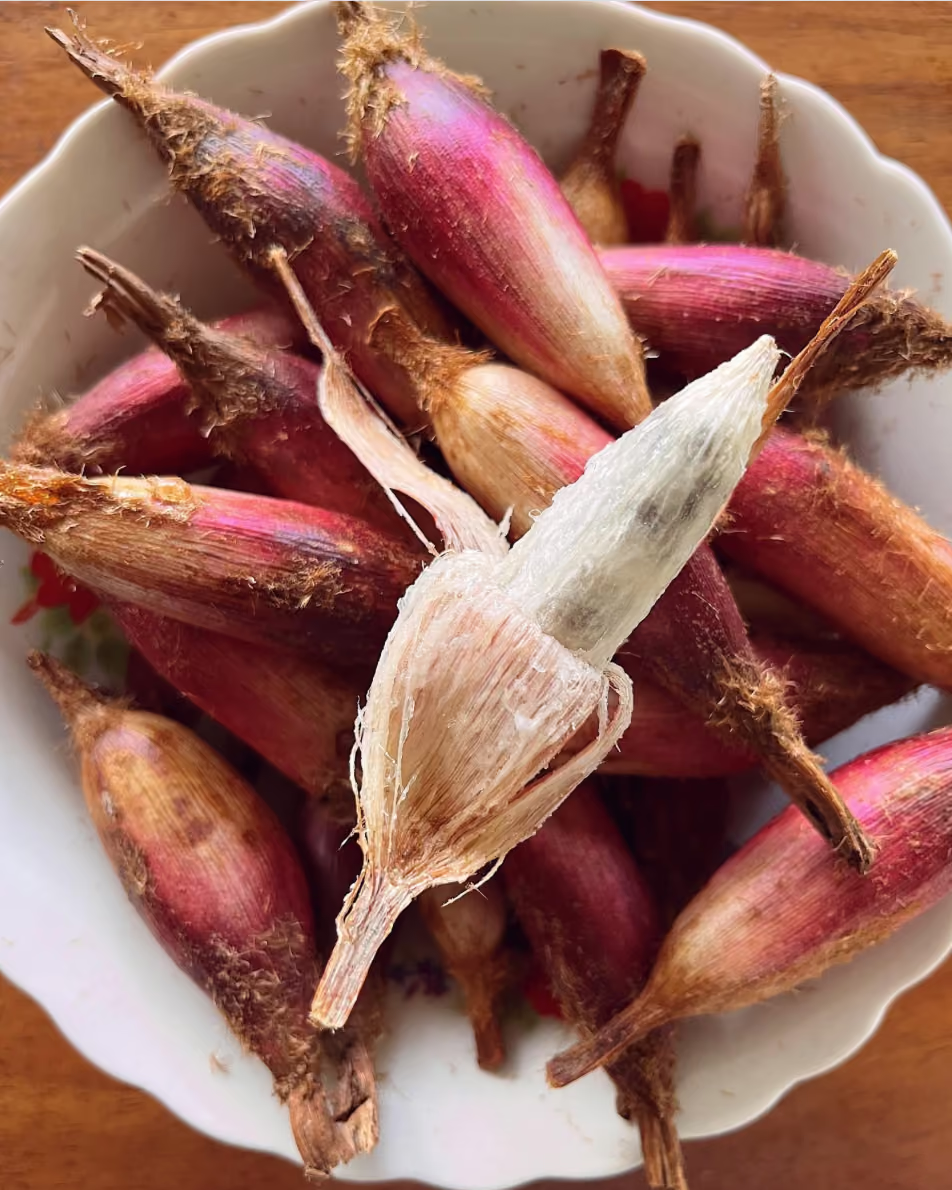
The timbiriche [also known as piñuela] is a tart, tangy fruit growing on a plant that resembles a thin agave or aloe. Timbriches grow in clusters, like mini bananas, but the shell is hard. Once you break it open with your fingers, you can eat the fruit inside. Be mindful timbriches are in the pineapple family and, like pineapples, they contain bromelain, an acid that if eaten too much can burn your tongue.
And then there are guamúchiles [Manila tamarind or monkeypod fruit], which are also known as rosco. They look like curved fat green beans and they grow on thorny trees. Crack open the twisted pod and you’ll find a soft white pulp wrapped around glossy black seeds. They are sweet, earthy, and deeply nostalgic for many people who grew up here—part of an older rhythm of life, one that involves climbing trees, staining fingers and eating fruit where you find it.

MORE PODS & SEEDS
The long, green guaje [wild tamarind] pod and its seeds may be the most famous of our wild foods. They’ve been eaten throughout Mexico long before the Spanish arrived. Some people snack on them raw. Others roast them. They appear in dishes like guaxmole—yes, guax—a mole made from guaje seeds, tomatillos and chilis—and are valued for their distinctive flavor. Guaje seeds can also add their unique, garlicky and slightly grassy flavor to guacamole, perfectly complementing the richness of the avocado. They are also famous for some other characteristics. Sort of like broccoli, they can make you gassy. And, like garlic and onions, not everyone will like your breath.
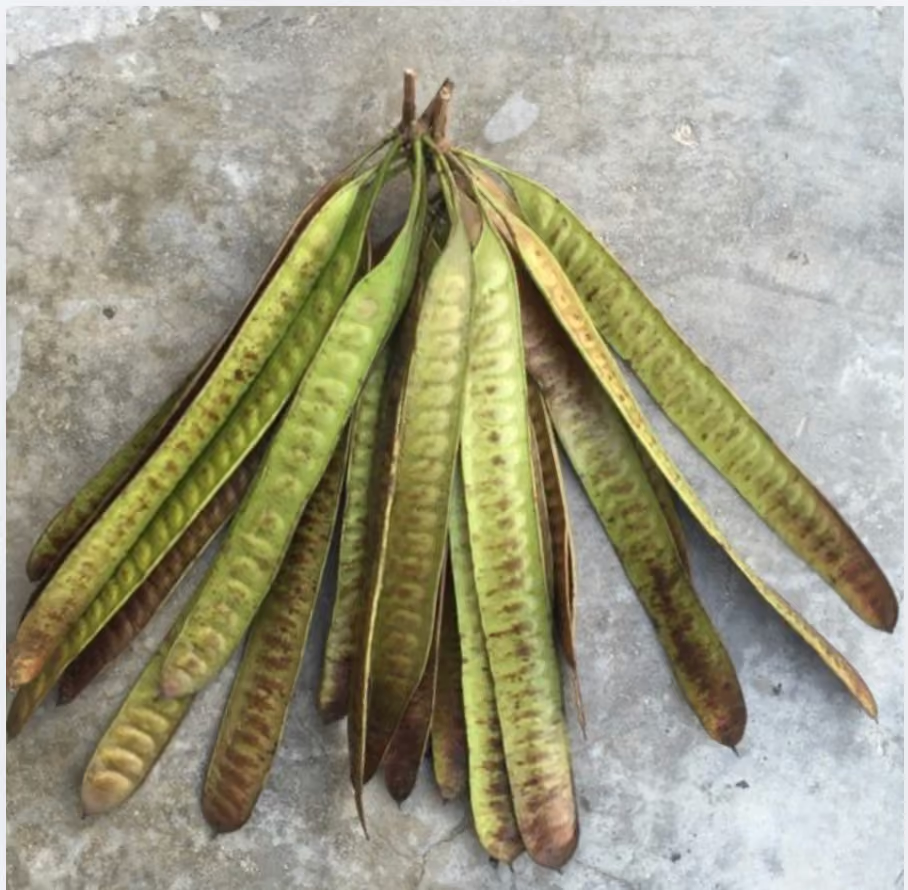
Parota [elephant ear] pods are an even bigger surprise. I first learned parota pods were edible when I saw a woman putting some giant black ear-shaped things into a wheelbarrow on the dirt road into Majahua. I asked her what she was doing and she motioned with her hands “to eat”. The parota tree plays a huge role in local life—they grow big, creating massive canopies of shade; the wood is used for tables, cabinets, doors, trim, beams and indoor furniture of every kind—and they’re highly nutritious providing a valuable and high-protein food source. The pods can be boiled and eaten just like any vegetable. They taste similar to green peas or green beans. The seeds also can be boiled, and then mashed into stews, mixed into salsas or used to make tortillas. And the seeds can also be roasted and ground into high-protein flour, or brewed as a caffeine-free coffee substitute. You cannot eat the seeds raw. Raw parota seeds contain a natural chemical compound which causes intense stomach upset.

QUELITES ARE WILD GREENS
The highly-sustainable ancient Mesoamerican agricultural system relied on a diverse set of crops—the Three Sisters—corn, beans and squash—planted together on a plot of land. The corn provided a structure for beans to climb; the beans returned nitrogen to the soil; the squash shaded the ground and helped retain moisture. The plot of land was known as the milpa, but the milpa is much more than those three crops. Around and among them grow countless edible plants known collectively as quelites [keh-LEE-tays].
The word quelites describes an entire category of edible greens that have nourished people throughout Mexico for generations. They’re cultivated in agricultural fields, and grow abundantly in the wild—in forests, in grasslands, on plains. Quelites include plants like dandelions and mustard leaves, but the most popular in Mexico are pápalo, epazote, verdolagas, oja santo and guia. These tender herbs and flowers are sautéed, wilted, fried and blanched, finding their way into soups, stews, quesadillas, sauces, moles and more. They’re packed with flavor and are revered for their nutritional and medicinal benefits. For example, pápalo is consumed to lower inflammation and hoja santa is eaten to aid digestion.


FROM THE WATERS
The rainy season changes the rivers, estuaries, mangroves and the shoreline. It changes what people catch and what's available to eat.

Moyos [mouthless crab] are among the most sought-after local crabs and can be found among the mangroves of wetland environments. They’re known for their sweet, tender meat. You’ll recognize them by their blue hue and their distinctive claws—one is much larger and stronger than the other. When the rains start, thousands of these crabs simultaneously leave their flooded burrows and migrate toward the beaches to disperse their eggs into the sea.
While the moyos are semi-terrestrial, the jaibas [HY-bas] are entirely aquatic. They’re the little beach crabs that children collect near the water’s edge using tongs and buckets. The first time I saw that, I laughed at how many they would need to catch for a meal, but it was quickly explained to me that you only need a few for a flavorful broth.

Also at the ocean’s edge are chiquiliques [sand crabs or mole crabs], who live in the wet sand where waves wash in and out, their presence often making tiny V-shaped ripples in the sand. They dig with astonishing speed, disappearing almost instantly when the water recedes. While many people use them as fishing bait, they can also be fried whole until crisp, producing a crunchy snack with a flavor reminiscent of shrimp.

When the rivers begin flowing again, freshwater langostinos return as well. Locally called camarones, these are freshwater shrimp. You’ll see families gathering them on Sundays, everyone having fun, doing something just for fun—real foraging—and coming home with something to eat.
The rocks along the shoreline offer their own surprises, like cucarachas de mar [sea roaches] that are chitons—marine mollusks—protected by overlapping shell plates, looking sort of like a pill bug or a mini-turtle. At low tide, they cling tightly to the rocks—you’ll have to cut them off with a knife—and they’re most often collected for ceviche, or sometimes simply eaten with lime, salt and hot sauce.
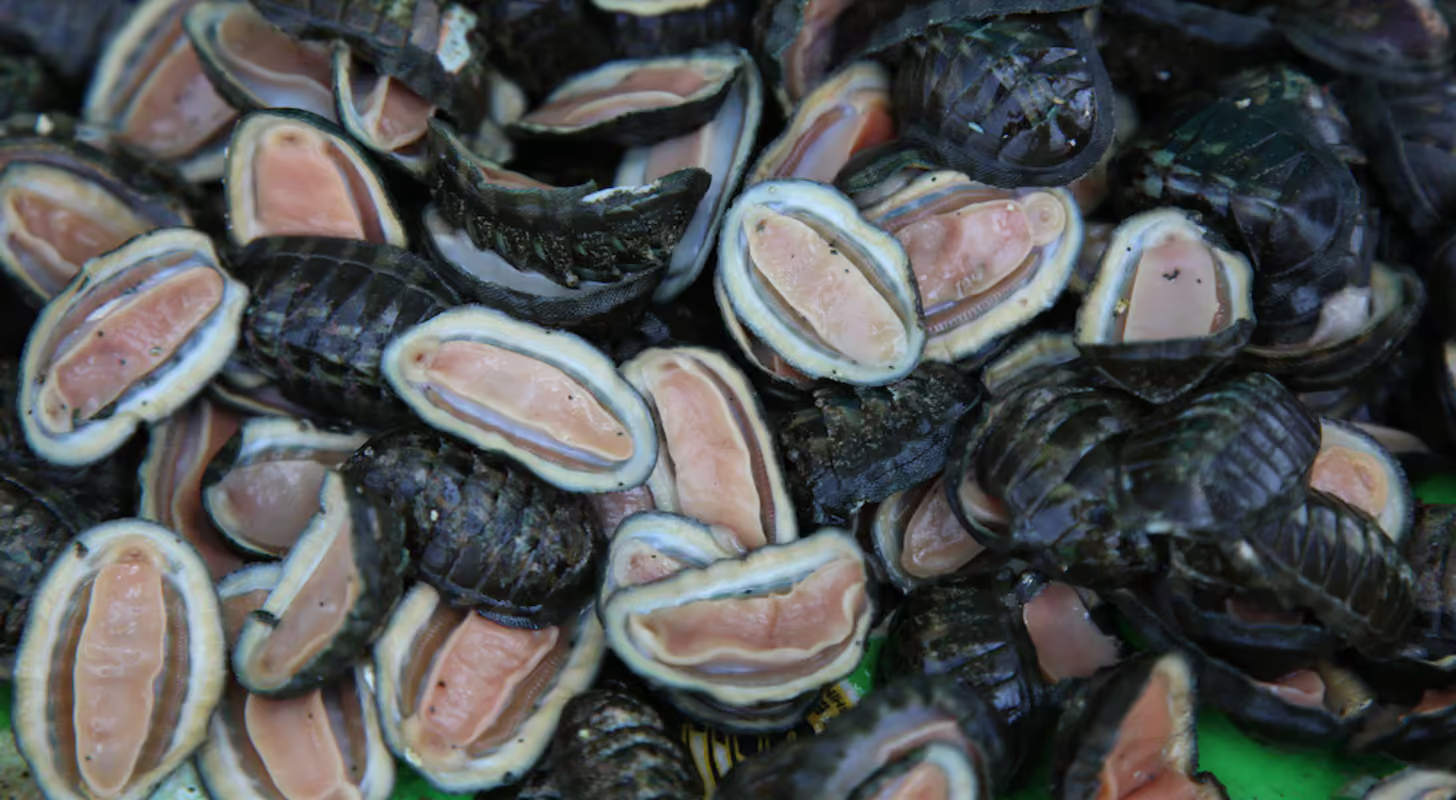
Lapa are another mollusk, another edible resident of the intertidal zone, another creature you’ll need a knife to get at. You already know their little cone-shaped shells. They feed by scraping algae off the rocks and taste like a chewy mix of clam and scallop. They’re more a starter than a meal, and can be sizzled up in their shells in hot garlic butter, lemon juice and red peppers.

Early summer brings us alga marinas, a dense green broccoli-looking seaweed that’s fresh, crunchy, and surprisingly delicious—another free-to-gather nutritional powerhouse. Your local fishermen friends can tell you where to find it, and they can also tell you where to find hueva de lisa [mullet roe; fish eggs], a luxury seafood in the rest of the world, but a readily-available seasonal delicacy here. You just need to know where to look, or who to ask.

AND THEN THERE ARE THE FLYING ANTS
No conversation about wild seasonal foods would be complete without mentioning chicatanas [flying ants]. They come out after the first heavy rains, emerging from underground colonies in enormous swarms. You’ll find their wings anywhere you leave a light on. Some people see a mess. Other people see comida [food]. I have heard stories of local families who collect and eat them—toasted and ground into salsa—and consider them a super-special delicacy. They’re only around a day or two, and if you miss the rains, you miss the ants. (This is a tradition more strongly associated with Oaxaca than with Troncones—but it’s done here, too.)

IT STARTS WITH A QUESTION
The longer I live here, the more I realize food is everywhere. It hangs from trees. It hides inside pods. It grows beneath crops. It clings to rocks. It swims through rivers and estuaries.
Most of it isn’t exotic to the people who grew up with it. Much of it is simply part of life, part of memory, part of knowing what season it is and what happens to be growing, hatching, sprouting, falling, ripening.
For me, it often begins with a question: what is that? And, when I’m lucky, someone describes it to me and hands me a taste.
Costa Nativa Ecotours: https://costanativa.com.mx/
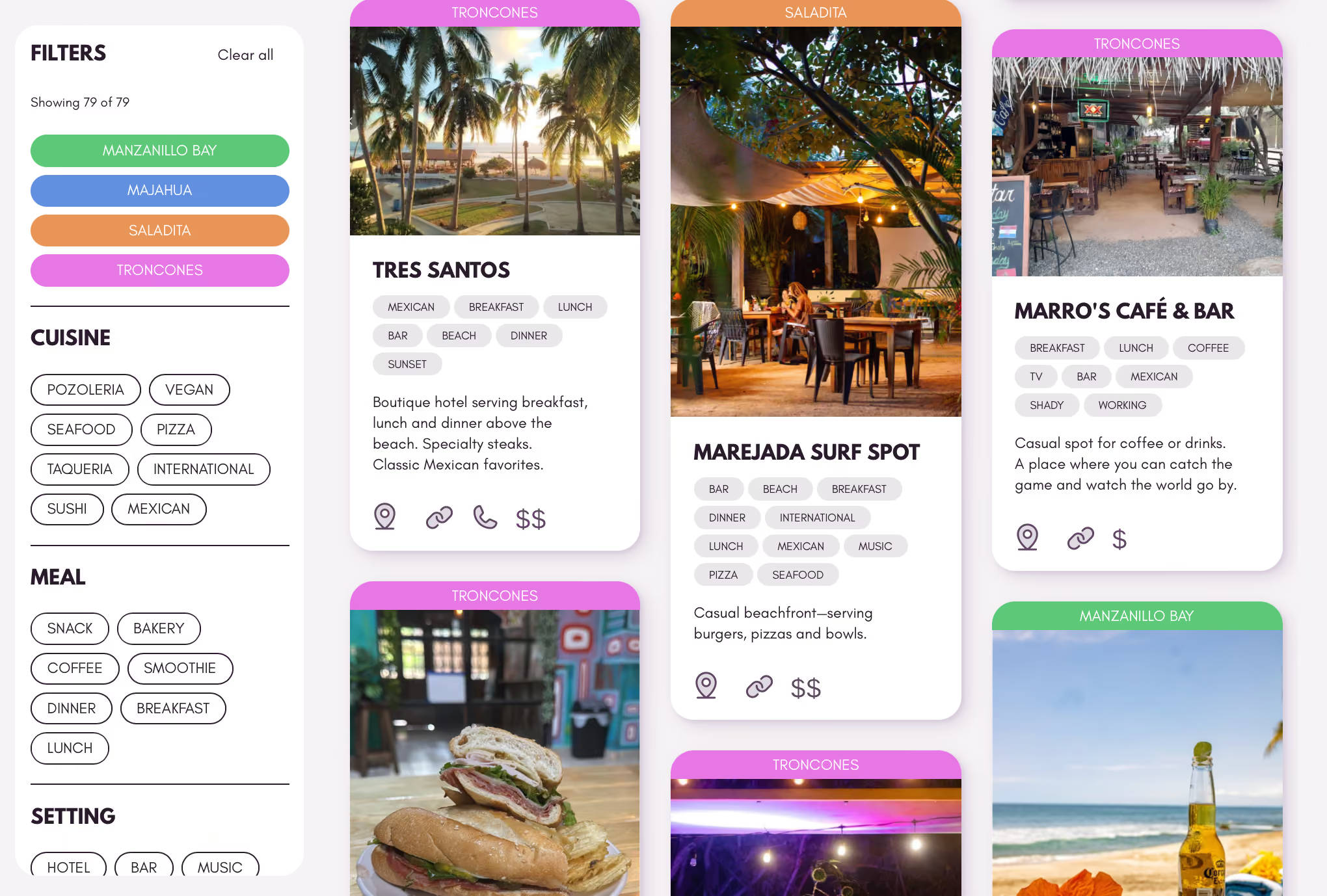
Your Table is Ready
In our EAT section, you can learn about our local food culture—the people, traditions and sources that feed us. In that section, there’s also a link to our Restaurant Directory, a colorful and fully searchable online resource to get you closer to what you crave. Where will you eat today?
You can search by location—Troncones, Manzanillo Bay, Majahua and Saladita.
Or by cuisine—pozoleria, seafood, taqueria, vegan, pizza, sushi, international and Mexican.
And by meal—breakfast, lunch, dinner, coffee, smoothie, bakery and snack.
There’s also a filter for setting—it’s your dream, your preference, and our database of over 80 restaurants—getting you to sunset views, a beach, someplace shady, a bar and more.
One of La Onda Troncones’ most popular features, our Restaurant Directory makes the flavors of the coast even more accessible—the casual bites, the beachfront restaurants, the hidden gems and the fine dining spots that define our local culinary spirit.
And remember when you’re in Troncones, Majahua and Saladita, every meal comes with ocean air and good company.
Stay awhile. Eat local. Taste the sunset. Enjoy our culture, community and connections.
And keep coming back—we’re always adding and improving the directory.
https://www.laondatroncones.com/restaurant-directory


Chef Profile: Vianca Rodríguez de la Vega
And what is ceviche? It’s a seafood dish commonly found along the Pacific coast of the Americas—fresh fish, or shellfish, marinated in citrus juice—usually lime—which firms the flesh and gives it the appearance of being “cooked”, even though no heat is involved. Peru claims ceviche as its national dish, but nearly every Pacific region has its own version.
LOT: How did you get interested in food?
Vianca: I’ve always loved to cook. When I was little, my mom would say, “Either you cook or you wash dishes.” I’d rather cook than wash dishes, so that’s how I started. My grandmother, my mom’s mom, was an amazing cook, and I was always in the kitchen with her, watching and learning. I also watched cooking shows on TV and wanted to recreate what I saw. I have a few of those recipes in my restaurant.
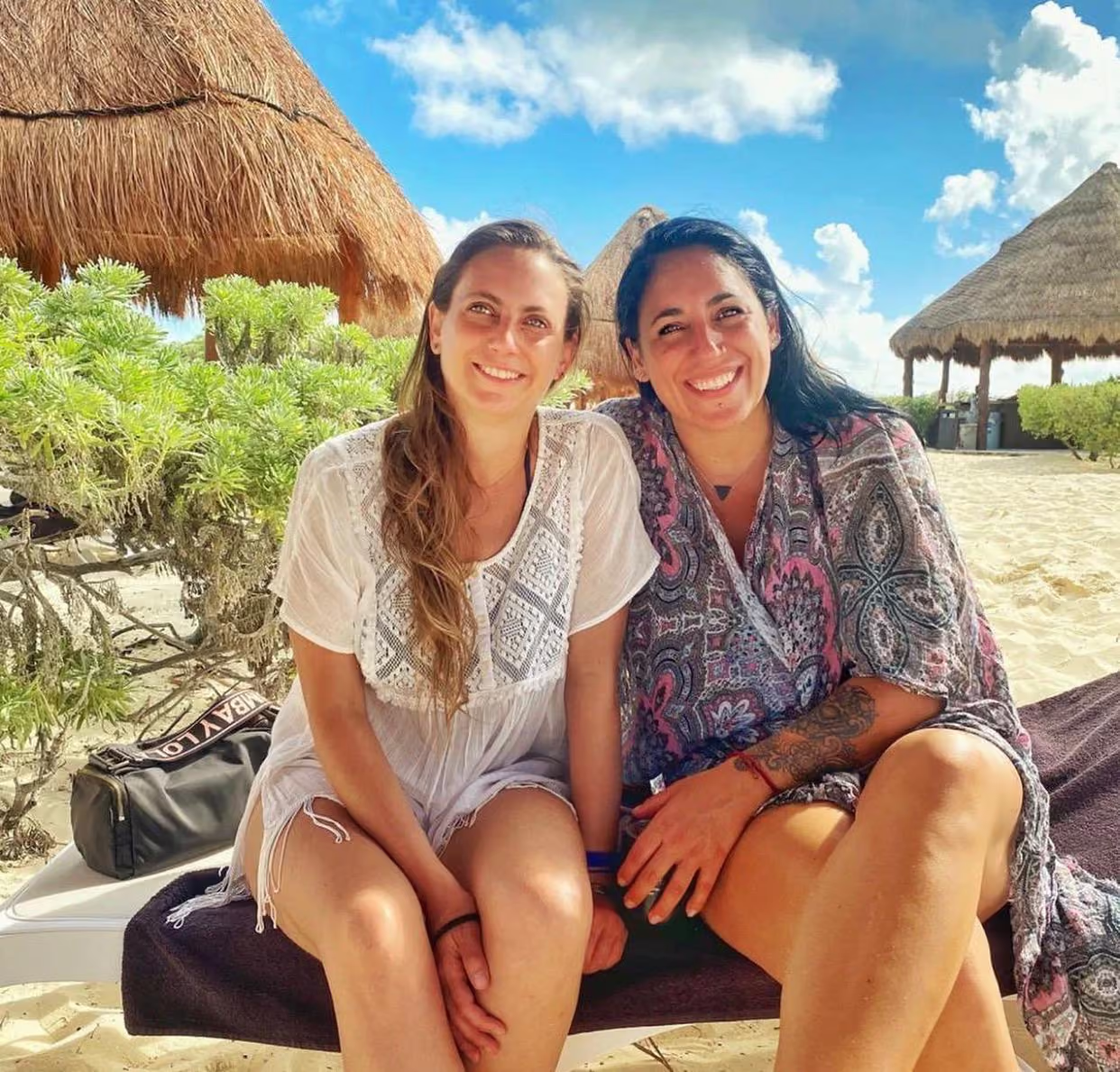
LOT: Did you grow up in a big family?
Vianca: No. It was just me and my older sister.
LOT: What brought you to Troncones?
Vianca: I have some other family here. They invited me to work on a project, but the project didn’t work out. I ended up staying anyway.
LOT: Had you visited before?
Vianca: Yes. I first came about 15 years ago for a wedding, and fell in love with it. I’ve always loved the beach and the idea of living in a small town. When I got here five years ago, it felt like the little town of my dreams.
LOT: Quite a change from Mexico City.
Vianca: Very different.
LOT: Before Troncones, where did your life take you?
Vianca: I’ve always wanted to live near the ocean. I left home Mexico City at 19 and went to Huatulco, in Oaxaca, then to Playa Del Carmen and Cancún, in Quintana Roo. I started working in hotels in Huatulco, and the hotel I worked for in Huatulco transferred me to Playa del Carmen when it was still a small town. That was 2001. After that, I spent eight years in Cancún working in five-star resorts.

LOT: Were you working in kitchens?
Vianca: Not at all. I started in sports and entertainment, then became a concierge, a chief concierge, a sales manager and a PR manager. Everything except being in the kitchen. But, by then, I was in my late 20s and I realized I had no life outside work. I moved back to Mexico City and started working in a restaurant as a server, not in the kitchen—again—even though I’d been to culinary school. Later on, while I was in Playa del Carmen, I became the manager of a large sports bar. Then one day, someone told me they were moving to Chicago. I packed my things and moved there, too.
LOT: Just like that?
Vianca: Just like that.
LOT: How long were you in Chicago?
Vianca: Three years. I worked in restaurants there—bartending and serving—never in the kitchen. Then, one winter, a huge snowstorm was coming, and I thought, “No. This is not what I like; this is not for me.” I packed all my things and came back to Mexico.
LOT: Chicago winters are no joke.
Vianca: They’re crazy. Not fun.

LOT: What happened next?
Vianca: COVID happened. Thankfully, I was already back in Mexico, living at my mom’s house and not paying rent. Around that time, I started working as a private chef for a well-known Kundalini yoga guru. I cooked from my house and delivered meals to him every day.
LOT: How did that opportunity come about?
Vianca: My sister was one of his students and close to his organization. Through that connection, I got the job. Later, we all moved to San Cristóbal de las Casas in Chiapas, the whole team supporting him. I stayed there for about four months until he passed away. After that, I returned to Mexico City, knowing I already had the offer to come here, to Troncones. That was July 2021.
LOT: So, when did the having-your-own-restaurant idea happen?
Vianca: People have been telling me for years that I should open a restaurant—saying things like, “the way you cook, the way you make your food, you’ve gotta open a restaurant”. Culinary school must’ve put that in my head, too. When my first project fell through here, my sister said, “Let’s do this!”, and she and my mom helped me out to get everything for this little cevichería. Two of my recipes come from my grandmothers, my mom’s mom and my dad’s mom. The others are mine, ones that I like.
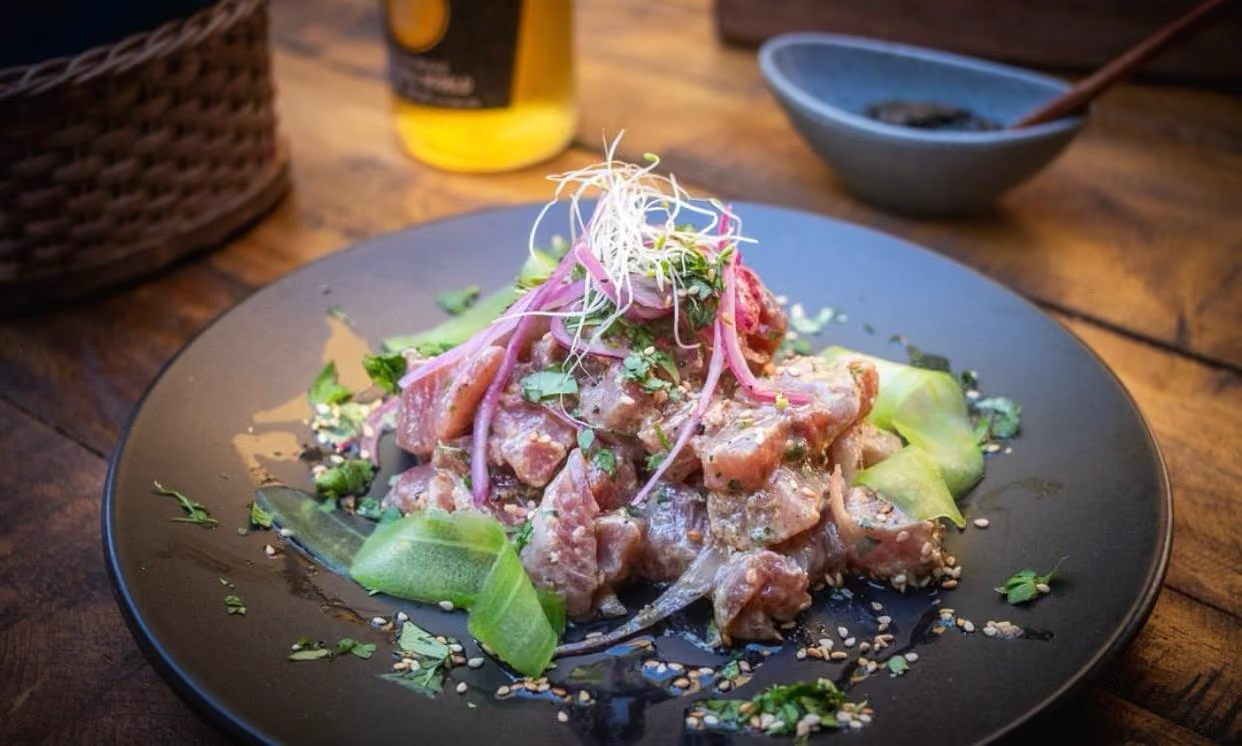
LOT: One thing people notice immediately is that your ceviche is different.
Vianca: Yes. The ceviche people were used to finding around here was very different from what I wanted to make. I didn’t want to make tiritas [fish strips in lime juice] or campechano [mixed seafood in a tangy tomato sauce]. I wanted to have something different because I can’t compete with the restaurants at the beach.
LOT: What’s your most popular order?
Vianca: The steak ceviche. [Note: It’s not actually ceviche. It’s a marinated and seared, thin-sliced tenderloin with the same flavor profiles as some of Vianca’s ceviches—lime juice, jalapeno, olive oil and salt—served with tortilla chips, pickled spicy onions and Vianca’s black salsa.]
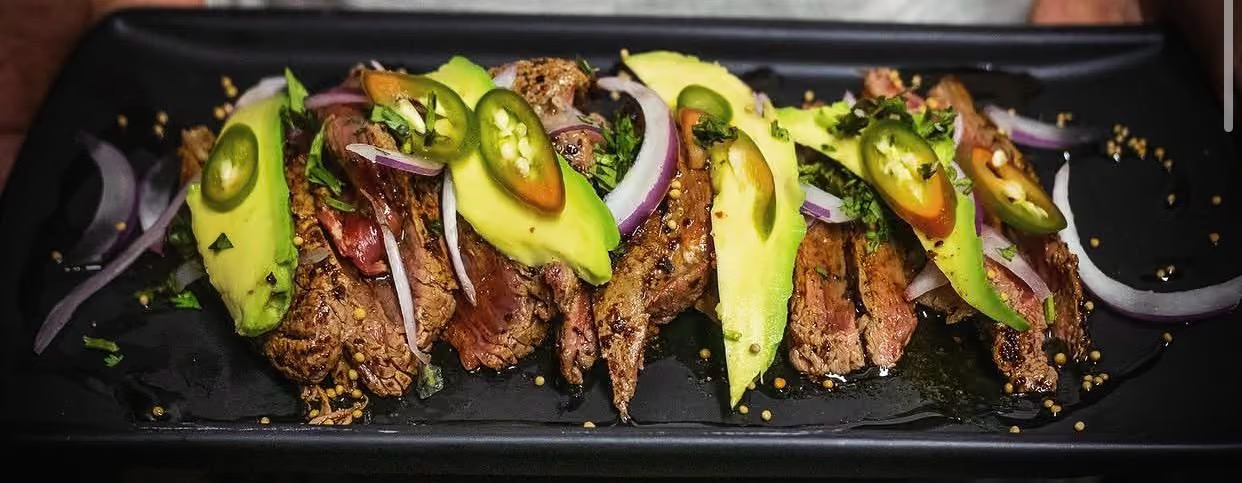
LOT: [Laughs] That’s my favorite. What is the secret to your guacamole?
Vianca: Everybody asks me that. Seriously. I don’t know. Maybe it’s because I put olive oil on it. Most people don’t do that. The olive oil makes it a little creamier and adds flavor. It’s not a secret. I love olive oil on everything.
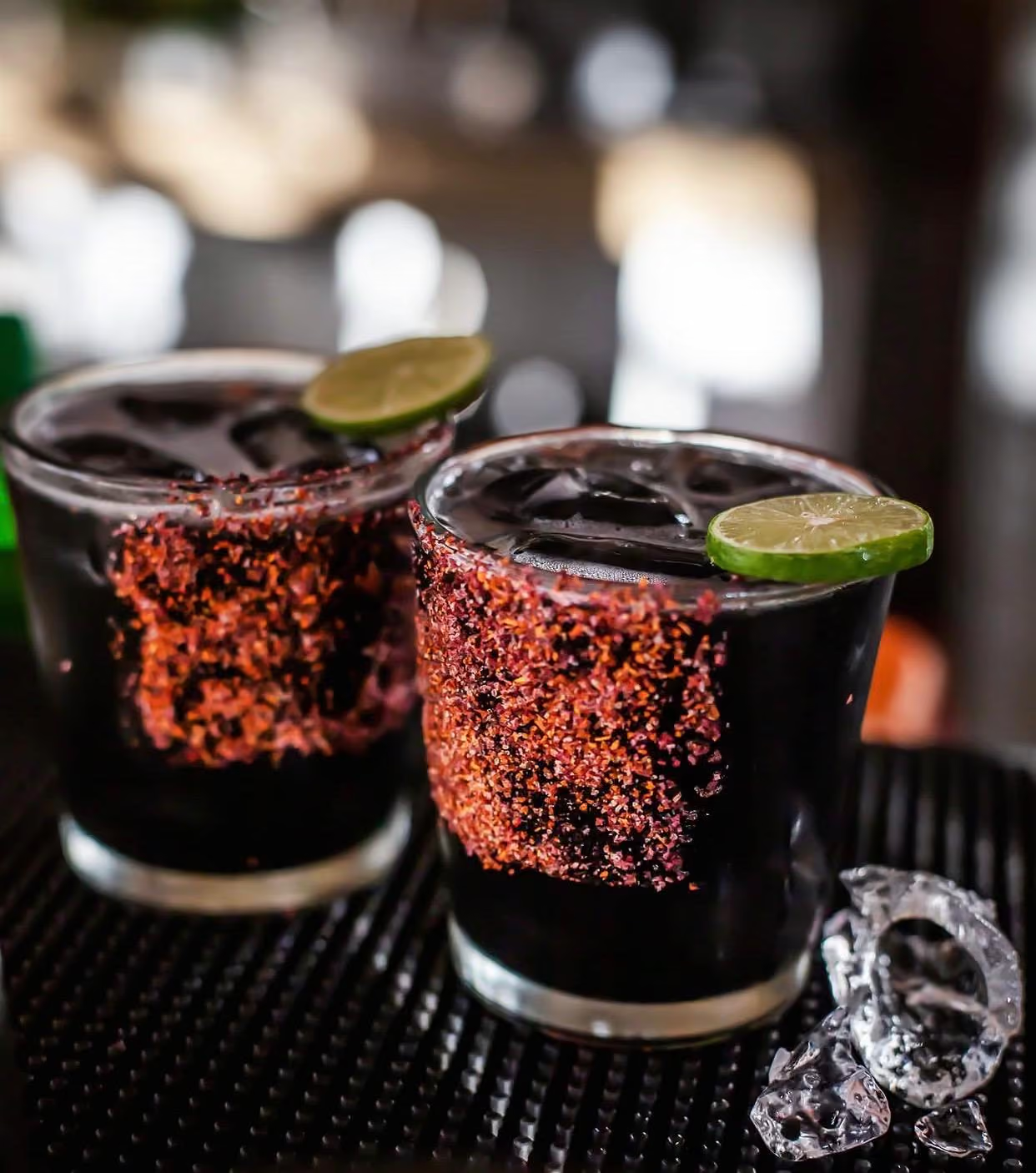
LOT: Tell me about your famous Black Margarita.
Vianca: I wanted to make something different. I wear black all the time. I have a black salsa. I wondered, “How can I make a margarita black?” I found activated charcoal, which changes the color but not the flavor. It makes the drink look more attractive, then you drink the charcoal and you cleanse yourself. It’s a win-win. You can get tipsy, and detox at the same time.
LOT: It’s definitely become your signature cocktail.
Vianca: Absolutely. It’s the most popular one.
LOT: Your coconut ceviche is unusual, too. Where did that come from?
Vianca: That was actually a collaboration with Daniela at Lobo de Mar. Originally, I wanted to make a vegetarian ceviche with panela cheese, but she pointed out that if people didn’t order it, I’d end up wasting the cheese. She suggested using fresh coconut meat instead—we have coconuts right outside, across the street—and that made the dish vegan as well. It turned out to be a great idea.
LOT: What do you do when you’re not running the restaurant?
Vianca: Walk my dogs and spend time with my friends. Mostly, I’m with my dogs.
LOT: Dogs are easier than people.
Vianca: Much easier.

LOT: What’s next for La Cevichería?
Vianca: This summer, I’m keeping the restaurant open Thursdays, Fridays and Saturdays, from 1 to 6 pm. And I’m going to start selling my black salsa. Right now, I’m waiting on the jars.
LOT: Without giving away all your secrets, what’s in your black salsa?
Vianca: Lots of habanero, onion, garlic, olive oil, black salt, Worcestershire sauce, soy sauce, and a little beer. Everything gets burned, almost to ashes, before it’s blended.
LOT: A little beer?
Vianca: Just a little. The alcohol cooks off, but it adds flavor.
LOT: Will the salsa be sold only at the restaurant?
Vianca: At first, yes. It’ll come in little mason jars and it’ll need refrigeration because I’m not using preservatives.
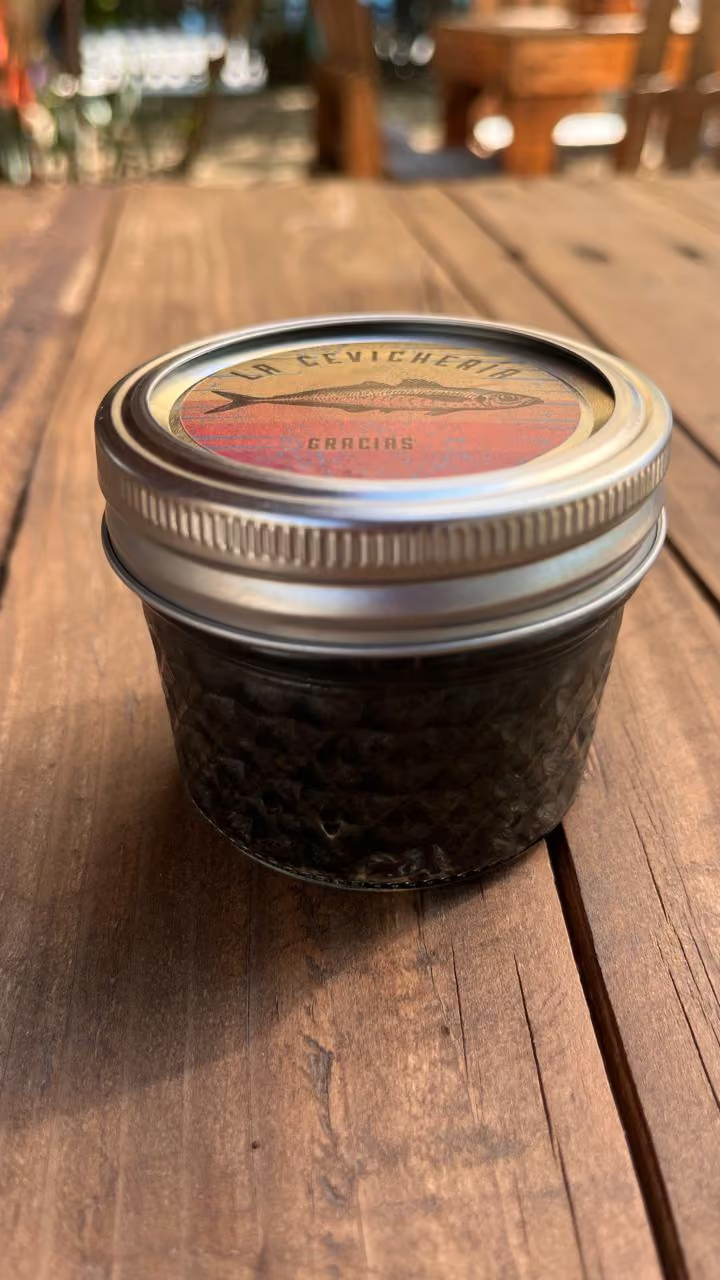
LOT: And what about next season?
Vianca: Towards the end of the summer, I’m going to go back to Mexico City for about two months. When I get back, I want to bring back some of my specials—especially the tacos and the chilies. Running a small kitchen means you have to stay very organized. Even adding one extra dish can become complicated, but I’m thinking of having some new tacos—like steak, fish, shrimp and pastor [spit-roasted pork blended with chiles and spices]—and experimenting with a few new weekly specials.
LOT: As someone who has worked in professional kitchens, I know how challenging a small operation can be. Do you consider yourself a chef?
Vianca: Not really. When I look at people, like Daniela, who’ve spent years working in professional kitchens, I can’t compare myself to that. I’ve worked in restaurants and resorts my whole life, but always on the other side. This restaurant is actually my first real experience working in a kitchen full-time.
LOT: So, it’s like an experiment?
Vianca: Exactly. That’s why I don’t want a bigger place or a huge menu. I’m still learning, and I like growing at my own pace.
La Cevichería is located in Troncones in a shady plaza to the north side of the main bridge.
Instagram https://www.instagram.com/lacevicheria_troncones/
Facebook https://www.facebook.com/profile.php?id=61570805635827
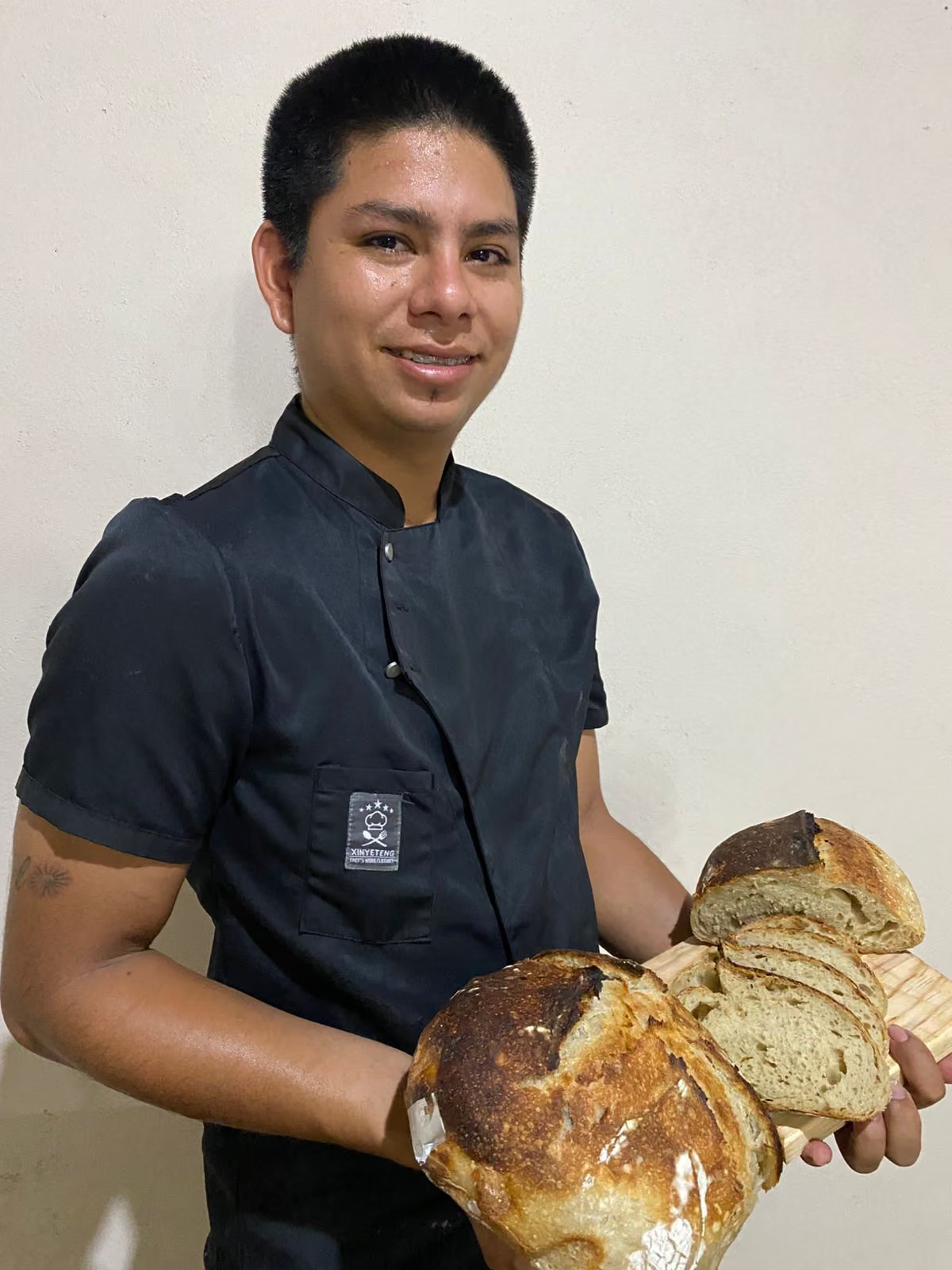
Chef Profile: Axee Nava
As someone who spent years working as a private chef for wealthy families in places like the Hamptons, I’ve always been interested in the difference between cooking professionally and simply knowing how to cook. The pressure, the adaptability, the choreography behind the scenes—especially inside private homes—is an entirely different world.
That’s part of what made speaking with Axee Nava so interesting. The locally-born chef has already built an unusually broad foundation—formal gastronomy training in Zihuatanejo, followed by years in restaurant kitchens, luxury-home cooking, sourdough production, pastries and desserts, and catering large-scale private events throughout our coast—a master class in kitchen work.
As we spoke, I recognized many of the realities he described—unfamiliar kitchens, impossible requests, equipment failures, constant improvisation, and the strange intimacy of cooking while guests watch every move you make. What follows is an edited conversation about food, pressure, bread, technique, and what it means to want your own name—not just your employer’s—attached to your work.

ON GROWING UP IN TRONCONES
“I was born here. My whole life has been here, working here,” Axee explains. “Ever since I was little, I’ve always been involved in this work.”
At 15, while many teenagers were still figuring out what interests them, Axee enrolled in a gastronomy school in Zihuatanejo. “I studied for three years,” he says. “I was studying gastronomy and high school at the same time, while also working in a lot of the local kitchens.”
That early commitment still shapes how he approaches cooking today.

ON CULINARY SCHOOL—AND WHY IT MATTERS
Axee is careful not to dismiss cooks who learn through family kitchens. In towns like Troncones, many talented people grow up cooking beside parents, grandparents, uncles, or family businesses. But for him, formal training opened another layer.
“In school, they teach you to do things in a more organized and professional way,” Axee explains. “Techniques, knife cuts, presentation, costing—those are things you really learn in culinary school.” His training shows up not just in technique, but in the discipline of mise en place—organization, preparation, and readiness before service even begins.
Axee sees a difference between learning recipes and learning systems. “What I wanted was more knowledge,” he says. “I didn’t want to only stay behind the scenes in a kitchen. I want people to know me by my own name.”
That distinction—between being a cook and being a chef—is important to him and it came up repeatedly in our conversation.
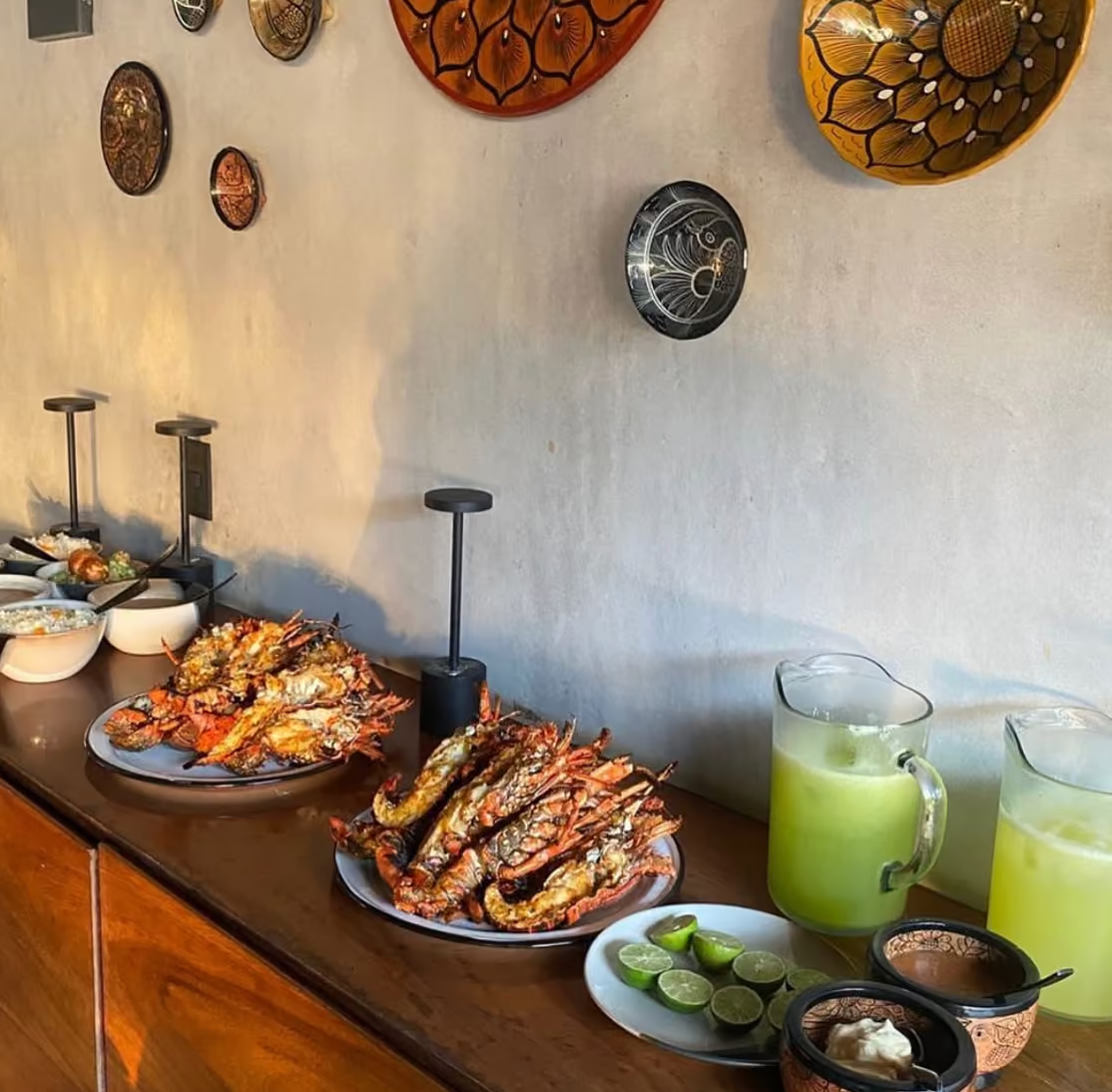
ON THE DIFFERENCE BETWEEN A COOK AND A PRIVATE CHEF
For Axee, private chef work is not simply about making food.
“In restaurants, you’re cooking under the vision of the owner. The focus is typically on executing, producing and making the business profitable,” Axee explains, adding, “Private homes are different. When you’re a private chef, you try to create something personalized. An experience.”
That experience also comes with pressure.
Unlike a restaurant kitchen hidden behind swinging doors, private homes place the chef directly in front of guests—often in unfamiliar kitchens with missing tools, faulty grills, limited equipment, or improvised cooking spaces.
“You have to adapt to whatever they have,” Axee muses. “You have to solve the problem in the moment.”
And unlike restaurants, there is nowhere to hide mistakes.
“Everyone is watching your work,” Axee says. “If something goes wrong, it falls directly on you. And it’s not only cooking and serving food. You’re also paying attention to the drinks, the pace of the conversation, the mood—everything.”
He usually works with two assistants, who handle cleaning, service and support, while he focuses on preparing the meal and on guest interaction.
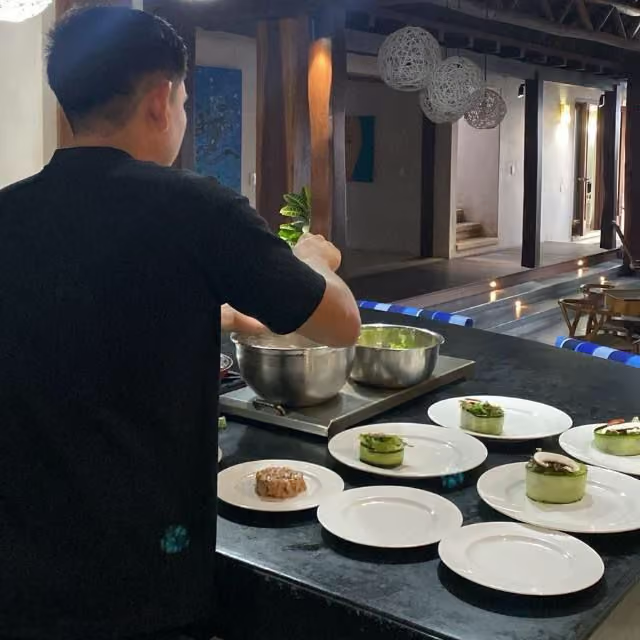
ON SOURDOUGH BREAD AND OBSESSION
Though cooking came first, bread eventually became its own passion for Axee.
While working in local restaurants, he shifted from kitchen management into bakery production, experimenting with croissants, brioche, baguettes, desserts and, eventually, sourdough. “The doughs really caught my attention,” Axee explains.
Today, he produces sourdough loaves by hand—no mixers or commercial machinery—from a home kitchen shared with his wife and three children. At times, they produce close to 90 or 100 loaves per week.
But Axee’s approach to sourdough is also shaped by local taste. “For me, personally, traditional sourdough can be too acidic for the Mexican palate,” he explains. “So, I try to control fermentation to find a middle point—enough flavor, but not too sour.”
It’s a small detail, but revealing. Much of Axee’s work seems to live in that same space—balancing international techniques with local preferences and ingredients.

ON INGREDIENTS AND COOKING ALONG THE COAST
Like many chefs in the region, Axee cooks heavily with seafood, often sourcing ingredients from markets in Zihuatanejo or from small local vendors selling products gathered from our surrounding hills and countryside.
“The ingredients are very important,” he says. “Especially when you want to surprise people.”
Though guests often expect Mexican seafood dishes, Axee describes himself as versatile, regularly preparing pizzas, pastas, breads, desserts, and cuisines outside the region when requested.
“If there’s something I don’t know,” he says, “I study it and figure it out.”

ON WHAT COMES NEXT
Eventually, Axee hopes to open his own restaurant.
Not just another seafood spot, but something more personal—a wood-fire-driven “cocina de autor” centered around his own dishes, techniques, and style. “I want it to be my own cuisine,” Axee says. “A place with dishes that are mine.”
Wood, smoke, charcoal, seafood, dough, fermentation—these are the elements he returns to repeatedly. For now, though, he continues moving between private homes, bread deliveries, desserts, and seasonal clients up and down the coast.
Quietly building a name people are beginning to remember.
LINKS
Facebook: https://www.facebook.com/axee.nava.1/
Instagram: https://www.instagram.com/axeenava/
OPEN FOR THE SEASON
Here are a few of your favorite spots with a table ready for you.
TRONCONES
A fast and tasty tour…
Fonda Olivia holds it down with daily lunch specials and great aguas frescas—easy, generous, and always good. On the other side of Main Street, the cluster of Cristina’s, Nancy’s, Sara’s, and Rufi’s continues to serve up the kind of simple, satisfying food that keeps everyone coming back.
New this season, in that same neighborhood, is Doña Vicenta, offering home-cooked traditional specialties, served in a sweet backyard—adding a fresh and personal touch to the Troncones mix.
Back on Main Street, next to Maria's, La Presumida is another excellent and friendly, family-run delight, serving carefully-prepared traditional seafood, from Thursday to Tuesday, 9 am to 8 pm.
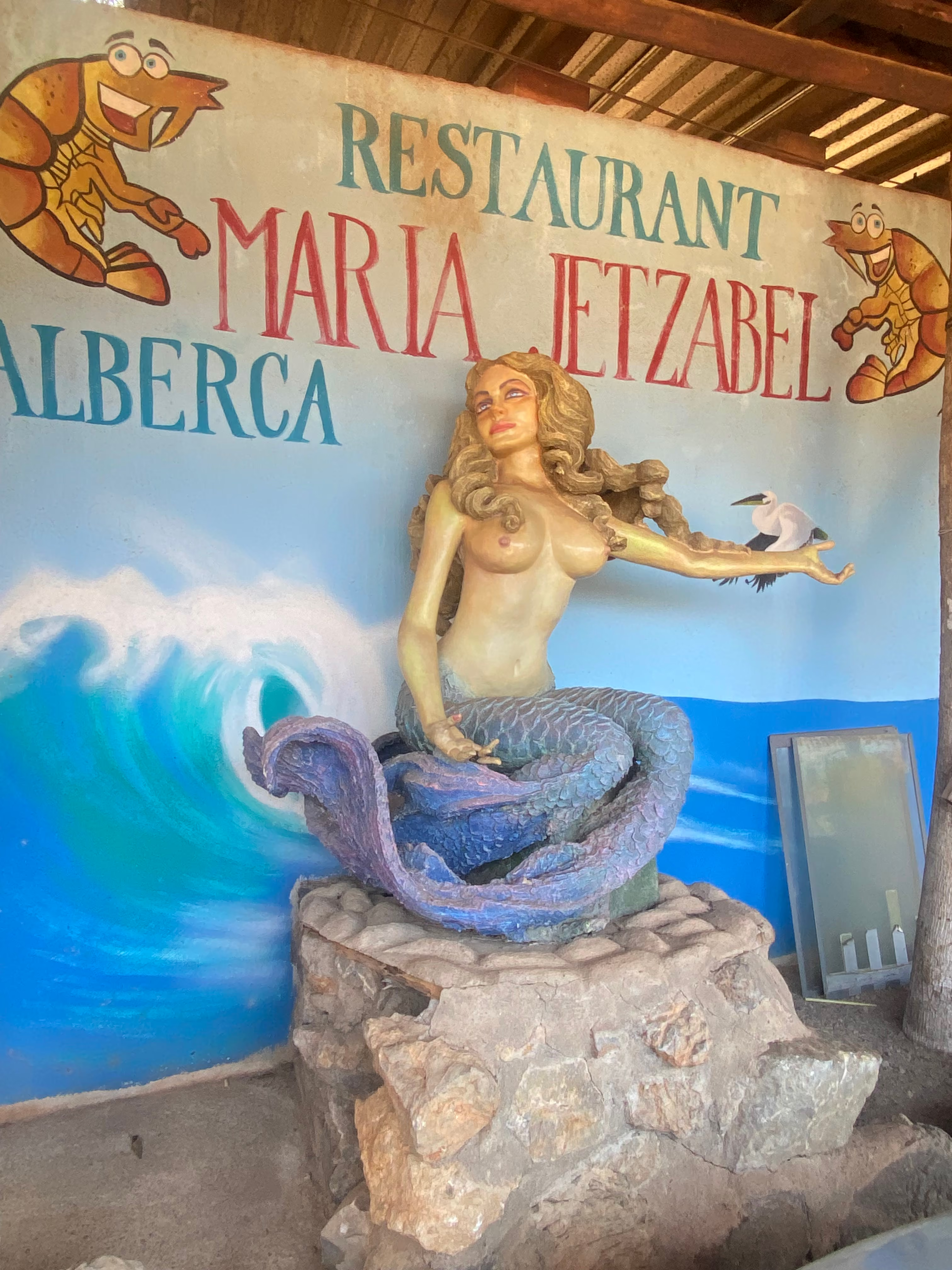
Back at the T, you’ll find María Jetzabel, Tostilokera, and Las Cuatas—no-frills, full flavor, and exactly what you want when you’re craving something real. That’s María Jetzabel for traditional, fresh-fresh-fresh seafood; Tostilokera for great snacks, shakes, and fun specials—don’t miss it—and Las Cuatas, on the corner, for simple, freshly prepared Mexican food, great juices, and a front-row seat to what’s happening at the T.
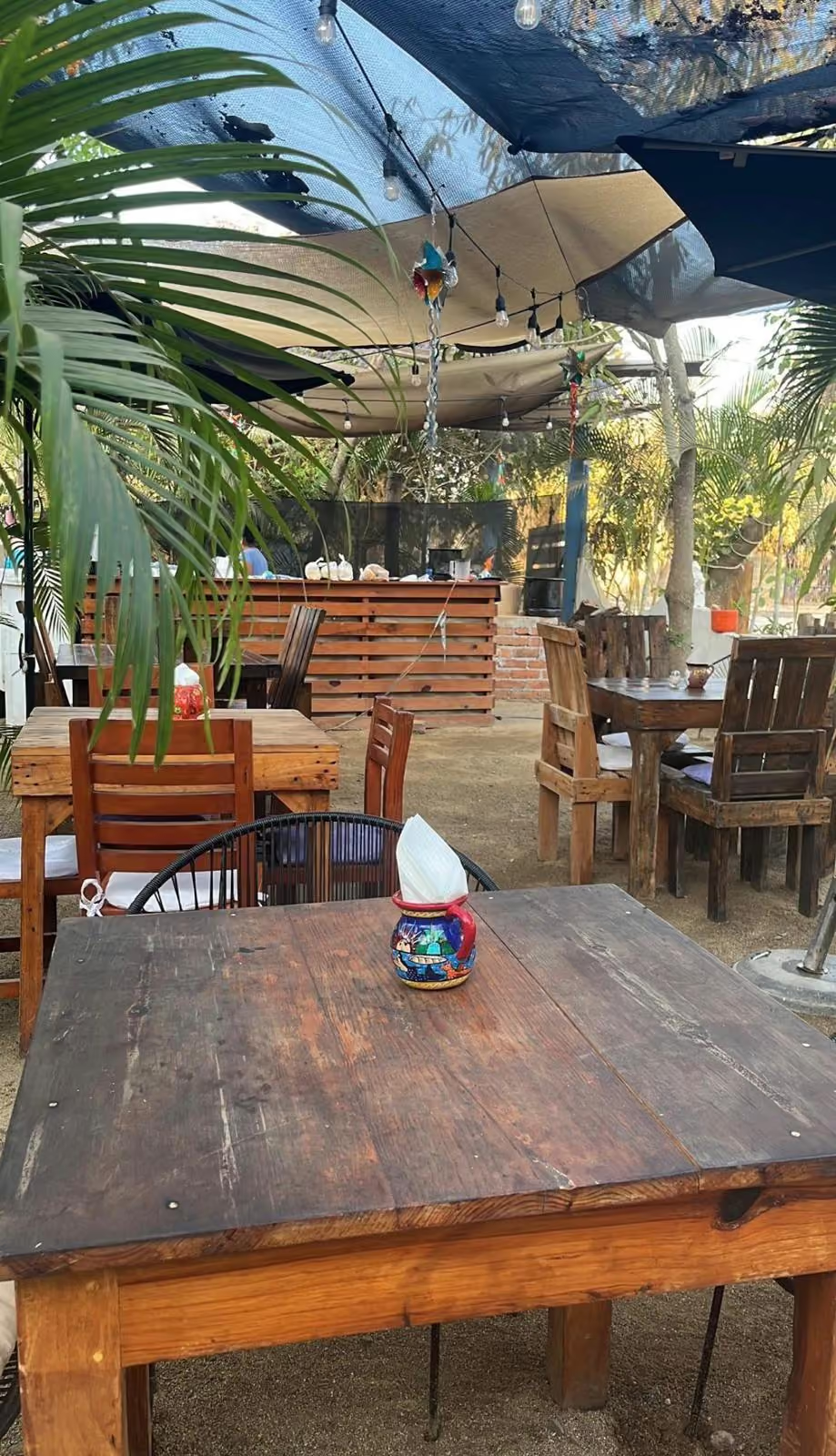
From there, it’s an easy slide into breakfast and coffee mode…
Heliconia stays open with its signature Sunday breakfast buffet—a super shady, tucked-away hideaway on the main road into Troncones—one of those places you can linger, work, or just sit for a while without being rushed. Friday, Saturday And Sunday, 9 am to 5 pm.
Delizia keeps the coffee game strong with excellent espresso, croissants, and more—hours can be catch-as-catch-can, but ask about their dinner nights. Worth it.
Café Pacífico remains open, too, a top spot every day for breakfast and lunch. Its shady garden, solid menu, sourdough breads, house-made baked goods and special gelato make it a Troncones favorite, while Quetzal keeps the off-season-is-the-better-season momentum going with some of the best smoothies in town and plenty of healthy, satisfying options.
And thank god for Cuattro right now—AC blasting, consistently great pastries, lunch, and proper barista drinks. A real refuge when the heat kicks in.
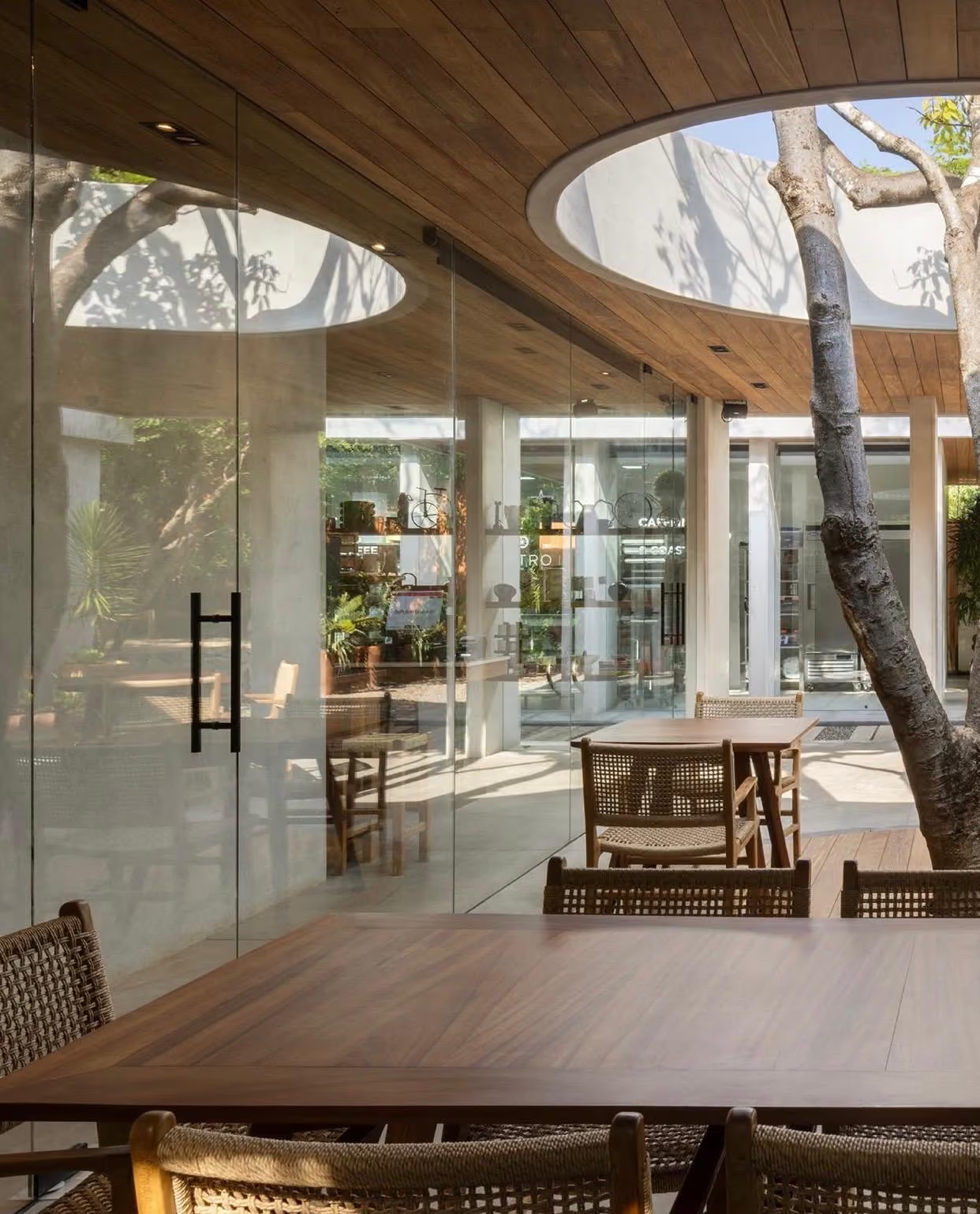
Back to the tour…
Indigo stays open all summer, as reliable as ever—big salads, empanadas, deep-dish pizzas, good Argentine-style meats when you need a meat fix, and gelato anytime. Plus a small gourmet shop for bread, cheese, and desserts to go.
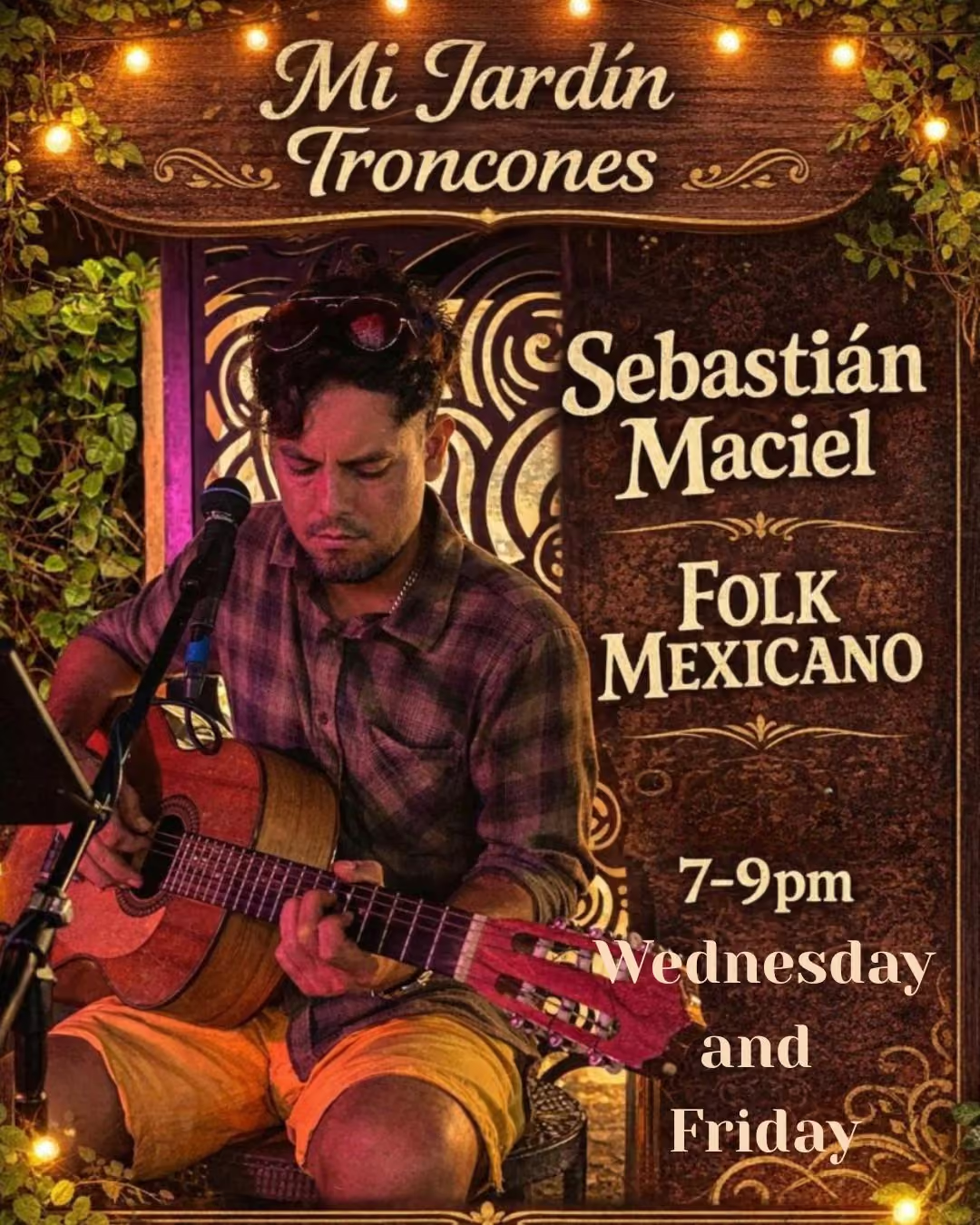
Mi Jardín continues to bring in both locals and visitors with its wood-fired pizzas, pastas, and easy evening vibe—one of the few spots that still feels like a big night out. And yes, the 2-for-1 pizza specials are still a thing.
Back on the beach and just beyond, places like Costa Brava, Casa Saint George, and Lo Sereno Casa de Playa keep things a little more elevated—sunset dinners, cocktails, and that barefoot-but-beautiful Troncones feel. Add El Chiringuito de Fran to the mix for a more social, see-and-be-seen energy right in the sand.
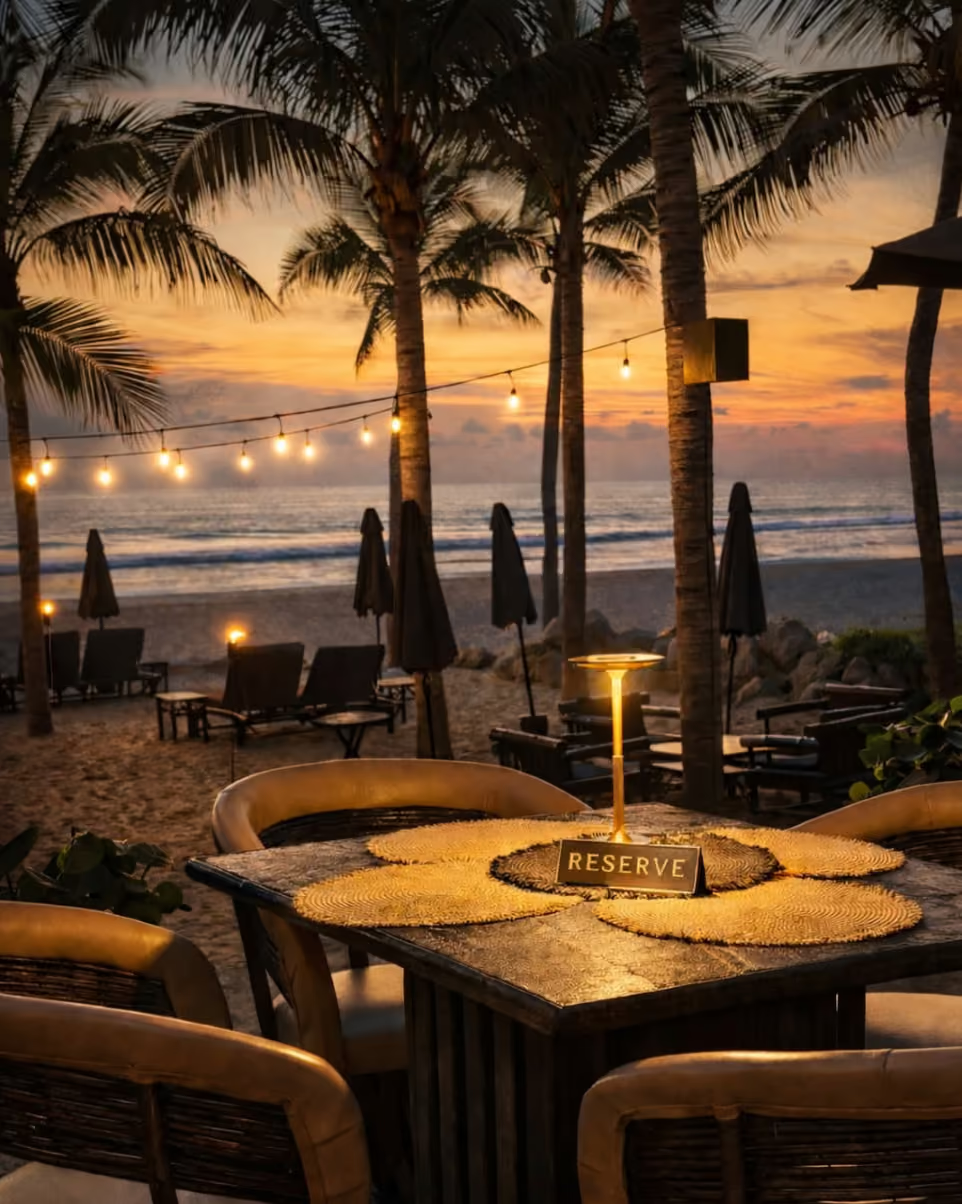
On Manzanillo Bay, there are two restaurants that never miss—The Inn at Manzanillo Bay, for its cozy dining room, oceanfront deck, and consistently reliable food and service—and Los Raqueros, a classic hacienda-style spot on the bay, serving Baja-style fish tacos, a great burger, ribs to die for, and plenty more, all in a setting that’ll make you stay longer than planned.
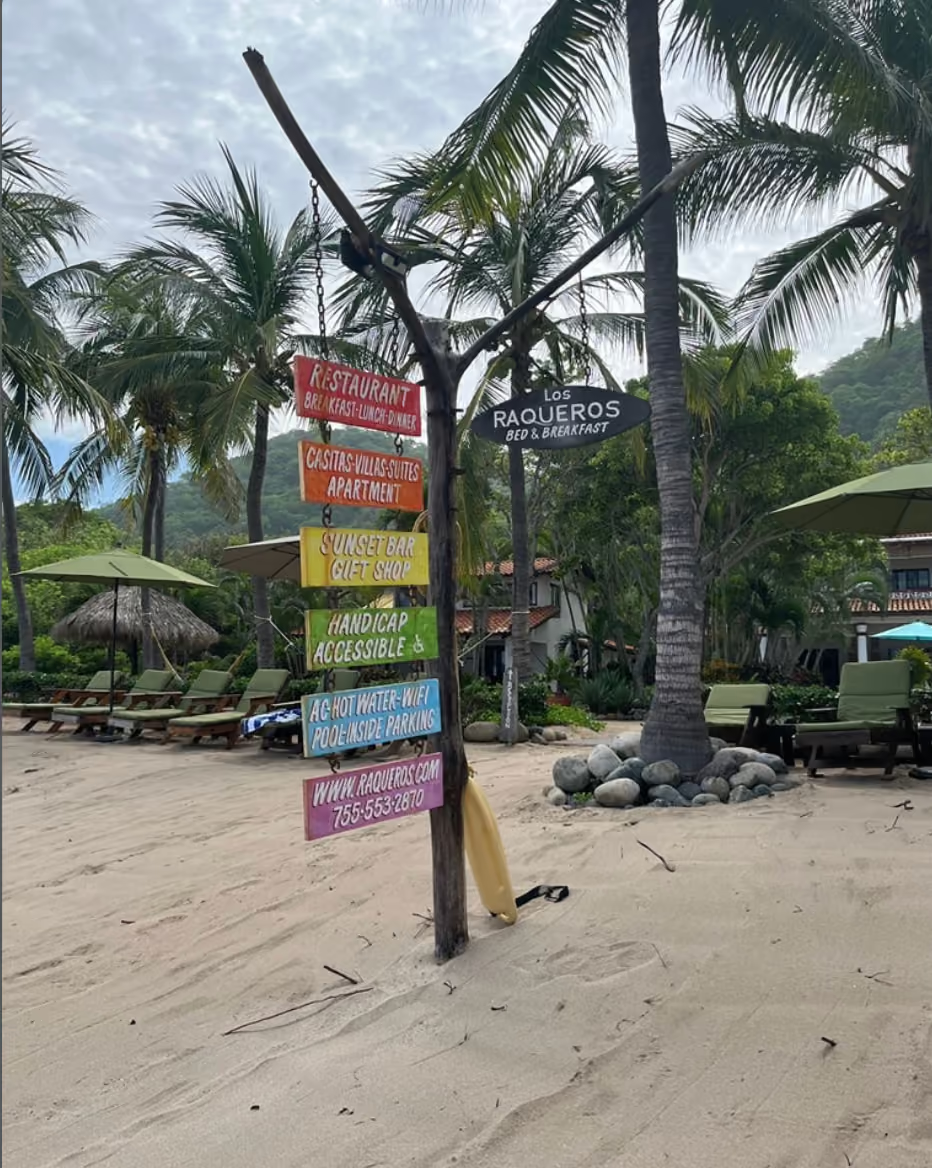
Back in Troncones, La Mexicana continues to be a longtime go-to for classic Mexican comfort food and easy, familiar meals. La Cevichería, keeps it fresh and lively with bright ceviches and good cocktails—black margarita, anyone? They’re currently open Tuesday to Saturday, 1 pm to 6 pm, but changing their schedule on May 21st to Thursday to Saturday, 1 pm to 6 pm
And to round it all out, Marro’s has coffee, cocktails, a little bit of everything, and always someone to run into while watching the world go by—or watching the World Cup…
And speaking of cocktails…
A few newer spots are leaning into more of a lounge/drink scene—check their schedules, as things shift.
In Troncones on weekends, Aqua remains open for cocktails and live music, Thursday to Sunday, 2 pm to 11 pm. Naufragio, the sandwich shop across from Present Moment, is pausing sandwiches for now, but Job from Pistachio is popping up his bar and light snacks in that stylish and intimate space, from Thursday to Monday, 6 pm to 11 pm. Meanwhile, Ámbar at the T brings a slightly more sophisticated cocktail lounge vibe into the mix.
And over on Playa Majahua, don’t miss Los Pelícanos in La Pequeña—arguably the ultimate beach bar—open Thursday to Sunday, from 2 pm. Rodrigo, the area’s master mixologist, is behind the bar, turning out proper cocktails with some light fare, all to be enjoyed quite literally on the sand.
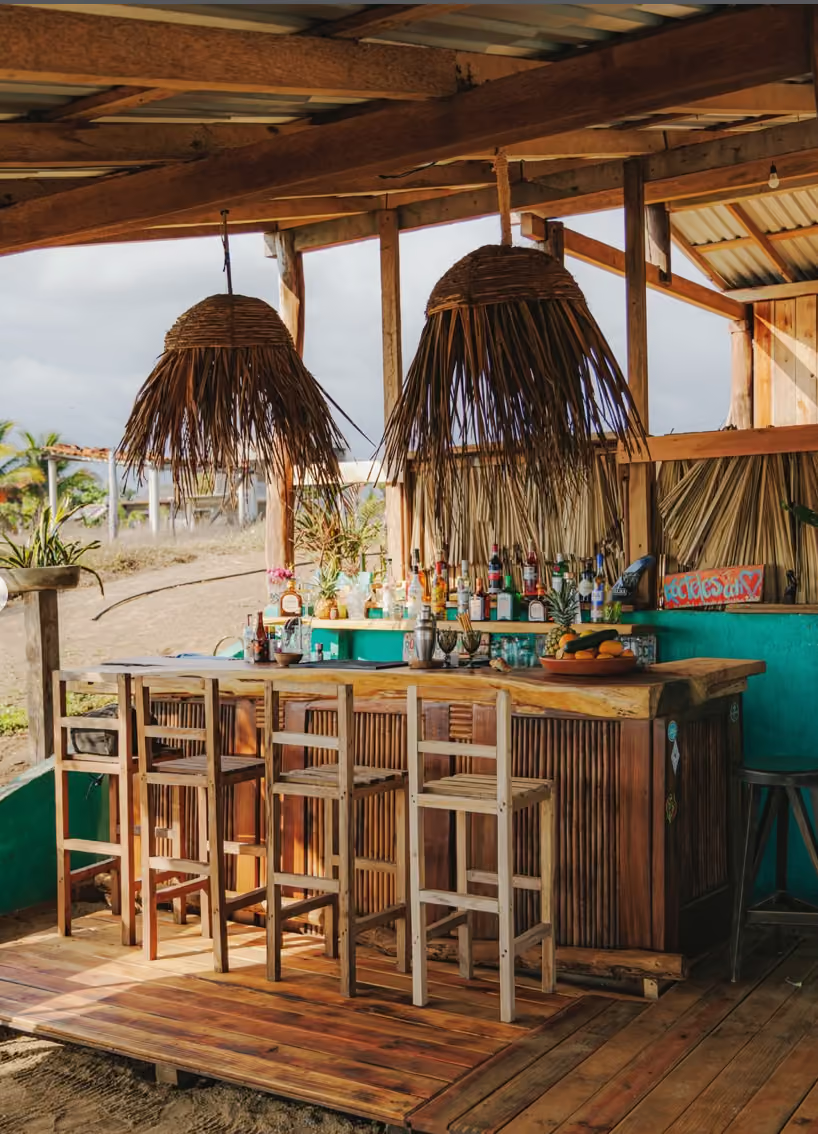
SALADITA
Saladita always keeps it loose—feet in the sand, boards stacked nearby, easy meals between sessions.
Hacienda is the central hub—coffee, smoothies, chilaquiles, groceries—a place for a quick meeting—or just a place to land. It’s all happening there.
Down on the beach, Ilianet’s continues to serve colorful ceviches, sharp tiritas, and perfectly grilled fish—quick, fresh, and exactly what you want before heading back into the water.
Jovita y Pancho stays classic and local, while Lourdes offers a slightly broader menu with a great perch above the break—good for a longer hang, especially when there’s live music in the mix.
Marejada leans into the surf vibe with themed nights, music, and a little more energy when you’re in the mood for it.
Back inland, Acadia—good espresso, a mellow setting, and a quiet place to sit under the mango trees—re-opens May 21st, Thursday to Monday, 11 am to 4 pm. Evening hours on Friday & Monday, still TBD.
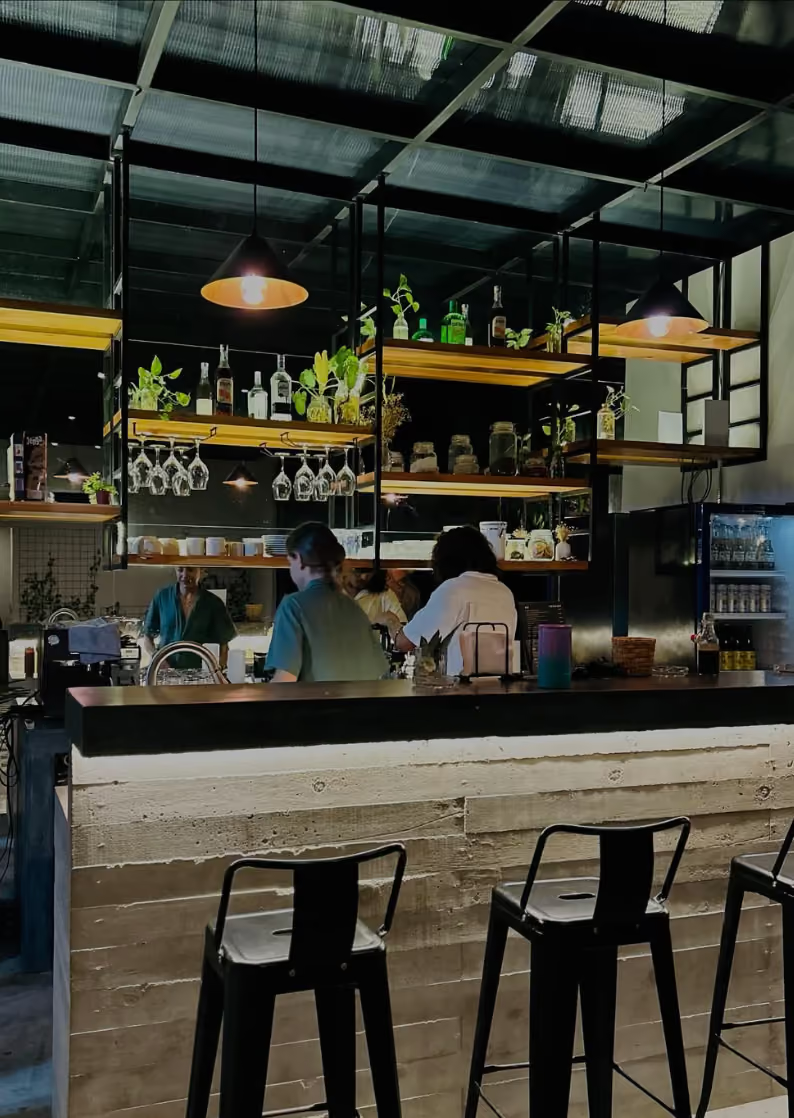
MAJAHUA
Majahua is still all about the sea.
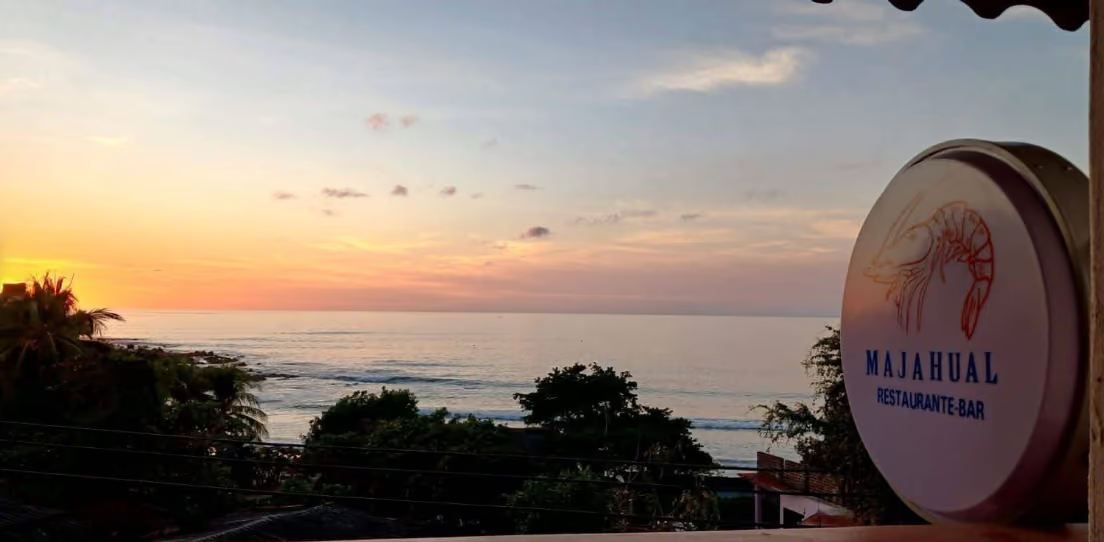
At Embarcadero, Majahual, and Yela’s, you’ll find the familiar lineup—fresh fish, shrimp, pulpo, tiritas—each place with its own rhythm. Yela’s is more home cooking, tucked behind her store. Embarcadero is doing pozole on Thursdays. Majahual sits upstairs with an amazing view and great huachinango.
Both Las Brisas Mexicanas and El Toro del Mar Johny’s keep the sunset, staycation vibe alive—long meals, ocean air, and no reason to rush. They’re the kind of places where you wander a bit, see what looks good, and then settle in.
La Onda Restaurant Directory: https://www.laondatroncones.com/restaurant-directory
Remember to always text or call ahead. Things sometimes change here.
.avif)
Clémentine Didi at Playa Viva
Southeast Asian food isn’t easy to come by around Troncones. You can find great seafood, good tacos, and many creative kitchens and tastes here, but the layered heat, acidity, herbs, and depth of Southeast Asian cooking is rare. This week will be different, at least for a few days, although it’ll take a quick 45-minute drive south to Playa Viva to satisfy that craving, and feel those flavors.
Playa Viva sits just beyond Zihuatanejo, near the village of Juluchuca, in a place where the coastline opens up and the landscape changes. It’s a shift in pace—less beach town, more open land—a stretch of protected coast backed by farmland and low jungle, where, right now, it’s a lot greener and less dusty than here.

One of the daily attractions of Playa Viva is its food. Almost all of what’s served in its restaurant is grown nearby or on-site. That farm-to-table approach is consistent with the resort’s core operational principles, which are based in environmental sustainability and which have earned it a much-coveted B-Corp certification. Clémentine’s cooking fits naturally into that regenerative environment.
She doesn’t describe herself as a chef in the traditional sense. Clémentine’s had no formal training, no conventional path, just a deeply intuitive approach shaped by travel and immersion. In a note by email, she explained, “I’m a highly creative person, and for me, cooking is just one of the mediums—like design or space-making. It’s how I express ideas, how I build atmospheres, how I tell stories.”
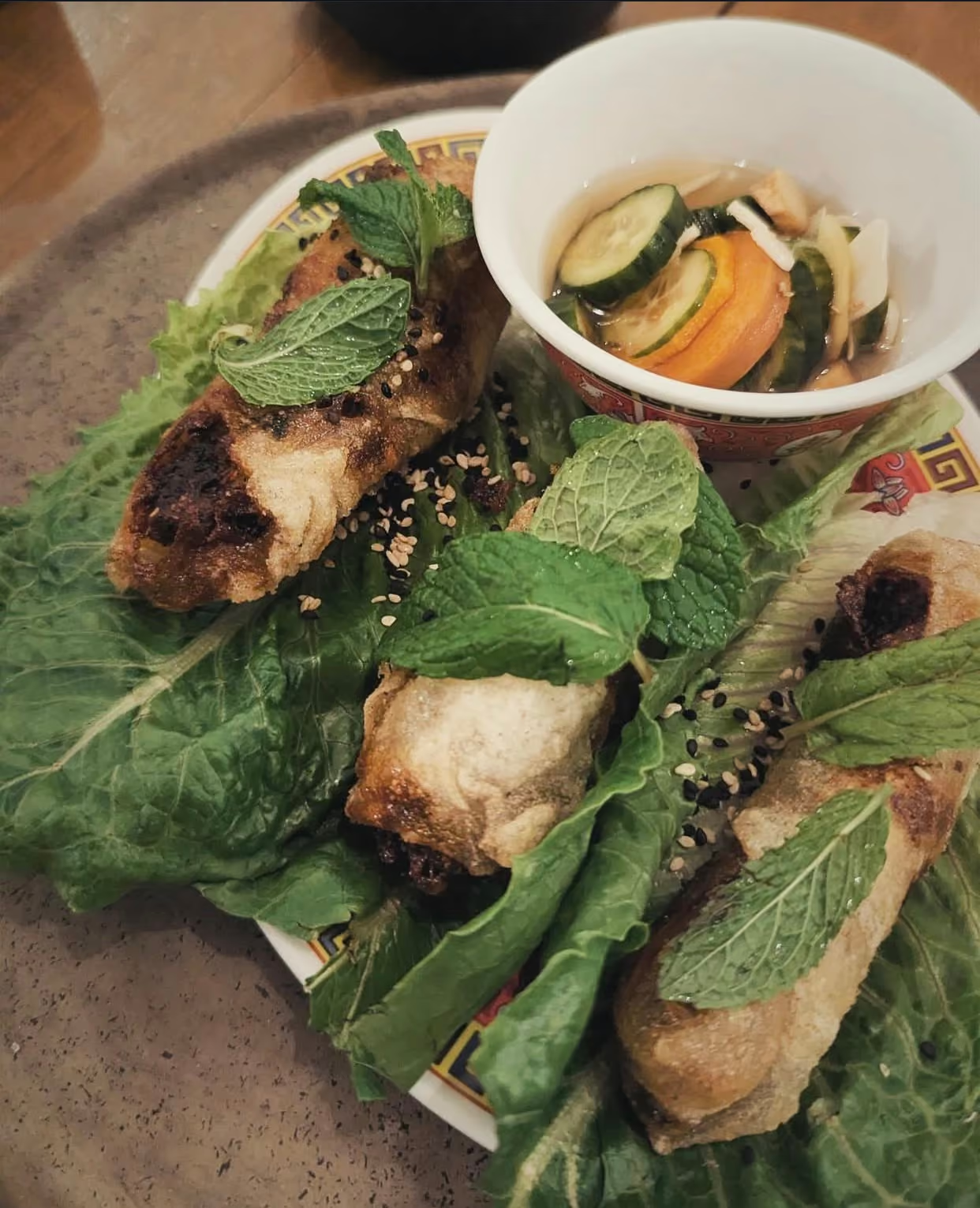
Clémentine’s time living and moving throughout Southeast Asia has left a clear imprint. Thai, Indonesian, and Vietnamese cuisines—each with their own balance of heat, acidity, sweetness, and texture—form the backbone of her approach. “It’s not just about eating,” she wrote. “It’s about understanding balance, restraint, heat, acidity, texture.”
What does that mean? Think, slow-cooked, spice-heavy bases softened by coconut or herbs. Bright, sharp salads layered with chili and lime. Broths that feel light at first, then deepen as you move through them. Food that wakes up your palate without weighing you down. That balance—depth without heaviness—is what Clémentine strives to bring to everything she does.
Based in Baja, she moves between food, design and hospitality. Alongside Tiger Club, Clémentine is also the creative visionary behind Casa Nopal and Nopal Interior Design, where her aesthetic leans toward natural materials and a quiet, effortless refinement. Cooking, for her, follows the same logic—intentional, but never overworked.
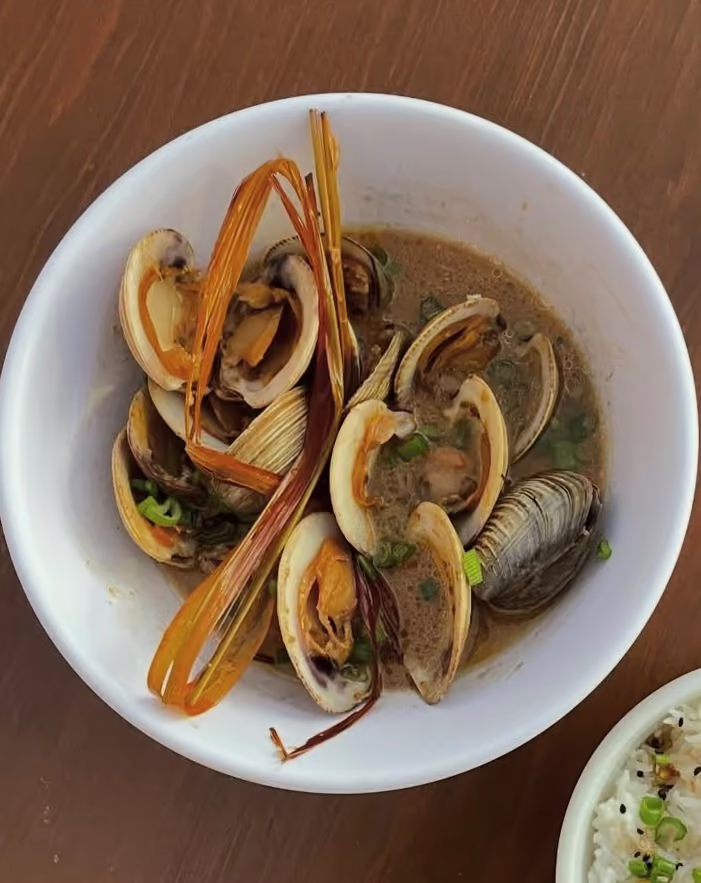
The Playa Viva residency came together for Clémentine rather simply—a visit, a conversation, then another visit—and a shared sense of alignment. “At first, I didn’t know much about Playa Viva,” she added, “but once I started looking into it, I was immediately conquered. The philosophy, the intention behind the place—it really stayed with me.”
During the residency, Clémentine will be cooking alongside Playa Viva’s Chef Jesús, building menus around what’s available in the moment. The format is intentionally loose—Southeast Asian–inspired dishes designed for sharing, shaped as much by place as by memory. She describes the foods she has planned as, “Very playful, a little funky. Bold flavors, texture, contrast—but in a way that still feels light, fresh, and easy to enjoy.”
Her special meals are open to both hotel guests and visitors, with the option to come down just for lunch or dinner, or to spend more time on the Play Viva property through a day pass. For those who haven’t been, it’s a chance to see what Playa Viva actually feels like—and not just the food—but the space and the way everything connects.
For Clémentine, home right now is in Baja—between La Paz and Todos Santos—where her projects live. But like her cooking, that sense of place is fluid, revealing, “Travel is a big part of how I stay inspired. It keeps my perspective fresh.”
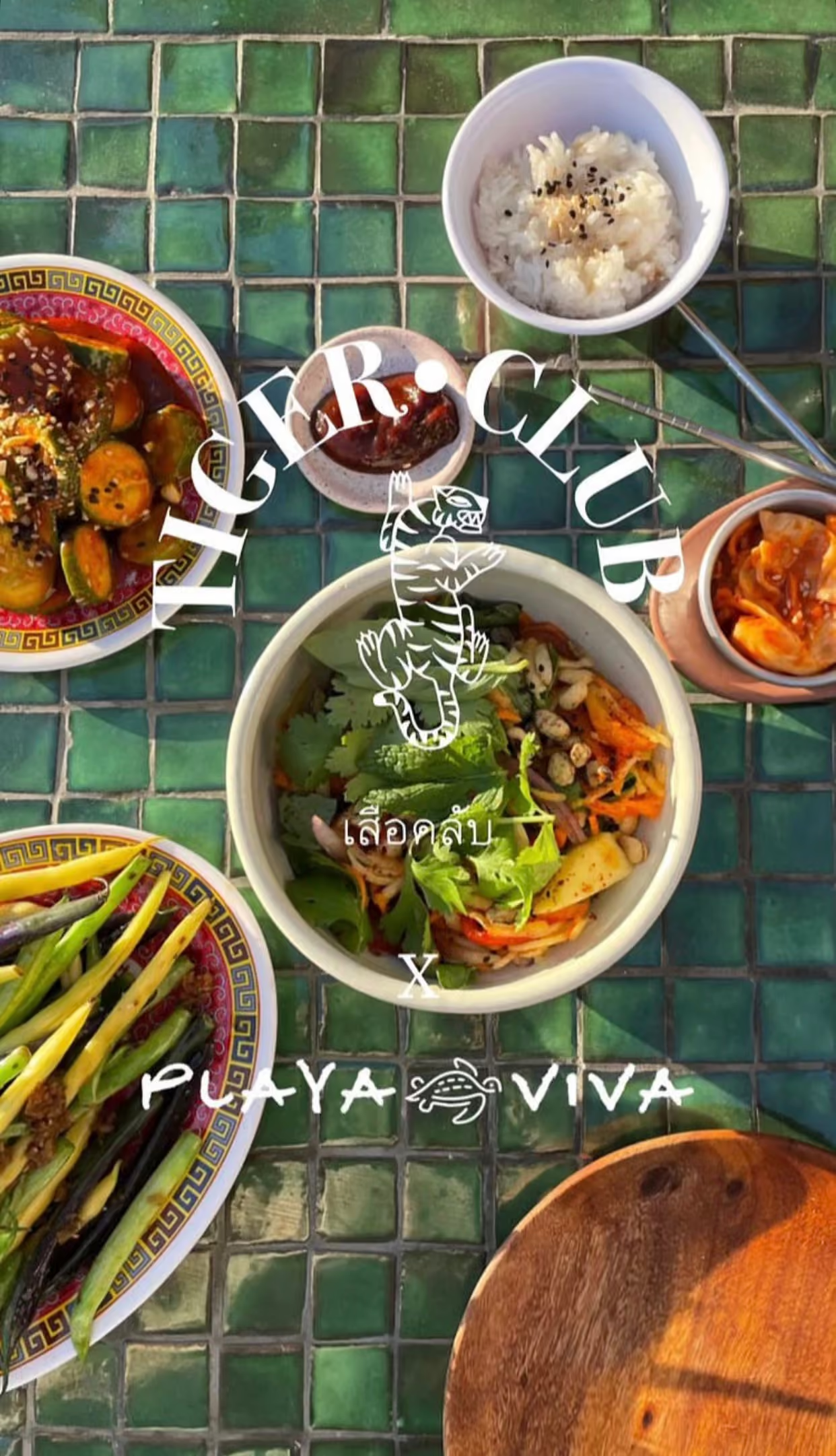
RESIDENCY DETAILS
This Friday to Sunday, April 10 to 12
Open to hotel guests and visitors by reservation or day pass
Friday
Dinner—7 pm
Saturday & Sunday, each day
Lunch—2 pm
Dinner—7 pm
LINKS
Playa Viva Food: https://www.playaviva.com/food
Playa Viva Day Pass: https://www.playaviva.com/day-pass
Clémentine Didi: https://www.instagram.com/clementine.didi/
.avif)
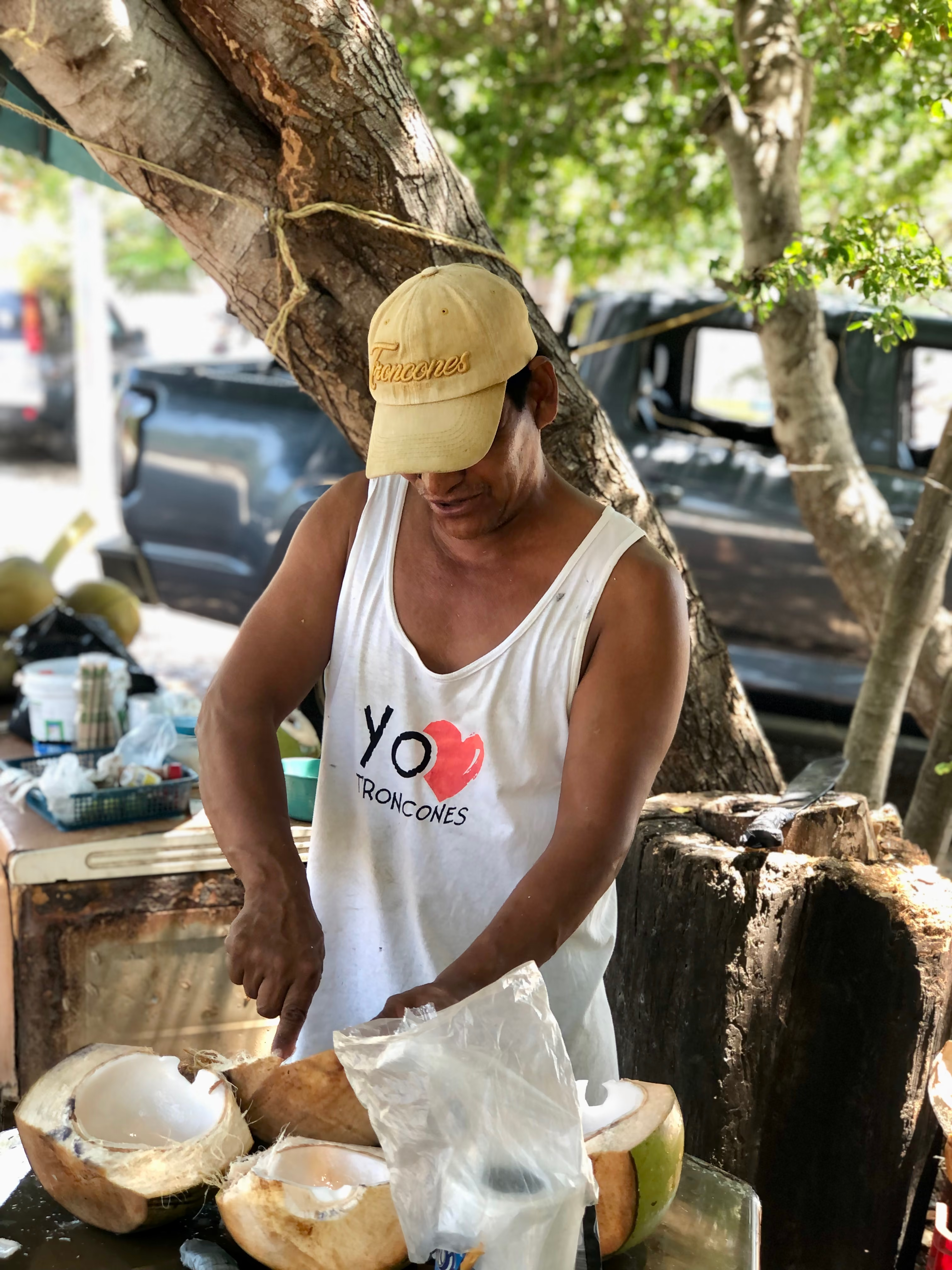
Cocos Fríos: Lorenzo by the Bridge
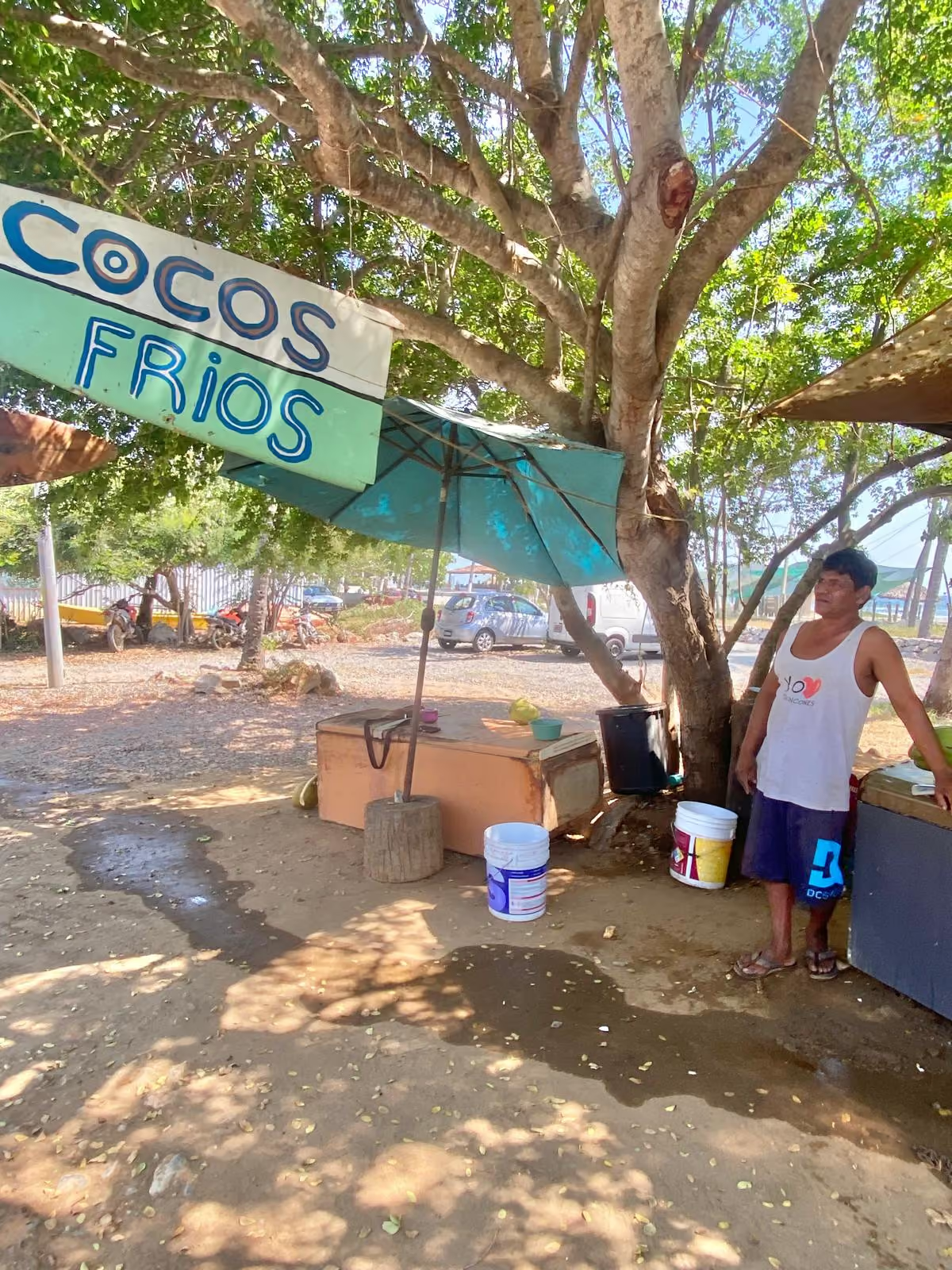
Lorenzo’s been at his spot about eight years. Originally from Troncones and now living in Lagunillas, he comes in each morning with 20 to 30 coconuts, all sourced locally. Some he’s been asked to cut; some are given. He’s selective.
“You can tell by the weight,” Lorenzo says. If he doesn’t know the tree, he’ll open one up right there and taste it. If it’s good, the rest come down. Smaller ones, he mostly avoids—not enough water, not worth it.
Most people stopping at his stand go for the whole thing, no frills—ice cold coconut, straw—straight up. But you can also have Lorenzo scoop everything out, bag the water and give you the meat with lime, salt, and chili—to stay or to go. Simple, tasty, rejuvenating and about the best electrolyte boost you’re ever going to find.
He’ll tell you himself—coconut water is “the best hydration serum there can be.” Good for your kidneys, good for your body, something people reach for when they’re run down, overheated, or recovering. The meat, too, he says, “is very healthy.”
Some people take a few bags of the meat to make ceviche, coconut milk or yogurt, or even to make sweets. (For a really good example of coconut ceviche, walk over the bridge and go to La Cevichería.)
Lorenzo is easy to talk to, quick to smile, and genuinely enjoys meeting people from all over. Everyone, it turns out, knows how to say “coco”.
I often see him reading the Bible while he waits for the next person to walk up. When I asked him about that one day, he told me he belongs to a Pentecostal church in Lagunillas. But he wanted to talk about other things and, at one point, he showed me a video on his phone—himself, at the very top of a coconut tree, barefoot, no ropes, no helmet. That’s something he learned when he was young—how to climb, how to cut, how to know which ones are worth bringing down.
Now, he’s here, on the ground—cutting coconuts until they’re gone and passing on his joy to everyone who comes by.
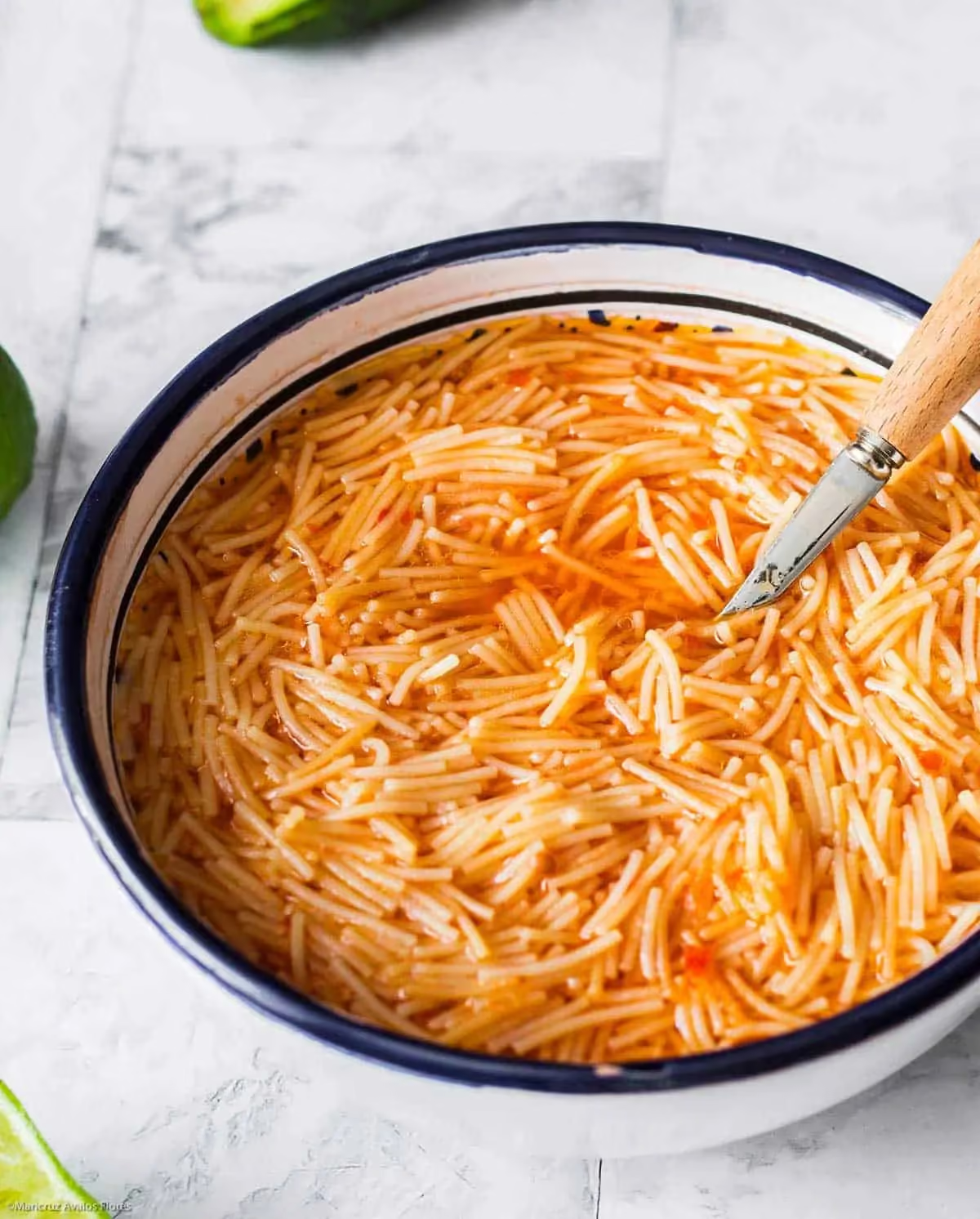
Sopa de Fideos

I love soup, and I love noodles of all kinds. When you think of noodle soup, Mexico probably isn’t the first country that comes to mind. But Sopa de Fideos has long held its place in Mexican kitchens as one of the simplest and most comforting things you can cook.
This humble dish has traveled a long way to get here. Thin, short noodles—fideos—arrived from Spain through the Arab world during centuries of Moorish influence. When Spain colonized Mexico, their wheat pasta traditions came with them. Mexico’s cooks took those noodles and paired them with ingredients already rooted in the kitchen—tomato, onion, garlic, broth.
The defining (most interesting and unique) step is to toast the noodles in oil before adding the liquid. As they turn from pale beige to light golden brown, your kitchen will fill with a warm, nutty smell—that’s the moment you know the soup is going to work. After that, the tomato broth goes in and the whole thing cooks in just a few minutes.
Some culinary historians note that Mexicans were cooking noodles in tomato broth as early as the eighteenth century, which means versions of this dish may have appeared before spaghetti with tomato sauce became common in Italy. Whether or not that claim holds up, the basic idea has clearly been around for a long time: noodles, tomatoes, broth and a pot on the stove.
Unlike many traditional Mexican dishes, Sopa de Fideos rarely appears as the star of a restaurant menu. It’s usually something cooked at home—quick to make, inexpensive and reliable. In many households, it shows up as the first course before the main meal—what people simply call la sopa. It’s also the kind of thing that appears when someone is sick, when someone is broke, when someone just got home late and nobody planned dinner.
In spirit, it reminds me a little of tomato soup with grilled cheese—humble, familiar, and surprisingly satisfying.
I first encountered Sopa de Fideos years ago in Majahua, at Martha and Orlando’s house. At the time, Martha’s Restaurant was the beachside seafood spot—the kind of place where the fish was fresh, they pulled the oysters right out of the water in front of you, and lunch bled into dinner.
I had befriended Doña Marta and their dog, Kilo (my first chihuahua crush) and often found myself on her porch rather than in the restaurant. That’s where the family relaxed once the lunch crowd thinned out. Plastic chairs, a breeze from the ocean, the quiet clatter of dishes being washed downstairs.
One afternoon Doña Marta handed me a bowl of soup.
It definitely wasn’t on the menu.
Just thin noodles in a tomato broth—nothing fancy, nothing complicated. But it tasted better than half the food being served downstairs, mostly because it came with conversation and the easy rhythm of sitting in someone’s home rather than at a restaurant table.
A simple cheese quesadilla appeared a few minutes later—melted cheese folded inside a warm tortilla, cut in half.
Suddenly the whole thing made perfect sense.
Sopa de Fideos isn’t meant to impress anyone. It’s meant to be eaten casually, often with something simple on the side—a quesadilla, a squeeze of lime, maybe a few slices of avocado.
Recently I was talking with my neighbor Eri about the soup. She had originally offered to guest chef this piece, but I decided to save her for something more grand, and we started comparing versions. Her family sometimes adds chicken, potatoes, or calabaza [squash] to make it heartier. She also mentioned that she likes to eat it with a side of fried plantains—sweet, slightly greasy, and perfect for dipping.
Which is exactly the point.
Every household bends the recipe a little to suit itself.
In the end, Sopa de Fideos remains what it has probably always been: a handful of noodles, a tomato broth, and the kind of meal that tastes best when shared in someone’s kitchen—or on a cool evening when you don’t know what to make and the cupboard is looking a bit thin. I guarantee these ingredients are not far from where you are.
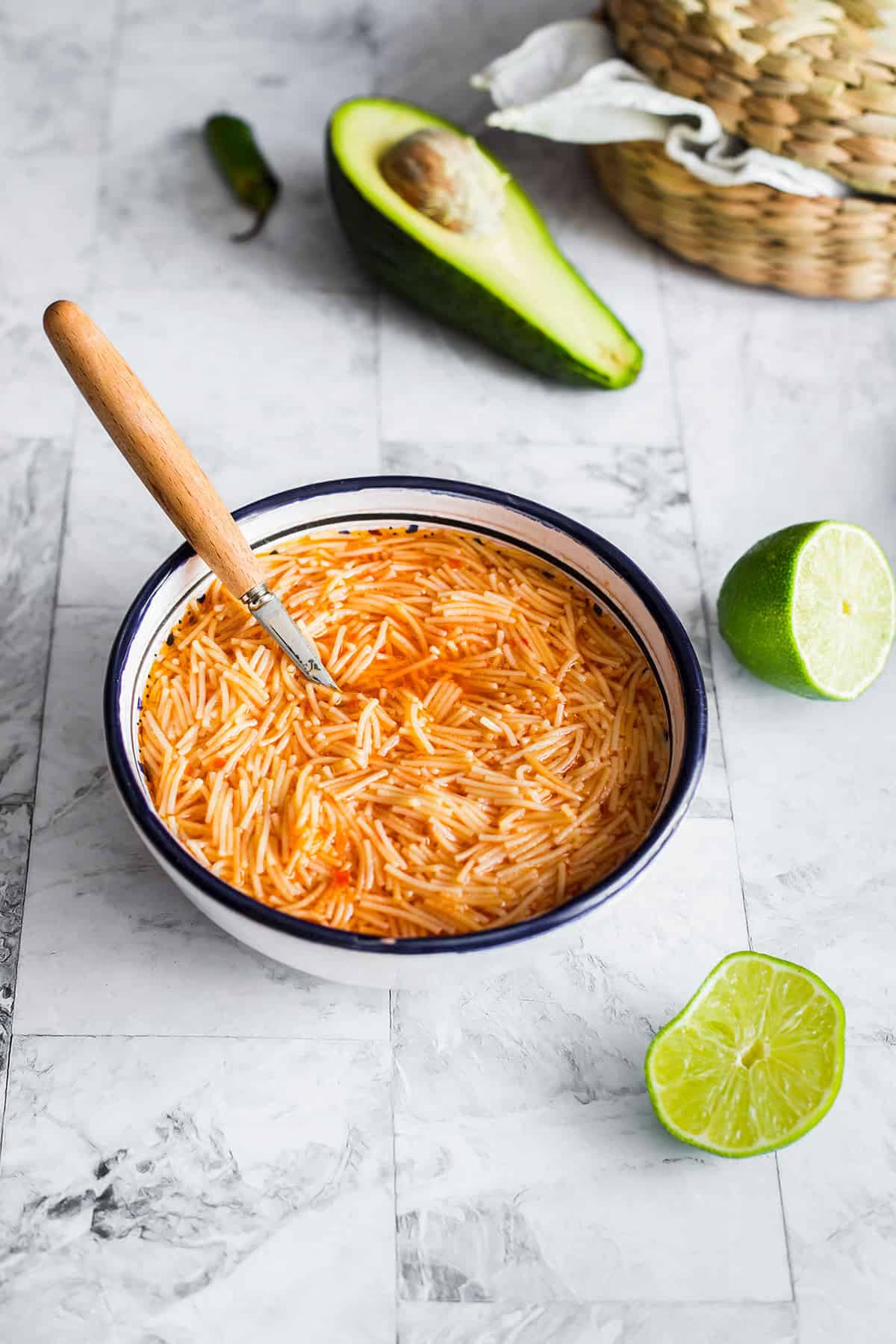
RECIPE
Simple Sopa de Fideos (home-style)
Serves 3–4
Ingredients
1 cup fideo noodles (or very thin vermicelli, broken into short pieces)
2 tablespoons oil
2 medium tomatoes
¼ onion
1 garlic clove
4 cups chicken broth, vegetable broth or water
Salt to taste
Optional to serve
lime wedges
sliced avocado
queso fresco
simple cheese quesadillas
INSTRUCTIONS
Blend in a blender the tomatoes, onion, garlic, and about ½ cup of the broth until smooth.
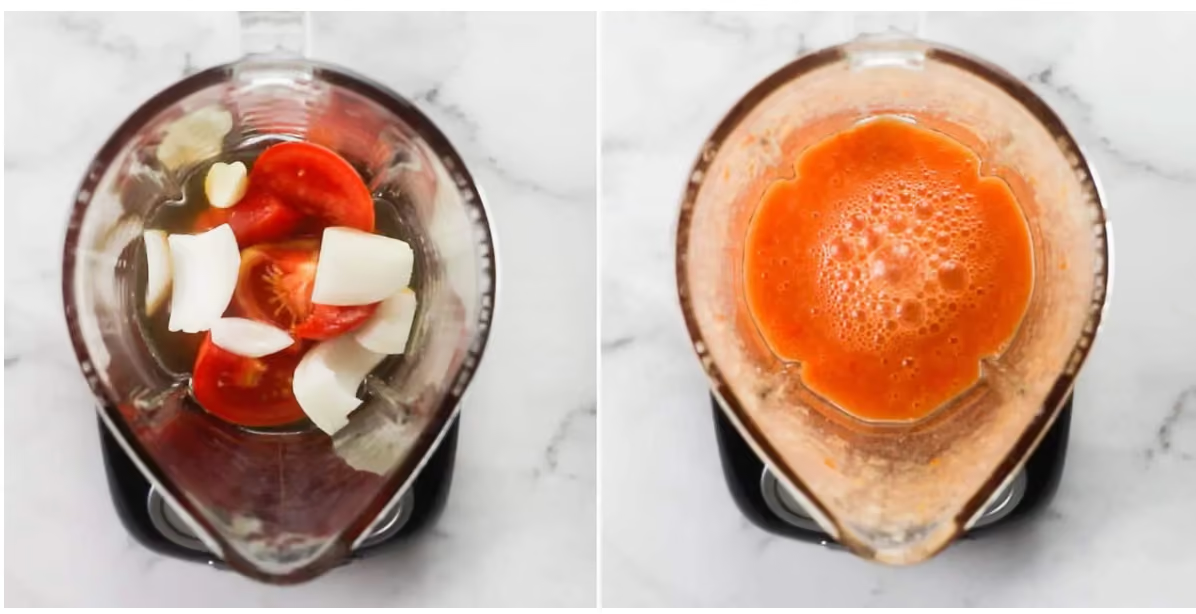
Heat the oil in a medium pot over medium heat. Add the fideo noodles and toast them, stirring constantly, until they turn golden brown and smell nutty.
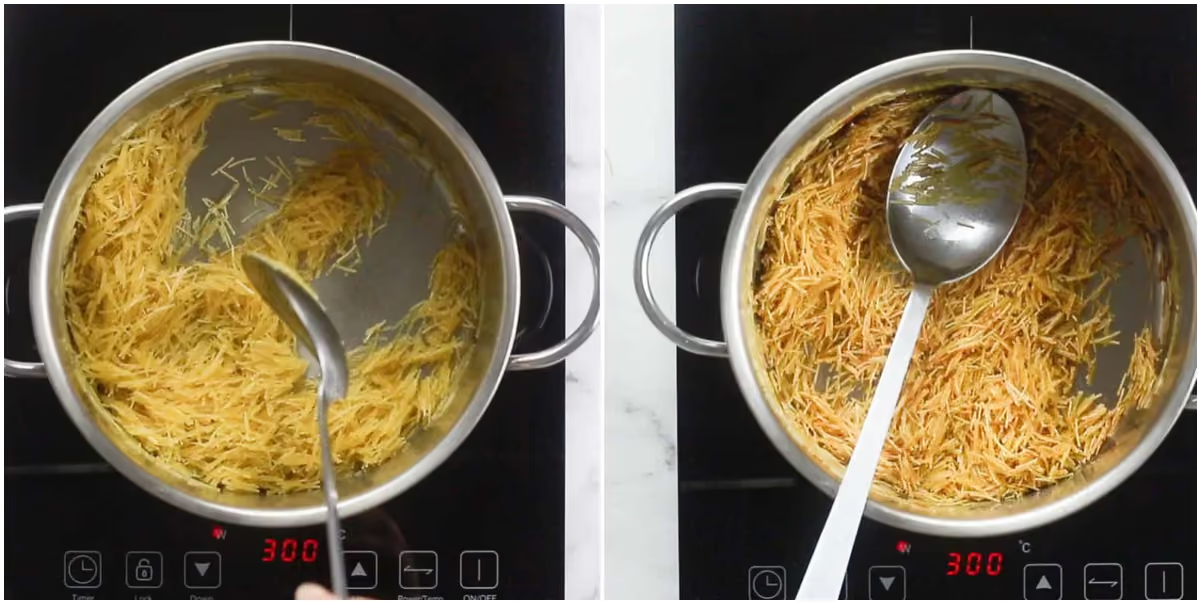
Carefully pour in the tomato mixture through a medium sieve. It will bubble and hiss for a moment.
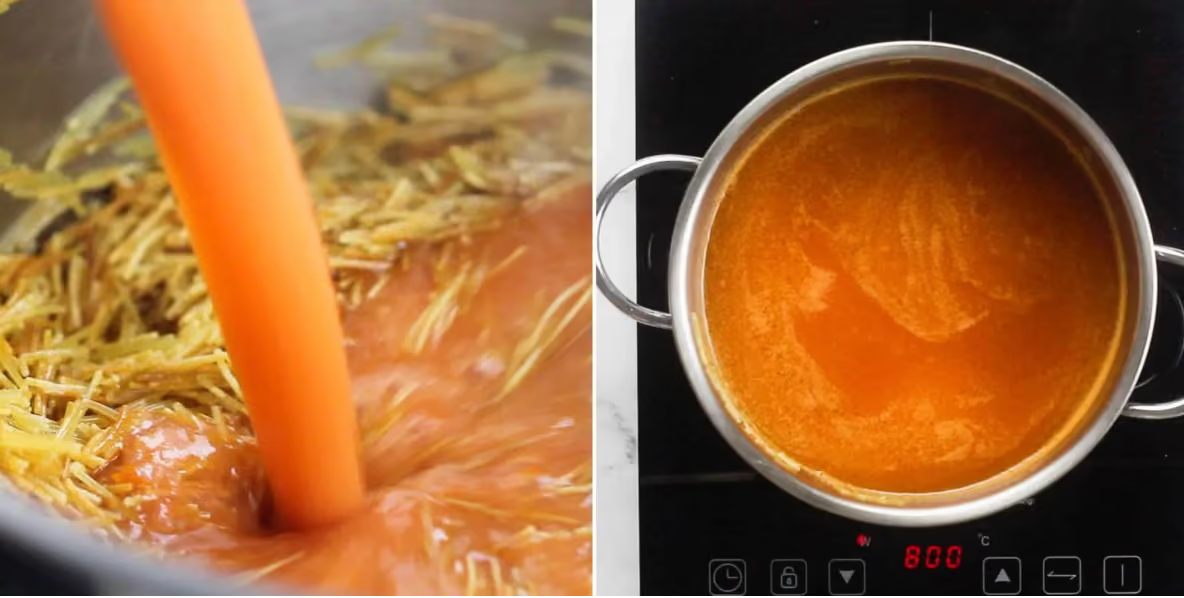
Add the remaining broth and a pinch of salt. Bring to a gentle simmer and cook for about 8–10 minutes, until the noodles are tender.
Taste and adjust salt. The soup should be brothy rather than thick.
Serve hot with lime, avocado, or a simple cheese quesadilla on the side.
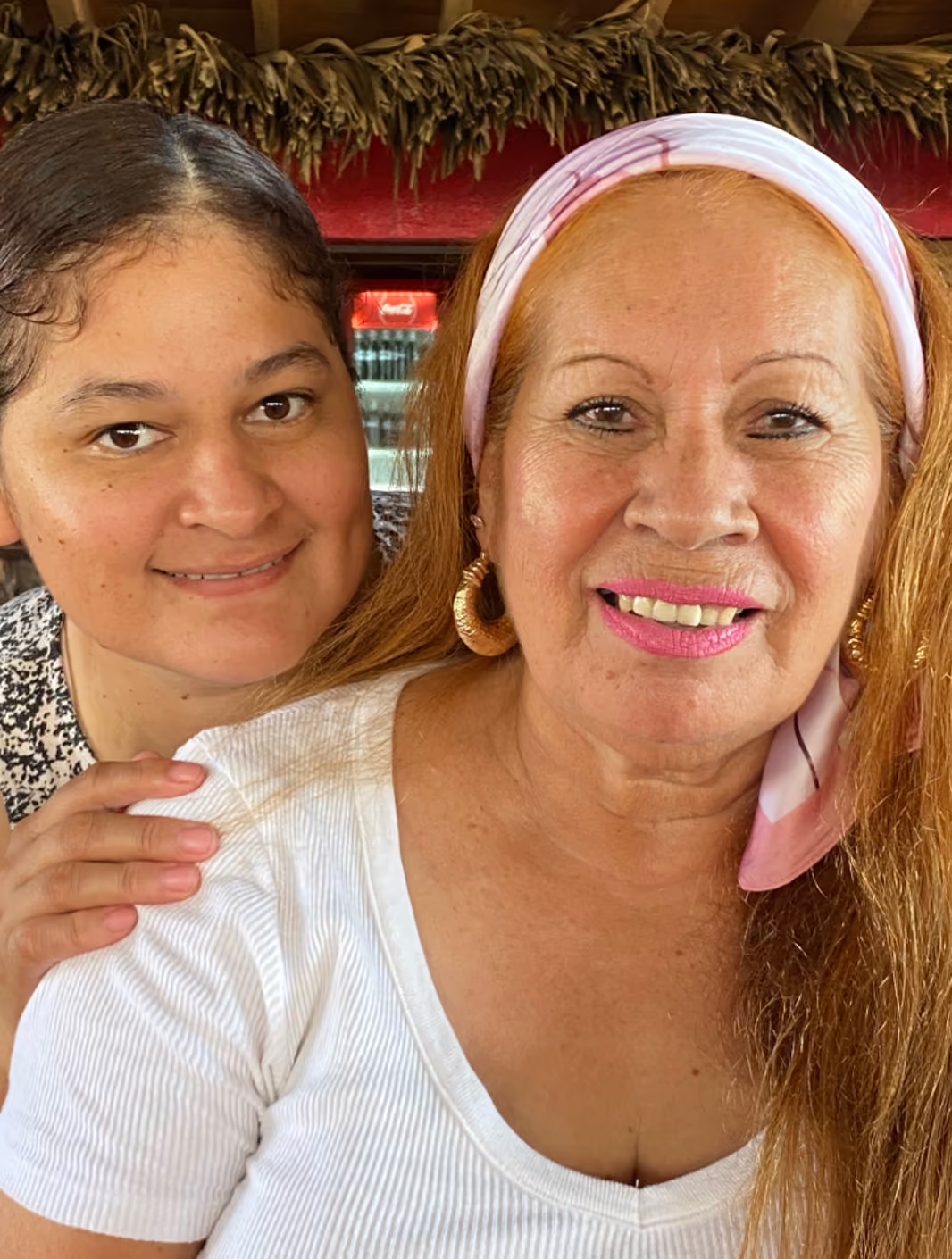
Josefina & María Jetzabel: Mother & Daughter
Josefina arrived in Troncones in 1985, when the road was rough and there wasn’t much of anything here. “I came from Petatlán,” she said. “When I arrived, it was a very small town. Very poor. We didn’t have money. I’m not ashamed to say that, because it’s the truth.”
She started working in a small ramada—a simple shade structure with a table and a fire. What was on the menu came from the sea. “What we had most was lobster,” she said. “Oysters, too. There were many. You could grab them right there.”
Josefina remembers sleeping in a tiny palm-roofed shelter without walls. She remembers how exposed everything was—to the weather, to the animals, to the sea. “I had my masa [corn dough for tamales] on a table,” she said. “And there were big pigs. They would come and take it. They would steal my masa and run away because there was no security.” She laughs when she tells it now. At the time, it was just another problem to solve.
.avif)
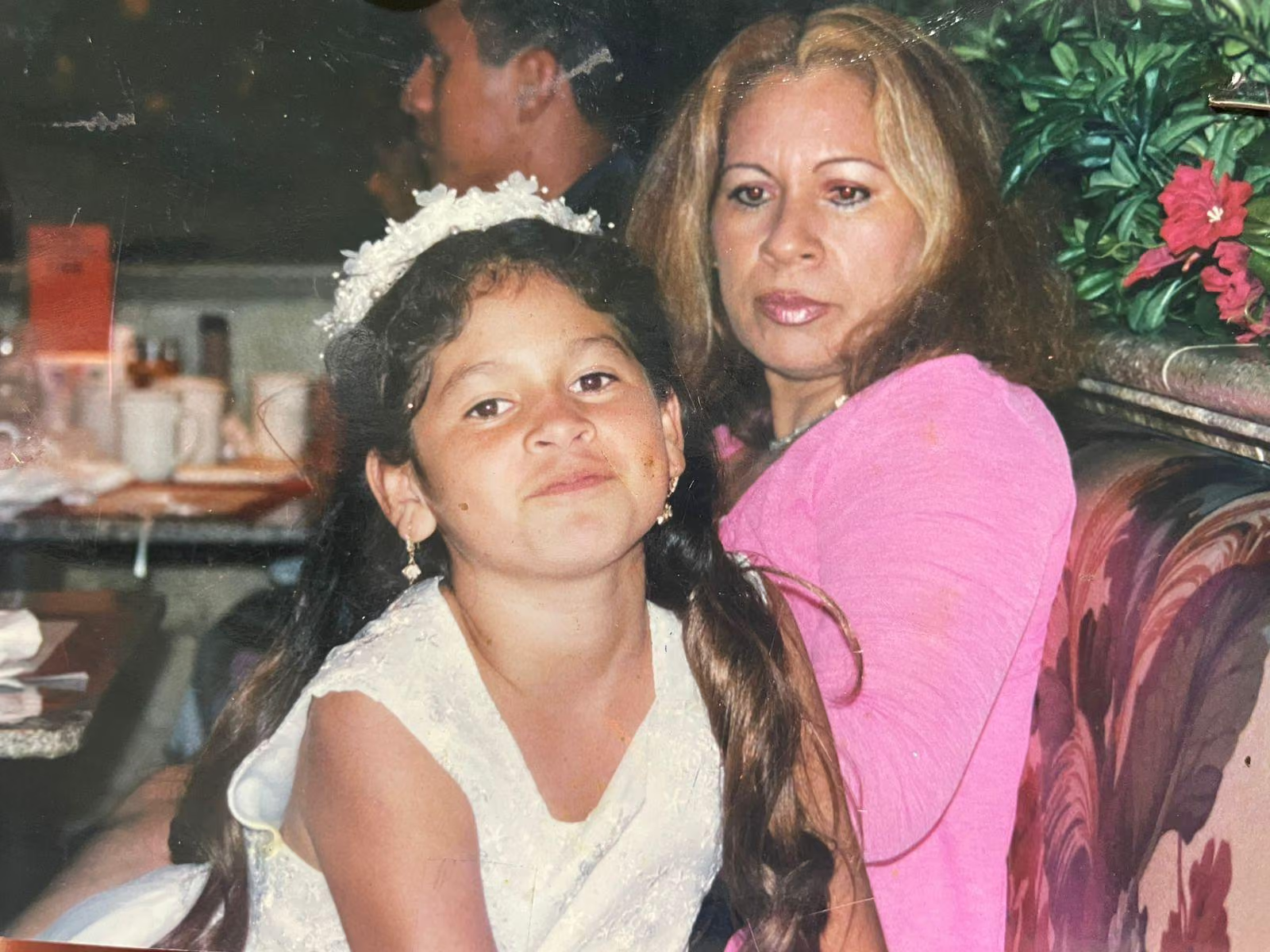
The restaurant didn’t have a name at first, but it became María Jetzabel when her daughter was born. Josefina worked there for about ten years before leaving for the United States. Her daughter was four; her son was six. “I went for fifteen years,” she said. “I worked cleaning houses.”
She left the restaurant with her brother while she was gone. When she returned to Troncones in 2011, she started again—working, building, adding, fixing. Much of what stands now was rebuilt or expanded after she came back, including new areas added after the pandemic. “I started working and working,” she said. “And I built all of this.”
Joefina speaks about those years in the United States without bitterness. Mostly she speaks with gratitude. “I had a lot of help,” she said. “I respect the Americans very much. They helped me a lot. My children learned English. I feel happy for what I achieved.”
The food she cooks here now has stayed close to what she started with. She says her cooking is different from many newer places in town. “My food is, like, from the rancho,” she said. “From the ancestors.”
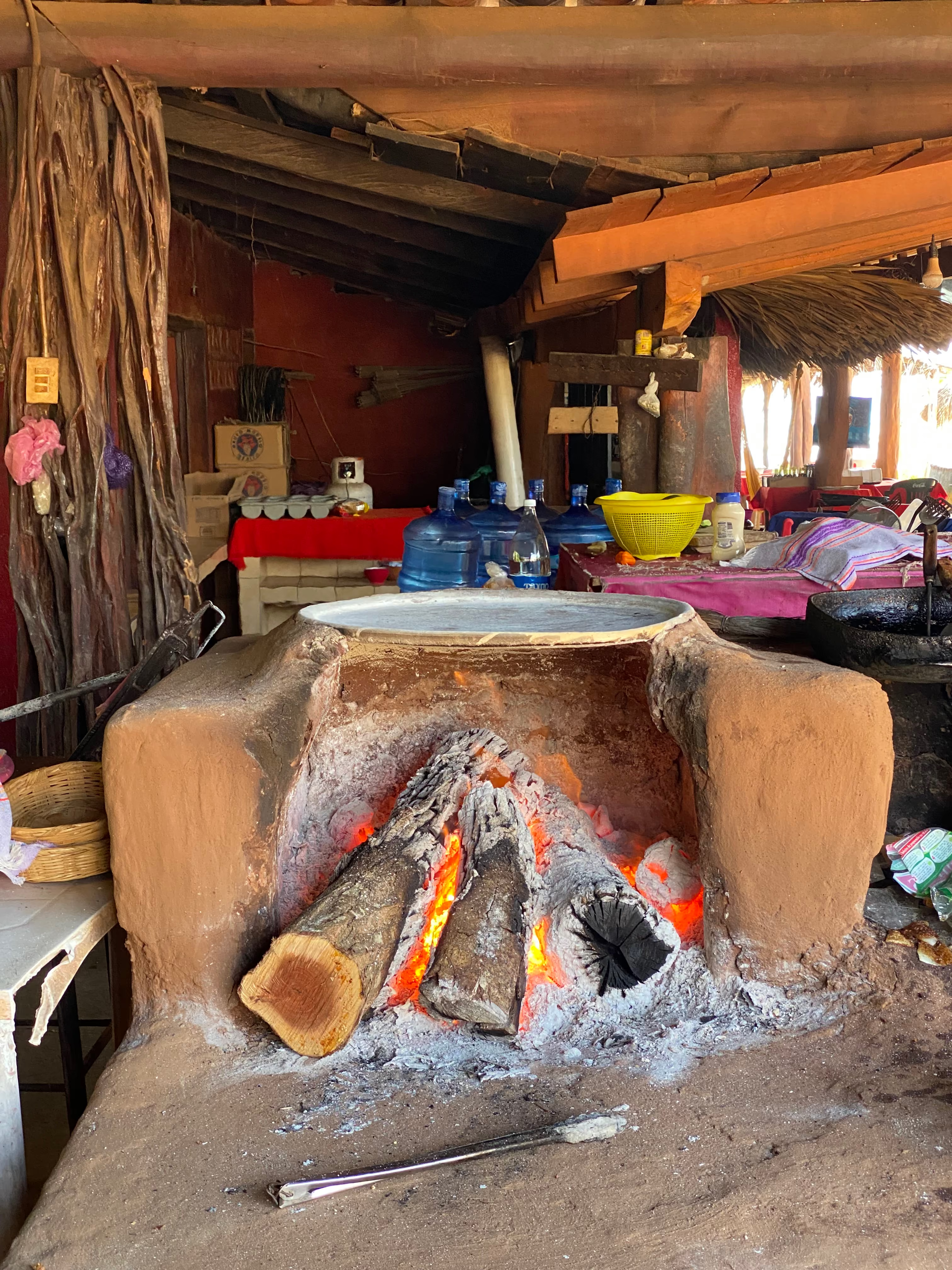
Fresh fish. Simple preparations. Tortillas hot off the comal. Everything is made when it’s ordered. “I don’t have anything prepared ahead,” Josefina said. “Everything is made at the moment.”
She still prefers cooking fish over flame instead of on a flat griddle. “When you cook a fish over the fire,” she said, “it comes out better.” Josefina fries her fish in a pan over embers, adds a sauce she’s already made, lets it come to a boil and sends it out hot. It’s a method built on timing and repetition, not presentation. She doesn’t want the food to sit. She doesn’t want it to get complicated. “If the ingredients are fresh,” Josefina said, “that’s enough.”
Her daughter’s kitchen nearby offers something else entirely. Tostilocos. Ramen. Snacks that didn’t exist here years ago. Josefina sees it as a natural change. “For her, it was something new,” she said. “Something that wasn’t here.”
Troncones has grown. More restaurants. More visitors. More expectations. Josefina knows that. She just doesn’t feel the need to chase every shift or fashion. “People still come. They come and they return,” she said, “because everything is fresh.”

Some visitors ask for fish tacos or shrimp tacos. Josefina makes them. Others want guacamole. Josefina makes it fresh. She doesn’t resist what people ask for—she just keeps her way of cooking intact.
At one point in our conversation, Josefina remembered some of the early visitors who used to come when the town was still quiet. One couple would come regularly for oysters, even when they didn’t speak any Spanish at all. She and the others working in the restaurant helped teach them. “He wanted to learn Spanish,” she said, laughing. “So, the young guys taught him puro groserías.” Bad words. He loved it, she said. They became part of the community. Over time, many visitors did.
Now Josefina describes herself as “a little retired.” She doesn’t fully step away from the kitchen. When the restaurant gets busy, she steps in. Otherwise, she watches closely. “I watch the food when it comes out,” she said. “I see if it needs something. I show them how I want it done.”
Josefina teaches the younger women in the kitchen her way—the way she’s done things for decades. “This is how it’s done,” she said. “Like this. Because that’s how I like it. That’s how people like it.” Josefina says she’ll cook as long as she can. “Mientras pueda,” she said. “As long as I’m able.”
.avif)
After all these years cooking for other people, her favorite food for herself is still the simplest. “I make a plate of frijoles de la olla [typically pinto or black beans simmered with water, garlic, onion, and salt, often flavored with epazote] with boiled eggs,” she said. “And with that, I’m content.” She makes a molcajete salsa [tomatoes, tomatillos, serrano or jalapeño peppers, garlic, onion, and cilantro]. Corn tortillas. Something simple and warm. Something she’s eaten since the beginning. In a town that keeps adding new menus, new kitchens and new ideas, Josefina’s fire is still going.
LET’S TRY THIS
As traditional as Josephine is, it’s no surprise María Jetzabel does things another way. While her mother uses what’s around, María Jetzabel likes to create experiences that are fun, that challenge her. Arriving in San Diego at age four, she discovered foods that were, as she says, “a blast for my taste buds. In the U.S., we love a good mixture of food. One day I would have Chinese, and another day it would be gyros and baklava. In Mexico, we have rice and beans, and those are used in almost every plate, but what we love the most is a big pot of mole.”
For those who may not know: mole—MOH-lay—is the mother sauce of Mexican cuisine—made from a long-simmering mix of ingredients, each one having a different property—typically, chiles (usually two different types); sour (tomatoes or tomatillos); sweet (dried fruits or sugar); spices; and thickeners (bread, nuts or seeds).
A willingness to combine and blend—to let flavors and experience melt into something new—is part of María Jetzabel’s creativity and entrepreneurial talent, in the kitchen and out. Recently, on her Facebook feed, she promoted Chinese dumplings one day, chocolate-covered strawberries for Valentine’s Day, a movie night and all sorts of coffee drinks and milkshakes.
.avif)
In describing her “training” in the kitchen, María Jetzabel says, “My mom is my greatest influence. I learned that cooking simple eggs has its tricks. I remember I would always call my mom for step-by-step instructions on how to make mole, barbacoa chiles rellenos—chilies filled with beef—the list goes on and on. To this day, I still ask her for recipes.”
María Jetzabel is quick to count her blessings at having her mom as a resource and for having Troncones as a home base. She says, “Coming back to Troncones was a bit hard at first. I was 18. I had to adapt from being in a big city to being in a small town where you literally know every person. With time, I’ve learned to value how lucky I am to live in such a paradise, a town that’s a vacation to most, but a home for me.”
One of the San Diego food curiosities, María Jetzabel has brought home to Troncones is Tostilocos. In describing how that happened, María Jetzabel says, “The first time I had Tostilocos was when I was around 10 years old. Our next-door neighbor was selling them from her house. The sweet and spicy mix was so good that I remembered everything that was in them—cucumber, jícama, Japanese peanuts, pickled pork skin, tamarind candy, mango, chamoy sauce and hot sauce—and I decided to make them myself 15 years later. I started selling Tostilocos here 11 years ago and it’s become very popular.
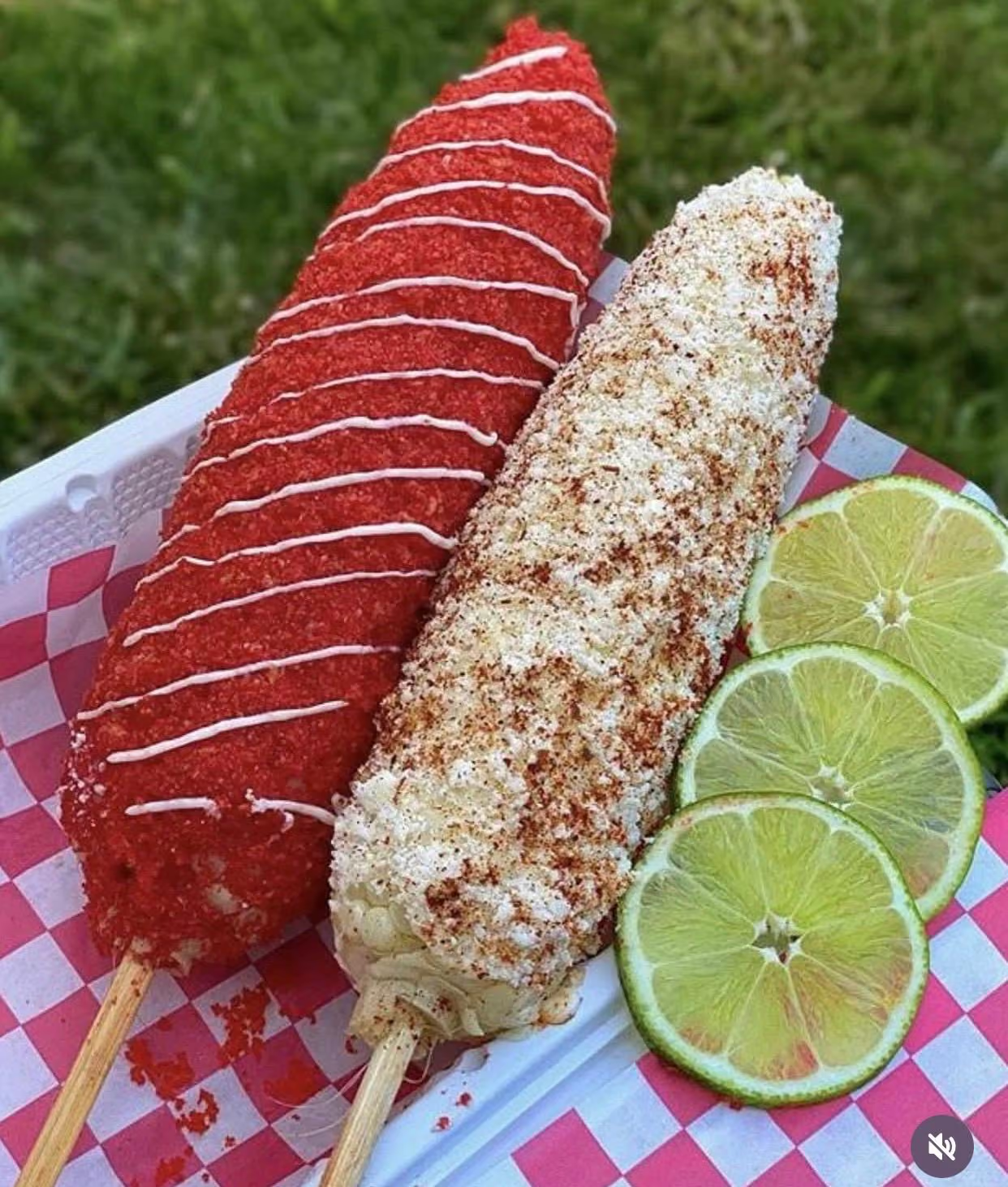
Tostilokera, her chuchuería [snack shop] immediately next to her mother’s restaurant, has waffles, coated elote, frappuccino, ramen with nachos, as well as burritos and hamburgers. Looking ahead to things she wants to do in the future, María Jetzabel says, “I would love to extend my menu in that ways that have a lot more options for every customer. You know, snacks that can be enjoyed by watching a movie under the stars on a Monday night.”
.avif)
In much the same way that Josefina brings the heat, María Jetzabel’s brings a sense of cool to everything she does. You can see that on a Facebook page she and her husband have set up, where the pair make videos promoting local businesses in Troncones, Majahua, La Boca and Saladita. Why does she do that? It’s simple. “For fun,” she says.

LINKS
Maria Jetzabel Restaurant: https://www.facebook.com/MariaJetzabelTroncones.GRO33
Tostilokera: https://www.instagram.com/tostilokera
Local business videos: https://www.facebook.com/profile.php?id=100067247910463
The Fruit Truck
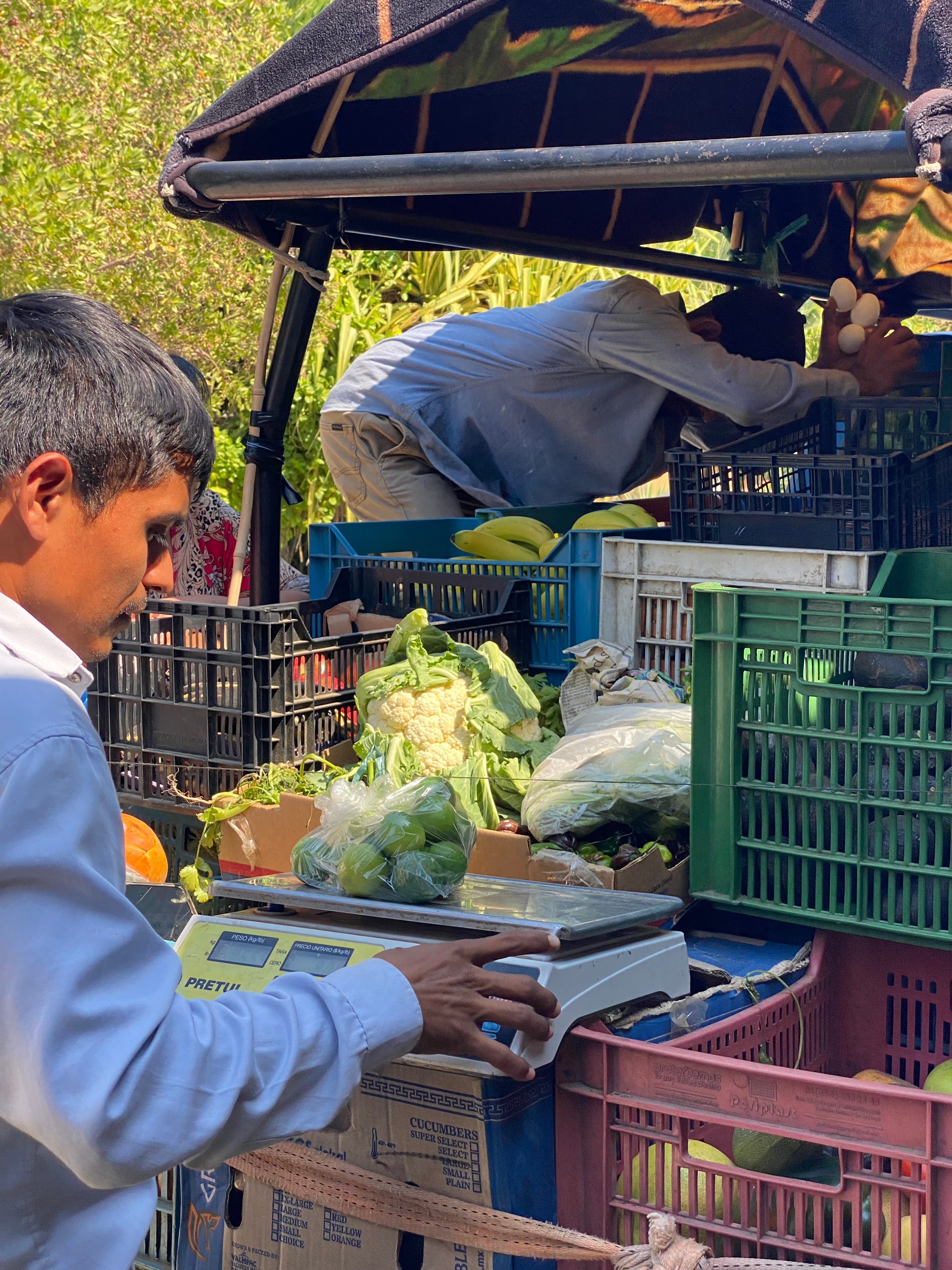
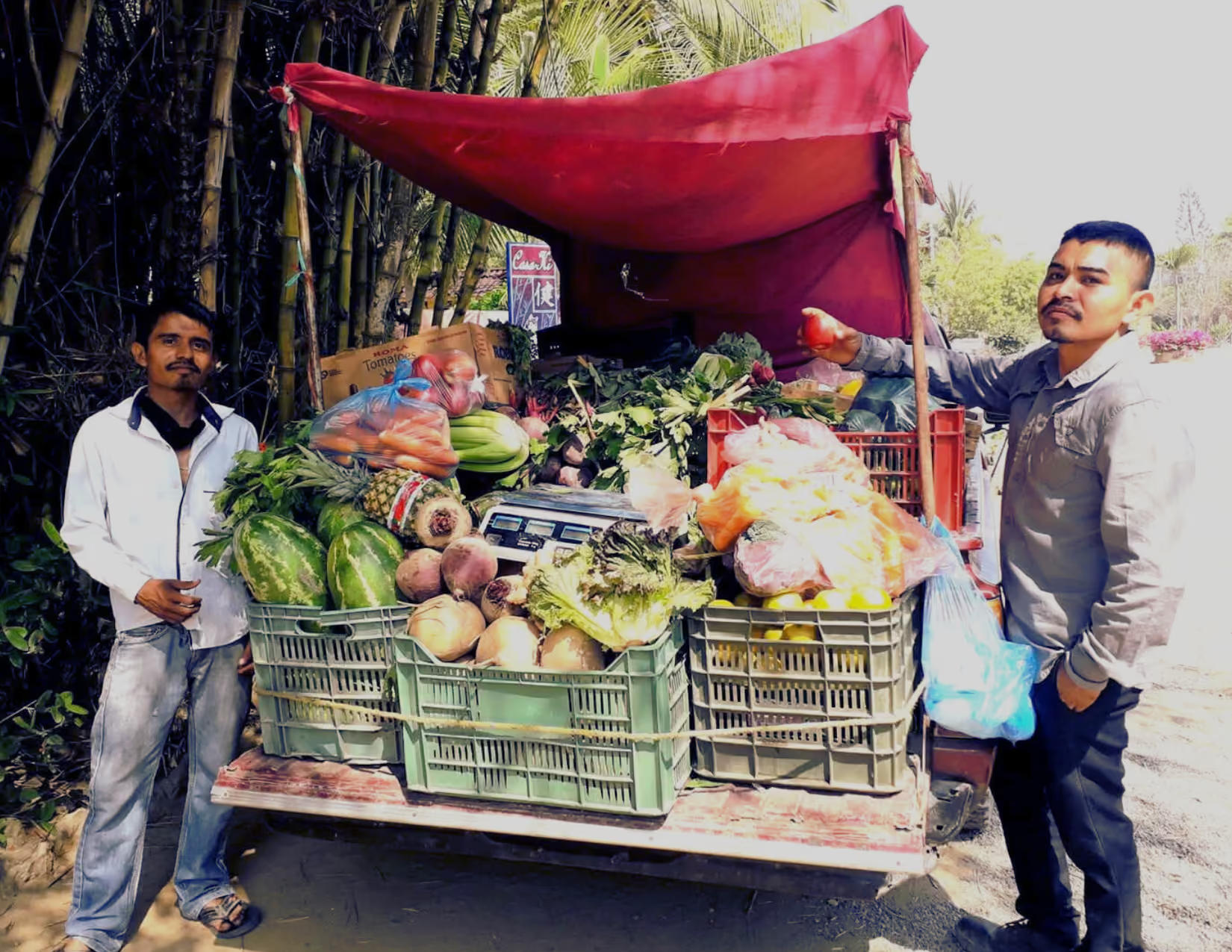
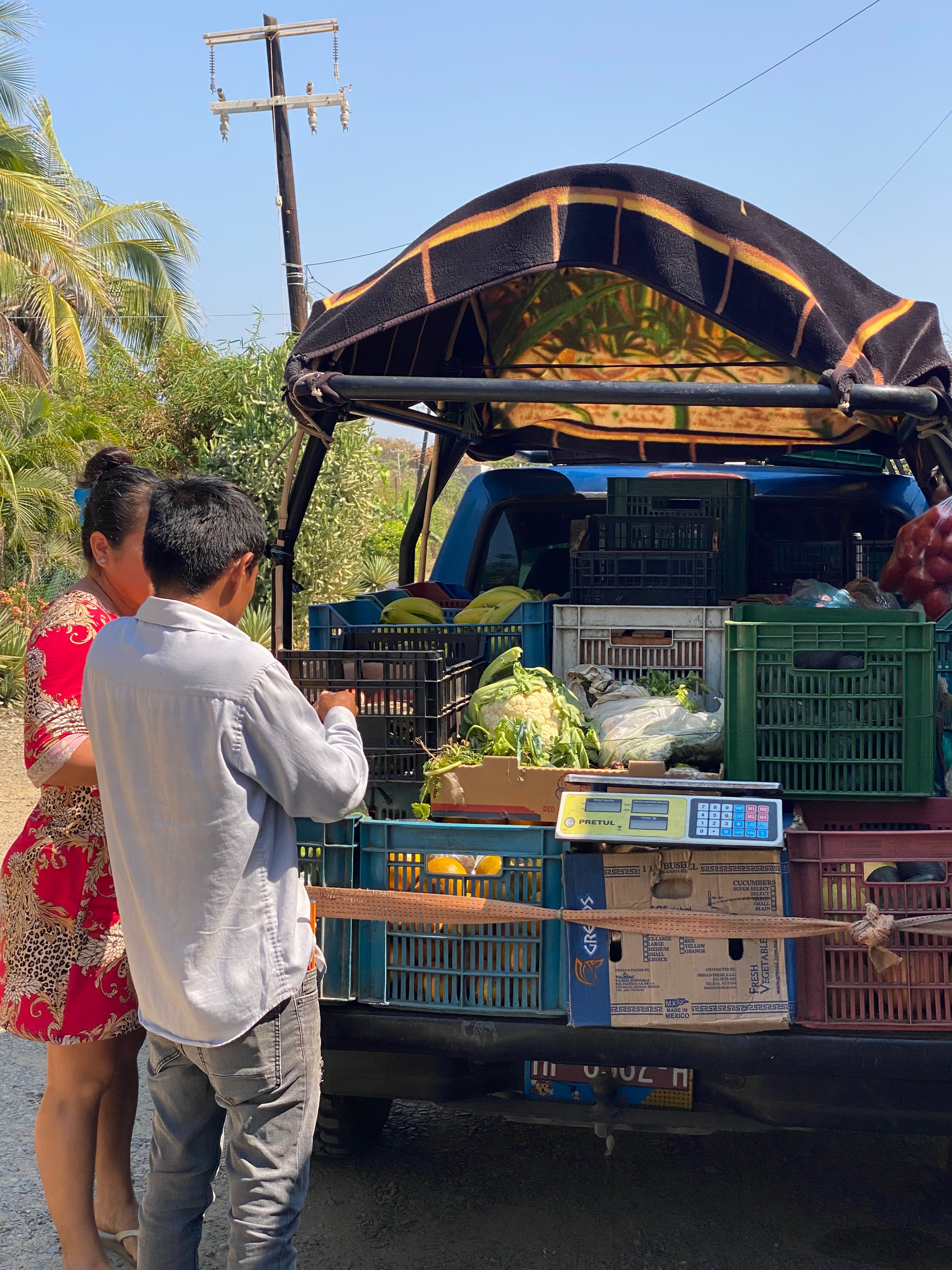
For more than two decades, a fruit truck has parked along the beach road in Troncones and opened its tailgate to whoever walks up. People gather—neighbors, cooks, surfers, someone in a bikini with a basket, someone still in pajamas. There’s chatter, laughter, a little waiting, a little leaning on the tailgate, while fruits and vegetables get weighed on the scale.
Within minutes after parking, the back of the truck becomes a small open-air market—and, sometimes, a kind of stage. Brayan and Jony climb up and down the truck, passing fruit hand-to-hand, stacking and restacking plastic bins full of produce, joking, recommending, slicing open a mango or some jícama so someone can taste something new.
For many people here, it’s the closest thing to a neighborhood market. For others, it’s a weekly ritual. For Brayan and Jony, it’s family work that started long before most of the houses along this road existed.
The route started with their father, Don Patricio—known around Troncones as Don Pato. It began as a necessity. “Back then there weren't any stores here,” Bryan says. “People needed fruit. So, my dad started coming.”

Over time, it became an essential part of the Troncones scene. Don Pato is partially retired now, living closer to Zihuatanejo, still around and still selling occasionally, but Brayan and Jony run the regular route.
They come through Troncones three days a week—Tuesday, Friday, Sunday—bringing produce, mainly from the mercado in Zihuatanejo. Some things come from nearby farms. Sometimes growers contact them directly if they have something to move.
“Most of it comes from the market,” Jony says. “But we also get calls from farmers. And people send us messages with orders.”
Those requests might be for asparagus, cherry tomatoes, yellow lemons, greens—whatever someone is looking for that week. Lately, more people have been asking for arugula. “Sometimes that comes from a local supplier,” he says. “But almost always from Puebla. We order ours in advance. It comes in small amounts, so we bring it for the people who ask for it.”
They’ve learned their customers’ preferences. “We already know what each person likes,” Jony says. “How ripe. How big. When we choose at the market, we’re choosing with someone in mind.”
Fruit gets weighed right there on the tailgate. A bag of limes gets passed down. Someone asks about papayas—which often comes from Lagunillas. Someone else asks what to do with jícama.
Jony says, “We tell them to grate it with carrot, lime, salt. Simple. If someone hasn’t tried something, we cut it open so they can taste. It’s better if they try it.”
MANGOES! EVERYONE WANTS MANGOES!
“When people say they’re coming to Guerrero, they say they’re coming to eat a mango,” says Brayan, adding, “Even when it’s not the season, everyone asks for mangoes. When we can find them, we bring them.”
After years on the route, many customers feel less like customers and more like friends. “We’ve known people here for ten years, maybe more,” Jony says. “Some have grown old here. Some have passed away. Others come back every year. So, it’s not just a business, there are true friendships.”
The job can sometimes means stepping onto a property to deliver an order. Jony says, “There’s a saying, ‘cuando vas a casa ajena, eres totalmente ciego’ [when you go into someone else’s house, you’re blind]. You go only to deliver. You don’t look around. People trust us. We respect that.”
Before reliable cellular service, houses used to have signs to let Don Pato know what they needed. Even now, you can still see some of those signs along the road—reading verduras or frutas. If someone goes looking for the truck early and misses it, they might put a sign out front so Brayan and Jony know to stop. Some families also give them permission to enter their property, and the signs on the property can be specific—you can come in; don’t come in; don’t shout because someone is sleeping; I’m in a meeting; or enjoying a private day. It’s a simple system that’s grown over time.
When we talk about the signs, Jony remembers one family in particular—frequent clients from the United States, who were fostering children. “The kids made a hand-drawn fruit sign,” he says. “So, we would know to stop.” Before the family eventually left Troncones, they told him it would be their last time to purchase. He kept the sign.
“For me, the fruit sign they decorated was something very sad,” he says. “Because they’re not only clients. They’d almost become like family because of the appreciation and affection we shared. We can’t really stay in contact because of their work and for the protection of the children, but I hope they’re well. Most people who visit here come back one way or another. It would be very nice if they returned.”
Outside of work, both brothers keep busy with family. Brayan has two daughters. Jony has four children. “Family takes most of our time,” Jony says. “That’s our hobby.” He said used to take one of his daughters to martial arts classes in the afternoons. “She was a ballerina first,” he explained, adding, “She was very flexible. Then, she got into martial arts. But now, she has lots of homework. And when I get home, which is sometimes quite late, it’s family time.”
Troncones has changed since their father first started coming. “There’s more work now,” Brayan says. “More houses, more people. That’s good for locals. But it’s important to take care of the nature here. That’s why people come.”
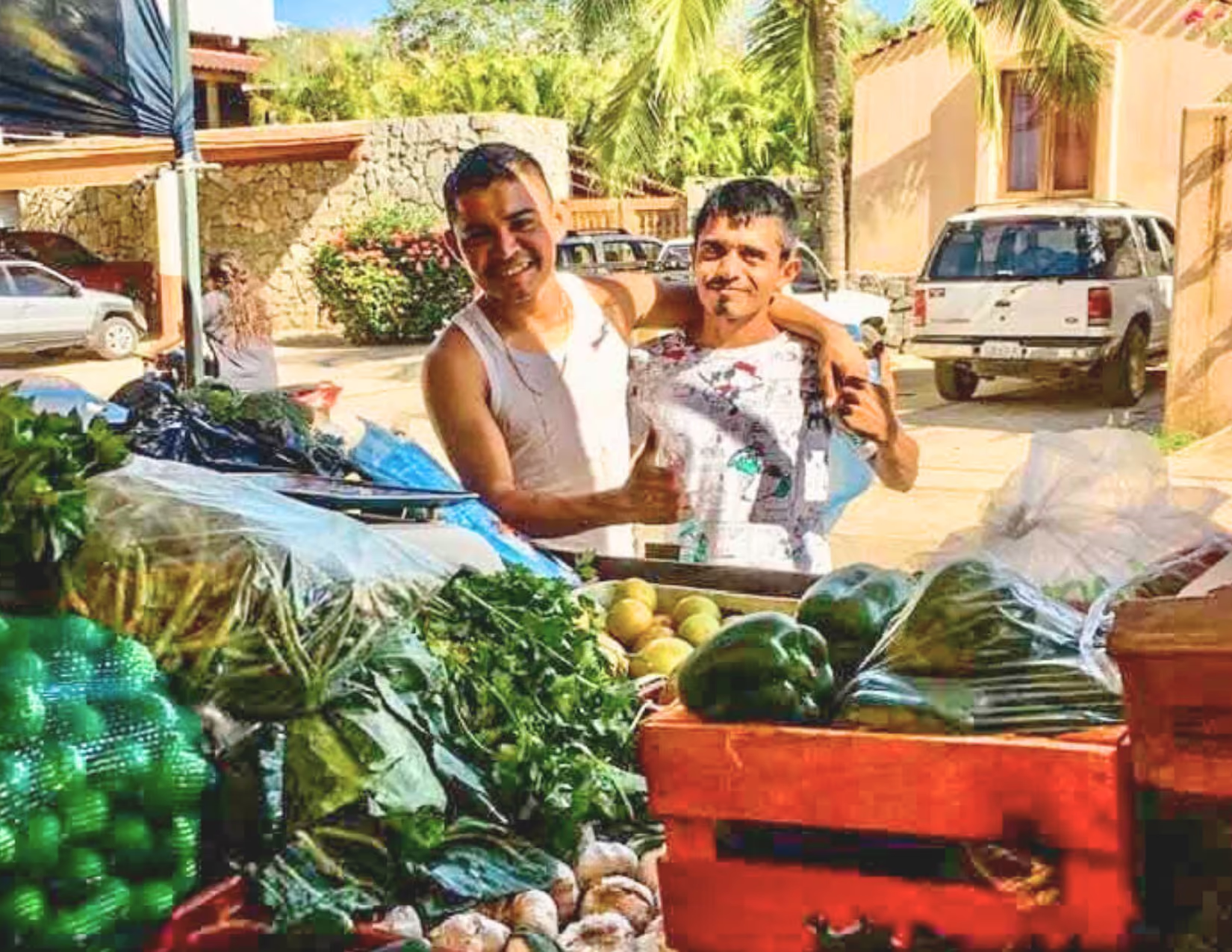
They’ve thought about expanding someday, maybe adding another truck, but they’re cautious. “We like knowing people,” Jony says. “That part matters.”
At the back of the truck, a few more people gather. Papayas get weighed. Limes get bagged. Someone asks again about mangoes. Someone asks how to prepare something they’ve never tried. There’s conversation, a little laughter, and another order gets filled.
What began as a way to bring fresh produce into a town without stores, without refrigeration and storage still works. It’s become part of the weekly rhythm here—a place to pick up fresh fruits and veggies, place an order, practice Spanish, and catch up with neighbors or meet new friends. Three days a week, the truck is here. The tailgate down. Jony and Brayan are there. The routine and camaraderie continue.

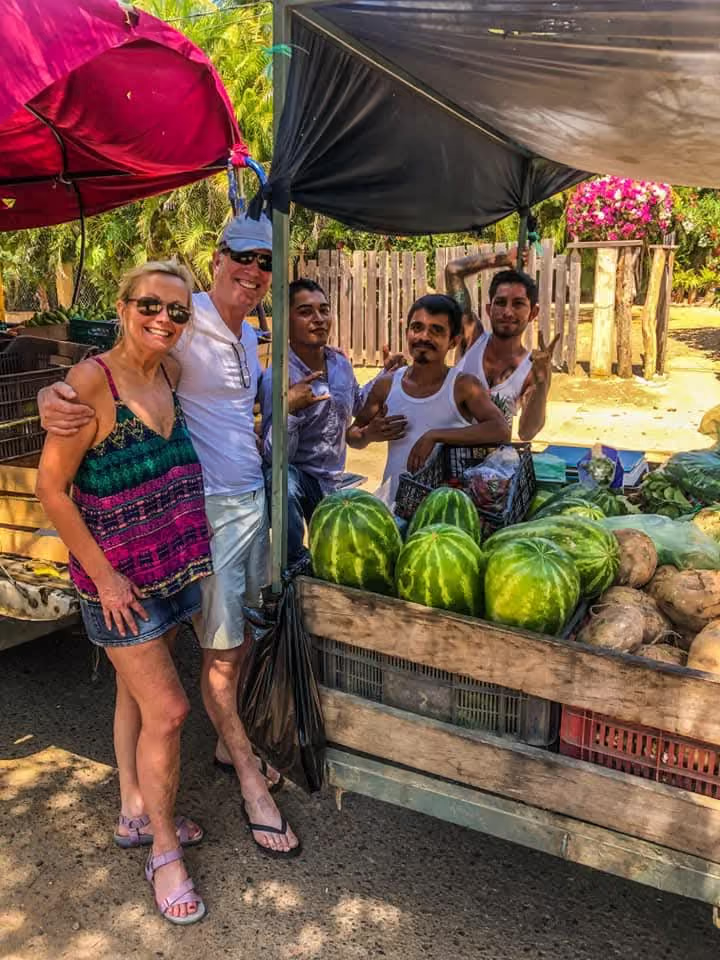
Note: This interview was done mostly in Spanish. The brothers look forward to practicing and learning more English. There’s another brother—Kevin—who occasionally hops on the truck, too. He was not there the day I got together with Brayan and Jony. The brothers wanted him mentioned here!
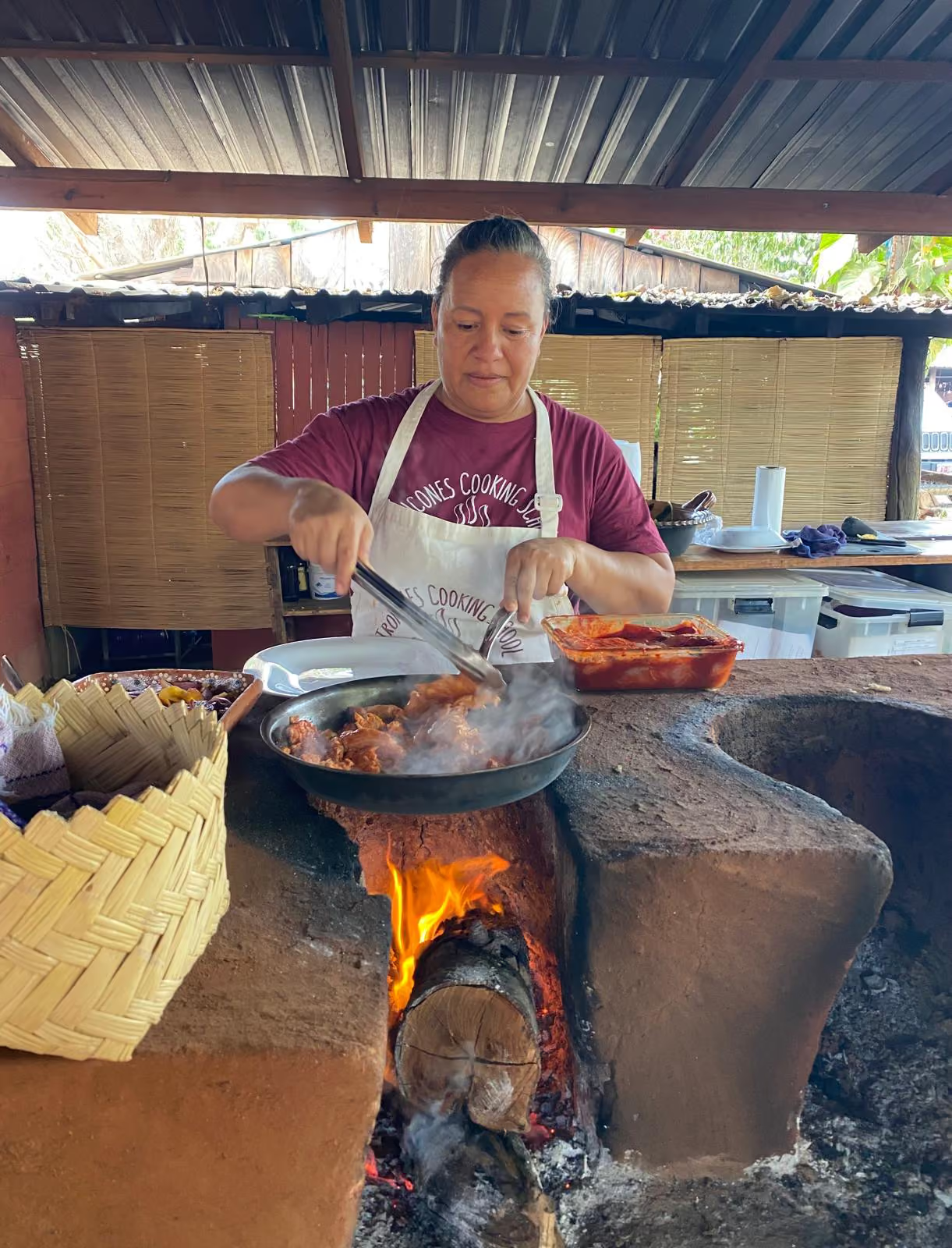
Inside the Troncones Cooking School
Stepping into a traditional outdoor Mexican kitchen is a remarkable experience. The smell of wood burning, the heat from the open flame, the smoke clinging to clay and earth—it feels like a time capsule. I might be a little jaded; I’ve seen many kitchens like this. I was a chef for many years in New York and have always been a kitchen voyeur. I love looking into kitchens. A tour is even better.

The first time I ate at Rufi’s was probably fifteen years ago. Back then it was a classic dirt-floor operation—real Mexican food, cheap, fresh, fast and deeply family-run. It still is. Rufi’s remains one of Troncones’ most popular traditional restaurants, appealing equally to locals, expats and visitors. The menu is straightforward and beloved: mole, enchiladas, pozole on Thursdays, and the unexpectedly famous stuffed baked potatoes.
Just on the other side of the open-air restaurant wall is where the Troncones Cooking School has its classes. While the restaurant has been updated to cement floors, the kitchen next door still has its immaculate packed-earth floor and a traditional clay comal made of barro, fired with wood. This is where tortillas puff, salsas deepen and the school quietly does its work.
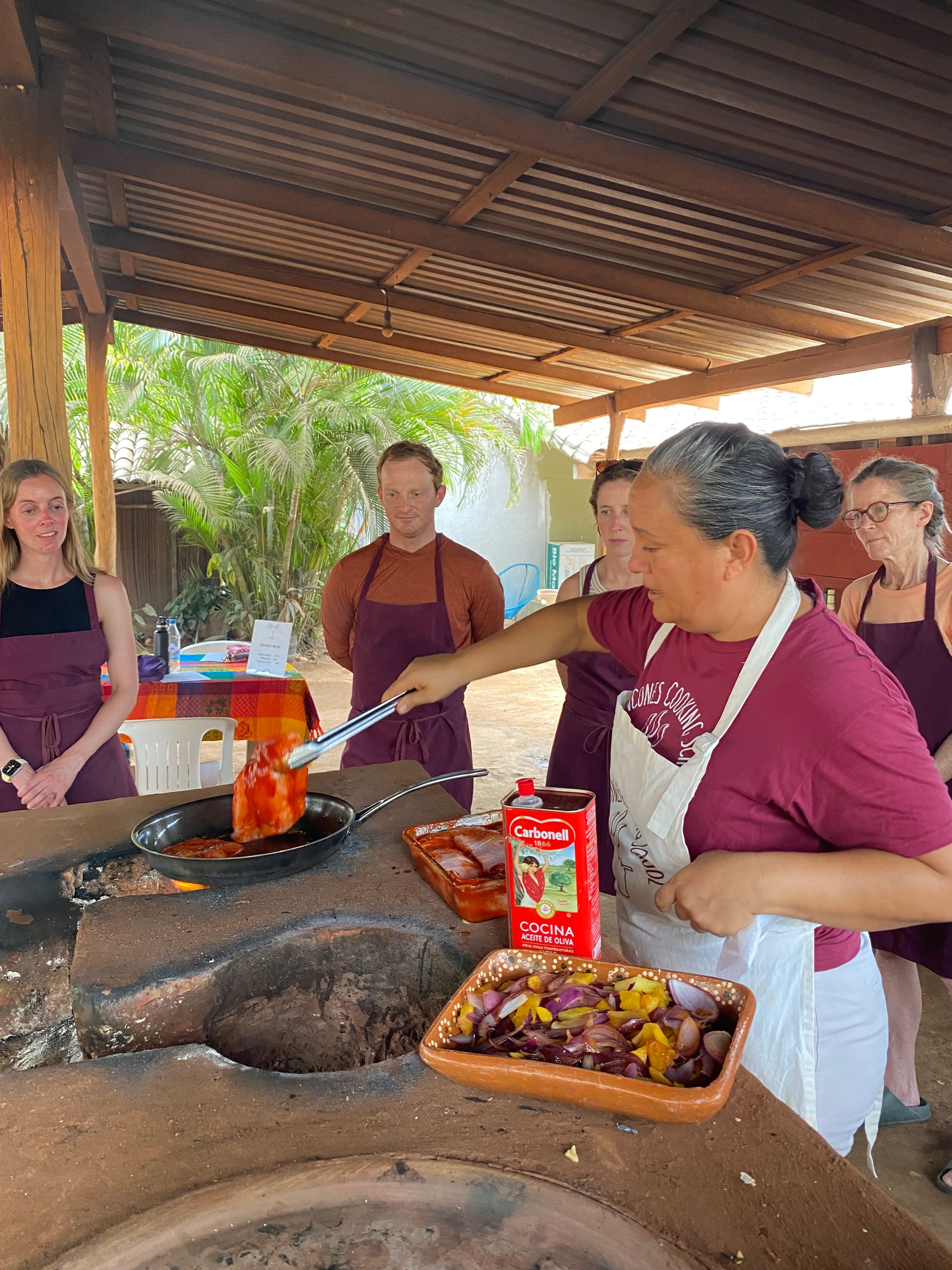
The Troncones Cooking School was founded in February 2023 by the two daughters of Doña Rufi—Anai and Mine—and their niece Araceli—encouraged by a close friend who urged them to finally open their kitchen to others. The idea had existed for years, but, as they explain, it wasn’t until then that the conditions were right.
Rufina, they say with reverence, is their mother, their example and their teacher. Their parents arrived in Troncones in 1980. Mine was very young; Anai was born here. Cooking started early, helping their mother feed the family, learning traditional techniques by repetition rather than instruction. Over time, they added their own sensibility while keeping the foundation intact.
Their classes are small, hands-on and practical. I observed two: a salsa class and a fish taco class. When I arrived at the end of the salsa class, everyone was a little tipsy, happy and clearly proud. Students had been grinding chiles, tomatoes and herbs by hand using a molcajete—a stone mortar and pestle—and several remarked that they genuinely felt they could recreate what they’d learned back home. One woman noted that even though Mine’s English wasn’t strong, everything was easy to understand—and that this only added to the authenticity of the experience.
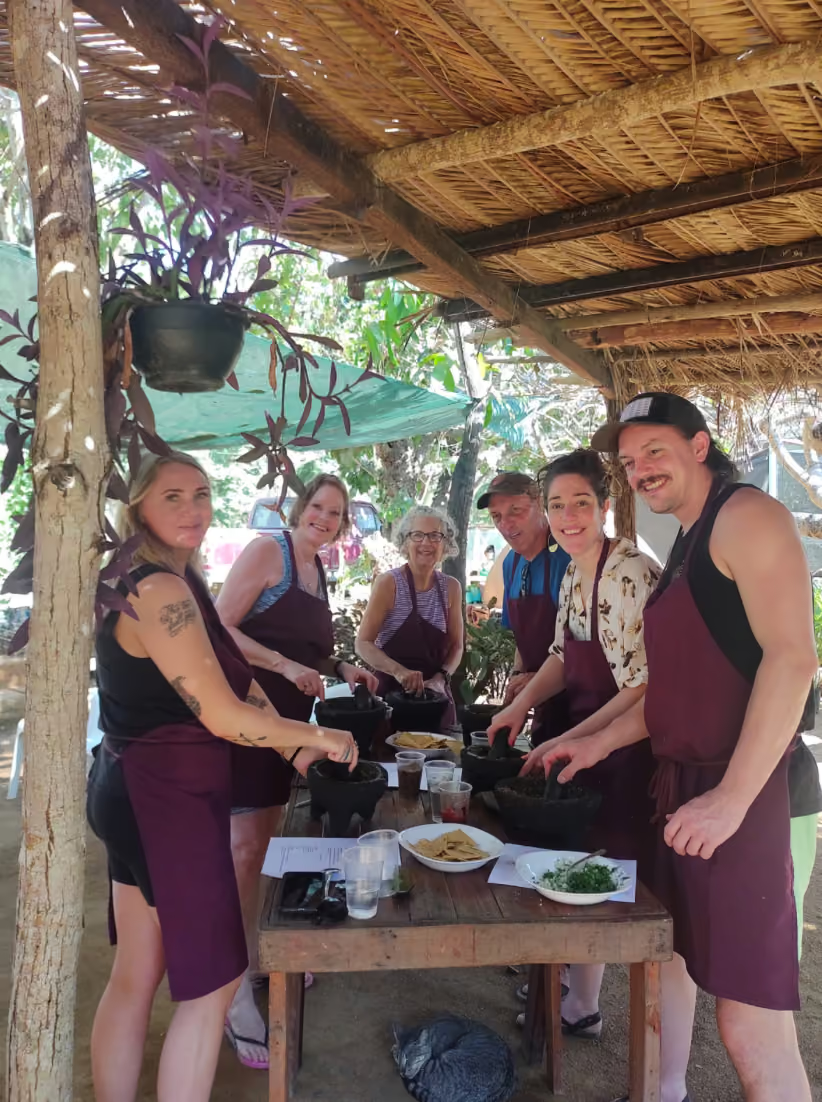
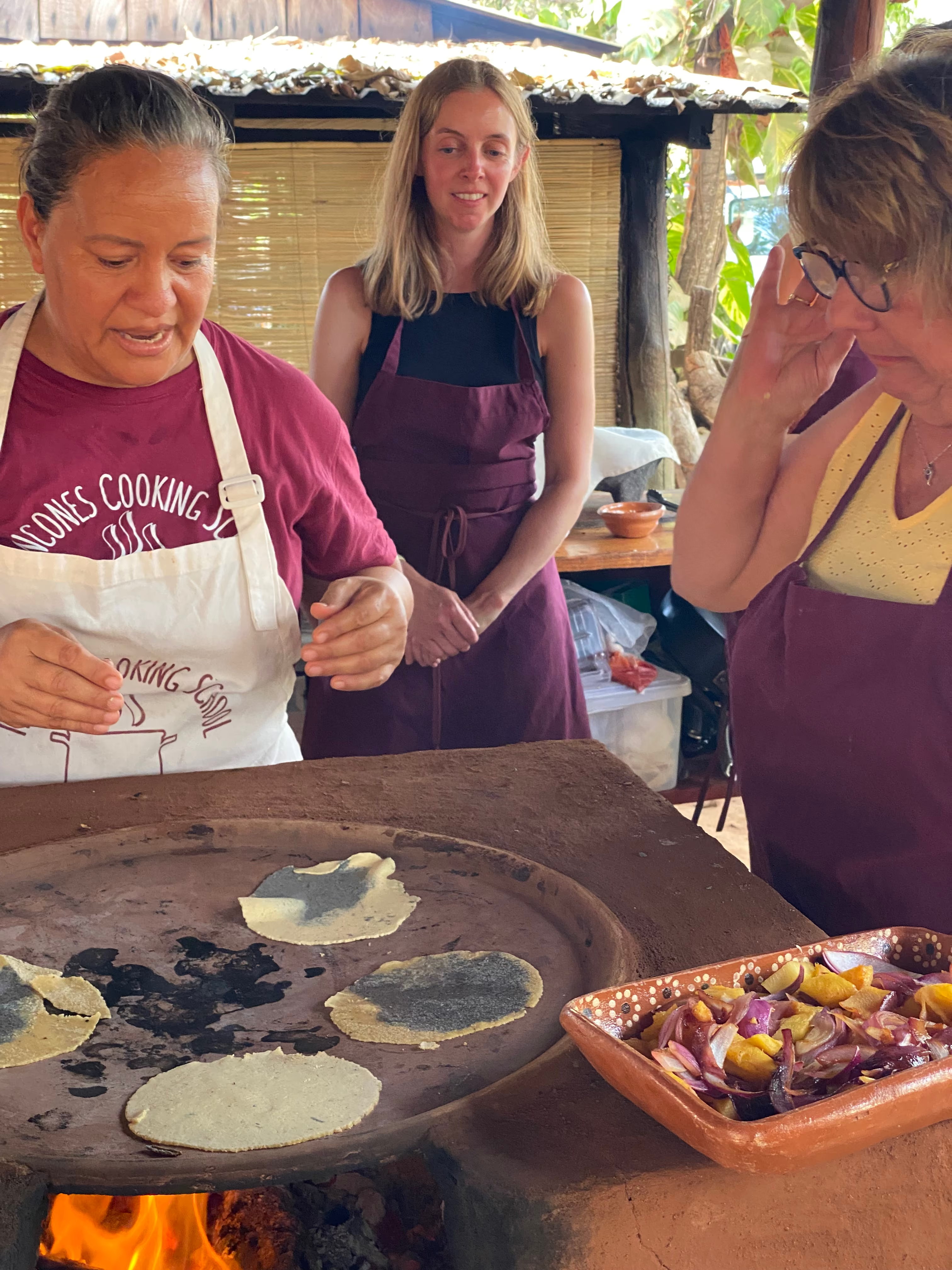
The fish taco class had a more focused energy. Students worked carefully, turning out beautiful bi-color tortillas on the comal while Anai led the group. Later, everyone sat down to eat marinated mahi mahi with pineapple and roasted peppers, alongside three salsas labeled hot, hotter, and hottest.

The sisters prefer cooking over a traditional wood fire, explaining that it adds flavor to everything. The clay comal is cured with garlic so tortillas don’t stick, and they typically cook using espino wood. It’s slower, hotter and more aromatic.
Participants often ask about the community and are surprised by how much Troncones has grown and changed. The school is open seasonally, from November through April, and remains the only cooking school of its kind in Troncones.
Their goals are straightforward: to reach more people who want to learn traditional Mexican cooking techniques and to share their love of good food. Nothing fancy. Nothing performative. Just a family kitchen. And the confidence that comes from teaching something special, the practiced and knowing ways of several generations.
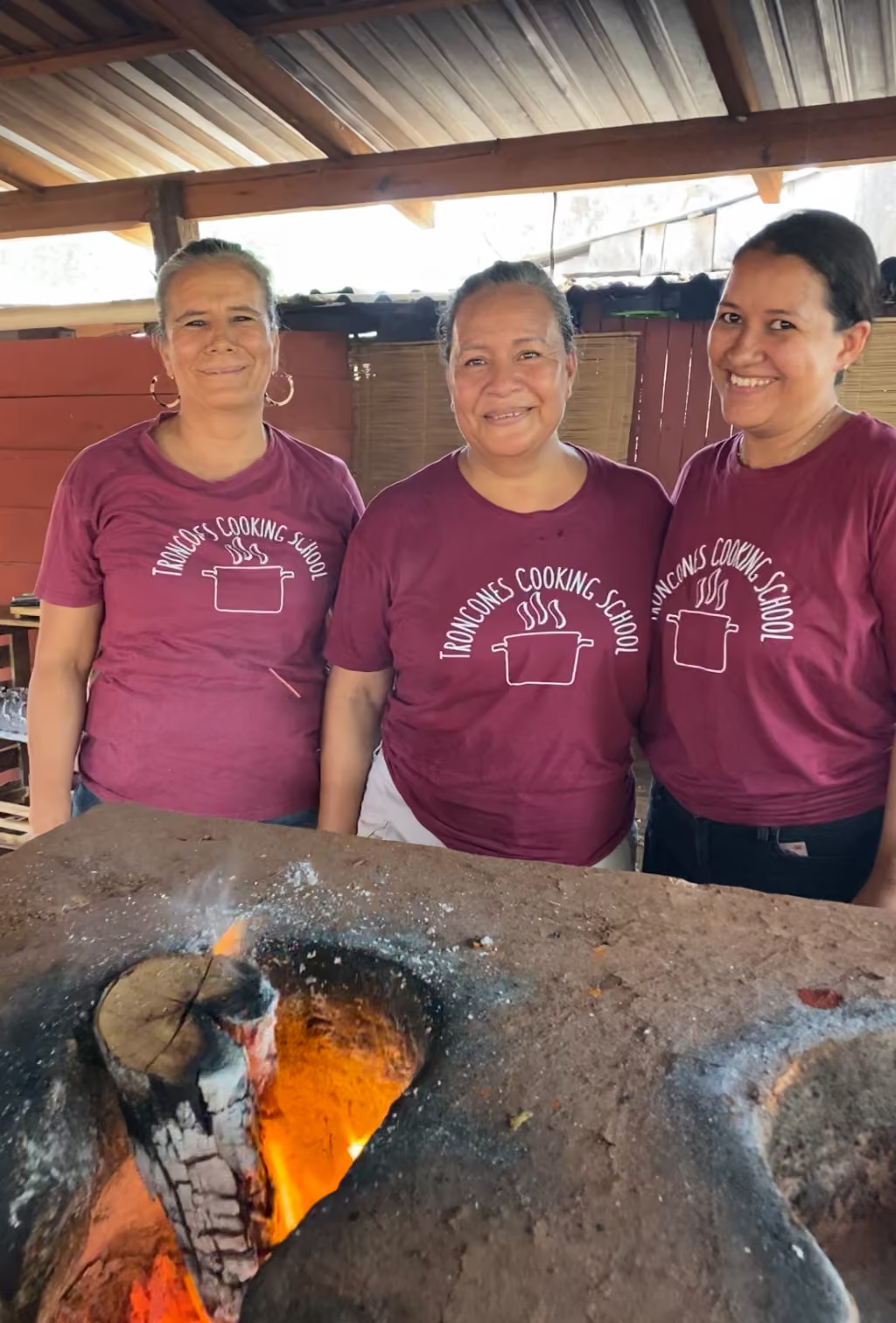
COOKING CLASS (WHAT TO KNOW)
Classes are intentionally kept small, usually between six and ten students, which allows everyone to participate directly at the comal and prep table. The school offers a rotating mix of classes, including salsas, handmade tortillas, fish tacos, chile rellenos, mole, and other traditional dishes tied to local cooking. Many classes sell out in advance, particularly during high season, and private group classes are occasionally offered when schedules allow.
Visit http://www.tronconescookingschool.com/ to learn more and to register.
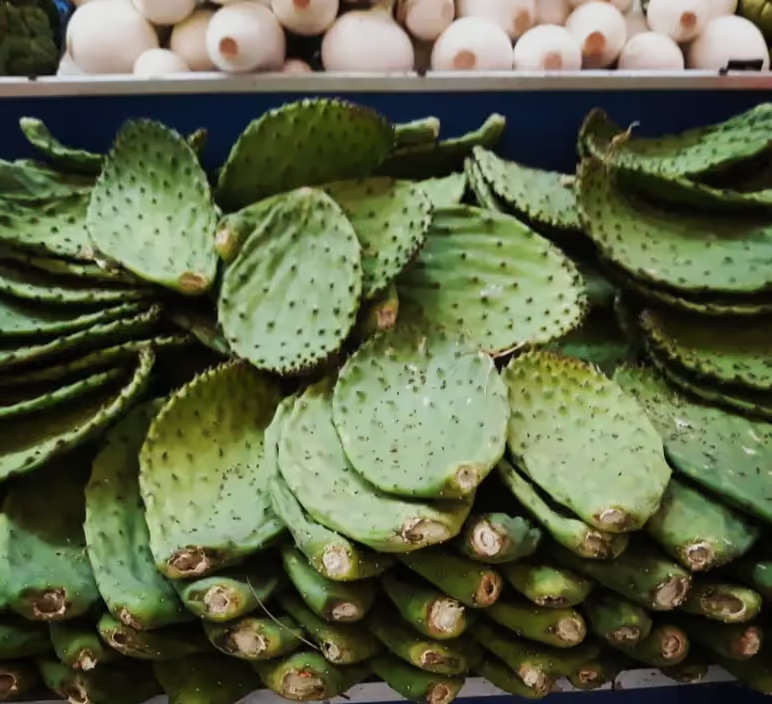
Eating Cactus
The first time I ate cactus wasn’t in Troncones. It was on our drive from New York, in whatever part of northern Mexico we landed in after way too many hours of driving. A weird little town, a weirder little hotel.
For breakfast the hotel served scrambled eggs with something I’d never seen in my life—round, green, meaty, delicate. A flower, but not a flower. A vegetable, but not exactly that either. Cactus buds. Capullos or Chullos. I’ve never stopped thinking about them.

They were tender but sturdy, like a squash blossom with more texture. Slightly tangy, a little floral, and so unexpectedly delicious that I’ve been searching for them ever since. Sometimes I’ll stare at a random cactus patch and spot those unopened buds, wondering how on earth you pick them, without damaging the plant or myself.
Mexico’s relationship with edible cactus goes back thousands of years. Long before wheat, rice, or European vegetables arrived, Indigenous communities relied on what the cactus provided: pads for everyday meals, fruits for drinks and sweets, buds and flowers in spring. Cactus wasn’t unusual—it was practical, abundant and part of the landscape. It still is.
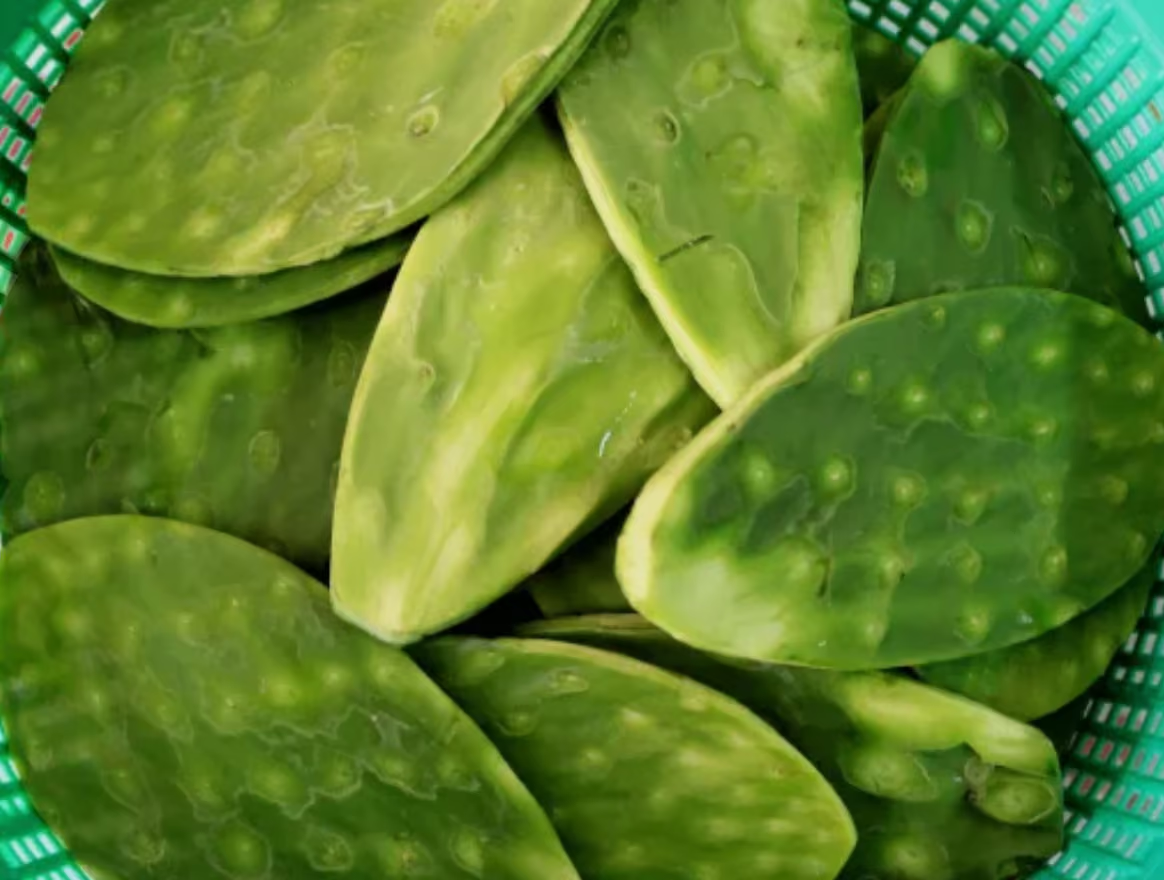
Here on the coast, our edible-cactus world is simpler than in the high northern deserts. We mostly rely on three things here—young nopal pads, seasonal prickly-pear fruits and verdolaga, a succulent cousin that isn’t a cactus but belongs to the same drought-tolerant family.
Nopal is the everyday cactus. People harvest the pads early, when they’re tender. A small knife cuts them free, and the spines are shaved off (by those who know how, in practiced, confident motions). Once cleaned, the pads are rinsed and cooked in the ways everyone here knows—grilled on the comal [a flat pan], diced into huevos, tossed into a fresh salsa, or simmered gently.
The flavor is mild, bright, a little citrusy, and instantly recognizable.
Prickly-pear fruits, known as tunas, show up later in the year. They’re twisted off with long poles or gloved hands, and their tiny glochids [hair-like spines] are brushed off before the fruit reaches the market. Inside they’re sweet, cooling, and full of soft-crunch seeds.

Sometimes the markets carry pitaya—dragon fruit—which also comes from a cactus. It grows inland on climbing cacti and makes its way down to the coast through farmers and vendors. Not coastal, exactly, but familiar enough to be part of the rhythm.

Verdolaga appears after the rains, in gardens and empty lots. Soft, lemony, and easy to cook, it fits into guisados naturally. It’s been part of Mexican cooking for centuries, even if no one calls it a succulent while chopping it.

Aloe also isn’t a cactus, but it grows everywhere on the coast—in yards, near kitchens, outside small farms. It’s another water-storing plant people rely on. Here it’s used mostly as medicine: the clear inner gel blended into aguas or rubbed onto sunburns and small cuts. Technically edible, but not something you sauté or tuck into a tortilla.
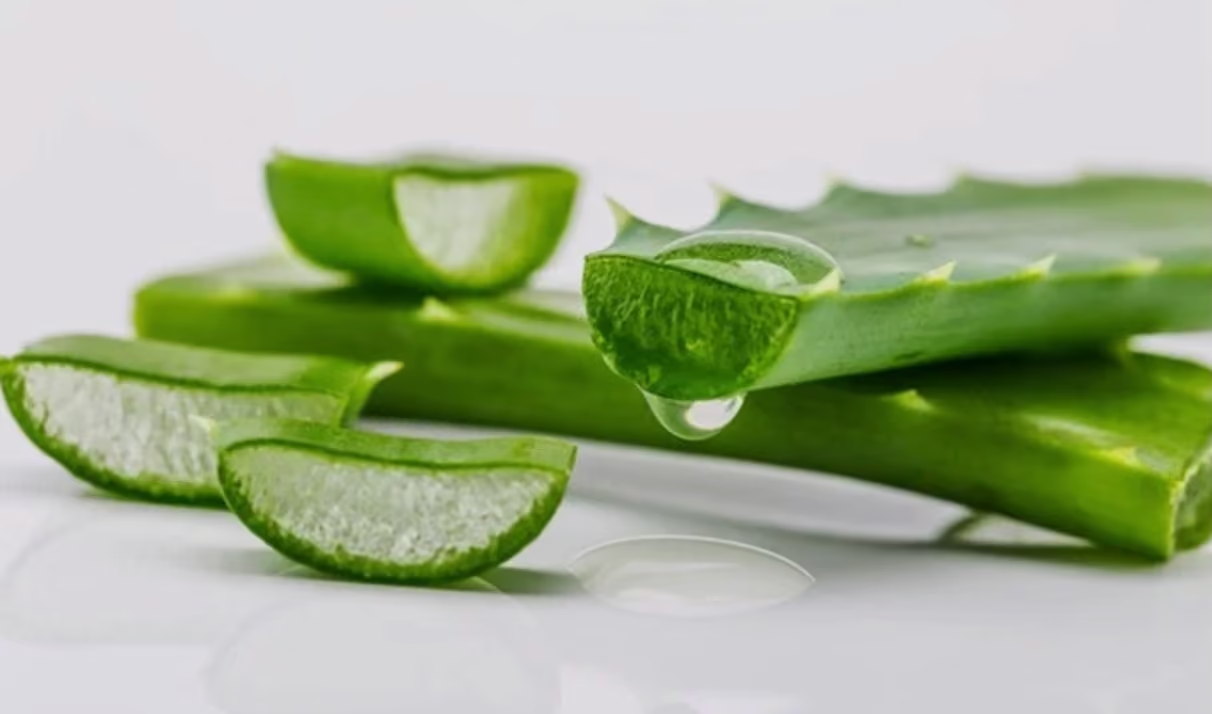
Nopal. Tunas. Pitaya. Verdolaga. Aloe. These plants have two cousins—maguey and agave—who, like aloe, aren’t part of the daily kitchen. Maguey and agave line our roads, fill our gardens and anchor dry hillsides. Troncones has plenty of varieties—blue, green and grey rosettes. People here mostly grow them for the look, though in other regions maguey has been food for thousands of years: roasted hearts, sweet young flowering stalks, leaves used to steam meats.
You also see tall columnar cacti with wide white flowers that open at night—striking plants whose fruit is traditionally eaten inland, even if no one around here seems to harvest them today. They’re part of the same long Mexican story of edible succulents, just told more quietly here along the coast.
So eating cactus isn’t dramatic or exotic. It’s practical, rooted, and everyday. It’s refreshing nourishment from plants that thrive in heat, survive with little water, and slip easily into breakfasts, salsas, and guisados. But every time I pass a comal piled with nopal or a roadside bucket of tunas, I still think about that breakfast on the drive down—the cactus buds I didn’t know existed and haven’t found again. A reminder that even familiar plants still have surprises.
NOPAL FOR BEGINNERS
A simple way to cook cactus pads at home.
- Buy young, cleaned nopal pads.
- Slice into thin strips.
- Rinse well to reduce the natural gel.
- Place the strips in a dry pan with a pinch of salt.
- Cook over medium heat until the gel evaporates and the nopal turns deep green, about 8–10 minutes.
- Add a little oil, chopped tomato, a bit of onion, and a serrano or jalapeño if you like.
- Cook until everything softens.
- Finish with lime and cilantro.
Serve with eggs, in warm tortillas, or as a simple side.
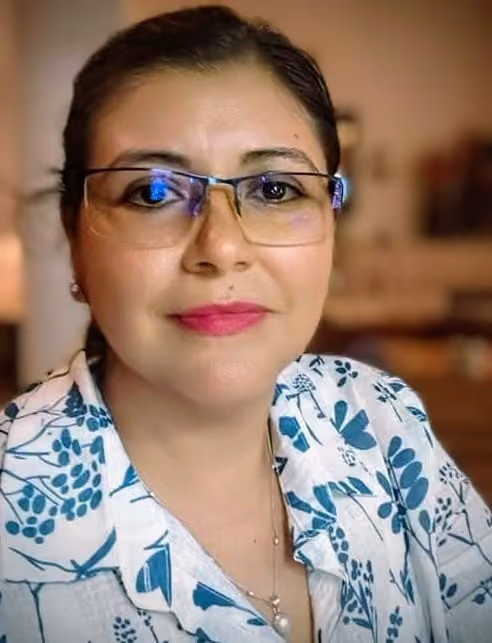
Mexican Meatballs!
Albóndigas. Their story goes way back to Moorish Spain, where al-bunduq meant “little ball.” The recipe crossed an ocean, settled into Mexican kitchens, and slowly became its own thing: light broth, soft herbs, veggies and meatballs that taste like someone cares about you. Every family makes them a little differently, every region swears theirs is the real one.
You won’t always see albóndigas on restaurant menus in Troncones, but you’ll almost always find them in many homes—as comfort food, weekday fuel, the kind of dish people grew up with but don’t brag about.
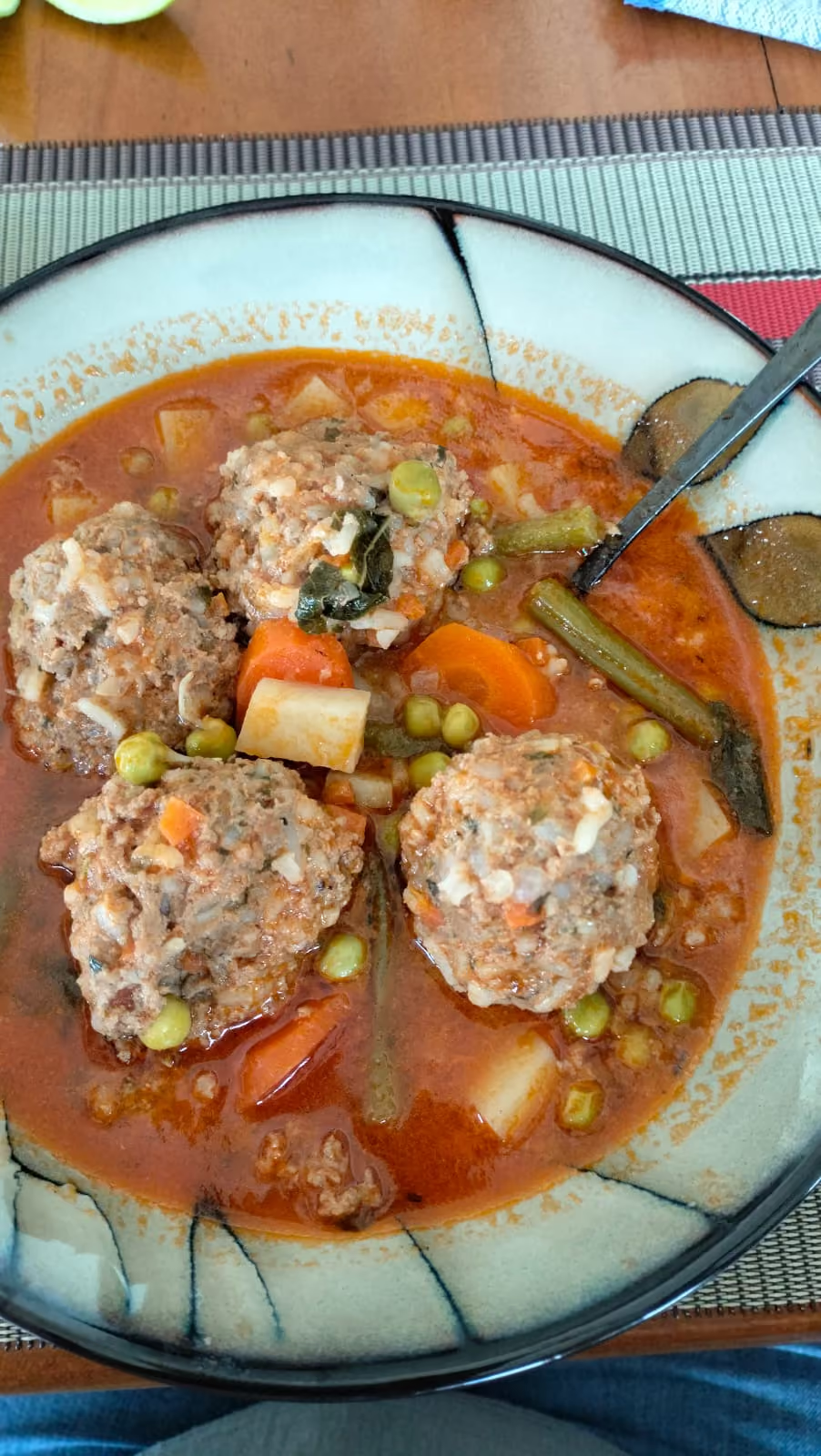
ALBÓNDIGAS DE RES: A DISH OF DIGNITY AND MEMORY
This is the dish my father chose.
It is also the dish my husband, William, chose.
I asked friends and family which of my recipes they love most, and many suggested others—but this one kept coming back from the two men who have shaped my life the most. That is why I am sharing it.
This meatball soup carries a story that goes back to my childhood, to the Mercado Municipal in Zihuatanejo, Guerrero.
When I was around nine or ten years old, my siblings and I used to help our family by selling food in the streets—chicken, cheese, bread, whatever we could. We would stop at Tres Hermanos in the market, where the original owners knew us. We often asked if we could take out their garbage, and many times they would give us leftover meat—good meat, still clinging to the bones.
My younger brother Marcos and I would carefully carve the meat from the bones, cleaning it patiently. We’d bring it back, and the butcher would grind it for us. That beef became albóndigas, made exactly the way I still make them today.
We also gathered vegetables that vendors were throwing away—carrots, potatoes, whatever looked usable. At home, my mother would wash everything carefully, cut away the bad parts, and cook with love and intention.
I remember how important my brother and I felt. We weren’t just children—we were providers. We had worked for that food. It filled us with pride.
Today, when I cook these albóndigas, I taste that memory. Not of lack, but of dignity, effort, and care. When I serve them to William and to friends here in Troncones, they love them—and every time, I feel deeply proud.
This is not just a recipe.
It is a bowl of memory, resilience, and nourishment—the kind that feeds more than hunger.
MEXICAN BEEF MEATBALLS SOUP (ALBÓNDIGAS DE RES)
Homemade Kitchen Style
Yield: about 20 meatballs; serves 4–6 people
Total time: about 1½ hours
Cooking time: about 45 minutes
INGREDIENTS
For the meatballs
250 grmas ground beef (sirloin)
1 small egg
1 carrot, very finely diced
1 garlic clove, minced
⅓ cup white onion, very finely diced
½ cup fresh spearmint (hierbabuena), finely chopped
¼ cup rice, pre-cooked until about ¾ done and well drained
¼ tsp powdered sea salt (or to taste)
½ tsp chicken stock powder
½ tsp freshly ground mixed pepper
A pinch finely ground chile flakes
2 pinches dried oregano
Vegetables for the soup
(Use what you have; this is how I usually do it)
Carrots, cut into large cubes
Potatoes, cut into large cubes
Zucchini, large chunks (raw)
Cauliflower florets (raw)
Optional: sweet corn, broccoli
For the broth
2 tbsp lard (manteca de cerdo)
½ white onion, diced
2–3 tomatoes, roasted (tatemados)
1 garlic clove, roasted
½ serrano chile, roasted
Chicken stock (homemade, if possible)
Salt to taste
½ tsp chicken stock powder
3 medium yerba santa leaves
SPICE MIX (MOLCAJETE)
1 small raw garlic clove
2 pinches cumin seeds
6 black peppercorns
4 allspice berries (pimienta gorda)
1 pinch dried oregano

PREPARATION
1. Make the meatballs
In a large bowl, add the ground beef, egg, carrot, garlic, onion, spearmint, and pre-cooked rice. Season with sea salt, chicken stock powder, ground pepper, chile flakes, and oregano.
Mix gently by hand until everything is combined. Do not overmix.
Form meatballs about 2 inches in diameter. Set aside.
2. Pre-cook firm vegetables
Steam only the carrots and potatoes until just mostly tender.
Set aside.
(Zucchini and cauliflower stay raw for now.)
3. Make the broth
In a large pot, heat the lard over medium heat. Add the diced onion and cook until deeply browned.
Blend the roasted tomatoes, roasted garlic, and serrano chile into a smooth puree. Strain and add the puree to the pot.
Add enough chicken stock to form a broth. Season lightly with salt and chicken stock powder. Bring to a boil.
4. Cook the meatballs
Once the broth is boiling, gently add the meatballs, making sure they are fully submerged.
Lower the heat and let them simmer.
5. Add the spice mix
After about 20 minutes, grind the garlic, cumin, peppercorns, allspice, and oregano in a molcajete until fragrant.
Add the mixture to the soup and stir gently.

6. Finish the soup
When the meatballs are about ¾ cooked, add:
steamed carrots and potatoes
raw zucchini
raw cauliflower
optional vegetables (corn, broccoli)
Near the end, add the yerba santa leaves and let them simmer briefly until everything finishes cooking.
Do not overcook the yerba santa.
TO SERVE
Serve hot with white rice or warm tortillas.
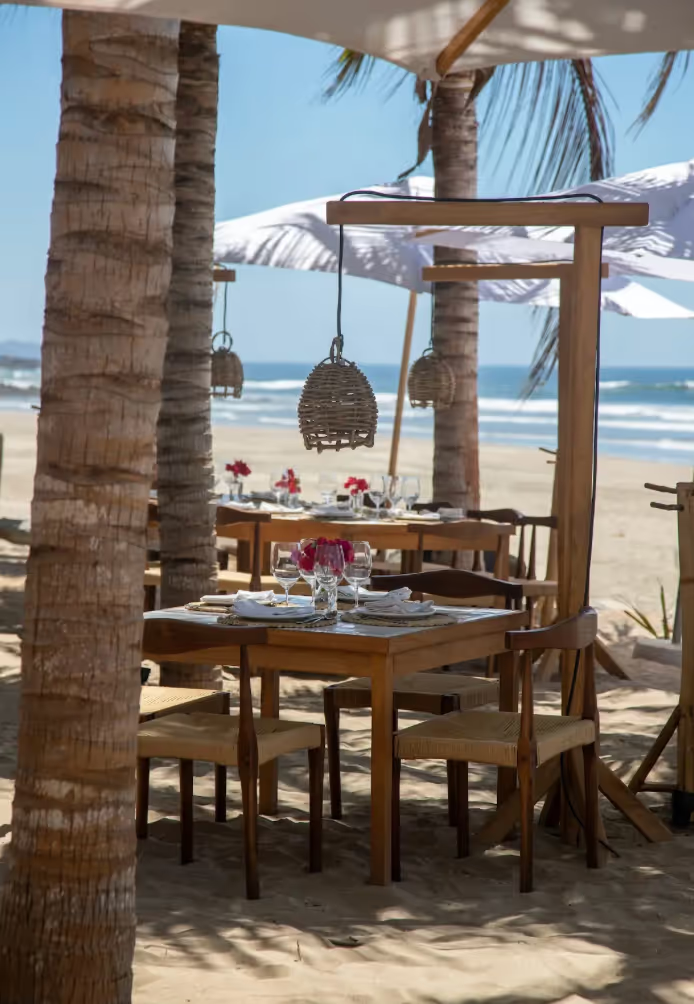
El Chirunguito de Fran Makes MB100
In Troncones, Chef Fran López enriches and refines the iconic Spanish beach bar concept by using the finest fresh products from the Mexican Pacific in signature Mediterranean recipes: rice dishes, tapas, fish, and seafood. His seafood paella is perfect for enjoying the beach bar experience: dining by the sea and sipping on a good drink. His fresh and relaxed Spanish cuisine is paired with an inventive cocktail menu and a superb selection of traditional beach drinks to enhance the pleasure of the beautiful surroundings. Recommendations: Black Rice, Grilled Catch of the Day, Iberian Ham Croquettes
.avif)
So reads the entry describing El Chirunguito de Fran in the newly released Gastronomic Guide 2026, which lists the 100 best restaurants in Mexico. Better known in international culinary circles as MB100, the list is an essential point of reference for fine dining enthusiasts and restaurateurs world-wide. It’s compiled through a voting process by a “council” of anonymous food lovers, who pay for their meals to ensure independence.
Each nominated restaurant is evaluated on a base-line criteria that includes ingredient quality, culinary presentation, customer service, architectural ambiance and overall experience. The selection and validation of the restaurants are overseen by Deloitte, the multi-national accounting consultancy, ensuring a transparency and impartiality to the process.
The “MB” are the initials of the guide’s founder, Marco Beteta, a Mexico City-based food critic, entrepreneur and culinary expert, who has dedicated much of his career to discovering, evaluating and recommending exceptional dining experiences. He launched his first Gastronomic Guide over 20 years ago, and its reliability, methodology and authenticity have earned it a remarkable prestige and its quick-to-say MB100 nickname.
A congratulatory email to Ángela Vilches, Fran’s wife and the owner of Troncones’ Hotel Pomelo, went out with a bunch of questions—Was this honor unexpected? Does Marco Beteta come to Troncones? How did this news make you feel?
Her reply covered all that and more, saying, “Having El Chiringuito de Fran included in the list this year was a true surprise. La Barra de Fran, one of Fran’s restaurants in Mexico City, was selected in a previous year, but putting a restaurant located in a remote destination like Troncones on Marco Beteta’s radar is a huge achievement for us. It reflects the effort and passion we’ve poured into this project. We don’t know if Marco Beteta has ever been here, but we’d be delighted to host him.”
Ángela excitement came through even further when she added, “We feel incredibly proud. It’s always more challenging to gain visibility when you’re located outside the major food cities. This recognition speaks to the strength of our team. Troncones has always been our vacation spot, a place to escape with family and friends. The idea behind El Chiringuito de Fran was to share that experience. Being recognized by someone with Marco Beteta’s reach and credibility will help us develop our vision and will motivate us to continue investing in Troncones as a culinary destination.”
A few days later, Fran sent a note echoing Ángela sentiments, stating, “From day one, I dreamed of El Chiringuito in Troncones becoming a culinary destination in its own right. This recognition is the first sign that we are on the right path, and it truly fills me with pride and excitement. It motivates us to keep pushing, to keep investing in this beach and this community. My goal now is not only to remain on the MB100 list year after year, but also to pursue new recognitions—both national and international—that will continue to keep Troncones on the map.”
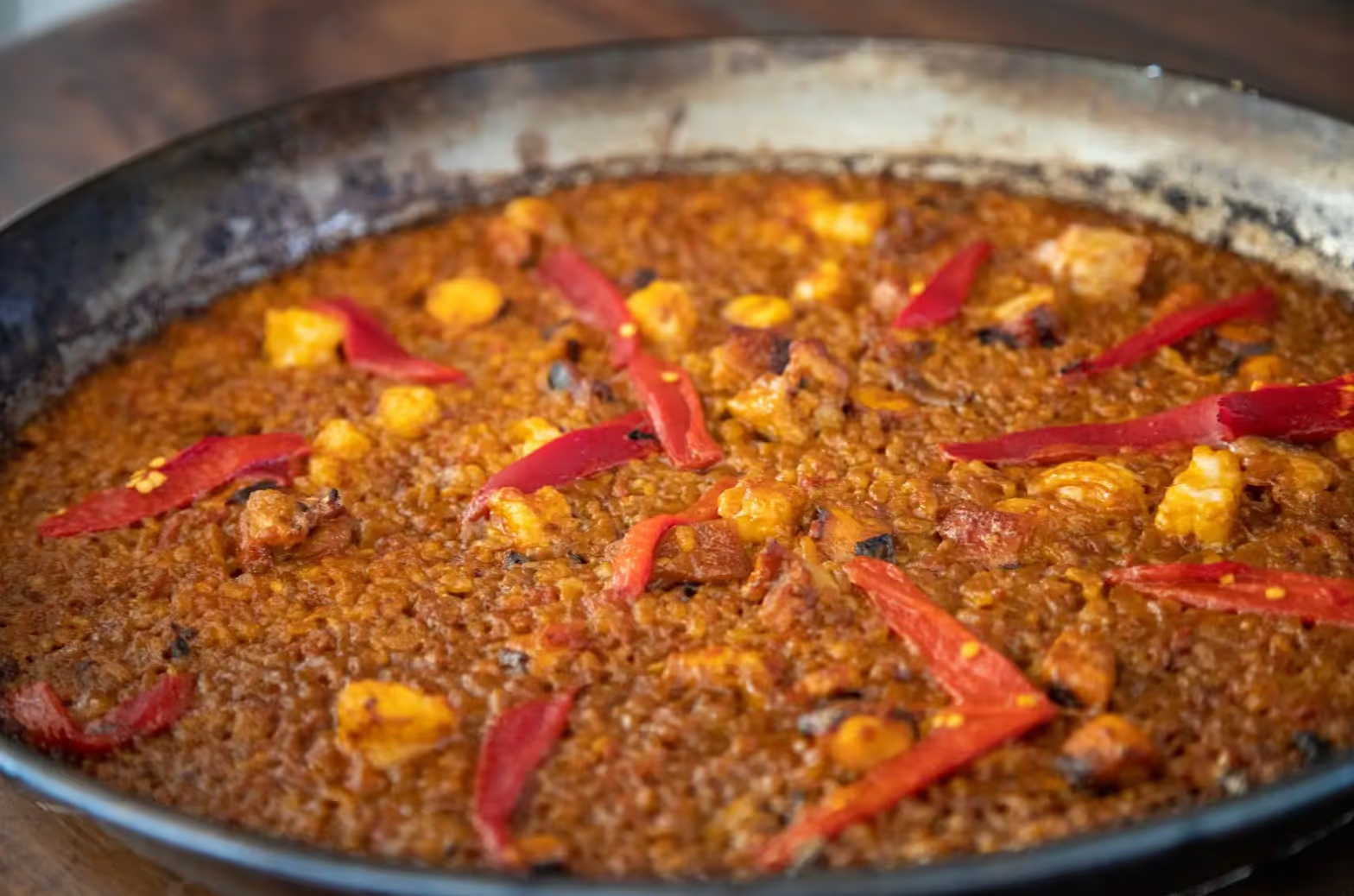
¡Provecho!
For the full MB100 list
https://mbmarcobeteta.com/mb100

Ever Have Tostilocos?
They’re simple and straightforward, a bag of Tostitos, sliced open lengthwise on an edge, the chips covered in an avalanche of fruit, greens, peanuts and hot sauce–more specifically, cacahuates japoneses, jícama, cucumber, cueritos and tamarind, sometimes mango, all bathed in lime, Valentina hot sauce and chamoy. It’s a mess. It’s a marvel. It’s Mexico doing food differently, better, taking a boring snack and making it so much more.
Cutting open a bag of Tostitos, pouring some salsa on the chips and eating them straight out of the bag sounds decadent, like something to do only when no one is watching. How about going out to a restaurant whose speciality is to mix you a tasty, over-the-top, chip-salad-in-a-bag? And eating it in public with a spoon? That’s the what of tostilocos, but it doesn’t come close to the OMG of it.

Tostilocos didn’t fall from the sky or come out of some deranged kitchen. The widely-accepted origin story places them in Tijuana in the late 1990s or early 2000s, when a street vendor somewhere near the border decided Tostitos in a bag were simply a vessel waiting for a special destiny. The New York Times tried to explain the phenomenon, noting that tostilocos began by “opening a bag of Tostitos…and then taking the ingredients from three shelves in a bodega and dumping all of those in.” It makes perfect sense once you see it in person. The truth is simple: teens loved them, word spread, and soon the “locos” family tree exploded.
BOTANAS WITH NO OFF SWITCH
To understand tostilocos, you have to understand botanas, Mexico’s all-purpose word for snack food. Botanas aren’t meant to be delicate, health-positive, or even logical. They’re built for pleasure, for passing around, for sharing with three friends at a park bench or a tiendita counter. If antojitos are hot finger-food made to satisfy cravings—things like tacos, quesadillas, gorditas—botanas are their lawless cousins, served in bags, cups and styrofoam containers, made to be eaten standing up, preferably with chile-stained fingers.
Tostilocos live in that lawless snack land: not quite candy, not quite street food, not quite a meal, yet fully capable of ruining your appetite and your culinary dignity in one go.
THE EXPANDED LOCOS UNIVERSE
Once the formula was established—chips + acid + chile + crunch + something pickled + something gummy = joy—the mutations multiplied. Here are a few other “locos”:
Dorilocos—Same concept, swap Tostitos for Doritos. Nacho cheese flavor meets chamoy. No one is safe.
Cheetolocos—Flamin’ Hot Cheetos as the base, for people who laugh in the face of gastrointestinal consequences.
Esquiteslocos—a cup of corn suddenly buried under Takis, Ruffles or crushed chips, drowning in lime and chiles. A love letter to dental bills.
Ramenlocos—Instant Cup of Noodles cracked open at the styrofoam altar, doused in chamoy, cueritos, lime, Salsa Maggie and peanuts. A snack, an experiment, a cry for help.
Chicharrón preparado—not technically a “loco,” but a close cousin—an edible raft of puffed chicharrón [pork rinds], covered in lettuce, tomato, crema, cueritos, and salsa.
This is not chaos for chaos’s sake. There is a method here: texture stacking, acid relief, sugar spikes, salt satisfaction and the universal delight of watching a vendor absolutely ignore the food pyramid.
THE FLAVOR BOMB
What looks deranged when listed out on paper is, in practice, a perfectly wired flavor bomb. The formula is consistent—crunch from the chips, the peanuts, the cucumber and the jicama; chewy from cueritos [pickled pig skin] and tamarind candy; acid from the lime; sweet from the chamoy; heat from the hot sauce and salt from the chips and all of the above.
It hits every sensory button at once. It shouldn’t work, and yet it very much does. Just ask the teenagers who can demolish a bag in five minutes and then calmly go surfing.
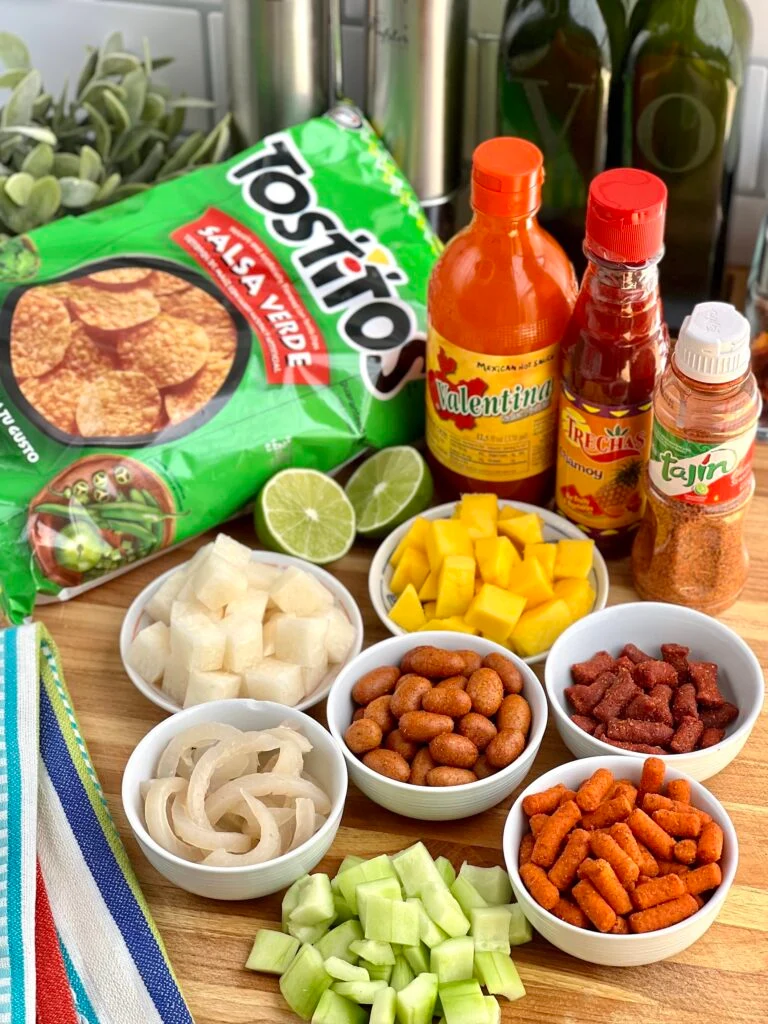
WHY MEXICO SNACKS THIS WAY
Because why wouldn’t it? Snack culture in Mexico isn’t about restraint. It’s about improvisation, about building something satisfying out of whatever’s at hand. It’s the same logic that gave the world tajín [a spicy, salty, citrusy seasoning] on fruit, sal de gusano [toasted, ground agave worms, dried chilies, and salt] on oranges, chamoy on micheladas [pickled fruit sauce on spiced beer], and childhood candy that could double as a chemistry kit.
It’s also a ritual—literally. As La Onda’s media manager, María Fernanda, explained it, the best mix of all is actually tostiesquites: tortilla chips plus esquites. “It’s that simple and that delicious,” she told me, like this should be obvious.
She also pointed out that in cities, many snack food stands pop up near churches. Elotes, churros, papitas—and if you’re lucky, tostilocos. “Coincidence? I don’t think so,” she said. “Church and snacks are connected. Maybe it’s the reward after the spiritual ritual—and it brings you back to the most human reactions. It’s almost a sin.”
When I texted her to confirm the rumor that she was a tostilocos connoisseur, she replied, “obvioooo!!” before I even finished typing. Then she said she was already salivating. Apparently this is normal; any Mexican who reads the word tostilocos starts craving them instantly.
“And by the way,” she added, “it’s the perfect snack for the launch party.”
FIELD RESEARCH (TRONCONES EDITION)
I needed to experience this phenomenon, so I dragged Benito out to Tostilokera, just south of the T in Troncones. We found María and Víctor there, happy to bless us with our first official tostilocos.
Ours were meticulously put together, vegetarian, without the cueritos, which honestly have no real flavor—it may be pig skin but it’s basically like tofu, taking on whatever flavor you add. I’m also not usually a fan of jicama but it really does serve a cool, crunchy purpose here.
We were both pleasantly surprised and fully satisfied by our chip salad—that’s what it tasted like, LOL—but the real joy was connecting with our neighbors and hearing a bit of tostilocos history. María and Víctor recently built their little shop—a kind of mini-Mexican diner that also serves burgers, burritos, milkshakes, and other malt-shop-style snacks with real pride and care.
We opted for a liter of fresh coconut water to wash down the salty-sweet-spicy madness. A perfect choice. And at 180 pesos for two tostilocos and a liter of coco, a pretty good date night.
I couldn’t finish my whole bag, but María Fernanda had instructed me to take the remains to the “esquites lady” in front of the Las Hermanas library. So, I followed orders, in awe for my second course of tostiloco madness as I watched Elida pile a spoonful of warm, wet corn over my half-eaten bag and smother it in mayo and queso fresco. OMG. No words. Like creamed corn on LSD.
Other countries have tapas. Mexico has a bag full of existential decisions.

WHERE TO GET THEM
Tostilokera—the obvious choice here, just south of the T
There’s also a spot on Main Street that was pointed out to me on a map with an X. I couldn’t tell you exactly where it is. But there is one there.
Elida serves up authentic esquites and chicharrón preparados on Thursday and Saturday nights in front of the Las Hermanas Library.
In Troncones, the real trick is simply knowing when and where. Sometimes the stand is on Main Street. Sometimes it’s in the upstairs burger place. Sometimes a teenager materializes with a dripping bag and you follow them like wildlife.

SO… ARE THEY GOOD FOR YOU?
Absolutely not. That’s not the point. Tostilocos are not a health food, a balanced snack or a pre-workout option. They are joy, with consequences. They are the culinary equivalent of saying “fuck it” on a hot afternoon. And, honestly, it’s better than kale.
THE FINAL WORD
If you came here for judgment, you’re in the wrong country. Tostilocos aren’t trying to be respectable. They aren’t pretending to be a salad. They are the edible anthem of a nation that knows pleasure is not the enemy. Grab the bag, squeeze the lime, accept the chaos. The world is already loco—you might as well eat accordingly.
P.S., MORE ON CHAMOY
Chamoy does not have a direct English-language equivalent but it’s described as “a condiment made from pickled fruits, chilies and spices presenting a sweet, sour, salty and spicy flavor profile”. It’s used in Mexico in many forms, including sauces, pastes and candies. It’s often drizzled on fruits, snacks and cocktails. As a dipping sauce, it can be used for meats and snacks, or even as a marinade. Chamoy is also a popular topping for popcorn, nachos and vegetables, like carrots and celery. Again, it has no equal; it’s good on everything.
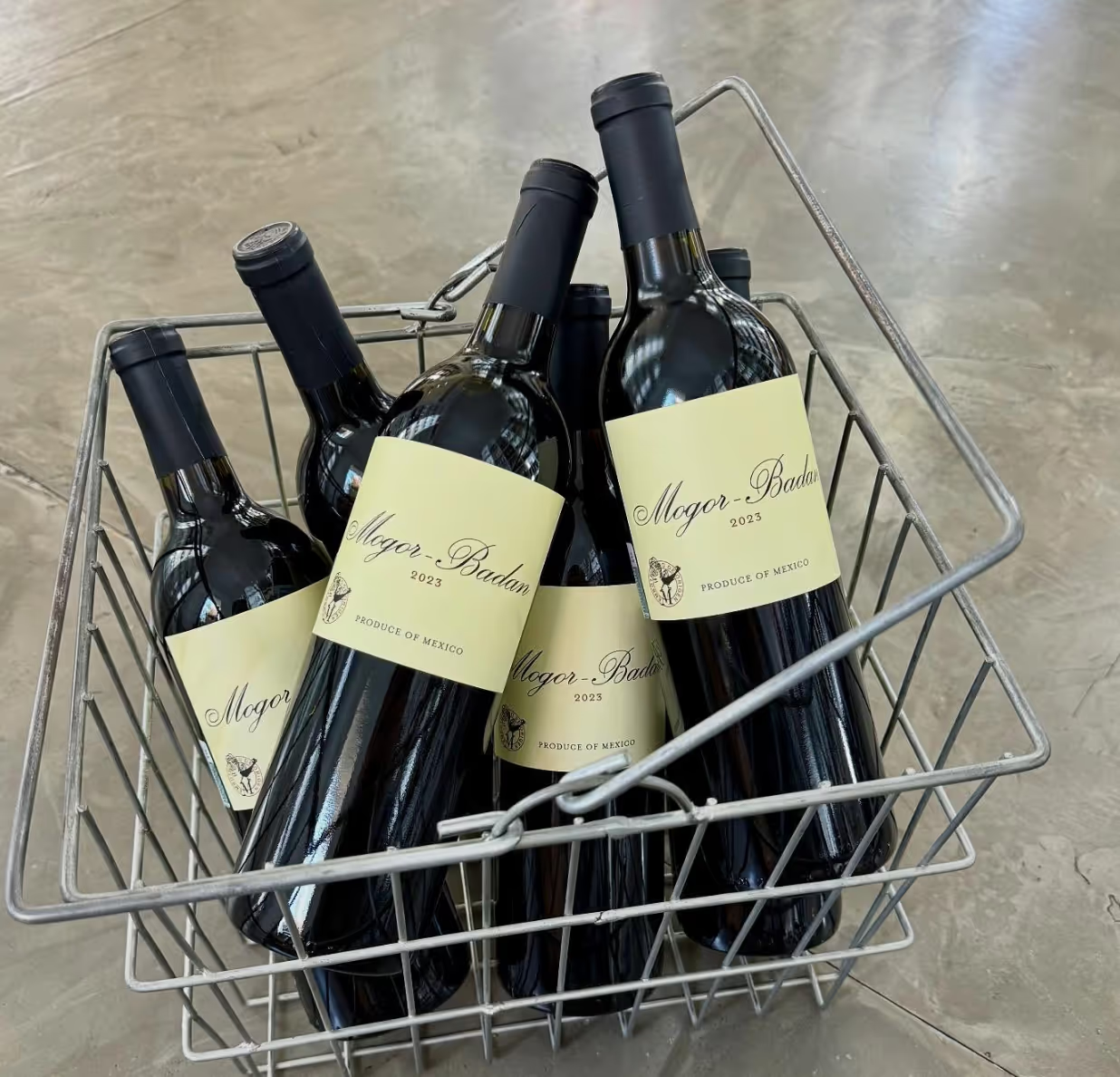
The Women Redefining Mexican Wine
Their vineyards stretch from the dry valleys of Baja California to the high elevations of Querétaro and the rocky soils of Coahuila. They work with sun, scarcity, altitude and unpredictability—climates and conditions that require innovation as much as they do ritual. They experiment. They ignore old hierarchies. They’re rejecting the idea that wine must come from old-world lineage to be taken seriously, and in doing so, they’ve given Mexican wine an identity that finally feels like Mexico. This is a story about who is shaping the future of Mexican wine—and why it matters.
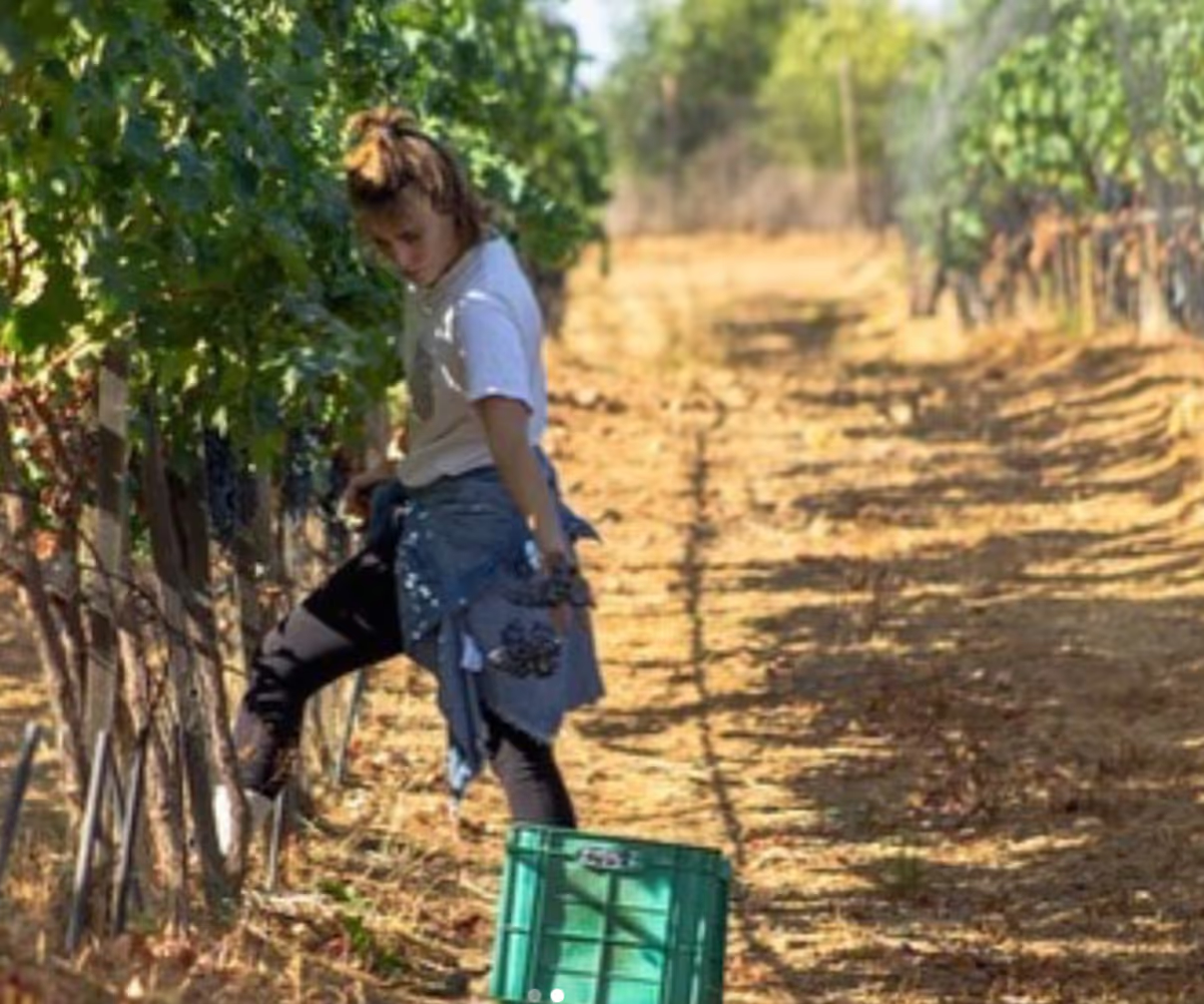
HOW MEXICAN WINE GOT HERE
Although winemaking in Mexico dates to the 1500s, the modern industry is young. For most of the 20th century, only a handful of wineries existed, and they were expected to imitate Europe: Bordeaux blends, French oak, predictable varietals.
Two things shifted in the early 2000s. First, a boom in independent, small scale vineyards—many led by young winemakers who didn’t come from traditional wine families. Second, women entered the cellars in visible, leading roles for the first time. Their presence didn’t just change the workforce. It changed the philosophy: more experimentation, more transparency, more emphasis on land over legacy.
WHERE THE BEST WINE IS BEING MADE
Mexico’s most established region—and still its heart—is Baja California’s Valle de Guadalupe. Around 70 percent of the country’s wine is produced there.
Coahuila’s Parras Valley, home to Casa Madero, a winery founded in 1597 and regarded as the oldest winery in the Americas, is fast becoming a strong second wave, with vineyards working in desert conditions that force innovation.
Guanajuato, Querétaro, Zacatecas, and Chihuahua are newer but quickly gaining attention. Higher altitudes, cooler nights, and younger producers have made these regions some of the ones to watch.
As Zihuatanejo-based sommelier Gerardo Patiño Flores explains, “There’s movement everywhere now. New projects keep appearing, and each region is creating its own style. That’s what’s exciting.”

THE WOMEN CHANGING EVERYTHING
In Baja, Lulú Martínez Ojeda returned from Burgundy and immediately challenged the idea that Mexican wine needed to sound French to be taken seriously. Her approach—rooted in local land, not old expectations—has helped set the current tone. “When I returned to Mexico, I wasn’t a ‘female winemaker’—I was a winemaker. Here in Baja, if we support each other and keep making it inclusive, that’s how things change.”
In the same region, Natalia Badán of Mogor Badán has become a quiet but powerful counterweight to tourism-driven hype. “The urban nightlife is not compatible with agriculture. It’s disconnected from its environment. We are a farming community. Nature has its own rhythm. We don’t make wine for a trend. We make wine because the land tells us it can be done.”
Her philosophy is widely shared among women winemakers across the country and these women aren’t simply participating in the industry. They’re redefining it: building vineyards around sustainable farming, solar power, community labor, organic methods, and styles that don’t try to copy anyone.
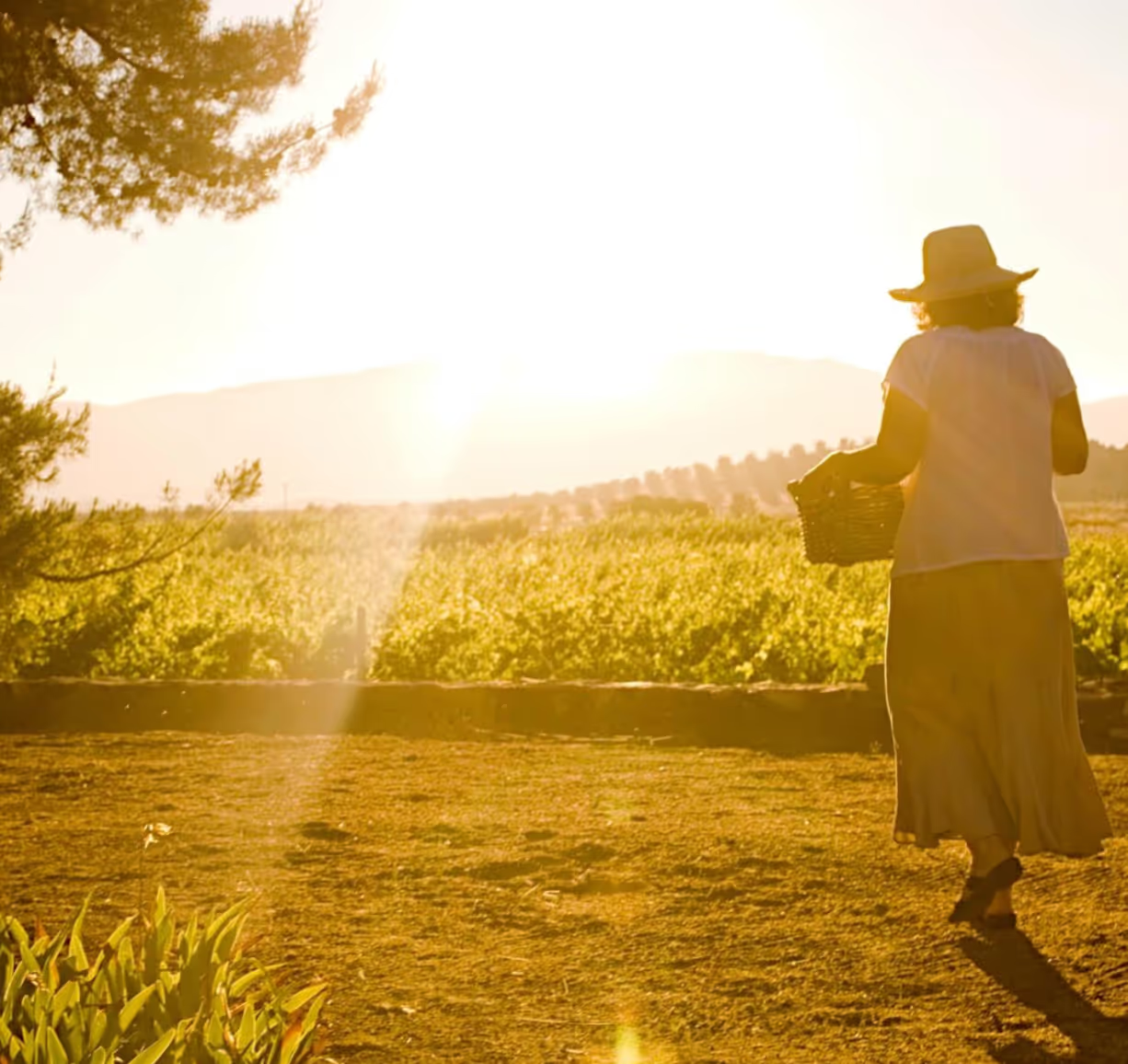
WHY MEXICAN WINE IS GROWING NOW
Two things are propelling the boom.
First, national pride. Diners and drinkers—especially younger ones—are looking for Mexican-made everything: mezcal, beer, cheese, chocolate, and now wine. Gerardo notes that wine consumption has quadrupled since the early 2000s, and “out of every hundred bottles opened in Mexico, forty are now Mexican.”
Second, climate. Warmer regions once dismissed by Europe have become relevant as the world heats up. Places like Baja and Coahuila, historically seen as too extreme, are now producing wines that speak directly to the future of agriculture.
WHAT THIS MEANS FOR TRONCONES
Troncones is not a wine town—and it doesn’t have to be. But the changes happening hundreds of kilometers away are starting to reach the coast.
Shops like La Cava Ixtapa Zihuatanejo now bring in bottles from Valle de Guadalupe, Parras, Querétaro, and Guanajuato. Restaurants and hotels are beginning to include Mexican labels alongside Chilean and Spanish ones. Visitors from wine regions up north often ask for Baja bottles by name.
And increasingly, the wines showing up here—the ones chosen by sommelier palates, not distributors — are being made with a new spirit. Gerardo recommends Lucía García Alonso of Vinos Parvada in Coahuila for anyone looking to understand where Mexican wine is headed. “Delicate, complex, and proudly speaking to the quality of Parras—and of Mexico itself.”
This is how a national shift reaches a quiet Pacific village: one bottle at a time, one conversation at a time, one dinner table at a time.

WHY IT MATTERS
Because this isn’t about alcohol. It’s about authorship.
Women who weren’t welcome in vineyards 30 years ago are now shaping the direction of an entire national industry. An agricultural tradition once defined from outside is now being defined from within. And a country known globally for tequila and beer is rewriting its place in the wine world on its own terms.
The change isn’t subtle. And it’s not waiting for anyone’s approval. Mexican wine isn’t finally “catching up.” It’s doing something different—and women are the ones leading the way.
Local Contributor: Gerardo Patiño Flores is a certified sommelier and director at La Cava Ixtapa Zihuatanejo, which focuses on promoting Mexican wine.
https://www.instagram.com/lacavazihua_ixtapa/?hl=en
.avif)
A Troncones Challenge
I challenge you. Everything you need is right here; you just have to know where, and when, to look. Shopping locally takes curiosity, a little flexibility and the willingness to follow a truck.

JAHVÉ: THE BEATING HEART OF GROCERIES
When I mentioned Jahvé recently to someone who has been coming to Troncones for nearly 20 years and they hadn’t heard of it, I was shocked. What started a few years ago as a humble fruit and vegetable stand on Main Street has quietly grown into Troncones’ closest thing to a specialty supermarket—a beautifully packed store hiding in the open, south of the T, with little signage and a dirt floor. The friendly family vibes, the professionalism and the diversity of what’s on the shelves and crates add to the romance.
Lizeth and her parents have turned Jahvé into a wonderland of everyday and unexpected finds, including local fruits and vegetables, dairy, organic eggs, cereals, beans, dried fruit, nuts, a variety of chocolates and coffee. If they don’t have what you’re looking for, Lizeth will try to find it for you. She knows the importance of organic and healthy foods and that shows. She also appreciates finding new things and supporting local makers and farmers.
On a good day, you might stumble on to-die-for hand-churned Mennonite butter from Chihuahua, fresh diakon, watermelon radishes or curious yellow-brown cucumbers that are amazing, and lots of other small-batch treasures that’ll make you wonder why you ever drove to Sam’s.
.avif)
OTHER HIDDEN GEMS
There’s no shortage of corner stores [tiendas] around town, each comes with its own quirks and loyal followings.
María’s, the biggest tienda, is also “home” to the town’s only ATM as well as to a parrot couple named Juan and Maria. The store has a little bit of everything. You’ll find a human Maria behind the counter, selling a perfectly thorough mix of organic fruits, vegetables, beans, eggs, whole wheat tortillas and sometimes cool exotics, like fermented black garlic or hand-made almond butter and peanut butter from Saladita [more on that below], along with an abundant selection of basic food staples and household goods. Fun fact: Maria was Troncones’ first female commisaria in 2011.
.avif)
Gaby’s, the oldest tienda in town, has all the staples packed in a small space —from beer and water to beans and rice, fresh fruit, candies, household supplies and, of course, chips and beach balls. Gaby’s grandson, Fernando, is in charge now. The store is open every day from 6:30 am to 9 pm.
Ernestina’s, on the beach road, next to Mi Jardin, often has organic chicken eggs and sometimes has delicious duck eggs. You'll see the ducks and chickens running around. Sometimes those eggs aren’t on the counter. You gotta ask. Ernestina’s daughter-in-law, Nancy, a baker at the legendary Café Sol, bakes and sells incredible cookies and tarts- look in the mini fridge and get there early because the secret is out. There’s always an odd surprise, like this week, when I found pickled white asparagus and artichoke hearts nestled between the chips and the soda.

.avif)
TORTILLAS, FISH & MEAT
For tortillas—You would think you can buy tortillas almost anywhere. That’s not true, but there are options. I like the large whole-wheat ones from Maria’s and Jahvé to make sandwich wraps or quesadillas at home. But for the real deal visit Tortillaria Troncones on the second street where you can watch the machine spit out steaming rounds by the kilo. You’ll find the twin sons of owner Arturo, Jose Luis and Jose Arturo manning the shop as dad makes deliveries all over town.
For fish—There are two markets in town, Sofkey and Janna's, on the same block of Main Street. For an off-hour hack, head to the back of El Gordo's taco stand, the one with the octopus mural, and holler—someone there will sell you frozen shrimp, lobster, crab or octopus straight from the cooler.
Janna, who sells fish, also sells chicken and eggs. And sometimes a guy from Lagunillas rolls through town with chicken in the trunk of his car. [Yep, you read that right.] He has chorizo and queso fresco, too. If you see some people gathered around the open trunk of a car, you might want to check it out
For meat—This also takes a little exploring. There is a new butcher on Main Street called Dos Amigos Carniceria. And Jahvé often has a variety of frozen meats and chicken. And Margarito, who prepares carnitas in front of the Catrina mural on Main Street every Saturday and Sunday, takes custom orders for special pork cuts all week by Whatsapp. You can make arrangements for delivery, or pick them up in-person on the weekend.
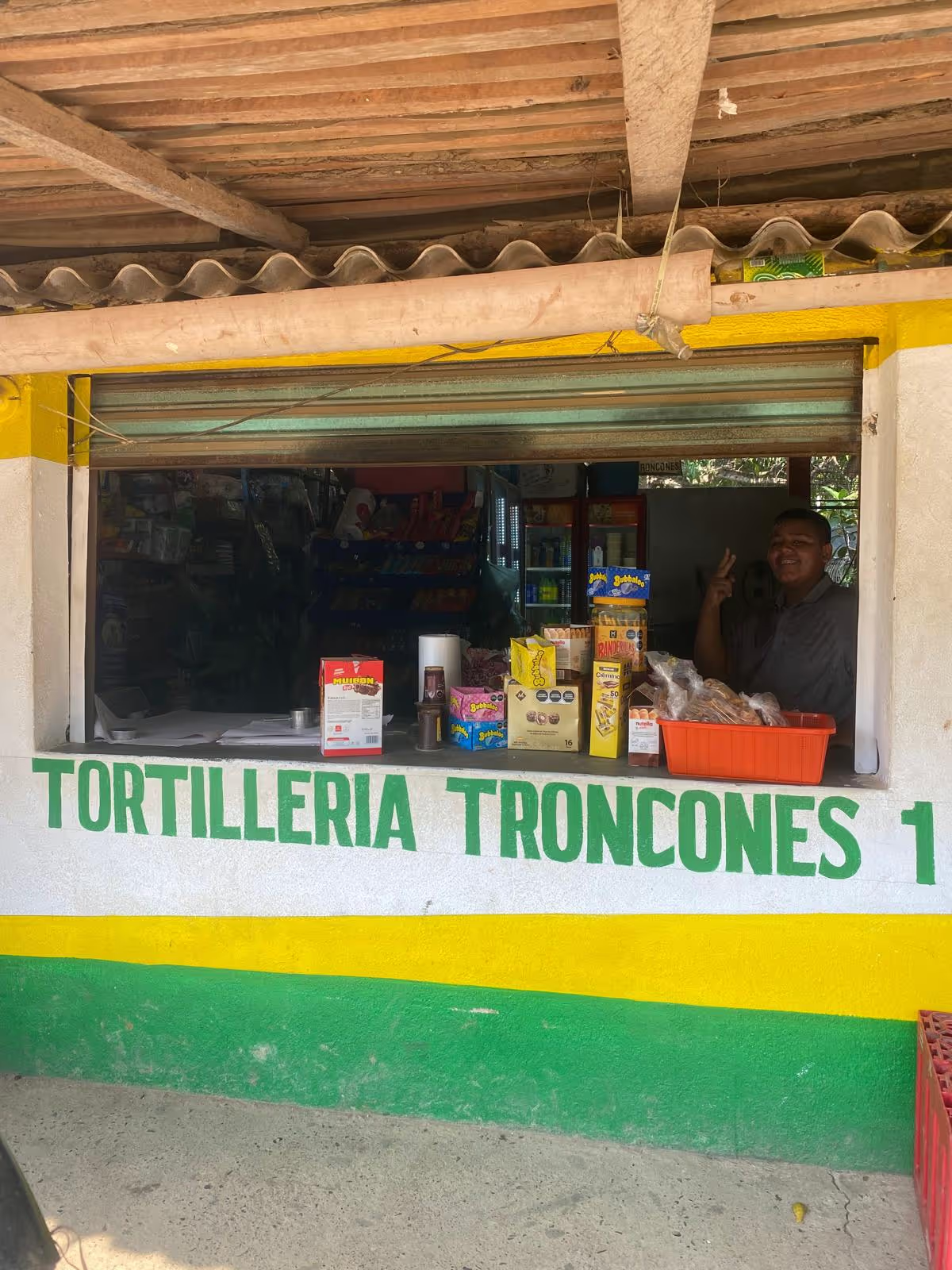
BREAD, COFFEE & SWEET THINGS
Good bread is everywhere now. It wasn’t always that way.
Delizia serves the best croissants in town, and offers other baked goods and strong coffee. Don’t miss a delicious sandwich or a special dinner too - Ask Eduardo for details
Indigo has a great micro-bakery with breads, cakes and tarts—alongside gelato, cheese and wine.
Cuattro is another serious bakery, putting out muffins, cookies and breads, plus good coffee and full service breakfast and lunch.
Pacifico stocks its own breads, muffins, cookies and gelato, from early morning to mid-afternoon.
MARKETS & TRUCKS
Fridays bring the fruta y verdura market to Troncones’ basketball cancha, stocked with produce from Lázaro Cárdenas—colorful, cheap and fresh.
On Thursdays, Tres Mujeres Hotel hosts a “farmers’ market” that’s more artisan-leaning, but occasionally features local produce from Gente Viva and others. You might find Patti LiIy there with her vegan kimchi and lunches. And sometimes, there’s a woman selling curries and Indian dishes.
On Tuesdays, Cooperativa Troncones is at Lobo del Mar, featuring local food and craft makers. Go regularly for surprise goodies, like, locally-made flavored Mezcal, salsas and more.
And of course, there’s the fruit truck—which once was the town’s main food source before Jahvé came around. Listen for its horn and grab what looks best. Once upon a time, not so long ago, people used to put signs outside their homes reading frutas, indicating they needed the fruit truck to stop by.
In La Saladita, Hacienda Plaza hosts the Tianguis, a farmers’ market, in its parking lot every Friday. It’s worth a stop if you’re nearby. La Esquina, the shop inside Hacienda Plaza carries a decent selection of groceries, organic eggs, dried fruits, nuts and ice cream, every day. There’s also an ATM there.
There’s also a small farmstand on the road to Saladita, just outside Los Llanos, selling flowers and cucumbers, proof that food grows closer than you think. When you walk inside, you’ll discover a gorgeous flower patch and a few random vegetables, along with some nice plants. All for sale.
Out of Saladita is Christopher Aburto León—a surfer who makes coconut oil, fresh peanut butter and fresh almond butter. Those are on sale at Jahvé and Maria’s in Troncones.
Don't forget to place your orders for Gente Viva Canastas for beautiful greens, fruits, herbs and other special items.
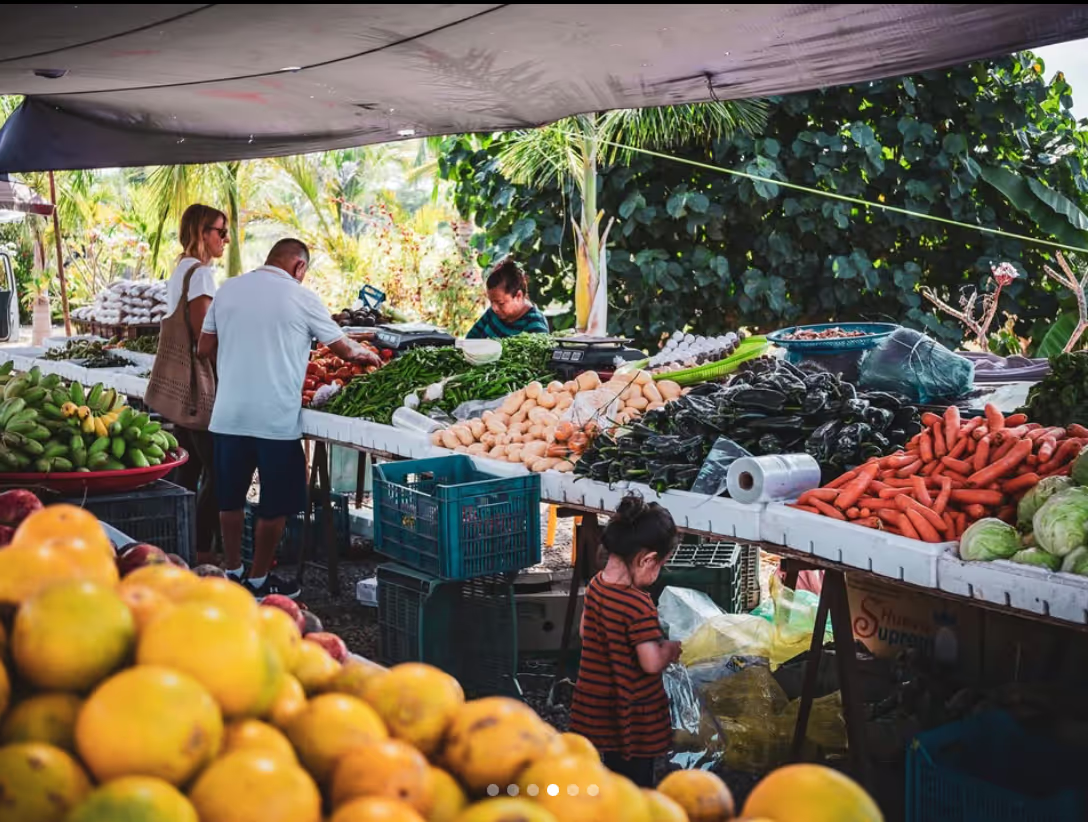
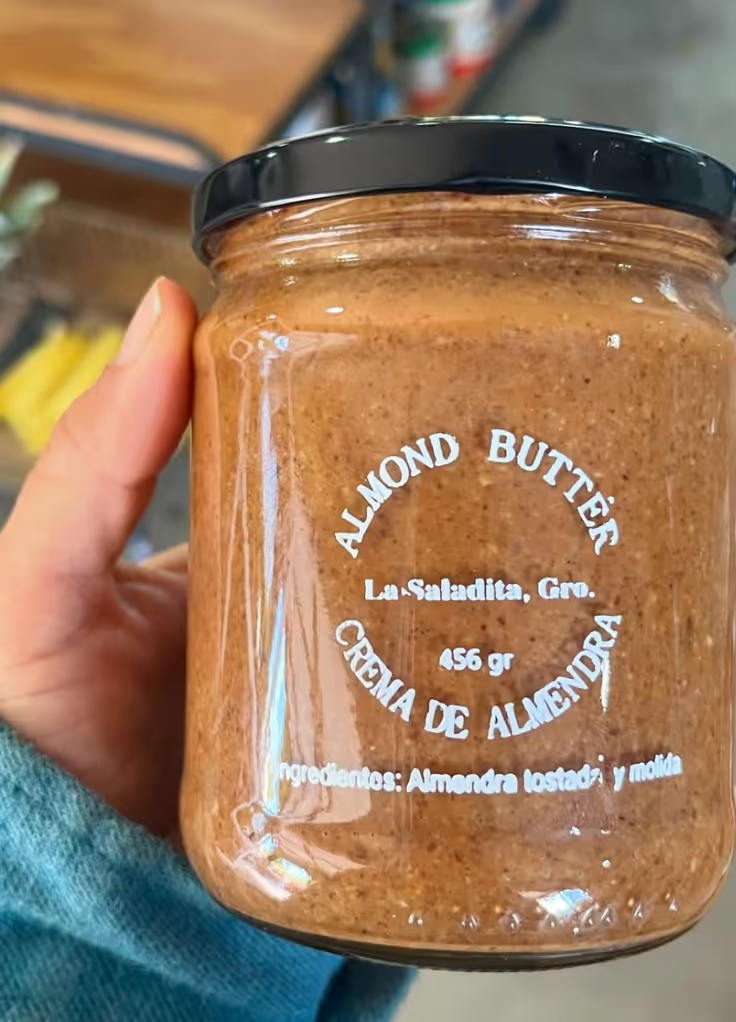
THE PLEASURE OF STAYING LOCAL
Once you learn the rhythm—which day the trucks pass, when the tortillas are warm, who sells the freshest fish—you’ll realize there’s no reason to drive into Zihua to walk around a warehouse store that plays too loud music. Yes, shopping locally is slower, but it connects you to the local people, the subtle seasons and lots of stories. Every mango and croissant, every kilo of tortillas, will start to come with a face you’ll recognize.
Also keep in mind, when you shop locally, every peso goes directly to the families who are handing you what you’re after.

Pozole: Eat Me, It’s Thursday
On Thursday mornings in Guerrero, big pots of pozole simmer in kitchens from the mountains to the sea. When served, steaming bowls of soup arrive simple—broth, corn and meat—with the toppings set out for everyone to flavor their own—crisp cabbage, sliced radish, avocado, salsas, chicharones and lime. It’s personalized comfort food in its purest form.
It seems so heart-warming, so kind, so traditional, so communal. It's been part of Mexican culture for thousands of years. The word pozole comes from the Nahuatl pozolli, foamy, for the way the kernels “bloom” when cooked. That foam comes from nixtamalized corn—dried maize soaked and cooked in lime-water until the skin loosens and the grain softens. It’s one of Mesoamerica’s great inventions, turning tough field corn into something tender, digestible and nutrient-rich.
To the Mexica, corn wasn’t just food, it was the basis of life itself. In fact, their creation myths describe humans as being made from corn, the varied colors–white, yellow, red and black–providing a diversity of skin tones. To eat corn was to take in life itself. So when the Mexica prepared corn stews to feed themselves or to honor their gods, they weren’t just cooking—they were bringing an ancient theology to life.
THE FLAYED GOD’S STEW
Every spring, during the festival of Tlacaxipehualiztli [literally, the wearing of human skin], priests honored Xipe Tótec, the skin-wearing god of renewal and vegetation. Slaves and war prisoners were sacrificed, their hearts offered to the sun. Their flesh wasn’t wasted, their bodies became part of a ritual celebrating transformation; it was cooked in a ceremonial stew called tlacatlaolli—literally, tlacatl (man) and tlaolli (corn), or "man's corn"—a sacred meal of sacrificed human meat.
16th-century Franciscan missionary Bernardino de Sahagún recorded that even the families of the deceased gathered to share the corn stew, each bowl containing a small piece of their loved one. To modern readers, it sounds horrifying. To the Mexica, it was communion—the merging of human and divine, earth and sky, death and regeneration—philosophy in a pot—the corn representing the life granted by the gods, the flesh symbolizing its return, eating the two together keeping the cosmic cycle in motion.
After the Spanish arrived, their governors banned the Xipe Tótec ceremonies and outlawed cannibalism, but the framework of the ritual remained. Pozole survived as a special celebratory meal. Pork—new to the Americas and, by an odd coincidence, similar in texture to human flesh—replaced the forbidden, more traditional meat, and what had been sacred became social, a dish for baptisms, fiestas, Independence Day and, ultimately, Thursdays. It would seem pozole never lost its sense of occasion; it simply changed gods.

WHY THURSDAYS
No one can say for sure why pozole became a Thursday “thing” in Guerrero. Ask five people and you’ll hear five stories—that it started in Chilpancingo when market workers and household staff had that afternoon off; that restaurants picked a specific day to make a dish that takes all day to prepare; or that the political crowd in Acapulco and Chilpancingo turned jueves pozolero into a kind of social ritual, one that was part meal, part networking.
Minerva, the owner of Ceneduria Mine in Buena Vista, the long-time Thursday pozole destination for Troncones locals, connects it back to community, explaining, “It’s said that Pozole Thursday was born in the mountains of Guerrero generations ago, after the last corn harvest one September, in solidarity with those who didn’t have a good harvest. The corn was harvested and pozole was prepared on Wednesday nights, and the celebration took place on Thursday.” Whatever the reason, by the mid-20th century, Thursday pozole had become part of the rhythm of life across Guerrero, a quiet celebration tucked into the latter half of the work week.


THE THREE COLORS OF POZOLE
Verde [green]: tomatillo, pumpkin seeds, epazote—bright, herbal, coastal.
Rojo [red]: pork or chicken, simmered with guajillo or ancho chile—deep, smoky, festive.
Blanco [white]: clear broth with chicken or pork, or both—simple, restorative.
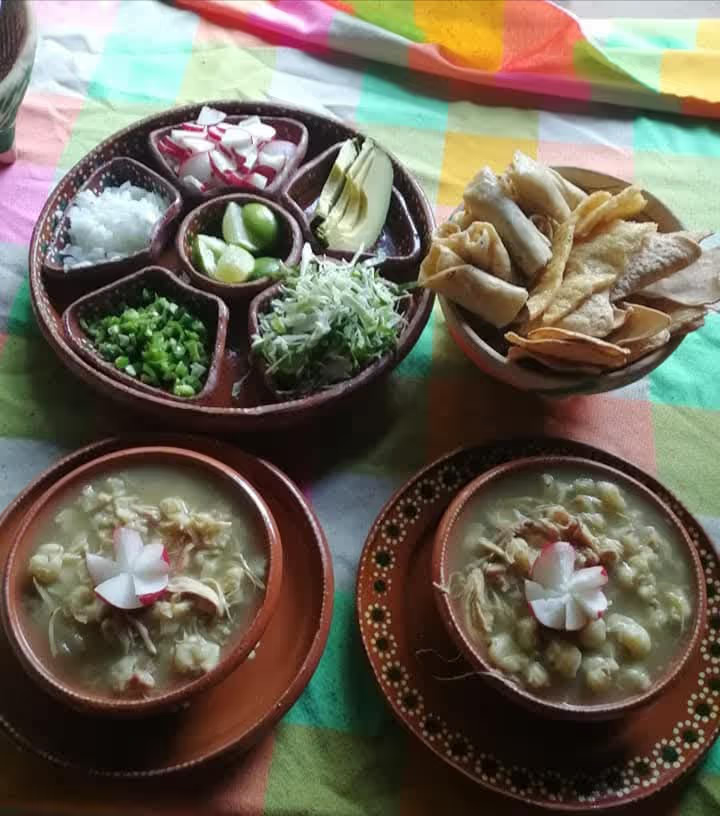
THE RITUALS & TRADITIONS CONTINUE
Strip away the gore and grandeur, and what survives is remarkably consistent. Pozole is still slow food. It still gathers people. Corn, that once symbolized life and death, still softens for hours in wide pots; families still ladle it out and share it. A dish born of ceremony still works its quiet magic of renewal.
Here on Guerrero’s coast, jueves pozolero isn’t a grand event—it’s a comfort, a reason to slow down. Each restaurant adds its own rhythm—a different broth and new stories to be told over the steam.
In Buena Vista, its scent drifts out from Mine’s, where the tops on the pots of the open-air kitchen crash and rattle like cymbals each Thursday night. Mine and her family serve steady bowls of red or white broth, offering a mix of pork and chicken as well as traditional tamales and atole. Mine will begin service this year on November 6. She can also accommodate a vegetarian option with a day’s notice. [The restaurant celebrates its 25th anniversary this February; there will be no flaying, only plenty of good food.]
In Lagunillas, Jaqueline’s traditionally serves verde de pollo [green with chicken] and blanco de puerco [white with pork]. In Troncones, a new pozolera, Ceneduría Vero, has just opened on Main Street. Rufi’s also serves up pozole in the high season.
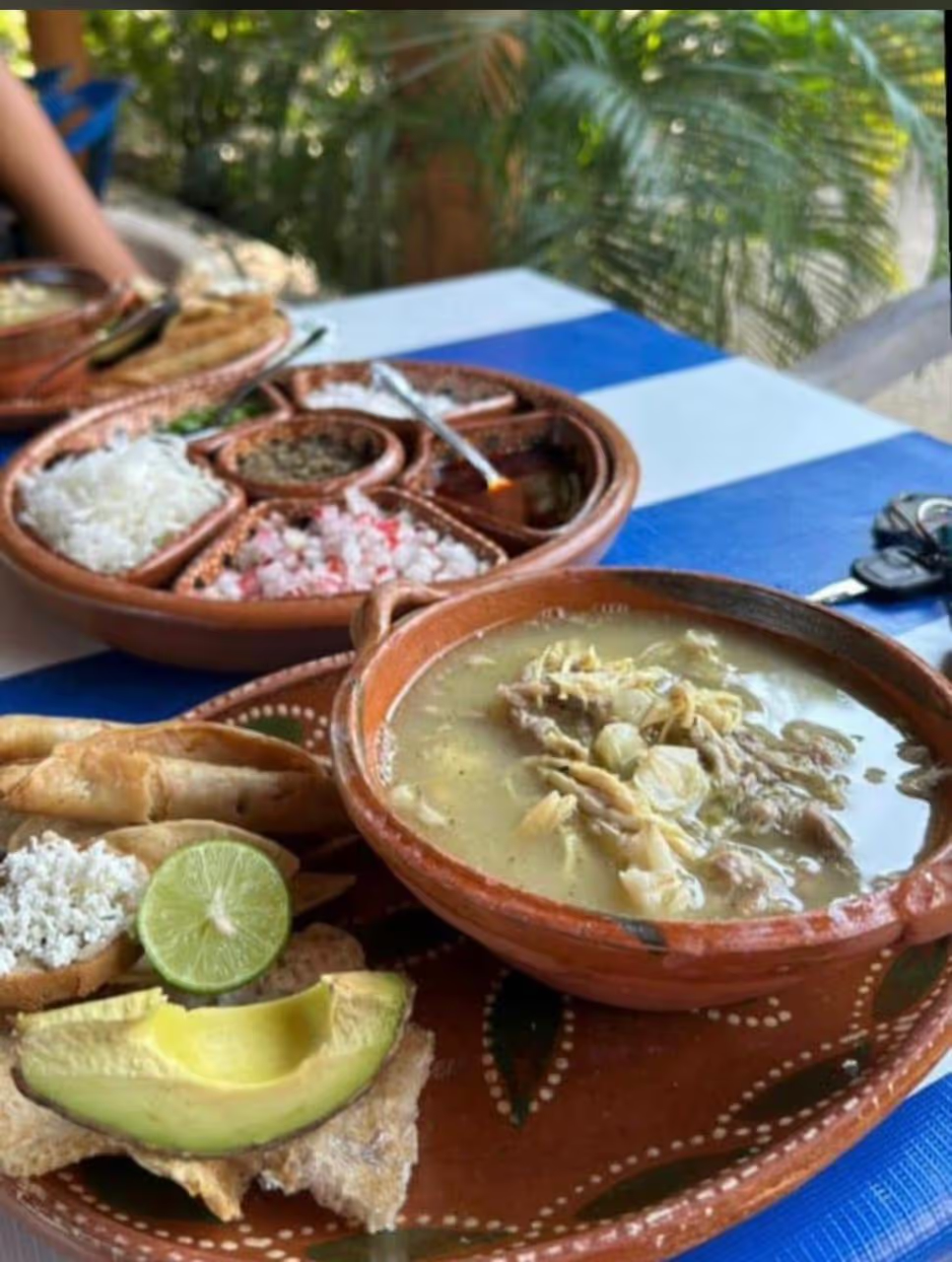
THE AFTERTASTE OF HISTORY
Five hundred years ago, pozole was prepared and offered to the divine as proof of life’s cycle. Today, it’s offered to friends, neighbors and anyone who walks in hungry. The ingredients have changed; the purpose softened; Jewish mothers finally satisfied.
Every Thursday, somewhere in Guerrero, corn bubbles in a pot, waiting to be transformed once again into sustenance, its story holding the faint echo of something sacred. No one talks about gods or sacrifice anymore, but pozole still marks a pause—between days, between people, between worlds.
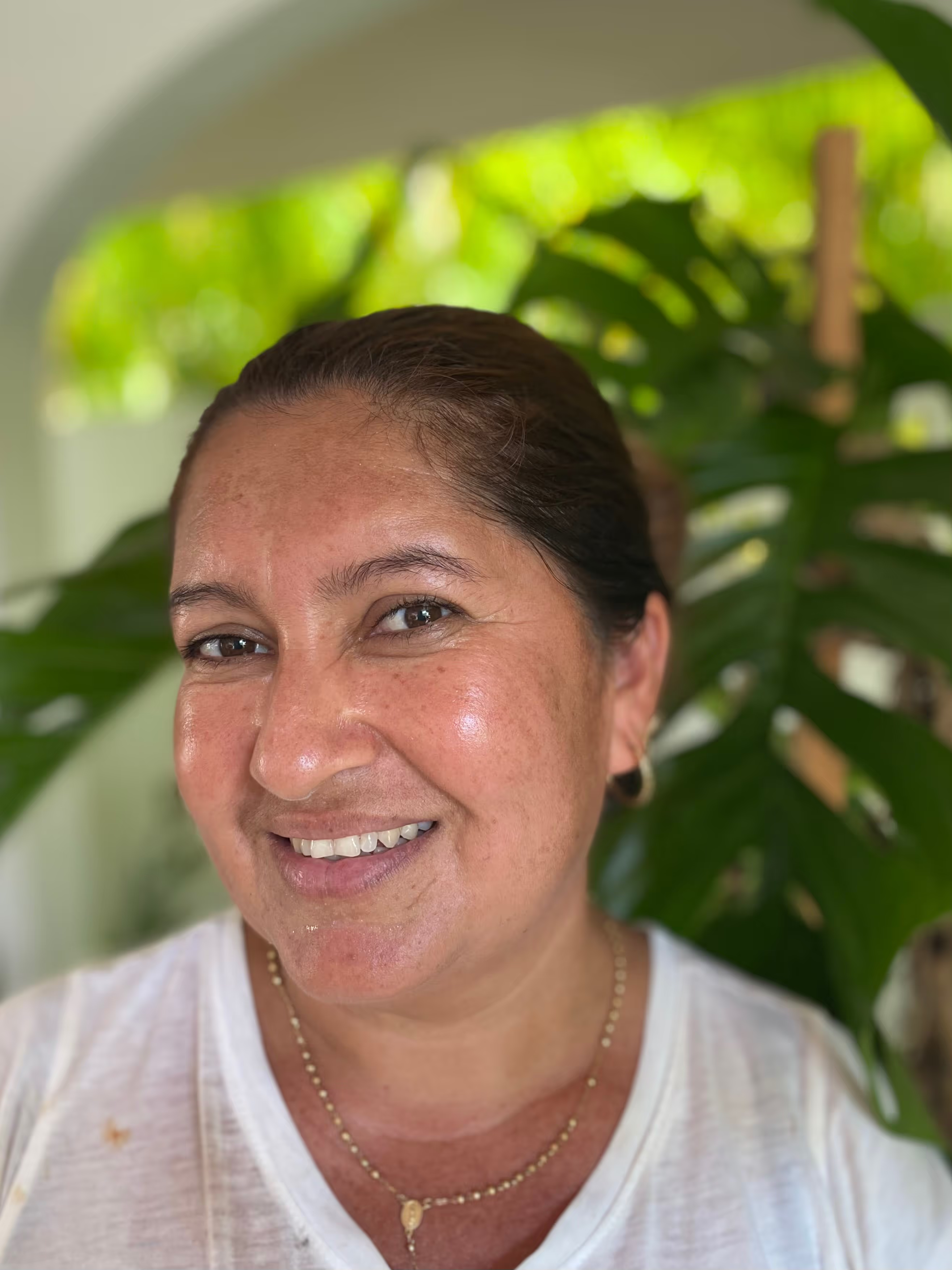
GUEST CHEF: Paloma Solis
Long before foil or parchment, cooks along Mexico’s coasts were sealing food inside leaves. The method—rooted in pre-Hispanic Mesoamerica—is the same logic behind tamales: wrap, steam, and let the leaf do the work. On today’s tables it still works like magic, keeping fish tender, aromatic, and faintly smoky.
If you don’t have a banana tree, your neighbor probably does—and if you don’t, you should. They’re easy, fast-growing, and it’s oddly satisfying to wrap dinner in leaves you picked yourself—not to mention the bananas!
My neighbor and friend, Paloma Solis learned this dish years ago, cooking for her mother after she was diagnosed with diabetes. Everyone in her family now enjoys this recipe. It’s light, simple, and full of flavor—fish steamed in its own little green envelope, no extra oil or fuss. Healthy, yes, but not in a joyless way. It’s also impressive for a dinner party: practical, a little glam, but still barefoot. The packets can be made ahead and popped straight into a hot oven or onto the grill when guests arrive.
The Basics
Use whatever local fish you have—sierra, pargo or huachinango all work beautifully.
Soften the leaves first: pass each banana leaf quickly over a flame or hot pan until it turns shiny and pliable; this keeps it from cracking when folded.
Then layer thin slices of tomato and onion, a few sprigs of epazote (which appears in the Genre Viva canasta, and I know a lot of us do not know what to do with it), a drizzle of lime, lemon or orange juice, a drizzle of oilive oil, and salt and pepper.
Wrap each portion tamale-style—folded and tucked—see below. If needed, toothpicks or string can work to keep it all together. Paloma says it's fine to just fold them.
Place the packets directly on a grill or hot oven for about 10-15 minutes, until the fish is tender and fragrant. The banana leaf seals in steam and flavor. Your nose will tell you they're done.
Variations
The same method travels well: add ginger, scalilions, soy, and a drizzle of toasted sesame oil for an Asian twist, or slip in some pineapple and chiles for something more tropical.
Serve the bundles right on a platter or plate—best to eat right away to enjoy the steam and fragrance.
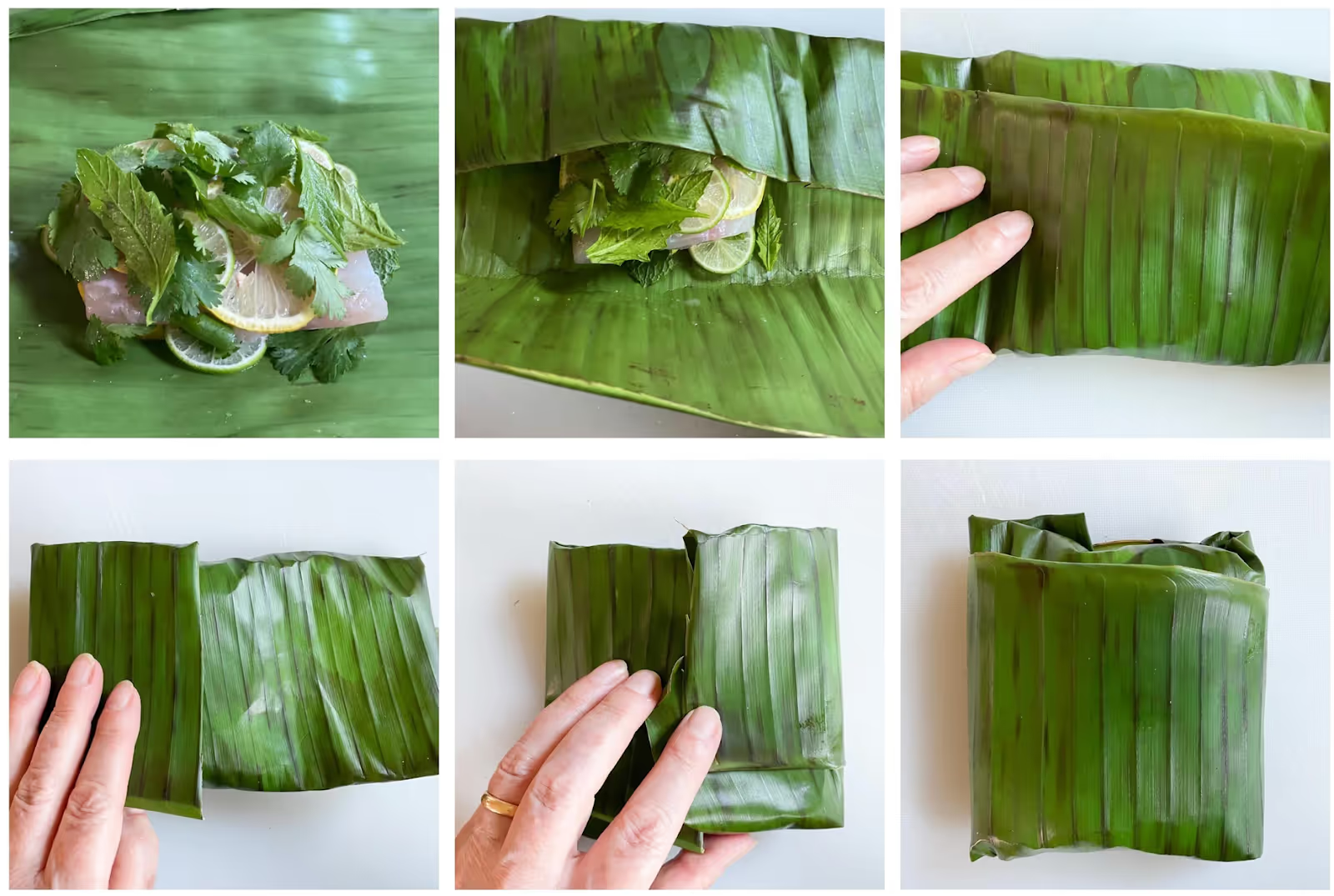
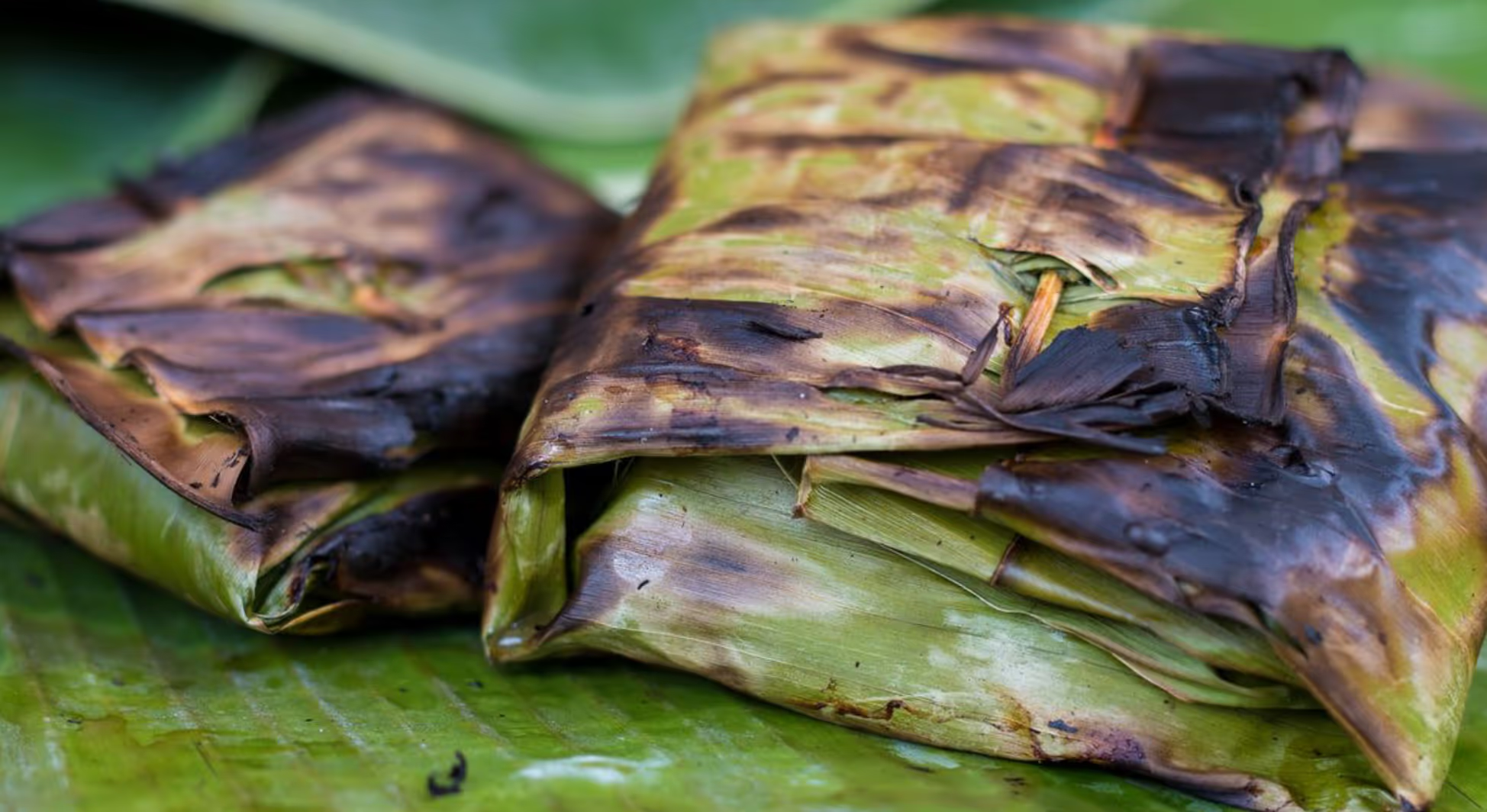


WHAT IS THAT FISH?
(written with a little help from Marcos Medina Oregón, who actually knows what he’s talking about)
If you’ve ever stood at the pescadería or stared at a menu here wondering “What is that fish?”, you’re not alone. The waters off our coast are full of incredible fish—but the names can be confusing, especially if you only know them in English or their global equivalents. Here’s a guide to the local favorites—what they are, what they taste like, and how best to cook or order them.
Majahua is the heart of local fishing life. Most mornings between 8 and 10 am, you can walk down to the beach and buy fish directly from the fishermen as they come in. It doesn’t get fresher than that.
In Troncones, there are now two pescaderías on Main Street: Sofkey (named for Sandra and Adrian’s daughters Sofia and Kayla) and Ruben and Carmen's old spot which is now run by Janna (the chicken lady). Seafood in Saladita is generally found in nearby Los Llanos and in the afternoon you may find divers coming in on the beach with fresh lobsters and oysters.
I asked Marcos—who’s been fishing and cooking on this coast his whole life—to help us break down the fish you’re most likely to see at the market, in restaurants, or on your plate.
There are three broad groups, based on where they can be found—“broad” being the key word obviously, as fish have no fences and a lot depends on seasons, moons, currents and tides.
- Orilla (close to shore) fish—caught close to land, firm and meaty, great for the grill.
- Near-shore fish—softer, delicate, better a la plancha or oven-baked.
- Offshore & sport fish—the big-game swimmers, like tuna and marlin.
Warm-water species such as dorado, tuna, and roosterfish tend to appear more often in summer; snapper, jack, and robalo are caught almost year-round.
FISH FROM THE ORILLA, THE SURF

Pargo (Snapper Family)
A larger cousin of the snapper family, often yellow or silver but can also be red. Many varieties. More oily than its popular cousin huachinango. Firm, flavorful flesh that holds up beautifully to many preparations.
Similar to red snapper (U.S)., tai (Japan), besugo (Spain).
How to eat: A la parrilla (grilled) or a la plancha (pan cooked), either con ajo (with garlic butter) or con guajillo (with butter and mild dried guajillo chiles). Good for soups and curries, also popular for mariscada, a mixed seafood stew (sometimes platter) similar to a clam bake—sounds so good right now :)
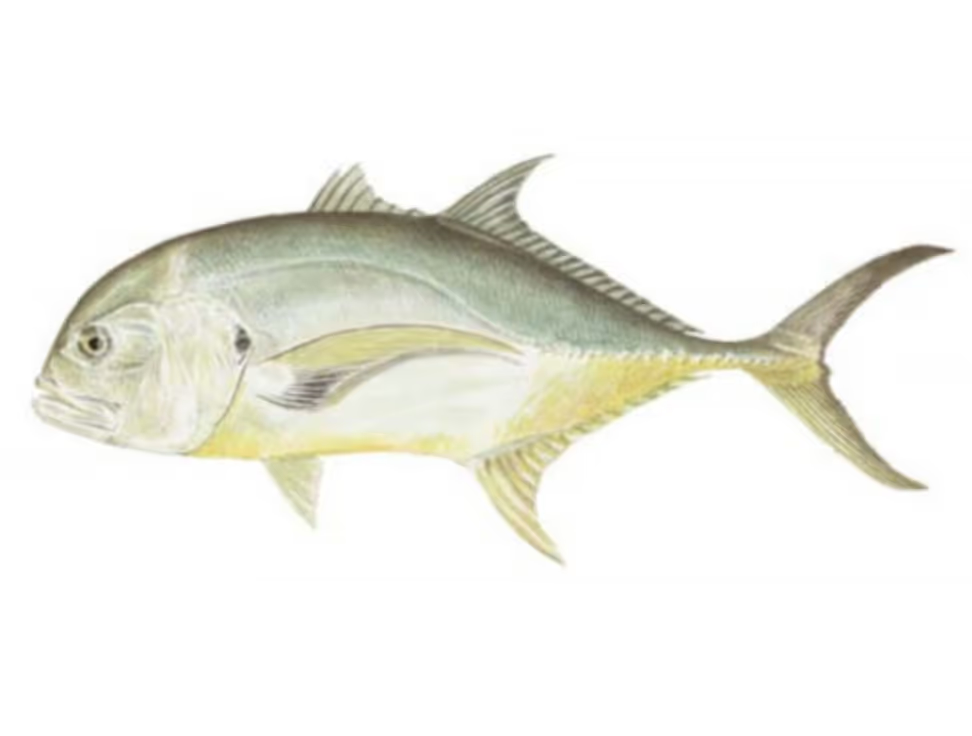
Jurel (Jack/Amberjack)
Dense, rich flesh—a fisherman’s favorite, for is its flavor and fight.
Similar to yellowtail, amberjack.
How to eat: Popular for tiritas. Grilled or roasted, cut into thick trozos, or steaks. Can hold up to marinades and salsas of your choice. Good for soup, too.
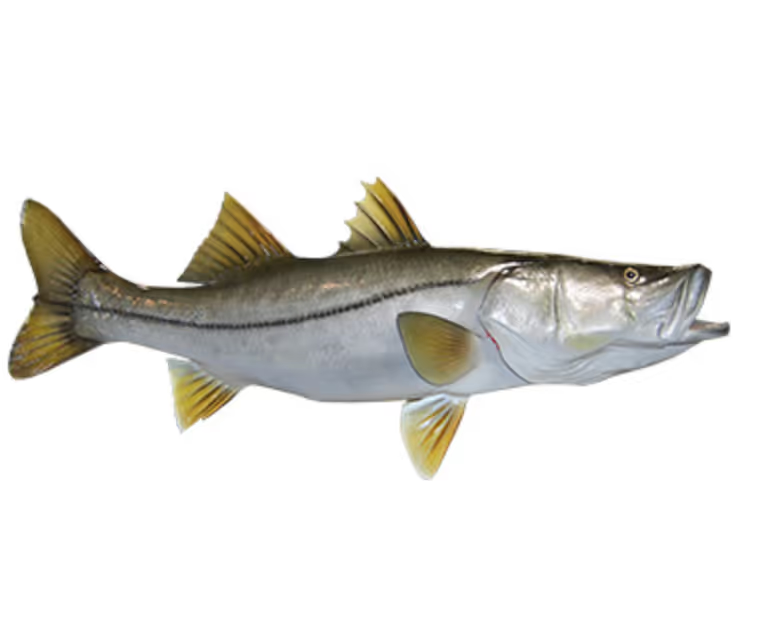
Robalo (Snook)
White, delicate, slightly sweet—prized across Mexico.
Similar to sea bass, barramundi, striped bass.
How to eat: Pan-seared, baked, or steamed. Excellent simply a la plancha (pan-fried), with garlic butter and lemon or lime. Thin filets are good for empinizadas (breaded).
NEAR-SHORE FISH

Huachinango (Pacific Red Snapper)
From the Nahuatl cuachilnácatl—meaning red meat. The word huachinango has come to mean the bright-red snapper that defines coastal Mexican cooking. It’s caught farther offshore than pargo; it has a lighter, flakier flesh.
Similar to red snapper, sea bream.
How to Eat: A la plancha or whole, con ajo or con guajillo, or split open and grilled a la talla-style, butterflied over coals until the edges crisp. Filets are excellent for a quick oven flash with soy, ginger and butter.

Dorado (Mahi-Mahi)
Fast-growing, firm and slightly sweet.
Sorta of like something between halibut and swordfish, or like dolphinfish (nothing related to dolphins).
How to eat: Grilled or deep fried, for tacos. Baked with citrus, herbs, or mango salsa; stands up to bold flavors.
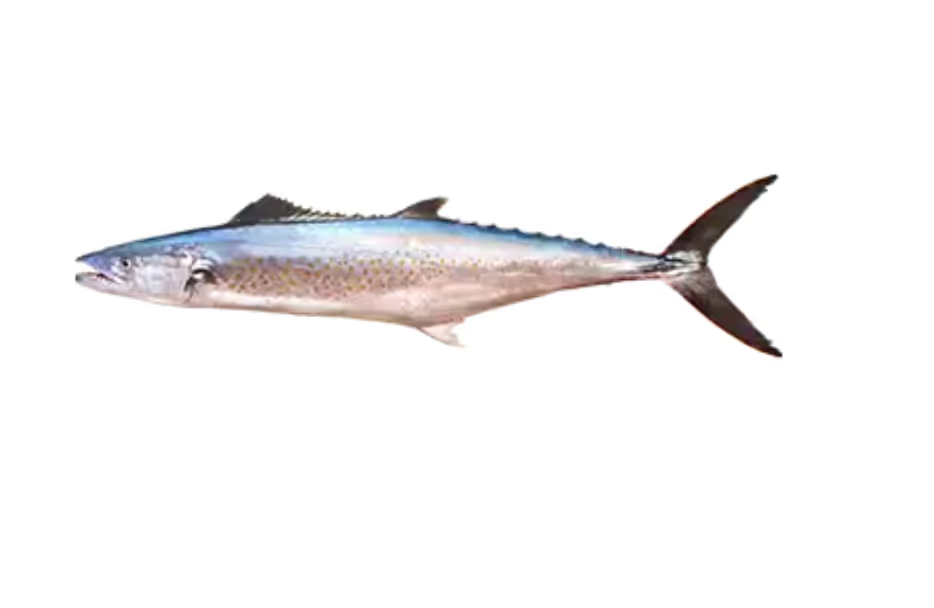
Sierra (Spanish Mackerel)
Here the sierra is pale, mild and flaky—not dark or oily, like its northern cousins.
Similar to jackfish but more delicate.
How to eat: Ceviche or quick a la plancha, or al vapour (steamed), or lightly seared so it stays tender. Thin, white filets are also good for breading.
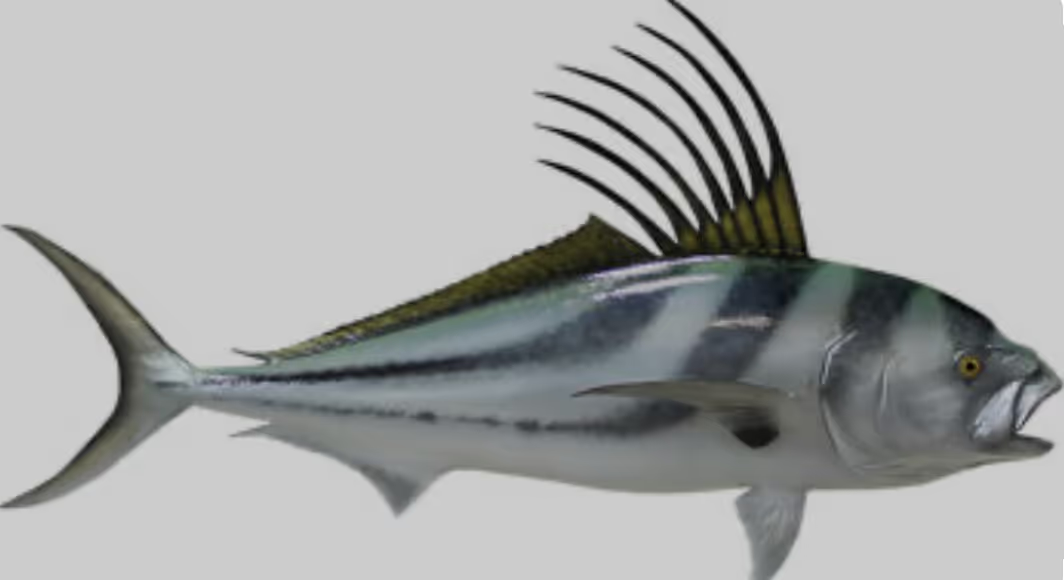
Gallo (Roosterfish)
Called the “lion of the sea,” this powerful, stubborn fish is prized more by anglers than chefs, but is surprisingly good when eaten fresh.
Similar to striped bass or mahi-mahi—firmer than snapper, leaner than jurel. Mild, white flesh.
How to eat: A la plancha or al parilla or al vapour
OFFSHORE & SPORT FISH
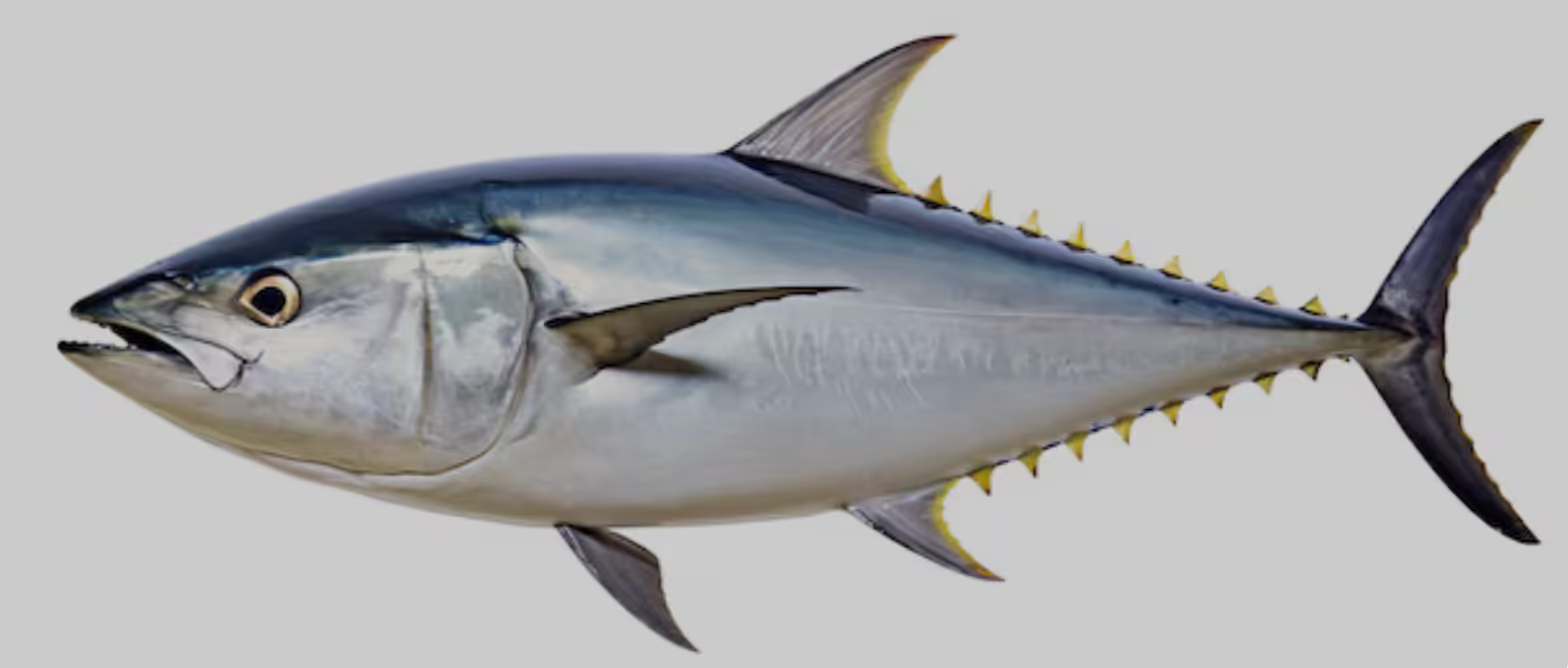
Atún (Tuna)
Usually yellowfin. Firm, clean, meaty.
Similar to yellowfin, ahi, albacore.
How to eat: Seared, grilled, or raw in sashimi or crudos. Keep it simple—seared rare, or even better raw.
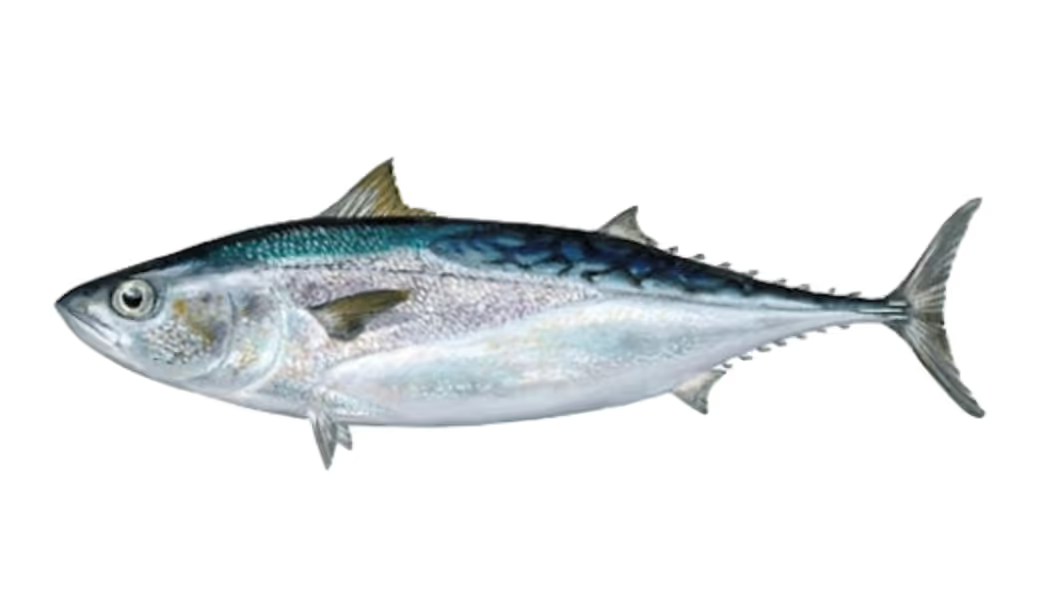
Barrilete (Little/False Tuna)
Smaller, darker, fattier cousin of tuna.
Best for: Grilled for tacos, or minced for machaca or pescadillas.

Marlín (Marlin)
Firm, rich flesh, often smoked.
Best for: Smoked, grilled. Better to fish for, than to eat. Can be tough and veiny.

Pez Vela (Sailfish)
Leaner than marlin, with deep-colored meat.
Best for: Smoked, in tiritas, machaca and pescadillas.
MORE TO FEAST ON
Tiritas vs. Ceviche
On this coast, the very popular tiritas are thin strips of raw fish, “cooked” only in lime juice with onion and chiles—bright, briny and pure Guerrero. Ceviche here, by contrast, can mean cubes of fish that are briefly blanched in boiling water before marinating, giving a softer, opaque texture. Often served with salsas Mexicanas, with a tomato or ketchup base. You can order ceviche natural which will get you a version closer to tiritas. Both are delicious—just different variations..
Pez vs. Pescado
Pez: Alive swimming fish
Pescado: not alive—food
Common cooking and serving terms
Pescadillas—a fried fish empanada
Mariscada—a mixed seafood stew
Empinazada—breaded
Frito—fried
Filete—fileted
Entera—whole
A la plancha—pan cooked
A la parrilla—grilled
Al vapour—steamed
A la talla—butterflied over coals
Al ajo—with garlic
Al diablo—hot
Now, next time you’re at the market or ordering pescado del día, you’ll know what you’re getting—and how best to enjoy it. Remember, every fish has its flavor and its fan club. The best way to learn is still the old-fashioned way: ask your fisherman, ask your neighbor, or ask the person at the next table what they’re having.
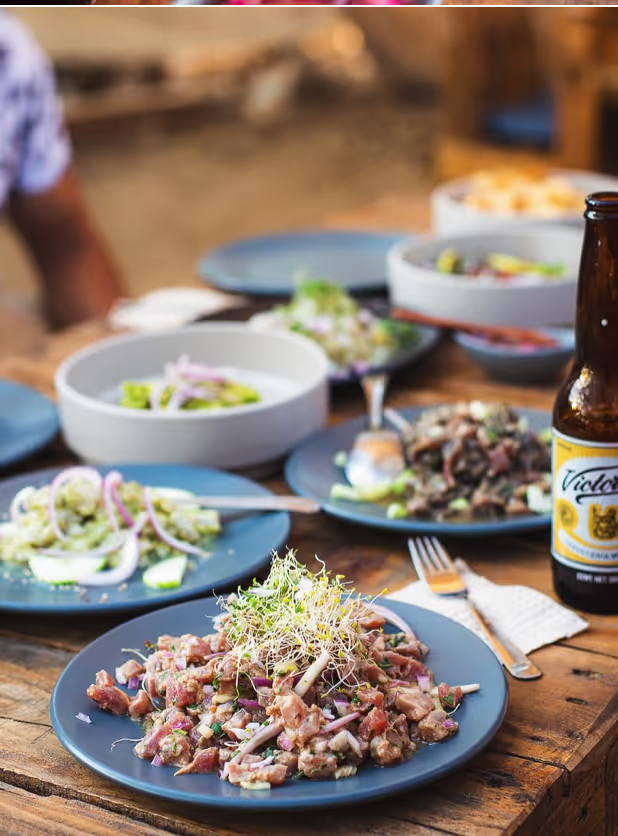
What’s on the Table:
What’s New This Season
Lobo del Mar: History on a Plate
Lobo is leveling up this season with Cocina y Narrativa, a monthly five-course dinner series exploring Mexico’s culinary history through storytelling and food–from the favorite dishes of Frida and Diego to the elegant tastes of Maximiliano de Habsburgo. Seats are limited–10 per dinner, reservations recommended–and rumor has it a Chilango breakfast menu is in the works. Ping-pong, board games, futbolito, and a Tuesday morning bazaar will also be added this season to add to the casual community vibe.
https://www.instagram.com/lobodemartroncones/
Quetzal
Bigger and better with the same good vibes. One of Troncones’ most beloved daytime hangouts has had a full refresh–expanding its seating, adding creative new vegan dishes and introducing a few surprises—all while keeping the smoothies, coffee and brunch staples that made it a favorite.
https://www.instagram.com/quetzal.troncones/
Old favorites
TRONCONES
Indigo
A Troncones favorite for Argentine-style grilled meats, wood-fired pizzas, nice big salads and empanadas. The in-house mini bakery is a must-visit for breads and that dessert you need for your dinner party. Cheeses and gelato, too.
https://www.instagram.com/indigo_troncones/
Café Pacifico
A long time staple; relaxed, shady and reliable. Breakfast, lunch, smoothies & coffee, sandwiches and baked goods. Gelato too! The adjacent boutique Pleamar make hanging out a little longer easy.
https://www.instagram.com/cafepacifico.troncones/
Mi Jardín
Both a local and visitor favorite for its signature wood-fired pizzas and pastas, which are handmade with a Mediterranean-Mexican twist. It’s also one of the few spots in town with a regular live music schedule–featuring tropical, acoustic and contemporary sets every Monday, Wednesday, and Friday from 7 to 9 pm.
If you’re a pizza person (and who isn't?) take note, their 2-for-$500 MXN special runs daily from 2 to 5 pm and stretches into the evening on Tuesdays and Thursdays.
https://www.instagram.com/mijardintroncones/
Costa Brava
Perfectly situated on the beach in Troncones–one of the original beachside restaurants. Super friendly service, excellent fresh seafood, cold beer and tropical cocktails. Loungers by the pool and on the beach. Staycation, anyone?
https://www.instagram.com/costabravatroncones/
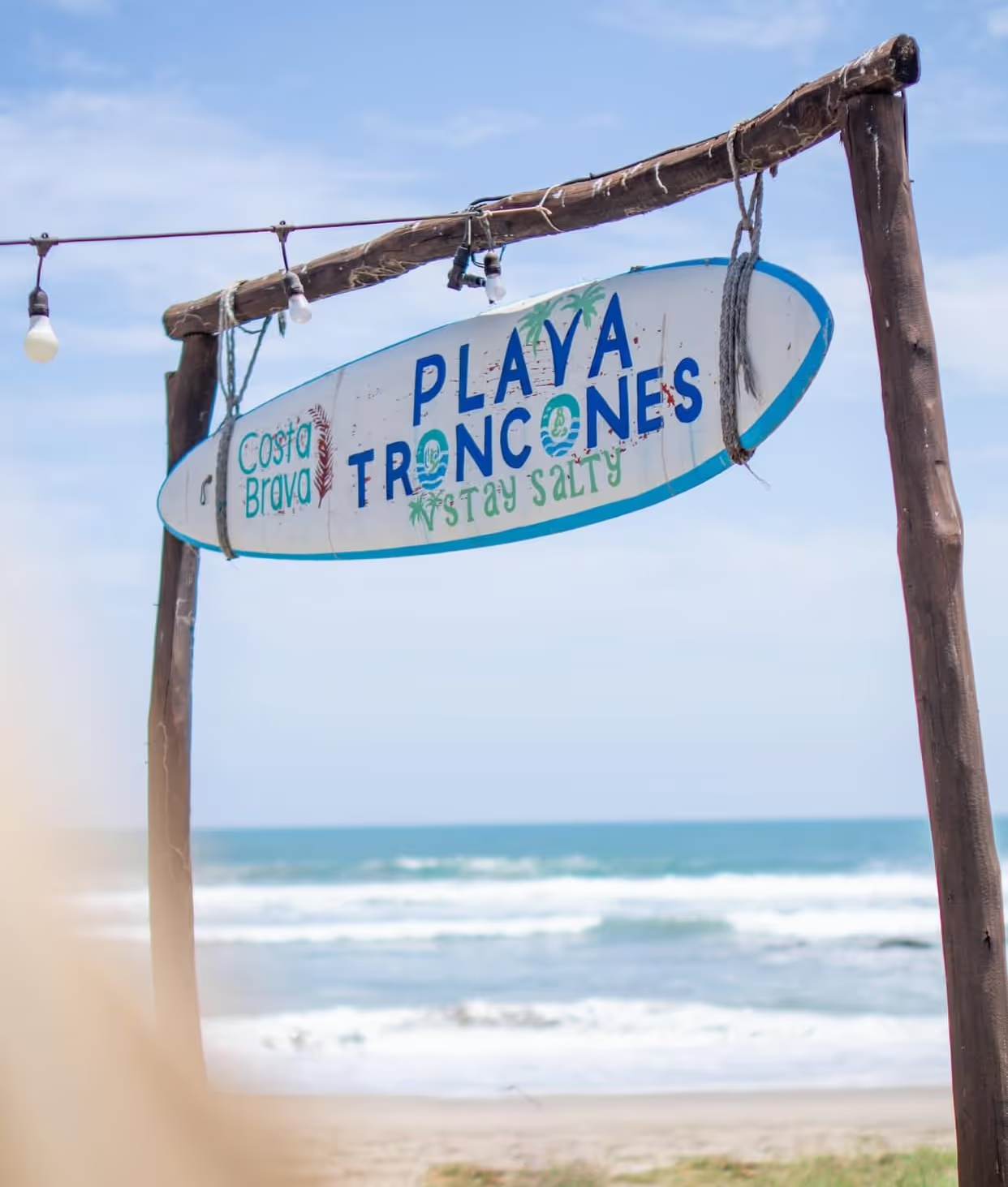
Lo Sereno
Minimalist, chic and dependable. As close to an elegant dining experience as Troncones delivers. Gorgeous beachfront setting; simple, elegant food; great cocktails.
https://www.instagram.com/losereno_casadeplaya/
Marro's coffee shop and bar
Nicely situated casual spot for good coffee or drinks. Catch the game on TV, meet some friends, watch the world go by.
Next to Casa Kitty
The Inn at Manzanillo Bay
Dreamy beachfront dining on the bay looking north. Sophisticated as your local country club, featuring consistent service and well-presented food. Ideal for sunsets, special occasions or visitors in town.
https://www.instagram.com/theinn_manzanillobay_troncones/

Los Raqueros
This classic beauty, an old school hacienda right on gorgeous Manzanillo Bay is a secret worth sharing. Exceptional service, delicious food; both traditional and seasonal Mexican; BBQ ribs every night and some simple classics. You'll feel like youre on vacation, even if you're not!
https://www.instagram.com/los_raqueros_bed_and_breakfast/
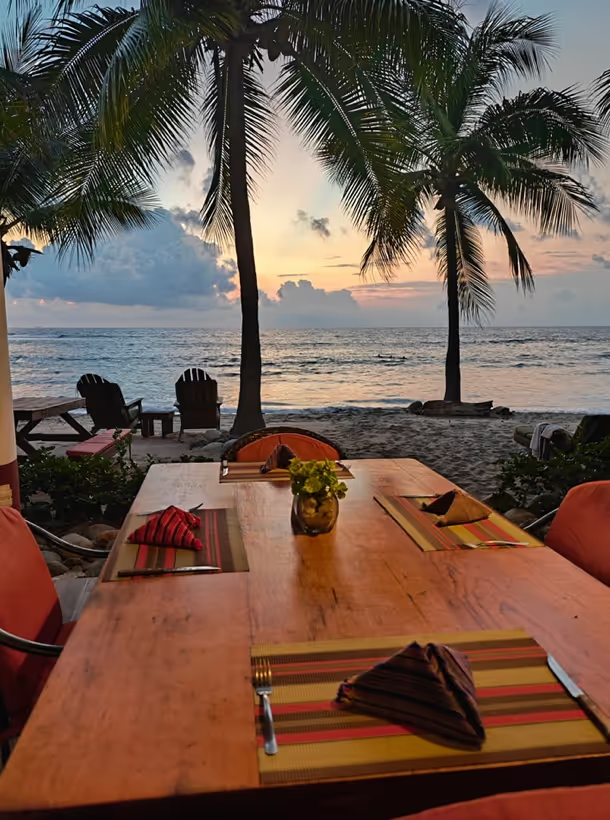
La Cevichería
Owner Vianca and bartender Elfie bring fresh and proper ceviche. Unique cocktails and great vibes are delivered here daily. Black margarita, anyone?
https://www.instagram.com/lacevicheria_troncones/
El Chiringuito de Fran
A stunning newcomer to the Troncones scene, and different, too. Its Spanish/Mexican fusion-style tapas and other plates are served with an Ibiza chic in a feet-in-the-sand setting. Great bar and better people watching. And, yes, this is the old Roberto's spot.
https://www.instagram.com/elchiringuitodefran/
La Mexicana
A longtime local favorite for traditional Mexican comfort food with super friendly service. Saturday brunches feature 2x1 mimosas and live guitar music, 10-12. Also offers live music, usually on Mondays, Wednesdays and Fridays, 7-10pm.
https://www.instagram.com/lamexicana.tronconesmx/
Mingo
Family run, super-relaxed garden setting. Thin crust pizzas, burgers, fresh fish and pastas - a nice bar scene, too.
https://www.instagram.com/mingorestaurante/
Rufi's
20-year old family-run classic ceneduria. Great local and traditional mexican food, and stuffed baked potatoes. Also, home to the Troncones Cooking School.
https://www.instagram.com/cenaduriarufi_/
https://www.instagram.com/troncones.cooking.school/
Rumor Mill:
There’s talk of a chicken-wing joint opening in the old La Italiana space.
And, there is a buzz about some new blood coming to the old beloved Eden restaurant this season.
Check back and we’ll tell you more.
MAJAHUA
Same Mariscos, New Energy
Majahua’s food scene is all about the sea. While many menus look similar–grilled fish, tiritas, pulpo and shrimp in every form–each place has its own vibe. It’s worth wandering and trying them all.
New on the map is Terrazza del Mar, taking over the old Marta’s beachfront space offering casual seafood dishes just steps from the waves. On the other side of town, Mahahual sits high above the beach with one of the best sunset views around.
Long-time staples Las Brisas Mexicanas and Un Piedecito de Cielo are still doing their thing. Chef/owner Esperanza from Piedecito is known for her crudos and fresh tuna preparations. Both with unforgettable beach front dining and sunsets.
Sandy is now cooking near the kindergarten–upstairs in the restaurant space that once housed Yela’s–turning out excellent sopes and seafood specialties.
Yes, there’s still Antonio’s–a place for watching NFL and college football while enjoying a proper steak or two.
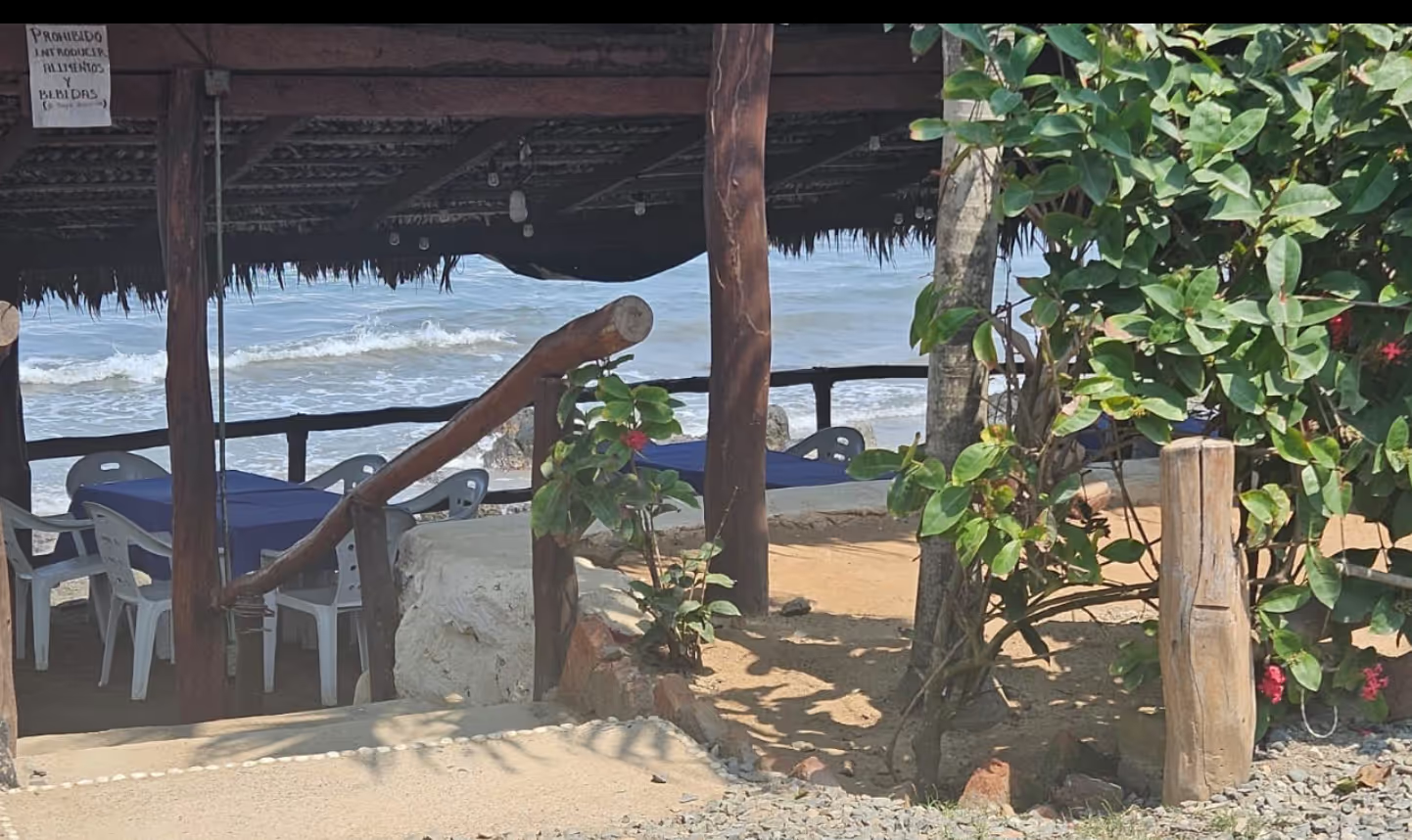
SALADITA
While not yet a dining destination there is good food, great coffee, and fun times to be had in Saldita. Most meals here don’t need reservations. You’ll eat in plastic chairs, with your feet in the sand or under a palapa, surrounded by surfers, dogs, kids, and the crashing of the waves.

The hub of Saladita, La Hacienda, serves up great smoothies, iced lattes, chilaquiles, burgers, pastas, and more. Hacienda Plaza is a one-stop destination for a meal, a coffee, a business meeting, some groceries, cash from the ATM, a bottle of wine–even a gift, a tattoo or a new bikini.
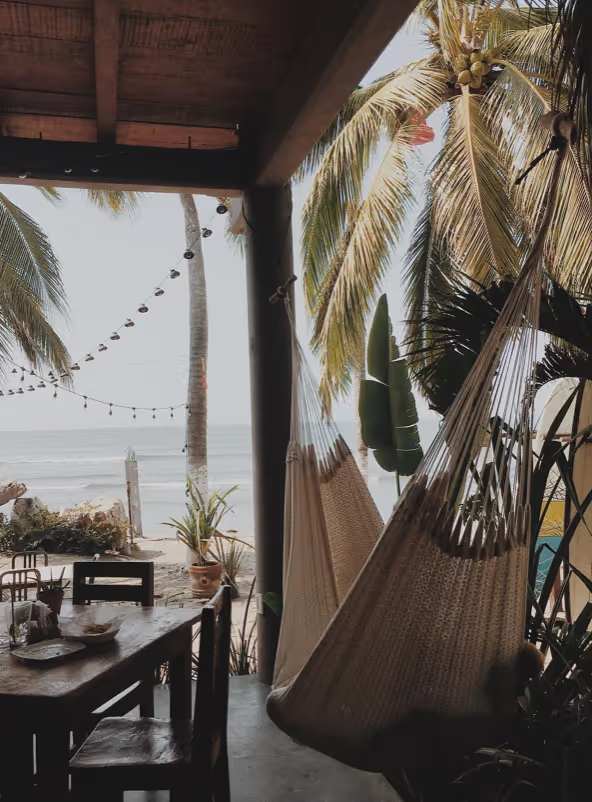
Down on the beach you'll find several classic break front eateries. Marea features a variety of seafood dishes with themed nights on weekends and live music, creating a vibrant feet in the sand dining and chilling atmosphere. At Ilianet's The ceviche is bright and generous, the tiritas sharp and citrusy, and the fish always grilled just right. You can order in your rashguard, eat with your hands and be in the water again in under an hour. One of the first spots on the beach, Lourdes offers a variety of Mexican dishes, pizzas and burgers. With a balcony facing the point break, it’s a great place to eat, chill and enjoy live music. Back inland, look for Acadia, a new café, surf shop and boutique. Expect good espresso, nice vibes and quiet seating, all surrounded by mango trees.


GUEST CHEF: JOCELYN FORMENTO
INGREDIENTS:
- 2 lbs pork butt or shoulder, cut into chunks
- 1/2 cup soy sauce
- ¼ cup rice vinegar (or traditional coconut vinegar if available)
- 1 Tbsp black peppercorns, crushed (sub ground black pepper),
- jalapeño or red chile flakes to your liking
- 6–8 cloves garlic, roughly chopped (about 2 Tbsp)
- 3–4 bay leaves
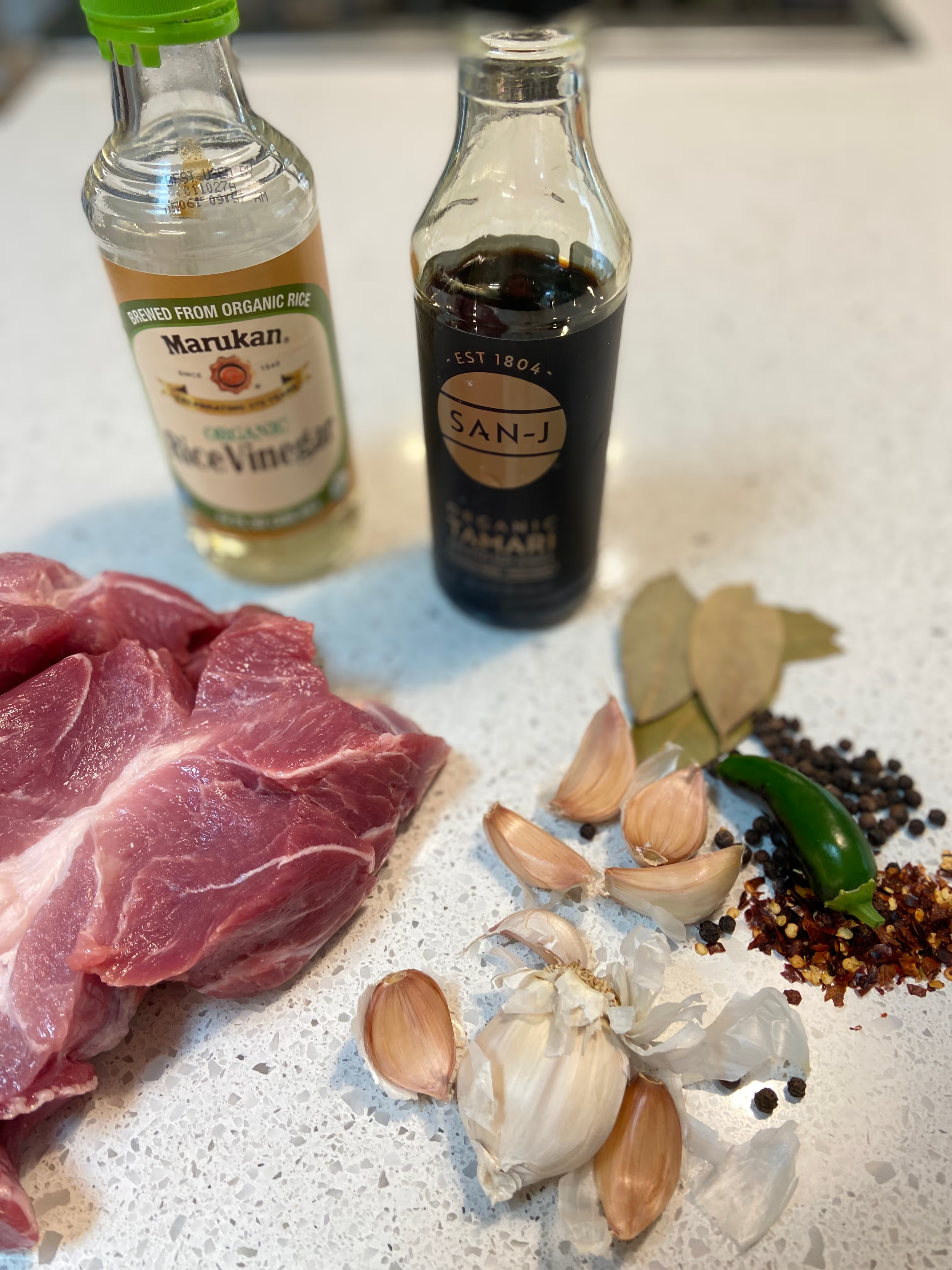
Marinate the pork: In a large bowl, combine the pork, soy sauce, vinegar, garlic, pepper, and bay leaves. Let it rest for at least 30 minutes, or refrigerate overnight for a deeper flavor. Sear the meat: Heat a heavy pot or Dutch oven. Lift pork from the marinade (reserve liquid) and sear until browned on all sides. Simmer low and slow: Pour the reserved marinade over the pork. Add ½–1 cup of water, just enough to cover the meat. Bring to a boil, then reduce heat to low, cover, and simmer for 45–60 minutes, until the pork is tender and infused with flavor. Finish and serve: Uncover and let the sauce reduce to your desired thickness. Taste and adjust with extra soy sauce or vinegar if needed. Serve hot over steamed rice.
TIPS & VARIATIONS
Make-ahead magic: Adobo tastes even better the next day, after the flavors have deepened. Store leftovers in the fridge for up to 4 days. Freezer-friendly: This dish freezes beautifully—portion into containers and reheat gently for a quick weeknight meal. Protein swaps: Try chicken thighs, drumsticks, or a mix of pork and chicken for a lighter take. Extra umami: Add a splash of fish sauce or a pinch of sugar to balance the tang of vinegar if desired. Vegetarian twist: Swap the meat for firm tofu or mushrooms—adobo’s sauce is so flavorful it carries the dish.
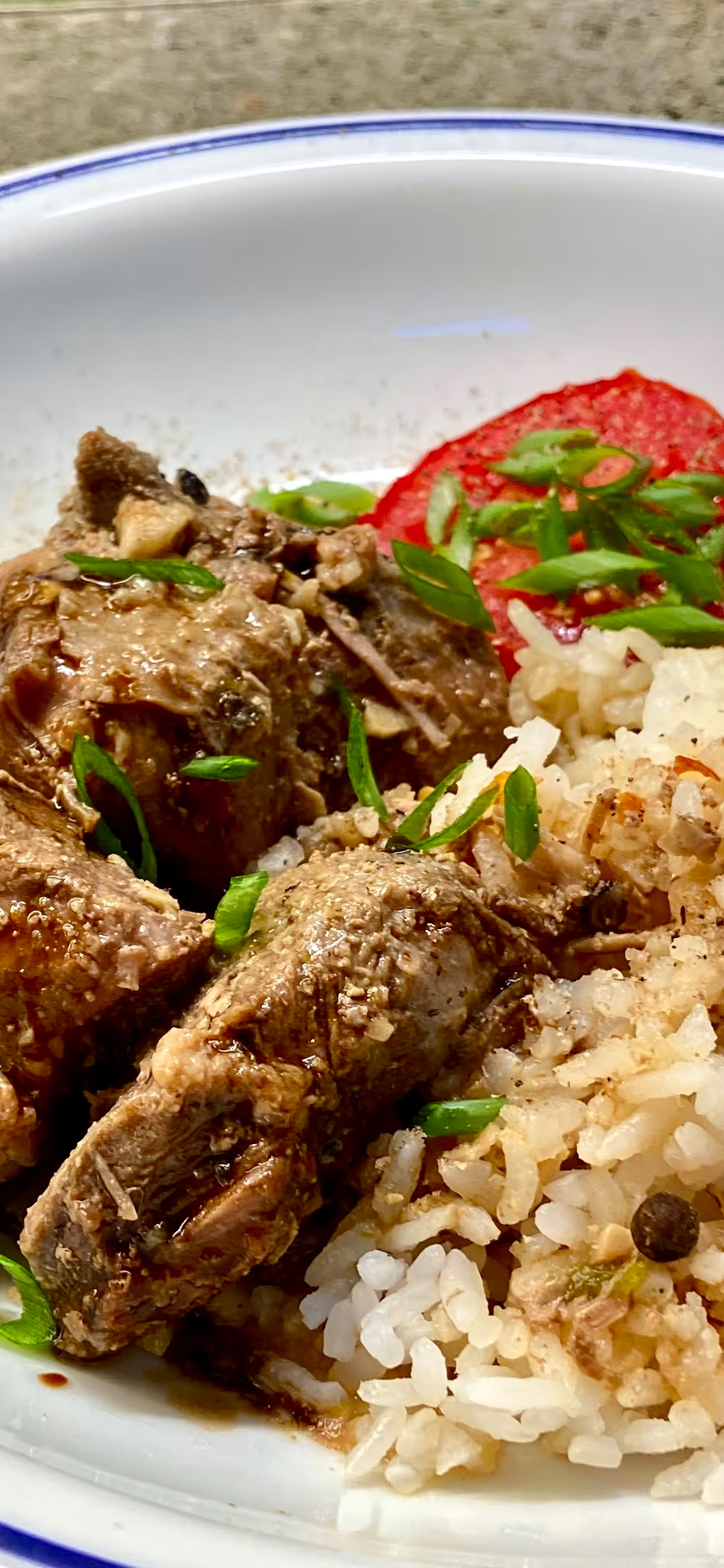
Adobo is more than just a beloved Filipino staple; it’s a dish with a passport. Historians believe it traveled aboard the Manila–Acapulco Galleon trade route from the 1500s to the 1800s, carrying flavors between Asia and the Americas. Vinegar, the dish’s star ingredient, was prized for its preservative qualities—essential for long sea voyages where fresh provisions were rare. Later, Chinese traders brought soy sauce to the Philippines, transforming the recipe and giving it that irresistible umami balance we crave today.
Good luck,
Jocelyn
See Jocelyn's beautiful fiber arts at Jocelynformento.com
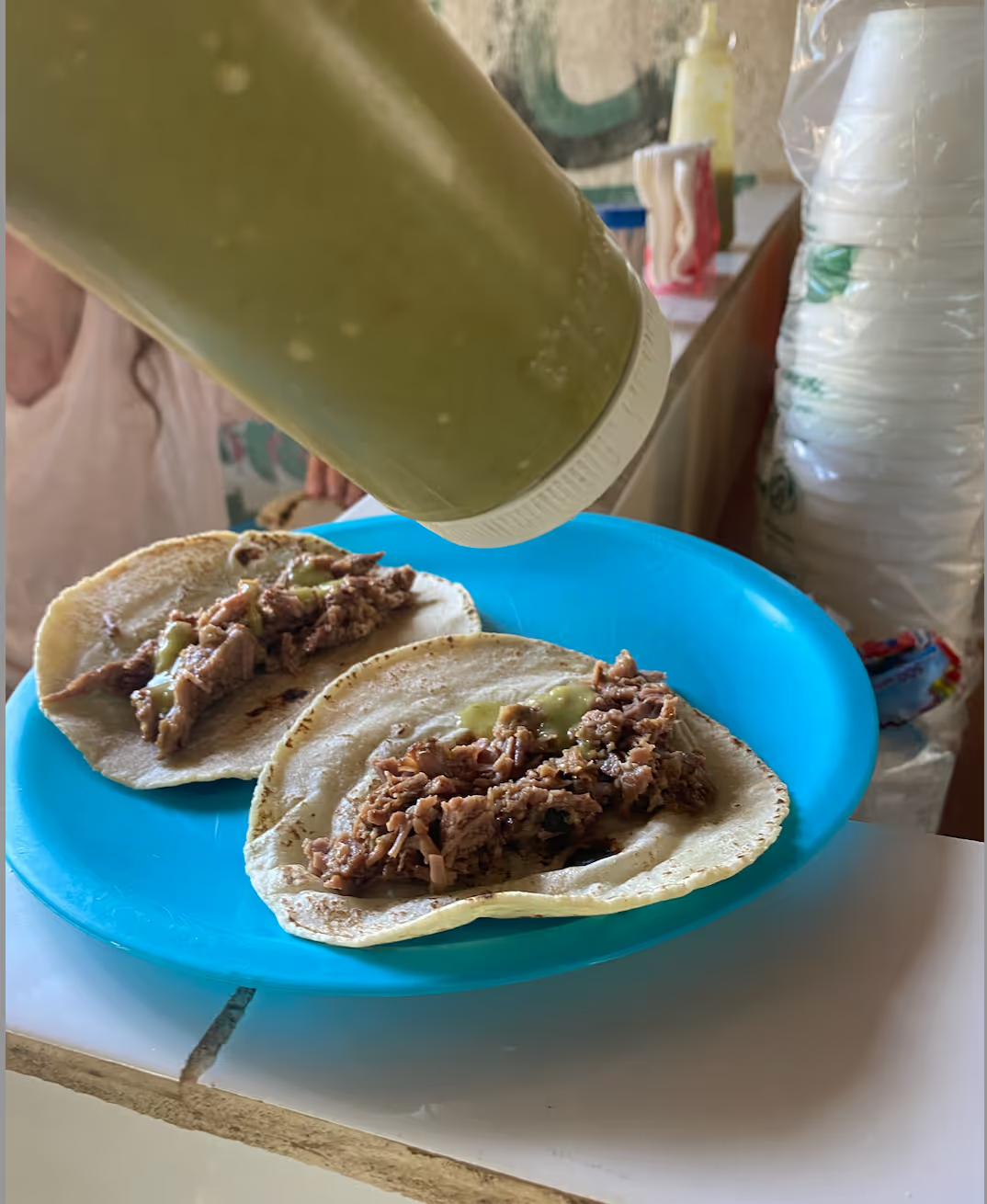
Eat Like a Local
Some of the best eats in Troncones. Majahua and Saladita are off the main drag, featuring dirt floors, plastic chairs and a few chickens running around.
It’s food that’s part of daily life here—quick, hot, affordable—cooked with the same care you’d give your own family. Visitors sometimes hesitate, but there’s nothing to be afraid of. This is comfort food in its purest form.
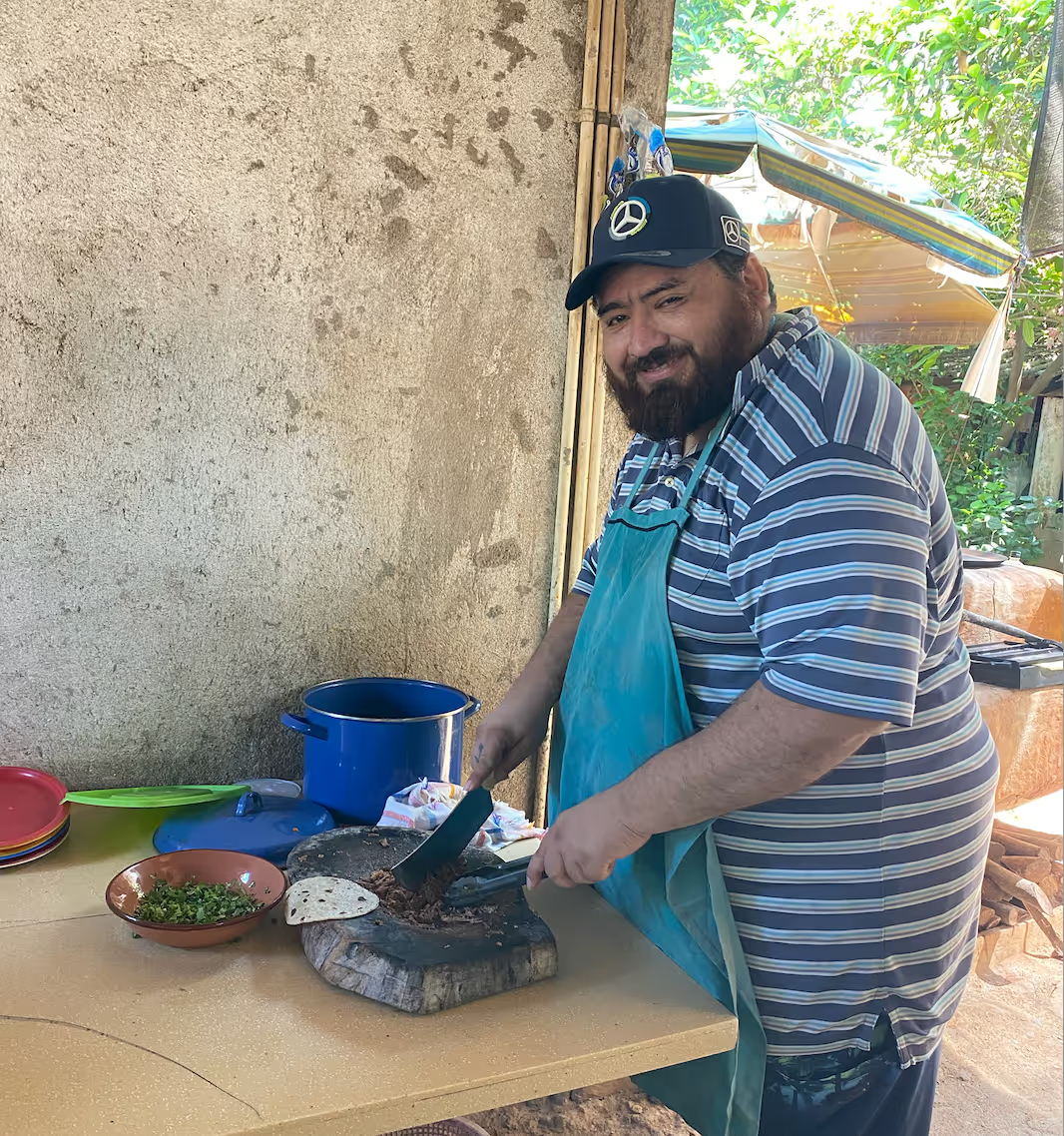

Why This Food Matters
Street food and cenedurías are home kitchens made public. The recipes are family ones, the hands behind them are often mothers, aunts or grandparents, and the customers are the neighbors they’ve known all their lives.
Eating here isn’t about chasing “authenticity”—it’s about stepping into the rhythm of the town. Every taco, every steaming cup of atole, carries a piece of Guerrero’s everyday story.
On weekend mornings at either Margarito's carnitas or El Gordo's barbacoa, you'll inevitably find your friends and neighbors, a contractor or two, a fellow foodie in the know or kids bringing tacos home for the family—don't miss the camaraderie and don’t forget to say provecho to anyone about to eat or eating!
What You’ll Actually Find
Forget the menu. Here’s what locals line up for:
Tacos: not just one kind. Usually sold by the piece.
- Carnitas—slow-cooked pork, chopped and piled into tortillas, often with shredded cabbage pickled onions and cilantro.
- Barbacoa—usually beef, sometimes goat, stewed until it falls apart, ask for a cup of consomme; its the Mexican version of “french dip” and that consomme is some of the best bone broth you can have. Whenever i feel a little bug coming on i go down for a cup of hot consomme—its the best shot in town!
- Al pastor—smoky, spicy shredded or sliced pork often with a touch of pineapple.
Sopes: thick corn bases, almost like an English muffin, topped with beans, cheese and piled high with lettuce, onion, tomato, crema and whatever meat you choose. Usually sold in orders of three.
Tamales: look for the woman with a couple of steaming pots at a table. She’ll likely have rajas (poblano chile strips with cheese), pork in red sauce or chicken in green sauce. Soft, filling goodness wrapped in corn husks.
Pozole on Thursdays: a tradition across Guerrero. Hominy stew with pork or chicken, served with a tray of toppings—shredded cabbage, sliced radish, dried oregano, lime, tostadas on the side. Entire families plan their week around it. Check out Mine's in Buena Vista, just a short drive south, for a memorable experience.
Aguas & Atole: not just drinks, but part of the meal.
- Aguas frescas—big glass or plastic jugs of fruit waters. Jamaica, hibiscus tea, is common as are piña, pepino y limon and horchata [pineapple, and cucumber and lime, and a sweet rice drink with cinnamon].
- or Atole—a traditional drink made with masa harina, piloncillo [unrefined brown sugar], cinnamon and vanilla.
Food Safety—The Real Deal
Most local eateries are safer than people think. The rules are simple:
- Go where people are eating—turnover keeps food fresh. These places make the food that day and sell out—there are no leftovers.
- Trust your eyes and nose—if it looks and smells good, it probably is.
- If you’re nervous, skip the cilantro or raw veggies. Although most are washed and disinfected, these carry the highest risk of contamination. The truth is you're just as likely to get sick at a fancy restaurant as you are here. Common sense is key.
How to Order Without Stress
Ordering is part of the fun. You don’t need polished Spanish—a smile and a few words go a long way. Most of these spots won't have a menu. You'll need to ask:
- “¿Qué recomienda?” = What do you recommend?
- “¿Que tienen hoy?” = what do you have today?
If you don’t understand the answer, just shrug, smile and say, OK! Trust you will eat something amazing and you will be supporting local business, help to keep tradition alive and have an adventure!
Other tips on ordering:
- “Salsa a lado “ or “salsa aparte” = salsa on the side
- “Con todo” = with everything (onions, cilantro, salsa)
- “Bien preparados” = well prepared (with everything)
- “Para llevar” = to go
Why It’s Worth It
Every peso you spend goes straight to a family. You’ll taste flavors you won’t find in more standard restaurants. And you’ll be part of the communal ritual—neighbors talking, watching your food being cooked and prepared right in front of you—the smells and tastes of real Mexico.
You came to Troncones for something real. Start with the comida!
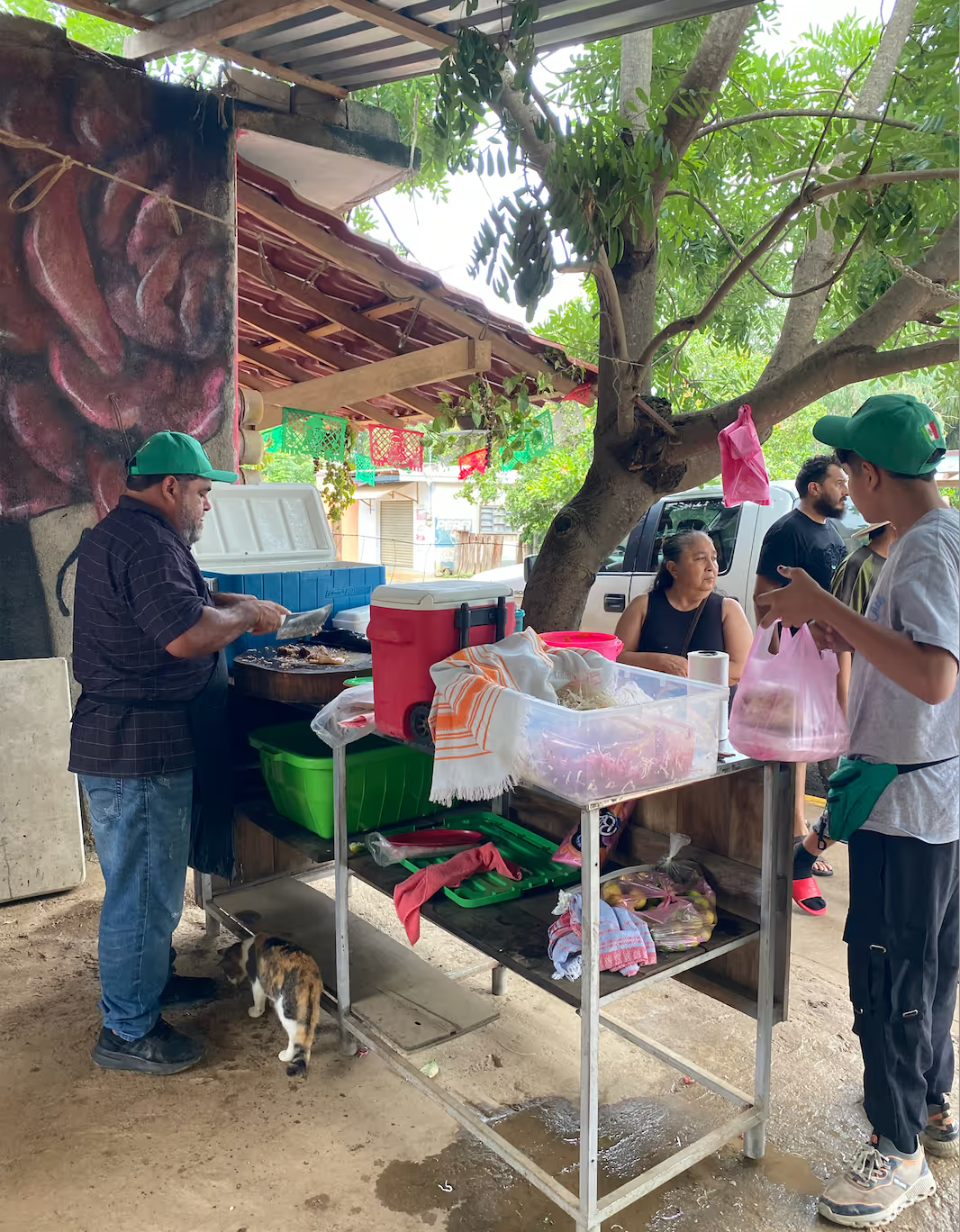
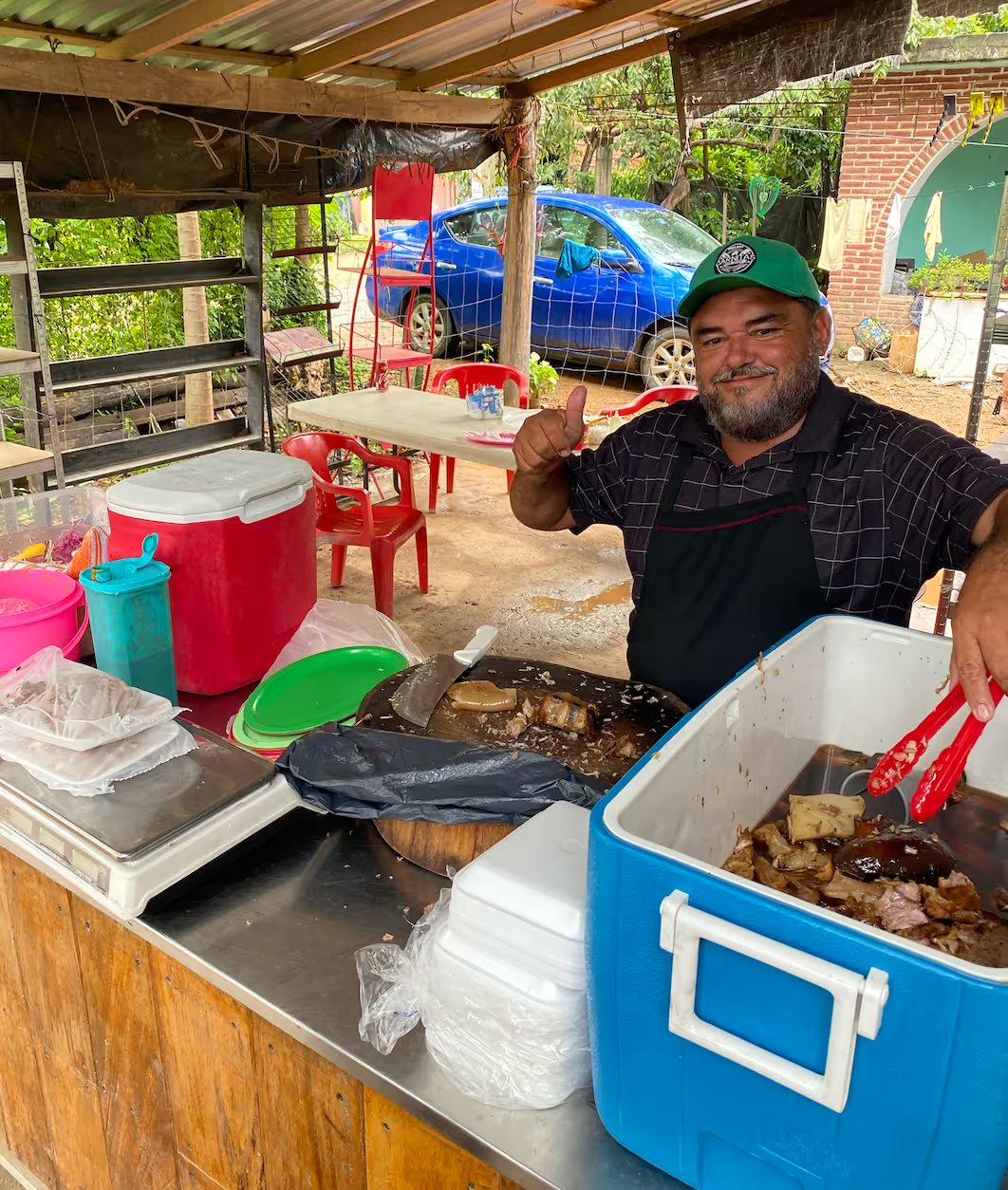
%2022.56.27.avif)
FROM FARM TO TRONCONES, WEEKLY
Since 2018, Amanda Harris has been heading up the farm at Playa Viva, approximately 20 acres of land set within an idyllic paradise/boutique hotel on the beach in Juluchuca, 40 minutes south of Troncones, 20 minutes beyond the Zihuatanejo airport on the road to Acapulco. Under the Playa Viva “banner”, Amanada’s crews have been applying agroecological principles to the farm, employing regenerative practices, composting systems and rainwater harvesting, each designed to nourish both the soil and support the community.
This summer Amanda announced the farm was taking on a new name, Gente Viva, to reflect its status as an independent entity and that Gente Viva would continue to serve the Troncones area during the high season, delivering weekly canastas–weekly baskets–each Thursday.
Those baskets, now to be called Canasta Viva, feature organic vegetables, microgreens, fruit, farm-raised pork, cacao products and more–available by subscription and by special order–delivered to Troncones for pick-up at 1 pm. Freshness is guaranteed; most of the produce is harvested that morning. A few nearby restaurants have also begun sourcing from Gente Viva, making it a growing part of the Costa Grande food network.
In announcing the name changes, Amanada invited the local communities to come to Gente Viva, writing, “Don't miss the opportunity to see the farm and meet the team for yourself. You can take an interactive tour of the farm from 10 am to 12 pm with a little notice. Pairing a farm tour with a day pass at the Playa Viva hotel is an experience we all need–an opportunity to connect to the rhythms and cycles of nature through the eyes of the people who tend the land and a meal poolside with a colorful display of the ingredients from the same thriving ecosystem.”

%2022.53.34.avif)
What’s in the Canasta Viva, the Gente Viva Basket?
– Tropical fruits: papaya, banana, platano, starfruit, chico zapote, nance, jackfruit
– Leafy greens: kales, swiss chard, katuk, spinach, chaya, purslane);
– Herbs like basil, dill, cilantro and celery; and our famous microgreens and sunflower sprouts
– Seasonal veggies, including cucumber, tomatoes, squash, eggplant, fresh corn, okra and yuka
– Other local flavors and medicinals like turmeric, moringa, ajenjo, insulina, chipilin, huazontle
– Organic pork, fed and housed on the farm
– Go-along all-natural products like chocolate for smoothies or snacking, coffee, dried beans; dried hibiscus flower and tea blends.
To order
Contact Naomi by email or text: naomi@genteviva.mx or +52 722 247 5561)
Other links
https://www.instagram.com/genteviva_permacultura
https://www.responsibletravel.org/blog/playa-vivas-watershed-regeneration-project/
https://www.playaviva.com/blog/connect-with-nature-on-new-permaculture-farm-tour
https://www.playaviva.com/impact/reforestation