Dragons Among Us: The Iguanas of Mexico
Living with the ancient creatures of another age
They sun themselves on rock walls, dash across roads like fleeing dinosaurs, and hiss from the rooftops of old hotels. Some are green as jade, others black and spiny, and all of them are dragons—scaled, ancient, and wholly at home here on the Pacific coast of Mexico. Two species of iguana dominate the Troncones landscape: the Green Iguana [Iguana iguana] and the Black or Spiny-tailed Iguana [Ctenosaura pectinata]. Locals call them panchos and garrobos, and if you stay long enough, you’ll learn the difference not just by sight, but by story.

.avif)





.avif)

%20(Spanish)-2.avif)



GREEN IGUANAS: THE TREE-DWELLERS
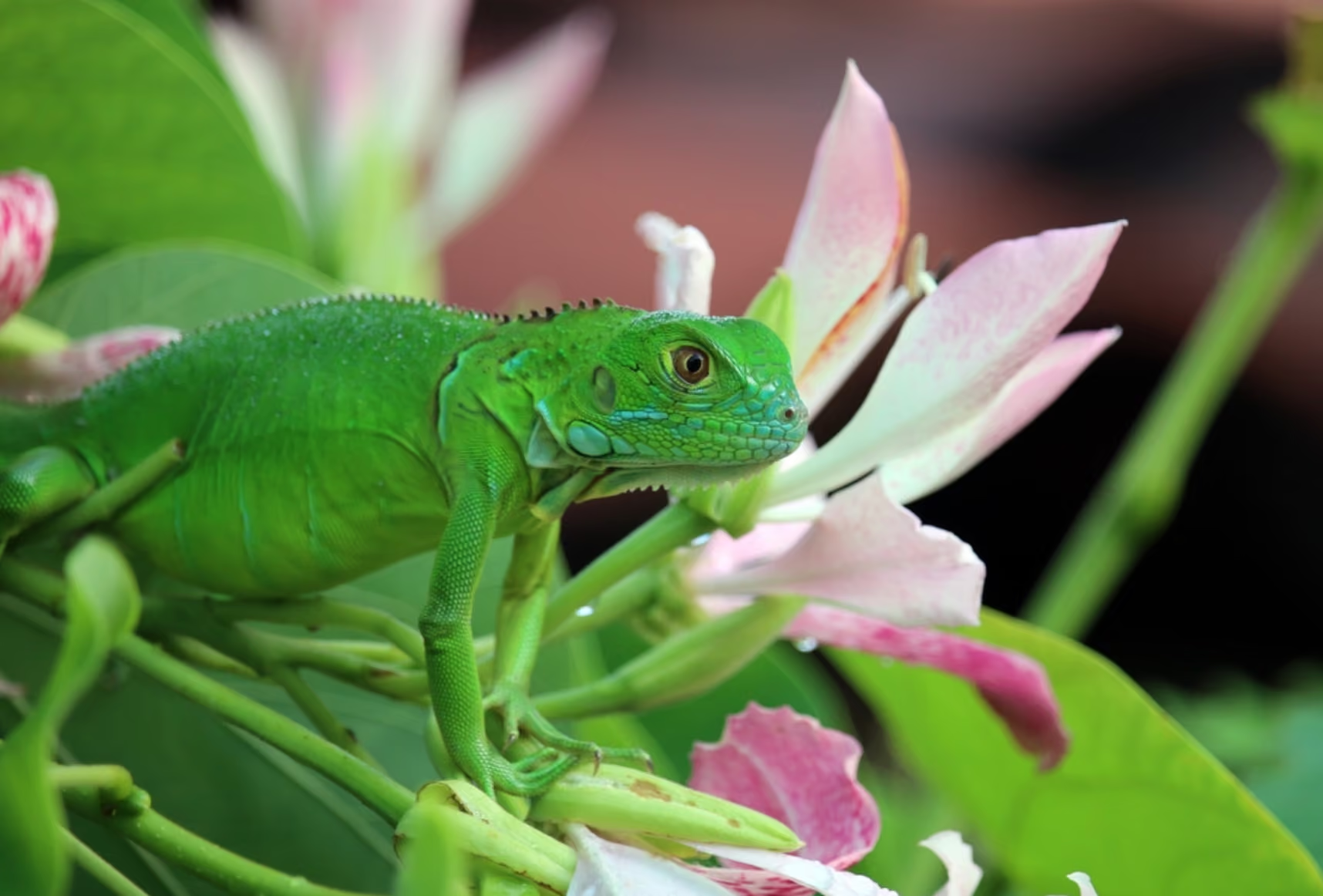
Greens begin their lives in brilliant emerald—small, agile, and easy to miss among wet-season leaves. They are strict herbivores, feeding on flowers, tender leaves and fruit, and are often found near water. Dive into a jungle river and you might see one shoot off a branch and disappear beneath the surface. They can swim well, even sinking to the bottom to avoid predators, holding their breath for surprising lengths of time.
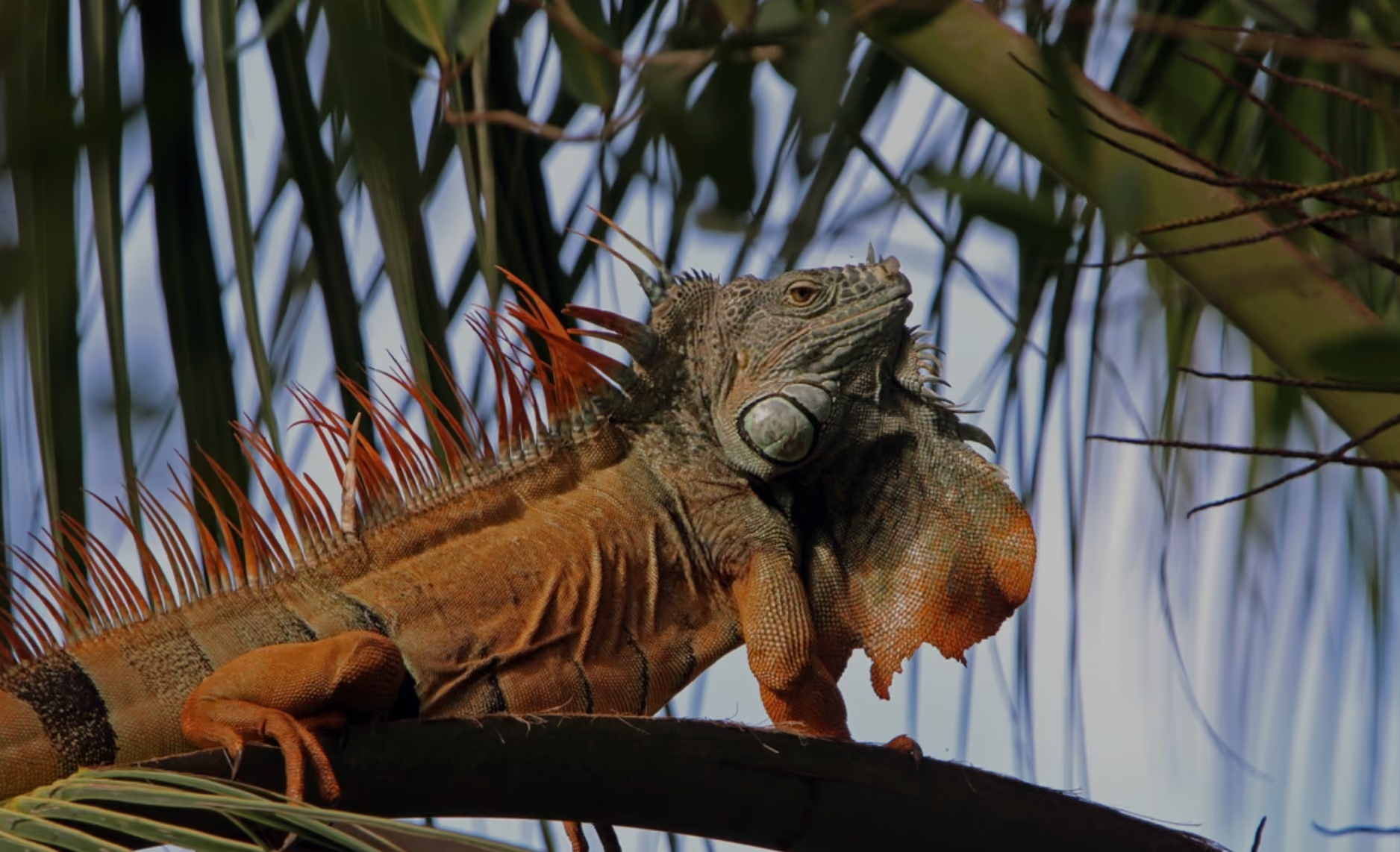
As they age, females fade to dull green. But males, when dominant, transform into magnificent creatures: burnt orange, with towering dorsal spines, flared dewlaps, sharp horns on their noses, and enough attitude to match their prehistoric look. These males can reach over two meters in length and won’t hesitate to whip their muscular tails if they feel threatened. The lash is painful. Their sharp teeth can leave a serious bite.
They live high in the canopy—aloof, territorial and occasionally clumsy. Fights between males can be dramatic, and sometimes end with a losing iguana falling from a great height. A bad fall can kill.
In the Yucatán, Green Iguanas are considered food—often cooked in stews or roasted whole. Here on the west coast, they are avoided. Locals say they eat their own feces, which is true: juveniles re-ingest their waste to establish healthy gut bacteria. But the lore alone is enough to keep these panchos off the menu in Guerrero.

SPINY-TAILED IGUANAS: THE ROOF DRAGONS

Garrobos are smaller—rarely more than a meter long—but feistier. They’re omnivores, eating fruit, insects, flowers and carrion when they can find it. Young ones are vivid green and often mistaken for Greens, but by adulthood, the females are a dusty gray, while males darken to sleek black, sometimes marked with bright white streaks and flashes of sky blue.
They love heat, stone, and high places—especially tiled roofs. They rearrange tiles to suit them, making noisy homes just under the eaves. Their presence is often announced with a scurry of claws across clay or a sharp hiss from the shadows. Some houses have generations of them living overhead.
Despite being smaller than the Green, the garrobo is the one people eat. In many parts of Mexico, especially here on the Pacific coast, iguana caldo and iguana mole are traditional dishes, often served during Semana Santa [Easter week, or Holy Week]. Their eggs are also eaten and their blood—still warm—is sometimes mixed with Coca-Cola and given to sickly children to “fatten them up” or boost vitality.
It’s worth noting that this is all technically illegal. Both species are protected under federal law, but enforcement is patchy, especially in rural areas. If a restaurant offers iguana, it’s best to pass. Eating them supports hunting and trade that continues to pressure wild populations.
Interestingly, in Maya lore—particularly in the Yucatán—it’s the reverse. The Green Iguana is the delicacy, while the Black Iguana is believed to be a guardian of the Earth. Killing one is considered bad luck. Here, those spiritual roles are flipped.

LIFE AND LORE
Both species reproduce during the dry season. Females dig nests in sandy soil and lay dozens of eggs, which hatch with the first rains. The babies are immediately independent, dispersing into the fresh green world to feed, hide, and grow. You’ll see them clinging to rocks, fence posts or hibiscus hedges—tiny dragons with flickering tongues.
Despite being wild animals, iguanas can grow quite tolerant of humans. Hotel gardens with mango trees often become hangouts. Feed them once and they may return for life. Some towns even name their local roof dragons.
But treat them with respect. These aren’t pets. They’re relics of another age, survivors of deep time. Watch them bask, hiss, whip their tails. Watch them fall from trees or vanish into water. Understand that we share space with creatures who haven’t changed much since the age of dinosaurs.
And maybe, just maybe, you’ll see them as what they truly are.
Dragons.