Rivers of Wings: It’s Butterfly Season
A look at a few of our more colorful and more determined neighbors
Along the coast road right now, there are suddenly butterflies everywhere—on your windshield, in your peripheral vision—lifting off the asphalt and the dirt, fluttering like the road itself just exhaled. This is what the rainy season looks like here. And even before it rains, it’s the butterflies who show up first.

.avif)
.avif)





.avif)

%20(Spanish)-2.avif)





Guerrero’s Pacific coast hosts several hundred species of butterfly, depending on how far into the hills you're willing to hike and how good you are at telling one small brown thing from another small brown thing. Most people driving to the beach are not going to sort out the difference between a dozen species of skipper. Nobody’s asking them to. But you don’t need a checklist to notice that the character of the swarm changes as the season goes on, because it does, dramatically, in a sequence regular enough that you could set a calendar by it if calendars were more interesting.
It starts with the Dark-Kite Swallowtail—small, black, banded in white, the butterflies you notice puddled in loose groups at the edges of wet spots before the rain has properly settled in. They’re an early signal, arriving ahead of the heavier rains the way the first robins are supposed to mean spring, except these actually mean something, since they show up reliably enough to trust. Mixed in with them, if you look closely, is a near-mirror image of the same species pair: the Guatemalan Swallowtail. Same wing shape, same banding pattern, but reversed—white wings, black markings, instead of the other way around. Nature apparently had one good design and decided to run it twice, once in negative.
.avif)
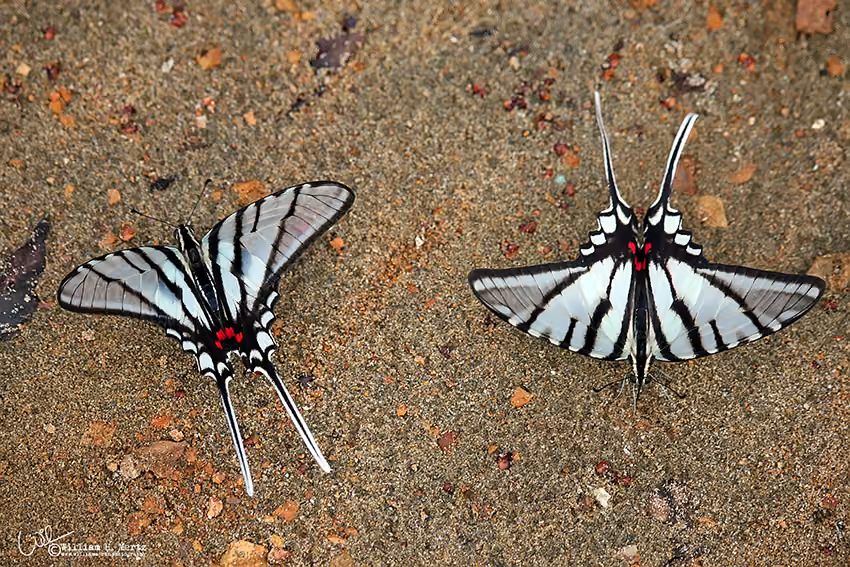
Once the rain actually arrives, the numbers stop being polite. This is when you start seeing the “puddling” in earnest—dozens, sometimes what looks like a hundred or more butterflies clustered at a single wet patch of road, wings up, all facing the same direction, all doing the same odd thing: drinking. Not nectar. Mud. Specifically, the minerals and salts leached into wet dirt and gravel, which the butterflies—mostly males, as it happens—need for reproduction in quantities flowers don’t reliably provide. What they’re doing is called “puddling”, and if you’ve never seen it, it looks less like an insect behavior and more like a small religious gathering that happens to be facing the wrong way.
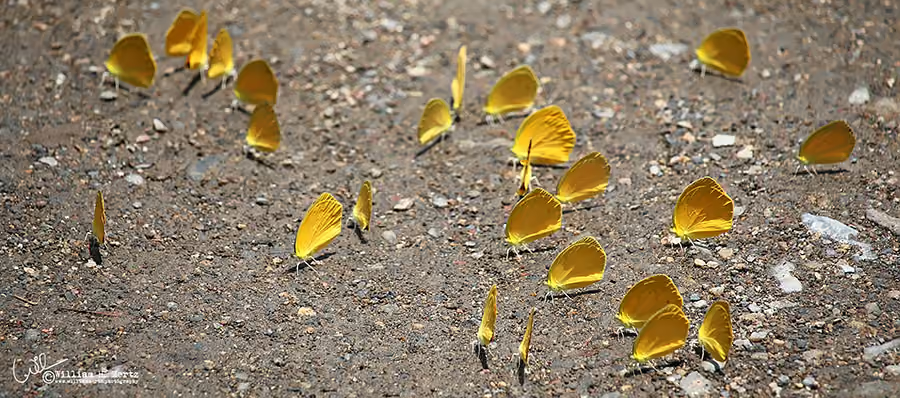
Joining the Kite-Swallowtails at these puddles are the Yellows and Sulphurs—several species, functionally indistinguishable to anyone who isn’t a lepidopterist, but present in real numbers and doing the same mineral-drinking work. Nobody’s writing songs about the Yellows. They’re just there, all the time, in volume, which is its own kind of achievement.
.avif)
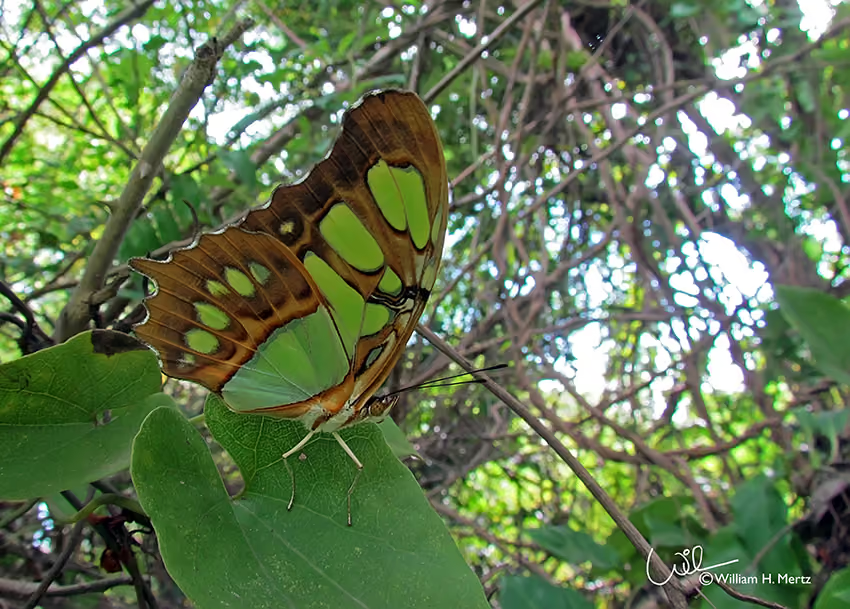
By the time the rains are fully underway, the Malachites arrive—large, unmistakable, a green so vivid it looks almost synthetic against the black wing pattern. These don’t puddle in the same dense clusters; instead you’ll find them strung out along a stretch of road, a dozen or more, all flying the same direction, like they’re commuting somewhere specific. They’re probably not—nobody’s tracking a long-distance migration here—but something is moving them, whether it’s food, moisture, or just the collective decision of a hundred small brains to go that way today.
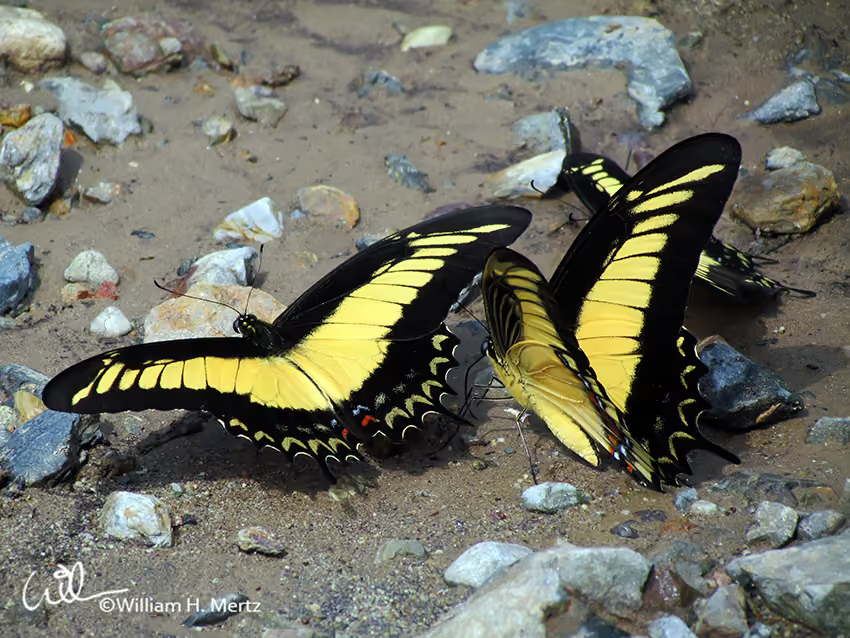
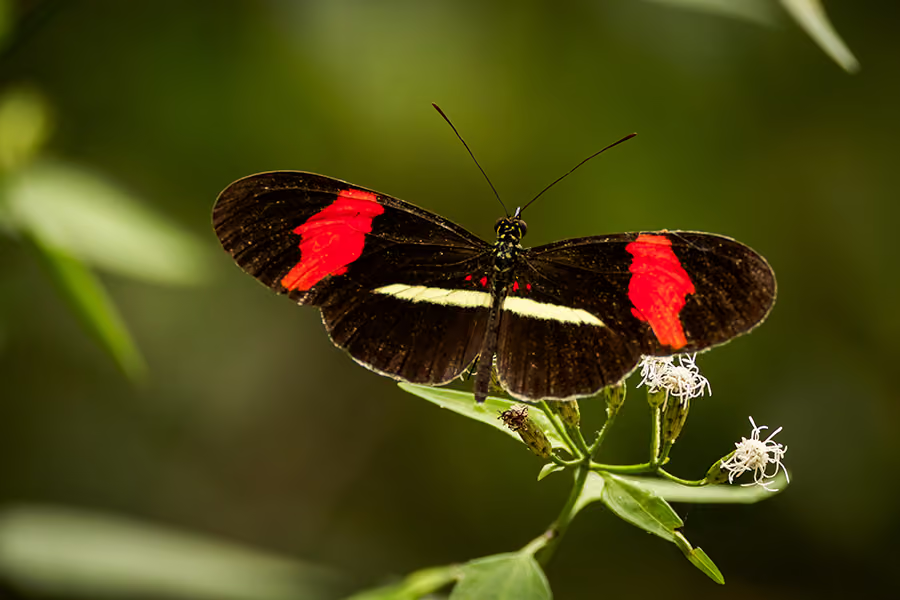
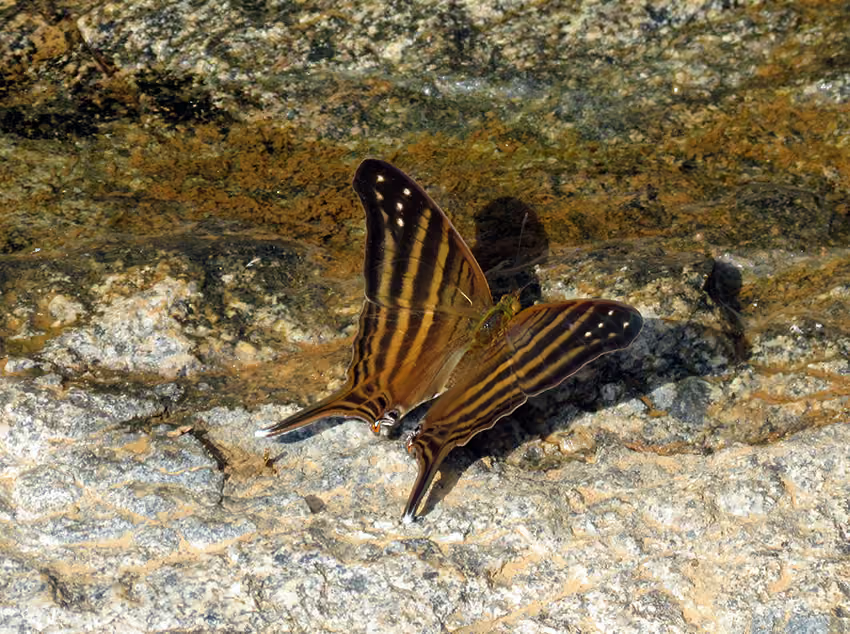
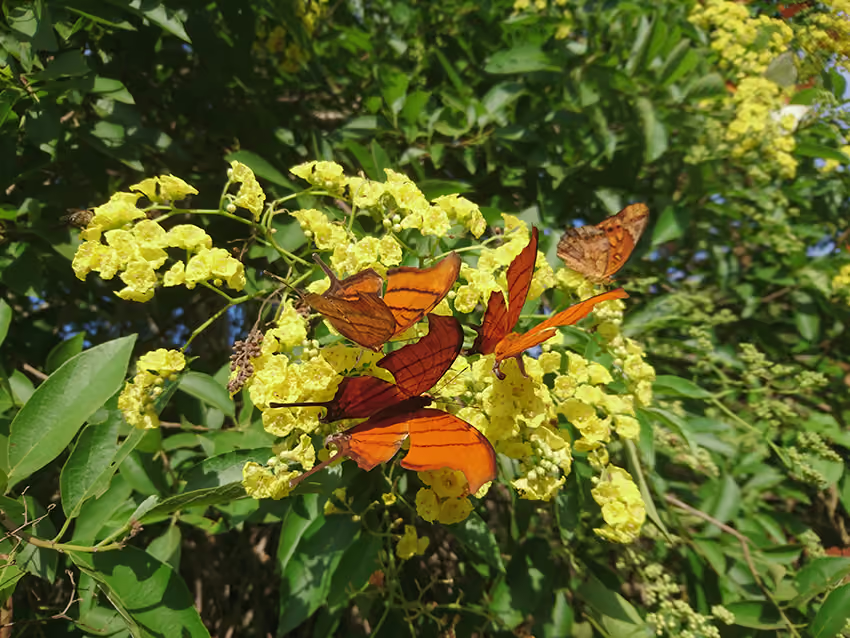
Later in the season come the Thoas Swallowtails —the giants, black and yellow, wingspans that make you do a double take the first few times—and the Longwings, which is where the color really shows off: bright orange Julia butterflies, the black-and-white banded Zebra Longwing, and the Postman, black dagger-shaped wings with bright yellow lines and cross-cut with dramatic red that look like they were designed for a much showier climate than this one, which, to be fair, they were. Add in the Many-striped Daggerwing and a rotating cast of hairstreaks and skippers too small to identify from a moving vehicle, and you’ve got a season-long procession that never really has an off-week, just a shifting cast of characters.


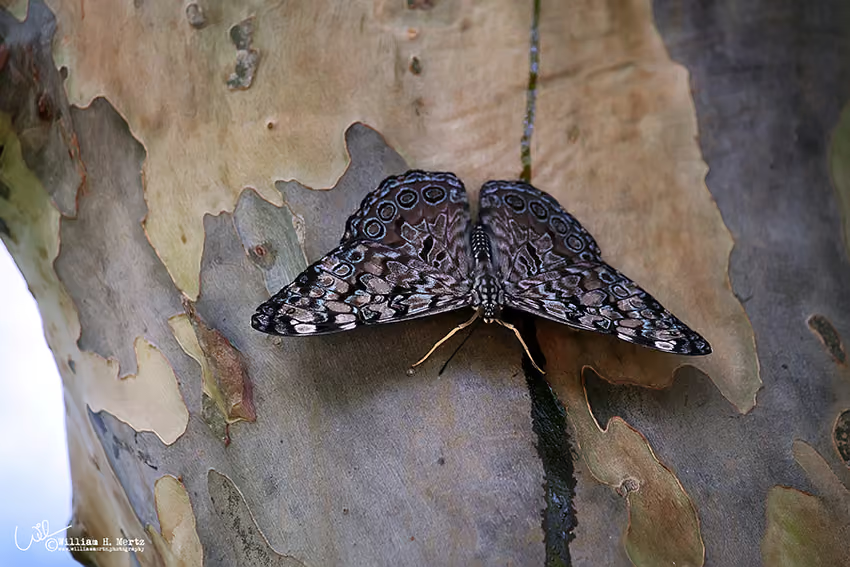
Somewhere in the mix, if you’re patient and quiet, you might catch a Cracker sitting on a tree trunk doing absolutely nothing—until you realize you’ve been looking directly at it for thirty seconds without seeing it, because its wings are patterned to disappear into bark. Crackers get their name from an actual sound, an audible snap made during territorial disputes between males, which makes them one of the few butterflies you can identify with your ears before your eyes catch up.
TERRITORIES & WINGS, MORPHOS & OWLS
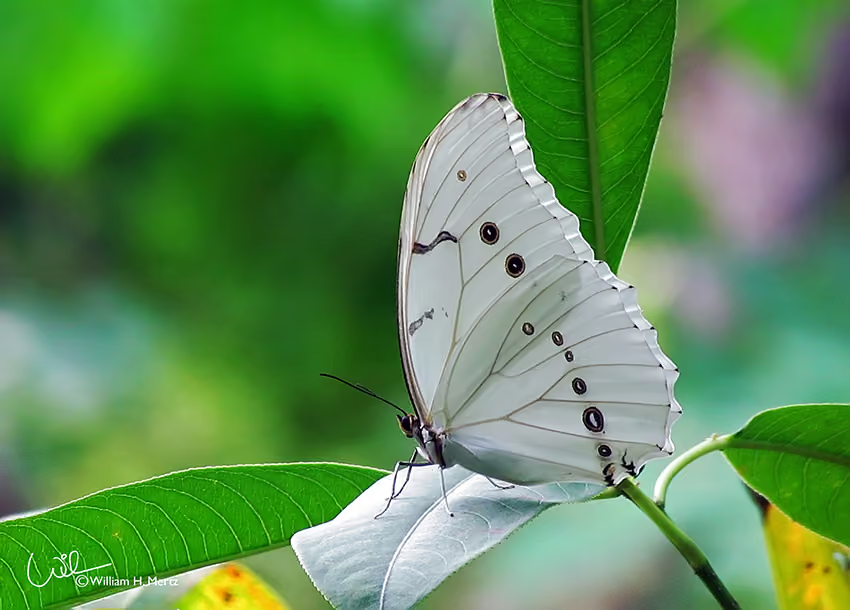
Territory matters to a butterfly more than the word “butterfly” tends to suggest. Males stake out patches of sunlight, patrol them, and defend them from anything that looks vaguely like competition—which is how you end up watching a White Morpho, a butterfly roughly the size of your outstretched hand, being harassed by a white butterfly a fraction of its size, for no better reason than sharing a color. The small ones tag the big ones repeatedly, aggressive out of all proportion to the size difference, and the Morpho tolerates it or flees, but rarely fights back with any real conviction. It’s not always bloodless, either—check the wings on almost any butterfly you find at rest and you’ll often see the trailing edges torn or shredded, evidence of a fight it won or a fight it survived. Some of that damage comes from birds. More of it, if you watch long enough, comes from each other.
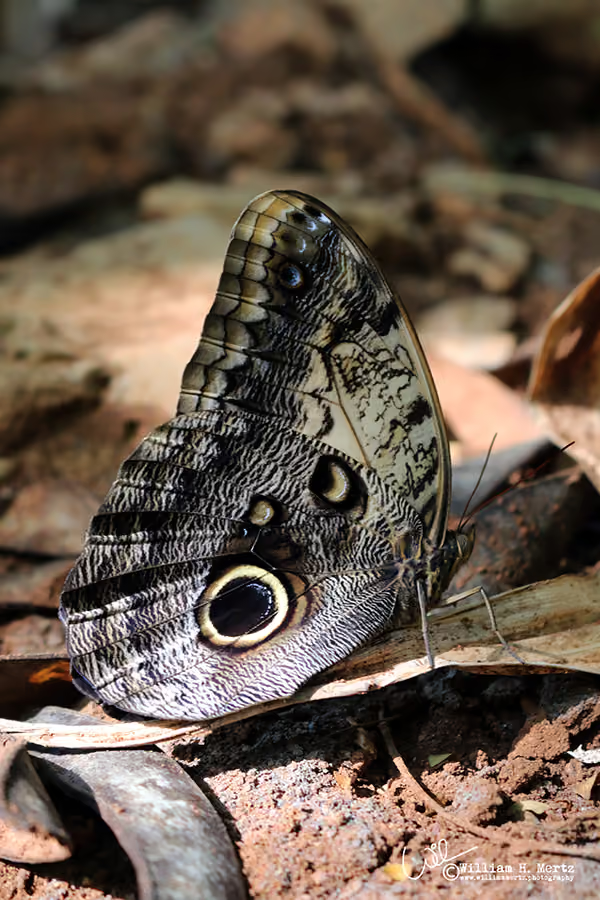
And then there are the true giants—bigger even than the Morpho that just spent a paragraph getting picked on. Owl butterflies, named for the enormous eyespots on the underside of the hindwing, convincing enough to make a bird think twice about which end is the head, are crepuscular, most active at dawn and dusk, with wingspans that rival the biggest swallowtails here. You'll catch one occasionally in low light, gliding low and slow near the treeline, and mistake it for a bat before your brain catches up. They’re not part of the roadside spectacle the rest of this piece is about—they keep to the shadows, on their own schedule—but they belong in any honest accounting of what's actually flying around this coast.
Speaking of things that don’t need the benefit of the doubt to be impressive—the White Morpho, called pañuelo, handkerchief, locally, for the way it drifts through the air looking like laundry that escaped the line, is about as close to unmistakable as a butterfly gets around here, even without an owl’s camouflage or a swallowtail’s size to lean on.
DRIVE MORE CAREFULLY
All of which brings us to the part of this that isn’t particularly charming.
Butterflies puddling on a road are, functionally, sitting ducks. They’re low, they’re distracted, and they do not clear out of the way of an oncoming vehicle with anything like the urgency the situation calls for. Drivers, for their part, do not slow down for them, do not swerve, and in most cases do not appear to notice at all. What’s left afterward isn’t obvious at a glance—a cluster of wings on wet gravel can look, from a moving car, exactly like a cluster of wings feeding—but a closer look tells a different story: some of that “gathering” is dead, flattened by tires, and the survivors are simply feeding around the bodies of their own kind because the mineral-rich mud that killed them is still there, still worth drinking. Nobody’s swerving for a hundred one-inch insects. I understand the math. I don’t love the math.

It’s a strange kind of abundance to sit with—a season loud with color and motion, more butterflies than you could ever count moving through the same stretch of road day after day, and also, quietly, a road that kills a fair number of them without anyone behind the wheel registering that it happened. Both things are true at once. That’s more or less how most abundance works here, if you pay attention to it for more than a season or two