The Hummingbirds of Troncones
Tiny, Territorial and Impossible to Ignore
Every morning there’s a soft clicking coming from the birds of paradise outside your window. When you look, you catch a glimpse of a small, fast-moving bird and then it’s gone. You hear it called a “chuparosa”. What bird is that?

.avif)





.avif)

%20(Spanish)-2.avif)



If you’ve spent more than a few minutes around a flowering garden in Troncones, you’ve probably seen one. Hummingbirds are everywhere here—fast, feisty, and almost always convinced that the flowers belong to them. While several species can appear along this stretch of coast, two are the most likely to show up right in front of you.
CINNAMON HUMMINGBIRD
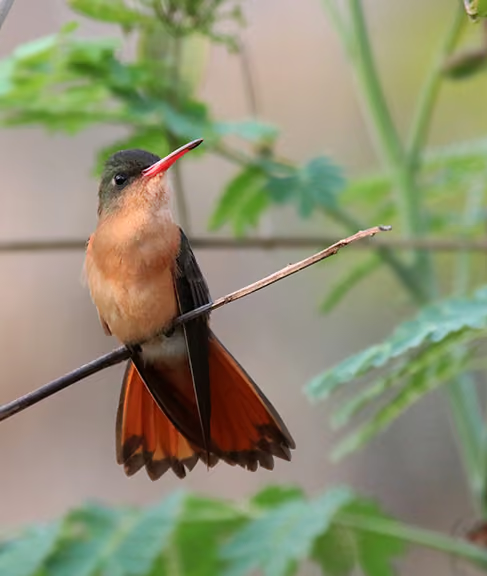
This is the hummingbird you’re most likely to see in town. If you spot one zipping through hotel gardens, hovering at flowers, or chasing anything that dares to approach a feeder, it’s probably a cinnamon.
A warm cinnamon or reddish-brown body, green wings, and a bright red bill make it easy to recognize. In good light, it’s a beautiful bird—rich, warm tones that look made for tropical gardens.
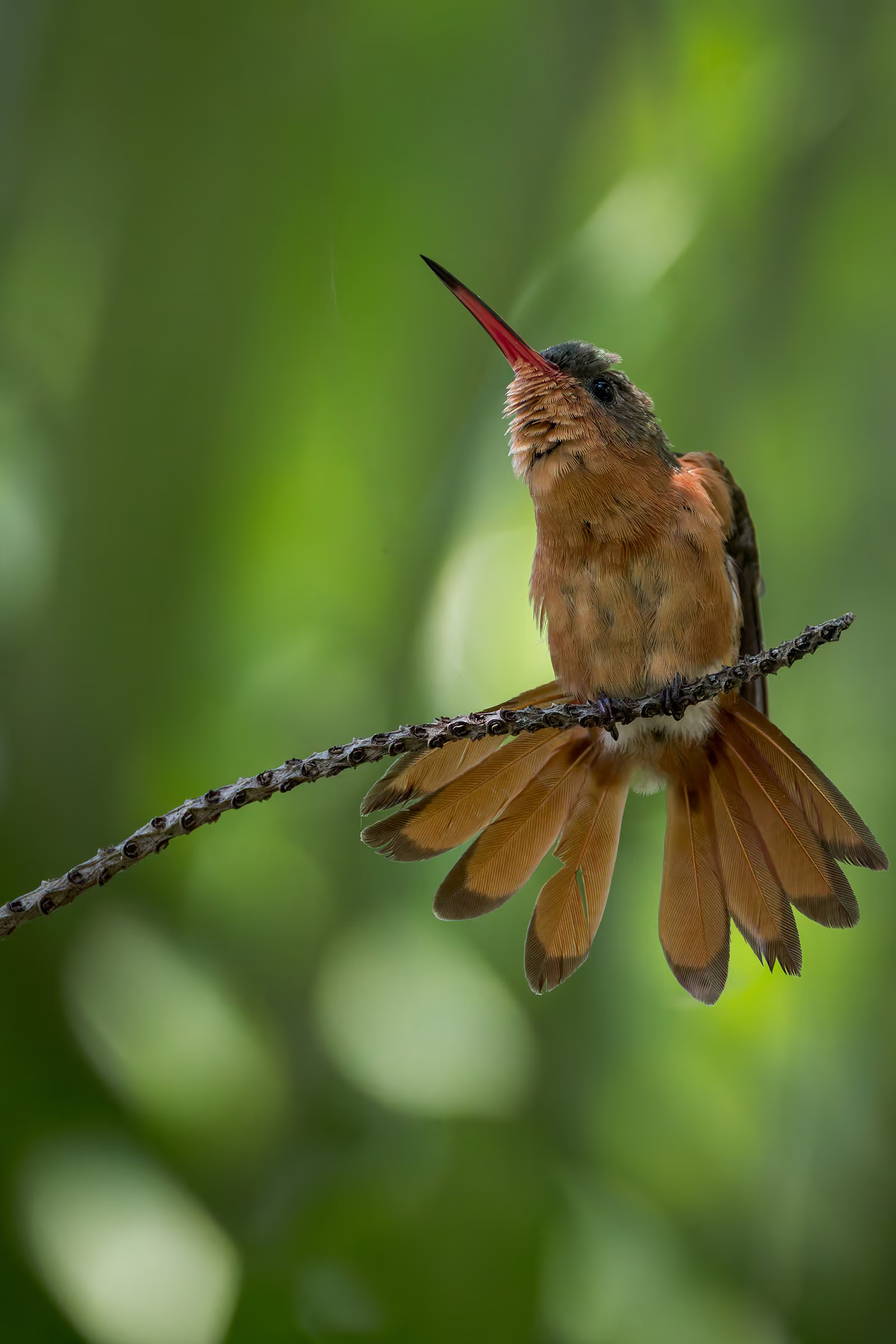
Cinnamon hummingbirds are famously territorial. They don’t just defend a feeding area—they patrol it. You’ll often see aerial chases and mid-air battles, whether they’re fighting another cinnamon or driving off a different species entirely. They are also the most vocal hummingbirds locally. Constant chittering and twittering often give away their presence before you ever see them. Males and females look similar, with females slightly more muted in coloration.
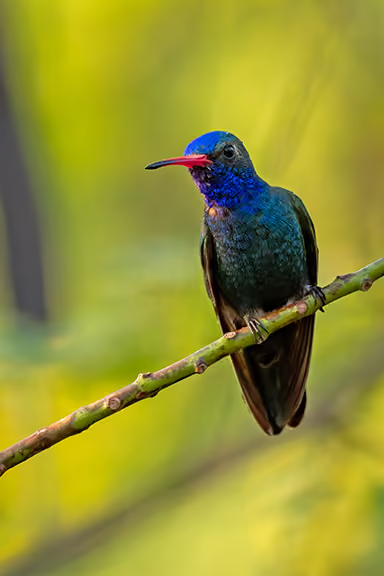
TURQUOISE-CROWNED HUMMINGBIRD
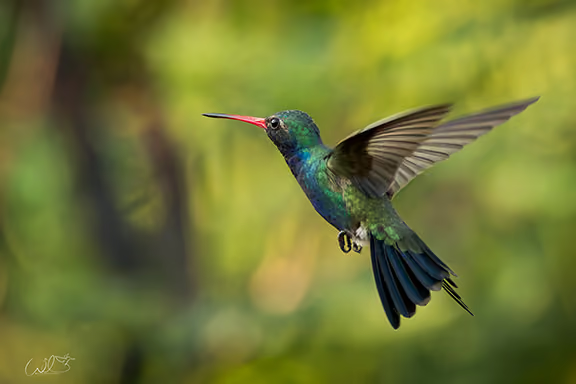
Some visitors—and even some longtime birders—still call this one a “broad-billed,” because until recently it was often treated as part of that group. It was also widely known as Doubleday’s Hummingbird. Today, major birding organizations recognize it as its own species: the Turquoise-crowned Hummingbird.
Noticeably smaller and more delicate than a cinnamon, it is a slight and quick little bird. In sunlight, the male can be breathtaking. Deep purple tones dominate, with metallic emerald greens and flashes of blue depending on the angle. It also has a bright red bill. It is easily one of the most beautiful hummingbirds most visitors will see here.
They can be territorial, but they usually will not win a standoff with a cinnamon. Among themselves, however, they will squabble and chase just as fiercely.
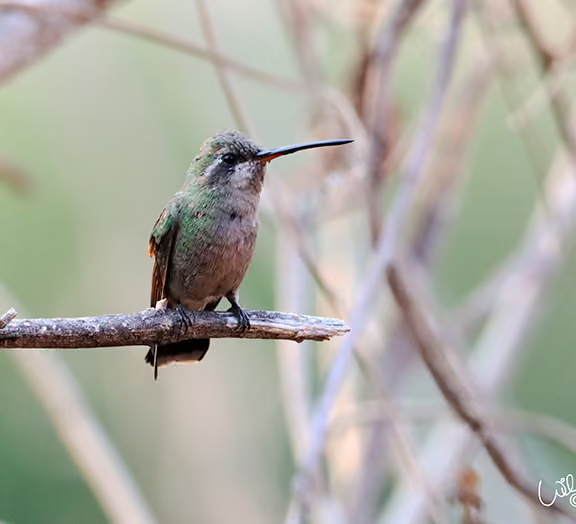
The female is much more subtle—mostly olive-green with buff-gray underparts and a less vivid reddish bill. Like many female hummingbirds, she can look plain at first glance. The key field mark is a distinct white stripe through the eye, which helps separate her from other drab female hummingbirds that may pass through the area.
For all their beauty, hummingbirds are not delicate little ornaments. They are widely considered among the most aggressive birds in the world. They spend a remarkable amount of their time defending territory—chasing, diving, and battling rivals over flowers and feeding areas.
It is a funny contradiction. Creatures this small and brilliant in color are also some of the fiercest.
The next time you see one hovering peacefully in a garden, remember: you are looking at a tiny, airborne gladiator.