





William Mertz

William H. Mertz arrived in Mexico nearly 27 years ago and, like many things that wash up on the Pacific coast of Guerrero, never quite left. Originally from the small farming community of Williamsfield, Ohio — population somewhere around 125 on a busy day — he has spent the better part of two decades embedding himself in the natural and cultural life of Troncones and the surrounding region.

‍
A naturalist, nature photographer, and watercolor artist, William approaches the living world with equal parts scientific rigor and artistic eye. He has documented nearly 1,000 bird species across the Americas and leads birding tours in the Troncones area, where his knowledge of local wildlife rivals anyone working the region. His photography and paintings reflect the same sensibility — unhurried, observational, and deeply rooted in place.

‍
An early pioneer of mountain ranch ecotourism in the Zihuatanejo area, William has spent years working at the intersection of conservation, community, and culture. He contributes regularly to La Onda Troncones because, after 27 years, this is simply where he lives—farmboy no more.

‍

Follow this author
Read
William Mertz
Work

Meet

Victoria Ryan: Let Yourself Be Led

A conversation with a friend

I’ve been friends with Victoria Ryan for quite a while. She has a house in Troncones called Casa Azul. The Blue House. It’s literally a blue house, on the hillside, near the clinic. Victoria is also the owner of Hotel Casa Encantada in Pátzcuaro [in Michoacán], a popular small-city destination for people curious about colonial Mexico. She also owns an apartment house in Pátzcuaro known as Casitas Pátzcuaro. I know her as an artist. She’s more than that. Like I said, she’s a friend and she’s a good person to meet.

READ MORE

Eat

No items found.

Live

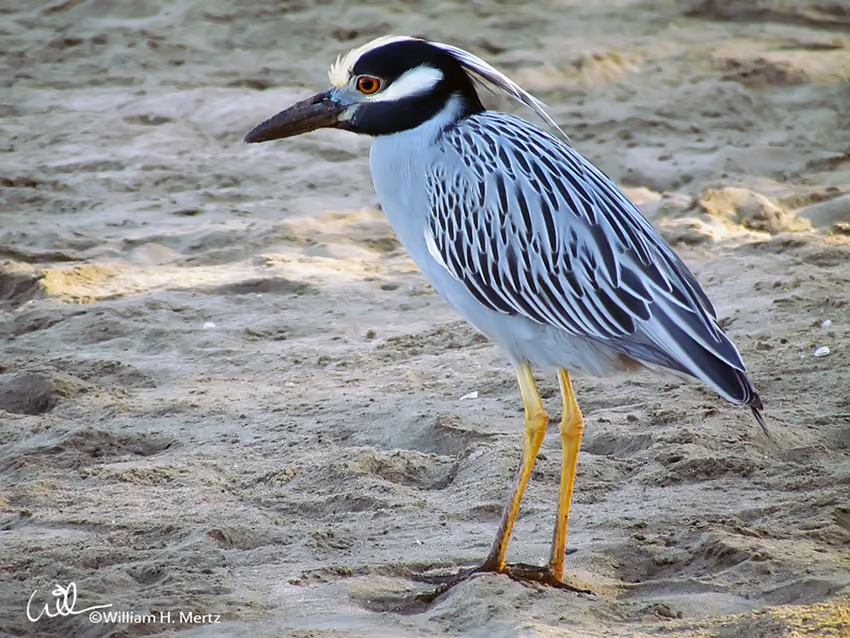
The Yellow-crowned Night Heron

The Bird You Walk Past Every Night

There is a heron standing at the edge of someone’s pool right now. It has been there for an hour, motionless, doing what looks like nothing. In the morning it will be gone, and whoever owns that pool will never know it was there. This happens every night in Troncones.

READ MORE

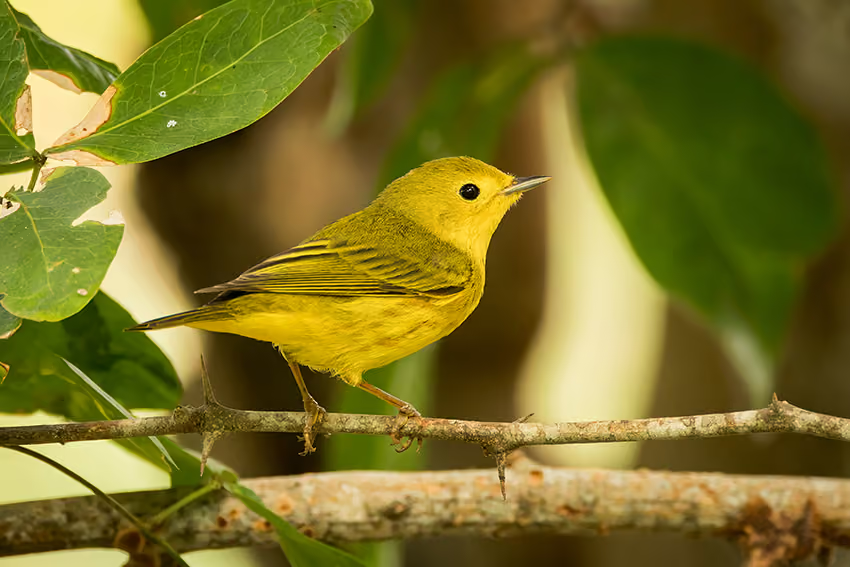
The Yellow Warbler: Look Again

The commonplace can be extraordinary

In this week’s “What Bird Is That?” you’ll find a few reasons to get closer to the little yellow ones you see all the time.

READ MORE

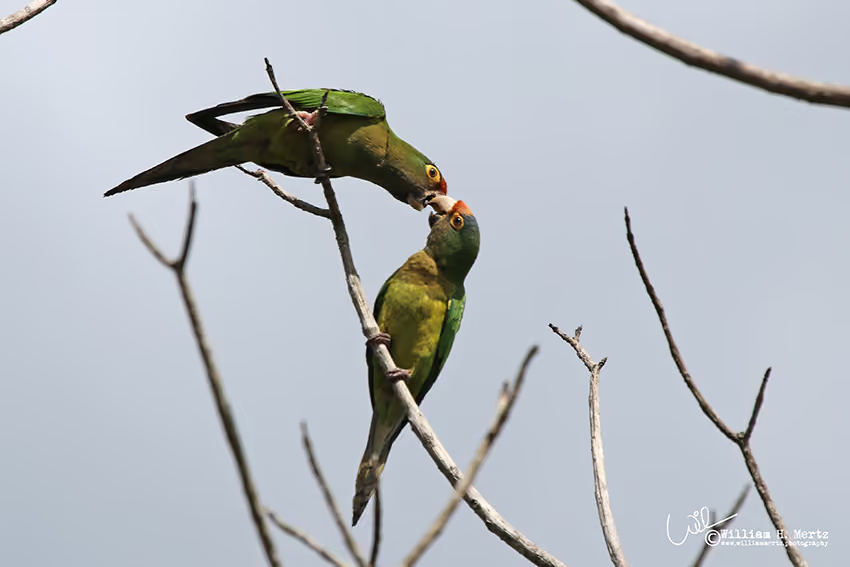
The Parrots of Troncones

A flash of green overhead. What is that bird?

One of the questions I get asked most often on birding walks is some version of, “Wait—are those actually parrots?” People hear the noise first. A ragged, sharp-edged squawking that cuts through everything else, and then they look up and see a pair of green birds tearing across the sky like they’re late for something important. And the reaction is always the same: genuine surprise that parrots just fly around here, wild and free, like it’s no big deal.

READ MORE

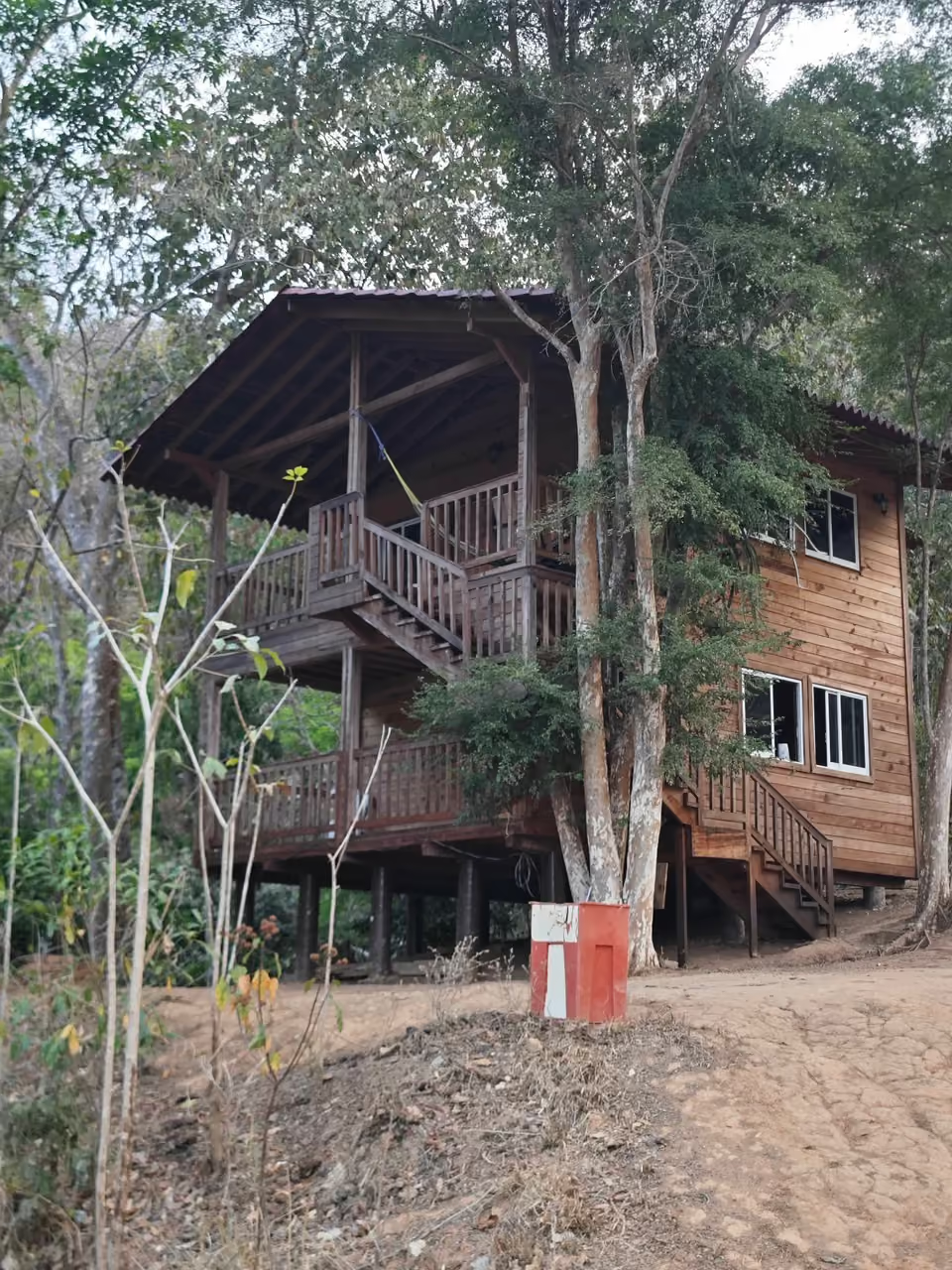
My Kind of Paradise

A Day Trip to Mesas de Bravo

Photographer, naturalist and writer William Mertz recently posted photos of a trip he was on. Because of the trees and the houses, I thought he was somewhere in Pennsylvania. It turns out he was still in Mexico and only an hour and a half from Troncones. Here's his getaway—his view into the world of Mesas de Bravo—a short (and easy) drive into the mountains of Guerrero. Take us away, William.

READ MORE

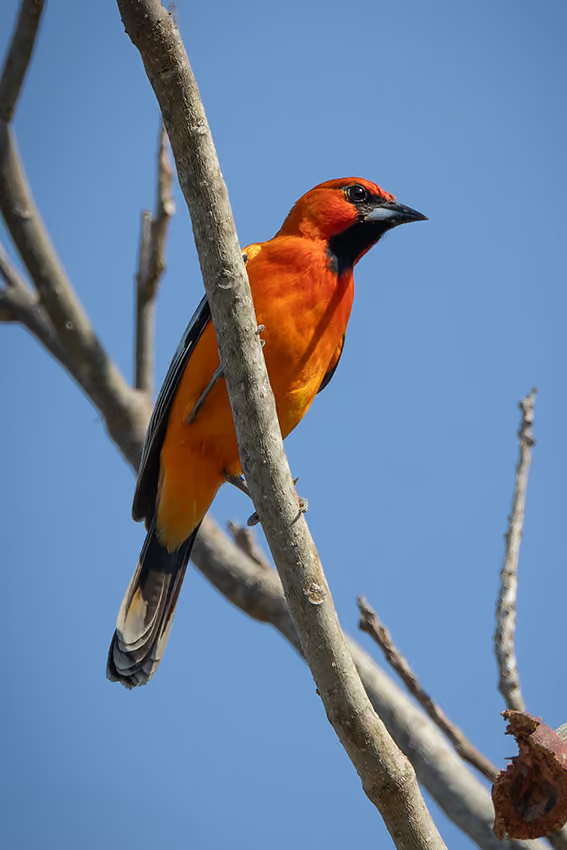
Streak-backed Orioles: The Brightest Thing in Your Banana Tree

That flash of orange in the garden isn’t your imagination

There’s a bird’s nest—a long woven pouch—hanging down on Main Street in Troncones. It’s a classic beauty, an impressive piece of work. It looks like it could be an oriole’s nest. Is it? In this “What is That Bird?”, William Mertz takes a look at our local orioles—colorful, gender-norm defying, nectar-loving, go-fast kooks who know where to find what they’re after.

READ MORE

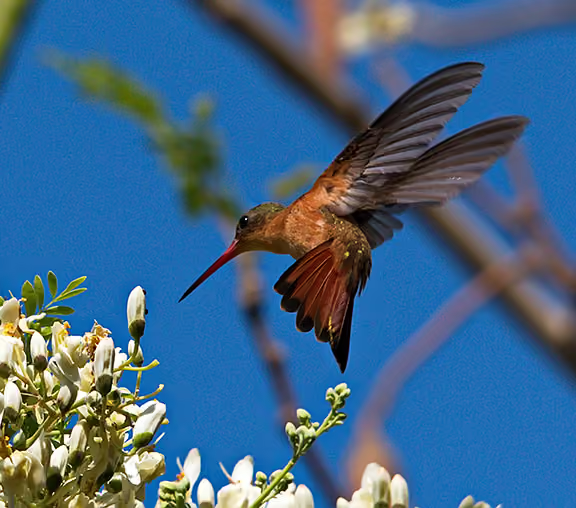
The Hummingbirds of Troncones

Tiny, Territorial and Impossible to Ignore

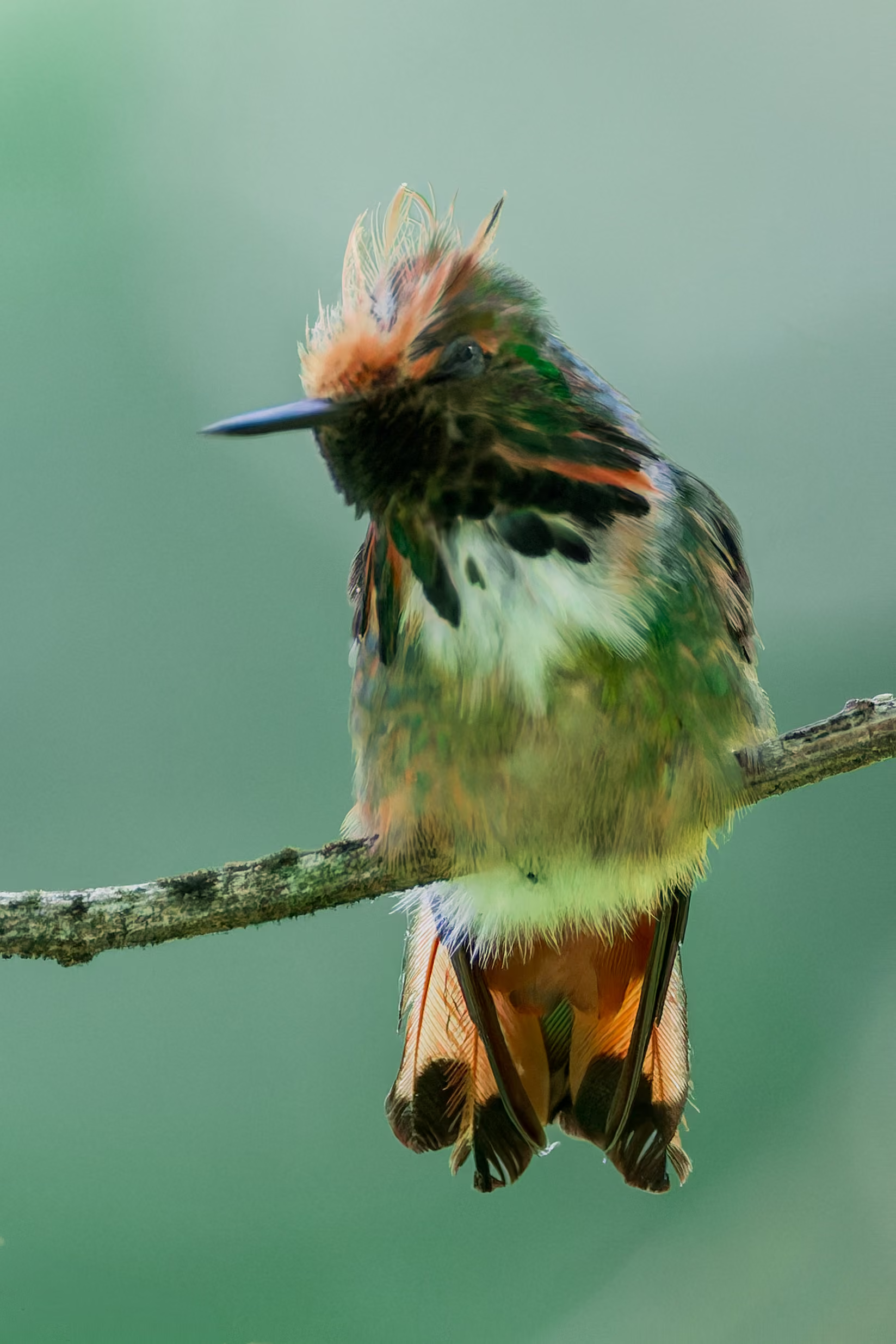
Every morning there’s a soft clicking coming from the birds of paradise outside your window. When you look, you catch a glimpse of a small, fast-moving bird and then it’s gone. You hear it called a “chuparosa”. What bird is that?

READ MORE

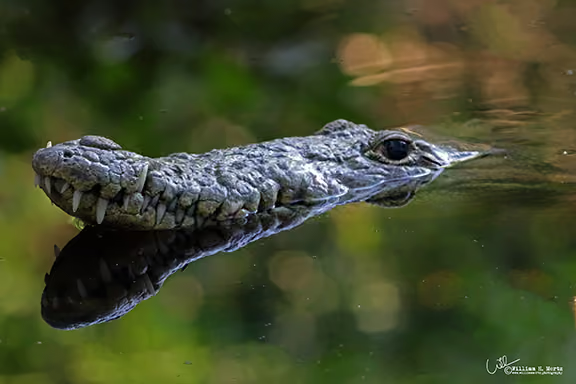
The Crocodiles of Troncones

They’re Neighbors, Not Nuisances

Along Mexico’s Pacific coast lives the American crocodile [Crocodylus acutus]. Its range stretches from southern Florida through Mexico, Central America, the Caribbean and into northern South America. It’s a coastal species, built for estuaries, mangroves, lagoons and saltwater marshes. Unlike freshwater crocodilians, American crocodiles tolerate and even prefer brackish and saltwater environments. They will occasionally enter the open ocean, especially when moving between estuaries.

READ MORE

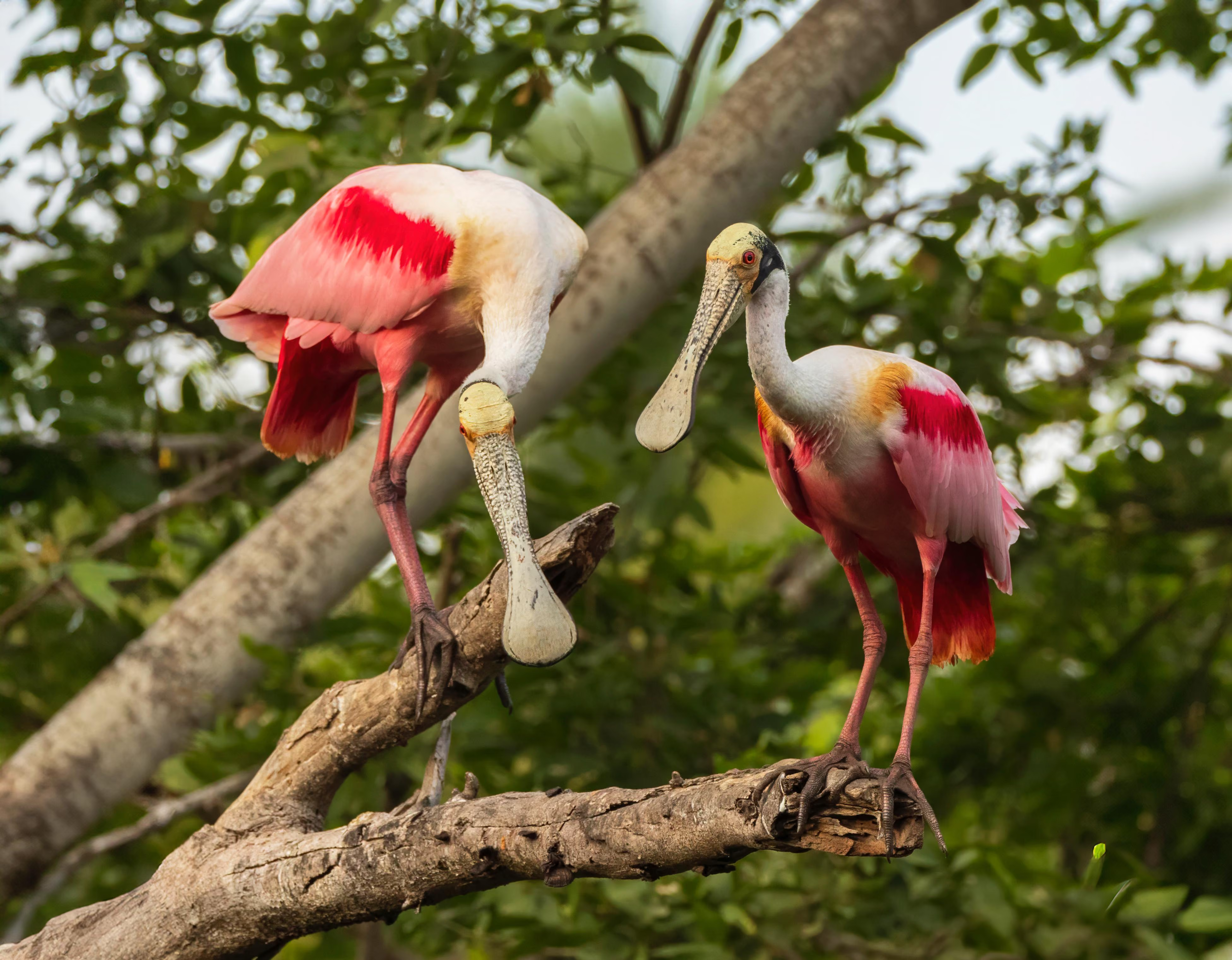
Roseate Spoonbills: Don’t Call Me a Flamingo

This funny and uniquely colorful bird likes our winter here

Our latest What’s That Bird? looks at a seasonal visitor who gives new meaning to being “in the pink”, and whose distinct color comes from what it eats.

READ MORE

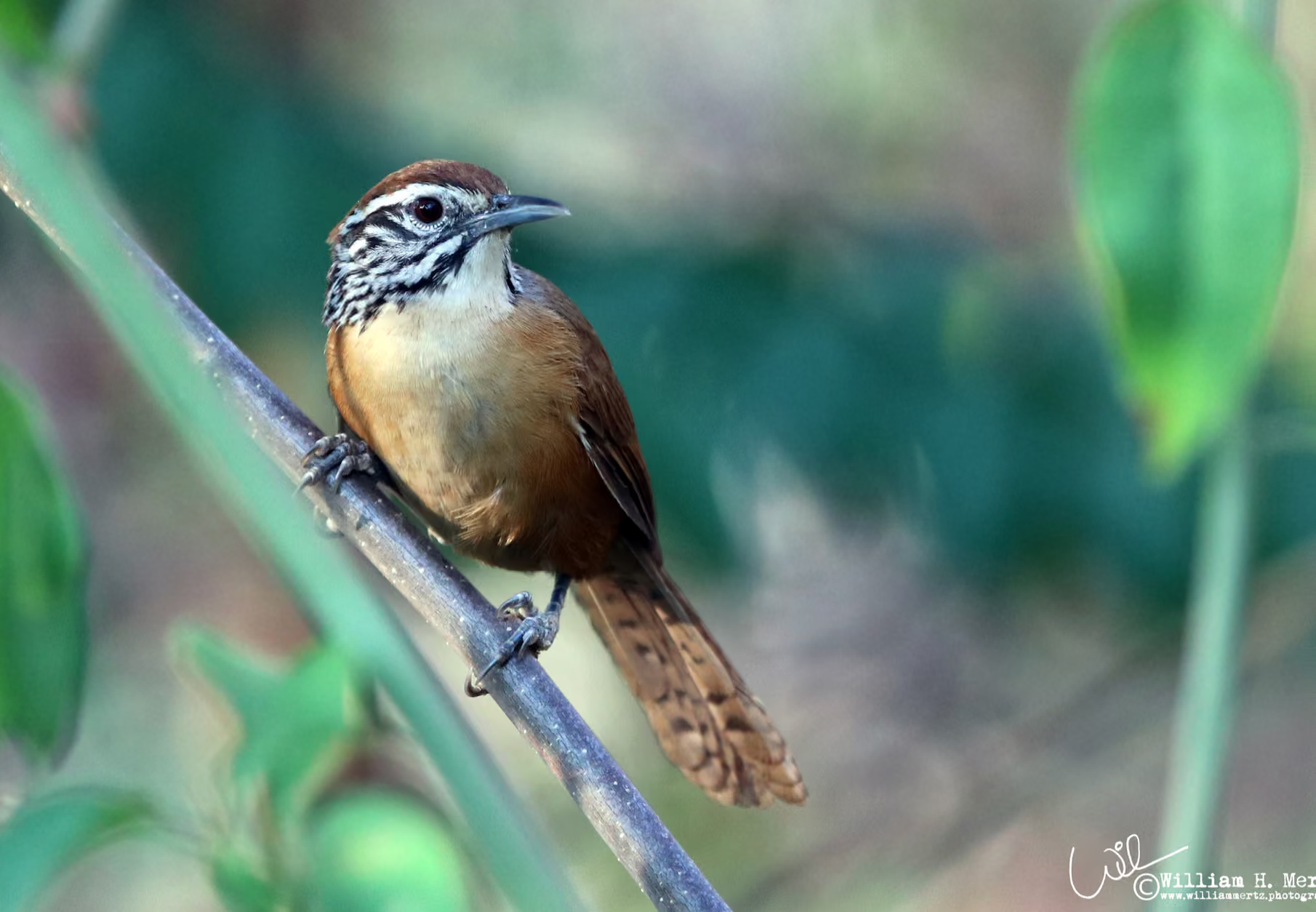
What Bird Is That? A Guide to the Three Common Wrens of Our Region

That quick-moving bird in the bush is here to tell you something

Our local wrens are small creatures with big songs. Each one is different—in how they look and how they sing. Once you can tell one from the other, you’ll know you’ve arrived.

READ MORE

A Rare Visitor to the Shore

The cold of winter brings all sorts of life to Troncones, sometimes even Yellow-Bellied Sea Snakes

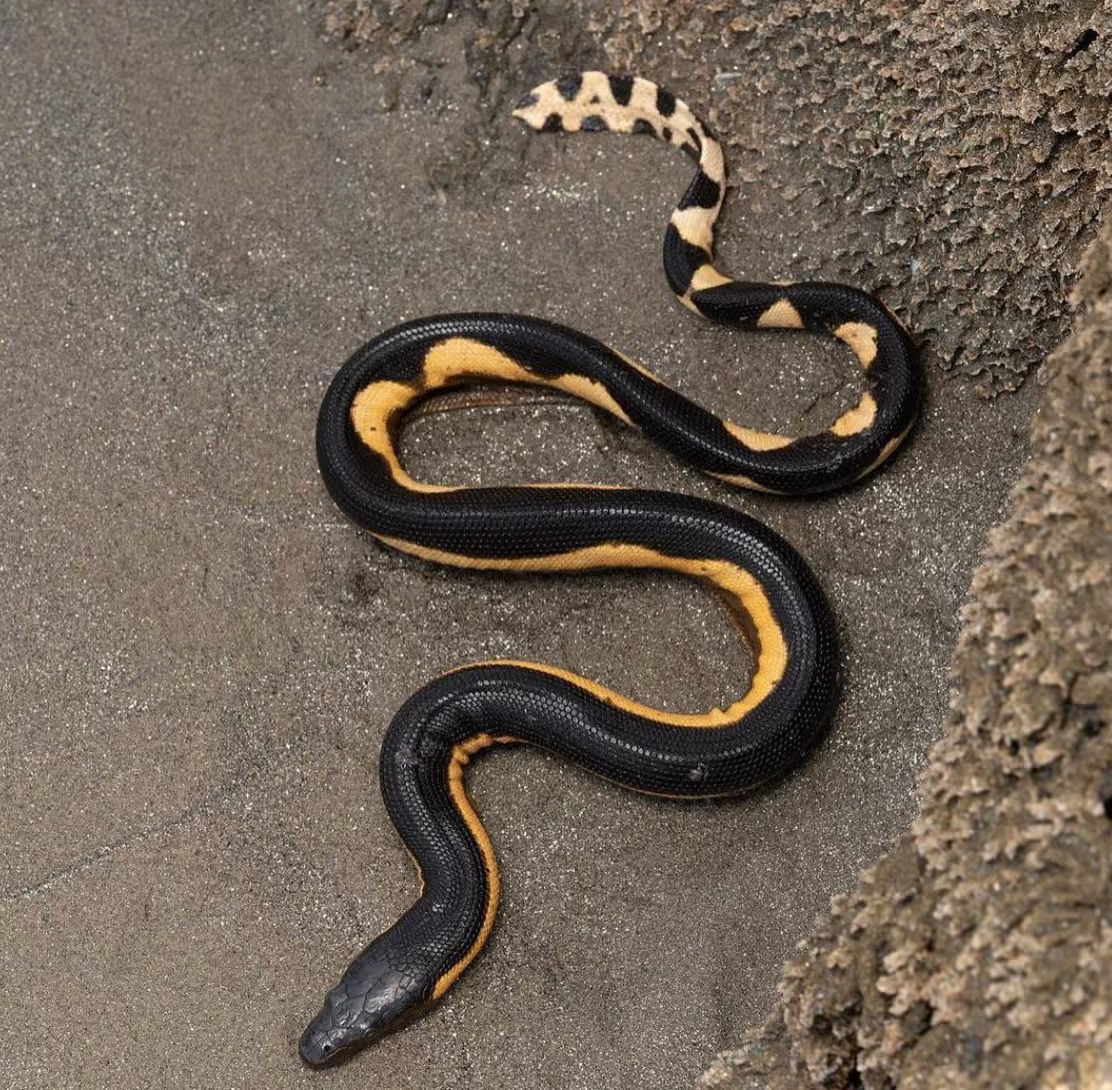
Each winter, when the Pacific waters along our coast cool just enough to unsettle the steady rhythms of the deep, something strange and beautiful sometimes drifts onto our beaches—Pelamis platura, the yellow-bellied sea snake. These striking reptiles, with jet-black backs and golden undersides, are open-ocean hunters built entirely for life at sea. But when those cooler currents disorient them or push them toward shore, they sometimes wash up—helpless, twisted in seaweed or barely moving on the sand. If you come across one lying motionless at the tide line, you're witnessing something rare—and very much alive.

READ MORE

TAMAKĂšN; THE MAN WHO WALKED WITH CROCODILES

A Zihua Legend Remembered

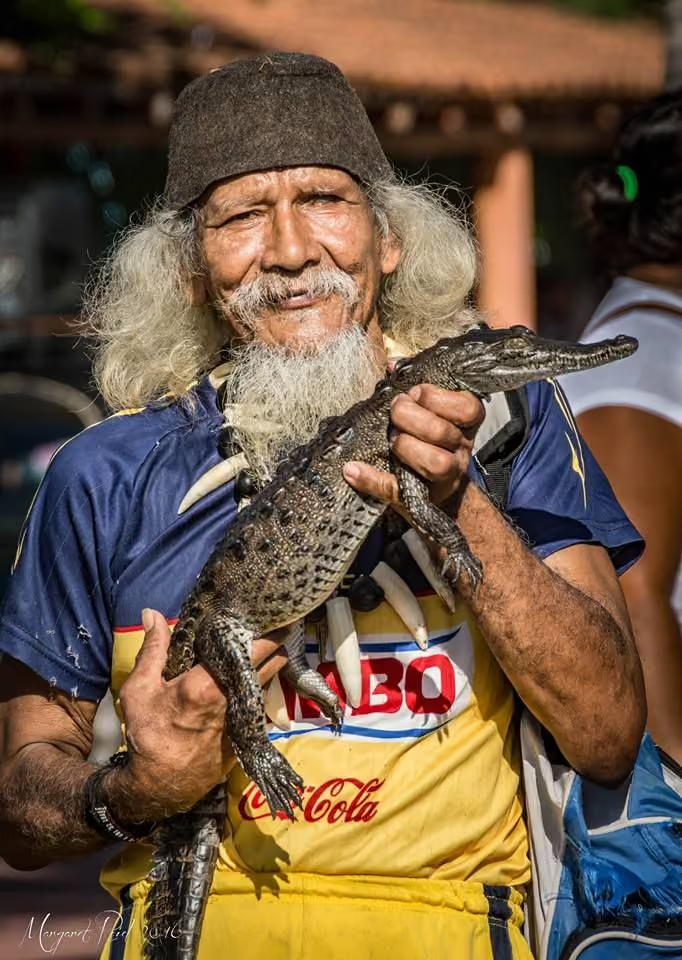
In the heart of Ixtapa‑Zihuatanejo, where the mangroves meet the lagoon and the birds wheel over the water, one name has been impossible to ignore: Tamakún. Born Roberto Piza Ríos in Guerrero and raised in Atoyac, Tamakún has been known across the coast not as a bureaucrat or tourist attraction, but as the man who walked with crocodiles—and lived to tell the tale. He passed away on Saturday and will be much missed.

READ MORE

When the Black Fin Rises

Orca attack off of PLAYA LA MAJAHUA (IN ZIHUA) makes the news

Our nature writer, William Mertz, heard about an orca going after a baby humpback, did some homework and sent us this report before the attack became a "thing" on social media.

READ MORE

What Bird Is That? Golden-cheeked Woodpecker

The kooky little bird that likes to tat-tat-tat on metal

If you’ve spent any time near coconut palms or cacti around Troncones, you’ve probably seen this sharply dressed character—and maybe even heard it before you spotted it. That sharp, high-pitched call? Think squeaky toy with attitude.

READ MORE

Not from the Sea: The Story of the Loofah Vine

A who-knew from our favorite nature writer

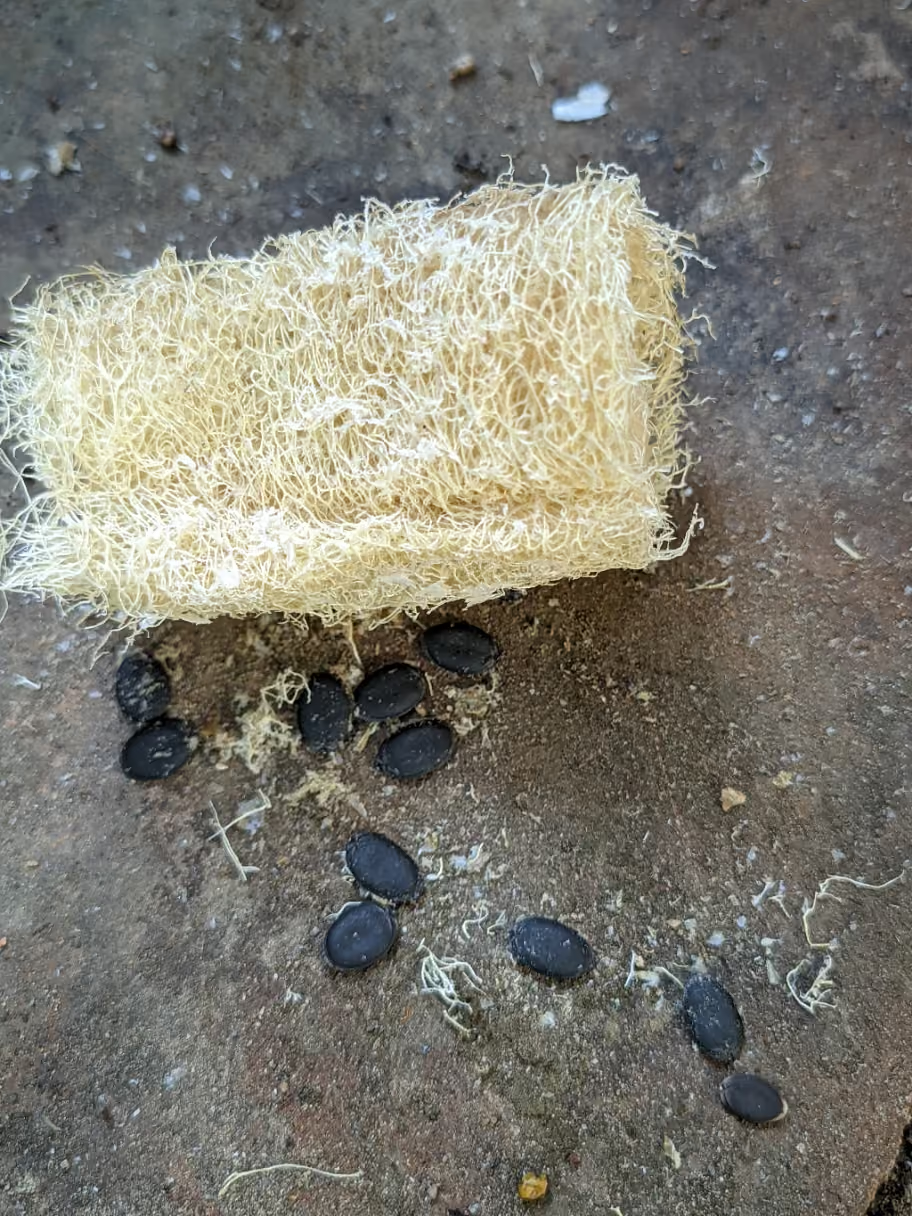
If you’ve ever scrubbed your back with a loofah and imagined it came from the ocean—think again. The loofah (or luffa) isn’t a sponge from the sea, but a gourd from the garden.

READ MORE

What Bird Is That?

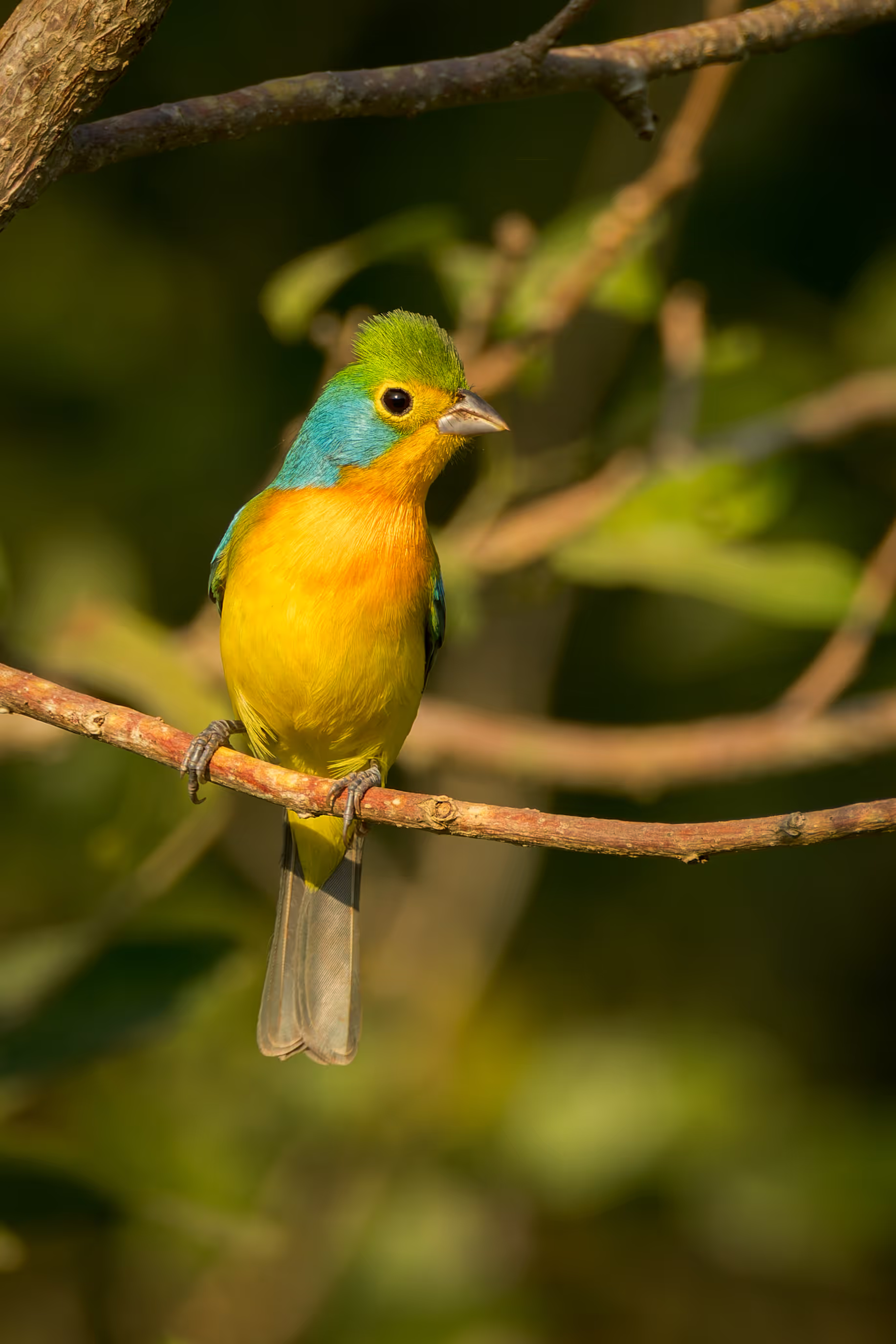
The Orange-breasted Bunting—a splash of west Mexico’s coastal fire

If you're walking near brushy trails or weedy field edges along Troncones’ coastline and suddenly catch a flash of brilliant blue and yellow, stop and look again. You’re probably looking at an Orange-breasted Bunting [Passerina leclancherii].

READ MORE

When the Giants Return

Whale Season on the Coast of Guerrero

Starting in late fall, the beaches and bluffs of Troncones become prime spots to witness several different species of whales. If you want to be in the water with them, trained boat captains can take you closer.

READ MORE

Tarantulas: The Misunderstood Moms of the Night

Fuzzy, Colorful and Completely Harmless

Hollywood’s given them a bad name, but these eight-legged creatures are out looking for food and sex. They have absolutely no interest in you. And two species living in Guerrero are the prettiest tarantulas on the planet.

READ MORE

The Devils of Ocumicho: A Stolen Fire

The work of murdered artist Marcelino Vicente lives on

Folk art is sometimes dismissed as primitive and cute. It has always been a way of expressing ideas that are hard to put into words.

READ MORE

What We Remember: Two Landmarks

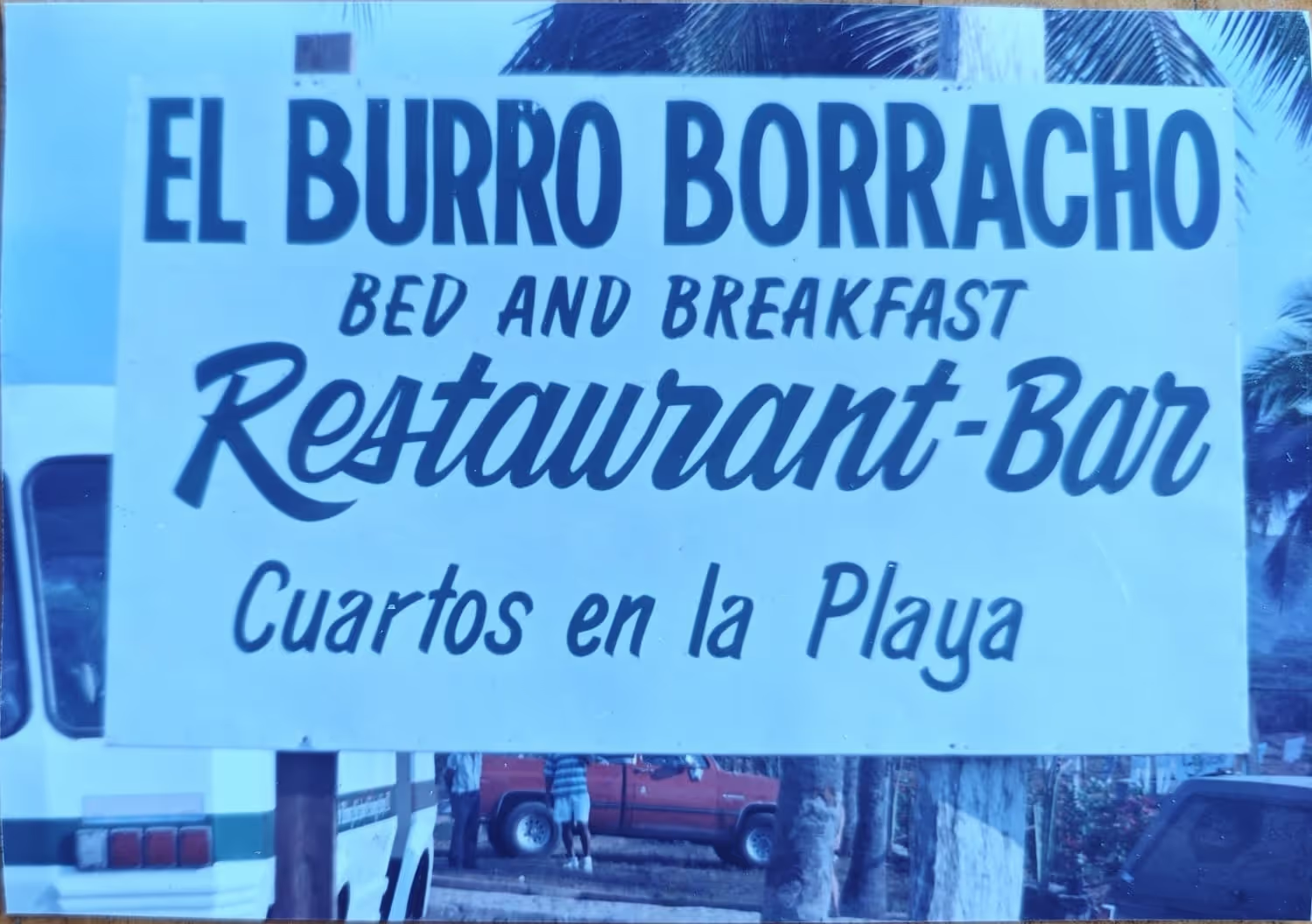
El Burro Borracho & Café Sol still shape the community

In the first tourism boom, Troncones found its way by coming together to eat, drink and learn new things. A lot has changed recently, but that's still the way.

READ MORE

DĂ­a de los Muertos: A Celebration of the Living Dead

Marigolds, tequila and a few of their favorite things

It’s not Halloween. It’s not a sugar-skull-selfie moment. It’s not an excuse to wear face paint and call it culture. Día de los Muertos is older than that, deeper than that, and if you’re going to talk about it—respect it.

READ MORE

Sentinels of the Morning: The White-throated Magpie-Jay of Troncones

The White-throated Magpie-Jay of Troncones

If you've spent more than a morning in Troncones, you've likely met the Uraca (“ooo-rah-ka”). Maybe she woke you at dawn with her wild, laughing calls, or maybe he eyed you boldly from a mango tree, head cocked, tail swaying like a pendulum. These Uraca birds, also known as the white-throated magpie-jays or Calocitta formosa, aren’t just part of the background. They announce themselves, demanding attention with the same unapologetic flair that defines life in this little coastal town.

READ MORE

Living With Nature: The Gentle Monsters Among Us

The first time most people see one, they freeze.

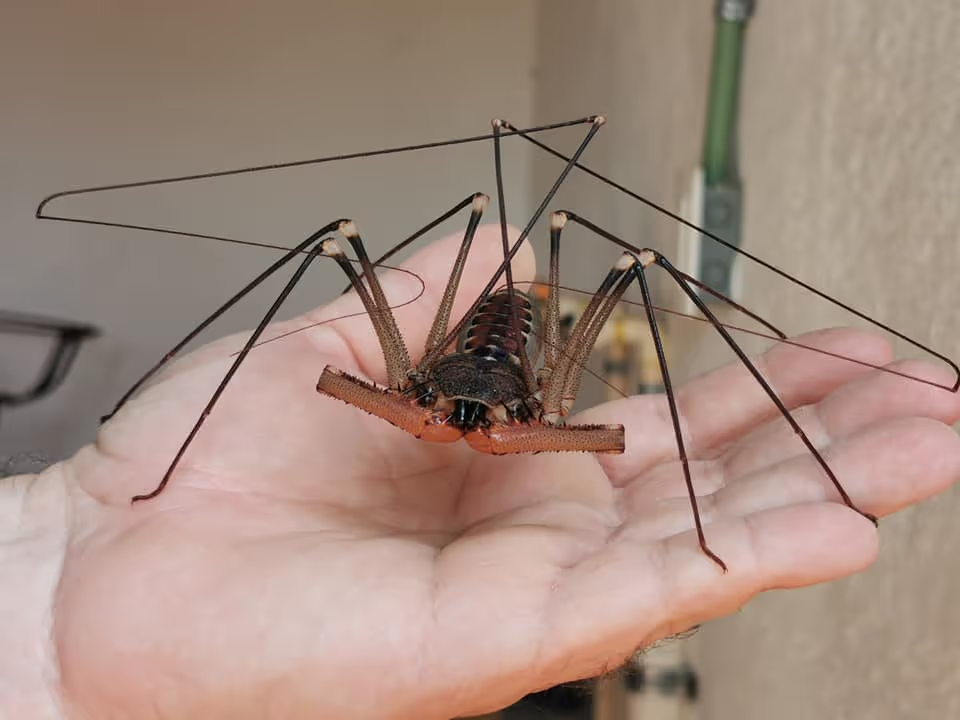
Eight legs, massive pincers, antennae like violin strings gone feral, an ancient horror movie prop come to life. But what you’re looking at isn’t a monster. It’s a tailless whip scorpion, known here in coastal Guerrero as madre de alacrán, scorpion’s mother. Despite the ominous name and even stranger looks, this creature is completely harmless to humans. No venom. No sting. No bite you’d ever feel. They look like they crawled out of prehistory, and in many ways, they did. Yet here they are, sharing our gardens, our walls, our nights.

READ MORE