
Streak-backed Orioles: The Brightest Thing in Your Banana Tree
That flash of orange in the garden isn’t your imagination
There’s a bird’s nest—a long woven pouch—hanging down on Main Street in Troncones. It’s a classic beauty, an impressive piece of work. It looks like it could be an oriole’s nest. Is it? In this “What is That Bird?”, William Mertz takes a look at our local orioles—colorful, gender-norm defying, nectar-loving, go-fast kooks who know where to find what they’re after.

.avif)





.avif)

%20(Spanish)-2.avif)





You're eating breakfast on the patio and something bright catches your eye in the banana tree. Orange—real orange, not the washed-out kind. It moves fast, lands on a ripe fruit, and starts working it apart with a curved black bill. By the time you put your coffee down, it’s gone. But it’ll be back. They always come back.
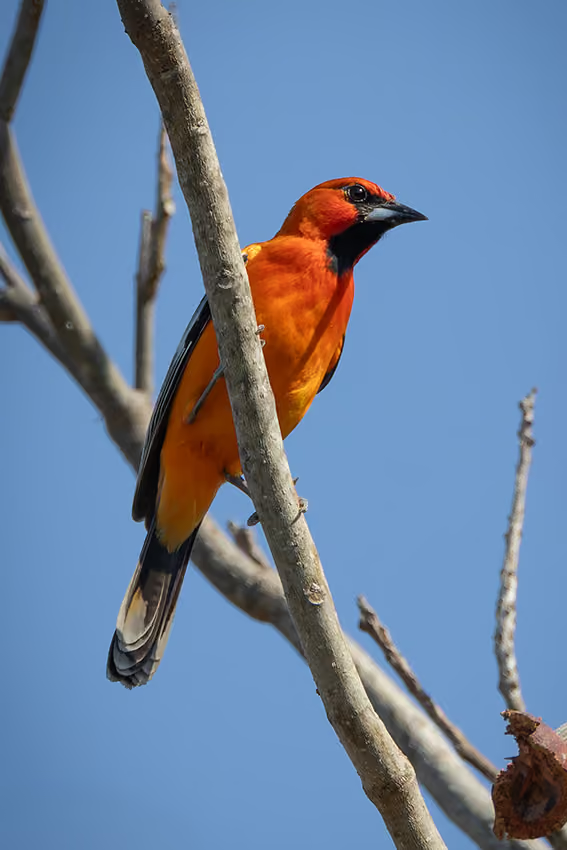
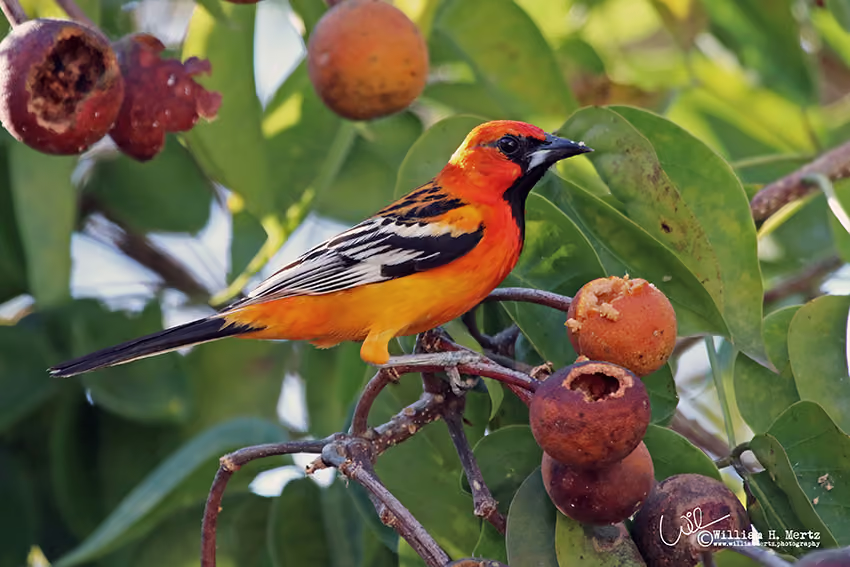
That bird is a streak-backed oriole (Icterus pustulatus), and right now, in the dry season, they are everywhere.
THE SUGAR ADDICTS OF THE BIRD WORLD
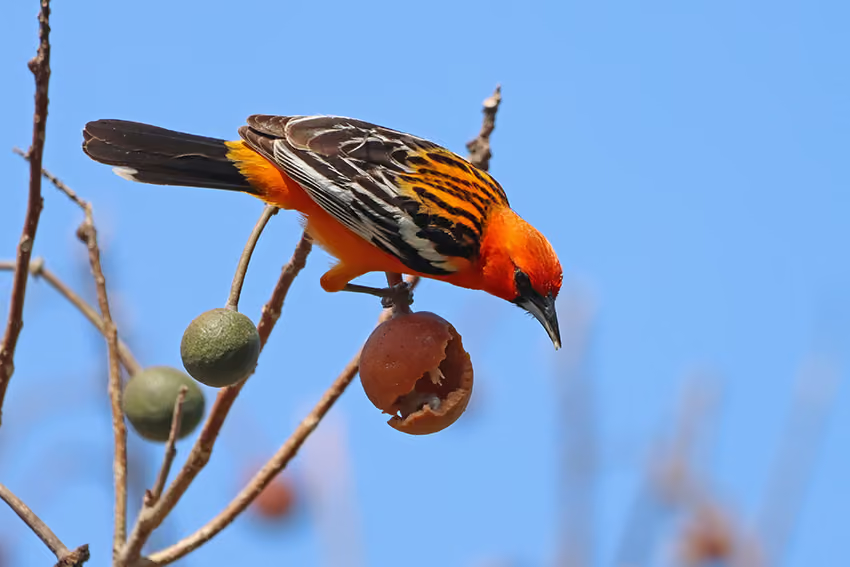
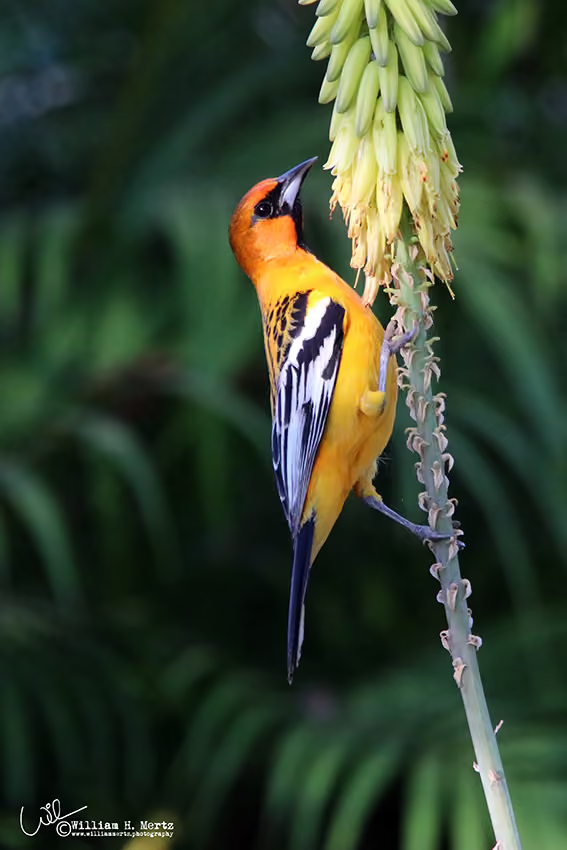
Streak-backed orioles are fruit-and-nectar specialists with a serious sweet tooth. Ripe mangos, bananas, papayas, if it’s soft and sugary, they’ll find it. But they don’t stop at fruit. They work the flowers, too. African tulips, blooming aloe plants, coconut palm blossoms, anything heavy with nectar. Watch one long enough and you’ll notice their bill often has a dusting of pollen on it, which makes them quiet, unofficial pollinators of your garden.
If you want them around, and you do, plant things that bloom or bear fruit. A feeding station with sliced bananas or papaya will bring them in reliably. Once they find a source, they remember it.

TWO BIRDS, ONE NAME
Here’s where it gets interesting. Locally, we have what appear to be two distinct varieties of streak-backed oriole, and they don’t seem to intermingle much.
The first is what you’d expect from a field guide. Males are a warm, saturated orange with black streaking on the back, black wings edged in white, and a neat black throat patch. Females are softer, a pale, buttery yellow with less defined markings. They’re handsome birds by any standard.
Then there are the ones I call “super males”. These birds border on red. The orange is so intense it verges on flame, especially on the head and chest. Their females aren’t the muted yellow of the other variety—they’re a warm pale orange, brighter than the typical female by a wide margin. The two groups seem to keep to their own kind, pairing within their color type even when feeding in the same trees.
This isn’t just a trick of the light. The northern populations of streak-backed orioles were once given a separate name—flame-headed oriole—because of exactly this kind of intense reddish coloration. Whether what we’re seeing here represents two overlapping subspecies, a cline in plumage intensity, or something else entirely is an open question. But spend enough mornings watching them and the difference is unmistakable.

THE HANGING NEST
If the color gets your attention, the nest earns your respect.
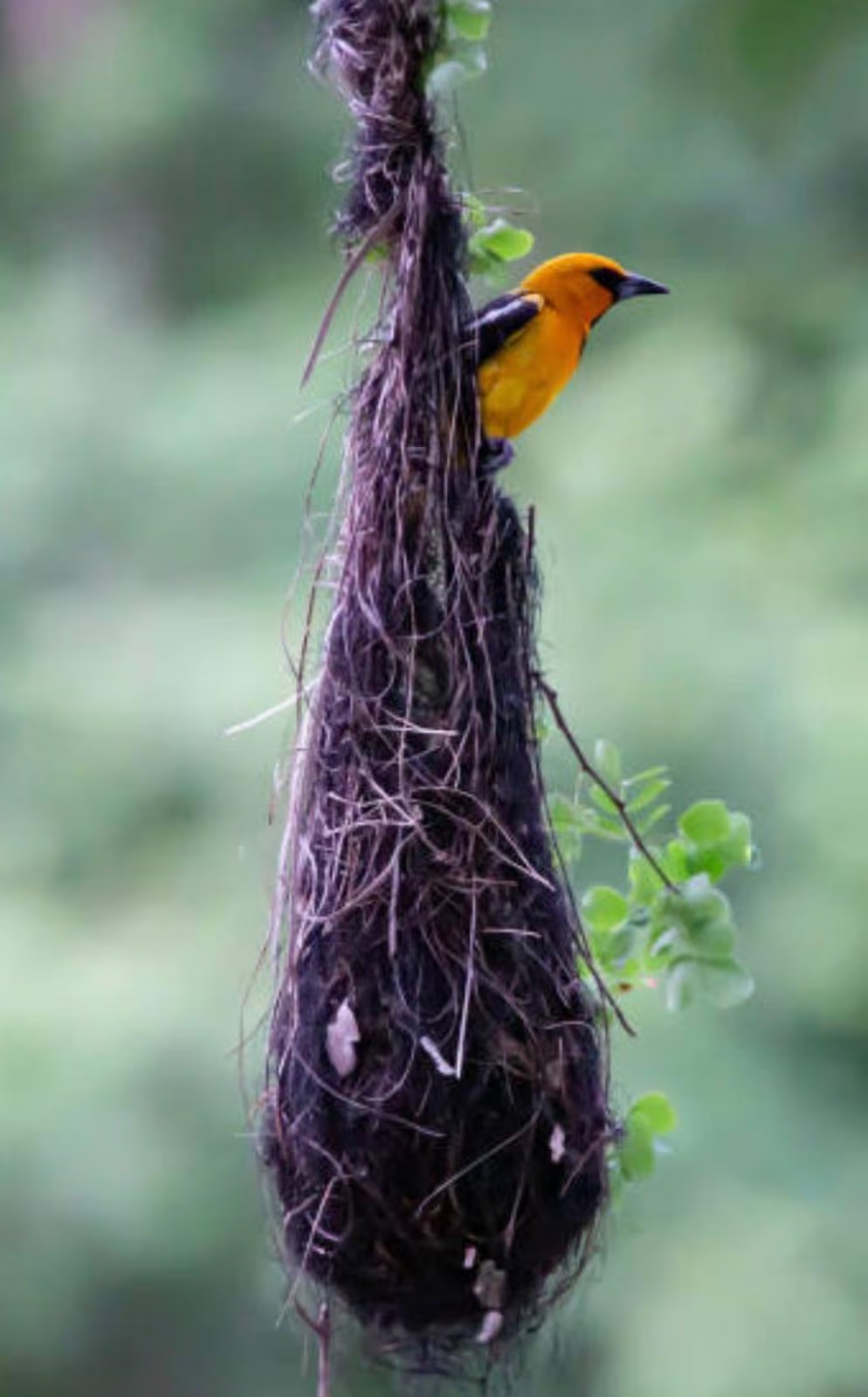
Streak-backed orioles build long, pendulous nests woven from plant fibers—hanging pouches suspended from the tips of branches, swaying in the wind like little baskets. The female does the construction and it’s meticulous work. The finished product is a tightly woven sock of vegetation, open at the top, deep enough to protect eggs and chicks from wind and rain.
You may have already noticed the larger, more conspicuous hanging nests of the Yellow-winged Cacique, which are common throughout the area and hard to miss. Oriole nests are smaller and more refined—less like a sack and more like something you’d find in a craft market. If you see a hanging nest and wonder whether it’s a cacique or an oriole, size is your answer. The cacique builds big and loud. Like the one on Main Street. The oriole builds small and precise.
NOT THE ONLY ORIOLE IN TOWN
A few other oriole species live in the region or show up seasonally, but the streak-backed is the one you’re most likely to see in town, in the garden, or raiding the fruit bowl on your breakfast table. Their comfort around people, their boldness at feeders, and their sheer visibility make them the default oriole of daily life here.
And here’s one more thing worth knowing: in this species, the females sing. Not just alarm calls or simple contact notes—full, complex songs, and by some accounts more frequently than the males. In most of the bird world, singing is a male performance. Streak-backed orioles didn’t get that memo.
So, the next time that flash of orange lands in your banana tree, take a moment. Watch which variety it is—the warm orange or the flame. Notice whether it’s working a flower or demolishing a papaya. Listen for the song. And if you’re lucky, you might spot the nest—a small, swaying masterpiece, hanging from a branch tip like it was always meant to be there.


.avif)