The Crocodiles of Troncones
They’re Neighbors, Not Nuisances
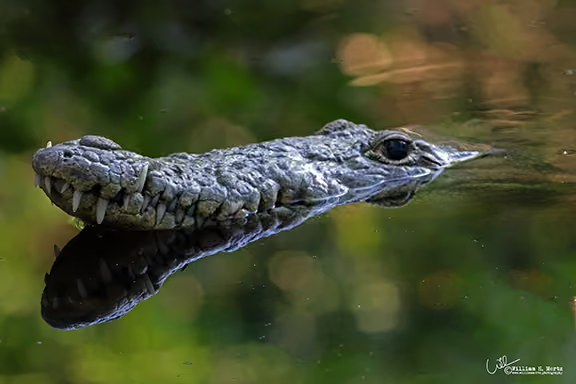
Along Mexico’s Pacific coast lives the American crocodile [Crocodylus acutus]. Its range stretches from southern Florida through Mexico, Central America, the Caribbean and into northern South America. It’s a coastal species, built for estuaries, mangroves, lagoons and saltwater marshes. Unlike freshwater crocodilians, American crocodiles tolerate and even prefer brackish and saltwater environments. They will occasionally enter the open ocean, especially when moving between estuaries.
.avif)





.avif)
%20(Spanish)-2.avif)



It is important to be very clear about one thing: the American crocodile is the only crocodilian species found in this region. There are no alligators here. There are no caimans. When you see a large reptile in an estuary in Troncones, Zihuatanejo, or Ixtapa, it is Crocodylus acutus. Period.
They are large reptiles. Adult males can reach three to four meters, with rare individuals exceeding that. In our region, we do occasionally see very large males, but most of the crocodiles that people encounter here are smaller than the maximum size the species can reach. The biggest animals often occupy remote estuaries far from human settlement—and along this coast there are hundreds of such places.
Yes, we have crocodiles here in Troncones. The most reliable place to see them is in the estuary near the bridge south of town [the one known as “the second bridge”].
Crocodiles are shy animals. If you approach the bridge quietly, you may see one basking along the bank or drifting just below the surface. If you walk loudly or crowd the water’s edge, they will almost always slip away before you even realize they were there.
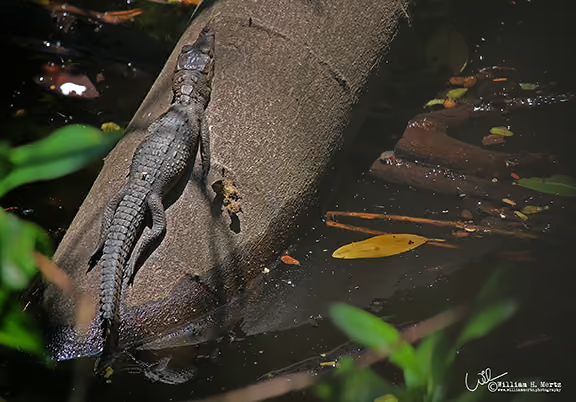
They are more common than many people think. And that is actually a good sign. A healthy crocodile population tells us our estuaries are still functioning ecosystems.
One of the most overlooked aspects of crocodiles is their role as attentive mothers.
Female American crocodiles build mound nests from vegetation and soil. They guard these nests carefully. When the eggs are ready to hatch, the babies begin to vocalize from inside the nest—a soft piping that signals their mother. She opens the nest and gently lifts the hatchlings in her mouth, carrying them to the water and placing them safely into the shallows. For the first months of life, young crocodiles often remain near their mother, who actively protects them from predators.
This is not the behavior of a mindless or reckless animal. It is the behavior of a species that has survived for millions of years.
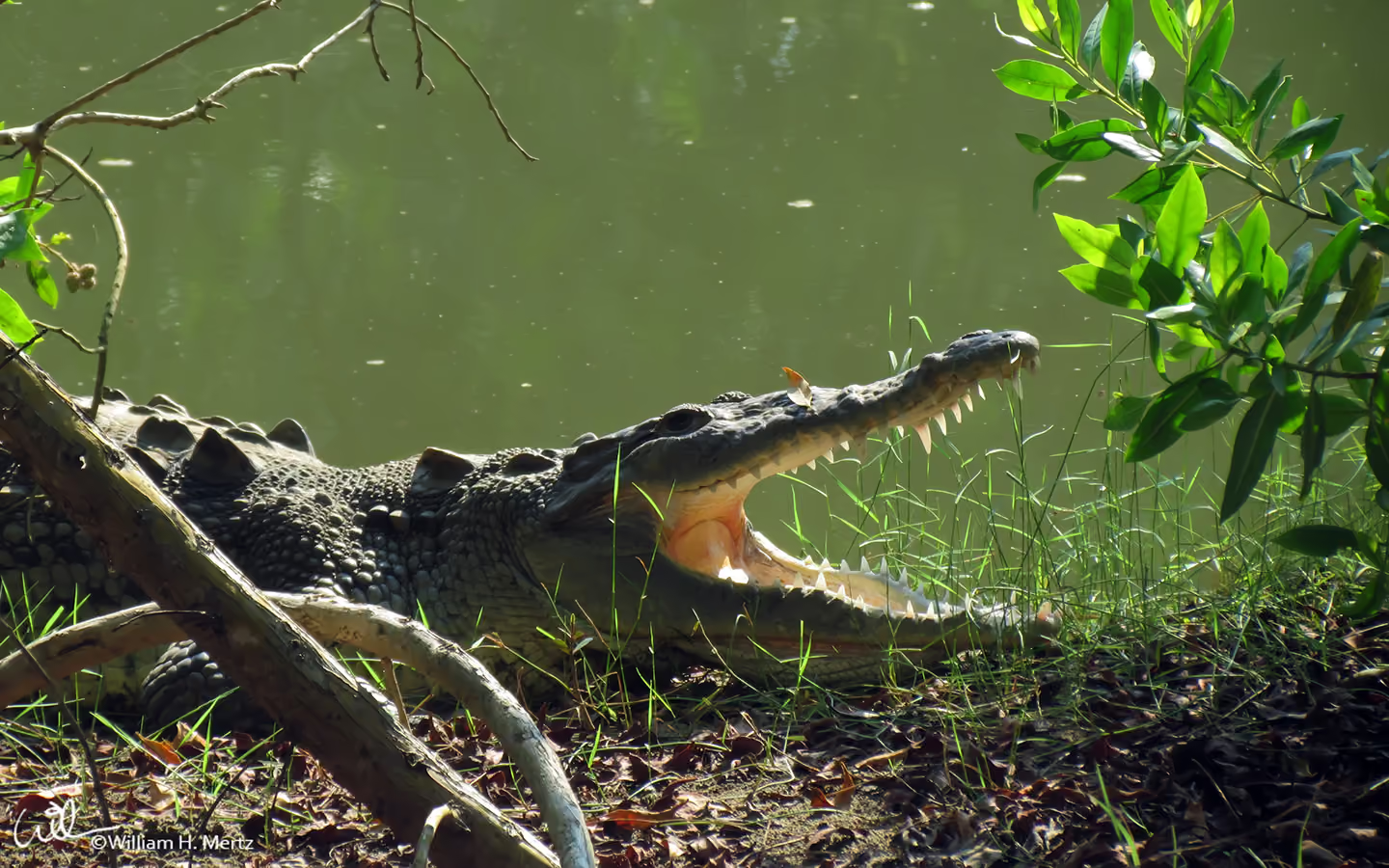
DO NOT FEED THE CROCODILES
Unfortunately, crocodiles are often reported as “nuisance animals” simply because they are visible. When one appears in a lagoon, canal, or estuary near people, it is frequently relocated. The problem is that relocation is not a simple solution. Crocodiles are territorial. Moving one into an estuary that already has resident crocodiles can lead to conflict, injury, or death for the displaced animal. So-called “sanctuary” areas near Ixtapa already contain large numbers of crocodiles. Adding more does not necessarily improve the situation.

In many cases, the crocodile itself is not creating a danger. It is simply existing where it always has.
The situations that do become problematic almost always involve feeding. When people feed crocodiles, intentionally or unintentionally, the animals begin to associate humans with food. Instead of retreating when someone approaches, they may move toward that person expecting a handout. This is often interpreted as aggression, when in reality it is conditioned behavior. Feeding creates the very conflicts people claim to fear.
If we stop feeding crocodiles, most “nuisance” situations disappear.
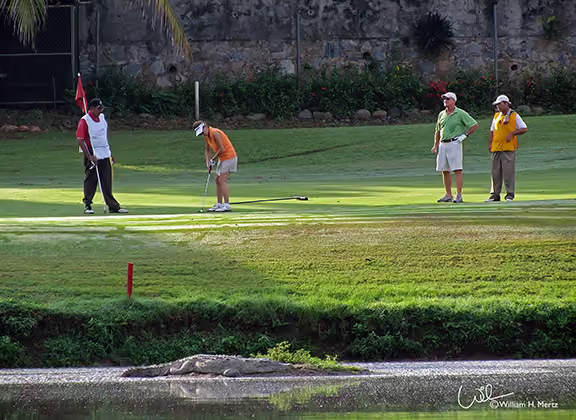
One of my favorite images of a crocodile was one I took on a golf course in Ixtapa while photographing a tournament. It was a very large crocodile—well over two meters long—that was basking calmly beside a water hazard while golfers played behind it. The crocodile was doing what crocodiles do. The golfers were doing what golfers do. Neither was concerned with the other.
That is the attitude we should strive for.
Crocodiles were here long before hotels, roads and golf courses. They deserve their place in the estuaries just as we deserve ours in the towns. As long as we respect distance, avoid feeding, and allow them to remain where they naturally belong, there is no inherent conflict between our species.
They do what they do.
We do what we do.
And in that balance, both can remain.