My Kind of Paradise
A Day Trip to Mesas de Bravo
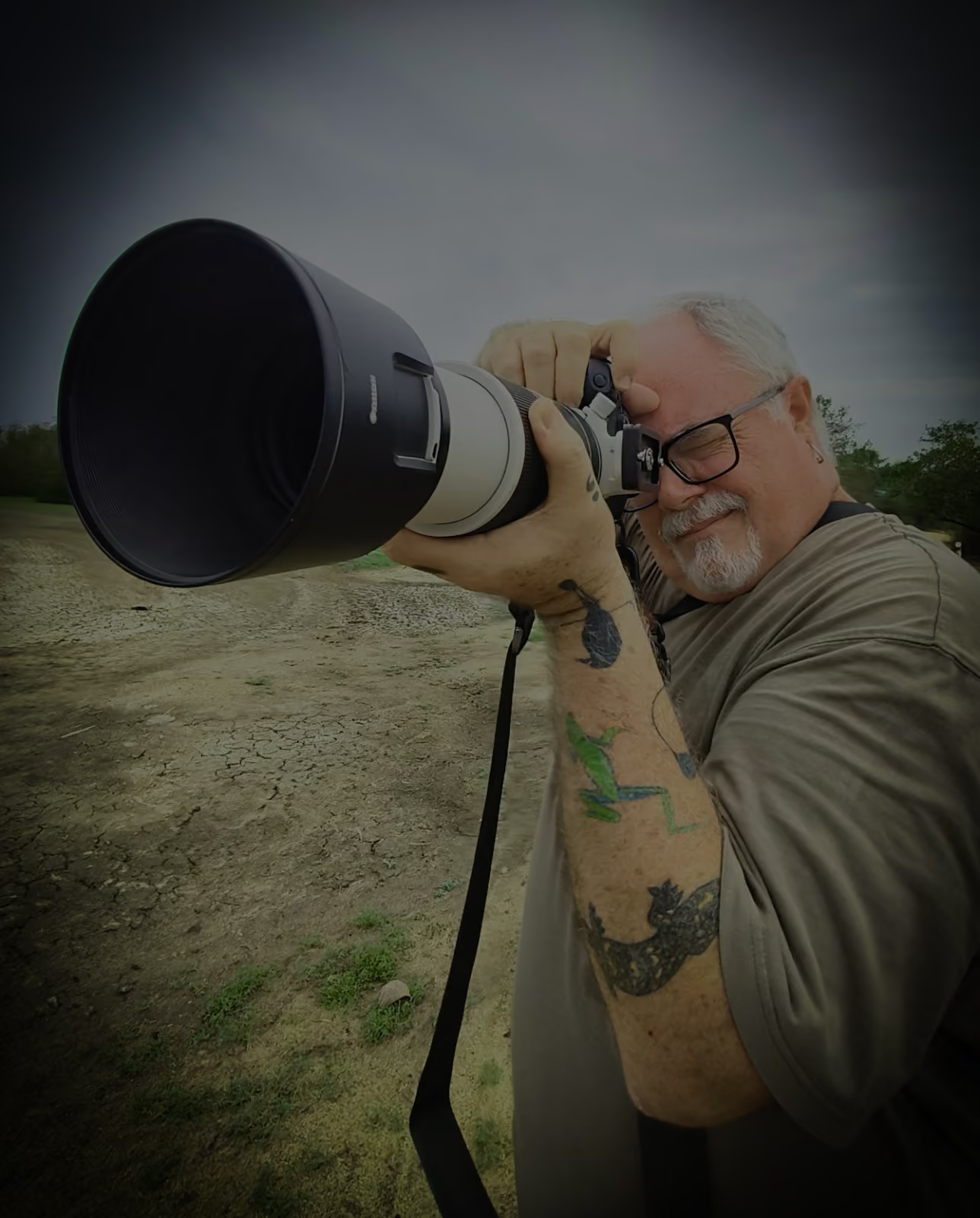
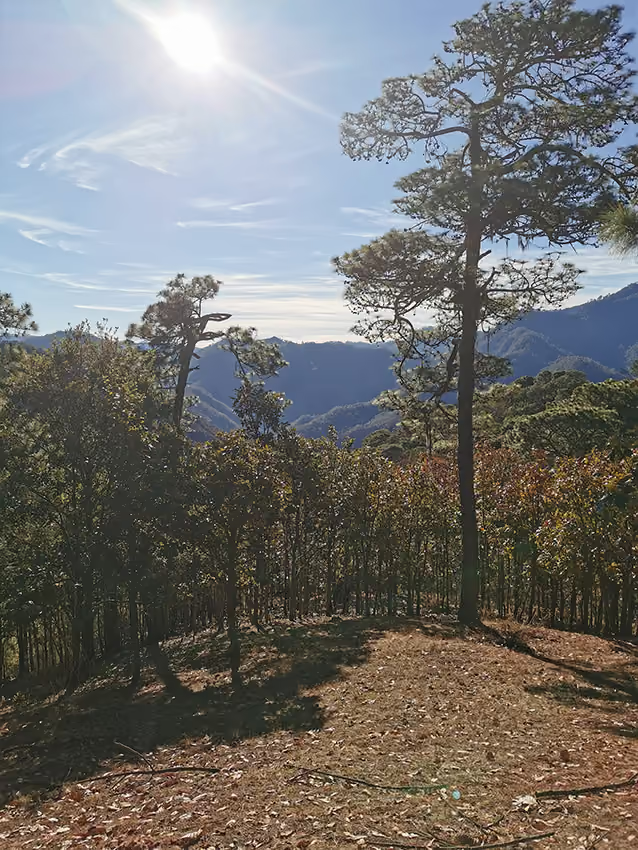
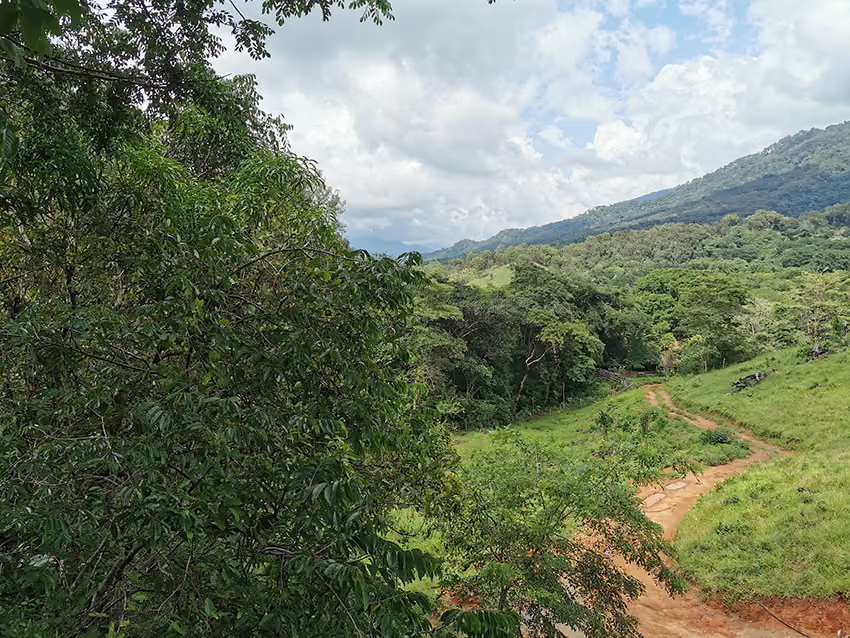
Photographer, naturalist and writer William Mertz recently posted photos of a trip he was on. Because of the trees and the houses, I thought he was somewhere in Pennsylvania. It turns out he was still in Mexico and only an hour and a half from Troncones. Here's his getaway—his view into the world of Mesas de Bravo—a short (and easy) drive into the mountains of Guerrero. Take us away, William.
.avif)





.avif)

%20(Spanish)-2.avif)




People ask me all the time what it’s like to live in paradise.
If I’m feeling generous, I’ll give them a half-smile and say, “It's okay.” Which gets a look—the slightly offended, slightly confused look of someone standing on a beautiful beach who just heard the guy who lives here call it “okay.” If I’m feeling a little more honest, I’ll say, “I don’t know. I live in Troncones.” That one really raises an eyebrow.
But here’s the thing. I’m not a beach person. I know—twenty-seven years on the coast and I’m not a fan of sand, or saltwater, or the ocean, or any of the things that bring most people here. What I love is mountains. Clear rivers with cool water you can actually swim in. Pine trees. Exotic birds that don’t exist at sea level. Small villages tucked into quiet valleys where people live in ways that most visitors to coastal Mexico will never see. Thunderstorms that rattle your windows because you’re so high up you feel like you’re sitting inside the clouds.
That’s my paradise—Mesas de Bravo. And it’s an hour and a half from Troncones.
GETTING THERE
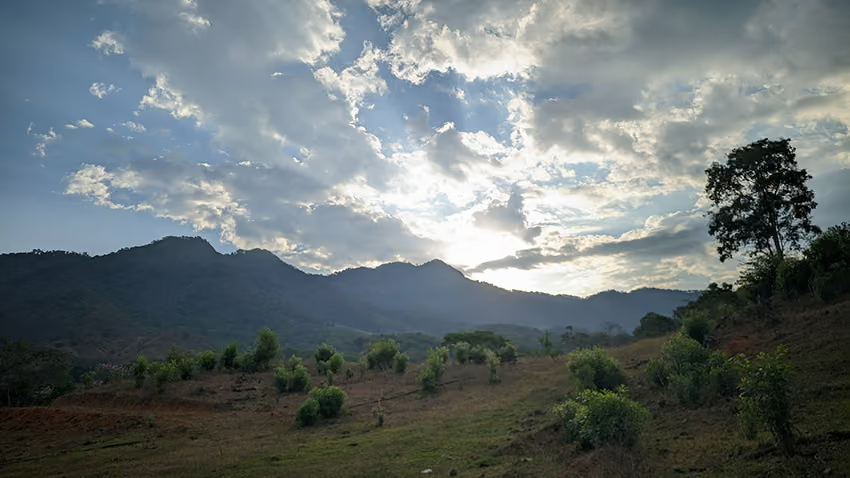
Mesas de Bravo is located off Highway 134, the road that cuts from near Zihuatanejo across the Sierra Madre del Sur to the city of Altamirano. You follow the highway into the mountains, winding through spectacular panoramic views and passing through small villages along the way, until you reach the area near Vallecitos de Zaragoza—a good-sized town, roughly the size of La Unión or a bit bigger. A few kilometers before you reach Vallecitos, you turn off onto a dirt road that climbs into the mountains.
The last five kilometers are on a relatively well-maintained dirt track. As you wind up along the edge of the mountain, the landscape starts to change. The tropical vegetation gives way to pine and oak forest. The air gets cooler. The light is different. By the time you reach the village, you feel like you've left the coast behind entirely—and in every way that matters, you have.
The drive itself would be shorter if the road weren’t so winding, and if you didn’t have to watch for rocks and other obstacles, but the views along the way are part of the experience. You’re crossing the Sierra Madre. It’s supposed to take a little while.
THE VILLAGE
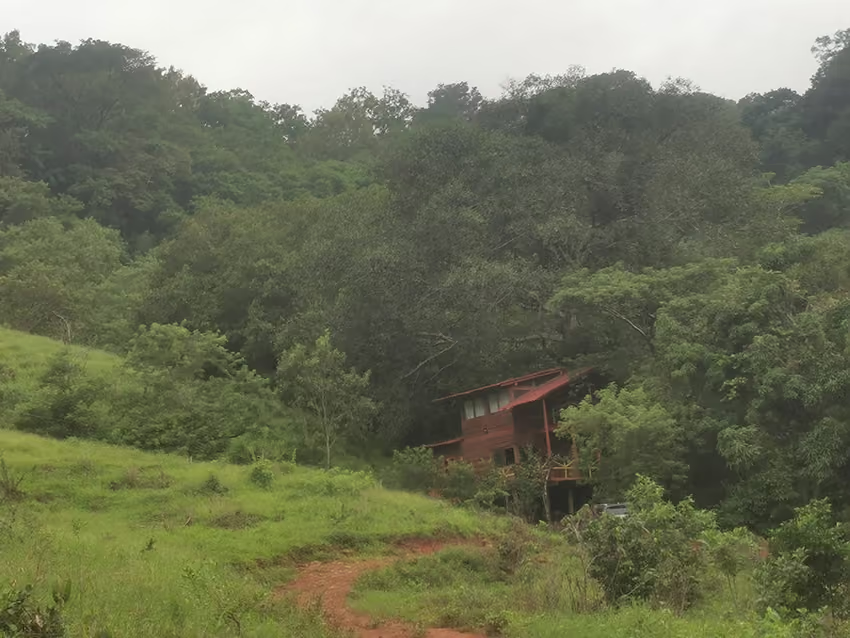
Mesas de Bravo is small. A dozen houses, maybe, spread along a mountain ridge. It is not a resort town. There is no hotel, no restaurant, no gift shop. What there is, is a window into a part of Mexico that most visitors never see.
You’ll see adobe houses. You’ll see families growing mangoes, papayas, and jackfruit in their yards—not as a lifestyle choice or a hobby, but because that’s how people get by up here. You’ll see cattle and pigs and chickens. You’ll see children who grow up in the mountains the way children have grown up in mountains everywhere for centuries—with a lot of space and not much else.
For anyone who has only experienced coastal Mexico—the resorts, the beach towns, the tourist infrastructure—Mesas de Bravo is a corrective. This is what most of Mexico actually looks like. People making a life with what the land gives them, in a place that is both beautiful and demanding.
NITO AND FLOR
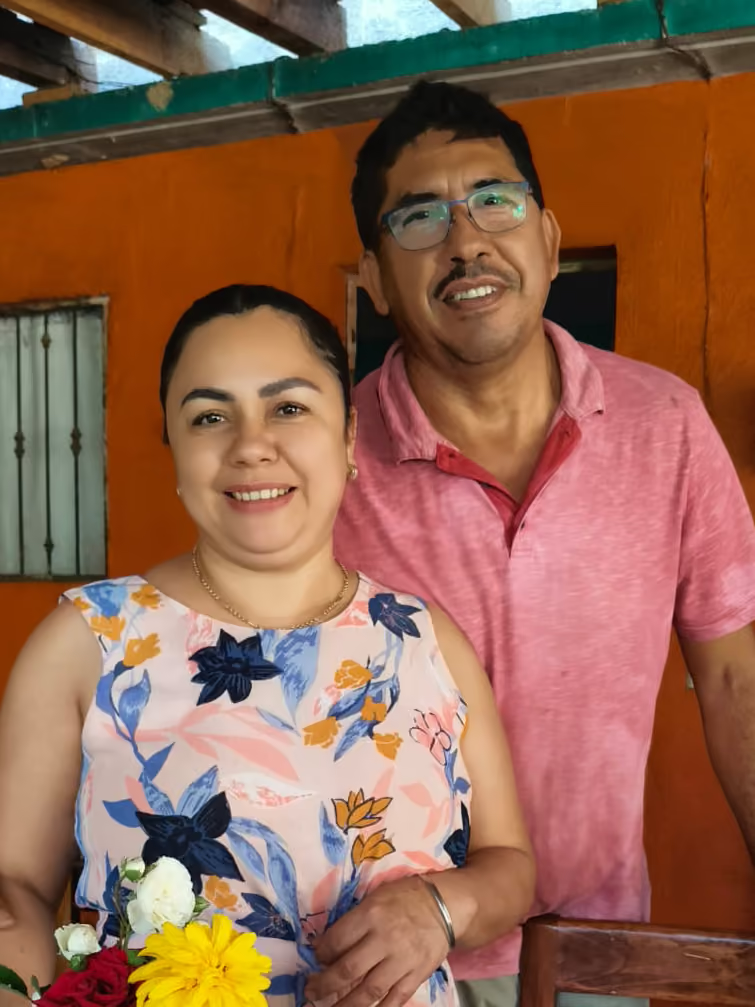
The heart of any visit to Mesas de Bravo is the family of Bolfrano Bravo—known to everyone as Nito. His great-grandfather came to this region from Chilpancingo and settled here. Large families, a dozen or more children in each generation, most of whom eventually moved away. Nito is the one who stayed.
He’s a rancher and a farmer—cattle, pigs, chickens, limes, and whatever else the season and the government agricultural programs make possible. But he’s also someone who recognized early on that the place where he grew up was extraordinary, and that other people would find it extraordinary, too. He pursued formal training in tourism, worked with the state government to get Mesas de Bravo designated as an official tourist destination within the municipality of Zihuatanejo, and has used that designation to bring in infrastructure improvements over the years.
My own connection to Mesas de Bravo goes back about seventeen years. Belem and I stumbled onto the place while exploring the mountains, looking for family she knew she had in the region. As it turned out, Nito and Belem are cousins—distant, but in Mexico, any family connection is a close one. That changed the relationship from visitor and host to something more like family, and it’s stayed that way ever since.
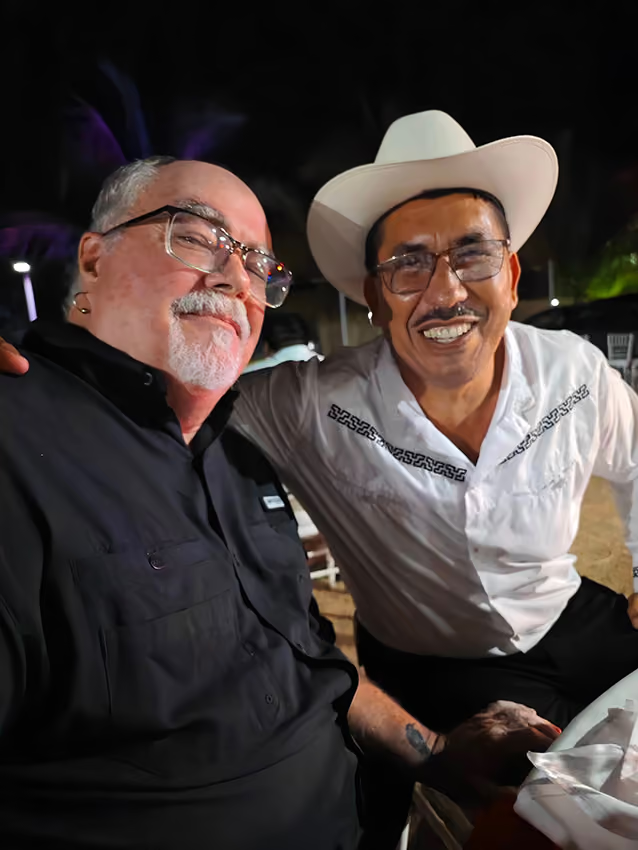
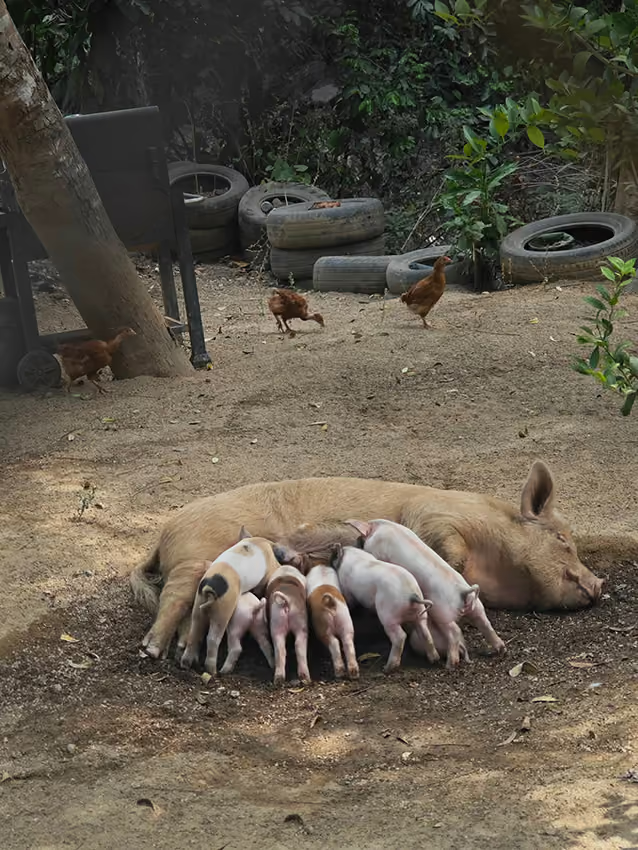
When I was running Blue Morpho Eco Tours, Mesas de Bravo became my most popular destination. I was taking groups up there three to five times a week during tourist season. We’d visit the village, eat a home-cooked meal down by the water, hike to the waterfalls, and collect donations of school supplies, clothing, and shoes for the children of the village and surrounding communities. Twice a year, we’d organize events where kids from across the area would come to receive those supplies. The people of the village would make handicrafts to sell to the visitors. It was a genuine exchange—not a performance for tourists, but a real connection between people from very different worlds.
I’ve been out of the tour industry for a long time now. But even today, people I don’t recognize will walk up to me in Troncones and tell me that the trip to Mesas de Bravo was the best thing they ever did in Mexico. The best food they ever ate. The first time they saw something beyond the beach. That it opened their eyes to how people really live, and that it stayed with them long after the suntan faded.
That’s not something I take credit for. That’s the place. And that’s Nito and Flor.
When you visit today, Flor—Nito's wife—prepares a home-cooked meal that you eat at their table, in their kitchen, with their family. It is not restaurant food. It is better than restaurant food, because it was made by someone who has been cooking for a family in the mountains her entire life, with ingredients that were growing in the yard that morning. If you’ve eaten nothing but hotel and restaurant food during your visit to Mexico, this meal alone is worth the drive.

THE RIVER AND THE WATERFALLS
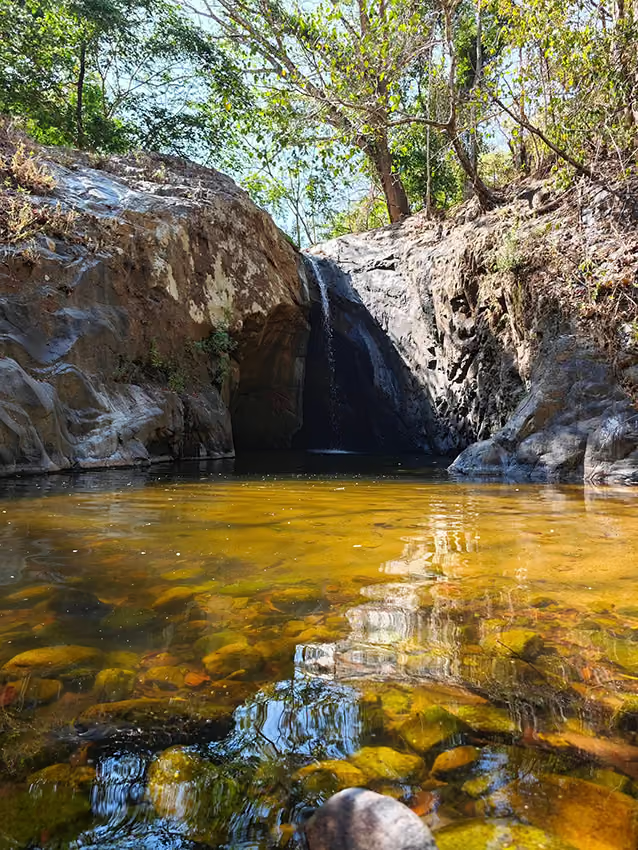
Just a short walk from the village, a river runs through the canyon below Mesas de Bravo. Depending on the season, it can be anything from a gentle stream with clear, cool pools to a raging torrent during the height of the rains. During the tourist season—roughly October through April, when the water is manageable—it’s one of the most beautiful swimming spots in the region.
The main waterfall is roughly thirty feet high, dropping into a deep pool below that’s perfect for jumping into—and people do. Beyond that, there are several smaller waterfalls and pools scattered along the river, all shaded by trees and surrounded by the kind of lush, quiet forest that makes you forget the beach exists.
If you're coming from sea level and the heat of the coast, that first step into the cool mountain water is something you won’t forget. The river is everything the ocean is not—fresh, clear, cool, and calm enough to actually relax in.
THE BIRDS
At just over eighteen hundred feet of elevation, Mesas de Bravo isn't spectacularly high by mountain standards. But the difference from sea level is enormous in terms of what lives there.
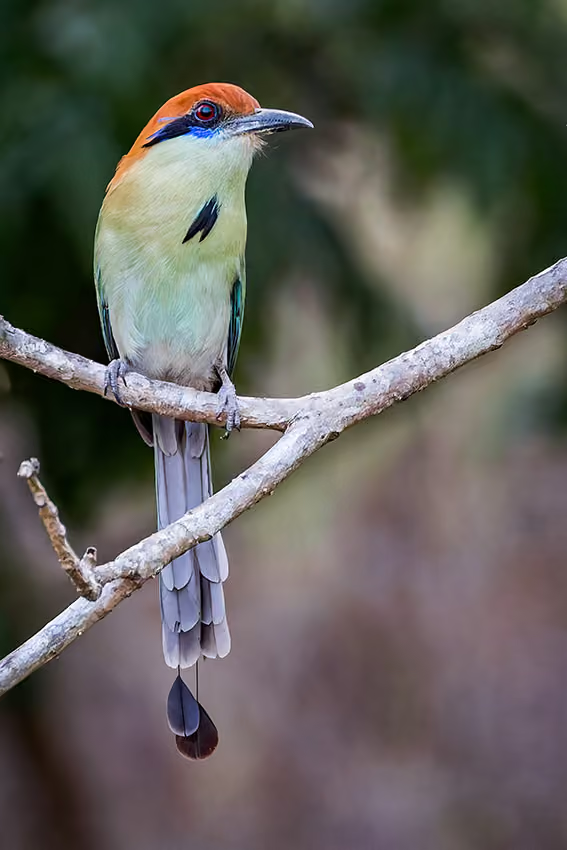
The transition from tropical lowland to pine-oak forest changes everything. Birds that simply don’t exist on the coast are common up here. Emerald toucanets—small, jewel-green relatives of the toucans, with oversized bills and an almost absurd beauty—are regularly seen and heard in the trees around the village. Russet-crowned motmots sit on open perches with their distinctive racket-shaped tails hanging below them like pendulums. Acorn woodpeckers drill their storage trees with hundreds of holes, each one stuffed with an acorn. Boat-billed flycatchers, masked tityras, and a whole community of birds that coastal visitors have never encountered make the area a genuine destination for anyone with binoculars and curiosity.
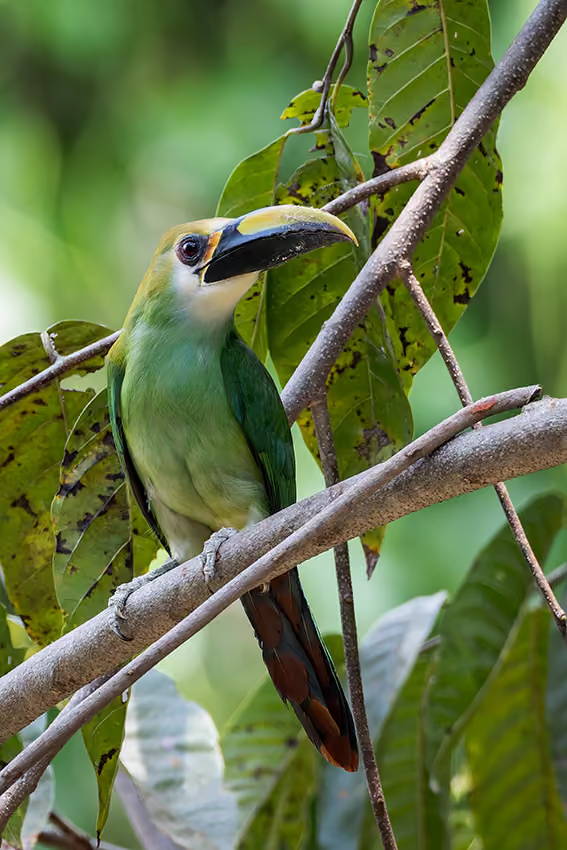
When you read my companion article on the parrots of Troncones, you’ll discover that the lilac-crowned Amazon—the rarest of our coastal parrots—is actually more common at elevations like this. Military macaws, now essentially gone from the coast, can still occasionally be encountered in the deep mountain forests beyond Mesas de Bravo. The mountains are where these birds retreated to, and the mountains are where they remain.
For birders, a trip to Mesas de Bravo is not optional. It’s a completely different world from the coast, barely ninety minutes away.
STAYING OVERNIGHT
If a day trip isn’t enough—and for many people it won’t be—Nito and Flor have two rental cabins set apart from the village, each one tucked along its own arroyo with a stream flowing through the property. The cabins come fully appointed with kitchens, and each has a porch that faces the mountains—the kind of porch where you sit with a coffee at dawn listening to toucanets and motmots, or watch a mountain thunderstorm roll in at sunset without moving from your chair.
Staying overnight changes the experience entirely. The day-trippers get the waterfalls and the meal and the drive home. The people who stay get the mornings and the evenings—which, if you know anything about birds or mountains or solitude, is when the real magic happens.
HOW TO GO
Mesas de Bravo is best visited through an established tour operator. This is not because the drive is dangerous or the area is unwelcoming—it's because you’re visiting a family’s home, not a national park. There’s no visitor center, no ticket booth, no posted hours. Arrangements need to be made in advance so that Flor knows to cook for you, Nito knows to be there to receive you, and everything is set up for your visit. A tour guide handles all of that coordination and knows the road and the area well.
Three tour companies that regularly make the trip to Mesas de Bravo: Ketavi Tours, Xplora Tours and Guzmán’s Tours.
A typical day trip runs five-to-eight hours and includes the drive, a visit to the village, a home-cooked meal, and time at the waterfalls. If you want to stay overnight in one of the cabins, arrangements can be made through the tour operators or directly with Nito.
WHY GO
I've been asked a thousand times what I love about living on the coast of Mexico. And I have good answers—the birds, the people, the pace of life, the light. But when someone asks me where my favorite place in this region is, the honest answer has always been the same.
It’s up in the mountains. It’s a village of a dozen houses where a rancher named Nito decided the place he grew up was worth sharing with the world. It’s a thirty-foot waterfall you can jump off of into water so clear you can count the stones on the bottom. It’s a plate of food cooked by a woman who learned to cook from her mother, who learned from hers, in a kitchen in the mountains that hasn’t changed much in a very long time.
It’s an hour and a half from the beach. It might as well be another country.
That’s my paradise. It might be yours, too.
William Mertz is a photographer, naturalist, and writer based in Troncones, Guerrero. He leads birding walks and has documented nearly 1000 bird species across Mexico. His photography is available at williammertz.photography.
LINKS
Ketavi Tours: https://www.ketavi.com
Xplora Tours: https://www.facebook.com/xploraixt
Guzmán’s Tours: https://www.josecitytour.com