What Bird Is That? A Guide to the Three Common Wrens of Our Region
That quick-moving bird in the bush is here to tell you something
Our local wrens are small creatures with big songs. Each one is different—in how they look and how they sing. Once you can tell one from the other, you’ll know you’ve arrived.

.avif)





.avif)

%20(Spanish)-2.avif)






Wrens are the kind of birds that sneak into your morning without asking. You’ll hear them first—clear, ringing voices from deep in the brush—and only later catch a glimpse of a tiny, busy body flitting through a tangle of vines or ducking into a rock wall. Here on the Pacific coast of Mexico, three species of wrens are especially common, each with its own personality, song, and quirks. If you’ve ever looked at a little brown bird and asked, “What is that?”, chances are it’s one of these.
THE HAPPY WREN
The Happy Wren (Pheugopedius felix) is aptly named. Bolder than the others and common in gardens, it hops around like it owns the place—tail cocked, bill open in mid-song, often in pairs. Its song is rich and complex, sometimes mistaken for a much larger bird. Look for the white eyebrows, chestnut flanks and streaked throat. Happy Wrens are often the first to colonize new spaces, especially if there’s a flowering bush or a shady patio to claim.

THE SCLATER’S WREN
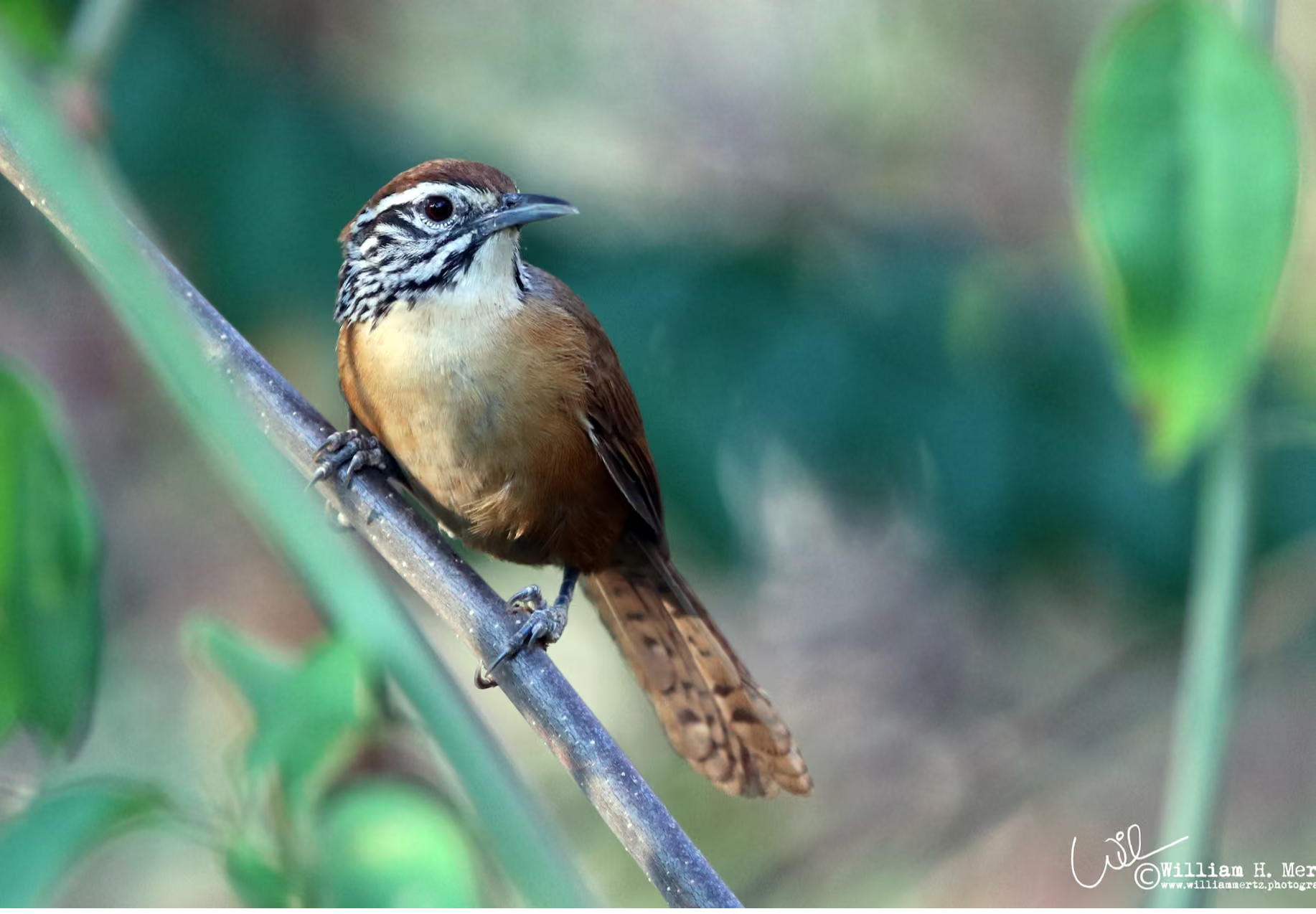
Then there’s the Sclater’s Wren (Campylorhynchus humilis), formerly classified and grouped with the Rufous-naped Wren. Recently split from what was once considered a single widespread species, Sclater’s is the local branch here on the Pacific coast. Larger and louder than its cousins, these are the ones who gather in noisy family groups and yell at you from treetops or antennas. They’re bold, striking birds with pale bellies, reddish-brown [rufous] backs, and heavily streaked heads—often mistaken for some kind of mini-thrasher. Social and intelligent, they build massive ball-shaped nests and aren’t shy about defending their turf, even against people.

WHITE-BELLIED WREN
The more discreet White-bellied Wren (Uropsila leucogastra) is easy to overlook unless you know how to listen. Smaller, rounder, and quieter than the others, it stays low in the underbrush or stone walls, slipping between shadows with a soft churring call. Its plumage is clean and subtle—warm brown above and white below, with a short tail often held upright. Unlike its louder relatives, it tends to stay solo or in pairs, slipping through the scene like a secret you weren’t meant to catch.
All three species can appear similar at first glance—small, brownish, fast-moving—but with a little practice, their differences become clear. Next time one pops out to scold you on your morning walk, take a moment to really see it. You might just start recognizing them by voice alone. That’s when you know you’ve stopped being a tourist…and started becoming part of the landscape.