Breads, Kings, Baby Jesus and Tamales
Monday, February 2nd, marks a special day throughout Mexico and there’s a fun celebration at Café Cuattro in Troncones
On January 6th, I happened to be in Café Cuattro when the staff started cutting up some sort of cake. Everyone took a different approach when they got the knife in their hands—twirls, curtseys, bows, a flourish of some sort—always laughter. I’d seen those big cakes before, but never knew what they were about or what’s inside. On my way out, I saw what looked like little bones poking out from around the cake. I had to ask.
%2017.27.38.avif)
.avif)
.avif)





.avif)

%20(Spanish)-2.avif)


The first thing I learned—it’s not a cake. It’s a bread, a sweet bread called Rosca de Reyes, literally, the wreath of the kings, and its symbolism is ancient, the knives, the frosting, the bones, even the bread itself evoking the Christian story of baby Jesus. A little look at the history of the round bread revealed it’s a tradition associated with late year/new year celebrations that can be traced back to the Romans and, in Mexico, maybe even before.
The Roman practices are said to be part of a winter-time feast to honor their god of time, liberation and agriculture, Saturn. There, in the Saturnalia, the circular shape of the bread symbolized the sun and the bread’s sweetness evoked the promise of the next harvest. Hidden in each loaf was a bean and whoever in the household cut the bread and found the bean was king for a day. That included slaves and children. Totally mischievous. With some time travel and a change of mythology, it’s easy to see how that bread made it into Catholic Christmas traditions to mark that arrival of the Magi, the three kings, in Bethlehem—the dough representing the safety of the holy family and the church, the sweet toppings honoring the crowns of the three kings, the knives recalling the dangers baby Jesus and his parents faced as the Roman soldiers sought out “the new king”, and the bean being transformed by time into the baby Jesus. I digress. I learned all that history only after Cuattro’s owner, Andrea Nuñez, started telling me about what I’d just seen.
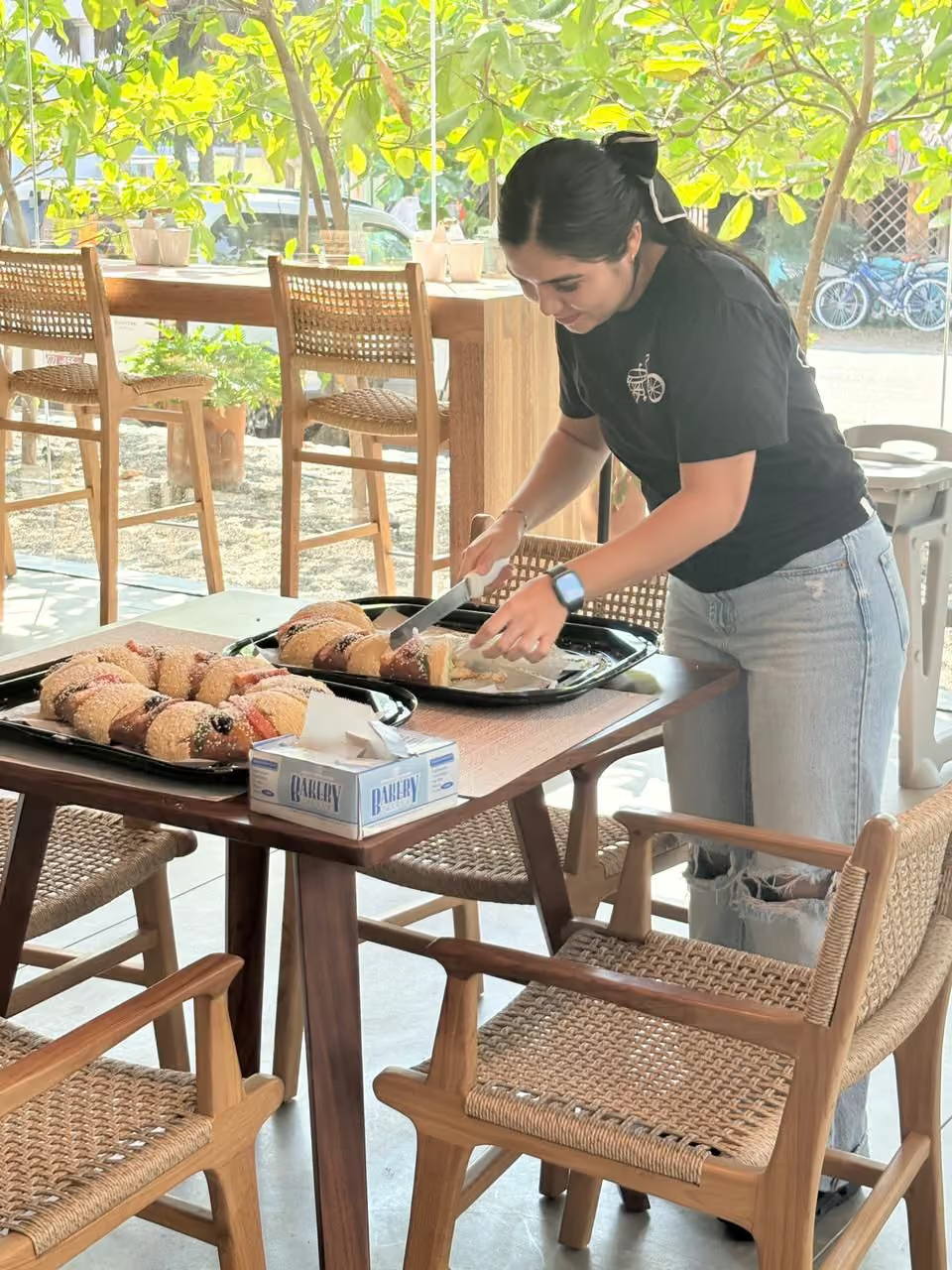
She explained, “January 6th is the day the Three Wise Men, the Three Kings, arrive to see Jesus. In Mexico, our tradition is they leave gifts for the children. On that day, we bake and then cut the rosca to celebrate their arrival. It’s a sweet bread; ours was made of orange, figs and sugar. Everything has a meaning.”
Andrea also explained those weren’t bones, how the small white shapes I saw were figurines of the baby Jesus, and how finding those were a blessing, good luck. “But,” she added, “whoever finds the baby Jesus in their cut of the rosca is obligated to buy tamales for the whole group, for everyone who’s at the cutting of the rosca. That’s true whether it’s at work, like here, or whether it’s with your family.” “You find baby Jesus and you have to buy tamales?,” I asked, surprised. “Yes,” Andrea answered, “You buy tamales for everyone on February 2nd, for el Día de la Candelaria.”
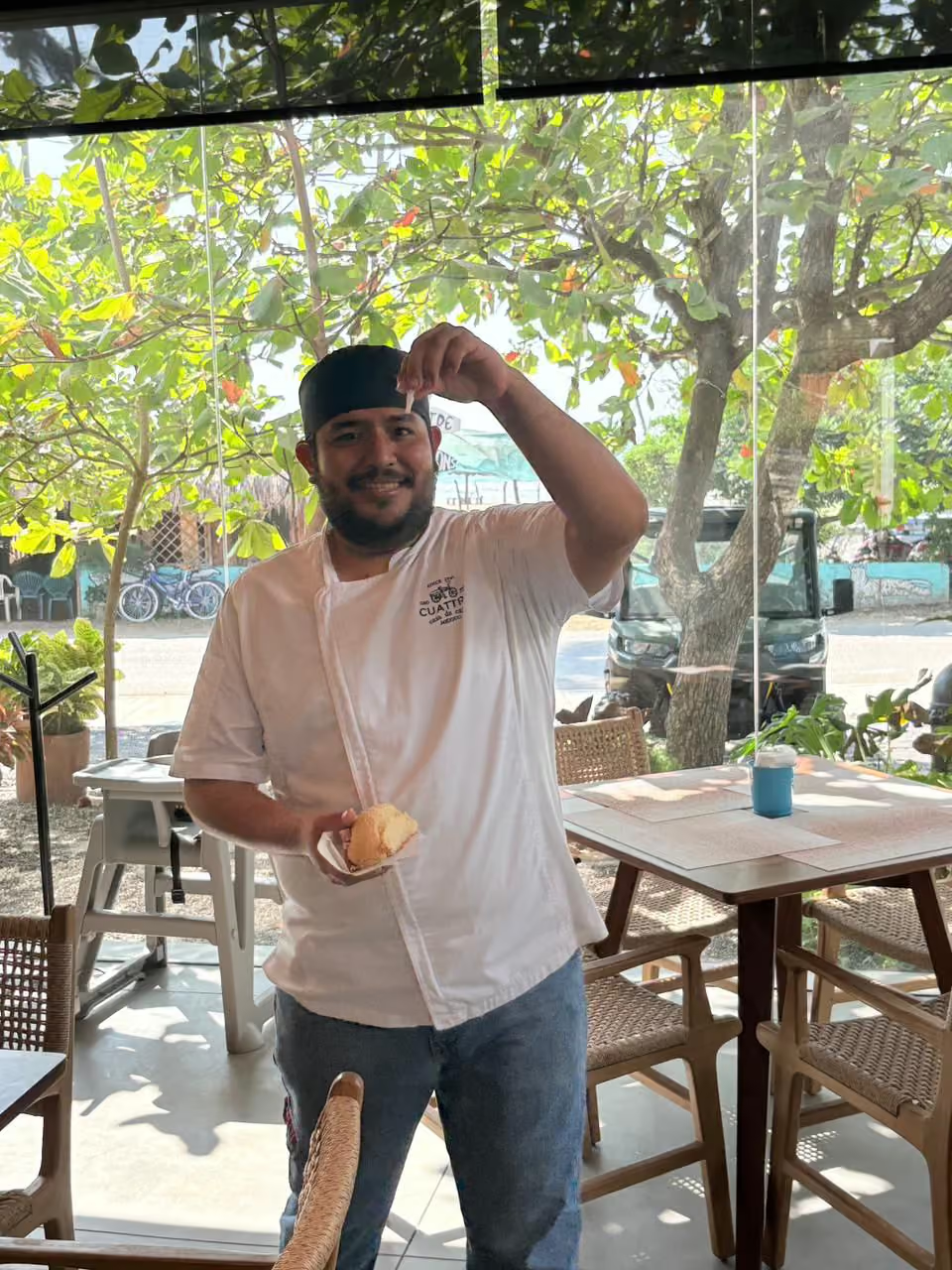
In the United States, that’s Groundhog Day, an odd does-winter-stick-around prognostication involving a rodent and his shadow. This rosca-cutting sounded a lot more logical, rooted in something. A quick Internet check on why tamales and why February 2nd led Andrea and I into a deep burrow, to a midden of traditions [a midden being where a groundhog stores his treasures] that blends Hebrew, Catholic and Aztec practices. It turns out Jewish mothers were not allowed in the temple until 40 days after they had given birth, that they were considered “unclean” until then. 40 days from December 25th is February 2nd. The Catholic Church calendar marks that day as “Candelmas”, the day when Jesus was formally presented to “God”, taken by his mother to be blessed by the rabbis in the temple. As far off and bizarre as that all sounds, February 2nd in ancient Mexico was far more practical—typically the beginning of the planting season—which was marked with offerings of corn-based dishes to the rain god Tlaloc. Ahh, a blessing of tamales. A feast of life and gratitude.
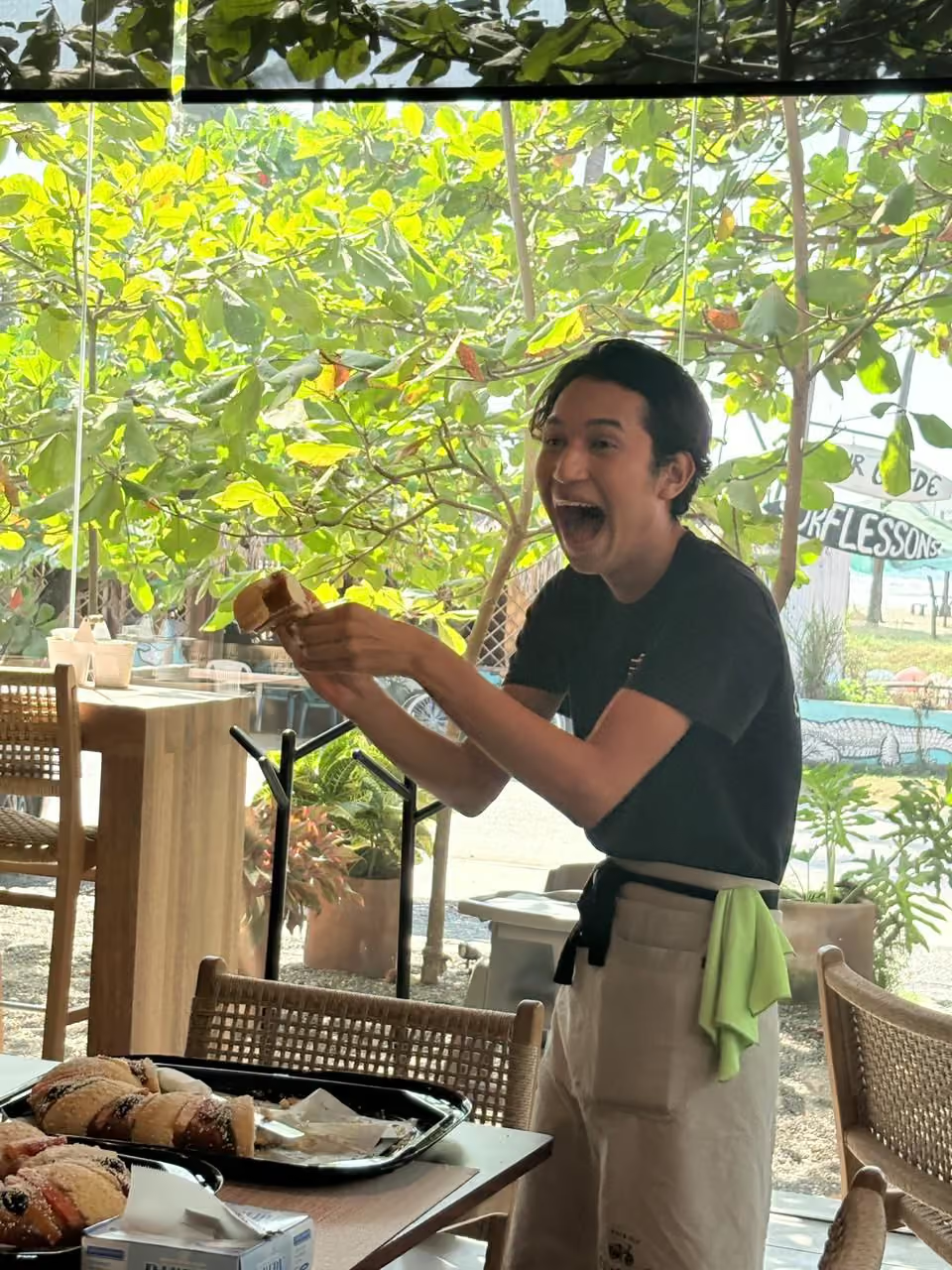
After we made that connection, I asked Andrea if Café Cuattro would be selling tamales on February 2nd. Her answer enlightened me even more than all the rosca history did. She said, “We won’t be selling them. In Mexico, we share. We always try to share. You were here for the cutting of the rosca, we asked you to join in. That’s how you become part of our community. I hope you’ll come on February 2nd. I hope that everyone who can make it will come to us for tamales that day. It’s a special day throughout Mexico. There’s so much to celebrate.”
Link:
https://www.instagram.com/cuattrocafe/
.avif)