Roseate Spoonbills: Don’t Call Me a Flamingo
This funny and uniquely colorful bird likes our winter here
Our latest What’s That Bird? looks at a seasonal visitor who gives new meaning to being “in the pink”, and whose distinct color comes from what it eats.

.avif)





.avif)

%20(Spanish)-2.avif)





Every winter and spring, the skies over the Troncones area get a splash of pink. Large, long-legged birds drift overhead or wade through the estuaries like a watercolor come to life, prompting the same question from nearly every visitor: “Are those flamingos?”
Nope. Not even close.
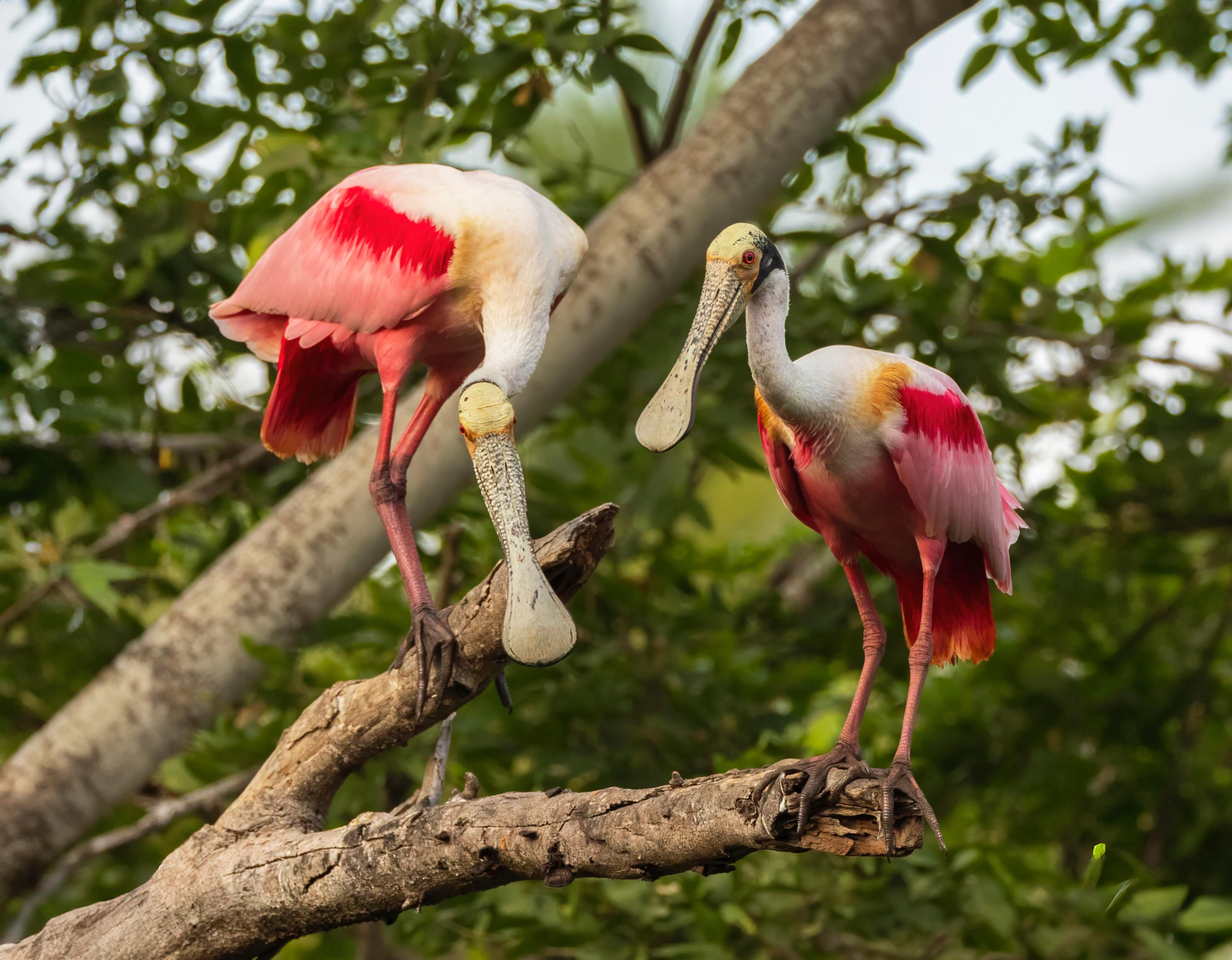
Those blushing beauties are Roseate Spoonbills (Platalea ajaja), and while they may be pink and elegant, they’re a species all their own—with a remarkable story rooted right here on the west coast of Mexico.
SEASONAL VISITORS WITH DEEP ROOTS
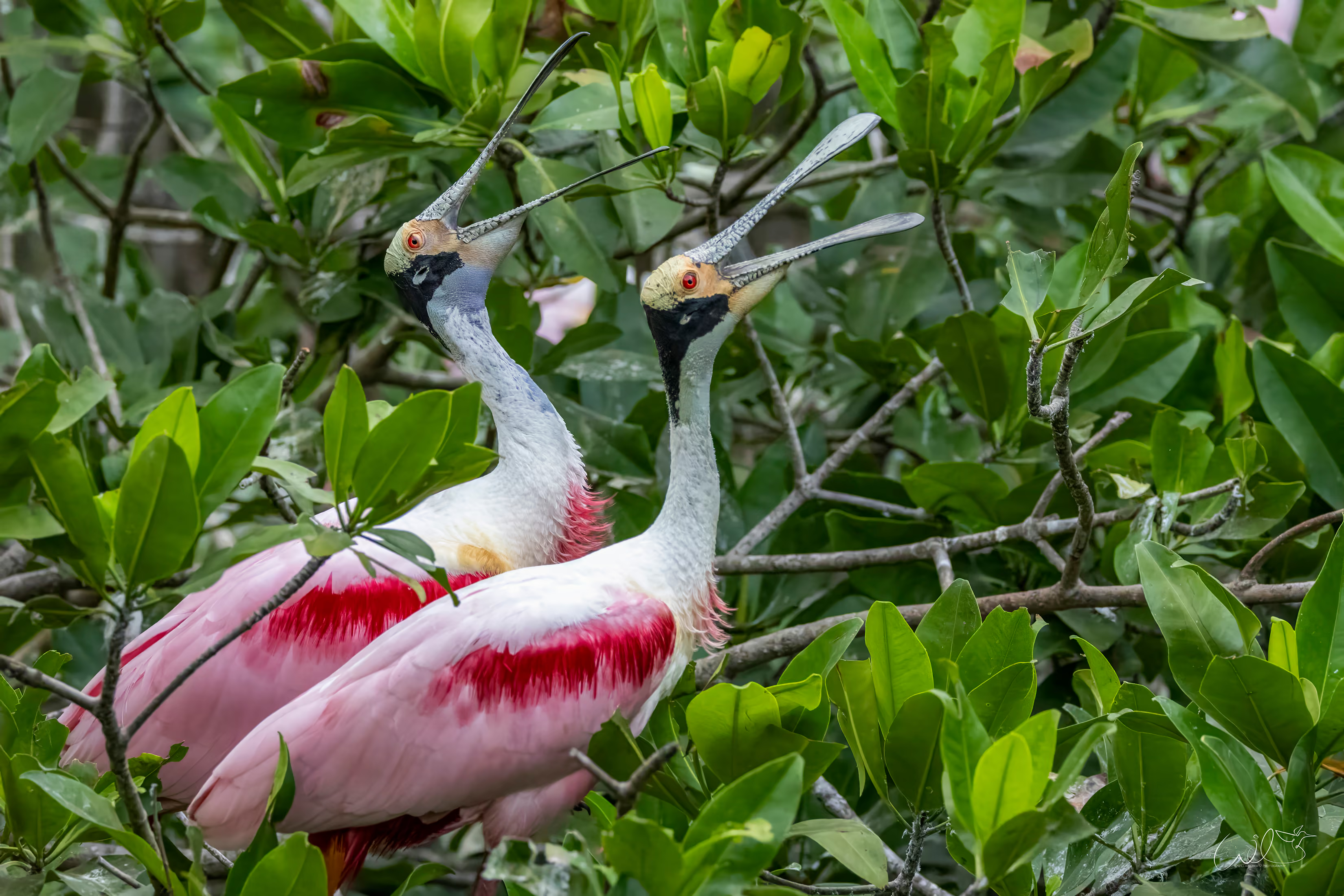
Spoonbills are primarily migratory in this region, arriving in impressive numbers during the dry season. But they don’t just pass through—they nest here, returning to the same estuaries year after year to breed. If you’ve walked the mangroves near La Saladita or the lagoons around Troncones, you may have seen their rustic, loosely built nests, usually balanced precariously in low trees or dense shrubs.
Each year, a pair typically raises one or two chicks, tending them in shallow wetlands rich with life—and food.
A LOCAL HOTSPOT: PLAYA LINDA
One of the best places to observe Roseate Spoonbills up close is Playa Linda, at the crocodile reserve near Ixtapa. During January and February, this area hosts a large nesting colony of spoonbills, alongside wood storks, herons, egrets, and many other wading birds. The birds nest in full view—just across from the walkway, in a remarkably open and public space.
Despite the constant presence of tourists, buses, and the built-up infrastructure around the reserve, the spoonbills return every year, likely as they have for hundreds—if not thousands—of years. They’ve become so accustomed to human activity that they carry on with their breeding and feeding almost undisturbed. It’s a rare and beautiful opportunity to see these vibrant birds in the wild, without needing a pair of binoculars or a trek into remote wetlands.

THAT FAMOUS BILL
It’s not just the color that makes a spoonbill stand out. Their distinctive, spatula-shaped bill is a filter-feeding tool, evolved for sweeping side to side through shallow water to capture tiny prey. They feed on aquatic invertebrates, especially small pink shrimp and other crustaceans—the very source of their coloration. Like flamingos, their pink feathers are a dietary side effect, proof that beauty sometimes starts at the bottom of the food chain.
PINK WITH A PURPOSE
That blushing color, from pale cotton-candy pink to deeper rose hues, isn’t just for show. It reflects their health, maturity, and access to good feeding grounds. And while there are a few birds in Mexico with hints of red or orange, the Roseate Spoonbill is the only truly pink bird commonly found on the west coast.
BUT WAIT—WHAT ABOUT THAT FLAMINGO?
Yes, it’s true: there is a flamingo living nearby. In Barra de Potosí, a single American Flamingo has been spotted regularly over the past few years. Locals believe it likely escaped from a private zoo or aviary, and it’s become something of a local legend—a lone, misplaced flame among the mangroves. But this is not a native sighting. Flamingos are found in the Yucatán and along the Caribbean coast, not the Pacific.
So, the next time someone points to the sky and says, “Wow, look at those flamingos!”, you’ll know better. Smile, shake your head, and say, “Actually…that’s a Roseate Spoonbill. And it’s right where it belongs.”