
The Parrots of Troncones
A flash of green overhead. What is that bird?
One of the questions I get asked most often on birding walks is some version of, “Wait—are those actually parrots?” People hear the noise first. A ragged, sharp-edged squawking that cuts through everything else, and then they look up and see a pair of green birds tearing across the sky like they’re late for something important. And the reaction is always the same: genuine surprise that parrots just fly around here, wild and free, like it’s no big deal.

.avif)





.avif)

%20(Spanish)-2.avif)




It is a big deal, actually. Yes, Troncones is home to several species of parrots, from small parakeets to large Amazons to, historically at least, macaws. They nest in the hills above town, feed in the trees along the estuary, and commute through our airspace every morning and evening. They are as much a part of the fabric of this place as the ocean and the coconut palms. And if you spend any time here at all, you will see them.
But before we get into the specific species, let’s clear up some confusion about names—because this is where people get lost.
A PARAKEET IS NOT A BUDGIE
When I tell someone they’re looking at a parakeet, about half the time I can see the mental image forming: a tiny pastel bird sitting on a wooden dowel inside a cage at PetSmart. That’s a budgerigar—a budgie—and it’s an Australian species that has nothing to do with what’s flying around Troncones. In the birding world, the word “parakeet” refers to a whole range of small to medium-sized parrots with long tails. What pet stores in the United States and Canada sell as “conures” are, in birding terminology, parakeets. So, when I say parakeet here, think conure-sized. Think loud, fast, green, and very much not sitting on a dowel.
The three larger species we’ll cover are all Amazons—that’s both the pet trade name and the birding name, so at least that one’s simple. Amazon parrots. Big-headed, stocky, short-tailed green parrots that look like they were designed by someone who wanted to make a bird that was hard to see in a tree but impossible to ignore in the air.
It’s also worth knowing the Spanish names, because locally, parrots are sorted by size rather than by species. The small parakeets are periquitos. The mid-sized Amazons are loros or cotorros— both terms are used interchangeably around here. And the big macaws are guacamayas. If someone in Troncones tells you they saw a loro, they're talking about one of the three Amazon species. If they say periquito, it’s the orange-fronted parakeet. And if they say guacamaya—well, ask them where, because that's a sighting worth following up on.
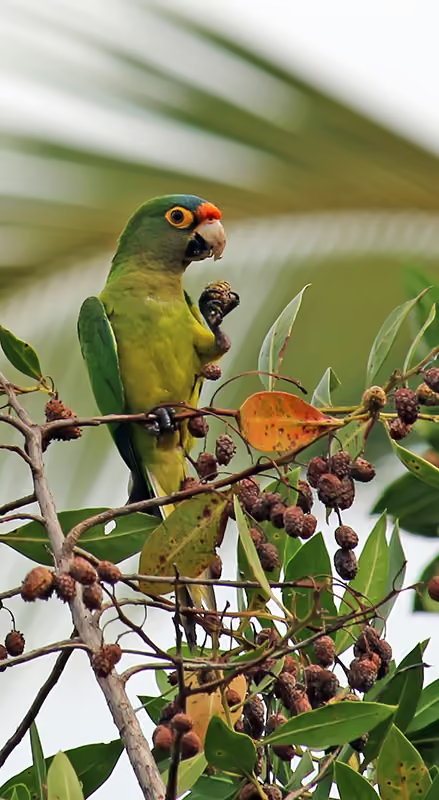
ORANGE-FRONTED PARAKEET Eupsittula canicularis
These are the ones you're most likely to see, and definitely the ones you’re most likely to hear. Orange-fronted parakeets are everywhere in Troncones. They fly over town in pairs and in flocks—sometimes small groups of six or eight, other times aggregations of fifty to seventy-five birds moving together like a loud green cloud. They are not subtle.
They’re opportunistic feeders, which is a big part of why they’re so common. Unlike some of the pickier parrot species, orange-fronts will eat just about anything with a seed or fruit on it. You'll see them along the estuaries working on mangrove seeds, in the guamúchil trees when those are fruiting, and in just about any other tree that's producing something worth eating. If a tree has fruit, expect the parakeets to find it, and expect them to come back every day until it’s gone.
One of the more interesting things about this species is where they nest. Rather than requiring the large tree cavities that the bigger parrots depend on, orange-fronted parakeets prefer to nest inside arboreal termite mounds—those big clumps of mud-like material you see stuck to trees. People ask about those mounds constantly on birding walks, and most are surprised to learn that parakeets hollow them out and raise their young inside them. Locally, these mounds are called perdiceros, and they’re known less as termite nests than as parrot nests—which tells you something about how deeply these birds are woven into the local landscape. People here define those structures by the parakeets, not by the insects that built them. It’s a clever nesting strategy. Termite mounds are abundant, well-insulated, and don’t require a massive old-growth tree to exist. It's one of the reasons this species has held its numbers better than its larger relatives.
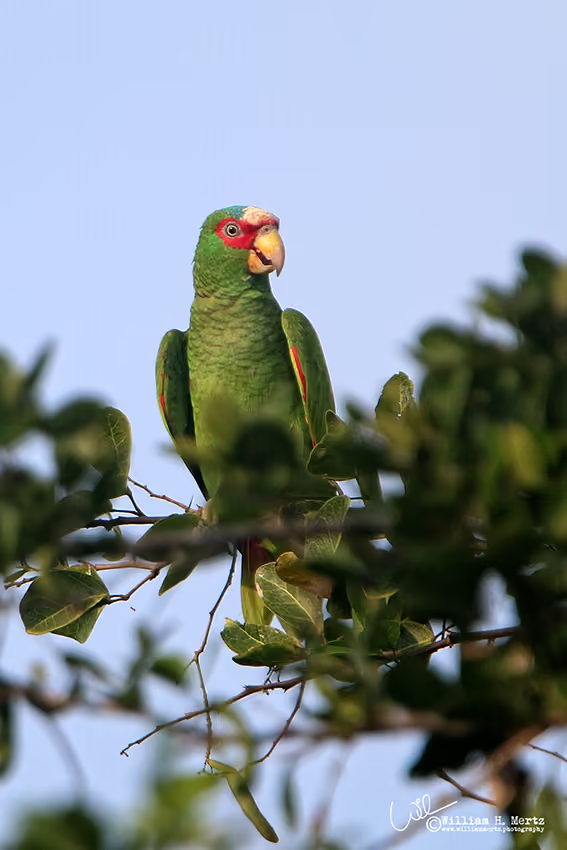
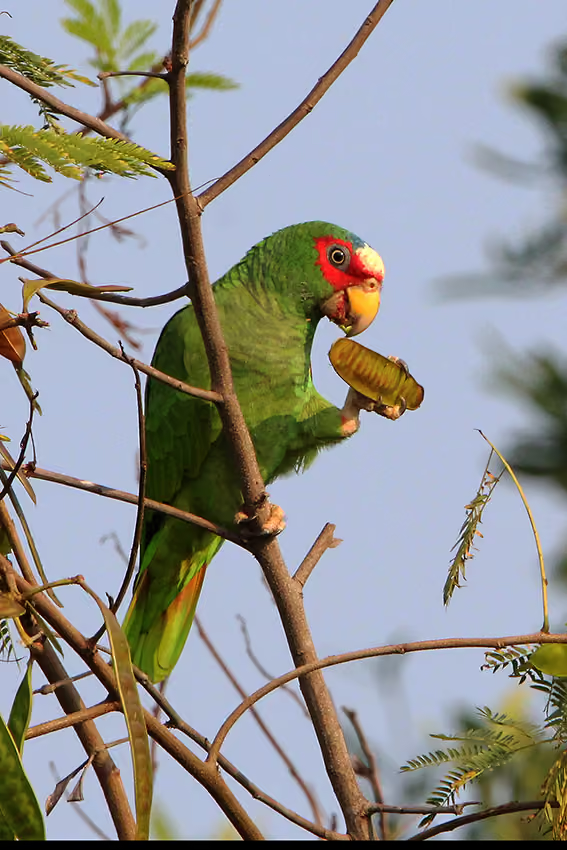
WHITE-FRONTED AMAZON Amazona albifrons
The white-fronted Amazon is the most common of the three Amazon species found around Troncones, and the one you're most likely to encounter on a birding walk. They’re often seen in pairs, though at certain times of year—particularly when fruit is abundant—they’ll gather in larger flocks in the canopy.
Like the parakeets, they’re noisy. Their wingbeats are fast and audible, and pairs spend a lot of time calling back and forth to each other, both in flight and while feeding. When a group of white-fronts moves into a fruiting tree, you’ll know about it.
What’s interesting about white-fronted Amazons in this area is their daily routine. They don’t live at the beach. Their home territory—their roosting and nesting sites—is up in the hills and low mountains behind Troncones, where the biggest trees still stand. Each morning, they fly down to the lowlands and the coast to feed, and each evening they fly back up to the mountains. It’s a daily commute, and once you know to watch for it, you start to notice the pattern—pairs and small groups moving inland in the late afternoon, heading for higher ground.
This commuting pattern also tells you something important about what these birds need: big trees at elevation, undisturbed enough to support nesting. The food is down here. The homes are up there. Both have to exist for the system to work.
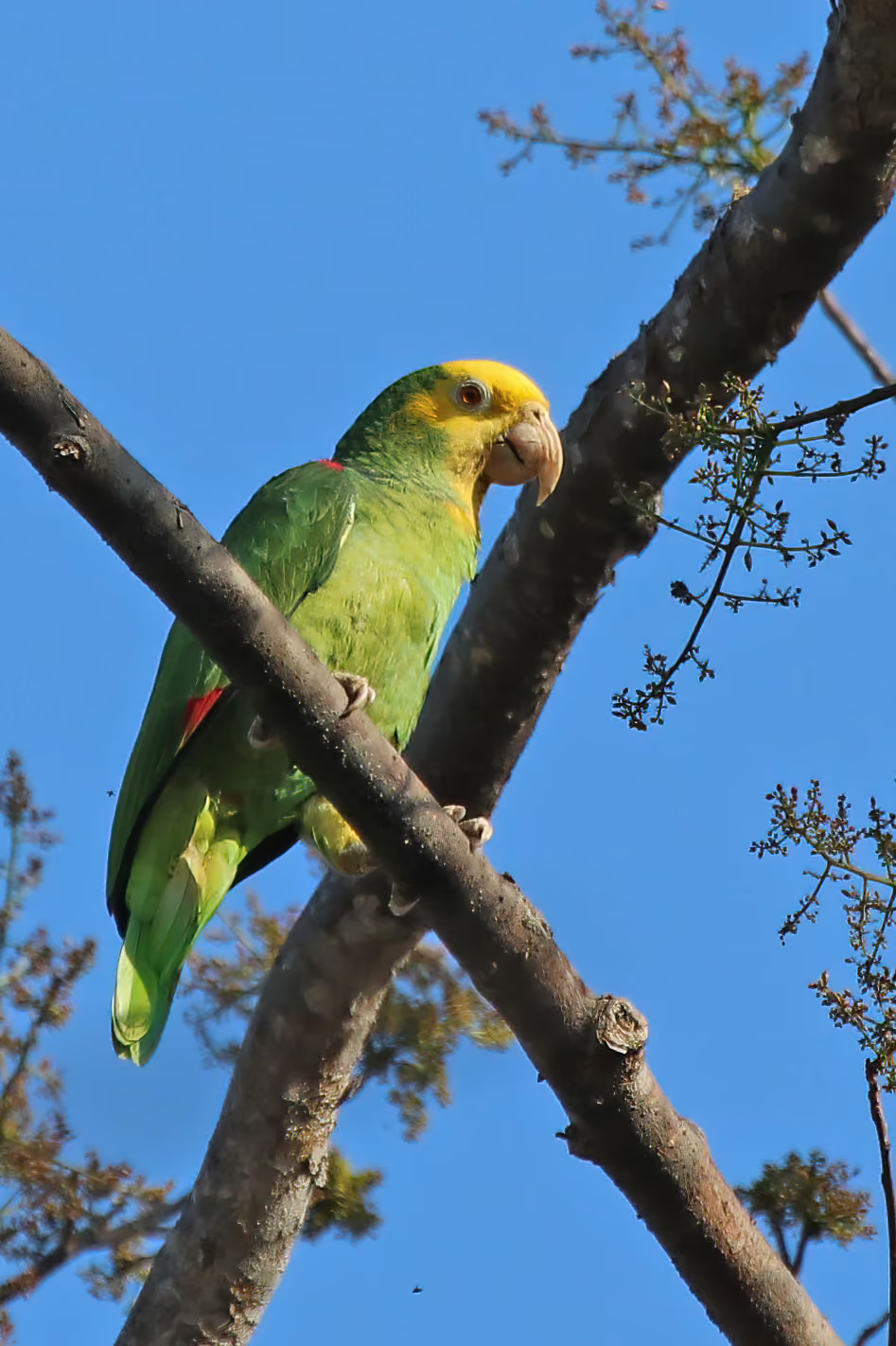
YELLOW-HEADED AMAZON Amazona oratrix
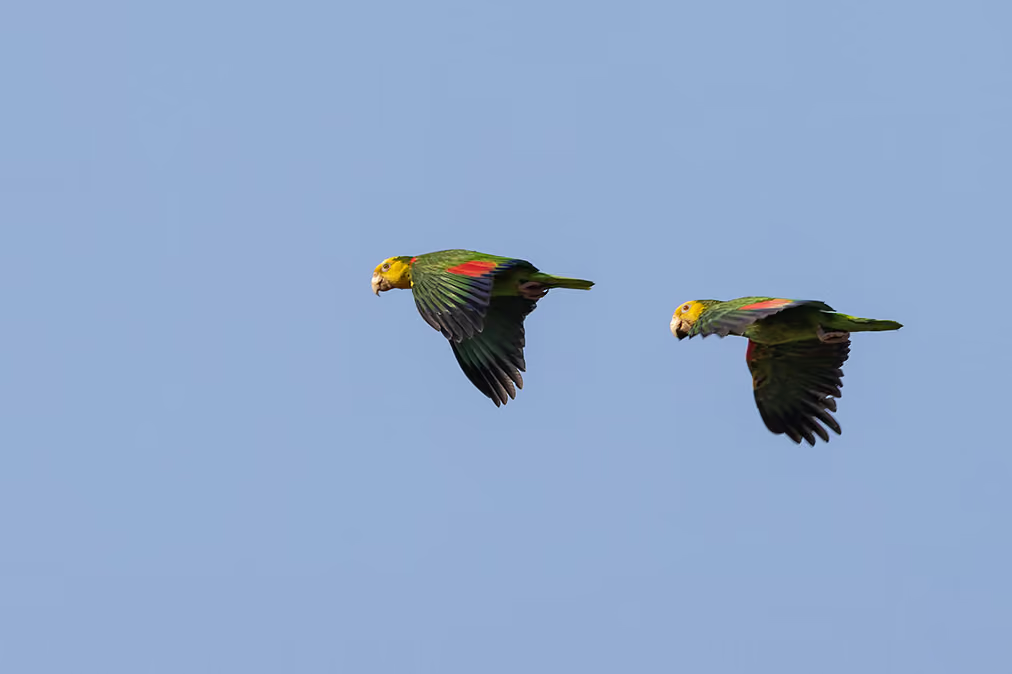
The yellow-headed Amazon is the largest of the three Amazon species in our area, and paradoxically, the hardest to find. If you’re expecting the noisy, conspicuous behavior of the white-fronts or the parakeets, the yellow-heads will fool you completely.
These birds are quiet. Remarkably quiet for a parrot. They travel almost exclusively in pairs, and when they fly overhead, they do so with little or no vocalization—just the sound of wingbeats, if you hear them at all. They don’t squawk their location to the world. They don’t announce themselves when they land in a tree. More often than not, you don’t know they’re there until you accidentally flush them and a pair of large green parrots erupts from the canopy where you swore nothing was sitting.
They tend to stay away from town, preferring the more forested and overgrown areas away from the beach. We don’t often see them feeding in the open the way we do with white-fronts and parakeets. They’re present—I see them regularly when I’m birding—but they require patience and a different kind of attention. You have to look for them rather than wait for them to announce themselves.
The yellow-headed Amazon is classified as Endangered on the International Union for Conservation of Nature (IUCN) Red List. Their population has declined by an estimated ninety percent since the mid-1970s, driven by habitat loss and relentless poaching for the pet trade. On the Pacific coast of Mexico specifically, their range has contracted by nearly eighty percent. The fact that we still see them in Troncones is something worth appreciating—and protecting.
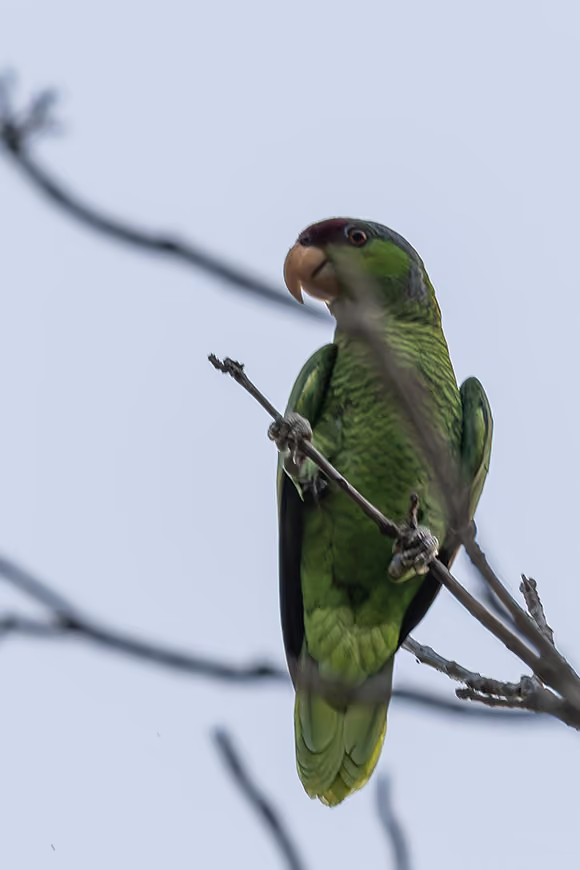
LILAC-CROWNED AMAZON Amazona finschi
The lilac-crowned Amazon is the least common parrot you might encounter around Troncones, and “might” is doing a lot of work in that sentence. I have just a handful of encounters with them at this elevation. They’re here—I’ve confirmed it enough times to be certain—but they are not a bird of the coastal lowlands. They’re a mountain species.
Higher up in the Sierra—at places like Mesas de Bravo, deep in the mountains behind Zihuatanejo—lilac-crowns are the most common parrot. They thrive in the higher-elevation forests where big trees are still abundant and human pressure is lower. But down here at sea level, they seem to be occasional visitors rather than residents. The ones I’ve encountered have always been in pairs, and they are even quieter than the yellow-heads. You could spend a week birding Troncones and never see one.
In size, they fall between the white-fronted and the yellow-headed—a mid-sized Amazon with a beautiful lilac wash on the crown that gives them their name. They are genuinely lovely birds, and if you do see one, consider it a good day.
.avif)
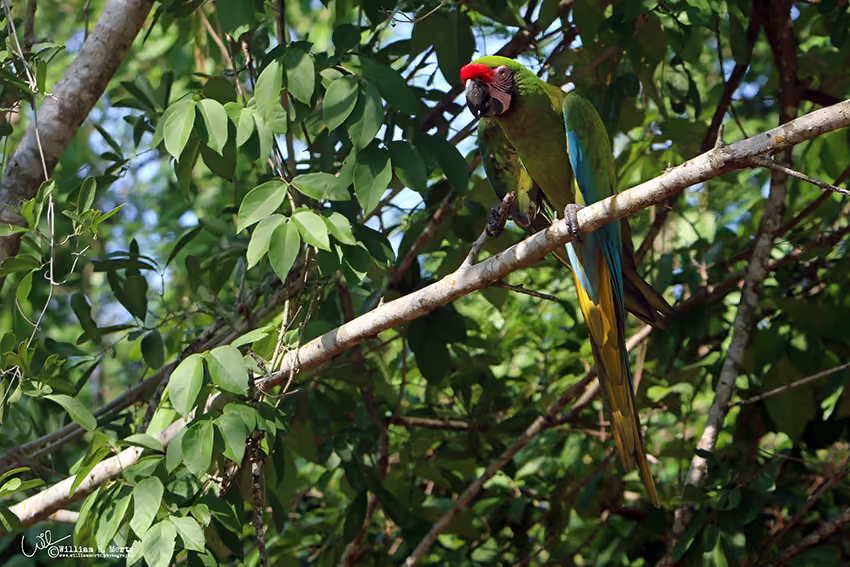
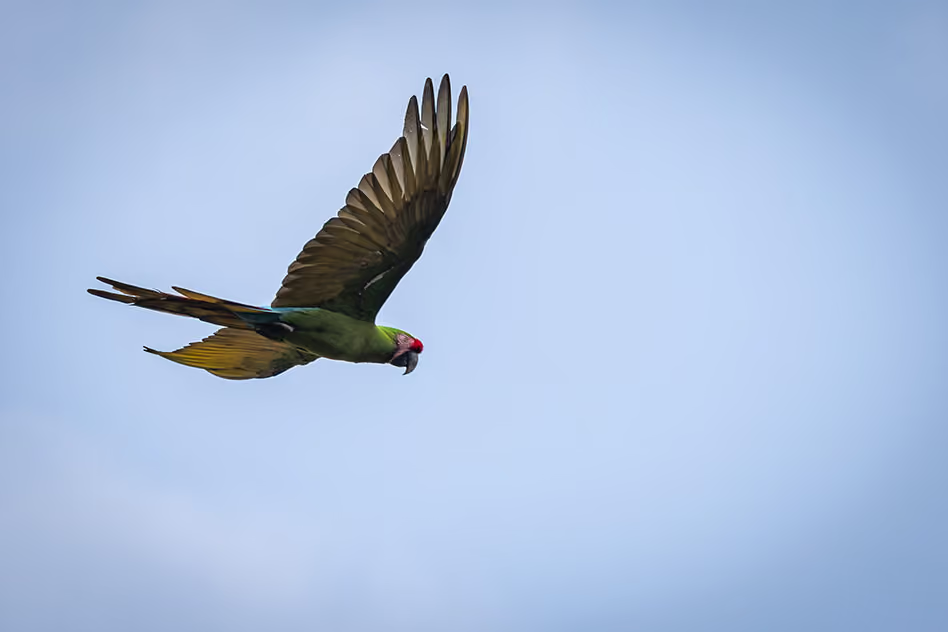
MILITARY MACAW Ara militaris
People who have lived in this area since the 1970s and early 1980s remember macaws. They remember them flying along the beach road, perching in the big trees, being an unmistakable part of the landscape. Military macaws—big, loud, prehistoric-looking birds with wingspans over three feet—were once part of the coastal lowlands here.
They're gone now. Or very nearly.
The military macaw has been classified as Endangered in Mexico since 1991 and Vulnerable globally by the IUCN. The entire Mexican population is estimated at somewhere between fifteen hundred and thirty-three hundred birds, scattered across isolated pockets in sixteen states. Here on the coast, they’ve been pushed back into the deep mountains and jungle by two relentless pressures: poaching for the pet trade and the destruction of the large trees they need for nesting.
These big birds need big cavities in big trees—the kind of old-growth timber that gets cut first when land is cleared. And the cruelty of the poaching is compounded by the method: people don’t just steal the chicks from the nest. They cut down the nesting tree to reach them. So, in one act, they take the babies and destroy the site where the next generation would have been raised. The tree doesn’t grow back in a lifetime. The loss is permanent.
Can you still find military macaws in the coastal lowlands? Occasionally, slightly inland, but only if you have an experienced guide who knows exactly where to look. Even in the high mountains and jungles where they’ve retreated, they’re rare. The old-timers who remember them flying over town are watching that memory become history.
THE BIGGER PICTURE — CONSERVATION AND WHAT YOU CAN DO
Everything I've described above—the decline of the yellow-heads, the retreat of the macaws, the increasing rarity of the lilac-crowns—comes down to two things: poaching and habitat destruction. And those two things are often the same act. A tree gets cut down to reach a nest. The chicks are taken. The nesting site is gone forever. The adults lose both their young and their future ability to reproduce in that location.
Since 2008, Mexican federal law has prohibited the capture and sale of all native parrot species. Every single one. It is illegal to take a parrot from the wild, illegal to buy one, illegal to sell one, and illegal to possess one. This isn't a guideline or a suggestion. It is law, under the Ley General de Vida Silvestre.
And yet.
Walk through almost any town in Mexico and you will see parrots in cages. In homes, in businesses, in restaurants. Everything from parakeets to Amazons to, occasionally, macaws. You can find them for sale online—on Facebook marketplace, in classified ads— ntil the posts get flagged and removed, only to reappear the next day. The law exists. The enforcement does not.
The conditions these birds live in make the situation worse. Parrots are intelligent, social animals that need space to fly, interaction with other birds, and a varied diet. What they get instead is a small cage, isolation and tortillas. I am not exaggerating. Many captive parrots in Mexico are fed tortillas, beans, and whatever scraps are left over from the family meal. They are not getting the fruits, seeds, and nuts that their bodies are designed to process. The result is malnutrition, feather plucking from stress and boredom, and shortened lives spent in conditions that no thinking person would call humane.
If you're a visitor to Troncones—or anywhere on the Mexican coast—please don’t support this trade. Don’t buy a parrot. Don’t pay to take a photo with one on the beach. Don’t assume that because it’s common, it’s legal or acceptable. Every bird in a cage is a bird that was taken from a wild population that is already in decline.
And here’s something that hits closer to home for anyone who loves this place. When I take people out on birding walks, parrots are consistently one of the things they most want to see. The flash of green overhead, the noise, the wildness of it—that’s part of what makes Troncones feel like Troncones. Parrots are part of the ambiance of this place. They’re part of why people come here, part of what makes the morning feel connected to the jungle and the mountains and something bigger than a hotel pool. Every parrot that gets pulled out of the sky and put in a cage diminishes that. Not just for the species, but for the place itself. For a community that depends on visitors who come here specifically to experience nature, losing the parrots doesn’t just hurt the birds—it hurts all of us.
I've been advocating for parrot conservation in this area for years, and I intend to keep pushing. If you see a parrot for sale, don’t buy it. If you see one suffering in a cage, say something. And the next time a pair of green birds screams past you at treetop level, moving fast and loud and completely free—take a second to appreciate that. It’s not guaranteed to last forever.
William Mertz is a photographer, naturalist, and writer based in Troncones, Guerrero. He leads birding walks and has documented nearly 1,000 bird species across Mexico. His photography is available at williammertz.photography.

.avif)