Victoria Ryan: Let Yourself Be Led
A conversation with a friend
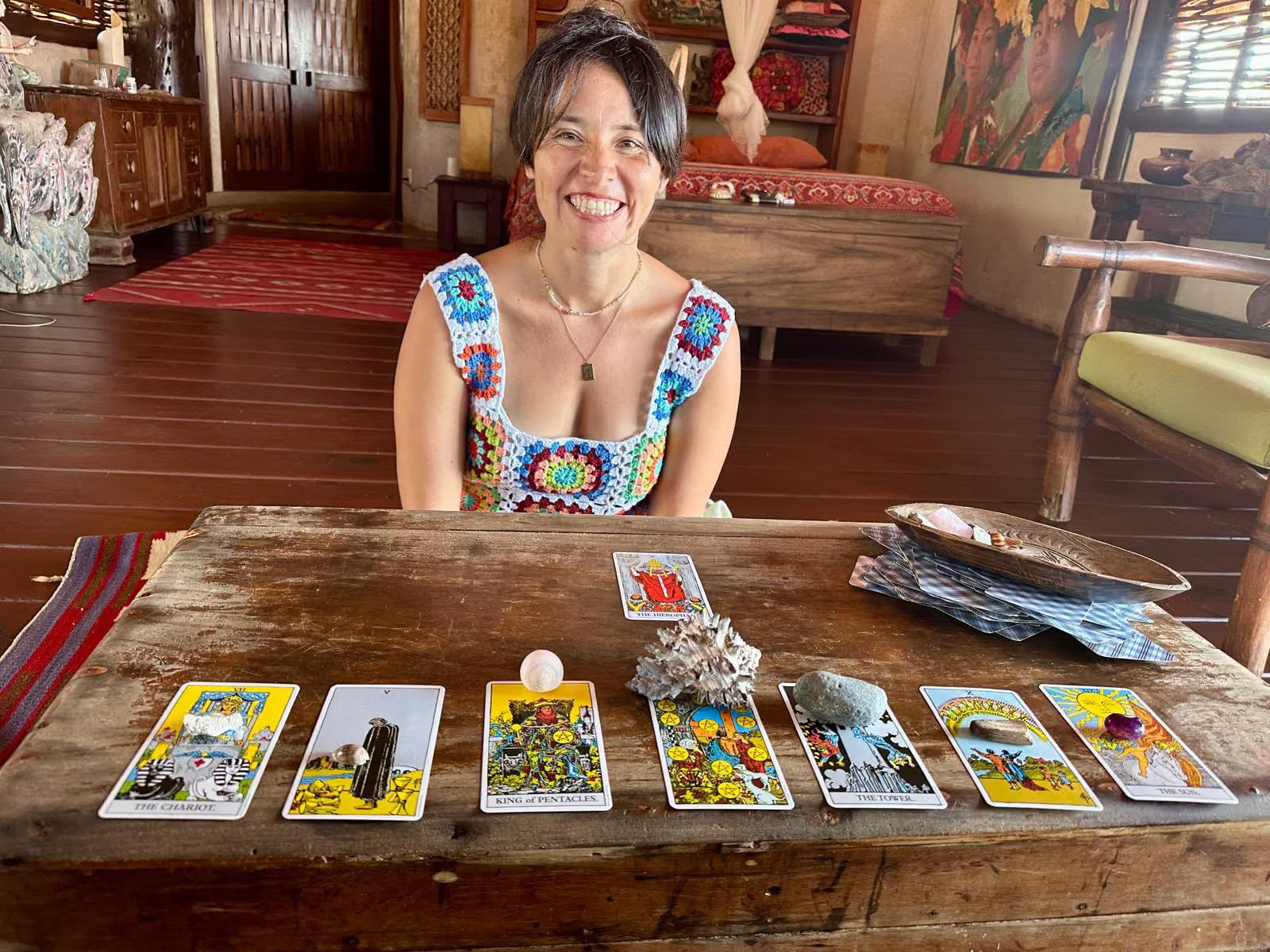
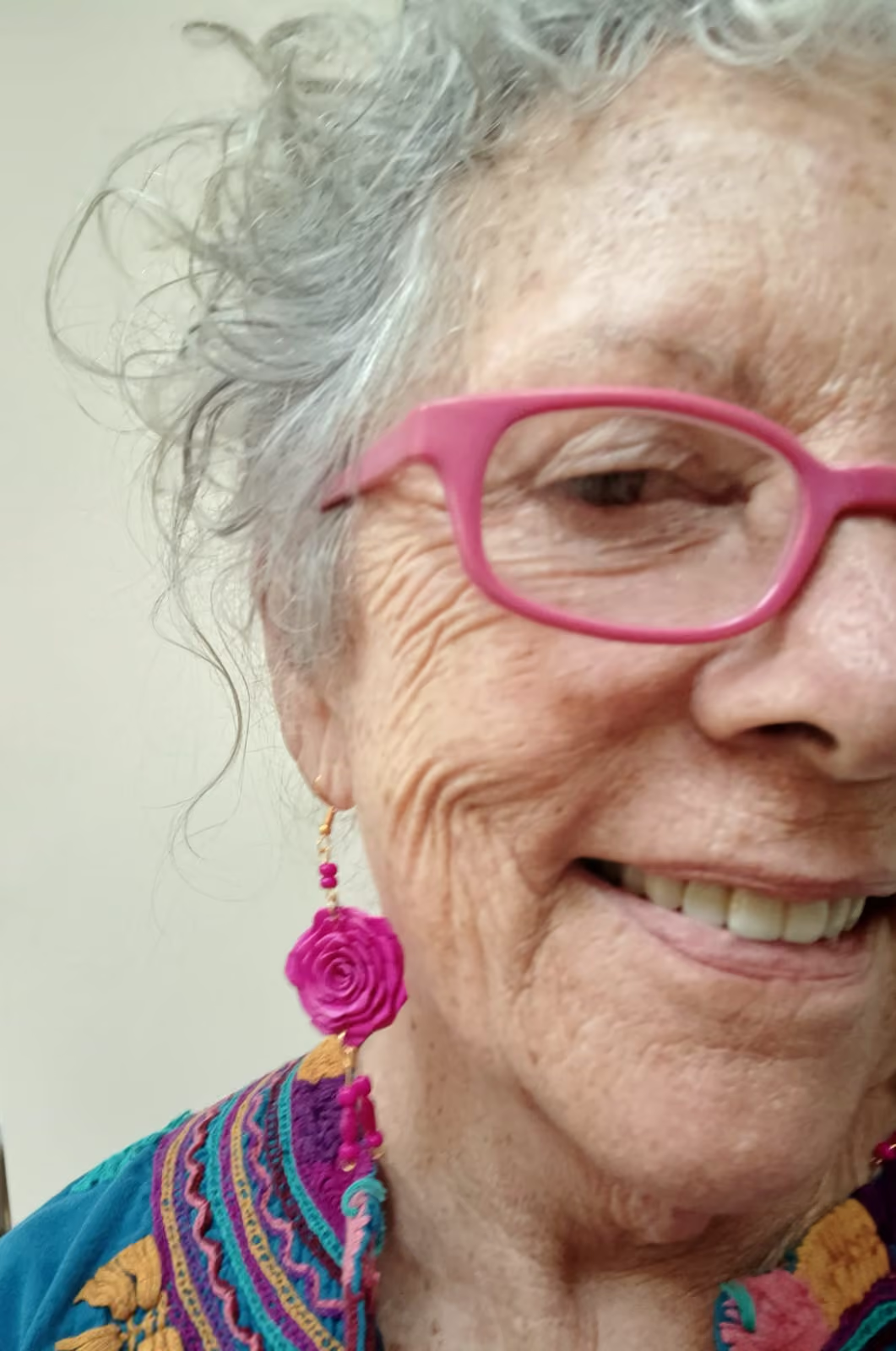
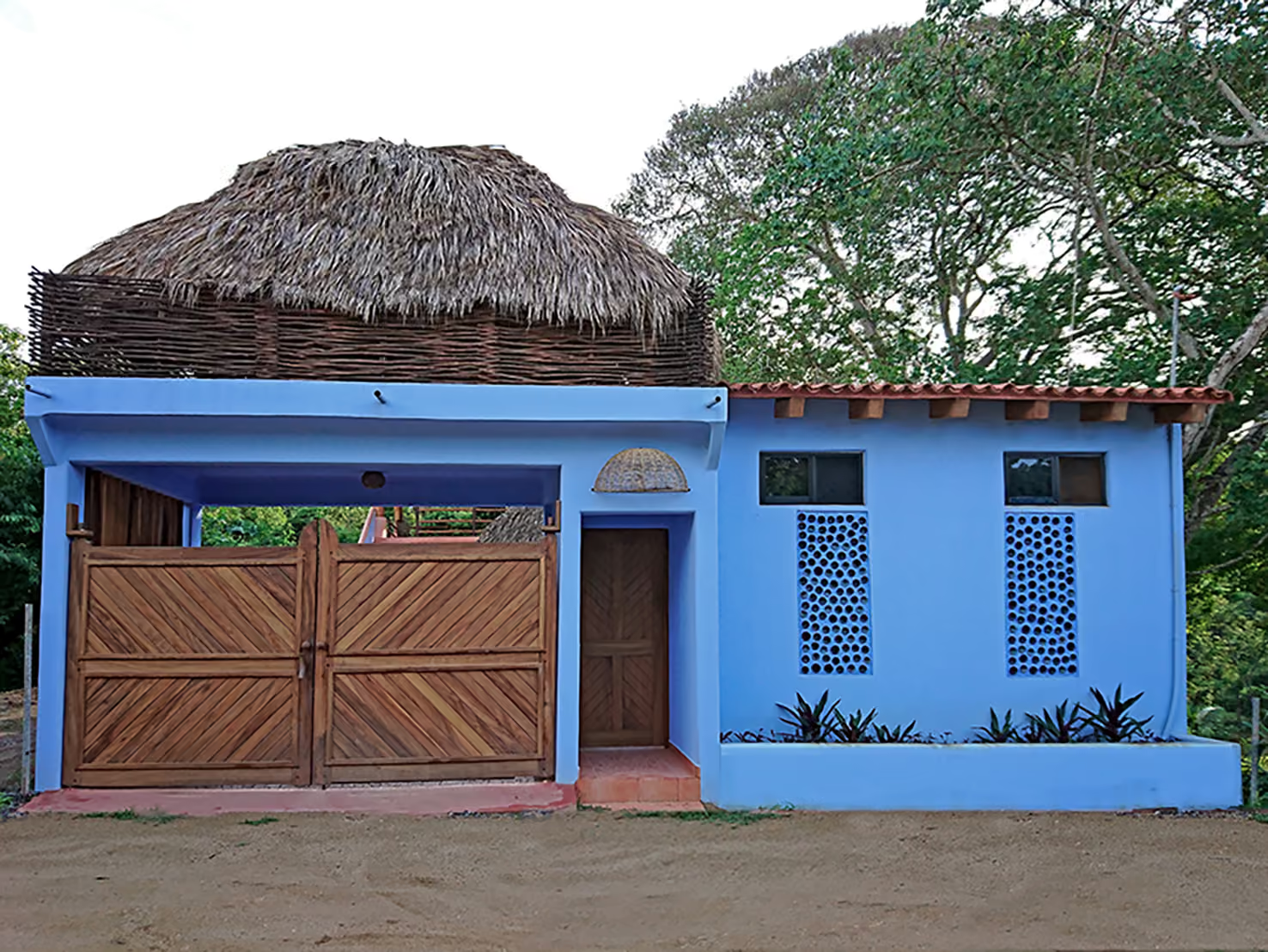
I’ve been friends with Victoria Ryan for quite a while. She has a house in Troncones called Casa Azul. The Blue House. It’s literally a blue house, on the hillside, near the clinic. Victoria is also the owner of Hotel Casa Encantada in Pátzcuaro [in Michoacán], a popular small-city destination for people curious about colonial Mexico. She also owns an apartment house in Pátzcuaro known as Casitas Pátzcuaro. I know her as an artist. She’s more than that. Like I said, she’s a friend and she’s a good person to meet.
.avif)





.avif)
%20(Spanish)-2.avif)
WM: How did you end up in Mexico? What was your life before coming to Mexico, and how did you end up here?
Victoria: I raised two children and when they left home, I started exploring the world without children. Mexico always attracted me, in different ways at different times of my life. In the early ‘90s I began traveling and camping along the Pacific Coast of Mexico. I started spending more and more time here, and pretty soon I thought I would buy a little house in Pátzcuaro so that I’d have one in Sante Fe and one here in Mexico. Suddenly, within about a year, I’d bought a huge house that eventually turned into the hotel. I think the thing I would say most—which you know but who knows whether people believe this or not—is that all of my life I’ve been led to do something, and I usually follow those instincts, those messages. Georgia O’Keefe said “I've been absolutely terrified every moment of my life, and I never let it keep me from one single thing that I wanted to do.” I identify with that very much.
WM: That’s the part that’s interesting for me, because when most people think of Mexico, they think of the beaches, and the typical tourist areas. Not the mountains of Michoacán. Not Pátzcuaro. How many years ago was that?
Victoria: That was in 1993.
WM: Wow. 33 years. Patzcuaro wasn’t a tourist destination yet. It wouldn’t have been anything like it is today, with a lot of people going there. So, when you bought the property there, did you have intentions of making a hotel, or you were just thinking of a house?
Victoria: Hotel? Absolutely not. I was working with the only person who sold real estate in Pátzcuaro. She was a character. I asked her to find me a little teeny place that I could have as kind of a pied-à-terre. In my imagination, I was going to continue living and selling real estate in Santa Fe, and come down and stay in this little teeny house that I was going to buy. Then again, back to sort of being led, she showed me the house that ended up being Casa Encantada.
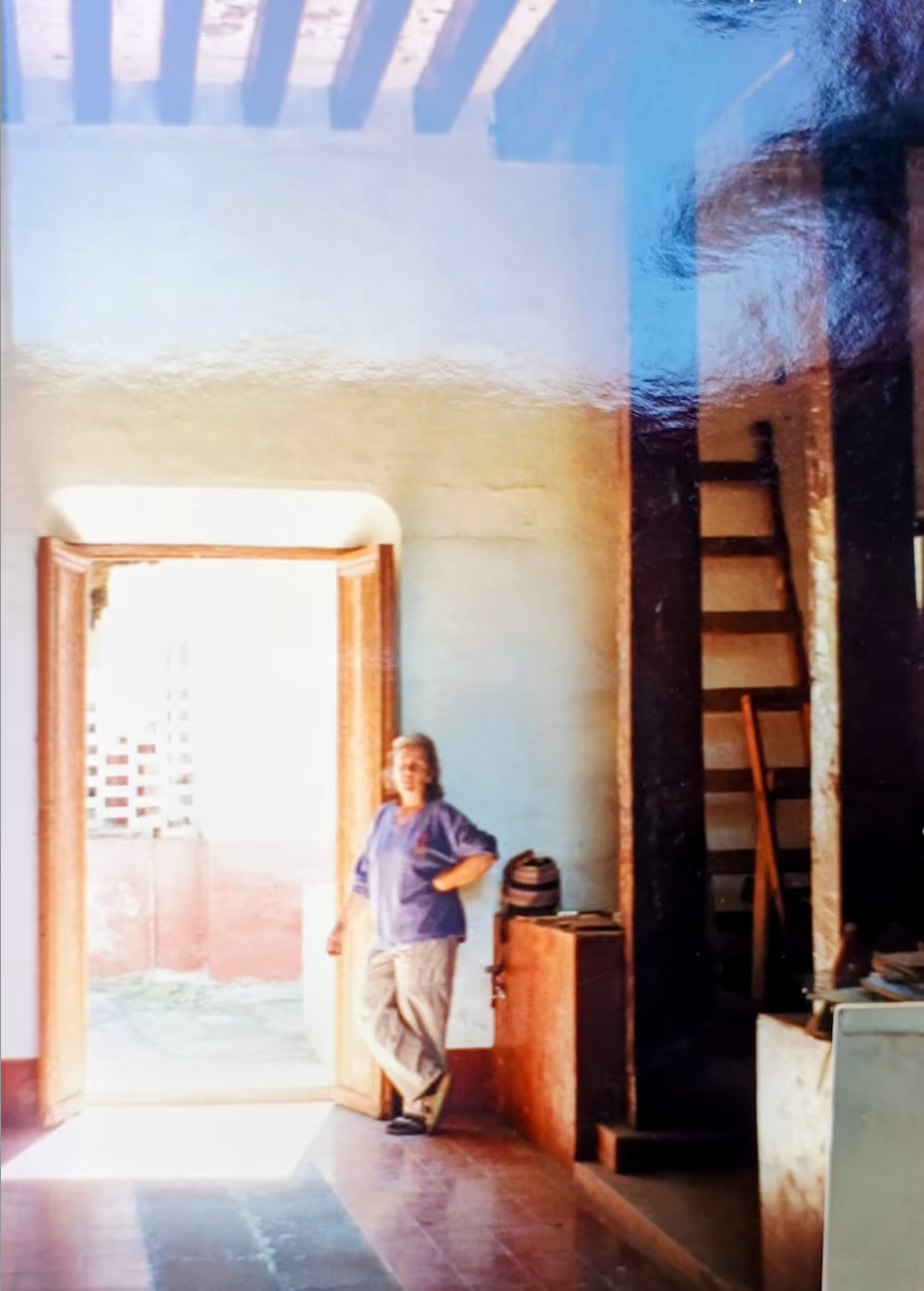
Oddly enough, the first time I saw it, I couldn’t stand it. I was angry and annoyed with the agent because it was the opposite of what I’d asked to see. It was huge. It was overwhelming. It was a fixer-upper. I'm just like, “God, if there was anybody else I could work with, who could listen to me, I would change agents”. The next time I saw it, I just went, “Oh, I have to have this place.” It was exactly the amount of money that my father had left me in his will, the exact amount. So, it just all fell together. It was like I was under a spell. I ended up just going, “Yes, I want it. Yes, I’m going to buy it”. I had no idea what I was getting into in terms of the construction. I had done lots of remodeling in the United States but, boy, when they started tearing into the adobe and ripping up the floors, I had no idea what I was getting into.
WM: Adobe? When was the building originally constructed, more or less?
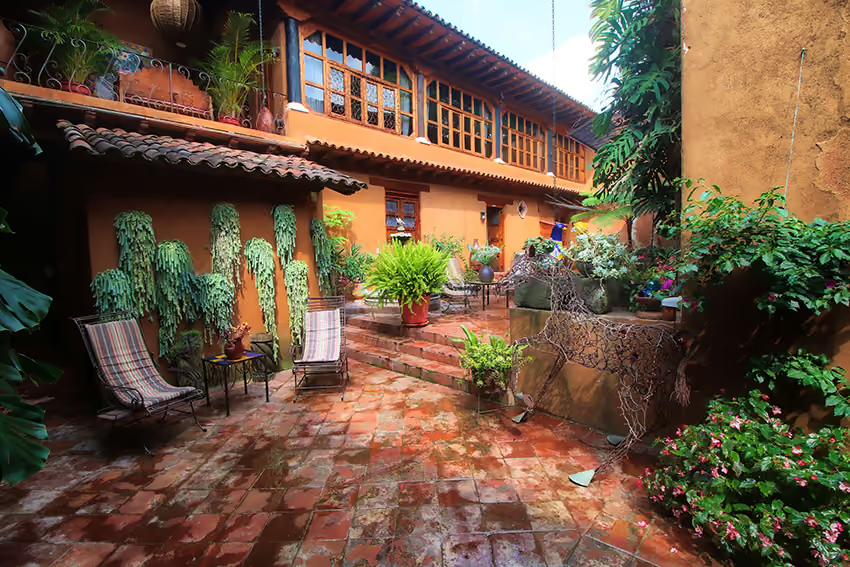
Victoria: The main building was built in 1784. I recently started being interested in that period of time in Pátzcuaro. There were 3,000 people here in the late 1700s. I mean, it was a small little town. I’m really curious about what kind of people were there and what they were doing. It was largely still Spaniards running things across Mexico in those days. It was in the same family until I bought it, so I’m actually the second owner of the property. It was in the Cerda family from 1784 till 1992.
WM: That’s difficult for most Americans and Canadians to comprehend buying a property with that kind of age, because we don’t think in those terms. Usually, as far as the age of a building, if it’s 50 years old, a lot of people consider it almost antique. And here we’re talking about more than 200 years, adobe construction and hand-hewn beams. So, I’m sure the renovations and reconstruction were quite different from anything you were used to.
Victoria: Extremely different. And I didn't speak Spanish in those days. So, I had this crew of, like, 30 people that would arrive at about 8 o’clock in the morning—7:30 or 8—and they would just all start tearing things apart and carting them out. In those days, there was sort of a badge of honor of how many loads of rubble you took out of your house. Like, people would go, “Oh, I took out seven loads.” I don’t know how many we took out. We took out load after load for months. I was pretty freaked out then as you can imagine.
WM: At what point did you decide about maybe going in a different direction than just a house?
Victoria: Actually, as I said, I bought the property in 1992 and then in 2003 I married. My ex-spouse wanted to make it a hotel. We ended up eventually getting divorced, so then I had a hotel, and, actually, it turns out it’s perfect for me. I love having a hotel. I love talking to people. I’ve got a great staff and a great manager, and I adore my gardening and guiding the office. I mean, it’s ideal. Like I said, it’s perfect for me.
WM: And you were led to a perfect location in Pátzcuaro, where tourists can come and have immediate access to town. And you, being an artist, are in the center of a very artistic region. So how did that start? Were you an artist when you came, or did you start becoming an artist in Pátzcuaro? How did that come into play?
Victoria: It was a little bit of both. I had wanted to be an artist back as far as I could remember, as a child even. Being an artist is not encouraged in the United States. Being an artist is thought of as a hobby, as something you do in your spare time, and then, of course, one has to make a living. I was raising two children. It wasn’t until I got to Mexico, to Pátzcuaro, which was much more bohemian in the ‘90s when I first moved there. There were about ten people who spoke English, and I didn’t really speak that much Spanish. Of the ten people, everybody was either an artist, a musician or a poet. It was an interesting group. And among them, there were three serious artists who I really learned so much from, about what it is to be an artist. It was fascinating to me that those three people were presented to me at that time in my life. One of them was really very organized and very directed in his art. Another one was really scatterbrained and not very together in terms of what she did, but they both just painted all the time. So, I had these three examples to look at and to think about how I could be an artist. It didn’t seem so difficult once I had met those people.
WM: How long after you started creating and exploring that before you considered yourself an artist? Because, I mean, like for me, for example, I did a lot of art before I considered myself an artist. Did you think of yourself as an artist?
Victoria: I think not. And again, because it was a different world back then. It was kind of a bohemian world. We would have art shows. We would ask museums and art galleries, such as they were in those days, if they would show our work. And I began to show with these other people who definitely were artists. That was when I started feeling like, “Wow, I kind of fit in here.” But it wasn't until other people started calling me an artist, that I actually felt like I was. And I started selling.
WM: That's a big turning point for a lot of people—when people are willing to spend money for something to place in their home. Then, it sort of turns a corner. I have a couple of your paintings and a couple of your sculptures in my house. And the painting that’s the most prominent in my house is one you did of Dia de Muertos in the cemetery in Michoacán. When I bought it, we were already good friends. It’s just that I walked into a showing on the main square in Pátzcuaro, saw the painting, fell in love with it and, then, saw that it was yours. So, to me, that’s when it sort of clicked a little bit different about your art, when I saw something and didn’t associate it with you. To me that says an awful lot about how I felt about your work rather than just thinking, “Oh, this is my friend who does art.” Of course, I like it. What mediums did you start with and what mediums do you do now?
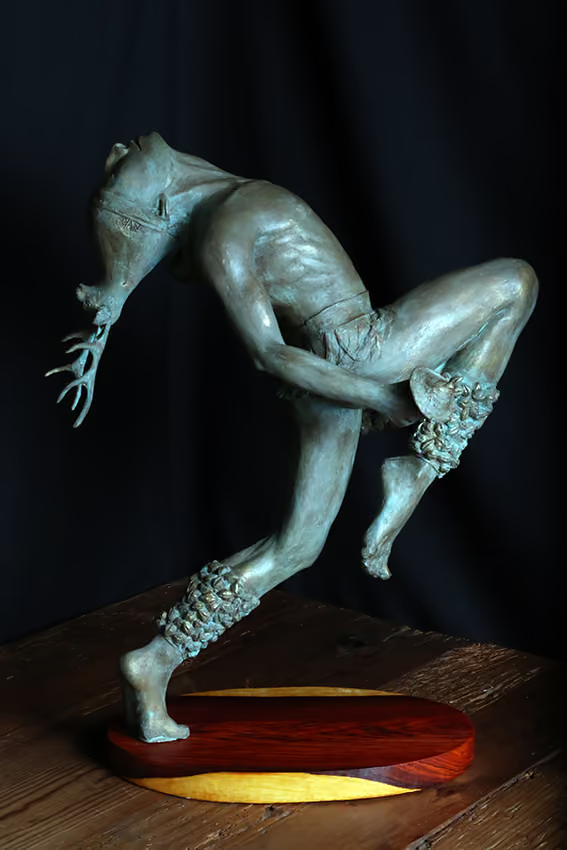
Victoria: I do more watercolor now because I have COPD [Chronic Obstructive Pulmonary Disease] But I’ve worked mostly with oils all my life. And I love it as a medium. I love the texture. I love turpentine. I love the smell. I love the brushes. I mean, I love everything about it. And then I went from painting to sculpture. That was later, probably 15 years ago.
One of the things I’ve done over the years is, whenever I get a chance, to take a class in something. I’ll take a class, and see if I like it or don’t like it. I took classes in sculpture, in clay, which I liked okay. But when I got into the sculpture classes taught by Alfonso Mata from Morelia, that’s when I really started loving sculpture. That’s when sculpting became more important to me than painting. It’s a wonderful combo. One of them is two dimensional, and the other one is three dimensional. They use different parts of the brain and different areas of creativity.
WM: I think that a lot of artists tend to stay in one track. It’s interesting when somebody can switch tracks and find a voice in different areas. In painting especially, because oil painting is probably the most forgiving of all types of painting. And watercolor is the least forgiving of all types of painting. It’s interesting that you would go from one extreme to the other.
Victoria: Right. And people think watercolor is so easy. The only thing easy about watercolor is cleaning your brush.
WM: Okay, so you’re an artist, you’re in Pátzcuaro, you’re making a living, more or less, running a hotel. What prompted you to invest into the properties that became your apartments?
Victoria: In addition to the desire to be an artist, I have a serious addiction to construction. I bought what was a little old farm from the ‘70s and little by little I created two spaces and, then, three and finally four. I had the vision of having apartments. And it turns out it’s been a really good thing because of all the Americans who are leaving the United States. People come for two or three or four months. I have one woman that’s long term, who lives there.
WM: I would think it’d be a much more stable income than having the hotel.
Victoria: It is. Yeah, and it’s much more relaxed for me and my staff because we have people there, again, long-term, you know, and they don’t require that day-to-day care.
WM: You’re in Pátzcuaro, you’re doing all this. How did you end up in Troncones?
Victoria: There’s a direct line from Patzcuaro to Troncones. There are many people who spend time in both places. And, again, it’s back to my compulsion to build. I first built a house up in Melaque, [in San Patricio, Jalisco]. Then two in Caleta de Campos, two hours north of Troncones. When my daughter wanted to retire. I knew I wanted to be in the same place she was. I knew she would be happier in Troncones than in any of those other places. That’s how I ended up here.
WM: Why do you think she would’ve been happier here? What is it about Troncones?
Victoria: Because there are so many English speakers here, and there's yoga and there is pickleball. She plays pickleball. There are many like-minded people for her here.
WM: I think that's kind of how a lot of people get drawn to Troncones. You feel like you’re in Mexico, but yet there’s enough here to make you feel like you’re still a part of where you came from as well. It’s a good mix.
Victoria: Right. It’s very gringo friendly.
WM: Yeah, exactly. You decided to build a house here—Casa Azul. Let’s talk a little bit about that.
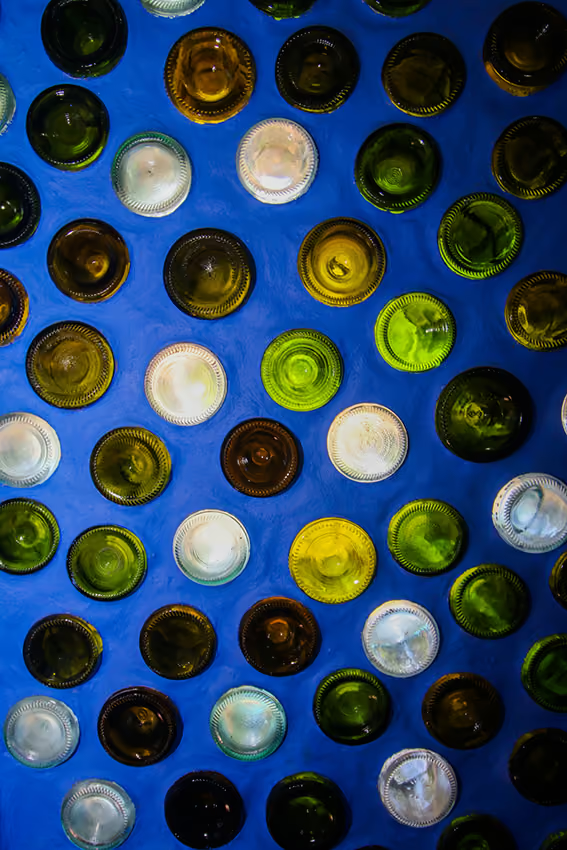
Victoria: I love Casa Azul, Casa Azul is on a tiny little piece of land. It’s 10 meters by 25 meters. And it was really fun designing and building it. I enjoy staying at it. It’s really simple, just two bedrooms, an open kitchen and an open palapa. And it’s about a block and a half from the beach. It was a great process, building it. One of the fun things was that I always wanted to build a house with bottles as part of the architectural theme. I started saving bottles and asking restaurants and bars to give me bottles. And I had a kid—who didn’t have any idea what he was getting involved in—cutting the bottom off of all these bottles. There are many houses that have the bottles, they just use a whole bottle. That leaves you with this one ugly side that has all the bottlenecks. Casa Azul has those bottle bottoms built into one side of the house and the shower is a sculptural work of art, made with bottles. I rent Casa Azul when I’m not there.
WM: Then your daughter built right behind you. That must be nice.
Victoria: It is. It's really nice to have her close. I mean, we haven’t lived anywhere near each other for like 40 years.
WM: So, you like being here in Troncones?
Victoria: Yes, I like being in Troncones. I like how many great restaurants there are. I like where I live is, again, a block and a half off the beach. I’m back in the trees. I get up in the morning and I can hear birds all around me. And I don’t have any real traffic. Troncones is growing like a weed. It’s amazing how fast it’s growing and how fast it’s changing into something great. I mean, I like the way it’s going. It’s getting more sophisticated. Not that that’s something, but, I mean, it’s really important for me not to be bored. When I’m here at the beach, I work on my painting and, right now, I’m working on a memoir. I do lots of things that are sort of solitary, and Troncones gives me the opportunity to go out when I want to.
WM: Do you have friends here?
Victoria: Absolutely, absolutely.
WM: In general, do you feel good about the direction of Troncones is going?
Victoria: I do. There was a time when I was sort of shocked at how much construction that was going on. But the more I see it, the more I see it’s really nice. It’s really a nice thing. And the community really keeps the place clean and it’s really gotten involved in ecological things, like the water situation. I look at other communities and I think it’s too bad there isn’t a sense of “let’s keep this place nice”, like there is here.
WM: Do you think this is sort of where you’re going to be done with building and moving around? Do you think that this is it? Are you settled?
Victoria: Yes, I feel settled. I do feel that. And it’s good to have finally a place where I feel a sense of permanence.
WM: Do you feel supported in what you do?
Victoria: Absolutely. Absolutely.
WM: I know in the past you’ve done lessons in like watercolor, watercolor sketching and things. Do you see that more in the future as well, maybe?
Victoria: No, I don’t see teaching, I’m a good teacher. I take teaching seriously, the way I teach, it really involves a lot of preparation. And it’s just not something I’m interested in doing anymore. Right now, a little group is meeting at Lobo De Mar every Friday, during high season. My daughter, Michelle Ryan, organized it. She’s turning into quite the leader. And it’s whatever medium. The first session, I just brought my rocks. I was painting rocks and I just brought my rocks and my paint. Somebody brought palm things, painting like African masks on her palms. Somebody else is painting with pastels. I mean, you just bring whatever you want. We just share ideas with each other.
WM: I didn’t know about this group. Where’s it meeting?
Virginia: Every Friday at noon in Troncones, at Lobo De Mar, a restaurant right near the bridge on the inland side. They also have a market there on Tuesdays.
LINKS
https://www.hotelcasaencantada.com
https://www.casitaspatzcuaro.com
https://www.lacasaazultroncones.com
https://www.instagram.com/lobodemartroncones