José García Callejas: Pelón
The artist and biker has his brothers coming to see him this weekend
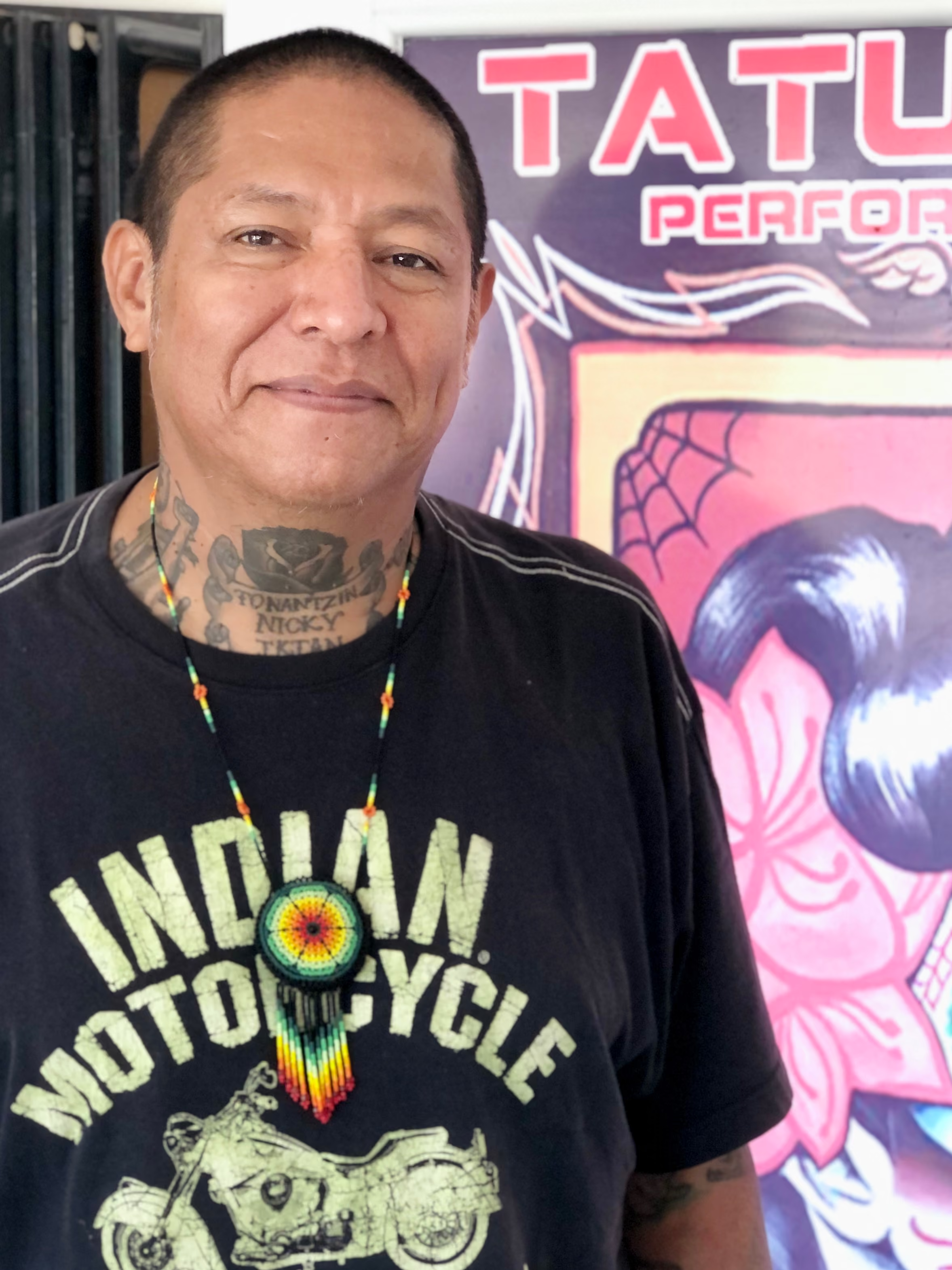
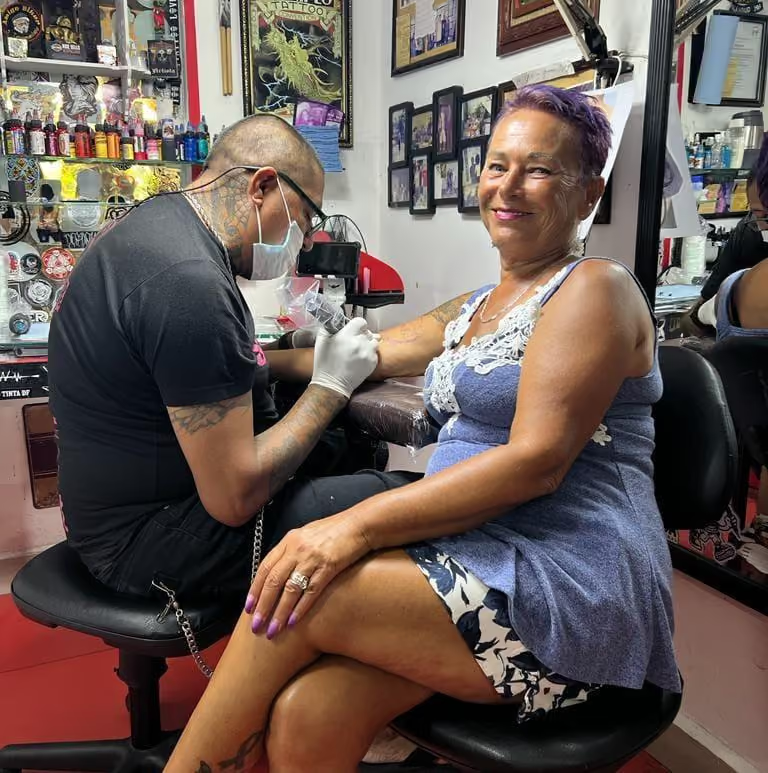
A tattoo parlor opened in Troncones, near the T, about three years ago. I’ve heard nothing but good things about it. So much so, I’m thinking about getting another tattoo. Aura heard there was a motorcycle rally coming to town. A little checking around led her to Chuy [Jesús Santana Morales] and “the guy from the tattoo parlor”. Well, I’ve already interviewed Chuy and I’m thinking about getting another tattoo—so, what’s the guy’s name? Pelón. Doesn’t that mean hairless, bald? Yes, but he’s not bald. Meet Pelón.
%2017.27.38.avif)
.avif)





.avif)
%20(Spanish)-2.avif)
LOT: Where does the name Pelón come from?
Pelón: Ok, well, it’s a long story, but I’ll tell you—I lived on the street—I left home very young and started wandering the streets. In Mexico City, we were selling gum, cleaning windshields and DIF caught me [DIF—Sistema Nacional para el Desarrollo Integral de la Familia, or, in English, National System for the Integrated Development of the Family]. It’s a government agency that helps kids by feeding them and giving them an education when they don’t have parents. So, when DIF would catch me, they’d put me in a van that would take us to get a haircut, bathe us, feed us and give us clothes. We had the option to stay in an orphanage or to keep living on the street, depending on what you decided. That’s why I was always bald, with short hair, to avoid lice and anything that could get on our heads. Living on the street, there were days we didn’t bathe, well, there were weeks. So, I stayed pelón, hairless.
LOT: Where did you grow up?
Pelón: I was born in Pachuca, Hidalgo, two hours from Mexico City.
LOT: How did you get from there to Mexico City?
Pelón: Since I was already living on the street, I started working with different people. I found a person who sold clothes at a street market, a flea market. He invited me to work and I started traveling with him from there, to nearby places like Tizayuca, Huichapan, Tulancingo and Mexico City. Little towns, too. I went to work with him.
LOT: How old were you when you left home?
Pelón: Six years old
LOT: Did you go to school?
Pelón: Yes, I lived with different people and they helped me study. I finished middle school and I made it to the second semester of high school.
LOT: What happened to your parents?
Pelón: My father, I don’t know him. I never met him. I knew my mom, but she was living with my stepfather, who treated me badly. He wasn’t a nice person to me. That’s why I lived on the street.
LOT: What brought you to Troncones?
Pelón: The tranquility. The surfing. The friendships. Good friendships.
LOT: How many years has it been since you arrived in Troncones?
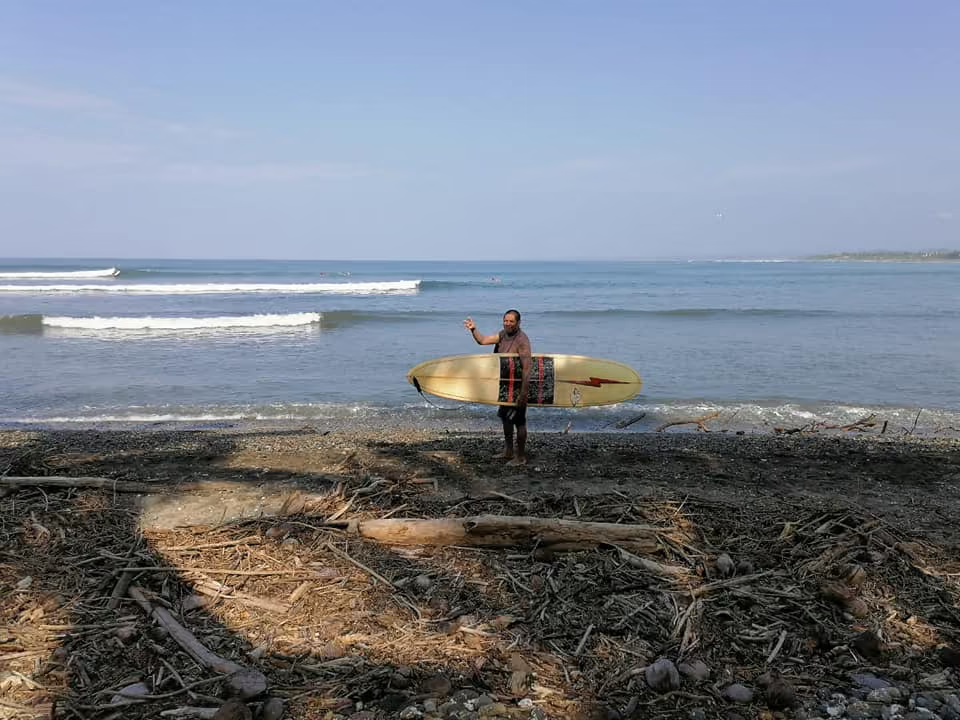
Pelón: It hasn’t been long since I arrived here. But I’d come many times, and I have a lot of friends here. I didn’t come very often, but frequently.
LOT: How many years have you been here now?
Pelón: Right now, I’ve been here for three years.
LOT: And how old are you?
Pelón: I am 54 years old.
LOT: You have a lot of history, from six to 50.
Pelón: Yes, quite a lot of experiences. Very beautiful ones.
LOT: What did you know about Troncones before coming here?
Pelón: Before coming here? Not much really. I came because I had friends who surfed, so we started coming here more. And then, when they built the skatepark, we came more times and I made friends who invited me to parties, or to camp. We would come and stay here.
LOT: What did you find that made you want to stay?
Pelón: I started to get to know the little market that sets up on Thursdays at Hotel Tres Mujeres—the weekly organic and cultural market. I was invited by Erika Estrada and Natalia Ochoa, and I started coming to promote my art and my style of tattooing. I saw there was potential here for the business. I kept coming to the little market and I thought, “If I find a place, I’ll come and open a tattoo studio here.” I really like Troncones and, well, life brought me this way. I saw one place further down and I was going to ask about it, but then I saw this one. This place was all new, a little cheaper, with air conditioning, new paint, new floor. I said “Wow, that’s the one. That’s the spot.” And I stayed.

LOT: When did you get interested in tattoos?
Pelón: I got interested in the art of tattooing when I was 10 years old, more or less. I had a friend going into sixth grade of elementary school, I was in fifth grade, and I saw how he did tattoos. I like drawing. I saw his technique, I saw his little machine and I started doing it, too. I didn’t stop and haven’t stopped. I just keep going.
LOT: What was your first tattoo on yourself?
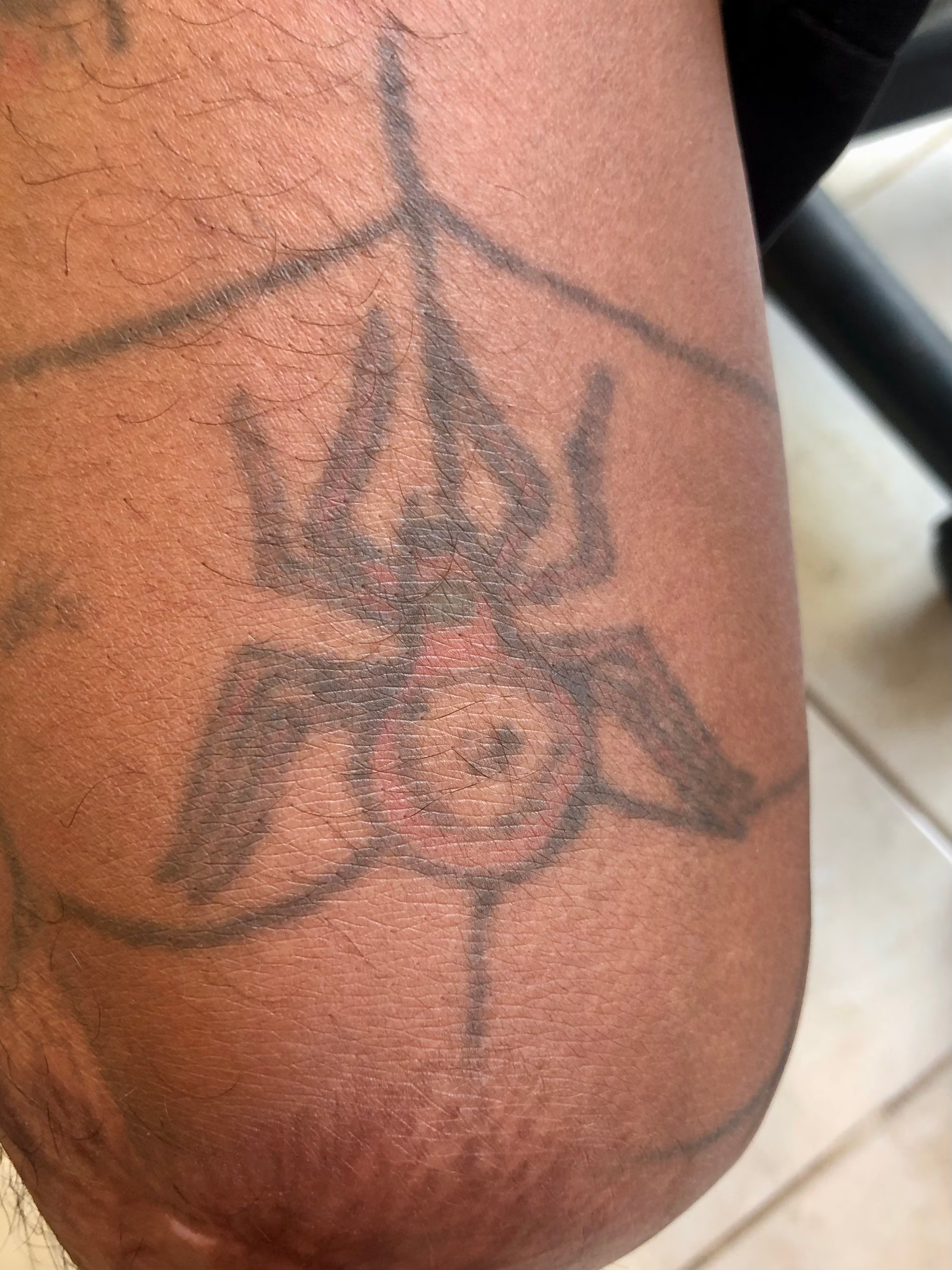
Pelón: I did a spider web with a spider. These are my first tattoos. [Pointing at his left knee and thigh.] When I did this one, I think I was maybe 11 years old. Something like that. [Showing more of his leg] I was also a punk rock rocker, influenced by the Ramones, the Sex Pistols and La Polla Records.
LOT: What was the first tattoo you did on someone else?
Pelón: I did some words. Some names, letters. On a friend, on the arm. I was like 10 or 11 years old.
LOT: From there, how did you learn and practice?
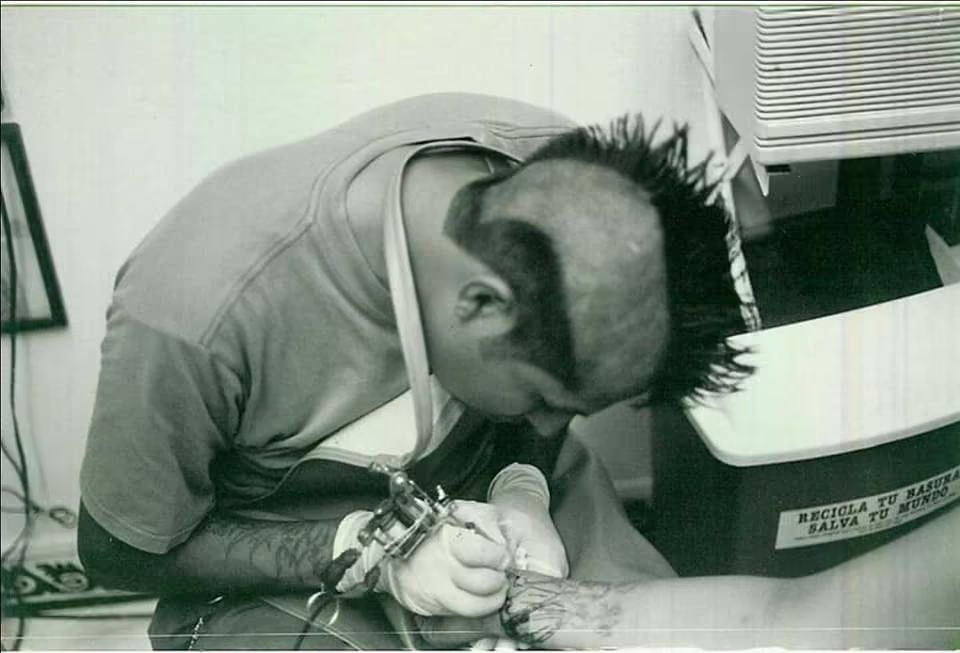
Pelón: There was a cultural street market in Mexico City called El Chopo in Mexico City. Several tattoo artists would gather there and I watched how they did it. That kept me improving my technique and I kept learning more. I also started going to tattoo conventions, in Europe, Canada and throughout the Republic. That led me to become well-known within the tattoo scene.
LOT: How do you feel your work as a tattoo artist—and your studio project—have connected with the community, tourism and local art in Troncones?
Pelón: It’s been great. People have given me the opportunity to develop my style, my art, and gotten to know me.
LOT: And tattooing has made your life?
Pelón: Wow, yes, yes, tattooing has made my life. I am very grateful for the gift that God gave me.
LOT: What are your most challenging tattoos?
Pelón: Most difficult? Places on the body? Tattooing the tongue. Tattooing genitals. Tattooing butt cheeks.
LOT: And, in terms of design?
Pelón: In design, realistic tattoos are hard for me. Those take me a little more work, because my technique is not fine line or very traditional, but I can do every style.
LOT: What are the most common tattoos?
Pelón: Names, quotes and stars. And religious and pre-Hispanic images. And flowers
LOT: Where do you live now?
Pelón: I live in Troncones. I live in Ixtapa and I live in La Saladita. I don’t have a fixed place because it depends on where I’m working—that’s where I stay.
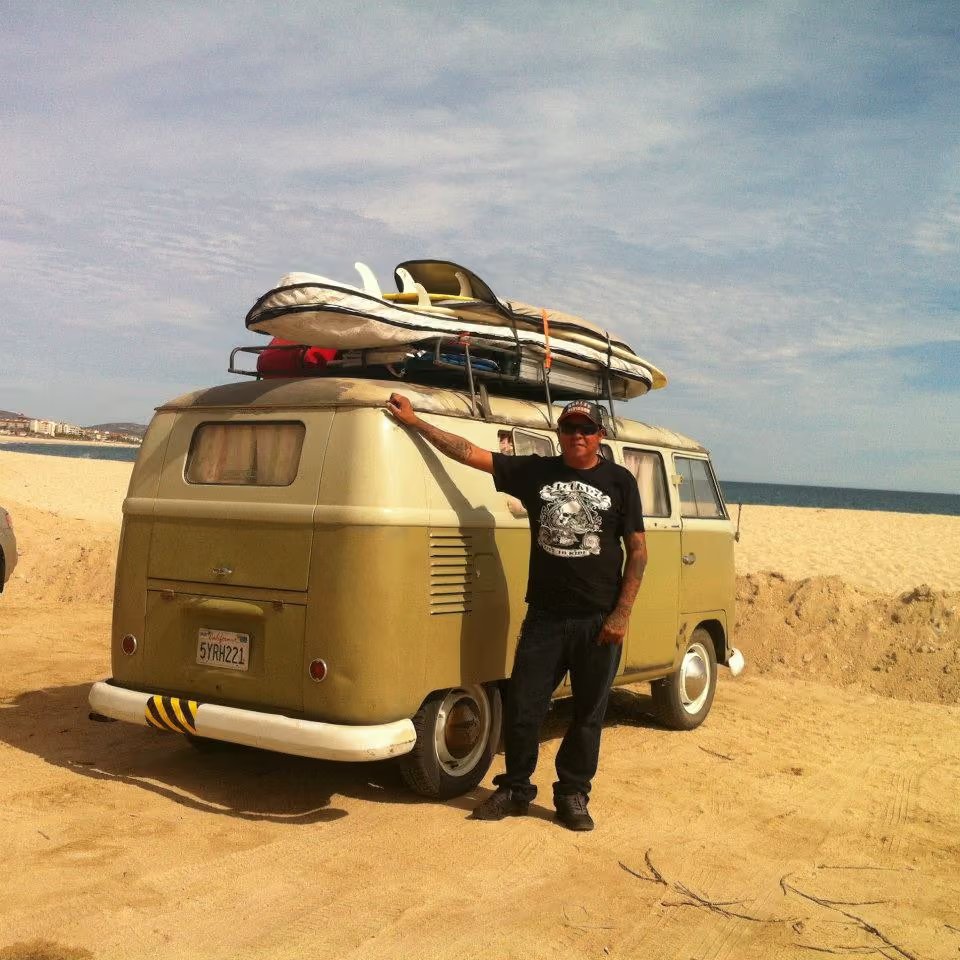
LOT: Do you have other passions?
Pelón: Yes. Motorcycling, skateboarding, surfing and drawing.
LOT: I understand you’re part of a motorcycle rally here. When is that?
Pelón: There’s a motorcycle event on May 23rd.
LOT: How many people do you think are coming?
Pelón: I think there will be between 500 and 1000 people, more or less.
LOT: And where are they coming from?
Pelón: From different parts of the republic. From Cancún. From Chiapas. From Tijuana. From Baja California. From different places.
LOT: How did you connect to all those people?
Pelón: Because I am in a motorcycle club, an M.C., and that M.C. is international. It’s in Chile. It’s in El Salvador. It’s in Spain. It’s in Canada. It’s in the United States.
LOT: What is it called?
Pelón: Halcones [falcons]. Hermandad Internacional De Halcones. We’re brothers.
LOT: Is it anything like the 1% motorcycle clubs in the United States? You know, the Hells Angels, the Pagans, the Outlaws, the Mongols?
Pelón: No, we’re not that type of motorcycle club. Our motorcycle club is family-oriented. You can go with your kids. And if you don’t have a motorcycle at that moment, you can go in the car with your family. Our brothers won’t disrespect you or your family. It’s a family motorcycle club.
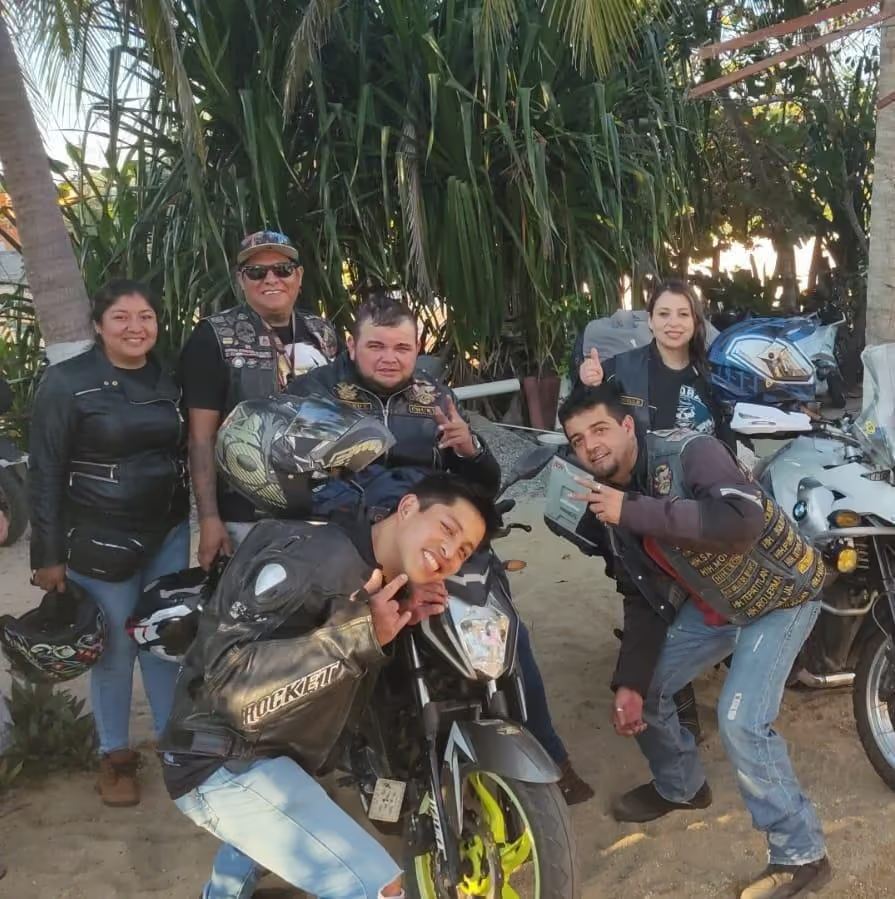
LOT: For those who may not know the world of bike clubs, what does it mean to be part of Halcones M.C.?
Pelón: To be part of a bike club is to be part of a large family where there’s no distinction of race oer social status. We see each other and hug each other enthusiastically, even if we don’t know each other. We help each other in whatever situation, good or bad.
LOT: How would you like the community of Troncones and the Halcones M.C. to experience each other?
Pelón: I hope the people here get to see our brotherhood as an example of unity, respect, and harmony—brothers traveling on two wheels—and I hope we demonstrate to Troncones how our biker community can bring significant economic benefit to this beautiful town.
LOT: How long is the club going to be here?
Pelón: The plan is for just the weekend—Thursday, Friday, Saturday and Sunday. Saturday, the 23rd, is the party, the food. It's going to be held on the basketball court in Troncones, en la cancha. We expect it to end around 11 at night. On Sunday, the 24th, we expect everyone for breakfast and then everyone leaves.
LOT: Are there other events? Competitions? Locations?
Pelón: No. This time it’s just a get-together because we’re celebrating that we’re opening a Playa Troncones charter. A new Playa Troncones family.
LOT: How many people are part of that charter?
Pelón: Right now, we are six people. Chuy. Milton. Me, José. Freddy, Francisco and Rodolfo.
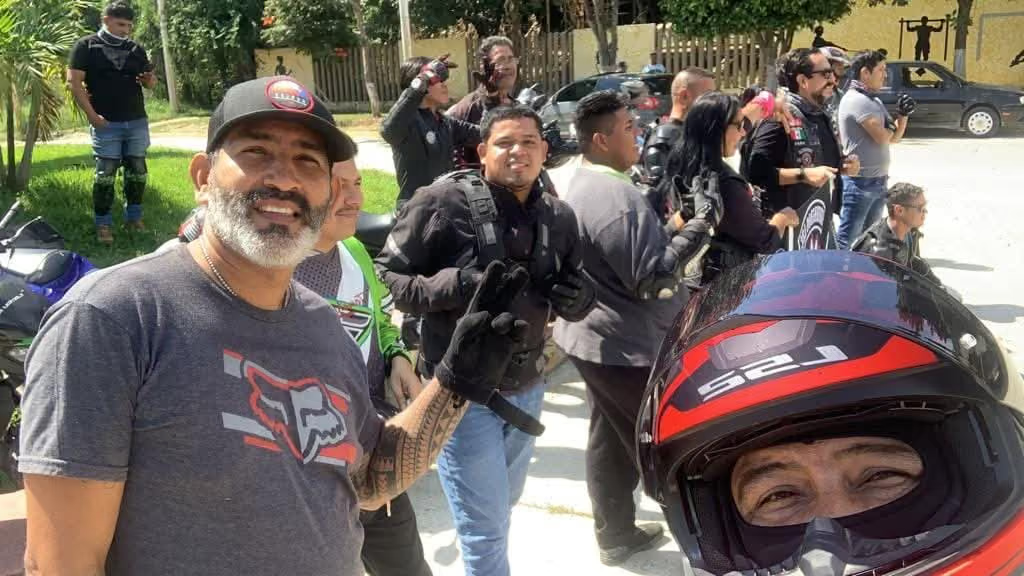
LOT: What do you need to do to be in the club?
Pelón: To be in the club? That you travel by motorcycle. It doesn’t matter what size your engine is, as long as you love motorcycles, and want to be a brother.
LOT: How did you get involved in motorcycles?
Pelón: I bought my first motorcycle when I was 14 or 15 years old. I learned on that one. And it began my love of motorcycles.
LOT: What kind of motorcycle was it?
Pelón: A big one. An ‘85 Honda. I don’t remember the name of the motorcycle, but it was a really big motorcycle. We bought it together, between two friends, Manuel Vallejo and I. We bought it in installments. I learned on that motorcycle and I became very passionate about motorcycles after. I still am to this day.
LOT: [Looking outside] You have a Honda now.
Pelón: Yes, I have a 1985 Honda Rebel.
LOT: And which motorcycle is your favorite?
Pelón: The Honda. Because it’s comfortable. And it’s like a Volkswagen. Like a Beetle. It doesn’t need that much maintenance and you can fix it yourself. Also, it doesn’t use much gas and it’ll take you to the end of the world. [Laughs.]
LOT: What does you participating in the Halcones M.C. bring to your life?
Pelón: Getting to know a lot of places and meeting brothers with the same passion. A lot of really beautiful people. Very good hearts. And, in the course of riding, meditating. There’s no one to distract you. No one to talk to you. You’re with yourself—thinking and clearing your mind. It’s very introspective.
LOT: What is next for you? Your next project?
Pelón: I don’t have projects. I simply try to live day-by-day, live in the day—enjoy it, live it. Tomorrow, who knows what will happen. The past is gone. It’s already behind us. I don’t have to regret what’s already happened. And I don’t need to worry about what’s ahead. I only live for today.
LOT: What about your creativity, and your art?
Pelón: I really enjoy tattooing because it’s also like a bit of meditation. It’s about focusing really, really hard on what you’re doing. I hardly talk when I tattoo because I’m very focused on what I’m doing. My creativity and art keep flowing with every tattoo.
LOT: And what about for the motorcycle club?
Pelón: I would like to throw a party—next year or the year after—organize it among the whole community of Troncones so people can go see the bikes, learn more about what motorcycling is like. The event we are going to do this month on the 23rd is closed. It’s not for the public. It’s just for members of the motorcycle club. But the next one could be an open event, where different motorcycle clubs from different places can come—bringing more people to get to know Troncones and bringing more economic benefits to the town.
LOT: So, this event at the cancha on the 23rd is like a quinceañera?
Pelón: Exactly. The only requirement is that we don’t make noise, going through the streets going vroom vroom. None of that. Everything calm. Everything quiet.
LOT: Okay. One last question. Why do so many people in Mexico have tattoos?
Pelón: Now, it has become part of the culture. Before, it was frowned upon. People who had tattoos had them because they were in prison or because they were bad people. People with tattoos were discriminated against.
LOT: What changed that?
Pelón: The soccer players. The actors. They started to make it more popular. And the TV show Miami Ink also awakened people a lot. That was a popular TV series here in Mexico—a show about a tattoo parlor in Miami—that gave the art and culture of tattooing more of a presence. Almost the majority of people in Mexico have tattoos now. It’s seen as normal.
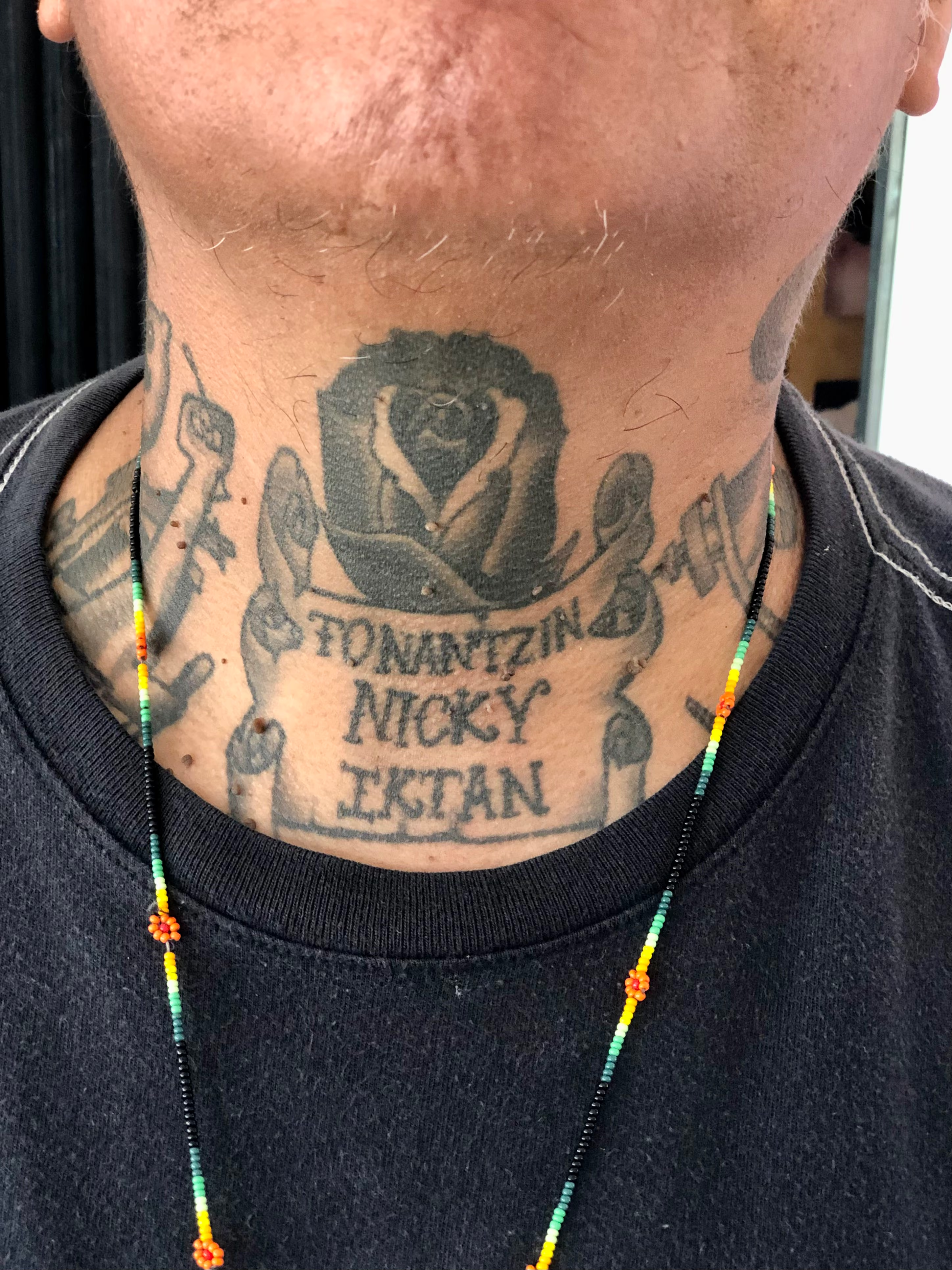
Post-script: After the interview, when I went to take Pelón’s portrait, I asked him about the tattoos on his neck—the names Tonantzin, Nicky and Iktan. I asked who they were. It turns out they’re his wife and two sons. Tonantzin struck me as an unusual name so I asked where it came from. Pelón explained, “It’s an ancient name, the name of an Aztec goddess, meaning ‘Our Holy Mother’. She was honored every year, in late fall, just before winter, in what we call ‘December’. The Spaniards destroyed her temple and tried to do away with any worship of her. They couldn’t. That’s why we celebrate Guadalupe on December 12th. It’s really Tonantzin.”
A little online fact-checking confirmed that story, that the Spaniards destroyed a temple to Tonantzin in Tepeyac, and later erected a chapel to honor Our Lady of Guadalupe on the same site. The rest of the story involves a series of magical events—five apparitions of the Virgin Mother, a few miracles and one huge cultural assimilation. Who says tattoos are a waste of time? They’re portals, doors to other worlds. Don’t believe me? Go talk to Pelón.
LINKS to Pelón’s Troncones Studio
https://www.instagram.com/tronconesink/
https://www.facebook.com/tronconesink