Arturo De La Barrera: A Farmer’s Philosophy
Change is hard, but it’s inevitable—and a change is coming to Saladita as the old and the new come together at Las Huertas Farm
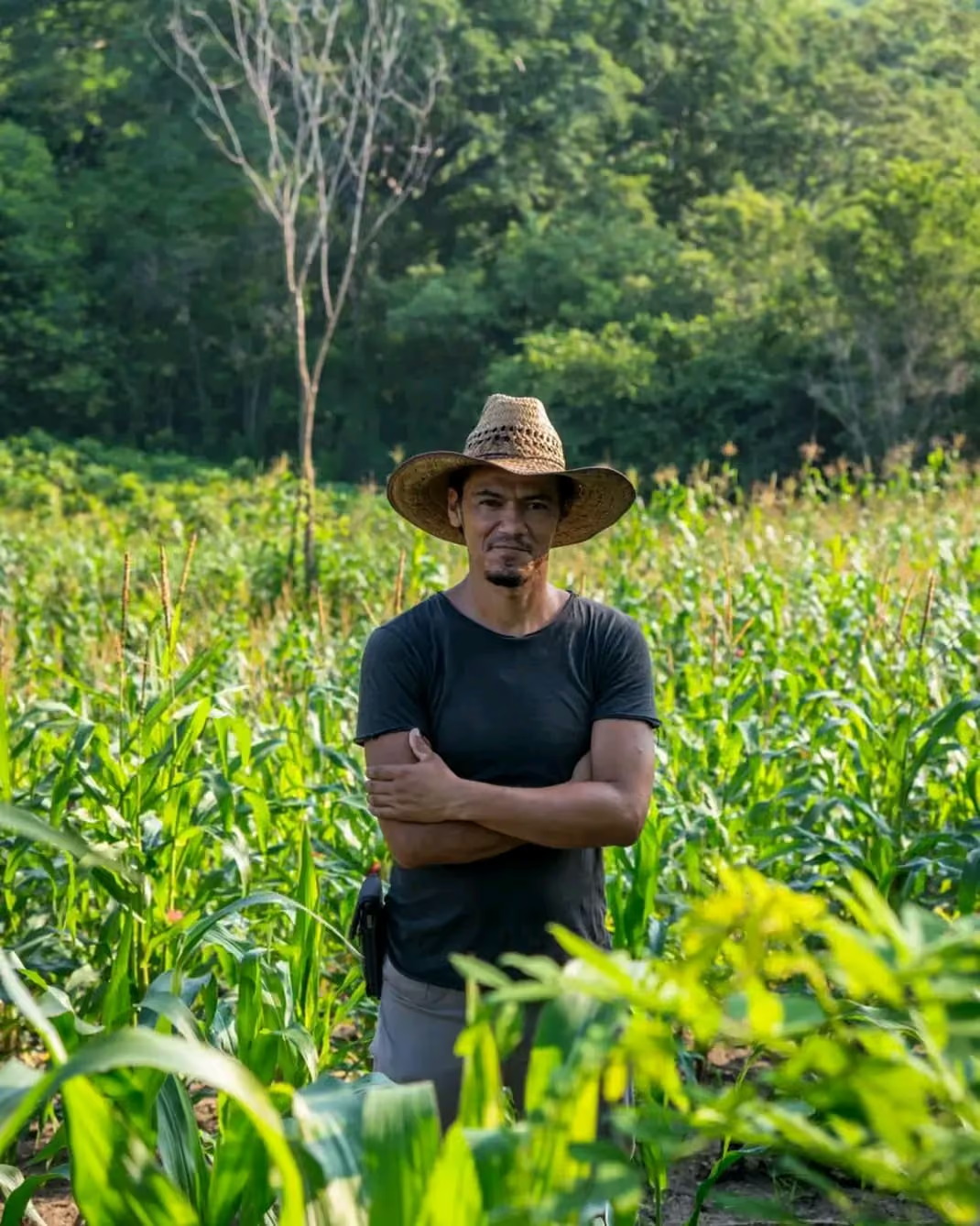
At the back of the Friday farmer’s market at Hacienda Plaza, you’ll find a tall guy with a wide-brim hat standing at a table labeled Las Huertas. That’s Arturo De La Barrera, one of the kindest people you’ll ever meet. Don’t let his intensity or his shyness fool you. Anyone who’ll take the time to make the hard clays of Saladita into better soil has to be patient, disciplined and exceptionally kind. Arturo’s growing organic produce and he’s experimenting with crops that’ve never been grown here before. He discovered farming when he wanted to learn how to better care for himself. Now, through the work he’s doing at Las Huertas Farm, Arturo’s looking to teach what he’s learned and create a different sort of farming community.
%2017.27.38.avif)
.avif)





.avif)
%20(Spanish)-2.avif)


LOT: How did you get into farming?
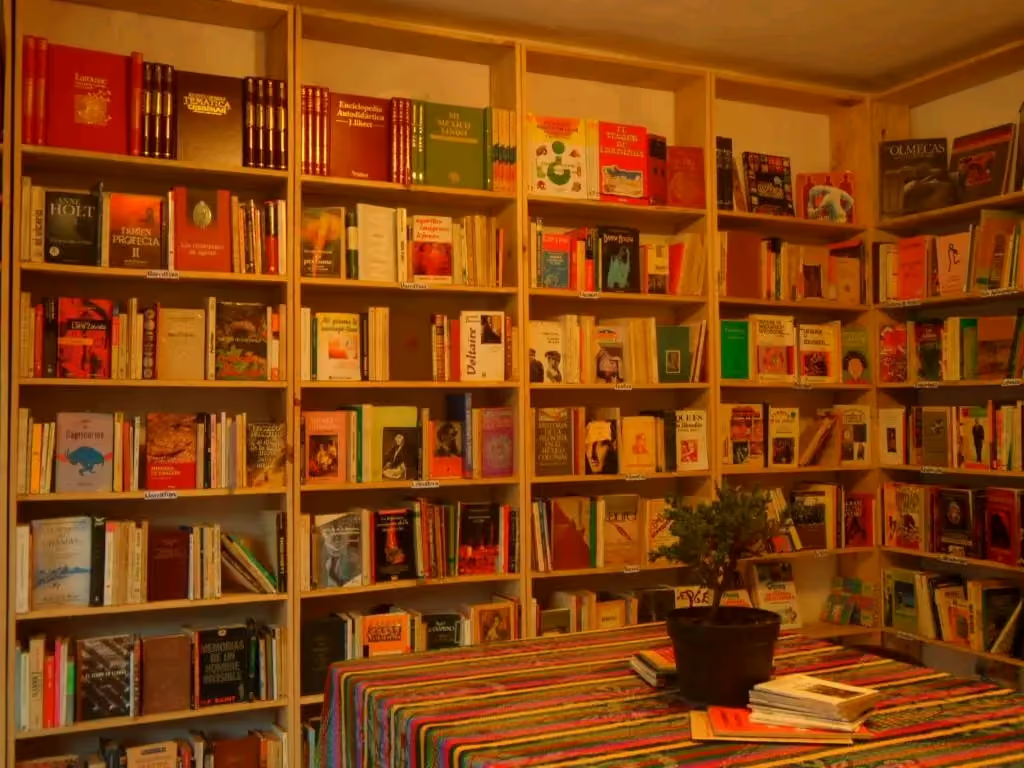
Arturo: I started 12 years ago. I arrived as a volunteer at Playa Viva. I was living in Mexico City. That’s where I’m from and that’s where I had a bookstore of old and rare books. But my bookstore se quebró [literally, broke]. It was a difficult line of work. Money was elusive. I needed some time to think about life, so I researched places to volunteer. That’s how I found Playa Viva. That was my first contact with the fields, with agriculture.
LOT: 12 years. What’s kept you working with the soil? What’s kept you farming?
Arturo: I stayed at Playa Viva, for three months, as a volunteer. Then, I asked for a job, and they gave me a job. I started to work as an auxiliar [assistant] in permaculture, and I stayed there for three years.
LOT: What about the permaculture practices kept you engaged? How did it hook you?
Arturo: My first teacher was a local farmer from Juluchuca, named Sapo. Some people might call him a peasant, but he was a master. He knew his craft, from working the soil all his life. While I was learning from him, how people traditionally grow crops, I was also learning the principles of permaculture and trying to apply them. I learned both sides. Now, I like finding ways how the techniques of permaculture complement the ways of traditional farming.
LOT: Where has your interest in farming taken you since you started?
Arturo: After I left Playa Viva, I took some time for a trip, to do personal things, going to Greece and London, for almost a year. But I always tried to keep close to agriculture. I took some courses from Permablitz, in London, applying the principles of permaculture. It was ten classes of theory and another ten classes in the field, working in groups of ten, applying the knowledge in one garden, everyone collaborating and working together.
LOT: And after London?
Arturo: After that, I came back to Mexico, where I had an opportunity in Tulum, in a restaurant called Verdant. I stayed there for one year. After that year, I went to Mexico City, and I found a project that was starting, called Tierra Permanente. It’s a big project, one hectare [almost 2.5 acres] focused on sustainability and ecology. My work there was, again, in permaculture, and in vermicompost, in creating an organic fertilizer using worms, and in recycling of different kinds. I worked there almost three years, the two years of the pandemic and the one year before.
LOT: You said you’re from Mexico City. What part of Mexico City did you grow up in?
Arturo: In a town called San Francisco Culhuacán, near Taxqueña, at the south of Mexico City. When I was growing up, it felt more like the country than the city, a place modern life hadn’t changed—there was an old church, there were cobblestone streets—and when my mom took me to the school, it could be a five-minute walk or it could sometimes be a twenty-minute walk. That depended on if we had to wait for the cows to pass. I grew up in Mexico City but my town felt remote, agricultural, nothing like the monster Mexico City turned into in my twenties. Now, there are no cows in San Francisco Culhuacán. It’s all city.
LOT: How old are you now?
Arturo: 42.
LOT: A lot has changed in the last 30 years.
Arturo: Exactly.
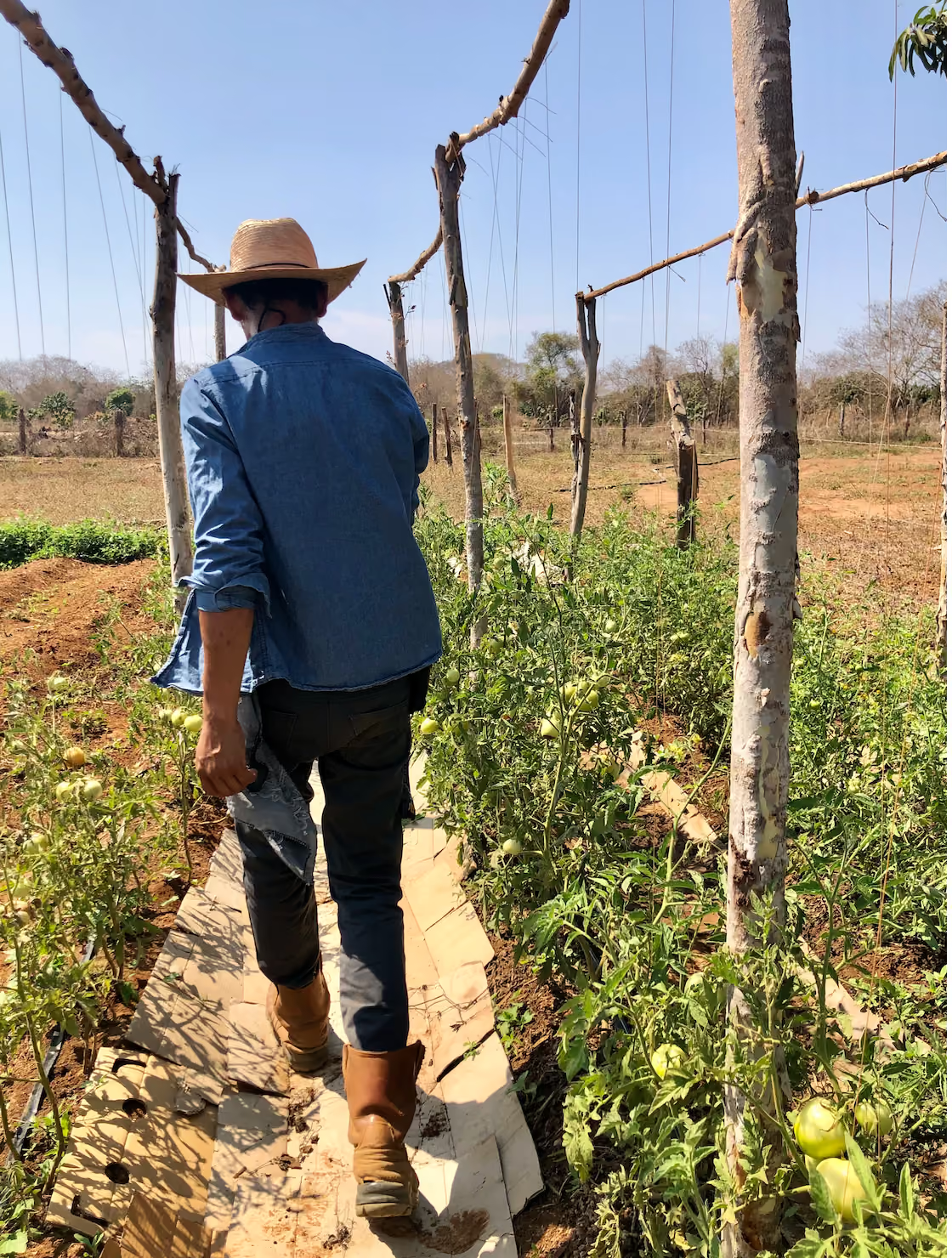
LOT: What do you like most about farming?
Arturo: It’s personal. Very personal. I worked a long time in services, like being a waiter and selling books. When the bookstore went bankrupt, when I went bankrupt, I was thinking how, at the end, I didn’t know anything, like how to survive. I was always depending on someone else to feed me. You can’t eat books. That was why I searched for something more natural, something different. When I started to work in the fields the first time—without any experience, without the strength I needed, without anything besides the idea of doing something better—I found myself sweating under the sun, breaking the ground using a hoe, thinking that what I was doing was part of a cycle—that in a few months, my work might become food for someone. That made my work become more meaningful to me, more worthy than anything I’d ever done before, and I’ve kept pouring myself into the soil that way.

LOT: What is it that farmers think about?
Arturo: A lot of things. Like the schedule, the season, the climate. As a farmer, you need to observe. Every day something changes. You need to be aware of what’s changing—if something’s wrong or strange with your plants, or with the soil. You need to be aware of moisture. You learn to be aware of a lot of elements. But you’ve got to have your goals. That’s what I think about each day—what do I need to do to make this work, this crop, this project, possible. I find that each day I need to think about and work on the small things that make the bigger things possible. I observe what’s needed. And I don’t stop. It’s an awareness of a lot of things, each day, of how I can help along what I’m growing, what I’m doing.
LOT: What are your biggest challenges here?
Arturo: The weather is so complicated. That’s the first challenge. The weather. There’s no way to resist it. And the water—there’s always the problem of the water. That’s true for all the projects I’ve worked on. As a farmer, to be successful, I need to check what I have available and how to manage, or how to avoid, an emergency. Another challenge is my own resistance, my own mental resistance. Farming, and making and sustaining the soil we need, is an everyday project. Sometimes you can see the results in one week or in two weeks. But, sometimes, it happens in months. That’s when I mentally need to have some patience. That’s hard when you work at something every day. That’s a challenge. Also, I try to be smart, so I’m not in the fields in the heat of the day. I try to do this in the morning and that in the afternoon—to cover the day completely—to do the continuous small work, and avoid getting caught up in the things I can’t control.

LOT: What are the goals of Las Huertas Farm?
Arturo: The first is to regenerate the soil because basically this land is clay and, until now, it’s been a monoculture of mangoes. The soil is not healthy. It’s not rich. It’s very slow to produce and it’s complicated to work with. If we want to produce good vegetables, we first need to produce good soil. I’m working on taking care of that. Another goal is to start to experiment with the things we grow. We’re starting with the vegetables and herbs people know, but with some difference in varieties—like growing heirloom tomatoes along with the tomatoes that are more familiar.
The big goal of Las Huertas Farm is to have a sustainable, regenerative farm and to create a center of education for agriculture. That’s the project of the farm—to grow the crops we need to build up the soil and to build kitchens and classrooms—to generate information and provide interaction for the community. It’s an interchange, an exchange, with the community. It’s local and it’s bigger than that, too. It’s creating contact with the soil, sharing what we know and what we have, and connecting with the locals and with the people who come here.
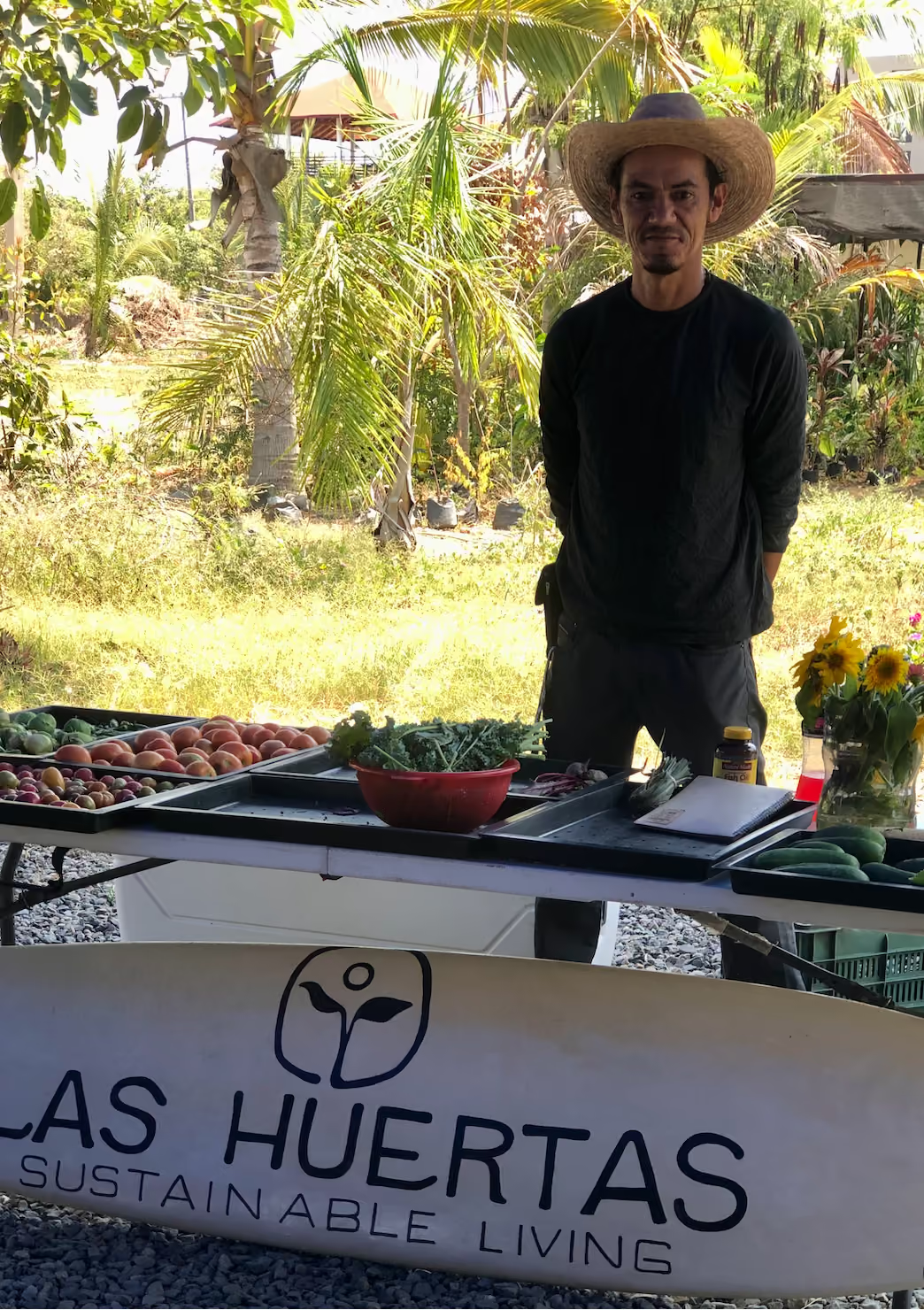
LOT: What kind of vegetables and fruits are you growing?
Arturo: We started with a lot of flowers, mainly zinnias, sunflowers and marigolds. Arnica, too. And with herbs, like dill and basil. The weather here is good for tomatoes, chilies, cucumbers, squashes and lettuces, like arugula, kale, mizuna and bok choy. I’m growing jicama [a Mexican turnip], sweet potatoes, okra, radishes and carrots. I have some experience producing different kinds of sprouts—microgreens—and we’re working now on the infrastructure for that. That’s another good thing to grow here.
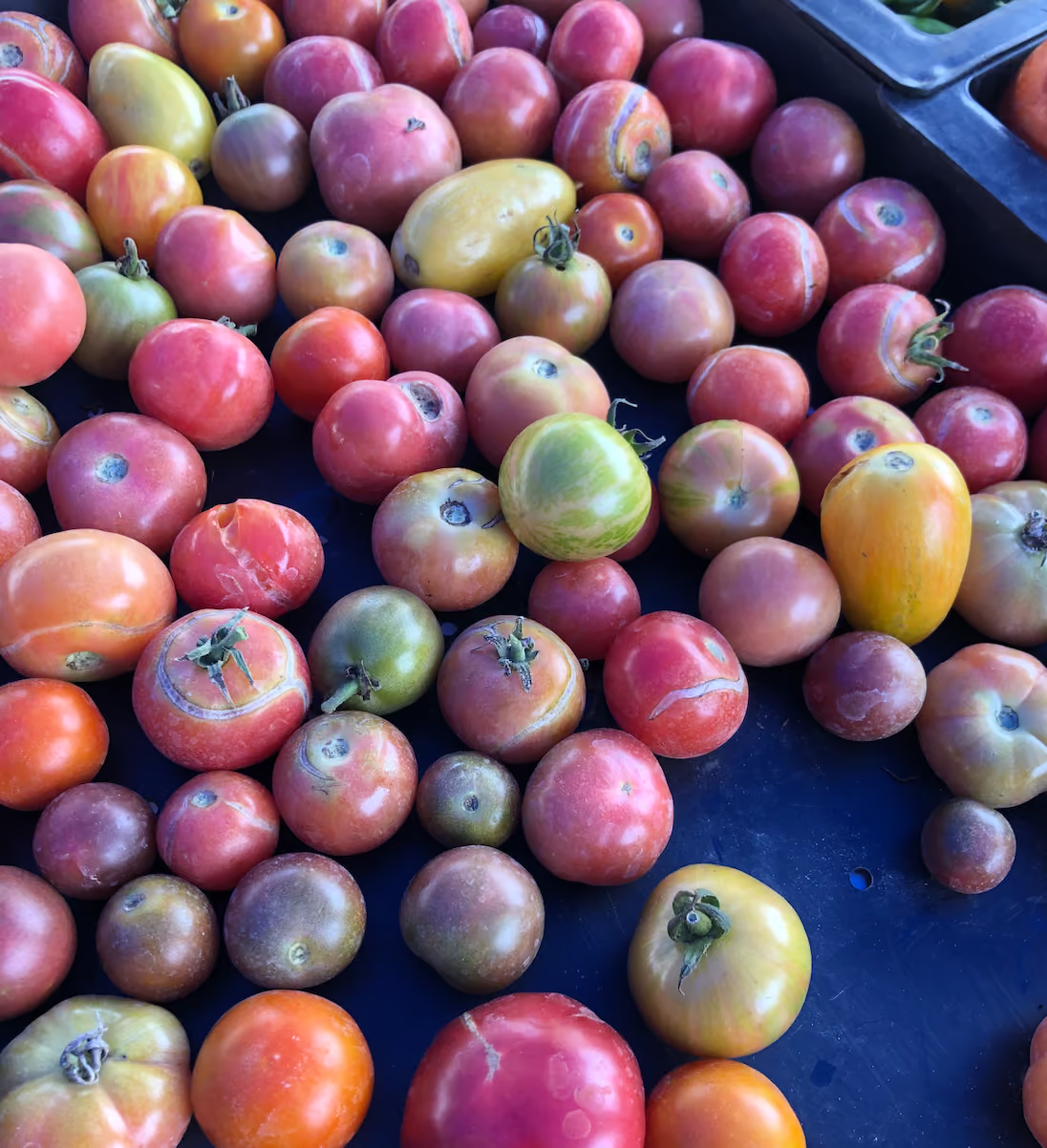
LOT: What are you learning in doing this? What is the farm teaching you?
Arturo: A lot of things. Probably the most is patience. The other things are harder to describe, like the beauty of the blooms, the sense of peace that’s here and the extraordinary little things that happen every day. That, and discipline. Discipline. I need to be here every day.
LOT: What’s been the most unexpected?
Arturo: Learning about my capacity, my boundaries, learning to break my mental boundaries, and learning to recognize my limits. I cannot do everything alone. I need to ask for help, find volunteers. This is our second season. The first season was the rainy season, last summer and fall. I started here alone, with the water from the rains, with traditional crops, like corn, marigold, sesame and jicama. And now it’s more complicated, in the dry season, getting everything watered, especially because we have more growing, more varieties and everything has different needs at different times. And some things, like the tomatoes, need a lot of attention to produce, to expand on what we’re growing.
LOT: How did you end up here, in this area?
Arturo: My first time in Saladita was like four or five years ago on a project with Playa Viva, when we came to install some gardens here. After that, I was working at MUSA [a utopian luxury-residential community south of Zihuatanejo] when some people from Saladita saw my work and in some way recommended me to Frank Cruz and John Bergman, the managing partners of Hacienda Plaza and Las Huertas. It was nearly two years of talks with them about what they wanted to do. Almost one year ago, I was working in Veracruz and I came this way to sell some extra things I had, and John said, “Okay, let’s do it now.” And we started.
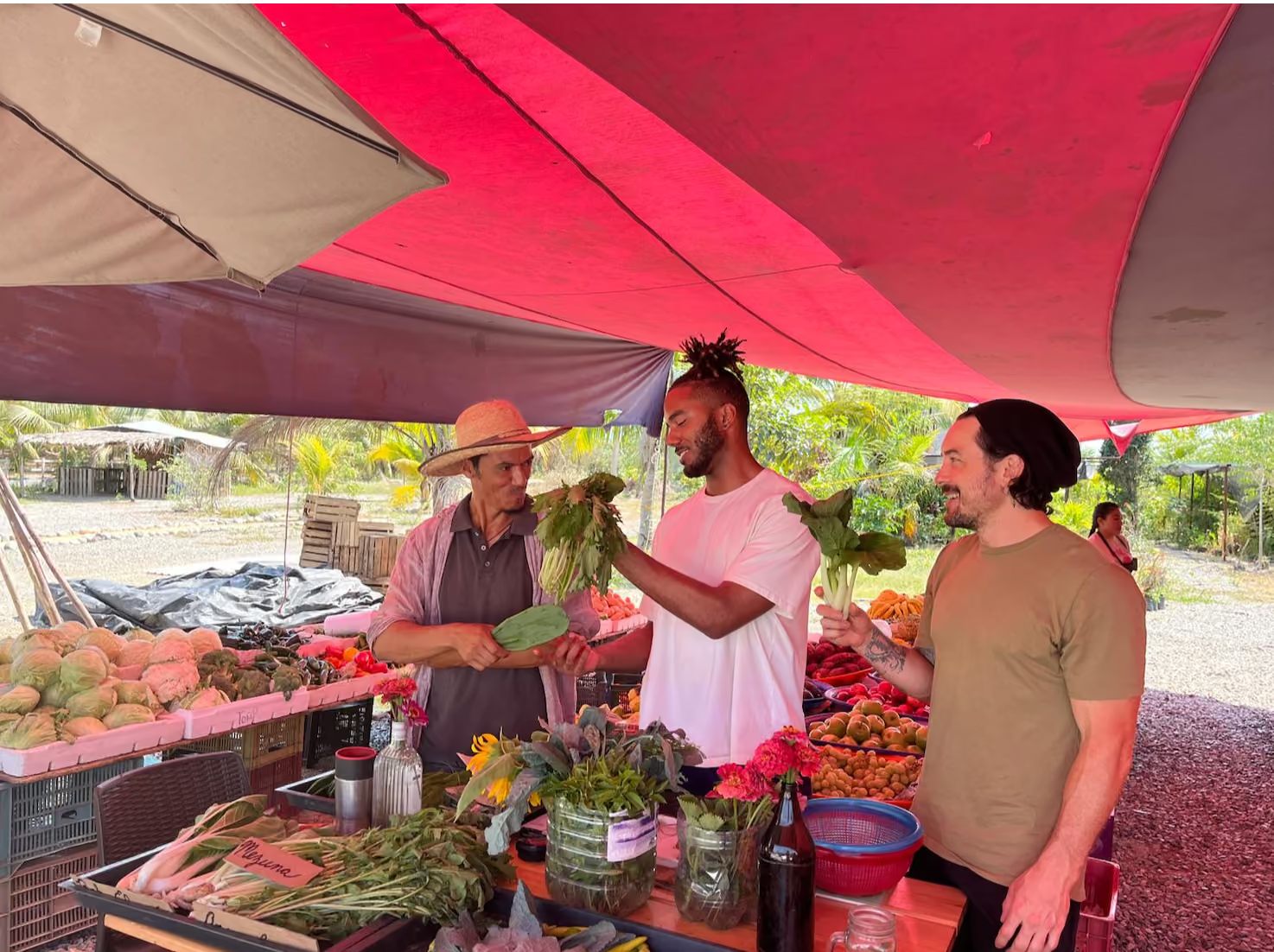
LOT: What’s made you want to stay in this area?
Arturo: The opportunity to create something from zero. This is a special point in my life and in my career. Do I have enough experience to establish something that can last? I feel like it’s my time to show myself that I can do it. When you work for other projects, you spend a lot time working within a structure and even if you’re very, very close to the decision-makers, it’s very, very hard to change how things are done. You can encourage, you can suggest, you can complain but it’s complicated to make changes. Now, in this stage of my life, I’m trying to do things in different ways, like how I establish my schedules, how I work with the people in the field and how I work with the people in the company. It’s a good opportunity for me to create, or to try to create, something different. It’s much more responsibility for me, but it puts me in a position where I can have a direct influence on the kind of change I want to see. For me, this is a chance to share that moment of “meaning” I had in the field, and a chance to create a farm and a community that are truly connected. Saladita feels like a good place for all that.