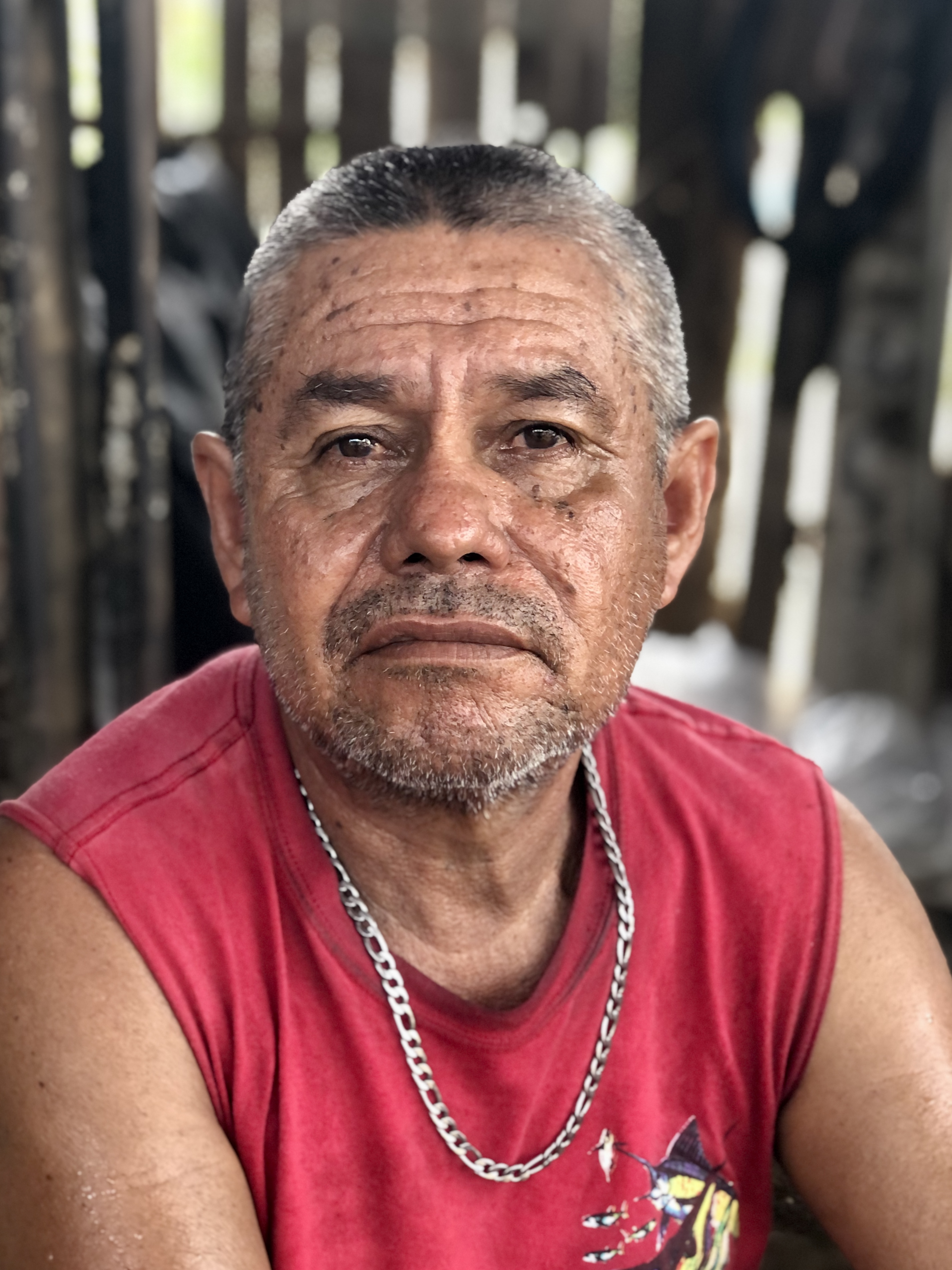
Victor Manuel Ramírez Rivera: The Man of La Boca
The story of La Boca Lagunillas starts with one family
I first heard of Victor Ramirez when my neighbors came together to make repairs to the roads between Majahua and La Boca. It was said that we needed to include him in our planning. Okay. He was spoken of as if he were a judge. It turns out that, in some ways, he is. Víctor Ramirez lives in La Boca, and for years he’s been someone people go to when they have squabbles or when they want to get something done. His connections to Saladita, Lagunillas, Troncones, Pantla and La Unión run deep. He made sure we got the equipment we needed for the roadwork.
%2017.27.38.avif)
.avif)





.avif)

%20(Spanish)-2.avif)



LOT: Where were you born?
Victor: Here in La Boca de Lagunillas.
LOT: But there’s no hospital.
Victor: I was born at home, delivered by a midwife.
LOT: What are your earliest memories of La Boca?
Victor: Being with my mom and dad. They worked with cattle and in the orchards. That’s what my dad did. He had coconut palms and cattle. It was seasonal farming because there was no irrigation at all. They grew sesame and corn. There was no machinery to prepare the fields for planting. Everything was done manually with oxen or horses. So, as a kid, I was always working, with the planting and with the cows. My dad also took care of Amador Hinojosa’s ranch, where he had a lot of cattle. He managed it and looked after it. So, we took care of that land, too. [That area is now referred to as La Pequeña or Brisas de Mar.]
I grew up there [pointing at a white wall next door]. I went out to go to school—I studied first and second grade in Saladita because there was no school and no teacher here. Third, fourth, fifth, and sixth grades were in Lagunillas. For middle school, I had to go all the way to La Unión. After that, I went to Zihua for junior high. I was there for four semesters, but it became too much. I couldn’t handle going there and back every day. I was walking all the way to Lagunillas, to get on the bus, to be in Zihua all day, to take the bus back and then walk all the way home. I’d come back here at night and I got tired, I got fed up, so I dropped out and just dedicated myself to working the fields.
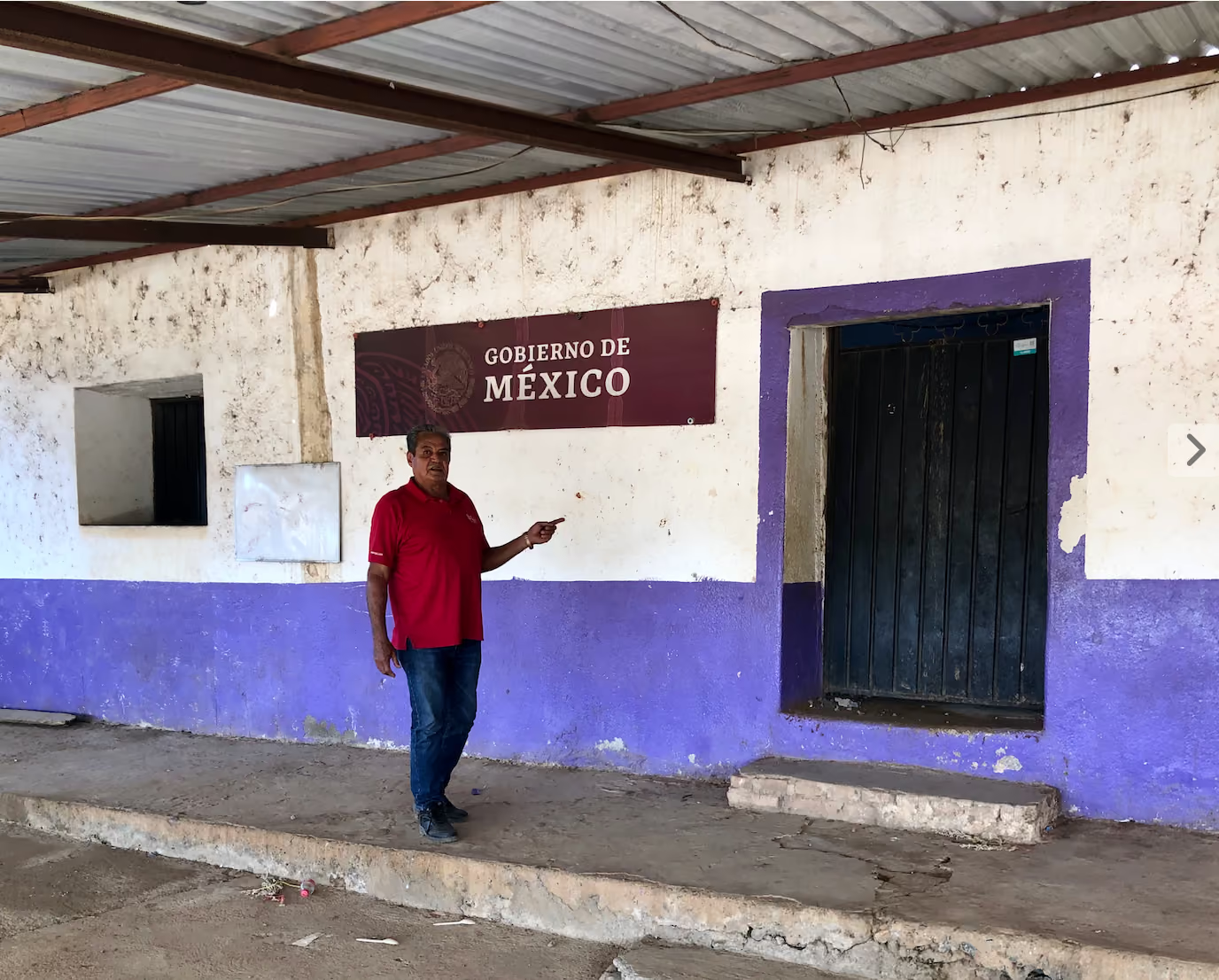
LOT: And you are here for how long?
Victor: My whole life. Almost 64 years.
LOT: How many people were here when you were born?
Victor: When I was born, it was just my parents. My father was the first one to come live here. He was the one who founded Boca Lagunillas.
LOT: There wasn’t anyone here before?
Victor: Before? No, he was the first. Later came the people who were my grandparents, and then came Matilde Reyes, who was from Zihuatanejo, but he went back. And Anastasio Villa and Tello Salamanca. That’s how Boca Lagunillas started growing. Slowly, one person after another, to the point where we are now.
LOT: And now it has a school?
Victor: Yes, a school. And electricity. There was no electricity. There was nothing.
LOT: Why did your father come here?
Victor: He came to work with his father—my grandfather. There was a fight brewing between the ejidos and the landowners. My grandfather worked for the landowners and he took their side, the side of el patron, and he was shot. My father ended up working the land his father worked. Later, he became the administrator of the land—which included La Boca. Years later, he bought the land here at La Boca from the landowners. But, like every story, there’s more to it.
My father was raised in Naranjito [in Guerrero, outside of Petacalco]. He lived there with his mother and father, where they worked on the landowner’s estate. He was seven years old when his mom died and he was left in the care of his older sister, Agripina Ramírez. She took care of him as if she were his mom, and they moved from Naranjito to Lagunillas. He would come to La Boca, with his father, to work. On one of those trips, on the road that was known as “the spring road”, they were ambushed. My father was 11 years old when his father was shot. From then on, with even more reason, his sister took charge of absolutely everything for him, until he got married for the first time. My father recognized her as his mom. He didn’t call her “mamá”, but he got all of us kids calling her “abuelita”. Agripina Ramírez was an aunt, but my father got us used to referring to her as grandma, because she was the one who raised him. She made him an adult.
LOT: Did your father see your grandfather get shot? Was he there when his father was killed?
Victor: Yes.
LOT: Did he know who killed him?
Victor: Not at the time. But later, yes, he found out. The man was already very old when my dad found him. He didn’t want to do anything to him.
LOT: So, were the landowners your grandfather worked for Spaniards?
Victor: No, they were Mexicans. A few of them owned everything. There were no ejidos. Everyone worked for them back then. They owned the haciendas that existed around here. And when the hacienda owners left certain plots of land, they transferred them to whoever they wanted to. At that time, the hacienda owners owned all these orchards, so, like I said, after my grandfather was killed, my father stayed on to work, from the time he was young, working this land, until he worked out a purchase with the landowners.
In those days, there was a hacienda in Lagunillas and another one in El Capire [between the entrance to La Unión and the surf spot known as “The Ranch”]. It was all part of the same estate. The owners saw it as communal land, and my father managed it for them. They sent him from El Capire to here. That [pointing] was the first house built here.
LOT: Is that where you were born?
Victor: Yes, I was born there. My father built that house in ‘50. He had been coming and going from Lagunillas. Finally, he stayed and built that. That’s where we all grew up.
LOT: How did you get water?
Victor: Drinking water? Well, that came from the river. And they also dug wells up where there are underground currents.
LOT: Did you pull it out with a pump?
Victor: No, with a bucket. There was a lot of water then. You couldn’t get across the river like we do today. We had to use a canoe. Or go up the river to where we could cross on horseback. There was no way to cross, like, say, in a car or something. Besides, there weren’t any cars, and the water was deep all year long—up to your chest and neck. It dries up now.
LOT: Why isn’t there as much water in the river now? Is it because of development?
Victor: No, it’s because of the rains. It almost doesn’t rain anymore. In the past, it used to rain a lot more than it’s rained the last few years. And because there isn’t so much rain, the sand and the stones that come down from the mountain haven’t been cleared out and the river has filled its bed.
LOT: What is your role in the community now?
Victor: Right now? Nothing. I’ve been the community comisario three times, and I’ve been elected comisariado ejidal [head commissioner of the ejido] three times. I really like participating with the people of the community, helping them, wherever I can. Helping my neighbors is a great pleasure. It’s always been that way for me. And my father was the same way. He also liked to support the people he knew. He started bringing them to work for los patróns. The first ones he brought started bringing their relatives. That’s how Boca Lagunillas started growing.
LOT: What does this area need to keep growing?
Victor: To start with, it needs a lot of infrastructure. We have the roads that are already made and we have water distribution, but the plots of land we have here today are still farmland. The palm trees we have now were part of a project from a long time ago. But that’s as far as it went. It didn’t generate an economy. Tourism generates an economy, but if all the plots are being used for agriculture all you can do is wait. That’s one reason there hasn’t been development.
We are right in the middle of two powerhouses: one tourist and the other industrial—between Zihua and Lázaro. We have been forgotten because there hasn’t been a spark for development where there might be some factories or big business—other than the mango dehydrating plant [near Playa Saladita]. There hasn’t been an investor who’s put their attention to the development of the area, for tourism, or for industry. But on the other hand, it’s okay because we live peacefully.
LOT: If we have development, how do we protect our natural beauty here? How can it exist with development?
Victor: That’s very difficult, because as you can see, human beings destroy nature. Right now, we can still drink from the river. We’re lucky to live in an area without a lot of pollution. If a bigger kind of development comes, maybe there will be more water usage and that might dry up the river entirely.
LOT: How do you see yesterday’s events affecting this area? [Our interview happened the day after “El Mencho” was killed]
Victor: Well, it makes it so the people live in fear. You don’t know what’s going to happen when you go out on the highway. And investors don’t come around. The danger is there for them, as well as for the local people who have little businesses. When those businesses have to close, even for a day, out of a lot of mistrust, it affects things a lot.
When I was young, we lived peacefully. There was none of this, and when someone walked by, it was without any fear of anything. When we went to school, it was by walking. There were no cars. If we went to dances to meet the girls that were there, it was by walking.
LOT: Walk to a dance? How long did it take to get to Lagunillas from here?
Victor: Walking along the road, it was an hour and a half. Or, you could go along the river, where there was a path. That made it closer. One hour.
LOT: Who put the road in?
Victor: My father did, mostly for wagon carts, to get sesame and corn to Lagunillas. The road today follows the same path he made with his oxen. It was all wilderness and jungle before. I don’t know how long it would take him to get from here to Lagunillas before the road. He kept fixing it until eventually trucks could drive all the way here to pick up, and he didn’t have to go to Lagunillas.
LOT: When did the coconut palms arrive?
Victor: The hacienda owners planted those. The first, maybe 100 years ago. But there weren’t so many palm trees when I was growing up. There was more open land. The palms that are here now come from those first orchards.
LOT: What do you know about the hacienda owners of 100 years or before?
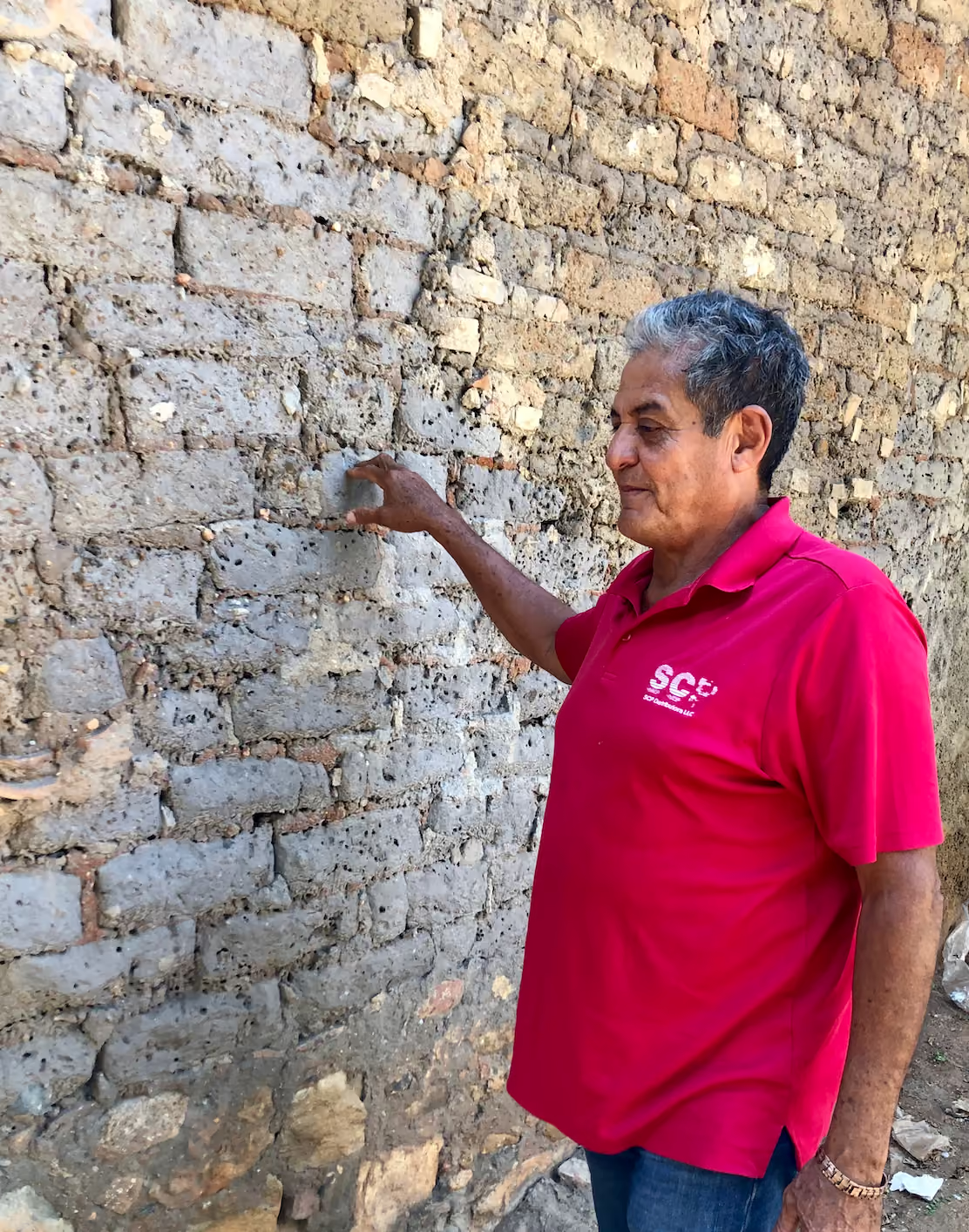
Victor: They were some families whose last name was López. Manuel López, Maximina López, Pedro López. Their hacienda went as far as the mountain range, past La Unión, and along the coast to Petacalco. It all belonged to them. When they died off, the ones that remained didn’t get involved here anymore. They went to Mexico City. I know one, who is a grandson of Pedro López, who still lives in Naranjito, in a house they had there. That house is modern now—they fixed it up—but it’s like the adobe house we have in Lagunillas. That one in Lagunillas used to be the house of the López family. Part of it is still there.
LOT: How many years has it been since this area was run by the López estate?
Victor: Almost 80. The first land grant was made in ‘46. It was requested in ‘44, when there was an uprising against the landowners. The government gave the land to the ejido of Lagunillas in ‘46. There had already been other grants, in Chutla and La Unión, that happened much earlier.

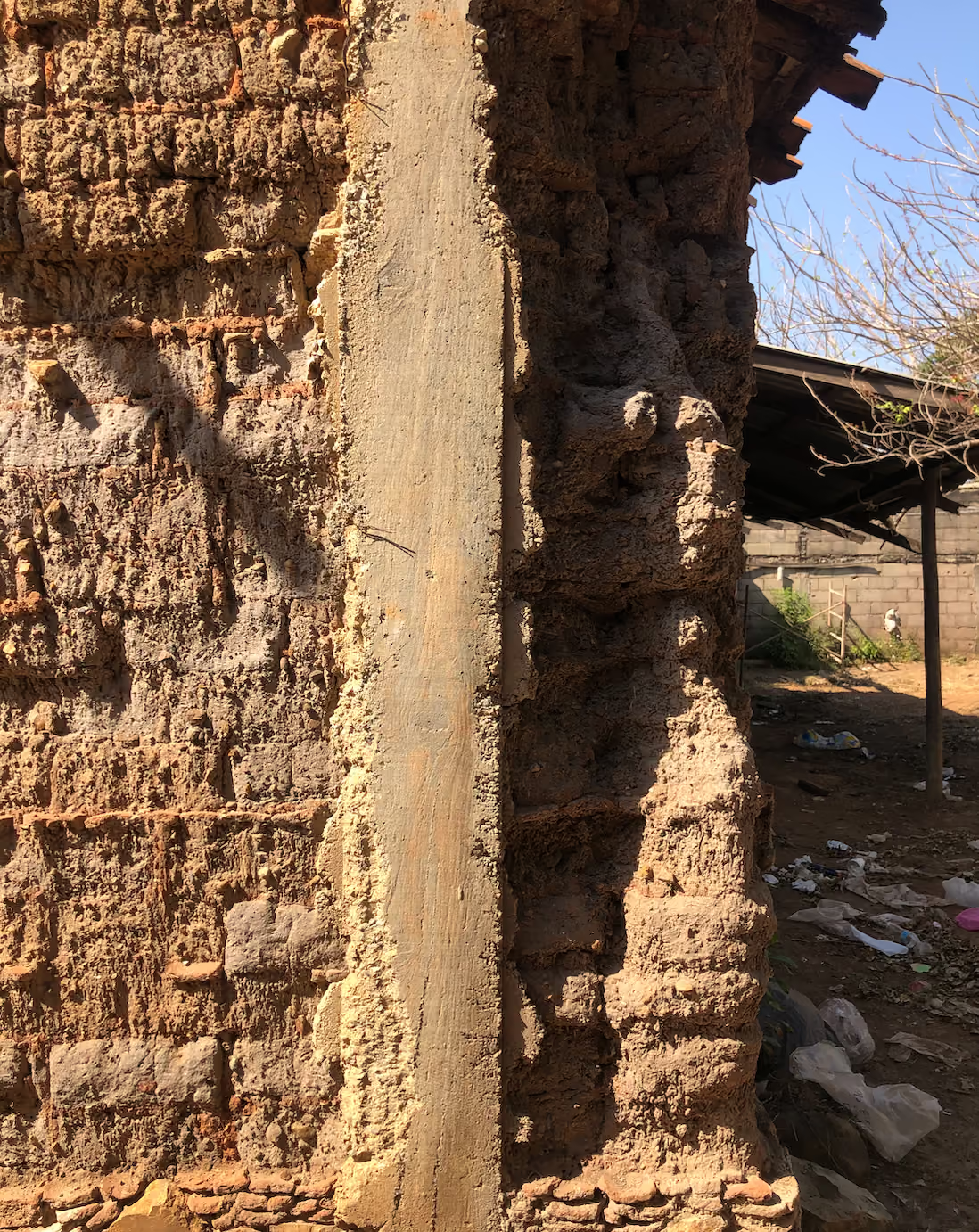
LOT: The adobe house in Lagunillas, what had been the López hacienda, how old is that?
Victor: More than 100 years old.
LOT: I was told you are part of a large family. How many siblings do you have?
Victor: In total, there were 17 of us. Three have already died. The three of us born here in Boca Lagunillas, we were the last ones to come along.
LOT: 17! Was it all the same mother and father?
Victor: No. My father had four wives. There were times we all lived together. And we all get along. He had families in Boca Lagunillas, Lagunillas and Pantla.
LOT: How?
Victor: The thing is, es que el toro era cabrón. He had it all under control. [The translation, “the bull was a bastard”, doesn’t really say what it fondly and not-so-fondly means in Spanish.]
LOT: And how many children do you have?
Victor: I have two. Just that. Two.
Post-script: A couple of days after this interview, I found myself with Victor in Lagunillas looking at the adobe house that was the López hacienda. It’s now a government building next to the basketball court. Standing there, talking to Víctor, is when I finally understood that this area was private property, one family’s land, until 1946. Only then did things start to change. As Víctor and I talked more about the local history here, without recording him, I asked about where the indigenous people lived and where the first settlements were. He said pre-colonial artifacts are discovered from time to time, but that the first “town” was likely in Chutla de Nava. I’m thinking I need to go there with him sometime later this spring and record what he has to say.