
The Yellow Warbler: Look Again
The commonplace can be extraordinary
In this week’s “What Bird Is That?” you’ll find a few reasons to get closer to the little yellow ones you see all the time.

.avif)





.avif)

%20(Spanish)-2.avif)





There is a bird in your garden right now that you’ve probably already dismissed. Small, yellow, moving fast through the lower canopy. Your brain filed it under “little yellow bird” and moved on. This is understandable.
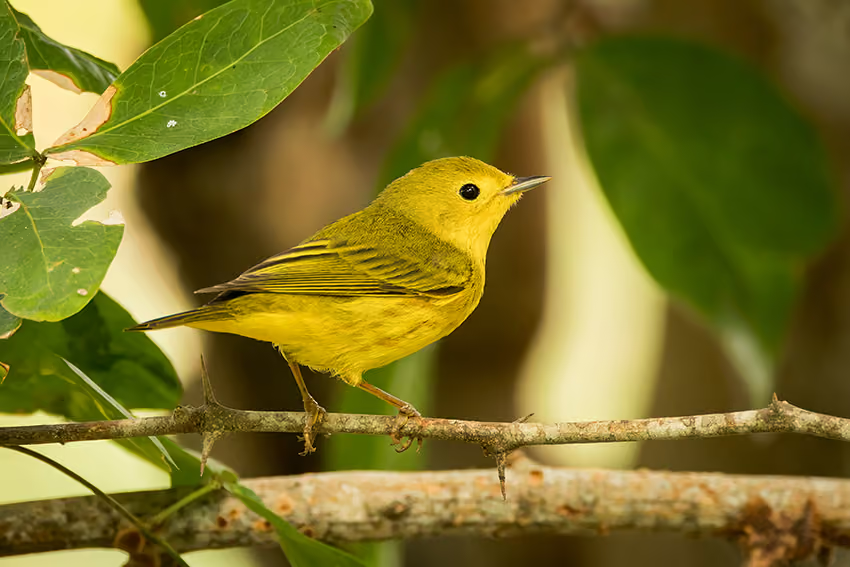
The Yellow Warbler (Setophaga aestiva) is one of the most common birds along the Troncones coast and, like many common things, it suffers from the particular invisibility that familiarity creates. We see it constantly and, therefore, never really look at it. That’s a mistake worth correcting.
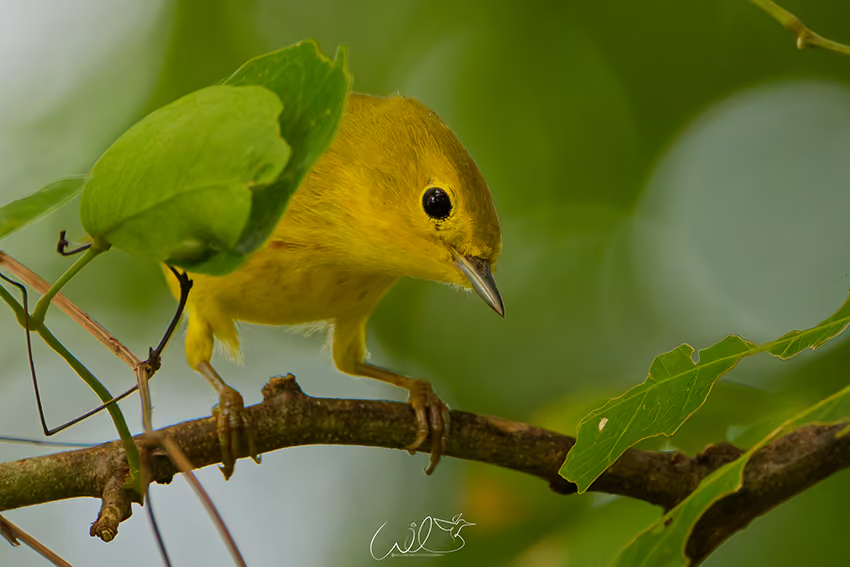
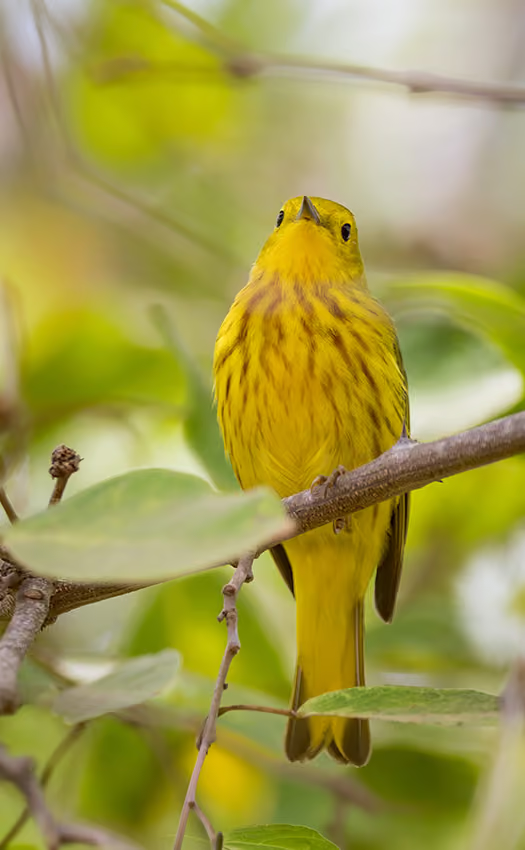
Start with the color, because it’s more complicated than you think. The bird is not simply yellow. Adult males carry rich chestnut streaks down the breast—warm russet against bright lemon—that, in good light, will stop you cold. Females and immature birds run cleaner, from pure soft yellow to faintly washed below, with greenish-gold on the back. What looks like a simple yellow bird at a glance is actually a spectrum—and learning to read that spectrum is the beginning of actually seeing them.
They are small—smaller than you remember when you finally hold one in binocular focus. The bill is fine and pointed, built for hunting insects in leaf litter and foliage. The eye is dark and alert, with an expression that birders tend to describe as inquisitive, which is accurate but understates it. This is a bird that looks back. Pause near one and it will pause, too—tilting its head, sizing you up, deciding whether you’re interesting enough to warrant another second of attention. Usually you’re not, and it’s gone.
Their song is bright and emphatic—a rapid, sweet sweet-sweet-sweet-I’m-so-sweet that carries well, and announces territory with cheerful aggression. Once you know it, you’ll hear Yellow Warblers in places you’d previously heard nothing in particular.
Here in Troncones, and the surrounding coast of Guerrero, we sit at the southern edge of this species' breeding range. These are not birds passing through on their way somewhere else—they nest here, hold territory here, raise young here. That residency matters. A bird that breeds at the edge of its range is not coasting. It has committed to a specific patch of the world and staked everything on making it work.
They are largely solitary—you encounter them alone or in pairs, not in loose groups. Occasionally they will join a mixed species flock moving through the canopy, briefly keeping company with tanagers and warblers of other kinds, but they don’t depend on it. They are self-sufficient in the way of birds that know their territory well.
If you have flowering or fruiting trees, edge habitat, or anything near water, you’ve created the perfect Yellow Warbler habitat. They’re almost certainly already there. The question is whether you’ve been seeing them or only noticing them.
There’s a difference.

William Mertz is a photographer, naturalist, and writer based in Troncones, Guerrero. He leads birding walks and has documented nearly 1,000 bird species across Mexico. His photography is available at williammertz.photography.

%201.20.16.png)
