Corky Carroll: Stoked
The world’s most famous surf instructor now lives and paints in Ixtapa
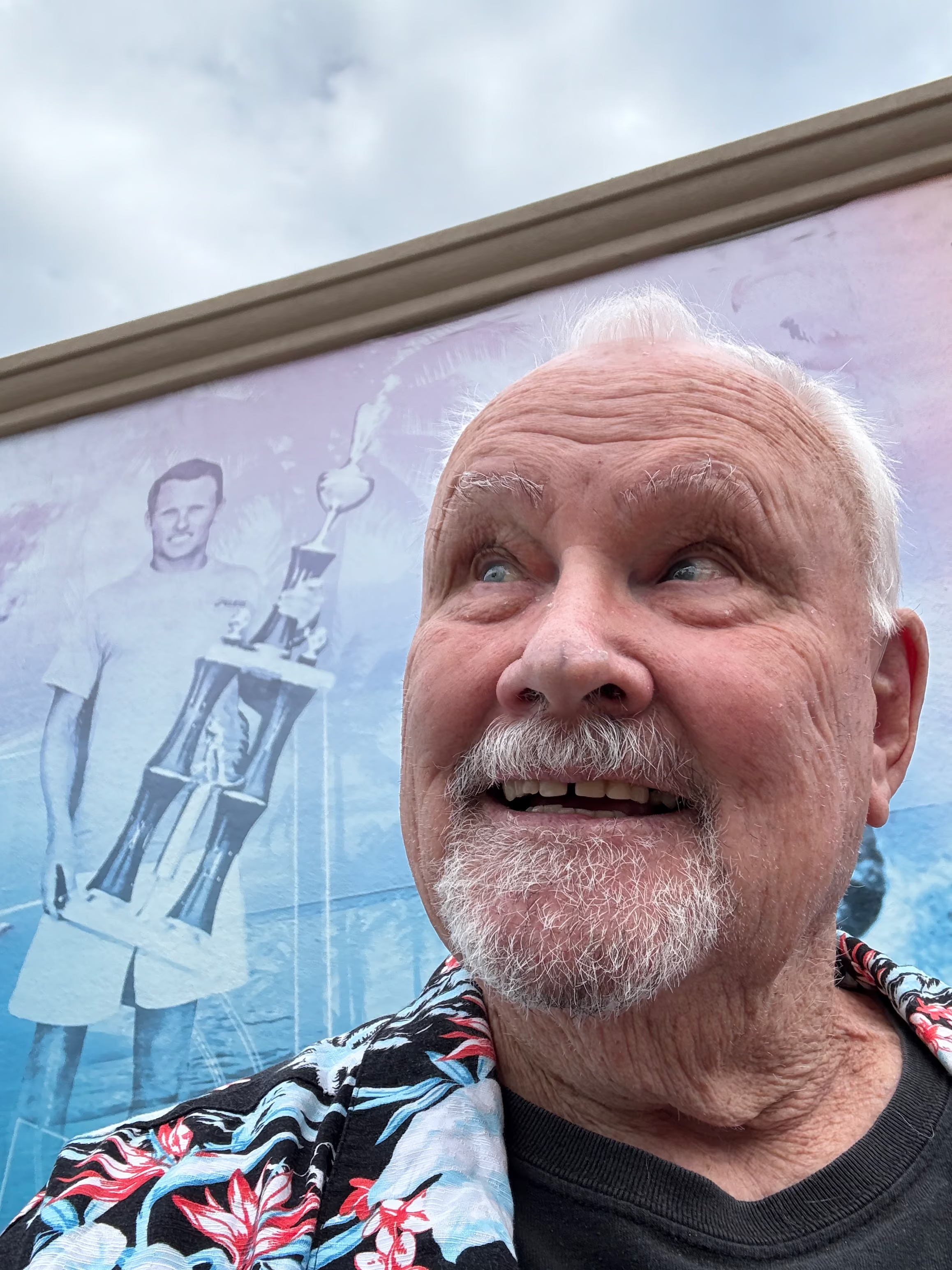
Surfer. Musician. Artist. Writer. Designer. Announcer. Teacher. Talents many aspire to. How about being the first pro surfer? Or having your first album become a benchmark for surf music? Or being part of one of the most famous ad campaigns ever? Miller Lite’s “Tastes Great, Less Filling”. And loving it all. That’s Corky Carroll. He’s been “out there, on it” since the early 1960s, doing what he needs to do to make a living. To the rest of us, it looks like fun. Bitchin. Crazy. Cool. And it was, until his heart gave him trouble. That’s when Corky had to give up a good life in Saladita. What’s a seventy-some-year-old guy to do? Paint? Sell his work online? What?
%2017.27.38.avif)
.avif)





.avif)
%20(Spanish)-2.avif)
I first saw Corky’s paintings on Instagram. Surf scenes, mostly. But what stood out is how he uses color. Only surfers know colors like that. How morning light makes the ocean turn transparent, green. How yellow-grey mercury to the horizon meets the yellow-grey mercury of the sky. How silly red the sunset can really be. I saw Corky had painted a Saladita scene and I heard he still lived nearby. I knew I had to track him down. Aura found Corky on Facebook and he suggested meeting for breakfast at Los Raqueros on Manzanillo Bay. Our interview went quick. He had to pick up his wife from a Zumba class she was teaching. I could’ve listened longer.
LOT: What’s your favorite time of day to surf?
Corky: In the morning, when the wind is offshore. Surfing is usually best when the wind’s offshore, from the land towards the ocean, because the wind holds the waves up and gives them shape. When the wind comes onshore, from the ocean towards the land, the waves get choppy and bumpy and sloppy, and they’re harder to ride. So, early in the morning because of the wind situation, or when there isn’t any wind at all and the water is glassy, that’s the best time to surf.
LOT: Is that true off of any landmass, or is that just true here?
Corky: It’s true pretty much off any continental landmass that the winds blow offshore in the morning. A lot of times, among islands, it can be different because there they have prevailing wind directions. There, it can be good all day.
LOT: How long have you lived along the coast here?
Corky: Almost 23 years.
LOT: What attracted you?
Corky: The surf. The weather. The warm water. The tranquility. Back in the ‘90s, there weren’t many people in Saladita. Hardly anybody. Nobody was living there other than a few local people who were fishing, who owned the cantinas and stuff. There were only a couple of families. The Valencia family and the Moreno family. I was there surfing and some lots opened up. The guy I was surfing with at the time, a friend who I grew up with, looked at some lots and I thought, “Man, this is, like, really cool.” It wasn’t all that expensive.
Back then, I was taking people on surf trips and going with them as their guide. We’d go to different places. Hawaii or wherever it was. And so, the plan became—instead of me taking them on surf trips—to buy a lot, build a house and bring them here to me. That’s what I did. I bought a lot, built a house and moved in. Then I started offering an all-inclusive deal where people could come stay for a week and I would give them all their food and drinks, and coach them on surfing, if they wanted it. I had boards, so they could use my boards.
LOT: Had you heard of Saladita before you got down here in the ‘90s?
Corky: Not really, but a friend of mine, Peter Schworer, a painter and artist from Huntington Beach, where I lived, had a gallery in Zihuatanejo. He painted paintings of all of the surfing areas here—Los Gatos, Manzanillo Bay, La Saladita and Rio Nexpa. I bought one of his paintings one day. I didn’t even know it was his. It was a beautiful wave with a cantina in the front, and mountains and palm trees behind, but I didn’t know where it was. The guy at the gallery didn’t know where it was either. He wouldn’t give the artist’s phone number to me, like I’d go behind his back and buy paintings or something. He gave my phone number to the artist and I get this call, this gruff voice goes, “Hey, Corky, you bought one of my paintings.” It was Peter. He told me, “It’s Saladita. You gotta go there, there’s great lefts.”
And, it’s true, there are great lefts everywhere around here. I stand right foot forward, so I face the wave when I go left. I like that better. Not long after that, I had this guy, a beginner, who wanted to go on a surf trip. He wanted somewhere where there were lefts and warm water. Peter told me La Saladita was a good spot for beginners, so I made the arrangements for the trip to come here. We flew into Zihua, had dinner with Peter and he drove us out here the next morning. It was unbelievable. The surf was good and we were the only three guys in the water. The client loved it and he hired me, like, a week a month for a few years to take him to La Saladita to teach him how to surf. And the more I went, the more I liked it.
My friend who I was surfing with, the one who I grew up with, who bought the lots, he’s eight years older than me, but I’ve known him since I was eight. We went to the same schools, had the exact same teachers, all the way through high school. His name is Tim Dorsey. He was a big-name surfer when I was little. He was also coming to Saladita on surf trips and we kept missing each other. But this one time, we were here at the same time and he took me over to see two lots he had just bought. And I bought one next to his. By then, I’d been coming for about five years. We both built our houses at the same time, and we moved in on the same day.
LOT: What was moving in like?
Corky: We had a hard time getting the power turned on. But once they turned on the electricity—I’ll never forget that day. There was a guy here who used to sell bootleg satellite dishes for TV. He was from Michoacán somewhere, and I’d heard he’d put dishes into some of the places in Zihua, for the sports bars and stuff. I contacted him and he met me at the house, put a big satellite dish on my roof and I moved in. That night, I had the best TV I ever had in my life. I had every channel, all the sports channels, the movie channels, pay per views in every time zone. And I’d bought as good a TV set as I could buy in those days. So, I’m sitting in my room, I got this perfect surf spot out in front, I’m watching the Lakers game and I’m thinking, “This is really going to be pretty good, I think.” It was a big risk for me. I remember when I left my house in California, I drove out and I said to myself, “I sure hope this works, because I’m never going to be able to afford to come back.” Because, you know, once you leave, it’s hard getting back. I can’t even think about going back now. Not to Huntington Beach. I never could afford to. I’m glad I don’t want to.

LOT: Do you still surf?
Corky: No. That’s why I sold my house in Saladita and moved to Ixtapa. I have some health issues that prevent me from surfing right now. I haven’t surfed in a little over three years. I don’t have any wind. I have a-fib really bad and I get out of breath really fast. And I have spinal stenosis in my back. I have a lot of back pain. The only thing that takes the pain away is getting in a pool. I could go in the ocean, but walking is hard for me, and it’s just easier to get in a pool. When I couldn’t surf anymore, when I couldn’t do the surf trips anymore, I found looking at the surf every day was tough. When we moved to Ixtapa and got a little house there, I honestly didn’t know what I was going to do. I said to my wife, “How are we going to live?” We’d been living off the surf trips. I get Social Security and a little pension from SAG from the movies and commercials I did, but that’s not enough to live on.
LOT: Is that how you got into painting?
Corky: No. I started painting back in the ‘80s. I worked at Surfer [magazine] and Surfer had a bunch of empty spaces in a warehouse, and they let me use one. I bought a compressor and an airbrush and I learned how to paint using an airbrush and India ink, black ink. I did sunsets and silhouette islands and palm trees, put bamboo frames on them and sold them at a gallery in Dana Point Harbor [south of Los Angeles, near San Clemente]. I did pretty good with that. But then I left the magazine to do something else and I didn’t have any place to airbrush, because you got to be inside, where the wind doesn’t blow. So, I didn’t paint at all for a while.
One of my first clients in Saladita was an artist, and he brought a little set of acrylic paints with him. When he was there, he asked, “Why don’t you paint anymore?” And I went, “Well, you know, airbrush blah, blah, blah, blah.” When he left, he said, “I’ll leave these acrylics with you. Maybe you want to try this.” I hadn’t painted with acrylics. I had tried one oil painting when I was young; it was a mess and it took too long. I didn’t have the patience for oil. I wanted to get a painting done in a day, not two weeks. So, cool, I went and bought a couple canvases and did a couple of things in acrylic. I thought, “This is kind of bitchin.” For the heck of it, I started doing frogs and lizards and geckos, and some waves with palm trees and stuff. I put them on the walls and people would go, “Hey, wow, you did that? Cool. Can I buy it?” And, so, I would sell maybe three or four a year. But they weren’t all that great. They were just colorful. I’ve always been good with colors.
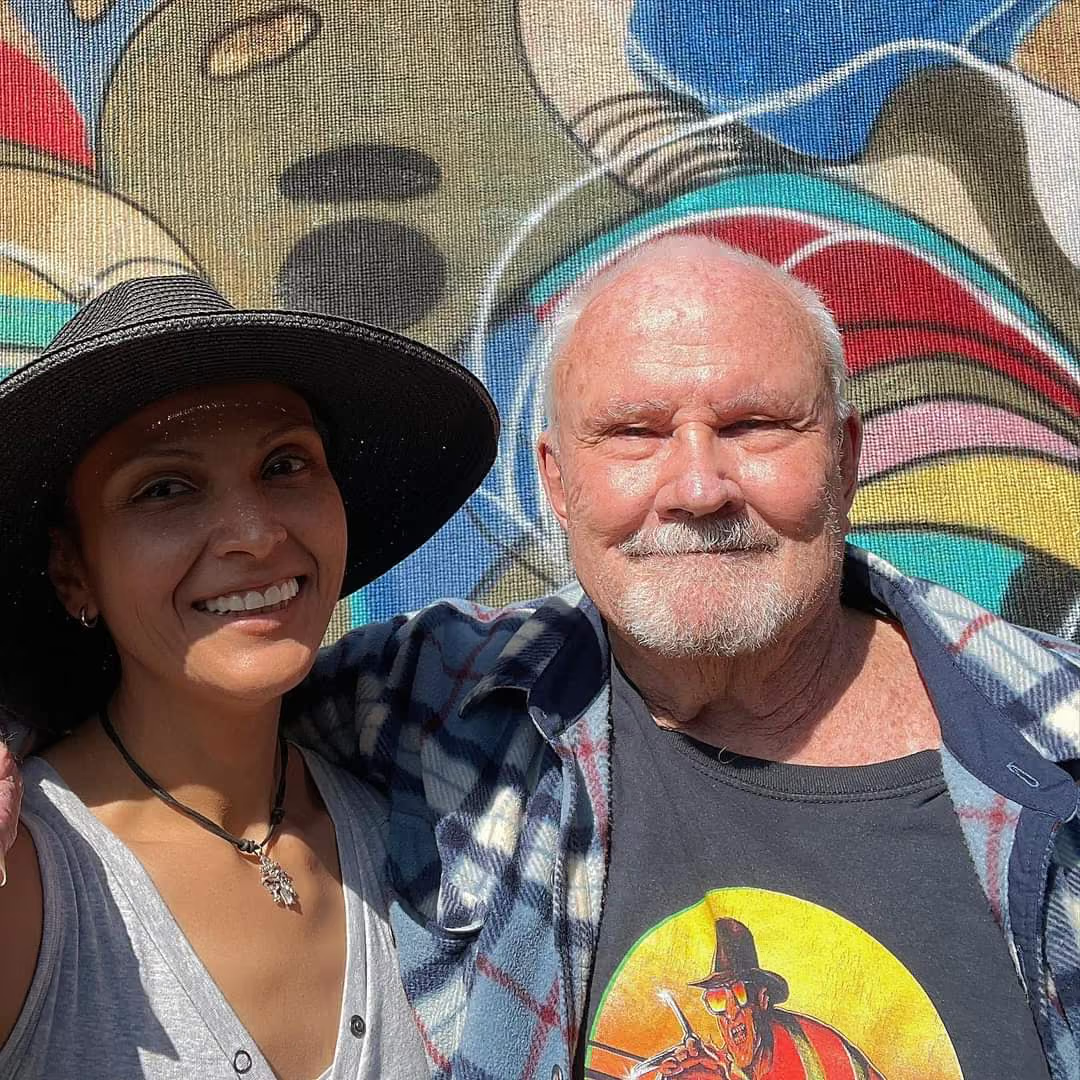
We’re living in Ixtapa and my wife Raquel says, “Why don’t you get more serious about selling your paintings?” I said, “We’re not going to be able to live off selling my paintings.” She went, “Do a few of them, post them and see what happens.” So, I did. And I sold them. I thought, “Maybe if I got serious about this and they got better, we might be able to at least have some food money.” I started power painting, you know, painting all day, every day, and taking the best ones and posting them. They sold, and it just snowballed. I got better quickly, thank goodness. Now, it’s full time. I paint every day. I paint waves and surf scenes. Not necessarily surfers but, like, serene palm trees and islands, the surf in places I’ve been or places I dream about. It keeps my stoke alive. I really like it. I get up in the morning, and I’m, like, okay, here we go. It’s like the same thing as paddling out, you know. It’s always really good. It feels good to be in my little art room. It keeps me going.
LOT: One of the things that struck me about your work are your colors. What’s your inspiration for colors?
Corky: [Pointing out at Manzanillo Bay] Look how colorful this is. It’s not even a bright day. There are a lot of colors in the sky and the ocean. The artists I really like, like Paul Gauguin, he’s my favorite, great colors. He’ll use these purples and greens and blues that are not real realistic, but they work, they feel really good. So, I started kind of going with the idea of somewhere between cartoon and reality, and yet neither, thinking maybe it’ll work. When I use color, it’s not necessarily what you would expect. You probably wouldn’t see those colors in reality, but it’s kind of bitchin.
LOT: Like the The Endless Summer poster John Van Hamersveld did?
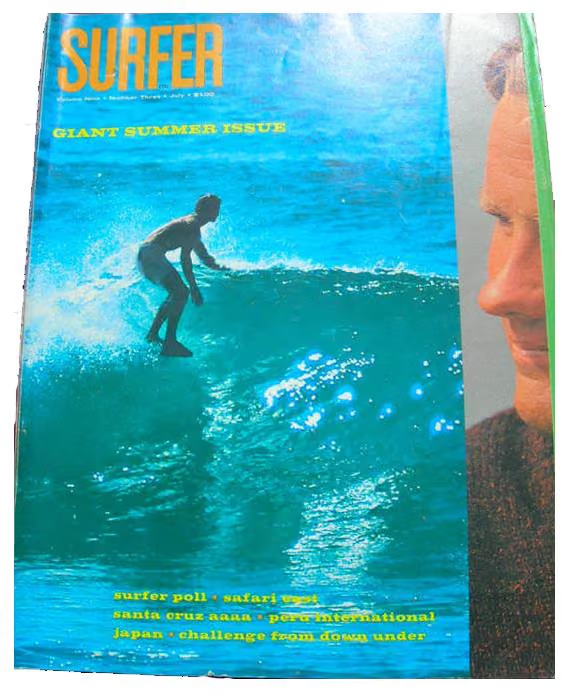
Corky: Hammer! I’ve known him since back in the early days of Surfer, when he did that poster. I was surfing then. I’m in The Endless Summer. Hammer worked at Surfer for a while, and I was in a lot of their ads. I was in and out of the magazine, plus I wrote some stuff for them. I actually worked there for ten years after I retired from surfing.
LOT: How do you retire from surfing?
Corky: When you’re competing, it’s a job. It’s great, but it’s still a job. You got to be committed to it. You got to travel and you got to afford it. You got to do well. For me, it was really, really good. You know, I surfed on the pro tour up until I stopped and I made a good living. After that, I got into doing music, and it was hard making a living doing music, but I was doing pretty good. Then a job opened up at Surfer, so I took it, because I could do that, and the music, at the same time. I did a lot in my ten years at Surfer. I was their ad director. I wrote comedy stuff. They had a TV show back then, and I had two minutes on every show called, “Corky’s Corner”, where I would do a stand-up routine on some surf comedy thing. I’ve always liked comedy. When I did music, I liked talking and telling stories between the songs. I always kind of wanted to do stand-up, but I just never had the time to really develop a 45-minute or hour-long routine.

LOT: Has John Van Hamersveld seen your artwork?
Corky: Oh, Hammer’s seen it. He encourages me. I got a message from him one day, a couple of years ago, going, “I’m really digging your stuff. Keep it up.”
LOT: That must feel good.
Corky: Yeah. Other artists have been really helpful. Some have reached out and gone, “Hey, you’re doing okay. Do you want a few tips?” Me, I’m, like, “Well, yeah. Absolutely. Give me some tips.” I always take tips. There’s a guy named Jerome Gastaldi, a well-known artist, who gets like half-a-million a painting. He’s got a home in Fallbrook, California. It’s on about ten acres and it has art facilities, stuff for painters and sculptors and potters, all kinds of arts.
LOT: Like a retreat? Like what you were doing for surfers?
Corky: Exactly. He reached out to me a couple of years ago. Same thing. He goes, “I’ve been watching you, and I’d like to help you if I can.” Cool. And so, I googled him, because I didn’t know who he was. He does big murals, murals the size of this room, where he’s got to be up on scaffolding to make these things. Bob—his name is Jerome Gastaldi, but people call him Bob—he goes, “Come visit me.” I was up there doing something else, and we took a day and drove down to his place and talked to him. He was really cool, and he goes, “Why don’t you come stay for a week or two and I’ll help you.” He sent me an airplane ticket, so I went. I stayed with him for a couple of weeks, and he helped me, not so much with the painting, but more with the business side of it. How to organize, so I could monetize a little bit better. And he also helped me with the technical stuff, too.
He’s not, like, an art teacher or anything like that, but he would go, “Well, yeah, this is kind of cool, but if you did this it’d be better.” Okay, great, he just screwed up my painting. But the little things he showed me really helped. There are other artists who do that for me. There’s a guy named Wade Konikowsky who lives here, and he comes up and gives me some tips every now and then. But I go to Bob’s two or three times a year, because I can do larger paintings there. Here, I’m limited to about 16 by 20, or 20 by 20 [inches], because my room is only nine feet by nine feet, and it costs a fortune to ship anything bigger from here. You’d be surprised how much it costs to ship a painting. A little teeny painting like this [framing 16 by 20 with his hands] is 150 bucks to ship. I have to charge less for the paintings because the shipping is so much. The only time I can go bigger here is if it’s for somebody who lives here, like, somebody wanted a real big one I did for their house up at The Ranch and a guy who lives at Rio Nexpa wanted a real big one, too.
Bob lets me stay in his guest house and I paint all I want. Like I said, he’s helped me with all kinds of stuff. Last year, he introduced me to a guy who owns a gallery in Dana Point, and the guy wound up doing a show for me in October, and we killed it. We sold a whole bunch of paintings. So, yeah, the other artists have been very helpful. Not one has gone, “Get out of here, you kook.”
LOT: You come with a reputation, you know.
Corky: Yeah, at first, I felt like I was a beginner paddling out. And now, I’m sort of in the lineup, you know, down at the end of the lineup. “Hey, you guys. Waves are pretty good today, right?” So, anyway, the painting thing just snowballed. Now I’m in some galleries, but mostly I sell on Facebook and Instagram. I post a painting and people send me a message. I tell them how much it costs, and they either buy it or they don’t. It’s going pretty good. We’re not getting rich, but we’re eating. We can pay the bills and get by. I haven’t had any real formal training other than high school art, doing watercolors. But I would like to, because I’m where I can get to with what I know, with what I’m doing. I need to expand into more to keep going, because I can’t keep painting the same paintings and expect them to keep selling. They have to keep evolving. Every day, it’s a challenge, like, what am I going to do today that’s better than the one I did yesterday. That’s what I’m looking at right now, trying to maybe evolve into a little more. Keep the beach scenes and the waves, but I need to get better.

LOT: Did you take that same approach in the ocean when you were surfing?
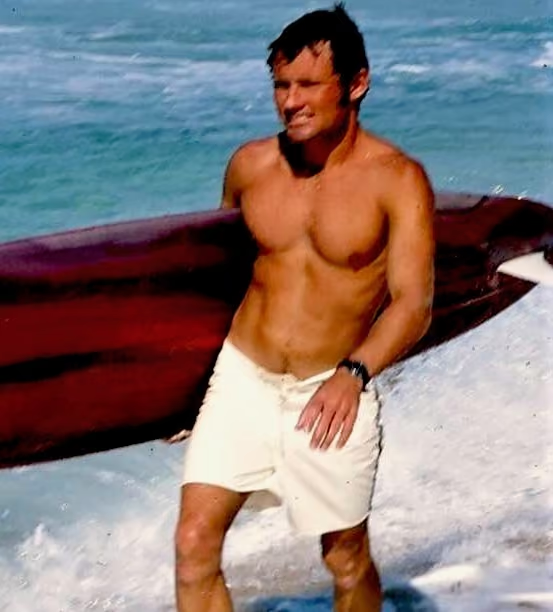
Corky: Yeah, when I was learning to surf, it was that same deal. I was trying to get better, always trying to get better. When I was a little kid, learning, I was lucky that our house was right on the beach. I could surf all the time, before school, after school. My idea was I wanted to surf, and get paid. I watched surf movies and I wanted to be like those guys. I wanted to win the surf contest. There wasn’t any pro surfing back then. When I was like 12 or 13, my dad goes, “What do you want to be.” I go, “Be a surfer.” He goes, “How are you going to do that?” Me, “I don’t know, but I’m going to do it.” I started winning contests when I was about 13 or 14 [in 1960 and 1961] and at 15, I was offered a deal to get paid to surf. There were some guys that were shaping boards and getting royalties, but nobody ever had a contract to just surf. I was the first. Then, I got sponsorship from a swimwear company and a wetsuit company. All of a sudden, I was making a living that was pretty much comparable to my dad’s, and he was the president of an electrical company. That’s when I was about 16. He’s going, “I can’t believe that you actually meant it and did it” All I could say was, “Yeah, see.”
LINKS
Corky’s Instagram: https://www.instagram.com/corky_carroll/
Corky’s first album, Laid Back: https://music.apple.com/us/album/laid-back/1093269329
Corky’s latest book, Not Done Yet: https://a.co/d/0c2yA10I