Meta: The Real Mari Carmen Hernandez
A legendary international artist relies on Troncones for inspiration
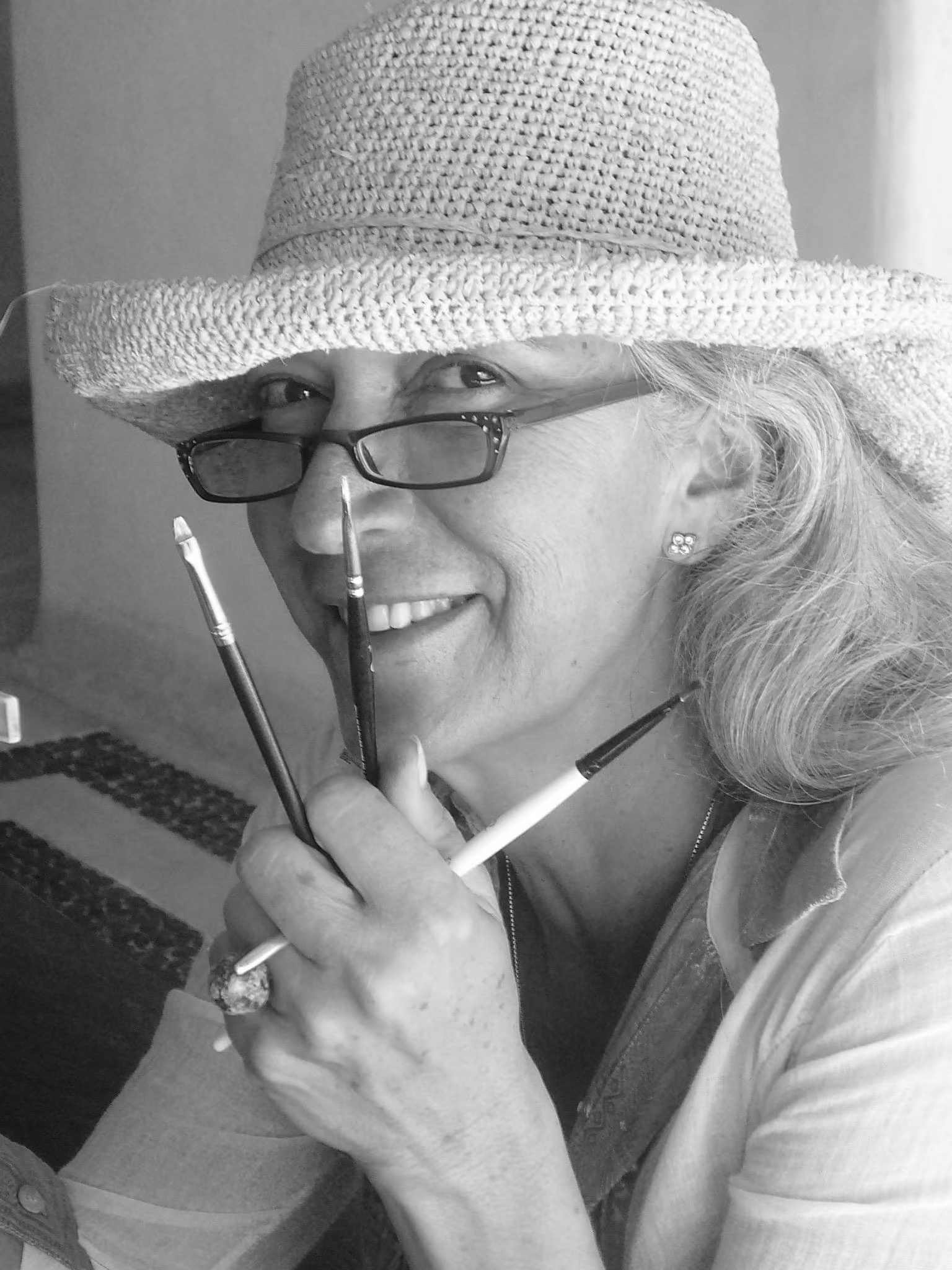
I was wrong. When I first met Meta, the artist formerly known as Mari Carmen Hernández Álvarez, she came off as icy and distant. Little did I know, she was nervous about having so many people at her “sunset club” benefit for Las Hermanas. She rarely hosts large parties because people end up wandering through her sanctuary, her studio, where she’s created works that have found homes in museums and private collections. And her name? She signs her work in her initials and her quick MCHA looked like META to a gallery in Paris. The name Meta seemed like a way to stand out, decades before Facebook took it on and muddied its meaning. She answered my first question with a warm wit. The ice melted immediately.
%2017.27.38.avif)
.avif)





.avif)
%20(Spanish)-2.avif)
LOT: How do you spend your time when you’re here?
Meta: I often tell my friends, “I’ve spent the day with Soledad and Esperanza.” Girls’ names in Spanish, that also mean solitude and hope. I get along with them very well.
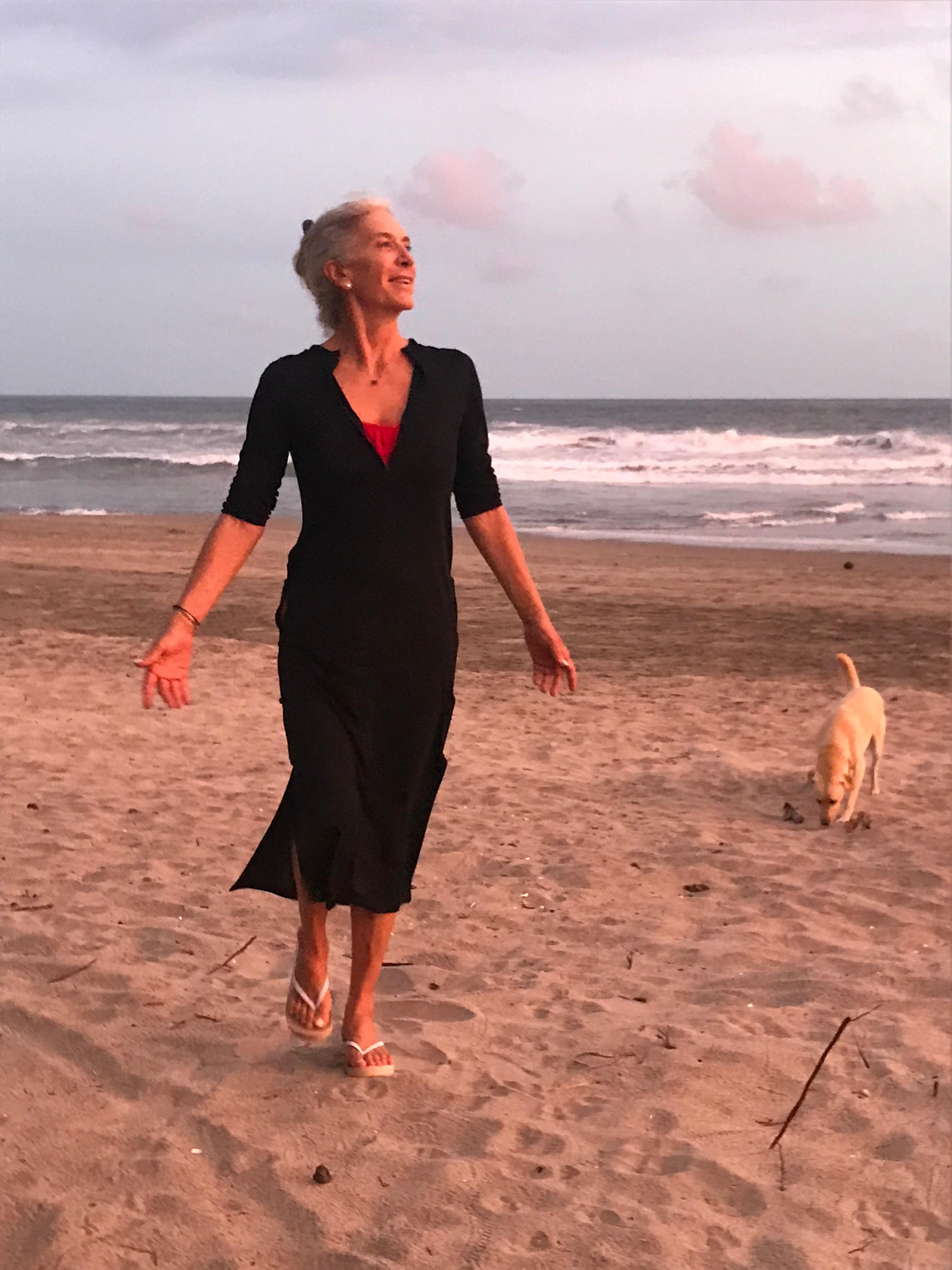
LOT: How did you come to be in Troncones?
Meta: I had a villa in a condominium in Ixtapa, in La Marina, and I’d come here to escape that civilization, from sharing the pool with 26 other houses. I’d spend the day at El Burro Borracho with my son, Diego, who was five years old, when we first came in ’92. It was there I met Mike Bensal, who made the best hamburgers in the world; well, on this coast, at least. And I fell in love with Troncones. This was a place I wanted to be. In ‘96, I was in Paris, and the neighbor here called me and told me the guy who was going to buy this lot was afraid because, you know, both Troncones and Guerrero, for Mexicans, have terrible, terrible reputations. It was a Wednesday and he said, “Friday you arrive; you sign the papers.” And all the papers were ready. They just changed the sale to my name. At that time, it was very affordable and I bought it without seeing it. I’d fallen that in love with Troncones. My family thought I was crazy.
I am trained as an architect. That’s the subject I studied in the university. I had the honor to have Luis Barragán as my mentor. He taught me many things in architecture. Once I bought the lot, I started the project of this house. I knew Enrique Zozaya from Zihuatanejo, where he was working on Casa Que Canta Hotel. I showed Enrique my project, and I told him, “We work as a team. You build my house and, thanks to me, you will have more houses.” He accepted and we made a very nice team. Sometimes architects only want to do their things. Enrique wasn’t like that. This was my concept, my project, my house for my needs. He built it. When I was building the house, I knew I wanted a garden on the right side, so I bought that lot. It was already triple the price of this first lot, just six months after. Then, I bought the third lot. I’m here 28 years now.
LOT: What was it like in the beginning?
Meta: We didn’t have water or electricity. I had to pay to bring the wires up to my house. The road was dirt. It was like that. And at the same time, I was living in Paris. I’d married a Frenchman, my son’s father, and when we divorced in ’92 French law required me to stay in France because my son was born there. He had to do all his studies in France because, I was told, I was from a third-world country. I told the judge, “I accept this ‘condemnation’, but I am Mexican. He’s Mexican, too, his grandmother, his uncles, his cousins, they are all in Mexico and we will go there on holidays.” When I started building the house, Diego was ten years old. It gave him a special contact with nature. We started having our summers here. It was an adventure. We had crabs coming through every night. Tropical rains, thunder, earthquakes. Come-and-go electricity. That’s why I have candles all the time, all over. Because of that time and, also, because of my Mexican beliefs, that candles protect you.
LOT: How does being here influence your art?
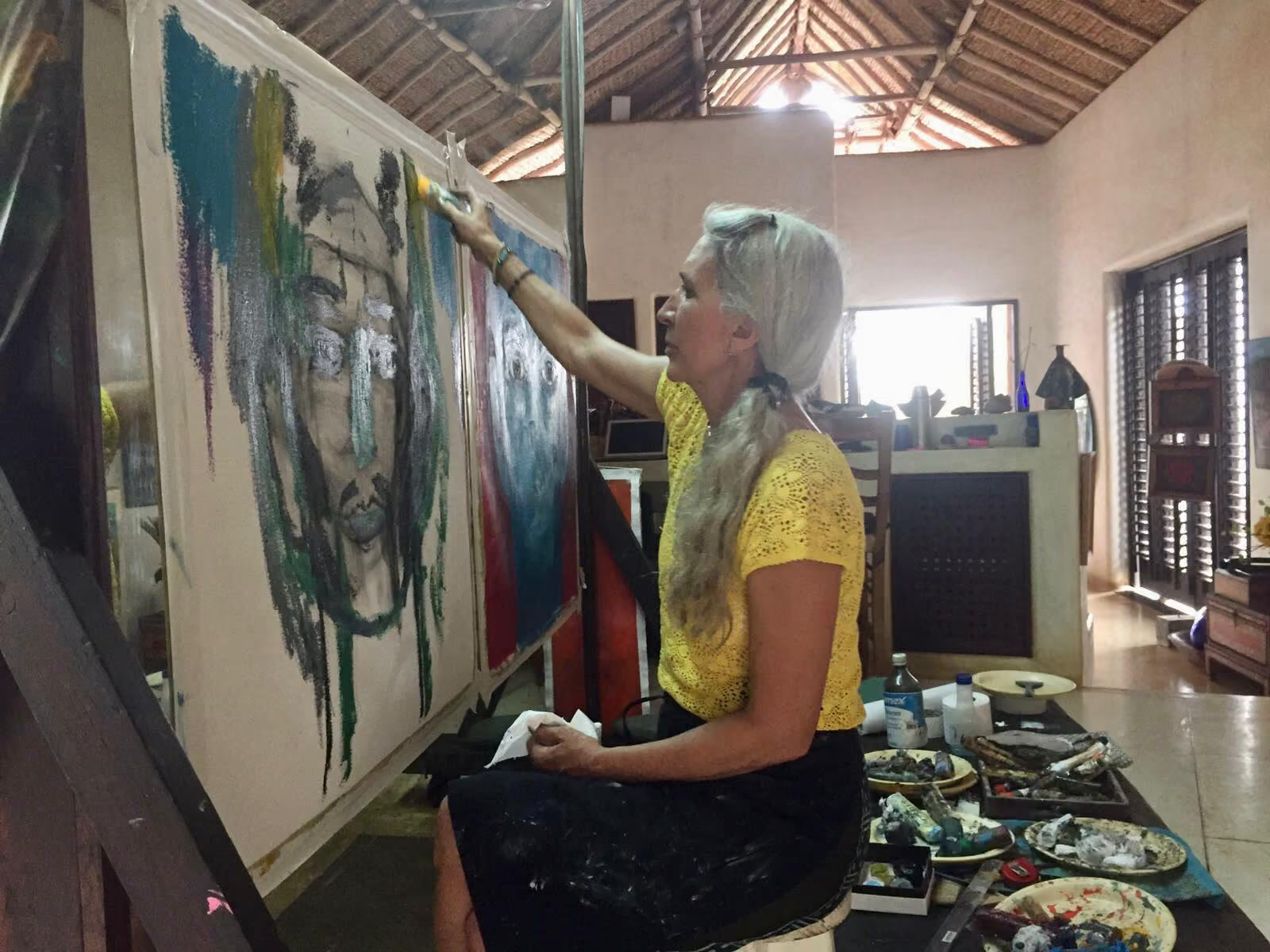
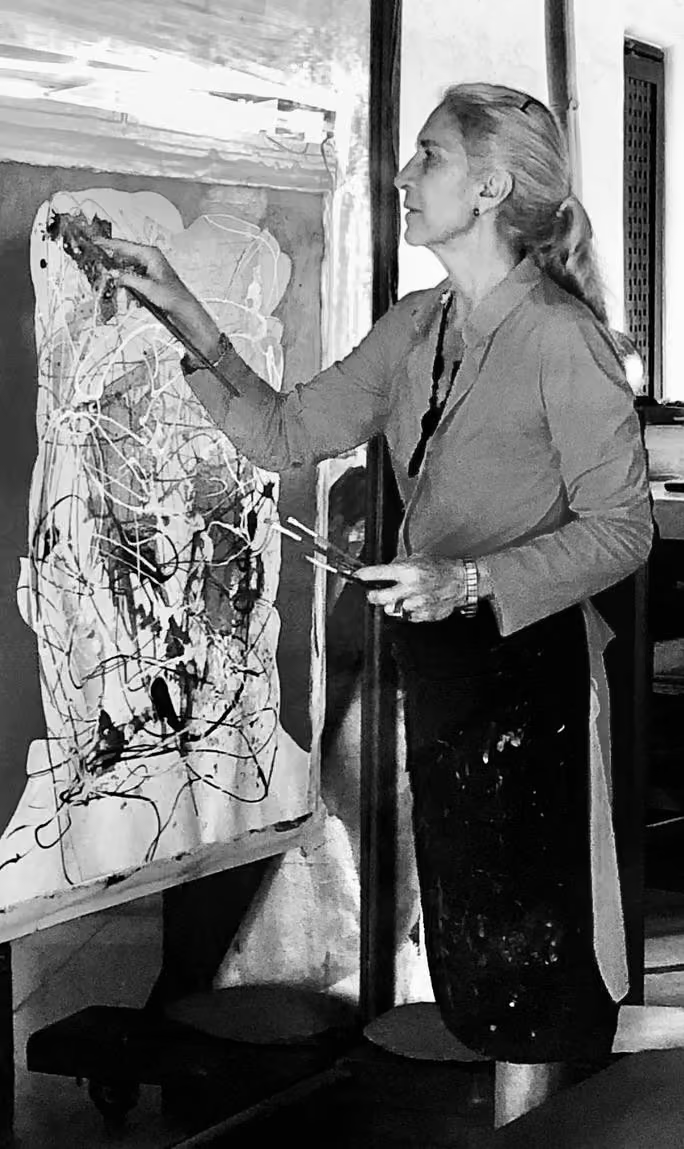
Meta: This is my source of inspiration. Here is where I produce everything. I prepare the canvas in the garden. Then, I work upstairs, in my studio, in my room. And then, I roll them, and I bring them to Paris, where I have my shows. I am very disciplined when I am here. I wake up very early. I walk the beach all the way to Casa Colorida, then, I come back and I do my laps. 50 laps in the pool, that’s a kilometer. After that, I stay inside because I am not allowed to be in the sun. So, I work. I like to paint seascapes; I like to paint abstracts; I like to paint faces.
I always work with oil and I always work every day for a minimum of three hours. I take time for lunch and take care of all the things of normal life, the family, the house. Sometimes I work again in the afternoon, and sometimes in the evening. You know, artists sometimes don’t sleep. We wake up and keep on doing the thing because it calls you.
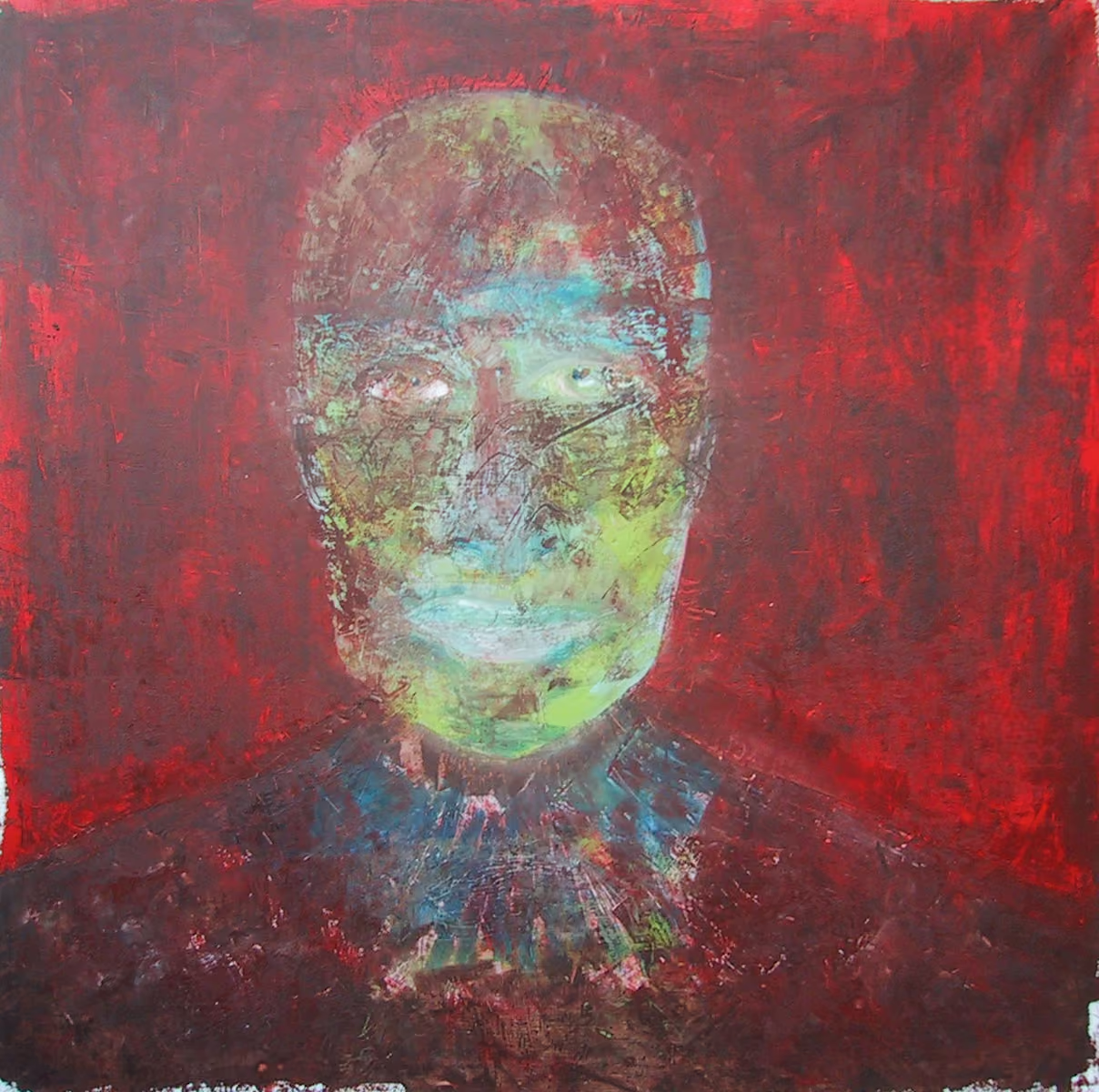
When I do faces, if I have my friends sit, they’re with me upstairs, for three hours. I give them a break every hour. I start with their eyes and suddenly, no matter the person, the model, someone from beyond arrives on the canvas. Each of my portraits has a presence. They are characters. They make good company. My faces, my portraits have been shown in Paris, Madrid, Washington, San Antonio and Sao Paulo. At the Museum of Modern Art in Sao Paulo, I shared the museum with Pierre Soulages, a famous artist, who’s passed. His specialty was painting only in black. I had one floor with portraits only. Franco Maria Ricci, an Italian editor and a printer of exquisite art books, created a book in ‘95 called Faces, featuring 25 of my portraits. It was an honor to be published by him. Many of those faces are from here, from Troncones.
These seascapes that you see all over, they’re a series I started in ‘95. A person who I loved very much passed away. I was sad, and I started painting the horizon, the sky, the ocean. My brother came and asked, “Why don’t you put in the boat that just pass by?” I said to him, “You don’t paint somebody who just passes by.” In Spanish, that’s someone que acaba de pasar. So, I named this series “Acaba de Pasar”. It became Acaba de Pasar 1, Acaba de Pasar 2. I am up to 81, Acaba de Pasar 81. We had a very nice show of that series in Paris. They also went to Argentina and all over. I’ve arrived at an age where I’m given retrospectives.
LOT: What aspect of life here brings you joy?
Meta: The miracle of the arrival of the colors in the morning, at dawn. And how they disappear at dusk. I love the colors here. Today was a special day. All day it was cloudy. The colors behaved differently. And I love the people of Troncones. They are all so nice, respectful and they help you. They make me feel safe. My house is totally open and I’ve never had any problems, even when I’m gone. Another joy are my friends, neighbors who have become my best friends, who have decided to stay here until the end. We are on the seventh floor. Instead of saying “70”, we say “seventh floor” and “eighth floor”. I arrived on the fourth floor. I’m super happy here. It’s a place where we all help one another.
Another joy is something I did for the church here. As an artist, you always have to represent your community, do something for your community. I decided to paint the Passion of Christ in three different moments, but I didn’t call it Christ. I called it “The Good Master”. Buen maestro. The first one was when Veronica came forward to wipe the Good Master’s face with a handkerchief and the image of his face became imprinted on the fabric. The second one was his suffering, when they put the crown of thorns on him and gambled for his tunic. And the third one was the resurrection. All three paintings were hanging in the church here. That was a beautiful experience for me, creating those three, especially when the famous bishop Raúl Vera Lopez, who I met at a wedding, came and led the Christmas mass. That mass was the opening of my interpretation of The Good Master. Everyone was there for the mass, the whole village, including Maria Solis, Ventura Manzanares and their families. Everyone came back here for breakfast, even the bishop. That was another beautiful experience for me.
I belong to Las Hermanas now. That’s a fantastic organization that was started by five women, Ann Merritt, Jill Edwards, Malury Ordas, Wendy Page and Lolo Simpson. Its mission is education. Six years ago, I found the kindergarten in Troncones needed a roof. To make a new roof was going to cost more than 1,000,000 pesos. We sold jewelry, we did lunches, we had open houses but we only raised 250,000 pesos. A Mexican artist friend who lives in Buena Vista knew Crescencio Reyes, who was the president of La Unión. I invited him here, with his wife and the children, and I said, “The most important thing is kindergarten. That’s where children must start to like school. If they don’t like to go to school because the roof leaks when it rains, we lose them. We’ve only raised 250,000 pesos” He was impressed. He told me, “You give me 250,000 pesos and I’ll take care of it,” and he did, the bathrooms and the roof. That’s how I became the ambassador of Las Hermanas. You know what it means to the ambassador? The ambassador is the beggar. They see me coming now. They know I am there to ask.
LOT: I thought Las Hermanas took care of the bus transportation.
Meta: It does. I became more involved after we did the kindergarten. That’s when I became its ambassador. Las Hermanas started 11 years ago, with bus transportation, because it’s so expensive for students to get to the highway and then to the city or La Unión. Las Hermanas finds ways to pay for that transportation. With our kermes, which Lois Keeth organizes, our gala, our lunches, our jewelry store, our sunset club. Everything we raise goes to the students, for transportation, for computers. We have a lot of help throughout the community. I went to the owner of Las Brisas in Majahua to get a price for a Las Hermanas lunch and she said, “You pay two-thirds and I’ll give you one-third, because thanks to Las Hermanas, my grandson is now in the university studying to be a lawyer, a specialist in criminology.”
LOT: Where did you grow up?
Meta: I grew up in Mexico City. I was born there, and that’s where I studied architecture. But then I married and I moved to Paris. I have been there since ‘83. I’ve lived more than half of my life in France, 42 years, but I’m not French. I never wanted to become French, especially after my divorce, when they told me I came from a third-world country. We have so many stories in Mexico, the civilization, the beliefs, the culture. Even though I live in Paris now, I feel I am “astride” two wonderful countries, like riding a horse, working here in Troncones and in Paris, well-balanced, under two cultural influences, the great schools on one side and rituals on the other.
LOT: What are the Mexican rituals that have influenced you?
Meta: One ritual is how we light candles to honor our dead people, so they protect us. They are now souls in another dimension. I believe in the existence of higher forces and the divine essence of the soul. That’s part of my Mexican culture, because we believe in the soul and, voilà, my work is dedicated to the Mexican and French magic, to two cultures that enrich and inspire me.
I also painted a series of flowers, called Xochitl [pronounced “ZOH-cheel”]. Those were inspired by the gardens of Xochimilco [zoh-chee-MEEL-koh], the Venice of Mexico City. It’s all canals and flowers. Xochitl is a word that means flower. If you meet a woman named Xochitl, it’s the same as Flor. Xochitl was my first exhibition in Paris. My first time alone in a gallery. And, after, I made Faces, Acaba de Pasar and then I made In-Adaptés, during the pandemia when we were confined. We had this slogan in Troncones when I arrived, a bumper sticker, Playa Troncones Where Misfits Fit In. I still have it in my car. In-Adaptés in French is the same as in-adaptados in Spanish. It’s misfits, unable to adapt, incapable of adapting, in English. So, I made a series of in-adapted paintings. More abstract. Painting is my ritual.
LOT: What did you like to do as a child?
Meta: I was always the misfit of my family, the black sheep. I used to climb trees when I wasn’t supposed to. When I was asked to make a cake, I put colors in the cake so when it was cut it was like a rainbow. I was called a “rebel”, but I was well-behaved. I had to be. I come from a family of nine, six brothers and two sisters and myself, a daughter of a mother who had 12 children, three who died at birth. I only had one child, my son. They only sent me one. And, now, I am a grandmother. I’m going to see my grandson again soon. Silvio is his name.
LOT: What did what did you dream of doing as a child?
Meta: I always dreamt of having a house on the beach because we used to have a house in Acapulco. So, dreams come true. I tell that to children and to young people.
LOT: How did you come to be called “Meta”?
Meta: Because my name, Mari Carmen Hernández Álvarez, is very long I signed my work with my initials. The French read my MCHA as Meta, and in ‘92, a gallery in Paris, Musée Maillol, baptized me, Meta. My name is Mari Carmen. Even here in Mexico, they call me Mari or they call me Carmen. I am not Mari and I am not Carmen. I am both, the name of the virgin, Mary, and Carmen, a woman of joy. Meta is perfect for me. La Meta is the name of my house. La meta in Spanish means “the goal” in English.
LOT: How do you describe your work?
Meta: My work gives you an opening. In your space. If it’s a portrait, it’s companionship. If it’s a seascape, it’s an invitation. If it’s abstract, it gives you imagination. My work is une ouverture, as we say, in French, an opening.
LOT: Like a window or a door?
Meta: That can open into infinity, bigger than a window or a door. I had an exhibition in San Miguel de Allende I called “Tunnel”, or Túnel. It’s an exhibition we had after my gallerist of 20 years had passed in Paris. What happens when you die? You go into a tunnel and then come out on the other side. Another passage. Another opening. La Meta, right here, is where I paint, where I create, and there’s no place in the world that knows me better than my taller, my studio. All my feelings, my moods, my difficulties with my painting, with me, with life, with what I enjoy and what makes me cry, it’s here. Here’s where I experience my contact with the outside world. The terrible, cruel and amusing world of art. Here. Now. It’s my opening.

LINKS
Meta’s website & her work https://www.la-meta.com/site/
After our interview, Meta was invited to exhibit at Museo Leonora Carrington in San Luis Potosí, from January 23 to March 8. More details will be posted soon at https://www.leonoracarringtonmuseo.org/