Arturo Ayala Maciel: Get Tranquilo
A national bodyboard champion talks about learning to surf, ocean safety and the competition he’s bringing to Troncones
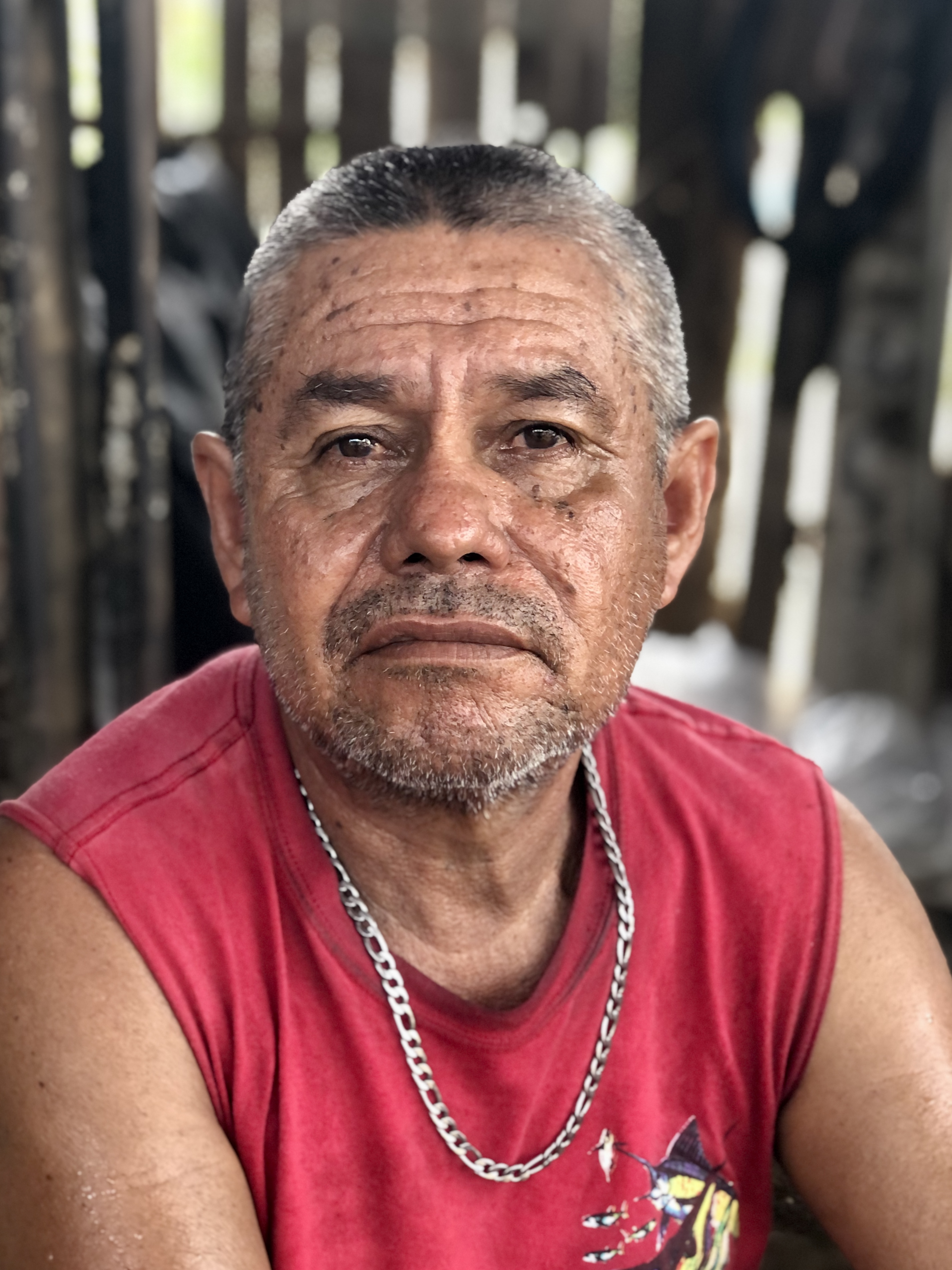
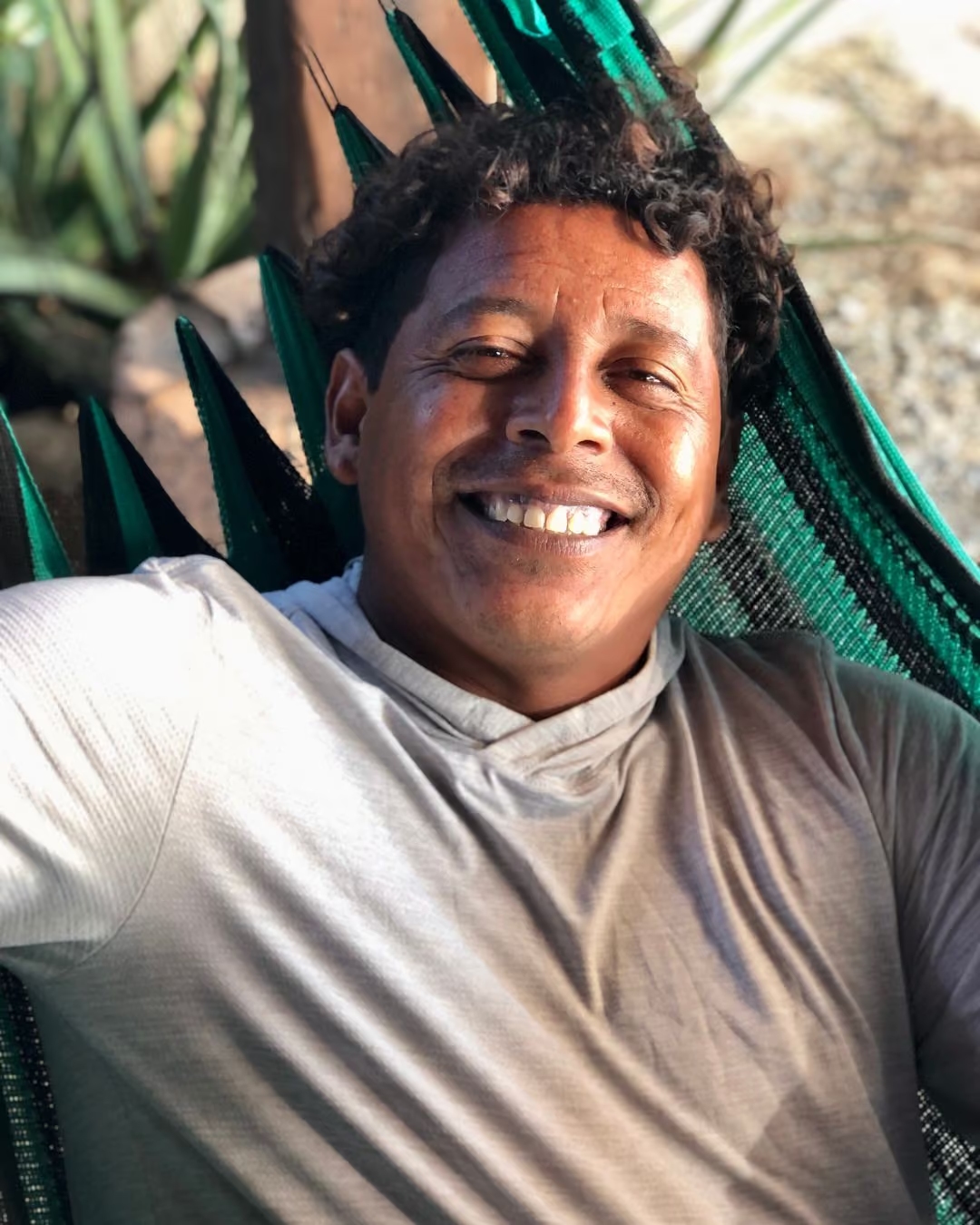
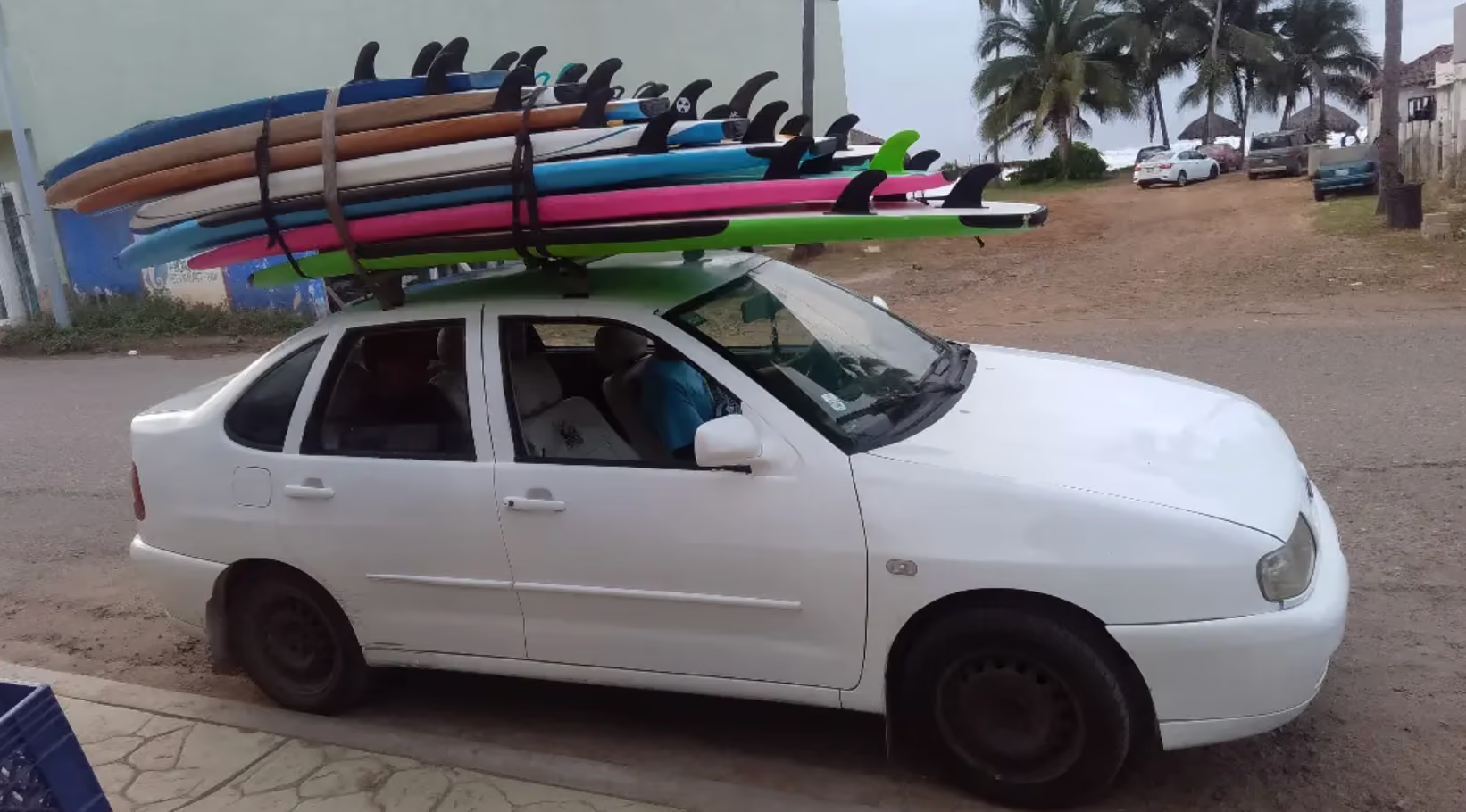
I don’t know Arturo very well, but I see him in Troncones a lot. He’s the surf instructor with the mountain of surf boards on top of his taxi. He’s got good vibes. When Juan Suazo told me there was a bodyboard competition coming to Troncones, he sent me to Arturo to get more information. I knew Juan was a national champion. I didn’t know Arturo was one, too. Arturo said the event [March 21 and 22] was being organized by the municipal surf and rescue league of La Unión. I asked who I could talk to at the league. I found out he is the president.
%2017.27.38.avif)
.avif)




.avif)
%20(Spanish)-2.avif)


LOT: What’s the most frightening situation you’ve ever found yourself in, in the ocean?
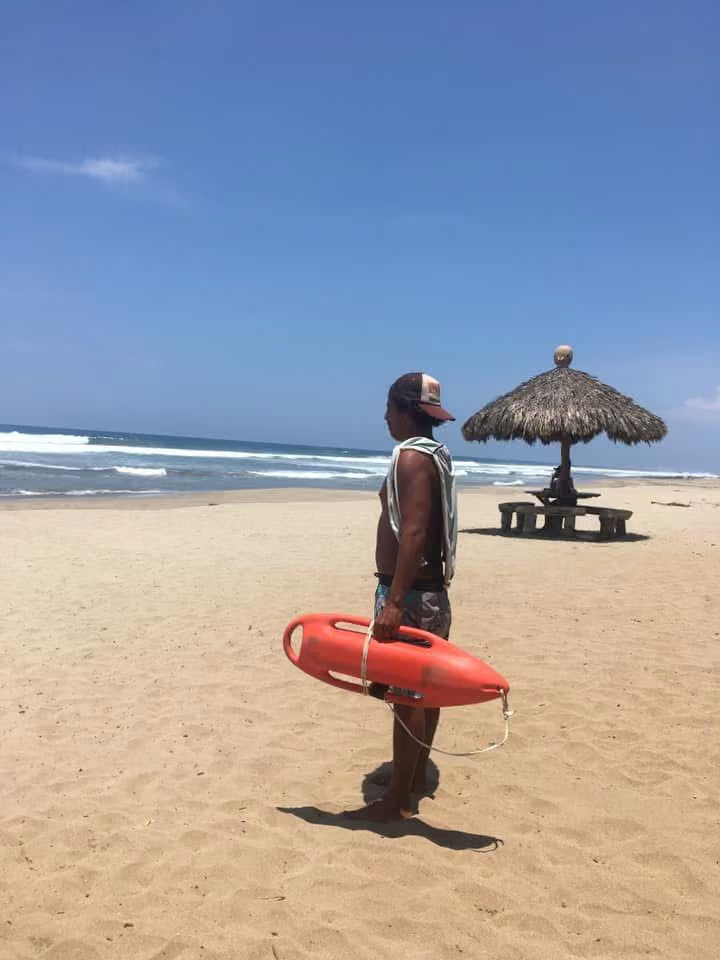
Arturo: That has to be the day before my birthday in July of 2018. That afternoon, bigger and bigger waves kept coming through in Saladita. I surfed and surfed and surfed some more. I was exhausted and I came back to Troncones to shower like I do every day after surfing. I ate after, and that made me feel so tired. I was going to have one beer before laying down to rest, but right when I opened my beer a waiter from Restaurant Steelhouse knocked on my window and said, “Somebody needs some help in the water.” It was like 7:30 pm and the waves were like 12 feet. Huge. Crashing. Churning.
We went down the beach and there he was—someone on the inside—and nobody could help him because it’s so heavy and powerful. I asked someone to go get me some help, to go get Juan Suazo, you know, Captain Mantarraya, and Bruce Grimes, the surfer/shaper over at Casa Norley. I didn’t think I could go by myself because I was so tired. We rescued the guy. Iván Fernández was there at the end to help pull him out, and we finally came in around 8 pm, in the dark. I slept for two days after that. I didn’t wake up because I felt so tired.
LOT: Where did you first discover the ocean?
Arturo: Playa Escolleras, in Ixtapa.
LOT: How old were you?
Arturo: Like 13 or 14.
LOT: You hadn’t seen the ocean before?
Arturo: I’d seen it but I didn’t go in to surf because I didn’t have a board. You need a board to catch waves. I liked to swim at that time, but I really wanted a board, a boogie board. Someone gave me an old surfboard and I sold it, and I bought a boogie board, a bodyboard.

LOT: Where did you learn how to surf?
Arturo: In Playa La Madera in Zihuatanejo.
LOT: What are the waves like there?
Arturo: They close out. That beach is only for learning, because the wave closes out. But it’s calmer there. It’s not the ocean. It’s in the bay. I learned there with some other friends from my neighborhood—Chivo and Adelie.
LOT: How old were you?
Arturo: Like 13, I think. We started catching waves at Playa Linda when there were no waves in La Madera. Playa Linda is also in a small bay. It’s more exposed to the ocean, but still protected by a little piece of land.
LOT: What was it like when you caught your first wave?
Arturo: You have to know that my first wave was when I was like 8, with my brother pushing me so I could catch the waves. He’s the one who taught me how to get a wave.

LOT: How did it feel like when you were up there on that first wave?
Arturo: Amazing. I still do it, and I’m 41 now.
LOT: When did you start teaching surf?
Arturo: Teaching surf? Oh, this is a good question. It’s been many years. I competed in bodyboarding as a semi-professional. I am a national champion, and so is Juan. And now we are both here in Troncones, teaching surf, and we have the bodyboarding event here later this month.
Juan helped me get started with teaching surf. He made sure my cousin, Sixto Mendez Ayala, knew about me. Sixto has a surf shop in Zihua. It’s called Anfibios. It’s very famous around Mexico. After I won a competition, Sixto asked me, “Hey, you want to work with me?” Sixto taught me how to work with people in the water. I was with him for five years. After five years, there was a bodyboard contest in Puerto Escondido and at that contest another surfing friend invited me to go to Cabo San Lucas. He said there was really good money for teaching surf there. So, I went to Cabo and I stayed for almost ten years.
LOT: What keeps people from learning how to surf?
Arturo: I don’t know. I try to get in people’s brain and tell them they enjoy surfing. But sometimes people have a panic or something like that, and sometimes people get caught in the blender [rough white water] and they don’t want to do it anymore. I try to keep them going and give them confidence that they’re going to be okay. It takes confidence to surf.
LOT: What else is essential to learning how to surf?
Arturo: Surfing. Sometimes it’s hard. Sometimes it’s fun. Sometimes the waves are very, very difficult to catch. And sometimes the people trying to learn don’t have the power, or the timing, they need to catch the wave. And, even if I push them so they can catch up with the wave, they get frustrated. To have fun times, you have to be patient. You’re not going to catch every wave. And not every wave is the right one for you. It takes patience to learn. A lot of patience. It can take a long time until the right wave comes.

LOT: How did you get involved with the Mexican Surf Federation?
Arturo: Another good friend was working on the world surfing championships. He saw me working, teaching, in Sayulita and he asked me if I had an instructor card from ISA, from the International Surfing Association. I told him I didn’t and he told me he had a course that I could take. So, I started learning about surfing from books and I started getting certified to teach and also to be a judge, you know, Level 1, Level 2. I’m working on Level 3. The Mexican Surf Federation organizes the national championships. They’re also in charge of the judges, too. I’ve been involved with them for a long time now.

LOT: What made you want to do this bodyboard event here in Troncones?
Arturo: Because we have really good waves here. And we have really good vibes. You know, I want to show people Troncones and I want Troncones to see the real bodyboarding of Mexico, the best riders. The Mexican Surf Federation is doing three bodyboard contests this year. The first one was in Colima, back in July. The second one is here in two weeks. The next one is at Playa Escolleras, in Ixtapa, in September.
LOT: For the event here in Troncones, who are you expecting to come?
Arturo: We have some big names in the sport, some national champions, like Alfonso Aguilar, who’s from Michoacan. He’s been one of the best in Mexico for a long time. Right now, he’s at Pipeline in Hawaii. And Bryan Lopez, he’s from Manzanillo. We have other friends coming from Puerto Vallarta, Los Cabos, Puerto Escondido, Michoacan and Veracruz.
LOT: Were you and Juan national champions at the same time? Were you competing against each other?
Arturo: Yeah, we’ve competed for a long time, but we’re friends. He’s competed in bodyboarding for a lot longer time than me. He’s helped me get to another level, encouraged me to get better. He’s also come with me to contests. We follow each other now.
LOT: How did you get into rescue and lifeguarding?
Arturo: This is also a good question. I never did a rescue course or a formal training. It’s not something I do to make myself proud. It’s just happened that people need help in the water, and that’s something I can do. My time in the water—teaching, surfing, competing—has been my training.
LOT: What should people know before they get in the water here?
Arturo: People have to recognize the ocean here is powerful, and that it changes from day to day. You can think you’re a good swimmer, like, in a pool, but that’s not the same as being in the ocean. What to know? What to do? Watch the water for a while before going in. See how it moves. And if you go out there and a wave takes you off your feet, and you’re being taken further out and you can’t get your feet back down, you have to be tranquilo, you know, be calm. Even when your brain is screaming. There are so many emotions when you’re in danger. Think tranquilo. People lose their life in the water because they try to fight the situation they’re in. Stay tranquilo.
People can’t help going in the ocean here because it’s so beautiful. But every month, I get a call or two to go rescue someone. We have more and more people coming here. One day, we may need some flags along the beach to let people know about the conditions, or we’re going to need some patrols going up and down the beach. I’ve been here about 10 years and I think I’ve helped make like 200 saves. It’s become a problem. We also have people here who go in after having too many margaritas. You know, they’re at the bar, they see the ocean, it looks so nice and they go in. They’re putting themselves in danger. That just happened here. A couple at a hotel went in drunk and I got called. We were all lucky to get out okay.
LOT: What can people do to get comfortable and confident in the water?
Arturo: Go buy yourself a boogie board.
FESTIVAL DE BODYBOARD
Playa Troncones, March 21 and 22
7 am to 12 noon
On the beach, behind Tres Santos Hotel
LINK
Mexican Surf Federation https://www.facebook.com/FEMEXSURFOFICIAL