The Fruit Truck
A conversation with Brayan and Jony
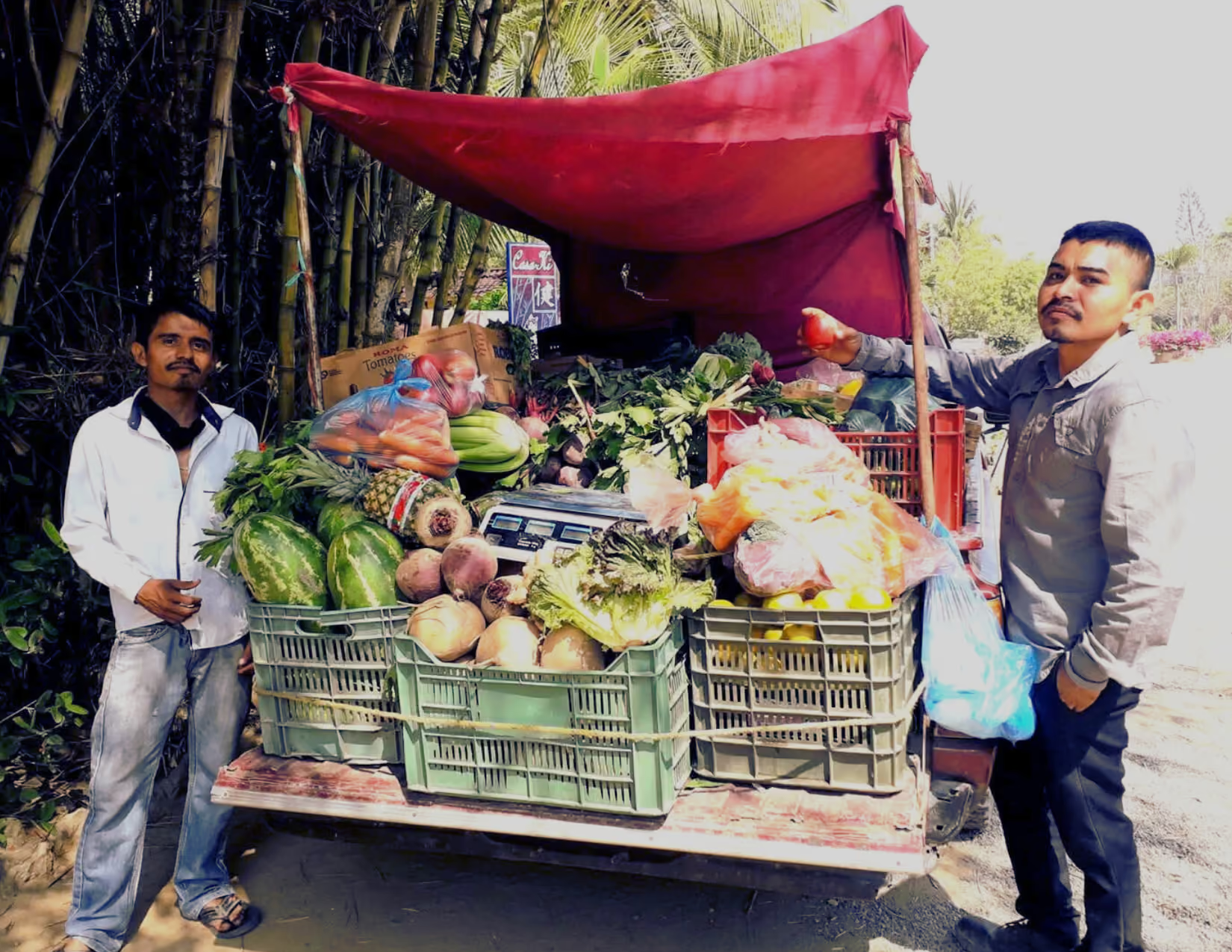
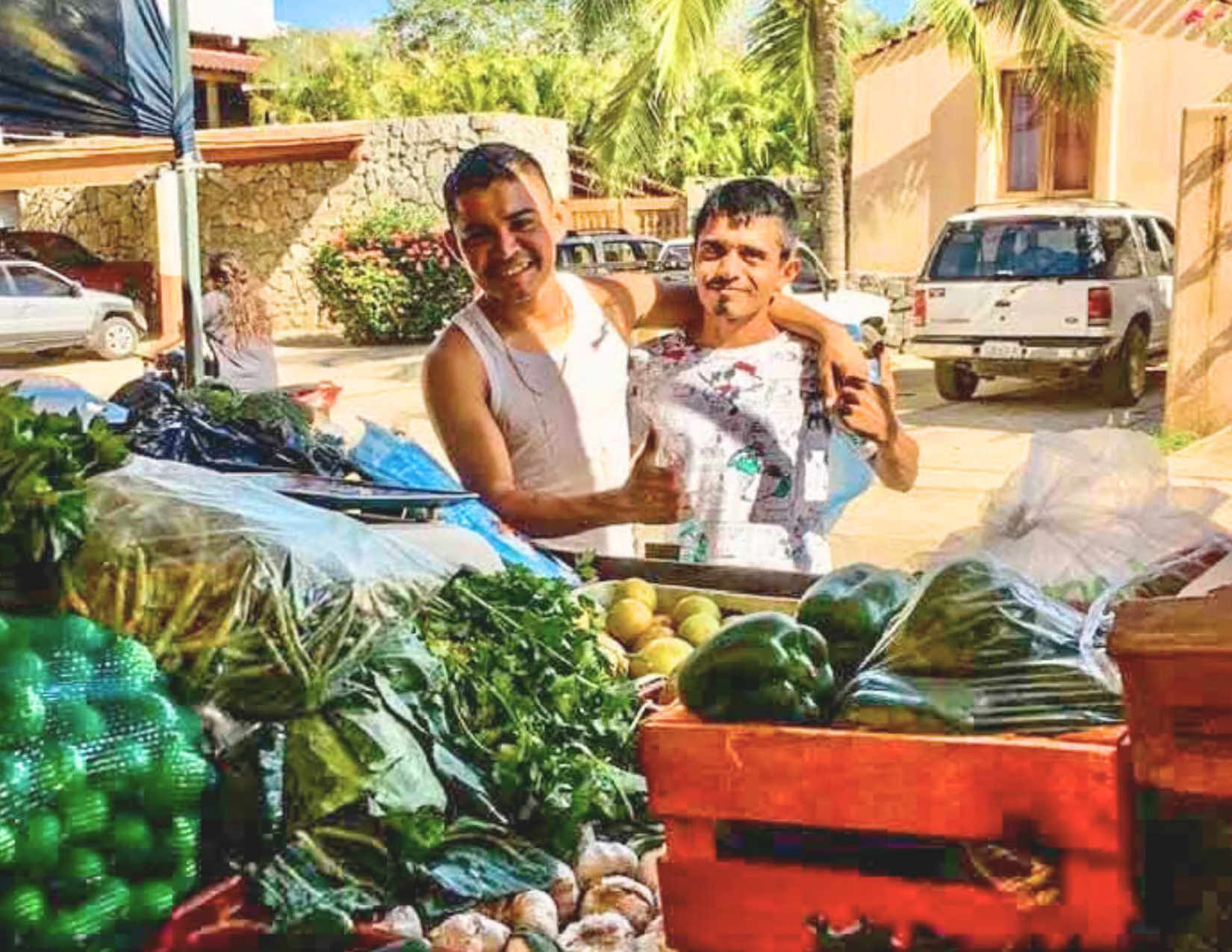
It’s a rolling community center, farmers market and treasure chest—all in one—the fruit truck. It’s in Troncones somewhere, every other day. It’s always surrounded by people smiling. The guys on the truck—brothers Brayan and Jonathan Moctezuma Acosta—are part of the reason why they’re smiling. That and their produce, which is exactly what you need, even if you didn’t know you needed it.
.avif)





.avif)

%20(Spanish)-2.avif)


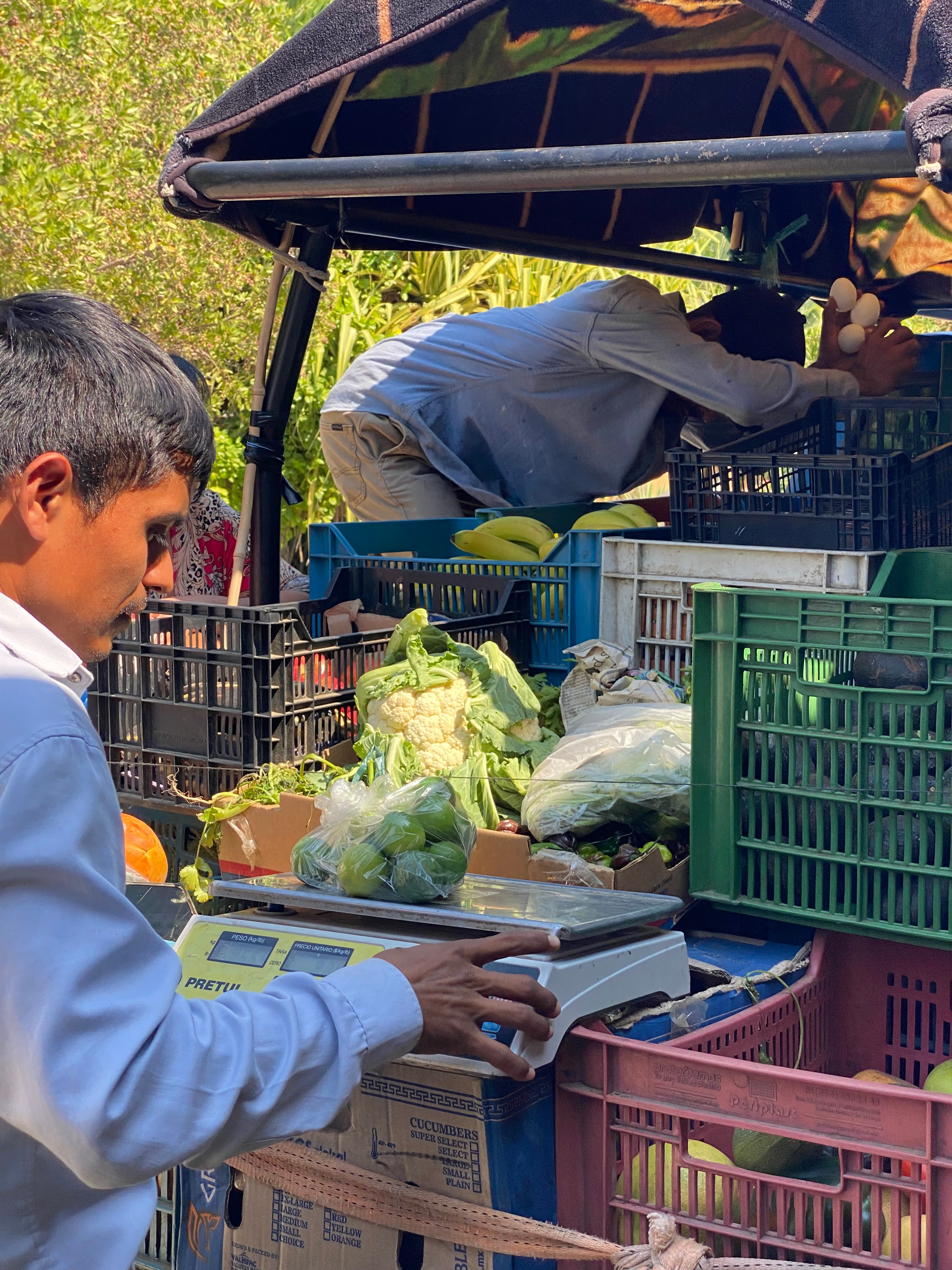
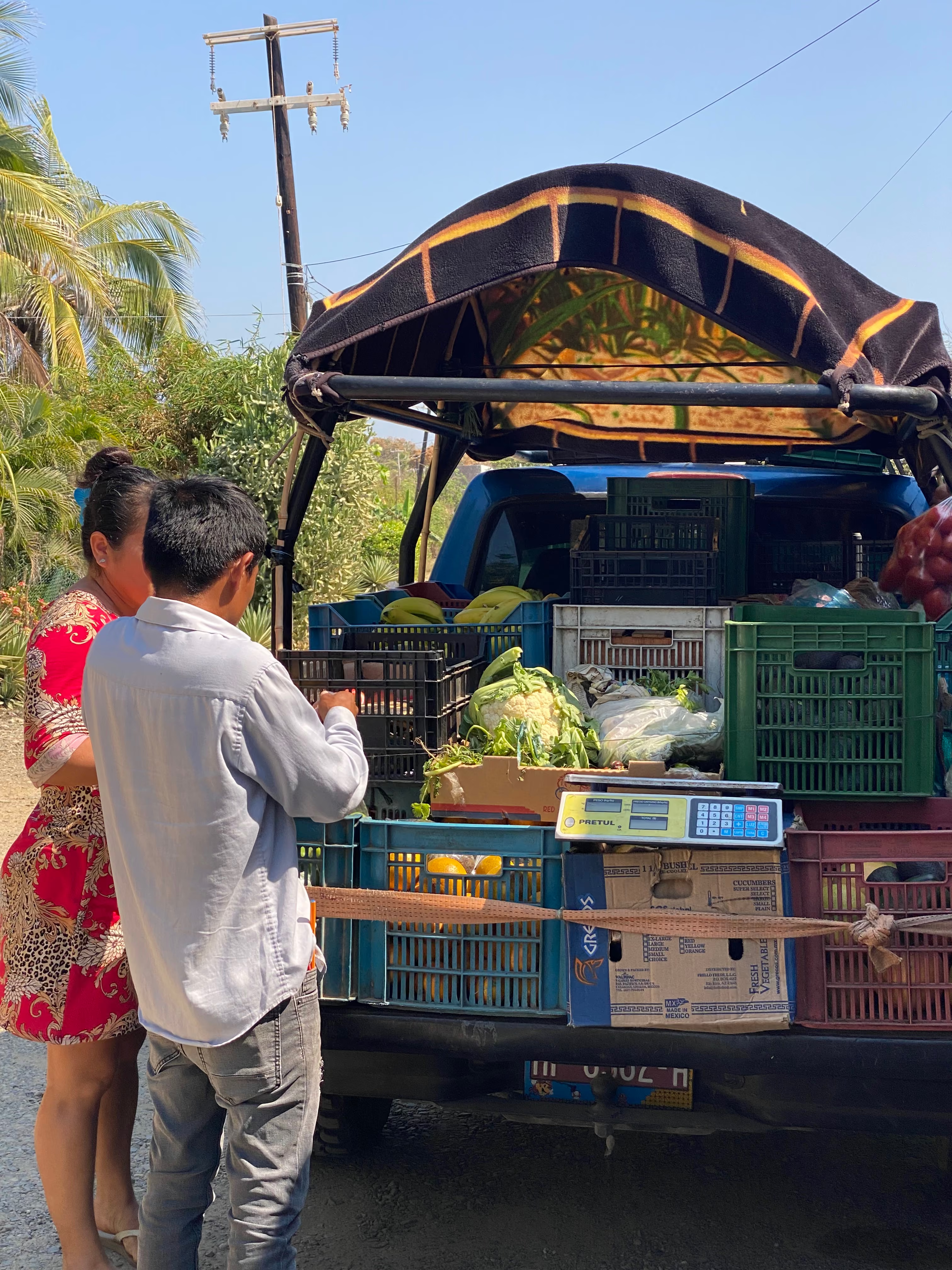
For more than two decades, a fruit truck has parked along the beach road in Troncones and opened its tailgate to whoever walks up. People gather—neighbors, cooks, surfers, someone in a bikini with a basket, someone still in pajamas. There’s chatter, laughter, a little waiting, a little leaning on the tailgate, while fruits and vegetables get weighed on the scale.
Within minutes after parking, the back of the truck becomes a small open-air market—and, sometimes, a kind of stage. Brayan and Jony climb up and down the truck, passing fruit hand-to-hand, stacking and restacking plastic bins full of produce, joking, recommending, slicing open a mango or some jícama so someone can taste something new.
For many people here, it’s the closest thing to a neighborhood market. For others, it’s a weekly ritual. For Brayan and Jony, it’s family work that started long before most of the houses along this road existed.
The route started with their father, Don Patricio—known around Troncones as Don Pato. It began as a necessity. “Back then there weren't any stores here,” Bryan says. “People needed fruit. So, my dad started coming.”

Over time, it became an essential part of the Troncones scene. Don Pato is partially retired now, living closer to Zihuatanejo, still around and still selling occasionally, but Brayan and Jony run the regular route.
They come through Troncones three days a week—Tuesday, Friday, Sunday—bringing produce, mainly from the mercado in Zihuatanejo. Some things come from nearby farms. Sometimes growers contact them directly if they have something to move.
“Most of it comes from the market,” Jony says. “But we also get calls from farmers. And people send us messages with orders.”
Those requests might be for asparagus, cherry tomatoes, yellow lemons, greens—whatever someone is looking for that week. Lately, more people have been asking for arugula. “Sometimes that comes from a local supplier,” he says. “But almost always from Puebla. We order ours in advance. It comes in small amounts, so we bring it for the people who ask for it.”
They’ve learned their customers’ preferences. “We already know what each person likes,” Jony says. “How ripe. How big. When we choose at the market, we’re choosing with someone in mind.”
Fruit gets weighed right there on the tailgate. A bag of limes gets passed down. Someone asks about papayas—which often comes from Lagunillas. Someone else asks what to do with jícama.
Jony says, “We tell them to grate it with carrot, lime, salt. Simple. If someone hasn’t tried something, we cut it open so they can taste. It’s better if they try it.”
MANGOES! EVERYONE WANTS MANGOES!
“When people say they’re coming to Guerrero, they say they’re coming to eat a mango,” says Brayan, adding, “Even when it’s not the season, everyone asks for mangoes. When we can find them, we bring them.”
After years on the route, many customers feel less like customers and more like friends. “We’ve known people here for ten years, maybe more,” Jony says. “Some have grown old here. Some have passed away. Others come back every year. So, it’s not just a business, there are true friendships.”
The job can sometimes means stepping onto a property to deliver an order. Jony says, “There’s a saying, ‘cuando vas a casa ajena, eres totalmente ciego’ [when you go into someone else’s house, you’re blind]. You go only to deliver. You don’t look around. People trust us. We respect that.”
Before reliable cellular service, houses used to have signs to let Don Pato know what they needed. Even now, you can still see some of those signs along the road—reading verduras or frutas. If someone goes looking for the truck early and misses it, they might put a sign out front so Brayan and Jony know to stop. Some families also give them permission to enter their property, and the signs on the property can be specific—you can come in; don’t come in; don’t shout because someone is sleeping; I’m in a meeting; or enjoying a private day. It’s a simple system that’s grown over time.
When we talk about the signs, Jony remembers one family in particular—frequent clients from the United States, who were fostering children. “The kids made a hand-drawn fruit sign,” he says. “So, we would know to stop.” Before the family eventually left Troncones, they told him it would be their last time to purchase. He kept the sign.
“For me, the fruit sign they decorated was something very sad,” he says. “Because they’re not only clients. They’d almost become like family because of the appreciation and affection we shared. We can’t really stay in contact because of their work and for the protection of the children, but I hope they’re well. Most people who visit here come back one way or another. It would be very nice if they returned.”
Outside of work, both brothers keep busy with family. Brayan has two daughters. Jony has four children. “Family takes most of our time,” Jony says. “That’s our hobby.” He said used to take one of his daughters to martial arts classes in the afternoons. “She was a ballerina first,” he explained, adding, “She was very flexible. Then, she got into martial arts. But now, she has lots of homework. And when I get home, which is sometimes quite late, it’s family time.”
Troncones has changed since their father first started coming. “There’s more work now,” Brayan says. “More houses, more people. That’s good for locals. But it’s important to take care of the nature here. That’s why people come.”
They’ve thought about expanding someday, maybe adding another truck, but they’re cautious. “We like knowing people,” Jony says. “That part matters.”
At the back of the truck, a few more people gather. Papayas get weighed. Limes get bagged. Someone asks again about mangoes. Someone asks how to prepare something they’ve never tried. There’s conversation, a little laughter, and another order gets filled.
What began as a way to bring fresh produce into a town without stores, without refrigeration and storage still works. It’s become part of the weekly rhythm here—a place to pick up fresh fruits and veggies, place an order, practice Spanish, and catch up with neighbors or meet new friends. Three days a week, the truck is here. The tailgate down. Jony and Brayan are there. The routine and camaraderie continue.

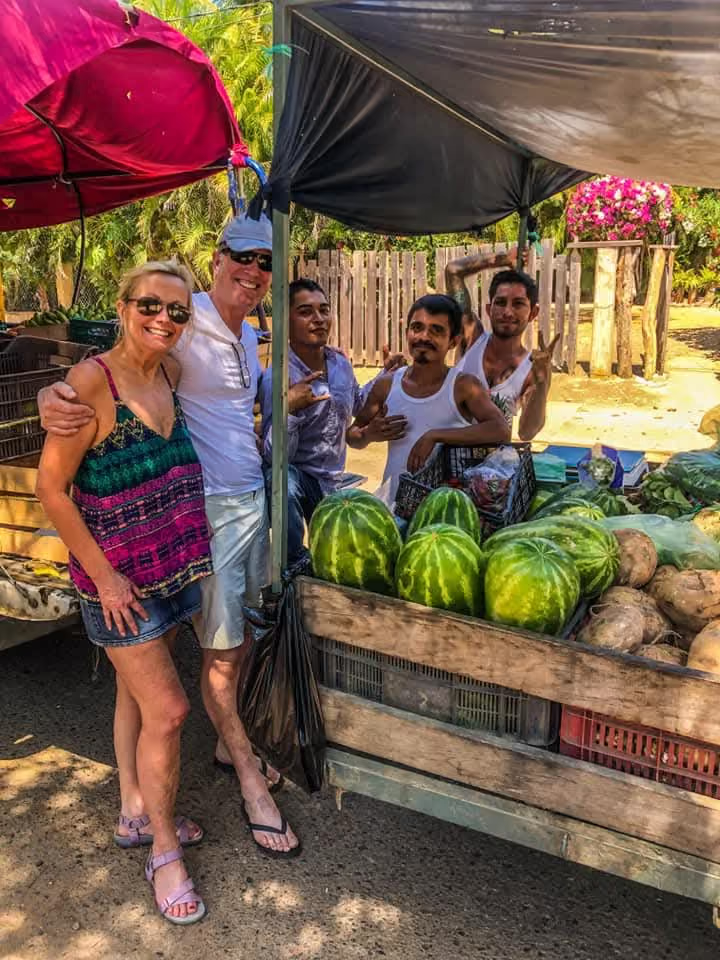
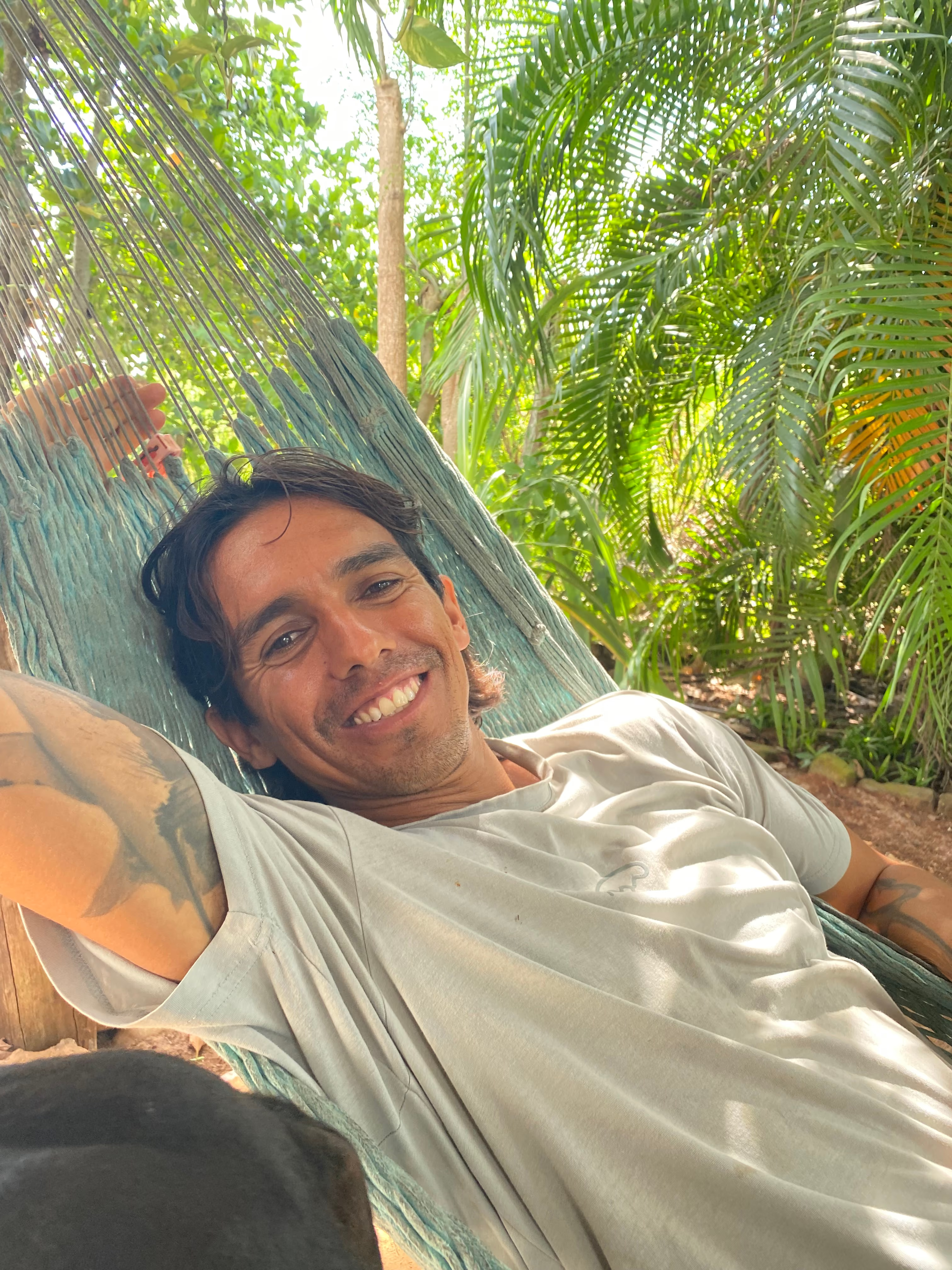
Note: This interview was done mostly in Spanish. The brothers look forward to practicing and learning more English. There’s another brother—Kevin—who occasionally hops on the truck, too. He was not there the day I got together with Brayan and Jony. The brothers wanted him mentioned here!




.avif)
.avif)
%2017.27.38.avif)

.avif)



%2022.56.27.avif)