Caren Judith Díaz Rentería: La Comisaria
Working behind the scenes to make changes in her community
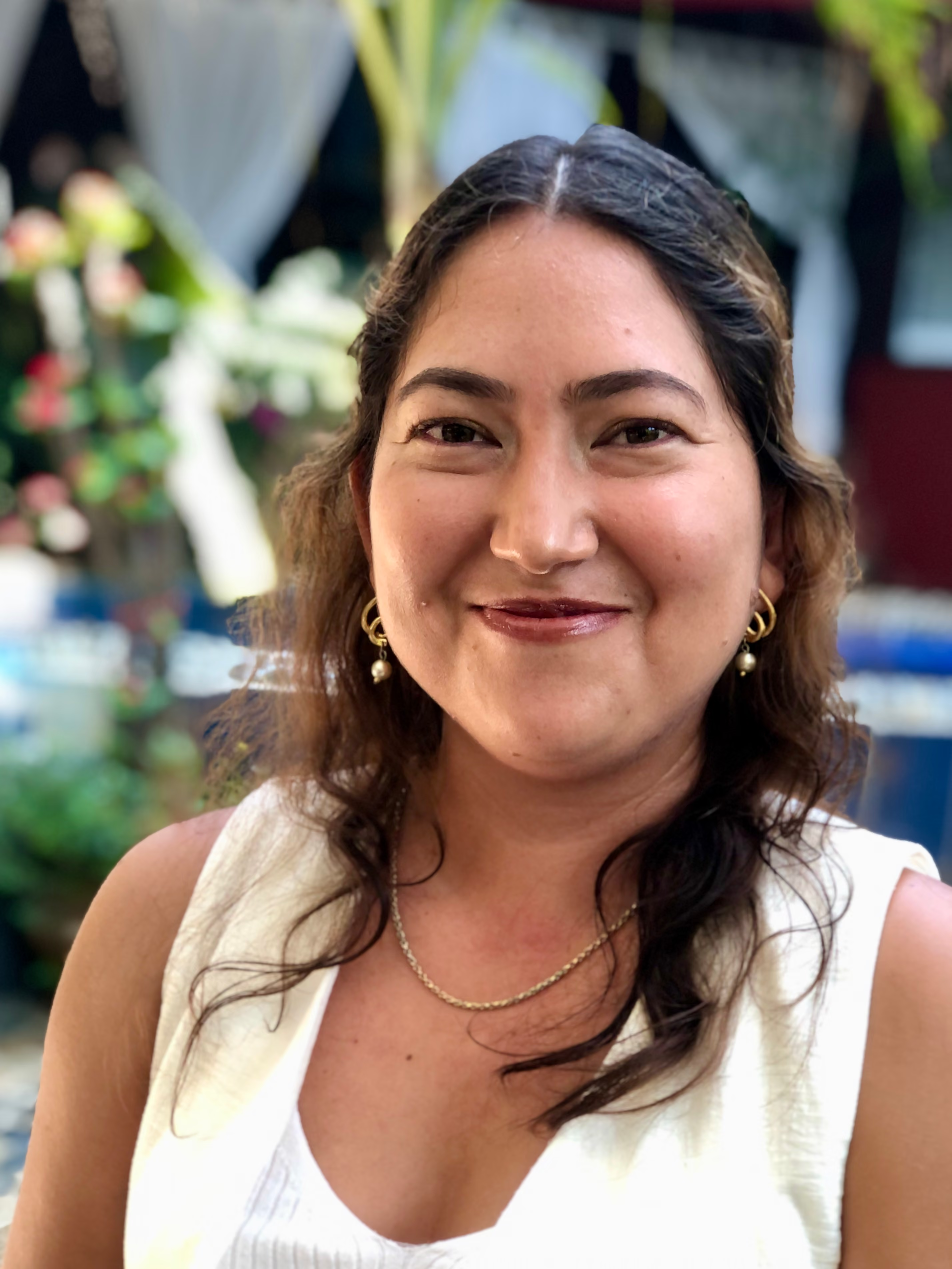
When a small bridge between Majahua and La Boca collapsed last winter, local officials made an appeal to La Unión for assistance. With no bridge, there was no way to go between Troncones and Saladita without going to the highway, which is a time-suck and a safety risk, especially for people on motorcycles. One official took charge of making sure all the procedures were followed and that La Unión made good on its promises. Meet Caren Judith Díaz Rentería, the comisaria of Brisas del Mar, who at 30, already knows the ins and outs of getting things done.
%2017.27.38.avif)
.avif)





.avif)

%20(Spanish)-2.avif)



LOT: Where is your family from?
Caren: From Troncones. Both of them. My mom and my dad. Well, my dad is from Majahua. And my mom is the daughter of an ejidataria [a member of the ejido]. My grandmother still lives near the school in Troncones. Her name is Amadea Bueno Martínez. My dad is from a group who came from the mountains to settle in Majahua. Before they came, Majahua belonged to Troncones. But they arrived and took possession of it, and they became residents.
LOT: What year was that?
Caren: Oh, you have to ask my dad that. I don’t know.
LOT: Where were you born?
Caren: In Zihuatanejo.
LOT: Did your mom and dad live here when you were born? In this house?
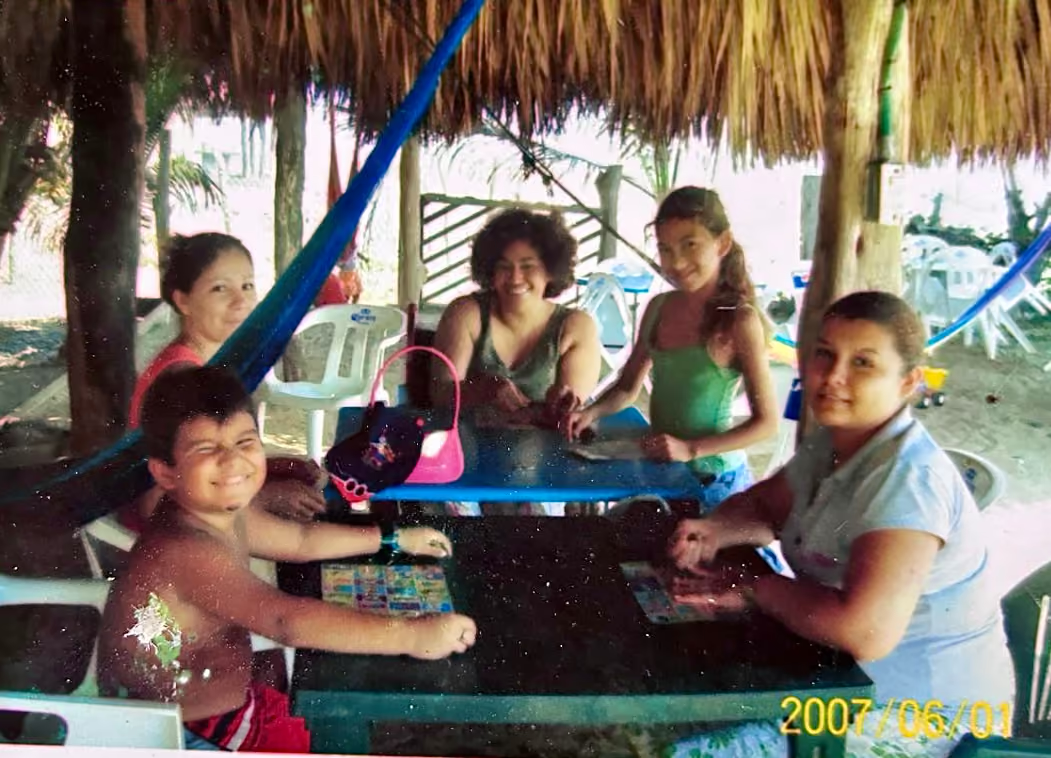
Caren: My mom used to work in Troncones, so we came and went until I was about ten years old. Then, we moved here permanently Before that, my mom and dad went to work in Troncones. My grandmother had a restaurant. It’s currently called Brisas del Mar, I think. My mom also worked for many years at Siete Mares. She was there when Siete Mares started, selling sodas, beers and seafood.
LOT: Where did you go to school?
Caren: Some years in Troncones, and other years in Majahua. I started kindergarten in Troncones and I finished primary school in Majahua. After that, I went to Pantla for middle school.
LOT: How did you get to Pantla from here?
Caren: Every day my dad would take me on a scooter to the combi [bus] that went to Pantla on the old 200. This was before the new highway was built. When I started high school, the new highway connected all the way to Zihuatanejo.
LOT: How did you get to Zihua?
Caren: The first year was on the combi. The second year of high school, I learned how to drive. because it was easier. It was the only way that was reliable, because there is no public transportation out here. And the road is rough.
LOT: Did you work to get your own car?
Caren: No. I took the family car. Every day. That meant I had to go to the market, pay the electric bill, do those things. I used to take my brother to middle school, too. So, I would leave early, drop my brother off at middle school and I would go to high school in Zihuatanejo. Sometimes other kids from Majahua and Troncones would go with me.
LOT: Did you go to college after high school?
Caren: Yes, in Zihuatanejo at the Universidad Autónoma de Guerrero. I studied microenterprise tourism management, with a focus on ecotourism, rural tourism and… [to her father] Hello. Good morning. What year did you arrive in Majahua?
Caren’s father, Alfredo Díaz Huerta joined us.
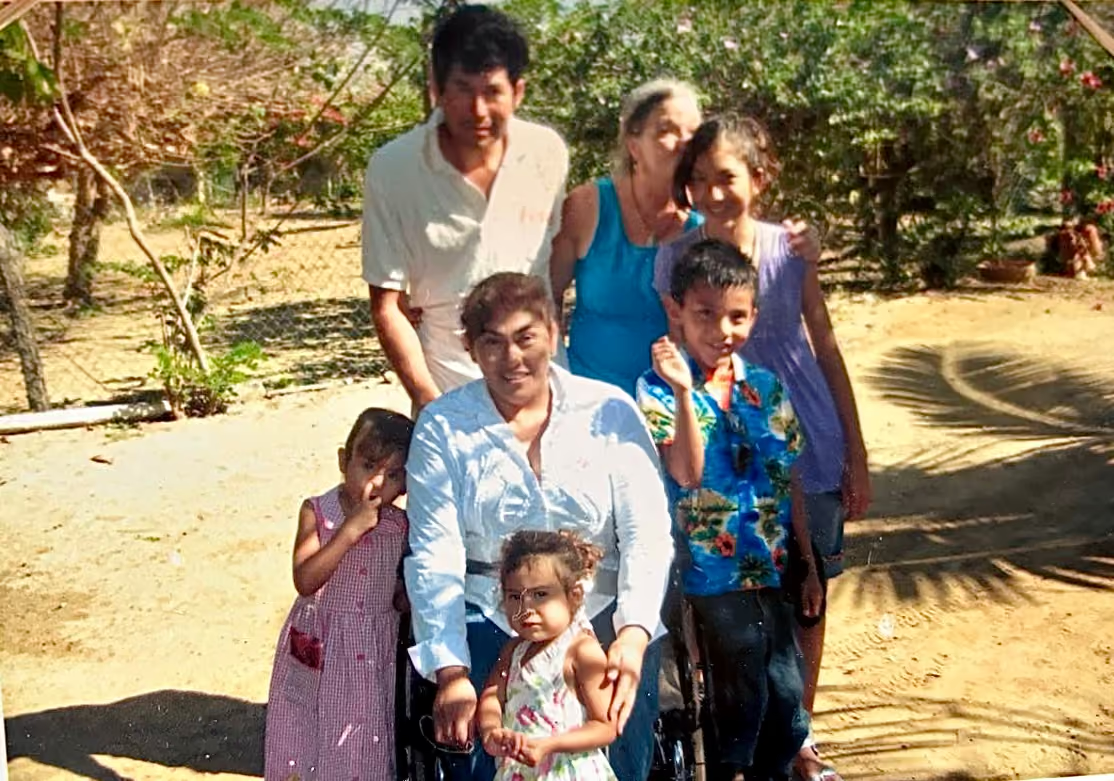
Alfredo: Around ‘83. That’s about when electricity arrived in Majahua. I helped pull the cables for that.
LOT: When did electricity arrive in this area?
Alfredo: Not long ago. There was service to Servando’s house. And I brought the electricity this way, inside a pipe, from where Servando is. It wasn’t until around 2015 that they put light poles all the way here. Before that, only this house, Servando and Chuy—the green house on the beach—had electricity.
LOT: [back to Caren] Where did you work after the university?
Caren: Here. Managing the family business. Sometimes, I worked in the kitchen of Siete Piedras, a house south of Troncones. But what I studied is very focused on what I am doing now.
LOT: Is running hotels and restaurants a family thing? Something each generation has done?
Caren: It could be. For many years, my mom had a restaurant in Troncones——Siete Mares. She was one of the first, along with Josefina and Nica. When we came to live here, my mom and dad opened a restaurant and ran it for many years, until the pandemic hit. I finished school then and I found it better and more efficient for us, for our organization, to focus on lodging and hospitality. Our restaurant is only for guests now.
LOT: I’ve heard this area called Rancho Hinojosa, La Pequeña Hinojosa, La Pequeña and Brisas del Mar. It’s on Google Maps as Brisas del Mar. And on Apple Maps as La Pequeña Hinojosa. What do you call it?
Caren: Previously, it was La Pequeña Hinojosa. Later, it was officially registered as Brisas del Mar.
Alfredo: La Pequeña Hinojosa. The expression “la pequeña” refers to lots in this area being smaller properties. And Hinojosa was the last name of the former owner.
LOT: I call it “La Pequeña”. What do you call it?
Caren: Brisas del Mar. For many years, people also knew this place as Kandahar, because the owners of the hotel Majahua Palms called their development “Kandahar Estates”. [The name Kandahar being a nod to an area of Afghanistan known for opium and heroin production. Let’s just say, that maybe, the original owners of the hotel weren’t really in the hospitality business. They were better at making money doing other things.]
LOT: What was this area like when you were little?
Caren: A lot of forest everywhere. There were no streets. There were no cars. It was hard to go anywhere. And the very little bit of road we had was very bad. There were a lot of cows. And opossums and rabbits. It was said that there used to be coyotes. Now, there are more people and those animals have moved towards the mountain.
Alfredo: Many years ago, long before we arrived in Majahua, it was said there was a jaguar in the mountain where the cave is, and that it could be heard when it roared. A lot of people heard it. And, yes, it’s true, our roads were very bad. In the rainy season, you needed a four by four to get through, otherwise you’d sink in the mud. It was swampy. Immense puddles would form. There were a few of those between Majahua and Manzanillo Bay. It was common for big trucks, like the Pepsi truck or a beer truck, to get stuck for a day or two. People would get out of their cars and walk. There was no driving through the puddles. If you tried, you’d end up where your tires barely touched the ground for traction. It was a mess.
LOT: How did you play as a little girl? What did you do?
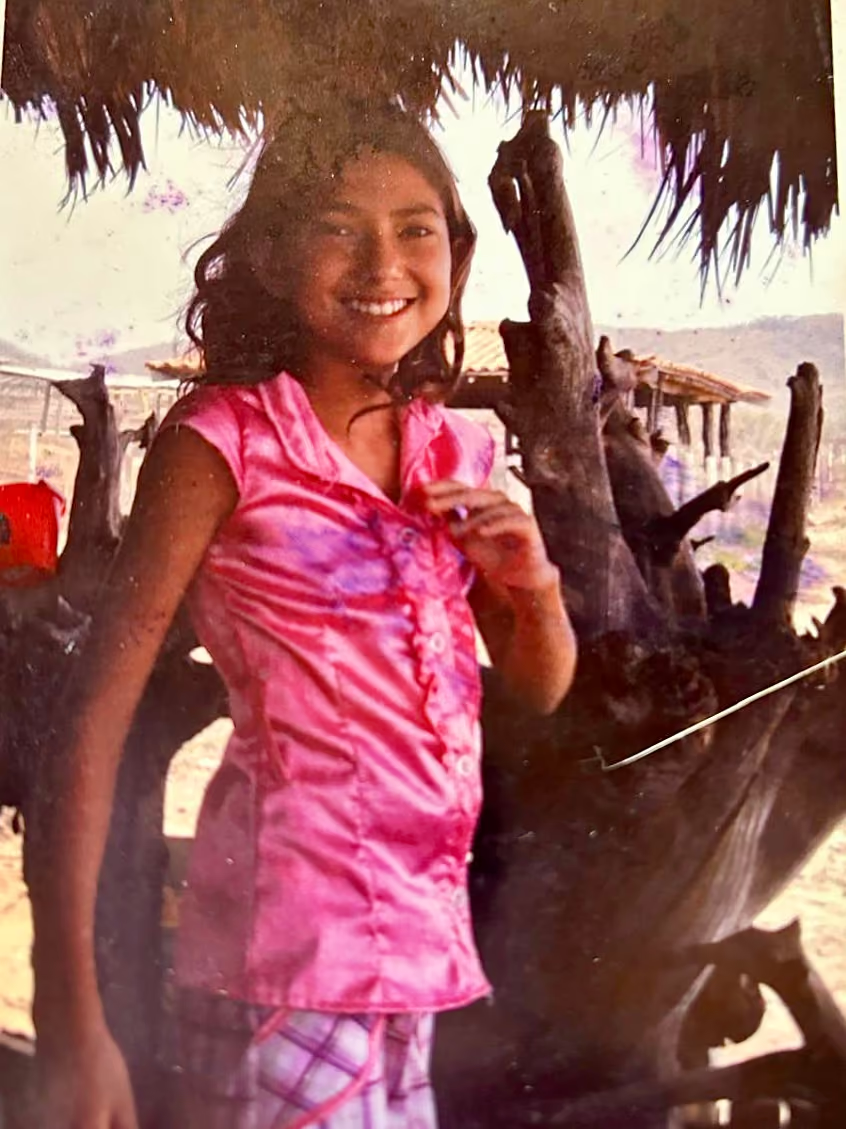
Caren: I used to catch butterflies. And fireflies. I would go to the ocean to see the little fishes. That was what I did.
LOT: Did you have people to play with around here?
Caren: Not really. Sometimes a lady from Boca would come with her granddaughter, who was more or less my age. And sometimes my cousins from Troncones or Majahua would come. But living here, there wasn’t anyone. There weren’t any children.
LOT: Who was here when you arrived?
Caren: Don Servando already lived here with his wife. Doña Chuy’s house was being built. Lupe came to live here with her husband Pablo, along with their two children who were the caretakers of Doña Chuy's house. Then an elderly lady named Cande arrived with her husband. They lived near where Ene’s Restaurant is now.
LOT: Right now, there are little houses abandoned on these little lots. Whose little houses are those?
Caren: They belong to the partners. The owners of the land.
LOT: Did they build them to rent or to live in?
Caren: Both. But it was very hard for people to live here, because there were no services. There is no school, there is no wi-fi signal, there was no electricity, there was no water. For many years, we had a well, but there were many difficulties for other families because there was no way to transport the water.
LOT: [To Alfredo] Did you make the well?
Alfredo: A long time ago. The water was a little salty, but we used it to bathe, to wash and for the plants. For cooking, we used bottled water.
LOT: When did people start to move in here?
Caren: About 20 years ago. That’s when Eladio and his family arrived. I know that because his daughter is about 20 years old now. She was a baby when they arrived. We have a mix of people now, of foreigners and Mexicans, mostly Mexicans.
LOT: How is this area represented in the municipality, in La Unión? There was nothing here. No law. How did this area get on the map?
Alfredo: The property was abandoned by Hinojosa. No one had lived on it for many years. So, a group of people requested possession and the government gave it to them. And now, years later, we have obtained the deed for a parcel over there. Here, the deed is still being processed. In Mexico, when a piece of land goes unused for many years and another person wants to obtain it, they can go to the government. The government decides if it is possible to obtain it or not—a través de la posesión—through possession. In 1987, a petition was made to the government to take possession and that’s when people formed the association around here.
LOT: When you want help from the municipality, how do you do it?
Alfredo: An official letter is sent through the comisario [commissioner], making a written request and stating that the population of Brisas del Mar is requesting some service.
Caren: The first commissioner was in 2014. Matilde was the first comisario and I was the second.
LOT: How old were you when you were comisaria for the first time?
Caren: I was 17 years old. When Don Matilde became municipal comisario of Brisas del Mar, he asked me to help support him with the procedures needed for project management—things like writing on the computer, reading letters and processing paperwork. He was recognized as being an older person, and was eligible for that sort of assistance. So, I was like his secretary. When he finished his term in 2014, I was already 18 years old and had learned a little. It was proposed that I serve as alternate commissioner that year.
LOT: How many times have you been comisaria now?
Caren: Three times. In 2014, as an alternate comisario. In 2024, as a temporary comisario, since I’d proposed a water tank project and the expansion of our electricity network in a meeting with the president. The meeting was positive but Brisas del Mar did not have an official representative at the time. A quick vote was held, and I was appointed comisaria to be able to sign and seal the request for the project. In 2025, a meeting was held and I was elected again to give the water tank project some continuity.
LOT: What are the programs you are working on now for this area?
Caren: I’m working on our water tank project. We currently have a small water network, our “town water”, which we receive once a week, on Sundays. There is no storage beyond what people have in their homes and most of that is not enough for very much. That makes life harder than it should be. Last autumn, there was a lot of activity with the management of this project with respect to the municipality—surveys, collection of signatures, budgets—but things have stalled some. The budget and the dates for the start of the project continue to change. It should, and needs, to be done. Water is a human resource, but there are many procedures. I am in communication with the president of La Unión. I go see him often. I continue to work with him to make this project possible, with the help of his administration.
LOT: How does water get here now?
Caren: There’s a system that comes from a well near the river, with pipes to each house. But there are a lot of problems because the pressure of the pump makes the pipes burst, because there is no place where the water can be stored, and then flow. The network works, but it could be better. We need to strengthen it. We need a reliable and durable water system because the town is growing and it needs basic infrastructure that’s accessible to all. There is currently another water system in place that belongs to the ejido of Lagunillas. That one has service daily, but you have to pay around 20,000 pesos for a meter and then pay for the water you use. That’s not something everyone here can do, especially low-income working families.
LOT: Right now, Brisas del Mar only has electrical service on one road. Is that going to change anytime soon?
Caren: Yes. I have mentioned it a lot to the president, but he said I can only do one project at a time. Our having water is the most vital for now. We all have electricity, connected on lines off the poles, but some of the cables hang low. That’s dangerous for passing cars with surfboards on top and for bigger trucks. I also want to improve our Internet service. Not having that easily available makes it hard for children to do their school work and for businesses to get what they need. And I want to restore our comisaría [village hall]. A long time ago, Don Matilde arranged for a roof, but now, over time, the hurricanes have destroyed it. In the future, it will be necessary to have a small house for town meetings.
LOT: What does Brisas Del Mar need to grow?
Caren: Reliable water and electricity.
LOT: What do you like most about living here?
Caren: The tranquility. It’s a bit remote. It's difficult sometimes, but there is a lot of tranquility. And the sea is beautiful.