Maggie Miles: Good Trouble
A journalist comes to Troncones looking to get away, only to make meaningful connections for herself and her work
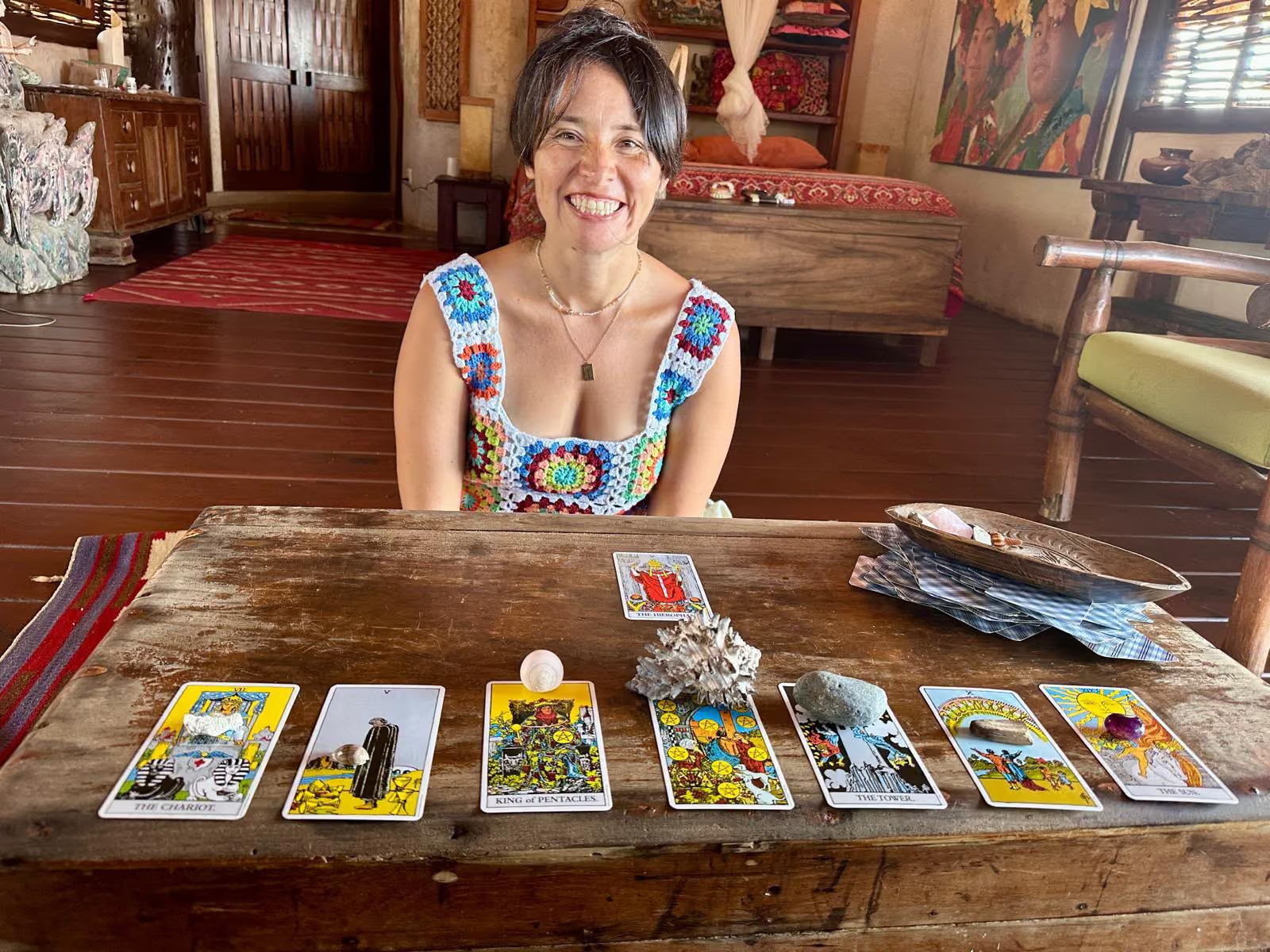
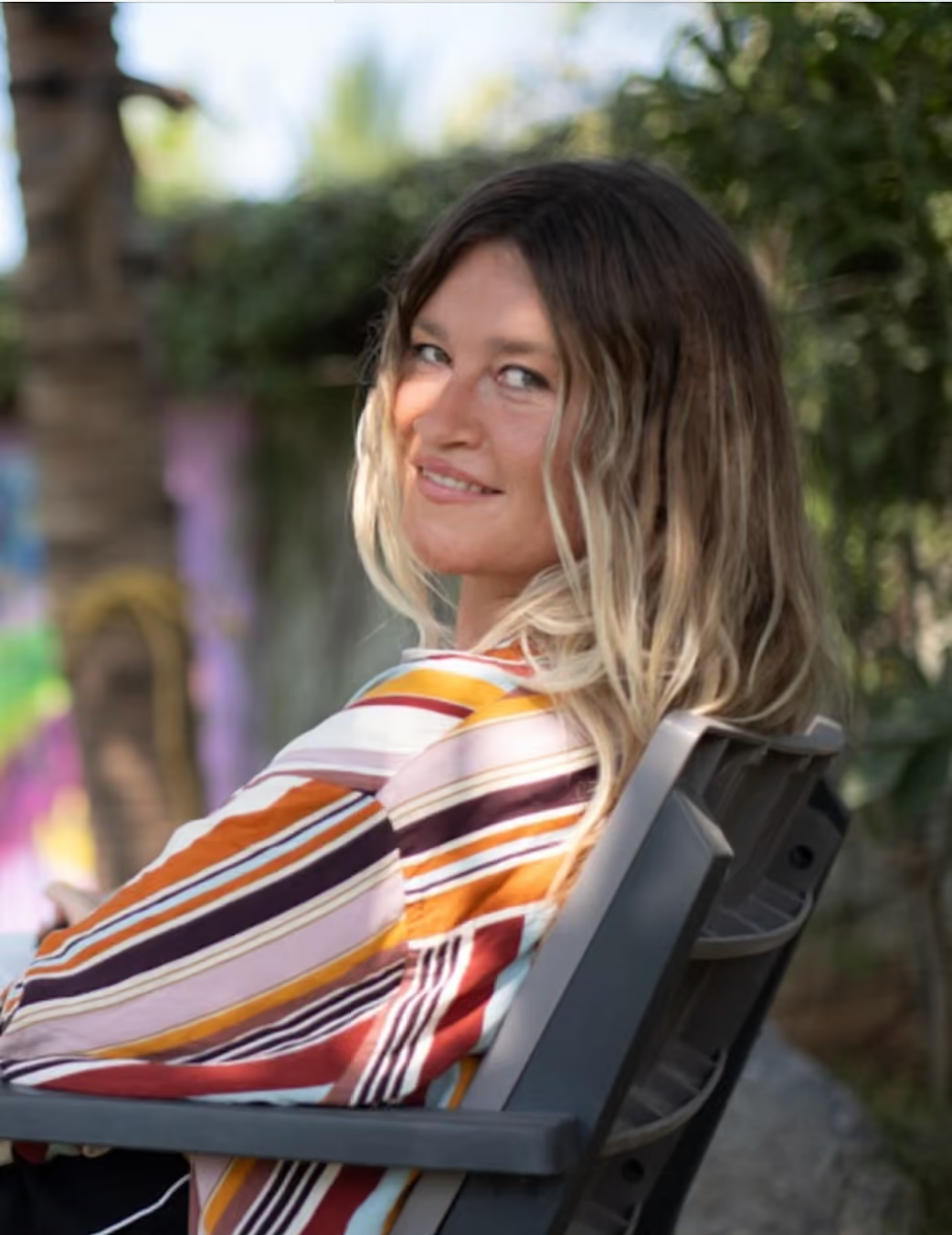
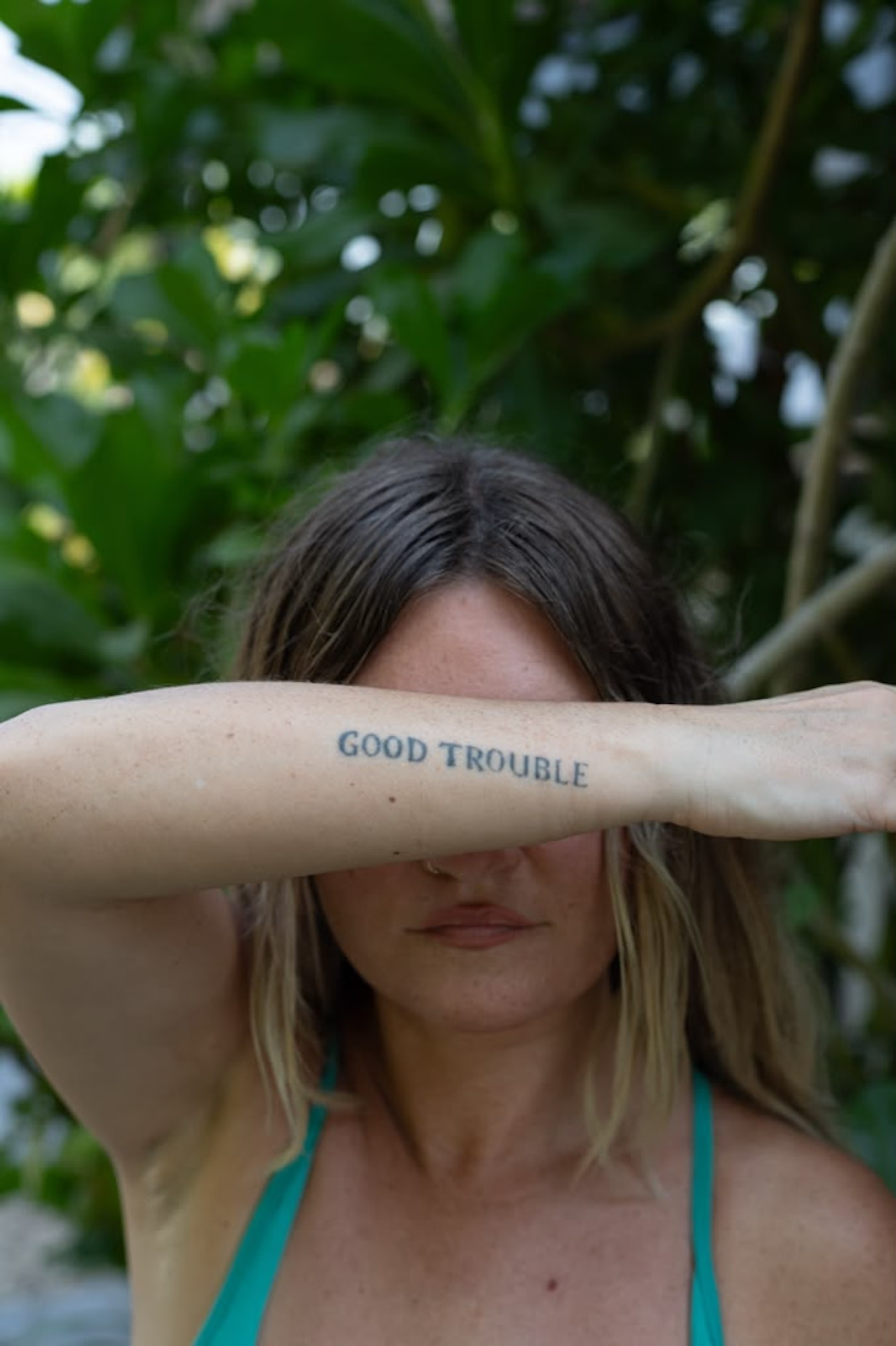
Mutual friends introduced me to Maggie Miles in October, a former New York Times reporter on her way to her next assignment. She seemed to be another young person passing through Troncones. I was wrong. Maggie stayed. I kept seeing her around and I kept hearing she’s doing her work from here. That intrigued me. How does she do it? How does she sustain her career remotely? From Troncones? As we got up from this interview, I noticed the words “GOOD TROUBLE” tattooed on her forearm. I asked her what that phrase referred to. Maggie explained it came from a series of speeches made by American congressman and civil rights activist John Lewis—a phrase born of his refusal to stay silent in the face of injustice—a reminder that making “good trouble” can encourage social change. Good trouble. After talking to Maggie, I can see how she’s doing that, through her writing work and with her choice to call Troncones “home”.
%2017.27.38.avif)
.avif)




.avif)
%20(Spanish)-2.avif)
LOT: Where did you grow up?
Maggie: In the Outer Banks of North Carolina, on Roanoke Island, a little island off the coast.
LOT: How did your family end up there?
Maggie: My mom’s dad was a journalist and the editor of Time magazine in New York City. He was always really busy working on the magazine, and Time would give him a month off each summer. So, my mom’s family—she, her three siblings and her parents—would all pile in their car and go to the Outer Banks for a month, just to relax and hang out at the beach. When my mom grew up, she moved back there.
LOT: What did you like doing as a kid?
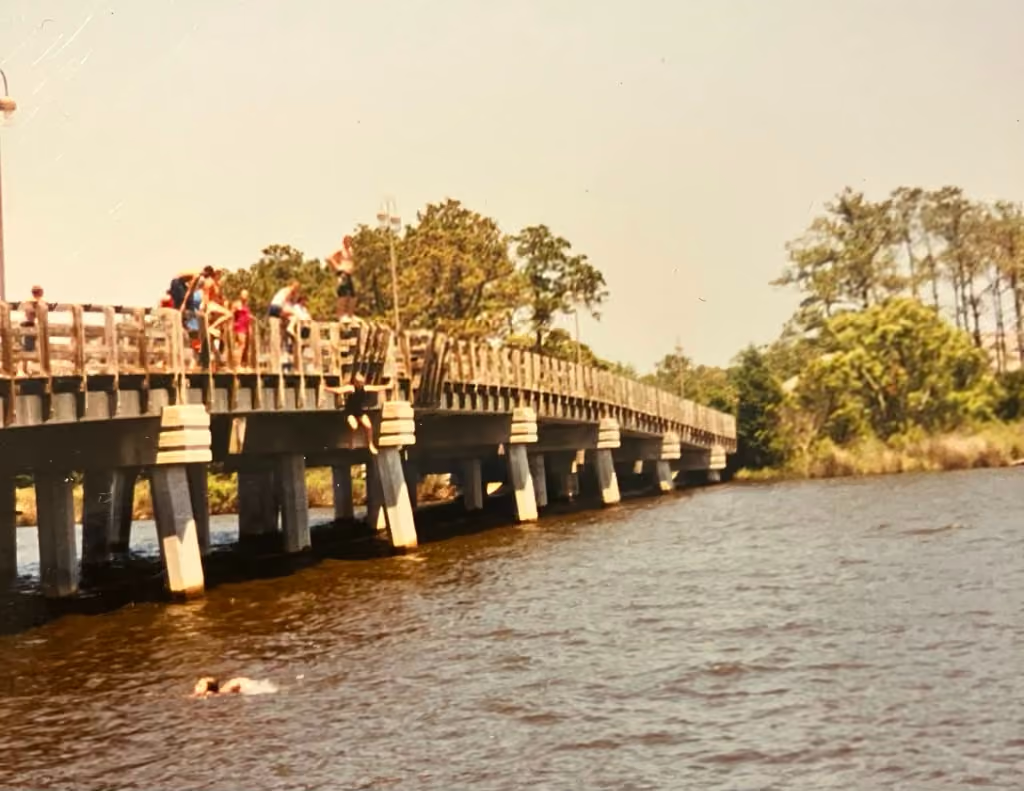
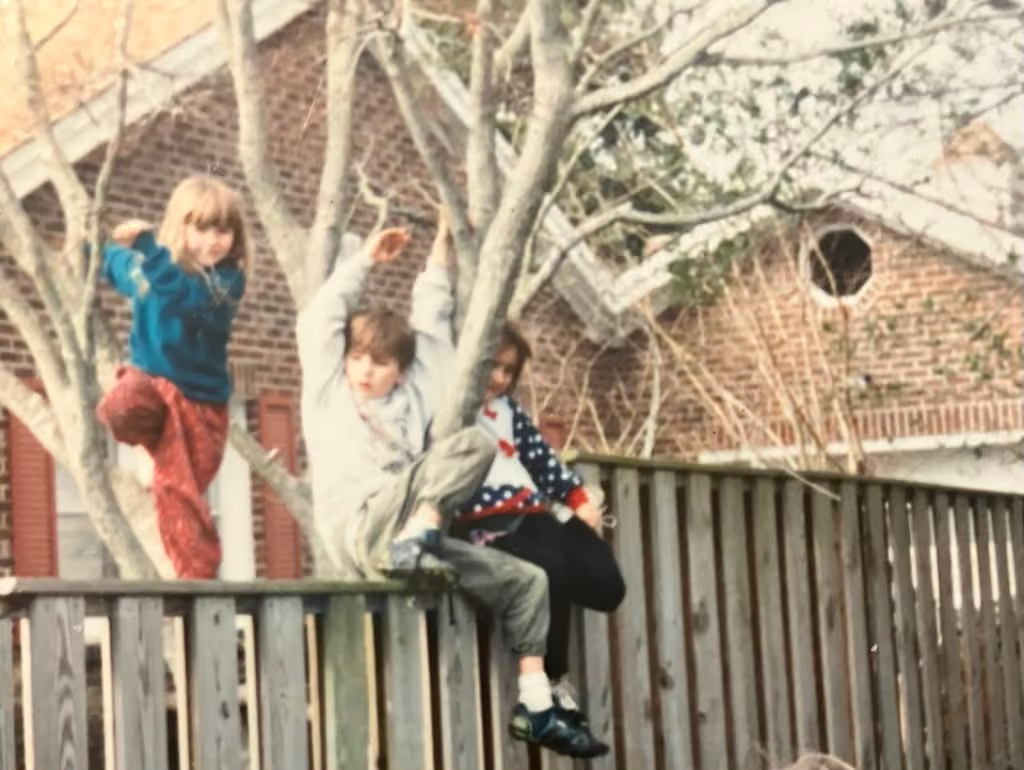
Maggie: Going to the beach, riding bikes around my neighborhood, being barefoot with my friends. We had a little bridge in our downtown waterfront. We would jump off that bridge. We did a lot of small-town kind of stuff like that. I feel like I’m lucky, that we might be one of the last generations to have that kind of childhood. There are only two towns on Roanoke Island, Wanchese and Manteo. I’m from Manteo, which is like a thousand people. It’s a little bit like a U.S. version of Troncones—it’s a small little beach town.
LOT: You’re jumping off of bridges, you have all this freedom—what scared you as a kid?
Maggie: I was a good kid. I didn’t want to get into trouble. And me and my friends weren’t doing anything wrong. What scared me? [Pause. A long pause.] My dad. He was an angry drunk. I had a really good childhood, and there was a lot of love and everything, but there was also a lot of chaos and fear because of his drinking and the anger that came out when he was drunk.
LOT: How did you get into journalism?
Maggie: Because there was a lot of chaos in my house, my mom would take us to my grandparents’ house in Virginia, to where my grandpa had retired in Ruckersville, north of Charlottesville. We would go there and meet all my aunts and uncles, who were all writers. It was like my safe space. My grandpa would always be reading a book, and at dinner time, I would listen to everyone, the grown-ups, talk about politics and things going on in the world. I really looked up to them, so from that time on, since I was like five years old, I wanted to be a journalist, a writer.
Manteo—where I grew up—is a tiny Southern town where the families that are there have been there for generations. They all look the same and have the same sort of lives. I felt “different” growing up. My parents were kind of “hippies”. We didn’t have any money. We were poor. I wore second-hand clothes, things like that. I didn’t really fit in. But when I would write, I would get positive feedback from my teachers and other people. That was one thing that made me feel really good about myself.
LOT: Where did you go to study?
Maggie: I went to a small private, all-girls school called Peace College in Raleigh, North Carolina, for my first two years of college. Then, I transferred to UNC-Wilmington, on the coast, where I majored in English & Professional Writing. They didn’t have a journalism major, so it was a lot of different types of writing, like memoir and essays, some journalism, too.
LOT: What was your first job out of college?
Maggie: My professors taught me how to write, but they didn’t teach me how to actually make a living from writing. I didn’t even know that freelancing was an option. I had an older cousin who’d wanted to be a magazine writer, and she’d gone to New York and gotten an assistant job at Teen Vogue or something. It was so much stress on her, she ended up leaving. I thought I would need to move to New York City to be a successful writer. I didn’t want to do that, so I ended up moving to Portland, Oregon, where my first job was at a non-profit, working to promote progressive political candidates on the West Coast.
LOT: Did you make the transition into journalism from there?
Maggie: Yes, but in a roundabout kind of way. I traveled for years, working for non-profits. I always wanted to make some kind of difference, you know. I moved to Hawaii and worked on a farm there, and started learning about nutrition. I decided I wanted to go to graduate school for nutrition, so I went back to Oregon and got a master’s degree in nutrition. When I started working in nutrition, I realized I liked writing about nutrition more than I liked doing consultations.
I’d planned to go back to the Outer Banks that summer, so I reached out to an editor at the local tourism magazine, part of The Virginian-Pilot, a large newspaper for the region. I told the editor I’d just finished getting my master’s in nutrition and that I would love to write a weekly column about local wellness businesses, healers, food and stuff like that. They said I could and I started writing one column a week. Eventually, they asked, “Would you like to write about other stuff?” This was when the Black Lives Matter protests were happening. I was like, “Hey, can I go cover this?” It wasn’t what they typically covered, but they let me. It was so rewarding. I asked if I could do a spotlight on black-owned businesses, and I ended up doing this big piece where I highlighted five local black business owners. It felt like this is what I’m supposed to be doing. I want to keep writing about those kinds of topics. That’s when I started reaching out to other publications, and getting work from there.
LOT: Where has your work appeared?
Maggie: That first one I wrote was for The Coast, another part of The Virginian-Pilot. Then I then I wrote for The Outer Banks Voice, a local online news site. At that point, I was traveling, living in Oaxaca, writing an article every once in a while, living off savings and running out of money. That was not good. So, I got a job as a content writer for a tech company. It was more money than I’d ever made in my life. I was really excited, but I soon realized that it was very soul-sucking. I’d gone from writing about all these meaningful things to helping fast-food companies use data to sell more cheeseburgers, and helping oil-and-gas companies in Texas with their data to find more oil off the coast. I did that for like eight months and then I couldn’t do it anymore. I realized, “This is not me. I cannot do this.” I reached out to The Outer Banks Voice and I asked if they had room for me to write a few articles a month. They said, “Yeah, for sure, come on,” and I quit that tech job.
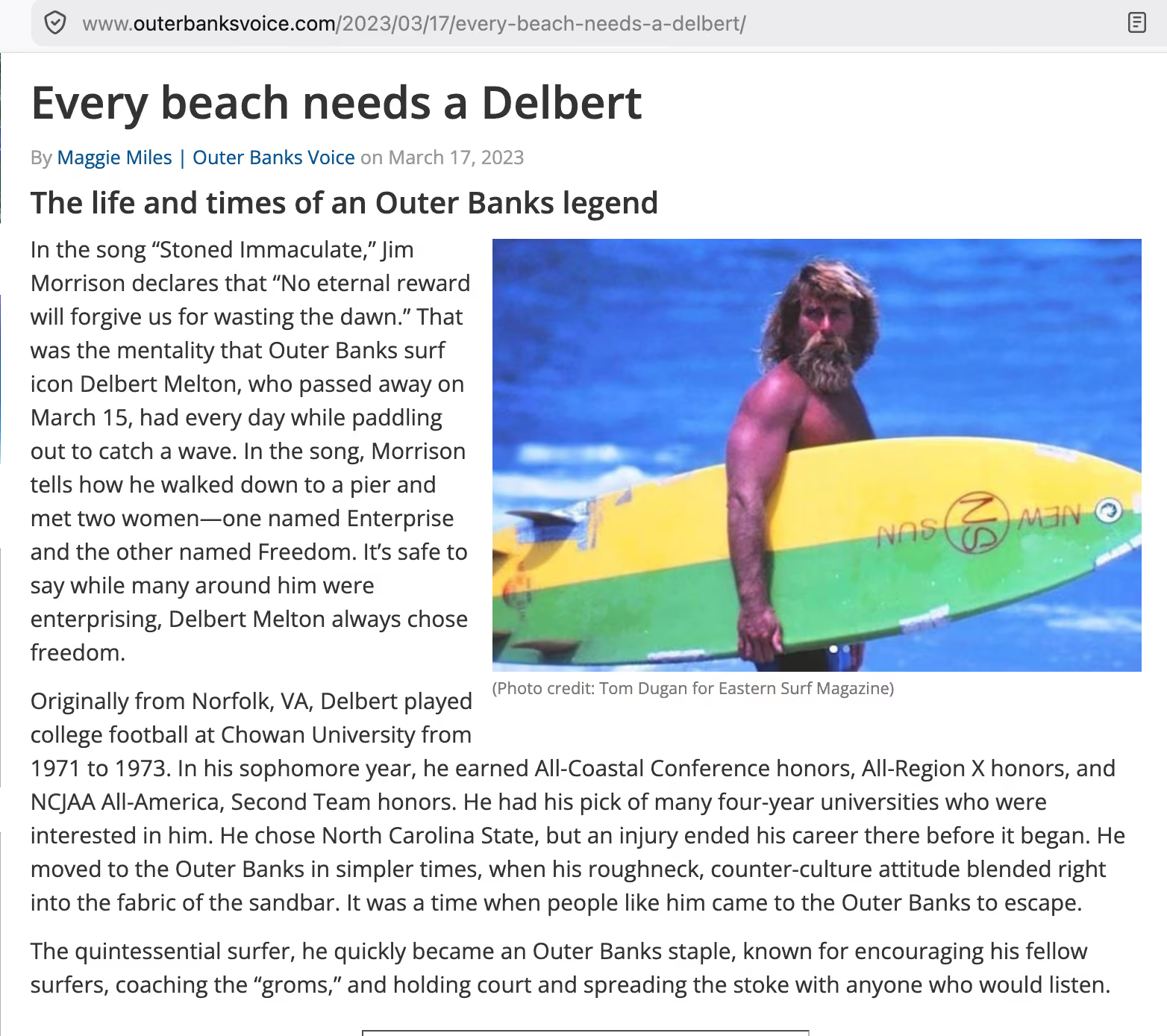
A few months before that, I saw an apprenticeship kind of thing at The New York Times. I was like, “Okay, I’m going to apply for this.” But when I went to look at who had been accepted for that current year, they were all really experienced—already in big newspapers—with Harvard degrees and things like that. I thought, “There’s no point in me even applying for this because I didn’t go to an Ivy League school and I’ve only been in small-town newspapers.” I felt really intimidated and I didn’t apply. After I quit that tech job, I put on my Instagram story, “I am going to get an article in The New York Times.” I had no idea how. And then, like a month or two later, the senior editor of The New York Times national news desk reached out to me on LinkedIn and said, “Hey, I see you’re in Palm Springs and we need a freelancer there. I’m wondering if you’re interested in being our freelancer for that area.”
LOT: Were you really in Palm Springs?
Maggie: Well, yes and no. This gets a little complicated. I had been in Palm Springs with my tech job so I had it on my LinkedIn that I was in Palm Springs, but after I quit, I’d come back to Mexico. When the national news desk editor reached out, I was actually in Oaxaca, but I was, like, “I can totally be your freelancer in California”. I flew back a few days later and got an apartment, even though there was no guarantee I would ever get an article. The news desk assignment is “on call”. Getting an article depends on if something happens that’s worth national news coverage. About two months after I went back to Palm Springs, a hurricane came inland—Hurricane Hilary. It’s rare for a hurricane to come into the desert. I covered that story for about a week. Highway 111 was closed and all of the trucks that bring food and everything else to the area all got stuck. I reported on that, and I went up on a bridge and took a picture that ended up being on the homepage of The New York Times. [A little research revealed Maggie’s article was mentioned on the front page of the August 19, 2023 print edition.]
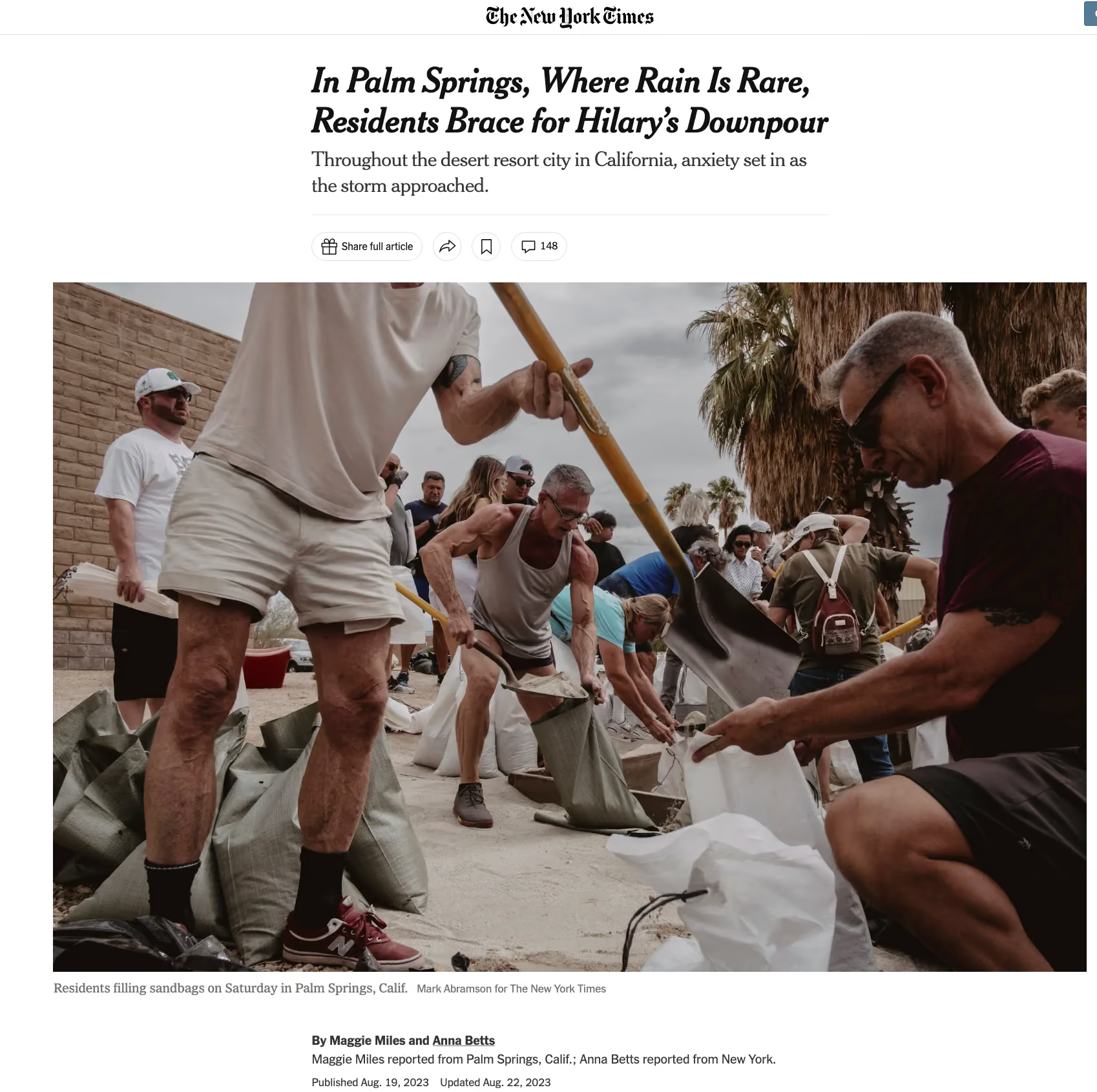
I also did some “people-in-the-street” interviews to show the human experience during the hurricane. Then, there was a bombing at a fertility clinic, right down the street from me. An anti-natalist, a man who believed people shouldn’t be born without their consent and permission, bombed a fertility clinic that held embryos because he wanted to destroy the embryos. He didn’t destroy the embryos, but he did manage to destroy the whole building. I also ended up working with the BBC on an investigation into the Abercrombie & Fitch CEO, Mike Jeffries, who had been accused of sex-trafficking crimes. One of his right-hand men in that so-called “underground sex orgy ring” lived in Palm Springs, and the BBC reached out to me and had me go find him for them. When I found him, they flew out and we all miked-up and went in and confronted him. That was very exciting for me. This was in all in 2023 and 2024, and I’ve kept working—with The Palm Springs Post, Coachella Valley Independent, Shift London and a bunch of others, including a few on the Outer Banks.
LOT: What are your favorite kinds of assignments?
Maggie: My favorite is writing about a person’s life. I feel like that’s really meaningful and I feel like a lot of times people tell a little story and they don’t realize how interesting it is because it’s just part of their life. And when they read it back, they’re like, “Wow, I made a difference.” The whole reason I told the backstory on working with The New York Times, the BBC, and these larger publications, is that I didn’t believe in myself. I didn’t think I was good enough. I still struggle with that. I want people to know if they want something they should just go for it, because a lot of times people will see something in us that we don’t see in ourselves.
LOT: How did you come to find Troncones?
Maggie: I was in California and really burnt out from working there. I needed a break. Mexico has always been the place I come to when I’m feeling that way, when I need to escape, to get away and calm my nervous system. I had a friend who’d come here. He’s traveled all over the world and all over Mexico. He said, “Go. You’ll like Troncones. It’s such a healing place. It’s so peaceful. It’s exactly what you need.” So, I bought a ticket and I was here a couple of weeks later.
LOT: What sort of work are you doing from here?
Maggie: Well, I came down here to take a break, but when I got here, I was reached out to about an investigation, about something going on at a California non-profit in Palm Springs. I took that on and I worked on that for months. The article just came out at the end of April [a link to that Guide Dogs of the Desert article is below]. I’ve also been writing features for publications in California and North Carolina, mostly human-interest pieces.
LOT: How do you get your story pitches to editors from here?
Maggie: By email and phone, just like I would from anywhere else.
LOT: What do you do here when you’re not working?
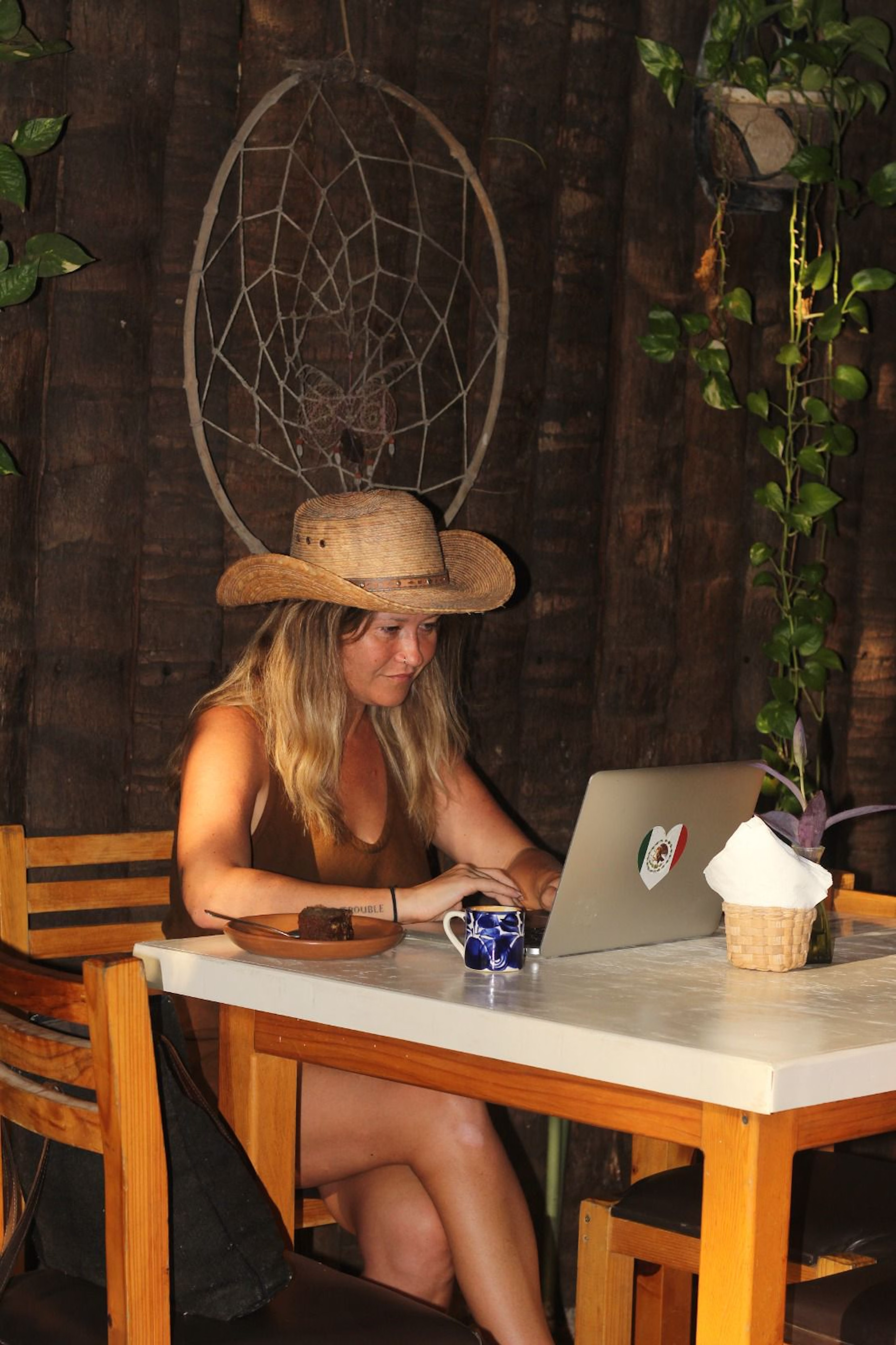
Maggie: Oh, I go for a lot of walks on the beach. I try to explore different things—like the hot springs, different areas of town, the caves—and I try to get to know the locals. I’ve only been here since October, but I feel like I’ve already made so many lifelong friends. There’s a great community here.
LOT: Where will this summer take you?
Maggie: I’m going to Guatemala and maybe Colombia. I’ll probably also travel to a couple different places in Mexico, like Mexico City and Puebla.
LOT: What are you looking forward to when you get back?
Maggie: The Feria! It’s so cool to see the whole community in one place, enjoying something together.
LOT: What does Troncones mean to you?
Maggie: Troncones helped me at a time where I was exhausted and feeling a little low. It really helped, especially with everything going on in the world. As a journalist, I believe in paying attention to what’s going on and staying informed. Here, I can do that, then go to the beach and watch the sunset, watch the birds. It helps me to remember that that’s part of the world as well. Troncones has helped ground me. It’s helped bring me back to peace, so I can handle all the things I need to do for work, and have that little escape, that connection to people and nature, that I really need.
LINKS
Guide Dogs of the Desert https://cvindependent.com/2026/04/warnings-raised-investigation-finds-documented-safety-leadership-and-financial-concerns-at-guide-dogs-of-the-desert/
Maggie Miles on LinkedIn https://www.linkedin.com/in/maggie-miles/