In Search of the Short-crested Coquette
A two-and-half hour drive south of Zihua you’ll find a DISTINCTIVE hummingbird’s SPECIAL home
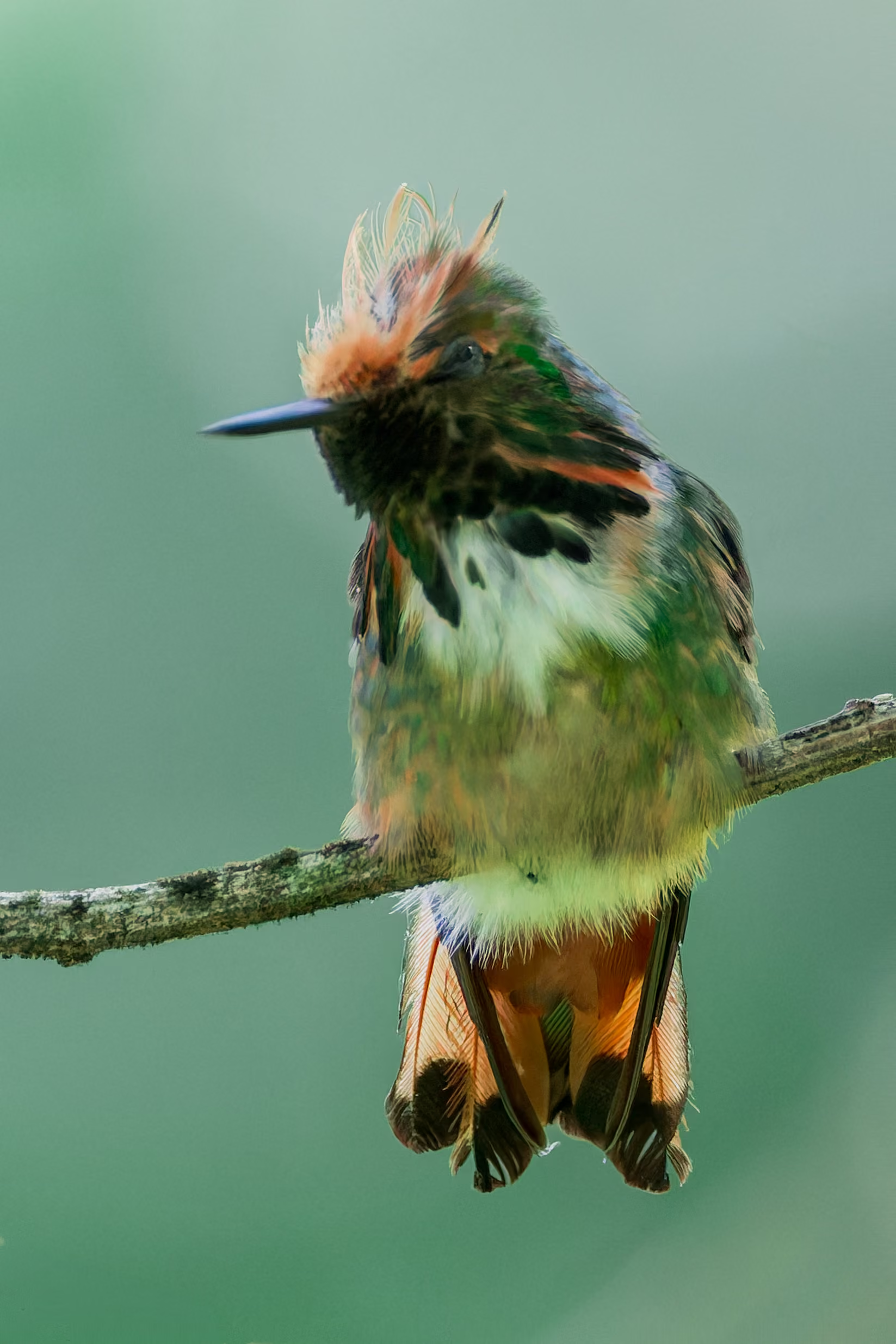
A twenty-five-kilometer stretch, somewhat midway between Petatlán and Acapulco. That’s it. It’s the only place in the world to find the Short-crested Coquette, a special but critically endangered hummingbird so small it’s often mistaken for a bee or a moth. Let William Mertz take you there and show you its challenges.

.avif)





.avif)

%20(Spanish)-2.avif)





All photos, courtesy of William Mertz
Just a few hours south of here, in the state of Guerrero there is a hummingbird in the mountains above Atoyac de Álvarez that weighs about as much as a dime and may not exist anywhere else on Earth for very much longer. This isn’t a bird you need to fly to South America to see, or one you’ll read about the way you’d read about something happening on the other side of the planet. The entire global population of this species exists closer to us than Acapulco does.
It’s not dying dramatically. No one is going to find it belly-up on a roadside—the way the story usually gets told about extinction—a single tragic body, a photograph that makes people share a post and feel something for an afternoon. It’s dying the quiet way, the way most things actually go: an acre of shade coffee here, a hillside cleared for corn there, a patch of cloud forest swapped for an illegal crop nobody wants to say the name of out loud. By the time anyone notices a decline like that, it has usually been happening for a decade.
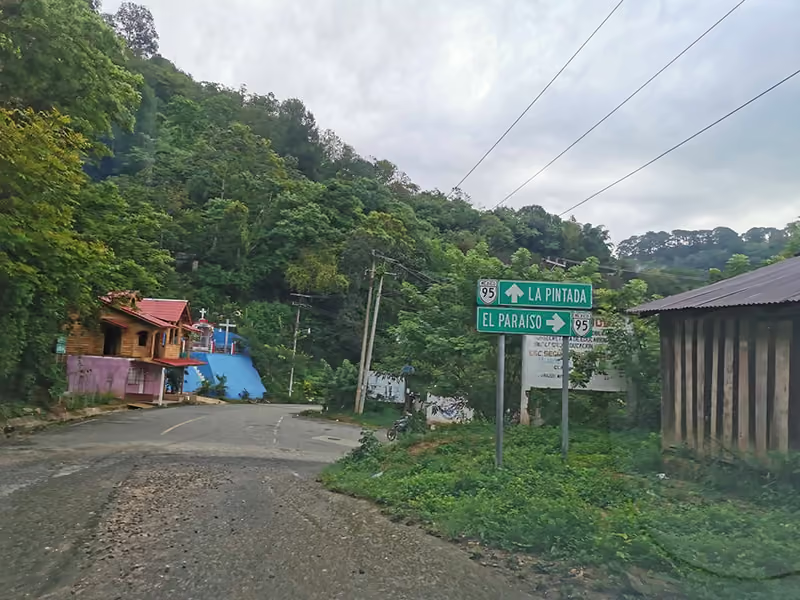
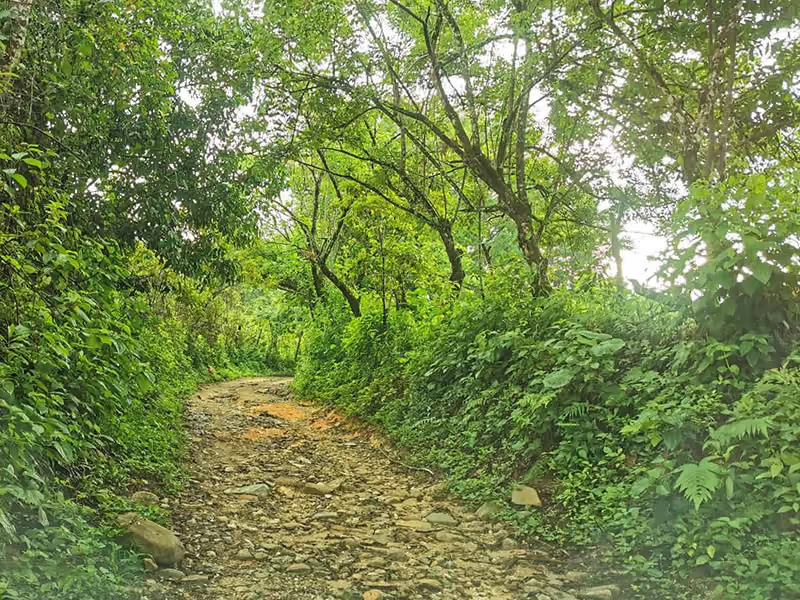
That bird is the Short-crested Coquette—Lophornis brachylophus—and it exists, as far as anyone has ever been able to prove, along a single stretch of road. Not a region. Not a mountain range. A road. Roughly twenty-five kilometers of it, threading between Atoyac, Paraíso, and Puerto del Gallo in the Sierra de Atoyac, part of the Sierra Madre del Sur in the state of Guerrero. Outside that strip, at elevations between about 900 and 1,800 meters [3,000 to 6,000 feet], in cloud forest and semi-deciduous woodland and the shade-grown coffee plantations tucked into the slopes, there is no confirmed population anywhere in the world. It is monotypic—no subspecies, no backup version of itself sitting quietly in some other valley waiting to be discovered. This is it. This is the whole damn species.
HABITAT & REALITIES
I want to give you the honest range here, not the flattering one. The most-cited estimate puts the population between 250 and 999 mature individuals, spread across roughly 53 square kilometers, at densities of somewhere between 3.6 and 18 birds per square kilometer depending on where you are in that strip. Even the generous end of that range is a rounding error compared to almost any other bird you’ll see this year. The pessimistic end—250 birds—is about 1/10th of the human population of Troncones in the high season.
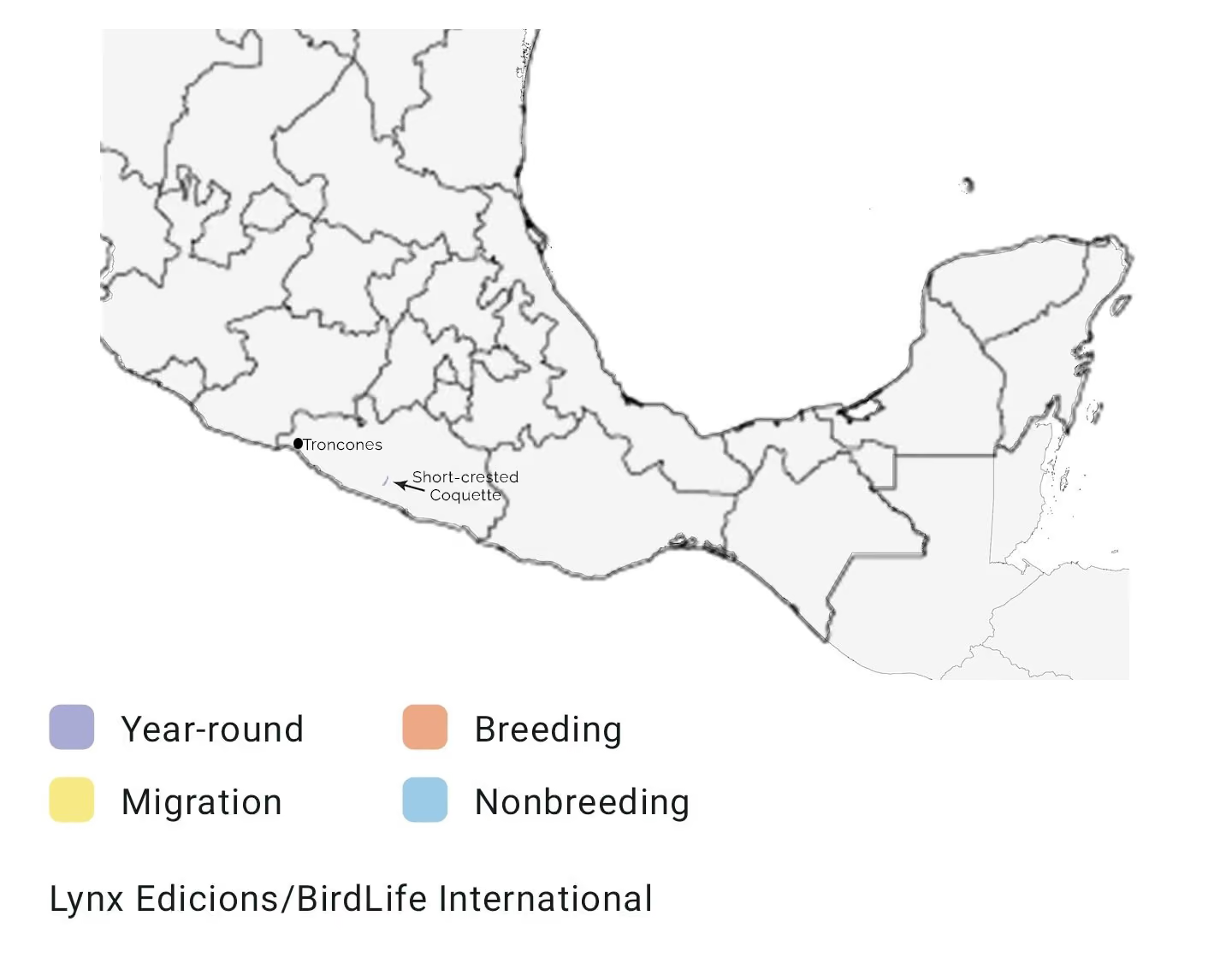
The species has been rated Critically Endangered by the International Union for Conservation of Nature (IUCN) since 2000, upgraded from Endangered, which is the wrong direction for a rating to move. Best estimates put the ongoing decline at 10 to 19 percent per decade, driven almost entirely by habitat loss—land cleared for corn, for cattle, and, because this is Guerrero and the economics of the region are what they are, for illegal poppy cultivation. Until 2023, not one square meter of the coquette's known range carried any form of protected status. None. A bird found nowhere else on the planet, living on a strip of road, with zero legal shelter for seventy-plus years of ornithological awareness that it existed at all.
That changed, a little, in 2023, when four community-based reserves were established through a partnership between local ejidos, the American Bird Conservancy, the Autonomous University of Guerrero, and the Mexican government—with two more reserves planned to follow. It’s real progress, and I don’t want to undersell it, because it came from local communities choosing conservation over the crops that have historically paid their bills, which is a harder thing to ask of people than most conservation writing ever admits. But four reserves stitched into a twenty-five-kilometer strip of unprotected mountain is not a safety net. It’s a start. The coquette’s entire global range could still, in a bad decade, be reduced to whatever those reserves manage to hold onto.
I’d made the drive up into the Atoyac highlands more times than this bird ever paid me back for—a dozen or so trips over five or six years, most of them ending the same way: hours standing at flowering bushes or trees that had produced a coquette for somebody else the week before, and nothing on it but Berylline and Cinnamon hummingbirds working the same flowers. Spots that had been reliable showing nothing, or the plants needed now, gone. That’s not a failure of effort. That’s what a population under a thousand birds, spread across fifty-three square kilometers, actually looks like from the ground. You can do everything right and still drive home with nothing, because “right” stops being enough when there are only a few of them left to find.
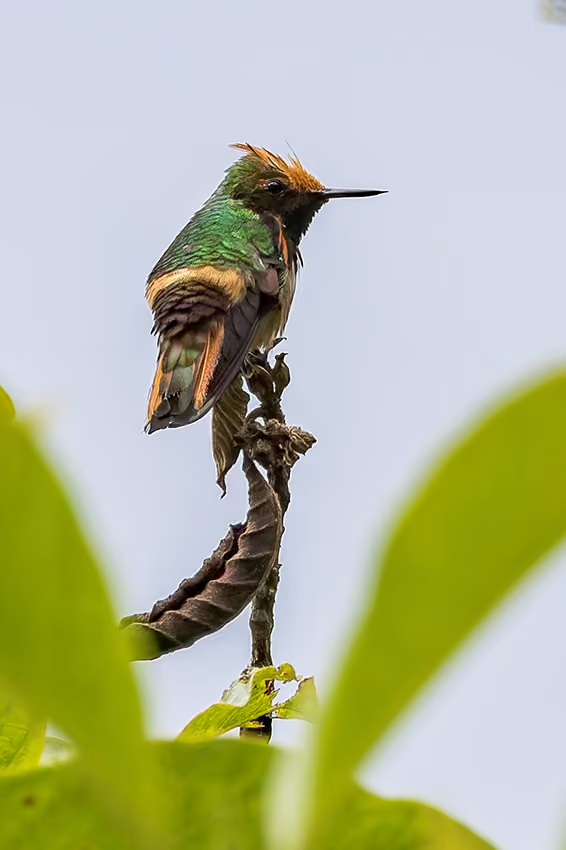
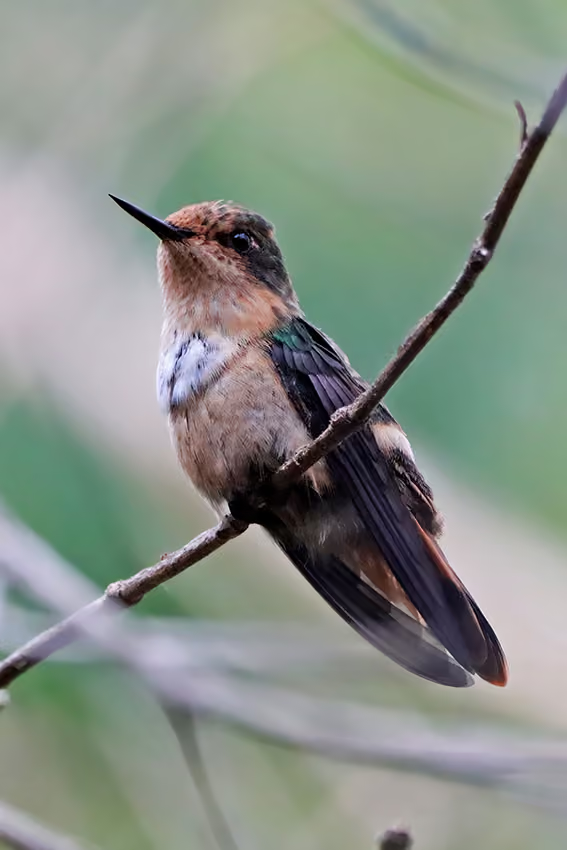
Part of what makes them so hard to pin down is that they’re not generalists. A coquette has a short bill built for tiny, shallow flowers, not the deep tubular blooms a longer-billed hummingbird can work. That narrows the menu considerably, and it means the birds move as the menu changes—following bloom cycles from one shrub or tree to the next, which often means moving up or down in elevation as different plants come into flower at different heights on the mountain. You cannot simply return to a spot that held a coquette last month and expect it to still be there. You have to know what’s blooming, where, and when, find the specific bush or tree doing it, and then hope the birds have made the same calculation you did. Miss any part of that chain and you get exactly what I got most of those twelve trips: those Berylline and Cinnamon hummingbirds, and nothing else.
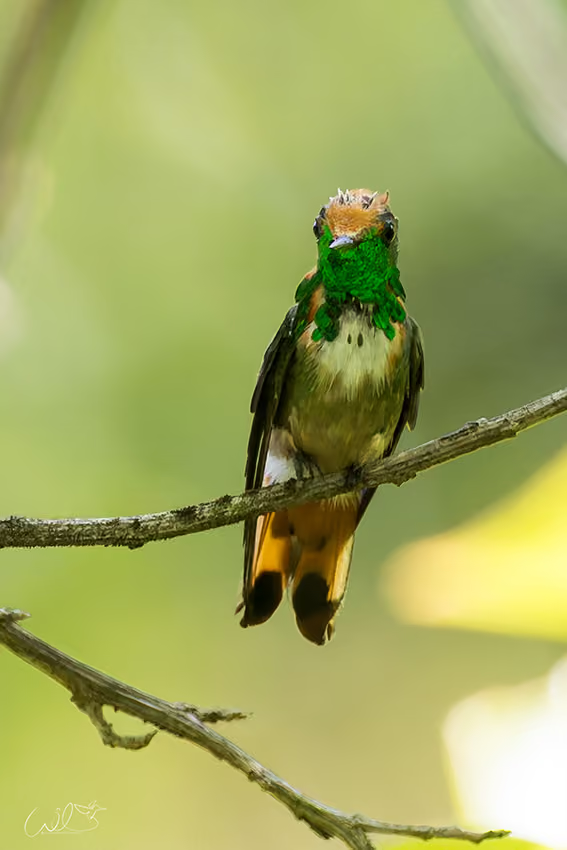
This year, on the Atoyac leg of a much longer trip through the Yucatán and back, the mountains finally gave me what I’d been chasing: not a glimpse, but nearly two hundred frames, photos of the male’s gorget—that beautiful patch of color under a hummingbird chin—firing properly in the light for the first time I’ve managed to catch it. I’m not saying that to brag about the photography—plenty of birds are technically harder to shoot. I’m saying it because the years it took are the actual data point here. If someone who knows this coast, has the right gear, and has the patience for it can still go home empty-handed trip after trip, that tells you more about how few of these birds are left than any population estimate on its own ever could.
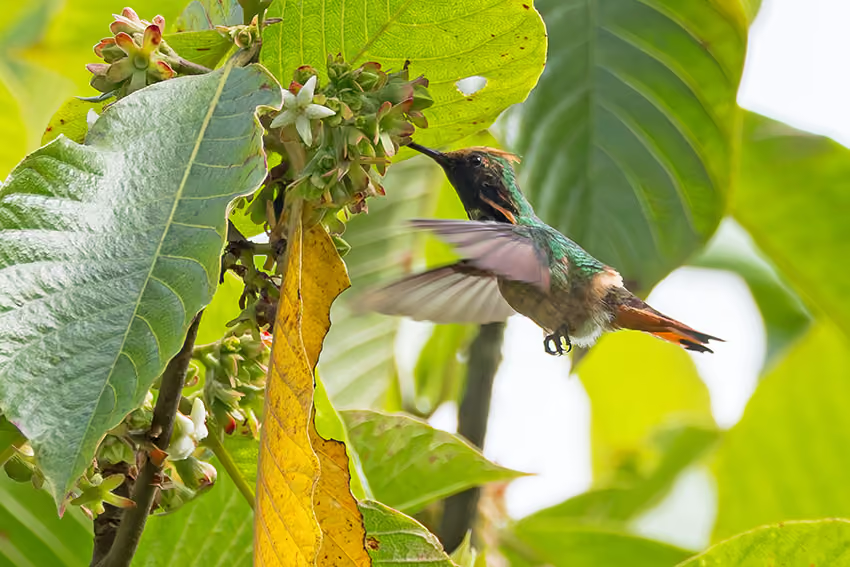
While I was there, I watched something I hadn’t expected to see: a White-tailed Hummingbird —Eupherusa poliocerca—a Near Threatened species found nowhere but in this same sliver of Guerrero and a little of western Oaxaca—who pinned a male coquette against the ground, raptor-style, and drove him off the flowering bush that had drawn every hummingbird in the area. The coquette survived. He moved to a smaller, less contested bush. This is, in the strict sense, unremarkable—coquettes are small even by hummingbird standards, and they routinely defer to larger species at good feeding sites. It’s a documented part of how they live, not a crisis in itself.
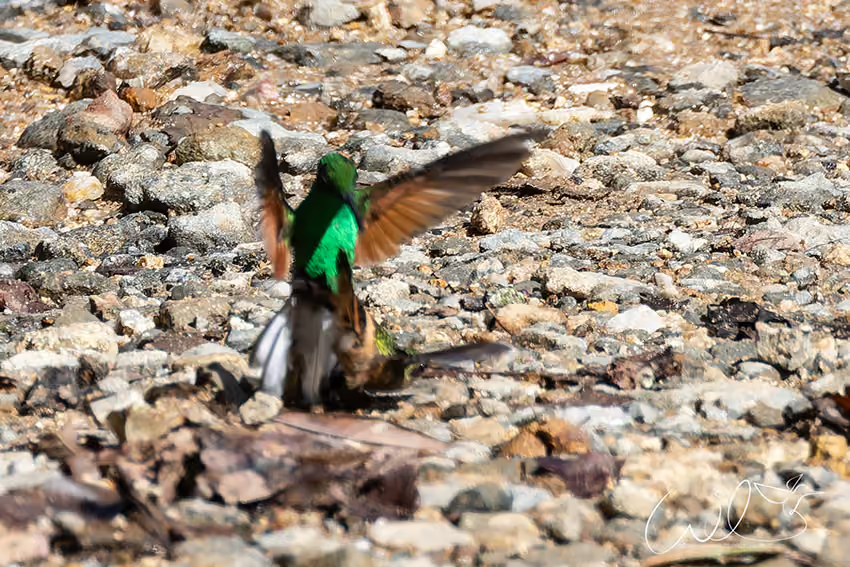
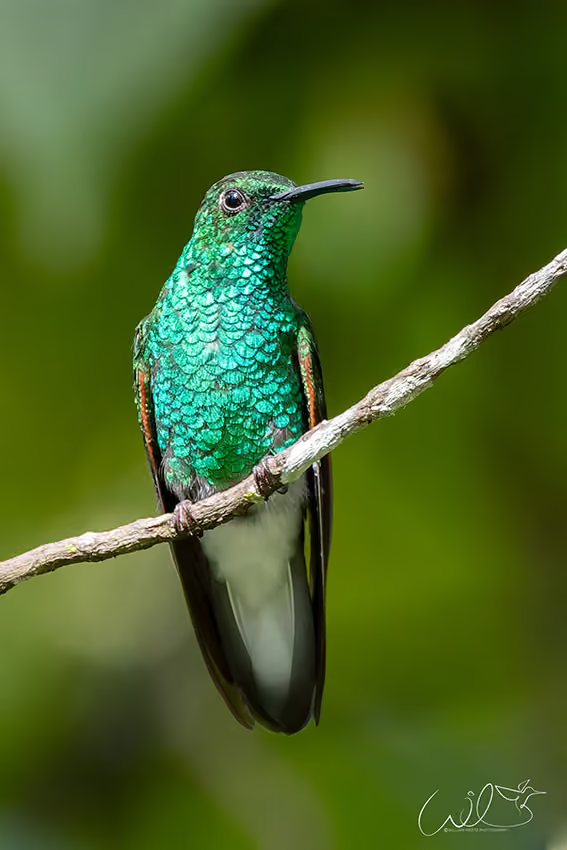
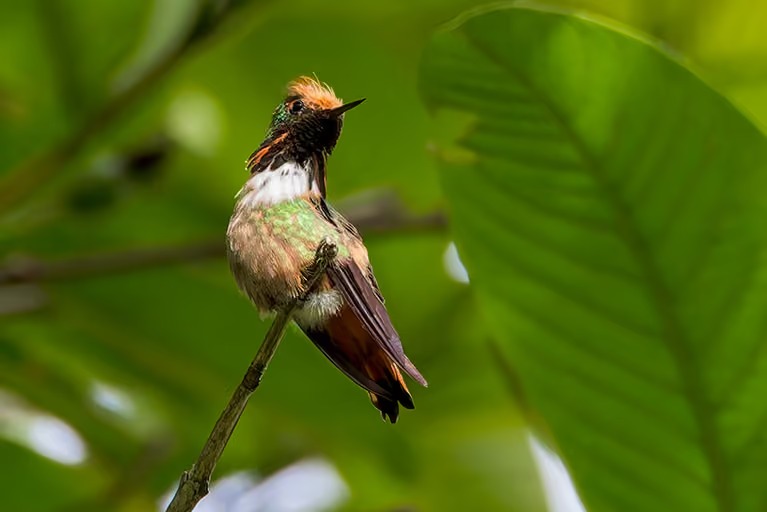
But it’s worth sitting with the fact that the aggressor in that fight is also a species that exists nowhere else on Earth, competing with the coquette over resources that both of them need and neither of them has much margin left to lose. That’s a different article—I’ve sent my notes to a couple of people whose judgment I trust on hummingbird behavior, and I want to do that encounter properly rather than tack it onto the end of this one. But it belongs in the record: even the bullies here are running out of room.
Predation and interspecies squabbling make for a better photograph than a bulldozer does, so it’s tempting to let the coquette’s story be about the drama of the forest—hawks, competition, the occasional bad afternoon at a flowering bush, but that’s not honest. Like I’ve said, the thing actually erasing this bird is slower and less photogenic than that: a corn field where cloud forest used to be; a field cleared for grazing; a poppy field, because the legal economy of these mountains has not given people a better option, and I’m not interested in writing a version of this story that pretends otherwise, or asks subsistence farmers to shoulder a conservation burden that wealthier regions never had to.
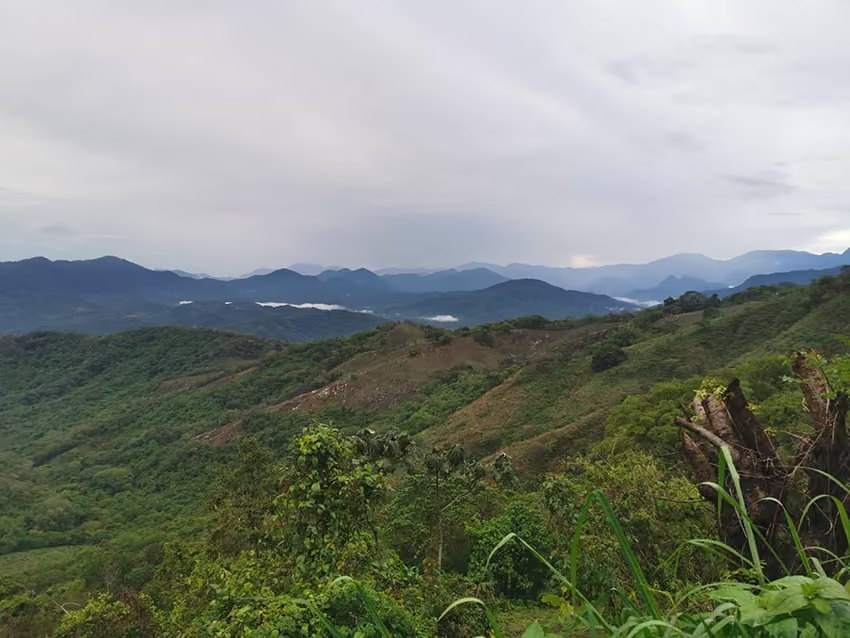
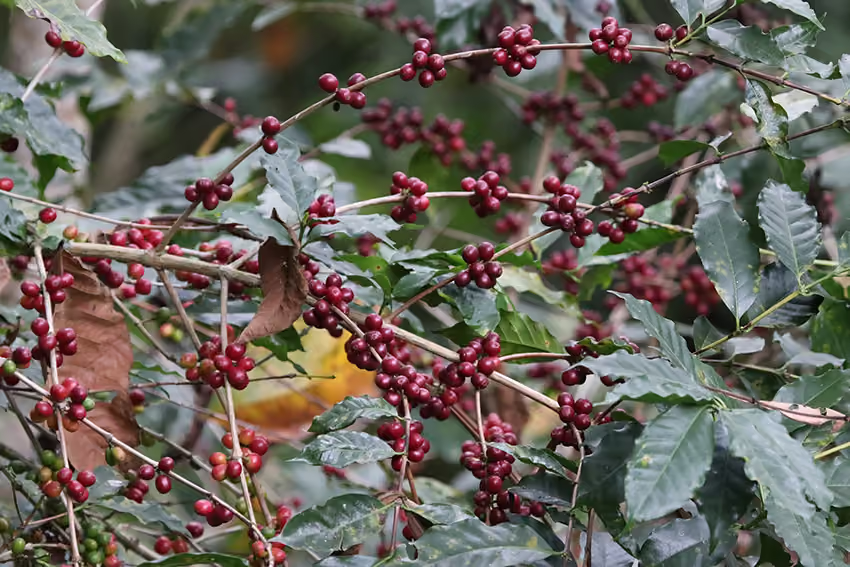
The cloud forest, the coquette’s preferred habitat, covers less than one percent of Mexico’s total land area and is its most threatened ecosystem, full stop—not most threatened, as in among hummingbird habitats—it’s the most threatened, period. When it’s gone from this given hillside, it will not grow back on any timeline (as if that matters to a bird with a 250 individual population floor).
I don’t know how many more years this bird has on that stretch of road. Nobody does, with any real confidence. That’s what a population estimate with a floor of 250 means, an honest acknowledgment of not knowing rather than any sort of false precision. What I know is that I have two hundred frames now of a male coquette with his gorget lit up properly, on a road that may or may not still hold this species by the time anyone reads this, less than a day’s drive from where you’re reading it. That’s not a small thing to have. It’s also not a guarantee of anything.
LINKS
IUCN The International Union for Conservation of Nature