Ventura Manzanares Garcia: "They Call Me Ventura"
After 50 years in Troncones, he’s become a fixture on Main Street and one of the last of his generation
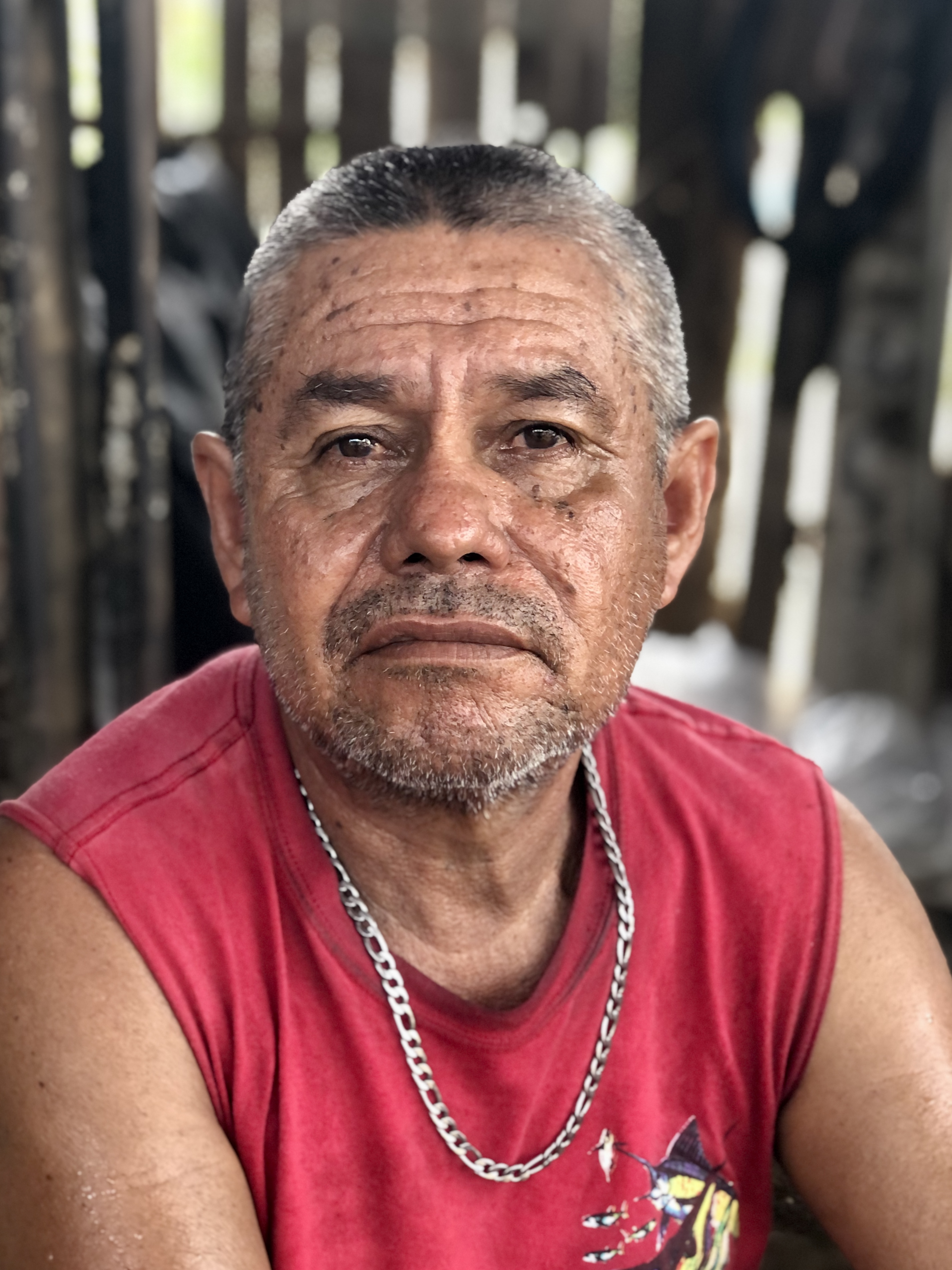
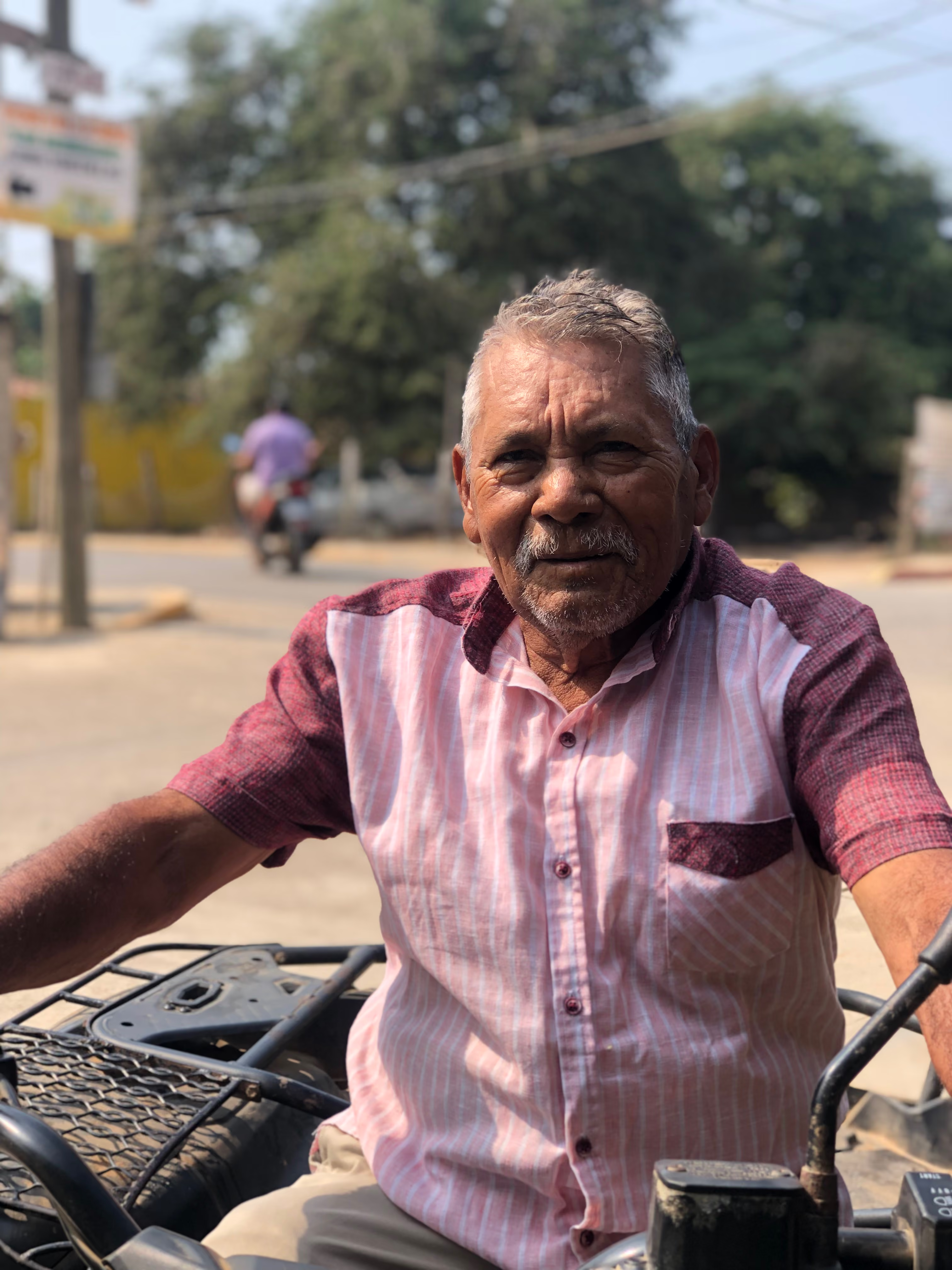
He’s known in Troncones by one name. Ventura. You can find him on Main Street most days, on his ATV, between Materiales Troncones and his house next to the pharmacy. Sometimes you’ll see him covered in dust, coming back from checking on his cows south of town. At 80, he has more energy than people who are decades younger, and he’s one of the few “settlers” who came to Troncones as an adult, with a family. He remembers Troncones before electricity arrived, before there was a hardware store or a pharmacy, before his sons and daughters helped him build the Troncones of today.
%2017.27.38.avif)
.avif)





.avif)

%20(Spanish)-2.avif)



LOT: Where does your name come from? Ventura?
Ventura: I don’t know. I think they took it from a church calendar. I never asked my parents.
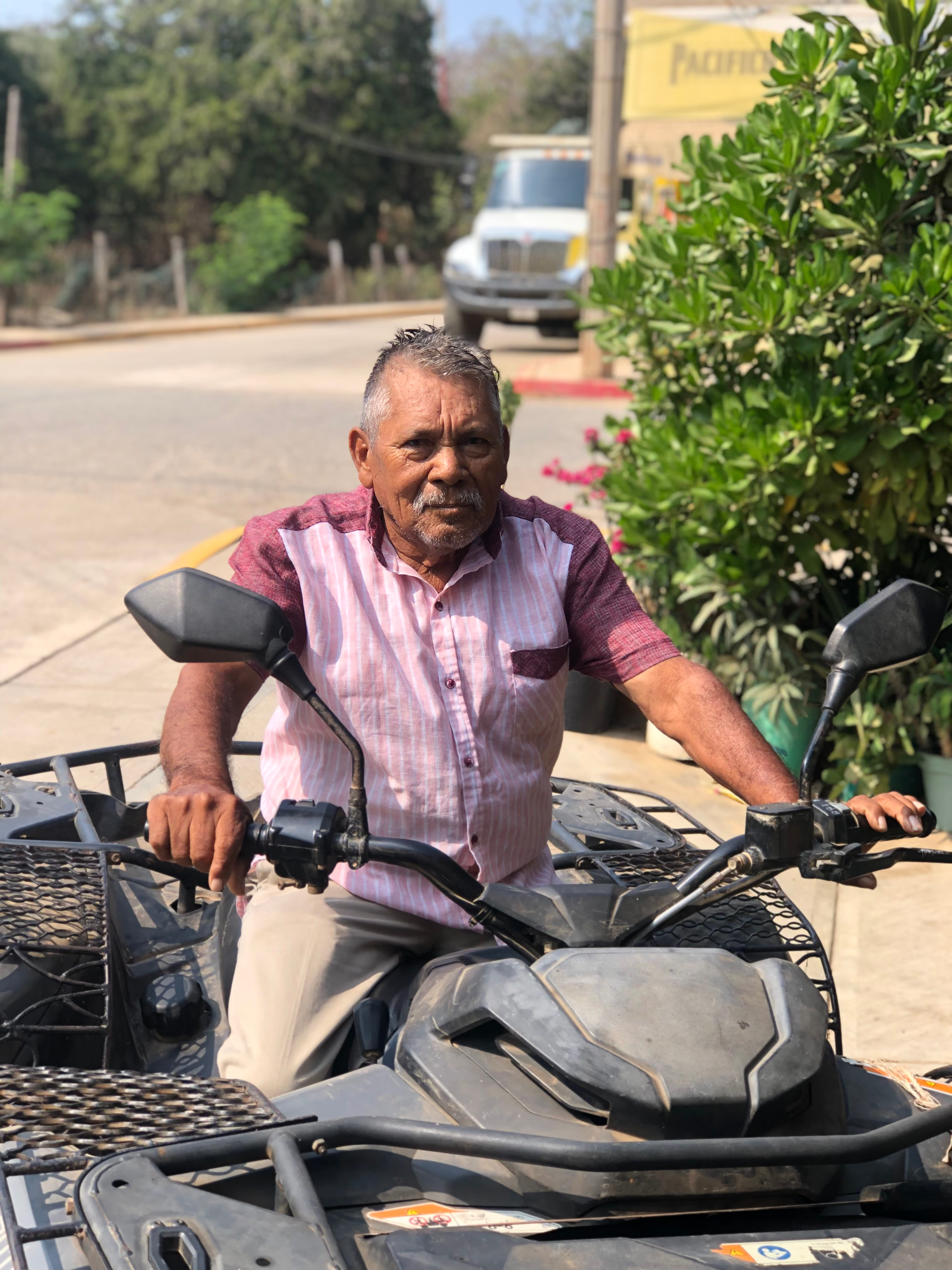
LOT: When did you arrive at Troncones?
Ventura: I arrived in 1976. I was about 29 or 30 years old, with four children. We were among the 40 families who came from Infernillo.
LOT: Which children came with you?
Ventura: My boys. Chico, Genaro, Octaviano and José, who’s died.
LOT: And Benita and Minerva [the owners of Materiales Troncones and Farmacia Troncones]?
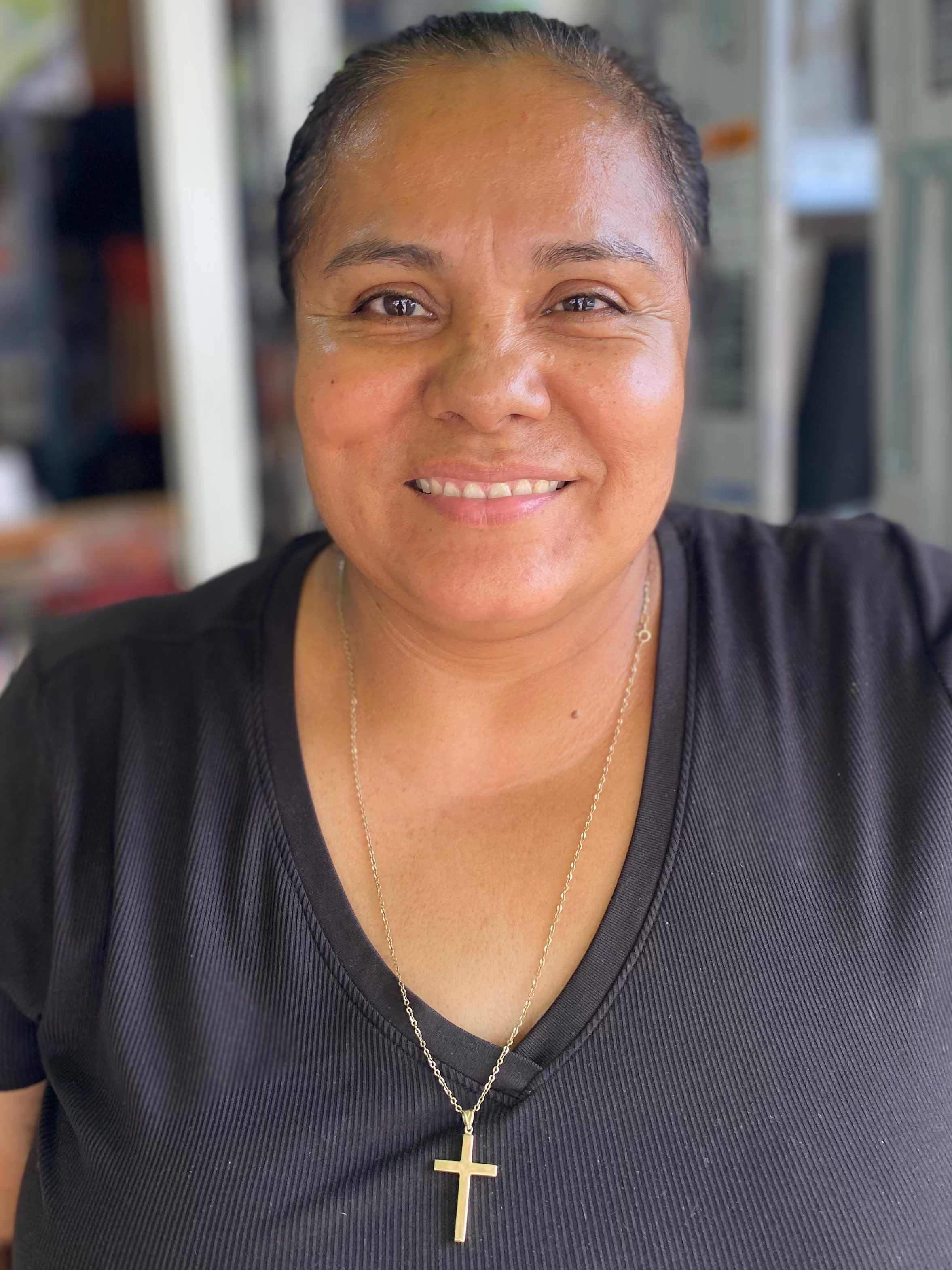
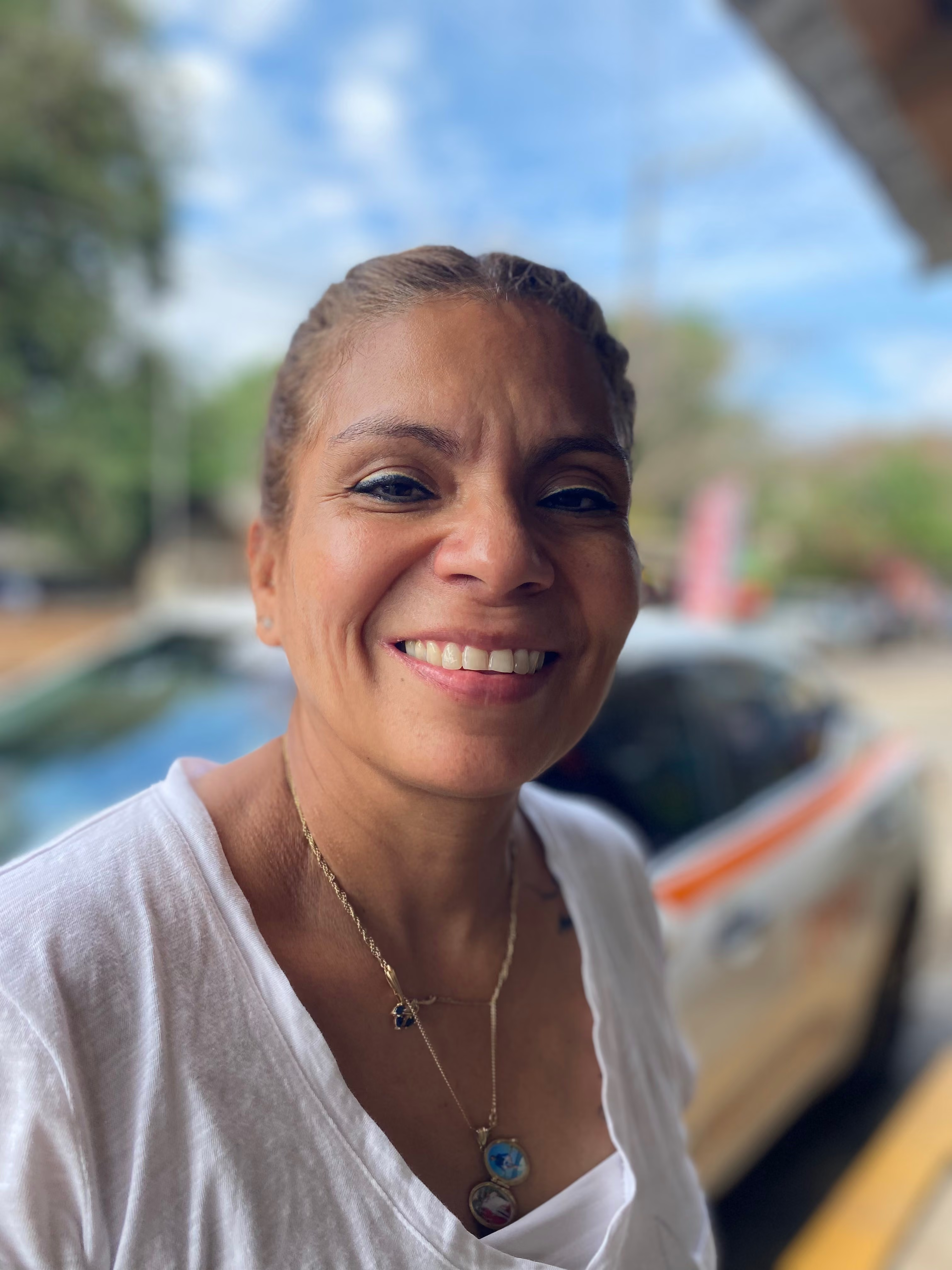
Ventura: My girls. They were born here, in Troncones. So was Sergio. He’s dead, too.
LOT: What did you find here in 1976? What was the town like?
Ventura: There were very few people, and the few houses that were here were made of laminated cardboard.
LOT: What did you dedicate yourself to doing?
Ventura: I planted corn and sesame, and raised cattle. I started buying cattle.
LOT: Had you done those things before?
Ventura: Yes, in Infernillo. I did the same. Planted corn, sesame. Had cows.
LOT: And corn grows well around here?
Ventura: In that time, it did. It rained more then. It rained more in the summers, and it would rain from time to time in these months. There is almost no rain right now. It used to rain more.
LOT: How did you start supplying machines and materials, and selling those things?
Ventura: I became a partner with a friend from Mexico City, un Chilango. His father said, “Put a hardware store here. It’s going to be needed.” There wasn’t a lot of building going on, but it had started. A little here and a little there. [Chilango is a term describing a resident of Mexico City, often used derisively outside the city.]
LOT: What year was that?
Ventura: That was about 1996. We started buying construction material and started selling and selling and selling. Dewey had arrived by that time, and had sold a few lots. Once those lots sold, and people could see it was possible to build here, more people started to come, to buy and build.
LOT: Dewey said you had the only car.
Ventura: It’s true. I had the only car in Troncones. Until he came. I sold a few cows to get that. Old cars were cheap then.
LOT: When you arrived, how many of your brothers and sisters came with you?
Ventura: I came alone.
LOT: Alone?
Ventura: No brothers or sisters. Only two uncles. Tomás, who was with Gaby. And Deciderio.
LOT: Maria Solis told me there was a man, Don Pancho, who was unfriendly and rude to the families from Infernillo.
Ventura: Yes, el comandante. God bless him. I wasn’t here, but I heard he got drunk and started shooting. Tomás shot him in self-defense.
LOT: What do your children do here now?
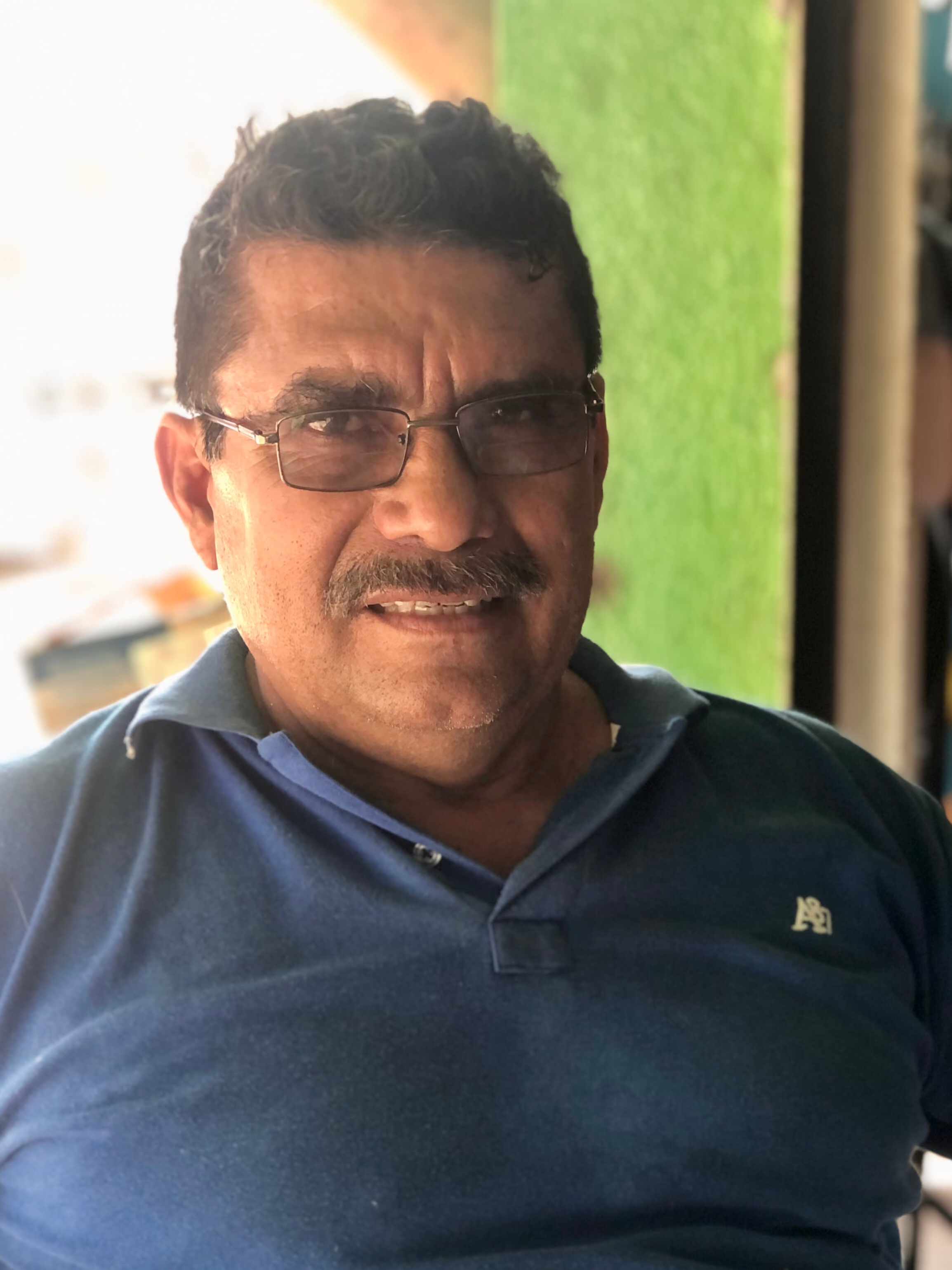
Ventura: Chico is a carpenter, who has many other carpenters working for him. Genero runs Hotel Rincón Del Cielo. Octaviano works in the hardware store and so does Minerva. They run that business. Benita has the pharmacy.
LOT: How many grandchildren do you have?
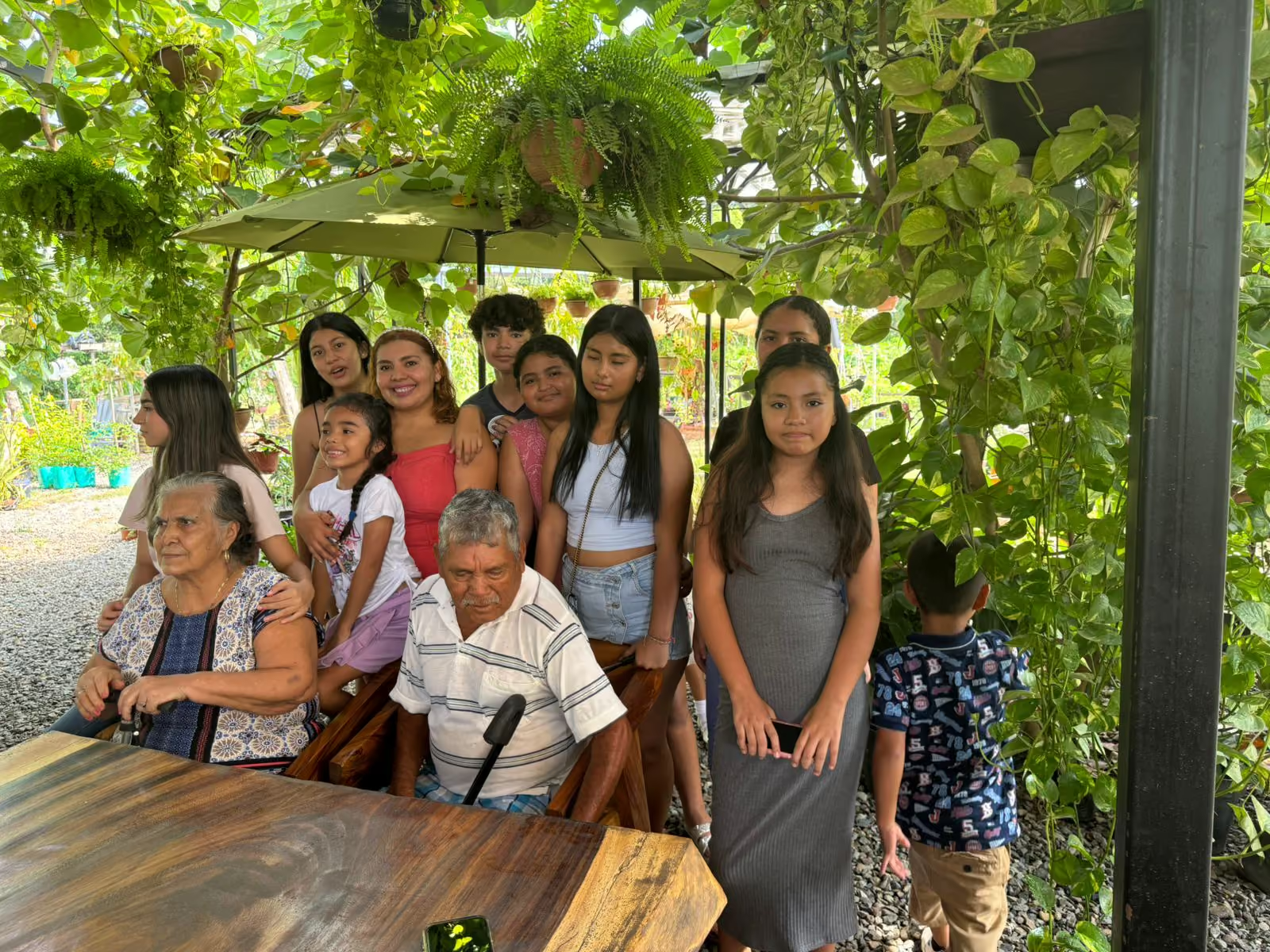
Ventura: Chico has four. Octaviano has four. That’s eight. Benita as three. That’s 11. And Minerva has two. That’s 13. José has two. That’s 15. Sergio has two. That’s 17.
LOT: And how many great-grandchildren?
Ventura: Two, four, five, six, eight, nine. I have nine great-grandchildren.
LOT: What do you do for fun now, when you are not working?
Ventura: I’m off to see my cows soon. I have about 60. They’re on my land to the south.
LOT: Do you still grow corn?
Ventura: A little. I always plant a little, still.
LOT: Why to the south?
Ventura: That’s where I have the pasture for the cows. I don’t plant corn there. I plant that away from the ocean, on land I have above town. It grows better there.
LOT: What do you do when you are not working with cows and the corn?
Ventura: Then, I go back to the machines, the trucks. With Minerva and Octaviano.
LOT: When you started, did you run the big equipment?
Ventura: Just the trucks. Not the backhoes and bulldozers.
LOT: Where did you find the people, or teach the people, to run the equipment?
Ventura: Well, I believe one teaches oneself. You learn what you need to know. Even then, there were people with that experience in Pantla. They came here to work. Most had taught themselves. They taught others.
LOT: You have the hardware store now for almost 30 years. What do you like most about that store?
Ventura: You have to give service to your community. There is construction work here, and we provide that service for the people. In the beginning, I wanted to make it easy for people to do the construction work they wanted to do. Now, they come to us. They’re not wasting time looking for what they need. They know they can come to us.
LOT. What is your wish for Troncones?
Ventura: My wish is that Troncones continues to prosper. More prosperity, tranquility and peace. That is what good living is all about. Being able to stay at ease, stay adaptable.
LOT: When you arrived, there was no street, no buildings?
Ventura: The road from the highway was already there. But the buildings. Nada [Nothing]. The road was made at the same time the highway from Zihuatanejo to Lázaro Cárdenas was built. That may have been around 1966. It’s been re-built, from the mountain to the beach, three or four times since then.
LOT: Was there ever a road from the mountain to Majahua? A back road from Troncones to Majahua?
Ventura: A way was made, but now it’s only used by bicyclists. It’s still there. It comes into Majahua a little way up the mountain, above the road to Majahua Palms and La Pequeña. It’s probably not a long time until that gets opened up again.
LOT: How many of the people who came here as adults in 1976 are still alive?
Ventura: There’s only one. Maximino Solis. Most days, you can find him walking around town. The rest are all dead.
LOT: Of all the families that came here then, which one is the biggest?
Ventura: The Solis family.
LOT: Has anyone written a history of Troncones?
Ventura: There’s no history. None. A couple of people started asking questions saying they were going to write something. They were not from here. One person from Veracruz and another from Morelia. No one has done what you’re doing, talking to people, recording it, writing it down, publishing it, one person at a time.
LOT: You said your land is south of town and towards the mountain. You also have the hardware store and this house on Main Street. Who else are the owners on Main Street?
Ventura: Most of it is the Solis family. That’s the way we split it. Each family having a part. Many have sold since. I’ve kept mine to the south.
LOT: Did the families work their land together? To grow food? Build houses?
Ventura: It was more common that we each worked our own land. But we helped each other when things got hard on one of us, when there was illness or death.
LOT: How do you describe the Manzaneras family?
Ventura: We’re united and hard-working. It was an uncle who pushed for us to come here. That uncle was a friend of the governor of the state, Rubén Figueroa, in Chilpancingo, and the governor told our uncle there would be more work and more opportunity here. We came here because we were very poor. There was no work in Infernillo. Here, the sea could feed us, and the land had a better yield. That’s all we needed.
LOT: What about water? For the houses? To drink?
Ventura: There was a water by a little stream that went down to the bridge. Further up, there was a waterhole and from there we drew water. When more people started to arrive, that water was not enough. Rubén Figueroa equipped us with a well, a water tank and a pipeline network. That brought water to our faucets. Right now, we have three wells and they are enough for now. More or less. But it hasn’t rained much. When it rains, there’s plenty of water. It gets held in an underground reservoir. That’s where our water comes from today. Our water gets scarce when it doesn’t rain.
LOT: And when did electricity arrive to Troncones?
Ventura: It arrived in ‘84 or ‘85. The people of Troncones paid for it, to bring it here from the road. We were charged 20,000 pesos at the time [equivalent to paying perhaps 800,000 pesos today]. It was done fast. In about a year.
LOT: Were you living here for eight years without electricity? Without lights, fans, refrigerators?
Ventura: It was about five years until we had generators. Before then, at night, we had candles and lamps. We burned oil so we had light. There were no fans, only the breeze from the sea. It got hot at night.
LOT: What’s best about being in Troncones now?
Ventura: It’s still very quiet here. Peaceful. We have the sea, the land. We have everything we need to thrive.