La Boca Through Omar’s Eyes
Environmentalist and nature guide creates a documentary of a local habitat
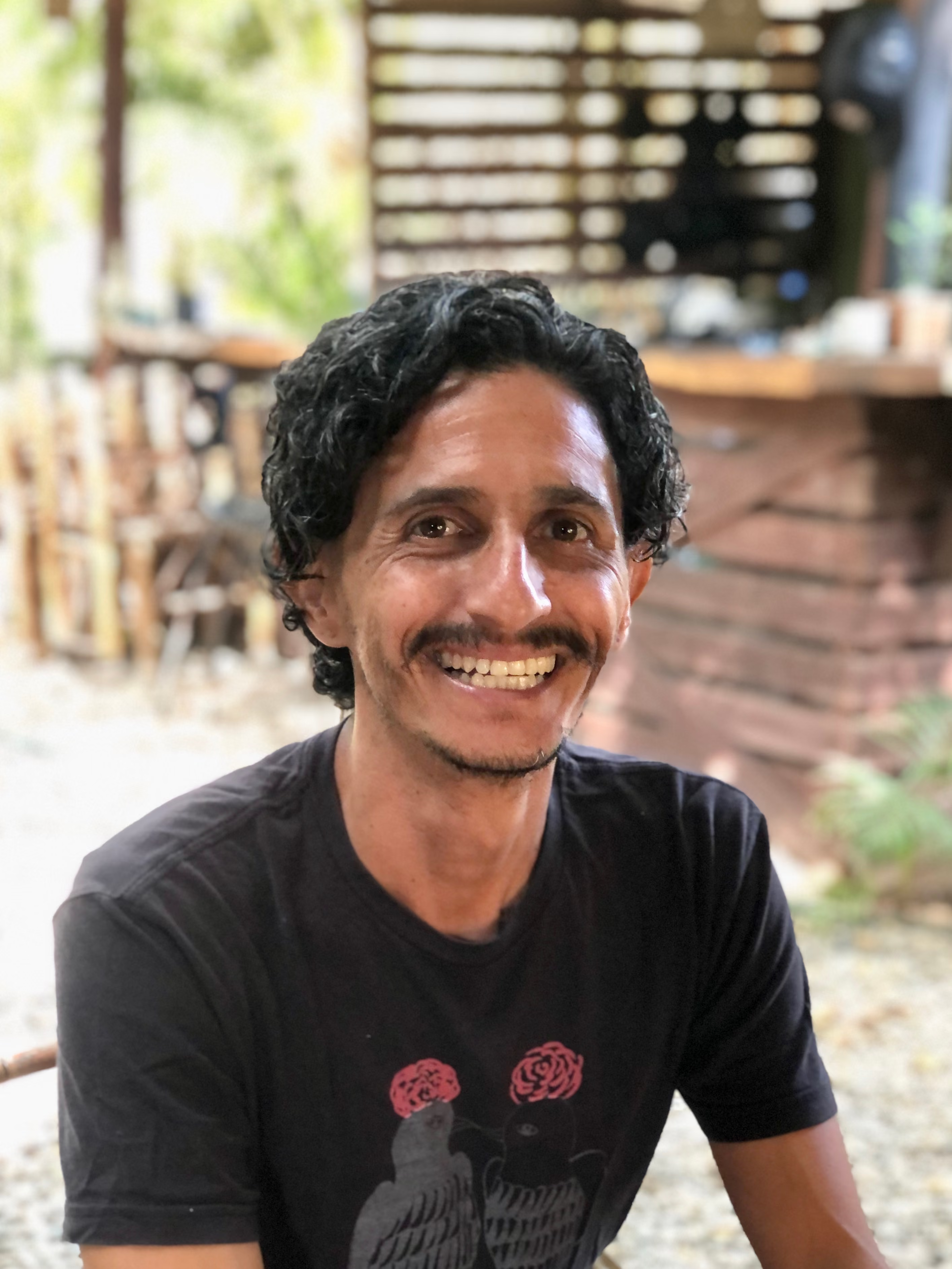
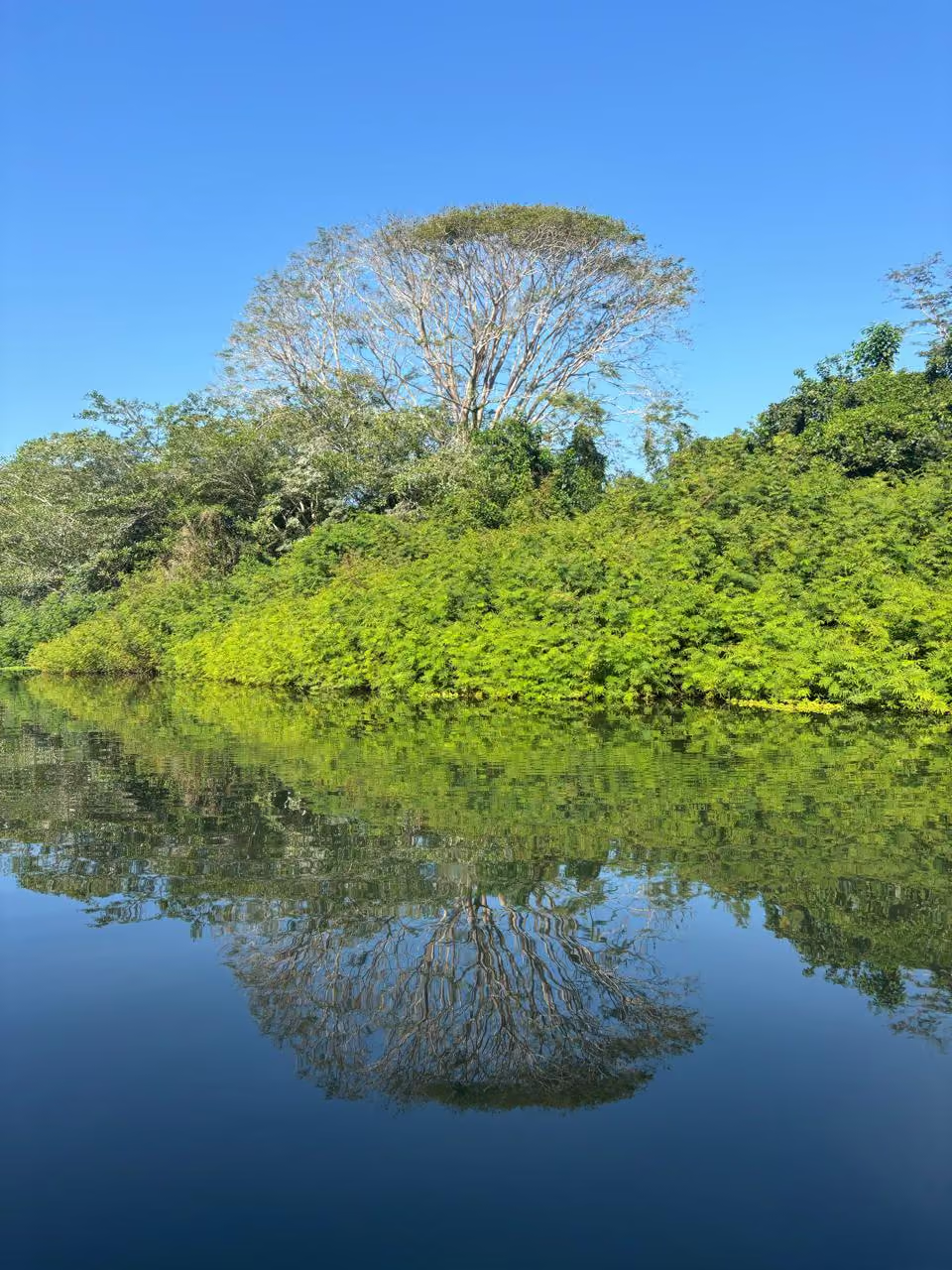
One of the most precious resources of our area is its natural beauty—seemingly unspoiled land and sea—barely touched by human development, construction and debris. That’s starting to change as Troncones and Saladita expand out from their centers, and encroach more and more on the estuary at La Boca Lagunillas. Omar Sierra Gutiérrez knows the area around the estuary well. He leads tours daily for Costa Nativa, taking the nature-curious along the lagoon and up into the mountains. This winter, Omar and a few friends created a short film—a sort of tour of La Boca Lagunillas—revealing the places and people he appreciates, and featuring Rosalio Villegas Taveras, “Chalio”, the king of the iguanas.
%2017.27.38.avif)
.avif)




.avif)
%20(Spanish)-2.avif)
LOT: Have you ever done a film before?
Omar: No. This is my first. I’ve always wanted to do one.
LOT: What was the inspiration?
Omar: The region itself. Its biodiversity, culture, and community. The whole richness of this place. It’s what I do here. I’m in nature every day. I’m immersed and mesmerized every day and, on my tours, I can see the changes and impacts we as humans are having. I wanted to capture the beauty we have, its richness, and build the awareness about what we could potentially lose. That would be a catastrophe for all of us who live here, who make a living here. It’s important we work with nature. She’ll provide as long as we take care of her.
LOT: How did you put a team together to shoot it?
Omar: I was born and raised in Mexico City. One of my best friends growing up, Gabriel Bravo, really got into photography. About 25 years ago, when I became interested in photography, Gabriel was the one who taught me how to use the camera, the exposure, the aperture, etc. His work has always been an inspiration for me. He’s not as much into nature as I am. He’s more anthropological and social, but he’s encouraged me to record what I see here. For the last seven years or so, I’ve been wanting to do a documentary. And then every year, every year, every year, I postpone it. And then one day last August I was talking with Gabriel and I told him the idea. He was like, “I’m in, let’s do it.” He helped me shoot, as the videographer.
LOT: How long did it take to shoot it?
Omar: We did that in like six or seven days. And we got the whole story, we got what we wanted—about nature, the community, the fair—the interesting mix we have here, with the locals from Troncones; the Mexicans like me, who weren’t born and raised here; and the US and Canadians—how the three of us live in this cool community.
LOT: What did you learn while you were shooting it?
Omar: That nature is struggling a bit here, and that speculation and greed are setting the real estate market.
LOT: Where do you see that?
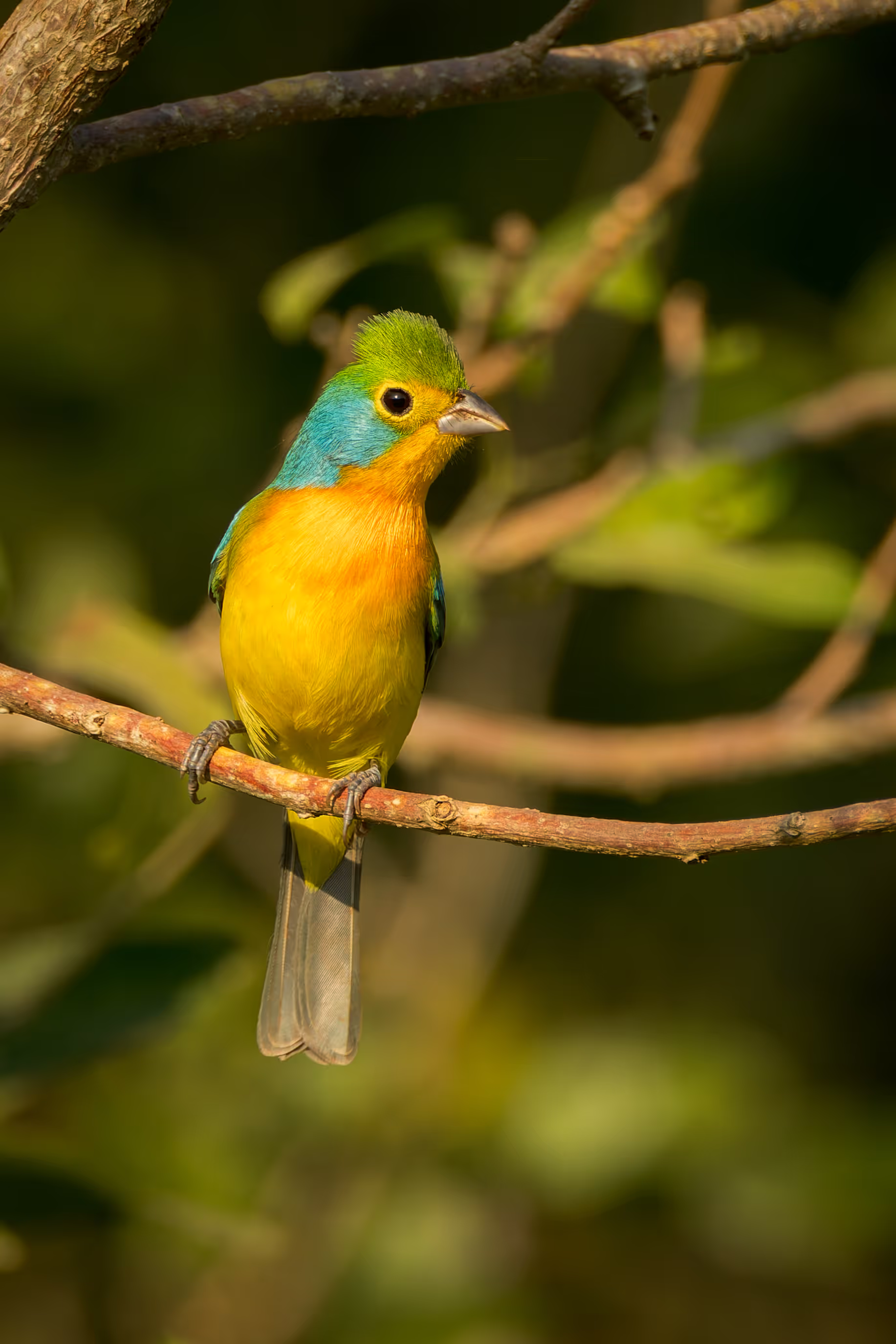
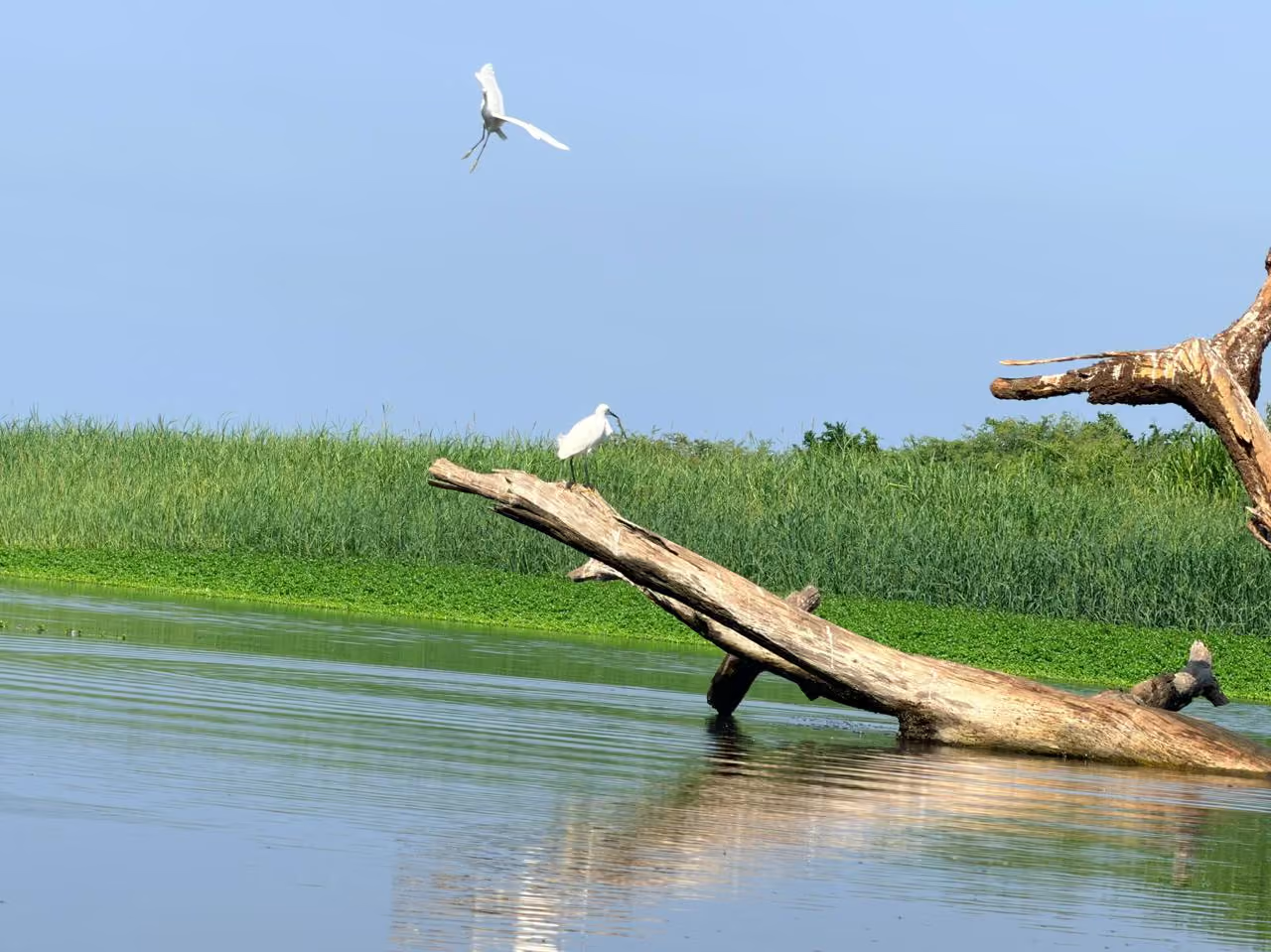
Omar: Like in the low level of the water in the river. Like how every year I see less birds at the estuary. I don’t know if that’s something related with the river, or if it’s because there are less trees or more noise from more development, or if it’s just related to climate change, or if the birds are changing their migratory routes. But what I see looks like the impact from people. That new development they’re doing on the south side of Troncones, it has a road that looks like it’s four lanes wide. That’s going to have an impact. Development is going to happen no matter what, but if you’re going to cut some trees, make sure you plant like 100. What they’ve planted at that development are palm trees and palm trees are not even from here. And they need a lot of water to get rooted. That’s going to have an impact. It’s impact after impact after impact, just like a domino effect. I can see this place is growing and the economic direction that this town is taking. It’s going to attract people who think “let’s invest, let’s make money”. That’s how developers work—they develop, they speculate and, if something changes, and they don’t like it anymore, they will go somewhere else. But who stays here? The community and the people. So, it’s the people who stay here who are the one who are going to have to deal with the impacts. Right now, Troncones is running short of water and starting to get water from other places. That’ll have an impact, too. I also noticed that the people who really want to be here really want to protect the environment and the culture.
LOT: Who can you approach to protect it?
Omar: My friends from here—like Frank Cruz in Saladita, Alejandro Rodriguez in Troncones and Rosalio Villegas in La Boca. Those are a few of the people who I wanted to be part of the documentary. You know, nature doesn’t have a voice—so that’s what I’m trying to do—I’m trying to give nature a voice, through this documentary, through the things I do on every tour. When I take a tour out, I try to inspire people. I want people to know, first, that Mexico is not dangerous and, second, that it’s beautiful and we have a lot to offer. We have been offering our gifts to the whole world for 500 years and we still have a lot to give—what we have is precious and valuable—but we don’t want to see it go to waste. We need to realize that what we have now is not inexhaustible. We need to be more careful, kind and aware of our natural resources. That sort of change doesn’t come from just one person or just one film. We need more people to be inspired and to inspire others. I see Frank, Alejandro and Rosalio doing that.
LOT: How long will the final cut be?
Omar: We’re working on it. The idea is to have a 10 or 12-minute film. We’re in post-production now, trying to have it done for March 31st, to submit it to a few film festivals, including the Save the Waves one. That’s the festival we had here in October, in Troncones and Saladita.
LOT: What are you doing for music?
Omar: That’s another cool thing. Another friend is helping me. Antonio Garrido. I met him during high school and we’ve stayed friends. Antonio’s a musician and a producer. I didn’t have much of a budget to do this—it was almost nothing—I had nothing for the property rights and usage rights for music. I’m getting it from Antonio. He’s really good at synthesizer and guitar and everything. And we are also using music from Todd Clouser in Saladita. He’s a talented, and really, really good musician.
LOT: How did you shoot your film?
Omar: We had three different video cameras, a drone and an underwater camera. And a couple of nice microphones. We did aerial shooting. I did the underwater shooting, getting the surfers on the break and the fishermen on the coral reef.
LOT: And where are you editing it?
Omar: Mexico City. With Antonio.
LOT: Where do you imagine you’re going to show it?
Omar: The idea is to submit it to Save the Waves Film Festival. The deadline is the 31st of March. That’s soon. We need to finish it next week and then give it a last review and check the subtitles. The film is in Spanish, of course, but we have a couple of interviews in English. Each part of the documentary is going to have subtitles—the Spanish with English, the English with Spanish. Save the Waves is the first submission, but the idea is to show it wherever we can. We’re going to try other short-film film festivals. And we’re also thinking about having a couple of parties here to show it to the people here.
LOT: Who else was on your team?
Omar: For shooting, it was me and Gabriel. Antonio is helping with the post-production. Frank and Ernesto at Hacienda Plaza helped us cover some costs. It’s interesting that people I thought that were going to help, were like—nope. They said they couldn’t. I had three unexpected sponsors, a few friends, families from Vermont, New Mexico and California. When they heard what I was doing, they wanted to help. They told me, “I believe in what you’re doing”. I didn’t make any money from this. All the funds were for Gabriel so he could come. And now for Antonio’s time. The goal isn’t to win awards and money. The goal is just to put it out there so people can see what kind of paradise we live in, and so we can keep it protected.
LOT: Is there a “star” in the film? Someone whose presence came through in a way you didn’t expect?
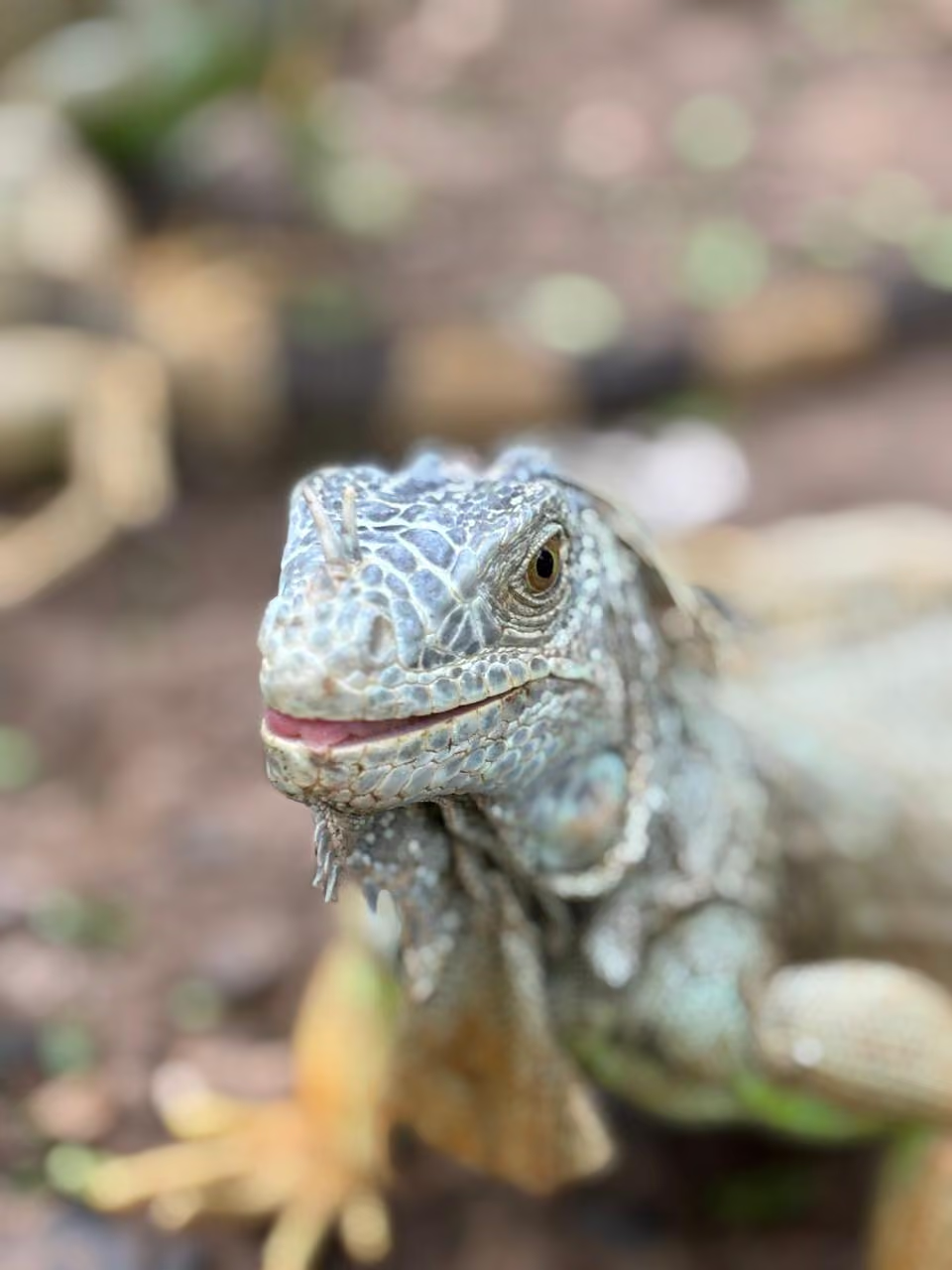
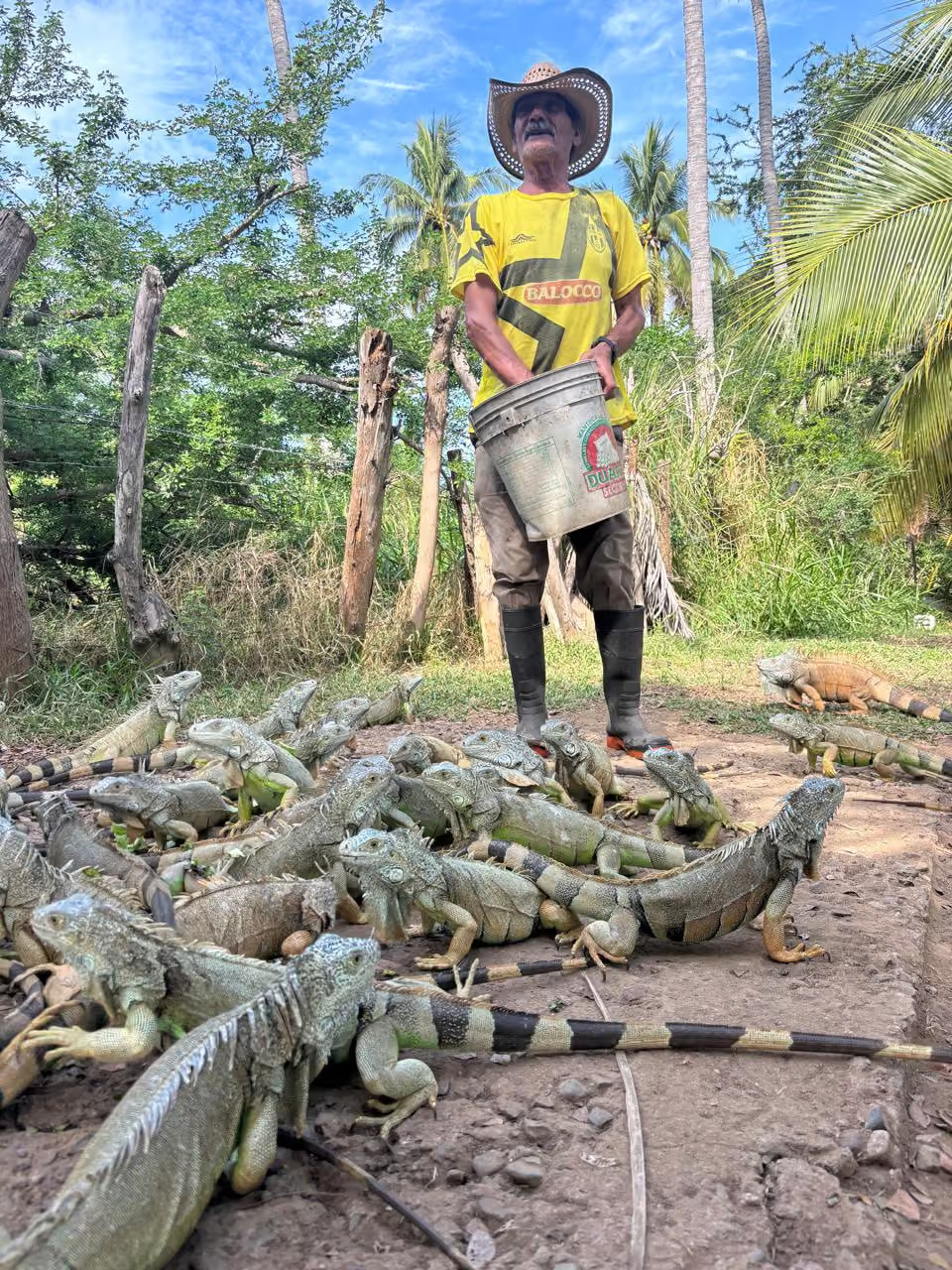
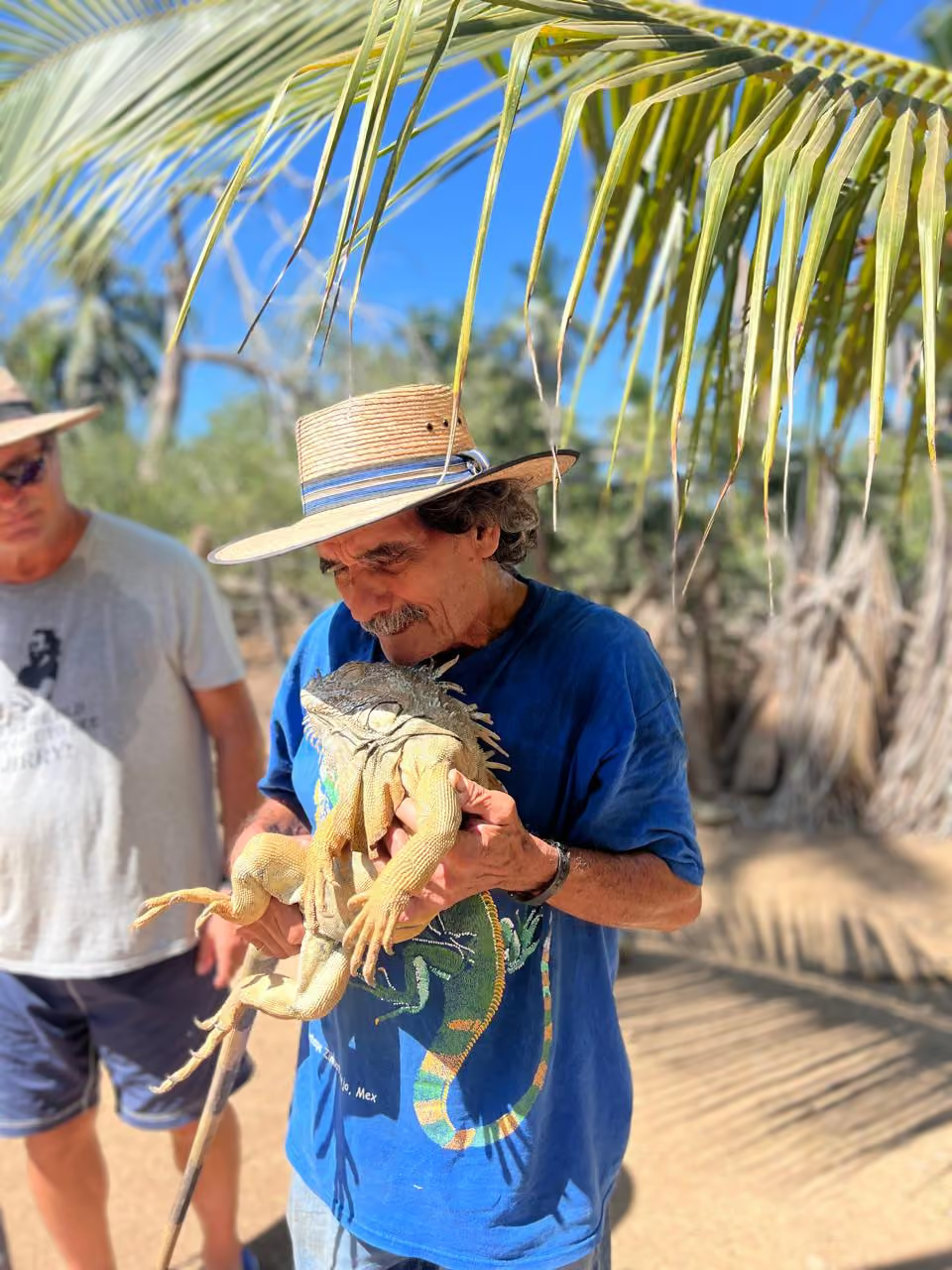
Omar: The biggest star was the biodiversity of this region, but the other was Rosalio. He’s the “iguana whisperer”, El Rey de Las Iguanas, and someone who’s decided to speak out for nature and protect it. He takes a central role in the community, social and anthropological side of the documentary because he’s a guardian of our biodiversity. And he’s doing it because he wants to, not because someone is paying him. He’s just doing it. He likes taking care of wildlife. And besides that, he’s smart, he’s funny, he’s kind. We didn’t center the documentary on him, but he’s definitely a star.
LOT: What did Rosalio have to say that stuck with you?
Omar: How important it is to take care of our wildlife. He calls them animalitos, little animals. He refers to every kind of animal that way, with fondness—the birds, the iguanas, the crocodiles—whatever he comes across. He likes taking care of them. Always. He’s always like that. And you can see he does it because of love and passion. Not for any other reason. Every time I talk to him, he teaches me something new, whether it’s about the iguanas or the birds, or a nest or a tree or a flower, a fruit, a food source I didn’t know about. I don’t think he’s trying to teach. He’s just like that—a professor, a teacher, a maestro, who likes transferring the knowledge.
LOT: What’s the briefest brief you can give on what the documentary is about?
Omar: The spirit of the documentary is to show our interconnectedness and systemic interdependence, that by removing one piece of the puzzle—the mangrove, the sand bar, the man who takes care of the iguanas—everything else falls apart. And how special it is that La Boca unites us. How it’s the place where fresh water mixes with the ocean water. How it creates a place for surfers, fishermen, birds and marine life. How La Boca is a place where our community renews itself. The documentary has three acts, like a play—the symphony of the coast, the guardian Rosalio, the prefect wave. Each act shows how our area is a living organism, not just a tourist destination, and how caring for it is a shared responsibility. Our biodiversity here is more than just pretty birds and pretty trees. It’s more than just good surf. It’s income for the fisherman, local businesses, tour guides, salt workers, farmers, drivers, house owners and house caretakers. It’s about the love of Mother Earth, her rhythm and balance, which is something we all depend on. That’s what the documentary is about.
Post-script: Omar and his team made their deadline. The film has been submitted to Save the Waves. There’s also talk of a screening in Mexico City and one here. More to come on all that.
LINKS
Save the Waves: https://www.savethewaves.org/
Rosalio: https://www.facebook.com/p/El-Rey-de-las-Iguanas-Chalio-100078004921827/
Costa Nativa: https://costanativa.com.mx/