LA HIGUERA
A visit to a spectacular home suspended off a Troncones hillside
A sign appeared on the road along Manzanillo Bay a few months ago reading “La Higuera”. Literally, the fig tree. Following the arrow up the mountainside a little ways leads you to an extremely unique sort of floating house.

.avif)





.avif)

%20(Spanish)-2.avif)


I like looking at new houses and how people make them.
For years, a network of paved streets up into the hill along Manzanillo Bay has been suggesting future development. But the area remained a quiet jungle-like bramble—until trucks started climbing up there in 2023. That’s when the surfers and fishermen started asking, “What’s going on?” From the water, they could see something new taking shape, something unlike anything else being built along the coast.
That got my attention. And I’ve gone up there a lot to see what’s happening.
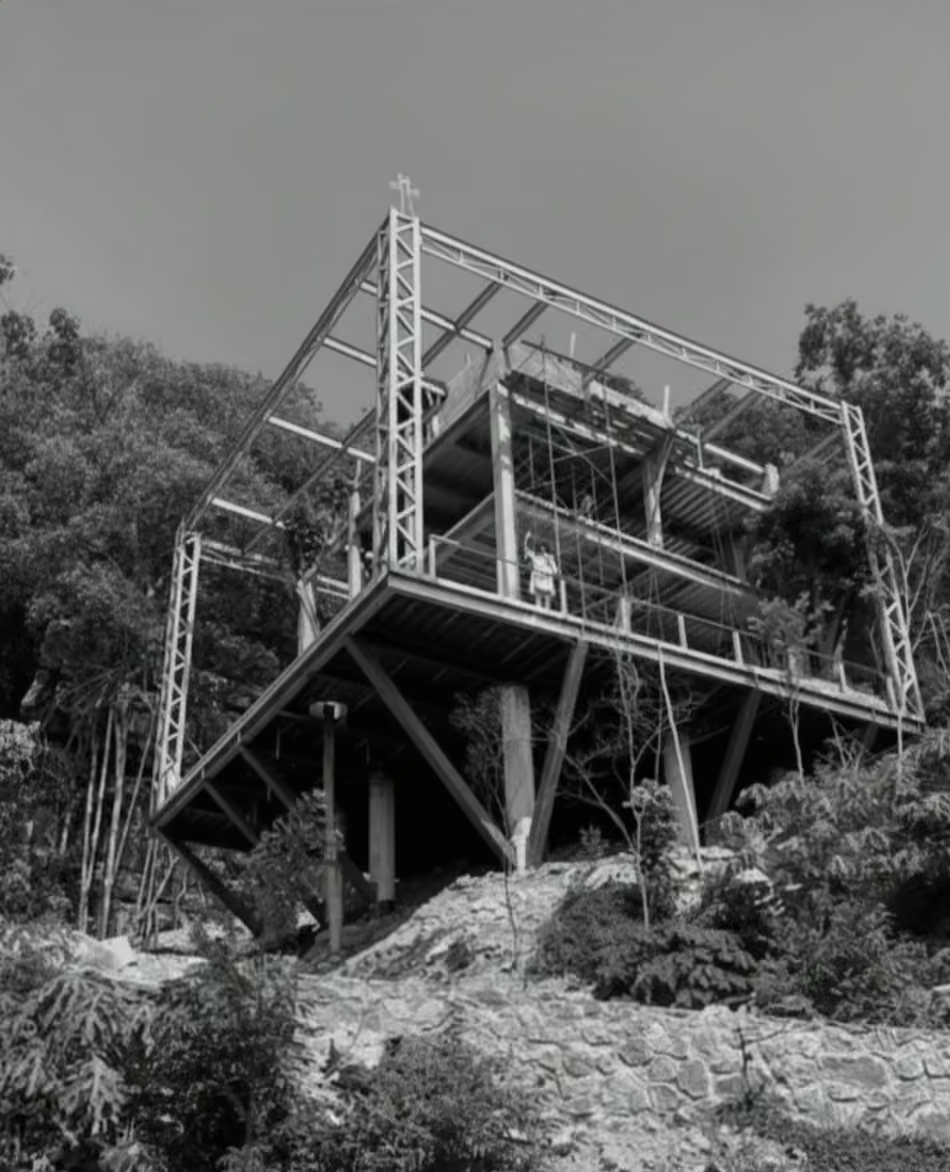
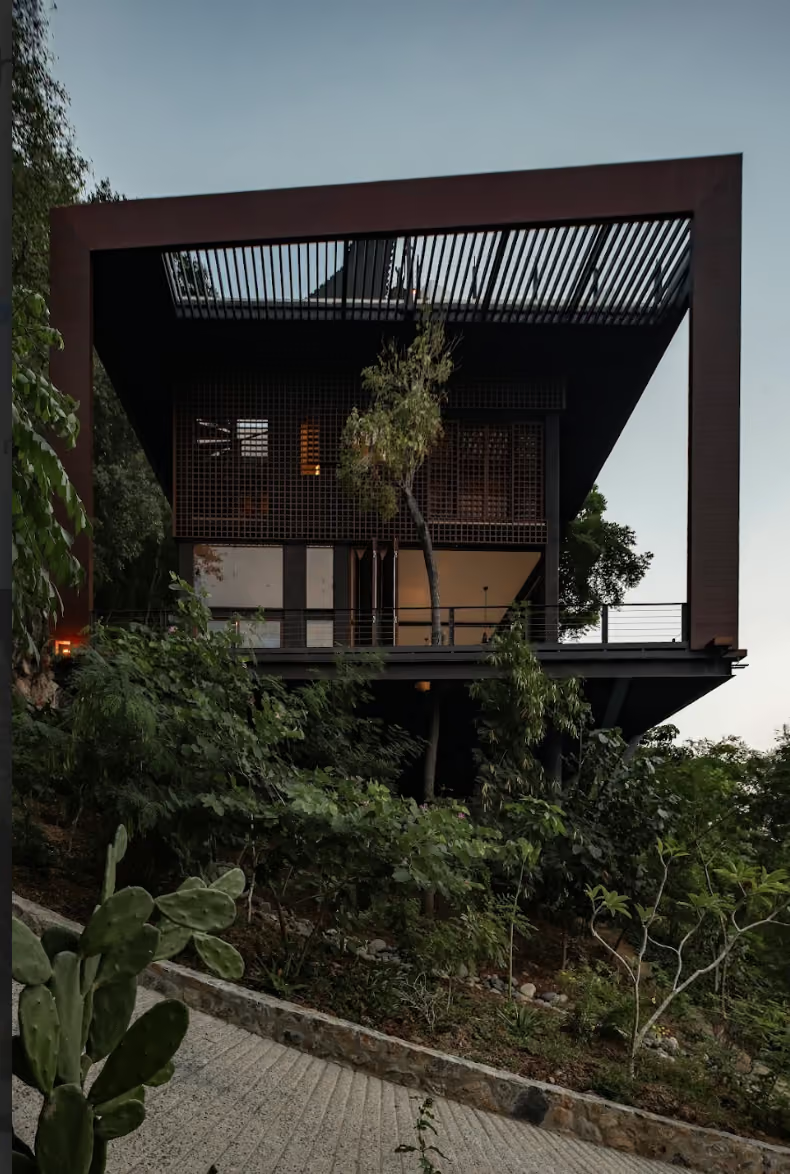
Since then, other projects have started to break ground on the hillside. Meanwhile, the mystery project now has a name—La Higuera. It’s a two-bedroom house, but it still commands singular attention. Its distinct form—a rust-colored cube—juts out from its tree line perch in a way that doesn’t quite make sense at first. It seems suspended, “floating” there, something between a treehouse and a cliff house.
From the street, it’s immediately clear La Higuera is a feat of engineering—hovering overhead—somehow held there.
A steep driveway behind a gate looks a bit imposing, steeper even than the road up to Roberto’s Bistro or the one to Villas El Mirador. It could be a challenge for some cars. “We tell guests to park on the street,” says La Higuera’s co-owner Louise Martin. “Most of them don’t want to drive up.”
I understood why immediately. And I was glad I wore sneakers.
The driveway is steep enough that your body leans forward instinctively. Ridged concrete runs the length of it—designed to slow water during the rainy season—but it slows you down, too. I took it in sections without meaning to—a few steps, a pause, then a few more. And all the while, I couldn’t stop looking around.
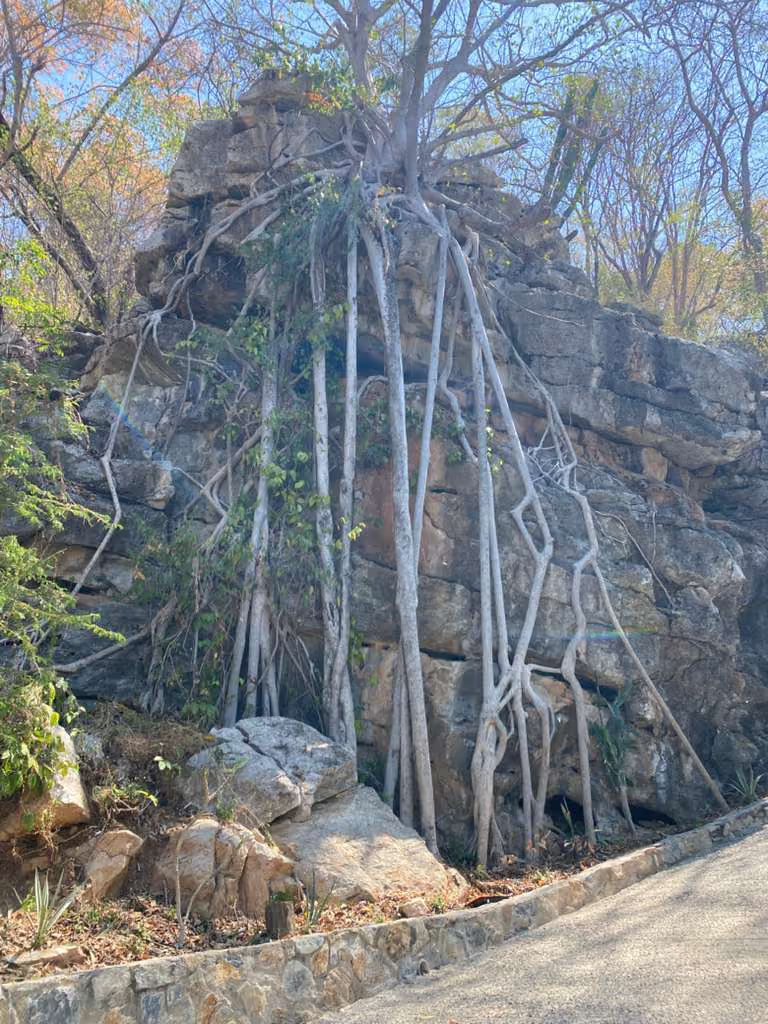
On one side, the house pushes outward from the hill—sharp, geometric, dramatic, improbably confident. On the other, is something just as striking—a massive strangler fig clinging to the rock, its roots gripping and wrapping down the stone in thick, twisting lines. Two things at once. One astoundingly man-made and the other magnificently natural. Wow. Both hard to believe.
And then, almost at the top of the driveway, when I was almost completely out of breath, I reached an opening where a small fountain trickled and a heavy stone staircase invited me into La Higuera’s floating cube. I couldn’t help but say “wow”. Again.
MEET THE OWNERS
Louise and her husband John Martin are Scottish, based in London, and until a few years ago had never been to Mexico. “We’d always travelled in Europe,” John said, adding, “This was completely different.”
Then, their daughter moved here. Then came visits. Then grandchildren. Then, slowly, a sense of familiarity with a place that didn’t resemble anything they were used to. Their first trip was in 2019. “This is probably our tenth or twelfth time now,” according to John.
On one trip, someone mentioned there was land on the hill.
“We had to crawl up it to see it,” Louise said. “It looked like that,” added John, gesturing toward the slope behind the house—rock, trees, uneven ground. They made it to the top anyway. “We just thought the view was amazing,” remembers Louise.
CONSTRUCTION
La Higuera wasn’t conceived all at once. “You start thinking about building a house,” John says, “and suddenly you’re seeing construction ideas everywhere—in magazines when you travel, in details in places you’ve never noticed before.” There were reference points. Pinterest. A Brazilian house. Certain proportions. Materials that intrigued them. Louise had one idea that held, saying, “I wanted a cube within a cube.”
Many designs were considered. One sat lower on the hill. Another put a wall tightly against the rock. A third imagined access by a motorized lift. “We decided against those. In the end, the design followed the land—or, more accurately, we worked with it,” explained John.
The project was conceived and built by Carlos Desormaux of S-Mart Home in Zihuatanejo. It’s an original design. “He won’t build the same house twice,” Louise said. “People have asked him to and he says, ‘No’. Each house for him is a one-off, architecturally, and in its engineering, too.”
Because of that, La Higuera is a unique piece of art.
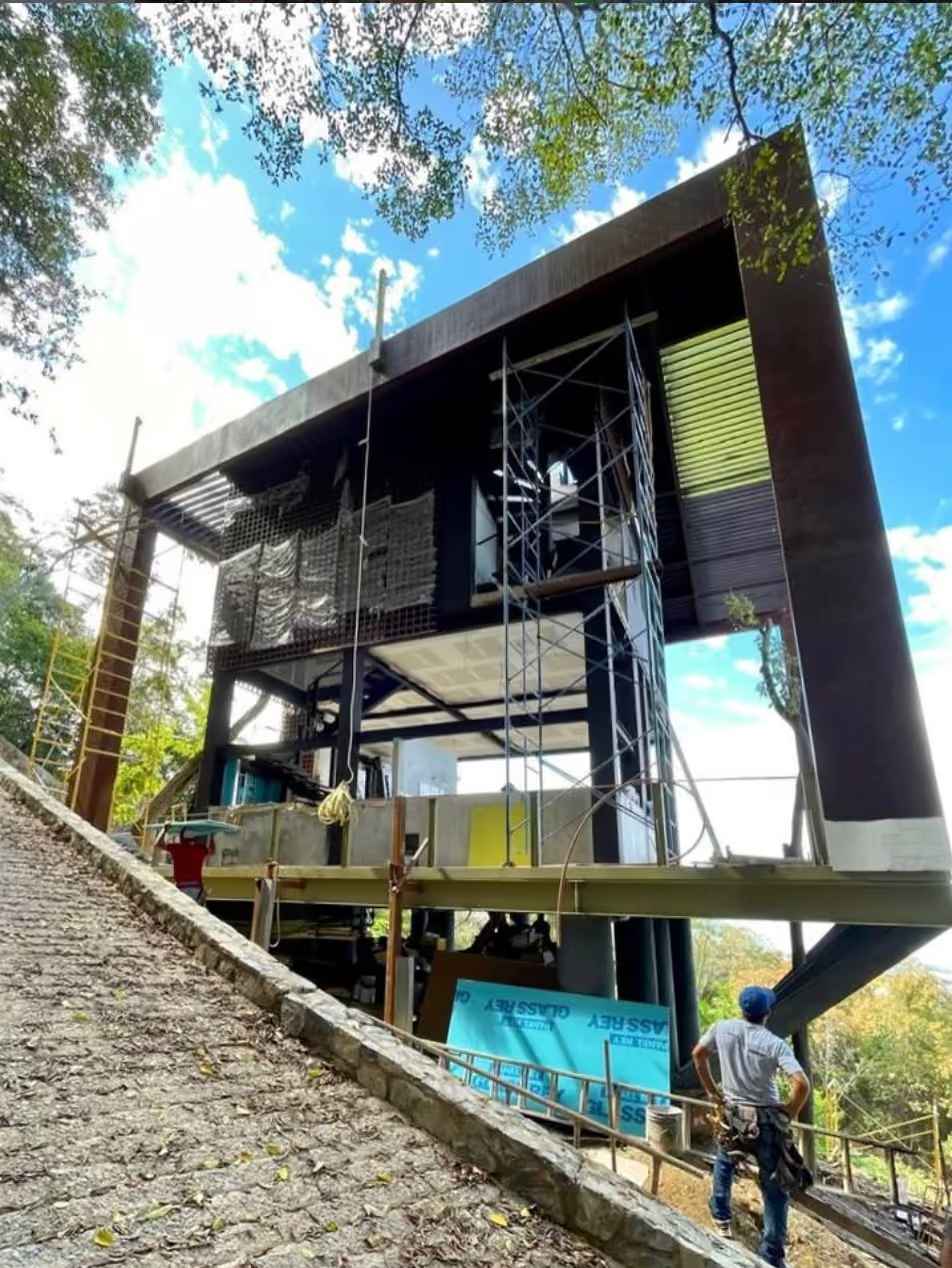
The hill dictated everything structural. Foundations had to go deeper. Supports had to reach further. Systems—water, storage, everything that makes a house function—had to be integrated rather than added on. And much of what makes the house work isn’t visible, with John pointing out, “All the heavy engineering is underneath the house.”
The material decisions came from the same kind of practicality. Wood was considered early on. “Too heavy,” explained John. “And too much maintenance.” So, instead, the exterior is wrapped in aluminum, finished in a deep rust tone that shifts with the light.
They tested the color before deciding.
“There were six different shades,” John says. “You look at them in the morning, come back an hour later—it’s completely different.” The final color sits somewhere between blending in and standing out. Against the dry hillside this time of year, it looks completely natural, like it’s been there as long as the trees. Against the green of summer and fall, the color seems to anchor the structure.
It’s almost like it’s already rusted, but it’s not. It’s the perfect color.
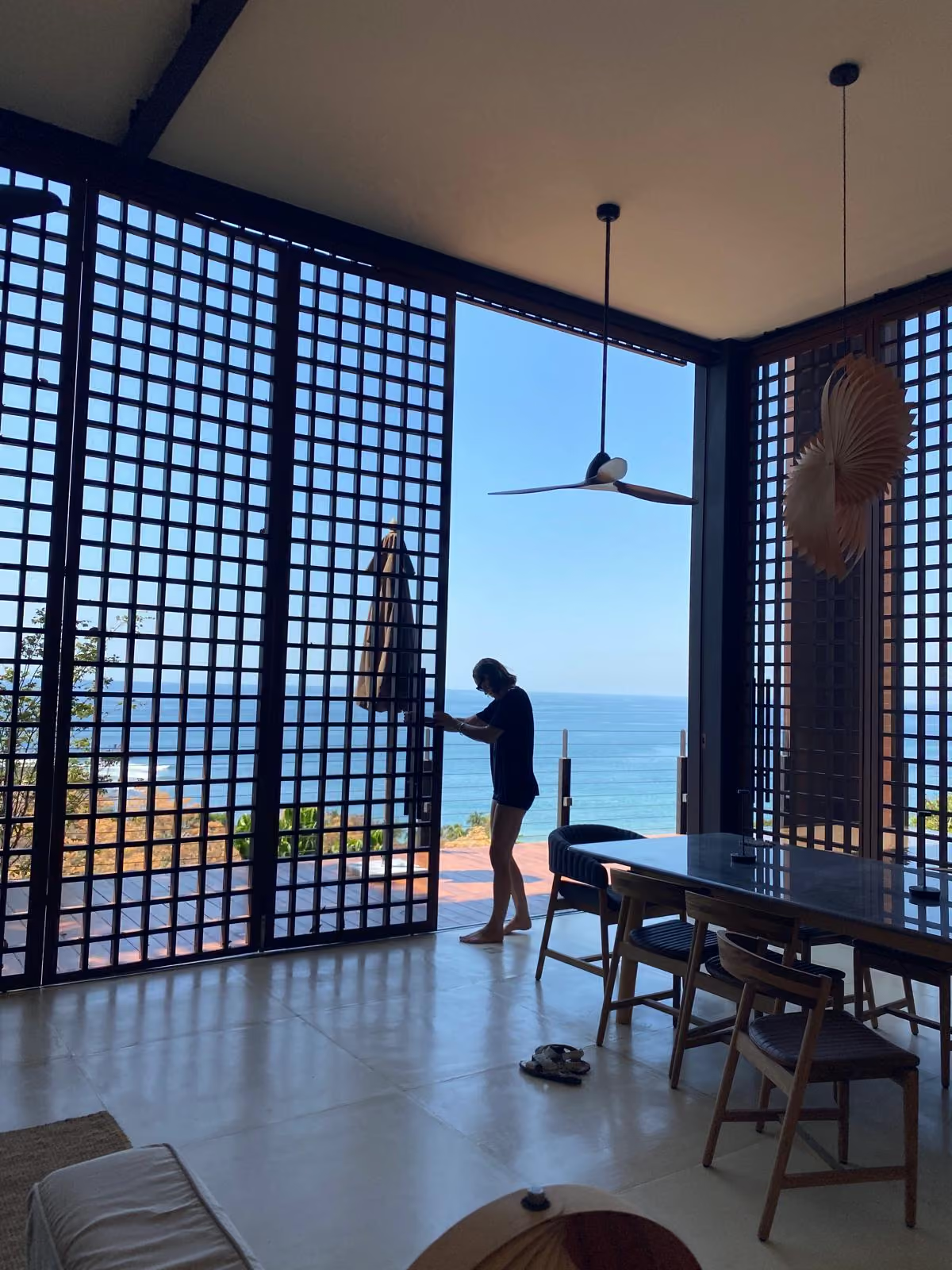
The façade is made up of floor-to-ceiling sliding lattice panels fabricated in Yucatán. When they’re open, the house dissolves—glass, air, movement. When they’re closed, the structure becomes more solid, more defined—layered with shadow and texture. In describing the need for the panels, Louise pointed out, “Otherwise, it would just be glass. That would be completely boring and inappropriate.”

VIEWS
From the terrace, I began to understand the magic of where I was.
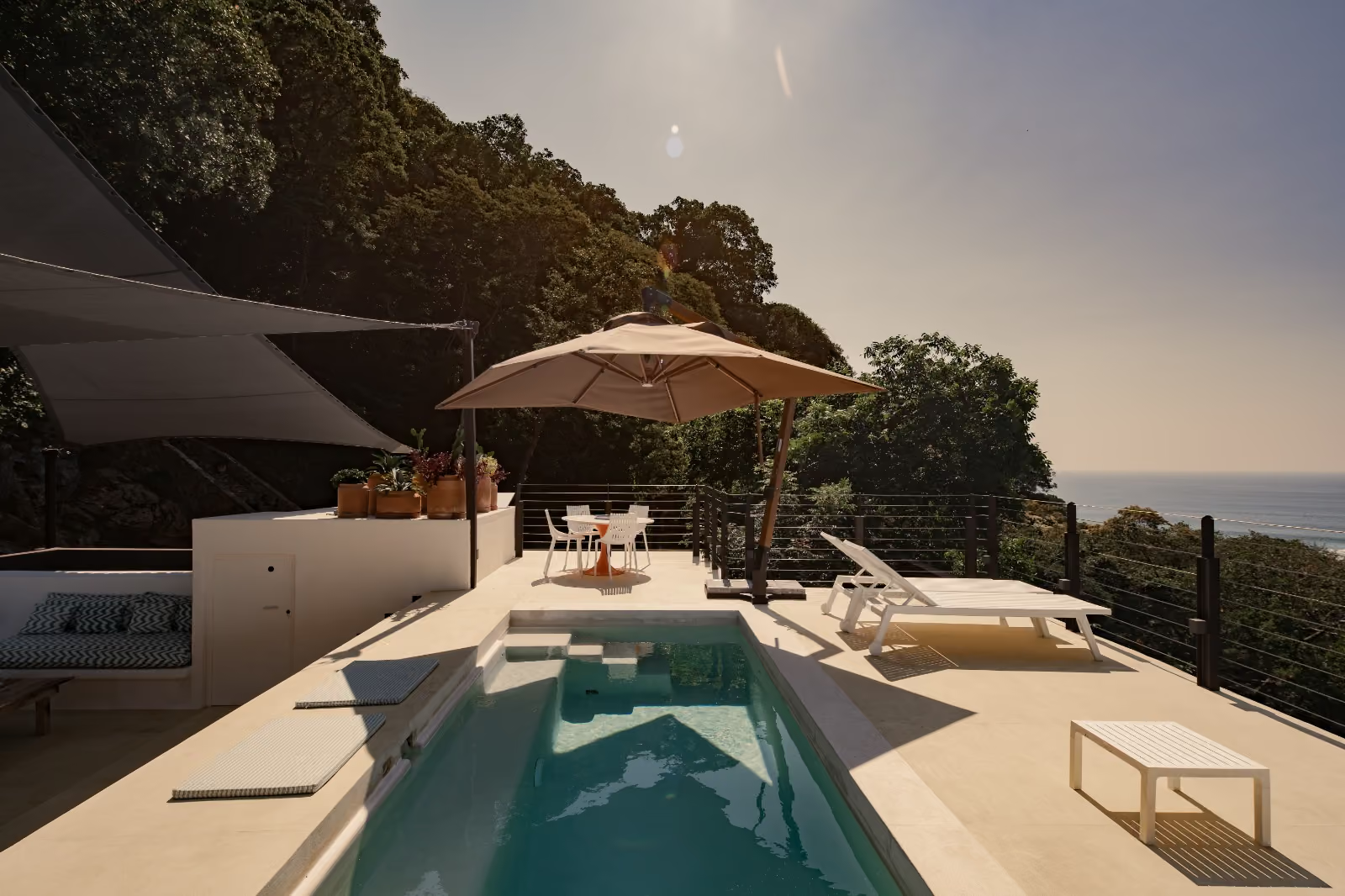
The terrace wraps around two sides of the house, fully opening up to the view—Manzanillo Bay stretching out in one direction, the coastline running toward La Saladita in the other.
Along the north side of the terrace, a long, shallow reflecting pool runs parallel to the house. A roble [oak] tree rises straight through it, continuing up through the deck. Both seem improbable, but completely logical—it made more sense to build around the tree rather than remove it. The combination of the reflecting pool and its tree may seem like pure whimsey, but it’s a powerful mix of simple beauty and easy luxury.
That’s also when I realized, the birds and I were at the same level.
Pelicans passed across my line of sight. Vultures moved through the air in front of me, catching the lift off the hill. I wasn’t watching them from a distance. I was in their space.

INTERIORS
Inside, the house is simple. The main, lower level holds the kitchen, the living room and the dining areas—one open space that spills into the sky. It’s like a floating loft, clean, functional, without excess. Not separated from the landscape outside but fully in it, the strangler fig in view.

Upstairs, two bedrooms sit symmetrically above the main living space. They felt soft in contrast to the structure—more about comfort than making a statement—with views that constantly pulled my attention outward expansively.
A narrow internal staircase continued upward. It led first to a built-in lounging space—a generous, comfortable nook for stargazing, reading, or doing nothing at all. Just above that I found the highest point of the house—a small pool, fully in the sky. “It’s not a big pool,” says Louise “but, it’s enough.”
La Higuera’s interior décor was handled by Louise and John’s daughter, Rebecca, whose Troncones-based design studio, Casa Manantial, focuses sourcing handmade and unique pieces within Mexico. “She knows what we like,” Louise says. “So, it was quite easy.”
Rebecca’s approach is layered, rather than defined.

It’s distinctly British—soft and botanical—but also sophisticated in its curation, an exquisite collection rather than a stiff staging. A painting by Manuel Reyes. Wooden lamps by Rafael Weber. Pieces gathered over time. “It’s important with whatever house you move into anywhere, that you don't rush through everything all at once,” suggested John. He continued his thought, saying, “You have to just see what works for the house itself and the way you live it. That’s what we’ve done here. It’s a mix—that works.”

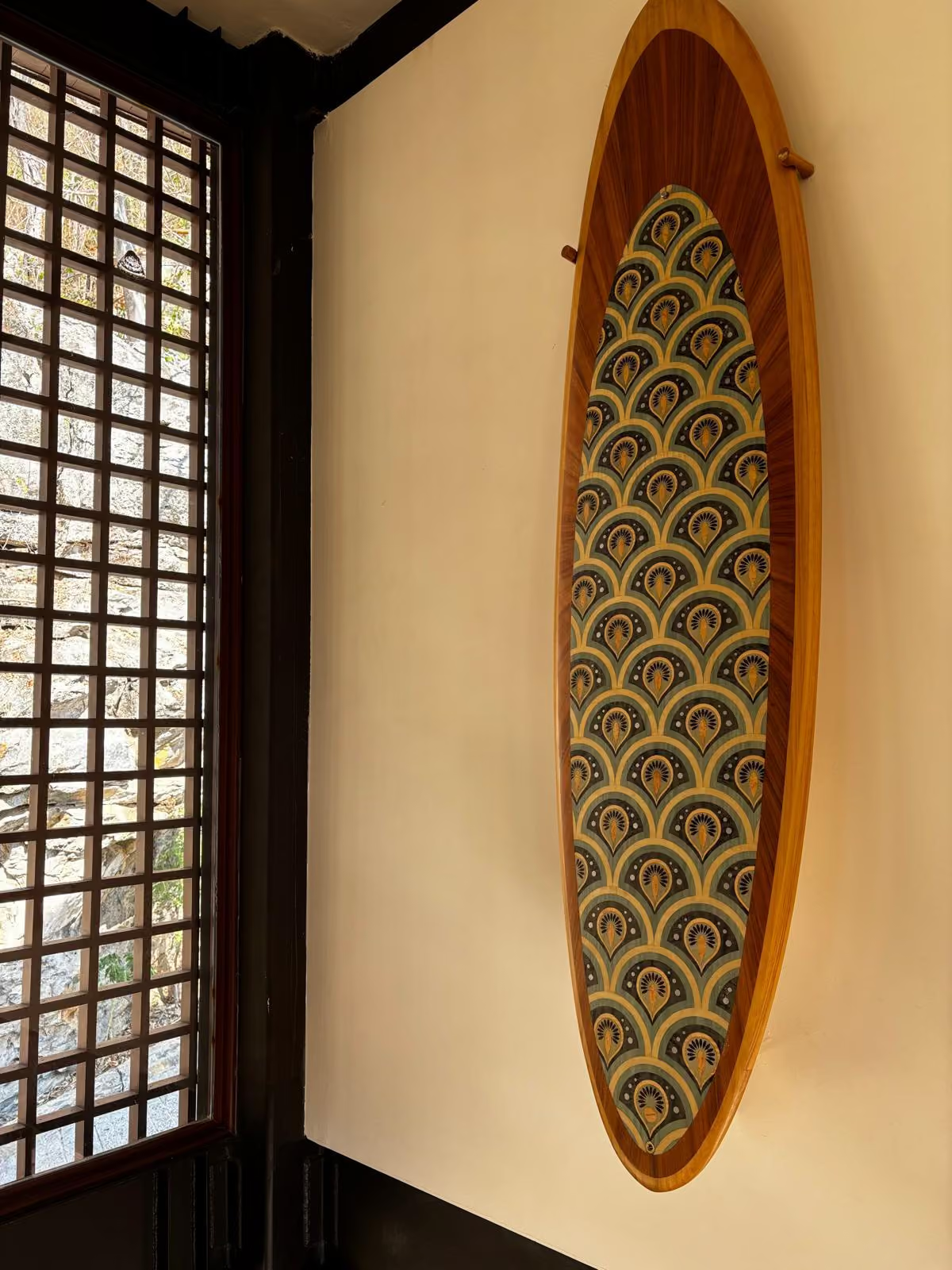
Above the stairwell landing, is a mounted and very special wooden surfboard—a seven-foot, two-inch Fistral made from sustainably sourced paulownia, intricately inlaid by a detailed and precise technique known as “marquetry” by Welsh artist Emma Wood. “There are only two,” Louise explained, musing, “It’s fully functional. You could take it down and use it.”
For now, it stays where it is.
LANDSCAPE
At the top of the driveway, beyond the entrance to La Higuera, are another set of stone steps going up, up, up and up some more—just when I didn’t think I could go any higher—to a lookout/yoga deck/lounge.
It made me think the house is only half the project, the land is the other.
And for the Martins, it’s just as important. More than seventy-five percent of the property was left as native forest, with what was built by Carlos and his crew being inserted carefully into that environment. The landscape work was led by Natalie Clark of Flor & Ser Paisajismo [in Troncones], who was focused not on creating something new, but on restoring what had been disturbed.
“She was six months ahead of us,” said Louise. “She was thinking about water flow and channels, and made use of a dry river bed that’s now beneath the house. She’s taken what was here and made it into something much more.”

Part of Natalie’s design includes a network of trails that wind up the hill in switchbacks, designed to stay as level as possible and slow the flow of water during the rainy season. In places, the path gives way to rock, requiring a more direct climb. And the forest surrounding La Higuera remains dense with native species—palo de Brasil, guayacán, bocote, capire, cacahuananche—many of them left untouched.
According to Louise, the intention was not to create “a garden that stands apart, but one that blends into the surrounding landscape”—something that reads as wild, even as though it was carefully shaped—a place for the tejones, iguanas, tlacuaches, jabalí and deer, the animals that were already here, and a haven for birds.
More than 200 trees and plants have been added, all native, with more to come, and grey water from the house is reused for irrigation, supporting the new forest as it establishes itself.

BOAS & BOARS
Life here has brought Louise and John moments they didn’t expect.
A boa crossing the path at night. A glimpse of a wild boar further up the hill. “You don’t get that in London,” John said, with a laugh. Would they do it again? Louise pauses, and replies, “If we were twenty years younger.”
But that’s not because it wasn’t worth it. It’s because now they don’t need to.
They already have their sanctuary in Troncones.
LINKS
La Higuera: https://www.lahiguera-troncones.com
Casa Manantial: https://www.instagram.com/casa_manantial/
S-Mart Home: https://www.instagram.com/smarthomedc/
Flor & Ser Paisajismo: https://www.instagram.com/flor.ser.paisaje/
%201.23.41.avif)