Barbara Lindlan: Always a Teacher
The founder of the Troncones Primary School library looks back at finding her way
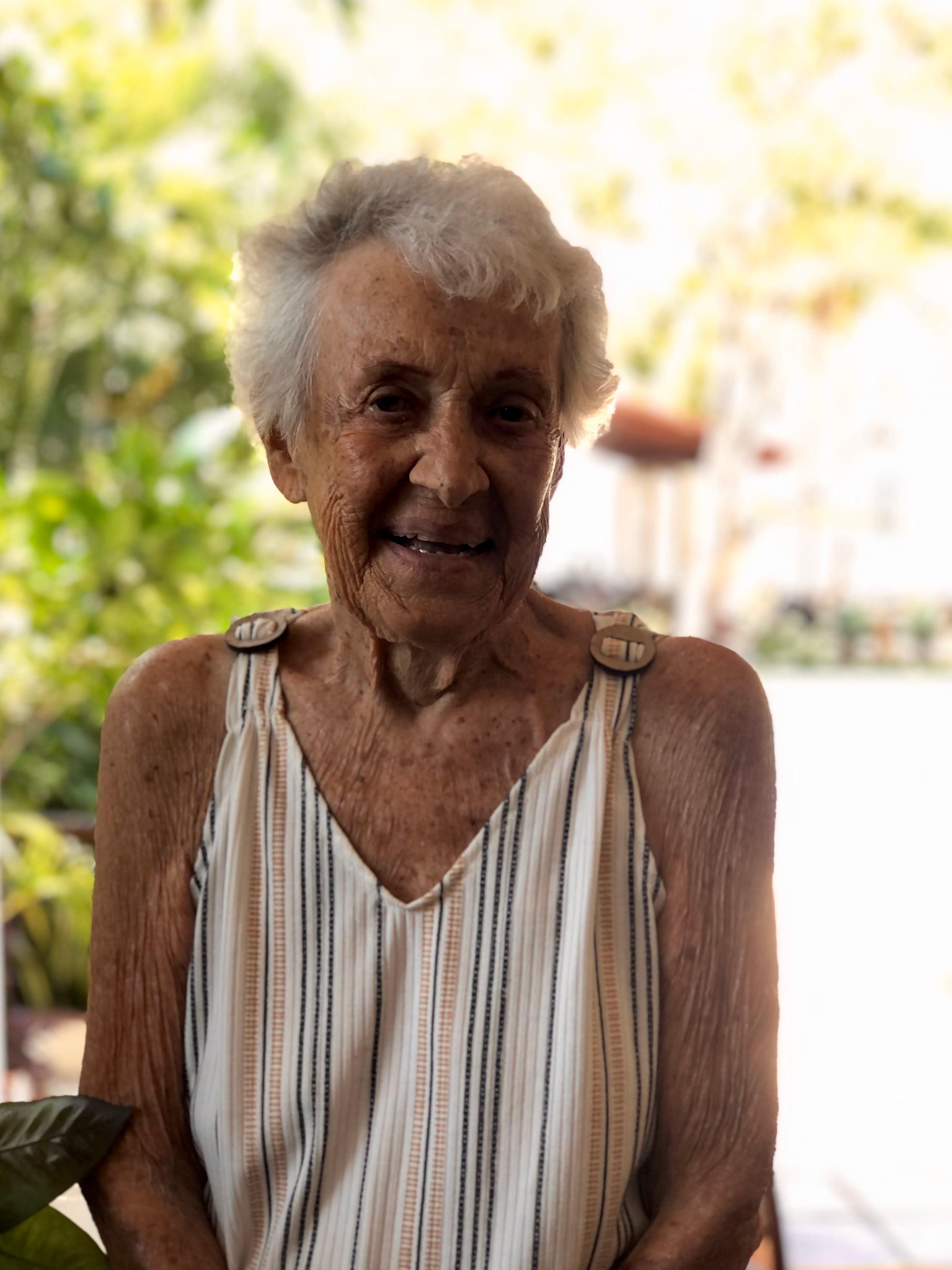
You gotta interview Barbara Lindlan. You gotta interview Barbara Lindlan. I kept hearing that over and over again. But no one could really tell me why, other than that she’d started the first library in Troncones. I’ve never been so unprepared for an interview. Barbara doesn’t show up on the Internet. There’s no history to read. No pictures on Google. When I finally met her, I was struck by her energy, and not just her physical presence and fitness. Her vitality and her curiosity are boundless. She started asking me questions before I ever got to ask her one. I had no idea she was 90. And now I know why I had to interview her.
%2017.27.38.avif)
.avif)




.avif)
%20(Spanish)-2.avif)

LOT: How did you find your way to Troncones?
Barbara: My husband, Harry, and I started coming to Ixtapa in ‘82 because we loved to play golf. We bought a timeshare at the Ixtapa Palace. There was nothing much happening in Ixtapa at the time, but over the course of years, we found we liked Mexico. A few years later, after we retired from work, we started to travel the world, trying to see where we might go to continue our passion of being involved in community projects. And we kept coming back to our timeshare at the Ixtapa Palace.
One day in ‘96, I was talking to Greg, our timeshare representative, and I told him, “We’re from Newport Beach, California. We’re really beach people, but we like to play golf.” Greg was a friend of Dewey McMillin, and he said, “You sound like Troncones people. There are some lots being sold and developed, and you might want to go take a look at them.” Back then, as foreigners, we didn’t want to buy in Mexico because the government kind of frowned upon foreigners owning land. But Greg said there was a way for us to own the land. So, I told Harry, “I’ve made an appointment for us to go look at some lots this afternoon.” He was skeptical, and asked, “We’re going to look at lots?” And I convinced him by saying, “It’s another adventure.” So, Greg brought us out here. When we hit the dirt roads, Harry looked at me and said, “Are you sure about this man? Are we being kidnapped?” We made the curve on the road, and saw the ocean and the beach. I felt a huge sense of relief.
We came over the hill, came to the T, and turned toward El Burro Borracho, where we were going to meet Dewey. As we went by the school—I was a teacher at one time—I said, “Listen, listen.” Harry said, “What?” I said, “Don’t you hear it? The school is saying, ‘Help me, help me’. This is it. This is where we need to come.” Harry humored me all the time. He said, “Okay.” So, we met Dewey. He showed us the lots. They were very nice. But we said, “We’re going to have to investigate to see what legal issues are so we know we have ownership.” We found out we could be in partnership with a Mexican bank and own the property through a trust. That’s how we got here.
LOT: Which lot did you buy? Or which house is it now?
Barbara: It’s Casa Bella Vista. Greg and Jami bought our house in 2013. Harry was a contractor. He came down here to build it, and I went back to work because we didn’t quite have all the money we needed to build the house.
LOT: You were a teacher? You went back to teaching?
Barbara: Yes, I was a teacher. I taught kindergarten through ninth grade, but I finished up teaching math. I was also an administrator. I loved every minute of it, whether I was in the classroom or out. Quite truthfully, Harry and I were looking for a community to give back what we were given when we were kids growing up. We both came from a very, very strong family community. Our community supported its children with activities, school, church and organizations to keep us out of mischief, keep us out of alcohol—we didn’t know drugs existed—and keep us on track in the way our parents wanted to see us grow up. When we retired, my husband and I were older. I was 60, he was 70, but we still had a desire to be busy. I couldn’t just play all the time. I need to have a direction of accomplishment. And that’s what we looked for. And we found it in Troncones. We thought. Unfortunately, Harry was very healthy, except he had brain aneurysms. He passed away building our house.
LOT: Right on site? On the property?
Barbara: Five minutes before he died, he had a major aneurysm and it stopped his heart. He didn’t know he was going to be going. In fact, he had a golf appointment with my son-in-law the following day. Harry just dropped dead. Shock of my life. And left me with an unfinished house.
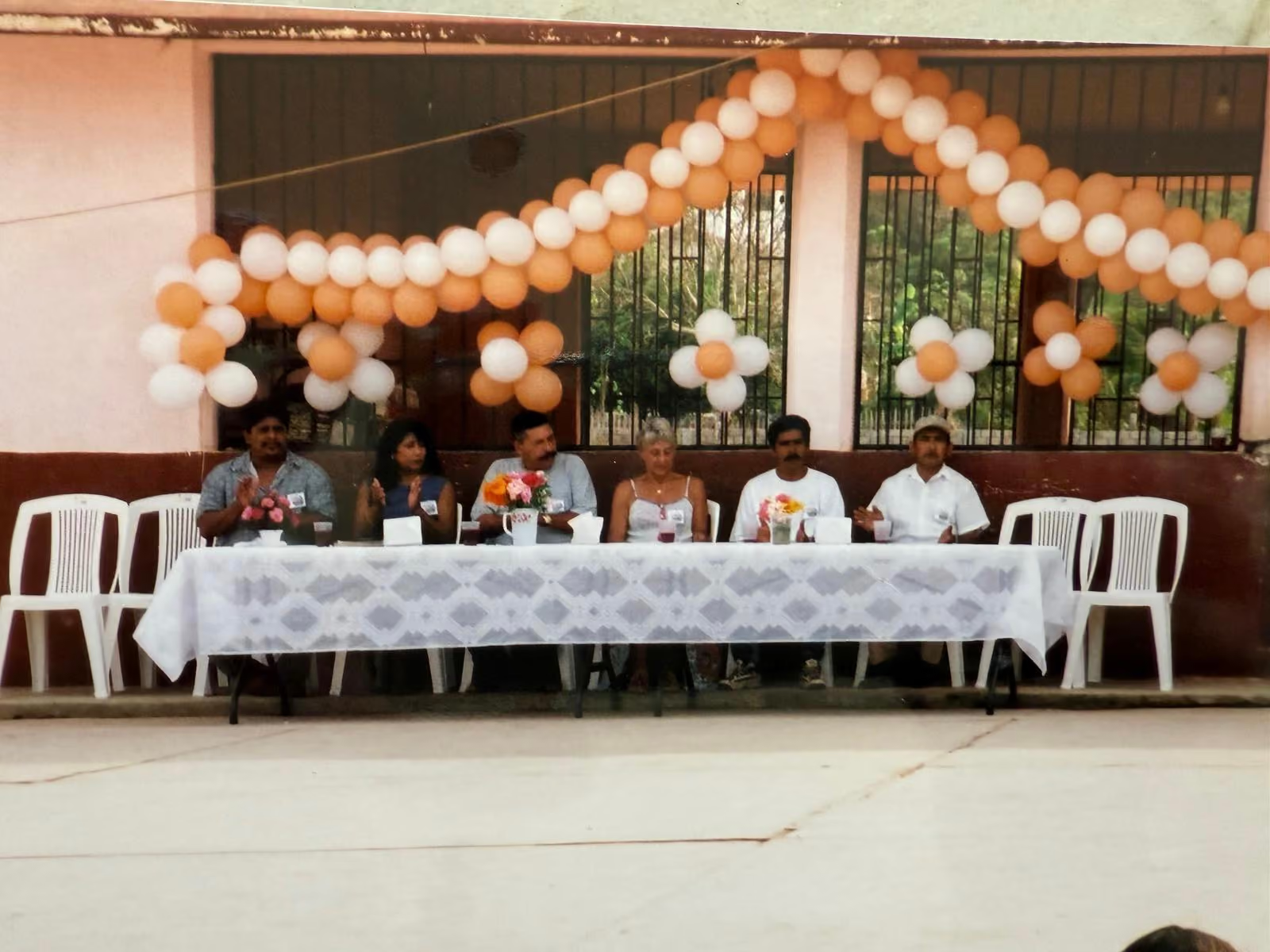
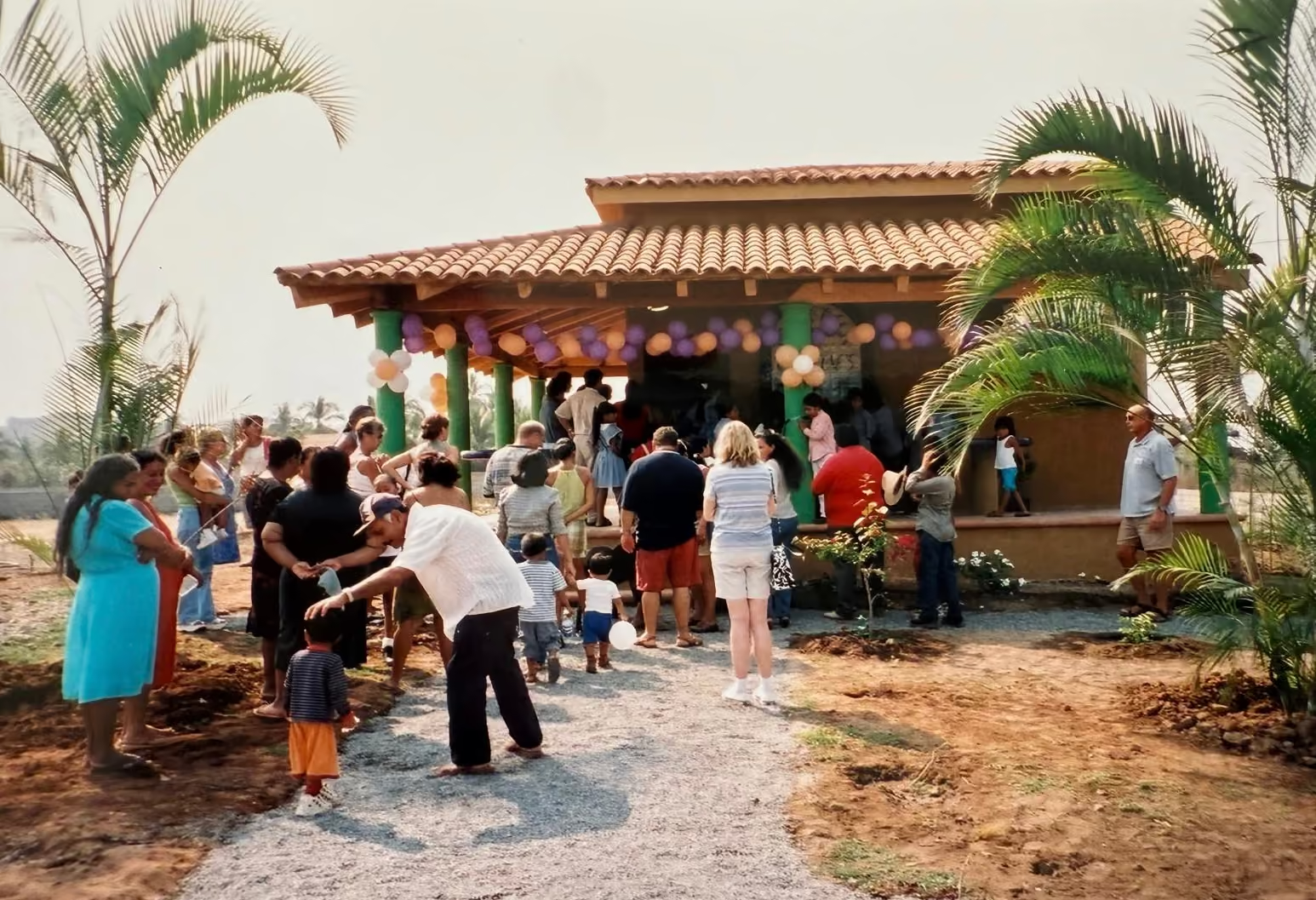
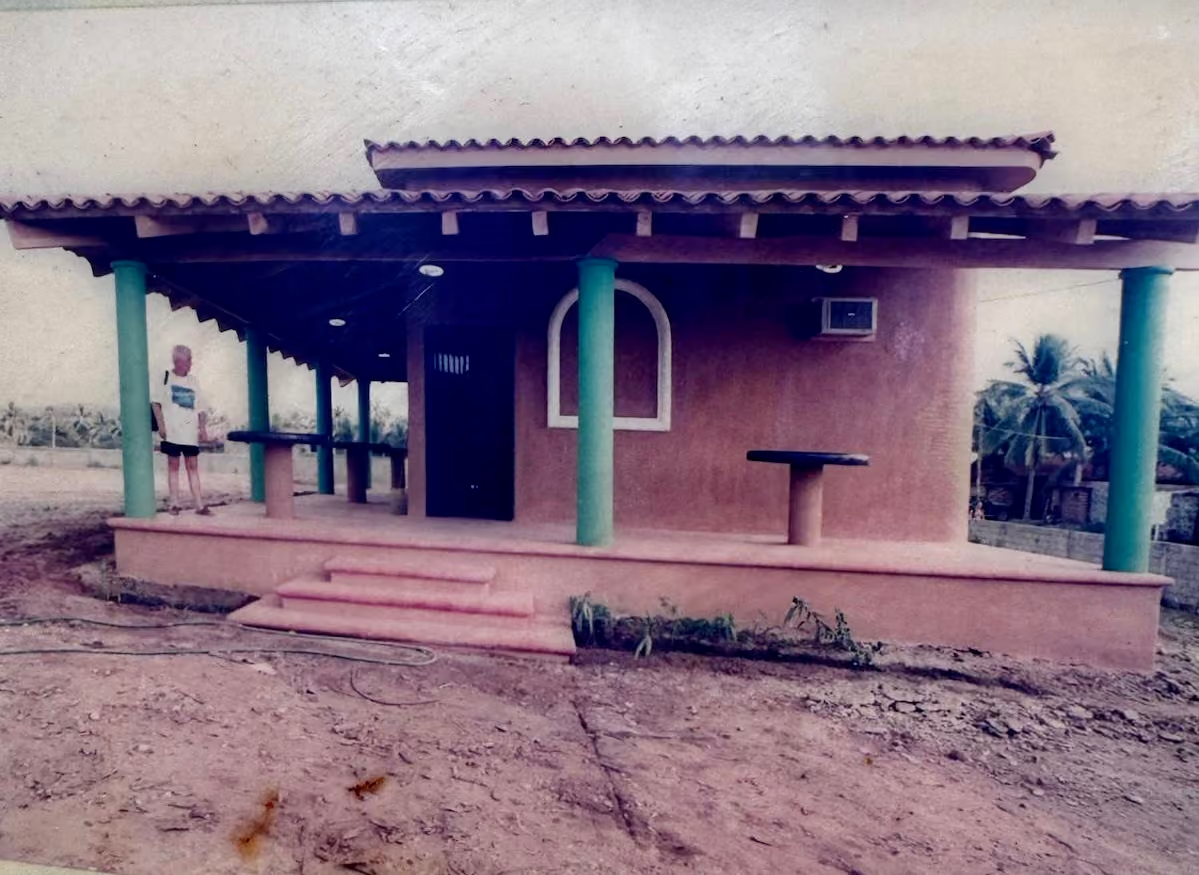
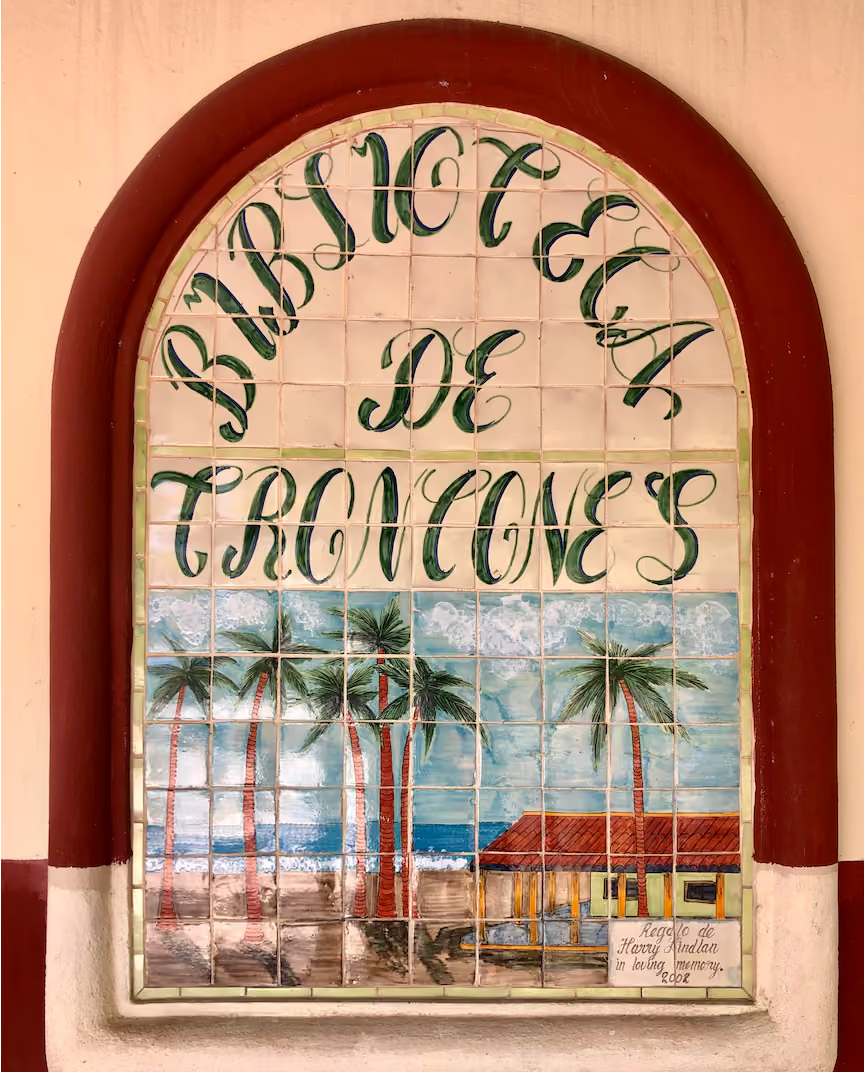
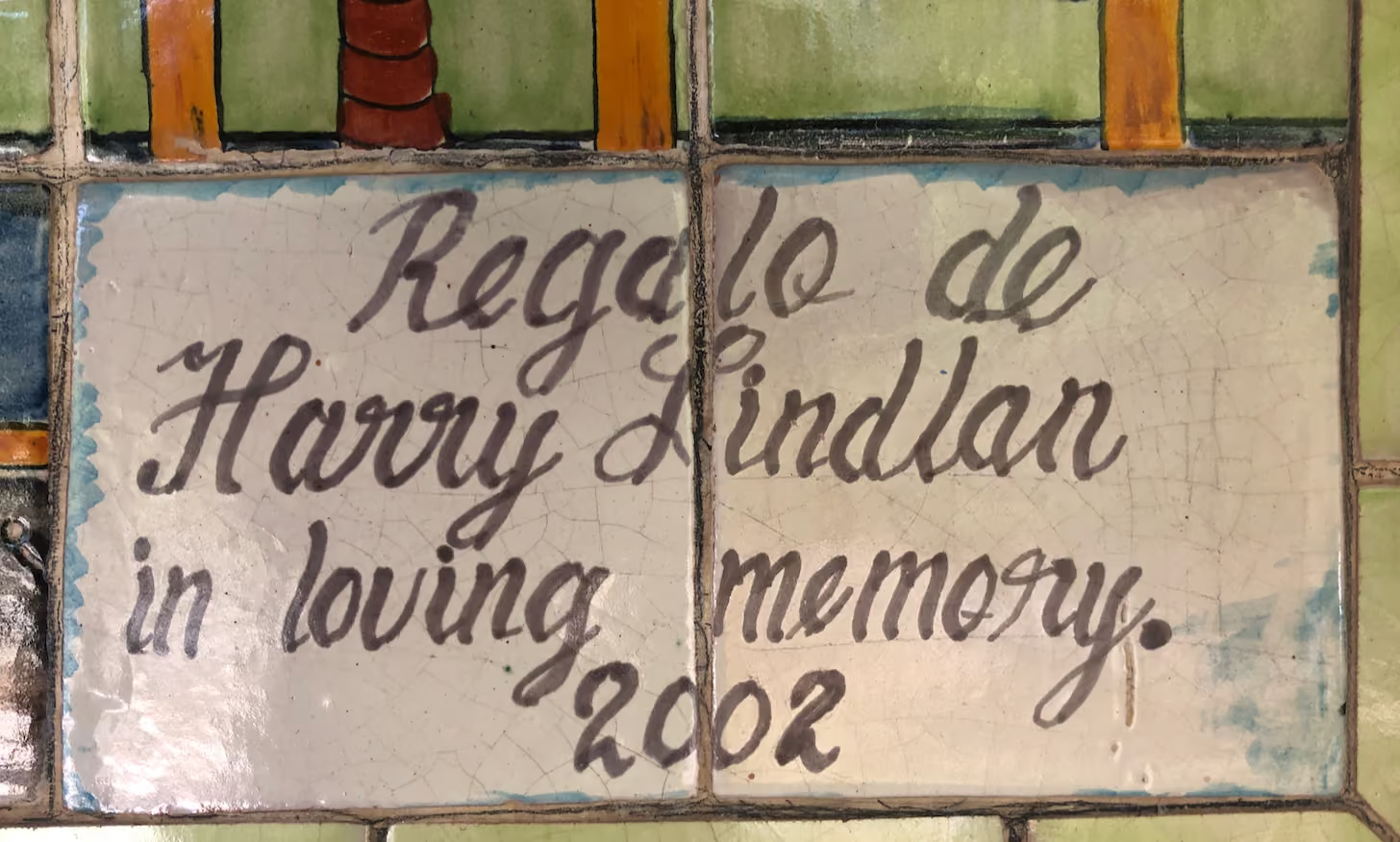
We’d made friends with Nicole Dugal and she agreed to finish building the house with David Martínez, who was just starting out his career as a contractor. I came down here wondering, “What in the world is my life going to be? New country, new regulations, new laws, new everything.” I was kind of lost. It took me a while to sort out where I was going to go, what I was going to do. The first thing I wanted to do was honor my husband. I thought, “How could I honor him? What can I do to honor him in a different country?” Well, he was an avid reader. He read all the time. And I’ve been into libraries all my life. A library was a very important part of my growing up. So, I thought, “Okay, I will ask the ejido if they would give me land on the school grounds to construct a library in memory of my husband.” And that’s how the school library got started. The biblioteca was in memory of my husband.
LOT: Where is it?
Barbara: It’s on the grounds of the primary school. There are some problems with it. I didn’t realize the level of education of the people here, that a lot of my neighbors couldn’t read or write. When we finished the library, I was so excited because I expected the parents of the students to come and get books. I’d had a lot of my friends donate books in Spanish and I had all these children’s books ready for the kids to read. They didn’t come. And I thought, “Why aren’t they coming to the library?” I’d encouraged the ejido and the school to send the parents there. I didn’t realize the parents couldn’t read, that they weren’t coming to the library to get books. All of a sudden, it changed my direction from building the library, and being behind that, to my reading the books to the kids out loud, in my poor Spanish, and teaching English in the classrooms, and teaching the alphabet and writing to the older ladies of Troncones. After that, the ejido adopted me. They became my family. They are so much a part of my last 30 years that I look back and say, “Somebody was looking after me, to guide me to the truth”. When the time came, I hated to go back to the States, but my own family tugged on my heart so much I had to go back. I try to get down here now to maintain the feeling of family I have with my friends here.
LOT: How many children do you have?
Barbara: I have four children. I have ten grandchildren, and I have seven great grandchildren. And we’re all extremely close. We have a chat on my telephone so I can contact them whenever I want to. [On the Tuesday after the killing of “El Mencho”] They’ve been very frantic the last couple of days. A lot of chats, unfortunately. But, when my grandson was here for the Las Hermanas gala, he kind of assured me that he will continue to support the ejido and the programs we’ve initiated. He says he will encourage my family to support the scholarship program and the library and the basic needs of the community when I pass. I’m trying to get them all ready for that.
LOT: How did you feel when Las Hermanas honored you at their gala last year?
Barbara: It was an incredible honor, but it made me sort of feel like “What did I do to deserve this?” To me, the work I’ve done here has given me my life. It’s giving me the opportunities I dreamed of, but my dream was just kind of bouncing along. Las Hermanas took my dream and put it on a rocket. They’ve done what I dreamed of seeing happen. I’m so impressed. And when I asked Ann Merritt if it would be appropriate for me to invite my friends to the gala last year, she said, “Yes”. I wanted them there so I could see what I consider the pulse of Troncones all together, the community that’s come here and the community of the ejido, who to me were very courageous in opening up their land to who knows what kind of people. They had no idea who was going to be coming into their territory. It was very courageous of them to allow Dewey to sell land to people they didn’t know. And they’ve developed such a wonderful community, in my opinion. It’s great to see Las Hermanas and the ejido working together so beautifully for the future of our children. I’m just in awe of it.
LOT: How did Trocones change you?
Barbara: I don’t know if it’s really a change, but it confirmed my opinion of human character—that people basically are good and their hearts are big. Troncones did change me in teaching me that money is not necessary to live well, that’s is not needed to live a contented life. When I came, there was almost no indoor plumbing. People here slept on blankets, on straw, on the floor. There were no lights. We had no electricity, but they were happy. They were content. That’s the essence of life to me—you get up in the morning feeling in awe of life. That’s what Troncones taught me. That I don’t need more money. I just need warm, kind people around me.
LOT: What’s the most meaningful part of coming back to Troncones each year?
Barbara: Being able to go to my friends and put my arms around them and give them a hug and a kiss and say, “I wish I was here; I miss you; I love you, and I hope that I can come again next year.” I feel great right now, the only thing is I resent not having the athletic ability I had ten years ago. Still, I’m under a doctor’s care, so I have to consider, I have to ask myself, “Am I going to make it here next year?” I don’t know, so I want to take advantage of every opportunity to go say “hello” to the people who gave me back my life after my husband died.
My house was known as the party house. I always had a group of young people descend on me from around the world. A lot of them didn’t have any money to speak of. Most of them were college graduates—23, 24, not even 25—who wanted to see the world, who came here from different directions and who met in Troncones. They were living on what they were earning here, working for Christian at Eden, working for Dewey, working with other people. I’m still in touch with them. Some of them have property here now. Today, it’s a different community from what it was when we first moved here. The older people, the ones who came when we did, have passed.
Back then, every afternoon all of us would go to El Burro Borracho for sunset. We’d salute each other and then fight each other for the laborers because we were all building at the same time. It was, “When are you going to use the plumber? When are you going to use the electrician? When are you going to use the concrete people?” We just didn’t have the workforce to supply us all, so we were all forced to work together to accomplish what we wanted. That brought us together.
LOT: What should anyone coming to Troncones know for sure?
Barbara: That we’re not really too interested in how much money they have and we’re not too interested in who they are. We’re interested in how big their heart is, what their character is. Will you join us in our compassion? Will you join us in our dream of a safe, caring community? That’s what they should know. We are a community of people who could live any place on earth, but we chose this little spot because of its compassion and heart. I cannot believe how many times I had car problems driving from here to Zihua, times when I had to pull to the side of the road and walk to the nearest house and knock on the door and say, “Por favor”. And then, I would have four or five people walking with me to try to determine what had happened. It was mostly tires, you know, and the discussion was if I need to change it, if I could plug it, if I just needed some air in it.
At the gala last year, Alicia Nogales described the phenomena of living here, like, we’re living in a vortex, that we’re pulled in by a magnet that’s drawing wonderful people to this wonderful place. After Harry passed, my son-in-law came down and I was giving him a tour of the area. I took him past Majahua Palms, on the dirt roads and everything. On the way back, there were a couple of young men walking, so I stopped and I asked, “Where are you going?” They were trying to get to the main road. I said, “Okay. Would you like a ride? Hop in. I’ll take you.” My son-in-law just about had a heart attack. He said later, “You don’t know those people.” I said, “Well, Johnny, that’s what we do here.”
LINK
Las Hermanas: https://lashermanasdetroncones.com