C.J. Ananda Page: The Present Moment
An internationally acclaimed teacher/guide looks to her past, present and future
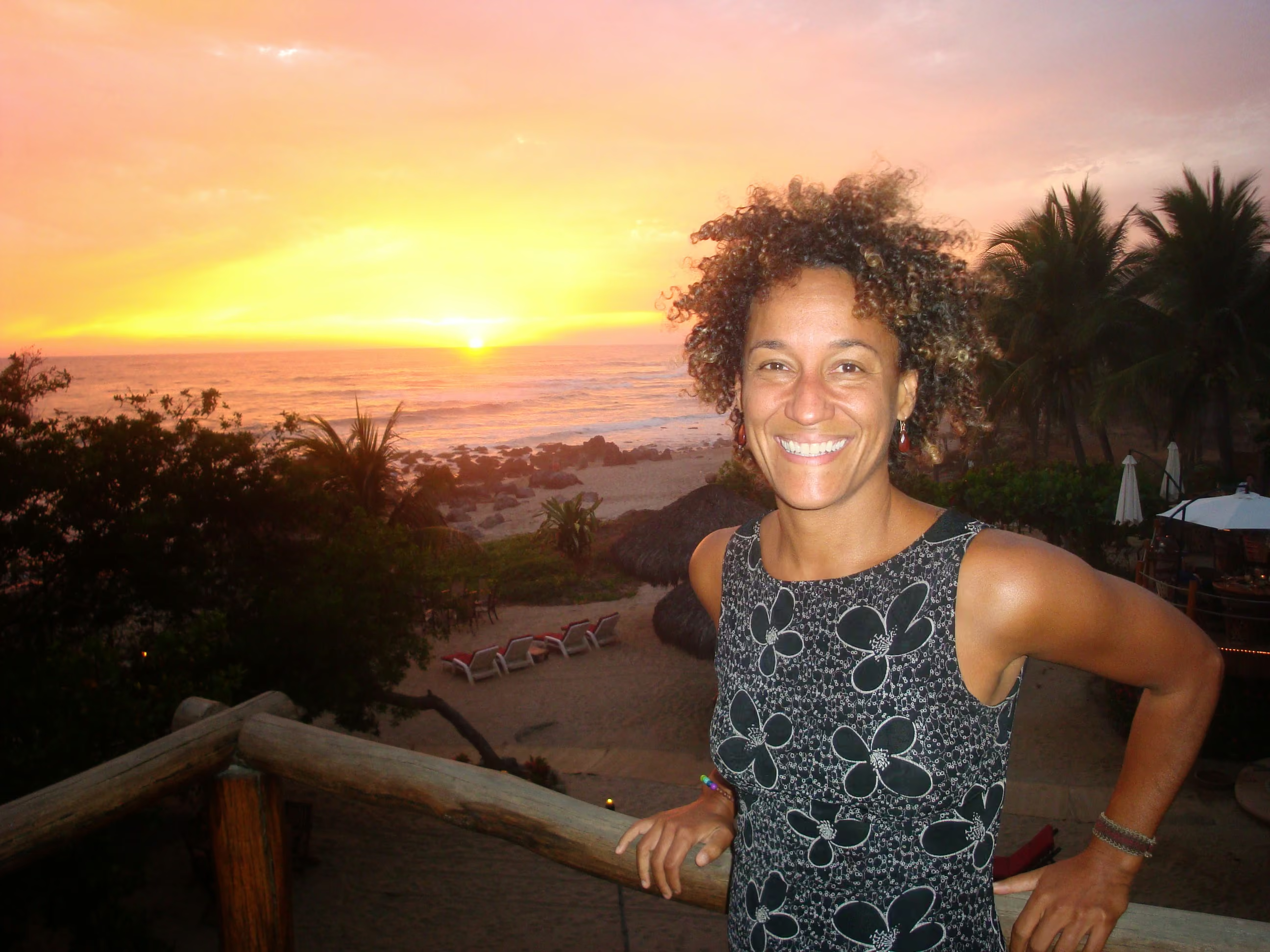
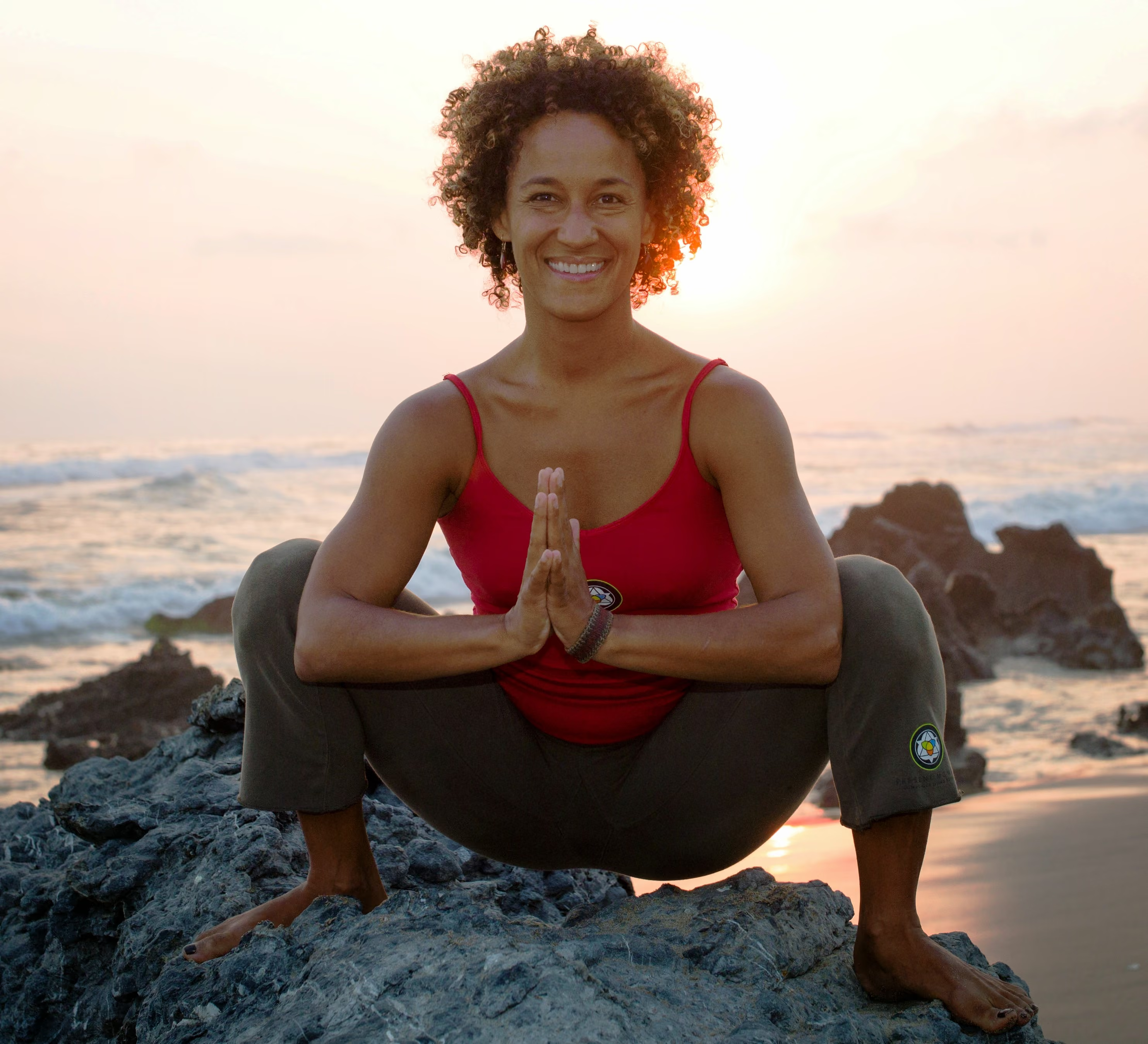
Troncones’ Present Moment, the “yoga hotel” on the beach road, recently celebrated its 20th anniversary. I caught up with co-founder C.J. Ananda Page while she was here last month, gathering with her teachers and students. I stopped by their celebration and found C.J. firmly being one of the group, another person seated at a round table. No crown. No fanfare. No head of the table. A few days later, we sat together on the beach at Present Moment. She’s still an owner. She likes it here. She may be coming back.
%2017.27.38.avif)
.avif)





.avif)
%20(Spanish)-2.avif)

LOT: Where did you grow up?
C.J.: Minneapolis, Minnesota. My mom is English, Irish, Scottish and Welsh. She was born in Canada and she grew up in Wisconsin. I was raised by my mother in a suburb of Minneapolis called Eden Prairie, where I went to high school. I went to college at Gustavus Adolphus, which is a private liberal arts school in Minnesota. I lived in Minneapolis my whole life until I moved to Mexico in 2005 when I was 35.
LOT: What got you into yoga?
C.J.: Interestingly, it was introduced to me a bit later in life. I was just turning 31 when I went to India. That was the first time I got “into” yoga. I remember coming home to my husband at the time, who I had been married to for ten years, and I said, “I think I’m spiritual now.” He said, “What does that mean?” I explained it had to do with yoga and meditation and that I was going to try those things out and see what happened. That was the door that opened me up to so many different modalities of healing and movement.
I had been a dancer and a gymnast prior to that, so it felt like a natural thing for my body to move into yoga. But the spiritual part was what struck me. That was something I had never really tapped into, other than the fact that I grew up with a mom who was open, “alternative,” and connected—she did hypnosis, past life regressions and Reiki, and she was in that world. If I was sick, instead of taking me to the doctor, she would say, “Let’s balance your chakras.” So I had that kind of understanding. I went to India with my mom, and our trip allowed me to start seeing that there were more ways to tap into that connection to spirit.
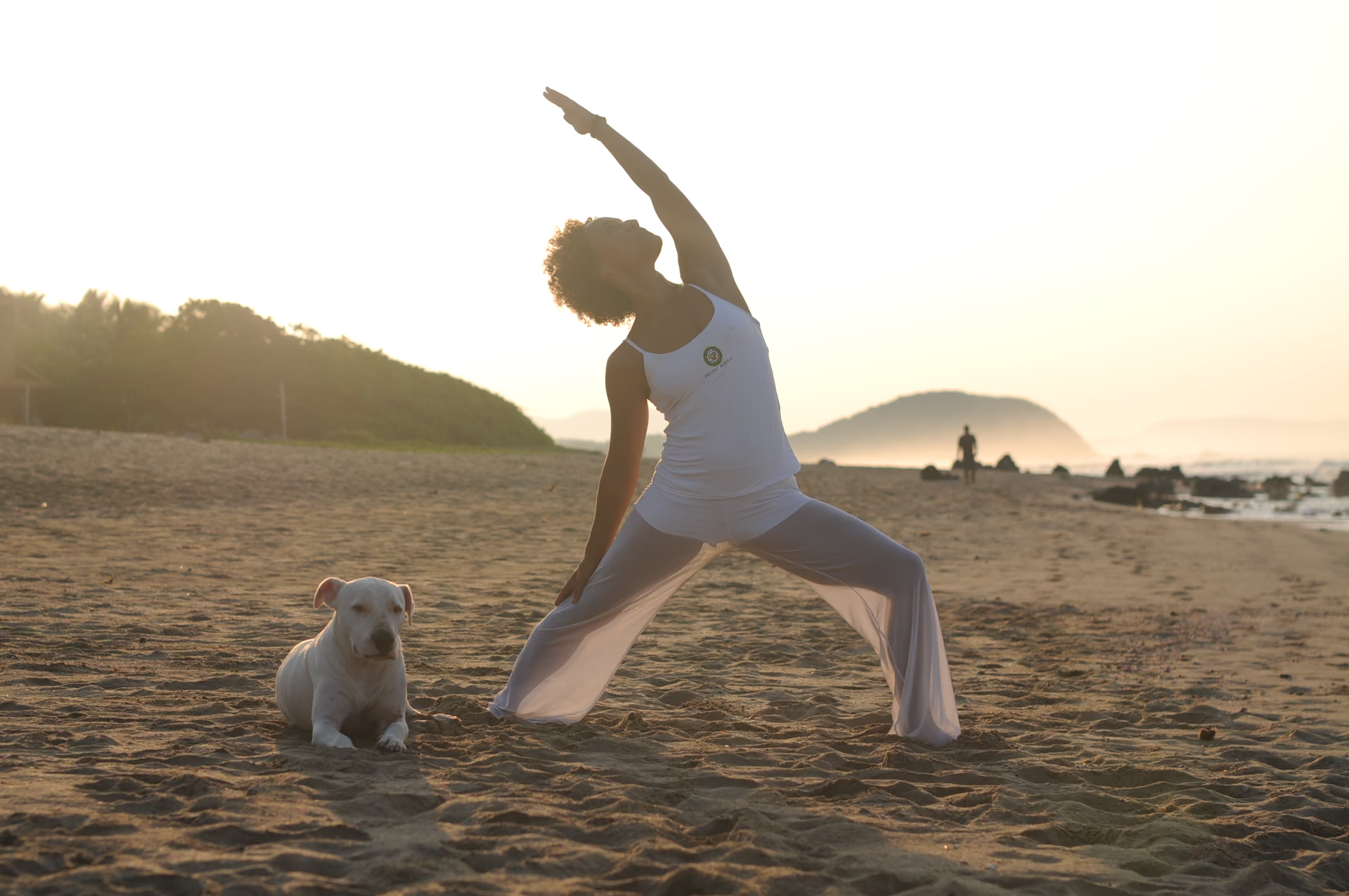
It wasn’t until we were already in the process of building and creating Present Moment that I said to my partner at the time, Tom, “Who’s going to teach the yoga classes?” He said, “You are.” I said, “But I don’t teach yoga.” And he said, “Well, how about you teach what you know and you don’t teach what you don't know?” So I took my first yoga teacher training in Minnesota. It was a year-long program that ended in October of 2005, and we moved here the next month, in November.
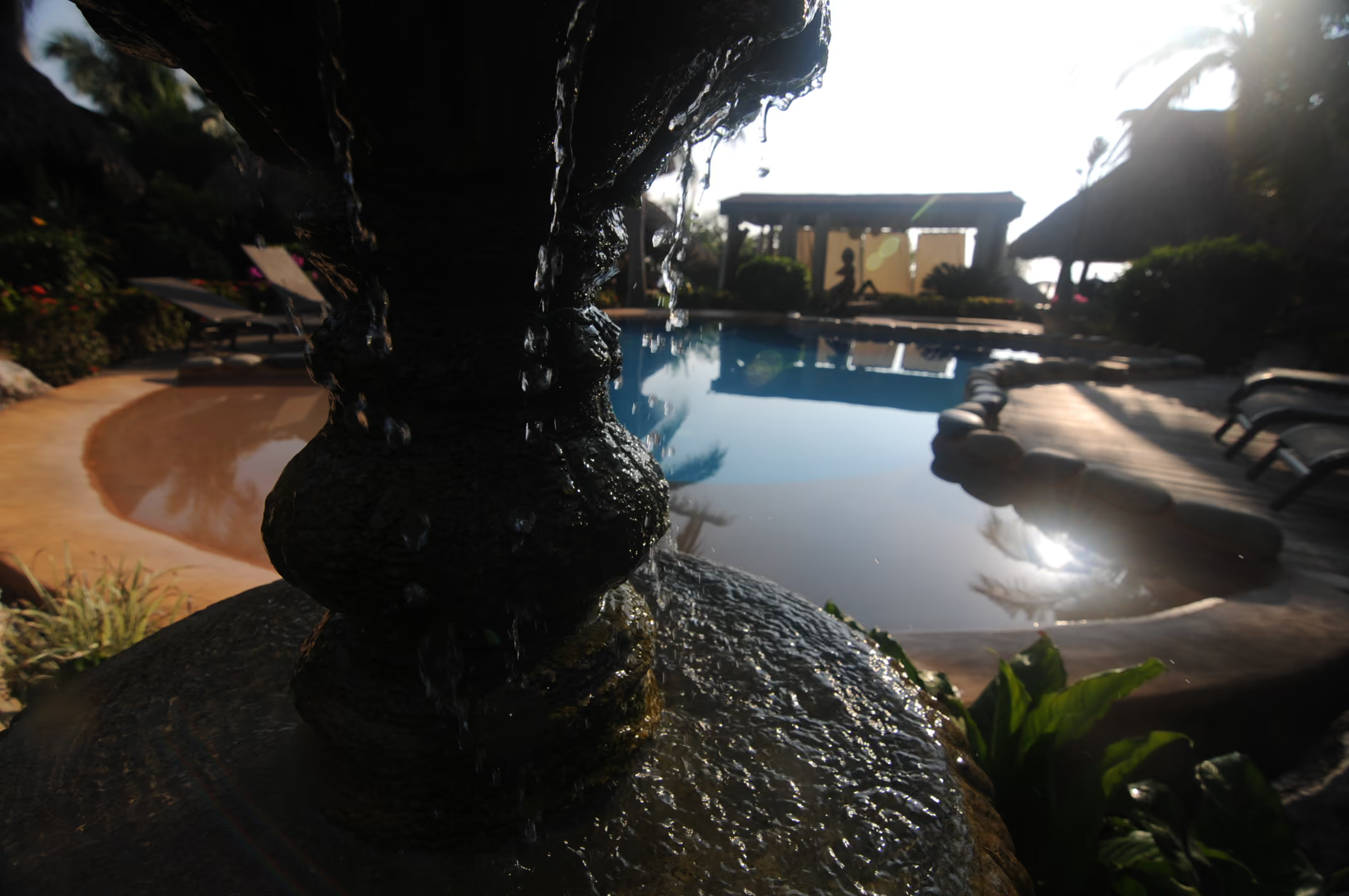
We opened in December of 2005, so I was teaching immediately. [Pointing] This platform is really where I learned to become a yoga teacher. It gave me an opportunity, each and every day, to wake up and be inspired by something around me, and to let that be the impetus for the intention I would set for the class. I was always really inspired here. I would wake up and literally open a page in a book and say, “That’s what I’m going to teach about today.” Or I’d look out at the ocean and connect to the water or the rocks or the trees, or the plants, or the sand. There was always something here that felt like it was holding me in a way I could share. The yoga became a spiritual ceremony for me more than anything, and as much as I loved the asana practice, I loved the theme-weaving more than anything—bringing in particular healing concepts and letting them flow us through the class.
LOT: What does yoga mean to you?
C.J.: In my opinion, and in many sacred texts, the word “yoga” can be transcribed as “the union with the divine.” I like to think of it a little bit more broadly, given that we are already in divine union with everything—that yoga is the remembering of our union with the divine and recognizing that Spirit is in everything. When we walk down the beach, or hike in the mountains, Spirit is there—always. That spirit is in every plant; it’s in the sky and the wind and the fire and in the sounds that surround us. By knowing everything happens in divine timing and harmony, and by recognizing our union with that, we are creating a particular type of vibration that brings forth what we need at the time. Maybe it’s a bird singing just when you’re having a thought, and then connecting to that birdsong and asking, “What was I thinking at the moment that that bird just sung to me?” It’s remembering there’s something there for us in everything—that there’s a teaching in it, a greater wisdom that recognizes the wisdom keeper we are. When we can make that sort of connection, then we’re in yoga; we’re in union.
LOT: How did the idea of a retreat center come up?
C.J.: When I was in my late 20s, while I was still married to my previous husband, I used to write a lot. I’ve been journaling since I was nine years old. I’ve got journals going back to 1979 straight through to today. I just backtracked through some and found that there was a period of maybe two or three years when I was writing about creating healing spaces. It was mostly about the things I felt were going to help heal the planet, that would raise our frequency and our vibration. Massage. Reiki. Acupuncture. Energy work. Craniosacral. Healing through touch, sound and energetic connections with people. I had a lot of these ideas, but I didn’t really know that much about any of them. I had these lists that I would make of all the things I thought were needed, and I would draw pictures of these different wellness paths.
One of those drawings, which I just came across, was of a star. On each point of the star, I had identified a different type of wellness practice—either a modality, a healing technique, or a different piece that, to me, encompasses wholeness. That star with the intersecting triangles is symbolic of the heart chakra and eventually became part of our logo. Back then, I would drive around Minneapolis, looking at places for rent or places for lease, thinking, “Maybe that’s where I’ll put my wellness center.” It was kind of a dream. I liked to write about it. I liked to talk about it. I liked to live it, inside me. It never really came out until I met Tom. We were set up on a blind date, and one of the very first questions he asked me was, “What would you do if you could do anything?” I was in this mode of having all of these ideas, so I shared this idea of a wellness retreat center with him. Tom said, “That’s what I want to do.” And what’s even more crazy is that he said, “And we should do that together.”
I had only been officially divorced for a week, but I had been separated for about a year. Tom had also just come out of a divorce. I said, “Well, first of all, I don’t even know you.” But he said, “This is exactly what my heart wants to do.” I thought, “I’m not really going to do it. This is something that I would love to keep in my realm of potentiality, something for a future self and or maybe even a different life.” I came to find out that Tom is a man of his word, and when he gets something in his mind, he’ll go for it. Eventually, as we started dating, we kept talking about it and within months, we were on the path to make this happen. We would travel a little together, looking for places. Honestly, I thought I would do it in Minnesota, but Tom was like, “Why don’t we do it on a beach?” I was like, “Oh, that’s a much better idea.”
LOT: How did Troncones end up being “the beach”?
C.J.: We went to Panama and to a couple of other places looking for land. Tom had a timeshare in Ixtapa, and a friend of his brought us to Troncones for the first time. We fell in love with the area, and it was clear to both of us that this should be the place, because there’s so much healing energy here already, in the sand and in the ocean and in the mountains.
We went home to Minneapolis together, and I went back to my job at Aveda, a hair and skincare product company, where I managed global marketing for the skin care/body care department. After we were home for a little while, Tom came back to his timeshare, and one day he called me and he said, “I went back to that beach that we were on and I found a beautiful piece of land. I think you need to fly down here. We should look at it.” And I said, “I’ve already used all my vacation time. I can’t do that.” And Tom was like, “You know, C.J., if we do this, if you come down here and you say ‘yes’ and we make this happen, you’ll never say those words again: I don’t have enough vacation time.”
I talked to my boss and, sure enough, she said, “This is a dream of yours. You’ve been talking about it forever. You should definitely go and just take the time.” So I did, and I felt the same way Tom did about this particular piece of land. There really wasn’t that much here at the time. Dewey was here as our neighbor. Wendy Brooks was building at the same time. Eden had been up and running for about ten years. I went up and down the beach and I met as many people as I could and asked them about what it’s like to live here and what it’s like to run a business here. Ava and Jim from Eden had a lot of information. They knew what it was like to run a retreat center at the beach. I felt really positive after talking to them and I felt welcomed right away.
It wasn’t long after that that we were able to buy the land. I had to sell everything I had, and I had to take out a second mortgage on my condo. Tom had a business in antiques, and he sold everything he had, too, so we could do this. Eventually, we came to a point where we needed investors, and we found a few people who were able to support the last stages of the build. It took us about two and a half years to build, and we kept running out of money. And angels would show up. People would appear who were able to support us. At one point, we needed $6000 [US dollars] or the construction guys weren’t coming back on Monday. A guy was staying next door and he was like, “Well, what do you need, how much do you need?” We told him $6000 and he’s like, “I can get that for you tomorrow.” And he did. We offered to pay him back and to give him a free place to stay. He came once and we’ve never heard from him again. So that’s how Present Moment came to be. The whole process of moving our lives from Minneapolis to here was quite a big undertaking as well.
LOT: What was that like?
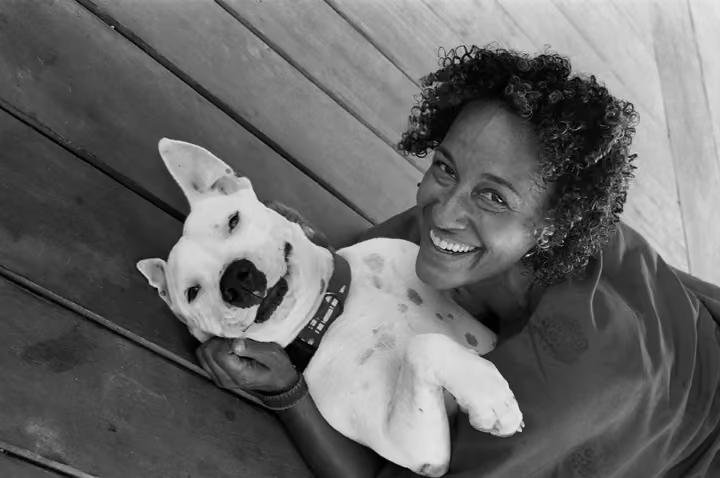
C.J.: We had a dog and two cats and all of our things. We bought a U-Haul and moved everything into that. We hooked up my little Volkswagen Bug to the back and towed it here. We got lost. We had car problems. It should have taken us a few days to get here. It took us a few weeks. And when we got here, the place wasn’t ready. We had been coming down throughout the construction and we were pretty clear about our deadlines. It was late November and we had our first retreat starting on December 13th, an all-women's retreat for 13 people. We finally arrived and had so much work to do.
At the time, the two other primary investors with us were Taylor, Tom’s son, and our friend Peter, who was a massage therapist and our qigong instructor. It was really just the four of us, and we ended up doing everything. Tom did the reservations, business management and operations. Taylor took charge of the restaurant. I was teaching the yoga classes and managing guests relations. Peter taught the qigong and gave massages. Between the four of us, we were cleaning rooms, checking people in, checking them out, and doing everything, essentially. Then, we hired two people, one for gardening and one for housekeeping, and we were off and running.
LOT: How’d the retreat go?
C.J.: It was really spectacular. It was one of those moments—incredible, totally magic. Especially given the fact that it was on the 13th and there were 13 women and it was a new moon. That moment, to me, meant, “Okay, we’re in and we’re not turning back; this is actually happening. It’s what we’re going to do.” It felt like a lifelong dream coming to fruition. We really recognized that this was part of our dharma—what we were meant to do.
LOT: How did you find staff, other teachers? So, it wasn’t just you.
C.J.: They found us. Some of our first teachers are still here on the beach 20 years later. Natalie from Surfers for Strays and Leela at Casa Luciernaga were two of our first teachers. And, of course, Peter was already here. Leela started teaching dance and yoga, and Natalie started teaching yoga and meditation, and then Emily, who was here the other night, came along to teach and offer wellness consultations to help the guests discover how to get the most out of their time at Present Moment. It felt like everyone was really drawn to it. It felt magnetic, like there was a pull that drew the right people and the right spirits. Those women are still some of my closest friends today.
LOT: How long did you stay with that core group?
C.J.: I know Emily was here for about ten years; Leela was here for maybe eight, and Natalie was here for 11 years. It’s hard for me to remember the timing of all that. It started to be that we needed more teachers and more therapists, but I don’t feel like we ever really had to put out the word so much. Who we needed usually came from friends, or friends of friends. There were times in low seasons when I would need to find people, but I feel like, for the most part, we were booked with teachers for the high season. One of my favorite parts of my job was having wellness staff meetings to get everyone ready to greet the new groups that were showing up, and bringing peanut M&Ms to those meetings.
LOT: How did you build your business? You went from nothing to something big, almost right away.
C.J.: Again, a lot of it was word of mouth, and Tom really did a good job with marketing. We were in a lot of publications at the time—hard-copy magazines, interviews with different travel magazines like Condé Nast, with Hearst. Tom was good at finding the people who needed to hear about us, and he also built a website. Back then, a website was something we had that not everybody had. In fact, when we were doing our research on different wellness retreat centers, there were so few websites to look at and to reference that building a good website helped us to stand out a little bit. Design-wise and copy-wise, it really reflected what this place represented.
LOT: At some point you left, and you and Tom split. Where did you go?
C.J.: There were a few years before I left when I was starting to travel a little bit to Peru and to Guatemala. Tom and I didn’t split until seven or eight years into our relationship, and there was a time when we were already split up as a couple but we were still running Present Moment together. When I started traveling, I came to recognize that part of my work was going to be out in the world, doing other things. Around that time, I met Coby, my current husband, who brought me to Peru. That’s where I met my teachers who I currently work with, with plant medicine. That was something that really caused me to change where I wanted to focus my energy. It kept pulling me away, and there came a time when staying here was no longer the right fit. There are lots of details to how that went down, but eventually it became clear that I wasn’t going to be able to efficiently split my time. And as difficult as leaving was, it was truly the right move. It was the perfect timing for me to start into the work I do now of guiding people through ceremonial experiences.
LOT: How did you decide to do that?
C.J.: Coby and I bought a van and we decided to start touring around. We were doing cacao ceremonies, working with the plant medicine of cacao. We would go from place to place throughout the west coast, starting in San Diego and going all the way up to Vancouver and leading ceremonies along the way. For months at a time, we’d be living in our van, and that was the way we collected a following. We didn’t really have a home yet. We were just out on the road doing our work, and we would invite people here, to Present Moment. This was still my home at the time, even if I wasn’t living here. I was still promoting Present Moment a lot on the road. I began teaching yoga teacher trainings in Guatemala, and that brought me back to Guatemala every few months. Coby and I started to establish more of a life there, and that became the place where we ended up rooting, eventually.
LOT: What is it about Guatemala that attracted you?
C.J.: Well, during that time of looking, we were considering Guatemala, Peru and Mexico. Those were the three places we thought about living. Our primary criteria was natural beauty and affordability. We wanted to buy land and build a home, and we knew we wanted to start from scratch, to build something on our own, and to have a connection to community. Peru, Mexico and Guatemala each had all those things, but Guatemala really stood out because of its sense of community. That became something we recognized as pretty important to the work we’re doing now. We live in a small village on Lake Atitlán in a retreat center called Casa Kula. There are people flowing through all year who are spiritual seekers. It was important to us to be able to give them a home to land in, and to give them a place that feels like family that they can arrive in, and where they feel safe and secure enough to work with plant medicines, to explore themselves, and do the deeper, transformational work I think our communities, our culture and our society are ready for. When Coby and I found the land that we have now, we just knew that that was going to be the place in the same way Tom and I felt in Mexico, ten years prior.
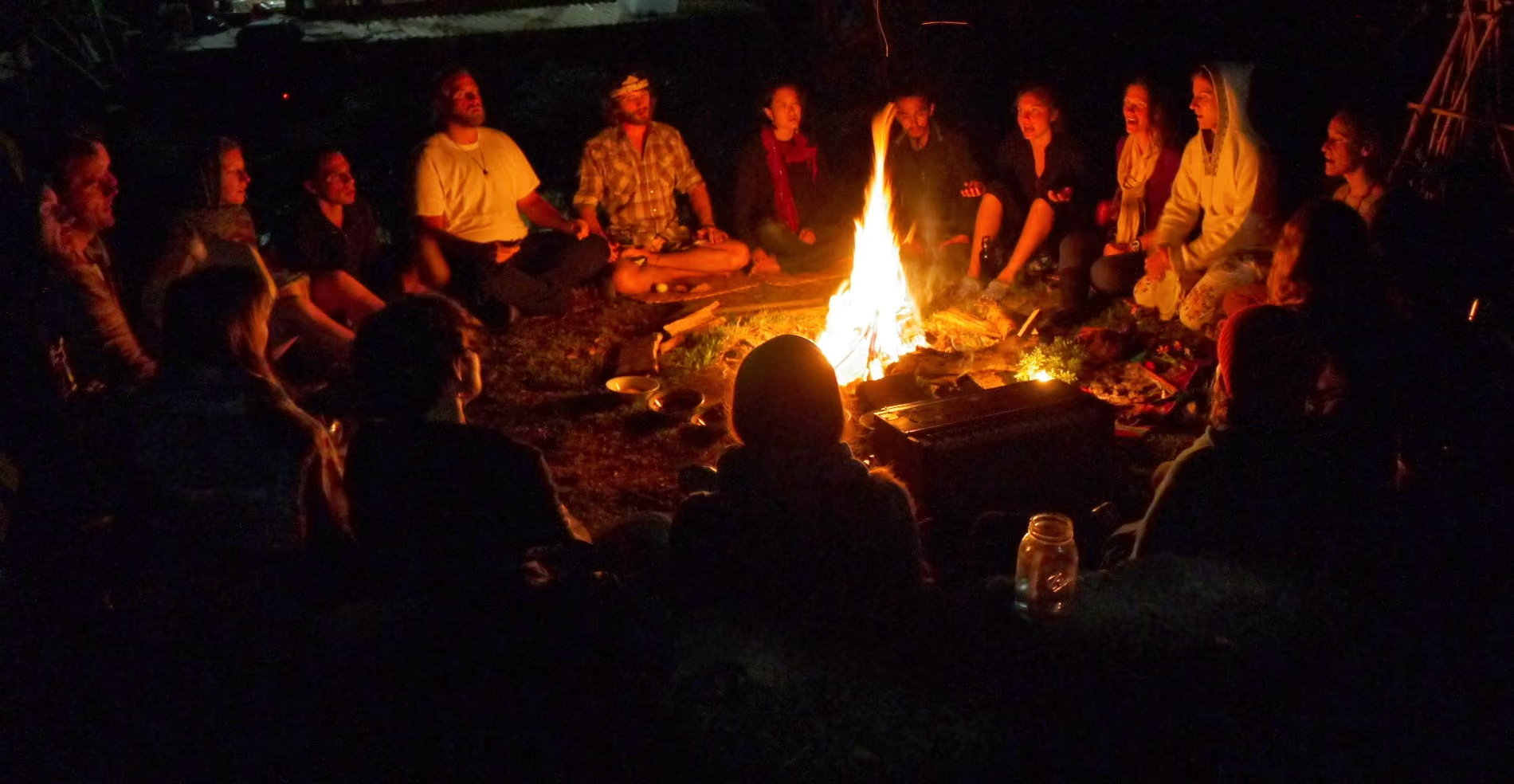
LOT: And where are you on Lake Atitlán?
C.J.: In Tzununá. In the native language there, Kaqchikel [a Mayan dialect], it means “home of the hummingbird.” We have our own retreat center there that offers yoga teacher trainings. We’ve built a yoga school and a hotel, plus our own home.
LOT: I heard people use the Sanskrit term “ananda” to address you the other night [a word translated as bliss or joy or happiness]. How did you come to associate that with your name? Do people address you as C.J. or Ananda now?
C.J.: Mostly Ananda. It’s probably been 15 years since I took the name Ananda. But every time I come back here, I’m still C.J. It’s kind of like going home to Minnesota. All my high school friends and college friends call me C.J., which is fine. I don’t ask them to call me anything else. I was in a yoga teacher training once and we had an opportunity to do a name ceremony, but I kept mine. C.J. I love my name. The name my mom gave me was Cynthia Joy, and I’ve always been C.J., as a nickname. But there was a point at a yoga conference where I was teaching that a woman came up to me and said, “Cynthia Joy, why do you hide your joy?” I thought about that, and when I had another opportunity, I decided to choose a name that meant “joy.” Ananda. Joy feels like it’s part of the essence I carry. Holding it, as my name, has been an inspiration for me to live into that name, to live into bliss, to live into joy. I feel like that’s part of my job—to choose bliss and choose joy.
LOT: How do you deal with scoffers who might be down on you taking on a Sanskrit name, when you’re an American from Minnesota?
C.J.: I don’t know that anybody has ever admonished me for having a Sanskrit name. I feel like we live in a community where many people have a different name, often a spiritual name. It’s pretty common in the communities I’m rolling in at the moment.
LOT: You describe yourself as a co-founder. The “co” part seems to be important to you. Why is that important to you?
C.J.: Because I didn’t do it alone. Tom and I co-founded Present Moment. It was a co-creation, made of the ideas we had separately that we brought into being together. I feel we both deserve that kind of acknowledgement. The founding of something like this can’t, couldn’t and didn’t happen in one mind alone.
The life that we live now is based on another Sanskrit word, kula, which means “family” and “community” and “home of the heart.” Our kula, the collective we've formed, is seven of us together. It’s really a co-founded experience. It wouldn’t be what it is without every single one of us. The home we live in is called Casa Kula. Our hotel is called Kula Maya. Our yoga school is called Kula Collective. The idea is that we’re collecting kula; we’re bringing together like-minded, like-spirited, like-hearted people. That’s a “co” experience, a co-creation. I wouldn’t say that I founded Present Moment or that Tom founded it. I would say it’s co-founded with a lot of help from other people.
LOT: How do you practice now?
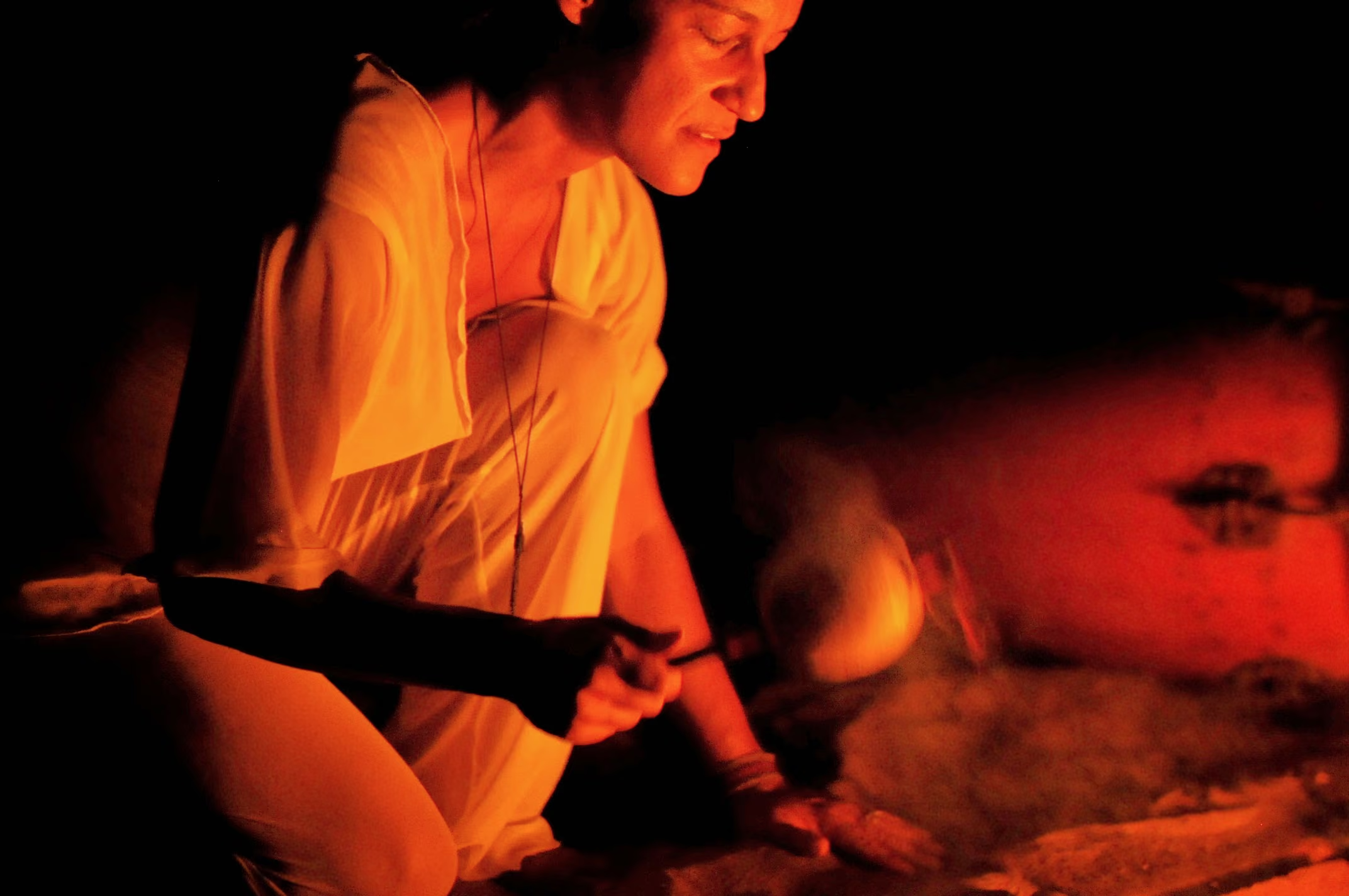
C.J.: I have a kind of criteria for my days, which is that they include the things I feel most passionate about. I have to do at least a couple of those things every day. One is movement. It doesn’t have to be yoga—in fact, it’s usually not. But it’s mostly some kind of stretching, dancing or hiking. We have four dogs, so Coby and I do a lot of movement with our dogs.
One is music. The ceremonies we share with people incorporate a lot of music, so singing, playing instruments, playing drums, and playing guitar has to be part of my day. Coby and I sing a lot together. One is meditation, or some form of stillness. It doesn't have to be a traditional type of stillness, like sitting in meditation. It could be a walking meditation. It could be sitting with a plant or a tree, or communing or merging with the energy of a plant-spirit being.
One is writing. That’s another form of meditation that I appreciate and love. Writing keeps me centered, and it also keeps me aware of where I am in my life versus where I was yesterday and where I want to be tomorrow. It’s also a momentum that allows me to be inspired by my own words and by my own channeling of whatever’s coming through. I’ve started to work on a book I’m calling “Choose Joy.” That’s a concept my mom brought into my life early on, and it’s now formulating itself as a book that details the framework I’ve used with my yoga students, which involves the chakras, or the energetic centers of the body. That’s it. Movement. Music. Meditation. Writing. Oh, food and rest, too. You’ve got to nourish yourself.
LOT: What did Troncones teach you?
C.J.: What I feel in my heart when I come back here is an inner peace. I feel comfortable with who I am, what I stand for and what I offer in this world. I think Troncones gave me the confidence to be the woman I came here to be. We named our place Present Moment for a reason. I felt like it was important for us to honor the moment, moment to moment, and to help others awaken to the human spirit, and I don’t think any of us can do that without being present.
I loved the concept, but I didn’t get it until I actually lived here and saw how everything changes, all the time. The people are changing. The opinions of people are changing. Our ideas and belief systems are changing. The groups coming in and going out are changing. There’s movement all the time. To stay in a place of centeredness, a place of stillness, brings me inner peace. When I step foot on this beach, I remember this is where I learned that. This is where I learned to be in a place of contentment, of satisfaction, or santosha in Sanskrit—to be in a place where I don’t have to try to make something different than what it is, to be okay with it, to not have to try to change it.
It’s been interesting being back here for our 20-year anniversary because there are so many people I haven’t seen for so long. A lot of friends came out to celebrate with us. There’s been so much movement and so much energy. That’s the way we live in Guatemala, too. Our doors are open and people are in and out all the time. I don’t think I could say “yes” to a life like that if I didn't have that sense of presence myself, because I would just be flying on the whims of other people and with the energies that come around. It’s funny, I feel like Troncones taught me to be present.