
Mantras in Motion
For the past two weeks, Troncones’ Casa Escondido has hosted dancers and musicians from around the world
Many cultures combine song and dance, chanting and movement, to create a transcendent community experience. It’s a practice as age-old as it is modern. For example, the line-dancing popular in American country music today can trace its roots back centuries, to early European folk traditions. In ancient Persia, Greece and India, dances were ways of teaching, of telling stories, honoring gods. That was and is true in the tribes of the Americas, too. Currently, “ecstatic dance” is a craze in Tulum, Mexico City and Zipolite, young people meeting, twirling and shaking to a vibrational sound bath, no shoes, no alcohol and no phones. In Troncones, all those traditions come together in an annual two-week retreat—a dance leader training followed by a dance camp.
%2017.27.38.avif)
.avif)





.avif)
%20(Spanish)-2.avif)

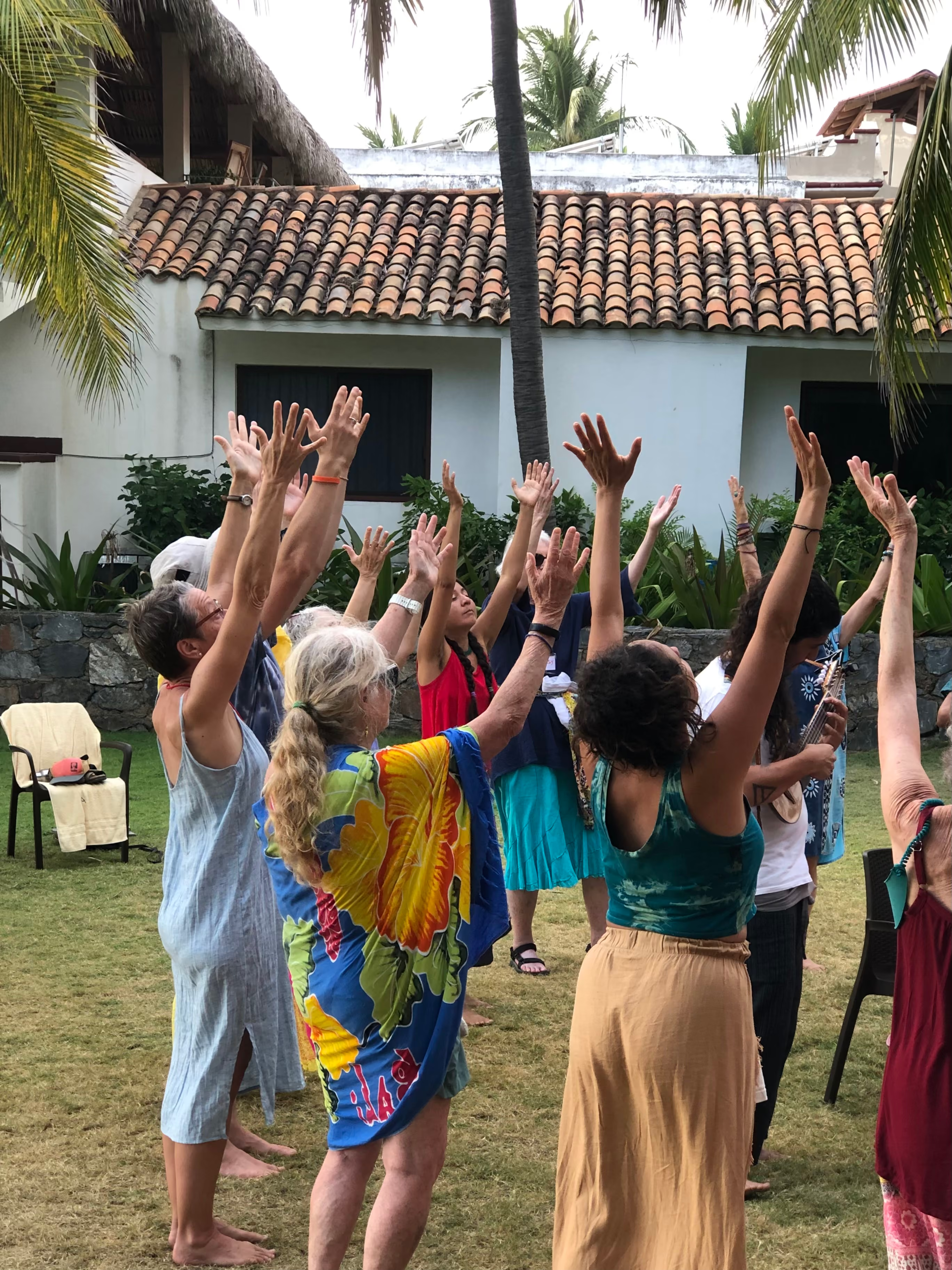
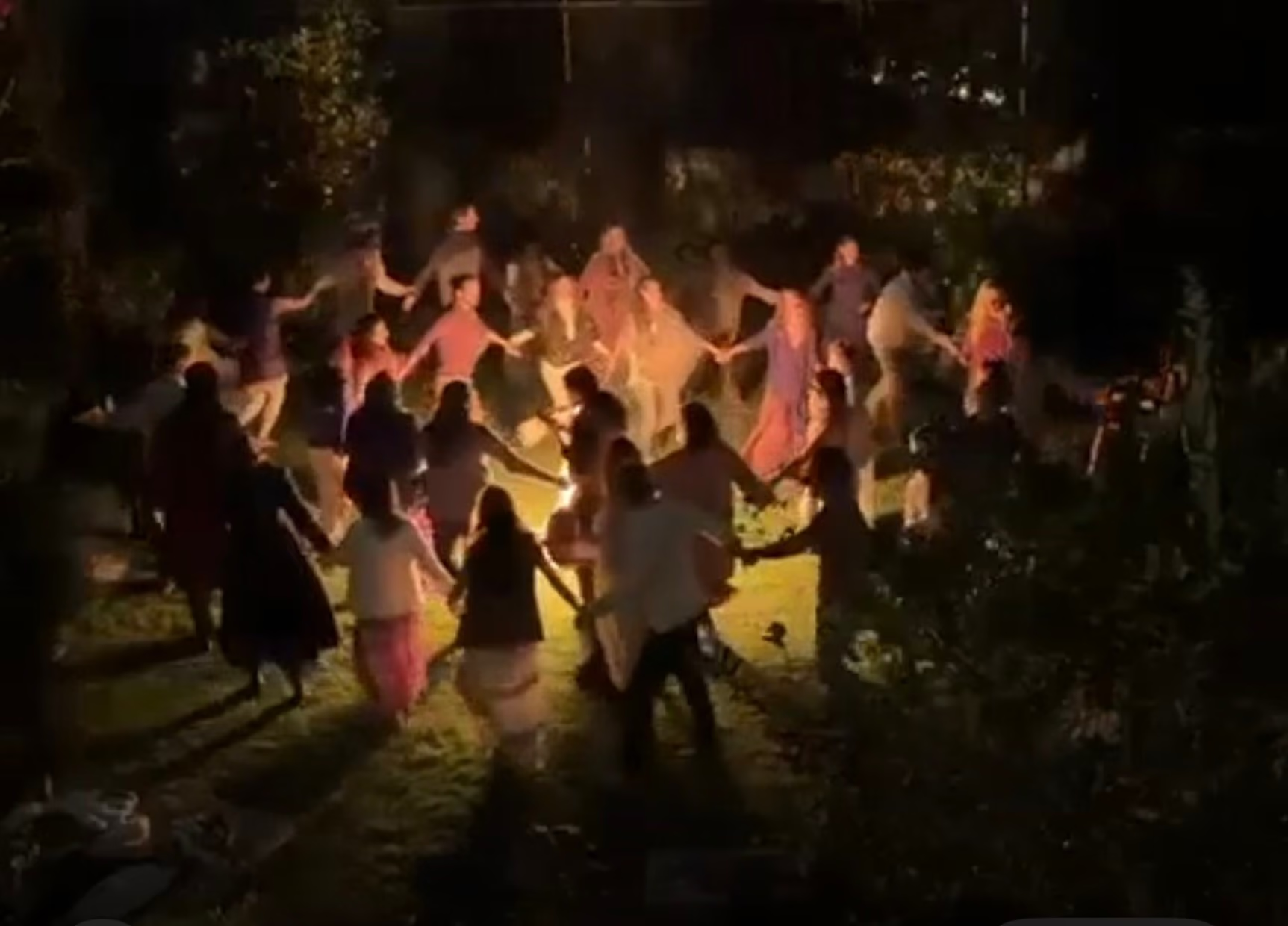
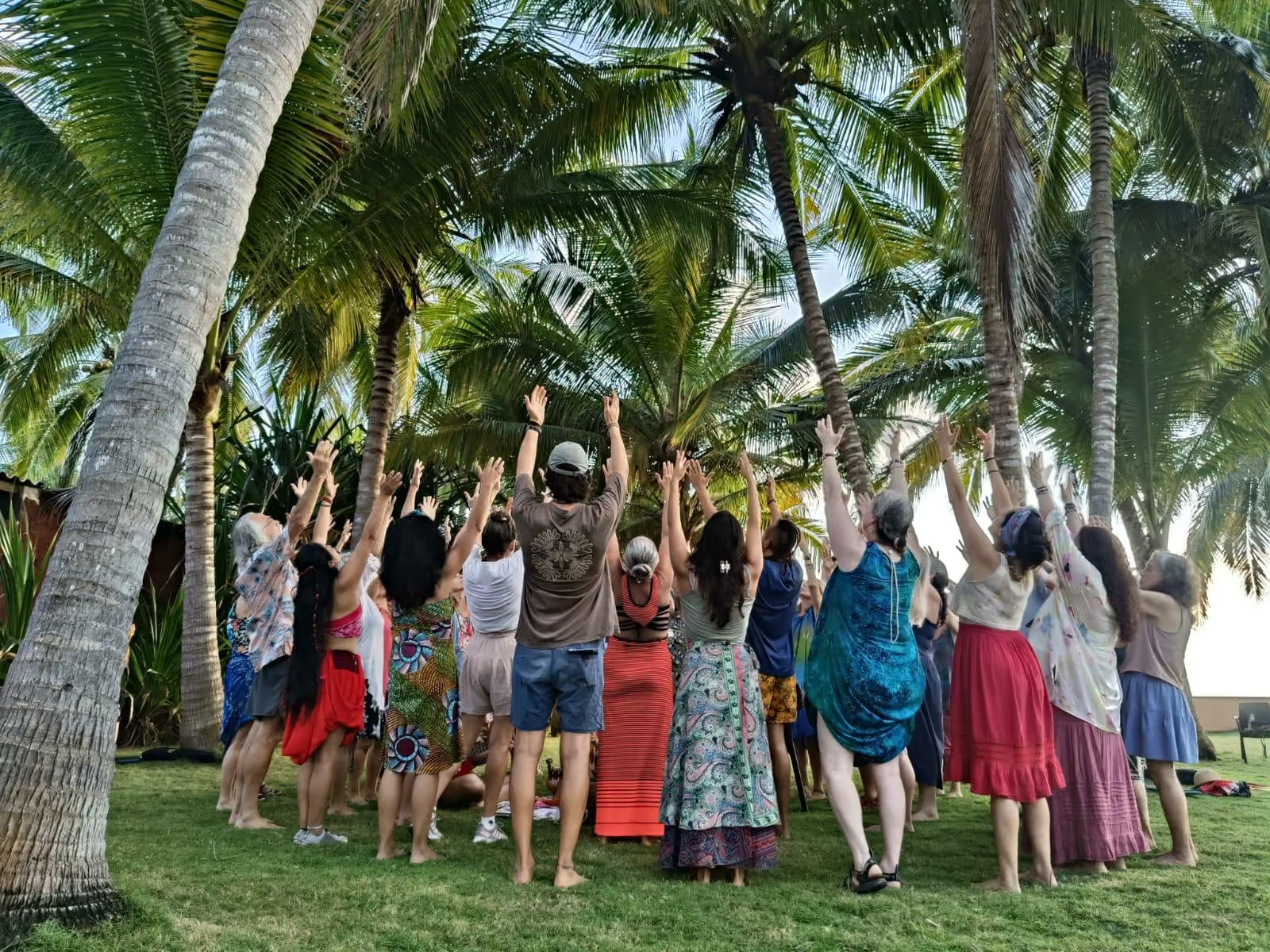
Last year, I asked someone what brought them to Troncones. Their answer—The Dances of Universal Peace—puzzled me. They said it with a certain you-know-about-this-don’t-you, as if everybody knew about it. No, I didn’t know about it. They went on to describe a dance retreat that paired mantras with movement. Oddly, this year, I was introduced to two of its organizers, Darvesha McDonald and Elizabeth Dequine. A day or so later, I found myself joining hands with people I didn’t know, becoming one of twenty-some people forming a circle around five musicians. With some simple guidance, we started to chant and, then, move.
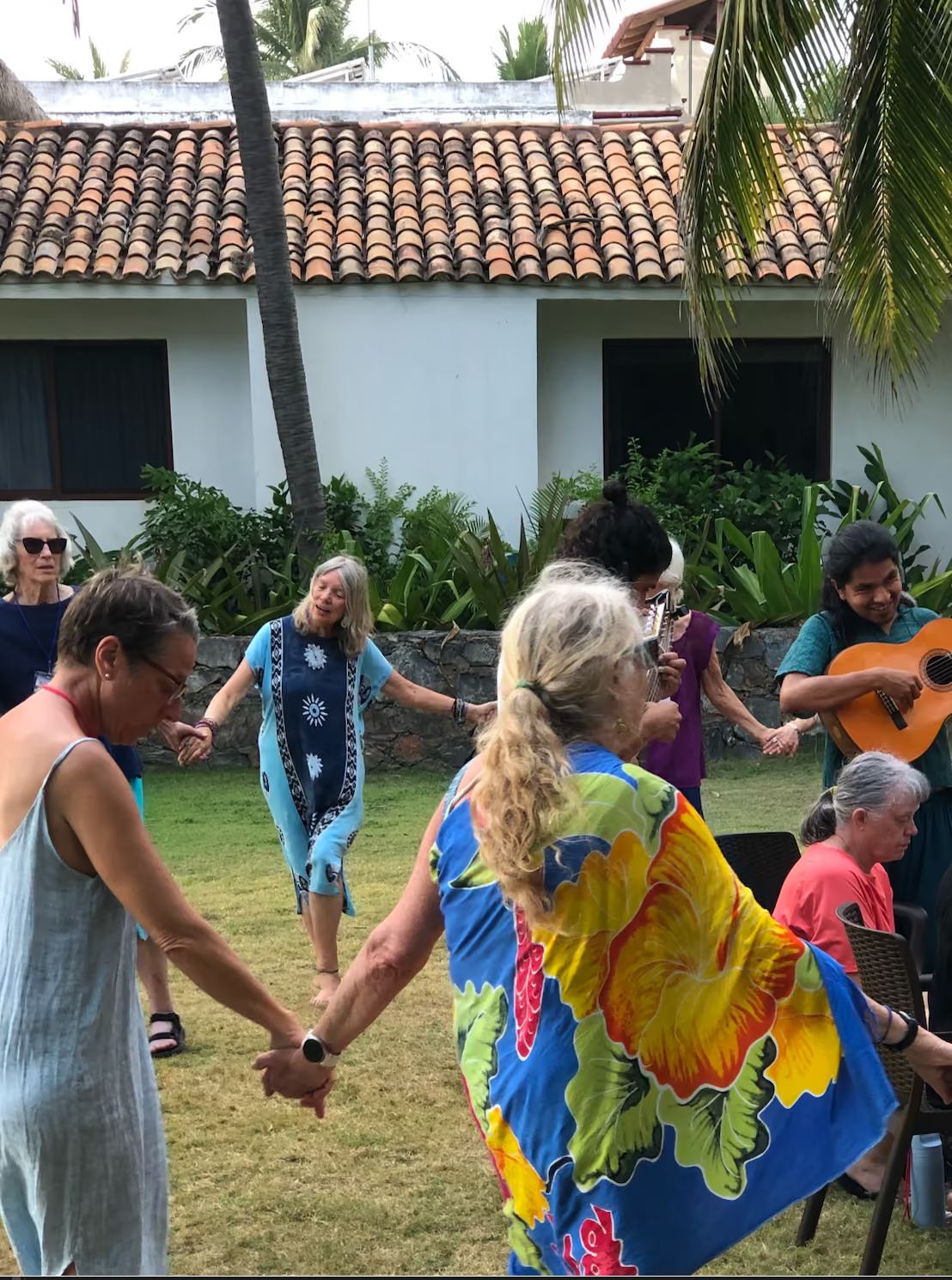
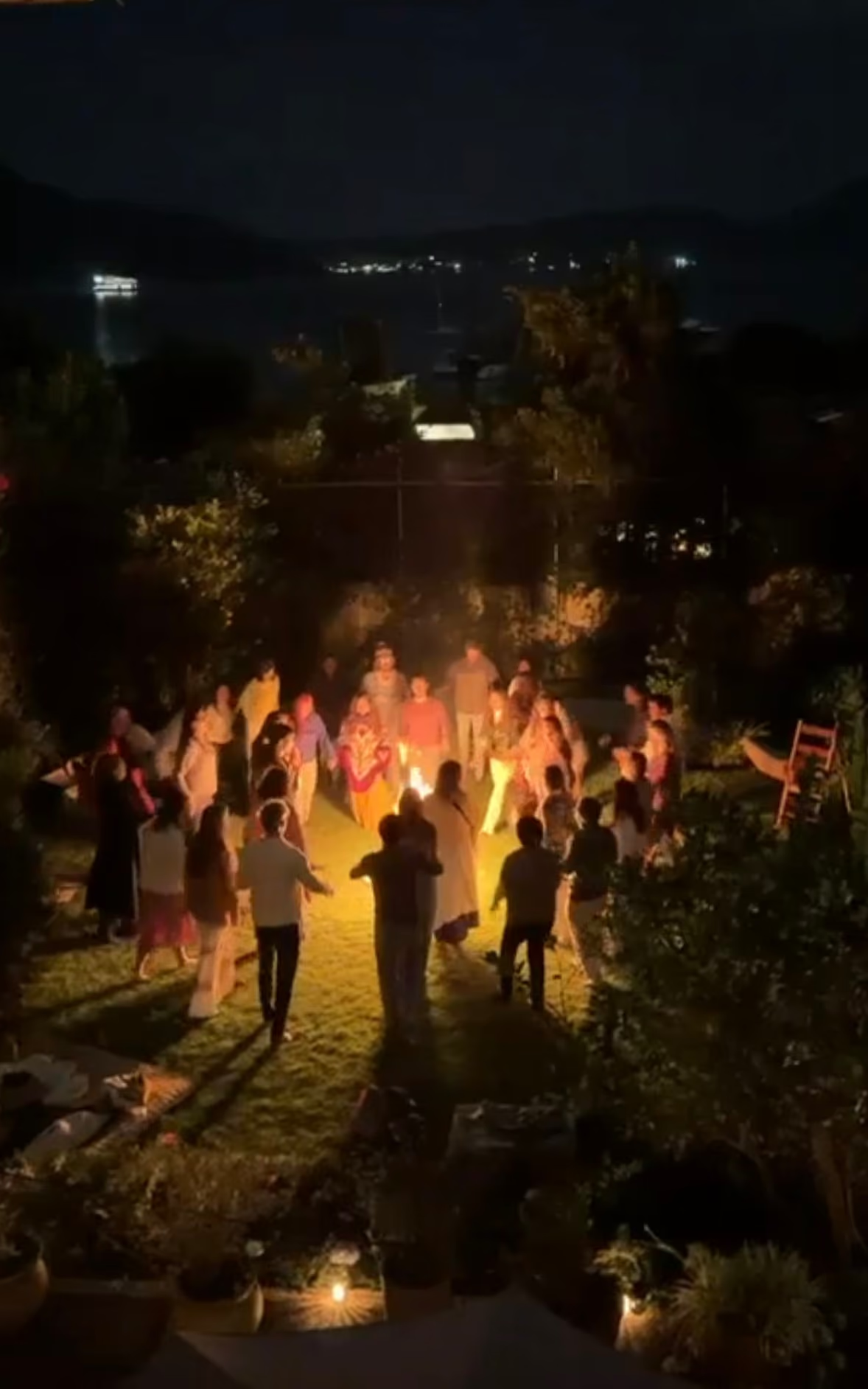
The instruction came by way of one of the musicians, who spoke a few words in a language I didn’t know, sang the words as a few tones—in a do-re-mi fashion, but having more of an om-mani-padme-hum vibe—tones that were easy enough to repeat. And that’s what she asked us to do, to stay with her, repeat after her, create a cadence, like a bass line in a rock n roll song, that the guitarists, drummers and flute player could use to create rises and falls, the melodies of motion. Once we had the cadence, she taught us our steps, our movements, our dance—two steps in, circling the heart forward twice while moving to the right, and then stepping back four steps. I distinctly felt like I was falling, about to break free of the circle, when the dance drew us back in. And then we did it again—steps in, circling to the right, steps back—while chanting.
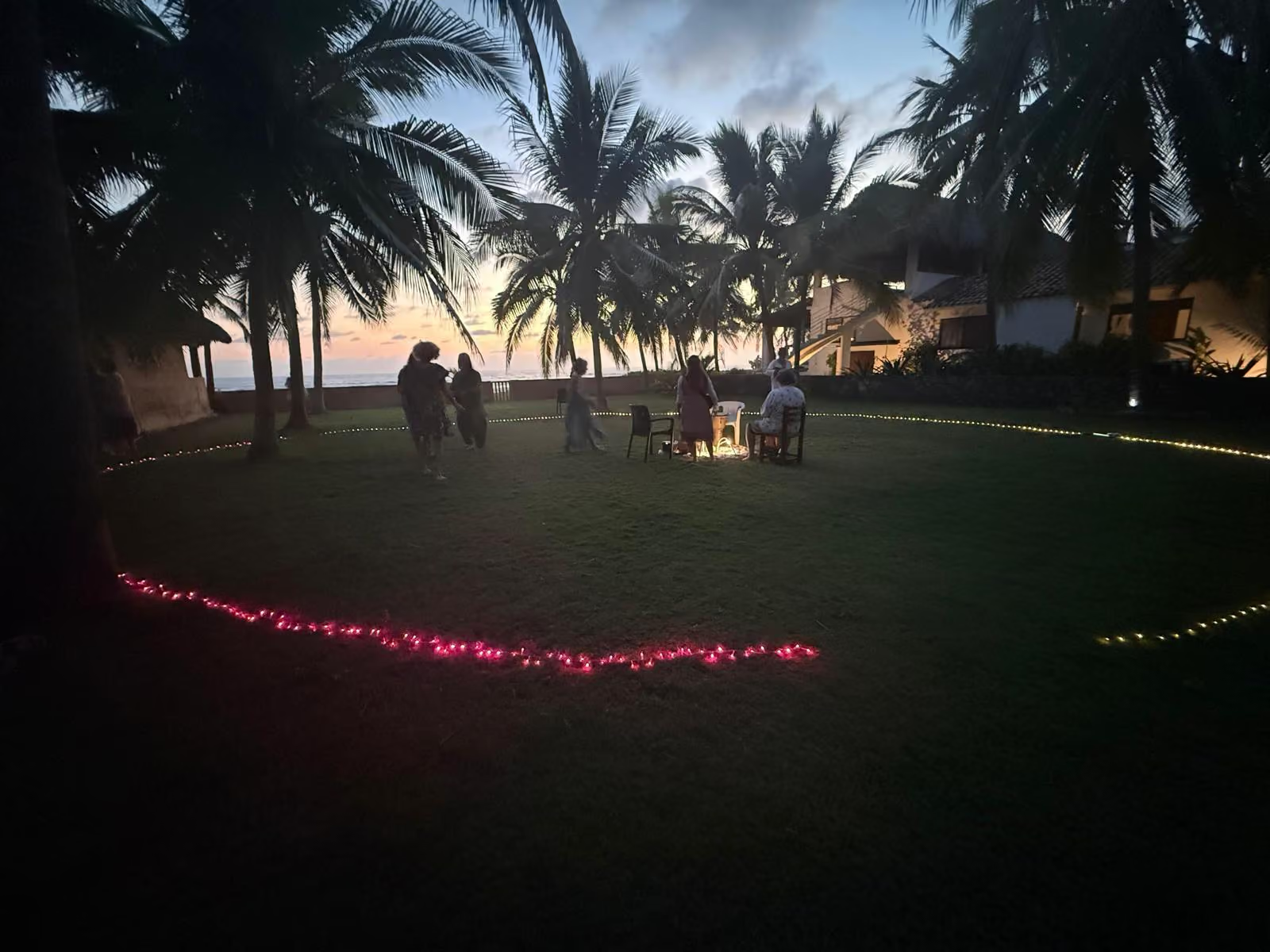
That was one of the dances of the annual retreat at Casa Escondido in Troncones, a two-week program that found its way here after two dance teachers were hunkered down here in the midst of the pandemic. One of them, Leela Francis, offered her bungalow at Casa Luciernaga to the other, Elizabeth Dequine. Elizabeth and Leela would get together each evening with a nearby neighbor, Wendy Brooks, stay six feet apart and do dance movements based on sacred texts—from Sufi, Buddhist and Hindi traditions—for their own enjoyment. Elizabeth suggested doing a dance retreat and Leela introduced her to Casa Escondido, which has enough rooms and enough open space to give attendees all they might need. Its location at the heart of Troncones helps, too, keeping everyone’s meals, transportation and excursions easy to come by.
As Elizabeth recalls, “I called my friend Skye and asked her if she’d do this with me, and she said, ‘Yes’. The first year we had 27 dancers, but only three from Latin America. I really wanted to include more Mexican dancers and some of the Mexican dance leaders I’d met when I was living in San Cristobal de las Casas [in Chiapas]. I had a vision of the retreat being more of a coming together of cultures.” That line of thinking led to Skye to stick with a one-week “camp” and Elizabeth to connect with Darvesha, who had experience doing “trainings”. Putting the two practices back-to-back has led the numbers to grow, to 45 dancers in 2024, with 17 coming from Latin America. This year, it was 70 dancers, with 27 coming from Latin America.
ABOUT THE DANCES
In describing the dances, Elizabeth said, “It’s like spiritually-oriented folk dancing. We take sacred phrases from different traditions around the world, and we sing them. It’s a lot like kirtan [a call-and-response chanting of mantras and the names of God], only we walk to the right, walk to the left, go in to the center, go out. They’re simple movements and everybody does them together. You know, we start out with all these differences. Different cultures, different backgrounds, different ages. But in a very short amount of time, because we share the love of this spiritual practice in singing and dancing together, all those differences disappear. That to me is what we want to see in the world.”
Darvesha credits Sufi teacher Sam Lewis with creating the framework for The Dances of Universal Peace in San Francisco in the late 1960s, saying, “People always want to connect this to the hippies, but that misses the point entirely. Sam Lewis was working with young people who were seeking alternatives to drugs, to the mainstream scene around them, but what he created was a legitimate spiritual practice that draws from centuries-old Sufi tradition. He took the Sufi practice of zikr—the rhythmic chanting of sacred phrases with movement—and expanded it to include mantras and prayers from all the world’s spiritual traditions.” She added, “My other main practice has been Buddhist meditation, which is really a solo thing. This is a relational practice. It’s cohesive. When you’re singing and dancing and praying as one, you feel ‘one’. Your heart is open, and there’s so much unification that goes on in that circle—boom, you’re all in sync.”
LEADERS-IN-TRAINING
The past two years, the dance leadership training has opened the two-week run, with Darvesha serving as one of the “lead” trainers. She came into practicing The Dances of Universal Peace at age 40 and has stayed with it now for 40 years. Modest about her involvement, Darvesha noted many people in her age group “have been at it for 60 years”. She described its current reach, saying, “We have dancers all over the world—Europe and Russia, the Middle East, Eastern Asia and South America—people interested in alternative living and building community. The dances build community.”
There are nearly 4000 dances that have come to be part of the practice. In explaining how a dance is taught, Darvesha says, “We don’t teach. The leaders find the one they want to lead and they get to practice leading it. It’s an empowerment training. They’re learning how to step forward, how to orchestrate, how to get people to follow them. People develop their own capacities as they go through these trainings.” She added, “Each dance comes from a lineage, from a spiritual lineage that comes through a mantra, a melody, a sound vibration. When you get into all this kind of mystical stuff, it's all about breath and vibration. All the ingredients of the spiritual path are there even though people think all they’re doing is learning how to lead a dance.”
This year brought an unexpected gift of sorts to that learning process. In previous years, the training retreat has featured two virtuoso musicians—a master Sufi drummer and an accomplished saxophonist. This year, neither could attend. Darvesh pointed out, "The learning musicians had to step in and step up. They really grew a lot this year, too. When the virtuoso steps aside, it makes space for the new people. It’s a lot like how the dancers are gathered together to help a person learn how to lead and feel good about it. What’s really happening is that there’s a whole community that’s uniting and helping each other and supporting each other. It’s very touching actually. That’s how human beings should relate to each other.”
THE SECOND WEEK
The dance camp that follows the leadership retreat is a lot less structured, allowing drop-in participation. “It’s a more casual approach,” explained Elizabeth, “but we’re still trying to bring together the same cultural understanding and the same sense of peace within ourselves. You can feel that vibration when everybody gets together and sings together. We hope we’re sending that out to the world and that we carry it with us and be ambassadors in the world. At the end of every dance session, we sing the Buddhist blessing: ‘May all beings be well. May all beings be happy. Peace, peace, peace.’ It’s a small gesture, but it reflects the larger aspiration at the heart of this practice, at the heart of these dances.”
For those interested in experiencing this dance practice in Troncones, the next leadership training and camp retreats will be held at Casa Escondido, from January 26 to February 7, 2027. Information about The Dances of Universal Peace, including how to find other circles and events, can be found at dupna.org.
%201.44.22.avif)