Elvis “Aikeke” Rose: Music is Vibration
When good teachers speak, you discover how much there is to learn
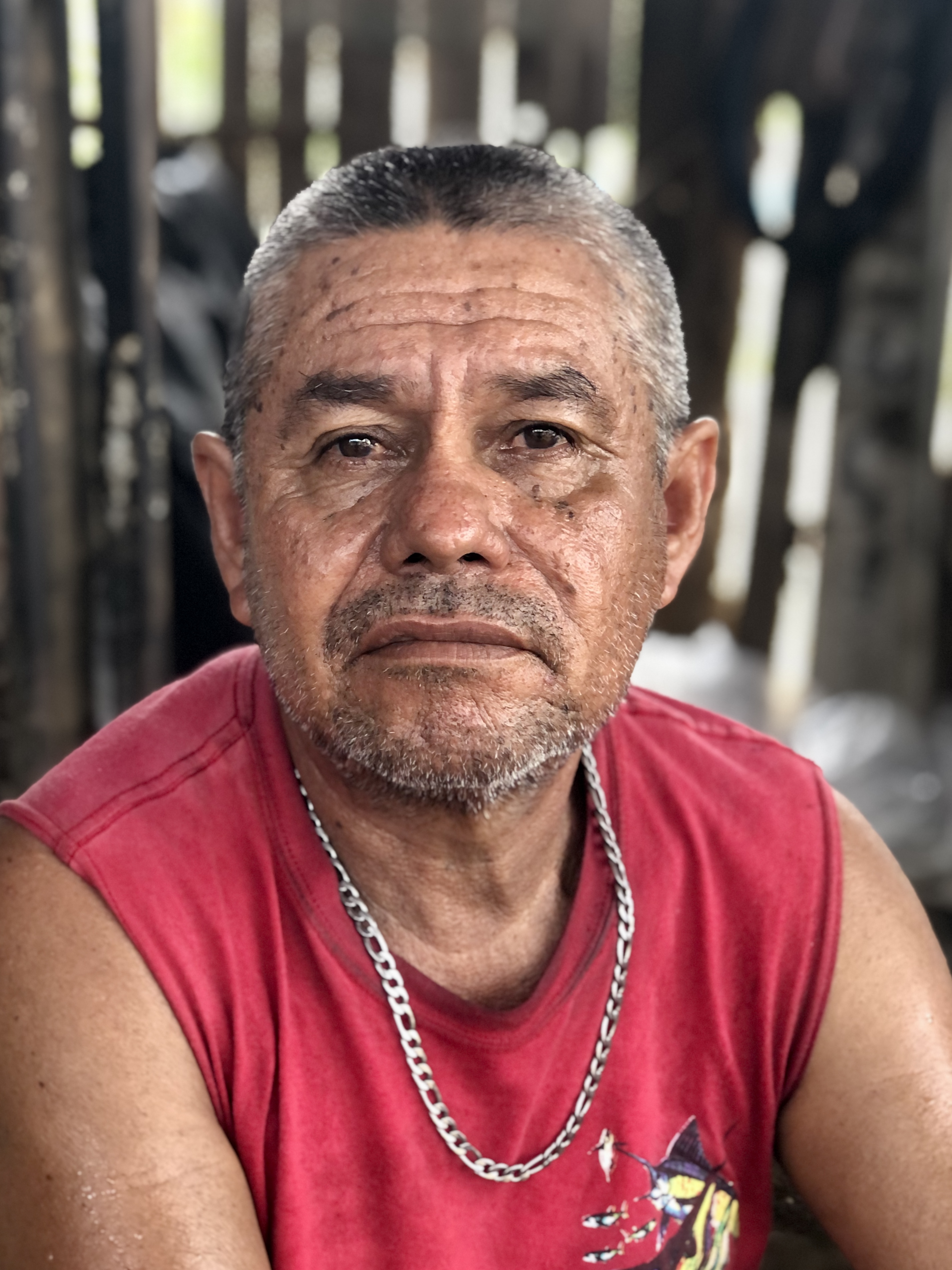
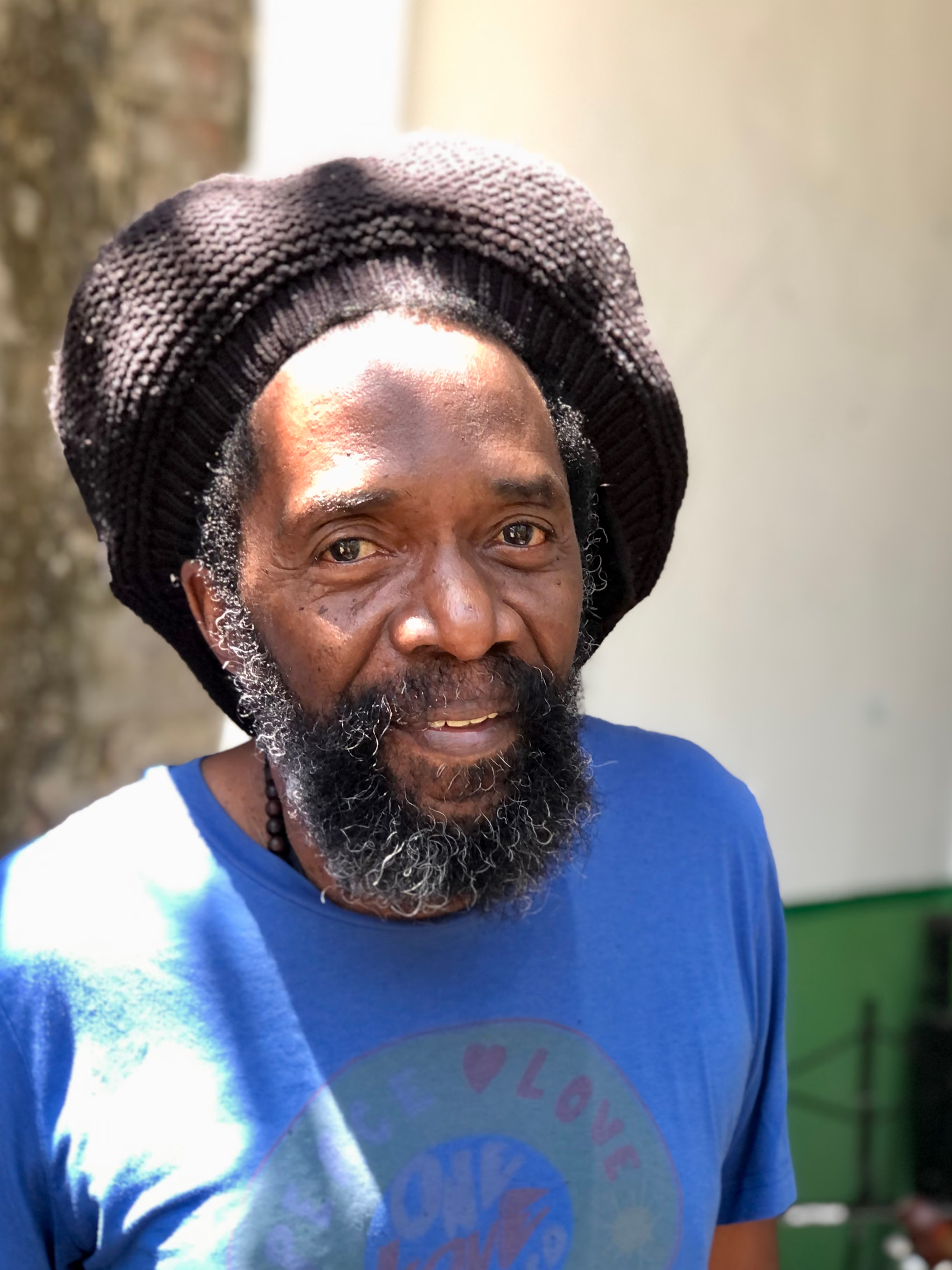
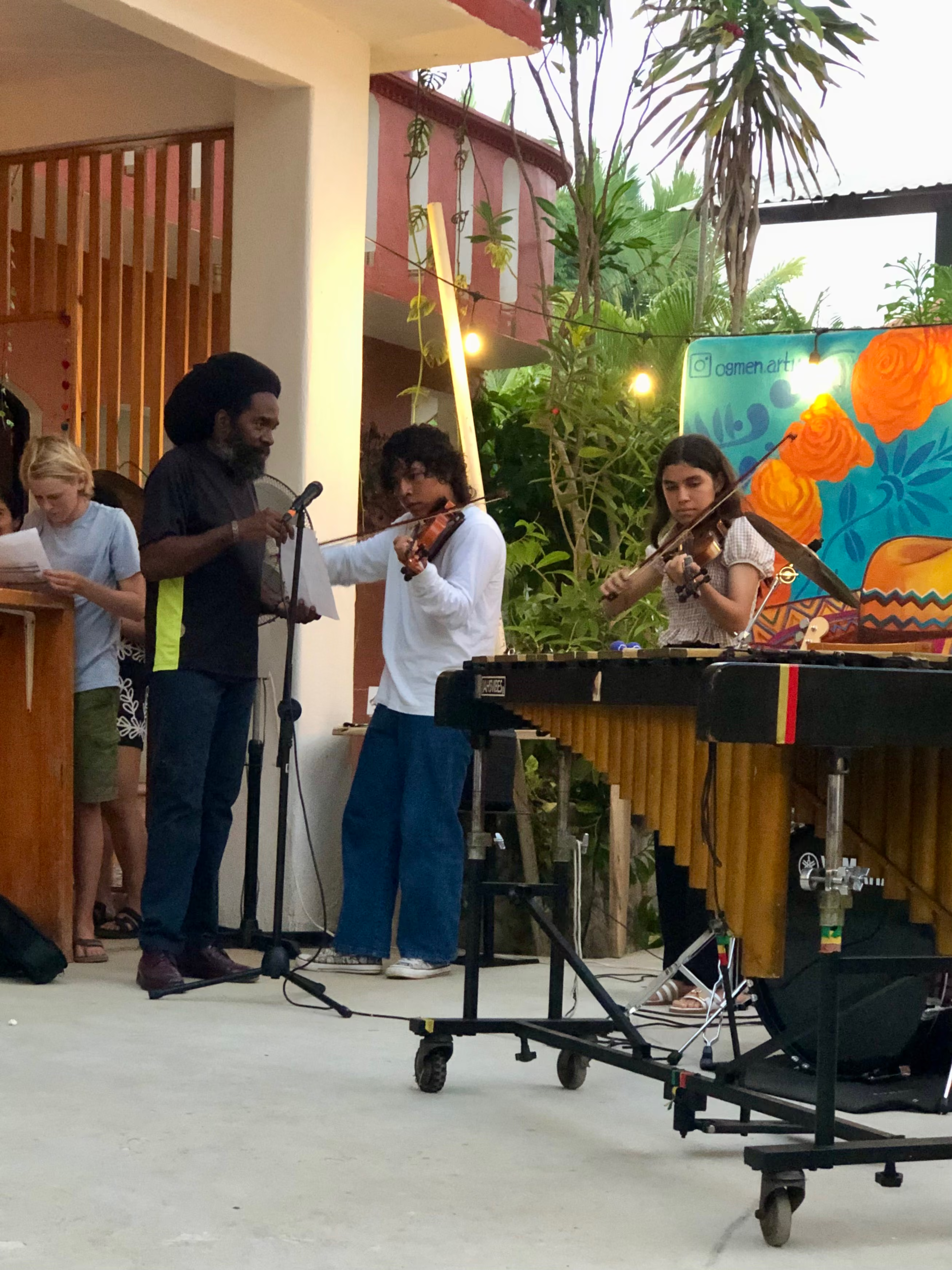
I met Aikeke in the street in the Centro in Zihuatanejo almost five years ago. He was outside his music school, waiting for a student. He struck me as an interesting guy, and I thought it odd that I would meet him. I don’t play music, but I like talking to teachers. Especially good teachers. They see and hear the world differently than most of us do. It turns out Aikeke has quite a number of students who live in Troncones. When I heard his school was having a recital at La Mexicana (April 4) and that he was struggling to make a higher rent, I went to talk to him. Googling him before going led me into a world of calypso, soca and reggaeton drumming I know nothing about. He’s clearly a master of those beats. And he really does hear the world differently. Meet Aikeke [AH-kī-kī].
%2017.27.38.avif)
.avif)





.avif)

%20(Spanish)-2.avif)




LOT: How did you come to start a music school in Zihua?
Aikeke: They asked me to.
LOT: Who is they?
Aikeke: The people of Zihua. They saw me play and they asked me to teach their children. It started after the first couple days I was here. I was on the beach with a friend and this guy passed by with a marimba. My friend told him I could play, and the guy gave me the stick, you know, to play. And I played his marimba. And after that, within a day or two, he took me to teach his grandchildren. And then there was this guy who sells guitars. He saw me play and when I went to buy a guitar, he asked me to teach his son. Then he invited some of the other young guys, and we started.
LOT: How long ago was this?
Aikeke: A little bit more than 20 years.
LOT: Where do your students come from?
Aikeke: They’re local people. I have students from Pantla, from Troncones, from Zihuatanejo, from Petatlán.
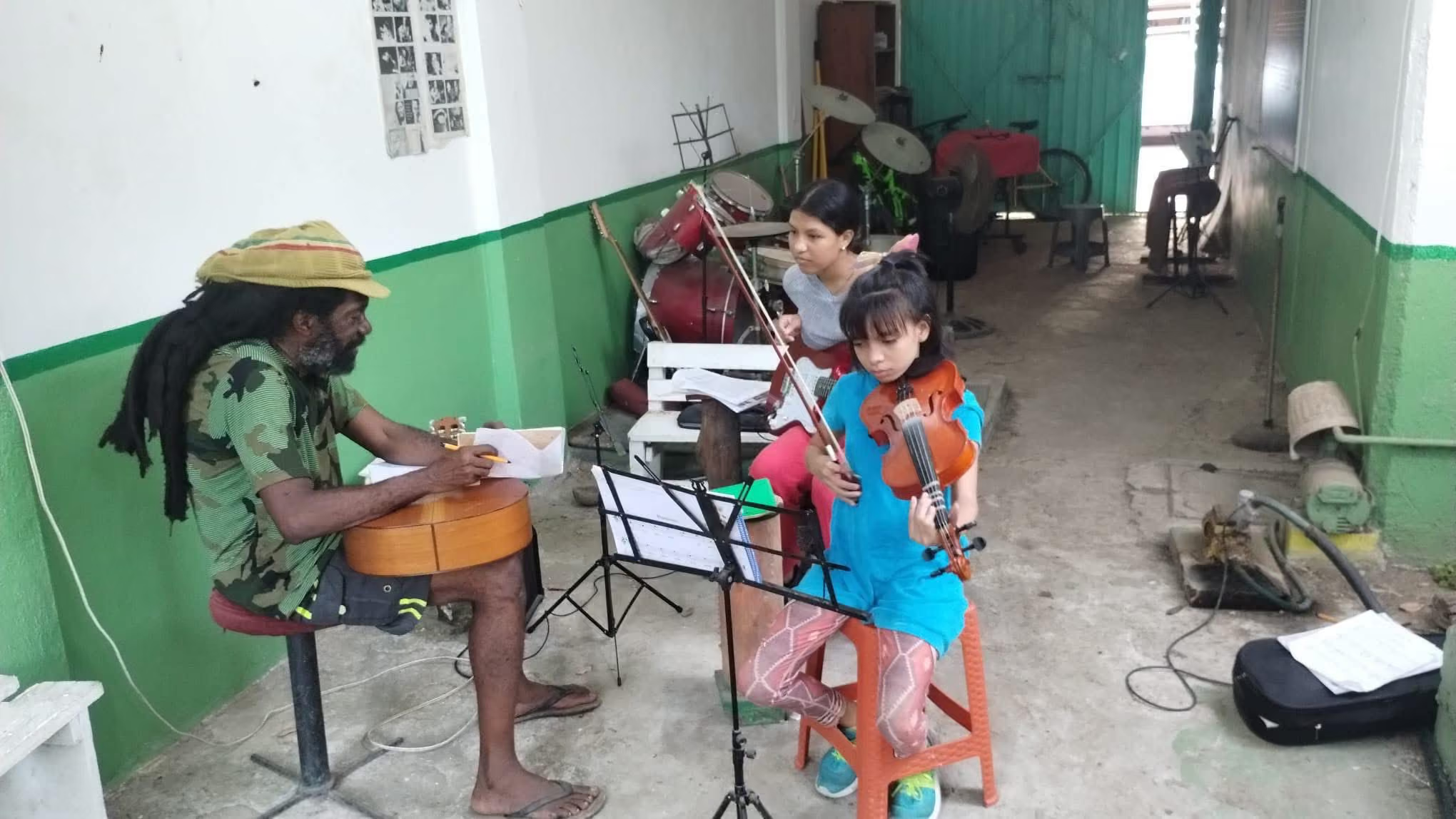
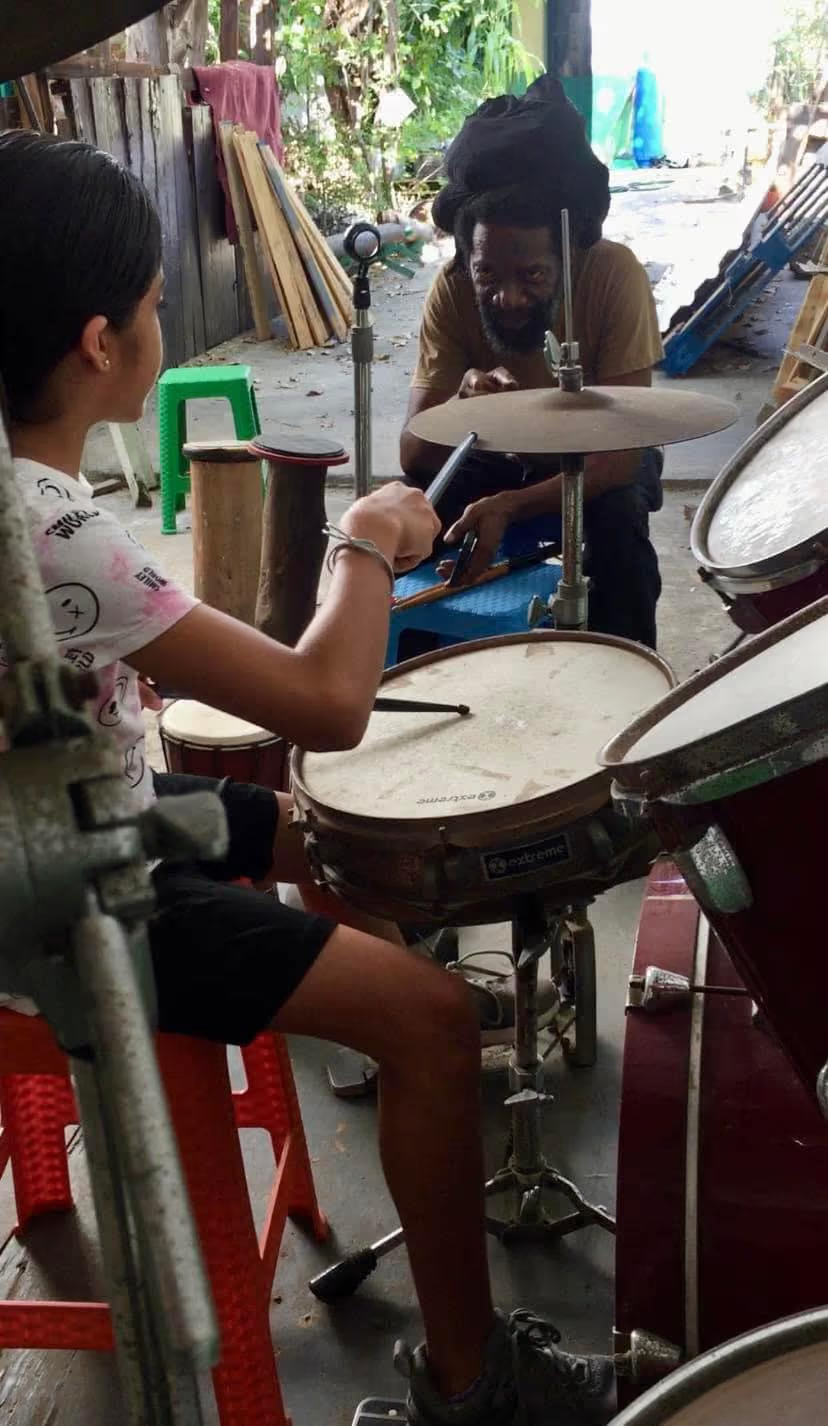
LOT: And how do people hear about you?
Aikeke: Word of mouth and social media. We have someone who promotes the school for us.
LOT: Which instruments do you teach?
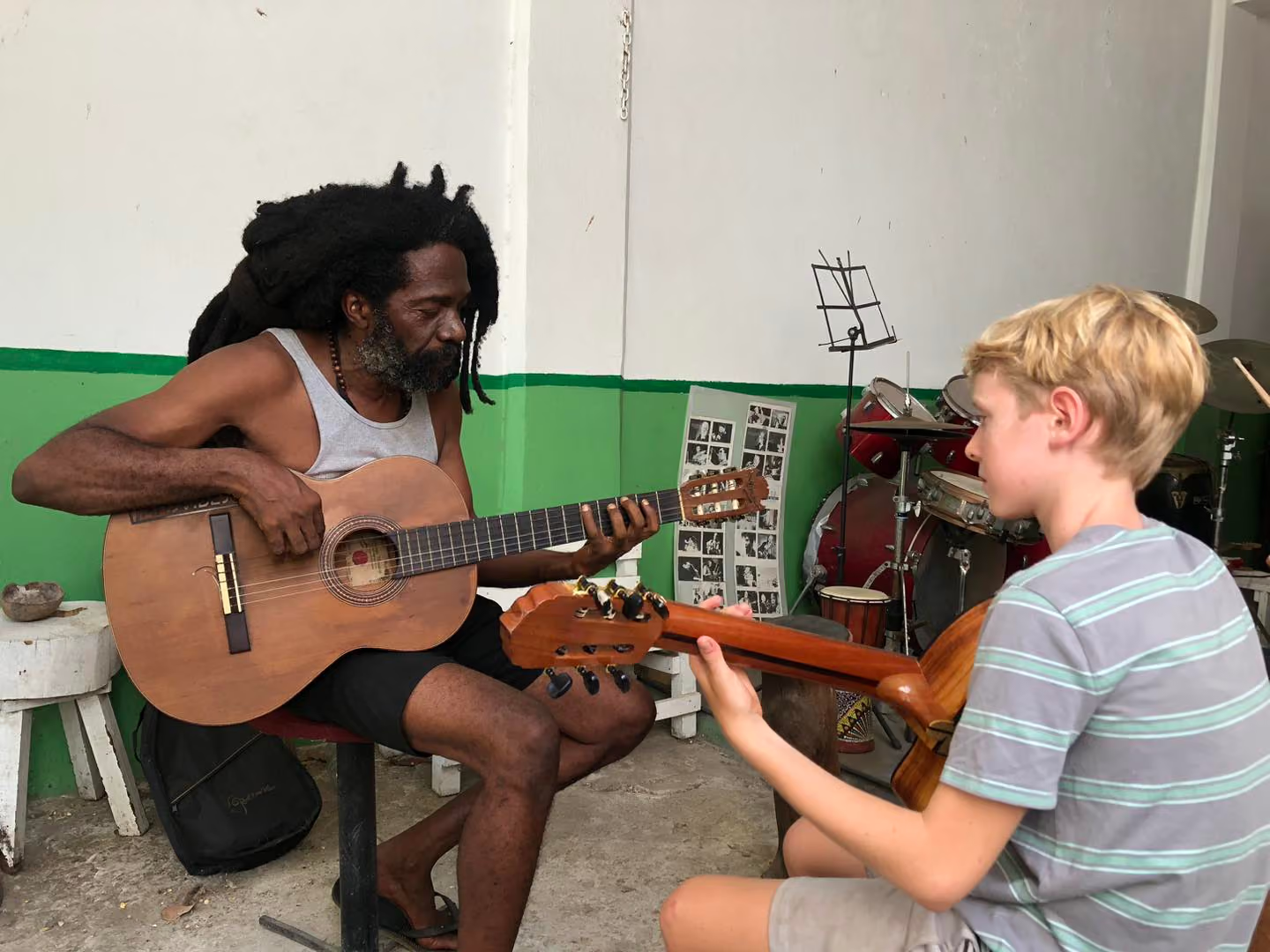
Aikeke: Drums, guitar, bass, piano, violin. We’ve had a sax student. I get them to play.
LOT: How did you learn? Where did you learn?
Aikeke: I grew up on St. Vincent in the Carribean. I’ve been playing since I was a little boy. I went to the United States and wound up playing in a military band. Then, for a little while, I went into the United States Armed Forces School of Music in Virginia [also called the Military Academy of Music and now known as the Naval School of Music]. It was a place for selected musicians. At that time, we all learned together, the Navy, the Air Force, the Marines and the Army.
LOT: What kind of music do they teach and play there?
Aikeke: We played big band, a lot of big band, along with the marching stuff. But before that, I spent probably four years in what they call an Adjutant General band. That’s a band that hardly marched at all. We played concerts all across New York state. We were based in New York, and we’d go upstate and play all the little towns, you know, in the park on Sunday evenings, all these big band songs. And when a general would come to New York, we’d play for him.
LOT: How did you end up in the US military?
Aikeke: When I was 18, I went to study engineering at Brooklyn Tech. It’s called New York Tech now. I went to study engineering, but I was already a musician. I was in school, and one day there was a music workshop at the same time I had a midterm exam. I was on the train, thinking, “Should I go to the midterm or go to the workshop?” I must’ve been thinking a lot, real loud, because this 82-year-old lady sitting next to me hit me. She asked me, “Why are you looking so sad?” I explained to her about the midterm and the workshop, and she told me to follow my heart. That was the last day I went to college. I really didn’t know what to do next, but my brother was already in the military, in an artillery unit. So, I joined the same unit as him. After a while, they wanted me to go to officer’s school, but I didn’t want to go. I wanted to play music. So, they sent me to the Adjutant General band and I spent several years doing that. Then, they sent me to the Military Academy of Music, but I didn’t stay there long.
LOT: What kind of instruments were you playing?
Aikeke: I was a percussionist. I played the drums, the vibes. I had to play about 30-some instruments. The guitar is a percussion thing, but they call it a string. Piano is a percussion thing.
LOT: How did you learn guitar?
Aikeke: Most of my family played guitar. That was in the blood, I would say. I could play a little bit, but I was always drawn to the drums. When I was about a year and a half, my family bought me a little snare drum and a little xylophone, one of those little xylophones with a little stick and little ball. I was into that.
LOT: Where did music take you? Beyond the military?
Aikeke: Even before the military, music took me places. I used to tour behind Caribbean singers. And when I was younger, I used to record with them. I became a session musician in New York, a recording musician. That’s a small circle of players. It’s always that way. If you look at most of the R&B albums, it’s the same musicians playing. If you look at Jamaican albums, it’s the same musicians. It’s the same thing in Caribbean music, the same players. I played calypso and southern Caribbean. I got into that circle by accident. I was in a studio one day, with a friend who was a percussionist. The studio was having auditions for drummers. There were all these drummers sitting outside. Because I was with my friend, we went straight into the recording booth. While I was in the booth, a pianist, who was the arranger that day, knew that I was a drummer, so he thought I was there for the audition. He asked me to play first. But the producer didn’t know me. He said, “No, man, he’s a little boy. We have professionals outside waiting.” The pianist and the producer went back and forth for a little bit and then the producer allowed me to play. I didn’t even have drumsticks. I used drumsticks belonging to the studio. When the producer heard me, he said, “Wow,” and then he let me play. From that day, I started to record.
LOT: After you left the Military Academy of Music, where did music lead you?
Aikeke: I went back to New York and, like I said, I was recording and touring with some Caribbean singers. Then, music in New York started to change. The drum machine came in, electronic things came in, and I decided to leave. I went home to St. Vincent, where I was teaching and playing. Then, I went back to New York and then I went to Houston. In Houston, there’s a guy named Joel Osteen who leads one of the biggest churches in America. He has thousands of followers, and thousands showing up for church every week. His father, John Osteen, founded the church and I was a drummer for John Osteen for a couple of years.
LOT: So how did you come to Zihua?
Aikeke: I was invited. Really, I wasn’t invited. There was a drummer who was invited, but he couldn’t make it. So, I was asked to substitute for ten days, and I came for ten days. Then there was a problem with immigration and the legal paperwork, and I didn’t really want to work illegally. So, I ended up at immigration, and the head of immigration for some reason told me to wait, that he’s going to fix my papers so I could come to Mexico anytime, on a proper work visa. At that time, the document I needed was called Fm3 or something like that. It was something you had to have to work. The group I was playing in was three of us. We went to Mexico City to play this gig in Mexico City. But before we went to Mexico City, my sisters, they told me my mother was sick in the hospital. So, I called my mother and she told me that no, that she was okay, that she just felt a little pain. She didn’t want to tell me the truth, you know? So anyway, we were in Mexico City about a week or so, and after one gig, I decided to call my ex-wife in Houston. She asked me where I’m at and I let her know I’m in Mexico City. She told me to call her back collect. Something told me something wasn’t right. That’s when I found out they’d already buried my mother.
It felt like the biggest blow in my life. I couldn’t even walk and I got into this sad state of mind. And even though we know death is inevitable, we know it’s going to happen, but sometimes when it happens, it just hits us in a hard kind of way. I felt like I came back to zero. Some people I knew took me into a studio in Mexico City and they asked me to record an album by myself, you know, playing every instrument by myself. And that time there weren’t computer programs like now. It was real drums, real guitar, but I couldn’t sing it good because I was too sad. But anyway, the thing is, people were amazed that one person could record a whole album by himself. One of the songs ended up being played on the radio in Mexico City. While that was happening, a reggae festival asked me to be part of it, and they took one of the songs and put it in a compilation called “Rústica”. And so, by the time I came back to Zihuatanejo, the word had spread that I’d recorded an album by myself, and the people here asked me to teach and teach and teach and I’m still teaching today.
LOT: What does teaching music teach you?
Aikeke: I actually learn a lot more from teaching. I mean, I’d already mastered several instruments, but what I realized is that fame and everything, it builds your ego, but when you teach, it fills your heart. A child comes in here knowing nothing, and then in a couple of months, or a year, you see them play and they transform their life. That’s a special thing. You know, at our school, we have children who don’t pay. We charge very little, so that playing music becomes accessible to every to every economic state. Hundreds of students have passed this away. Some of them went on to study music. Most of them study other careers. For me, this is a kind of career that doesn’t fill my pocket, but it does fill my heart.
LOT: How do you prepare your students for recitals?
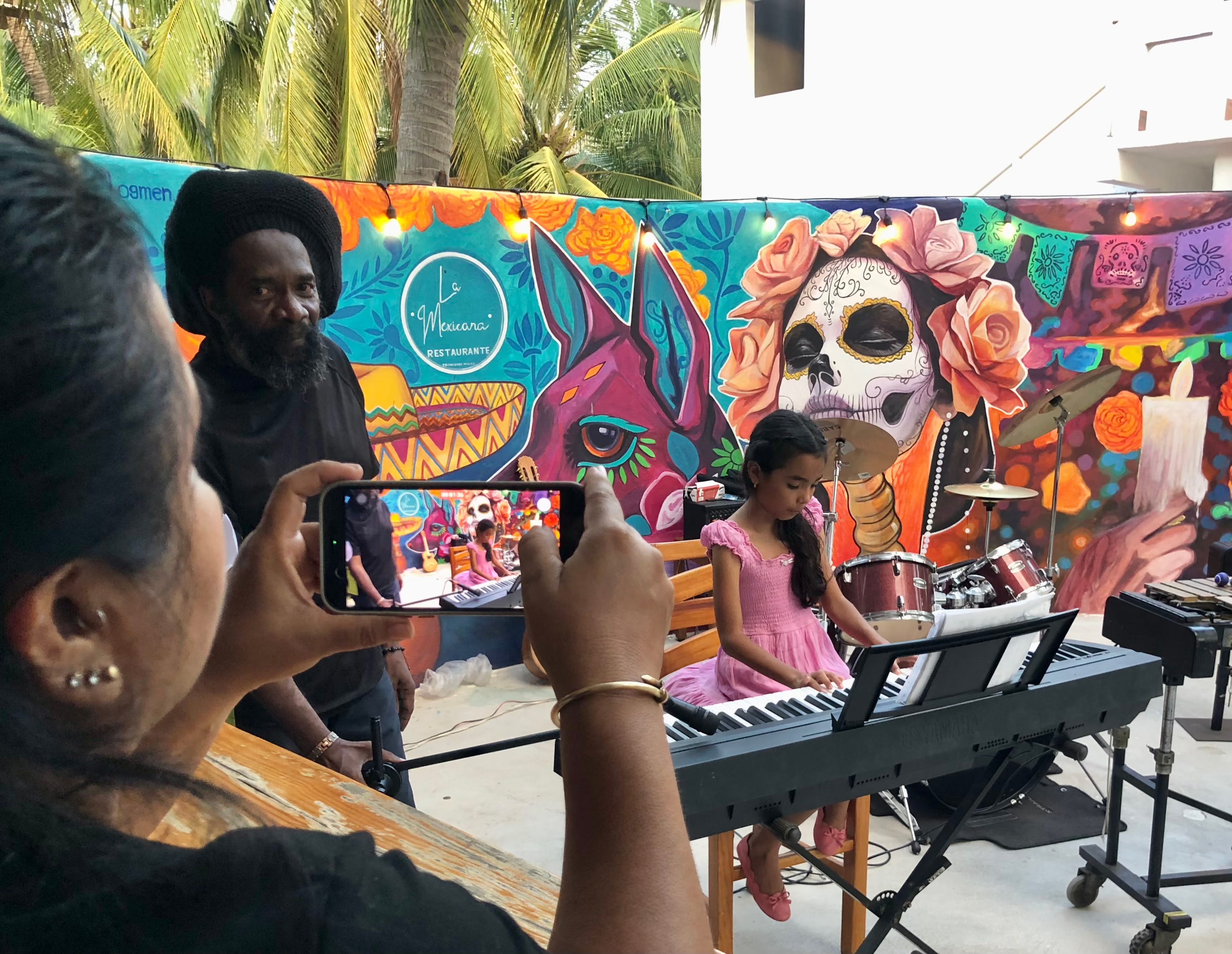
Aikeke: It’s a learning experience, I tell them. A couple of years ago, there was this restaurant we used to go to once a month and play. The reason I did that is so that the children could get rid of their nervousness. I let them know they don’t have to play, or that they could play “Twinkle, Twinkle, Little Star”—that it didn’t have to be a big song. I did that so they could build up their confidence. Playing in front of people, and for themselves, can be hard. It is for the parents—the parents cry when they see their kids play. There are all kinds of emotions. It does a lot to them and for them. I get a little nervous because I want them to play right. But I’ve seen so many things—children who go up to play and they can’t move their hands. There was this one guy, he would say, “Maestro, wait”, every time he was supposed to play—he had to go to the bathroom right then. But he got it, you know. He became one of the best players, and now he’s in America playing.
I’ve seen all kinds of, I would say, “theatrics”. You always get nervous anyway when you’re going to perform. It doesn’t matter whether you’re professional or amateur. From the professional point of view, you don’t know how the first note is going to come out, where the song is. That’s the nervousness of a professional. The amateur is nervous because they’re not accustomed to the experience. For me, that’s the hardest part of teaching them. You got to keep them motivated and curious—so they want to do it instead of spending hours on their phone, so they want to practice. Even though we have individual classes, we also have little group classes. Children like competition among themselves, so every once in a while—like our violin players—maybe once a month, we have all of them in to play together. That gets them more confident, ready to play anywhere.
LOT: What are the challenges you face here?
Aikeke: The economics. Sometimes we’re behind on the rent. Sometimes we can’t buy good practice instruments, but we have to be inventive. Right now, we have an electric piano, but one of the keys is not working. Those are the basic problems that we have. We don’t generate enough money from tuition to maintain the school as such. We do recitals to raise money. People who come to those are often generous. You can see right now we have two drum sets. The red one came from a politician. The black one came from the guitar festival, from someone who was impressed by our students who played there.
LOT: What are your joys?
Aikeke: My joy, my happiness comes from simple things. There’s a joy and a sadness because I have a grandchild who I can’t see because I’m here right now. That’s a little sad, but talking to them on FaceTime gives me joy. That I’m not sick. That’s a joy for me. And, the fact that I can share what I know, to me, that’s a divine thing. That’s a joy, like when I see children play excellent, that kind of gives me a kind of satisfaction, because I don’t really see what I’m doing. I don’t see it sometimes, even though they come and I can see they’re improving. It’s a process. Then you see them up there playing and you realize, “Oh, yeah, that’s the way.” That makes me feel good.
I value this. I mean, people tell me, “You could be famous,” that I’m one of the best vibraphone players on the planet. I don’t look at it that way. I know the work I put in, how hard it is to practice 12 hours and 18 hours a day. But even while I was doing it, I wasn’t thinking of becoming the best, because there is no best. There’s really just the execution, and making it easier to execute what you want to play. When we were young, like 12, we were going to be the best in the world, but as you grow, you learn the difference between learning, playing and being the best. I never learned to play an instrument. I grew up playing. There was not a time in my life when I said, “You know what? I want to learn to do that.” I grew up playing, and finding people who wanted me to play with them. The first band I played in, I had to slip away. Every Friday night we had a gig in a hotel, but we had to leave in the morning to catch the boat to get there. Every Friday morning, my father dropped me off at school and I’d wait until he was gone and then it was off to the wharf to catch the boat. That was going on for a while and I thought they didn’t know, but they knew. St. Vincent’s a small island, you know. Playing is a joy. Doing what you have to do to play is a joy.
LOT: What is music?
Aikeke: I think it’s the art of expressing frequencies. You know the science of frequencies? My brother, who’s died, had a PhD in physics and a PhD in chemistry. He came to the conclusion that everything vibrates, that everything has a frequency. Music is pure frequency. It’s pure vibration. It goes everywhere. Just on Monday, I asked the students in Pantla, “What do you think the creator loves?” The creator. God. Love. They said things like “praise”. I said, “How about music? Because everything that has been created vibrates.” The birds sing, the wind sings, the trees sing, the sea sings. You know everything sings. Every single thing vibrates and gives off a frequency. And it’s beautiful.
When you are happy, what do you do? You go in the bathroom and you sing. And when you’re sad, your frequency drops—you don’t sing. It’s said that music develops the brain, that it helps a child, even before they’re born, to listen to music, to listen to, like, Bach and Beethoven. That’s a connection to a frequency. Bach and Beethoven didn’t have a lot of distractions like we do, and they also played music to a different frequency. They tuned to 432 hz rather than 440 hz like we do today. Maybe that's why we have these sicknesses we have, and why someone’s always trying to make a bigger bomb. We’re totally out of tune. We’ve gotten used to other frequencies, man-made ones. We’re not listening to the two symphonies of nature, the day one and the night one—how the different creatures of each make different sounds, and how they switch and how to listen to the switch. The body has more ears than these two. You know that because if you walk into a cancha and the bass is like, boom, boom, boom, you don’t hear it here [pointing at his ears]. You hear it in your feet and your ankles. That’s when you realize your body is created for you to hear, and to feel. It’s about that joy. That is music.
LINK
Escuela de Música y Artes de Zihuatanejo: https://www.facebook.com/p/Escuela-de-M%C3%BAsica-y-Artes-de-Zihuatanejo-100094488957014/