Summer Foraging
A Look at Wild and Seasonal Foods
As a foodie and former chef, I’m always looking for cool things to eat, so when I found some albañils [masons] snacking on a yellow fruit at a construction site that got my attention. So did seeing people collecting pods along the road on the road from Majahua to Lagunillas, and watching kids grabbing little crabs with tongs on the beach. These got me asking questions!

.avif)





.avif)

%20(Spanish)-2.avif)



I have a nanche [hogberry] tree and a guaje [wild tamarind] tree in front of my house, but it wasn’t until I saw people eating from ( these wild trees) them that I became curious about what was growing around me. What’s edible? What have I been walking past for years without noticing? What’s appeared recently with the rains?
Right now, our early summer is teaming with life. You can hear it in the frogs, see it in the insect hatchings and in the green buds shooting up everywhere. You can even find it in the bubbles in the sand. Those bubbles come from jaibas [small crabs]. They’re a delicacy, and so are the nanches, guamúchiles, alga, langostinos and parota pods—local foods hiding in plain sight—all around Troncones, Majahua and Saladita. Here’s a look at a few treats I’ve come across, with some guidance from Alejandro Rodriguez Pruneda of Costa Nativa Ecotours.
FRUITS & NUTS
If there was an unofficial local fruit of early summer, it might be the nanche. Small, yellow, fragrant, and impossible to ignore once you know them, nanches seem to appear everywhere this time of year. Some people adore them. Others never quite come around. Either way, they inspire strong opinions. You’ll see them in clear plastic cups throughout the mercado in Zihua. To me, they taste like tiny bitter apples—and, of course—that makes them the perfect vehicle for lime, salt and hot sauce or chamoy.

Ciruelas [wild plums] arrive with the rains, too. Humble and colorful—green, yellow, orange, red, or deep purple depending on the variety and stage of ripeness—ciruelas may be one of the most versatile fruits in the region. Like many seasonal foods, they are abundant for a brief period in early June and then disappear almost as quickly as they arrived. They are typically eaten fresh, often with chile, lime and salt, but they also find their way into aguas frescas, preserves, tamales, atoles, salsas and moles.

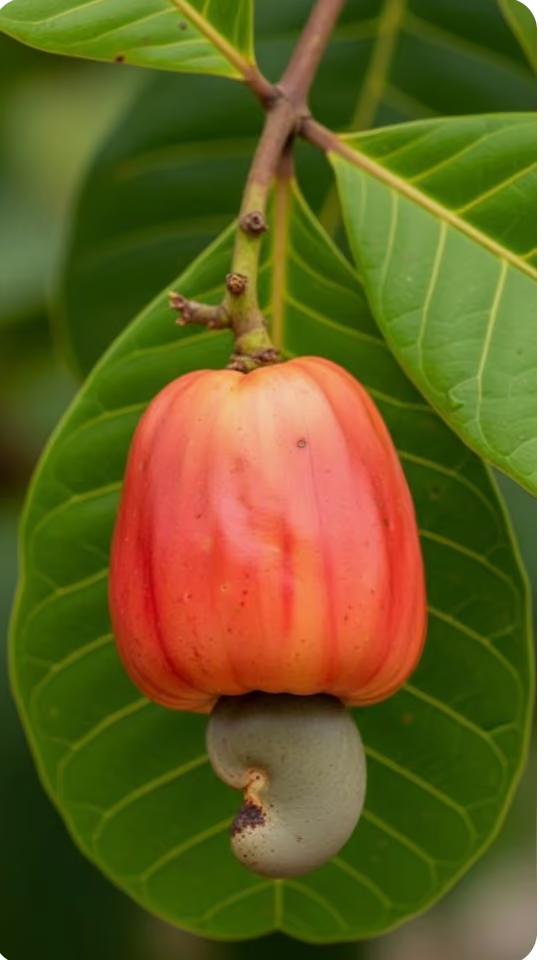
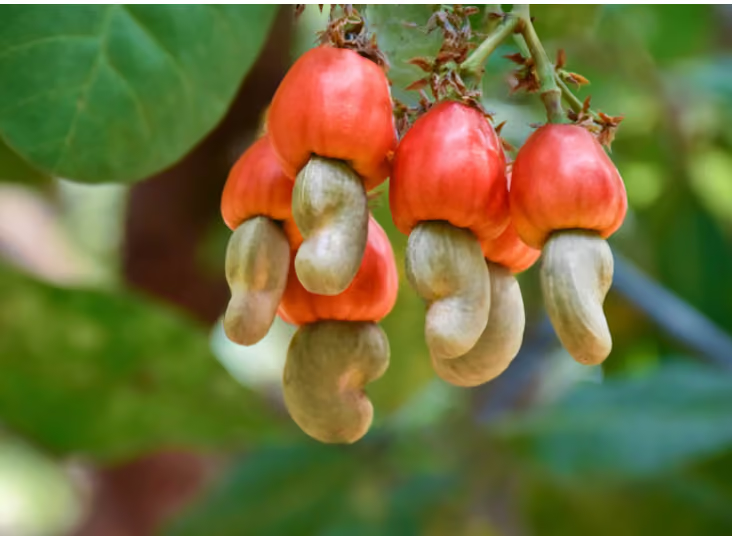
Then there is the marañón [cashew apple]. This typically red or golden yellow fruit hangs from its tree with the familiar kidney-shaped nut attached to the bottom. The fruit itself is edible with a unique, tropical flavor that many compare to a blend of mango, strawberry and citrus. It’s great for fresh juice, jams and syrups. The nut is another story. Please don’t try to eat the raw nut on the fruit. The shell contains toxic oils and must be carefully processed before the cashew can be eaten. This is why cashews are costly. (There’s a marañón tree in Troncones, on Main Street, growing next to Restaurante Orbe’s. The first time you see a cashew growing from the bottom of a fruit, it feels a little like discovering carrots that grow on trees. It’s questionable if this is an indigenous tree but it’s so odd-looking and popular that it’s worth adding here.)
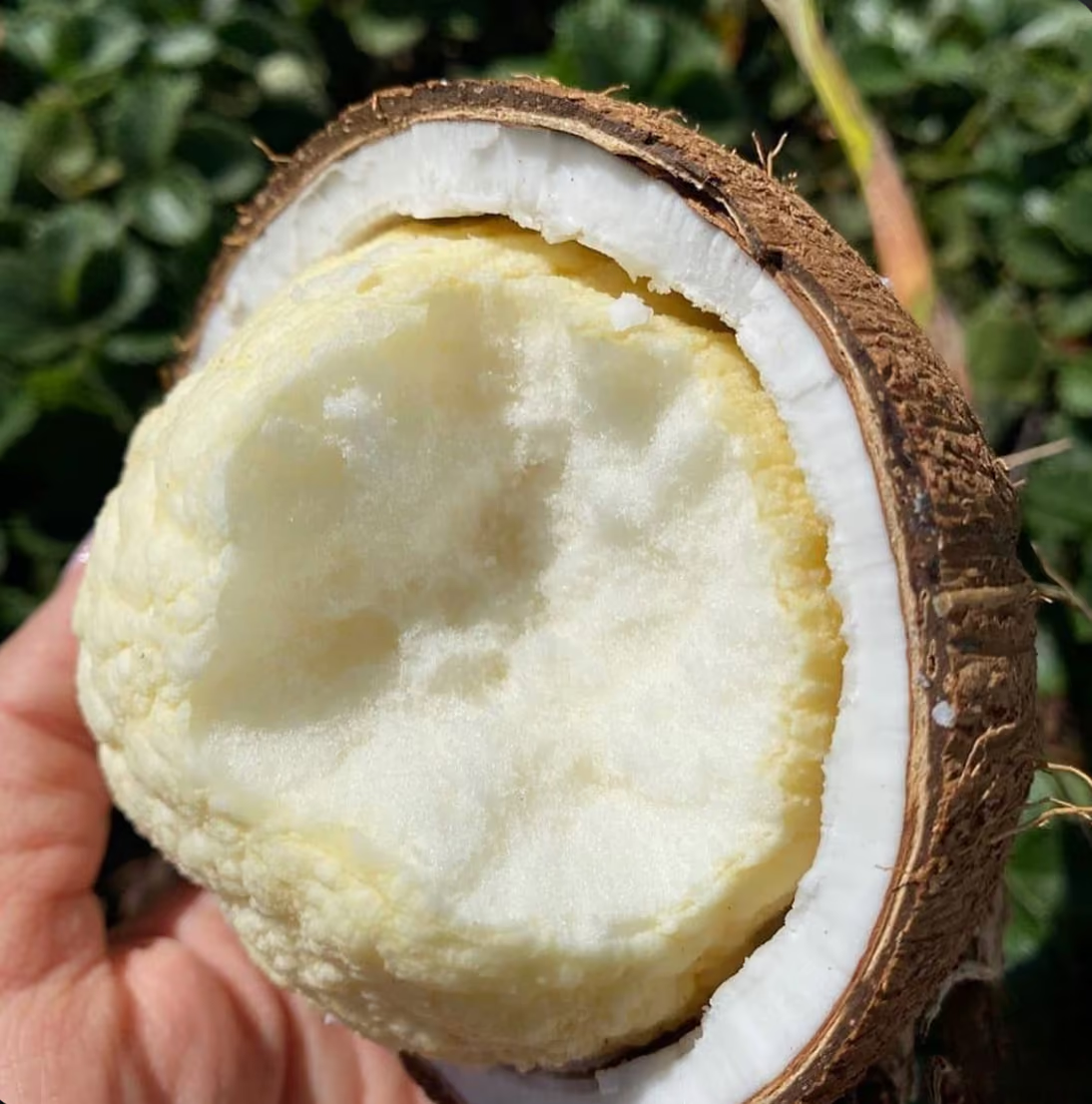
Manzanitas de coco [sprouted coconuts] are a year-round surprise—a treat from a fallen coconut—a soft, airy, sponge-like ball that grows inside a sprouting coconut. Slightly sweet and completely unexpected, it’s one of those foods hiding in plain sight that everyone who grows up here seems to know about. I was turned onto these by a neighbor.
The timbiriche [also known as piñuela] is a tart, tangy fruit growing on a plant that resembles a thin agave or aloe. Timbriches grow in clusters, like mini bananas, but the shell is hard. Once you break it open with your fingers, you can eat the fruit inside. Be mindful timbriches are in the pineapple family and, like pineapples, they contain bromelain, an acid that if eaten too much can burn your tongue.
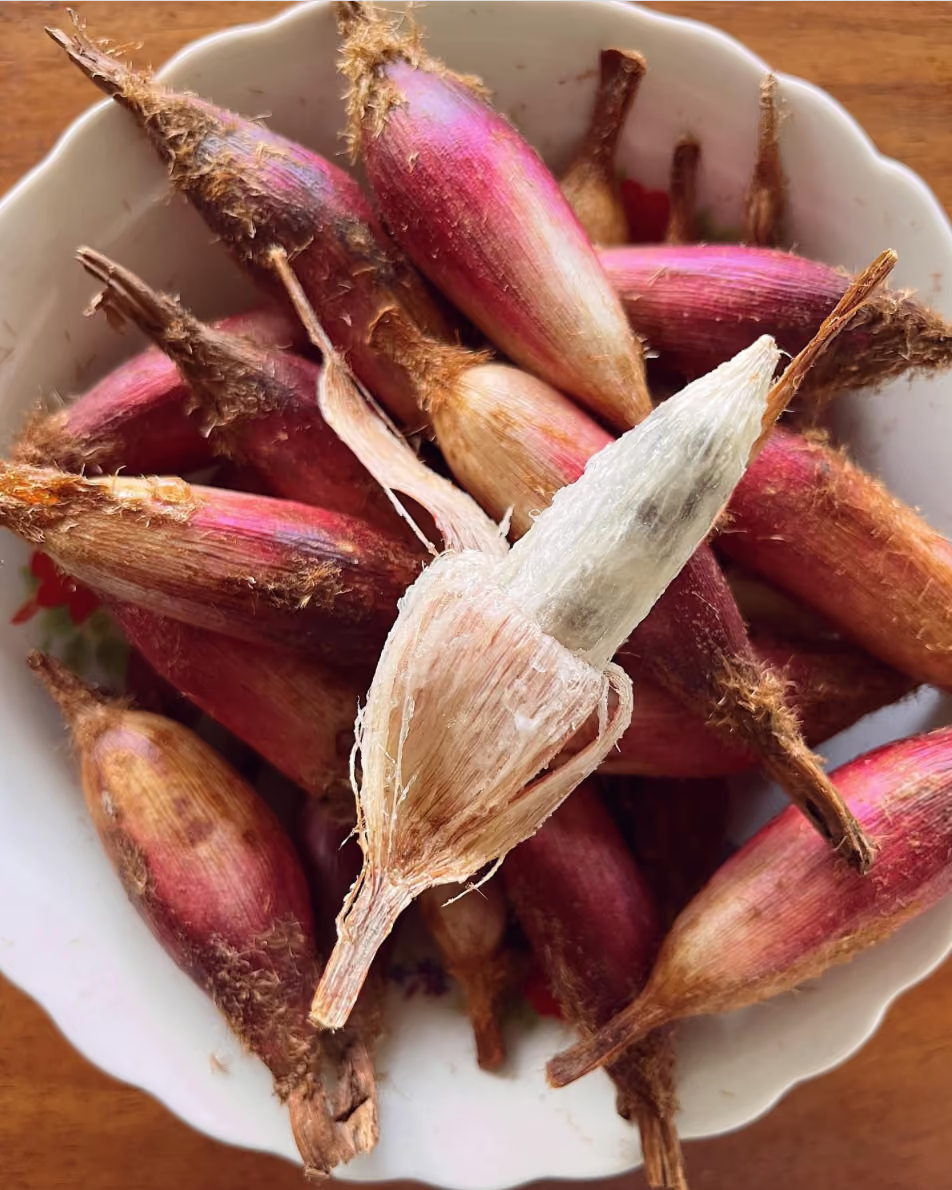
And then there are guamúchiles [Manila tamarind or monkeypod fruit], which are also known as rosco. They look like curved fat green beans and they grow on thorny trees. Crack open the twisted pod and you’ll find a soft white pulp wrapped around glossy black seeds. They are sweet, earthy, and deeply nostalgic for many people who grew up here—part of an older rhythm of life, one that involves climbing trees, staining fingers and eating fruit where you find it.

MORE PODS & SEEDS
The long, green guaje [wild tamarind] pod and its seeds may be the most famous of our wild foods. They’ve been eaten throughout Mexico long before the Spanish arrived. Some people snack on them raw. Others roast them. They appear in dishes like guaxmole—yes, guax—a mole made from guaje seeds, tomatillos and chilis—and are valued for their distinctive flavor. Guaje seeds can also add their unique, garlicky and slightly grassy flavor to guacamole, perfectly complementing the richness of the avocado. They are also famous for some other characteristics. Sort of like broccoli, they can make you gassy. And, like garlic and onions, not everyone will like your breath.
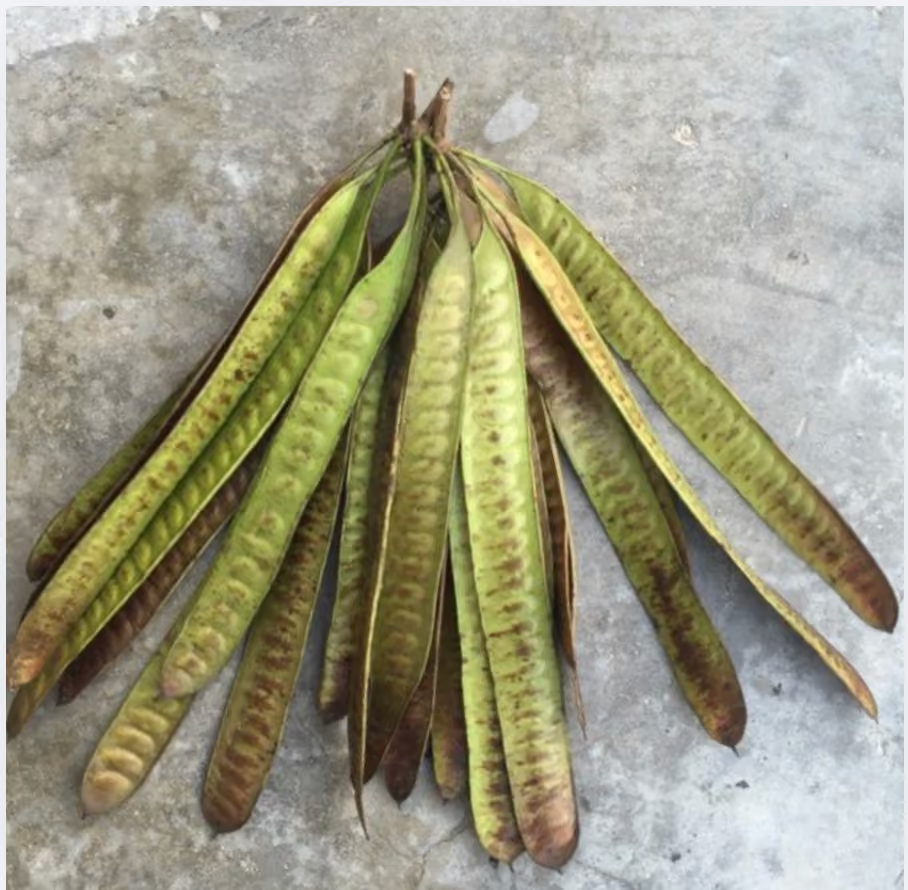
Parota [elephant ear] pods are an even bigger surprise. I first learned parota pods were edible when I saw a woman putting some giant black ear-shaped things into a wheelbarrow on the dirt road into Majahua. I asked her what she was doing and she motioned with her hands “to eat”. The parota tree plays a huge role in local life—they grow big, creating massive canopies of shade; the wood is used for tables, cabinets, doors, trim, beams and indoor furniture of every kind—and they’re highly nutritious providing a valuable and high-protein food source. The pods can be boiled and eaten just like any vegetable. They taste similar to green peas or green beans. The seeds also can be boiled, and then mashed into stews, mixed into salsas or used to make tortillas. And the seeds can also be roasted and ground into high-protein flour, or brewed as a caffeine-free coffee substitute. You cannot eat the seeds raw. Raw parota seeds contain a natural chemical compound which causes intense stomach upset.

QUELITES ARE WILD GREENS
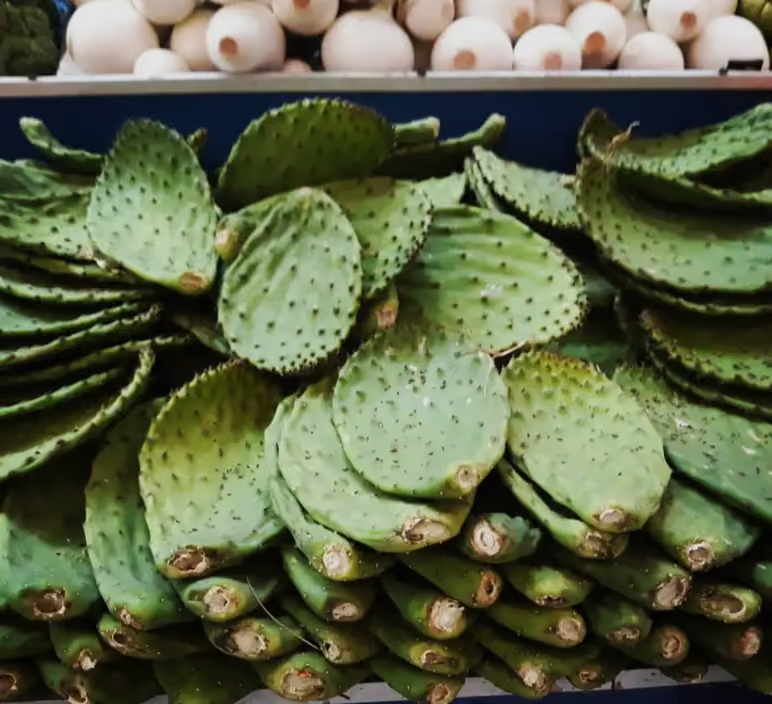
The highly-sustainable ancient Mesoamerican agricultural system relied on a diverse set of crops—the Three Sisters—corn, beans and squash—planted together on a plot of land. The corn provided a structure for beans to climb; the beans returned nitrogen to the soil; the squash shaded the ground and helped retain moisture. The plot of land was known as the milpa, but the milpa is much more than those three crops. Around and among them grow countless edible plants known collectively as quelites [keh-LEE-tays].
The word quelites describes an entire category of edible greens that have nourished people throughout Mexico for generations. They’re cultivated in agricultural fields, and grow abundantly in the wild—in forests, in grasslands, on plains. Quelites include plants like dandelions and mustard leaves, but the most popular in Mexico are pápalo, epazote, verdolagas, oja santo and guia. These tender herbs and flowers are sautéed, wilted, fried and blanched, finding their way into soups, stews, quesadillas, sauces, moles and more. They’re packed with flavor and are revered for their nutritional and medicinal benefits. For example, pápalo is consumed to lower inflammation and hoja santa is eaten to aid digestion.


FROM THE WATERS
The rainy season changes the rivers, estuaries, mangroves and the shoreline. It changes what people catch and what's available to eat.
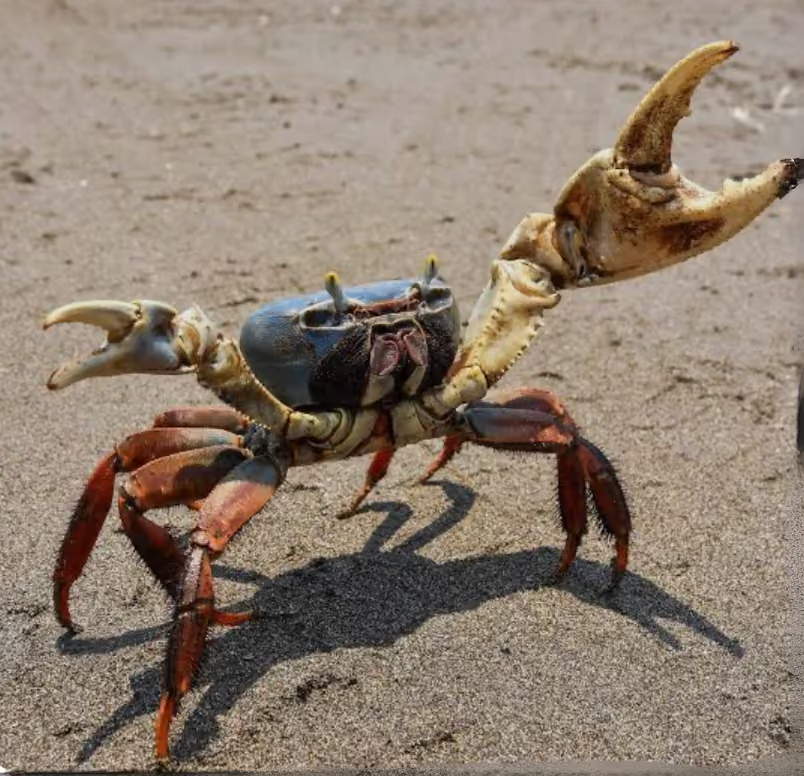
Moyos [mouthless crab] are among the most sought-after local crabs and can be found among the mangroves of wetland environments. They’re known for their sweet, tender meat. You’ll recognize them by their blue hue and their distinctive claws—one is much larger and stronger than the other. When the rains start, thousands of these crabs simultaneously leave their flooded burrows and migrate toward the beaches to disperse their eggs into the sea.
While the moyos are semi-terrestrial, the jaibas [HY-bas] are entirely aquatic. They’re the little beach crabs that children collect near the water’s edge using tongs and buckets. The first time I saw that, I laughed at how many they would need to catch for a meal, but it was quickly explained to me that you only need a few for a flavorful broth.

Also at the ocean’s edge are chiquiliques [sand crabs or mole crabs], who live in the wet sand where waves wash in and out, their presence often making tiny V-shaped ripples in the sand. They dig with astonishing speed, disappearing almost instantly when the water recedes. While many people use them as fishing bait, they can also be fried whole until crisp, producing a crunchy snack with a flavor reminiscent of shrimp.

When the rivers begin flowing again, freshwater langostinos return as well. Locally called camarones, these are freshwater shrimp. You’ll see families gathering them on Sundays, everyone having fun, doing something just for fun—real foraging—and coming home with something to eat.
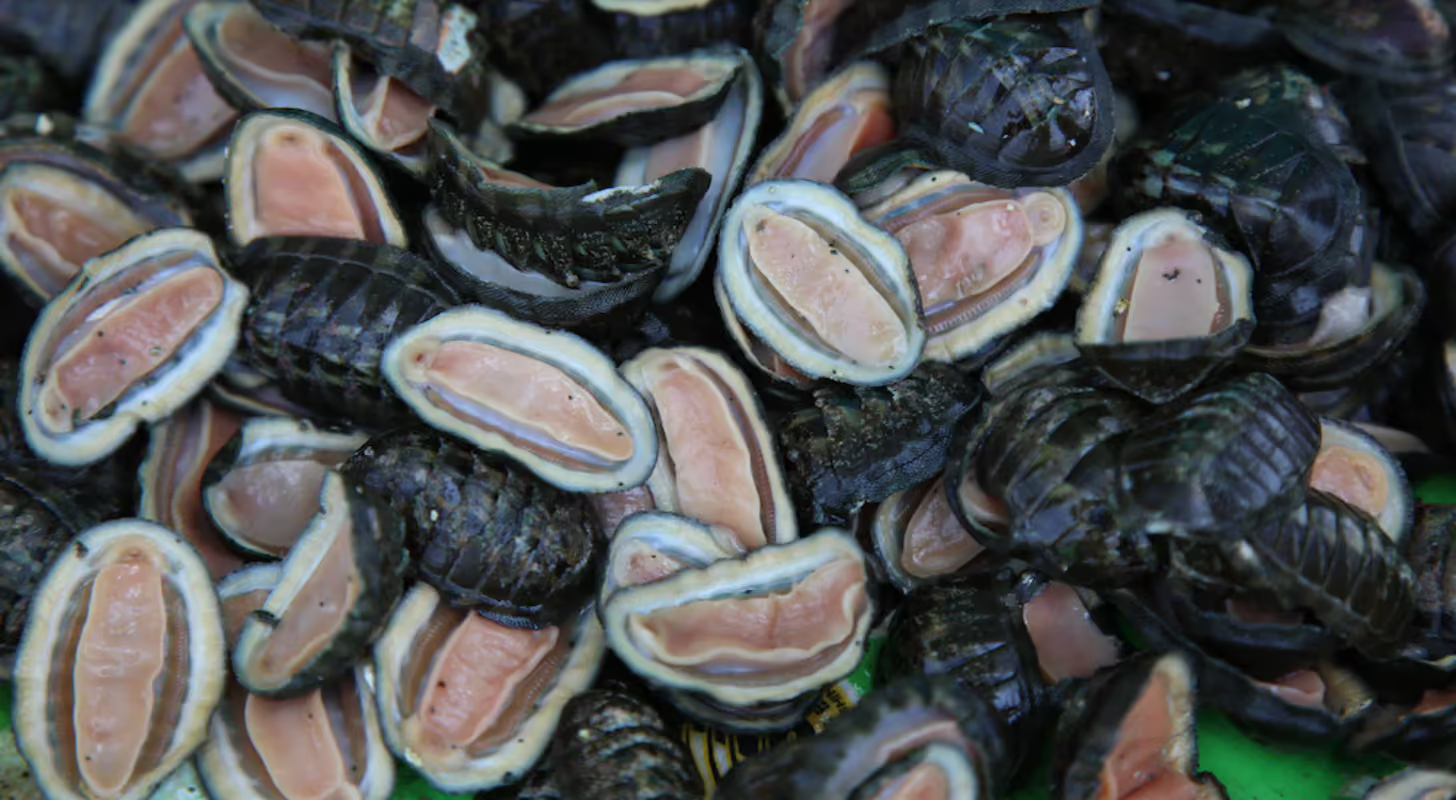
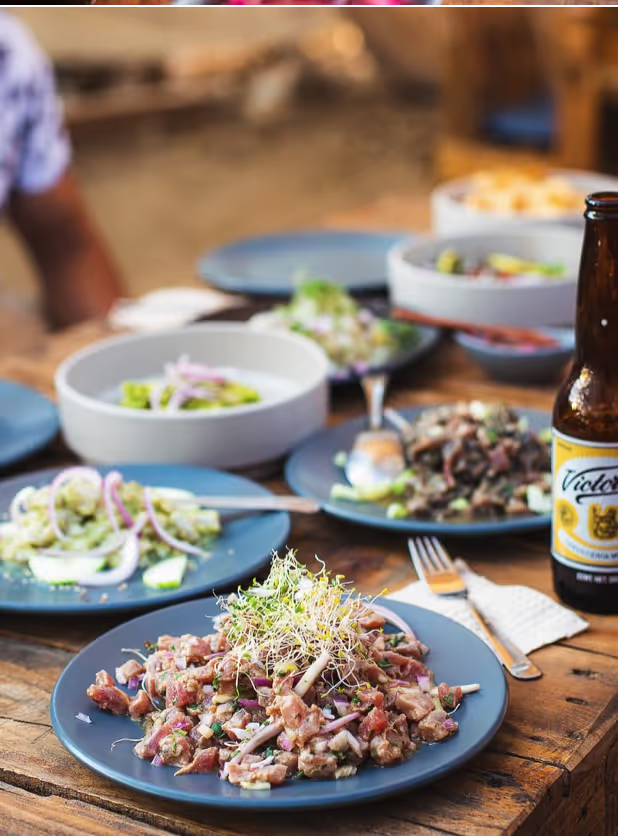
The rocks along the shoreline offer their own surprises, like cucarachas de mar [sea roaches] that are chitons—marine mollusks—protected by overlapping shell plates, looking sort of like a pill bug or a mini-turtle. At low tide, they cling tightly to the rocks—you’ll have to cut them off with a knife—and they’re most often collected for ceviche, or sometimes simply eaten with lime, salt and hot sauce.
Lapa are another mollusk, another edible resident of the intertidal zone, another creature you’ll need a knife to get at. You already know their little cone-shaped shells. They feed by scraping algae off the rocks and taste like a chewy mix of clam and scallop. They’re more a starter than a meal, and can be sizzled up in their shells in hot garlic butter, lemon juice and red peppers.

Early summer brings us alga marinas, a dense green broccoli-looking seaweed that’s fresh, crunchy, and surprisingly delicious—another free-to-gather nutritional powerhouse. Your local fishermen friends can tell you where to find it, and they can also tell you where to find hueva de lisa [mullet roe; fish eggs], a luxury seafood in the rest of the world, but a readily-available seasonal delicacy here. You just need to know where to look, or who to ask.

AND THEN THERE ARE THE FLYING ANTS
No conversation about wild seasonal foods would be complete without mentioning chicatanas [flying ants]. They come out after the first heavy rains, emerging from underground colonies in enormous swarms. You’ll find their wings anywhere you leave a light on. Some people see a mess. Other people see comida [food]. I have heard stories of local families who collect and eat them—toasted and ground into salsa—and consider them a super-special delicacy. They’re only around a day or two, and if you miss the rains, you miss the ants. (This is a tradition more strongly associated with Oaxaca than with Troncones—but it’s done here, too.)

IT STARTS WITH A QUESTION
The longer I live here, the more I realize food is everywhere. It hangs from trees. It hides inside pods. It grows beneath crops. It clings to rocks. It swims through rivers and estuaries.
Most of it isn’t exotic to the people who grew up with it. Much of it is simply part of life, part of memory, part of knowing what season it is and what happens to be growing, hatching, sprouting, falling, ripening.
For me, it often begins with a question: what is that? And, when I’m lucky, someone describes it to me and hands me a taste.
Costa Nativa Ecotours: https://costanativa.com.mx/




.avif)
.avif)

%2017.27.38.avif)

.avif)



%2022.56.27.avif)