Palm Trees Aren’t From Here Either
A guide to the palms that shape Troncones—and how they got to the Costa Grande
Palm trees feel inseparable from life in Troncones. They frame the beach, shade the road, soften new buildings, and quietly define what “tropical” looks like. But here’s the thing: most of the palms you see here didn’t originate in this region. Some arrived centuries ago. Others came much more recently. A few don’t belong botanically at all—they just look the part.


.avif)





.avif)
%20(Spanish)-2.avif)

This guide looks at some of the palms growing around Troncones, where they came from, and how they became part of the landscape—even if they weren’t meant to be here.
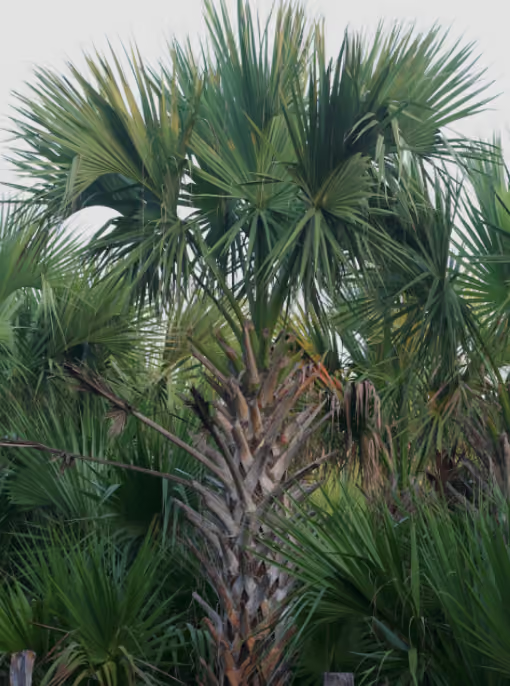
Despite their dominance in the landscape, most palms around Troncones are not native to the region. The notable exception is the Sabal Mexicana (also known as the Mexican Palmetto), a palm traditionally used for palapa roofs and deeply tied to local building practices long before ornamental landscaping arrived.
Palm trees are one of the defining features of gardens, beaches and roadsides around Troncones. If you research tropical garden palms, you’ll find articles listing dozens of palm species, but in practice, only a handful truly thrive here—and an even smaller set of palms consistently show up full and healthy in our local landscapes.
HOW PALM TREES ARRIVED HERE
Palm trees came to the Costa Grande in a few distinct waves — not all at once, and not for the same reasons.
Some palms arrived long before modern development, carried by ocean currents or introduced through early trade routes that connected coastal Mexico with Asia, Africa, and the Caribbean. Coconut palms fall into this category. They naturalized easily along shorelines and became part of daily coastal life.
Other palms are native to Mexico, but not to this region. Fan palms like Washingtonia originated in northern Mexico and were later planted widely across the country because they grow quickly and tolerate heat.
A large number of the palms seen in Troncones today arrived much more recently. These are ornamental garden palms, brought in through nurseries and landscaping trends as tourism and residential development expanded. Foxtail palms, Bismarck palms, Spindle palms, Bottle palms, Lady palms, and Lipstick palms all fall into this group. They were chosen for visual impact, not for their indigenous origin.
Finally, there are plants commonly called palms that aren’t palms at all—like Traveler’s palms and Sago palms. They appear here because they look tropical and dramatic, even though botanically they belong to completely different plant families.
Together, these layers form the palm landscape we see today—a mirror of our human population—a mix of native species, long-established arrivals and recent imports that are learning to live together here.
COCONUT PALM Cocos nucifera
Coconut palms first grew in the Eastern Indian Ocean and Western Indonesia “biogeographic” region. They are the most recognizable palm on our coast and the one most closely tied to daily life. Coconut palms thrive in sandy soil and salty air, which is why they’ve come to dominate beaches and ocean-adjacent properties. Their long, feather-like fronds and visible coconuts make them an unmistakable icon of tropical escapism even though they have historically provided food, drink, oil, fiber and building materials throughout the world. It’s a true multipurpose tree, as well as being one of the world’s earliest tourists.
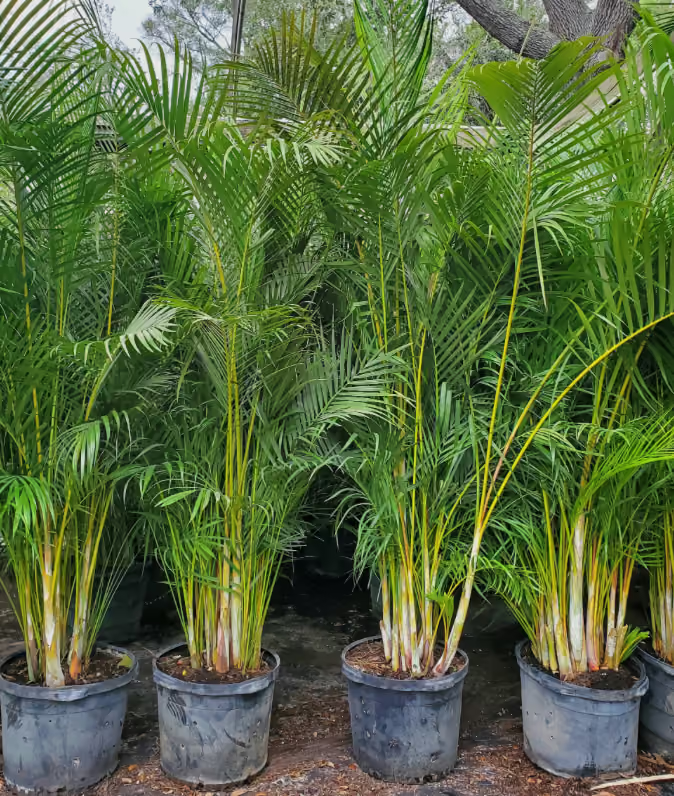
ARECA PALM Dypsis lutescens
One of the most common garden palms in Troncones. Areca palms grow in soft clusters, with multiple slender trunks and bright green fronds. They’re frequently used for privacy, shade and visual softness along walls, patios and walkways. Native to Madagascar, they don’t do well placed within the spray of the Pacific, but they do adapt, and thrive, in protected gardens.
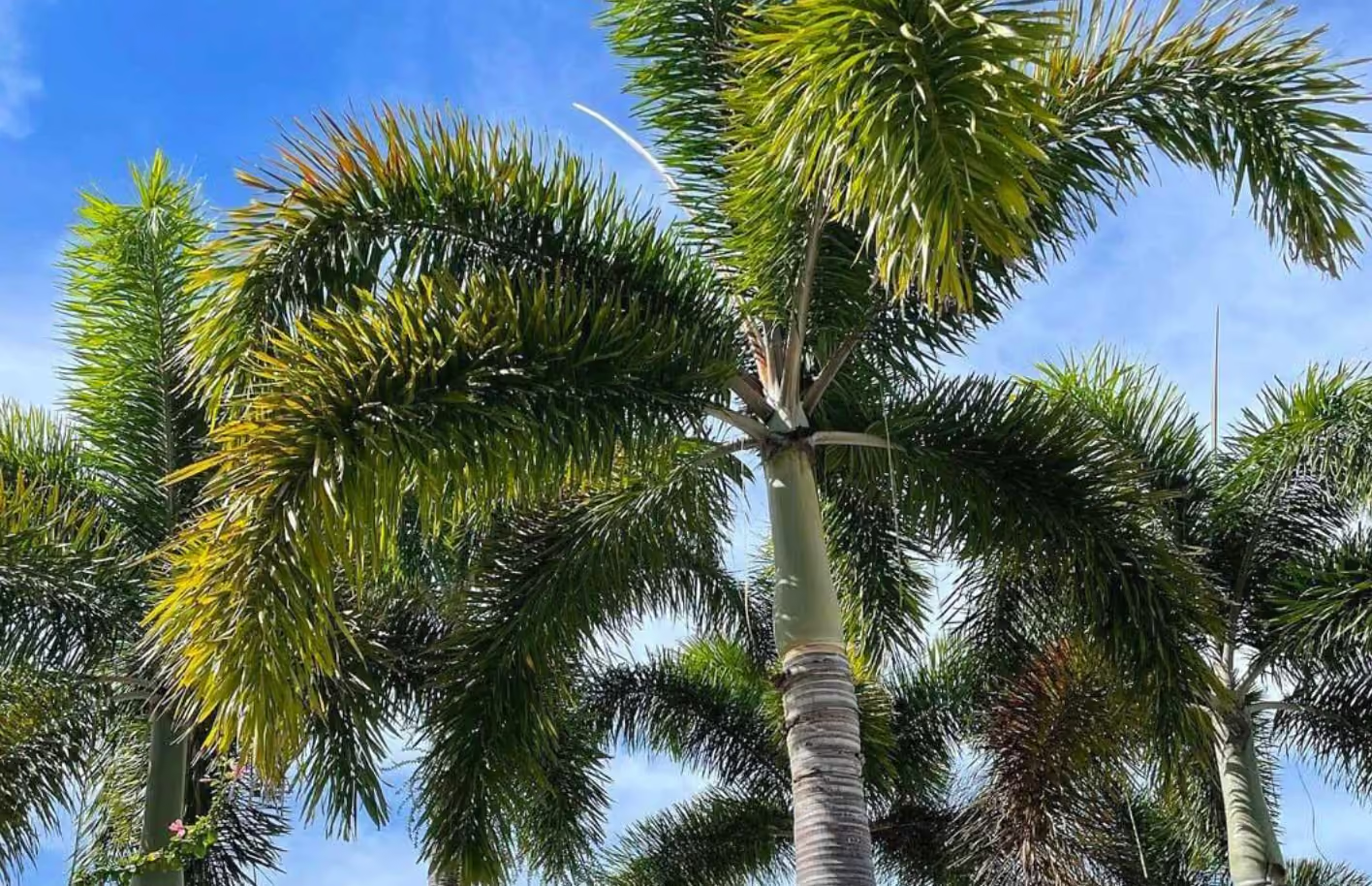
FOXTAIL PALM (Cola de Zorro) Wodyetia bifurcata
A favorite ornamental palm here—and easy to love—even if its Spanish name translates to Skunk's Tail in English. Foxtail palms are known for their thick, fluffy fronds that resemble, well, a fox’s tail. Their clean, smooth white trunks and the sculptural form of their fronds make them a popular design choice, a sign of an intentional horticultural decision rather than an opting for wild growth. They’re originally from Queensland, Australia.
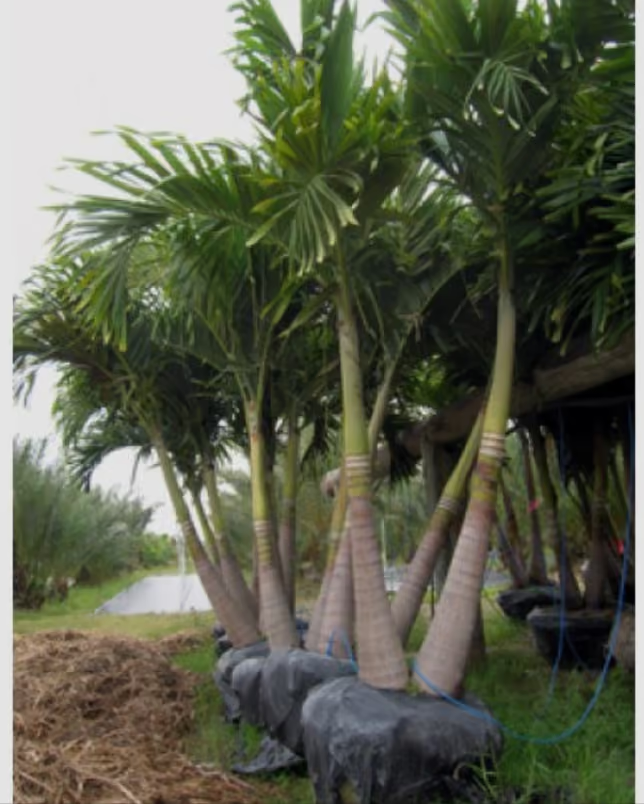
KERPIS PALM/CHRISTMAS PALM Adonidia merrillii
An ornamental garden palm commonly planted in clusters. Native to the Philippines, not Mexico, Kerpis are used worldwide in tropical landscaping because of their refined appearance. They’re tidy, easy to walk around and grow tall slowly.
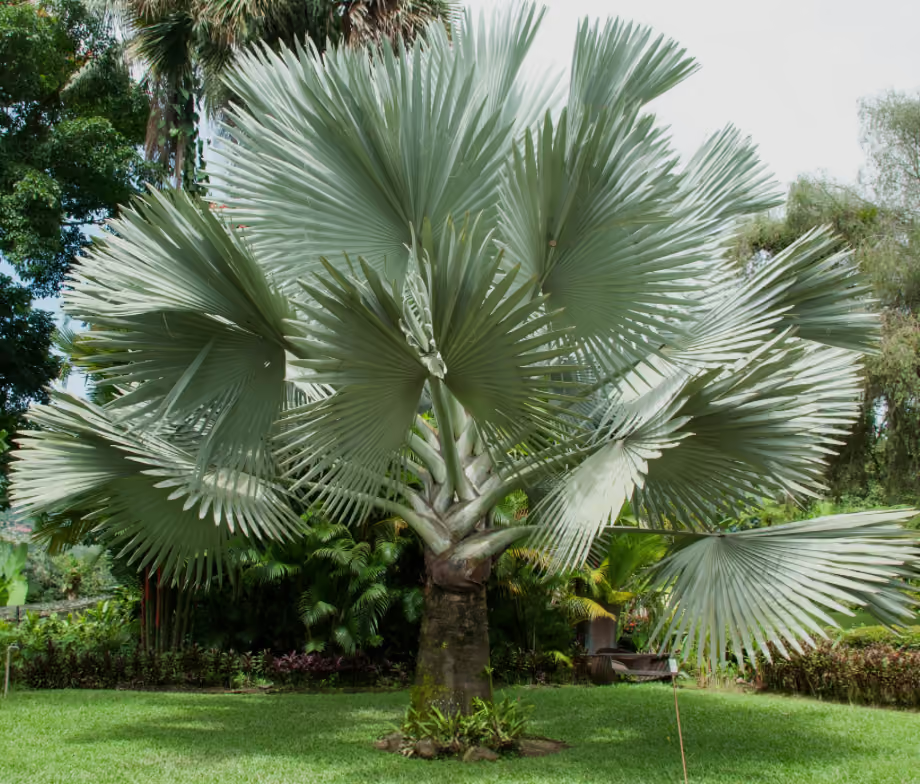
BISMARCK PALM Bismarckia nobilis
One of the most dramatic “local” palms—and one of the most important visually. Also native to Madagascar, Bismarck palms have massive, silver-blue fan leaves and a powerful presence. Even a single tree can define the character of a property. Slow-growing and expensive, these palms are planted with the long term in mind. When mature, they’re impossible to miss.
MEXICAN FAN PALMS (The Hairy Ones) Washingtonia robusta
These tall palms are recognized by their round fan-shaped leaves and trunks that often retain old fronds, creating a shaggy appearance. They are among the most widely planted palms in Mexico and are valued for their hardiness and fast growth. When trimmed, they appear formal; when left natural, they support birds and insects. They’re not native to Guerrero. They come from Baja California and Sonora.

LADY PALM Rhapis excelsa
A small, elegant, bamboo-like palm that thrives in shaded areas and containers. Lady palms grow in clumps and have neat fan-shaped leaves. They’re well suited for patios, courtyards and indoor-outdoor spaces where larger palms would overwhelm the scale. They came to Mexico from southern China and Vietnam.

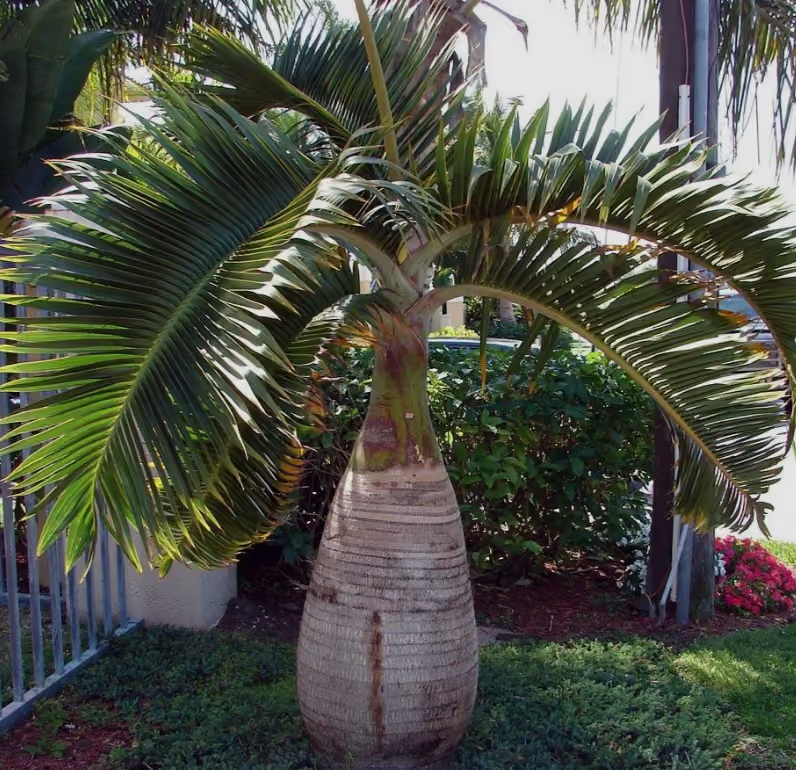
SPINDLE PALM and BOTTLE PALM Hyophorbe species
These two palms are closely related and often confused. Spindle palms have trunks that swell in the middle. Bottle palms have a pronounced bulbous base. Both are sculptural, slow-growing, and used as ornamental focal points rather than shade trees. They’re both originally from Mascarene Islands in the Indian Ocean, east of Madagascar.
LIPSTICK PALM Cyrtostachys renda
A striking but less common palm in Troncones. Lipstick palms are instantly recognizable by their bright red crownshafts. They thrive in warm, humid, protected environments and do not tolerate wind or salt well—which is why they’re rare and carefully placed here. When they do appear, they stand out. They’re native to Thailand, Malaysia, Sumatra and Borneo.

PALMS USED FOR PALAPAS
Traditional palapa roofs are most commonly made Sabal Mexicana palms, not from Coconut palms or Traveler’s palms as many might think. Sabal Mexicana is a stately, robust palm that grows up to 50 feet tall (15 meters), with a solitary trunk that can grow three feet thick (90 centimeters). That gray trunk has closely-spaced, old leaf stem "boots" at their base that form a crosshatch pattern. Sabal Mexicana are heat and drought-resistant and have long, tough, flexible fronds that are well suited for thatching. You can see them prominently on the Majahua Palms Hotel property, lining edges of the fields, quietly growing to become palapas.
PALMS THAT AREN’T PALMS
SAGO PALM Cycas revoluta
Native to Japan, the Sago is called a palm, looks like a palm, but it’s not a palm. It’s a cycad, a woody dinosaur of the plant world, known for its cylindrical trunk, its identifiable sex and its feather-like leaves.

TRAVELER'S PALM Ravenala madagascariensis
Often called a “fan palm”, but it’s not actually a palm. Botanically, they’re a member of the Strelitziaceae family, which includes water-holding and flowering plants like Birds of Paradise and makes them genetically closer to banana plants than to palms. Traveler’s palms have a dramatic, flat-leaf arrangement, growing in a single plane and creating a striking architectural shape. They are ornamental only, even though they look like they could make a good roof. They are another transplant from Madagascar.

READING A LANDSCAPE THROUGH PALMS
Once you recognize a few key types, palms become storytellers. For example, a single dramatic palm often signals intention and design. Rows of identical palms suggest development and harvesting. Mixed species and uneven growth hint at older, organic landscapes.
Palms shape how a place feels—open or formal, wild or curated. Learning their histories and their strengths can help make a landscape more understandable, as well as immediately remind us how we’re all connected, how we’re all part of the garden, even if we’re not from here.