Peri Wolfman: Just Do It
A trend-setting designer moves to Troncones, renovates a house and opens a store
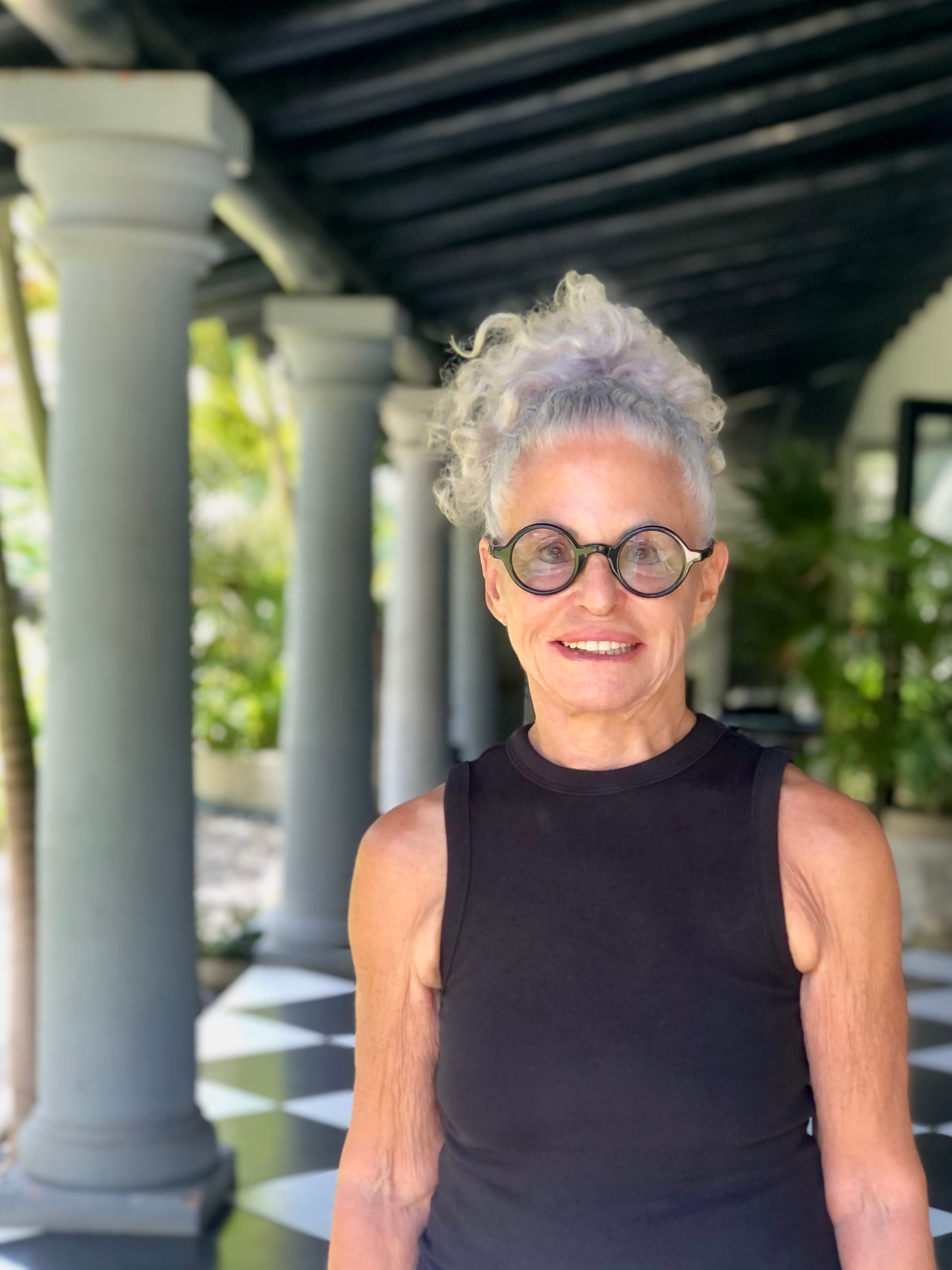
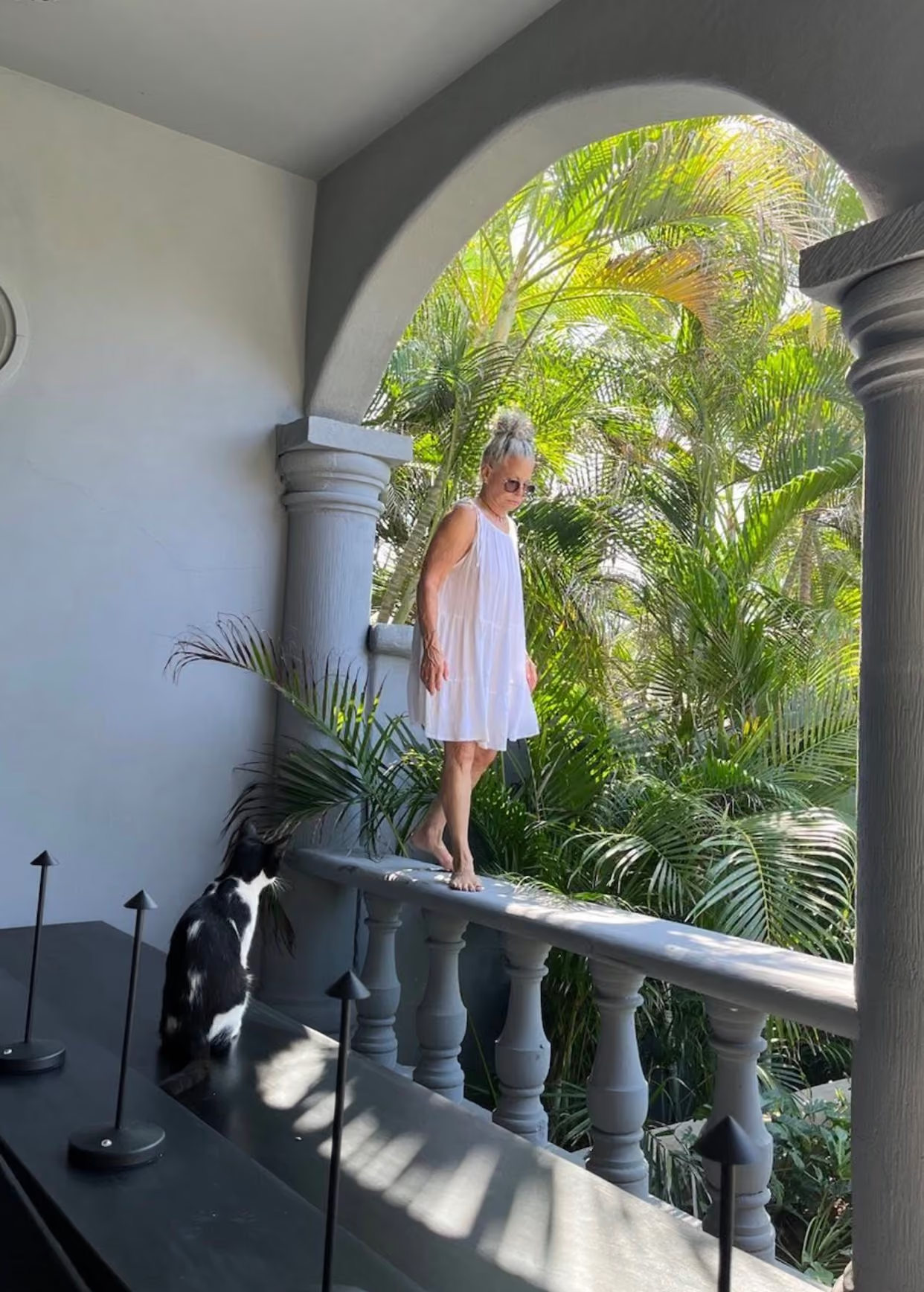
Black and white. Everything black and white. Is that even possible? I first met Peri Wolfman more than 15 years ago by way of a magazine, her Bridgehampton summer house appearing among the fashion stories. Everything in the house was black and white, even Peri. She had on black and white clothes, and had mostly white hair. I later met her in person, in New York and again in Troncones. And, yes, each time she had on black and white clothes. Even her dogs were black and white. To say she’s unusual would miss the mark. Peri’s a distinct flavor, unique, just like her color choices. She’s specific, practiced and sophisticated. She’s also joyful and youthful. At 86 years old, she moves, thinks and talks as if she’s maybe 66. Early last month, I found myself listening to a woman in Saladita talking about Peri’s vitality and energy. A week later, I overheard another woman saying the same thing in Majahua. They both wanted to know her secret. When I went to interview Peri at her house in Troncones, I thought I’d start there.
%2017.27.38.avif)
.avif)





.avif)
%20(Spanish)-2.avif)



LOT: What’s your secret?
Peri: I don’t think I have any secrets. I don’t plan ahead. I just do it. You know, like the Nike tagline. I just do it. Sometimes that’s not a good thing, but most of the time it works out pretty well. You know, like, “I think I’ll buy a house in Troncones”. That’s even though I know nothing about buying a house here. I go, “Look, I’ve done so many houses. I know how to do this.” So, I buy a house in Troncones. Then, I find out how difficult it is. And the truth is, I don’t know how to do this. But when I just jump into something, I figure it out.
LOT: A lot of health and longevity practices are built around regimens. Do you have a daily practice, a regimen, or do you just wake up and go?
Peri: I naturally just wake up and go. I naturally eat well. I eat mostly vegetables and fruit. And grains. But I’m not a vegetarian. I do like fish and I’m a really good eater. And yes, I drink. I like to drink. I don’t like to get drunk. When I do, I’m not happy.
LOT: So, you don’t have a Pilates practice or a certain type of exercise you do?
Peri: Well, I work out with a trainer a couple of times a week. And until recently I was a horseback rider. I’ve always had a regime in a sport and I’ve always had a workout. Right now, I like one-on-one training, and I do that with my trainer in New York via video. He keeps me honest. I don’t think I would work out if I didn’t have to pay for it—and because I’m paying—I’m there twice a week, every week. Until my dogs broke my leg earlier this year, I was also walking on the beach every morning for a good 45 minutes.
LOT: How did the black and white “thing” come up?
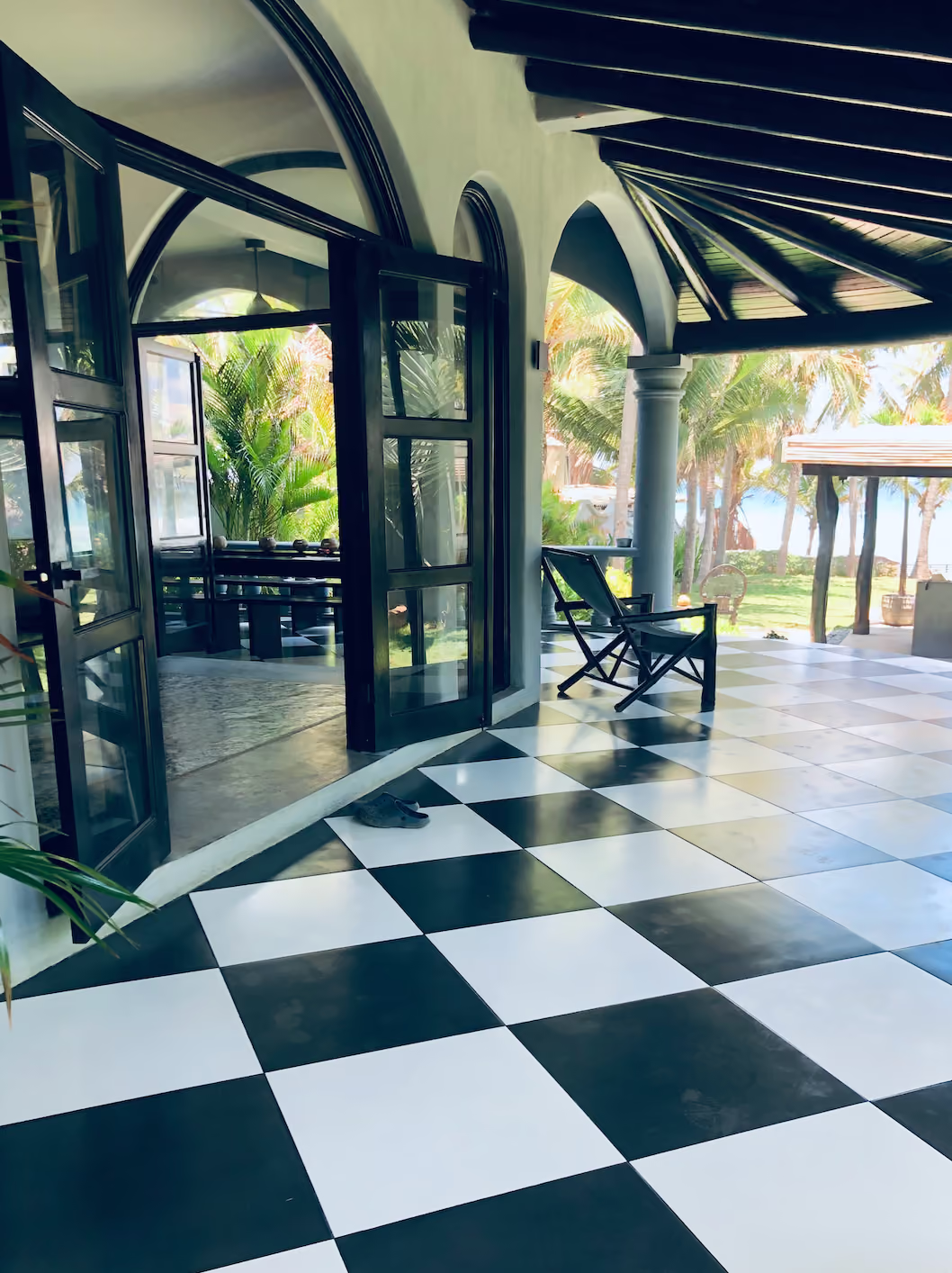
Peri: You say, “black and white”. You have to include grey, all forms of black and white, grey and patterns. According to a magazine in the ‘70s, I had the most colorful house in America. And then I just got really tired of it. I think life is really broad, very wide, and I narrowed it down. Black and white, and grey. It’s so much better for me. It really came from my needing a little tranquility in my life. It also limits my choices of things. When I look at something, if I look at clothes, I only see the black, white and grey; if I look at kitchenware, I only see the black, white and grey. I find it’s more tranquil, more natural. I’ve led a very colorful life and my life is still too busy. Black, white and grey limits my choices and makes things easier on me.
LOT: How long has black-white-and-grey been going on for you?
Peri: A very long time. I started my all-white store in New York in 1980. I did wear some color back then, but it got less and less and less.
LOT: Where did you grow up?
Peri: I was born in New York, and then my mother moved with her second husband to southern California. I went to grammar school there. Then I moved back to New York to live with my father, and I went to school on Long Island, in Great Neck. Honestly, I think how lucky I was to grow up in the ‘50s. What a great time. There weren’t all the issues we have now. You know, people were nice to each other. I don’t know if we had any bullies. I guess there are always bullies somewhere, but we didn’t have them that I knew of. We were polite. Nobody I knew did drugs or skipped school. [Pause.] Well, that’s not exactly right. I guess there were a handful.
LOT: What did you like doing as a kid?
Peri: I liked my friends and my activities. I was a cheerleader in high school, and I was what they called “artistic”. I was the person who set up the dances and the galas, who decorated the gym as much as I could. I loved the social life.
LOT: What was hard for you as a kid?
Peri: I hated schoolwork. I hated classes. Schoolwork. I simply didn’t do it. I don’t know how they graduated me. I think they just wanted to get rid of me. I never did it much. I’d start a paper and my handwriting would go downhill. So, I’d squish it up and start again and start again and start again. So, I never turned in a paper. I was a terrible student.
LOT: What came easy for you?
Peri: Friendships. I lived on a wonderful street, with a lot of people I went to high school with. I look back now, and I feel so fortunate to have had that, where we just went into each other's houses. We came home when it got dark. That sort of thing. I’m very lucky that I was smart enough or intuitive enough to move myself back to New York, because California wasn’t like that at all.
LOT: What age did you move back to New York?
Peri: Between 12 and 13.
LOT: And what prompted you to say, “Bye, mom; bye, California”?
Peri: I loved the grammar school I went to, but I hated the junior high school. They had what was called a “unified school district”, which I don’t even know what that is. All I know, the junior high was kind of scary. It was rough and I hated it.
LOT: What were your first work experiences?
Peri: I always worked. First of all, babysitting. You didn’t need work papers or anything. Then I went into a retail store in Great Neck—Camp & Campus. It was everyday clothing for camp and for campus. I worked there and I loved it. I loved retail, selling products to people. In those days, kids went to summer camp for eight weeks and every piece of clothing had to have a label on it. Camp & Campus was so smart. The camps would give all the requirements of all the clothes a kid needed, and we’d do trunks—we’d fill them and put name tags on everything—pack everything in a trunk.
LOT: What aspect of retail did you like?
Peri: I liked the social aspect of retail. I never liked the cash register. I never liked the clothing. I liked dealing with the people and the product, and then to turn it over to somebody else to ring it up.
LOT: When did you realize you had a talent that no one else had?
Peri: I still don’t know if I have a talent like that. What I have is energy, an enthusiasm.
LOT: What was your next retail job after that? Did you go study retail after high school?
Peri: No, I went into the design field. I went to Parsons School of Design in New York. It was great and when I got out, I chose childrenswear because it wasn’t as cut throat. It was more mellow. Children dressed up in those days, and I made beautiful clothing for children. First, I was with a big firm, and then I went and got my name on a label of a well-known childrenswear company, and I was written up a lot.
LOT: As Peri Wolfman?
Peri: I married very young, and it was Wolfman from the time I was 20.
LOT: What was your maiden name?
Peri: I don’t want to tell, because it wasn’t as interesting as Wolfman. I got out of Parsons, married on my 20th birthday, went right into clothing design and, then, two kids later I moved to Westchester, to the suburbs, to Larchmont, and I opened a store. And so, my life is like that—I move here, I open a store; I move there, I open a store. Part of that is because it’s so easy to open a store as opposed to running a wholesale business. In those days, running a wholesale business would have meant a showroom and a lot of travel. I like to travel, just not that kind of travel. It was always going from my gut—I just did it. I would open a store. It was always pretty, and it was always successful. I had a needlepoint store. I had a clothing business. I moved to San Francisco and I started a clothing business—which was t-shirts. They became a wild rage within a year and we did amazing business. Then, I sold it to my partner and I moved on from that.
LOT: What was so interesting about the t-shirts? What made them so popular?
Peri: It was called Terrific Company. They had a label that read “Terrific”, and they were embroidered with art, like the way printed t-shirts are done today, but embroidered. They were quite fabulous.
LOT: What was your next venture after Terrific?
Peri: That’s when I moved back to New York. I picked up my kids and moved back to New York City. [My husband] Charlie and I bought a co-op on Gramercy Park, and the next thing I did was a Wolfman-Gold, in Soho in 1980.

LOT: I know Wolfman-Gold as a furniture company. How did you go from clothing to furniture?
Peri: It wasn’t furniture when it started. It was strictly tableware. Charlie cooked a lot then, and we liked to entertain. But I didn’t like fussy or fancy or patterned things. I liked all-white dinnerware at that point. So, what I did was all restaurant supply and antique pine furniture, with white dinnerware and white lace napkins—white lace napkins on pine tables. That store was the first of its kind. It was very, very well received.
LOT: How did you get known for furniture?
Peri: Well, you know, you open a store, you go to the market and you expand your horizons. I just blindly opened a tableware store in New York City. Who does that? I look back now and I think that’s really crazy, but it was great. I had everyone coming in. And then, I go, “I really like pine furniture”. So, I went to all the antique shows. That was really fun. Finding and buying was the fun part. And it was a very successful venture. I had Wolfman-Gold for 20 years until Williams-Sonoma offered to buy me out to be their vice-president of product development. I took that position and I thought I’d learn something. This sounds really weird, but I’m really about my inner energy—it's instinctive. A corporate setting is really not me, but I was curious about it. I wanted to know what the big boys knew.
And what I found out is that they knew about meetings. And nothing happens. They just go along and go along, and do the same thing, and look at reports and decide to buy more of this or more colors in that. There was really nothing that I learned from working for Williams-Sonoma that I hadn’t instinctively known already. To me, that’s not how to run a business. When you get too big, and you try to appeal to a larger group, you water down your original. Your original idea, your original concept. You totally water it down. Like, if you go into black and white, well, you start thinking—business is getting bigger and we need to appeal to more people—we’re going to do every color in the rainbow. That’s not the same business anymore. I saw that happen recently with a store I love and admire. They started out beautifully focused, but now they have everything because you have to grow the business. I never liked that. I never was into appealing to everyone.
LOT: Of all those businesses, which one is your favorite?
Peri: I think the beginning of Wolfman-Gold was the most pure as a business, and a lot of fun. After I went to Williams-Sonoma—for years, trying to figure out what I didn’t know—I started doing houses—building a house and living in it for two years and selling it, buying the next house, renovating it, living in it for two years and selling it. I started doing that, and I think that has been my favorite.
LOT: And where have you done that? Where have you lived?
Peri: I did a couple of houses in San Francisco before I moved to New York. And then, in New York, I did our houses, here and there, in the city and the country. And then we moved to The Hamptons, where it was buy, renovate and sell, and keep doing that.
LOT: How did you come across Troncones?
Peri: We have friends here from The Hamptons—Nancy and Richie—and we’d come visit them. Richie had a five-day rule and that makes perfect sense now that I live here. We would come for five days and then go someplace else in Mexico. It was very nice. Then, one summer we rented from them and I thought, “Oh, this is so cool”. So, I went out and bought a house. That’s why I say, I just do it. I don’t think. I don't ask anyone. I have no idea what I’m getting into. I’m lucky. I love it here.
LOT: What made you want to stay?
Peri: How about living on the ocean? What an extraordinary experience that is—getting up in the morning and seeing the ocean. I’ve always lived on a coast, east or west. So, I guess there’s something in me that draws me to that. I never wanted to stop in the middle. But I never lived on the ocean, and I thought it was so extraordinary that I could live in a house, right on the ocean.
LOT: How did you find this house?
Peri: A friend found it for me. It wasn’t even on the market. I looked at lots of houses, and I never thought of building a house, not for a minute. I had just built a house in Hampton, like four years before. Top to bottom. It went smoothly, chic and gorgeous, published. All successful. Okay. Then, I come here and I go, “I just want to renovate a house”. Like, that’s so easy. It’s not.
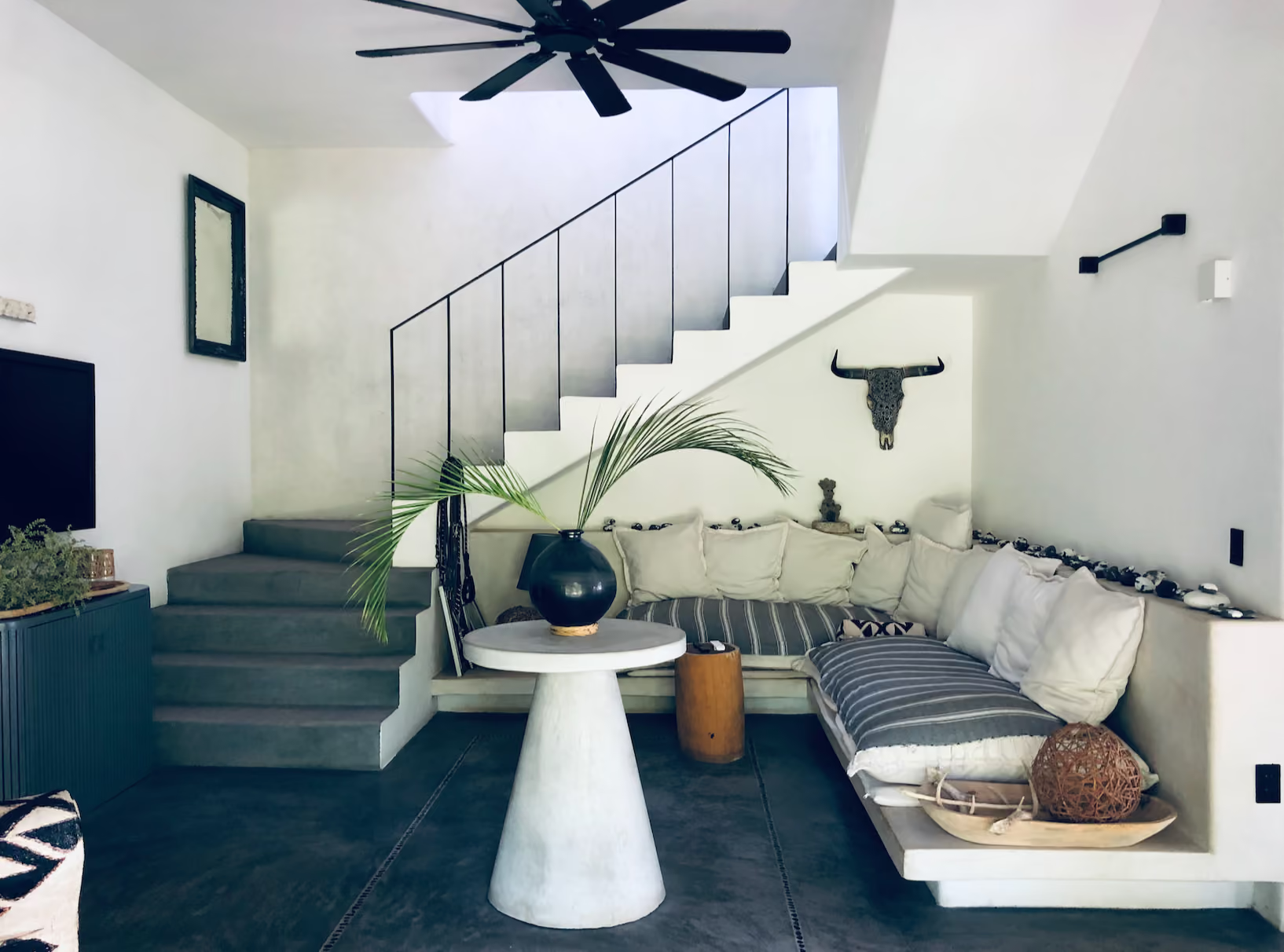
LOT: What do you like most about it now?
Peri: I thought this house was so beautiful, and I still do—every day. We took off every single bit of the trim—it was ghastly—and brought it down to its original. It’s amazing how well-proportioned the house is—the ceiling heights, the room sizes, the whole thing.
LOT: What prompted the store here?
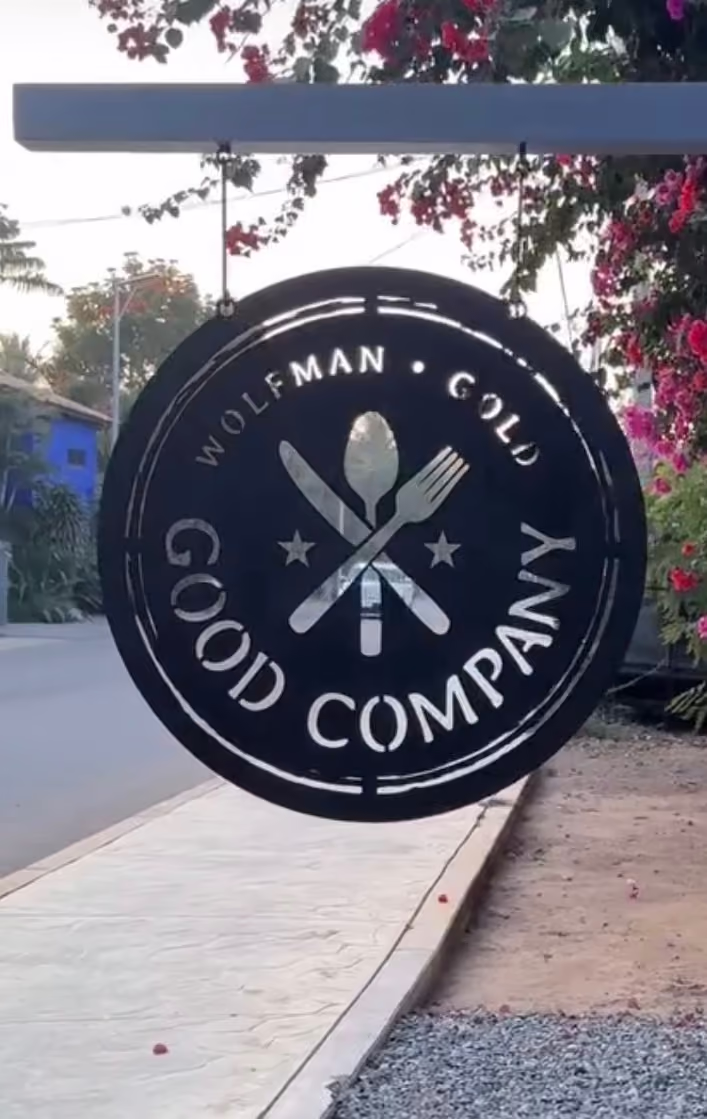
Peri: I could do it. Same as the house. I thought it wouldn’t be expensive. Of course, it’s expensive. I mean, the rent isn’t high and the location is really cool, even if I know off-street retailing is not a good idea. It’s better to be right on the street like Christine’s store. Once Christine rented hers, it was gone. And, so, in my competitive way, I just went and got the next best space. I love doing a store. I do not love running a store. It’s difficult here.
LOT: Are you ever going to stop and retire?
Peri: I would never say I’d retire. I’ll do something else. But, no, I’m not going to ever stop. I’ve slowed down. It’s hard to say how, and I don’t really want to work. I just want to buy things and make things beautiful and have a full day. But I don’t call it work. I just do it.