
The Gardens at The Inn
The making of an oasis requires a desire for simplicity, a bit of experimentation and constant adjustment—as well as patience
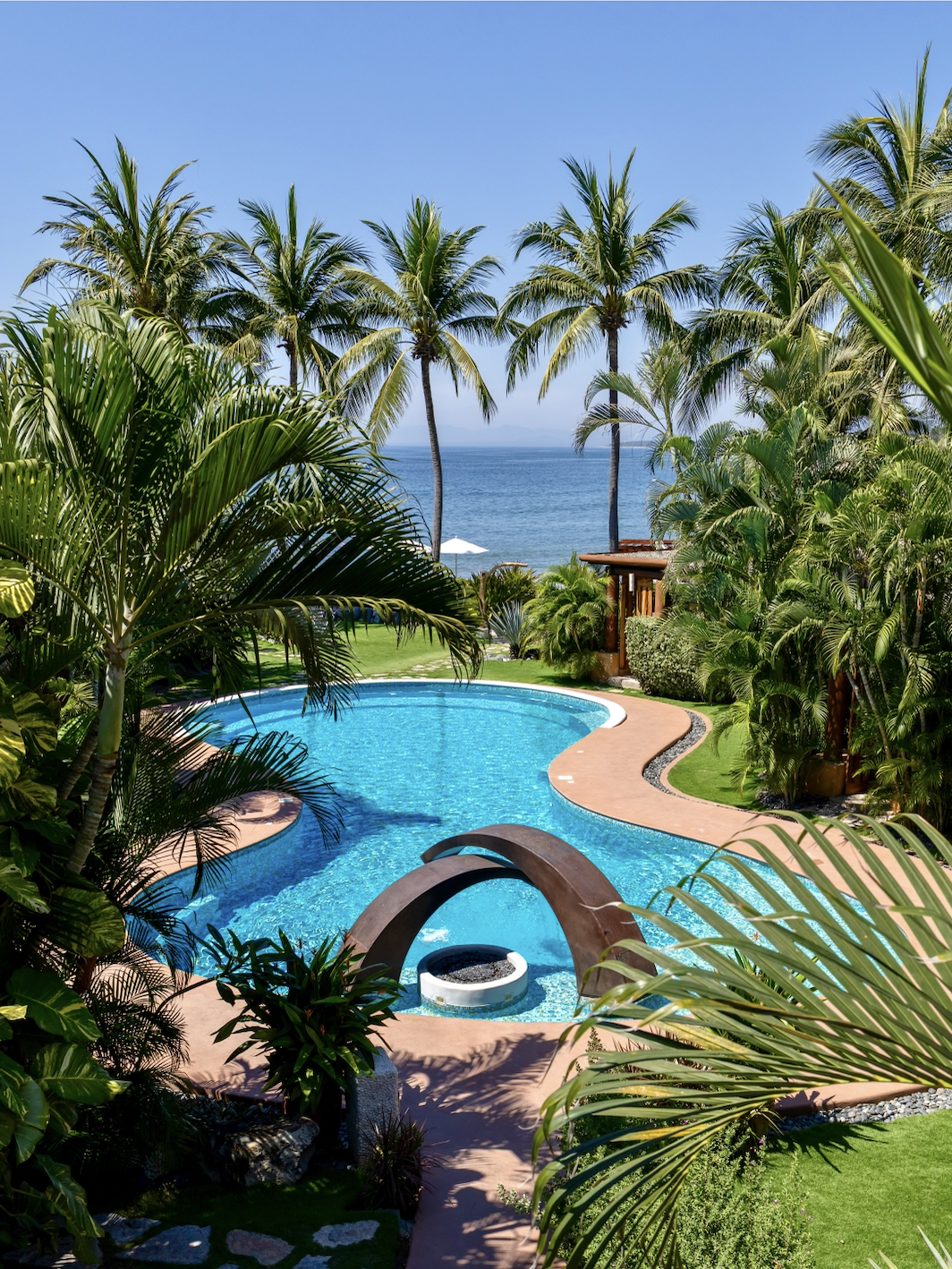
Some people go to The Inn at Manzanillo Bay for the Wagyu Burger, some go for cocktails and the sunset view, or to watch surfers take off on waves over the rocks. There’s so much to escape into that it’s easy to miss the garden you’re in—it doesn’t shout or shine or stand out—it’s a backdrop that’s barely there. Then again, there’s the lawn. That’s truly out of the ordinary. It catches the eye because lawns are rare here. But being above Manzanillo Bay—and seeing the Pacific and the coastline extend out for forty or fifty miles to the north—humbles the lawn. It blends in because there’s so much beyond it. In some ways, the whole garden is like that. It makes its presence known in the fact it doesn’t distract. It waits to be noticed.
%2017.27.38.avif)




%20(Spanish)-2.avif)




I’ve always thought of The Inn at Manzanillo Bay as “the country club”. It’s where we’d go eat on the last night of vacation to take in a last sunset and enjoy a meal in a place we wanted to dress up for. A week of surf and dust will do that to you. I’ve never stayed at The Inn but it has an almost 25-year legacy, first becoming the pinnacle of Troncones hospitality in the early 2000s. And it still is. It even has its own top-shelf tequila brand, but that’s a story for another day.
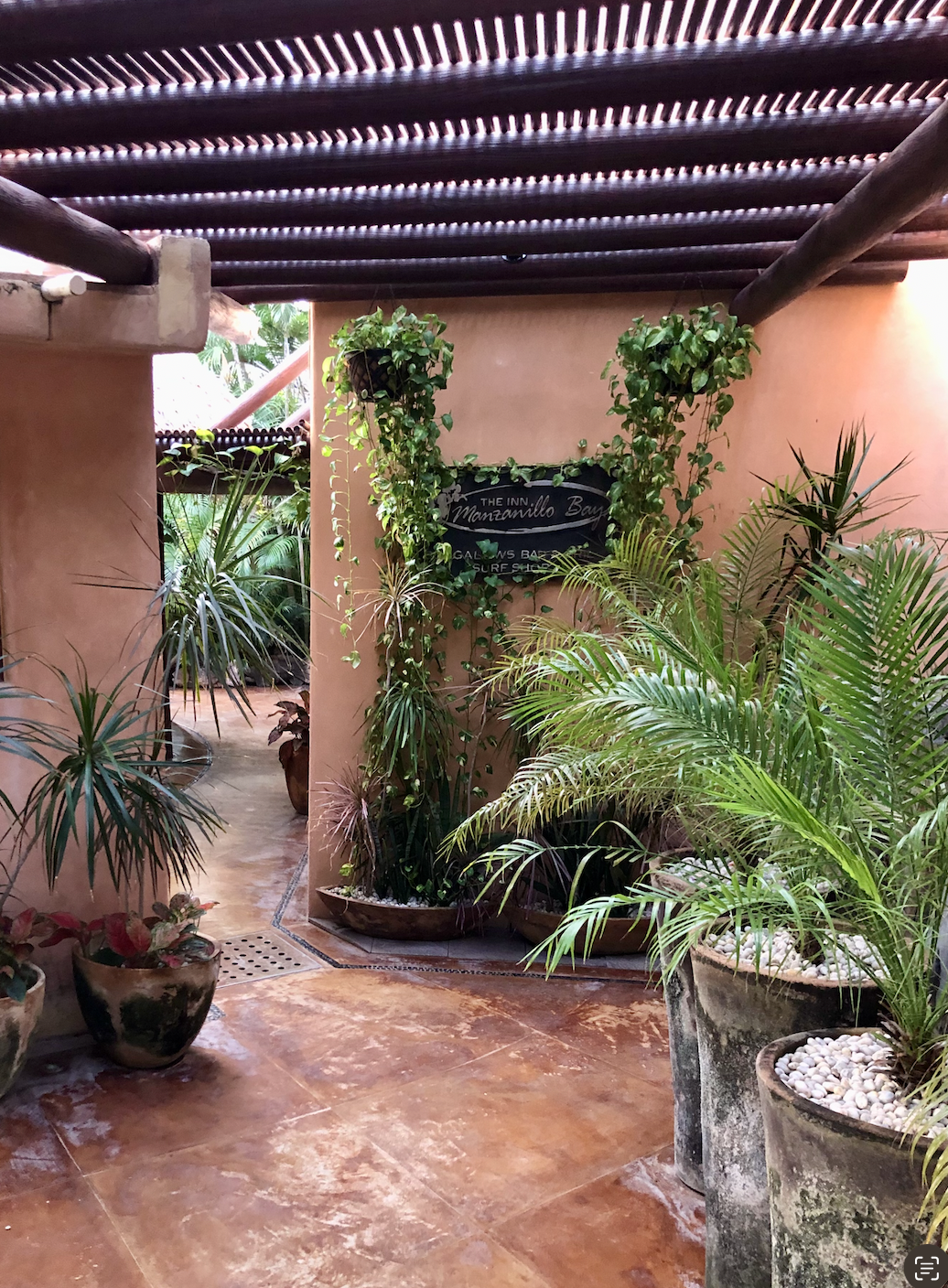
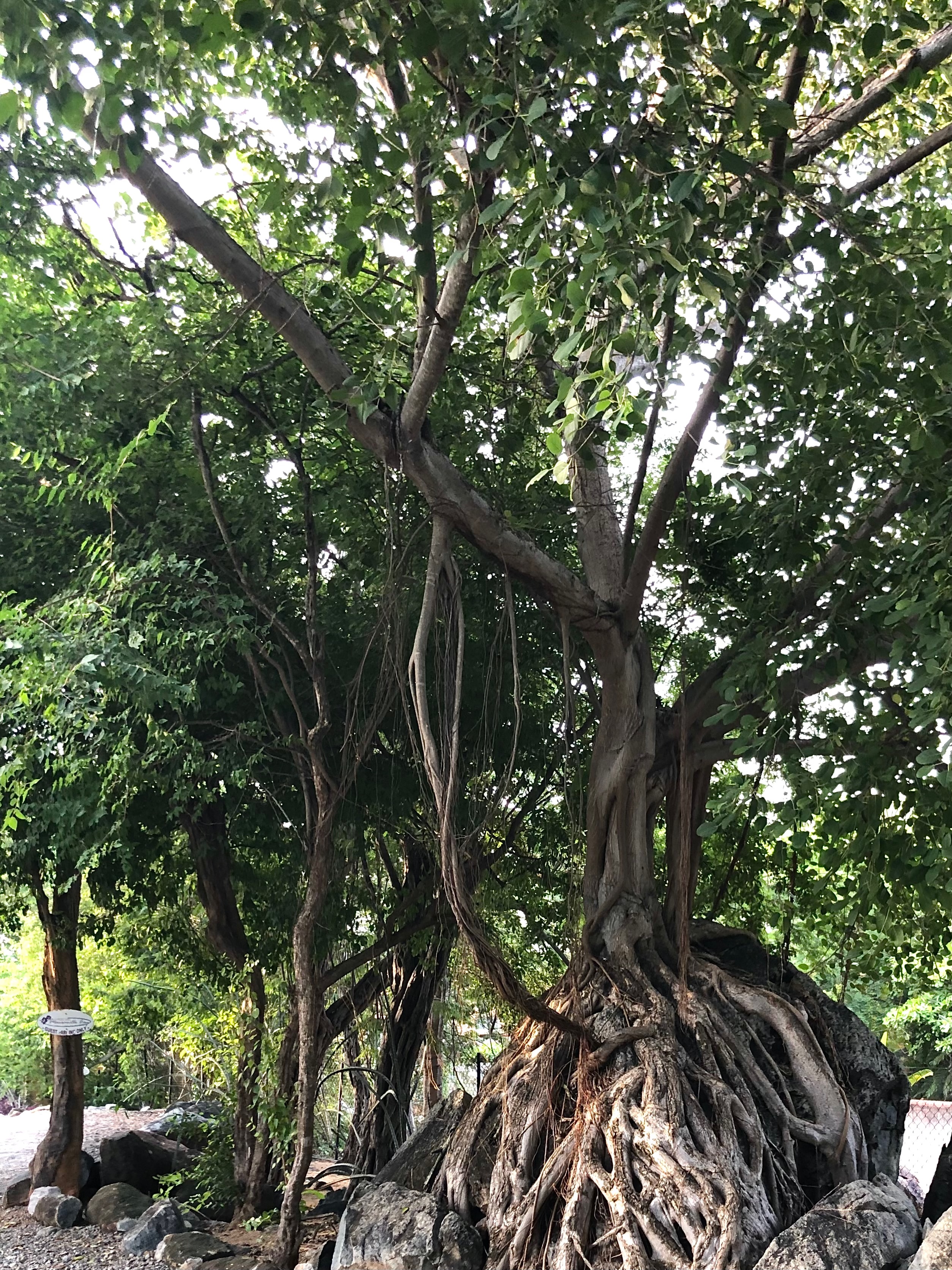
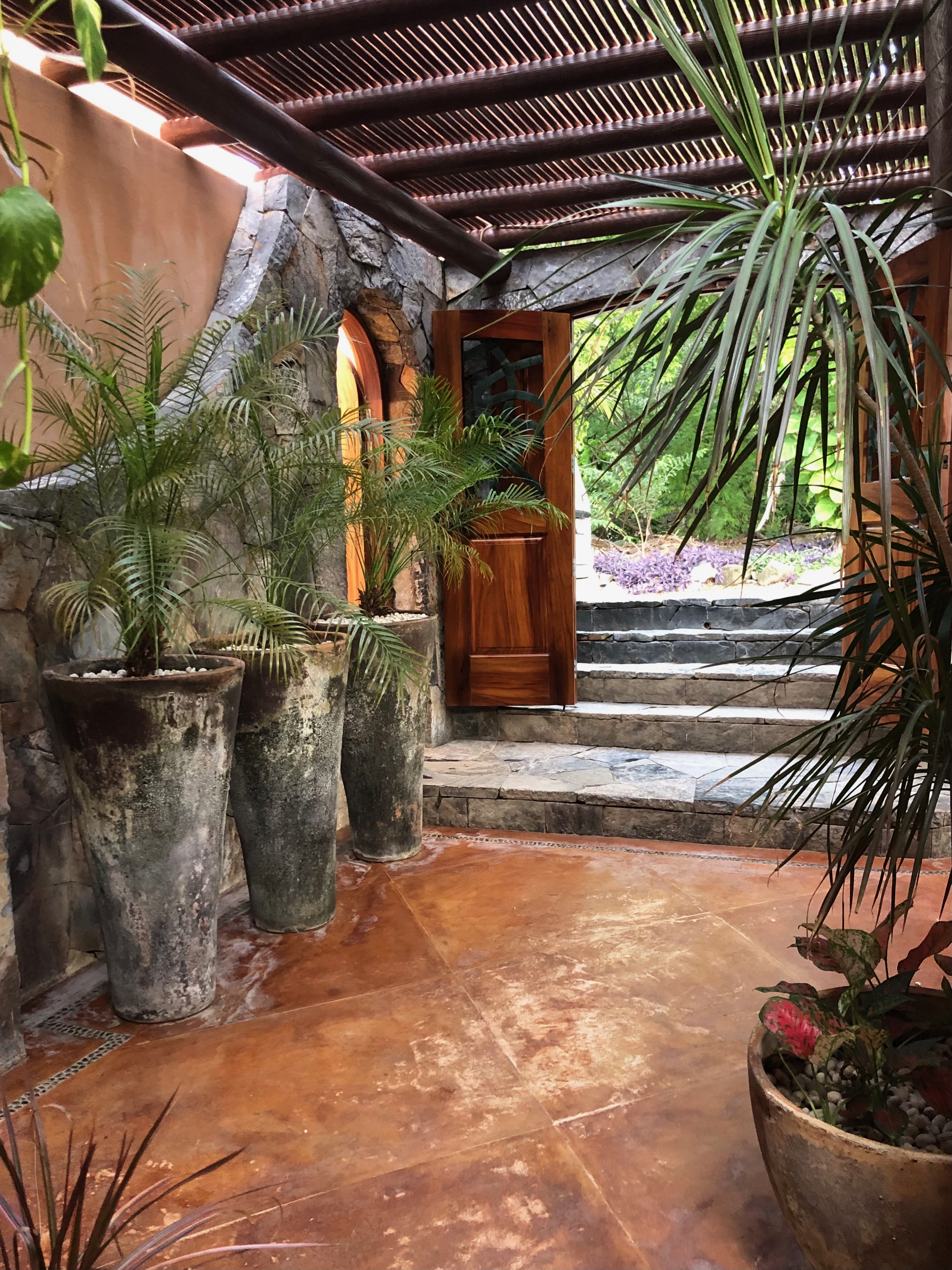
I’ve always been impressed by its gardens. The pointy agaves at the road, the areca and Bismark palm along the driveway—which, on the right, on the way in, has a big ficus tree with its roots wrapping around a huge boulder—and the pots and plants of the hotel entryway. They’re all ways of saying “hello” that have a subtle presence, that clue you in that you’re going into somewhere different.
The property has been part of the Bensal family since Michael Bensal, Sr. purchased a group of bungalows known as Las Chosas in 2001. Today, Michael Bensal, Jr.—Mike—serves as The Inn’s co-owner and general manager. He’s become the resident plant steward, the master of the lawn. He has a full-time staff helping him keep the gardens going—no easy feat in a harsh environment prone to briny breezes, seven absolutely dry months and five months of you-just-never-know-what’s-coming rain. And then there’s sun and humidity to deal with, too.
Mike remembers, “Las Chosas had the same number of rooms as we have now. My father bought the bones of the property and remodeled the interiors. The gardens were mostly hibiscus and arecas, and we used to have a different kind of grass, not as maintenance intensive as the one we have now. It was spiky, not easy to walk on.”
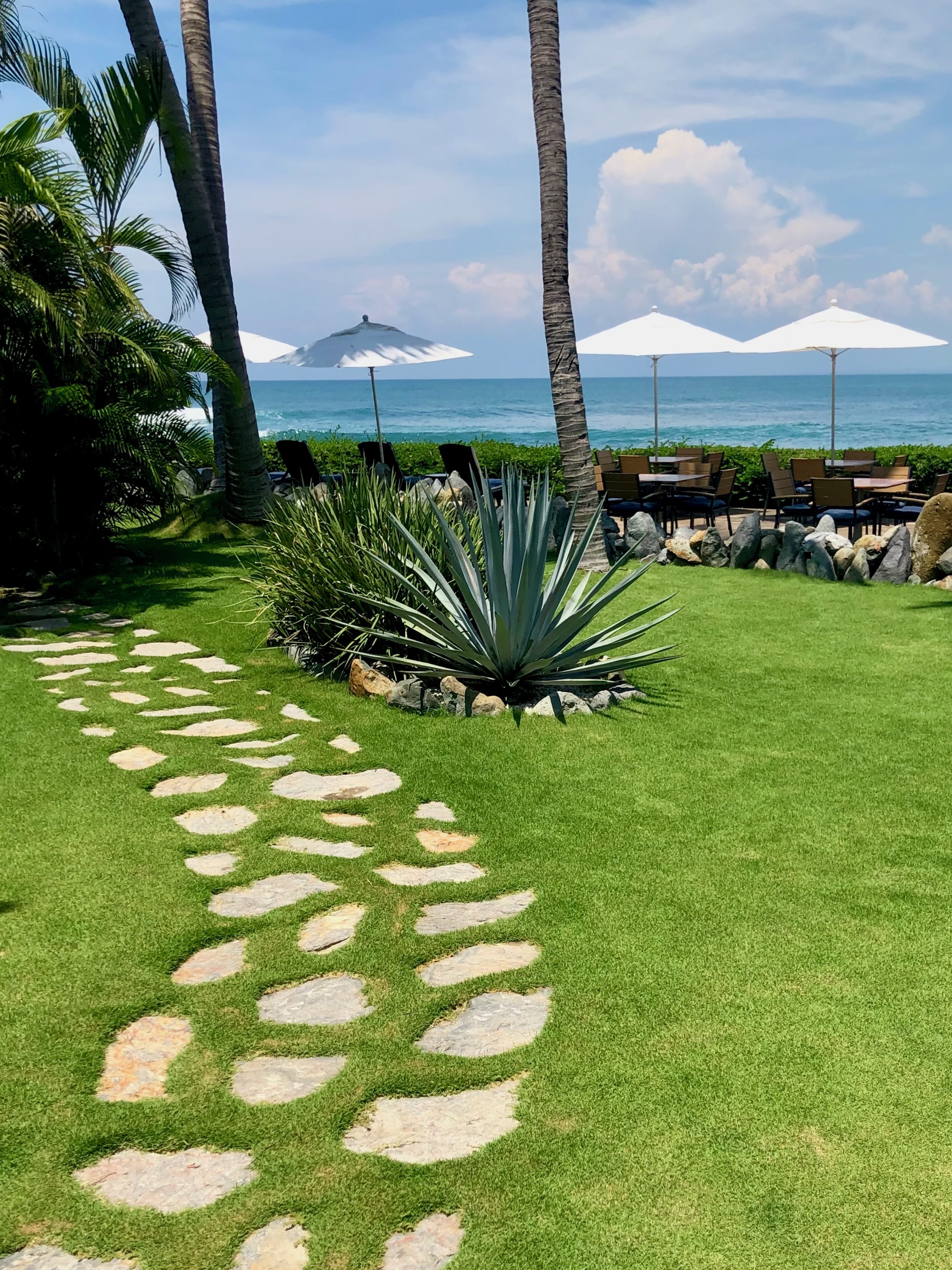
Mike says the current lawn of English grass is the feature of the garden that requires the most care, and drains the most resources. “We cannot go more than 12 days without mowing it. If we let it go longer than that, it gets all lumpy,” explains Mike, adding, “It also needs a nitrogen-based fertilizer and a lot of water. We have to order two or three pipas a month [10,000-liter water trucks] in the dry season just to stay up with it. That’s also when we get armadillos coming in and digging. They come in, mostly in April and May, before the rain, because it’s where they find moisture and worms.”
While the lawn requires the most attention for Mike and his crew, much of the rest of the garden has grown-in based on what was already thriving—and on trial and error. “Many of our arecas and hibiscus are the original ones that were here. Those serve as the framework for the current garden. Over time, we’ve tried different plants as accent points, as borders. Not everything will grow just because you plant it. You have to be careful to find plants that stand up to the brine, the wind and the sun.”
Of late, Mike has added in plumeria, colombos [elephant’s ear] and agave, as well as a mix of ground cover that includes maguey morado [boat lily] and purpurina [wandering dude, sometimes called barquitos]. Each of those plants propagates easily and readily gives The Inn’s garden crew “babies” that can be transplanted to different areas.
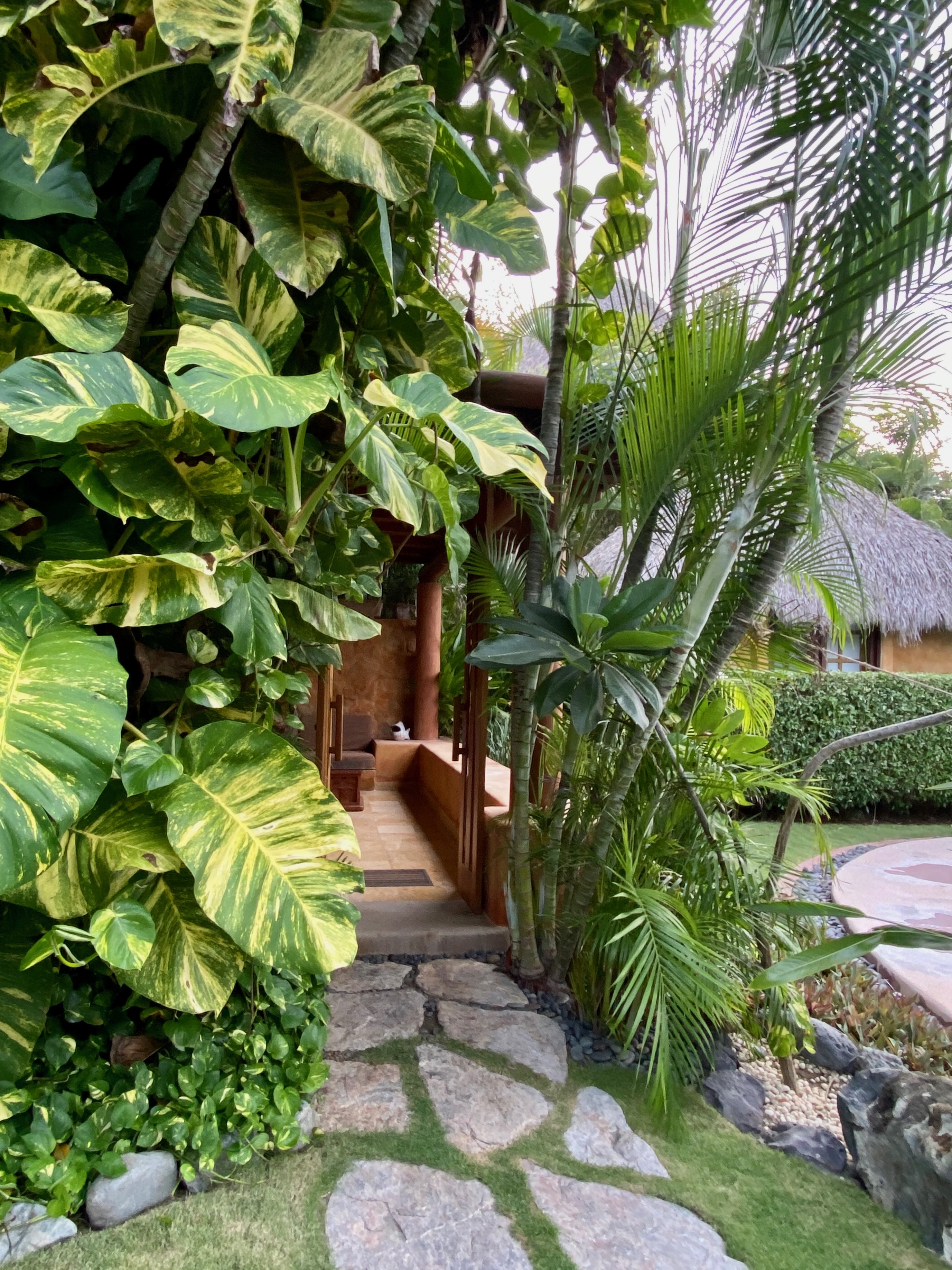
Mike explains, “I brought in the plumerias, which is a Hawaiian plant, to create a more tropical vibe. They’re at the entrance to every room, even though they only come into full bloom in April. They have the most beautiful flower, and they and the agaves don’t need a lot of water. Also, the agaves give off shoots that I’ve been putting along the front and the driveway. That area’s become like a nursery, for the agave and other plants, and it’s where we water with our grey water, water comes from The Inn’s sinks and showers. That helps reduce the need for water from the river.”
Changing over to the water provided by the Lagunillas ejido, getting off the Troncones system, has had a huge benefit in maintaining the gardens, as well as The Inn’s other infrastructure. The new water doesn’t have the minerals that came along with the old water, and both the plants and faucets seem to be thriving, looking better and working longer, according to Mike. But he points out the key to the garden isn’t the watering, it’s using plants that can go without it and that can withstand the brine.
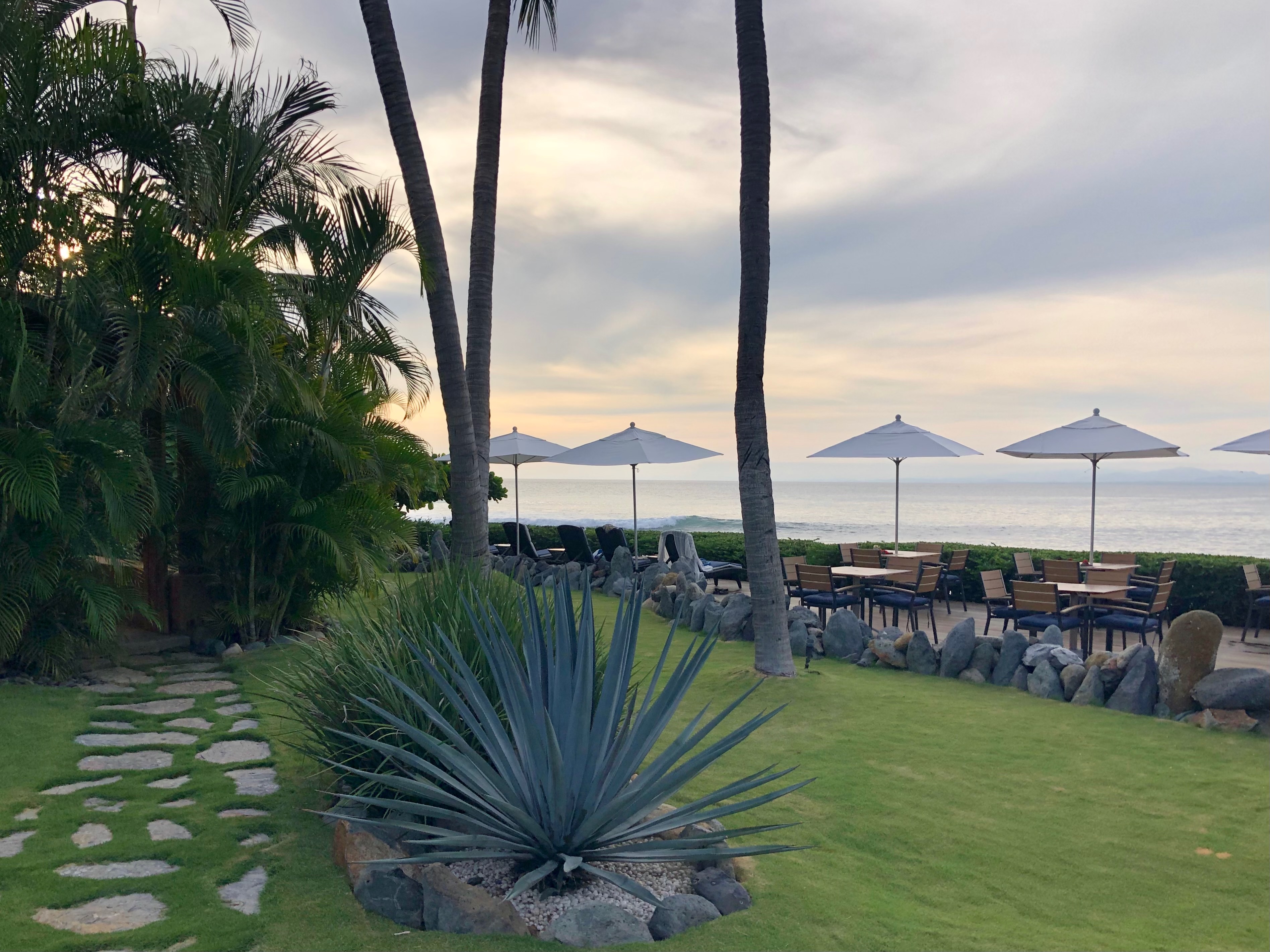
Mike remembers, “We’ve had plants where we were using water to wash off the salt so, not only were we watering the roots, we had to bathe the leaves. That’s not a good use of what we have. That draws on the water supply and takes a lot of time. Now, we use carissa [natal plum] along the ocean. It serves as a natural fence because it has a thorn. It also gives us a white flower, and it’s heat and drought resistant. But things are never perfect, you know. The lizards like living in the carissa, especially this time of year. Those come out and eat our hibiscus.”
A little of this. A little of that. Try this. Try that. As Mike talks about The Inn’s gardens it’s clear its care is a constant process of adjustment to conditions, and a willingness to experiment. And that it’s labor intensive, even beyond what his own staff can do. He describes calling on local nurseries and local experts to help out from time to time—to remove intruding plants, to sustain existing plants and to maintain The Inn’s coconut palms. All that, while allowing for the behavior of the lizards and armadillos.
And “the work” never ends. A new plant Mike is experimenting with is maracuyá [passion fruit], a vine he has growing on a fence near The Inn’s parking area. Happy to see it starting to climb, Mike acknowledges another facet of the garden—patience—wistfully saying, “It could take two years.”

%201.44.22.avif)
