Troncones’ Water, Part One
A Q & A with Alberto Solís Hernández
Water is precious in Troncones, whether it’s drinking water or water for household use. Unlike Saladita, Lagunillas, Buena Vista and Pantla there isn’t a nearby river or an underground aquifer to provide the town what it needs. And the population explosion of the last two decades has strained what it has. There isn’t one person who knows everything there is to know about the household or tap water in Troncones. Responsibility for regulating the flow of water belongs to “the ejido”, a community collective that manages Troncones’ natural resources. Every month, I go to the Ejido House and pay for the water we use, and every month Alberto Solis Hernández is there. I thought I’d start finding out about Troncones’ water from him. I’m imagining there’ll be a Part Two.
%2017.27.38.avif)




%20(Spanish)-2.avif)




LOT: How long have you been living in Troncones?
Alberto: I was born here 48 years ago.
LOT: How did you become part of the Troncones ejido?
Alberto: Like everyone else, through inheritance. I wasn’t among the first who arrived. My parents were the ones who arrived, and it was my grandmother who left the position to me, through inheritance. [The individuals making up the ejido are known as “ejidatarios”.]
LOT: How many ejidatarios are there?
Alberto: There are 53 ejidatarios in total. And those are all hereditary. They are passed down. You can’t pay to become one. And the number of ejidatarios cannot increase. It can decrease, but it cannot increase. If someone passes away, they leave it to someone else.
LOT: What do you do for the ejido right now?
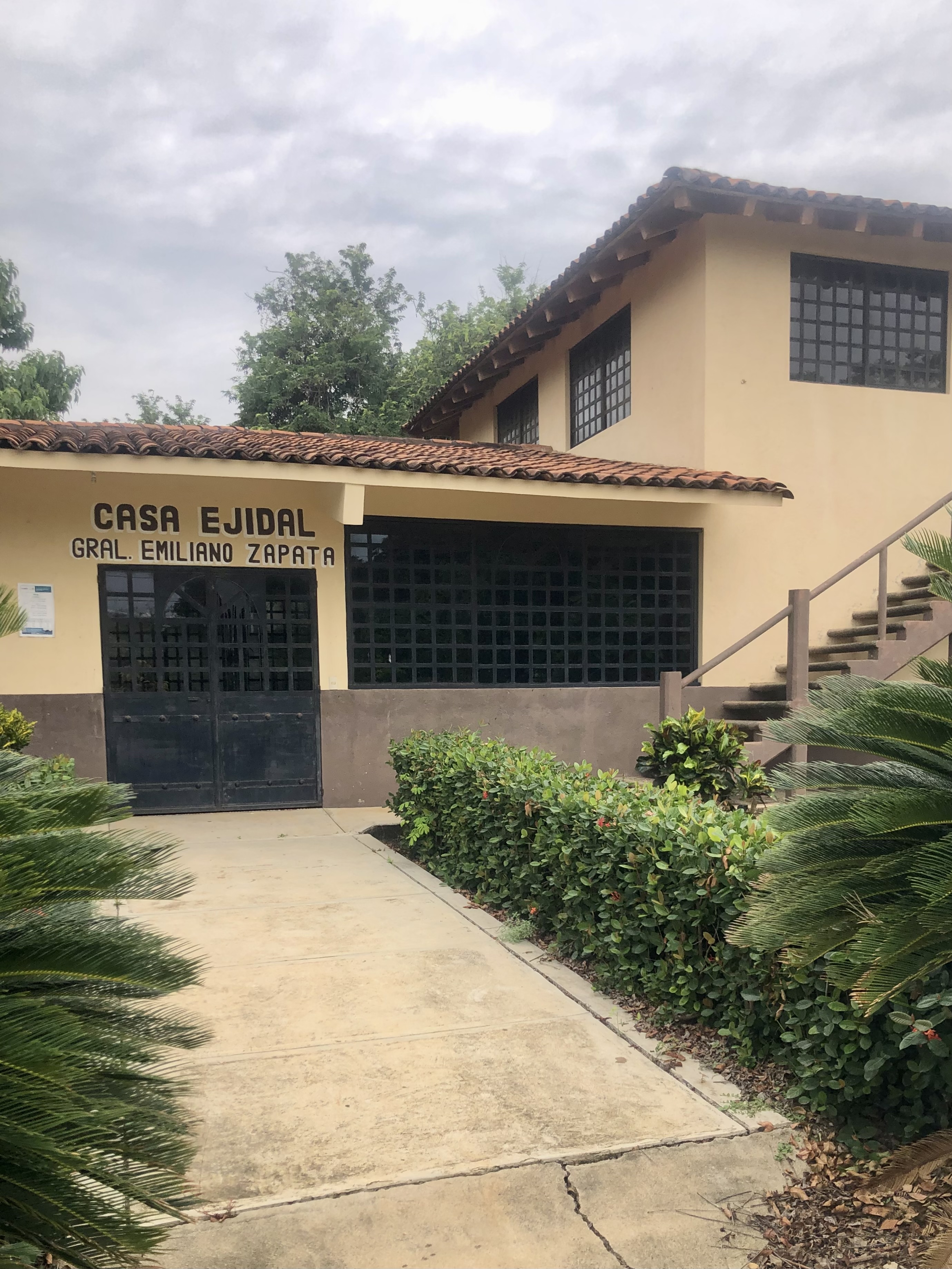
Alberto: I am the secretary of the ejido, and because I’m secretary, I’m here, serving the Water Committee.
LOT: And how many years have you been here?
Alberto: I’ve been here for about 12 years. It’s usually a three-year term, when the board changes. Three years, another board. Three years, another board.
LOT: Where does the water in Troncones come from?
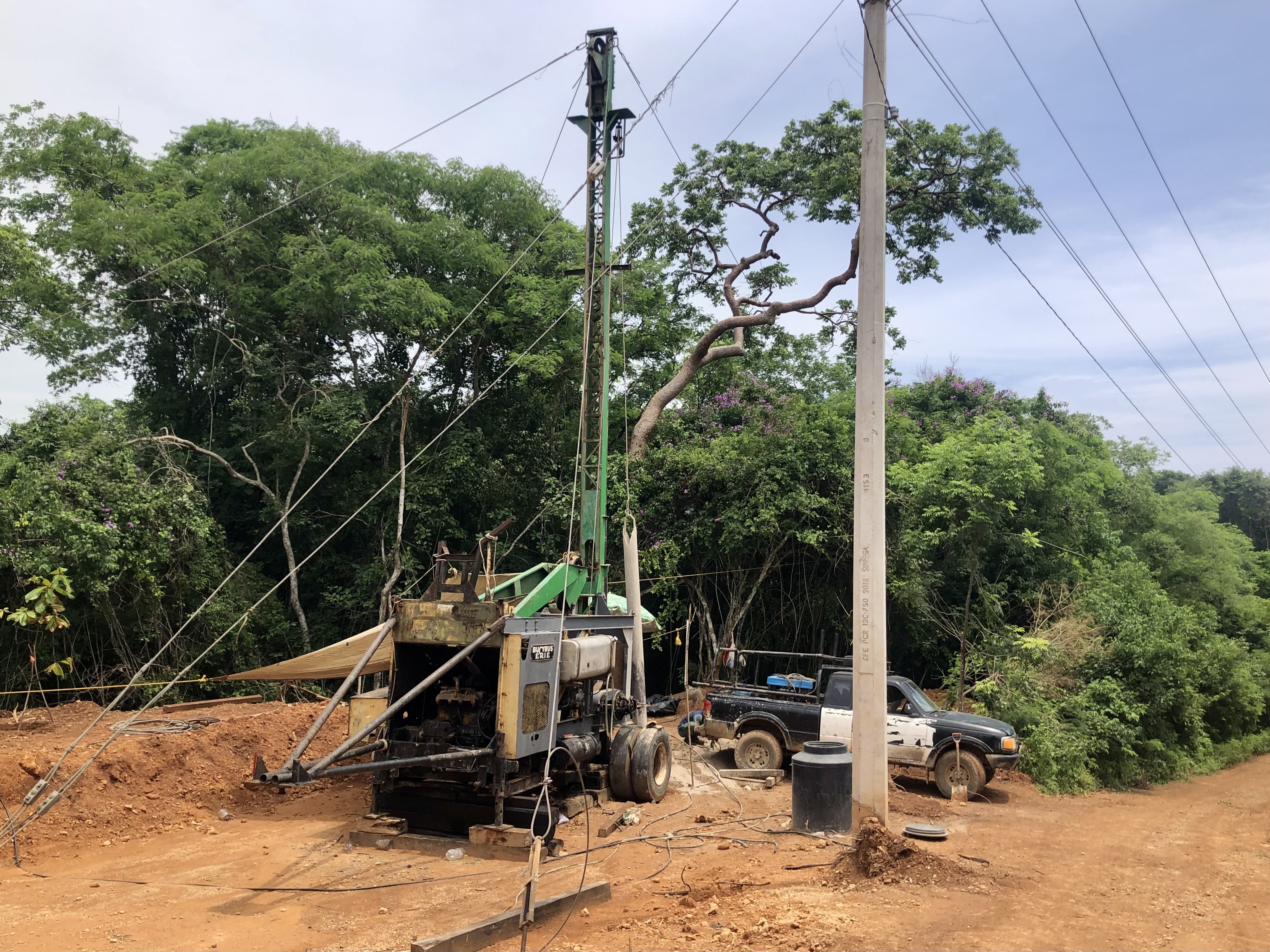
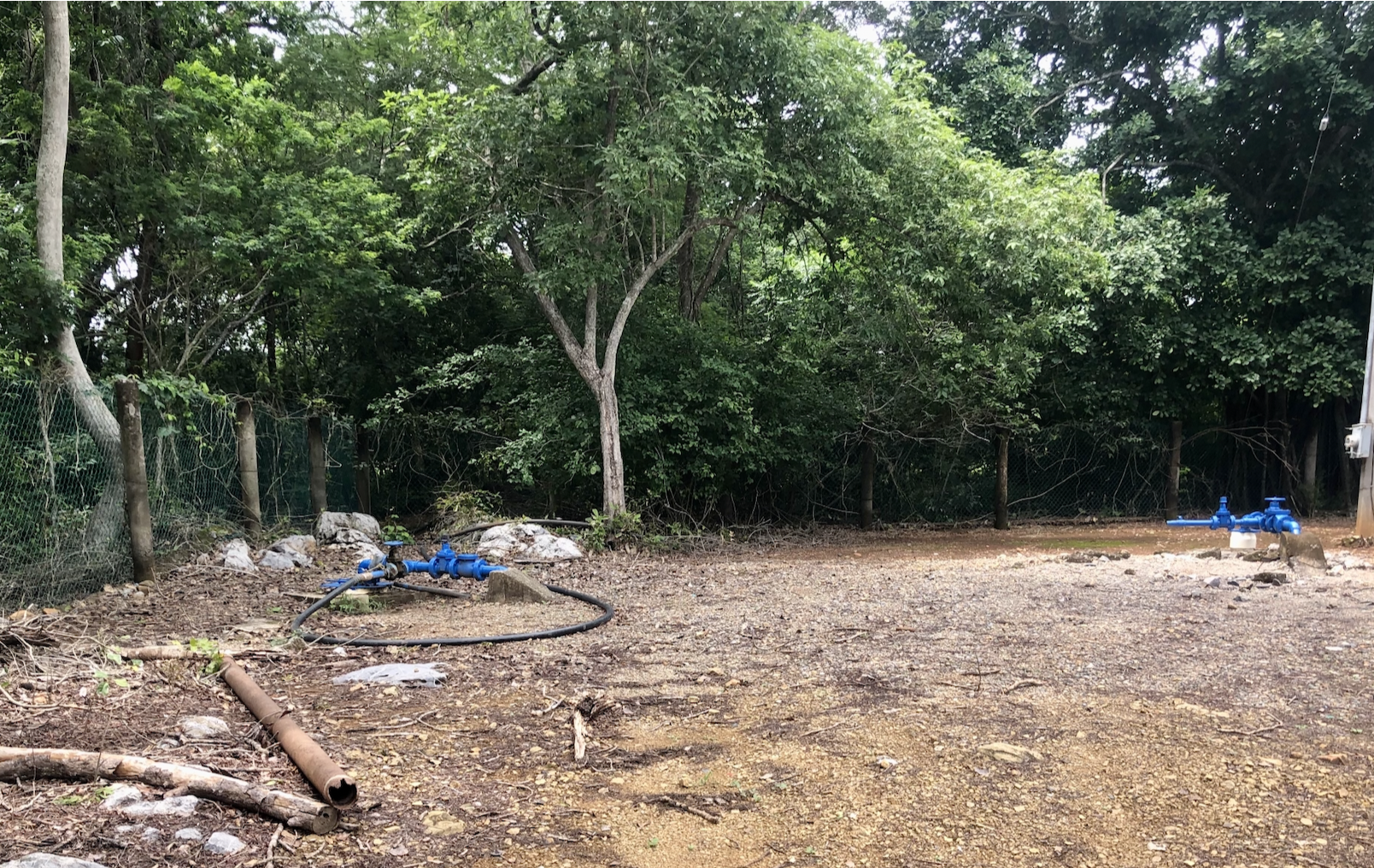
Alberto: It comes from two deep artesian wells, 140 meters deep. They’re across the road from the basketball courts, about 800 meters in from the road.
LOT: How does the ejido measure the water?
Alberto: All the houses have a meter at the water connections, so it’s known how much each house consumes.
LOT: How do you know how much water is in the well?
Alberto: A reading is taken, a sounding is done, using an electrode. Nobody knows exactly how much water the well has. What we do is study it every month.
LOT: How do you regulate the flow?
Alberto: That depends on the reading. We know what’s being used and we plan for leaks, and for places in the community that aren’t charged—like the schools, the ejido house and the fairgrounds.
LOT: Before those wells were made, how did water reach Troncones?
Alberto: From a well that was 9 meters deep, on this side of the village. Back then, people sustained themselves on a small well, because there were few of us. We were around 40 to 60 families, so water for the town wasn’t a problem. The problem began after the lots along the beach were sold, lots that were outside of the town. Foreigners bought those lots and began to build houses on them. It’s those houses that actually consume the most water.
LOT: How is the water distributed?
Alberto: Through pipes all over town. The whole town is divided into sections. Certain parts of the town get water twice a week—one side gets it on Monday and Tuesday, the downtown gets it on Wednesday and Thursday and the other side on Friday and Saturday. It’s managed in sections. We call it “scheduled rationing”. Usually, the lots on the beach have water day and night, except we cut them off during the dry season, from around March to July, when it doesn't rain much. In that time of the year; it’s usually cut off on Monday and Friday, but it only gets cut off on those two days.
LOT: What level is the well at now?
Alberto: Right now, the water level is roughly around 60 meters because it’s recovered a bit from these rains. We consider that when it’s at 100 meters that there's no water left. That’s when the water starts to come out dirty and murky because the pump creates a kind of whirlpool and brings up all the mess underground.
LOT: How is that level compared to other years?
Alberto: Compared to other years, we’re in bad shape. We depend a lot on the rain. If the rest of this year’s rainy season is good, we won’t have any problems for next year. If the rain the rest of the rainy season is bad, we’re going to have problems next March and April because we depend totally on the rain.
LOT: How does the rain fill the wells?
Alberto: It runs off the mountain and fills the water reserve deep down. If there isn’t enough rain, the water table drops. So, when it no longer rains, when the water table isn’t maintained, that’s why the level goes down. Right now, it just rained. That will keep people from using water in their gardens for a week. That helps us all.
LOT: Does the ejido have a way to collect more water?
Alberto: Right now, we have a water tank where we collect water from the two deep wells that we have. That stores around 20 tanker trucks [about 200,000 liters of water]. That’s the water that’s distributed under pressure, to the pipes, to the houses, to the taps. We don't collect water directly. We don’t have a place to collect water.
LOT: There’s no place to put a dam or a reservoir?
Alberto: Not here, because all the lands are now private, outsider-owned. They no longer belong directly to the ejido. Besides, there’s no area where two mountains are suitable to make a dam. The way the land is here doesn’t lend itself to that.
LOT: So, if there were a reservoir, it would need to be made on the other side of the highway?
Alberto: Yes, something like that. There is no area to make a dam here.
LOT: Foreigners are used to having water. They worry that they won’t have water for themselves and they worry that the people living here won’t have water. What does the ejido need, or what is missing to stabilize the situation?
Alberto: The situation doesn’t directly depend on us as an ejido, because the ejido doesn’t have bodies of water, like permanent streams or rivers, that it can manage. All there is the water that runs offs and is stored underground. One way for the town to survive would be through a seawater desalination plant. That would require support from the state government or the federal government due to the investment. Another way would be to bring water from a river, and the closest one is 10 to 15 kilometers away. That would be another ambitious project, one that only the government could carry out. With our resources, we only have enough for the maintenance of what we have.
LOT: What do people need to know about our situation?
Alberto: The first thing we have to do is raise awareness that there is not enough water, that we need households to start changing the type of gardens they have, that we need them to design gardens that don’t consume as much water. We also need households to recycle their water, to treat it, to reuse it in the gardens, and to pay attention to leaks, and not use it to wash patios and common areas. We need to raise awareness that we are in a place where we don’t live right next to a river, that we need to conserve our water. What we usually do when the dry season arrives is give more preference to the town, which lacks the resources to buy water tankers and is very vulnerable in that sense. We gradually reduce the water for the lots along the beach, so that they, too, only have what is necessary.
What is important to emphasize is that the growth Troncones has had lately has overwhelmed the water infrastructure we have. Solving the water problem doesn’t depend so much on the ejido. It depends on all of us, especially in terms of asking the federal government and the state government for real help. We did a study across the whole ejido, where we have about 500 to 600 hectares. That study revealed there isn’t enough water, a sufficient source, to supply the town beyond what’s already here. Right now, we are building another well in an effort to patch up what we have. Not to expand the service. It’s to improve the service we have. This growth has really overwhelmed us, so what’s definitely needed is a project with the municipal, state, and federal governments. It’s going to be quite necessary. If they are able to provide us with water from a river 15 kilometers away, the infrastructure and the maintenance of that is expensive. Desalination is even more expensive. A pipeline from a river or something would be faster and more productive.