The Morning People
You see them everywhere around right now—climbing fences, lining roads—a gift of the season
Somewhere up north right now, a person is standing in a driveway with a snow shovel, looking at the brown sticks where the garden used to be. Pinned to a corkboard in the kitchen, there’s a seed packet with a picture of a blue morning glory on it, waiting for May. We don’t need the packet. We have a full-on bloom happening here.

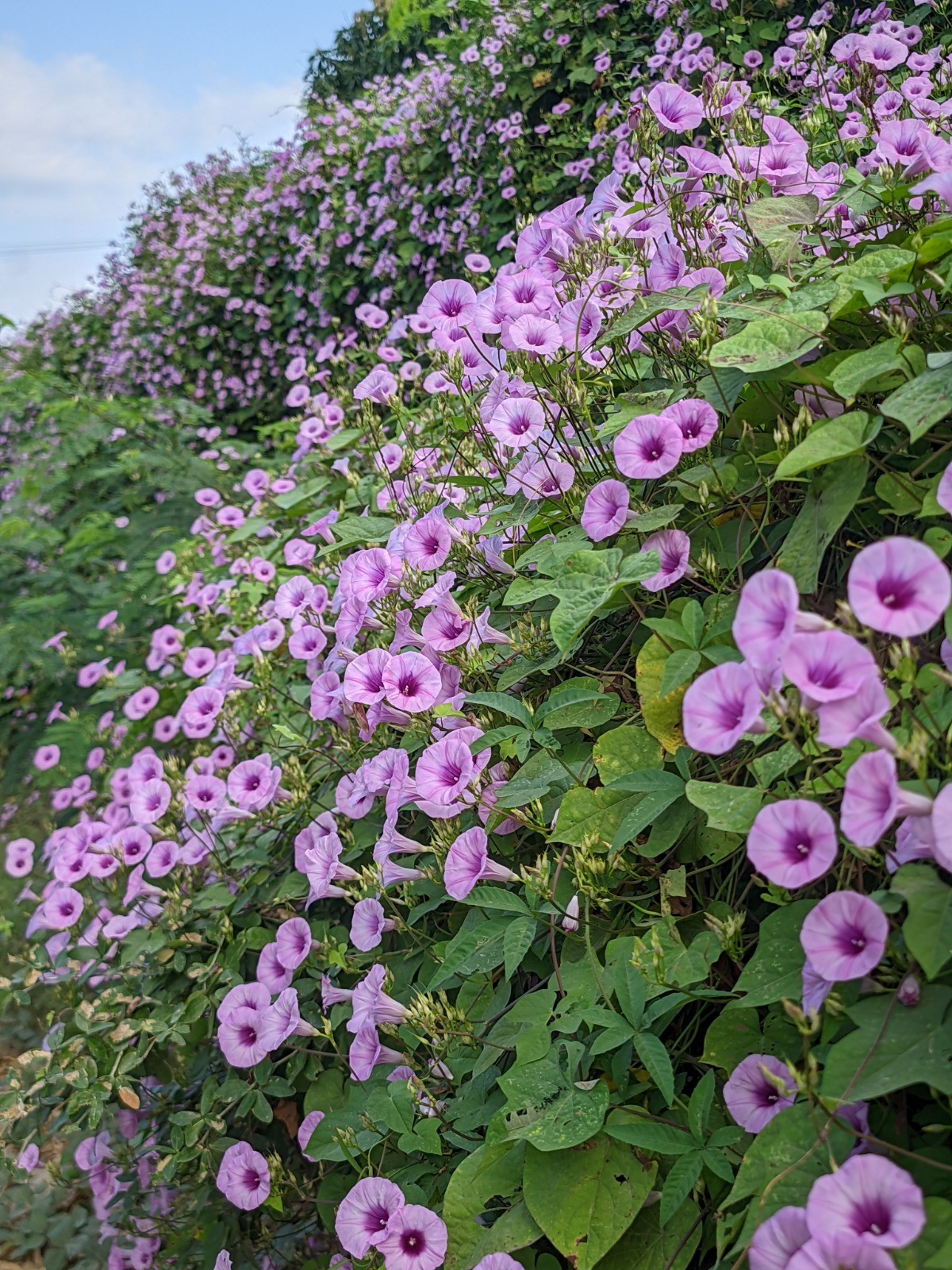














This is the time of year when our rains have quit, our hills haven’t figured out they’re about to go dry, and every fence, culvert, abandoned car and slow-moving neighbor in Troncones disappears under an explosion of morning glories. Purple, sky blue, pale pink, little red stars. Northern gardeners coax these plants up a string trellis and brag about them. Here they climb the power poles on their own and nobody brags about anything, because they're everywhere.
HOME TURF
There’s a reason they're so comfortable. Mexico is one of the richest places on Earth for morning glories. The genus, Ipomoea, has wild species scattered across the tropics, but more than a hundred of them grow right here. The ones on that seed packet up north mostly started out as Mexican plants that got a passport.
The name has nothing to do with glory. Ipomoea comes from Greek words meaning “like a worm”, for the way the flower bud sits twisted up like a little screw before it opens. Botanists have a gift for naming beautiful things after something unpleasant.
EARLY RISERS
The English name is honest, though. Each flower opens at dawn, does its business, and closes by early afternoon. That’s it. One morning. If you sleep in, you get to look at a hedge full of crumpled tissue paper.
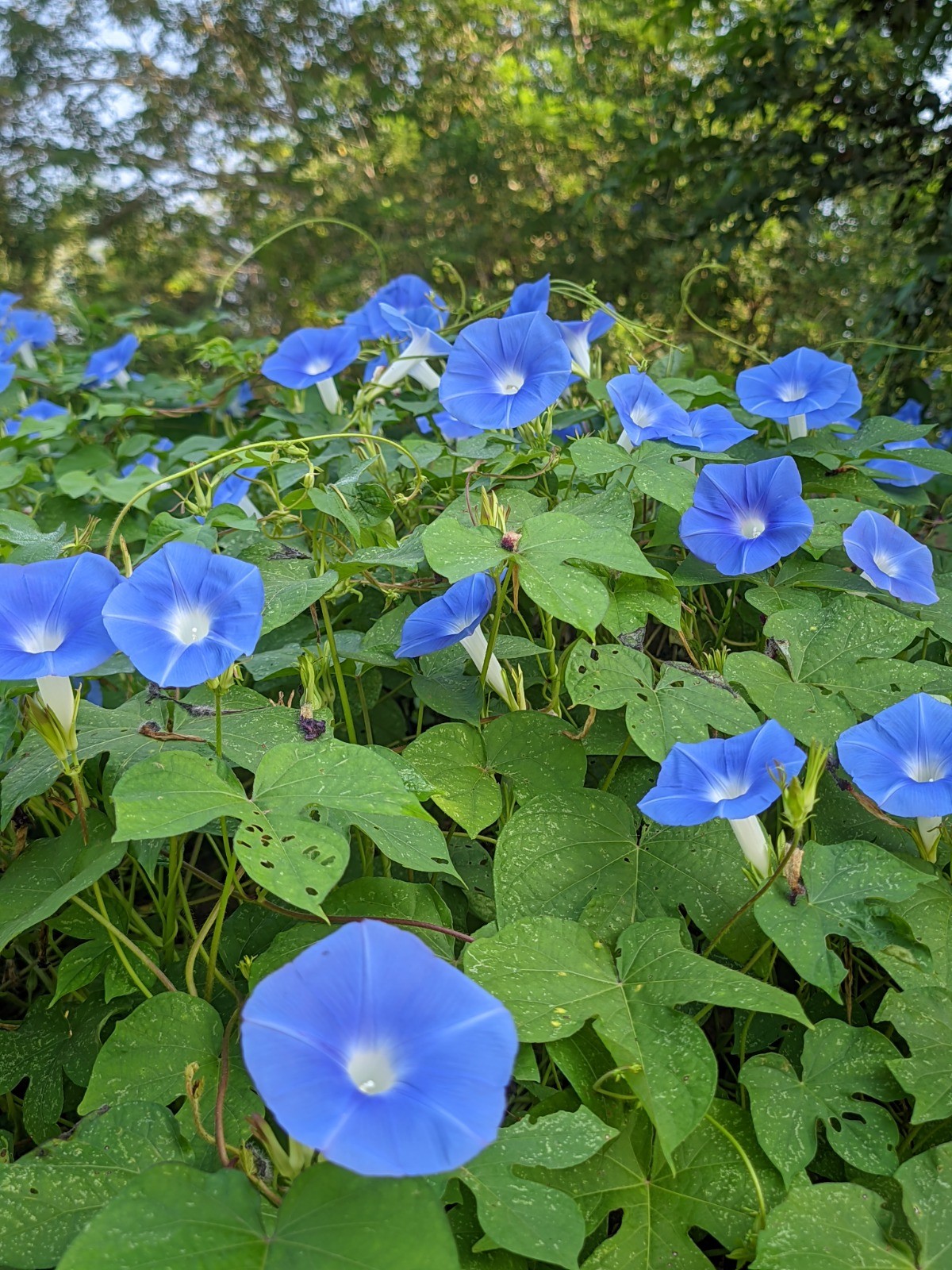
The blue ones put on a small show on the way out. Watch one through a morning and their sky-blue slides toward purple and pink as the day warms up. The pigment doesn’t change. The sap inside the petal shifts its acidity as the flower ages, the same chemistry as a litmus strip in a high school lab. So, the flower reports its own decline in real time, in color, for anyone paying attention. Most of us should be so organized.
DIFFERENT FLOWERS, DIFFERENT CUSTOMERS
Most morning glories are built for bees: a wide, open trumpet, a pale throat with lines pointing the way in like runway lights. The purple ones with the hot-pink center and the big sky-blue ones are bee flowers.
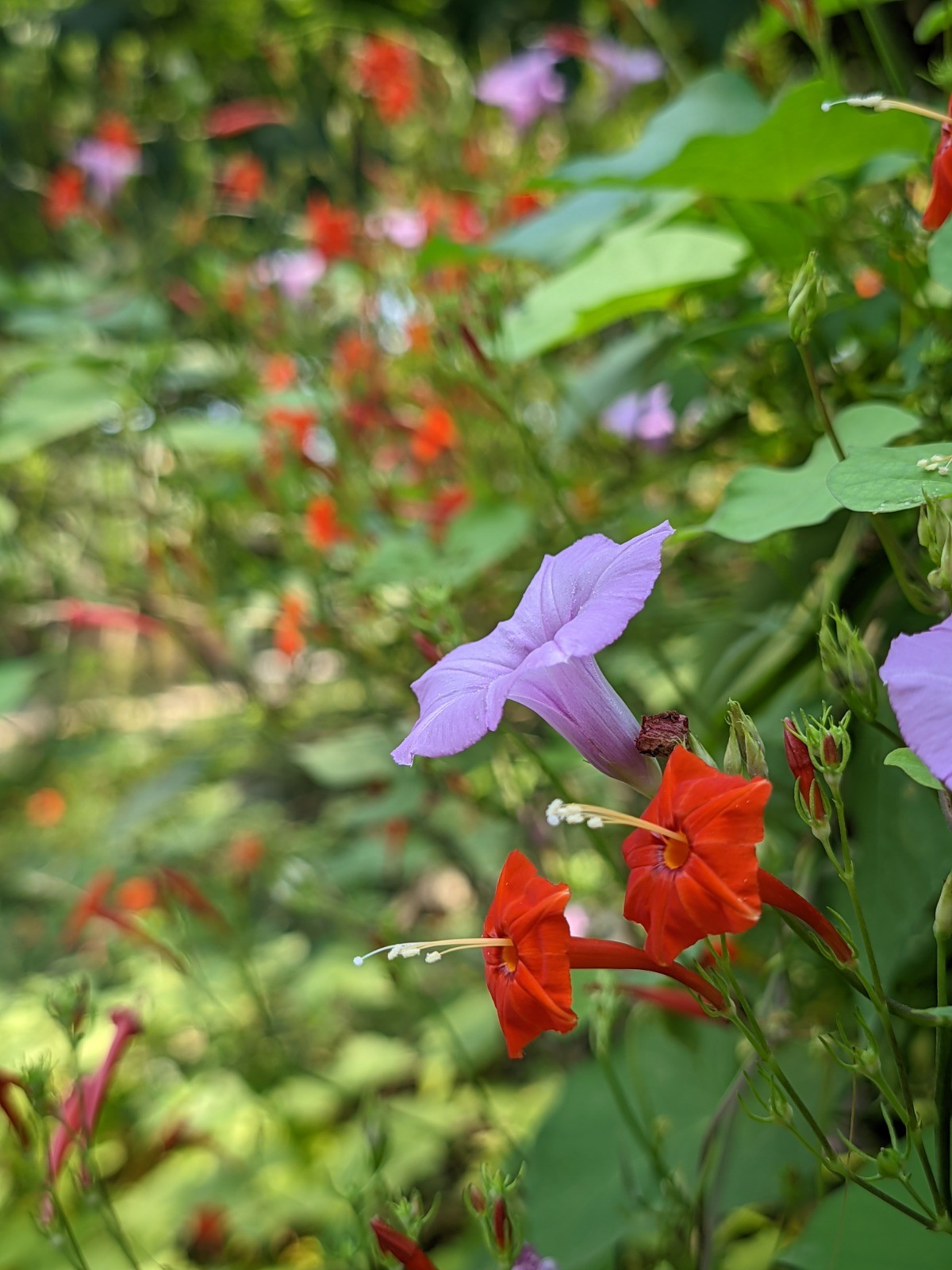
Then there are the small red ones, the little five-pointed stars hanging on narrow tubes. Those aren’t for bees. Red, narrow and full of nectar at the bottom of a long tube is a hummingbird flower, and if you stand by a patch of them long enough, a hummingbird will show up to prove it. Same family, completely different clientele, like two restaurants on the same street.
THE ONE ON THE BEACH
The morning glory most people walk past without noticing lives on the sand. Here it goes by two names, tortugo and riñonina. Elsewhere, it’s called pie de cabra, goat’s foot, because the leaf is notched at the tip like a hoof. Whatever you call it, it sends runners for meters across the upper beach, putting down roots as it goes. It’s one of the few things holding the dunes in place when the surf comes up. Its seeds float. They ride the ocean currents in little air-filled capsules, which is how the same vine ended up on tropical beaches all over the world. Right now, ours look like they lost a fight, which they did. The October storms beat them up and stripped every flower, but this is a plant built for exactly that. It’ll be blooming purple again before the end of the year.
The name riñonina comes from its use as a remedy for kidney trouble. On this coast, it has another practical job. Step on a stingray, and somebody will boil riñonina and have you soak your foot in it, as hot as you can stand.
Here’s the part I enjoy. The standard medical treatment for a stingray sting is to soak the foot in water as hot as you can stand, because heat breaks down the venom. And lab studies have found that riñonina extract counters jellyfish venom nearly as well as some commercial preparations. So, the local grandmothers have been right twice: the plant helps, and the hot water definitely does. (Surfers who’ve met our long-spined urchins get the same hot soak with vinegar instead of the plant. Coastal medicine here runs on hot water and whatever’s growing nearby.)

THE FAMILY PHARMACY
Walk anywhere with someone who grew up here and you’ll learn that every plant within reach is good for something: kidneys, diabetes, infections, nerves, the evil eye. If all of it worked, nobody in Guerrero would ever die.
Still, the morning glories have real pharmacy credentials, just not glamorous ones. A cousin from Veracruz, Ipomoea purga, is the source of jalap root, named after the city of Xalapa. For a couple of centuries, it was one of Mexico’s big medicinal exports to Europe. It was a laxative. Europe paid good money for it, and that is all we need to say about that.
The family also includes the sweet potato, which is the most useful thing a morning glory has ever done for anybody, and the vine whose sap the ancient Mesoamericans mixed with rubber latex to get their ballgame balls to bounce. And the Mexica used the seeds of one species, ololiuhqui, in sacred healing rituals, so much so that the Spanish tried to ban it. (A note for the curious: morning glory seeds are toxic. Leave them on the vine.)
THE AMBUSH
One last thing, because a flower piece shouldn’t be all sweetness.
All that nectar and pollen draws a steady stream of bees, flies and butterflies. Anything that draws a crowd like that draws something that eats the crowd. The crab spider doesn’t bother with a web. It parks itself on the rim of the flower, front legs spread wide like it’s waiting for a hug, and grabs whatever lands. Some crab spiders can even shift their color, slowly, over a matter of days, to match the flower they hunt on. This one picked a pale blue morning glory and showed up in pale green and cream, close enough to vanish unless you look straight at it. It’s one of the prettiest things I’ve photographed, and one of the most honest. The morning glory is a nectar bar and a crime scene at the same time.

So, while the cold people up north shovel and wait for May, go out early and greet our morning people. But keep in mind, they won’t wait for you. They’re gone by lunch.