What’s in a Name?
The Who’s Who Behind Our Addresses
Emiliano Zapata, Isidoro Montes de Oca and Vicente Guerrero. They’re part of our local addresses. Their names tell a story and say more than you might think—more than any set of numbers ever could.
.avif)





.avif)

%20(Spanish)-2.avif)


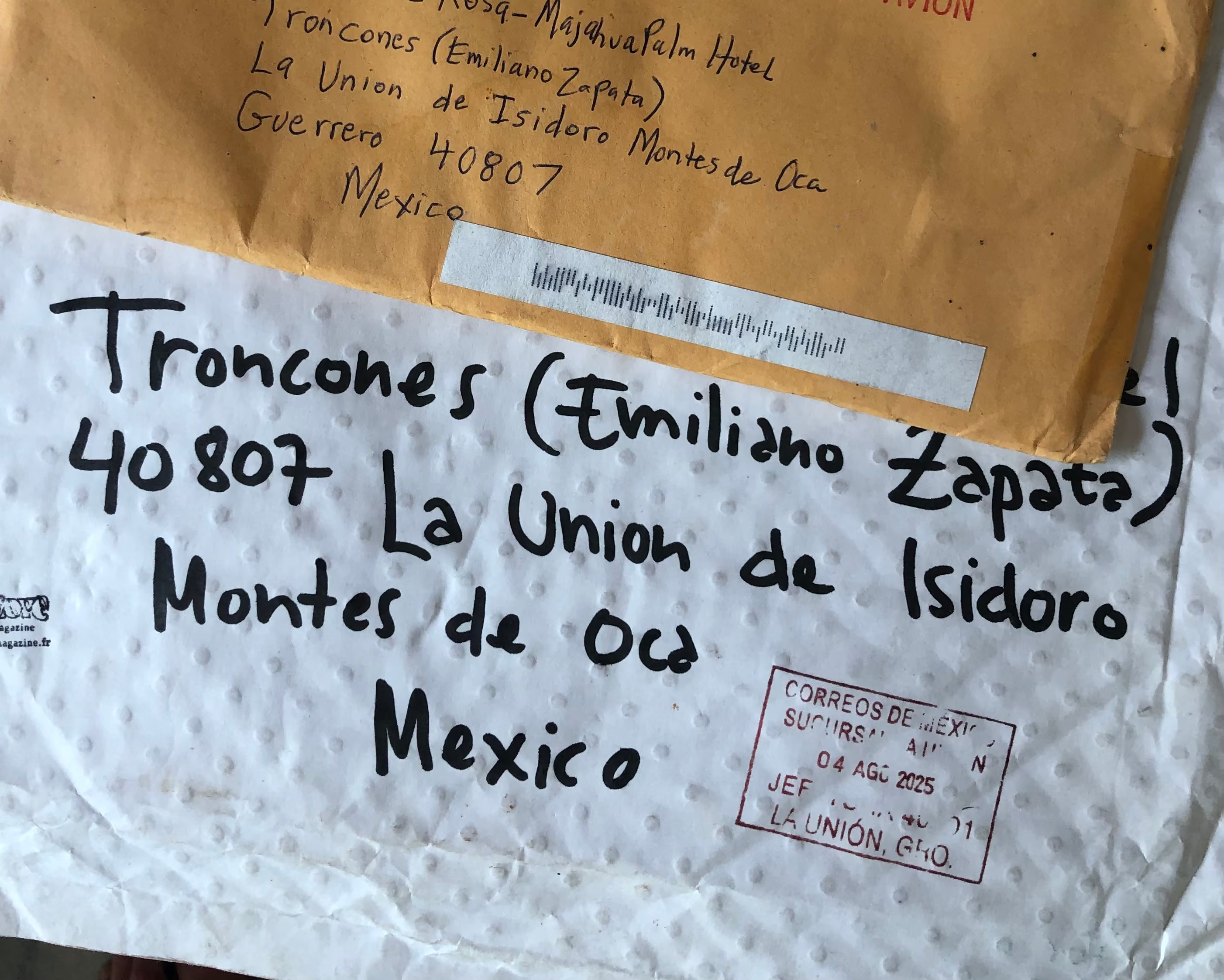
An address is the most invisible piece of writing in your life. You copy it onto customs forms and Amazon orders, you say it to the pharmacy, you watch the propane truck use it to find the house—and you never once read it. It isn't a language anymore. It’s a coordinate.
But look at mine. Written out in full, the way the post office wants it, my address is this: Troncones (Emiliano Zapata), La Unión de Isidoro Montes de Oca, Guerrero. That’s not a location. That’s a roll call. Three men, three wars, more than a century between the first and the last, stacked one on top of the other so a package can find my door.
And here’s the strange part: read the envelope from the top line down, and you are reading Mexican history backwards. The farther down you go, the deeper into the past you fall. So, let’s fall.
TRONCONES, WHICH IS REALLY EMILIANO ZAPATA
Our town has a formal name almost nobody says out loud. Officially, the locality is Emiliano Zapata. Troncones is the name in the parentheses, the one everybody actually uses, the way a man might have a Christian name only his mother ever said.
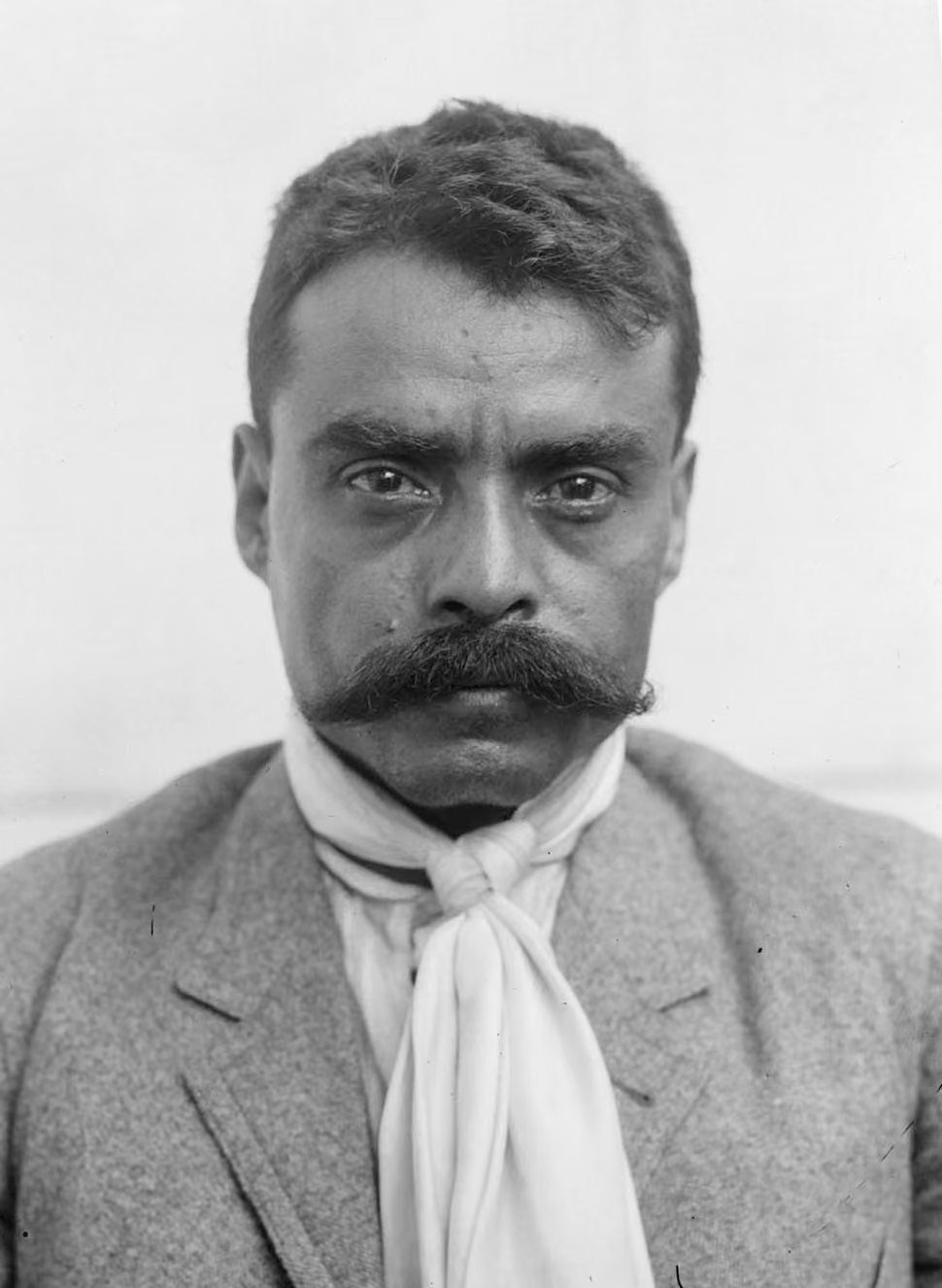
Zapata is the most famous of the three men by a wide margin, yet he’s the one who never came near this coast. Born in 1879 in Anenecuilco, in the state of Morelos, Zapata was a horseman and a muleteer before he was a legend—the son of a small farming family who watched the sugar haciendas of the Porfiriato [the followers of authoritarian president and dictator Porfirio Díaz] swallow the village commons one field at a time. When the Revolution came, Zapata did not want a presidency or a railroad. He wanted the land back. Tierra y Libertad. His 1911 Plan de Ayala said it in plain terms: return what was stolen, to the people it was stolen from.
Zapata’s tie to our area is real, not decorative. The Ejército Libertador del Sur—the Liberating Army of the South—was formed that same year at Jolalpan, where rebel captains from the states of Morelos, Puebla and Guerrero threw in together and named Zapata their chief. Guerrero men were in it from the first day. By 1914, the Zapatistas were taking towns across this state—Coyuca de Catalán, Cutzamala, Taxco—and laying siege to the capital at Chilpancingo. The war was here.
It ended for Emiliano Zapata the way these stories tend to. In 1919 a federal colonel faked a defection, invited Zapata to a meeting at the Chinameca hacienda in Ayala, Morelos, and had him shot to pieces in the courtyard the moment he rode through the gate. Zapata was thirty-nine. Today, Zapata’s face sells T-shirts on three continents, most of them worn by people who could not place Morelos on a map. Our town carries his name and doesn’t use it. He’d probably have liked the anonymity.
LA UNIÓN DE ISIDORO MONTES DE OCA
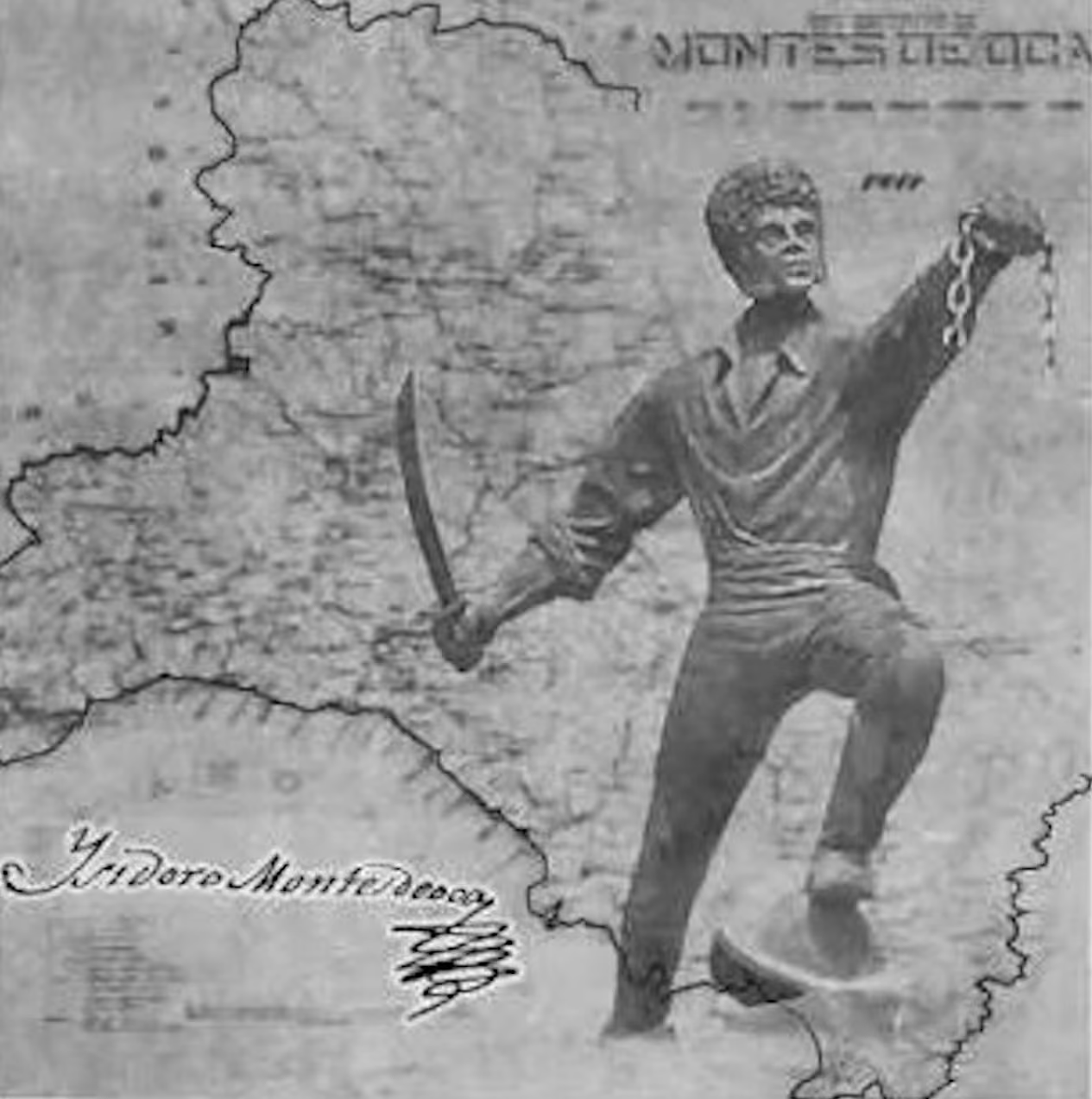
Here is where the tourists’ eyes glaze and even the locals get vague. Everybody in the municipality writes this name on every official form of their lives, and almost no one can tell you the what’s what and who’s who about it.
Start with the first two words, because they’re older than the man’s name. La Unión literally commemorates a union—a moment, a place—the spot where the first southern contingent joined José María Morelos’ insurgency in the war for independence. La Unión was named for an act of solidarity. Isidoro Montes de Oca got bolted on later, in the 1930s, in the way an ordinary church gets a saint’s name once somebody decides it needs one.
Montes de Oca was an insurgent captain who joined Morelos in November of 1810, in the first weeks of the war for independence, and stayed at it for the eleven years it took to remove the Spanish. He fought at the siege of Acapulco, helped take the island of La Roqueta, and held the rough country around Coahuayutla as one of Vicente Guerrero’s most trusted sub-commanders through the lean years when the rebellion was mostly losing. He was, in the org chart of the war, Vicente Guerrero’s guy.
Two honest complications, because his is the kind of history that resists a clean paragraph. Montes de Oca’s birthplace is genuinely disputed: the regional record says he was born around 1781 at a ranch called Las Lajas, inside what is now our municipality—a local boy, in other words. But other accounts insist he was born on the far side of the world, in the Spanish East Indies, and name Montes de Oca among a handful of Philippine-born soldiers who became folk heroes in Mexico. Nobody can quite settle it.
And the second complication is almost funny. Of the three men in our address, Isidoro Montes de Oca is the only one who died old, in bed, at Petatlán, around 1845. He lies in the town pantheon there. In this illustrious company—Zapata and Guerrero being shot down in their prime—dying of old age is practically scandalous. He’s also the only name you would never ever learn if the government hadn’t stapled it to your paperwork.
GUERRERO
The bottom line of our address is the biggest name of all: not a town, not a municipality, but a whole state.
Vicente Guerrero was born in Tixtla in 1782, into a family of farmers and muleteers, of mixed Indigenous, African and Spanish blood, with almost no schooling. He, too, worked the mule trails before the war found him—the second muleteer in our address to end up in the history books, which tells you something about who actually carried the weight of this country. He’s often remembered as Mexico’s first president of African descent.
When José María Morelos was captured and executed in 1815 and nearly every other insurgent leader took the amnesty and went home, Guerrero didn’t. He took over the southern insurgency and kept fighting a war everyone else had written off as lost, from these same mountains, for years. That stubbornness is why independence eventually came: in 1821 he struck the deal with Agustín de Iturbide that finally sealed it.
He became the second president of Mexico, and in his few months in office he did the thing worth remembering—on the 15th of September, 1829, on the eve of the independence holiday, he decreed the abolition of slavery. Then, his own vice-president moved against him. Lured aboard a ship at Acapulco by a Genoese merchant ship captain named Picaluga, who’d been paid fifty thousand pesos to betray him, Vicente Guerrero was arrested, hauled to Oaxaca, tried in a hurry, and shot at Cuilapan on the 14th of February, 1831. Fifty thousand pesos. That was the going rate, in 1831, for a man who’d given twenty years to building a country. In 1849, the administration of president José Joaquín de Herrera turned that blood money into a permanent national legacy by carving out a new state and putting the name Guerrero on it. La patria es primero, Guerrero said. The country is first.
%2C%20Museo%20Nacional%20de%20Historia.%20.avif)
THE FRONT DOOR
So that’s what’s stacked behind the label. A revolutionary shot in a courtyard, a captain whose own birthplace is an argument, and a muleteer who freed the slaves and got a state for his trouble—abbreviated, alphabetized and reformatted for the postal service.
I write these three names without a thought, the way you do. They mean my house. But they were men, and they bled into the exact ground this town sits on, and two of the three were killed by their own side for the crime of meaning what they said. That’s the country in miniature, folded down to fit an envelope: not a place, but an old argument about who the land belongs to, still unsettled, still legible if you slow down and read it.
The propane truck, of course, still just needs the cross street.