Kimberly Kovel: Always a Beginner
A team-builder and innovator puts her professional skills to work for the benefit of Troncones
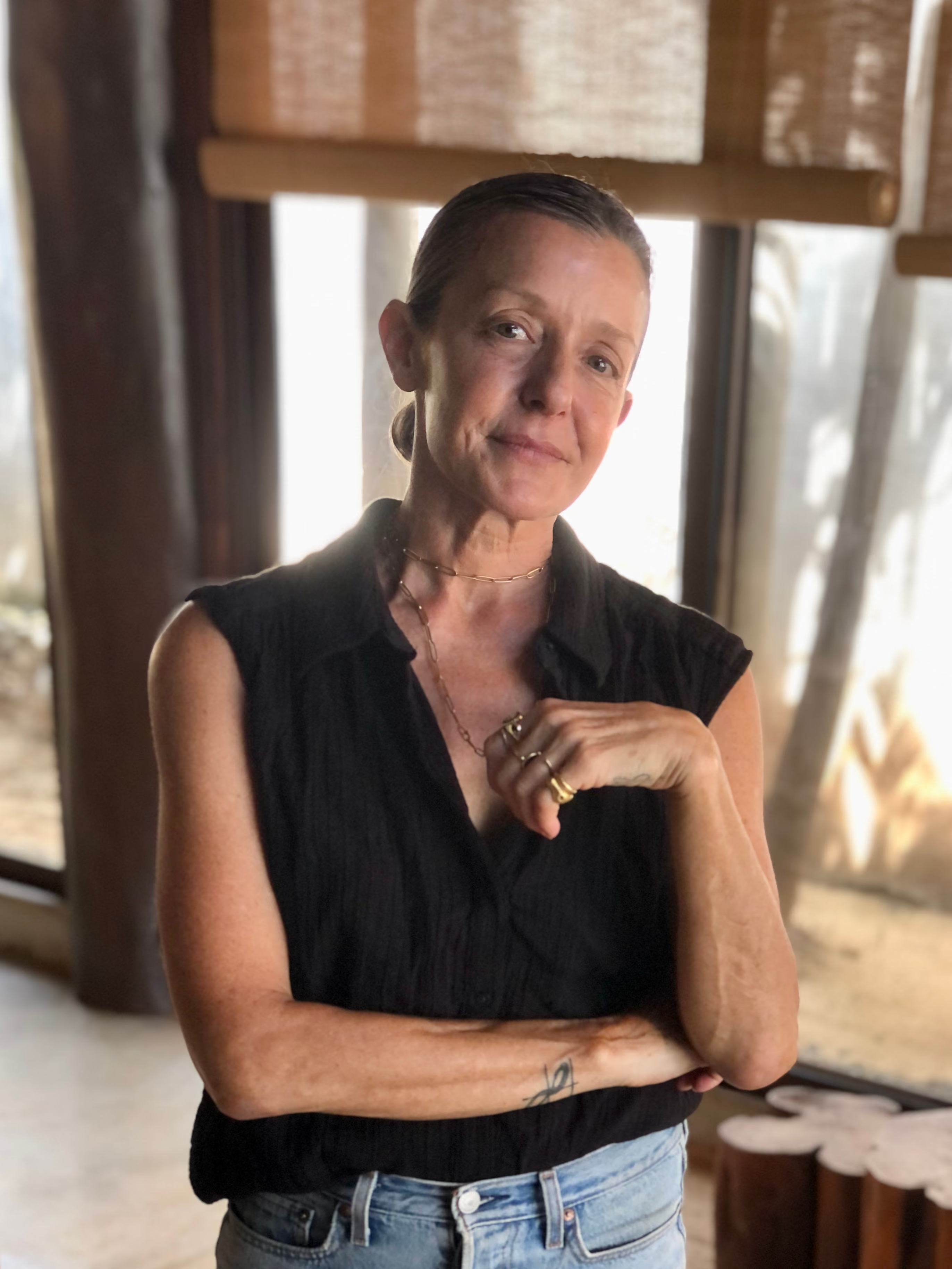
I first met Kim Kovel at Indigo, two tables next to each other blending into one conversation. I knew she was a rare bird right away. From New York. Fast-talking. On her own in Troncones. Missing her college-age kid. Likes to surf. Fan of the Grateful Dead. Jewish. Community-minded. Curious about everything. And modest. It was months later I learned Kim’s a creative force, an innovator and a team-leader who helped a Portland, Oregon sneaker company build its product lines and expand its brand worldwide. What’s she doing here? Besides creating a way to capture rainwater at her house? And passionately doing at least six other things? Maybe changing how you think about medical care in Troncones? Meet Kim Kovel.
%2017.27.38.avif)
.avif)




.avif)
%20(Spanish)-2.avif)
LOT: Is it Kim or Kimberly?
Kim: I use Kim, but it’s hard for Spanish speakers to say. Kimberly is easier, so I often introduce myself as Kimberly. I wish it was Ximena or Camila.
LOT: And if you used your mother’s family name, what would your name be?
Kim: Kimberly Kovel Gembicki.
LOT: French and Italian?
Kim: No. Kovel sounds French. But it’s Polish. Gembicki is German.
LOT: What did you like doing as a kid?
Kim: I liked getting into the same kind of stuff as I do now. Social things. Community projects. Sports. I was “Most Psyched” in my high school yearbook. I dove into things. I did great in school. I was a good student and I liked studying. I liked asking questions. Some teachers loved me; some teachers didn’t. I was a pain. Asking questions. I’m still like that now.
LOT: When you were eight years old, what did you like doing?
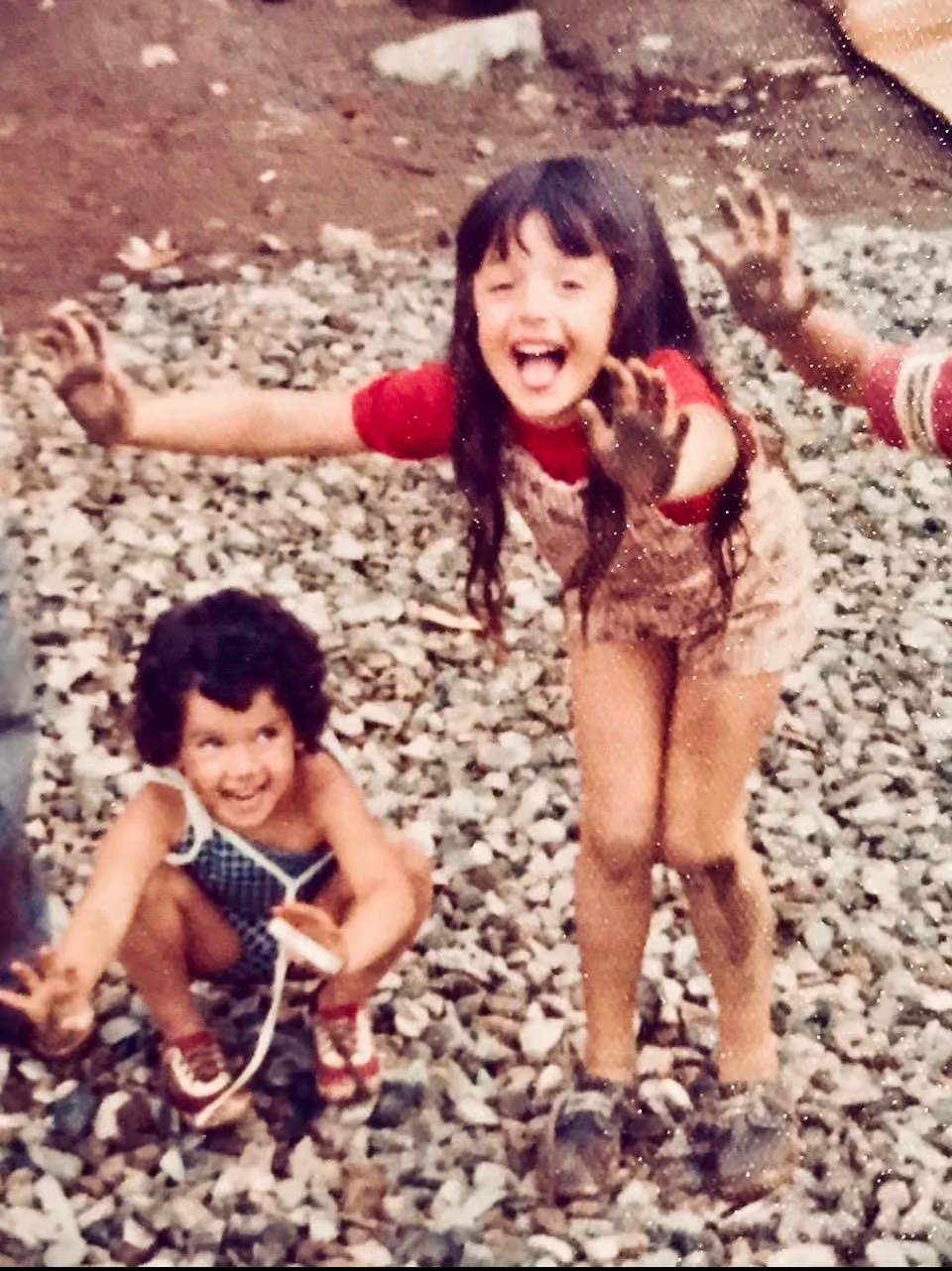
Kim: I like getting my hands dirty. I liked doing little plays. I would have scavenger hunts. I have a younger sister and a younger brother and cousins, and there were a bunch of neighborhood kids. A lot of times, I was the oldest. And so, I would be like, “Hey, let’s do this today.” I made an outdoor clubhouse, a little cabin, this little hut that kids would come to from all over. We would just do nonsense stuff, pretend adventures.
LOT: What did you like doing as a teenager?
Kim: I liked doing all that still but dialed up a bunch of notches, if you know what I mean.
LOT: And what did you avoid?
Kim: I avoided doing things “because”. I avoided accepting things without questioning them. I avoided anything that was like “This is how we do it”. Full stop. That made me want to know, “Why?”. Now, I think I wanted to know why because that’s how my brain works. Knowing “Why” is not being defiant. It’s how I can understand things—put it into a context—not that anybody was asking me to turn anything into anything then, but it’s what I do, it’s how I learn. I didn’t have the words “social justice” in my vocabulary then, but I was concerned with that, with social equity, which I guess made me a bit of a defiant teenager.
LOT: What did you study in college?
Kim: Architecture. Going to college was very important to my family. They were very proud they could send me. I needed an actionable degree, something that had a career path. I knew I didn’t want to be an architect, but I was creative, and architecture was the most professional creative thing I could think of. So, I got a master’s degree in architecture.
LOT: Where did you go to school?
Kim: In New Orleans, at Tulane University.
LOT: What did New Orleans teach you?
Kim: I’d never spent any time in the South. That’s why I chose Tulane. I knew nothing about it. And that was perfect. It was so different from where I grew up. That was the complete motive: to go to a brand-new place. I was pretty spirited and adventurous and New Orleans is just that—a different culture, different music, a great food scene. Tulane’s masters’ program was longer than a typical four-year college degree. I was there for a lot of years, and I had friends who would graduate and then new friends who came in, and others who lived there and had nothing to do with school. I had kind of a multi-age group of friends, much like here.
What did it teach me? Hmmm. I’m pragmatic, but also experimental, and like I said, I knew I didn’t want to be an architect, but I knew the power of that degree—I knew people would respond to it. Knowing that gave me leeway to push the boundaries. So, what I did curriculum-wise the last couple of years was I started making up my own classes. One was a photography project, where I was photographing people and their families. I’d meet somebody, they’d bring me to their house, we’d have a meal and they’d introduce me to somebody else. It just kind of led to whatever it led to. The output was this narrative, constructed with photographs. So, New Orleans taught me how to plug in, play by the rules and explore. I don’t know what the word for it would be. “Innovate” is too stuffy a word.
LOT: What sort of work did you get into after college?
Kim: I moved to Colorado. I moved to the mountains, straight from New Orleans. I worked for an architect for a few months. And then was like, “What am I doing? I want to be outside. I want to ski”. I didn’t feel like I was engaging with the community in the way I wanted to. So, I started working as a waitress at a restaurant I’d worked on with the architect, a renovation. They were about to open and I stopped by to say congratulations. The owners asked me how I was. I admitted I wasn’t into the architecture job. They said, “Why don’t you come waitress here?” I told them I’d never been a waitress. They insisted I’d be great and hired me on the spot. I worked with them for the rest of the time I lived there.
LOT: What town was this in?
Kim: Telluride. It was a little high-end restaurant that had two turns each night. There were only three of us. That was it. It was a family. I met so many people. It was amazing—the collaboration, the sense of family, the sense of community. The owner cooked for us. We ate family-style before each shift. I love sitting down to a meal with “family”. I love that ritual. As it happened though, things started getting expensive in Telluride, and my being there started to feel limiting. At the same time, I heard that a brother-in-law of a family friend had a factory in Vietnam that made ski and snowboard clothing. And I thought, “How hard could it be?” Truth is, looking back, it’s very hard. I dove in. All I saw was possibility. I didn’t know anything about running a business. This is a theme in my life. I love change. I love challenge. I’m at my best when things are challenging. So, I moved to New York City, near where I grew up, and started a ski and snowboard clothing company. This was around 1992.
LOT: Did you create the brand?
Kim: No. The brand was already in Europe; they were already producing at that factory. I met with them. I secured the license for North America and helped them design products. I didn’t know how to do any of it, but I was an experienced skier and snowboarder, which brought authenticity to the brand. They had a seasonal collection, which wasn’t going to work in North America. This was the early ‘90s, when all the high-end U.S. fashion brands—Ralph Lauren, DKNY—were getting into action sports so things got competitive with importing. The final season, pants shipped, but not jackets. My customers were like, “We love it and we’re sorry, but we can’t just have the pants, without the jackets”. Luckily the industry was small at that point, and a got a call from a guy who ran the outdoor division at a global brand. He asked, “What do you think of Baltimore?” I said, “I’ve never thought of Baltimore”. He wanted me to join their product team—creating outdoor, ski, and snowboard apparel, and the Italian Olympic team uniforms. So, I moved to Baltimore. That was the first time I worked for a big company. I was a fast learner. I did my job, and I did the other parts of the process that I was drawn to. That’s where I learned the importance of “do the job you have and do the job you want”.
LOT: What do you mean by “do the job you want”?
Kim: I was hired as an apparel developer. That’s somebody who’s the liaison between the factories, the materials and the designer. You’re making it all happen—working with pattern makers, costing, all that. I was good at it, but it wasn’t what I wanted to do. So, at the same time as I was the apparel developer, I started to work with the design team, helping put together seasonal collections, the color and the design. I didn’t ask for extra money. It just felt like it was the right thing to do, because it was interesting, I was contributing, I was learning and I was helping make things better.
LOT: When did you discover Troncones?
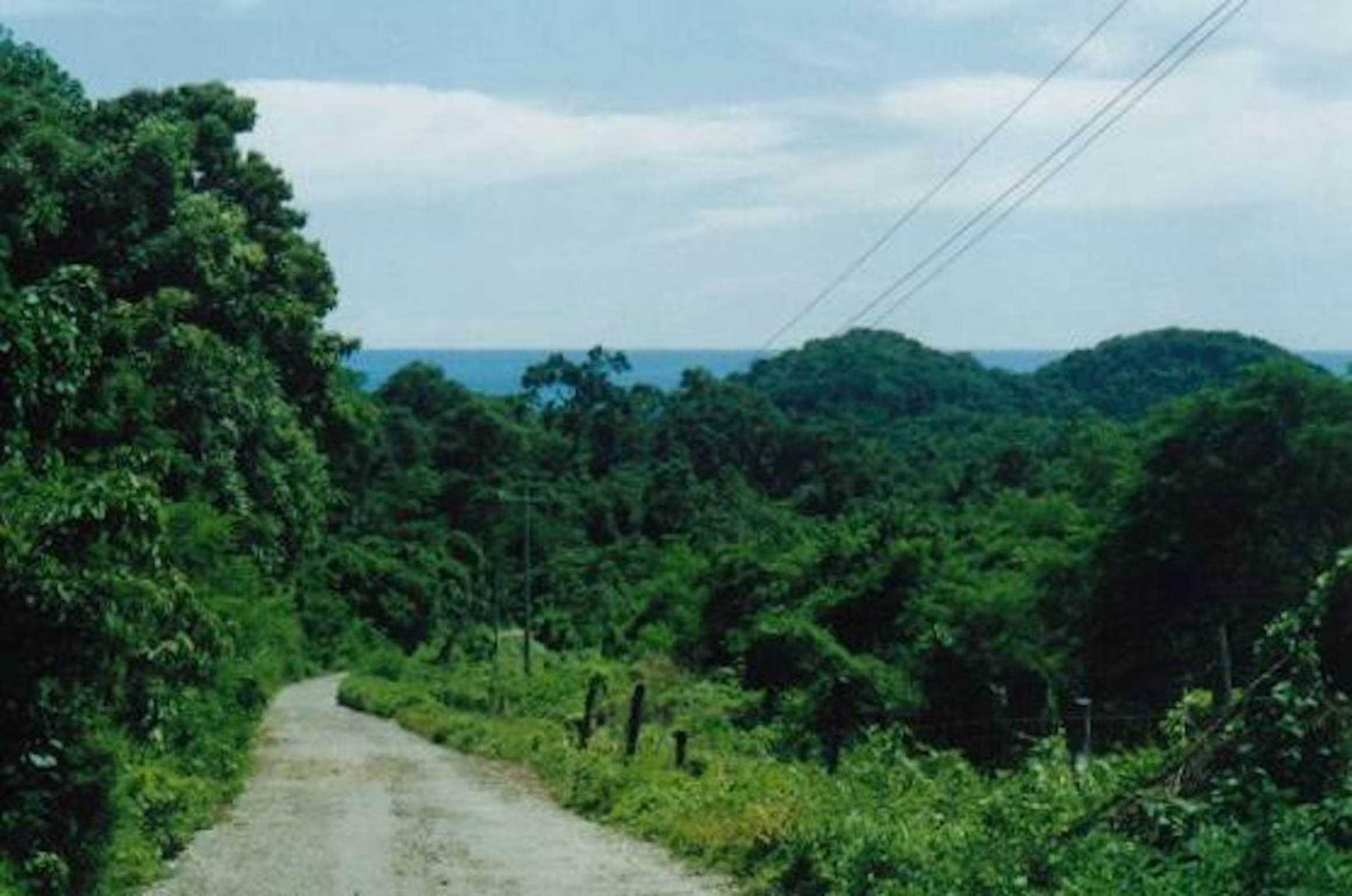
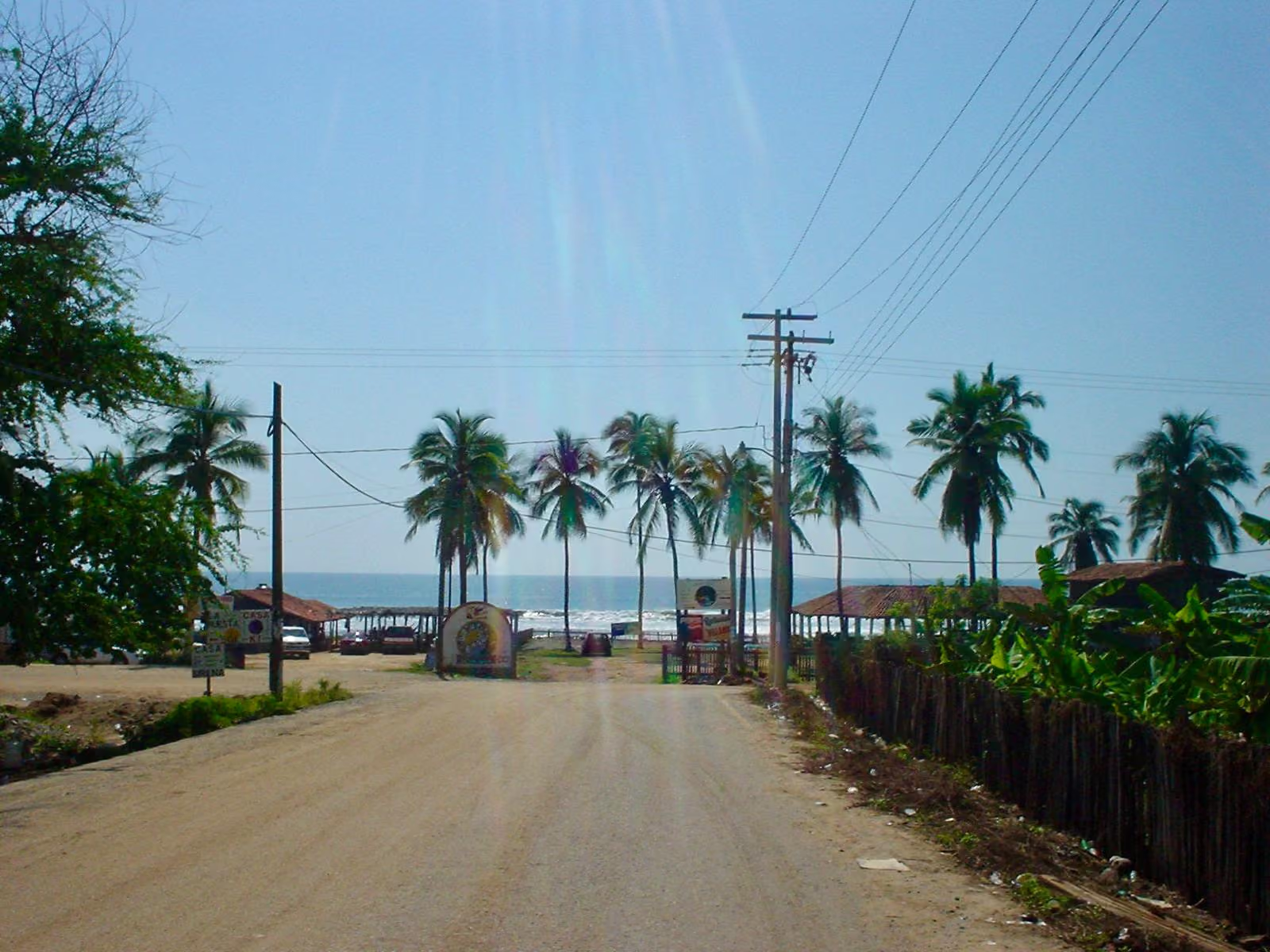
Kim: It was 2003. I came here for a surf trip; a friend had told me about it. To me, Troncones felt different—the rhythm of the village, the rhythm of daily life, the connection to the weather, to the ocean, its rustic-ness. Troncones was really off the beaten path then. It felt new, like discovering something no one knew about. The beach road was dirt. It was the wild, wild West. It took over an hour and a half to get to Troncones from the airport. I still remember coming down the hill for the first time—I remember the exact moment I saw the ocean—and I instantly wanted to be here. I came to surf, but it wasn’t about surfing. It was incredible. That still happens to me when I drive down the hill into town. I see the ocean and I remember that feeling. I don’t have words for it.
LOT: Where did you stay on that first trip?
Kim: Casa Delfin Sonriente. There weren’t many places to stay. I remember eating at Costa Brava. I remember Mi Casa es Su Casa [now Hotel Tres Santos]. I remember surfing Saladita. I remember meeting Wendy Page. It was one of her first trips here. I remember the rhythm—it was different, like New Orleans is different, like New York is different—Troncones has its own rhythm that I just clicked into. It’s like my metronome now. I love knowing that that tree is moving a little bit more now than it typically does, so it’s probably going to rain. For me, to slow down is such a gift. Every day is different. And since I’ve started to explore more, I’m finding that throughout Mexico, many things I initially thought were rustic and analog and simple—well, there’s nothing simple about Mexico; Mexico is so rich and amazing—I’m finding new depths in it and I’m just in love with it. I’m psyched to learn more.
LOT: What brought you to Troncones full-time?
Kim: I built in 2004, after I first came here, so Troncones has been a part of my life for a long time. About ten years ago, I had two different cancers at the same time. Pretty good cancers, meaning bad cancers. I left work on medical leave, and I went through a bunch of treatment. I was in a specialized hospital ward where there was no fresh air, no flowers. People could only come in wearing a mask. It was a controlled environment because the treatment was basically inelegantly killing everything in me, hoping to kill the cancers. Going through that experience was a fast track to “I want to touch things. I want to be outside. I want to be connected to the rhythm of the seasons and the tides,” and all that. I needed to get out and be able to get my hands dirty.
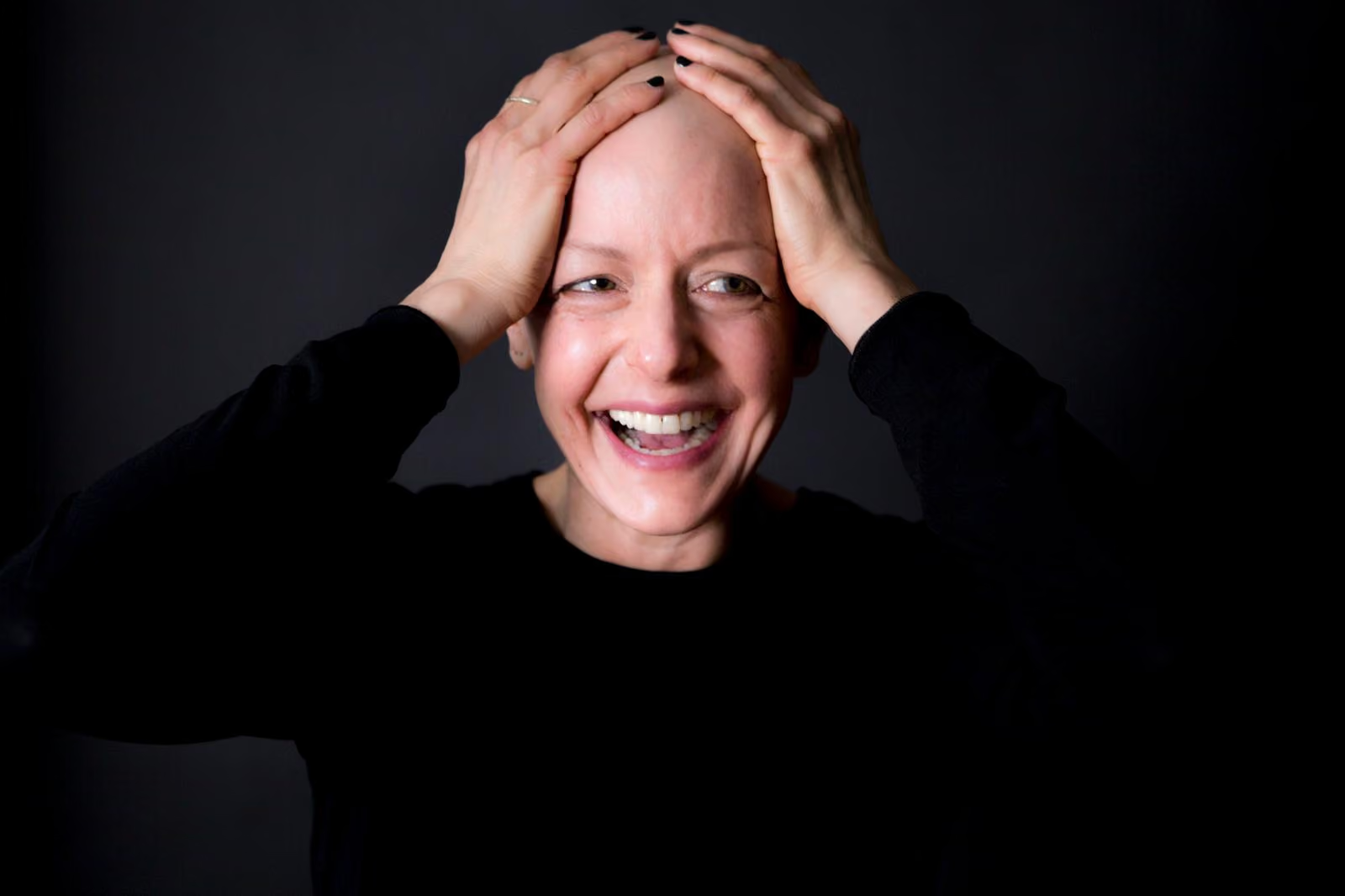
My cancer treatment was about six months long and when I was out of the hospital and was allowed to get on an airplane, I came here immediately. I had no hair. I had no eyebrows. I came here and I was like, “All right, what’s it going to take? What’s it going to take for me to be able to live here?” And I just started working backwards. I have a son, who’s now 25. He was in high school. I knew I wanted to stay put with him through his schooling. So, I asked myself, “How do I get from where I am right now, being a single mom, working full-time in Portland, Oregon to being able to live in Troncones.” That was my rational. It was like, I’m alive and I want to live. And, also being pragmatic, I knew that it’s hard to make money here, and living here can be challenging. The rhythm is very different from the work-world I was in. When the pandemic closed everything down, the company I worked for went remote. I didn’t step foot in the office again, and retired in 2022.
LOT: What’s Troncones teaching you?
Kim: A million things. It’s kept me approaching things like a beginner and I love being a beginner. I’m an expert at being a beginner. It served me well as a designer, an innovator too, to look at things with fresh eyes. Living in Troncones, and being a beginner, keeps me curious—everything being fresh every day. I’m still putting A plus C together and prototyping my way forward. At this point, I’d love to be a Spanish expert. An expert surfer would be great, too.
LOT: What sort of things have you gotten involved in in the community?
Kim: Once I was based here, I dove into everything I could find here and kind of saw what stuck. One of the first things was joining the board of Las Hermanas de Troncones, an amazing organization I know you guys have done a bunch of articles on [links at the end]. I came to it with a fresh perspective and lots of energy. I learned so much. I met with people and I was able to listen for insights, just like I did for work. After talking to local parents, teachers and kids, I suggested, “Why don’t we try a learning center? The kids have nowhere to go after lunch, parents need to work and the teachers are available. What if we turn the space that’s doing sewing classes into a learning center where the kids could come for free after school?” The rest of the board agreed, so I dove into that, which led to la biblioteca (the library with the butterfly mural on main street). That’s something the older kids said they wanted and now it’s become a center for them, a place they can do projects, collaborate, a safe space that’s supervised. I got really involved in starting those programs and also a college scholarship program. After that, I joined the board of APCAT [Asociación Para la Conservación Ambiental de Troncones, a.k.a. the Troncones Property Owners Association]. I saw it as a way to continue to collaborate with the community and create positive change in a totally different way. I’ve been on the APCAT Board now for three years. This year, I’m the co-vice president, along with Natalie Clark.
LOT: What sort of community programs are you putting together with APCAT?
Kim: This is really what I wanted to talk about—instead of me. You know how I mentioned social justice? Well, I grew up as the second-generation of Holocaust survivors. On my mother’s side, basically everyone except her parents were killed. They wouldn’t talk about it. I respected that and as a kid they impressed upon me how important it was to be grateful, to be humble, to make sure to use my privilege for good, give others a chance, especially when they look and act different from me. That sort of snowballed for me, the idea of working for the good of the group, being inclusive, not “us against them”.
Ok, to get back to your question about APCAT: as I did in my design career, I asked, “What do you see as a gap?”. And as I engaged with the community, I discovered the lack of emergency medical services and how at-risk the community is—if someone has a cardiac event, a life-threatening injury, we’re 30 minutes away from a hospital and we do not have advanced life support here. When people are living in multigenerational families like they are in Troncones—and transportation is a barrier, time is a barrier, health checkups are a barrier—emergency services are essential. They need to be in place for the health of the entire community. It’s everyone’s right to be healthy, to have health care. All of that led me to the Red Cross (Cruz Roja Mexicana) and its delegation in Zihuatanejo. It’s an amazing global organization. Everyone has heard of the Red Cross, right? They do disaster relief. Yes, and here in Mexico, it’s a critical part of everyday life because the safety net of emergency services doesn’t exist, especially in rural communities. Cruz Roja is sanctioned by the Mexican government to provide those essential emergency services. And in speaking with just about everyone, the vibe here is like, “Yes, 100%, it’s a great organization”. You don’t hear that a lot, right?
LOT: Do you have the support of La Unión?
Kim: They haven’t committed to anything specific just yet, but they are supportive. As are the local comisarios (village administrators) and comisariados ejidales (ejido representatives). We’ve started to explore how to bring essential and emergency medical support into the community, so that everyone can have advanced full service 24/7—that’s IV meds, defibrillator, resuscitation, triage—all the things that you need to get you through that half an hour alive. I started a committee through APCAT, but it’s a community-wide initiative.
LOT: Does 911 work here?
Kim: It does work here. That’s the emergency number, or you can call Cruz Roja Zihuatanejo. But by the time they get here, it could be too late. That’s the problem. And the municipal ambulance is better than nothing, but it’s only part-time basic care when available, since it serves the whole municipality, including La Unión, Saladita, Buena Vista, et cetera. It just happens to be stationed at the highway entrance to Troncones.
LOT: That’s 10 minutes away, on good days.
Kim: And a white-knuckle drive for the ambulance, and then they have to find you. Our roads don’t have names and the houses aren’t numbered. And if you don’t speak Spanish, there’s time lost explaining yourself. Right now, the web of support is too thin. We have a hodgepodge—Benita at the pharmacy is fabulous; the ambulance guys are fabulous; the doctor at the clinic is fabulous. But they’re all part-time. And they aren’t first responders, paramedics.
Having trained first responders with triage advanced life-support skills and equipment, embedded in the community 24/7 will literally be a lifesaver. These are the kinds of things we’re working on with Cruz Roja. Imagine having full-time, round-the-clock, world-class emergency services here—and training courses, youth programs and volunteers—embedded within the community. How amazing would that be for everyone? For residents, visitors, workers and tourists?
LOT: What do you miss of your old life?
Kim: I miss my son. I miss being around my son. That’s number one. Also, at times, I realize the level of my intensity for causes, projects and whatever can be a little much here, and I miss having that matched with a team and the resources to make things happen fast. I miss that, too. But only sometimes.
LOT: What’s next for you? What are you excited about?
Kim: I’m excited for whatever comes next. Excited to explore. Chiapas. Rosalía in Mexico City. She’s incredible, her new album LUX is like a rock opera. Vietnam with my son. But right now, I’m excited for rain. I love this time of year. Every moment up until November, we just don’t know what’s going to happen. That keeps me excited for every moment.
LINKS
Las Hermanas https://www.laondatroncones.com/know/las-hermanas
APCAT https://www.laondatroncones.com/know/apcat
Cruz Roja Zihuatanejo https://cruzrojazihua.org/
CRUZ ROJA MEXICANA
What It Is
The Mexican Red Cross is a non-profit, humanitarian organization founded in 1910 that provides 24/7 emergency medical services, disaster relief, and healthcare to people in need throughout Mexico. It acts as a primary first-responder, operating ambulances, clinics, and training programs supported by volunteers and donations. The organization is also heavily involved in disaster relief.
What It Does
Core Services: Offers 24/7 emergency ambulance services, disaster response, and medical care, as well as dentistry and psychology in some locations.
Authorization: In many areas outside major cities, it is the only authorized entity to provide first aid for accidents or crimes.
Structure: It is a voluntary, non-governmental institution affiliated with the International Federation of Red Cross and Red Crescent Societies.
Funding: Relies on donations and volunteer work.
Key Locations: Operates across Mexico, including major branches in cities like San Miguel de Allende and Tijuana.