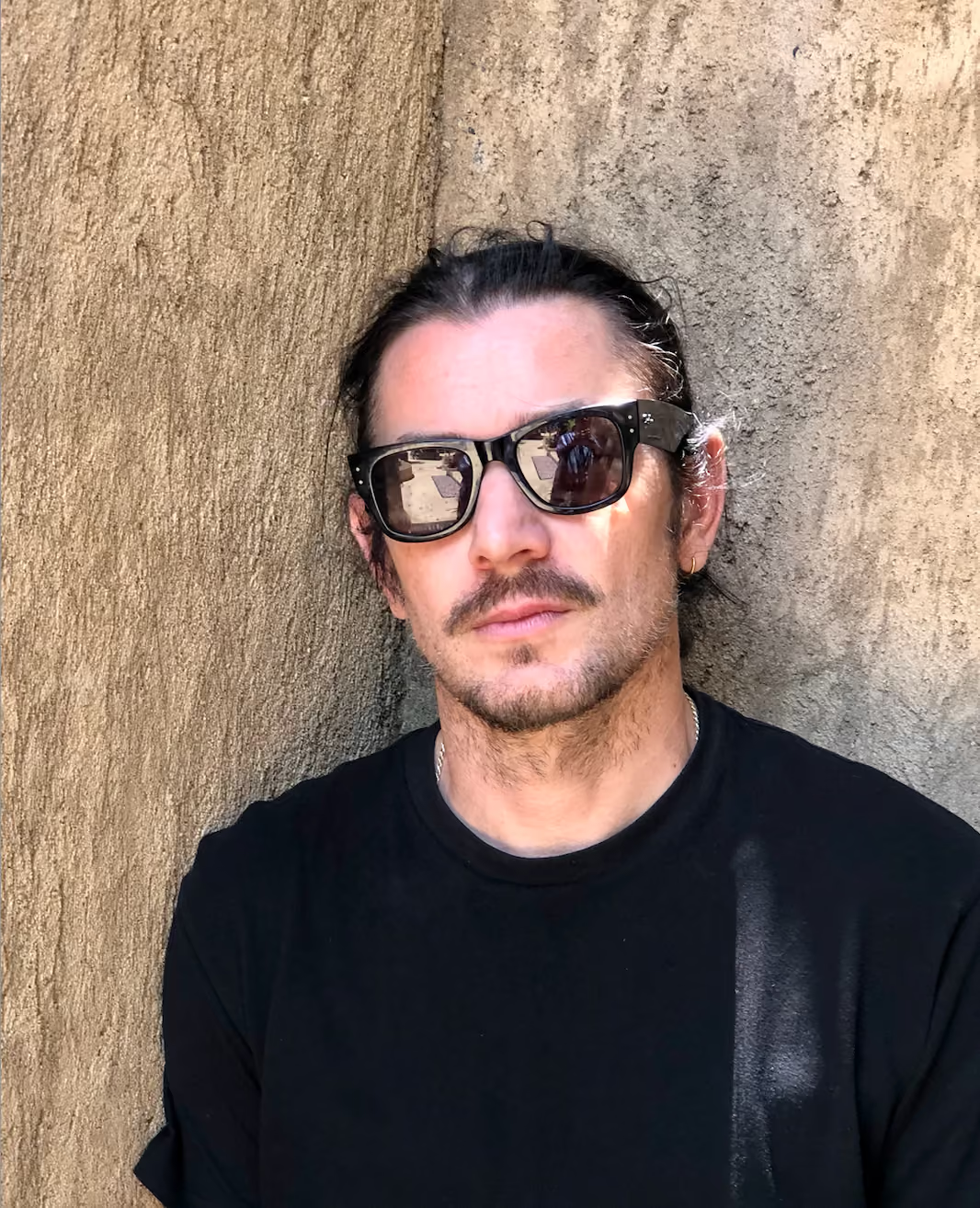
Peter Max-Müller: We’re More Social Here
A stylist, designer and entrepreneur reveals the mysteries behind Casa Saint George and what he does when he gets to Troncones
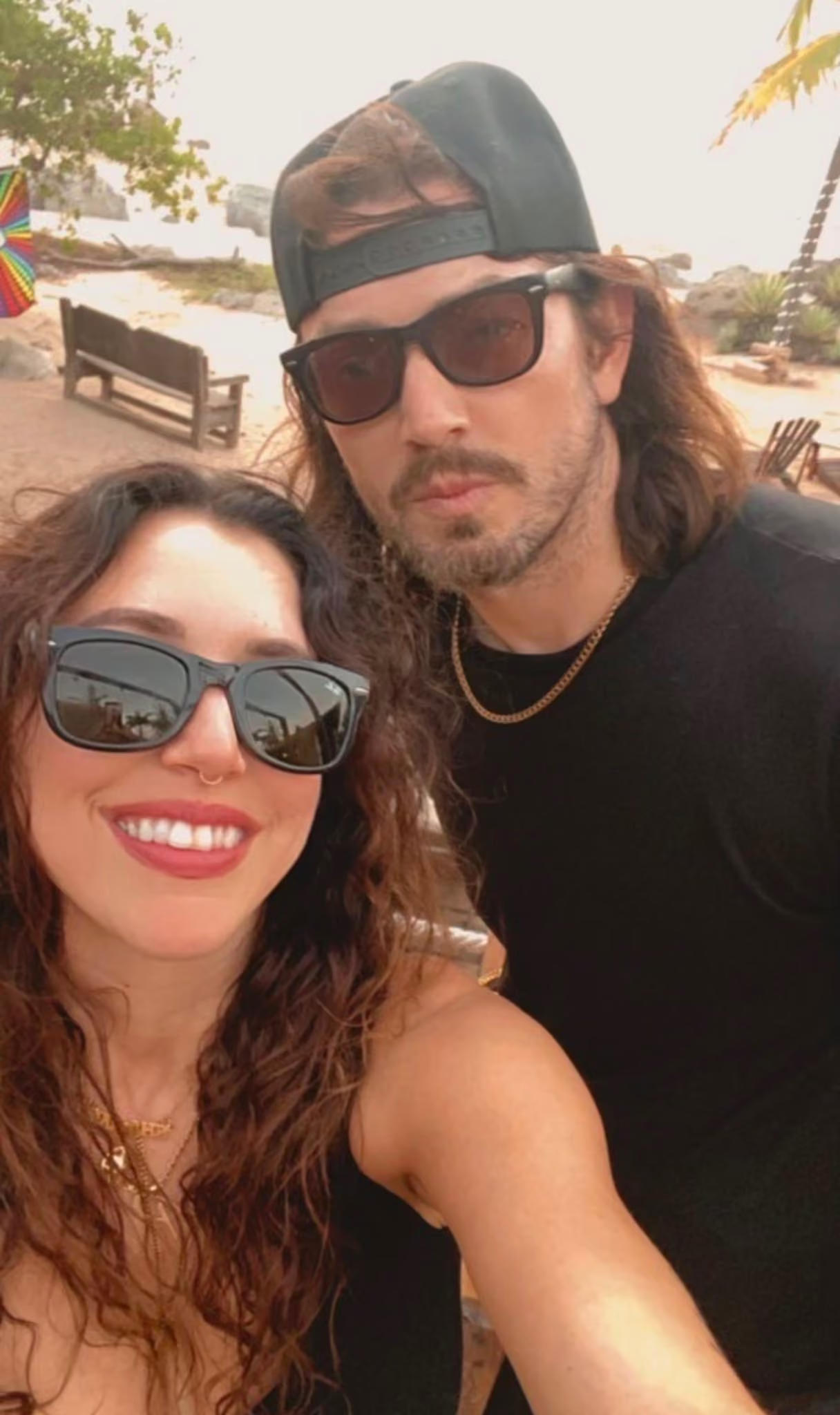
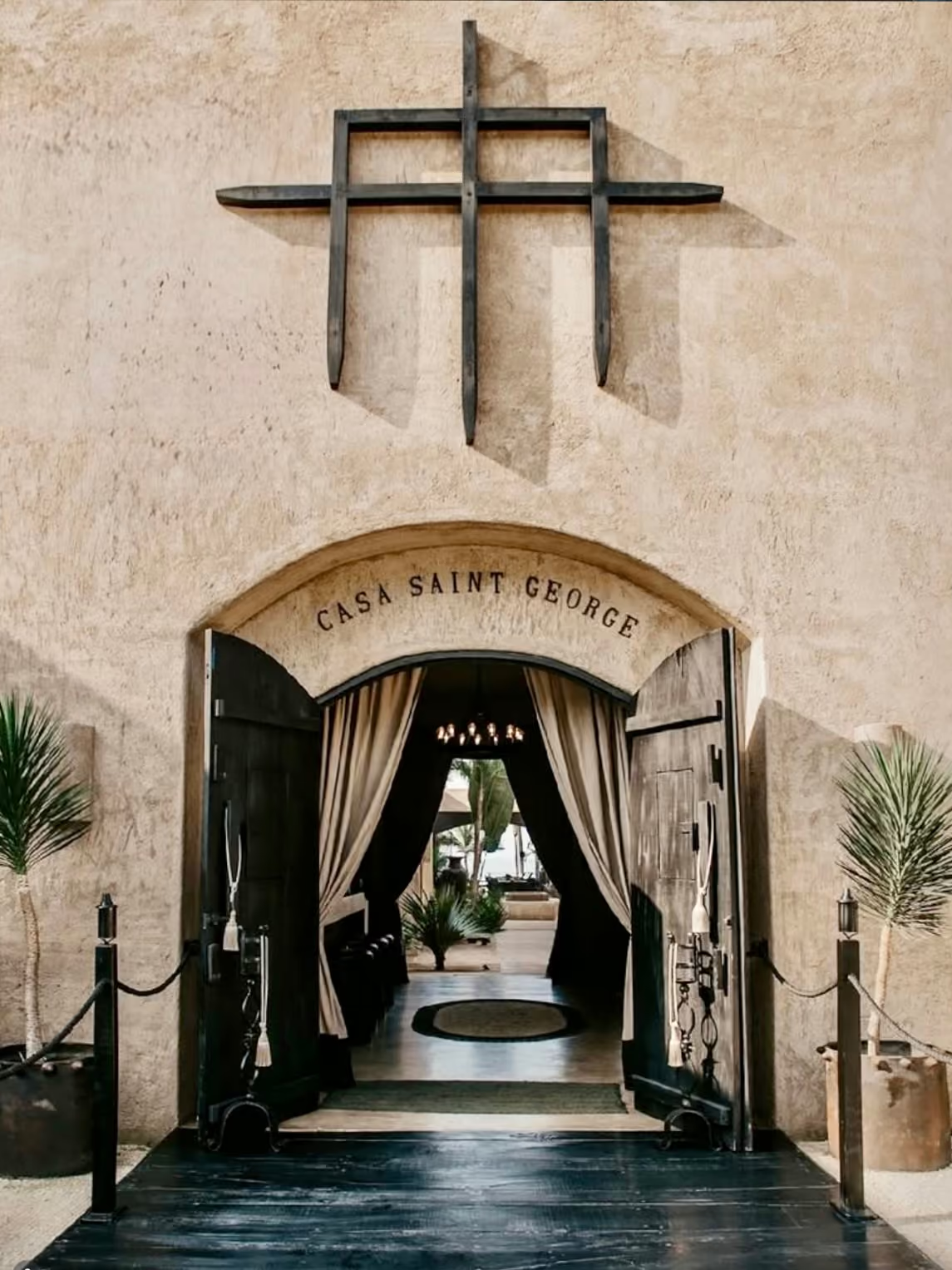
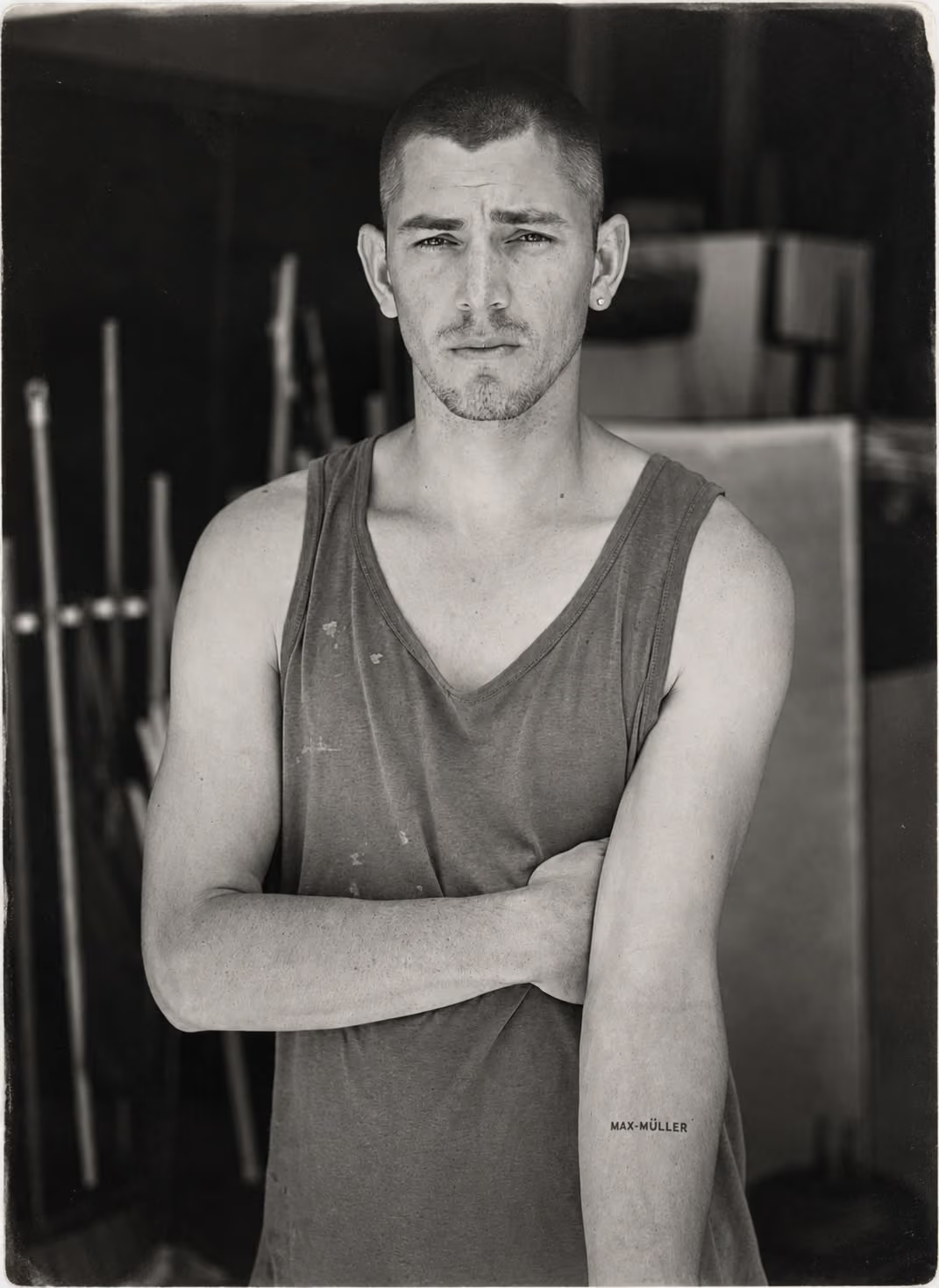
I saw the wall go up. We all did. A good 4 meters tall, sand-colored, with a wide, arched entryway. What is it? A house? A hotel? When I looked at it from out in the water, whatever it was was even more mysterious. Its design blended into the sand and the palm trees, and made it somewhat invisible. And then the name went up on the street: Casa Saint George. And with it came a huge triple-bar cross. All very goth, all very different—at least for Troncones. After it was open a while, I heard about the nightlife there being interesting, that a younger crowd was coming to the beach-and-poolside bar. I went to see what Casa Saint George was all about one afternoon, and when I walked in and immediately felt like I’d found a sanctuary, something out of Miami Beach or a Hollywood spy movie, an elegant cool. Who was behind this? I had to know. Meet Peter Max-Müller.
%2017.27.38.avif)
.avif)





.avif)
%20(Spanish)-2.avif)
LOT: How did you come across Troncones?
Peter: I read an article about Julian Schnabel and he mentioned a beach town in Mexico that he lived in. I don’t remember the name of the magazine, and he didn’t name the town. It was during COVID. I was looking to buy in Mexico at that time. I was going to buy a place in San Miguel, a house, but it fell through at the last second. So, my girlfriend Shannon and I started looking at other places in Mexico. That’s how Troncones came on my radar, I guess.
LOT: What were your first experiences in Troncones?
Peter: The very first time we came to Troncones, it was right after the house had fallen through. I think we were in a little bit of a bad mood, but we didn’t really want to go home, back to L.A. Like I said, Troncones was on my radar and we ended up staying at Present Moment. It was summer, like mid-July. It was really hot, and we didn’t have any air conditioning. We didn’t really explore the town that much. We were a little confused by Troncones, to be honest. But when we left Zihuatanejo to fly back to L.A., we found it was an easy flight. After we were home for a few weeks, I was thinking, like, “I don’t think we really gave Troncones enough of a chance. We should really go back.” We came back maybe a month or two later, and we rented an ATV. We explored the town and we stayed somewhere with AC, which helped a lot. It was then that we just fell in love with Troncones, and we thought, like, “Let’s explore it more, and maybe buy a house there instead of San Miguel.”
LOT: How did the Casa Saint George property come up?
Peter: Dewey [McMillin] had shown us a few houses for sale. There was one we almost put an offer on, but we weren’t sure—it wasn’t exactly what we were looking for. At that moment, there weren't a lot of houses for sale. And then, someone we were talking to, I forget who it was, said, “Oh, you should just build your own house”. Another broker had shown us some different plots of land, and, at the time, the business in L.A, was doing pretty good. And I thought, “Okay, maybe we could try and do this—buy a piece of property on the beach, for not a lot of money.” I mean, not that it was cheap, but compared to L.A. prices, it seemed right. It was just kind of a crazy idea—we were going to build a house. That was the original idea. We were “just” going to build a house.
LOT: What inspired Casa Saint George?
Peter: We’d stayed at a friend’s house in Puerto Escondido, where all the rooms were separate. We definitely had that idea, that if we were going to build a house, we wanted all the bedrooms to be sort of separate, so everyone had their own living space. Our friend’s place didn’t feel like a traditional house. We thought it was kind of cool how there was a common area, but everybody got to go back to their own rooms, their own area, where you’re not bumping into people in the hallway in your pajamas. We liked that sort of thing.
We started thinking more about that, and then we started talking about what if we made it a bed and breakfast. We were consciously thinking we’d like to rent it out, and there’s always been a dream in the back of my mind to have a little boutique hotel. And so, we started looking more into the permitting, like how hard would it be to get a liquor license, things like that, setting up the more technical aspects of it. Then the idea became, “Well, if we build it this way and it goes terribly badly, then we’ll just make it a house, a big house”—that we could make the restaurant part back into a living room, and have a kind of private estate sort of thing.
LOT: How do you describe its design and its influences?
Peter: We used to go to Tulum a lot, so we liked a lot of those elements. And I like brutalist architecture a lot. Mostly, we had a collection of photos we’d put together like a mood board. That guided us. We wanted it to feel “old” in a way, like it had been there for a period of time, which I don’t think we quite accomplished quite as much as I would have liked to. That was much more challenging than I sort of realized it would be. The goal was for it not to look like a new building, and we tried to make it a shape that would fit the property. I wanted to be conscious of next door [of Lo Sereno] not to block what they have and to fit what we’re doing around their buildings, if that makes sense. I’m not sure Rafael knows that, but we definitely tried to really to make sure nothing was blocked or disturbed from his property. The other side of the property was a little different—it was sort of empty, an older house. We sort of figured, somebody’s going to probably be building a new place there at some point, so we wanted to give ourselves some space on that side.
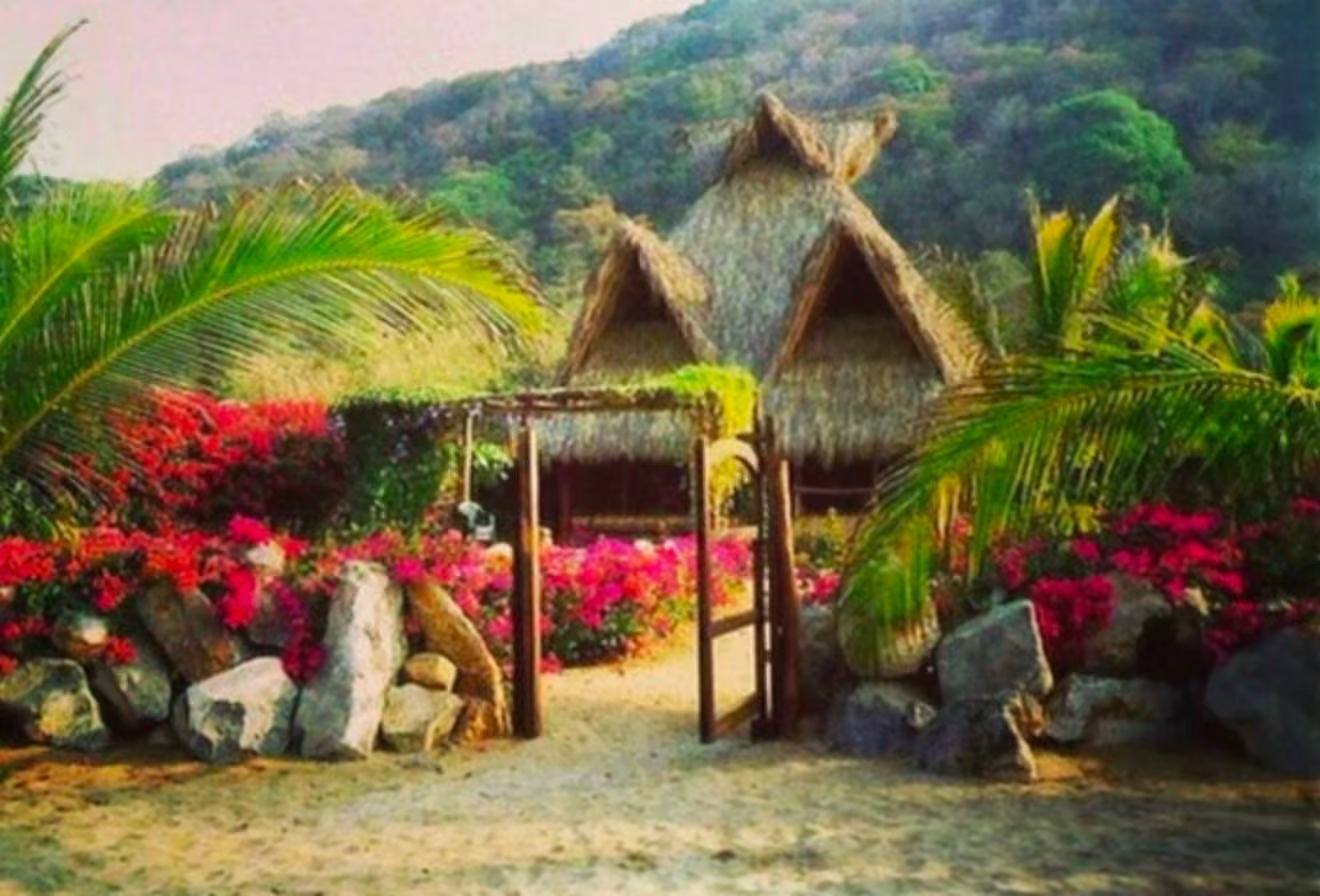
When we bought the property, there was like a little palapa in the middle. We went through a bunch of designs, trying to figure out how we could keep the palapa, you know, find a way to build around it. The palapa was smack in the middle of the property. It was full of bats, it was terrible, but we still went through a bunch of different designs of how to keep it. It just ended up making no sense.
My favorite thing about the property now is how when you walk in the front door, the buildings are split—the two middle buildings are split so you can kind of see directly through to the pool and the ocean. One day, we were sketching out how to do the bedrooms and we realized if we split them, it would work the best. After we came up with that, everything just kind of fell into place sort of.
LOT: What’s the story behind the name?
Peter: That’s funny because everybody thinks there’s a big story behind it. But the truth is Shannon’s dad is named George. We were messing around one Christmas, calling him Saint George. We thought it would be sort of kind of funny, tongue in cheek, and as we talked about it, Casa Saint George grew on me. I thought about doing a name in Spanish like the other villas in Troncones, but sometimes those names confuse me and I usually don’t remember them. I wanted something that would stick in people’s head a little bit. Something different. Casa Saint George.
LOT: What’s with all the crosses?
Peter: I have a lot of cross tattoos, and my grandfather was a reverend canon in England [a title given to a minister who serves as an advisor to a bishop]. So, I sort of grew up religious, not super religious, but he was very religious. I guess the crosses are a bit of a nod to him. I really liked him.
LOT: People told me you were British. But Muller is a German family name. What's the story behind your last name?
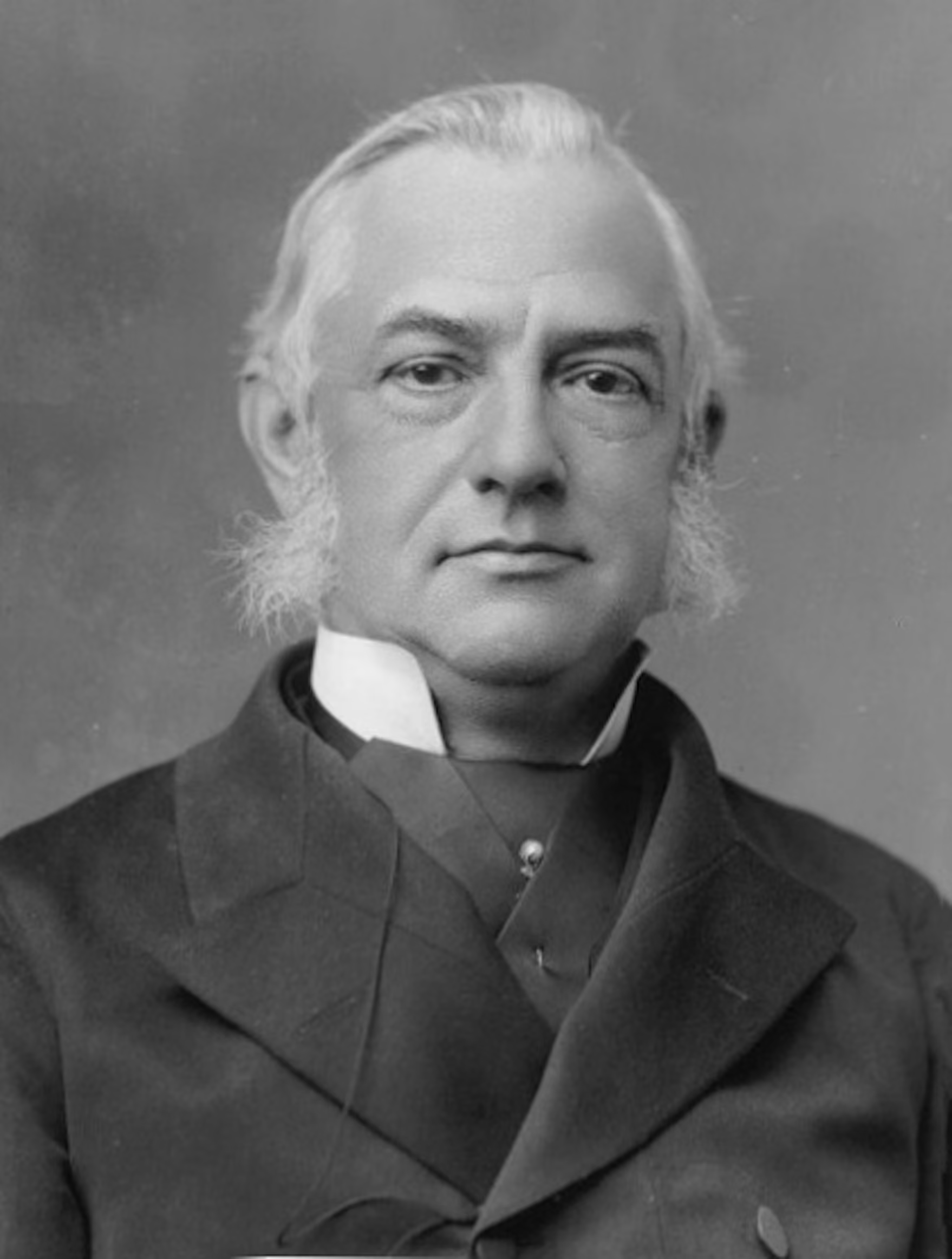
Peter: That one, you might want to look up—Max-Muller [link at the end of the article] My great-great grandfather, Friedrich Max Műller, was a philologist, a linguist, and a renowned scholar. He helped bring the ideas of the East to the West, translating the works of Vedic [ancient Indian] culture, books like the Upanishads, into English. He was one of the first to do that. That’s kind of the family I grew up in. I was born in England.
LOT: Where did you grow up?
Peter: In London, and in New York.
LOT: How long were you in England? Until what age?
Peter: I moved to New York when I was seven years old, to north of the city, in Westchester, to a town called Katonah. It was a place where the dads got up every day and took the train into the city to go to work. There were a lot of dirt roads, not a lot of police. It was hard to get into trouble. I remember there being volunteer firemen and I think it was volunteer cops. It’s a lot different to live there now—more people, more houses—it’s really been built up.
LOT: What was the family business? What was your dad doing? And your mom?
Peter: My mom was mostly a stay-at-home mom. And my dad did commercial real estate. He was the reason we moved to New York, because he worked for a company that was building office buildings, whole city blocks, in Manhattan. It was called Forest City Enterprises. They’re not around anymore, but at one time they were among the biggest developers in New York City.
My mom’s dad was the one who was a reverend canon. He was a World War II veteran. A weird story about him—he was one of the first persons captured in World War II. Pretty crazy. After the war, as a reverend, he did a lot of speaking tours, lectures about life as a prisoner of war and that sort of thing.
LOT: What did you get into doing as a kid?
Peter: Where I grew up in Katonah, we were just regular kids doing sports, riding our bikes, just playing—it was pre-Internet. We didn’t really know much outside of where we were. We only had four TV channels. But then, when I was 17, we moved to California, to Huntington Beach. I did my senior year of high school there, in California. I feel like that’s when life sort of began for me. Before that, I knew what was on my street, my little school. I didn’t know a whole lot.
LOT: How did you adjust to that?
Peter: Like I said, it was my senior year of high school, so it wasn’t a fantastic experience. But I also knew I didn’t want to stay where I was. After high school, I went to San Diego State for two years, then I dropped out and went back to L.A. I had absolutely no idea anything I wanted to do. But I got a job at Fred Segal, a store on Melrose, which at the time was like the coolest kind of place you could be or hang out.
LOT: What was the draw at Fred Segal?
Peter: While I was at San Diego State, I had a girlfriend who was really into fashion. She knew cool stuff, she knew cool bands, all stuff I didn’t know anything about. I remember feeling so “underdeveloped” in a way. And she was really beautiful, and I was kind of enamored by her. Then, we broke up. I mean, she way out of my league at that point anyway, so the fact she even went out with me was ridiculous. But I think she was the one who put it in my head that I wanted to learn more about this stuff. It was an interesting world to me, and even though I was kind of skinny, my look fit in naturally at Fred Segal.
I worked there for quite a few years, that’s even though I remember feeling like I would never get in, that I wasn’t anything close to being a trend-setter—that’s who was shopping in there. A lot of the Fred Segal customers were L.A. stylists working with celebrities, or working on TV shows and commercials. I saw that was a bigger profession, that there was a lot more money in it. There was a customer who asked me if I would ever want to assist her sometimes, and I started working with her and stopped working at the store.
LOT: Did you stay in fashion?
Peter: Well, yes and no. I worked with that stylist for a few years and then I got my own stuff, and I became a stylist, making a living at that, but it was still apartment life, with not a lot of money. Then, I got a job at Sony Music, being a creative director.
LOT: What kind of things did you create?
Peter: It was a lot of album packaging, putting looks together for people. I went on tour with some big bands for a little bit, like Maroon 5 for a while, one of the guys from ‘N Sync for a while. But after that Sony job, me and another girlfriend started this costume thing—we started a little store. I was always kind of a saver, really careful with my money. I had saved up some money and my other friends were like, “How do you have so much money?” I was like, “Well, because when I go out, I don’t spend any money and you guys spend money.” Because of that we were able to rent a little house, and she and I started the Ruby Fashion Library and it just kind of grew. That was in 2012 or 2013.
LOT: How did you build your clientele?
Peter: We both had been stylists, so we kind of knew people. And back then, it was hard to get contemporary clothing for photo shoots and stuff. There was a demand for it at the time, and we opened up and we just started getting people coming in. And then I was like, “Oh my god, we’re making like real money. This is crazy.” But now, times are changing, the entertainment industry in L.A. isn’t doing as well. It’s not as wonderful as it used to be. With AI, things are quickly becoming a lot different—photo shoots can really be made on your phone. A lot of costume houses and set places are closing down because the business just isn’t there. Because we do contemporary clothing, it’s been a little bit better for us. People are still coming to us.
LOT: Where do you live in LA?
Peter: The backside of the Hollywood Hills.
LOT: What do you like about living in LA?
Peter: I don’t even know if I really like it here anymore. I don’t think I’d be here if it wasn’t for work, to be honest. Although, it’s like one of those things—when you’re home, you go, “I’m so sick of being here”. But then, when you leave, you kind of want to come back. I’m sort of a homebody, so, you know, I’ll leave and then I’ll be like, “Oh, I just want to go home”.
LOT: Can Hollywood thrive in Troncones the way it once did in Acapulco?
Peter: Yeah, I think, definitely. Every time we have friends go to Troncones, they love it, they’re obsessed with it. I think people are wanting to discover something that feels undiscovered. Even if it isn’t. And Troncones is definitely for an older age group. I don’t know if I would have liked it in my 20s; Troncones is not like a party place. But, if you’re a couple or you’re really going to relax, it’s a great time, and the proximity to L.A. is obviously a huge plus. When people go from L.A. to Troncones, they’re like, “Oh my god, I can’t believe how easy it is to get here”. You know, [actor] Jeremy Renner is building in Zihua and [singer, songwriter, pianist] Alicia Keys is, too. I don’t know what's going to happen to Troncones. I mean, I love how it is. I love its mix of people.
LOT: What do you look forward to doing when you get here?
Peter: I’m really glad we did build a hotel because my favorite part is that we’re much more social in Troncones, talking to all the guests and all the people who come by. I’m not a surfer or a huge beach person. I really just like hanging out and talking to people. I kind of like entertaining, too, but the first thing we do in Troncones is get out on our ATVs and go see what stuff has been built or what’s been progressing. So, probably my favorite thing to do is to go poke around and be nosey, and see what everybody else is up to.
LINKS
Casa Saint George: https://www.thecasasaintgeorge.com/
The Ruby Fashion Library: https://www.instagram.com/therubyla
Max-Műller: https://en.wikipedia.org/wiki/Max_M%C3%BCller
More on Fred Segal: https://airmail.news/look/issues/2024-2-2/hollywood-ending