Raúl Muñoz Alvarado: Big Art
Architect, engineer and artist brings a set of mammoths to life in Troncones
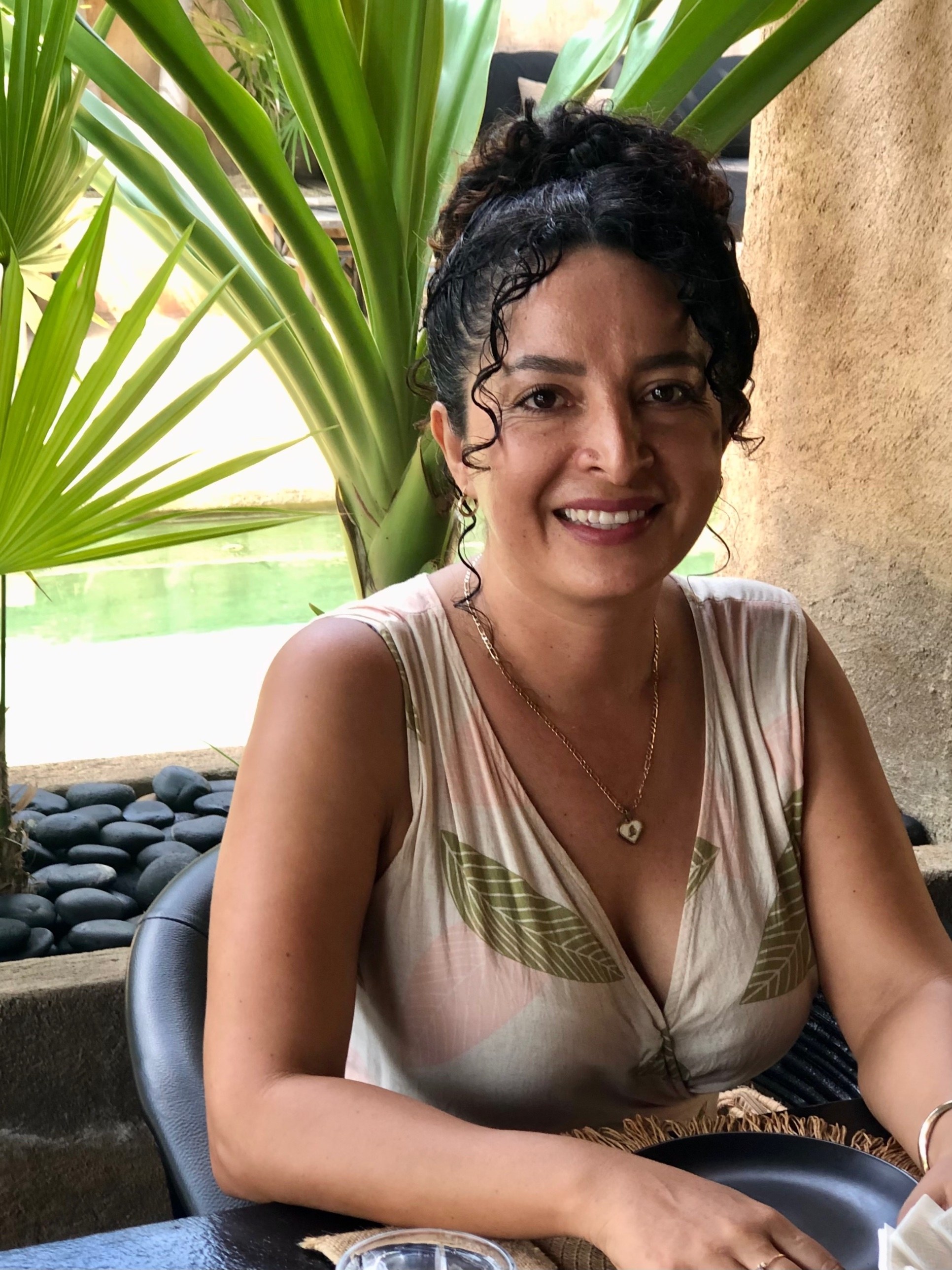
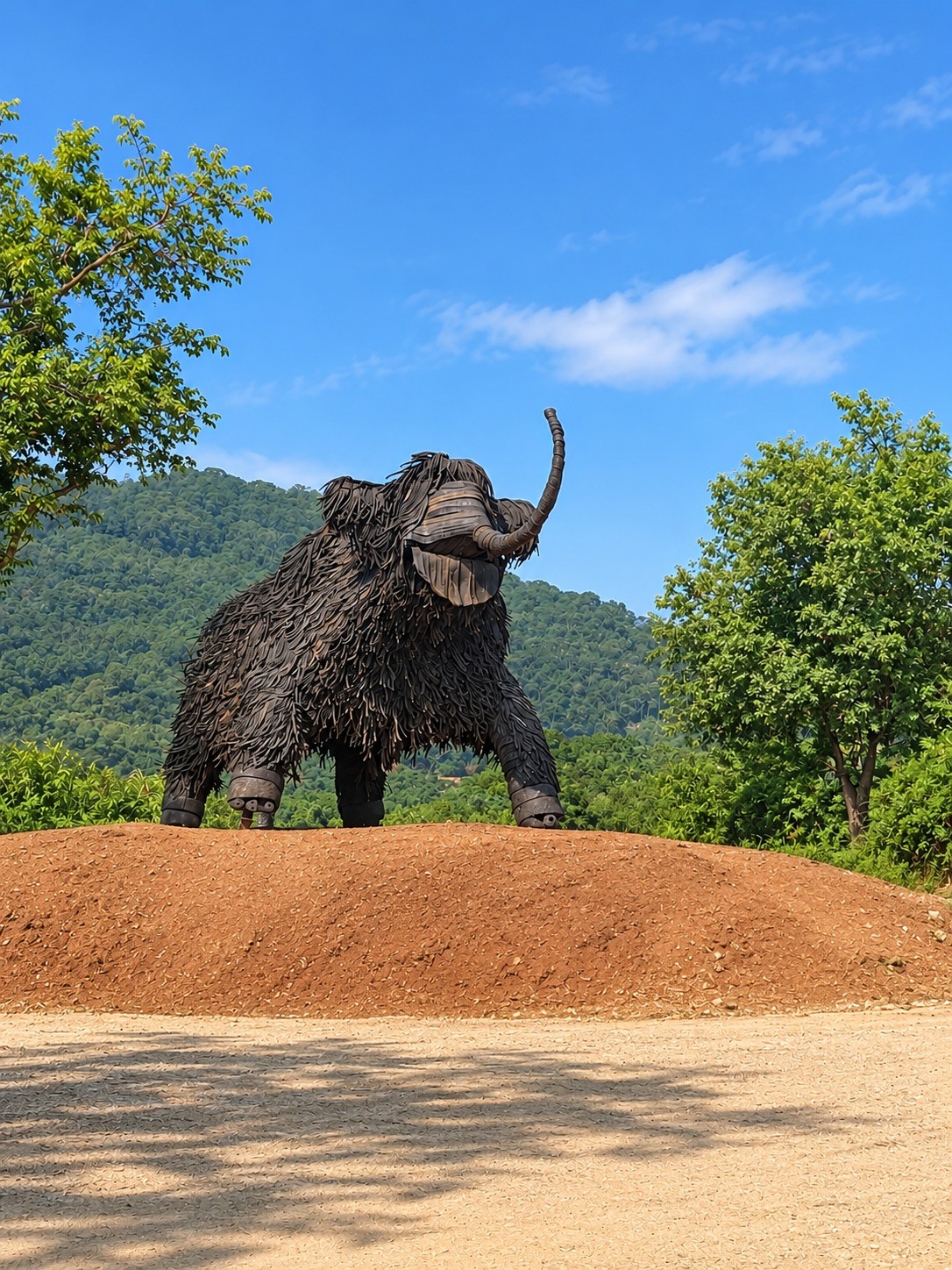
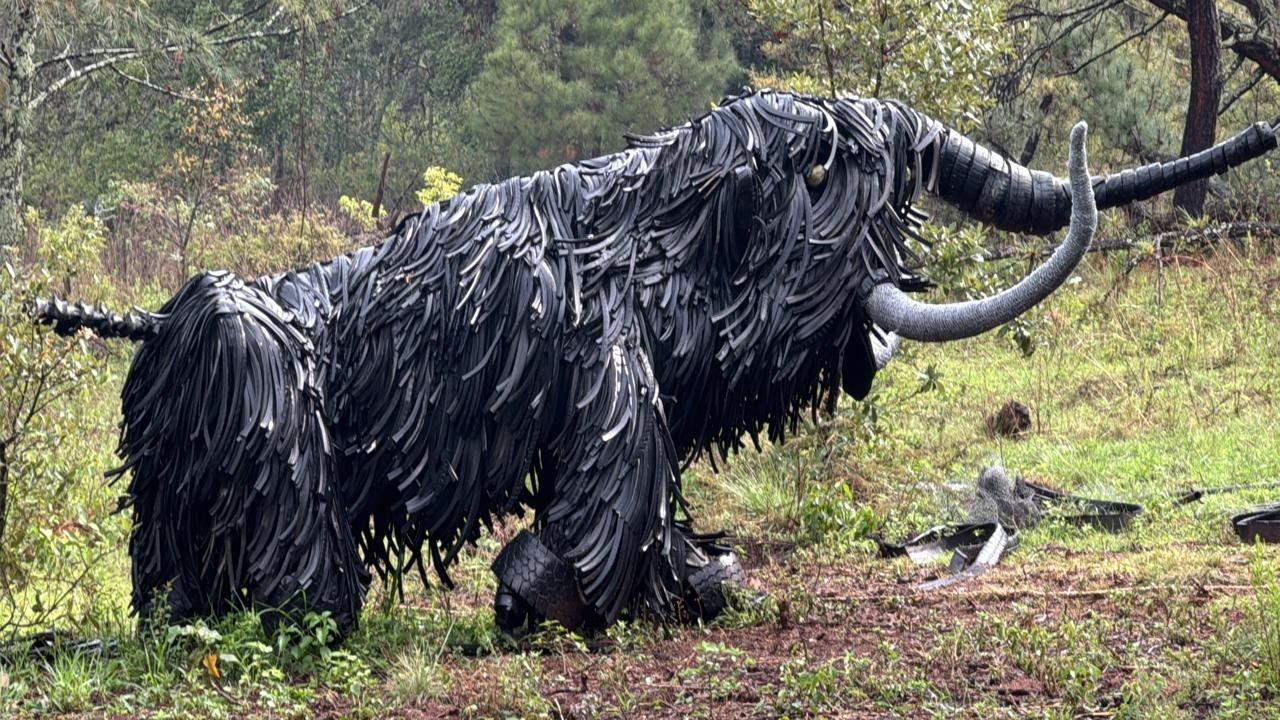
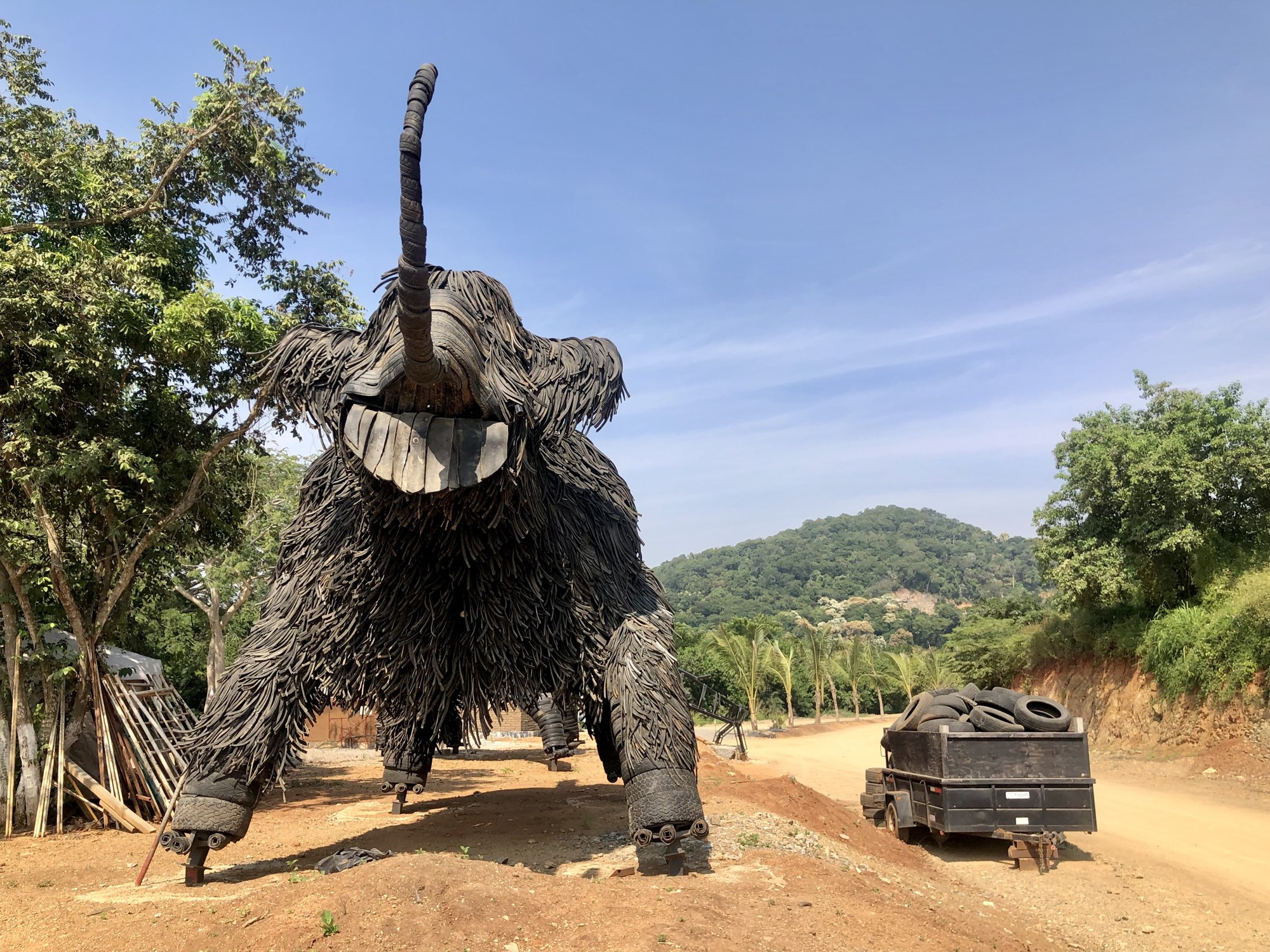
It was dusty and hot. I was pre-occupied, bothered. I needed water, but I also wanted to see what was happening at Riviera Troncones. Being in South Troncones, beyond the bridge and somewhat close by, I headed that way, wondering if it would be worth the trip. It was. As I drove past the Riviera Troncones gatehouse, a huge mammoth came into view, a creature nearly four meters tall and more than seven meters long. My thirst and irritation immediately fell away. A smile broke out on my face. I knew the mammoth would be there because I’d met the artist when he started the sculpture. He described how he would be using rubber tires to create the mammoth, and he made connections between the use of recycled materials, the mystique of the mammoth and how he experienced Troncones. I was skeptical. After seeing his creation and enjoying how alive it made me feel, I called him. Meet Raúl Muñoz Alvarado.











LOT: Where are you from?
Raúl: From the Federal District, but I don’t live there anymore. I live in Querétaro now.
LOT: What do you do there?
Raúl: I’m an artist who likes to do large-scale works. I also work in engineering and architecture, doing work on major construction projects, in Canada and the United States.
LOT: How did you come to do engineering, architecture and art at the same time?
Raúl: I’ve worked in engineering, creating architectural projects since I was young. Before that, in elementary school and middle school, I won a few art contests. That’s where art was born in me, from when I was a child—eight, nine, ten, eleven years old.
LOT: Why a mammoth?
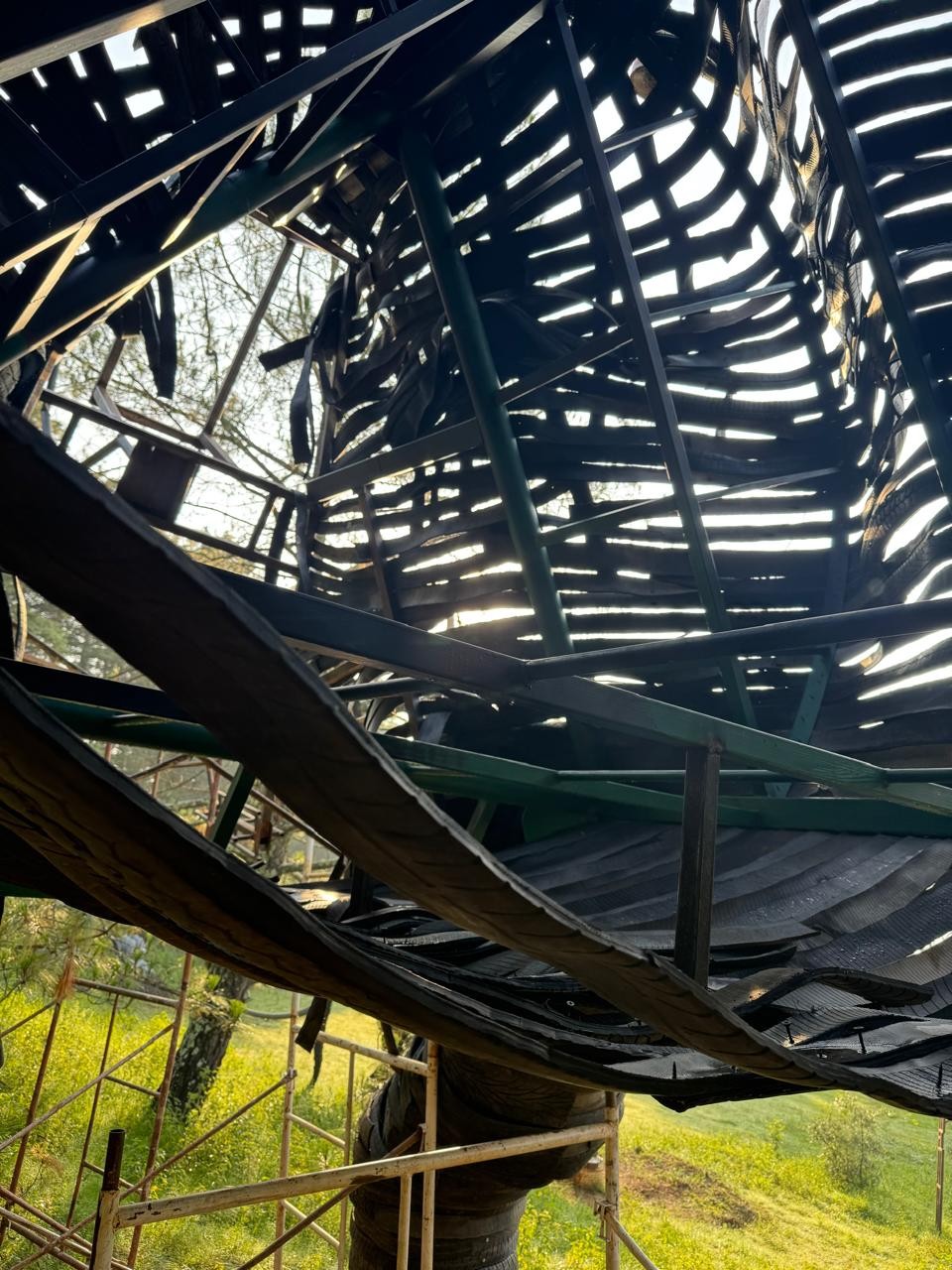
Raúl: It happens that I have a piece of land in Querétaro and people kept leaving tires there. Lots of tires. Every time I would arrive at my land and I’d say, “Hey, what the heck! Why?” But somehow, the material was calling out to me. It was being delivered to me. One day, I did an analysis of what I had, and I made a small mammoth—very, very small—like around 700 kilos. Everyone liked it. Then, I made another bigger one and then another bigger one—all made of rubber, from those tires.
LOT: Before making the first mammoth, had you made sculptures in this style before?
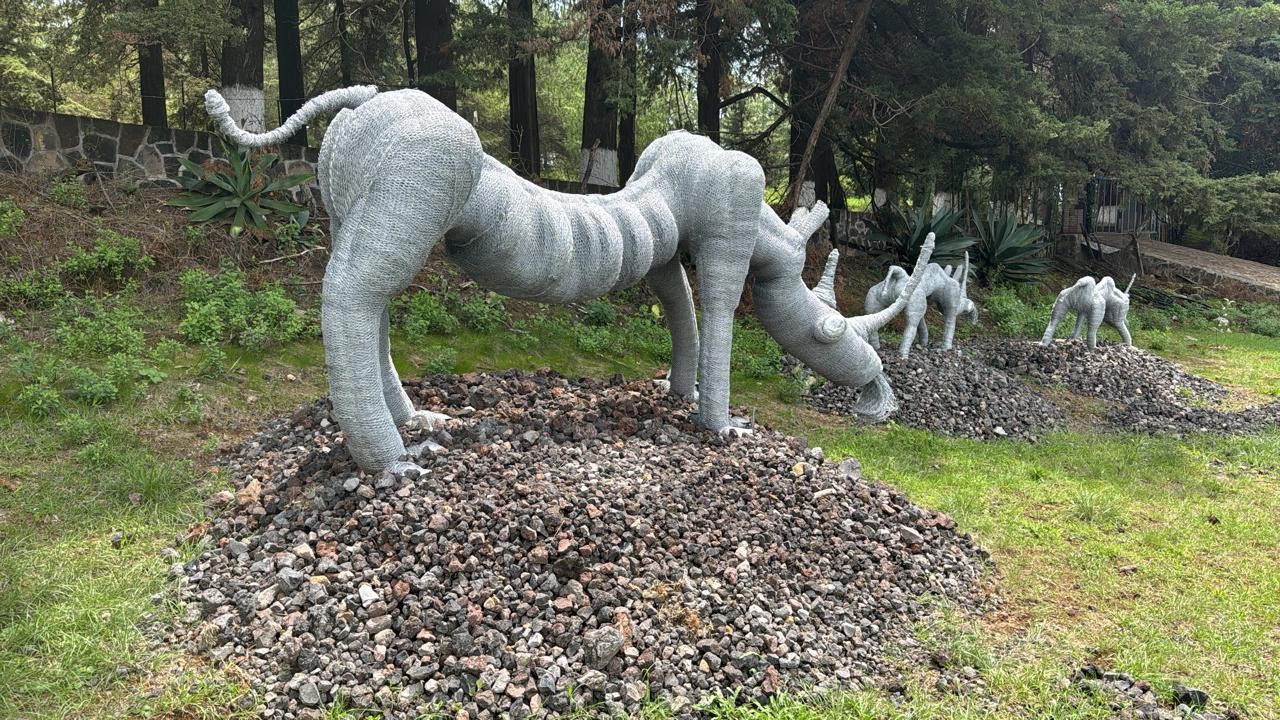
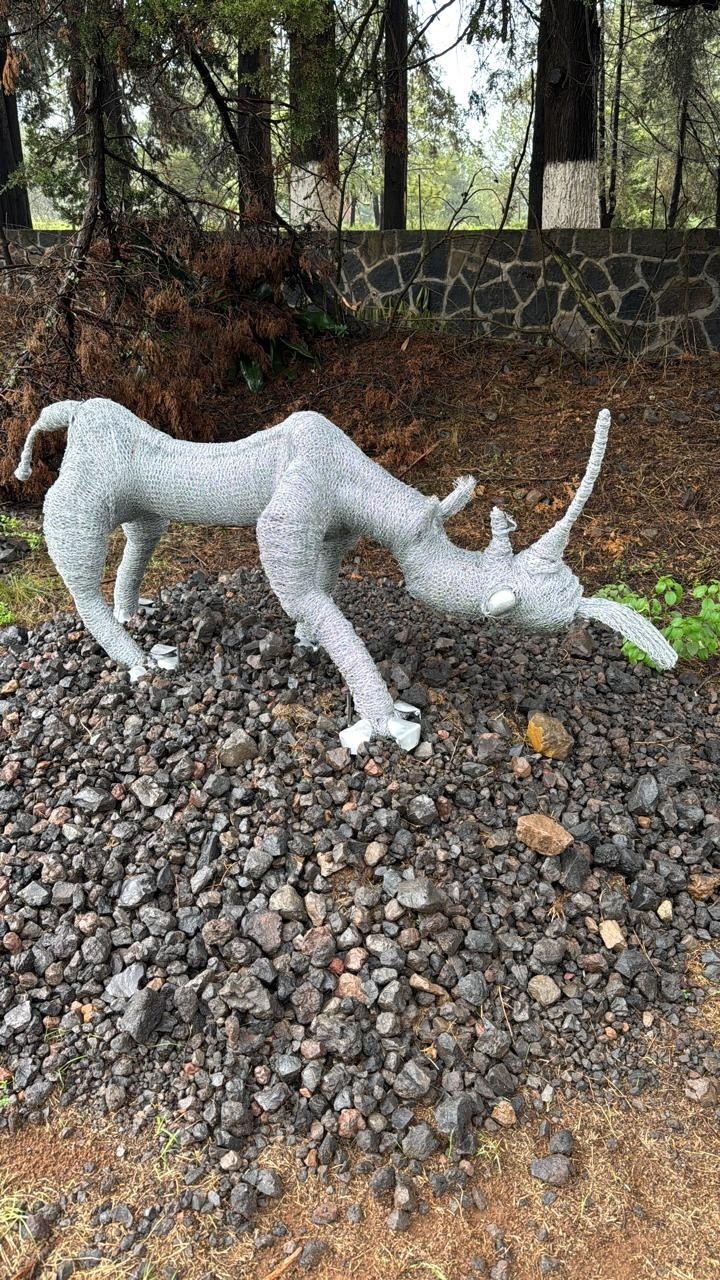
Raúl: No. That first mammoth was a study. It was practice for using the tires I had. I’d made rhinos before, using another technique, in another study, and I’d made dogs using another technique, in another study. For the mammoths, the rubber, the tires thrown on my property, really caught my attention.
LOT: What’s interesting about the mammoth?
Raúl: The mammoth has a high position in the life of the planet. When the mammoth exists, the planet has life. It’s a beautiful creature whose essential nature is to roam and explore, to be free. The world’s largest collection of mammoth remains was found here in Mexico, outside of Mexico City, on what was a mountain lake bed in another time, and is now Felipe Ángeles International Airport. The mammoth is us. It’s Mexican.
LOT: Why in Troncones? Why three mammoths?
Raúl: Troncones is a very beautiful place, a place with tremendous energy. It has the energy of a creature as positive and free as a mammoth. DRT hired me to make something special for them and I wanted to create a form, an expression, that unleashes the freedom of the universe, the love and connection between us all—a positive energy. I’m fascinated by people all over the world coming to Mexico, investing in Mexico. That, too, is positive energy. So, the mammoths came from a desire to express that energy, as well as from our history and our creativity. Like the mammoth, art in Mexico has a long tradition of exploration, of potential, of freedom. I wanted to connect to that energy, too. The number three has a special symbolism. It represents completeness, harmony, balance—mind, body, spirit—the father, the mother, the child—past, present and future. There’s also a structural strength in the number three. A combination of three can carry and hold energy. You see that in architecture, in design and in life.
LOT: Where can your other creatures be seen?
Raúl: I have work in the United States and Canada, and here in Mexico.
LOT: What kind of art did you like doing when you were a child?
Raúl: I started doing “crafts”—taking what I had around me and making figures. My family owned a hardware store and one day I made something with magnets, with the nails that stuck to the magnets. That was my first “achievement”. I’ve never stopped. Art has stayed with me my whole life.
LOT: What kind of art did you make when you were 16?
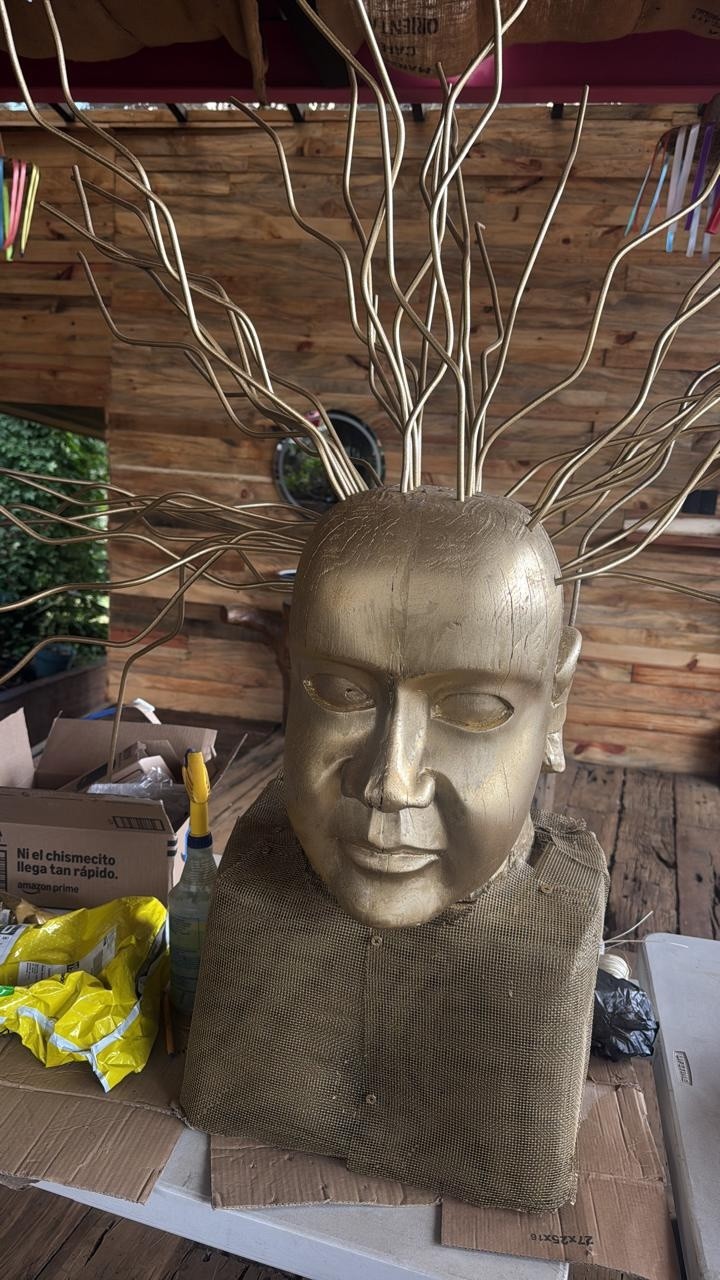
Raúl: I made masks. Sculptures of wooden heads.


LOT: And when you were around 26?
Raúl: By then, I’d started with the rhinos and mammoths.
LOT: So, you’ve been doing these creatures for a long time.
Raúl: About 25 years. I do it even though this art really isn’t easy. It’s difficult. You have to do a lot of research, especially if you want to impress someone. You can’t impress anyone in just a year or two. It takes time to give your work its meaning.
LOT: After these mammoths, where and what will you be working on next?
Raúl: I’ll be working on a jellyfish for Puerto Vallarta. And the state of Baja California wants a seahorse. And I’ve been contracted to create three mammoths for Moscow. I’m going to Moscow in February. It’s going to be very, very cold there.
LOT: Will you make the mammoths there?
Raúl: No. I handle all the material here in Mexico, and then I’ll assemble the mammoths over there. It’s a lot of planning.
LOT: If someone wants to develop their art, what advice would you give to get started?
Raúl: Recognize that it’s not easy. Art is a passion. It creates difficult and challenging situations—all sorts of excitement, disillusionment, conflict. It requires commitment. And, you have to have a way to make a living, something to live on. It’s only after you learn how to develop that passion—through studies, through knowledge, through preparing yourself, through a lot of hard work—that you can be a professional artist. It’s very, very difficult, and even more so in Mexico. But life is very beautiful, and it can give us amazing experiences if you dream and reach for them. Like living in Troncones two or three months of the year and enjoying the ocean, that’s like a dream. Like staging my mammoths in Moscow, that’s something incredible.
LINKS
Riviera Troncones: https://www.rivieratroncones.com/