Lunch with Liz
Slowing down, taking a break for lunch and meeting someone new is the essence of life in Troncones
Troncones is a bit like an island sometimes. It’s a place unto itself, attracting all sorts of interesting people. A year or so ago, someone suggested I follow lizgodefroy on Instagram, that she was a young person making her way in Troncones, that she posted about real estate, nature, mezcal-and-mole tastings—things La Onda readers should know about. It was good advice, even though it’s a little weird to get to know people that way. You find out about their habits, their social circles, but you never say “hello”. We were introduced once at a party, but it wasn’t until the community met to plan the Troncones Catrina festival that we ever had a chance to talk. I hadn’t eaten at Casa Saint George, so I invited her to lunch there. It turns out it’s one of her favorite places. Meet lizgodefroy—Elizabeth Godefroy.

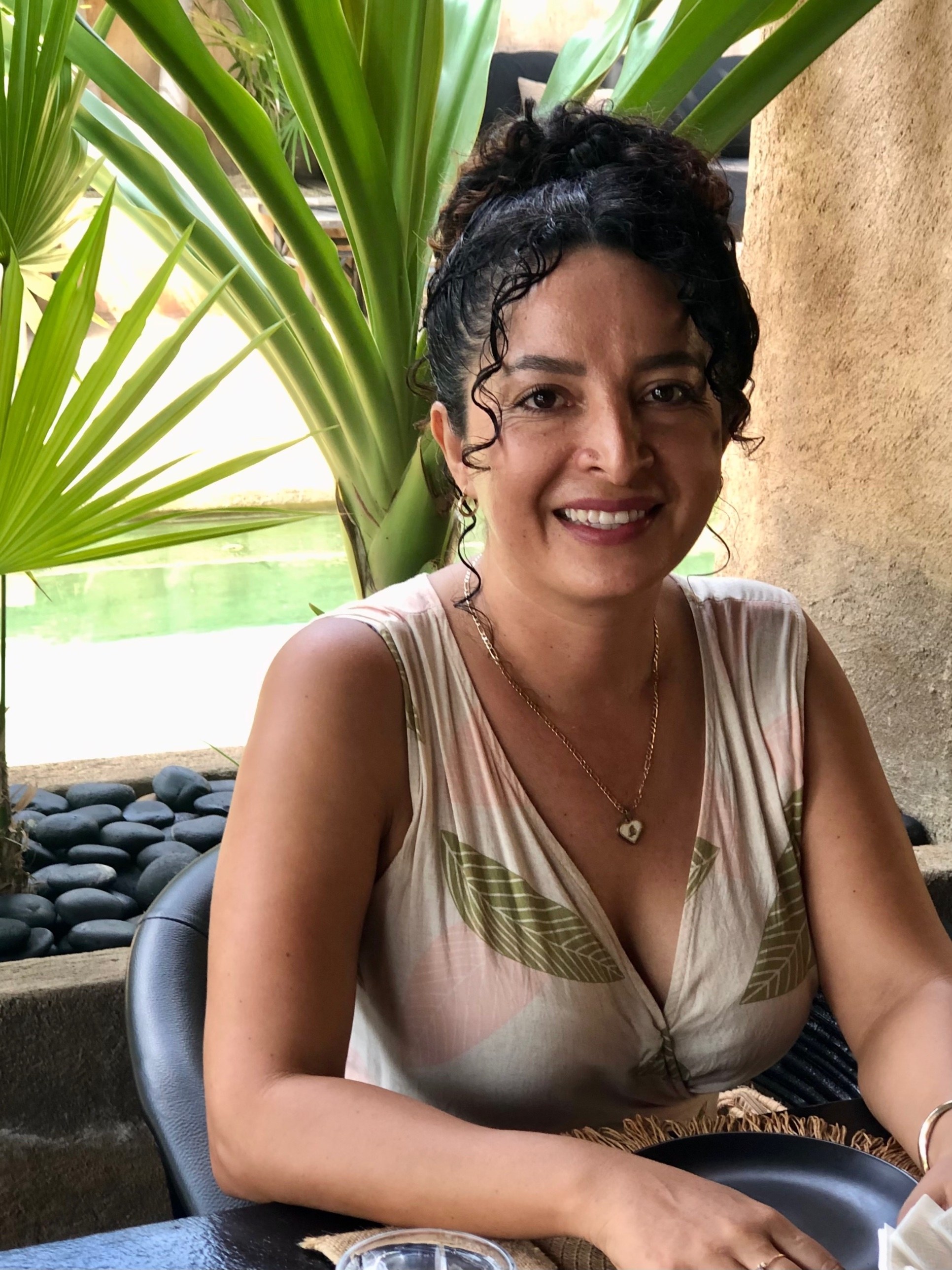








We arrived at the same time and walked into Casa Saint George together, getting a friendly greeting in the lobby, walking through the garden and into the restaurant, which feels more like a private dining room than a hustle-and-bustle eatery. We sat down and started our interview right away.
LOT: What do you like about Casa Saint George?
Liz: It’s very different from the other places. I like that it has a lot of personality. I haven’t met the owners but I’ve seen them a couple of times, and I imagine they are like this place—I can feel what they are like, how they like to live. I think they’re what makes this place so special.
LOT: What keeps you coming back?
Liz: The pool is great. The beach, I love it. I like that they have a day pass, so you can stay here, use the hotel, like a guest. And the sunsets here are so good. That’s my favorite time of day to come—to be in the pool—enjoying the place, the light, with a good cocktail.
LOT: Do you have a favorite cocktail here?
Liz: They have a mescalita that I like.
LOT: What's your favorite thing on the menu?
Liz: The burger. It’s a really good size, and it comes with a nice side of fries.
It was a hot day. We both ordered water, and we were served a lightly-flavored cucumber water. Perfect for cooling down, inside and out. In doing the transcript, I noticed how the service never once intruded on our conversation.
LOT: You’re active on social media and you have over 2000 followers. How did you build your following?
Liz: I think I know most of them. Maybe it’s because I’ve lived in so many different places, so I have friends from different places. And I love to travel, and I’m always socializing with people. Maybe that’s why. I don’t really know. It’s something that’s come naturally.
LOT: What’s your full name?
Liz: Elizabeth Guadarrama Godefroy.
LOT: Godefroy. “go-de-FROI”. Where is that from?
Liz: Supposedly, it’s from France. We don’t know exactly. My grandfather was born here in Mexico. We don’t know anything about his dad. I’m all Mexican.
LOT: Is Godefroy from your mom’s side?
Liz: Yes. I use it on Instagram and so does my little sister Monica. Since we’re all daughters, there will be no more Godefroy in our family. The name will be lost. We both like using Godefroy because it’s different. And we both love our mom—she’s a lot like us or we’re a lot like her.
LOT: Where did you grow up?
Liz: In Toluca, near Mexico City. It’s one of the highest cities in Mexico. It’s a kind of cold city, because of the altitude [2,680 meters or nearly 9,000 feet]. All my family is from there. My mom. My dad. My sisters.
LOT: What did you like doing as a kid?
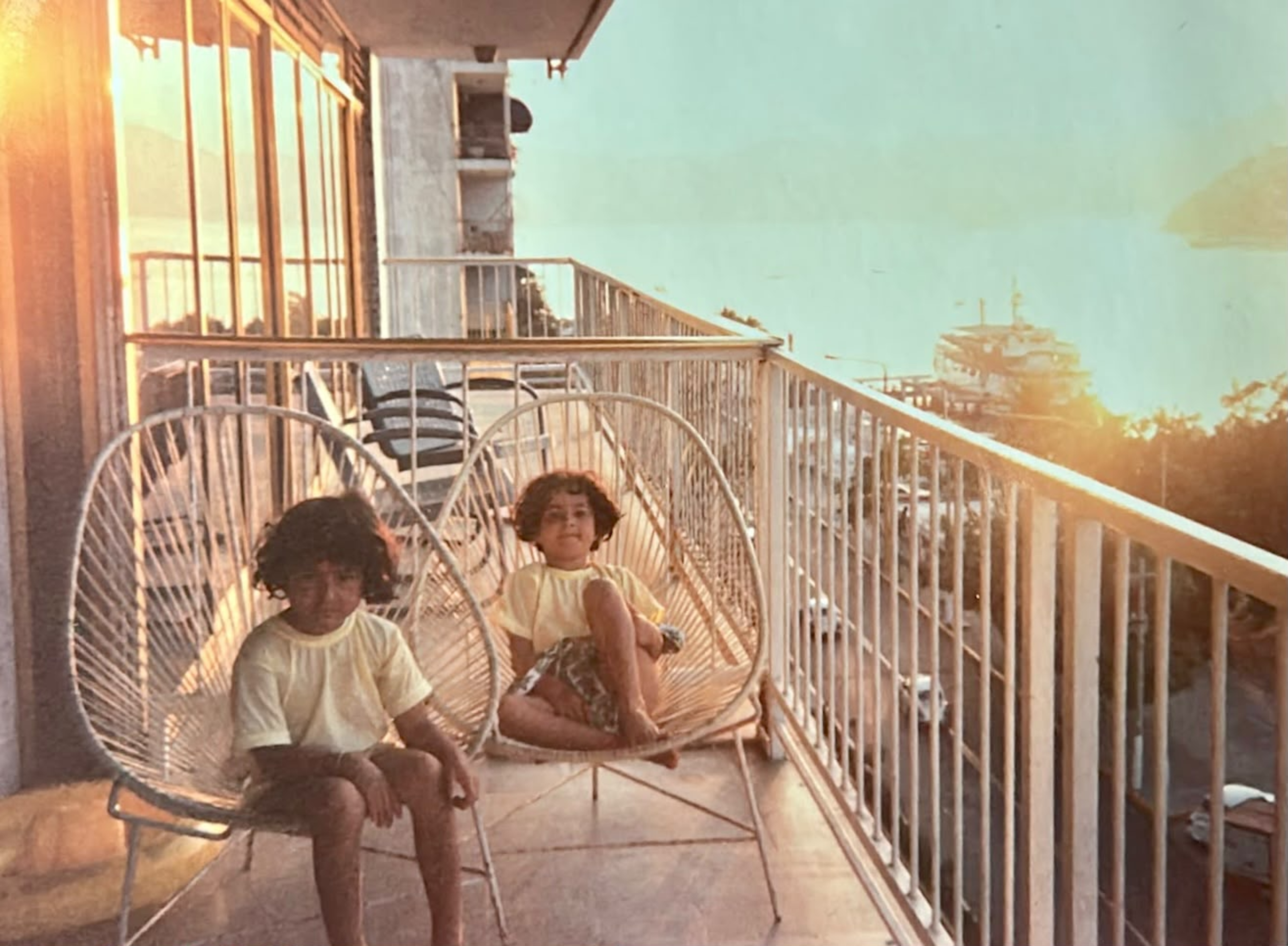
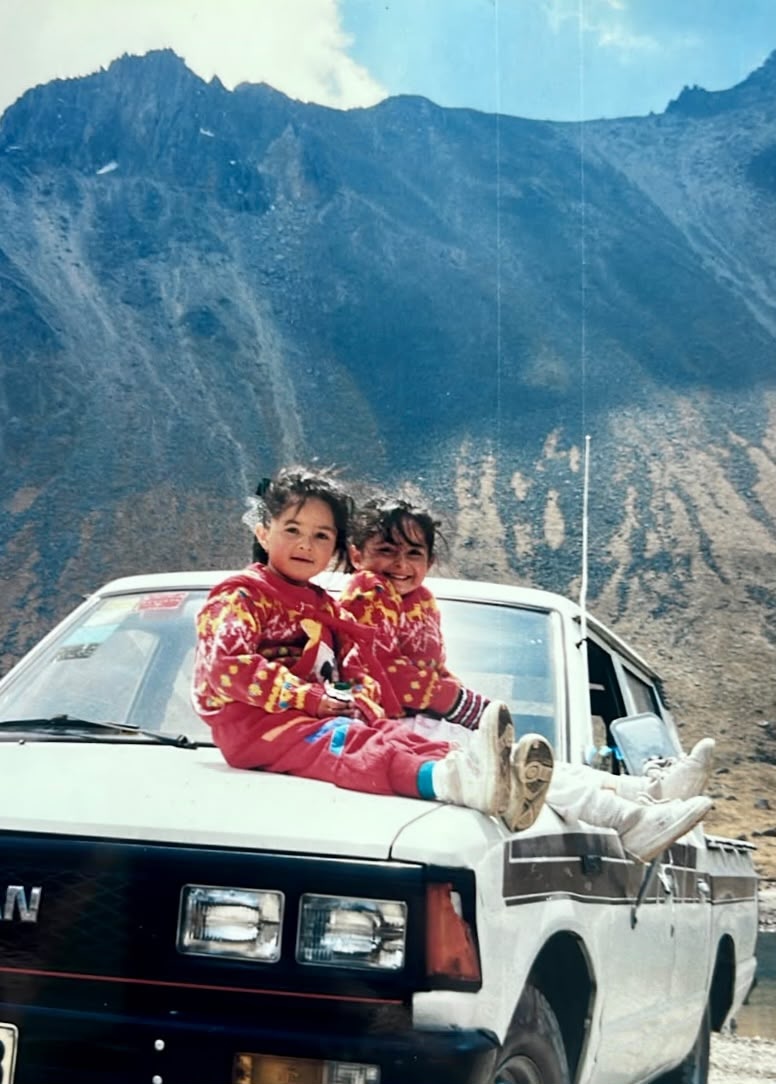
Liz: I have good memories of my grandparents’ place in Toluca, but we all loved to go to Acapulco, to the beach. We went there often when we were kids. I remember being at the beach with my sisters, my cousins, and all the family. I liked that. And my dad is a veterinarian, so we were always spending a lot of time with dogs, playing with puppies. I also have a twin sister, so we always made up different funny games. I never felt like I was alone because I always had someone to play with.
LOT: Where’s your twin living now?
Liz: She’s in Toluca still, and I have a niece and a nephew there. I love them because I feel like half of them is a part of me. There were times, especially when they were babies, when they got confused about us. They mistook me for their mom, and said to me, “Máma”.
LOT: Did you two ever fool a boyfriend?
Liz: Yes, but it was not on purpose. Maybe five years ago, after my sister was married, we were in Cuernavaca with his family, and I was holding the hand of my niece. I felt a hand on my lower back, really more like my pompa [ass], and I was like, “What?” He was so confused, saying “I’m so sorry”. And everybody was laughing. My mom was there, my grandmother, too, and his mom was there. It was very embarrassing for him. It doesn’t really happen that frequently that we get mixed up like that, even though people say our voices are identical, too.
LOT: What did you find hard growing up?
Liz: I’ve lived in different parts of Mexico. A few years after college, about 12 years ago, I moved to the border, Reynosa City, where I started working for a telecom company. It’s a complicated city to live in. I felt kind of insecure there, being so far away from my family. I missed them a lot. But being there, I learned how to work, how to grow as an independent person. That was kind of a difficult part of my life.
LOT: What kind of telecom business was it?
Liz: We sold connectivity solutions for the automotive and aerospace industries—big bandwidth connectivity, Internet and cloud connectivity. I was with that company for ten years. They hired me to work on the border—Reynosa, Matamoros, Nuevo Laredo and McAllen. That was my first area. After a lot of shootings in the region, I started asking them to move me to another place, and after three years, they relocated me to Querétaro. I love that area—Bajio, Querétaro, San Miguel de Allende. There are a lot of maquilas [manufacturing plants] in that region that produce almost everything made in Mexico. And, in Mexico, we produce more things that you can imagine. The company that impressed me the most was a company that made jets—they had assembly lines, like a car factory, but everything was huge. Impressive. I got to know a lot of Mexican industries working that job. Everything you need can be made in Mexico.
LOT: As a kid, did you have a dream of what you wanted to be?
Liz: I wanted to be a hairstylist, but my dad said I should work in business and maybe do something else later. It turns out I love sales, any kind of sales. I studied business administration. I think, at that moment, I felt that with that business knowledge, I would eventually know how to open my spa or my salon. Right after college, I worked a while for my dad, and I realized that I needed money. So, I started with the telecom company. I sold a lot there.
I looked up and caught our waiter’s eye. She came over and asked if we were ready to order. After a few questions about animals and preparation [vegetarians like me do that], I ordered a Greek salad and French fries. Those are hard to make “right” but I guess Liz talking about them led me there. She said wasn’t in the mood for a hamburger and ordered shrimp tacos instead. We stayed with the water.
LOT: How did you come to Troncones?
Liz: As I said, I love the beach. Ever since I was a kid. When I was in Reynosa, the nearest beaches were almost two hours away, on the Gulf of Mexico. They weren’t anything like what I was used to. When I moved to Querétaro, the beach in Acapulco was almost like nine hours away. Too far to go back and forth. Zihuatanejo was the closest beach, so I started going there a lot. One time, a friend told me, “You should go to Troncones. It’s a nice place.” I booked a place here and I really, really liked it—I told my friend, “Troncones is amazing.” That was like five years ago.
LOT: Where did you stay?
Liz: I don’t remember the name of the house. It was on the other side of the road, across from the beach, on the mountain side. They used to have yoga there. A couple was running the place and they’re not there anymore. I stayed there a couple of times and then I found Casa Luciérnaga. That’s also beautiful.
LOT: What kept bringing you back here?
Liz: The magic of this place. The beach was really clean, which is different from the rest of Mexico. And there weren’t a lot of street dogs or street cats. It’s really important to me, that people take care of the animals. I also liked the signs, the drawings, the painted garbage cans, all the reminders to keep Troncones clean [from Pato Azulita and Playa Limpia]. That was also different. That’s what kept me coming back.
LOT: What made you stay?
Liz: My dad was thinking about having a beach place. We love Acapulco. My grandparents have apartments there, but it’s loud, busy. He was talking about wanting a place where he could rest and be more relaxed. [In reviewing this interview with Liz, I learned her grandparents’ apartments were destroyed in Hurricane Otis, the fastest-developing hurricane in history, and the largest Pacific hurricane ever to make landfall—in Acapulco in October 2023. And Liz was there, terrified, or as she put it, “That was the scariest thing I ever felt in my life.”]
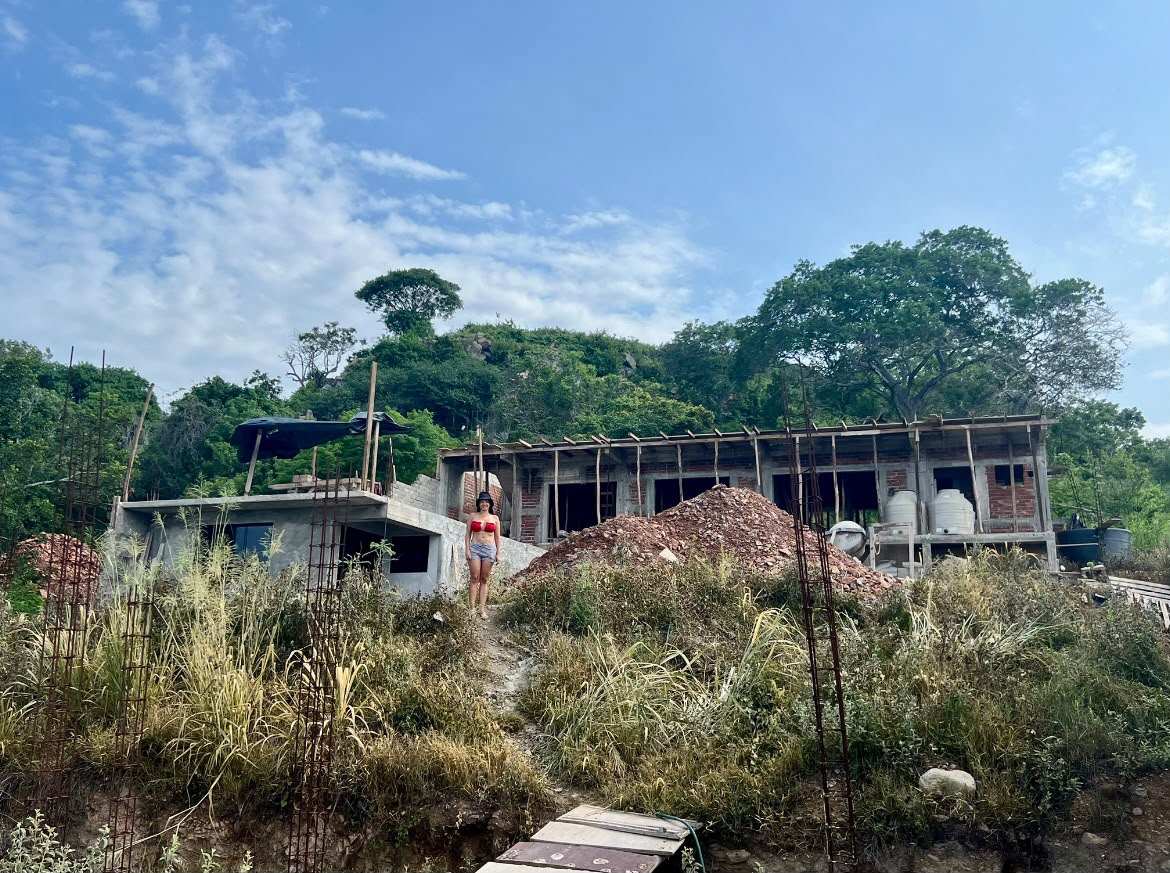
After I discovered Troncones, I told my dad that he should come, that it was different from any place that we have been. It worked out strangely—Surfers for Strays reached out to him, so the first time he came to Troncones, he came for them. He really liked it, so he started looking for a place or some lots to buy. After a year of looking, he bought some land. Then, he said, “Hey, Liz. I have other plans. Your grandparents aren’t feeling really good, so I need to stay closer to Toluca. If you want, you can build on that land.” I was like, “Yes, I would love that.” I was thinking of it being a retirement project, or a dream house thing, because I was working in Querétaro. Still, I started with the project.
My dad had some really big ideas, but it wasn’t affordable for me. One of my sister’s friends, a guy from the Netherlands, was doing renders for houses. I gave him my ideas—I kept them really simple—and he gave me some drawings and then I started talking to architects. Their proposals were out of my budget, more money than I had, so I started doing some drawings and ended up supervising the construction. And then, in the middle of construction, I was fired from the telecom job. At that moment, I was like, “Oh, what should I do? Should I find another job in the industry? Or should I just move and put all my savings here?” So, that’s what I did. I moved here full-time.
LOT: How did you find community here? How did you connect to people?
Liz: I started taking yoga classes with Fer [Maria Fernanda Nava Merino]. She was the first person I met, like as a friend, and she introduced me to the beautiful girls that now are my group—Lorena, Yalina, Christine, Evelyn and Fer—and they helped me find more and more people who I had things in common with.
LOT: What sort of community activities have you been involved in?
Liz: Right now, I am helping with the Catrina festival for Halloween and Día de Muertos. Also, sometimes I go and help with the turtles. I would like to do it more often. That’s really, really beautiful.
LOT: How did you connect to the turtles?
Liz: I sent them a message on Facebook but I never got a reply. I didn’t know who was in charge, but then I found out my Argentinian friend Jessi has been volunteering there for many years. She introduced me, and now I go, when I can. They go out almost every day at 6 a.m., find nests and relocate the eggs to the turtle camp next to Hotel Tres Santos, next to the Troncones letters on the beach. That’s where the baby turtles are released from.
LOT: At the Catrina festival, you volunteered to help with the altars. Why the altars?
Liz: I think I was the first one to raise my hand! In and around Mexico City, we celebrate Dia de Muertos in a big way. It’s a tradition with a lot of meaning to us. It’s one of my favorite celebrations—to remember our memories of the people who are important to us, who shaped who we are. That tradition hasn’t been celebrated here in a big way before, and I wanted to be part of this first one, to bring some of what we do in the center of Mexico to Troncones.
LOT: What kind of things are done there?
Liz: A lot of those celebrations create tapetes de asserín [sawdust carpets]. It’s painted wood dust that’s made into murals that make pathways for the living and the dead—using a lot of cempasuchil [marigolds]. The design depends on the town, on their traditions. My dad is living in Malinalco now, a town an hour or so from Mexico City, and they have an incredible event I’ve never seen anywhere else. They celebrate Nuevos Muertos, literally, the New Dead. They make these huge altars where the newly dead people used to live, and have things like skulls representing the job that he or she used to do. Last year, I went with my dad to the house of a guy who worked for CFE, the electricity company. There was a full-size CFE pole outside the house, and there was a skeleton on the pole wearing a CFE uniform. Inside, there was another guy, another skeleton, full-size, wearing a shirt of the team he liked to cheer for. In that celebration, everything is like an altar, the whole house. It’s so beautiful, and so is the idea that when the dead have less than a year away, less than a year being dead, that they’re still going through the process of getting to heaven. It’s a celebration full of a lot of good wishes and kindness. People bring candles to help the family light the person’s way, and the families offer food. It’s a really beautiful way to celebrate the new transitions that are happening for the whole family.
LOT: What do you do for fun in Troncones?
Liz: At the beginning, I had a lot of time. Now, there are always things to do. Right now, I’m working at the Residences at Manzanillo Bay as the manager. Most mornings, before I go to work, I go to the gym in Zihua. After work, I love to go out with my friends. We do boogie boarding. I don’t surf, but I would like to learn. We also love to do board games. We create a lot of things just to do something—like painting, staying at the pool, grilling. There’s always something to do.
LOT: What kind of workout do you do in the morning?
Liz: We’re doing CrossFit. I go with my friend, Eli. She goes every day, and I started going with her. And I invited Jessi, so we go, the three of us, at 6 a.m. It’s like a circuit. We lift weights. We do push-ups. We do cardio. It’s fun, and I like it, because it’s also another kind of community, another really beautiful group.
LOT: Would you want to start a gym here?
Liz: I would love to do that. I used to go to the gymcito, the little gym in front of Tres Santos, but for me, I love to be engaged in a group. There are more people for that in Zihua.
LOT: A lot of people here work more than one job. Are there other things you’re doing?
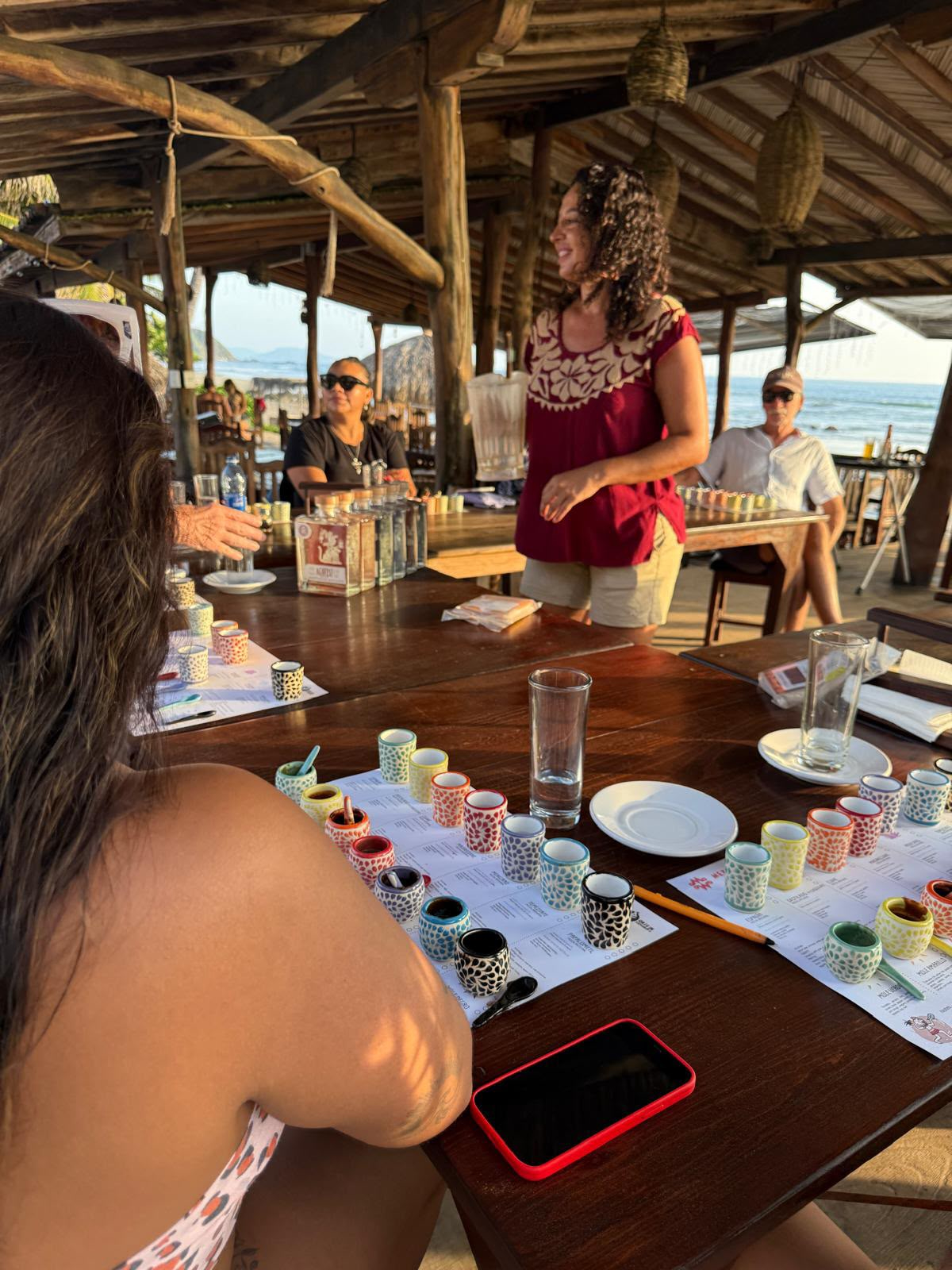
Liz: I have my place, Casa Amarliz, that I rent, where I have guests. I also do mezcal and mole tastings.
LOT: How did those tastings start?
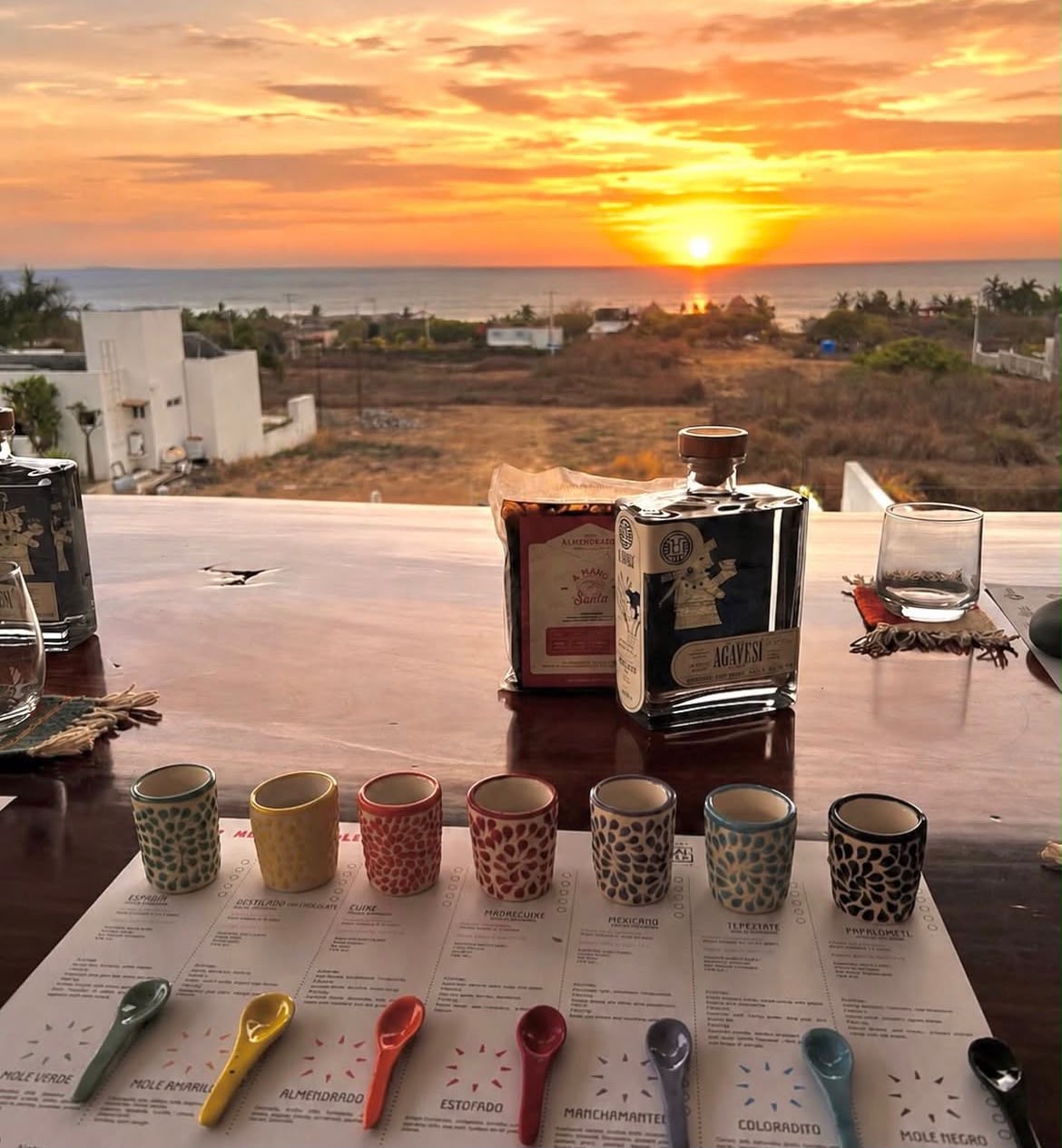
Liz: I’m a student of the Agave Spirit Institute. I have a friend who’s been doing mezcal tastings in Oaxaca. I’ve been there a few times and I love that experience. He’s also done them in Mexico City, in San Miguel de Allende and in Tulum. We did some here at the beginning of this year, when it was almost “low season”. We did one at Mingo, four more at Casa Amarliz and we did a few at private houses. People liked it. It’s seven different mezcals and seven different moles. We pair them to give people this full taste experience. That’s like my extra job. My extra hobby.
LOT: What do you love most about your house?
Liz: I love the view. I love the breeze. Casa Amarliz is on a small hill, overlooking Manzanillo Bay, on Calle de la Ola, just before Majahua. There’s more air there. And later this month, you can start seeing the whales. When you’re on the beach, you can see some of the whale. But, when you’re a little bit higher, there’s so much more you get to see. Sometimes I see them almost every day. I love that. I also think my house has a special energy. It’s a place designed for rest—a place where you can connect with nature, the mountains, the ocean, the view and the wind. It’s an invitation to disconnect from everything else. That’s what I love about it.
LOT: I have a couple more questions, but let’s eat.
Liz’ shrimp tacos were colorful, coming dressed in peppers, onions and jitomate [tomato]. She added Casa Saint George’s salsa macha [a chili oil sauce] and was quite satisfied. My Greek salad had no anchovies, no fish, no chicken. Yay. The romaine was crisp, as were the onions, tomatoes and cucumbers. And the cheese and the olives were not too salty. Same for the French fries, crisp and not too salty. The French fries were hot, so I was grateful for the ketchup, which I don’t normally eat. That gave me an unexpected sweet treat, too.
LOT: What do you look forward to when the season comes, when it’s busy season?
Liz: I like having guests at Casa Amarliz. I feel really good when people stay there. I’ve only had someone who was loud just one time. At the beginning, I wasn’t sure how it was going to work because it’s a house where you can rent a bedroom, like for couples, or you can rent the whole place, like for families—like a hostel, but not a hostel, like co-living. I really like it when my guests get to know each other—one guest talking to the other guest, meeting someone new. It makes it a kind of community. I hope this season I will have a lot of couples from different places—sharing their dogs, their kids, their families. I’d like that.
I try to keep my house affordable. I know there are a lot of other people like me, who want to be near the beach or have a beach view, and who don’t have so much money. I like being able to have a place for them and their pets—about 80% of my guests come with their pets. That all means a lot to me. Troncones is expensive, and I want to have a place where people feel comfortable, at home, like family. I’d like to have more groups, more retreats. I have one retreat for moms and kids during Semana Santa [Easter Week]—all Mexicans. I like being able to offer that beautiful experience.
LOT: How does the house work so people can rent different parts of the house?
Liz: There are a lot of levels. There’s a parking area. That’s one level. Then you go to the next level, that’s where I stay. And then, there’s the next level, with the pool and the grill area. And there's another small level, with common areas, like the living room, the kitchen and a big table for the sunset. Then, there are three separate bedrooms, which makes it easy to rent one bedroom, or the complete space.
I have a lot of privacy but I also like to talk with my customers. A lot of them seem to relate to me because I was doing the same thing that they are doing: living in a city, working long hours for a company. They see what I’m doing, and I listen to them talk about their future, their dreams—how they’d like to live at the beach. They ask me how I do it, how I’m able to disconnect. It’s never the same answer. Sometimes, I have customers who want more privacy. I stay in my space. That’s okay, too.
LOT: What do you like most about being here year-round?
Liz: I love the ocean, the sounds, the peace, the quiet. When I was maybe 18 or 19, I liked partying and that life, but since I turned 23 or so, I’ve really preferred calm places. So, Troncones is perfect for me. I have friends who would tease me because I always go to bed around 9 or 10 pm, right when the party starts. Everybody here seems to go to bed around then, around 9 or 10 pm, and everybody wakes up early, so this town fits my way of living. It also lets me lose track of time. And not just the hour. Sometimes I don’t know what month it is. Another thing I like about living here is that we don’t do things like “normal” people. The things people usually do on a weekend, on a Saturday or Sunday, we do it on a Tuesday. I love that.
LOT: What’s most important to you here? What sets this area apart for you?
Liz: I’m going to say, “It’s the community”. That’s very, very important, because if we lose that, we’ll be just like another beach. Here, we know almost all of our neighbors and at some point, we discover we have many things in common. That’s why I think we’re here. We like the beach, but it’s the community—how we respect and value each other, how we take care of our beaches and this part of the world together. That’s what’s really important for me.
LINKS
lizgodefroy: https://www.instagram.com/lizgodefroy/
Casa Amarliz: https://www.instagram.com/casa_amarliz/
Playa Limpia: https://www.laondatroncones.com/know/playa-limpia
Pato Azulita: https://www.laondatroncones.com/meet/pato-azulita-ernesto-leon-sandoval
Maria Fernanda Nava Merino: https://www.laondatroncones.com/meet/maria-fernanda-nava-merino-surf-witch
Surfers for Strays: https://www.laondatroncones.com/know/surfers-for-strays