Pato Azulita: Ernesto Leon Sandoval
Artist, environmentalist, teacher, student and free-thinker
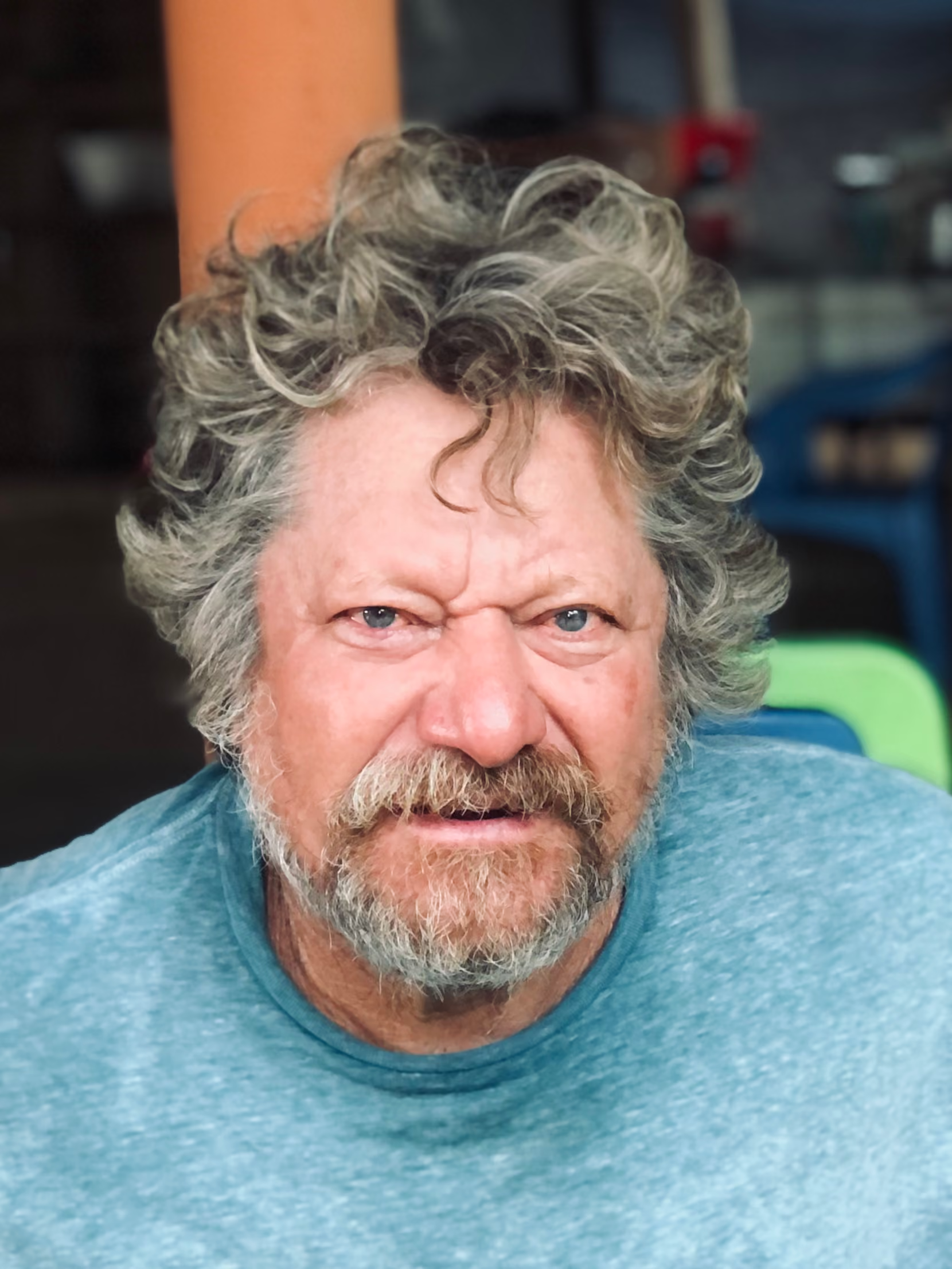
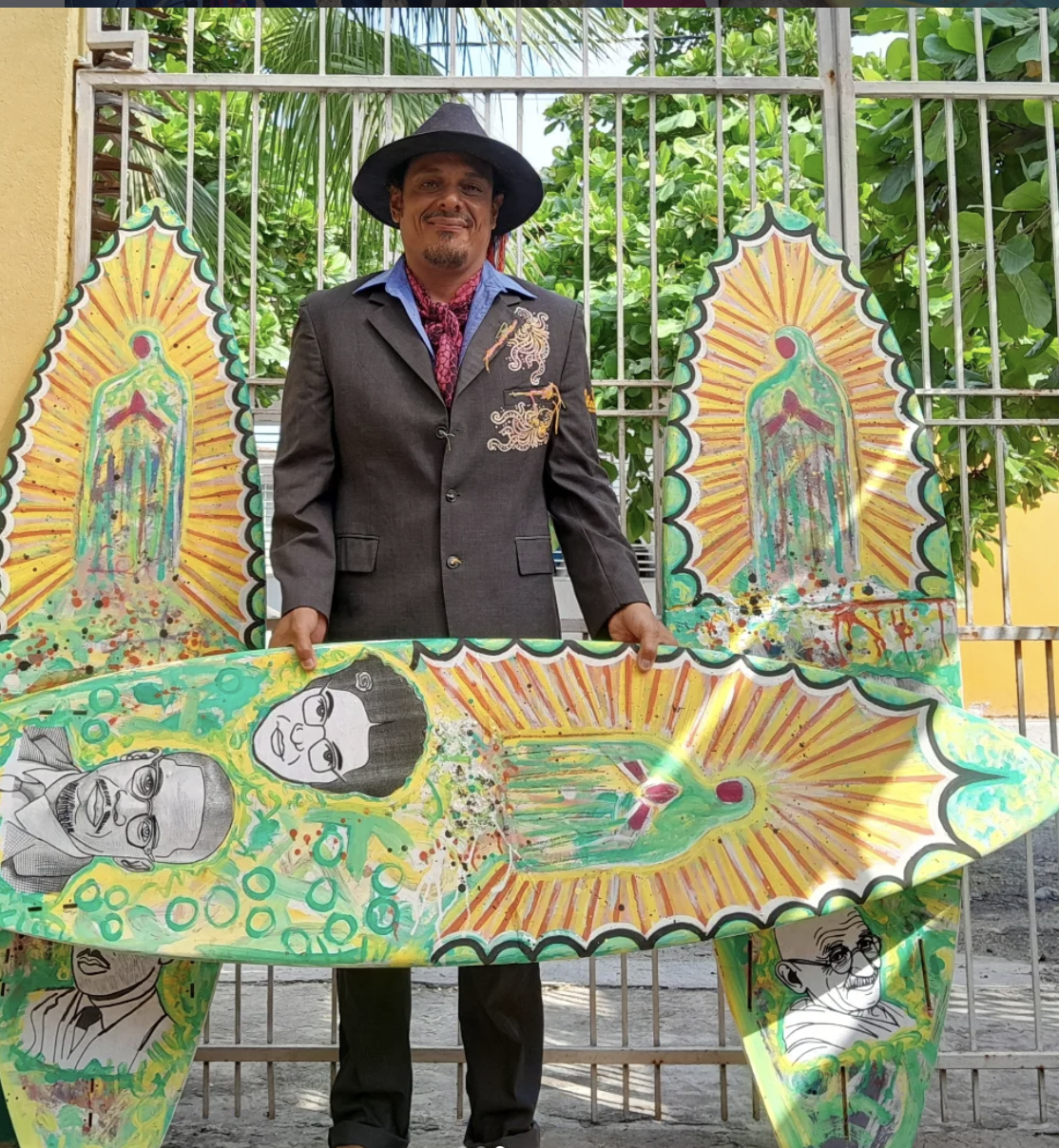
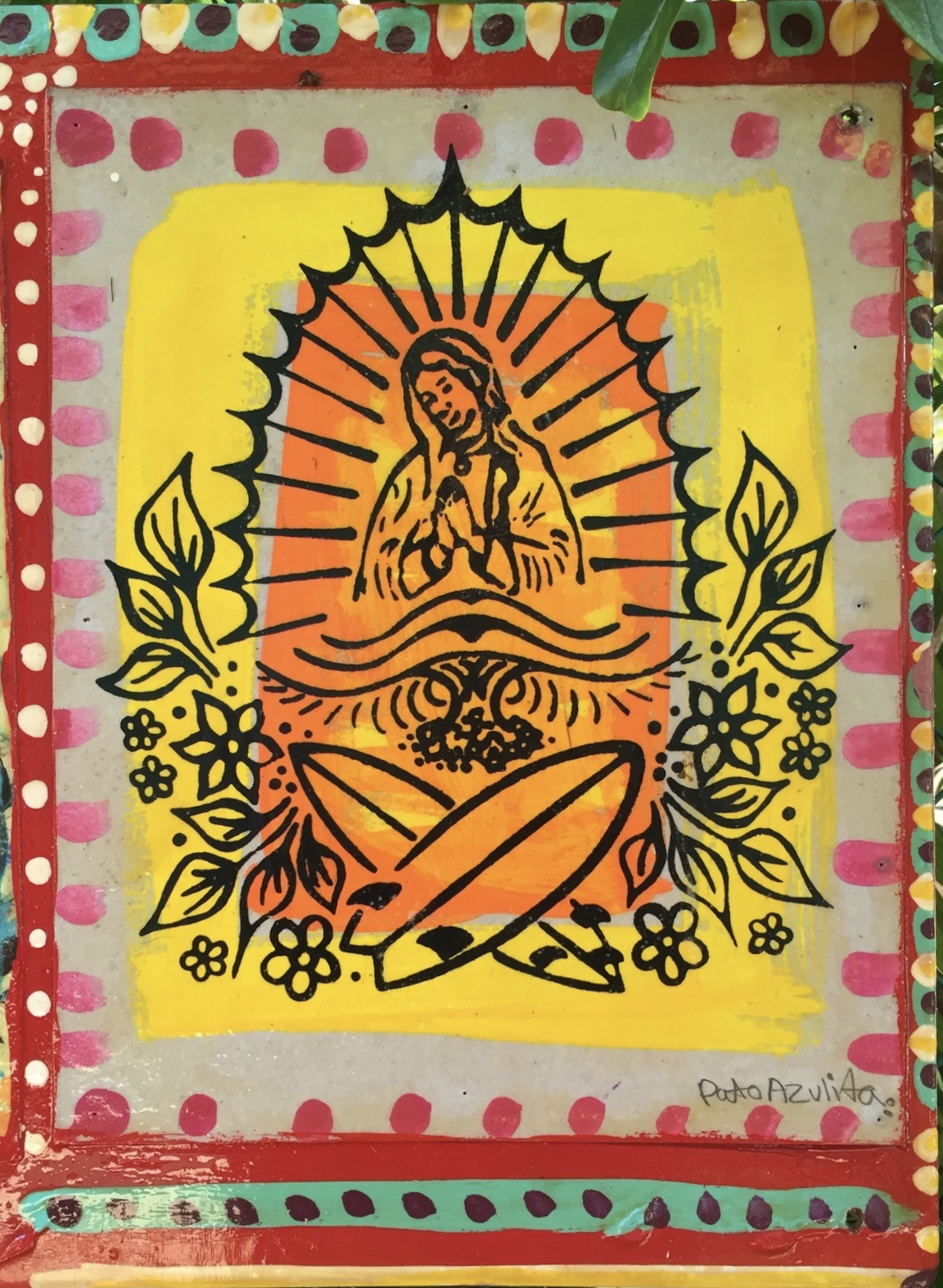
A surf triptych—a mermaid Reina de Mar, a happy cross-step nose-rider in a bikini, a beaming Guadalupe in front of her boards—a painting hanging on a fence in the old Café Pacifico. The name Pato Azulita was tiny in the right corner. “Who’s that?” There was no time to find out. I was on vacation. That was 2014. I heard the name Pato again in 2022 when someone described art classes being offered by Playa Limpia, Troncones’ grassroots environmental program. It turns out it was the same Pato. Another four years of seeing Playa Limpia signs around town—signs saying things like, “Compasion Ecologica”, “Ama Tu Playa” and “Cuida Tu Pueblo, No Tires Basura”—and I finally got to sit down with Pato. I finally got to know, “Who’s that?” Meet Pato Azulita.
%2017.27.38.avif)




%20(Spanish)-2.avif)

LOT: Where did you grow up?
Pato: In Lázaro Cárdenas [an industrial city of almost 200,000 people located 74 kilometers, or 46 miles, northwest of Troncones, in the state of Michoacán; it’s Mexico’s largest seaport and its busiest cargo port].
LOT: What did your family do there?
Pato: My dad was an electrical engineer. My mom was a housewife.
LOT: Has your family lived in Lázaro for generations?
Pato: No. My mom is from Apatzingán, in Michoacán. And my dad is from Mexico City.
LOT: How did they meet?
Pato: They met in the area because in the early ‘70s the government encouraged a migration to Lázaro for the mining operations that are there. Lázaro had huge iron mines and smelters, so hundreds of thousands of people were coming from all over the country to work in Lázaro. In those days, the government was very socialist. It gave houses to the people to live in. It gave permanent jobs to the people who were in workers’ unions. Water was almost free. Electricity was almost free. So, a lot of people arrived in Lázaro looking for a better life.
LOT: How did art play a role in your growing up?
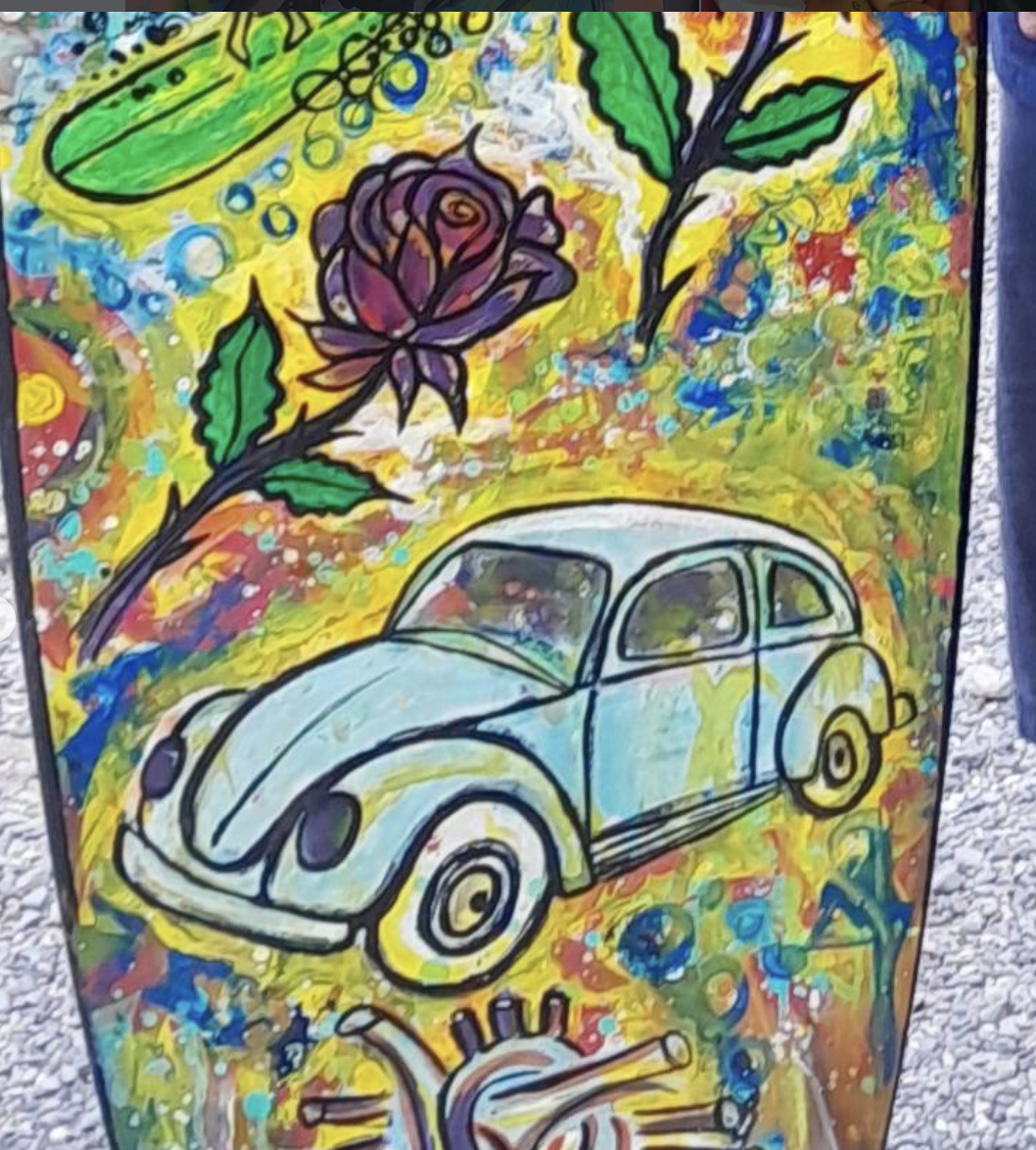
Pato: Not much. There was no art in school, it was not part of our curriculum. I got into art because of graffiti. I started skateboarding, and in the early ‘90s most of the skaters then were graffiti artists or wanted to be graffiti artists. One activity was pretty close to the other. That’s how I started in art, through skateboarding and graffiti.
LOT: Did you have a tag that you put everywhere, a name or a certain signature you put on your work?
Pato: Tags are called bombas now—bombs. I had different tags, and I started out doing some, but I didn’t stick with the tagging part. I preferred to do something more elaborate and I got into screen-printing clothing, doing stickers, and then I started to do murals. All the art influence I have comes from the graffiti scene, from the ‘80s in New York—like Rammellzee and Futura—those early graffiti artists who then became gallery artists, who became known for their avant-garde work, like Jean-Michel Basquiat. That’s how I got into art, and then, after doing some murals, I started taking workshops and going to lectures and looking for mentors, so I could do other techniques, other printmaking, like grabado. Mexico has a huge tradition in that type of printmaking, where artists carve or etch their designs onto wood or metal or other materials, then roll ink onto the surface, and then press it onto paper—usually to make bold social and political statements.
LOT: Where did the name Pato come from?
Pato: When I was a kid. I was really good at swimming and I won a couple kids’ tournaments in Lázaro. Most of the time, I didn’t want to get out of the swimming pool, and one of my coaches told my mom I was a duck. Pato. And it stuck.
LOT: What’s your given name?
Pato: Ernesto Leon Sandoval.
LOT: What brought you to Troncones?
Pato: The surf, in early 2000, 2001, 2002. A surfer friend was camping here and he invited me. He told me there were big waves and I came to take a look. I was a rookie, I was in my 20s, not anywhere close to being an expert surfer, but I liked Troncones. I liked the place, the waves, the vibe, the community.
LOT: How did you get involved with Playa Limpia?
Pato: Leela, Alejandro and I, we start separating recycling plastic in our own houses. And then more of our neighbors wanted to do the same. This is like 12 years ago. That’s how we started—separating plastic, putting it in a bag and then taking it to Los Llanos. There was a plastic bottle recycling place there. Dewey’s first wife, Carolina, wanted to make Troncones an environmentally-friendly community. Her dream was to have a sustainable community and that dream stuck to us, too—our trying to be less destructive, as much as possible.
LOT: It’s ironic you grew up in a world where people were coming to do mining and you became an environmentalist.
Pato: Lázaro is a really horrible example of how to destroy an ecosystem, because of the mining and industrial activity. And in Guerrero, Acapulco has been totally taken over by urban sprawl and over-building. They never had anything environmental in mind there. One of the idiosyncrasies of Guerrero and Michoacán is how keen some people are to destroy the environment in different ways—through cattle ranching, through home building, through slashing and burning the native canopy. In this part of Mexico there are people who see trees as a problem. They equate trees with lightning bolts, with roots going under house foundations, with scorpions, ticks and snakes. And they hate the dry leaves from the trees. Instead of having a friendly view of the trees—that trees produce oxygen, shade and water—they see the opposite, that trees are a problem. They clearcut their properties, build in the center without any shade, and end up surrounded by dust.
LOT: How do you change that attitude?
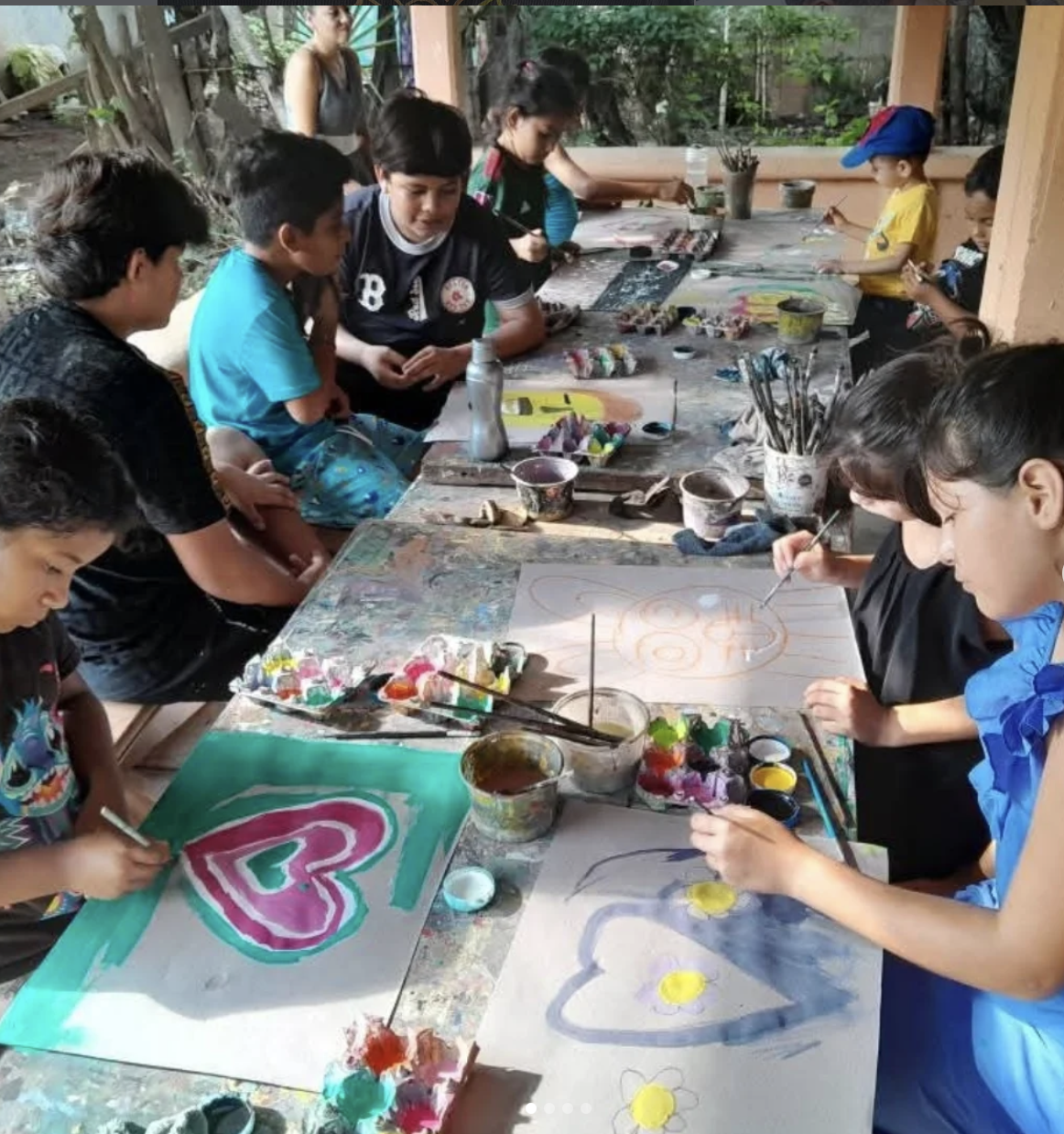
Pato: Through education, through environmental literacy. I teach kids about the environment through art. The lack of environmental knowledge I see here is so extreme that what we have is something I call “environmental illiteracy”. It’s really that extreme.
LOT: How did you go from being a surfer-skater-artist to becoming a teacher?
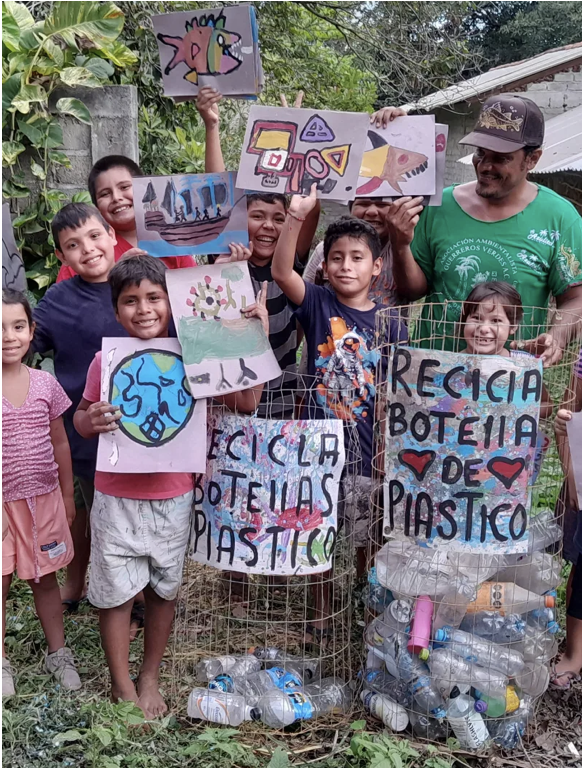
Pato: It’s essential that we engage the whole community into caring for the environment—locals, visitors, everyone. I was kind of forced to become a teacher because I saw a need to explain to people that trash is bad, that plastic is bad, that trees are good, that junk food is bad. Junk food is really bad for kids’ health and it’s also one of the main sources of trash. But most locals and most visitors, kids or adults, are not interested in environmental classes. Environmental classes are very boring. Kids want to do sports. They want to do things that are active and fun—football classes, basketball classes, volleyball classes, art classes. I give art classes. It’s a method to teach kids about the environment. Right now, we have classes once a month, three-day sessions, that are being held in either Troncones, Majahua or Saladita; twice a year we go to La Boca. During our classes, the kids produce something that is going to help the environment. That’s how we started doing the road signs. The roads road signs are done during the art classes.
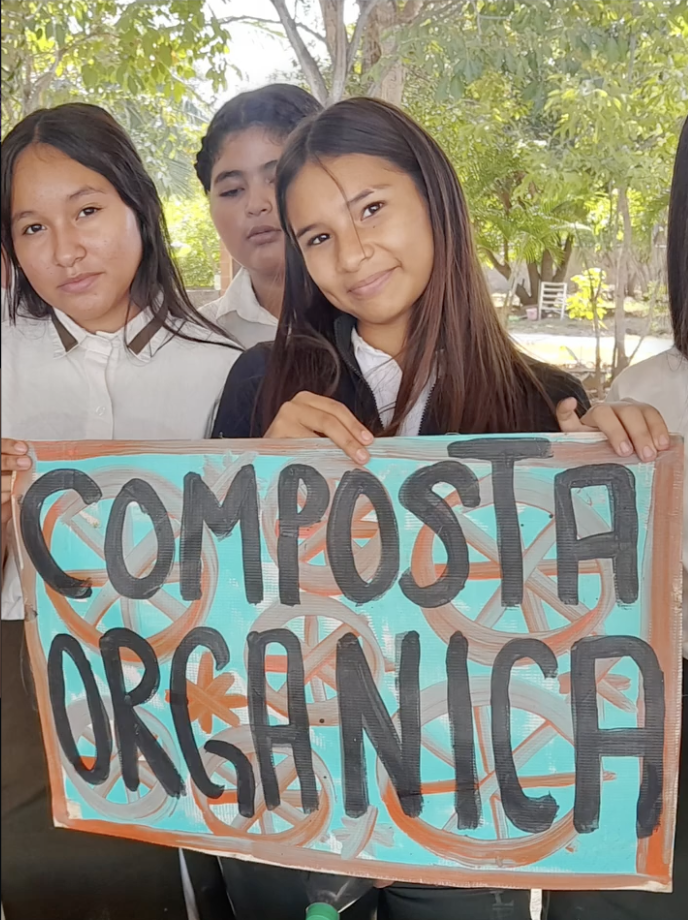
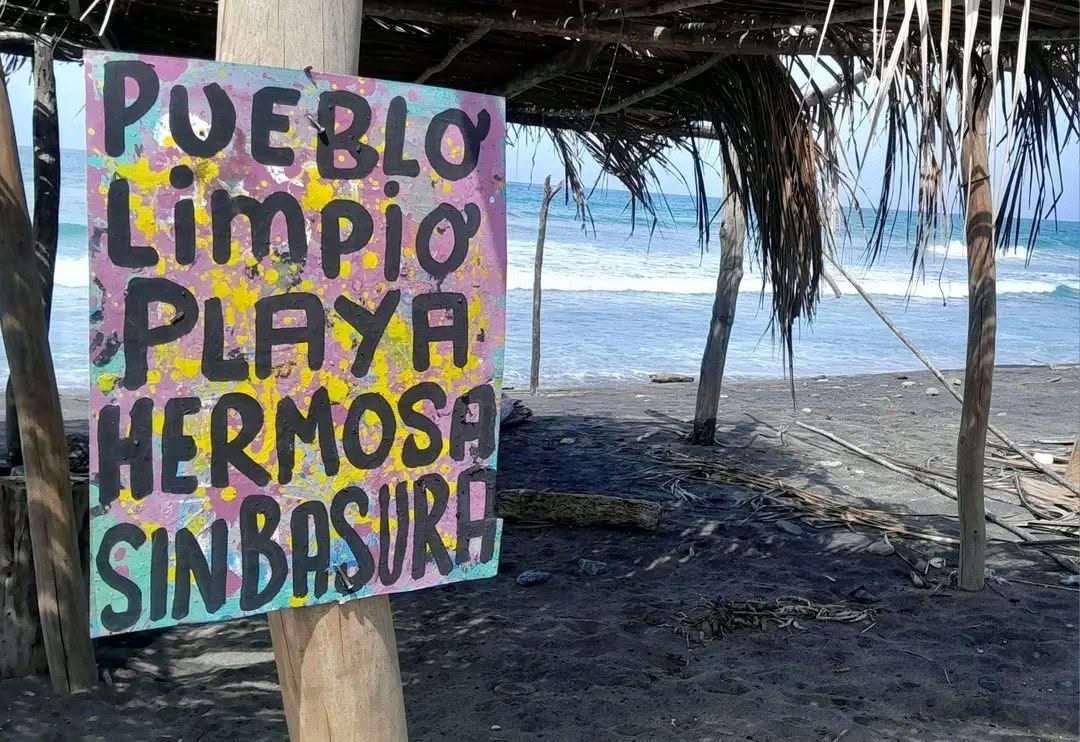
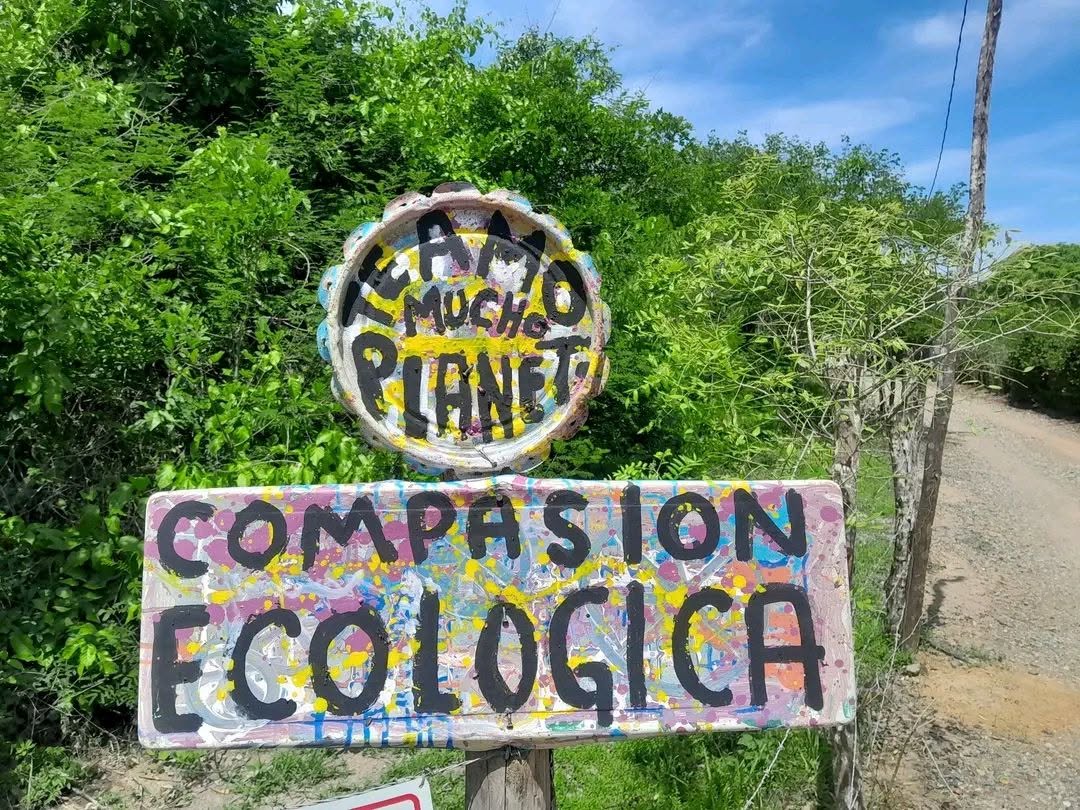
LOT: Oh, so those signs you put up are done by kids?
Pato: Yes, those signs, and the signs for the recycling bins. They’re all done in the art classes. I encourage the kids to try to produce something that can be displayed, something related to the environment or the beauty of your town. It’s like graffiti, but with a focus. Eventually, if these kids want to become graffiti artists, they’re not going to destroy so many walls.
LOT: Is the art school part of Playa Limpia, or part of APCAT?
Pato: Playa Limpia sponsors the art. APCAT sponsors the recycling. Playa Limpia also sponsors some of the logistics to keep the recycling running. It’s all about working together, everyone having a specific task.
LOT: Are there other programs you’re leading for Playa Limpia, besides the art?
Pato: We have some proposals we’re working on—like making a joint program with Las Hermanas involving art and surf—like doing a monthly community cleanup or doing monthly work with dogs or cats, or painting a wall every month with environmental messages, with art and text—like having healthy snack classes for kids, classes where they prepare fruit, or make healthy pancakes with seeds and fruits, very simple cooking stuff, where the kids won’t get burned or cut or hurt—things like that.
LOT: What are you working on personally, away from Playa Limpia?
Pato: I have a recycling program with my neighbors. It’s not official, it’s not an organization. It’s just something I do. I have a silkscreen workshop in Lázaro and I print stuff there, like t-shirts, hats and stickers. I also work with local artists in doing shows in Lázaro, and a couple of times a year we do concerts. I split my time between Lázaro and Troncones, a couple of weeks here and a couple of weeks there.
LOT: Who are the artists that you look to for insight and inspiration?
Pato: My favorite is kind of underground—that’s Rammellzee. He’s a contemporary of Basquiat, but not as well known, even though he’s pretty well known in the graffiti world. Rammellzee’s most famous art is his costumes and masks, things he made from trash and toys. He also did murals on walls with spray paint. He’s died, and now his works are super expensive. He’s starting to become recognized as being one of the important artists of the ‘80s. He also recorded rap and was a DJ. Every artist tries to get their work to come out of the frame. Rammellzee said that he went from trying to do 3D illustration to making 5D art. He did it through his installations, his costumes, and through his lyrics and music. That’s 5D. He’s my main inspiration.
I also like Diego Rivera. I like Frida Kahlo. I like Mexican muralism—Rivera, José Clemente Orozco and David Alfaro Siqueiros. They painted and expressed a lot of the social and economic clashes we have. I love all sorts of art. I love reading about artists, like Rembrandt, and art from different eras, like classical, medieval, expressionists, modernists, Dada, surrealism. During World War II, the surrealists were kicked out of Europe. They were considered degenerates by the fascist right. Many of them came to Mexico. When André Breton, the founder of the surrealists, was expelled from Europe, he continued his career in Mexico. He spent three decades in Mexico and attracted many other artists here. The surrealists found new talent, new forms of expression in Mexico.
Mexico has a huge heritage in painting, from the Mayas, from the Aztecs, a lineage that carries through to the Porfiriato [the era of dictator Porfirio Díaz, from 1876 to 1911; he shaped Mexican nationalism and invested in its artistic expression]. Mexico has a unique potencia de la plastica, a distinct presence, power and force in the visual arts, in painting, watercolor, murals and frescoes, worldwide. When Mexican artists started having their own aesthetic, their own personality, from there we have Frida Kahlo, José Clemente Orozco and Francisco Toledo de Oaxaca. It’s been nonstop, and in the last 20 years we’ve had so many good artists, so many good graphic designers coming out of Mexico. It’s been a big yield, like a huge crop. It’s fantastic.
LOT: When you’re doing your art classes, how do the kids respond to that history?
Pato: The classes are, in some ways, modern art classes. I always show Pablo Picasso’s work and Jackson Pollock’s. I show the surrealists. I show the impressionists, who the kids always say look kind of blurry. I show them art that’s a mix of techniques, art that’s asymmetric. As soon as they see that kind of art, they immediately say they can do it. From that, there are no boundaries. I let them do whatever they want to do. And if they are really shy, or it’s their first class, I draw them some silhouettes and get them to color those. I pretty much just provide them the materials, the tables, the time, and they do the rest. They like interacting with their friends this way. It’s been five years, and now there are two or three kids who have really developed and who are selling their work at the Thursday market at Tres Mujeres.
LINKS
Rammellzee: https://www.instagram.com/therammellzee
Pato Azulita: https://www.instagram.com/azulita_pato
Playa Limpia: https://www.laondatroncones.com/know/playa-limpia