Adan Carano Silva: Hula Man
Popular Sayulita performer looks to his future—in Saladita
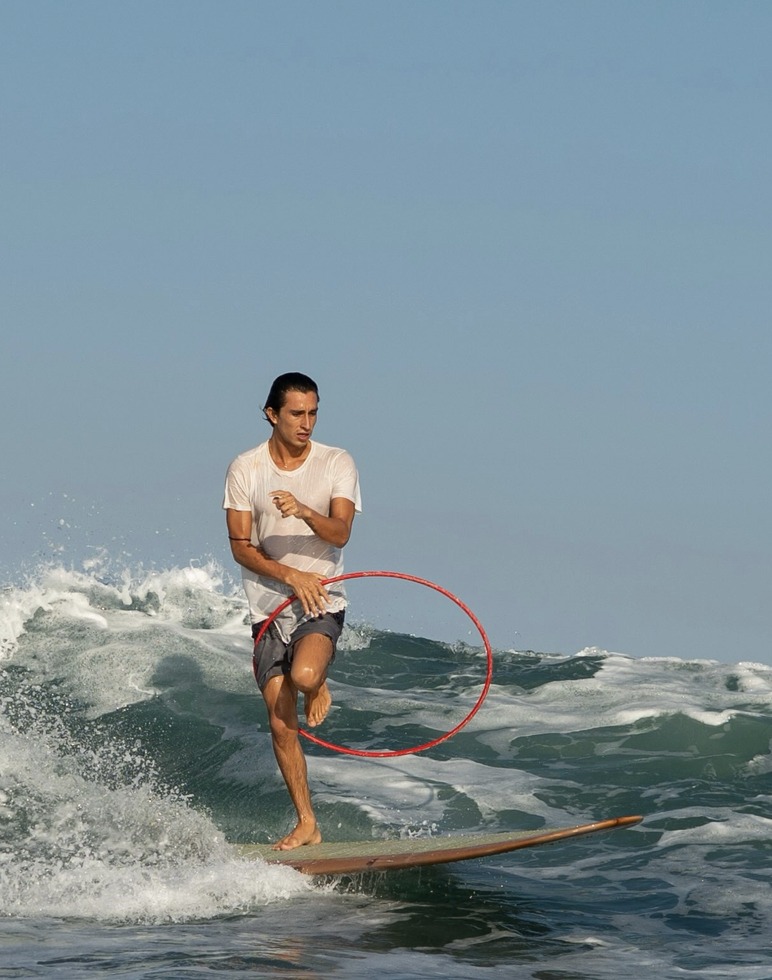
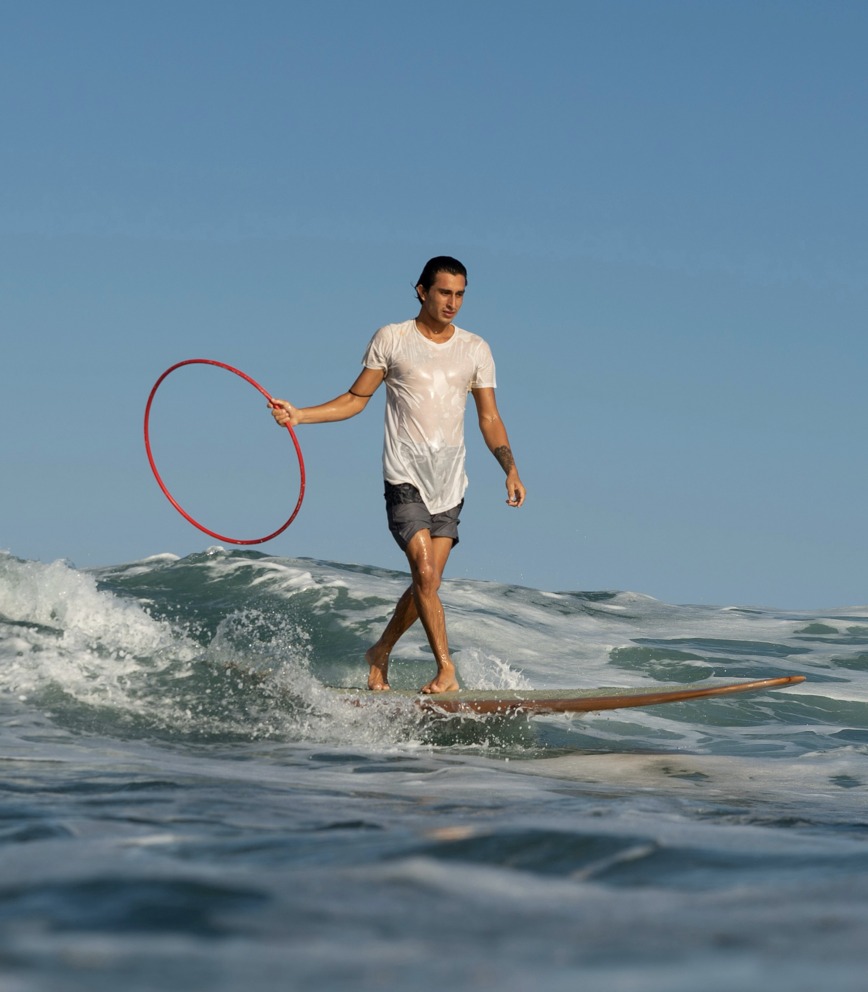
A guy hula-hooping on a wave in Saladita? It came up on Instagram last month. I immediately thought, “That’s crazy!”. Then I started to look a little more. The rest of his @surfhula feed had a lot more hooping, showing a level of skill, dexterity and creativity I never imagined possible. And then I heard some Saladita surfers describing how “magical” and “special” the hooper was. Okay, maybe there’s something to this. Then I found out he had a workshop at Hacienda Plaza—his last one for the summer. Okay, I’m in. It was a fun class, even for me, someone who doesn’t hula or hoop. Why? Meet “Hula”—Adan Carano Silva.











Our interview happened after Adan led an hour-long class involving stretching and dance, with his using the hoop as a way to focus attention on movement and breath—sort of like yoga inside a sphere rather than on a mat. I know it’s just a hoop. Adan made it feel bigger than that.
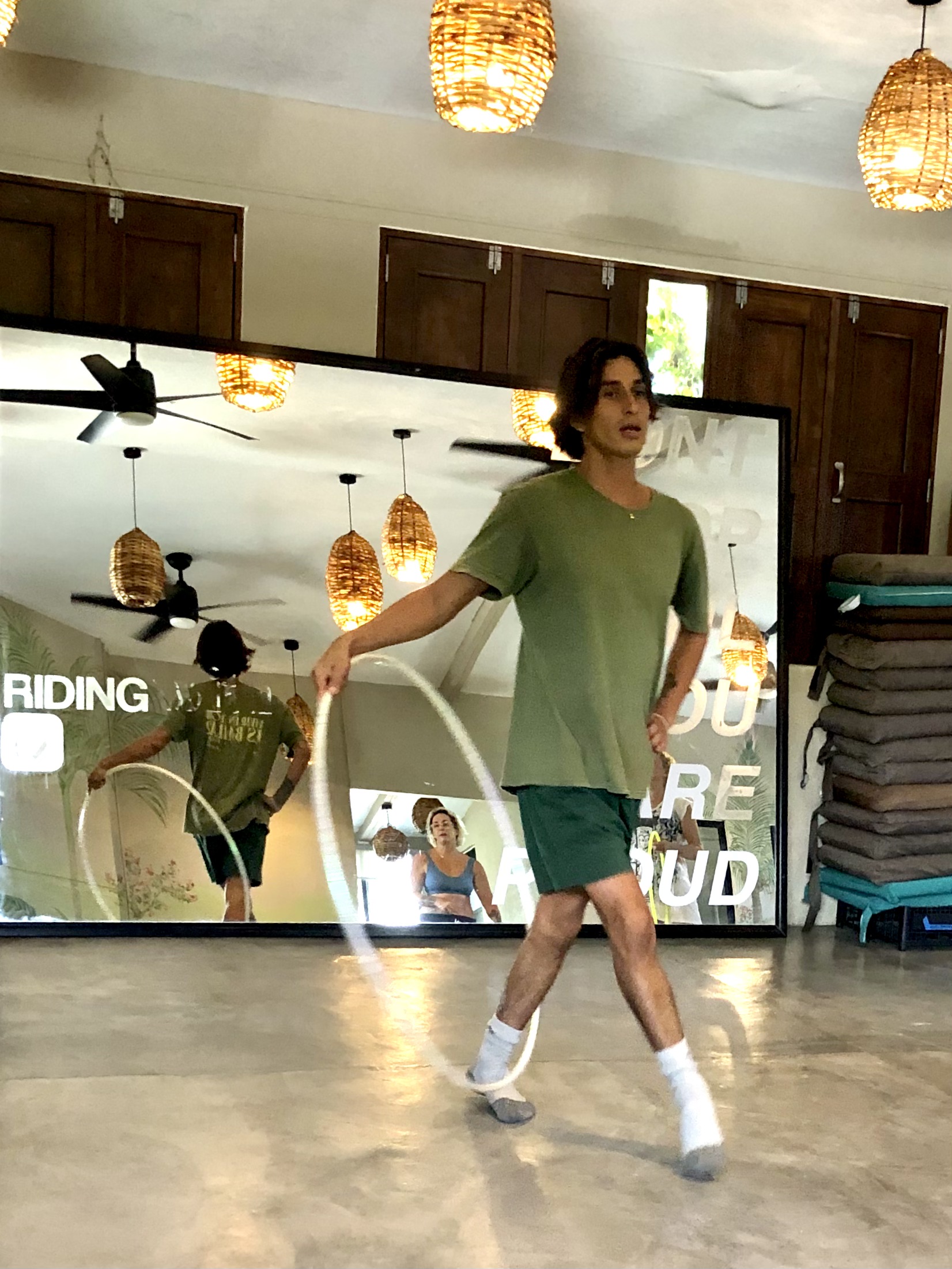
LOT: Where’s hula-hooping taken you?
Adan: All around the world—to France, the Canary Islands, all around Mexico. It’s a gift I share. It’s given me a stable life. It’s helped me to make a community of great friends.
LOT: How has hula-hooping helped you connect to other people?
Adan: Once they see it, everyone wants to try hula-hooping. They say, “Oooh, let me try.” It’s become a way I meet people and it’s become a way people recognize me—some people call me “Hula” because they always see me with a hoop. There aren’t a lot of guys doing hula-hooping, not here in Saladita—and not in Sayulita either. Guys are more willing to try when they see me doing it.
LOT: What are the benefits of hula hooping?
Adan: It works your body a lot. It’s really good for your health. Where your body goes, your mind and spirit go. While you spin in the hoop, you coordinate your body, but also your mind is trying to coordinate, inside and out, internally and externally. It’s also very spiritual. You coordinate your breathing with your body and your mind—and you try not to think “how am I doing this?”. You let go. For me, hula hooping has all these levels—body, mind, spirit. It connects you to your divinity. You start living in that.
LOT: Why is hula-hooping so important to you?
Adan: Some people say, “Oh, it’s just for girls”, but for me it’s become how I express myself. Hula hooping is important to me not only because of what it represents as an artistic and physical discipline, but also because of its history, the meaning behind its name. The hula is a traditional dance from Hawaii. Both men and the women danced hula. It was a way their culture told stories. The hoop is from long ago, too, from ancient Greece, where it was part of physical training, and from Europe, where it became “play”. The British sailors who arrived in Hawaii noticed similarities between the circular movements of the Hula dance and the movements made when a hoop spins around the body.
The term Hula Hoop comes from the combination of those two cultural references: hoop, the English word for a circular ring, and Hula. That play on words was put together by Arthur Melin and Richard Knerr, who helped develop and commercialize the modern Hula Hoop during the 1950s and turned it into one of the world’s most popular toys. Since then, the hoop has evolved beyond being just a toy, and it’s become part of disciplines such as gymnastics, circus arts, different forms of dance and artistic expression. It’s been transformed into a tool for movement and creativity. For me, it’s a vital circle, a form of self-expression, and a way of connecting with the world.
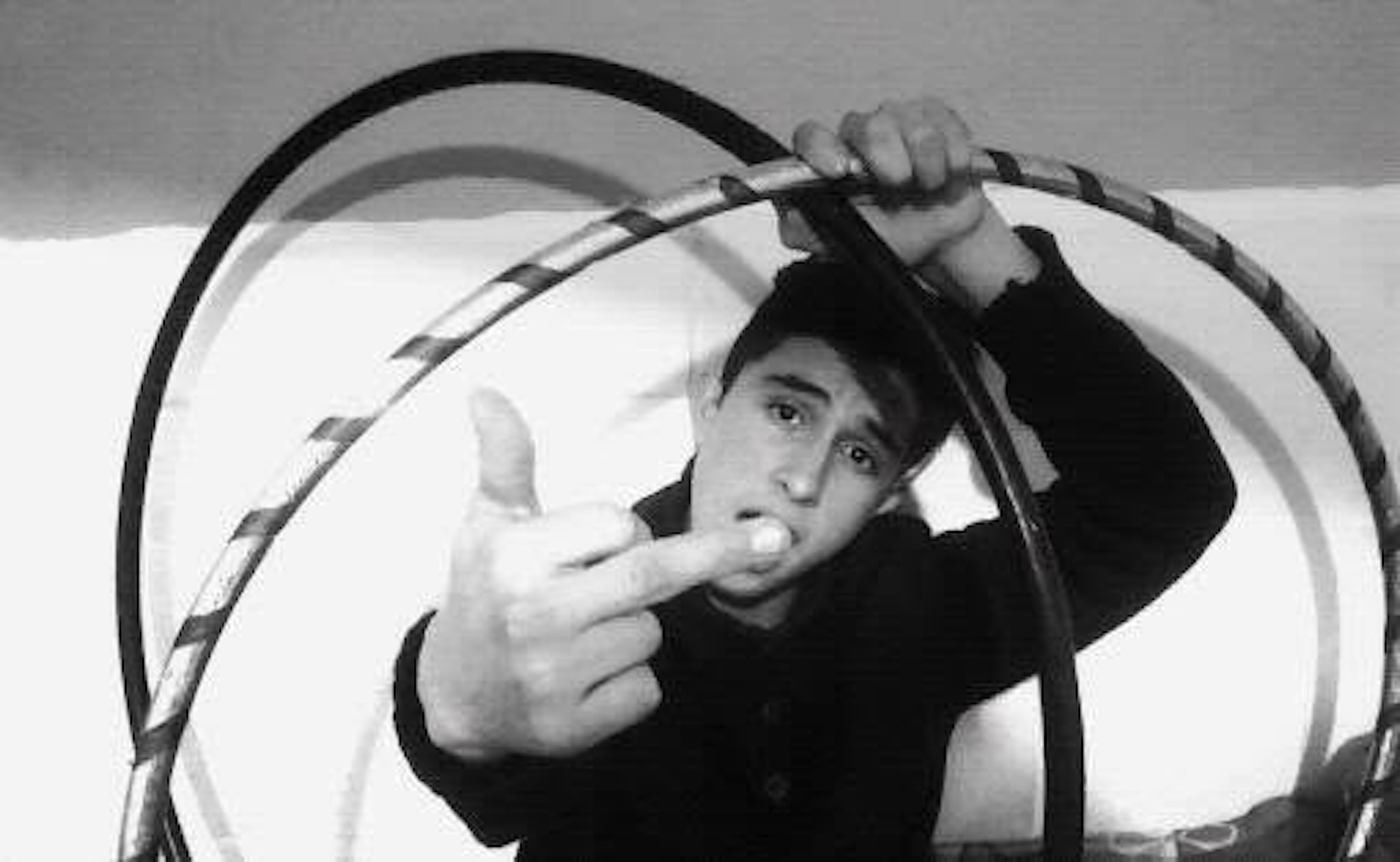
LOT: Where did you grow up?
Adan: I grew up between Aguascalientes and Puerto Vallarta. My father is originally from Aguascalientes, while my mother is from Puerto Vallarta. My parents separated when I was only a year old, so I primarily grew up with my mother, but when I was 16 years old, I told my mom and my dad who I am, that I was gay, and they were not accepting of that. I grew up in a “ranchero” family, a cowboy family, a machismo family. It was hard for me to live and express myself to my family, even to my siblings. Instead of staying there, I made the decision to pack up my things and travel around Mexico with my friends, backpacking.
LOT: What did you like doing as a kid?
Adan: Playing games with my brothers—Mexican stuff, like caicos [marbles] and escondidas [hide and seek]. And fútbol [soccer]. But I always wanted to dance. I wanted to be a ballet dancer. It was hard for me to talk about that in my family.
LOT: What did you avoid?
Adan: Sadness. Trauma. Violence. After my mom and my dad divorced, there were all these problems. But now, everything’s nice in my family. I talk to my mom, to my dad, to my brothers, to my sisters—you know, it takes time, right?
LOT: What did your parents do for work?
Adan: My mother owned a small family-style restaurant, a fondita. She dedicated herself to gastronomy and was always working. My father served in the military and then devoted himself to working in the countryside. After their separation, each went their own way. Today, they are both retired and enjoy this stage of their lives independently.
LOT: Was there a subject at school that you liked more than others?
Adan: I liked history and geography. I love talking about the world.
LOT: Is there a part of history, or a place, that you like the most?
Adan: Mexico. The story of my country. As a Mexican, it’s very important to me to know how our country is growing up, and how we’re living in this time. Mexico has a rich history that’s thousands of years old but, for me, Mexico is a new country. We have a new energy and we’re growing, and now everyone wants to come invest here. I like knowing about my country. Our history has a lot to teach. We have a deep story that touches the whole world.
LOT: Were there any sports that you liked?
Adan: I love surfing, but I really love dancing—to dance like a ballet dancer. I always wanted to dance like that. Surfing is a sport, but ballet and many other forms of dance are a lot like a sport, too. You’re working your whole body, your mind, your spirit—the Essentia [your being or inner nature].
LOT: How did you experience the hula hoop for the first time?
Adan: That was in high school. A friend brought her hula hoops to school and everyone started trying them, practicing. It was fun and she showed me some things. She was like this “hippie” girl and, one day, she invited me to work with her at the traffic light—perform for tips. I had just started to hula hoop and I never thought, “I’m going to become a hula hoop dancer, a professional dancer.” I just wanted to try it, and then this separation happened with my mom and my dad, when I told them who I am. I don’t know if I told them that I wanted to do something artistic or that I wanted to dance. They were obviously going to say, “No”.
So, during the year I was traveling around Mexico, backpacking and hitchhiking around with my two friends, we’d work the traffic stops. We were doing street performances. We even worked ourselves into a circus convention—all while we were hitchhiking. That’s how I learned a lot of hula hooping. I learned from other artists, from street performance. When you have something in you from the time you’re a kid, you’re going to follow that. Now, I can say, “I’m an artist; I’m a dancer.” I love it.
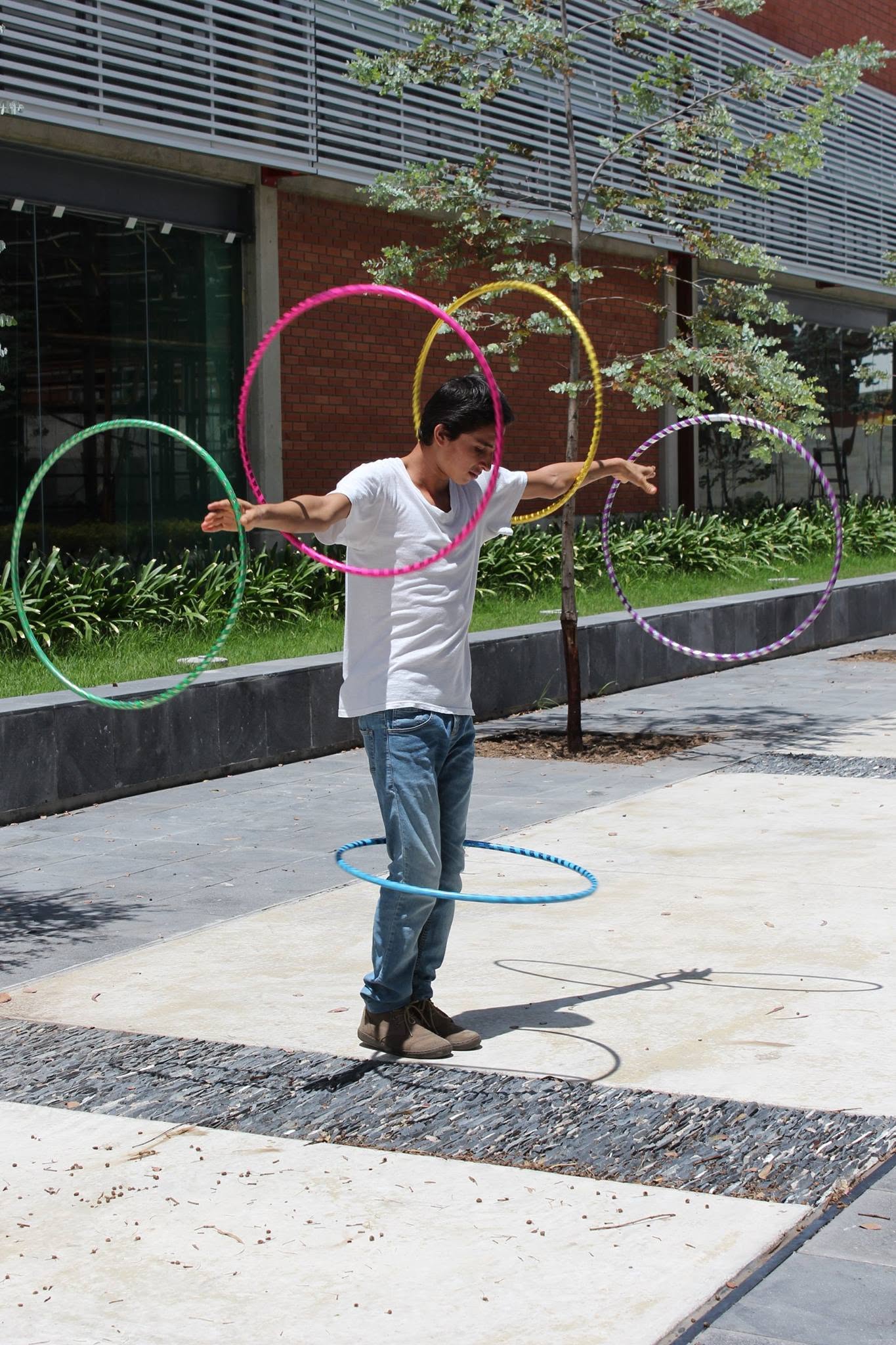
LOT: When did you realize that you had a gift for hula-hooping?
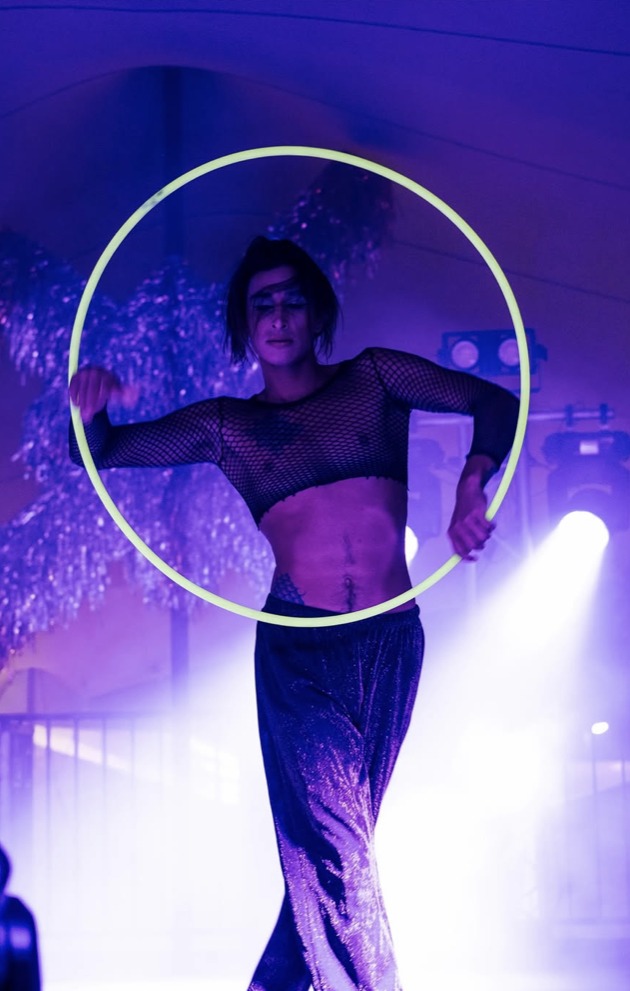
Adan: I was 20 years old when I did my first trip to Tenerife, in the Canary Islands. I’m 28 now. That was my first time traveling outside of Mexico, to work in a surf camp. During that time, I was not performing much, but then I had a chance to do some shows on a stage. I’d been performing on the street. That’s different from performing on stage. On stage, there was more collaboration. More response from the audience and from other artists. It made me feel something new, like I had something special.
LOT: When and where did you start surfing?
Adan: I started in Sayulita. I was about 19 years old. I was working in a hostel and they offered me a surfboard for free. I started going by myself and with friends to all the local surf spots. While I was at the hostel, I learned about the Backpackr app and the Workaway app—ways to travel around the world and work. That’s how I did my first traveling to Tenerife—I sent an email to this surf camp and they accepted. Tenerife is where I learned a lot about surfing, because the wave over there breaks over volcanic rocks. You have to learn or you’ll get hurt, get cut up.
LOT: When did you take the hula hoop out surfing with you?
Adan: I brought my hoop to Tenerife, to the surf camp, and a German girl asked me if it was possible to hula-hoop on a board while surfing. I said, “I don’t know”. She kept saying, “I don’t think you can.” It was a playful challenge and, one day, I tried it. It was kind of hard to figure out where to put the hoop, how to keep it with me. Once I got back to Mexico, I started practicing more—every day when I had time. I had to be careful, especially in Sayulita, where the waves are kind of advanced. I didn’t want to create problems for the other surfers, or for any beginners. I’m still researching the best way to paddle out with the hoop, but once I get up, I spin my hoop on my waist and I do it. I really like it. I’m experimenting with different boards and different hoops.
LOT: How did you happen to come to Saladita?
Adan: That happened in 2021 when one of my friends in Sayulita said, “Hey, we should do a trip to the south of Mexico.” That trip became a group of five friends, and we ended up camping here. We were here for a week and that’s when I met my friend Megan. She invited me to come back here, so I started coming every year, November and March.
LOT: What did you discover here on your first trip?
Adan: I discovered the peace of this place. And the wave, which is amazing. It challenges you in many ways. There are a lot more people here now than even five years ago. I can’t imagine 20 years ago when it was still unknown, a beautiful wave breaking with almost no one on it. The peace of that wave has stayed. I find that peace in the local people, in my friends. I find it all over Saladita. Compared to other places, there’s so much peace here.
LOT: Where do you live when you’re not here?
Adan: Right now, I live in Sayulita. That’s still “home”, because of my friends and the community I have there. I also have a lot of work there. I already have some shows scheduled for Puerto Vallarta.
LOT: Do you still work at surf camps?
Adan: I do camps and I do surf trips, but mostly I do shows. I love performing. Puerto Vallarta and Sayulita are bigger than here, bigger than Zihua and Ixtapa. There’s more work of every kind for me there. More than here. But honestly, here in Saladita, it’s chill. I like it more.
LOT: When are you going to come back?
Adan: I’ll be back in November for a friend’s birthday party, but then probably not again until March, during Semana Santa [Holy Week, leading up to Easter]. Part of the point on my coming here now was to look at land. I love Sayulita, but everything’s too expensive there, especially to buy or build a house. It’s a good place to work, but Saladita is where I want to be.
LOT: Why is that?
Adan: I see that Saladita is growing at the same time I’m growing. I want to be part of that. This is a place where I can imagine myself having a house and staying longer. It’s a place for community. It has that sort of feeling to it, of coming together, of sharing. I may still have to go to Puerto Vallarta and Sayulita to work, but this is the place I want to be. Maybe I’ll even die here. They can put me in the air right at my house.
LINKS
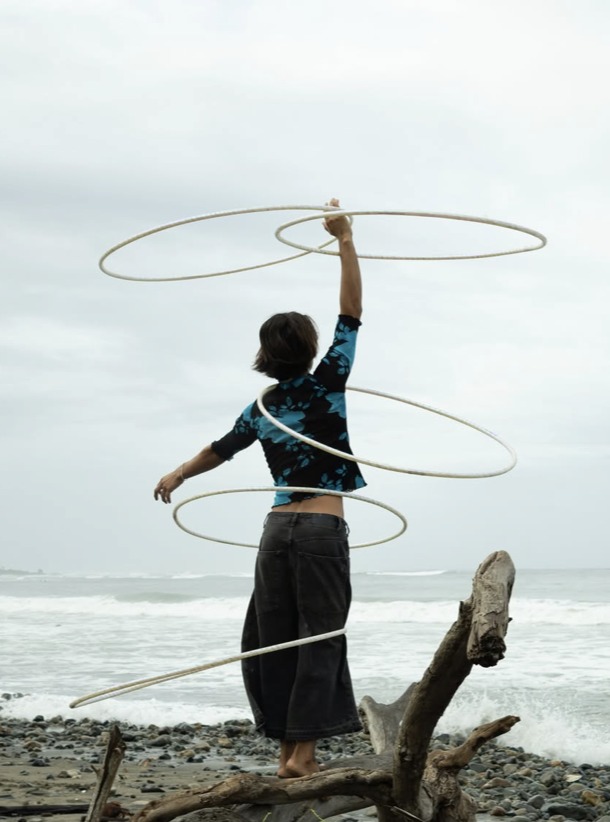
From Adan: my artistic exploration has led me to develop a research project that I started in 2019 called “SurfHula”. It’s a concept that brings together two of my greatest passions: surfing and Hula Hooping. It consists of surfing and dancing with a hoop on ocean waves, exploring new possibilities of movement, balance, and physical expression while connecting with nature.
SurfHula Instagram: https://www.instagram.com/surfhula/