Isabel Velasco: La Mexicana
At the heart of Troncones, there’s a woman with ideas and the determination to get things done
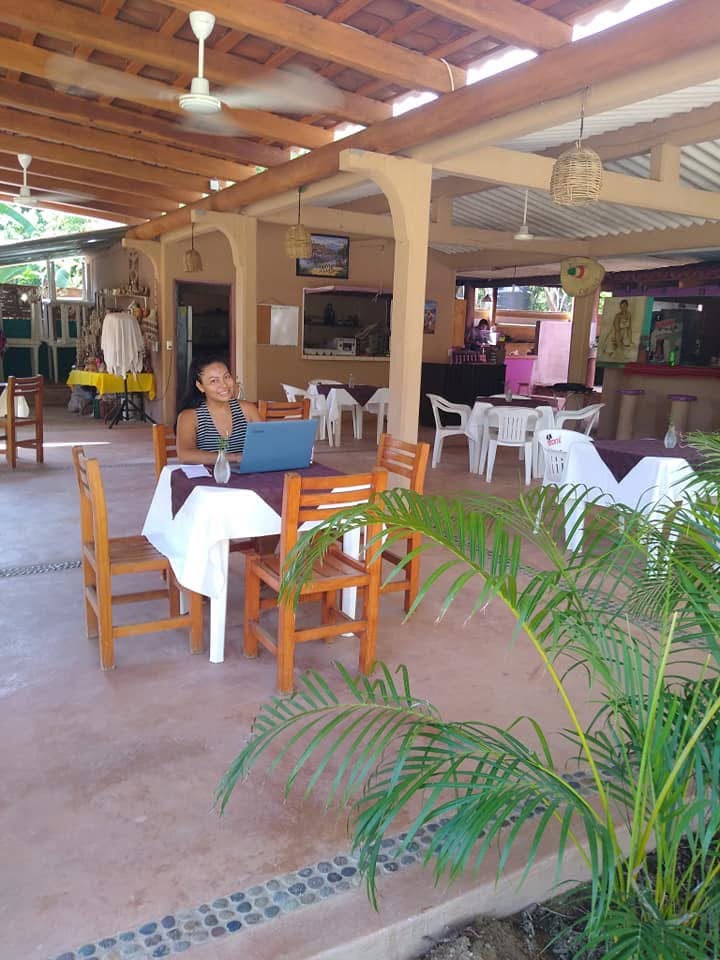
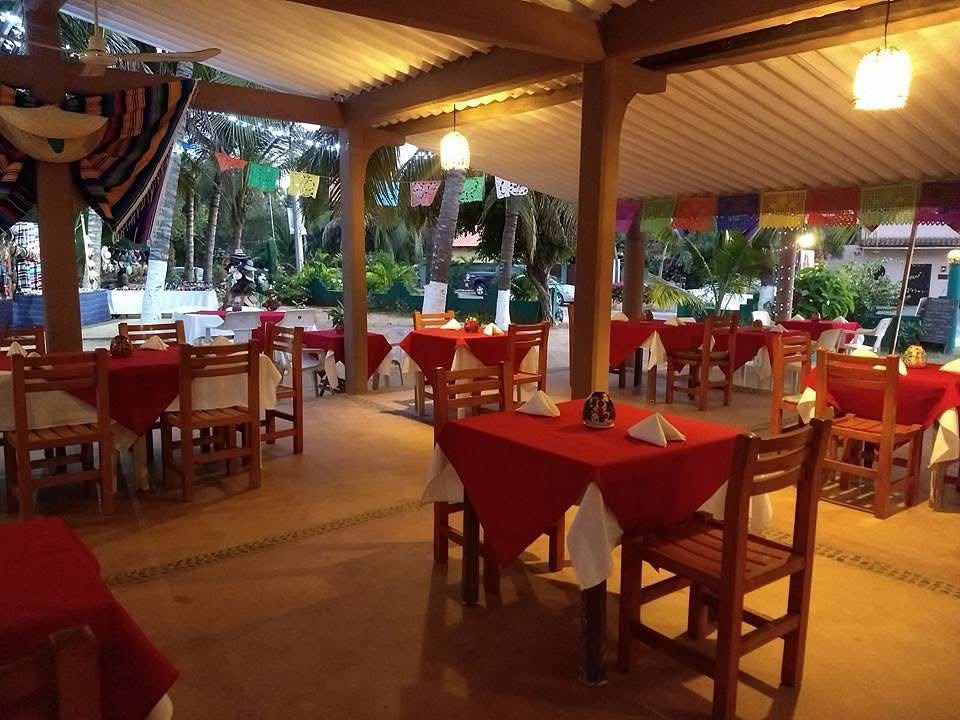
I didn’t know much about Isabel when we sat down together—other than she owns La Mexicana, a popular restaurant on the beach road in Troncones; that she helped start Surfers for Strays and that she’s part of the team heading up the Halloween parade that opens up Troncones’ Festival de la Catrina. That was about it. And that her restaurant once had a pet turkey roaming the dining room. Maybe seeing her volunteer to help with the parade should’ve told me something about her commitment to Troncones. Maybe having her set up our interview around her son’s school and his activities should’ve told me something about her priorities. But what struck me when we met was her honesty. She’s been through things no one likes to talk about. Meet Isabel Velasco.















LOT: What’s your full name?
Isabel: Maria Isabel Velasco Lopez.
LOT: Where did you grow up?
Isabel: Troncones.
LOT: Where is your family from?
Isabel: My family is from the mountains of Guerrero. My mother comes from a town that’s called Las Lagunas, that’s up in the mountains, a couple of hours from San Luis de la Loma [a city halfway between Zihuatanejo and Acapulco].
LOT: Are you related to Sandy Lopez? [Troncones mom, volleyball player, entrepreneur and La Onda’s landlord]
Isabel: Yes, her father and my mother are brother and sister. Sandy’s my cousin.
LOT: What brought your mother here?
Isabel: Same as my uncle and same as a lot of Troncones—they were relocated here by the government of Guerrero, from a town near Salitreras. They were moved to Troncones—like Paradise was given to them, right? That’s the story that my mom always tells me—how they were living under the trees, and they had no food, no water. She told me a lot of anecdotes we now see as “funny”—how she tried to cook beans with the water of the ocean because they didn’t have water. They had to experiment. The beans never cooked. The families that were moved here were very poor, without a lot of education, and they had the problems that come with being moved to a new place and not having the things they need, like jobs, healthcare, education and transportation.
LOT: What was it like growing up here as a kid for you?
Isabel: I don’t remember a lot of my childhood, to be honest. I remember being super poor, neglected. My mom had eight kids, plus she had to help take care of the other kids in my family, and then my grandma when she got sick. It was bad. There was a lot of drama.
LOT: What did you like doing as a kid?
Isabel: I remember climbing trees. We used to have a lot of ciruelos [Mexican plums]. They were all over Troncones—short grey trees with thick branches. I remember climbing those trees and playing with my girlfriends and our dolls, dressing our dolls up and all of that.
LOT: What didn’t you like? What was hard for you?
Isabel: Education. It was really hard to get an education. I didn’t go to kindergarten because there was no kindergarten. We only had primary school when I was growing up, and I wanted to study more. I wanted to do more things. And when I was about 15, the age to go to preparatoria [high school], my mom didn’t have any money and our father was not present at all. All of that was really hard. All of that was something I didn’t like. I wanted a proper education, maybe become a lawyer—you know, study and be something like that.
LOT: How did you learn English?
Isabel: When I was 15, I moved to Minnesota and lived there for almost two years—going to high school in a town called Golden Valley, in the Minneapolis area.
LOT: How did you get connected to Golden Valley?
Isabel: My family lives there. I have four sisters and two brothers living there. And many cousins, and many nephews and nieces. My brother moved to the United States, probably like almost 35 years ago. He was 18, and he went there for job opportunities. Troncones was very poor then. There wasn’t anything here for him. When I was like 13 or 14, there were no opportunities for me either and many problems in the family—and I was super rebellious, too. I told my mom, “I don’t want to live with you here. I want to go live with my brother.” At about the same time, my aunt came to Troncones. She’d moved to Minnesota illegally, but she’d come every five years and check on her mom, and then go back illegally again. My mom let me go with her. My brother paid a coyote [a smuggler] for me to cross the border illegally with my aunt.
LOT: Whoa. What was that like?
Isabel: We were like a group of 25 people. We were told to bring a little backpack, a jacket, some water, a plastic bag and some snacks. I remember crossing a mountain—walking and hiding and running, all night long. Then, when it was like 6 a.m., when there was just a little bit of light, someone said, “Run, run, run. La migra [immigration] is here.” So, we started running—everyone. And, you know, like, I’m not taking care of my aunt. My aunt is not taking care of me. It was survival. You just run and hide.
I remember hiding in bushes like this high [shoulder high], and I heard the voices of the immigration officers telling people, “Sit down! Sit down! On both your nalgas [butt cheeks]!” I was not even sitting down. I was more like my head down, my ass up, with my eyes closed—praying and praying and praying. And then I heard nothing—no voices, no people. And then I heard my aunt yelling my name, “Isabel”. I opened my eyes and I stood up. It was me, my aunt and an older man, maybe in his 70s, who was from Honduras or something like that. We were the only three people in the desert.
The old man said he didn’t know how to keep going to reach the United States, but he knew the way back. At that point, we’d lost everything. Me and my aunt didn’t have water. We didn’t have food. We didn’t have anything. We followed this gentleman and found some big white tanks where there was water we could drink. Eventually, we found a road and we waited. When a taxi passed by, we asked the driver for a ride and went back to the hotel where we’d been staying. We were still on the Mexico side.
LOT: How did you cross?
Isabel: There was a big, tall man. You climbed him, and there is somebody else on the other side, someone super-strong and tall. You climbed the man; you climbed the wall and then you threw yourself over and somebody was there to catch you. We were in Arizona. It was flat ground on the other side, with nothing—wide open, with no big trees or anything. And they gave us instructions to go to a little supermarket we could see, like half-a-kilometer away [a quarter mile], and that someone would pick us up there. There was a lookout who said, “If I whistle, you run. If I clap my hands, you hide.”
A woman in the parking lot saw us and said, in Spanish, “La migra is here. Go back to your country. They’re going to catch you.” But we did what we’d been told to do—we went in. We had some dollars with us, so we walked around like we were shopping, but no one came. We began to worry. My aunt told me to ask someone for a cell phone so we could make a phone call. So, I asked this guy in his early 30s if we could use his phone and he said, “¿son ustedes?”, “is that you?” He was the guy who was supposed to pick us up.
He took us to his truck—a brand new, blue Nissan—and we went to an apartment where there were like ten more people. I don’t know what happened there—they did some paperwork; they hid us in a car and drove us for hours and hours. And then they changed us to another car—a Trailblazer thing. After a while, they took us to eat and told us we didn’t need to hide anymore. By then we were near Los Angeles. They took us to an office, took our pictures, gave us a Social Security number—everything we needed to get on our flight, and we flew from Los Angeles to Minneapolis. They told us, “When you get to Minneapolis, get out of the airport as soon as you can.” And that’s what we did.
LOT: Did you speak any English at that point?
Isabel: No.
LOT: How did you go to high school?
Isabel: They had ESL classes [English as a Second Language]. And I’ve always loved hearing and learning languages. My sister is married to an American, so ever since I was young, I’ve heard a little English. I was like 12 when Debbie Meader first arrived. She started building her house, Casa de la Sirena, and kind of adopted my brother and myself. She would buy us gifts, help us and I was so glad she did. She also hired us an English teacher for about six months. That helped me get curious and want to learn more.

LOT: After high school, did you go to college or to a university in the U.S.?
Isabel: I was 17, I think. I was sad. I was depressed. I wanted my mom, I missed her. I told everyone—my brothers, my sisters, my cousins—I want to go back to my mom. I’d been going from one sister’s house to another sister’s house to a brother’s house. It was not easy or nice. I didn’t have that connection you have between a mom and her kid—like I have with my kid, how he tells me everything; how he gets angry at me and I know that he loves me and I love him. I didn’t have that with my brothers and sisters. I missed my mom. I know she wasn’t perfect, but she’s my mother, right? I just came back. But I couldn’t get a passport—and I don’t know how it happened, but they bought me a bus ticket and I took the bus all the way from Minneapolis to Zihuatanejo.
LOT: Didn’t you have a Mexican passport to cross the border?
Isabel: I didn’t have a passport. All I had was my birth certificate. I remember I was somewhere in the middle, in a bus depot close to the Mexican border—and immigration comes. All I knew to say was, “I’m going back to Mexico. I’m Mexican.” I showed the immigration officer my ticket and my birth certificate, and he said, “Okay.” He let me go. He didn’t stop me. I don’t know how I was able to cross the border. Nobody checked me. You know, now that I go back through all of these things, I’m like, “Wow. How was this even possible?”
LOT: When did your family start La Mexicana, or did you start it?
Isabel: I started La Mexicana. I was 21. When I was about 18, I started working for Ava [Robbins] at Eden, in her gift shop. I was also taking language classes in English and French in Zihua, and I was also trying to get my school documents to match up with my other documentation. It turns out my birth certificate had the wrong year on it. It was going to cost me a fortune and a lot of time to fix it, and I didn’t have a lot of money. I was working and I realized that I could be successful without going to the university—that’s what I told myself.
I started working here and there. I worked at Ford in Zihua—selling cars, for one year, maybe two. Then I found a better job as a concierge at Pacifica Resort Ixtapa. They hired me even though I could barely speak in English—or I was too shy to speak English. When they interviewed me, in English, I couldn’t answer most of the questions they asked me, but I smiled and answered in Spanish. I worked there for almost a year and a half. When low season came that year, my mom was sick and I came home. I worked for a few months at Tronco Bay, being a manager, taking care of the hotel’s guests and staff.
I was about 20 and I really wanted to do something else. My mom said, “Why don’t you open a restaurant? I cannot guarantee you that I can help you all the time, but when I feel good, I will help you.” My mother had always been selling food to the construction workers in Troncones—since probably 2010. I saw my mom working hard all the time, and she always had one or two workers to help her. So, that’s how La Mexicana started. I quit my job at Tronco Bay and opened the restaurant.

LOT: How did you find the location?
Isabel: My mother bought the property many, many years ago. I think she bought it for like $40,000 pesos. And many, many years ago, too, she opened a little restaurant there. That was maybe 30 years ago. It was called Esmeraldá—it was a little room, with a cement floor, and a little plastic roof.
LOT: And how long have you had La Mexicana?
Isabel: I’m 36 now, so about 15 years.
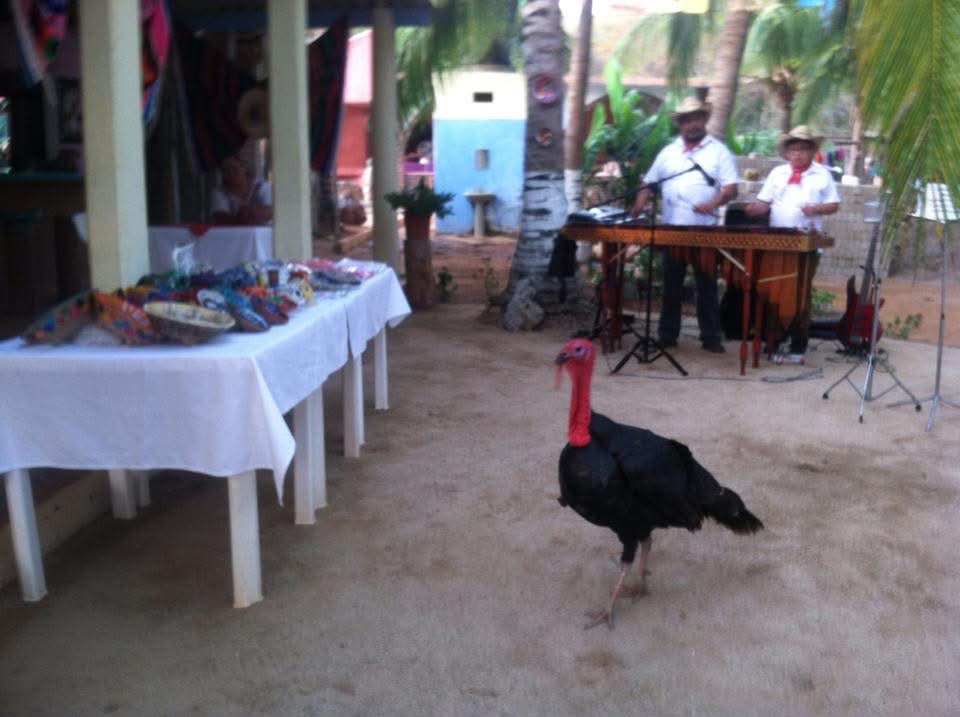
LOT: Wasn’t there a pet turkey at La Mexicana, maybe 13 years ago?
Isabel: Yes, that was our turkey. He was with us for about seven years. Cunde was his name. We brought him from Oaxaca. I had a grandma from there, and she had turkeys and would call them, “Cunde, cunde...”
LOT: What’s the experience you wanted to create at La Mexicana?
Isabel: I wanted it to be Mexican. I’m not a chef and I started the restaurant by making so many mistakes. But I knew I wanted my restaurant to be a point of reunion for everyone—for Mexicans, for foreigners. I wanted to offer our real Mexican cuisine, like the food we used to eat when we were little. That’s really what I wanted. Now, I’ve just partnered up with my nephew, Axee Nava, who’s an incredible chef. We’re still doing traditional food, but with new recipes—creating something new for the restaurant.
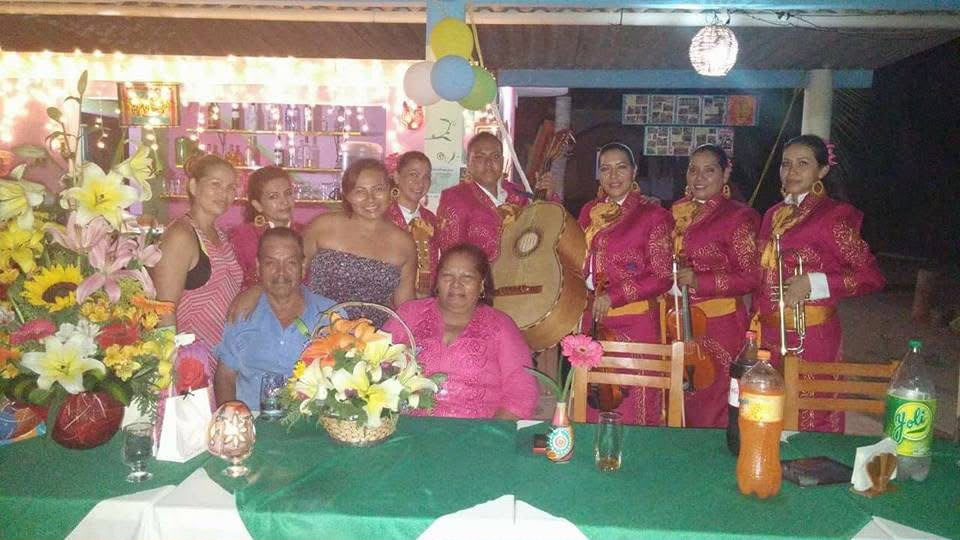
LOT: Music is a big part of the scene at La Mexicana. How did that come around?
Isabel: Back before, in the years Troncones was nothing, Roberto’s Bistro was the only place having live music. I thought, well, maybe, people need some variety here and so I invited a trio called Los Hijos de la Bohemia. That was my first band. I love music. I think it’s so beautiful, and the fact that you can support the people who make it—that my place can be a place where you can enjoy music and where musicians can make money. It goes back to what I want for La Mexicana—that it’s always open for anything and for anyone.

LOT: How did Surfers for Strays start?
Isabel: I’ve always liked animals. Before I was helping strays, I was helping kids, because I think kids deserve a better life. But some things happened that left me feeling disappointed, let down—not by the kids, but by the adults. So, I stopped that but I still needed to do something to make a difference. By then, I was good friends with Natalie Ritenour [now known as Thalia], and one day while we were at the hot springs, we found these puppies. Natalie said, “Let’s find them a home,” and started dreaming big, how we’d connect strays to people coming to visit. I was like, “Let’s make it happen—we can do it.” And we didn’t need too much to make it happen; we started little by little. We got those puppies adopted. More dogs came, and then more cats came. And people came to volunteer, to care for the animals, and more people came to adopt. We even had different animals, like opossums.
LOT: How did you connect the strays and the surfers?
Isabel: Natalie’s a surfer, and she’s creative and connected. That’s where the people came from, mostly from her. I created the structures—giving the animals and the volunteers a place to go. That used to be my house. Right now, it’s in La Colonia Nueva [Nuevo Troncones]. That’s the place where the dogs live. Surfers for Strays is run by Sandrine Provencal. She has many volunteers and there are many, many people in town who foster the dogs so they’re not living fenced-in, in some sort of pen. The Surfers for Strays volunteers take them walking and give them a lot of love, but it’s not the same as when you have them in your home. Then you have time to train them, give them love and get them prepared for a family.

LOT: What role are you playing in the Catrina festival?
Isabel: I’m organizing the prizes for the kids, with Winter Ramos and Alejandro Rodriguez. The festival is a three-day event that starts on Halloween [October 31] at 5 pm, with the kids walking and trick-or-treating from Majahua to the letters on the beach in Troncones. After the kids finish trick-or-treating, around 8 pm, we’re going to be giving them agua fresca [refreshing fruit water], palamitos [popcorns] and they’ll break a piñata.
LOT: How did the Catrina festival happen? How did people suddenly want to do this?
Isabel: Honestly, I’m going to give the credit to Chencho [Ausencio Solis Hernandez]. He posted some AI images of a Catrina by the Troncones letters, and people were like, “Whoa, that’s a good idea.” The hotel and restaurant owners got together and decided we can do this. And now we are—with the support of Victor Santana [La Union’s director of tourism]. Juan Pascal [from Mi Jardín] is doing an amazing job coordinating things and keeping the communication clear. It’s all of the community participating and it’s really impressive. I’ve been part of other groups in the past and they’ve never accomplished anything like this. I think this time we can actually make it happen. You know, it’s not about money. [Pause.] Well, it’s always about money at the end of the day, right? But what it’s really about is creating an experience for people—to get them to come to Troncones. That obviously generates income for everyone, not just for La Mexicana, not just for Mi Jardín. With this festival, we’re offering something for everybody, for the whole community, for our visitors—for free.
LOT: Okay. Two more questions. What do you think about the growth of Troncones?
Isabel: I’m scared of what can be if we don’t do something now to prevent what can happen in the future. We don’t need nightclubs and that sort of excitement here, or people coming to try to make money fast, like in Cancún. Those kinds of people don’t care about the community. Local decisions should reflect local priorities, not just outside economic goals. We need to stay strong to not allow that as a community. We also need to promote ourselves more as a destination—share what we already have year-round, like the beach, the surf, the nature activities, the health activities, the self-care, the yoga, the temazcal, the food. Troncones has it all. And not just in the winter.
LOT: What do you like most about Troncones now?
Isabel: That we’re still united, in agreement—the locals and the foreigners. That’s something really amazing that you don’t see everywhere—there’s a diversity in our union that’s special. Also, I feel very safe here. La Mexicana was my first baby, but now I have a four-year-old son. I think Troncones is a beautiful place to raise him. Because of the how the locals and foreigners work together here, my son doesn’t need to suffer and struggle as much as we did, and many other families did. I don’t want a luxurious life. I want a simple life, but I don’t want him to have to worry about what we’re going to eat tomorrow like we used to. That’s only possible because of how this community works together—those who live here and those who visit.
I also like that I’m able to be here for my mother. I think I am who I am mostly because of her. Because of her advice. After she got healthier, after she started feeling better, she kept her promise and helped me run La Mexicana—for about ten years. I mean I was running it, but she was the one who was always in the kitchen and at the cashier—and at the end of the season, she would give me my share. And I just opened a new place—Fonda Doña Vicenta. It’s named after my mom, and we have the same food my mom used to sell when she had Esmeraldá. This is my third year running La Mexicana myself and now I give my share to my mother. I like that.

LINKS
La Mexicana on Facebook: https://www.facebook.com/LaMexicanaTroncones/
La Mexicana on Instagram: https://www.instagram.com/lamexicana.tronconesmx
Axee Nava: https://www.laondatroncones.com/eat/chef-profile-axee-nava
Sandy Lopez: https://www.laondatroncones.com/meet/sandy-lopez-ayala-proud-mama
Surfer for Strays: https://www.laondatroncones.com/know/surfers-for-strays
Riviera Troncones Majahua Saladita (tourism): https://www.facebook.com/RivieraTronconesMajahuaSaladita