Paved Paradise
Troncones wasn’t built in a day—and there are many regrets that it’s not like it was—even though mud and dust ruled the roads until about 14 years ago
Ask around Troncones and someone will tell you that they paved paradise. They’ll probably credit Jimmy Buffett, too, which tells you something about the local playlist. The line is Joni Mitchell’s, and the premise deserves the same scrutiny as the attribution. The paradise in question was a dirt road that turned to soup every rainy season and to choking dust every dry one. Whether paving it ruined Troncones or saved it depends almost entirely on when you got here. It didn’t happen all at once, either. It came in nine phases over more than twenty-five years, each with its own disasters, negotiations and small victories. Here’s how it went.

.png)





.png)
%20(Spanish)-2.avif)


PHASE ONE
Phase One predates me. More than twenty-five years ago, the road from Highway 200 was paved down to Troncones. It ended at the T, at the beach road, where it trickled out about a hundred meters in each direction, as if it had lost its nerve. That’s the oldest asphalt in town. You could argue everything that came after started right there. Once you can reach a place without leaving a muffler behind, people start driving to it.
PHASE TWO
Phase Two ran south from the T to the estuary, the one with the crocodiles. There was no bridge then, so the road simply ended at the water, which in hindsight was foreshadowing. It’s about a kilometer to the estuary and that was the unit of progress: the municipal government approved the road a kilometer or two at a time, and each piece got paved when its turn came.
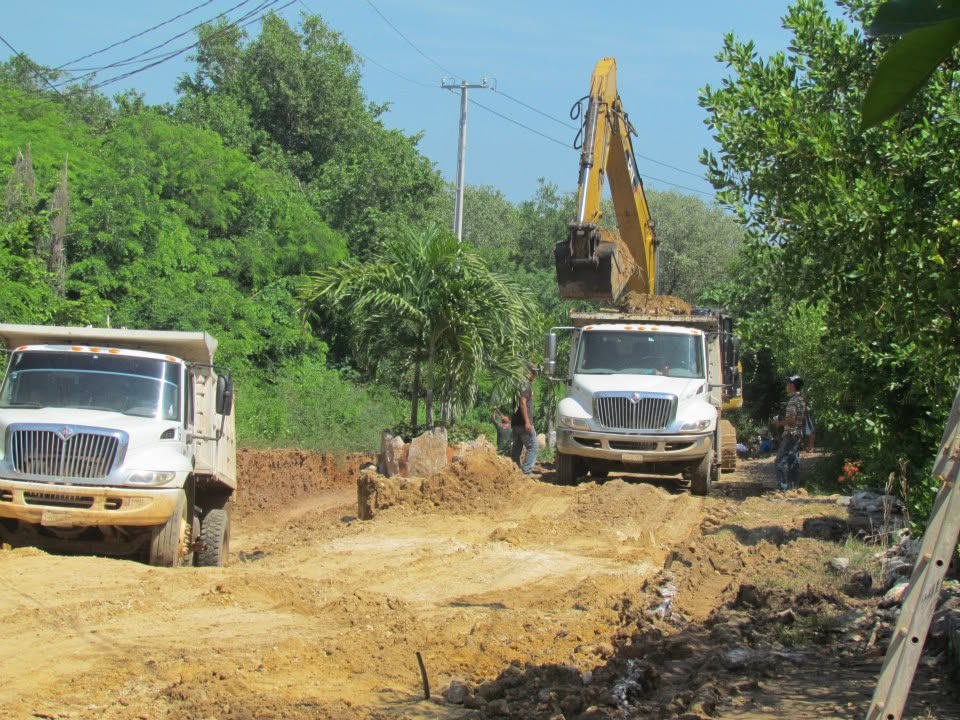
The first crew was serious. They dug until they hit bedrock, which near the lagoon meant close to two meters down. They backfilled with large boulders, then smaller rock, then gravel, then soil compacted several times over, and then paved. It was genuinely good work. That stretch has never given anyone trouble. The trouble was the calendar. Work began in early September of 2012, which on this coast isn’t the start of the rainy season but its peak, and ran until December. It was low season, but workers still had to get in, and a couple of hardy souls lived out there year-round. The rains, already in full swing, did what they do every September. The trench filled. Near the lagoon it held about two meters of water, the mud was knee-deep in places, and more than half the stretch was impassable. They tried pumping it out. The rain disagreed. For months, people got to their homes along a narrow footpath at the edge of the excavation, where one bad step would drop you into two meters of brown water. Some of them were not gracious about it.
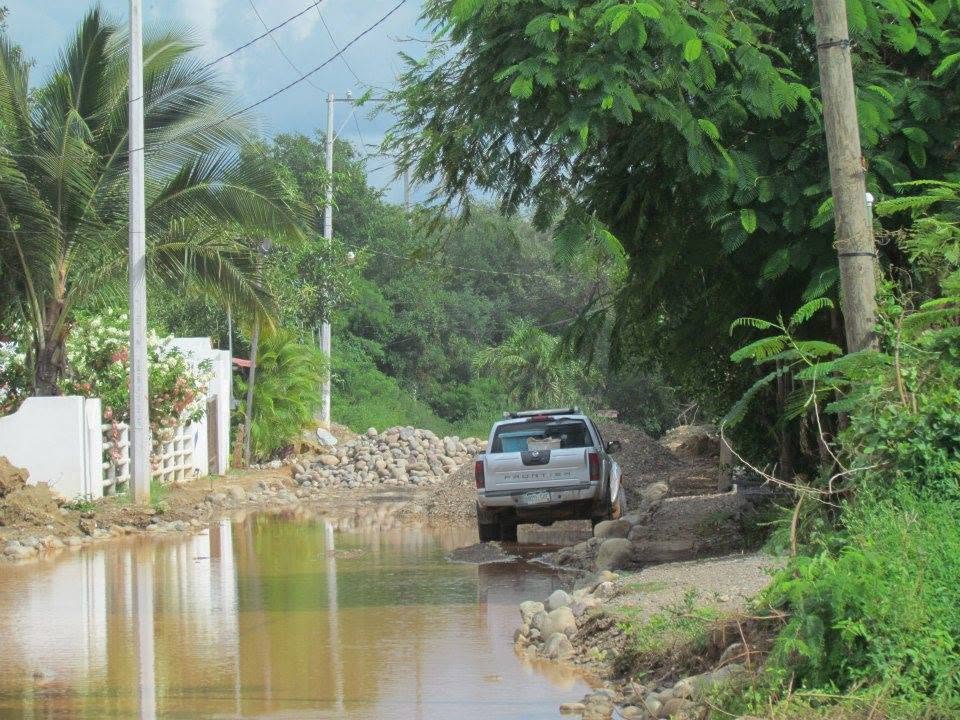
Phase Two also brought the first formal encounter between the homeowners’ association and the engineers. Back when the road was dirt, residents had taken it upon themselves to build islands down the middle of it and plant them with palms and flowering shrubs. When paving arrived, the owners had no intention of losing them. Negotiations followed. The homeowners won, although a few islands were lost where the road was too narrow. But most of them survived and are still there. That stretch has been the best part of the road ever since, which proves either that civic engagement works, or that the engineers were very tired.
PHASE THREE
Phase Three went north from the T toward Manzanillo Bay, about three kilometers, in 2014. The crew was less devoted to the underworld than the first. They excavated and laid a roadbed, but nobody went looking for bedrock. Then again, there was no estuary to cross, and the north end mostly cooperated.
Mostly. A runoff channel comes down from the mountains near what’s now Mi Jardín, so they had to build a bridge. It was the biggest aspect of construction for the phase and the biggest holdup, and for a while traffic was sent around it on a road hacked through the jungle, which gave everyone a brief, bumpy reminder of how things used to be. The bridge also did something nobody put on a banner: it drained the swamp that used to sit there. Farther on, the hill gave them trouble. Underground water turned parts of it into something close to quicksand. We’ll come back to that hill. The pavement ended about at Manzanillo Bay, three kilometers with no real catastrophes, which by Troncones’ standards is a triumph.
The islands survived this round, too. Whatever patience the engineers had left, they were still spending it on palm trees.
PHASE FOUR
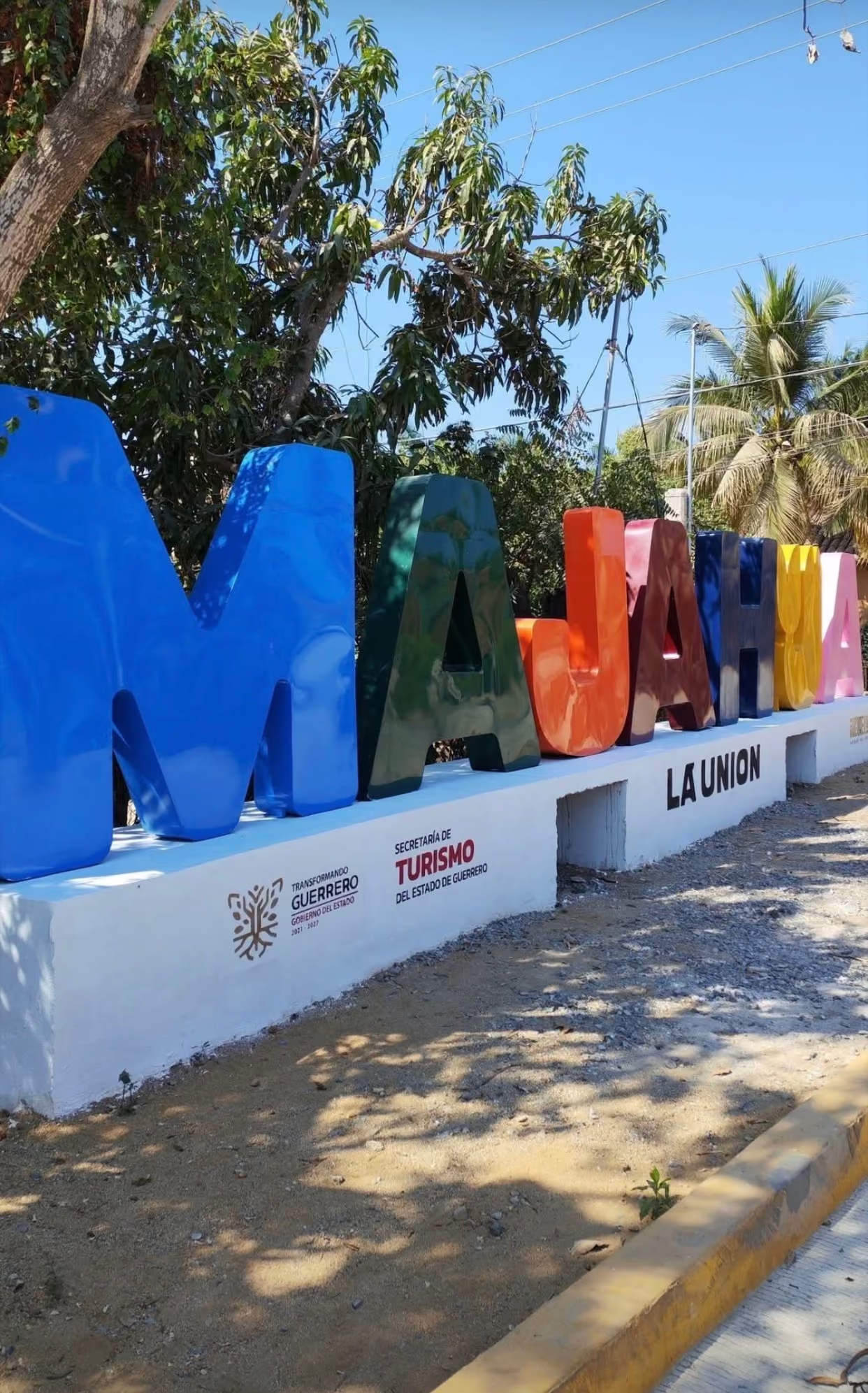
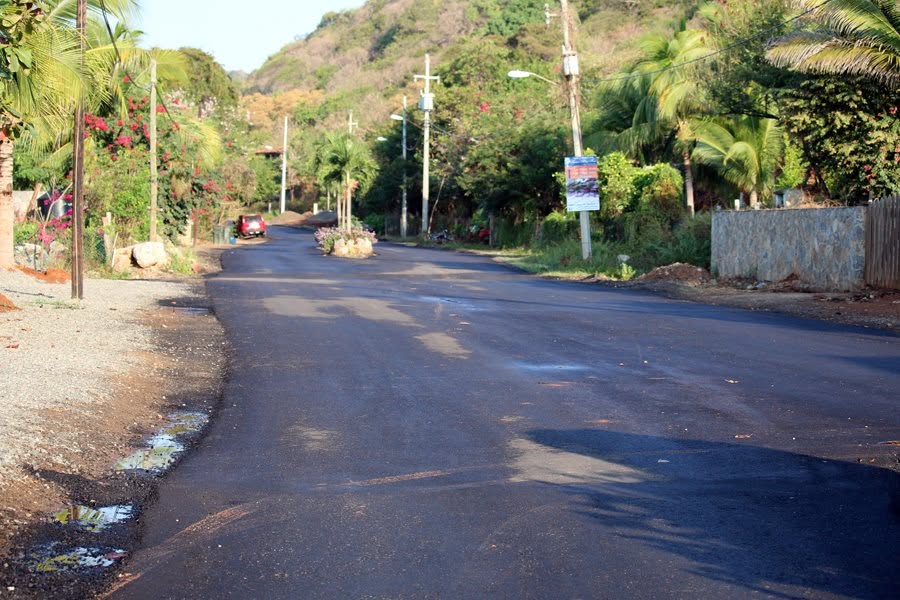
Phase Four came around 2015 and ran from Manzanillo Bay to Majahua. That was ambitious. That stretch crossed a large swamp and, as a dirt road, it was soft and often impassable in the rainy season. Nobody consulted anyone about the islands this time. The crews tore them out without a word, and the road ran straight. That was the end of the island era. The engineers had stopped taking meetings.
It was also the worst-built stretch of the lot. Where the first crew dug to bedrock, this one graded the surface, compacted it, and laid a couple of inches of asphalt over what was essentially a wet sponge. That road lasted about two years. Then the pavement simply dissolved back into the swamp it had been laid on, and the whole thing had to be redone. It ended just before the turn to Majahua, back before the Punta Majahua condominiums were built.
PHASE FIVE
Phase Five was meant to run in Troncones from the main road out to the clinic. It was a sensible plan: easier access to the clinic and the cemetery, and an end to the arroyo and the mud that made the trip harder than it should be for anyone who was sick, or already past caring. The engineers arrived and found a house. Not near the road. In it. The dirt track had spent years politely detouring around it at an awkward angle, but the house sat squarely where the pavement was supposed to go. Faced with this, whoever was in charge decided the simplest solution was no road at all.
The comisario at the time had other ideas. Through some quick negotiation, he talked them into paving in the opposite direction instead, from the main road north to the church, a section of roadway which opened in 2017. So, the clinic kept its mud, the church got its asphalt, and the house stayed exactly where it was. Somewhere in there is a sermon about priorities, but I’ll leave it to the church.

PHASE SIX
After 2017, the clinic road looked finished in the permanent sense. The house was still in the middle of it, and the project, supposedly a priority, sat quietly in a drawer. Then the community did what governments rarely manage: it solved the problem. A GoFundMe-style collection raised money to help the owner rebuild the house back on her own property, where it probably should have been all along. The old house came down, and the road was clear.

Six years later, in 2023, the crews came back. I had a personal interest in this stretch, since it runs past my house, and I watched them come with the cautious hope of a man who has lived here long enough to know better. They paved less than a kilometer and stopped. No explanation. They never got near the arroyo or the clinic. The concrete simply ends about halfway there and turns back into dirt, and anyone headed to the clinic from that side still has to get through the mud hole and the arroyo, as always. So, the project meant to improve access to the clinic improved access to my front gate. I’d like to say I’m outraged on the community’s behalf. I’m working on it.

PHASE SEVEN
Back in 2020, meanwhile, the south end got its sequel. For years, the pavement stopped at the crocodile lagoon, which was the end of the line in more ways than one. Beyond it, a dirt track that barely qualified as a road carried on south, and the only way to reach it was to drive around on the beach, and only when the lagoon was closed off from the sea. In those days, when the lagoon opened to the ocean, the south end simply ceased to exist. Around 2020, a bridge finally went in across the lagoon, joining the pavement to the dirt on the other side. Then, in August of 2021, the asphalt pushed another kilometer or so south, along cliffs, beach, and jungle where almost nobody lived. It came with sidewalks built in from the start, a courtesy the rest of the beach road had never been offered. Why pave a road to almost nowhere, and so nicely? Rumor had it that a politician had bought land out there. I couldn’t possibly comment. The crocodiles, for their part, now get to watch the traffic from underneath.

PHASE EIGHT
That same year, with no warning anyone noticed, came the sidewalks. They went in over several stretches through 2021. The first road off the beach, the one to the church, had gotten sidewalks when it was paved, but the beach road itself never had them. Suddenly it was going to. Crews appeared, and so did the usual commotion over easements. Along much of the road there simply wasn’t room, with property walls and buildings sitting right up against the pavement. The engineers’ solution was a sidewalk that crosses the road whenever it runs out of room, then carries on from the other side. It runs from the crocodile lagoon north to nearly Mi Jardín, where it gives out.
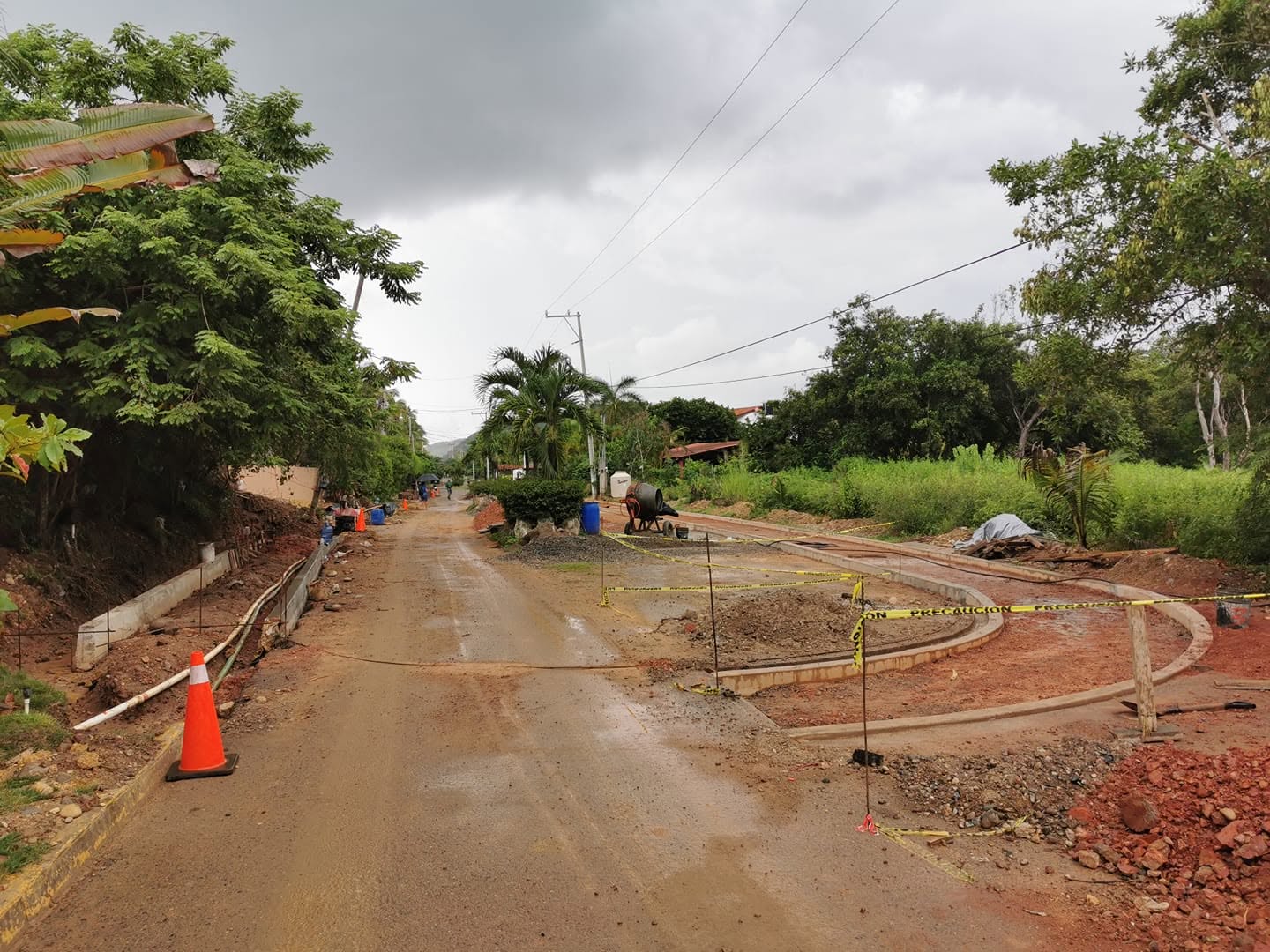
Downtown was supposed to be the impossible part. With buildings right at the road’s edge, most people assumed a sidewalk through the center of town would either never happen or require the demolition of half the block. It was a damn-the-torpedoes project: the sidewalk was going in wherever your building happened to be. Somehow, they fit sidewalks on both sides of the road through town, heading east. For all the skepticism, it worked. For the first time, people can walk through town and along the beach road without sharing a lane with a speeding truck, which may be the most quietly civilized thing the road ever gave us.
PHASE NINE
The last act was the one nobody believed. The road through Majahua was twisty, narrow and tight, a stretch that felt like it had no room to spare, even as dirt. Then someone decided it would be paved, with sidewalks, no less. In 2024, it happened. They used concrete, poured in sections, and each section had to cure before the next went in, so for about six months you couldn’t drive through Majahua at all. It was worth the wait. The work is excellent, the road looks good, and Majahua is better for it.
There is one curiosity. Between the end of the beach road’s asphalt and the start of Majahua’s concrete lies roughly a hundred meters of dirt and potholes, right at the turn to Punta Majahua. How that gap came to be, and why it’s still there, is another story. Maybe someday someone will tell it.
THE VERDICT
I have a theory about Troncones. Everyone wants it to stay exactly as it was the day they found it. If you arrived when it was dirt, it should have stayed dirt. If you arrived when it was half-paved, that was the perfect balance. If you arrived last year, nothing should change from here on. So, the question of whether paving was good or bad has no clean answer. It was both, and anyone who tells you otherwise arrived at a convenient moment.
Start with what the pavement replaced, because anyone who lived here year-round will vouch for it. In the rainy season, the road was a dangerous, muddy mess. Some stretches, especially toward Majahua, were impassable, the mud deep enough to swallow tires whole and leave cars waiting for a tow. Arroyos came down from the mountains and crossed the road like small rivers. At one point, enough water pooled beside the road that a crocodile took up residence there. The hill past Mi Jardín toward Manzanillo Bay was so riddled with underground water that a beer truck sank to its axles in the middle of the road and sat there for three or four days, blocking everyone. Whatever else it was, it was not a supply chain.
Then the dry season came, and the mud became dust. Not household dust. Dust four or five inches deep, dust that rose in a choking cloud behind every vehicle and settled on the car behind you, on the houses, on everything within breathing distance. And if it happened to rain in the middle of the dry season, all that dust turned instantly into grease. The case for pavement was simple: a road you could use all year, one that was safer, with the mud and dust gone, and drainage that actually drained.
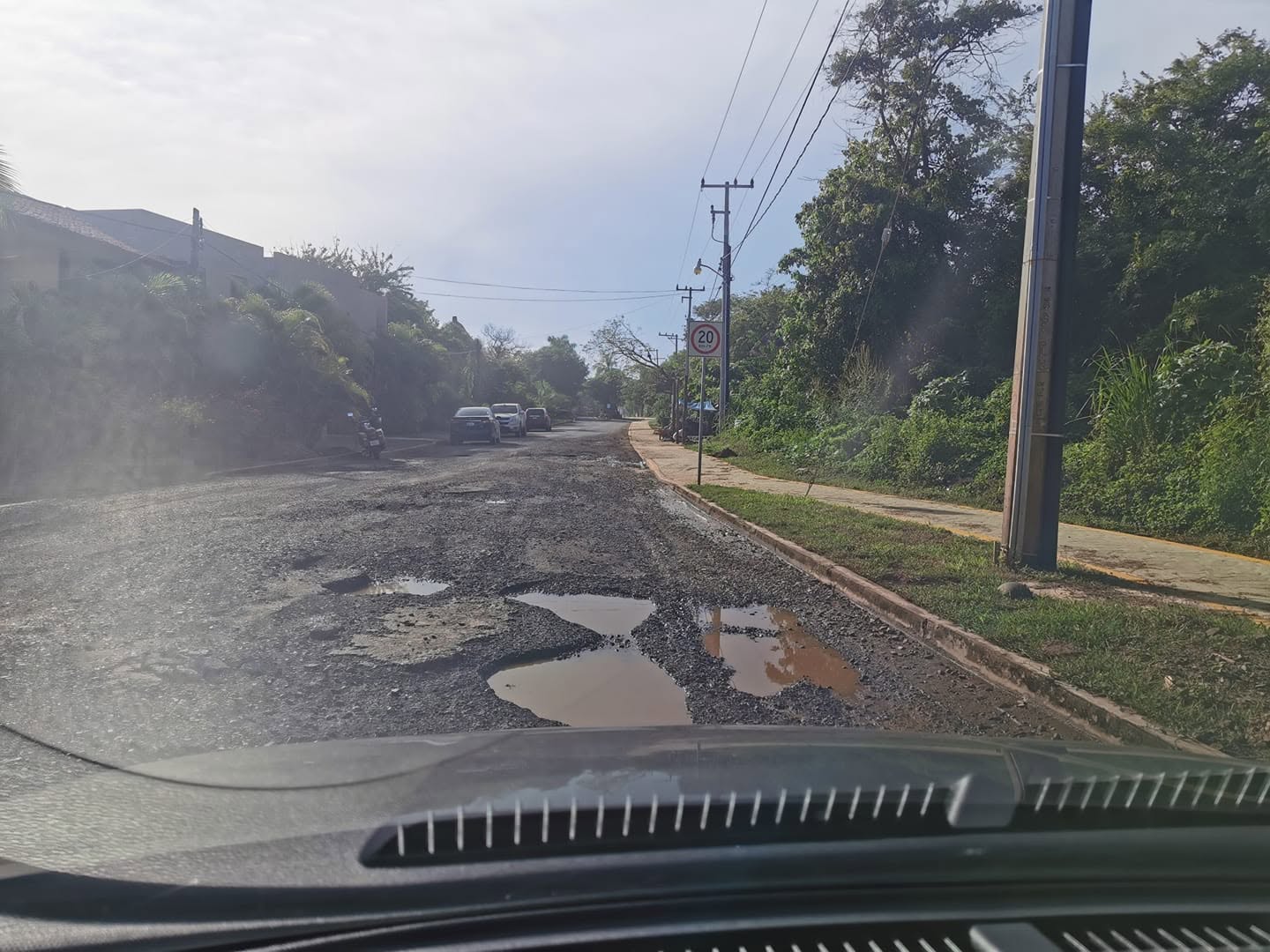
The case against is just as real. Some will tell you paving ruined the ambiance, that Troncones became something else once the asphalt went down. It opened the door to development, and it changed how the town looks and feels. For some, it marked the beginning of a long decline into what Troncones is now: far more built up than it was fifteen or twenty years ago. There’s also maintenance, or the lack of it. Pavement needs upkeep that it doesn’t always get, and some of the potholes have reached a size that deserves a name.
And then there is speed. Motorcycles are the worst offenders, running this road at speeds that would be reckless anywhere. We have so many topes that they’ve become a running joke about the town, and still people fly. Topes are torn out mysteriously, worn down and never replaced, and complained about constantly. But here’s the uncomfortable truth: if the topes bother you, you’re driving too fast. At the posted thirty-to-forty kilometers an hour, you barely notice them. They exist because a great many people won’t drive sensibly without being physically forced to. The price of that speed is paid by whatever’s in the road. Dogs and cats get killed. Wildlife gets killed. On a dirt road, nothing moved fast enough to catch them.
So, did they pave paradise? Nobody chokes on the dust anymore, and nobody waits three days behind a beer truck. The ambulance gets through. We also lost something slower and quieter that we won’t get back. Paradise, it turns out, was mostly mud. The iguanas would still like a word about that.