Ramón Carranza Valdez: Come See Us
Fisherman and farmer takes a look at Majahua, 1980 to today
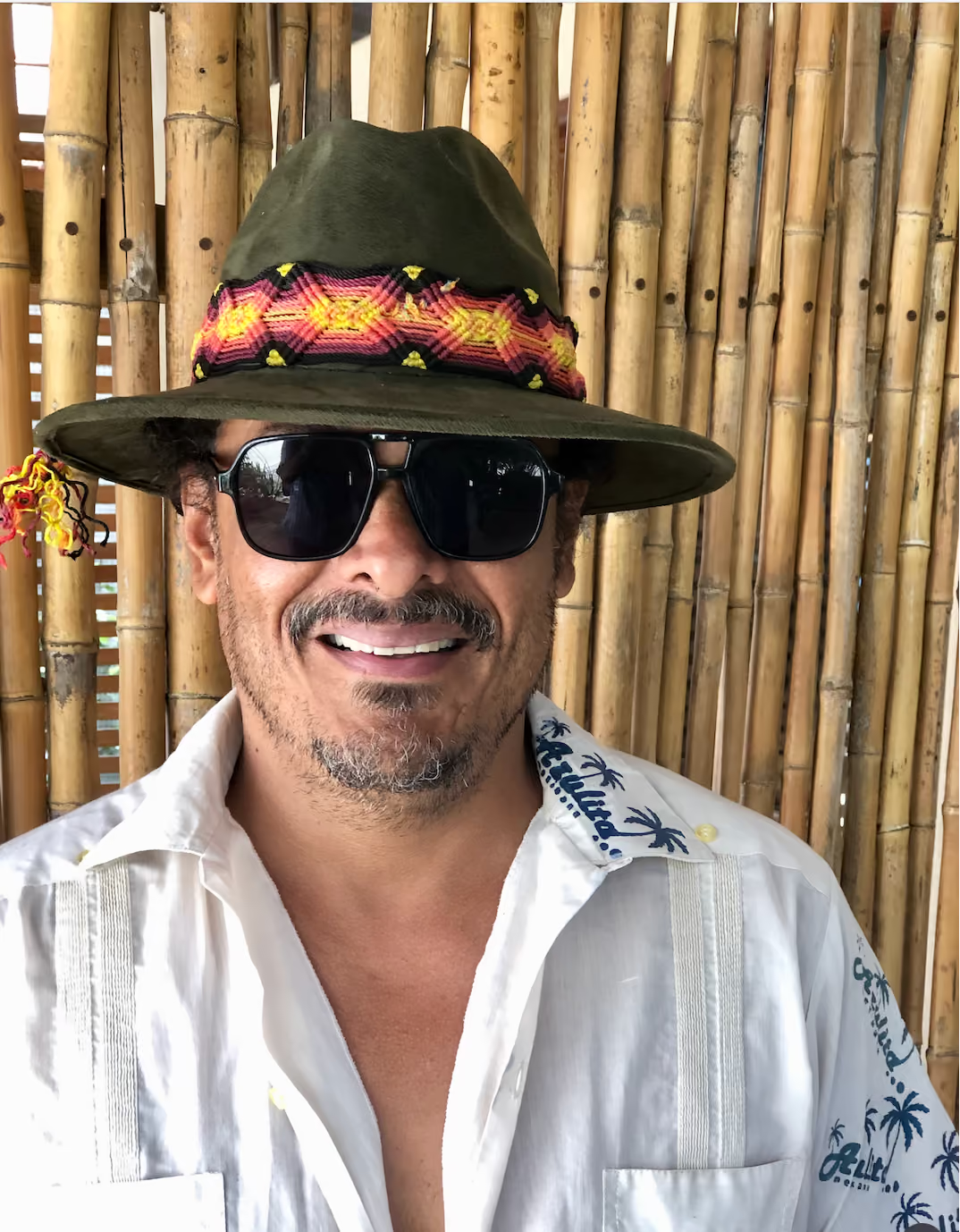
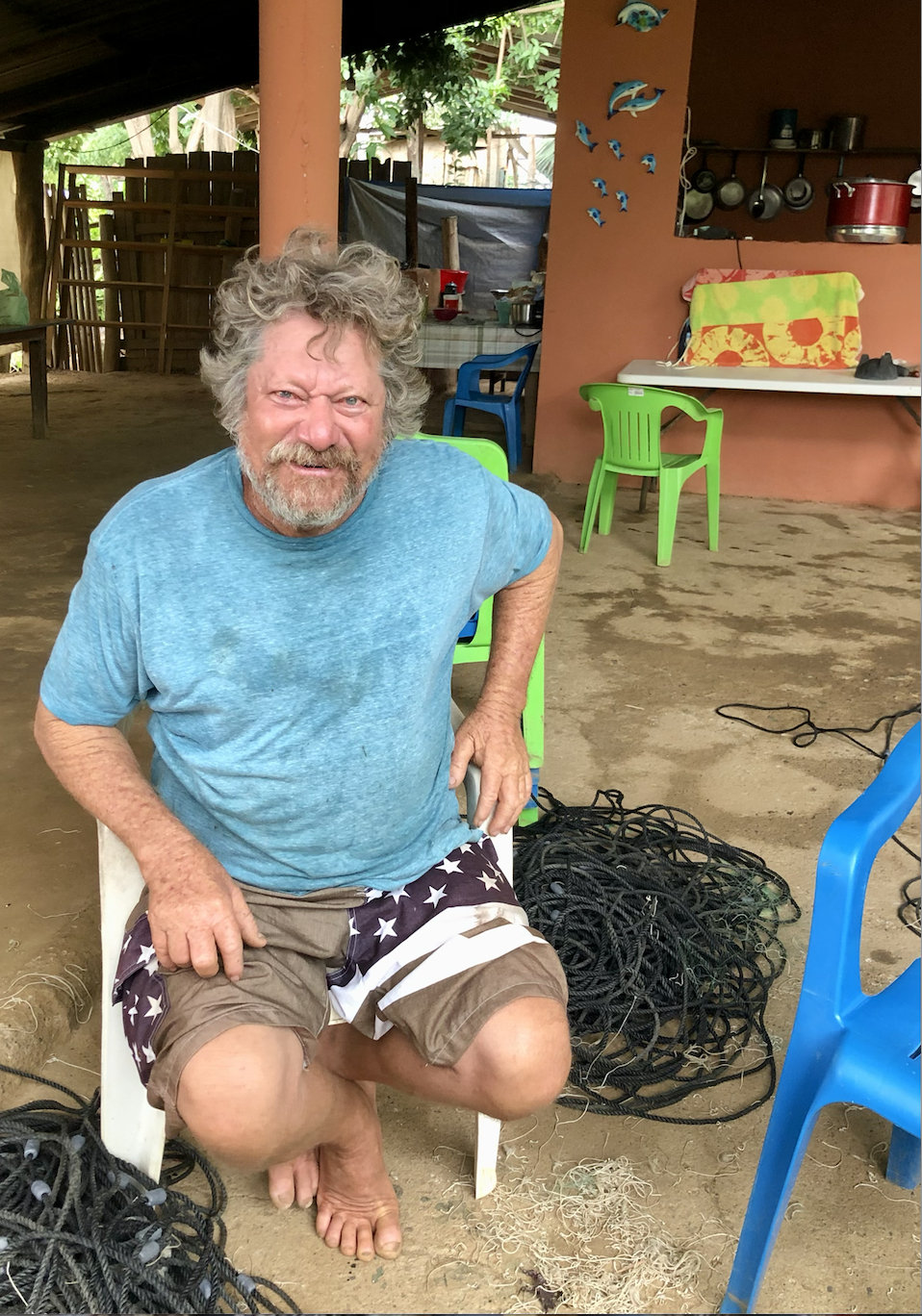
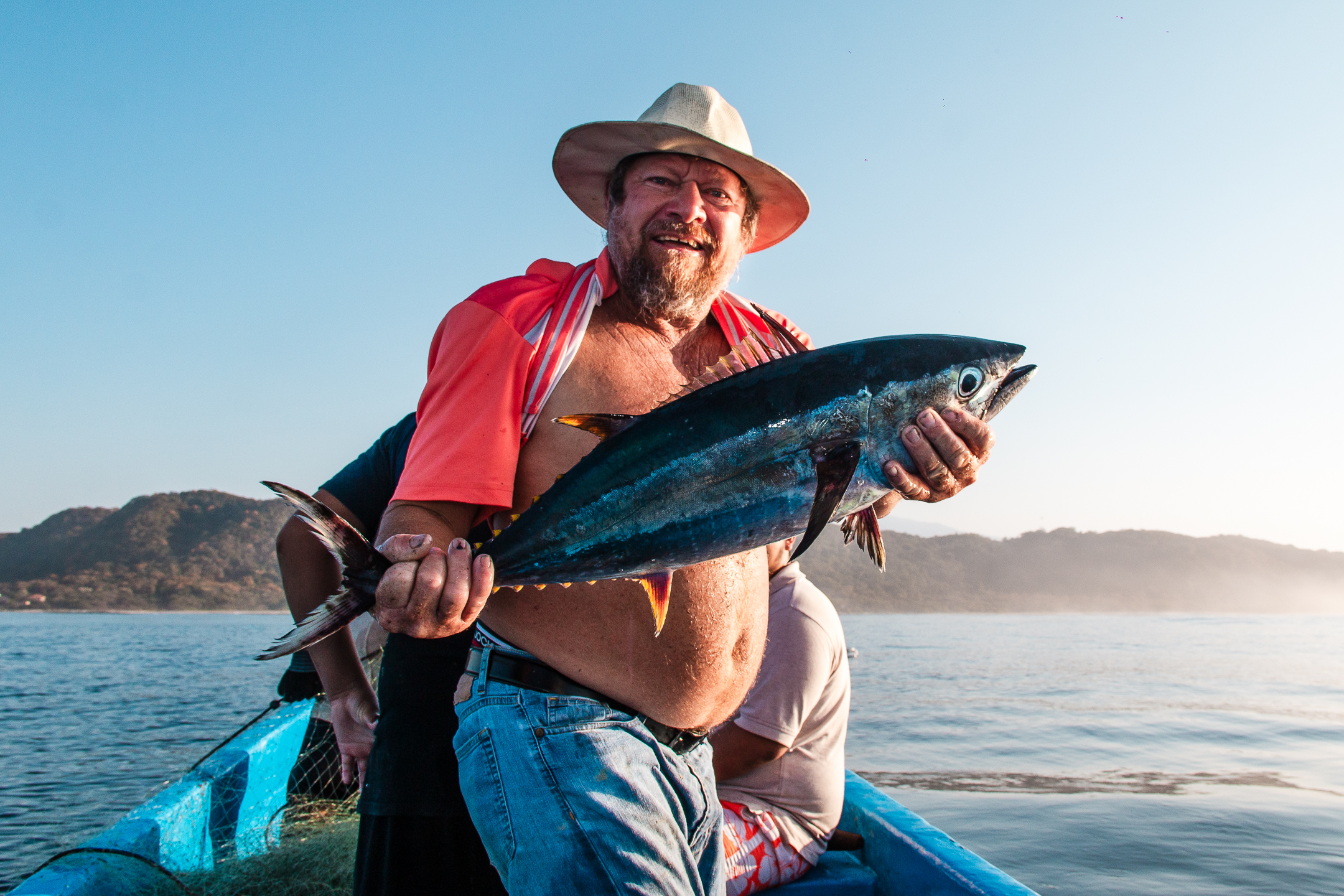
Ramón was working his fishing line when I found him one Sunday. He’s like that. He’s not someone who sits idle. We have a table at home Ramón cut from a tree that fell on his mountain property. He took a “bad” thing and made something good out of it. That’s the Ramón I know. When I first met him in 2012, I was told Ramón knew everything about Majahua. He’d been in The New York Times talking about sharks, fishing and tourism a few years before. That led some people to say he was an “expert”. Ramón’s not like that. I know him to be observant and curious, not someone who needs to share his opinion or be the center of attention. Even when I started to ask him questions about how Majahua developed, Ramón insisted he might not be the right person to talk to, that there were already 12 houses here before him. But living in the middle of the village for almost 46 years does give him some credibility and perspective. Meet Ramón Carranza Valdez.
%2017.27.38.avif)





%20(Spanish)-2.avif)


LOT: What did you find when you arrived in Majahua?
Ramón: When I arrived here, I found life very easy. It was like having a plate of food served and ready to eat. There was already an established cooperative and there was work available the very next day. And no one was asking for any requirements whatsoever, just the desire to work. There was plenty of product—lots of oysters, fish and lobster. And there were buyers for the product, people who came frequently and bought at a good price. So, that’s why I say life was very easy when I arrived here. I was young. I had the drive to work, and to fish here all I needed were my bare hands. The equipment was already there. All I had to do was hop on a boat and start working. And to dive, I only needed fins, a mask, a hook and an inner tube. We had money every day.
LOT: How old were you?
Ramón: 22 years old.
LOT: And what year was it?
Ramón: 1980.
LOT: What are your first memories of Majahua?
Ramón: We didn’t have running water. There was no drinking water. You had to go all the way to La Boca, to fetch water on a donkey or on a shoulder pole with a bucket on each side. When I arrived here, I wasn’t married yet. To go bathe, I had to go all the way down to the sandbar, all the way to the river mouth. It was the same for water for the kitchen. You had to go there and bring it back. And we didn’t have electricity either.
LOT: You say there were 12 houses here. Whose were they? Who was here before you?
Ramón: Over here was Evaristo Valdovinos. There was Benja Lorenzano. There was Don Domingo Ortuño. There was Eladio Sánchez. There was Tomás Berber. There was Roberto Rosas and Carmelo Rosas. There was Isidro Rosas and José Luis Rosas. Gilberto, and [pausing] two other people: Nacho Bravo and Telésforo Valdez.
LOT: What were the houses made of?
Ramón: Wood, dirt, and black tar paper. There weren’t any cars here either. Tomás Berber had a donkey. The poor thing. Every day, Tomás would haul his water. And when we saw that she was no longer working, we were on him, “Tomás, lend me your donkey.” All day long, the poor donkey was making trips. There was always someone else waiting for her and, then, another. All day long. The poor donkey. In the afternoon, she couldn’t take it anymore. She’d lay down on the beach because she didn’t want to walk anymore.
LOT: When did other people start arriving here?
Ramón: After me. Since there was work here, every six months, every three months, every year, people would arrive to work. Maybe five families would arrive to work, but when the oyster season ended, when the ocean got too big in May, many of them would leave. Or, well, out of five families, maybe three would leave and two would stay, four would leave and one would stay. That was how it happened. Majahua has multiplied by the children who were born here.
LOT: Why was there no development here?
Ramón: No water. No electricity. And no one wanted to pay to put those in. A muddy road. And no one wanted to pay to put that in either. After I arrived, there was a serious problem with the Troncones ejido. The people from the ejido didn’t want us to be here building houses. Why? The economic value of the land on the beach. Every meter that a fisherman was occupying was money to them. Back then, 40 years ago, a lot on the beach wasn’t worth ten million pesos like it is now, or even seven million pesos. Maybe it’s the equivalent, but beach lots were selling for 50,000 pesos, which was a huge amount of money back then.
The ejido said this land belonged to them and we said we’d arrived first. It was an ongoing conflict where we wouldn’t leave and they would arrive and threaten us, and we would hide like bees going into their hive and we would come out when they left. But there was never a physical conflict, or a fight where they attacked us. It was always words and threats. It was that sort of conflict. And we argued about who would pay travel expenses to Chilpancingo [the capital of Guerrero] and finally the government stepped in and resolved it.
LOT: How did the government resolve it?
Ramón: The state recognized our possession and gave the ejido financial compensation for three hectares of land. That’s about what we have here when you add it up. I have almost 700 meters. My neighbor has about 800, the other has 500. You add it up, and it’s roughly 30,000 square meters; actually, it’s about 27,000 square meters overall.
LOT: What do you do for work?
Ramón: I have two jobs. Well, in fact, I work in whatever comes along. But my main work is fishing and agriculture. Right now, I have a crop of habanero peppers.
LOT: Is it enough to support your family?
Ramón: Yes, and well, no. No one actually ever has enough money. One always wants—wants something more or new—this or that. As money grows, the ambition is to have more as the house grows. But, yes, it’s enough, for the basics.
LOT: How many children do you have?
Ramón: Five daughters and two sons.
LOT: Wow. That’s a big family, a lot of work.
Ramón: Right now, not so much, because the youngest one has already turned 18 years old. He already works on his own and contributes to the house.
LOT: When Majahua separated from Troncones, how were the lands assigned?
Ramón: It’s as if we were fenced in, because the only land we have in Majahua is towards the sea. And the roads to get here aren’t ours. On both sides, we cross an ejido. If we leave through Lagunillas, we cross their ejido. It’s their dirt road. And if we leave here the other way, by the paved road, we cross the Troncones ejido. It’s a good thing that our conflicts ended and we have peace on both sides. There is no problem now.
LOT: So far, I’ve asked you questions about your life and being in Majahua. Now, I’m going to ask for your opinion. How has Majahua changed with the paving of the street?
Ramón: For me, when a town begins to develop, it brings benefits, but it also brings disadvantages. We installed water pipes in ’86. When they put the street in, we had to improve the pipe system. For a long time, I had dust in my house from the street. The pavement came and I don’t have dust anymore, or, in truth, I don’t have as much dust. But now, I can’t rest because there’s too much noise—the motorcycles and cars start passing at 5 every morning and I hear each one. As for the rest, we have water, we have a paved street, we have electricity, we have internet, that part is fine. But most people now have their car or their motorcycle. We can move faster. And the peace and quiet is over, from 5 in the morning until 10 at night. Motorcycles and cars. Everyone passes by here. Sometimes it’s all night.
LOT: How has the village changed with the two condominiums? Punta Majahua and Pescadores.
Ramón: It’s still the same. There’s improvement, but there is also harm. There is improvement when we come in and someone from the condominiums comes to buy fish from us, or lobster. That helps us. Sometimes they want to go fishing. That helps us, too. But sometimes there are people who bring other ideas, other cultures, and the original Mexican culture is like getting lost. They bring habits different from ours, and the culture, the ideas, the food, the traditions, the good customs are changing. They bring a bad custom, like Halloween, that for the people of Mexico is something new. It's something that’s influencing Mexican families a lot, especially the children. And the parents who allow that and the children who do it don’t always know the meaning of it. It has a satanic past.
LOT: But Halloween is older than the devil. It’s meant to celebrate the natural cycles of life and death. People in America have made it into something else, something sillier, for children. Now, it’s all about getting candy.
Ramón: But another worse thing that happens is when a group of children come around asking for candy, but if you don’t give them candy, they throw stones at your windows, at your car. For us getting candy isn’t easy. There’s no candy here, so you have to go to Zihuatanejo to get it, and if you don’t have time to go, or if you don’t have the money, you’re not going to go buy a bag of candy just to give it away. So, to me, that’s bad. If a person is asked and they don’t give, it must be for some reason. If I go to your house and say, “Benito, lend me a bike” and you don't have a bike to give, I have no reason to attack you or throw rocks at your house. Instead, it’s “Ah, okay, uh, thanks, maybe another day; it’s fine, no problem.” I have no reason to get upset with you, for not being given something just because I want it.
LOT: American Halloween creates the expectation that something will be given, just for asking. Here, in Mexico, it sets up the idea that one culture gives and the other receives. It sets up expectations which can provoke resentment.
Ramón: Exactly. And it takes away from the celebration, the tradition, we have. For what? A bit of candy.
LOT: There are eight or nine restaurants in Majahua. All right next to each other. There’s nothing like that in Troncones, except for maybe the five at the T. Why is there such a concentration of restaurants here?
Ramón: Because we don’t have more space. Our space is limited, so people who want to start a business, they put it in the space that’s available. We’ve used the space we have. Most of the people who come to our restaurants are foreigners who have houses here, or people who come as tourists, both foreigners and Mexicans. It’s possible that their house caretakers say, “If you’re going to eat, go to Majahua.” That brings people to Majahua. It’s also possible that many of the people who come are families or tourists, who go fishing or surfing, who stay here to eat, and call their family and say, “We caught some fish today, and they’re going to prepare it for us here in Majahua.” The food is fresher here. That’s also possible.
LOT: Why isn't there a fish market, a seafood shop, in Majahua?
Ramón: That’s a good question. You would think that there would be at least one. Maybe there isn’t a fish market because people know that every day, in the morning, on the beach, before 9, you can get lobster, you can get fish and you can get oysters. Fresh. The other thing is that in the fishermen’s houses, there’s fish, every day, even if it’s frozen, and lobster, too. You can go to any house where there’s a fisherman, and ask, “Hey, do you have something to eat?” He’ll offer you lobster or fish. There’s always some to get that way, even if it’s just a little bit. The people who fish, we all have coolers.
LOT: One last question, when I first arrived, you were famous for being in an article in The New York Times. How did that happen? How did you make it into The New York Times?
Ramón: Well, there are two articles. One was in 2008, when there was a shark attack. And a little later, I was in a report for the Discovery Channel, about the same thing, about the sharks. People came to meet me after those two articles, and I want to invite more people to come to Majahua. We need tourists from all over the world to get to know our place, to come visit us, and to come out with us on our boats, or go with us to tour the countryside. We always try to give our best so that they are happy. That’s what we do.
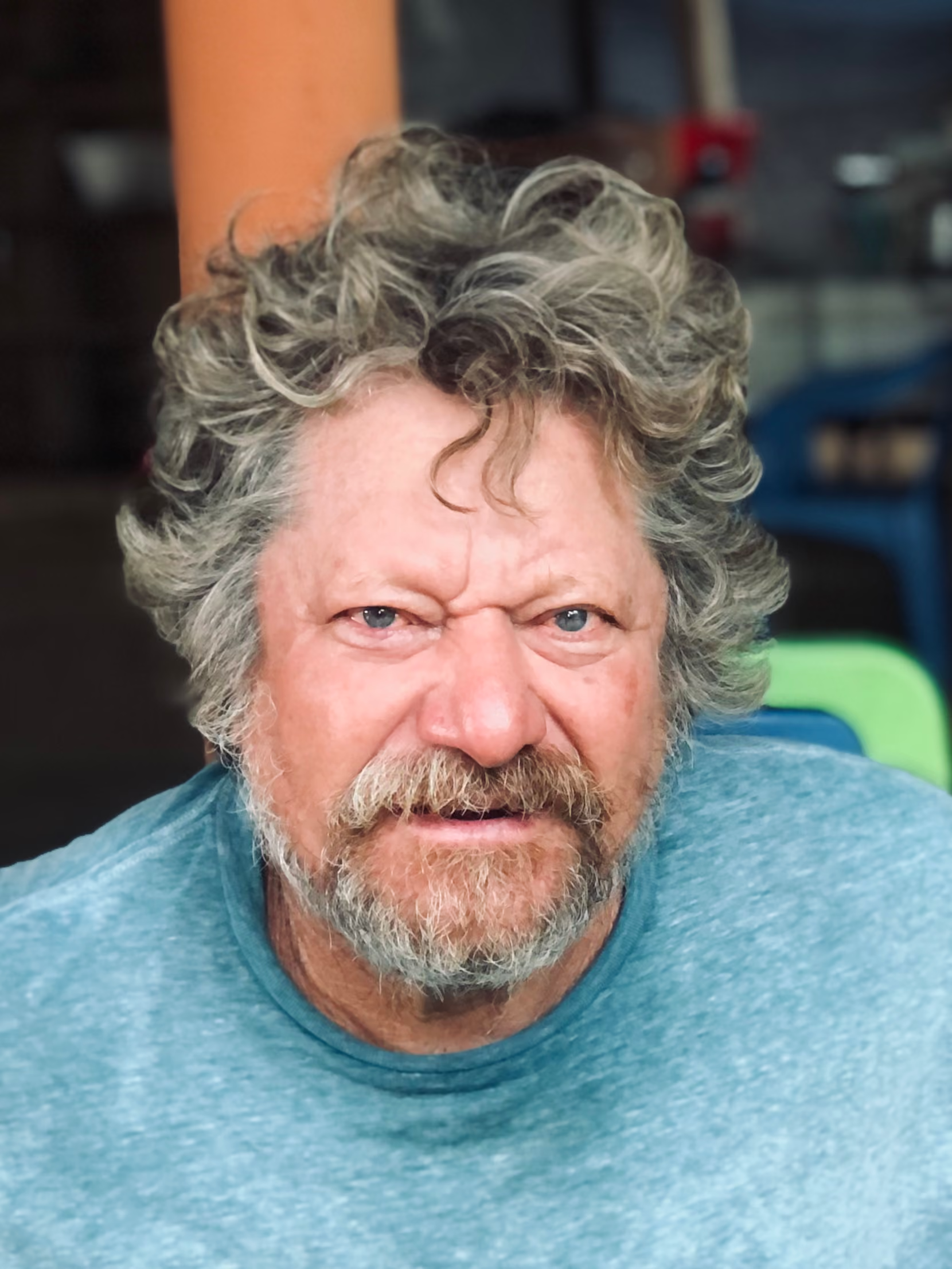
LOT: I want to take a picture of you.
Ramón: Your camera is going to break.