Cristo León: The Purist
Crissol—it’s some of the best peanut butter and the best almond butter I’ve ever tasted, and it’s made in Saladita—and that’s part of its secret
I’ve been a fan of Crissol peanut butter and almond butter since I first tried them. They’re simple, intensely good. You can taste exactly what they’re made from, and they’re local. So, I went to Saladita to meet Cristo León, the soft-spoken cook behind Crissol, and ended up talking about coconuts, peanuts, surfing, bees and why getting as close to the source as possible matters.
.png)





.png)
%20(Spanish)-2.avif)

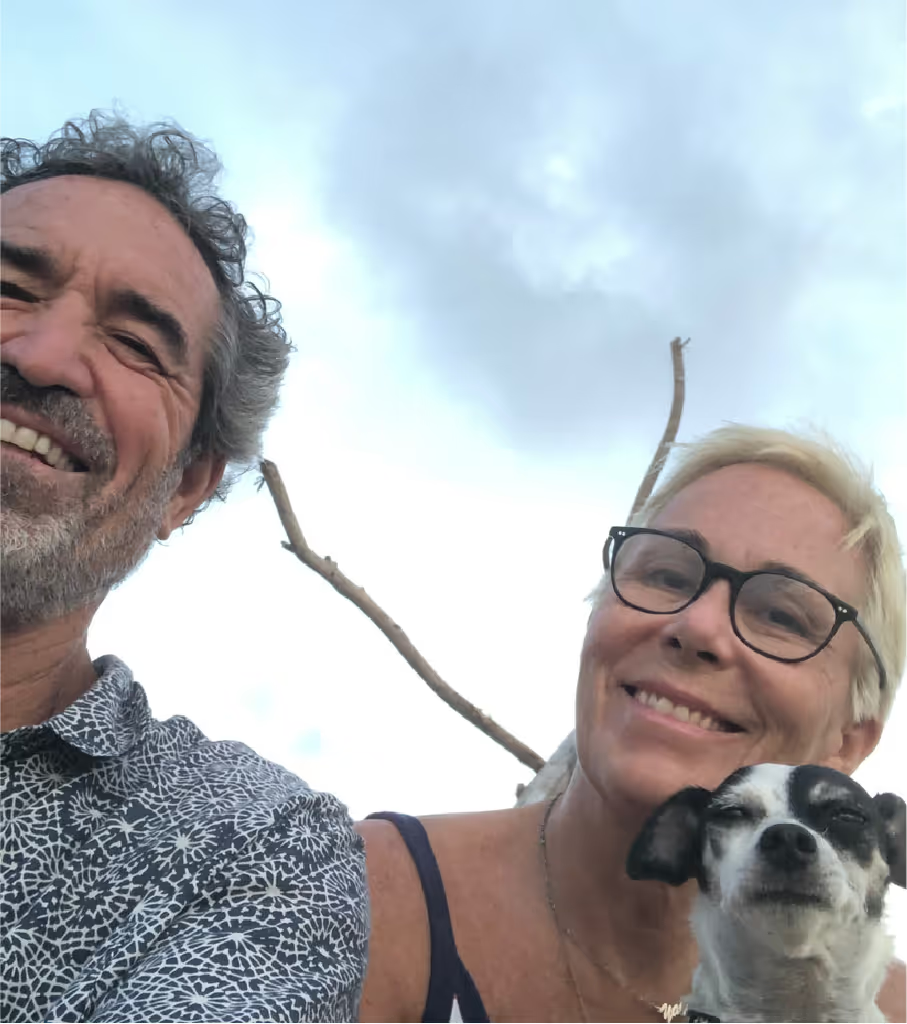
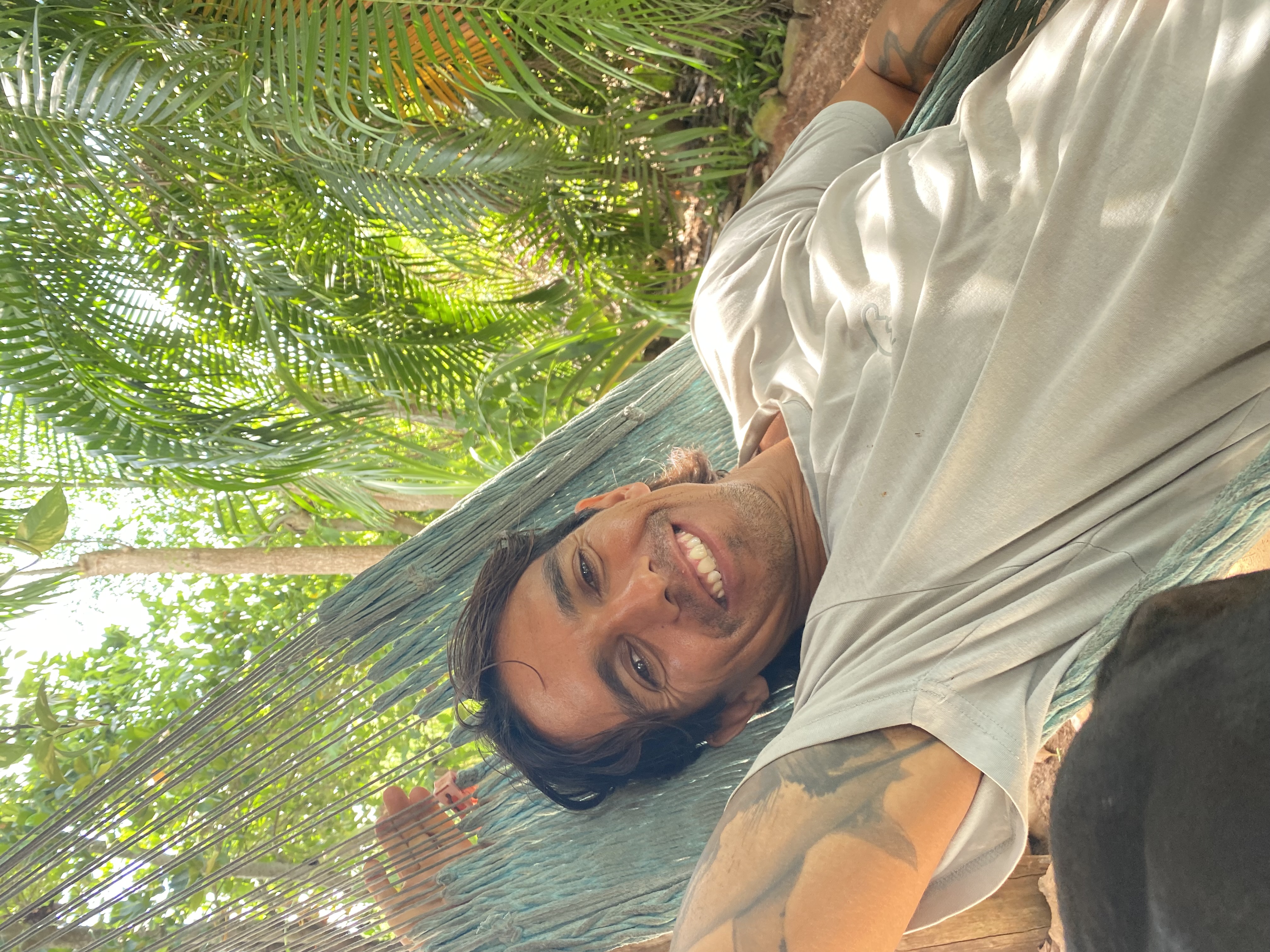
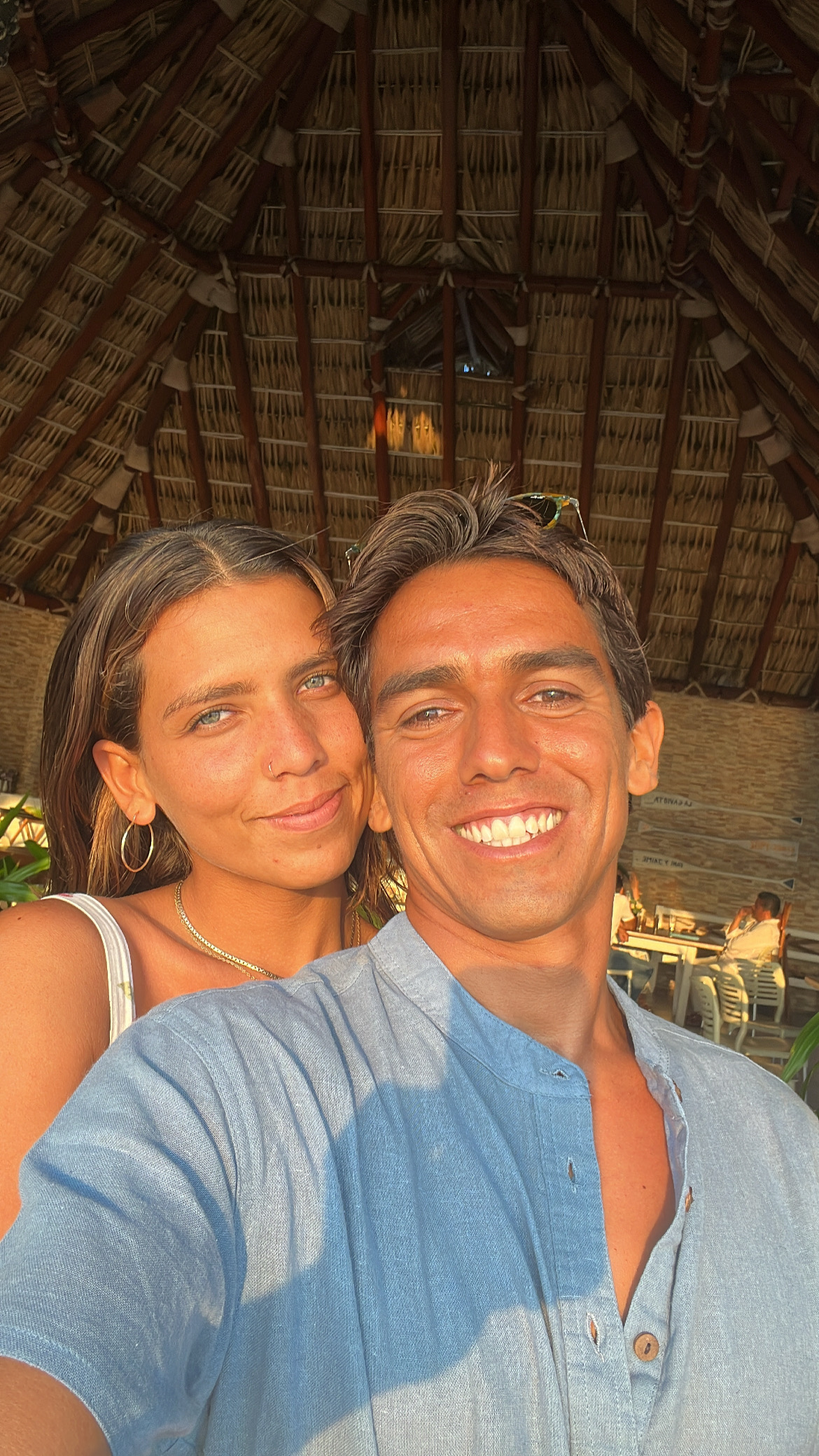
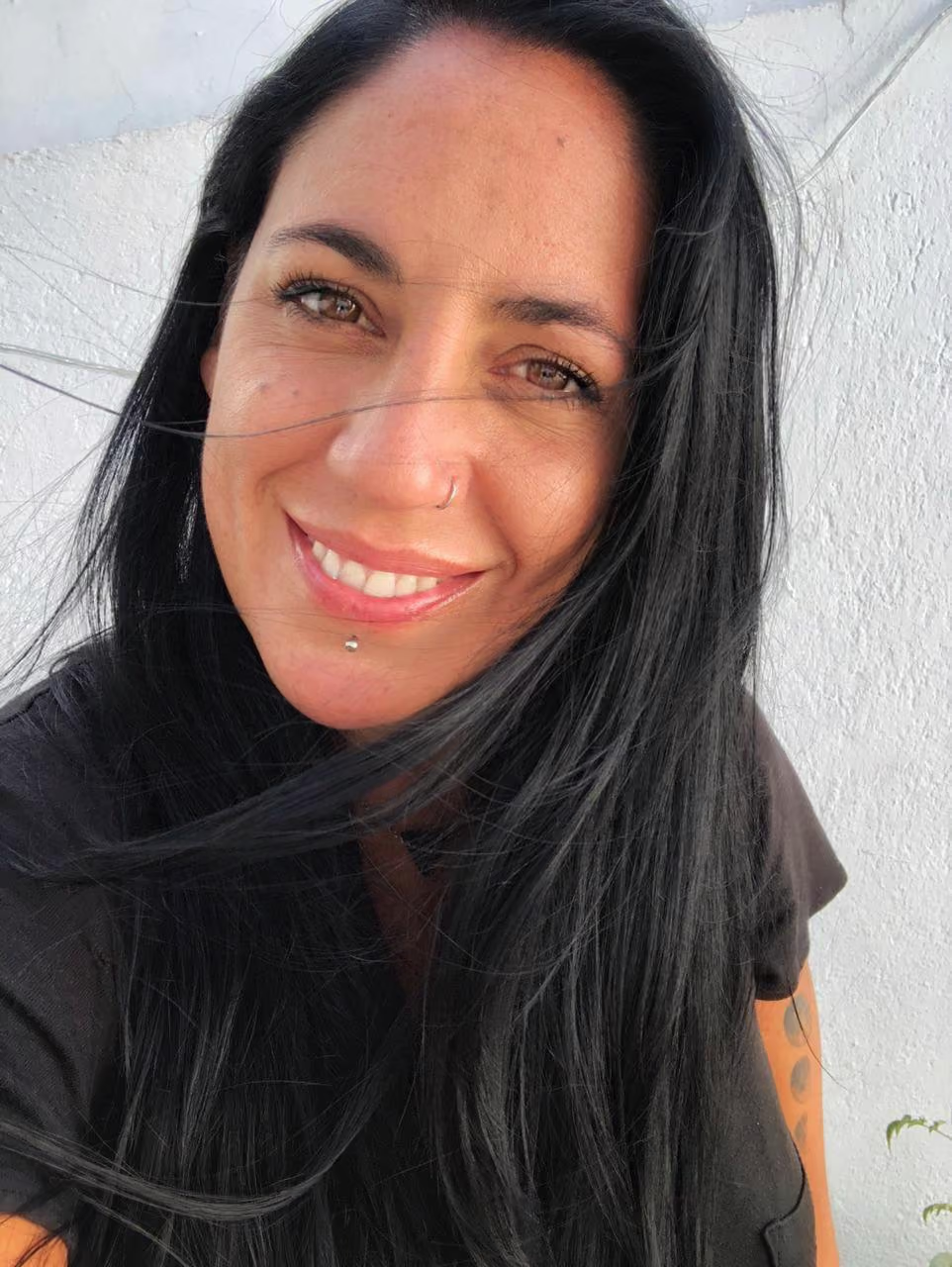
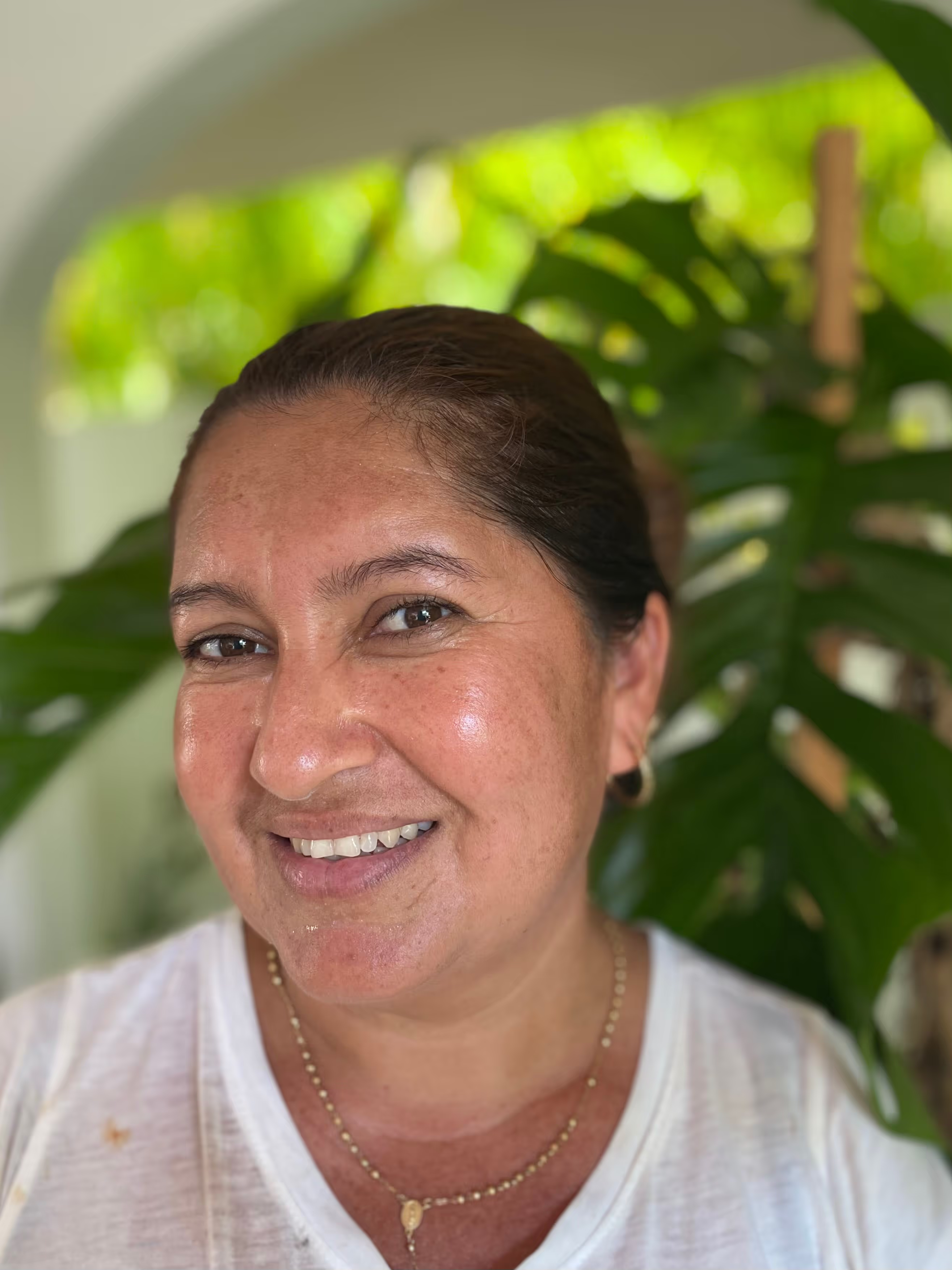
Cristo—Christopher Damián Aburto León—is 35, born and raised in Zihuatanejo. He’s soft-spoken and thoughtful, with a beaming smile and an easy manner. We sat at a table on the veranda of his home in Saladita, dogs wandering around us.
He grew up close to his extended family and was “always in the water.” When he was six, his parents enrolled him in afternoon English classes in Zihuatanejo. His mother rode the combi route with him his first time, showing him where to get off, and after that he made the trip by himself.
“I would do it myself when I was six years old,” he says.
At 19, after studying culinary arts, Cristo left for Miami and began working aboard private yachts. He spent several years cooking and traveling with the boats until, by 2018, he was ready for something else.
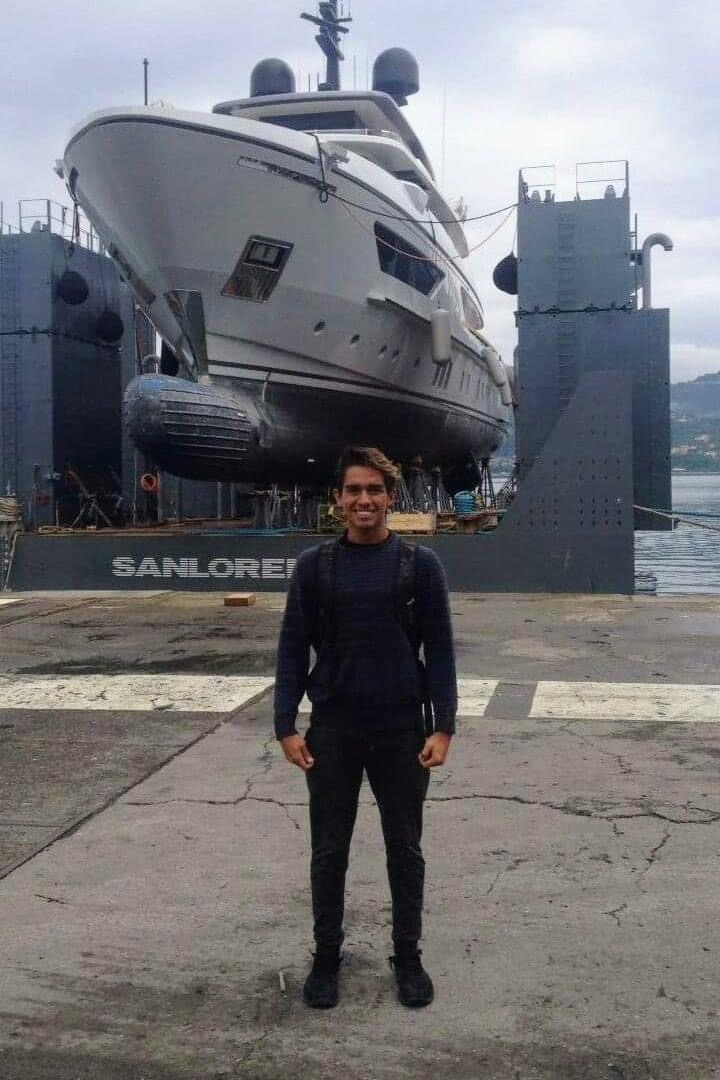
“My life was the boat,” he says. “Wherever the boat went, I was there. I wanted to make another kind of life for myself.”
He came home, spent some time surfing and living off his savings, and began figuring out what he wanted to do “on land.”
The answer started with coconut oil.
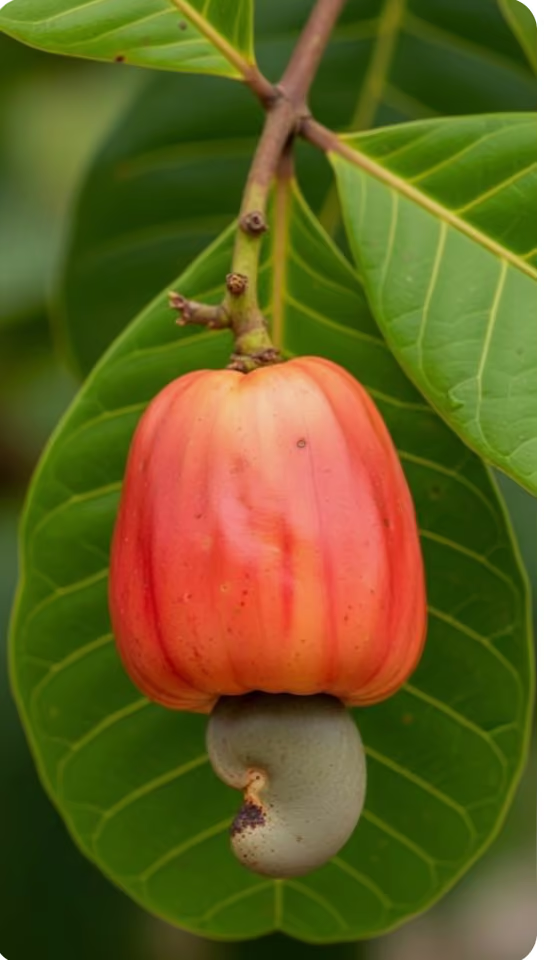
Cristo’s mother grew up in nearby San Jerónimo [south of Zihuatanejo], where her great-aunt made coconut oil in small batches. “My mom grew up with this,” he says, remembering the stories of the smells and watching her great-aunt make it. “She would make small batches and she would sell shots of coconut oil.”
Years later, his mom wanted to make it herself, but her full-time career in education didn’t leave much time for cracking hundreds of coconuts. She asked if Cristo was interested in learning the process. He started small.
“I practiced at home with just five coconuts,” he remembers. “I practiced and I kept at it, until I came up with the recipe, and I was like, ‘I think I got it’.”
He began making coconut oil in 2019 and kept refining his process from there.
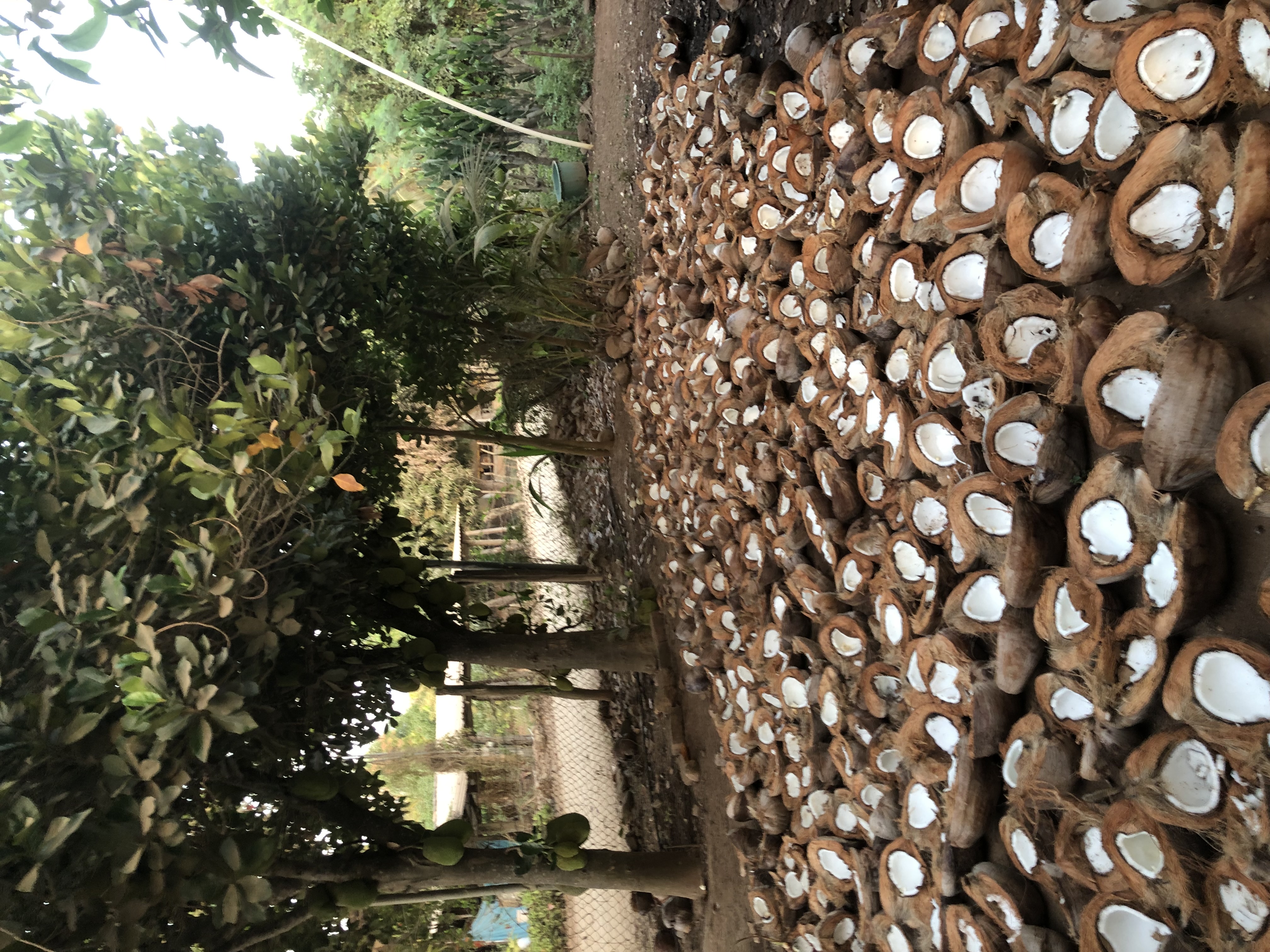
After we talked, Cristo took me behind his house to see where he makes his coconut oil now: an outdoor cooking station he has set up, where he uses propane and old clay cooking vessels. His coconut-oil days begin around three in the morning and continue for hours, in part so he can finish before the morning wind starts interfering with the flame.
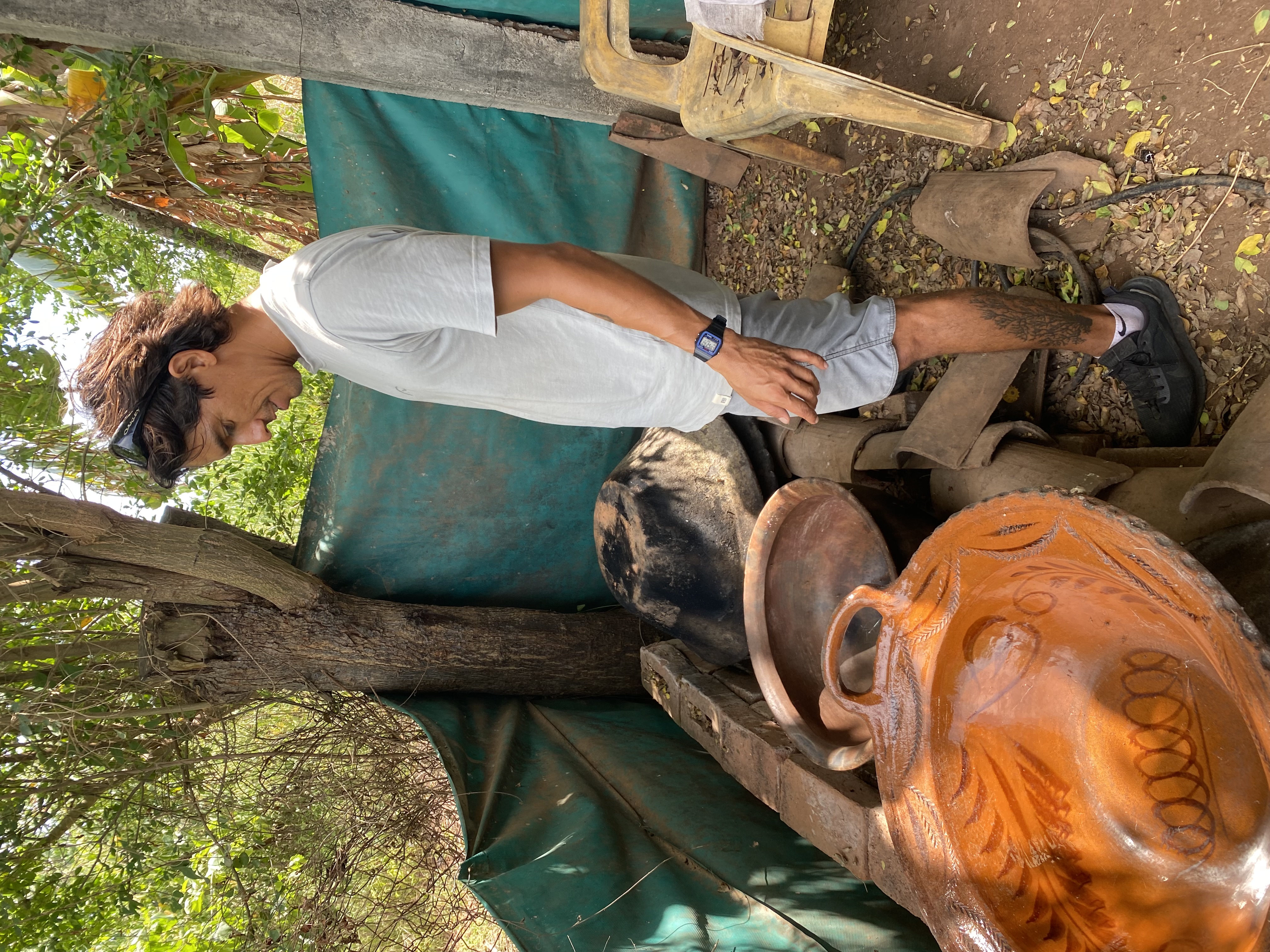
“It’s a ritual,” he says.
The peanut butter came next, with the help of his partner, Brigit, who is from Puerto Escondido, a place where peanuts are a major crop. Cristo has always paid close attention to what he eats. “That’s being a cook,” as he puts it, and started making peanut butter for himself.
At first, he roasted his peanuts in a pan on the stove and took them to the central market to be ground. He was also teaching surfing, and he’d bring some of his peanut butter along, mostly for himself.
“Everyone was curious about it,” he recalls. “‘So, what’s that?’”
Brigit began sending him peanuts from Puerto Escondido, and Cristo started processing more. He put his first jars out on consignment at La Esquina, the market at Hacienda Plaza.
“That’s how I started,” he says. “And little by little, word of mouth here and there, I started producing more and more.”
Cristo then pointed at an old hand-crank grinder mounted on a skinny tree stump outside, saying, “That’s where it all really started.” It’s hard to imagine a more modest beginning for a business that now produces hundreds of kilos of nut butter each year.
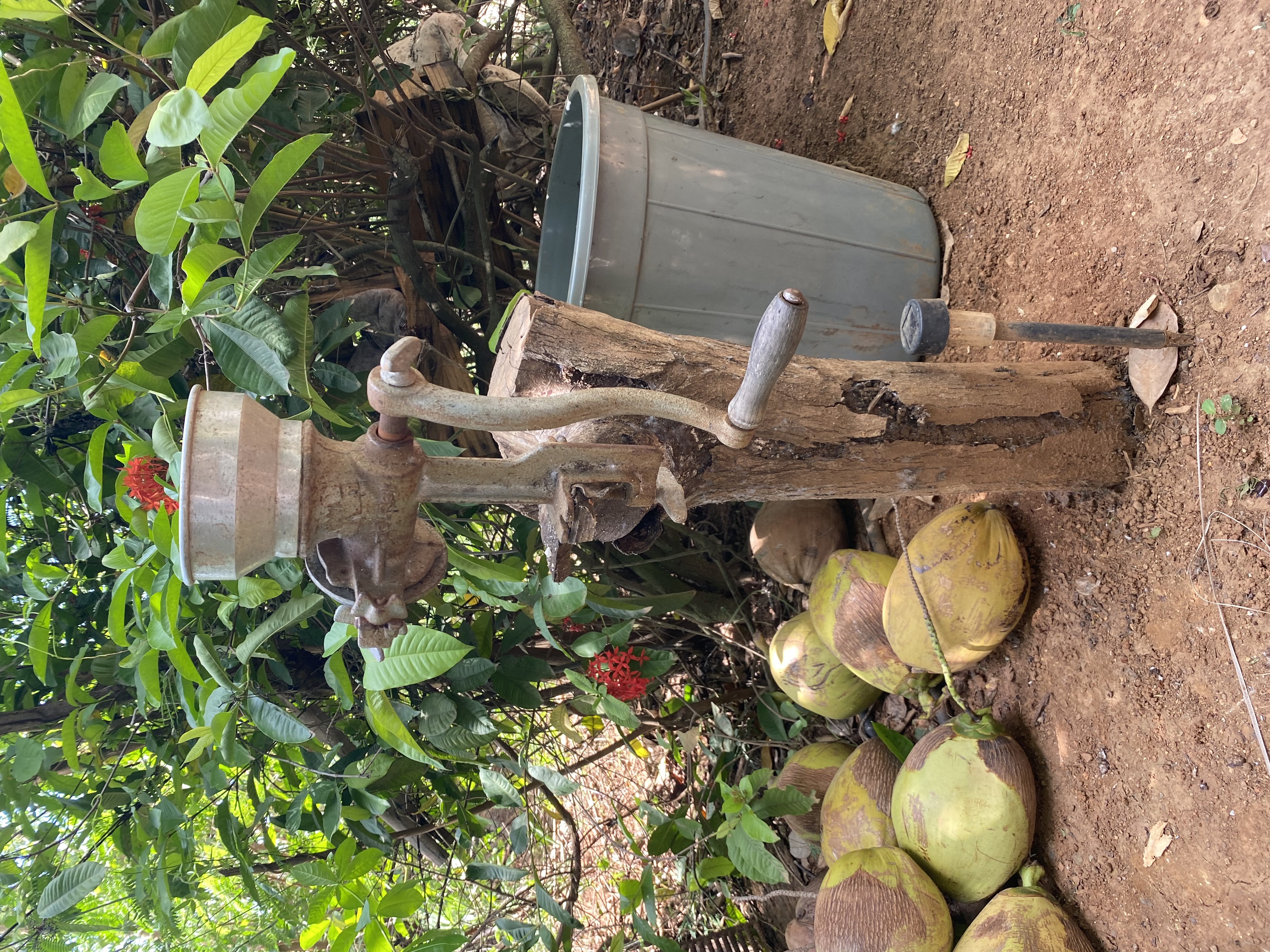
Around this time, Cristo moved into his current home and met his landlord, Don Lorenzo, who’s now 85. Cristo never knew his own grandfather, who died before he was born. His grandfather’s name was also Lorenzo.
One day, Don Lorenzo stood watching Cristo roasting a huge batch of peanuts by hand.
“That’s a lot of peanuts,” Don Lorenzo said, and asked Cristo, “Where do you get them?”
Cristo told him Puerto Escondido.
Then Don Lorenzo returned with a bag of peanuts.
“These are the ones I grow.”
Cristo laughs remembering his reaction: “I’m like, wait, what?”
Don Lorenzo took him out to his land, where coconut palms are planted in wide rows with enough space between them to grow other crops.
“He’s like, ‘These are peanuts.’ And I’m like, ‘Holy shit.’”
They started growing peanuts.
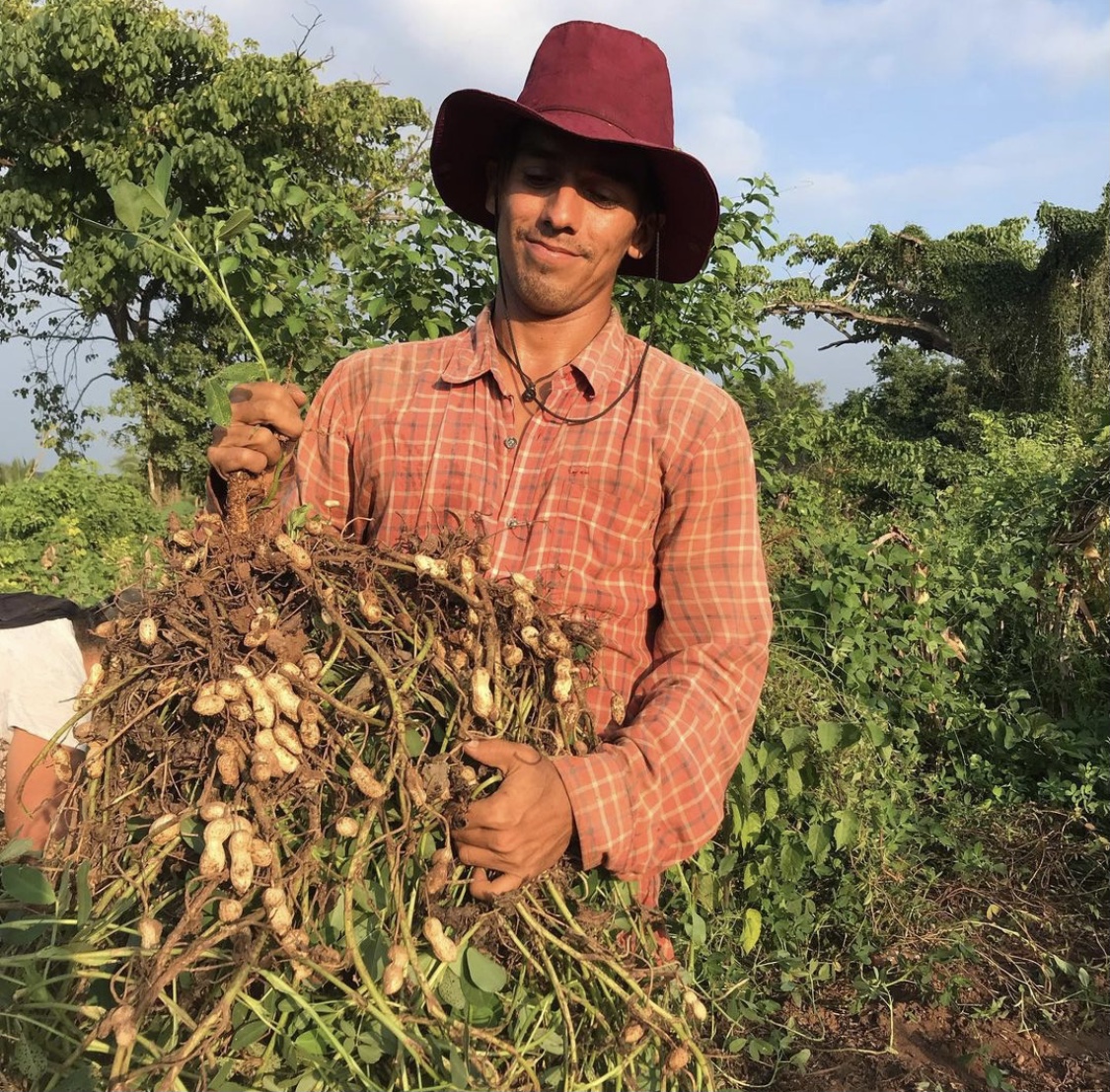
And Cristo learned about peanuts, when to plant and when to harvest, and for a while used those peanuts in his butter.
Eventually demand became more than he could grow himself.
He remembers, “There was a point that I had to decide: do I keep growing and limit myself, or do I buy a good peanut and expand?”
For now, Cristo buys, although he still inspects and tastes the peanuts himself, explaining, “If I like it, if I eat it. That’s the most important—to know it’s a good peanut.”
He hopes eventually to grow peanuts again, when he can support a crew to do it.
Almond butter followed. Cristo remembered the nut grinders he had seen at Whole Foods while living in Miami and started experimenting with almonds. Without adding oil, getting the consistency right comes down to roasting and temperature: too hot and the almonds can become sandy and crumbly; too cold and they don’t blend properly.
This attention to the ingredient runs through almost everything Cristo does.
“I think I’m a purist,” Cristo says. “I always want to be the closest I can to the source of things. I think that’s one of the reasons I started making all these things.”
A friend in marketing once asked him what made his products special. His first response was that they were great products, but she pushed him: other products are great, too. What makes yours different?
The question stayed with him.
Then one day the answer came to him:
“Because they’re part of my life. They’re in my diet because I consume them. That’s what makes them special. I really care what I eat and I’m very careful with what I eat.”
Crissol is no longer a few jars of peanut butter made for friends. Cristo now produces an average of about 80 liters of coconut oil a year, half a ton of peanut butter—roughly 1,000 jars—and around 600 jars of almond butter.
His days still begin with surfing. He teaches in the morning, comes home around noon, eats lunch, and then, as he describes it, “I have to make peanut butter. I have to harvest my honey. I have to plan my coconut oil production.”
Honey?
This gets my attention because I’ve been asking around, for what feels like a year, trying to find someone here who keeps bees.
Cristo, it turns out, has bees.
He shows me a huge hollow log with two small doors cut into the top and sealed with mud. Tiny Melipona [stingless] bees buzz in and out through small openings at either end. They produce small amounts of a special honey, which Cristo harvests on occasion. Known as miel de palo, it’s traditionally prized for medicinal uses rather than simply being a sweetener.
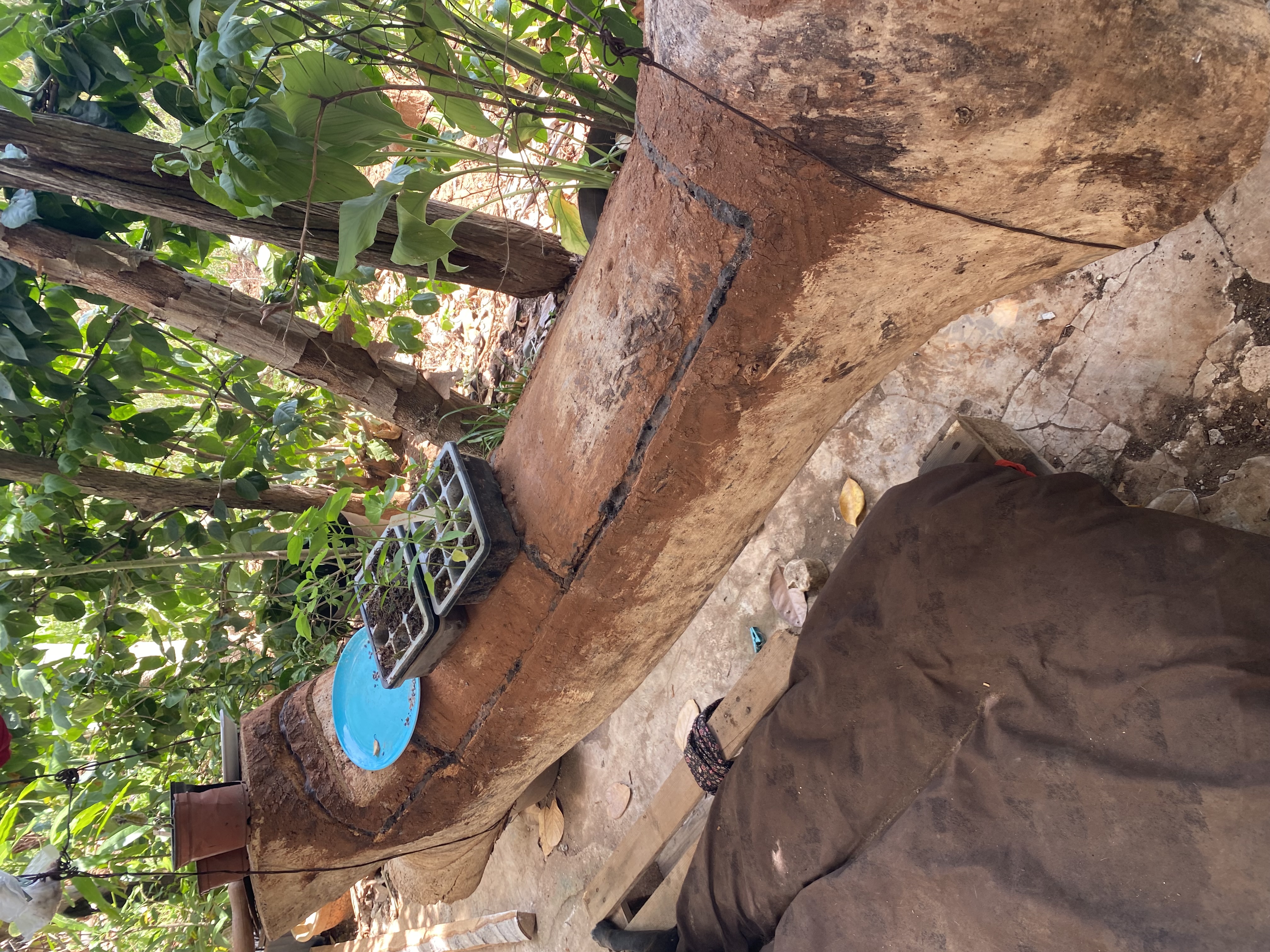
Again, Cristo connects it to wanting to get closer to the source of what he consumes.
From there we went inside, where the evolution from that little hand grinder on the tree stump became immediately apparent. Cristo shows me a rotating 20-kilo propane roaster that looks like a miniature coffee roaster, followed by the much larger grinder. Boxes of jars are neatly arranged on shelves, along with one of the surfboard display shelves he makes himself. Then he opens the refrigerator, where rows of finished jars are meticulously lined up.
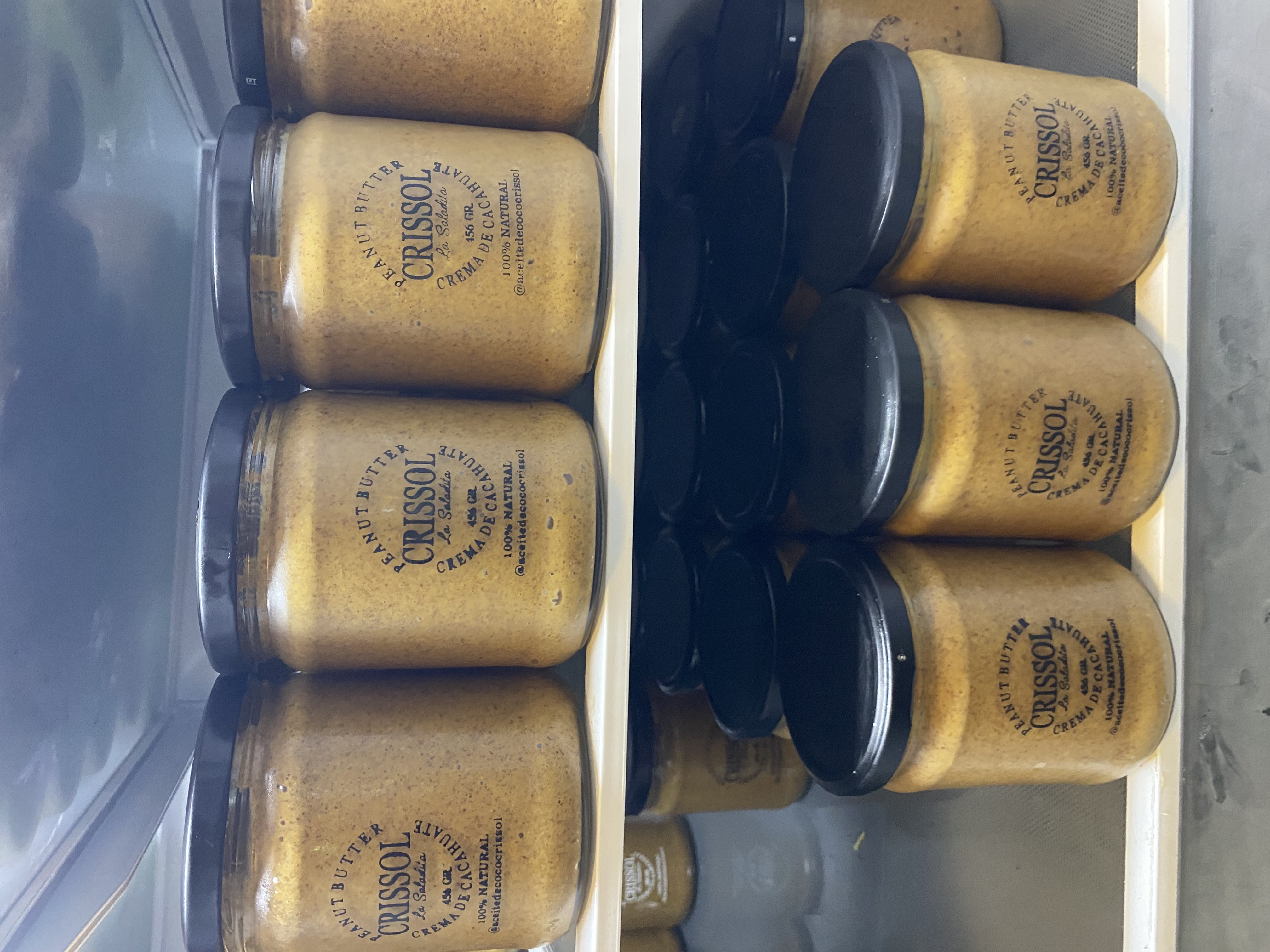
He’s as particular about freshness as he is about making the products. If a store isn't busy enough to move them, he doesn’t want his jars sitting there.
“I don’t want to have it sitting there for more than two months,” he says, “because I wouldn’t be proud of that product.”
Before he closes the refrigerator, Cristo hands me a jar and asks if I’ll accept it.
¡Con gusto!
He’s now building a house on a more remote piece of land beyond the mango plantations, where he will finally have room for a proper workshop. Until now, coconut-oil production has meant bringing out folding tables and moving his car out of the driveway to make enough room. The new workshop will also give people a chance to come and see how everything is made.
When we finished our interview and I was on my way out, Cristo pointed to one last thing.
A smoker. “I smoke fish,” he tells me. “I forgot to say.”
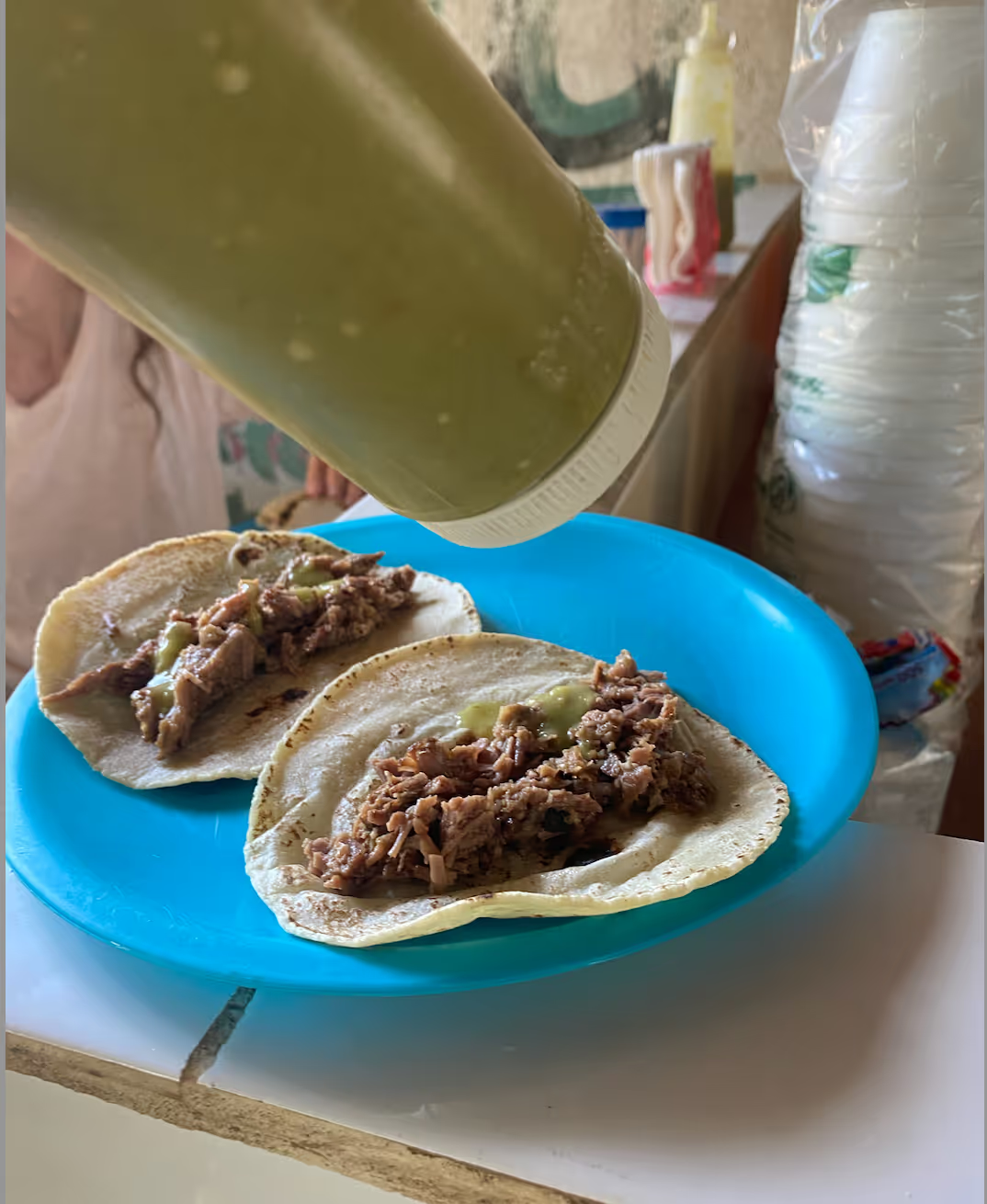
Brigit, apparently, has plans for smoked-fish tacos.
I can’t wait!
LINK

.avif)
.avif)
%2017.27.38.avif)

.avif)



%2022.56.27.avif)